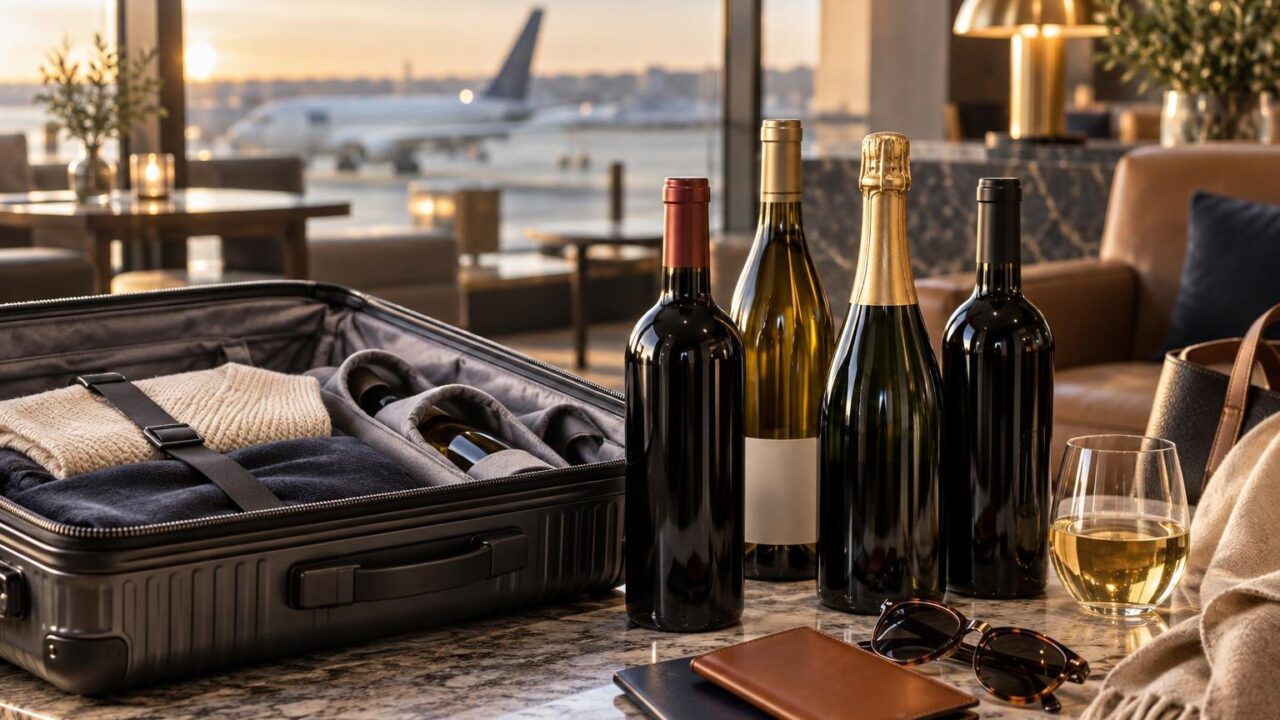
How Many Bottles of Wine Can I Carry-on a Plane? is 0 bottles over 100 milliliters through standard TSA carry-on screening; sealed duty-free wine may fly if bought after security and packed in a tamper-evident bag.
TSA’s 3-1-1 liquids rule controls carry-on wine, while FAA alcohol rules cap strength at 70% ABV.
Checked bags usually make more sense: wine under 24% ABV has no federal quantity limit, but airline weight, breakage risk, customs rules, and destination laws still matter.
TSA Rules for Carry-On Wine
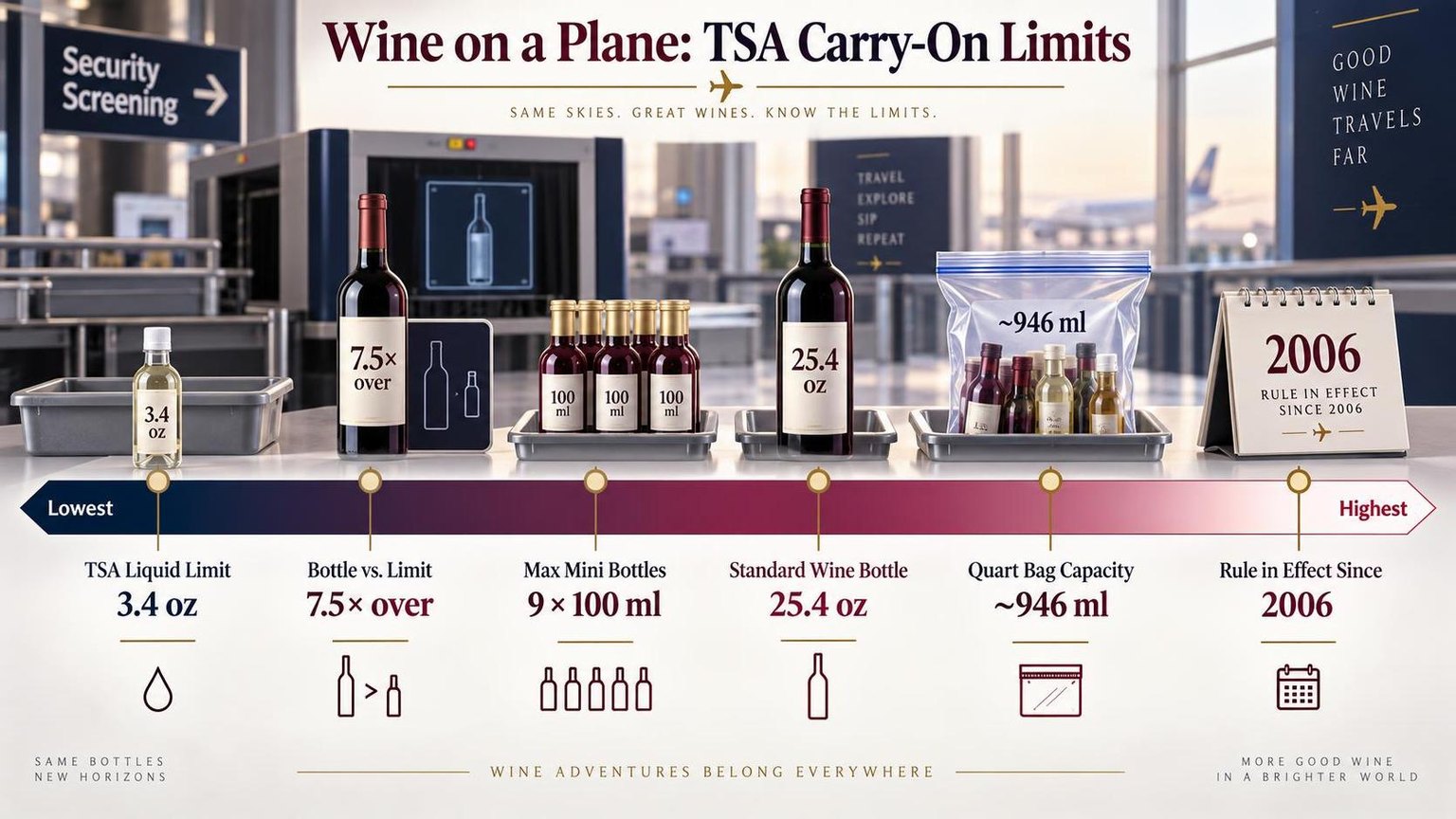
The TSA applies its standard 3-1-1 liquids rule to wine carried through airport security checkpoints. This means wine in containers larger than 3.4 ounces (100 milliliters) cannot pass through screening in your carry-on bag.
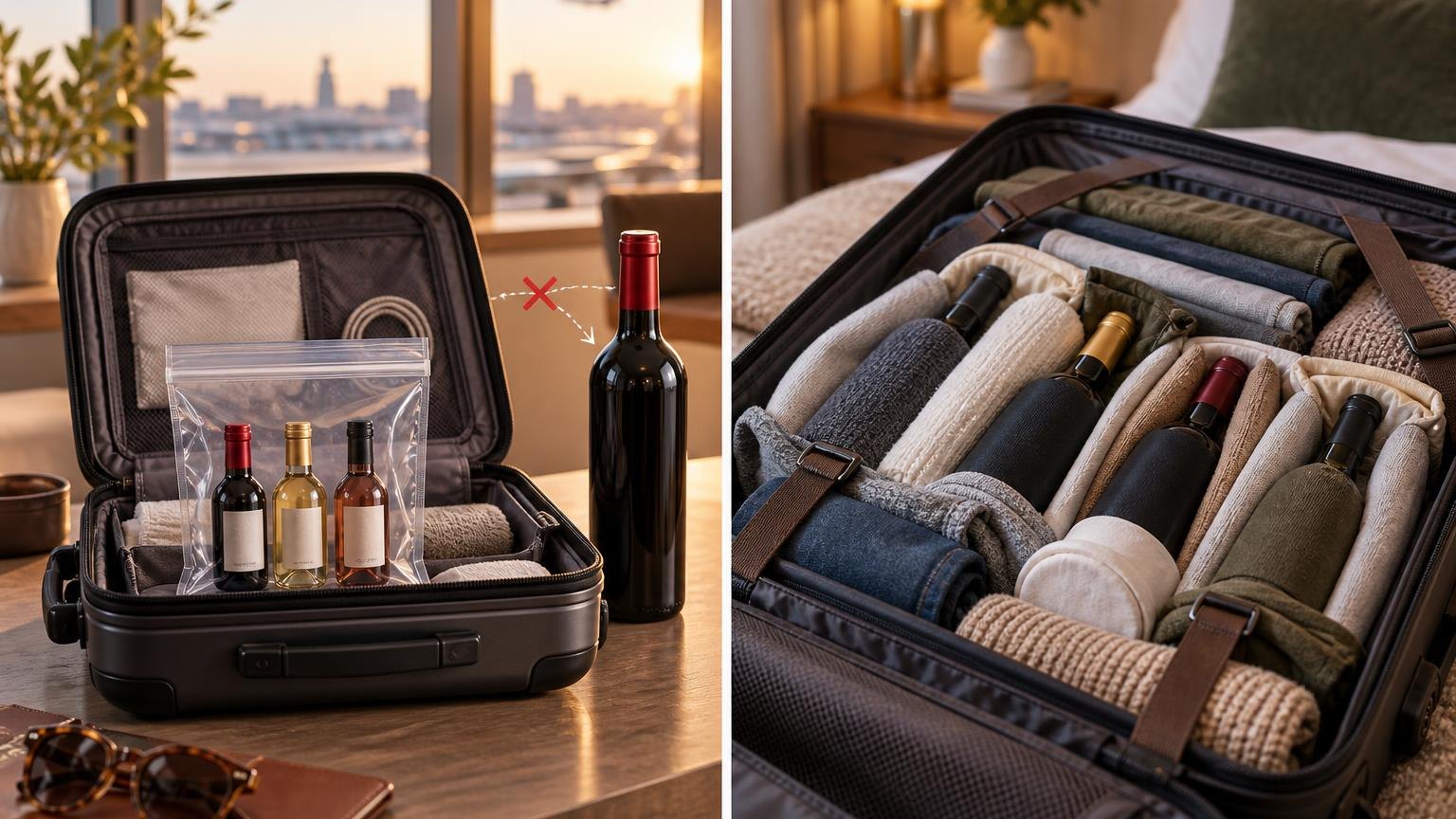
A standard wine bottle holds 750 ml—more than seven times the TSA’s 3.4-oz liquid limit. You cannot bring a regular bottle of wine through a TSA checkpoint in carry-on luggage.
The 3-1-1 Rule Explained
TSA’s 3-1-1 rule sets three specific constraints on all carry-on liquids, including wine.
| Component | Requirement | Impact on Wine |
| 3 | Each container ≤ 3.4 oz (100 ml) | Standard 750 ml bottles are prohibited |
| 1 | All containers in 1 quart-sized clear zip-top bag | Limits total volume to roughly 1 quart (946 ml) |
| 1 | 1 bag per passenger | No additional bags of liquids allowed |
Under these constraints, the maximum wine you could theoretically carry on is about nine 100 ml containers—if nothing else occupies your quart bag.
Practical Carry-On Options
Some wine brands sell 100 ml mini bottles or single-serve pouches that comply with TSA limits. These fit within the quart-sized bag alongside other toiletries and liquids.
- 100 ml mini bottles: TSA-compliant; available from select wineries and specialty retailers.
- Single-serve wine pouches: Must be 3.4 oz (100 ml) or less per pouch.
- Wine purchased past security: Bottles bought at airport shops beyond the TSA checkpoint are allowed on board in their sealed retail bags.
Wine bought at duty-free shops on international flights receives a specific exemption. These bottles must remain in a sealed, tamper-evident bag with the receipt visible inside.
Alcohol Content Restrictions
The FAA regulates alcohol by ABV percentage, which affects certain fortified wines. Most table wines fall well within permitted limits.
| ABV Range | Carry-On Status | Examples |
| Under 24% ABV | Permitted (subject to 3-1-1) | Table wine, most sparkling wines |
| 24%–70% ABV | Permitted (subject to 3-1-1); limited to 5 liters in checked bags | Some fortified wines, high-proof Port |
| Above 70% ABV | Prohibited carry-on and checked | No commercial wines reach this level |
Virtually all wine—including Port, Sherry, and Madeira—falls below 24% ABV, so alcohol content is rarely a barrier for wine specifically.
Key Fact to Remember
Drinking your own alcohol on a flight is prohibited under FAA regulations (14 CFR § 121.575). Only beverages served by flight attendants may be consumed on board, regardless of how the wine cleared security.
The 3.4 Ounce Liquid Limit
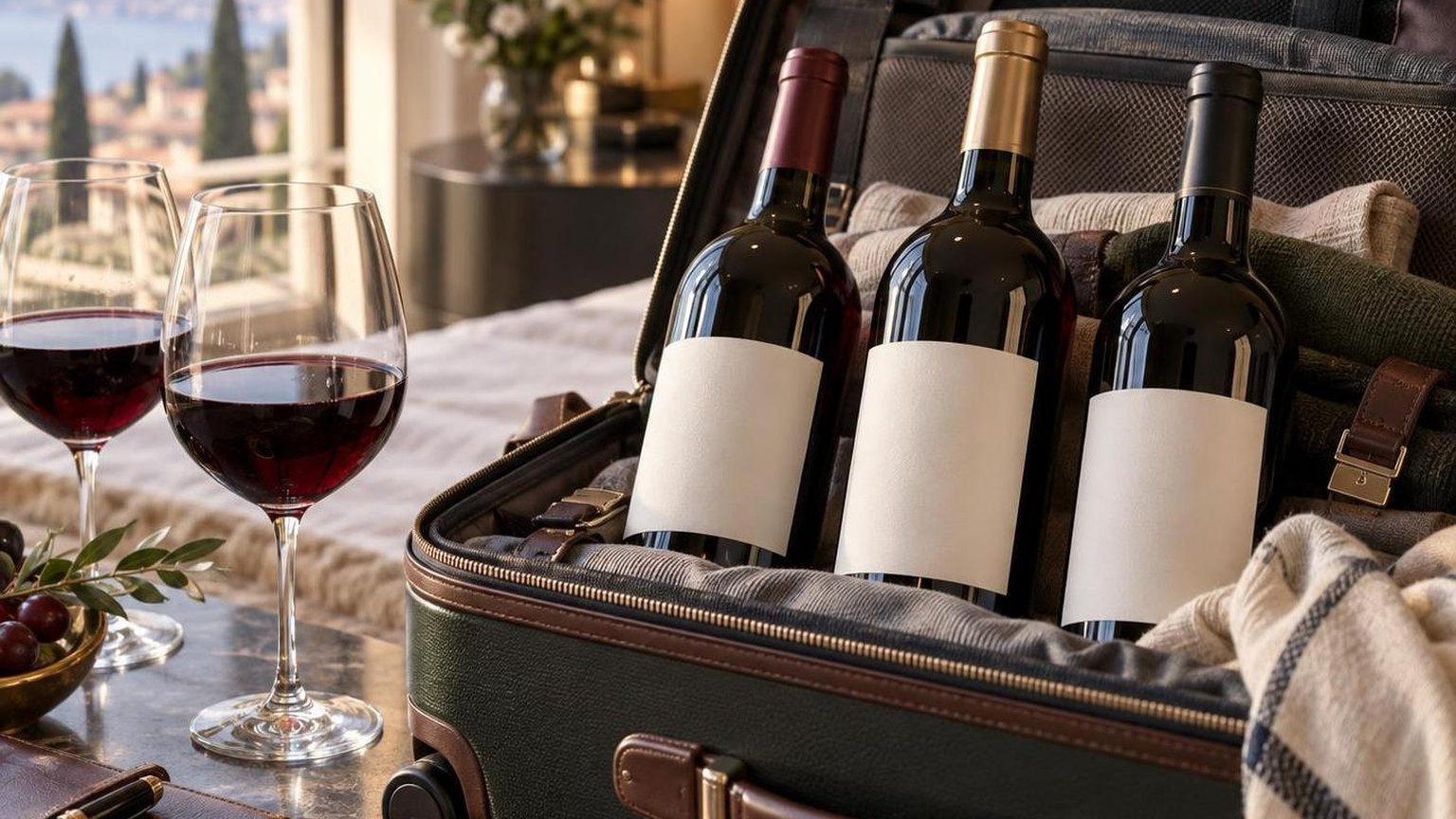
The TSA’s 3-1-1 rule is the single biggest obstacle to carrying wine in your cabin bag. This regulation caps all liquids, gels, and aerosols at 3.4 ounces (100 milliliters) per container — roughly seven tablespoons.
A standard wine bottle holds 750 milliliters. That is 7.5 times the TSA’s per-container limit, making it impossible to bring through a security checkpoint.
What the 3-1-1 Rule Actually Requires
- 3.4 ounces (100 ml): Maximum volume per individual container.
- 1 quart-sized bag: All containers must fit inside a single clear, resealable plastic bag approximately 6 × 9 inches.
- 1 bag per passenger: Each traveler gets exactly one quart bag at the checkpoint.
The rule applies to every domestic and international flight departing from a U.S. airport. It has been in effect since 2006, introduced after a foiled transatlantic liquid-explosives plot.
Wine Container Sizes vs. TSA Limits
| Container Type | Volume (ml) | Volume (oz) | TSA Carry-on Allowed? |
| Standard bottle | 750 ml | 25.4 oz | No |
| Half bottle (demi) | 375 ml | 12.7 oz | No |
| Single-serve (small) | 187 ml | 6.3 oz | No |
| Miniature / airline-style | 50 ml | 1.7 oz | Yes |
| TSA maximum container | 100 ml | 3.4 oz | Yes |
Even 187 ml single-serve bottles — the smallest format commonly sold in stores — exceed the limit by 87 milliliters. Only 50 ml miniatures or containers at or below 100 ml qualify.
How Many Miniatures Fit in a Quart Bag?
A quart-sized bag holds roughly 946 ml of total volume. Factoring in the physical dimensions of 50 ml bottles, most travelers can fit between 8 and 12 miniatures alongside other toiletries.
If you dedicate the entire quart bag exclusively to 50 ml wine bottles, you could theoretically carry up to 15. That totals 750 ml — the equivalent of one standard bottle.
Critical Alcohol Restriction
The TSA permits mini bottles of wine through security, but FAA regulations under 14 CFR § 121.575 prohibit passengers from drinking their own alcohol on board. Only beverages served by the flight crew are legal to consume during the flight.
Violating this rule can result in fines up to $11,904 per incident. Flight attendants are trained to watch for passengers pouring personal miniatures, and enforcement has intensified since 2021.
The practical takeaway: carry-on wine through a standard TSA checkpoint is limited to containers of 100 ml or less. For full-sized bottles, checked luggage is your only compliant option when departing from U.S. airports.
Duty-Free Wine After Security
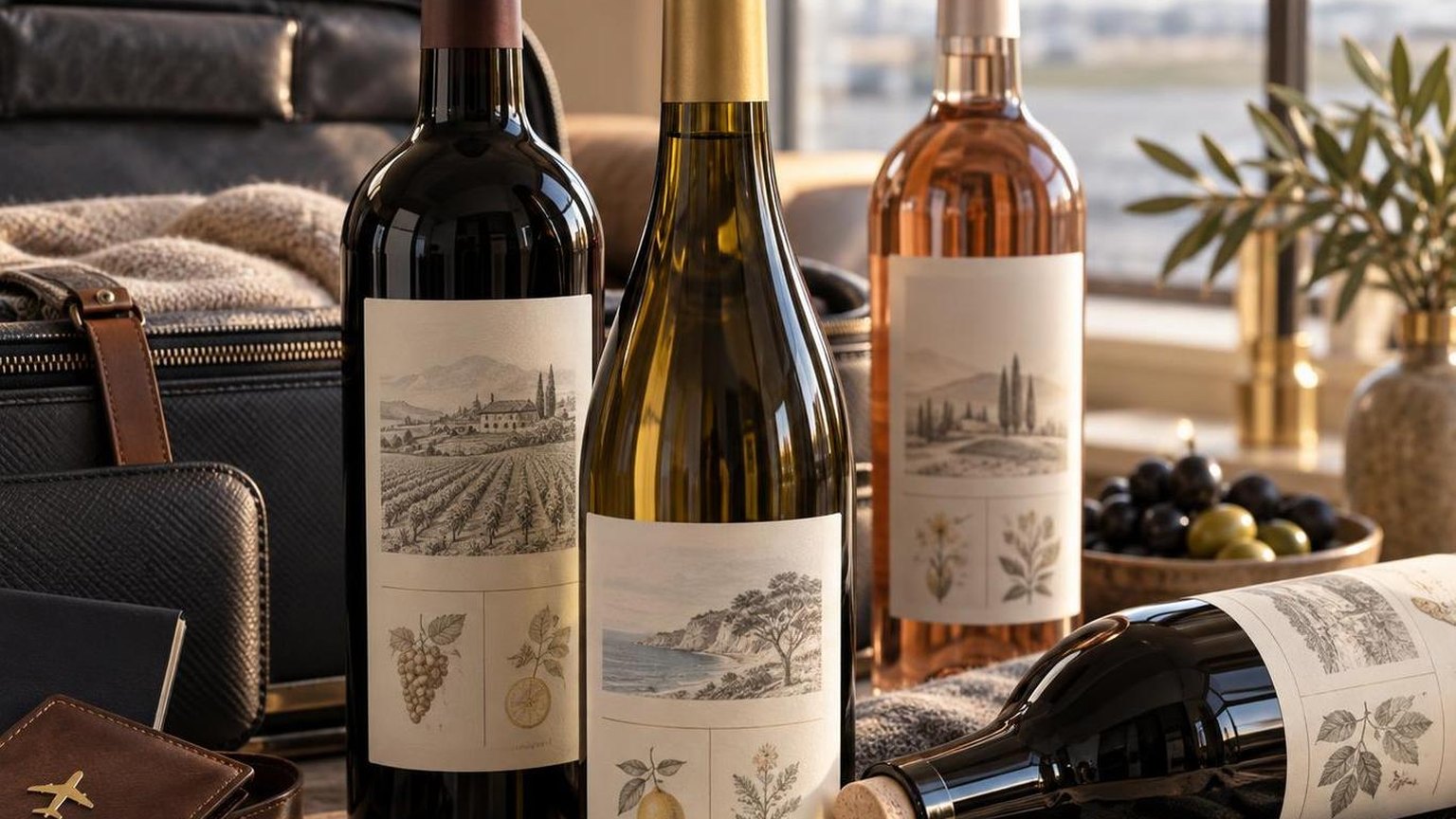
Duty-free shops located past airport security checkpoints offer the primary legal workaround to the TSA 3.4-ounce liquid rule.
Wine purchased in these sterile-area stores can board with you in the cabin, provided specific packaging and routing conditions are met.
How the Duty-Free Exception Works
The TSA permits liquids over 3.4 oz (100 ml) in carry-on baggage when purchased from duty-free retailers after the security screening checkpoint. This applies to both domestic and international departures from U.S. airports.
There is one critical requirement: the bottles must remain in a sealed, tamper-evident bag provided by the retailer. The bag must also contain a visible receipt showing the purchase was made that day.
Key Rules by Flight Type
| Flight Type | Carry-on Allowed? | Conditions |
| U.S. domestic (nonstop) | Yes | Sealed tamper-evident bag from duty-free shop |
| U.S. domestic (connecting) | Yes | Bag must remain sealed; no re-screening typically needed |
| International outbound from U.S. | Yes | Sealed tamper-evident bag with receipt |
| International with U.S. connection | Risk of confiscation | Re-clearing TSA security at U.S. entry point may void exception |
The Connecting Flight Problem
International travelers connecting through a U.S. airport face the highest risk. Upon arrival, passengers must clear U.S. Customs and Border Protection, collect checked luggage, then re-enter through TSA security for the connecting flight.
At that re-screening point, duty-free wine exceeding 3.4 oz will be confiscated — even in a sealed bag. TSA treats re-screening identically to initial screening. This catches thousands of travelers annually off guard.
The workaround: pack duty-free wine into your checked luggage after collecting it at U.S. Customs, before re-checking bags for the domestic connection.
Quantity Limits
TSA sets no specific bottle limit on duty-free liquids carried on board. However, airline overhead bin and under-seat storage constraints effectively cap what you can bring. Most travelers carry 2–3 standard 750 ml bottles comfortably.
U.S. Customs and Border Protection allows returning residents to bring back up to 1 liter of alcohol duty-free from international travel. Amounts above 1 liter are subject to federal excise taxes and state-specific duties.
- Keep all duty-free bags sealed until you reach your final destination
- Retain receipts inside the tamper-evident bag at all times
- Wine above 70% ABV (140 proof) is prohibited entirely in both carry-on and checked luggage per FAA regulations — standard wine at 12–15% ABV is never an issue
- Some countries impose their own duty-free purchase limits at point of sale — for example, EU airports cap duty-free alcohol at 1 liter of spirits or 4 liters of still wine per passenger
Buying wine after security remains the simplest way to carry full-size bottles into the cabin. Know your routing, keep bags sealed, and plan for connections where re-screening applies.
Alcohol Percentage and FAA Limits
The FAA classifies alcoholic beverages into three categories based on alcohol by volume (ABV), and each category carries different rules for air travel.
Most wine falls comfortably within the least restricted category, but fortified and specialty wines can cross into stricter territory.
FAA Alcohol Categories for Carry-On and Checked Baggage
| ABV Range | FAA Classification | Carry-On Allowed? | Checked Baggage Allowed? | Quantity Limit |
| 24% ABV or less | Non-restricted | Yes (TSA liquid rules apply) | Yes | No FAA quantity limit |
| 24%–70% ABV | Restricted | Yes (TSA liquid rules apply) | Yes | 5 liters per passenger in checked bags |
| Above 70% ABV (140 proof) | Forbidden | No | No | Prohibited entirely |
These rules come from 49 CFR §175.10(a)(4), the federal hazardous materials regulation governing passengers carrying alcohol on commercial flights.
Where Wine Falls in These Categories
Standard still wines range from roughly 11% to 15% ABV. Sparkling wines like Champagne and Prosecco typically fall between 11.5% and 12.5% ABV. Both sit well below the 24% threshold.
Fortified wines push closer to the boundary. Port generally ranges from 19% to 22% ABV. Sherry spans 15% to 22% ABV. Madeira sits around 18% to 20% ABV. All remain under 24%.
Vermouth, sometimes classified as an aromatized wine, typically contains 15% to 18% ABV. It also stays within the unrestricted category for FAA purposes.
Wines That Could Cross the 24% Line
Certain specialty products blur the line between wine and spirits. These require extra attention before packing:
- Barolo Chinato — an aromatized wine occasionally reaching 16.5%–21% ABV, still under the limit
- Wine-based liqueurs — products like crème de cassis (typically 15%–25% ABV) may cross into the restricted range
- Mistelle or vin de liqueur — grape must fortified with spirit, sometimes reaching 22%–24% ABV
If your bottle exceeds 24% ABV, it still flies — but the 5-liter checked baggage limit applies. The practical concern for carry-on remains the TSA 3.4 oz (100 ml) container rule regardless of ABV.
Key Distinction: FAA vs. TSA Rules
The FAA regulates what’s hazardous on aircraft. The TSA regulates what passes through security checkpoints. Both apply simultaneously, and the stricter rule always governs.
For wine under 24% ABV in carry-on, the FAA imposes no quantity cap. The TSA’s 3-1-1 liquid rule becomes the limiting factor — each container must not exceed 3.4 oz and must fit in one quart-sized bag.
In checked luggage, wine under 24% ABV has no federally mandated volume restriction. You’re limited only by airline weight allowances, typically 50 pounds for domestic U.S. flights on most carriers.
Packing Wine in Checked Bags
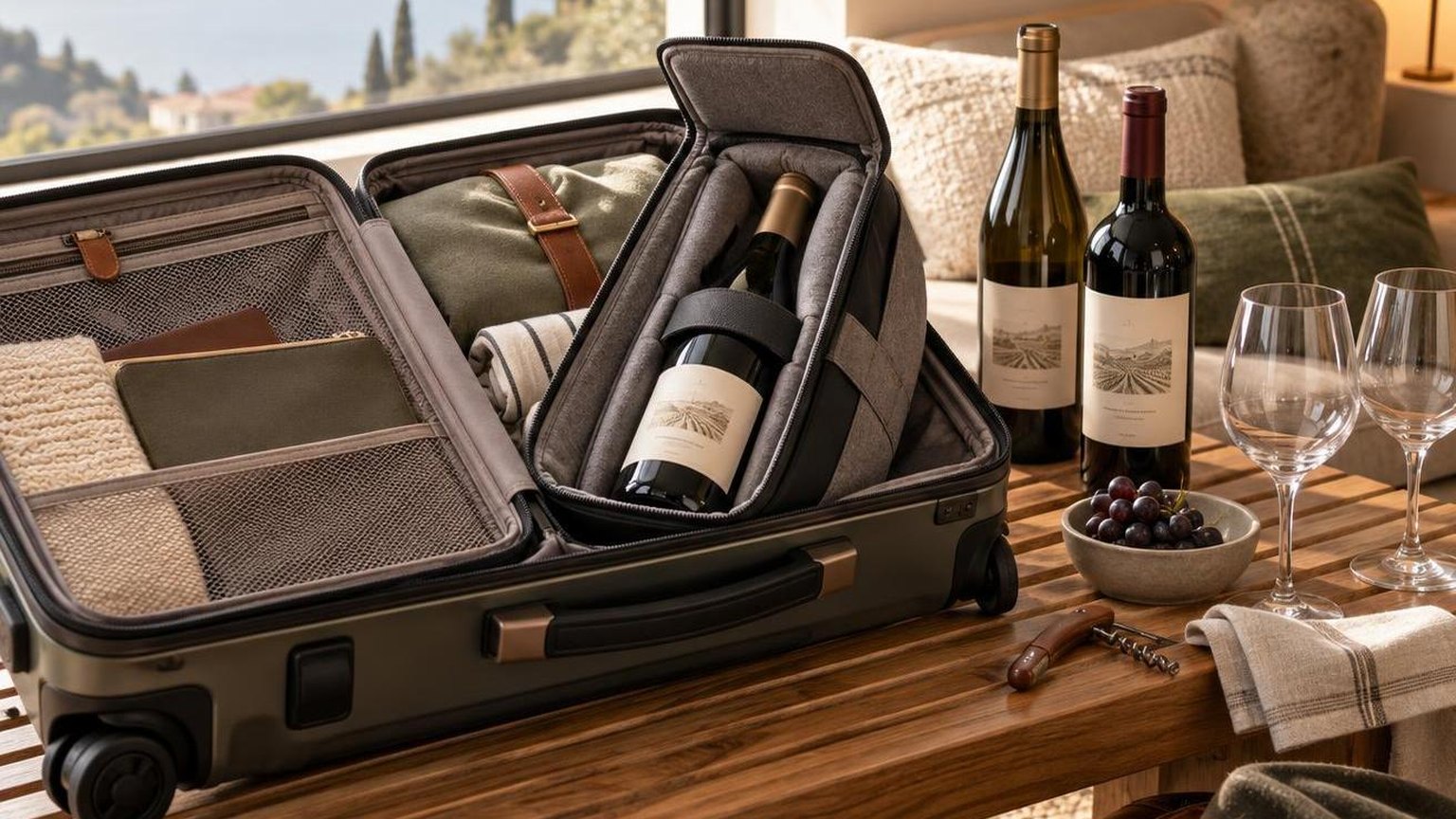
Checked luggage is where most travelers pack wine, since the TSA liquid restrictions don’t apply below the cabin.
Alcohol under 24% ABV—including virtually all still and sparkling wines—faces no quantity limit from the FAA in checked bags.
The practical constraint is your airline’s checked bag weight allowance, typically 50 pounds (23 kg) on most U.S. carriers.
How Many Bottles Fit?
A standard 750 ml bottle of wine weighs approximately 2.65 pounds (1.2 kg). A reinforced wine shipping box holding 12 bottles weighs roughly 4–5 pounds empty.
| Bottles | Estimated Total Weight | Within 50 lb Limit? |
| 6 | ~20 lbs (9 kg) | Yes |
| 9 | ~29 lbs (13 kg) | Yes |
| 12 | ~37 lbs (17 kg) | Yes |
| 15 | ~45 lbs (20 kg) | Borderline |
| 18 | ~53 lbs (24 kg) | No — overweight fee applies |
Most travelers comfortably fit 10–12 bottles in a single checked bag before hitting the weight ceiling. Going over 50 pounds triggers overweight fees of $100–$200 per bag on most domestic U.S. flights.
Packing Methods That Prevent Breakage
- Wine suitcase inserts: Foam-lined cases like VinGardeValise hold 8–12 bottles in a hard-shell suitcase and absorb impact during handling.
- Inflatable bottle sleeves: Products like Wine Skin use double-sealed air chambers. They cost $2–$4 each and fit any standard bottle.
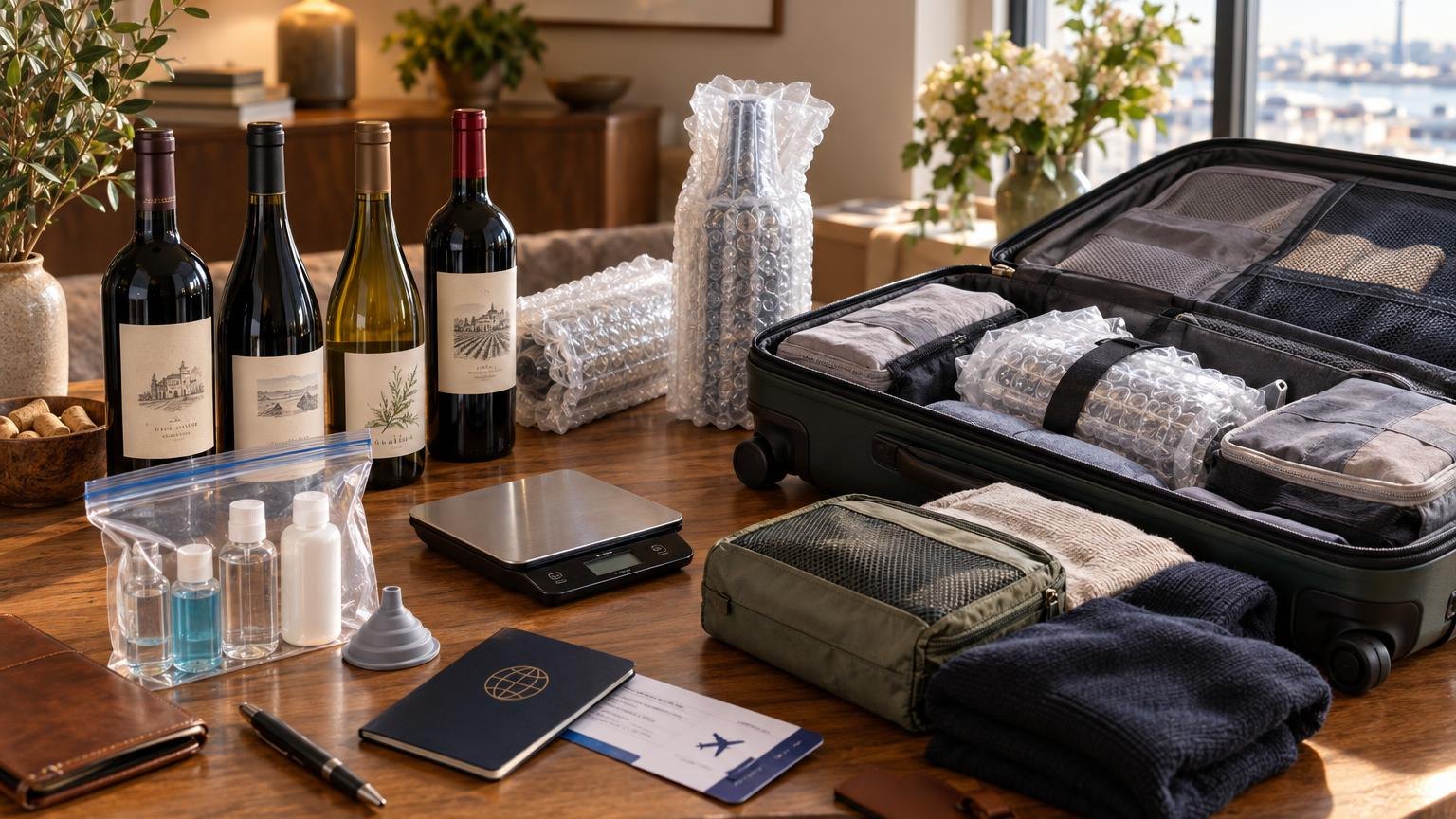
- DIY wrap: Wrap each bottle in 3–4 layers of bubble wrap, secure with tape, and place inside a sealed zip-lock bag to contain leaks.
- Clothing buffer: Surround wrapped bottles with rolled socks, sweaters, or towels to eliminate empty space in the bag.
Position bottles in the center of the suitcase, never against the walls. Lay them horizontally so pressure distributes evenly across the bottle’s strongest axis.
Airline-Specific Policies to Check
While the FAA permits unlimited wine in checked bags, individual airlines can impose their own rules. Delta, American, and United all allow wine in checked luggage but won’t cover breakage claims.
Southwest Airlines permits alcohol in checked bags but requires it be packaged in a “container designed for shipping” or securely wrapped. Alaska Airlines follows similar guidelines.
International carriers often enforce stricter weight limits—many European airlines cap checked bags at 23 kg (50.7 lbs), leaving room for roughly 12 bottles maximum.
Duty-Free and Customs Considerations
U.S. Customs allows returning travelers to bring back one liter (approximately 1.3 standard bottles) duty-free at the federal level. State allowances vary.
Exceeding the exemption triggers a duty of roughly $0.05–$0.50 per bottle for still wine, making extra bottles inexpensive to declare.
Common Questions
How many bottles of wine can I carry on a plane in hand luggage?
Zero full-size bottles. The TSA 3-1-1 liquids rule limits carry-on containers to 3.4 oz (100 ml) each, all fitting in one quart-size bag.
A standard 750 ml wine bottle exceeds that limit by more than 7×, so it will be confiscated at the security checkpoint.
Can I bring wine bought at a duty-free shop onto the plane?
Yes. Wine purchased at duty-free shops past the security checkpoint can be carried onto the cabin regardless of volume, provided it remains in the sealed, tamper-evident bag with the receipt visible.
If you have a connecting flight that requires re-clearing security—common on international layovers in the US—the bottles must still comply with the 3-1-1 rule at that second checkpoint or they will be confiscated.
How many bottles of wine can I pack in checked luggage?
The TSA places no numerical limit on wine in checked bags, but the FAA restricts alcohol between 24% and 70% ABV to 5 liters (approximately 6.6 standard 750 ml bottles) per passenger.
Most still wines fall below 24% ABV, so they are technically exempt from the 5-liter cap—meaning you can pack as many bottles as your airline’s weight allowance permits, typically 50 lbs (23 kg) per bag.
Do airlines charge extra for checked bags full of wine?
Airlines treat wine the same as any other checked item: standard bag fees apply (e.g., $35–$40 for a first checked bag on most US domestic carriers in 2024), and overweight fees of $100+ kick in if the bag exceeds 50 lbs.
A case of 12 bottles weighs roughly 40 lbs before adding packaging, so a single bag can push the limit quickly. Some travelers use a second suitcase or a dedicated wine shipper like VinGardeValise to distribute weight.
Is there a risk of wine bottles breaking in checked luggage?
Yes—checked bags are tossed, stacked, and exposed to pressure changes in unpressurized cargo holds on some regional aircraft.
Wrap each bottle in a leak-proof bag (a zip-lock or purpose-built WineSkin), cushion it with clothing or bubble wrap, and place bottles in the center of the suitcase.
Hardshell wine suitcases like the VinGardeValise Piccolo (5-bottle) or Grande (12-bottle) reduce breakage significantly.
Can I bring wine on a domestic US flight if I’m flying to or from a state with strict alcohol laws?
Federal law permits transporting wine across state lines for personal use, but some states limit quantities.
For example, Utah restricts personal importation to 2 liters without a permit, and Pennsylvania technically requires purchases to go through the state liquor control board.
Check the destination state’s alcohol control board rules before packing a large quantity.
What about bringing wine back on an international flight into the US?
US Customs allows returning travelers to bring back 1 liter of alcohol duty-free (the federal personal exemption).
Amounts beyond 1 liter are subject to federal duty—typically $1–$2 per bottle for still wine—plus any state taxes.
There is no hard federal cap on total volume for personal use, but carrying multiple cases may trigger additional scrutiny and higher duty assessments at the port of entry.
Further Reading
- How Many Beers Is a Bottle of Wine?
- Black Friday Wine Deals
- How Did They Make Wine in Biblical Times?
- How To Make Wine Cooler: Easy Recipes, DIY Coolers & Expert Tips (2026 Guide)
- How Long Can You Store Wine?
- Where Is the Expiration Date on Wine Bottles?
- Does Port Wine Go Bad?
- All Alcohol Guides
- Transportation Security Administration, Alcoholic Beverages (n.d.)
- Federal Aviation Administration, PackSafe: Alcoholic Beverages (n.d.)
- Electronic Code of Federal Regulations, 49 CFR § 175.10 (2025)
- U.S. Customs and Border Protection, Customs Duty Information (2024)
- Canadian Air Transport Security Authority, Alcohol/Wine (n.d.)
- UK Government, Hand Luggage Restrictions at UK Airports (n.d.)
- European Union, Luggage Restrictions (2024)