101 liquors and wine is a practical map of major spirit and wine styles, covering how they are made, how they taste, and when they fit a pour, pairing, or cocktail.
The guide separates distilled spirits from fermented wine, then explains proof, ABV, aging, base ingredients, sweetness, tannin, acidity, oak, and serving temperature in plain terms.
Use it to compare bourbon, rye, Scotch, tequila, rum, gin, vodka, brandy, liqueurs, sparkling wine, white wine, rosé, red wine, and dessert wine with fewer buying mistakes.
Liquor and Wine Categories Compared
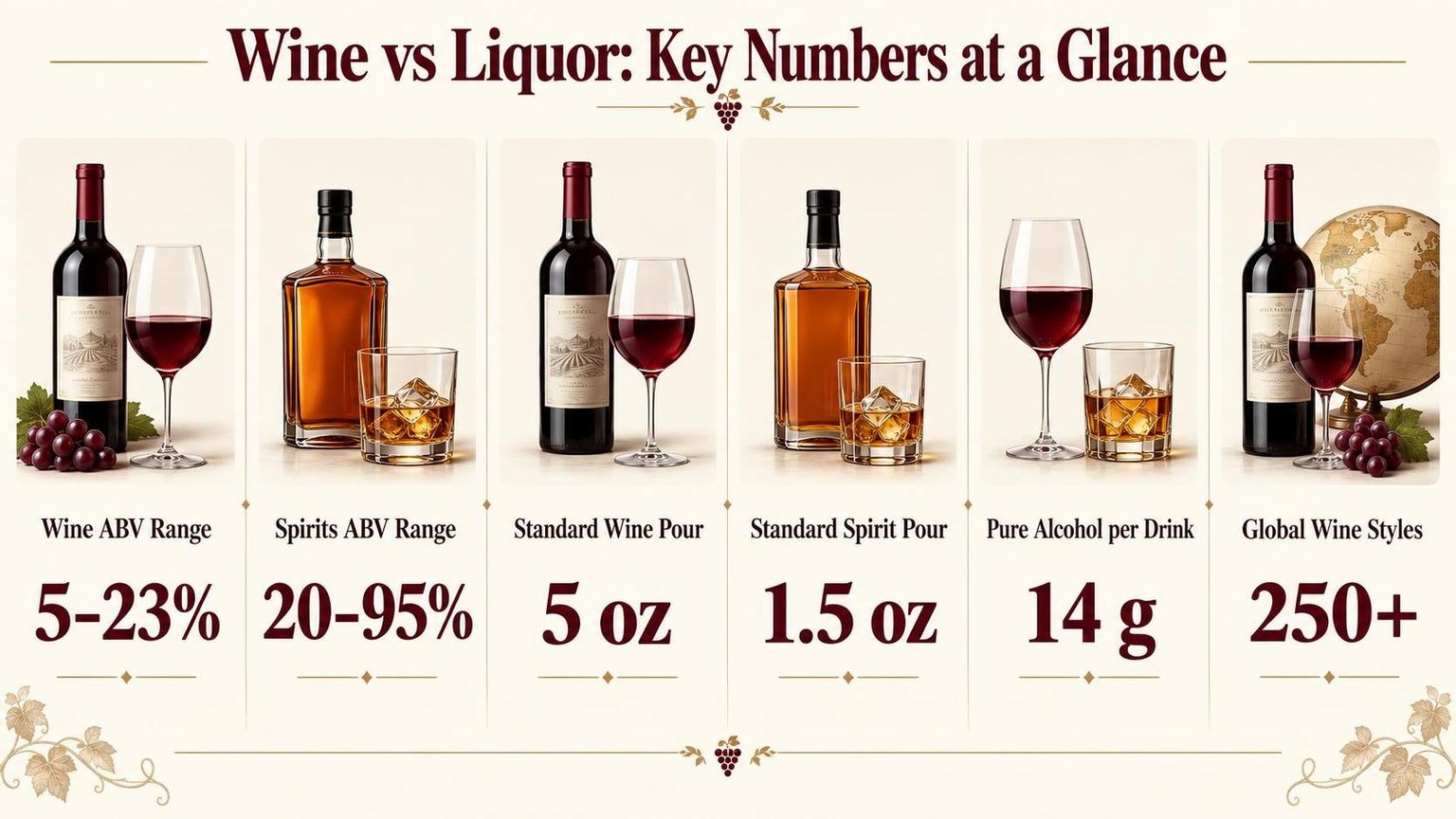
Liquors and wines differ fundamentally in production method, alcohol content, and serving context. Understanding these categories helps consumers navigate the estimated 250+ distinct spirit and wine styles available globally.
Core Differences at a Glance
| Attribute | Wine | Liquor (Spirits) |
| Production | Fermentation only | Fermentation + distillation |
| ABV Range | 5–23% | 20–95% |
| Calories per 1.5 oz | ~36–54 | ~65–120 |
| Sugar (typical, per oz) | 0.5–5 g | 0–11 g (liqueurs highest) |
| Standard Serving | 5 oz | 1.5 oz |
| Shelf Life (opened) | 3–5 days | 1–3+ years |
Each standard drink—5 oz of wine at 12% ABV or 1.5 oz of 80-proof spirit—contains roughly 14 grams of pure alcohol, per NIAAA guidelines.
Major Wine Categories
- Still wines: Red, white, rosé — 11–15% ABV. Account for approximately 75% of global wine volume.
- Sparkling wines: Champagne, Prosecco, Cava — 11–13% ABV. Produced via secondary fermentation.
- Fortified wines: Port, Sherry, Madeira — 15–22% ABV. Grape spirit added during or after fermentation.
- Dessert wines: Sauternes, Tokaji, ice wine — residual sugar often exceeds 100 g/L.
Major Liquor Categories
- Vodka: 40% ABV standard. Largest-selling spirit category worldwide by volume.
- Whiskey: 40–65% ABV. Aged in oak; bourbon requires minimum 51% corn mash and new charred barrels.
- Rum: 37.5–75% ABV. Distilled from sugarcane or molasses.
- Tequila: 38–55% ABV. Must contain at least 51% blue Weber agave; 100% agave labels use no other sugars.
- Gin: Minimum 37.5% ABV (EU) or 40% (US). Juniper-dominant botanical profile required.
- Brandy: 35–60% ABV. Distilled from wine; Cognac requires double distillation in copper pot stills within designated Charente regions.
Liqueurs form a subcategory of liquors, distinguished by added sugar content of at least 100 g/L under EU regulation (Regulation 2019/787). ABV typically ranges from 15–30%.
Fortified wines blur the boundary between categories. Port, for example, is fermented grape juice halted mid-process by adding 77% ABV grape spirit, landing final alcohol at 19–22%.
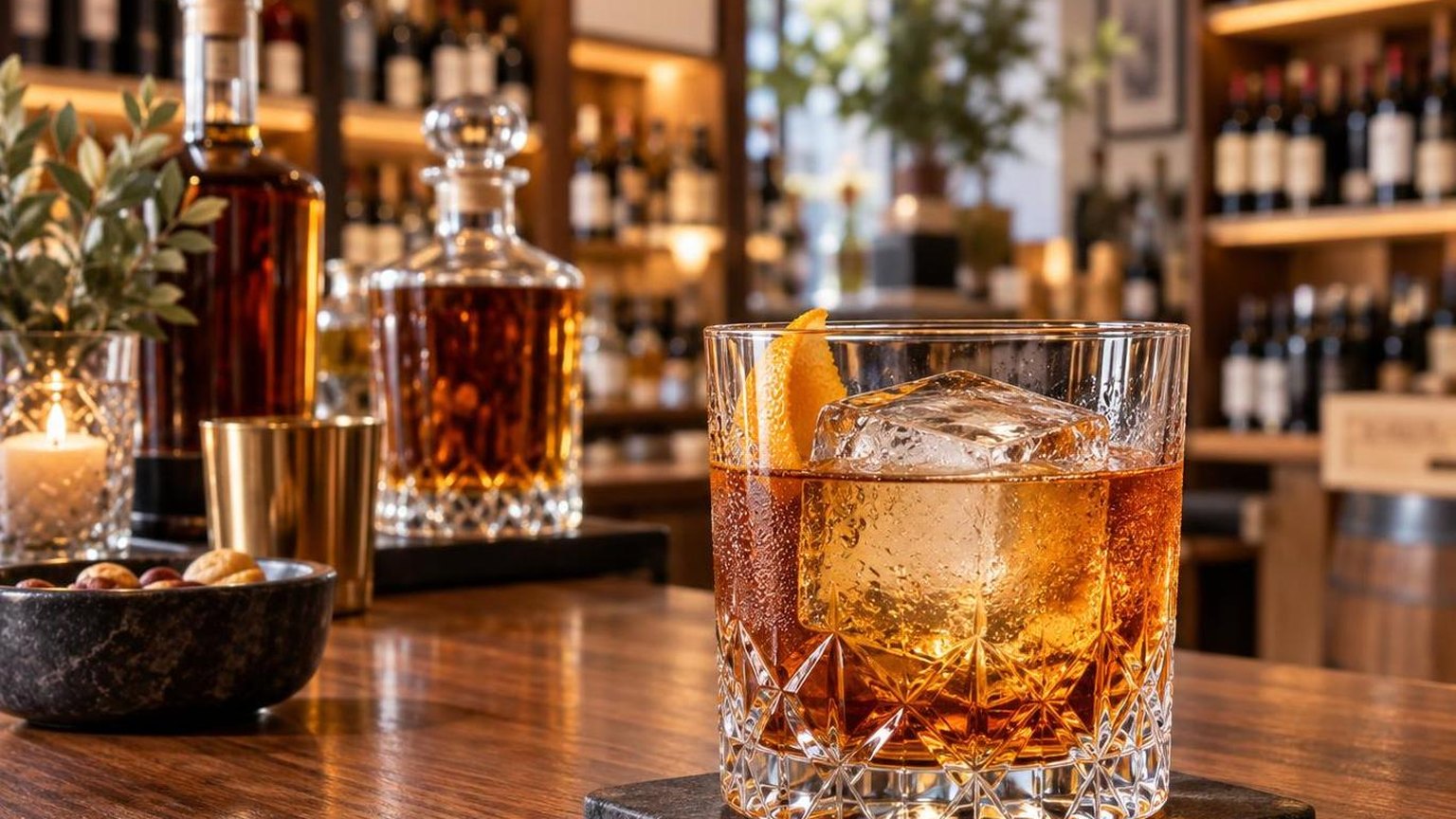
ABV Ranges for Common Bottles
Alcohol by volume (ABV) measures the percentage of pure ethanol in a given volume of liquid. Understanding these ranges helps you gauge serving sizes, food pairings, and legal limits.
The spectrum runs from around 5% for beer to 60%+ for cask-strength spirits.
Wine ABV Ranges
| Wine Type | Typical ABV |
| Moscato d’Asti | 5.0–5.5% |
| German Riesling (Kabinett) | 7.5–9.0% |
| Prosecco | 11.0–12.0% |
| Pinot Grigio | 12.0–13.0% |
| Chardonnay | 13.0–14.5% |
| Cabernet Sauvignon | 13.5–15.0% |
| Zinfandel | 14.0–16.0% |
| Port | 19.0–22.0% |
| Sherry (Oloroso) | 17.0–22.0% |
Fortified wines like Port and Sherry reach higher ABVs because neutral grape spirit is added during production, halting fermentation and retaining residual sugar.
Beer and Cider ABV Ranges
| Category | Typical ABV |
| Light Lager (Bud Light) | 4.2% |
| Standard Lager (Budweiser) | 5.0% |
| IPA | 6.0–7.5% |
| Belgian Tripel | 8.0–9.5% |
| Imperial Stout | 9.0–12.0% |
| Hard Cider | 4.5–7.0% |
Spirits and Liqueurs ABV Ranges
| Spirit | Typical ABV |
| Aperol | 11.0% |
| Baileys Irish Cream | 17.0% |
| Kahlúa | 20.0% |
| Standard Vodka / Gin / Rum | 40.0% |
| Bourbon (bottled-in-bond) | 50.0% |
| Navy-Strength Gin | 57.0% |
| Cask-Strength Whiskey | 55.0–65.0% |
| Overproof Rum (Wray & Nephew) | 63.0% |
U.S. federal law (27 CFR §5.36) requires spirits labeled “vodka” or “gin” to be bottled at a minimum of 40% ABV (80 proof). Bottled-in-bond products must hit exactly 50% ABV (100 proof).
- Low-ABV (under 15%): Most wines, beers, and aperitif-style liqueurs like Aperol.
- Mid-ABV (15–30%): Fortified wines, cream liqueurs, and vermouths.
- High-ABV (30–50%): Standard-proof spirits including vodka, whiskey, and tequila.
- Very High-ABV (50%+): Cask-strength, overproof, and navy-strength bottlings requiring careful dilution or measured pours.
Always check the label. ABV can vary by vintage, brand, and even batch—especially with craft and single-barrel releases where tolerances shift by 2–3 percentage points.
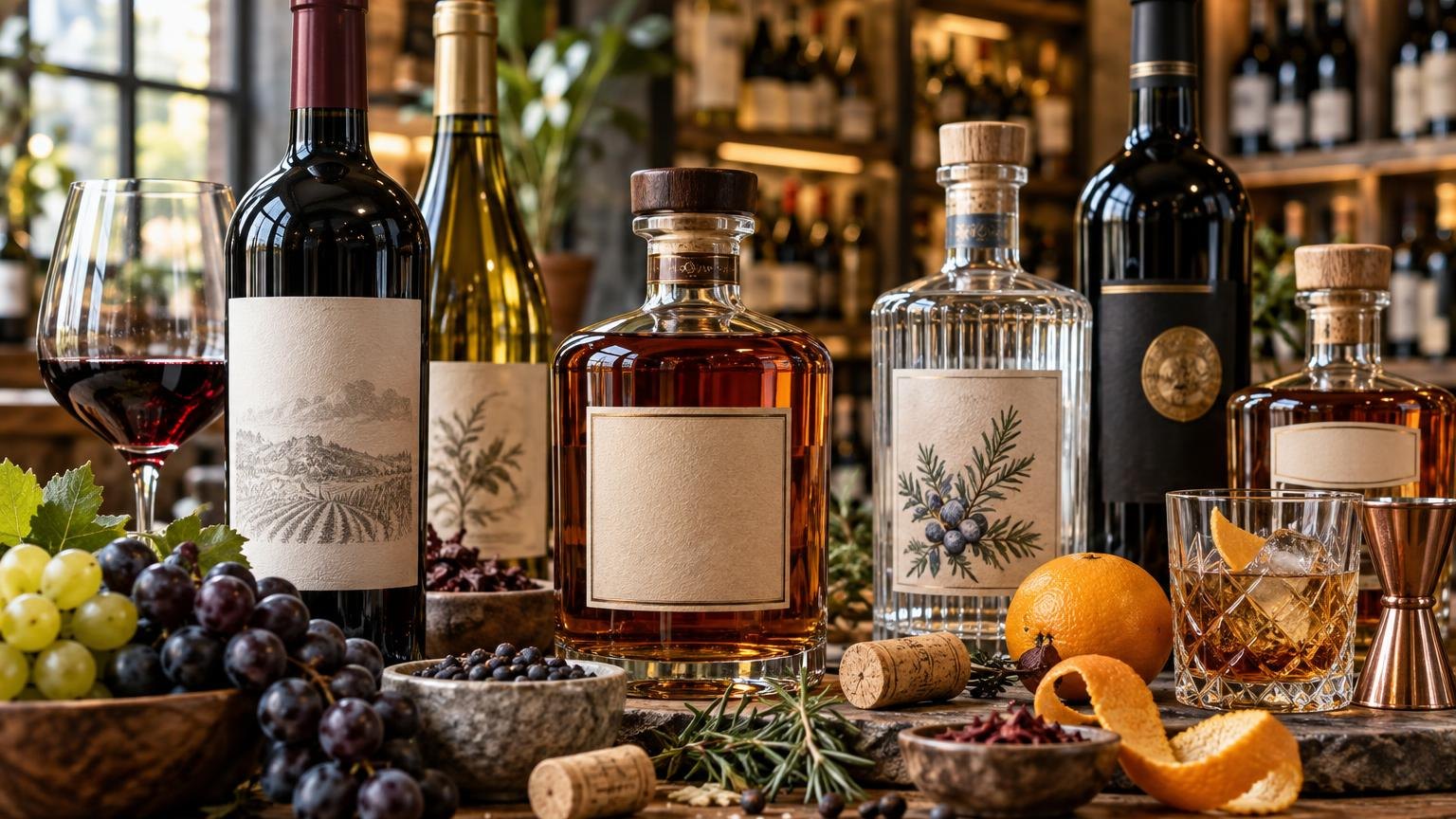
How Distillation Differs From Fermentation
Fermentation creates alcohol; distillation concentrates alcohol already produced by fermentation. Wine stops after fermentation and related cellar work, while liquor requires an additional separation step using heat, condensation, or both.
Fermentation Is a Biological Conversion
Yeast consumes fermentable sugars and produces ethanol, carbon dioxide, heat, and flavor compounds. Grapes supply their own sugar, while whiskey, vodka, and many other spirits begin with grain, fruit, sugarcane, or another carbohydrate source.
Yeast tolerance and available sugar limit natural alcohol production. Most wine yeasts become stressed as ethanol rises, so ordinary fermentation cannot produce a bottle-strength vodka or whiskey.
| Product or process | Typical alcohol concentration |
| Table wine after fermentation | Approximately 8%–15% alcohol by volume |
| Fermented wash intended for distillation | Often approximately 7%–12% alcohol by volume |
| Common bottled distilled spirits | Typically 40% alcohol by volume in the United States |
Distillation Is a Physical Separation
A still heats fermented liquid, producing vapor enriched in volatile compounds. The vapor travels into a condenser, cools, and returns to liquid form.
Distillation does not manufacture ethanol, and a still cannot turn unfermented grain or grape juice directly into liquor.
| Compound | Normal boiling point at standard atmospheric pressure |
| Ethanol | 78.37°C |
| Water | 100°C |
These boiling points explain enrichment, but a still does not separate compounds at single, exact moments.
Ethanol and water interact as a mixture, while esters, aldehydes, higher alcohols, and acids move through the run according to volatility, concentration, and still design.
Distillers divide output into heads, hearts, and tails. The desired heart cut balances clean ethanol with character.
In practical tasting, a wider cut can preserve heavier fruit, grain, or earthy notes; a narrower cut often produces a lighter, cleaner spirit.
Why the Distinction Matters
Fermentation determines the initial alcohol and much of the aroma foundation. Distillation then selects and concentrates components from that fermented base.
Pot stills generally retain more congeners, while multi-column stills can produce a highly rectified, neutral spirit.
The quantitative values above align with National Institute of Standards and Technology boiling-point data and common Alcohol and Tobacco Tax and Trade Bureau labeling conventions.
Actual strength varies by yeast, raw material, equipment, distillation cuts, dilution, and maturation.
Reading Labels on Spirits and Wine
Every bottle sold in the United States carries mandatory label information regulated by the Alcohol and Tobacco Tax and Trade Bureau (TTB).
Understanding these elements transforms a casual buyer into an informed one, revealing origin, quality, and value before a single sip.
Mandatory Label Elements
The TTB requires specific statements on all alcohol labels under 27 CFR Part 4 (wine) and Part 5 (spirits). Missing any element means the label cannot receive a Certificate of Label Approval (COLA).
- Brand name — the producer’s registered trademark
- Class and type — e.g., “Straight Bourbon Whiskey” or “Red Table Wine”
- Alcohol content — stated as percentage by volume (ABV)
- Net contents — standard bottle is 750 mL
- Name and address of the bottler, importer, or producer
- Country of origin for imported products
- Government health warning — mandatory since 1988
ABV Tolerances
The TTB permits specific tolerances for stated ABV. These vary by category and directly affect tax classification.
| Category | Stated ABV Range | Allowed Tolerance |
| Wine (7–14% ABV) | 7%–14% | ±1.5% |
| Wine (over 14% ABV) | 14.1%–24% | ±1.0% |
| Distilled spirits | Typically 40%+ | ±0.3% |
Wine-Specific Label Terms
A U.S. wine labeled with a grape variety—such as “Cabernet Sauvignon”—must contain at least 75% of that grape. Oregon requires 90% for most varieties. European Union regulations mandate 85%.
Vintage year on a U.S. label means 95% of the grapes were harvested that year. An appellation like “Napa Valley” requires 85% of the fruit to originate from that AVA (American Viticultural Area).
Spirits-Specific Terms
“Straight” bourbon must be aged a minimum of 2 years in new charred oak barrels. If aged under 4 years, the exact age must appear on the label.
“Bottled-in-Bond” indicates 100 proof (50% ABV), aged at least 4 years in a federally bonded warehouse.
The phrase “single malt” on Scotch means 100% malted barley from one distillery. “Blended” Scotch combines malt and grain whiskies from multiple distilleries.
These definitions carry legal weight under both TTB and Scotch Whisky Regulations 2009.
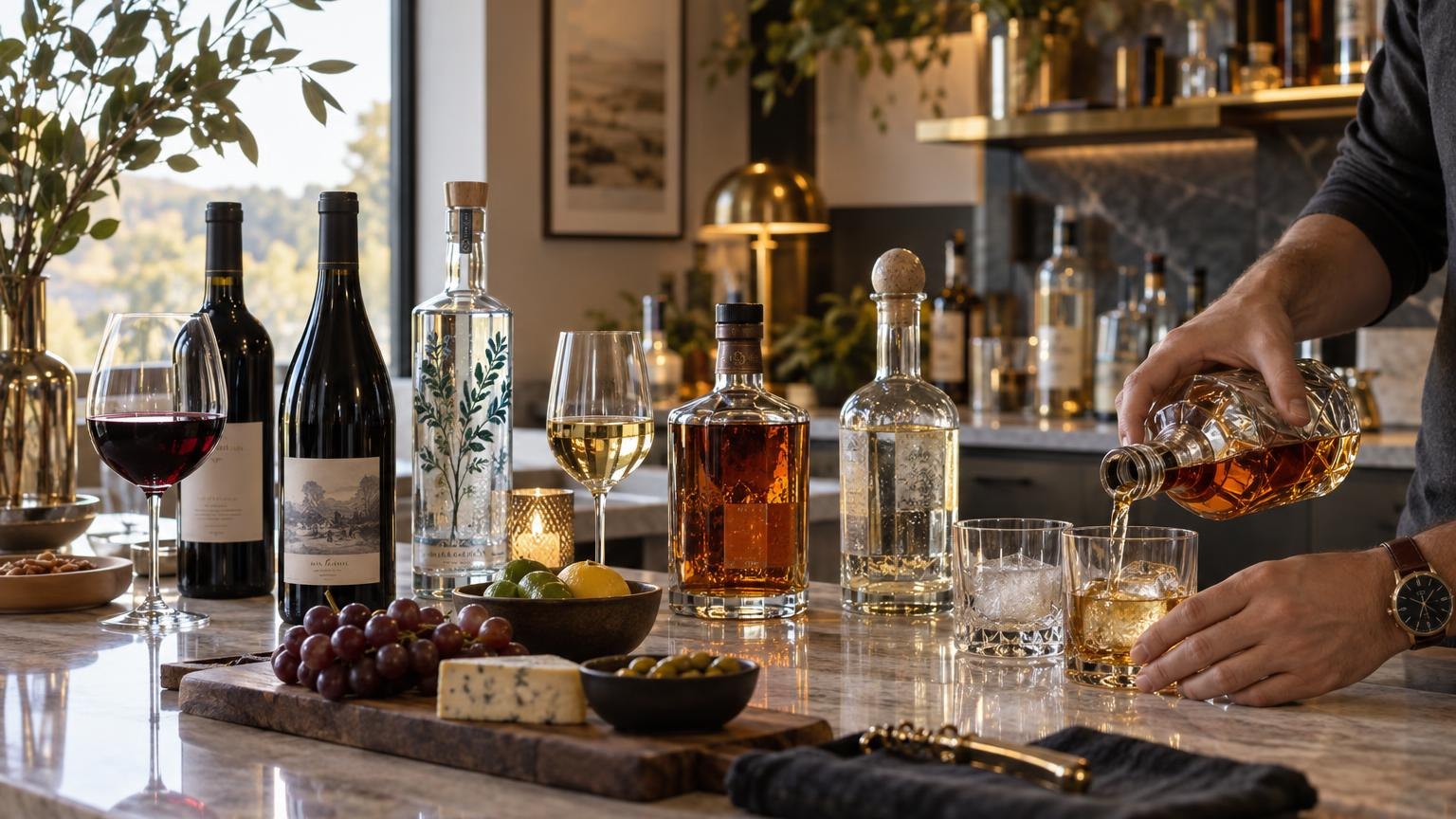
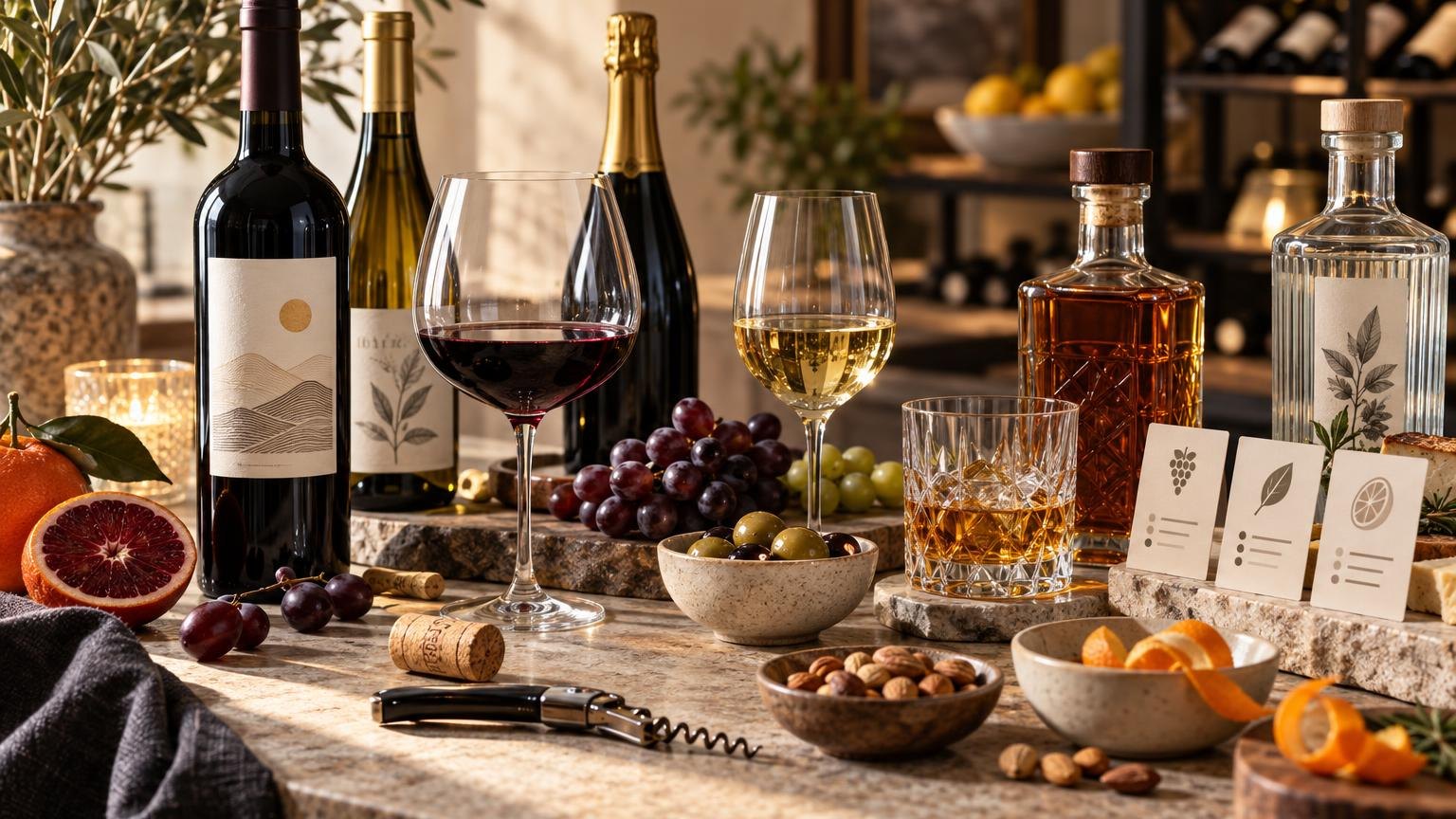
Flavor Families Across Wine and Liquor
Wine and liquor share overlapping flavor compounds despite radically different production methods.
Over 1,000 aroma compounds have been identified in wine alone, while distilled spirits develop additional complexity through barrel aging, botanical infusion, and sugar concentration.
Flavor scientists group taste perception into primary families that apply across both categories. Understanding these families transforms how you pair, blend, and appreciate every pour.
Core Flavor Families Compared
| Flavor Family | Wine Examples | Liquor Examples | Key Compounds |
| Fruity | Riesling, Beaujolais | Calvados, Cherry Heering | Esters (ethyl acetate, isoamyl acetate) |
| Spicy | Syrah, Gewürztraminer | Rye whiskey, Fireball | Eugenol, cinnamaldehyde |
| Herbal/Botanical | Sauvignon Blanc, Cabernet Franc | Gin, Chartreuse (130 botanicals) | Pyrazines, terpenes |
| Caramel/Vanilla | Oaked Chardonnay, Rioja | Bourbon, aged rum | Vanillin, lactones from oak |
| Smoky/Peaty | Some Pinotage, smoked wines | Islay Scotch, mezcal | Guaiacol, phenols |
| Nutty/Oxidative | Fino Sherry, Vin Jaune | Amaretto, aged tequila | Sotolon, benzaldehyde |
| Bitter/Amaro | Tannic Nebbiolo, Sagrantino | Campari, Fernet-Branca | Tannins, gentian, quinine |
Why Overlap Exists
Oak aging is the single biggest shared flavor driver. Both bourbon and red Bordeaux extract vanillin and tannin from barrels. American oak delivers roughly 2–5 mg/L of vanillin, while French oak contributes about 1–3 mg/L.
Fermentation itself generates 200+ esters regardless of whether the base is grape, grain, or agave. Ethyl hexanoate produces apple-like notes in both Champagne and Japanese whisky.
Practical Crossover Applications
- Pairing by family: A vanilla-forward bourbon and oaked Chardonnay complement the same grilled lobster dish because both carry oak lactones.
- Cocktail bridging: Fino Sherry replaces dry vermouth in a Martini because both share acetaldehyde-driven nutty profiles.
- Tasting calibration: Training with Chartreuse (62 flavor-active botanicals confirmed by spectroscopy) sharpens your ability to identify herbal notes in Grüner Veltliner.
Mapping wines and liquors onto the same flavor grid accelerates sensory literacy. Once you recognize vanillin in Rioja, you detect it in bourbon instantly—a skill that takes roughly 40–60 guided tastings to develop reliably.
Serving Sizes and Responsible Pours
A “standard drink” in the United States contains exactly 14 grams (0.6 fluid ounces) of pure ethanol. Understanding how that translates across liquors, wine, and beer prevents over-serving and keeps tasting experiences enjoyable.
Standard Drink Equivalents by Category
| Beverage | Typical ABV | Standard Serving | Pure Alcohol |
| Regular beer | 5% | 12 fl oz (355 ml) | 14 g |
| Wine | 12% | 5 fl oz (148 ml) | 14 g |
| Fortified wine (port, sherry) | 17–20% | 3–3.5 fl oz (89–104 ml) | 14 g |
| Distilled spirits (80-proof) | 40% | 1.5 fl oz (44 ml) | 14 g |
| Cask-strength whiskey | 55–65% | ~1 fl oz (30 ml) | 14 g |
| Liqueurs (Amaretto, Cointreau) | 20–40% | 1.5–3 fl oz | ~14 g |
Wine Bottle Math
A standard 750 ml wine bottle yields five 5-ounce pours. A magnum (1.5 L) yields ten. Restaurant pours often range from 5 to 6 ounces, meaning a bottle sometimes serves only four glasses.
Spirit Pour Standards
Most U.S. bars use a 1.5 oz jigger as the standard single pour. A “double” is 3 oz, already containing two full standard drinks.
Free-pouring without a jigger produces an average overcount of 0.5 oz per drink, according to bartender accuracy studies.
Guidelines for Responsible Consumption
- The USDA Dietary Guidelines (2020–2025) recommend no more than 2 standard drinks per day for men and 1 for women.
- Blood alcohol concentration (BAC) of 0.08% is the legal driving limit in all 50 states; a 160-pound person typically reaches this after roughly 3 standard drinks within one hour.
- Spacing drinks at least 45–60 minutes apart allows the liver—which metabolizes about one standard drink per hour—to keep pace.
- Higher-proof spirits (barrel proof bourbon at 130 proof, for example) pack 62.5% more alcohol per ounce than standard 80-proof bottles.
Tasting Pours vs. Full Pours
Wine tastings typically use 1–2 oz pours, allowing evaluation of 8–10 wines while consuming the equivalent of roughly two full glasses.
Spirit tastings use 0.5–0.75 oz pours, keeping total intake manageable across multiple expressions.
Accurate measurement protects both enjoyment and health. A reliable jigger or marked pourer costs under $10 and eliminates guesswork entirely.
Building a Balanced Home Bar
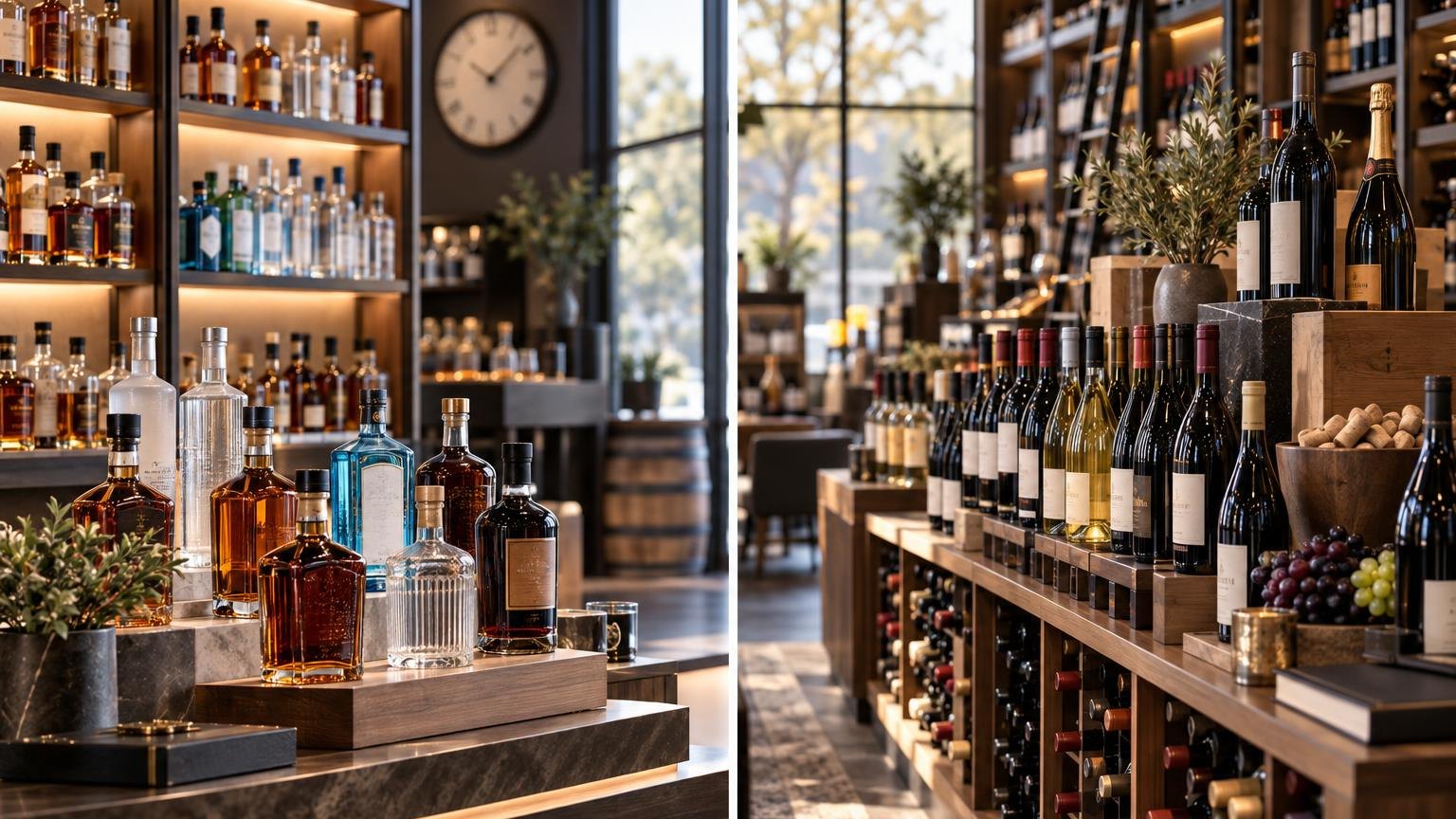
A functional home bar requires roughly 12–15 bottles to cover 90% of classic cocktails. Strategic selection across spirits, liqueurs, and wine eliminates gaps without overspending on bottles that collect dust.
The Six Foundation Spirits
Every home bar starts with these base spirits, which form the backbone of over 75 recognized IBA (International Bartenders Association) cocktails.
| Spirit | ABV Range | Recommended Spend | Key Cocktails Unlocked |
| Vodka | 40% | $20–$30 | Martini, Moscow Mule, Cosmopolitan |
| London Dry Gin | 40–47% | $25–$35 | Gin & Tonic, Negroni, Tom Collins |
| Bourbon | 40–50% | $25–$40 | Old Fashioned, Whiskey Sour, Mint Julep |
| White Rum | 40% | $15–$25 | Mojito, Daiquiri, Piña Colada |
| Blanco Tequila (100% agave) | 40% | $25–$35 | Margarita, Paloma, Tequila Sunrise |
| Cognac or Brandy | 40% | $30–$45 | Sidecar, Brandy Alexander, Sazerac |
Essential Liqueurs and Modifiers
Add 4–5 liqueurs to dramatically expand your repertoire. These bottles typically last 12–18 months after opening due to their sugar content acting as a preservative.
- Orange liqueur (Cointreau or Grand Marnier, 40% ABV) — required for Margaritas, Sidecars, and Cosmopolitans
- Sweet vermouth (16–18% ABV) — essential for Manhattans and Negronis; refrigerate after opening, discard after 4–6 weeks
- Dry vermouth (15–18% ABV) — critical for dry Martinis; same refrigeration rule applies
- Campari (25% ABV) — the bitter backbone of Negronis and Americanos
- Simple syrup — a 1:1 sugar-to-water ratio costs nearly nothing and replaces buying commercial sweeteners
Wine for the Home Bar
Stock 2–3 wines minimum: one dry white (Sauvignon Blanc or Pinot Grigio), one medium-bodied red (Pinot Noir or Grenache), and one sparkling (Cava or Prosecco at $10–$18 per bottle).
Total estimated startup cost for a well-rounded 12-bottle home bar ranges from $250 to $400.
Buying mid-shelf bottles consistently outperforms bottom-shelf options in blind taste tests conducted by outlets like Serious Eats and America’s Test Kitchen.
Questions Readers Ask
What is the legal difference between liquor, spirits, and liqueur?
In US federal regulation (27 CFR §5), “spirits” and “liquor” are interchangeable terms for any distilled beverage at or above 40% ABV (80 proof).
Liqueurs are a subcategory: spirits sweetened with at least 2.5% sugar by weight and flavored with fruits, herbs, or spices, typically ranging 15–30% ABV.
Confusing the two on a label violates TTB labeling rules and can result in product seizure.
How many recognized categories of distilled spirits exist under US TTB classification?
The Alcohol and Tobacco Tax and Trade Bureau (TTB) recognizes 13 primary classes of distilled spirits, including whisky, brandy, rum, tequila, gin, vodka, and cordials/liqueurs.
Each class carries strict standards of identity—bourbon, for example, must be produced from a mash of at least 51% corn and aged in new charred oak containers.
These classifications determine labeling, taxation, and import/export eligibility.
What ABV range separates wine from fortified wine and dessert wine?
Standard table wine in the US falls between 7% and 14% ABV under TTB definitions. Fortified wines such as Port and Sherry have spirits added during or after fermentation, pushing ABV to 17–22%.
Once a wine exceeds 14% ABV, it moves into a higher federal excise tax bracket—$1.57 per gallon versus $1.07 for wines at or below 14%.
How should open bottles of liquor and wine be stored to preserve quality?
Opened spirits maintain flavor integrity for 1–2 years when stored upright, sealed tightly, and kept away from direct sunlight at 15–20°C (59–68°F); high-proof bottles above 40% ABV degrade slower due to reduced oxidation.
Opened wine deteriorates far faster—3–5 days for reds and whites under refrigeration with a vacuum stopper, and just 1–3 days for sparkling wine even with a Champagne stopper.
Fortified wines like Madeira are the exception, lasting 4–6 weeks after opening because the added spirit acts as a preservative.
Why do aged spirits like whiskey cost significantly more than unaged ones like vodka?
Barrel aging ties up capital and warehouse space for years—bourbon requires a minimum of 2 years for “straight” designation, and many single malts rest 12–25 years.
During aging, 2–4% of volume evaporates annually (the “angel’s share”), meaning a barrel filled with 200 liters may lose 30–40 liters over a decade.
These compounding costs of time, evaporation loss, storage insurance, and barrel procurement (new American oak barrels cost $200–$300 each) drive retail prices well above unaged spirits.
What are the five most-consumed spirit categories globally by volume?
According to IWSR Drinks Market Analysis 2023 data, the top five by volume are: baijiu (Chinese grain spirit, over 10 billion liters annually), vodka, whisky, rum, and brandy.
Baijiu alone accounts for roughly one-third of all spirits consumed worldwide, though over 99% of its consumption occurs within China.
In the US market specifically, vodka leads at approximately 78 million 9-liter cases sold in 2023, followed by American whiskey and tequila/mezcal.
How do wine and liquor interact differently with food during pairing?
Wine’s 12–15% ABV and natural acidity (pH 2.9–3.9) allow it to cut through fat and cleanse the palate between bites.
Which is why tannic Cabernet Sauvignon pairs with marbled steak—the tannins bind to meat proteins and reduce astringency.
Spirits at 40%+ ABV overwhelm most dishes when sipped neat, so cocktail-based pairing dilutes ABV to 15–22% and introduces complementary flavor bridges: a smoky mezcal Negroni alongside charred octopus, for instance.
Mirrors Maillard reaction compounds.
The key metric is matching the intensity of the drink to the weight of the dish—light Pinot Grigio with ceviche, barrel-aged rum with dark chocolate.
Further Reading
- How Many Calories In Bottle Wine? Most Correct Answer
- How Many Calories In A Glass Of Cabernet? Answer By Expert
- How Many Calories In A Glass Of Merlot?
- How Many Bottles of Wine for 30 People?
- What Does Port Taste Like? Most Correct Answer
- All Alcohol Guides
- Alcohol and Tobacco Tax and Trade Bureau – Beverage Alcohol Manual (2024)
- FDA – Food Labeling: Calorie Labeling of Alcoholic Beverages (2023)
- USDA FoodData Central – Alcoholic Beverage Nutrient Database (2024)
- National Institute on Alcohol Abuse and Alcoholism – Alcohol Facts and Statistics (2024)
- CDC – Alcohol and Public Health Fact Sheets (2024)
- UC Davis Department of Viticulture and Enology – Wine Composition and Analysis (2023)
- PubMed – Polyphenol Content and Antioxidant Activity of Wines and Liquors (Waterhouse et al.) (2006)
- Wine & Spirits Education Trust (WSET) – Global Spirits Classification Guide (2023)
- Oxford Companion to Wine / Jancis Robinson – Wine and Spirits Reference (2023)