Good tequila for shots is 100% agave blanco tequila with clean cooked-agave flavor, moderate proof, and no harsh diffuser-like burn.
For most bars and home pours, reliable shot bottles sit around $25–$45, where quality improves without wasting aged complexity.
Look for labels that say “100% de agave,” avoid mixto tequila, and favor brands with transparent production details, NOM numbers, and balanced pepper-citrus notes.
Blanco works best because it tastes crisp when served neat, chilled, or with salt and lime; reposado can work if you want softer vanilla and oak.
What Makes Tequila Good for Shots
Shot-worthy tequila balances smoothness, flavor intensity, and clean finish. The difference between a pleasant shot and a grimace-inducing one comes down to agave content, production method, and aging category.
100% Agave Is Non-Negotiable
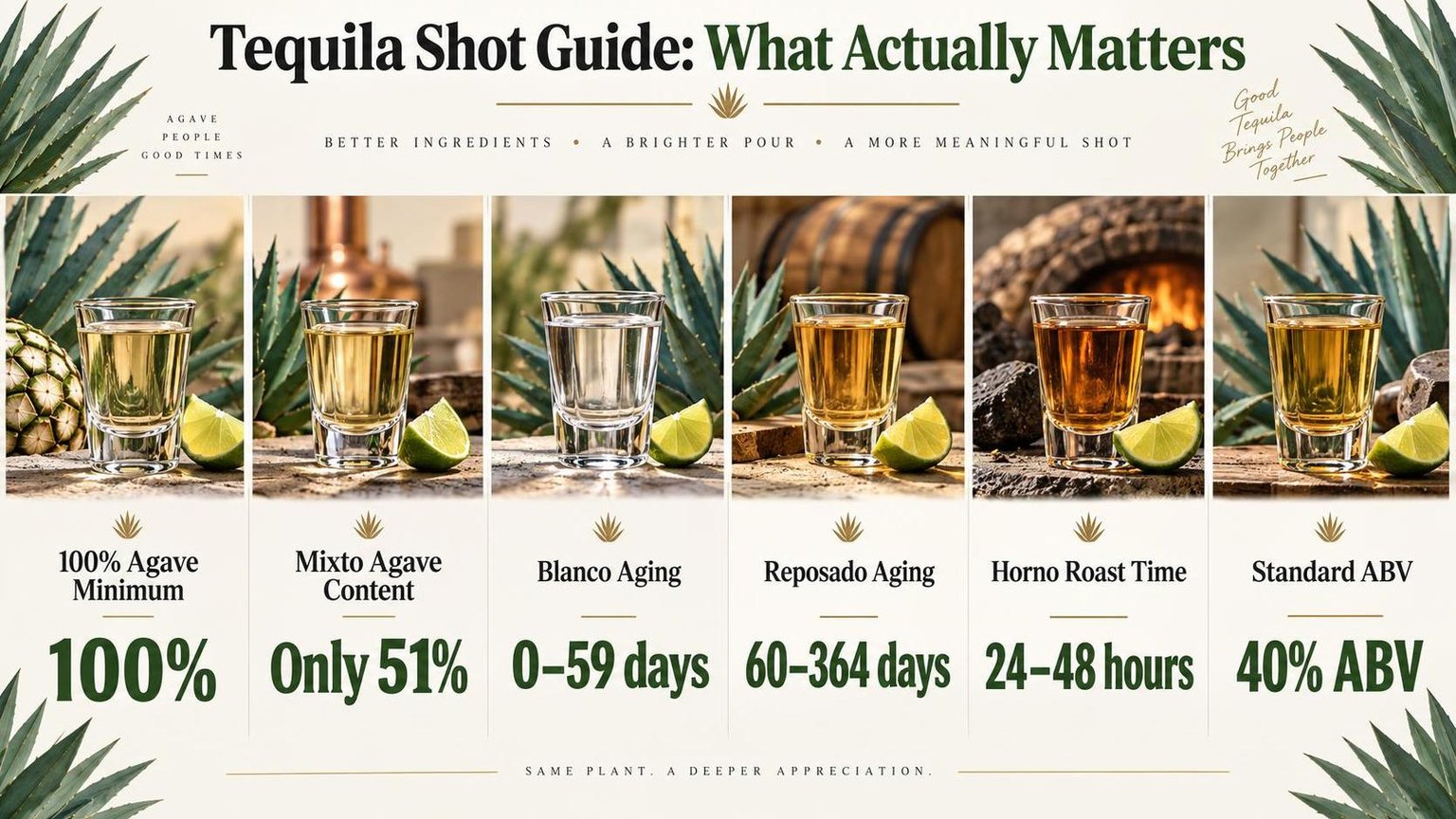
Mexican law permits tequila labeled “mixto” to contain as little as 51% blue Weber agave sugars, with the remaining 49% from cane sugar or other sources. Mixto tequilas produce harsher alcohol burn and contribute to worse hangovers.
Every bottle worth shooting displays “100% de agave” or “100% puro de agave” on its label. This single distinction eliminates most bottom-shelf options immediately.
The Right Aging Category
Aging dramatically affects how a tequila performs as a shot. Each category delivers a distinct experience at the glass.
| Category | Aging Period | Shot Profile |
| Blanco (Silver) | 0–59 days | Bright agave, citrus, peppery kick; clean and sharp |
| Reposado | 60 days–364 days | Softened edges, light caramel, subtle oak warmth |
| Añejo | 1–3 years | Rich vanilla, butterscotch; smooth but complex for sipping |
| Extra Añejo | 3+ years | Deep wood and dried fruit; too nuanced for shots |
Blanco and reposado dominate the shot category. Blanco delivers the purest agave expression. Reposado offers a smoother ride for drinkers who find blanco too aggressive.
Production Details That Matter
- Slow-roasted agave: Traditional brick ovens (hornos) cook piñas for 24–48 hours, producing sweeter, more rounded flavors versus autoclaves that finish in 7–12 hours.
- Tahona or roller mill extraction: Tahona-crushed tequilas tend toward earthier, more textured profiles ideal for sipping shots slowly.
- Additive-free certification: Brands carrying the “Additive-Free” seal from Tequila Matchmaker have no added glycerin, oak extract, caramel color, or sugar-based syrup — ingredients that mask flaws and create artificial sweetness.
Alcohol content also plays a role. Standard tequila sits at 40% ABV (80 proof), though some blancos reach 46% ABV, delivering more intense agave flavor per 1.5-ounce pour.
Best Tequila Types for Clean Shots
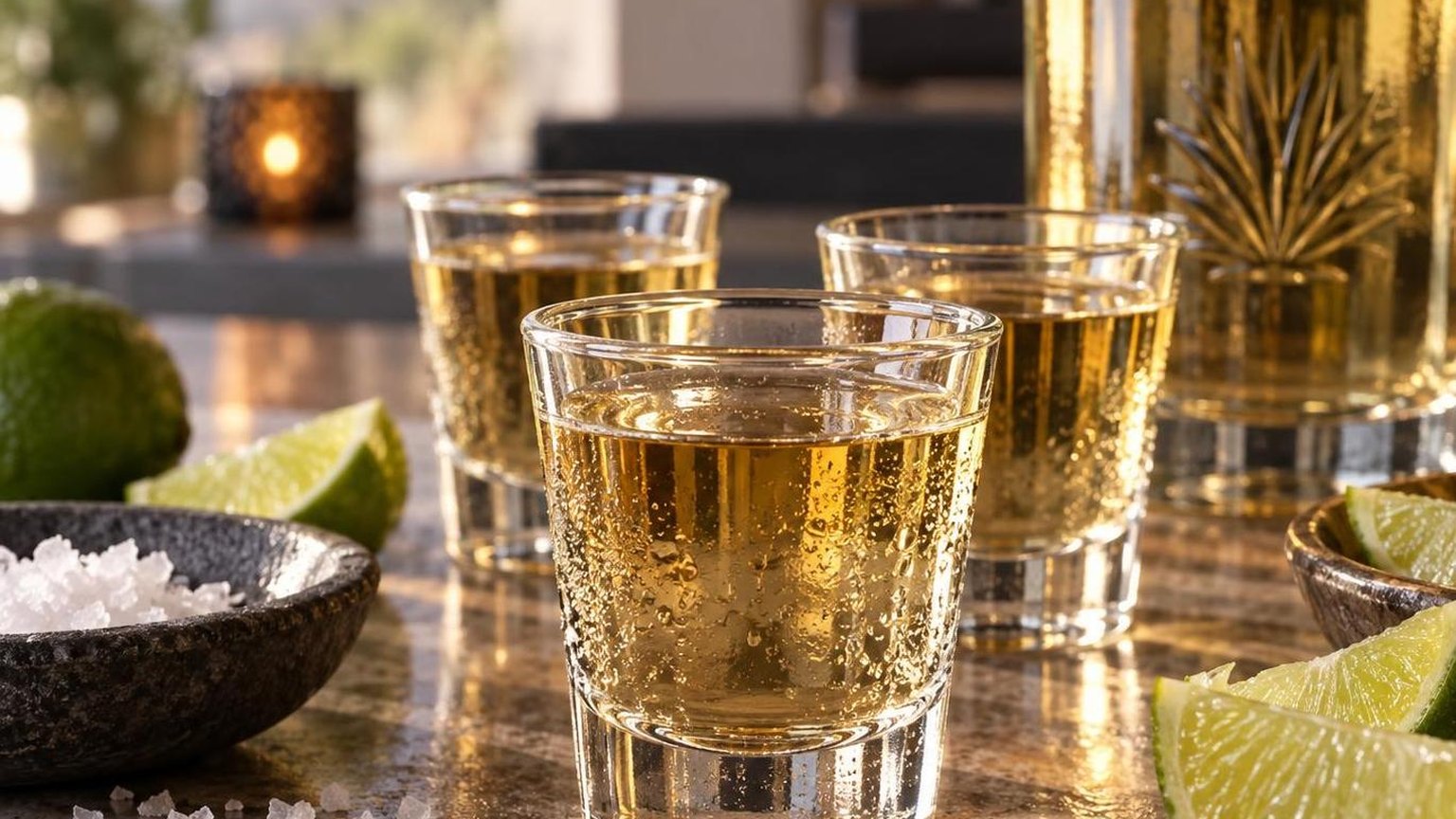
Blanco and reposado tequilas usually make the best clean shots. Blanco delivers direct agave flavor and a crisp finish, while reposado adds barrel softness without burying the spirit’s roasted-pepper, citrus, and earthy character.
Blanco: Best for Bright, Agave-Forward Shots
Blanco tequila is unaged or briefly rested before bottling. Because extended barrel aging does not reshape the flavor, well-made examples show cooked agave, citrus, herbs, pepper, and minerality more clearly than older expressions.
Choose blanco when the goal is a lively shot rather than a sweet, whiskey-like pour. A quality blanco should taste balanced at room temperature, without requiring salt and lime to conceal harsh alcohol or artificial-tasting sweetness.
Reposado: Best for a Smoother, Rounder Shot
Reposado spends time in oak, gaining vanilla, baking-spice, caramel, or toasted notes. The barrel also softens some peppery edges, making reposado approachable for drinkers who find blanco too sharp.
Reposado works especially well for celebratory rounds because it remains recognizably tequila while offering a richer texture. Avoid heavily sweetened-tasting bottles; clean reposado should retain cooked-agave flavor beneath the oak.
| Type | Legal maturation | Typical shot profile | Best use |
| Blanco | Unaged or rested under two months | Citrus, pepper, herbs, cooked agave | Clean, bright shots |
| Reposado | At least two months but under one year | Agave, vanilla, light oak, spice | Softer, rounded shots |
| Añejo | At least one year but under three years | Caramel, oak, dried fruit, spice | Slow sipping |
| Extra añejo | At least three years | Deep oak, vanilla, cacao, dried fruit | Slow sipping |
Why Añejo Is Usually Better Sipped
Añejo and extra añejo can make luxurious shots, but rapid drinking hides the complexity created by extended barrel maturation. Their higher prices also reflect aging time, evaporation, storage, and oak influence rather than automatic superiority.
What to Check Before Buying
- Look for “100% agave”: This identifies tequila fermented entirely from Blue Weber agave sugars. “Mixto” tequila may obtain up to forty-nine percent of fermentable sugars from non-agave sources.
- Check the alcohol level: Tequila sold in the United States is commonly bottled at forty percent alcohol by volume. Higher-proof blanco offers more intensity but can feel hotter as a shot.
- Serve cool, not frozen: Heavy chilling suppresses aroma and can disguise flaws. A slight chill keeps the pour refreshing while preserving cooked-agave and citrus notes.
- Use a narrow tasting glass: Sip first before committing to shots. Harsh solvent aromas, excessive sweetness, or a burning finish suggest choosing another bottle.
Blanco Versus Reposado for Shooting
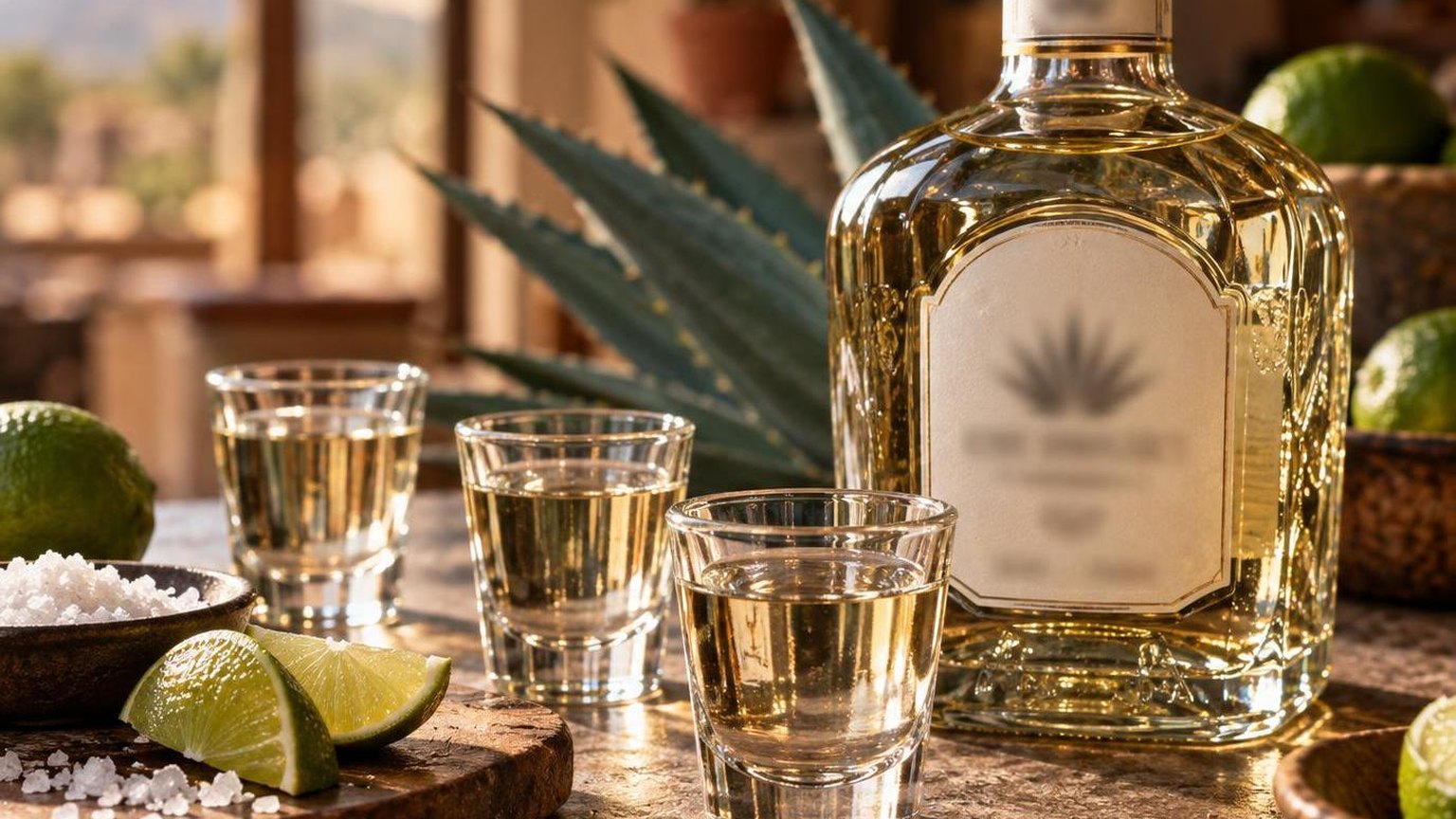
Blanco delivers the clearest expression of cooked agave, while reposado adds oak-derived softness and flavor. For shots, choose blanco when freshness and intensity matter; choose reposado when the goal is a rounder, less peppery finish.
How production changes the shot
Mexico’s NOM-006 tequila standard defines blanco as tequila without maturation. Reposado must mature in direct contact with oak or holm oak, allowing wood compounds and controlled oxidation to alter the spirit before bottling.
| Factor | Blanco | Reposado |
| Required maturation | None | At least 2 months in oak or holm oak |
| Typical flavor | Cooked agave, citrus, herbs, black pepper | Cooked agave, vanilla, caramel, baking spice |
| Color | Usually clear | Pale straw through gold |
| Legal alcohol range in Mexico | 35%–55% ABV | 35%–55% ABV |
| Minimum US bottling strength | 40% ABV | 40% ABV |
| Best shooting style | Chilled or neat with citrus | Neat at cool room temperature |
Blanco often feels sharper because no barrel-derived vanilla, caramel, or tannin moderates its roasted-agave and pepper notes.
That direct profile makes well-made blanco especially revealing: production flaws, excessive diffuser bitterness, and harsh alcohol are difficult to conceal.
Reposado is not necessarily smoother because it contains less alcohol.
Most US examples of both categories are bottled at the same strength; reposado generally seems rounder because maturation contributes sweet-smelling compounds and changes texture, aroma, and finish.
Which category works better?
- Choose blanco for bright, energetic shots served alongside lime, orange, or a light sangrita. Look for “100% de agave” on the label rather than tequila made with the lower legally permitted proportion of agave sugars.
- Choose reposado for slower sipping shots where vanilla, spice, and softer edges are desirable. Avoid heavily sweetened-tasting bottles if the objective is to taste agave rather than additives or dominant oak.
- Skip excessive chilling when evaluating quality. Freezer temperatures suppress aroma and can make inexpensive tequila seem smoother while hiding vegetal, floral, mineral, and barrel notes.
For a mixed group, reposado is usually the more approachable pour. For drinkers who want tequila’s raw agave character and a crisp finish, a traditionally cooked, additive-free blanco is the stronger choice.
Affordable Shot Tequilas Worth Buying
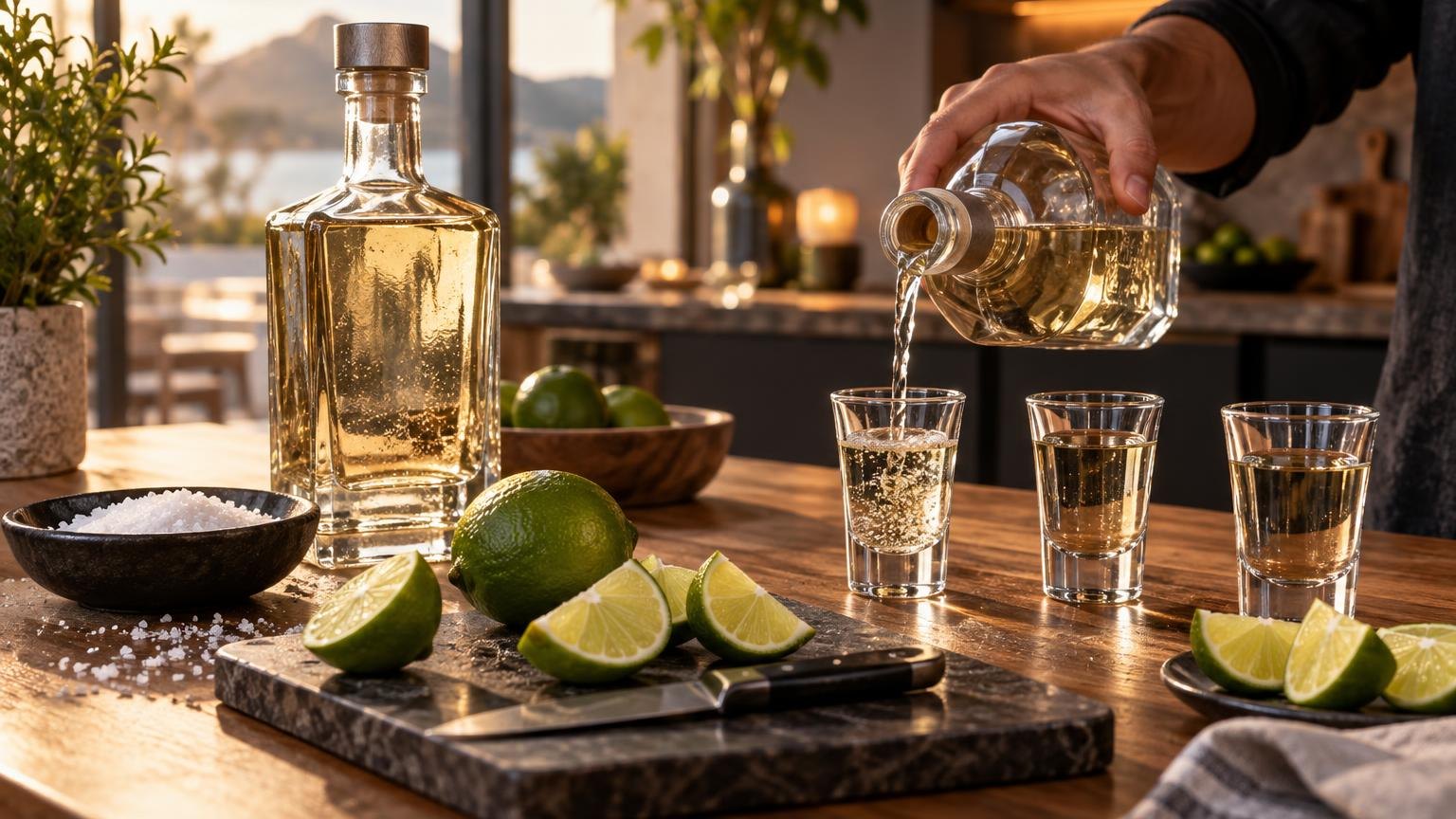
Spending more than $30 on a shot tequila is unnecessary. Several blancos and reposados under that threshold deliver clean agave flavor, smooth finishes, and zero morning regret. These bottles consistently rank among bartender favorites for a reason.
| Tequila | Type | Avg. Price (750 ml) | Agave | ABV |
| Espolòn Blanco | Blanco | $22–$26 | 100% Blue Weber | 40% |
| Olmeca Altos Plata | Blanco | $20–$25 | 100% Blue Weber | 40% |
| Cimarrón Blanco | Blanco | $18–$22 | 100% Blue Weber | 40% |
| Lunazul Blanco | Blanco | $15–$19 | 100% Blue Weber | 40% |
| Tapatio Blanco | Blanco | $24–$28 | 100% Blue Weber | 40% |
Why Blanco Dominates the Shot Glass
Blanco tequila is unaged or rested fewer than 60 days. That minimal oak contact preserves bright, peppery agave character — exactly what makes a clean, satisfying shot.
Reposados aged 2–12 months introduce vanilla and caramel notes. They shoot smoothly but cost $3–$8 more per bottle on average compared to blancos from the same distillery.
What Separates These From Bottom-Shelf Bottles
Every bottle listed above states “100% de agave” on the label. That distinction matters enormously.
Mixto tequilas — required to contain only 51% agave sugars — fill the remaining 49% with cane or corn sugar, producing harsher burns and worse hangovers.
- Espolòn Blanco — Produced at NOM 1440 (San Nicolás distillery) in Los Altos, Jalisco. Bright citrus and white pepper finish. Arguably the best value under $25.
- Olmeca Altos Plata — Uses a traditional tahona stone crushing process alongside roller mills. The result is a rounder, slightly sweeter agave profile.
- Cimarrón Blanco — A bartender industry staple originally priced for the Mexican market. At under $22, it outperforms tequilas twice its price in blind tastings.
- Lunazul Blanco — Founded by the Beckmann family, who also own Jose Cuervo. Produced at NOM 1110. At roughly $17, it is the strongest budget pick available nationwide.
- Tapatio Blanco — Distilled at NOM 1139 (La Alteña) by the Camarena family since 1937. Earthy, mineral-driven, with a clean peppery bite perfect for straight shots.
Buy any of these five, skip the lime and salt, and taste what 100% agave tequila actually delivers at shot-friendly prices.
Premium Tequilas That Shoot Smoothly
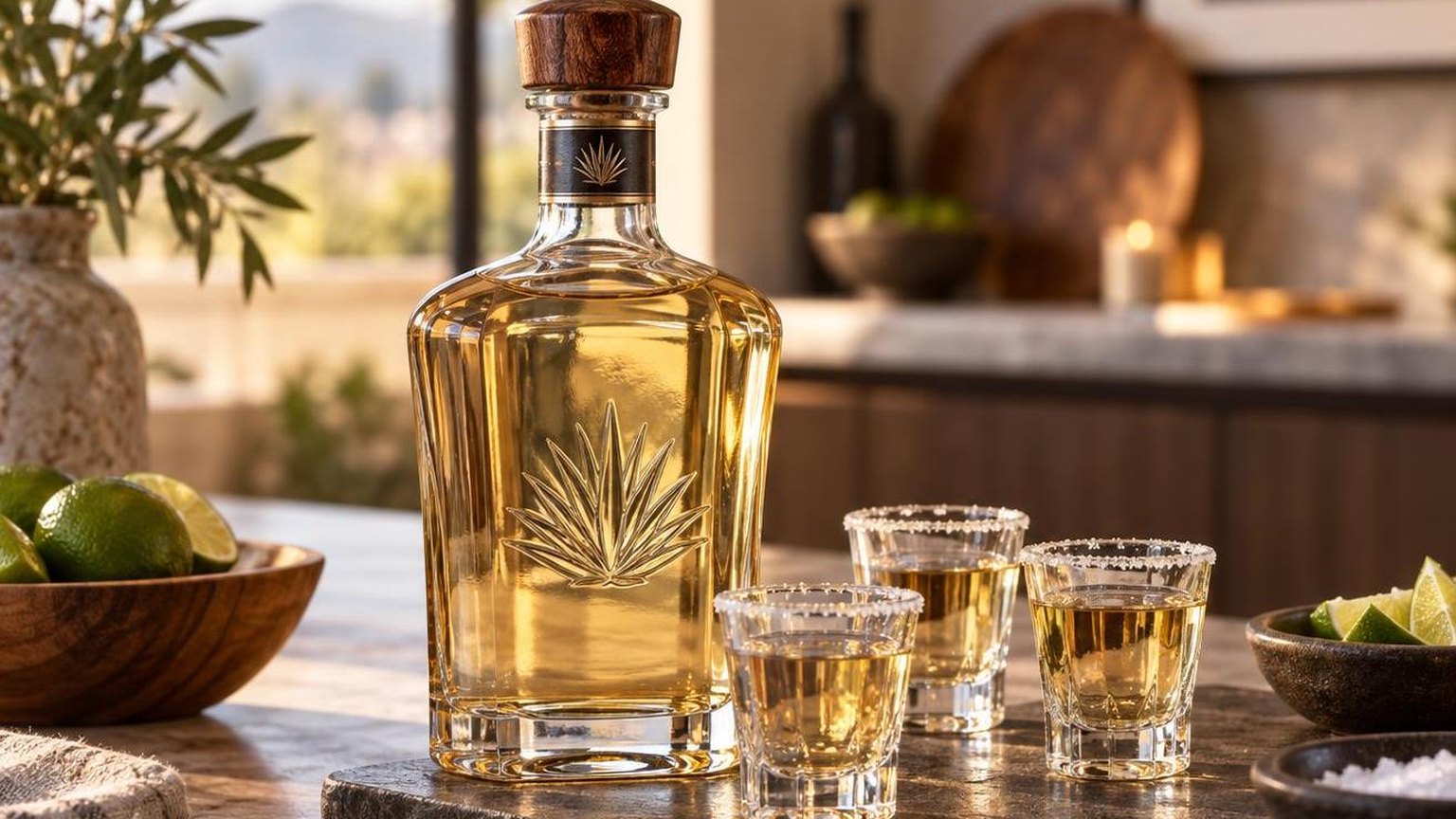
Premium tequila transforms the shot experience from a grimace into genuine enjoyment. The difference lies in production methods—100% blue Weber agave, slow-cooked in brick ovens for 24–72 hours, and distilled without harsh additives.
Several bottles in the $30–$60 range deliver exceptional shootability without breaking the budget.
| Tequila | Type | ABV | Approx. Price | Shot Profile |
| Fortaleza Blanco | Blanco | 40% | $45–$55 | Cooked agave sweetness, clean citrus finish |
| Espolòn Blanco | Blanco | 40% | $25–$30 | Bright pepper and tropical fruit, minimal burn |
| Olmeca Altos Plata | Blanco | 40% | $22–$28 | Herbal and cooked agave, soft landing |
| Patrón Silver | Blanco | 40% | $38–$45 | Light citrus, smooth with mild white pepper |
| Don Julio Blanco | Blanco | 40% | $45–$52 | Crisp agave, hints of grapefruit, silky texture |
| Tapatio Blanco 110 | Blanco | 55% | $30–$40 | Intensely flavorful, surprisingly smooth for proof |
Blanco tequilas dominate this list for good reason. Unaged expressions showcase pure agave flavor without oak influence masking flaws in production.
What Makes a Tequila Shoot Well
- 100% agave designation — Mixto tequilas use up to 49% non-agave sugars, creating harsher hangovers and rougher finishes
- Tahona or slow-roller milling — Traditional stone crushing extracts fewer bitter compounds than industrial diffuser methods
- Brick oven cooking — Autoclave-cooked agave processes in 7–12 hours versus 24–72 for traditional hornos, yielding less complex flavor
- Additive-free production — Mexican NOM allows up to 1% additives (glycerin, oak extract, caramel color, sugar syrup) without disclosure
Brands like Fortaleza, Tapatio, and Olmeca Altos use traditional brick ovens and avoid additives entirely. Tequila Matchmaker’s additive-free database lists over 2,500 confirmed clean expressions.
Chilling premium blanco to 55–60°F before shooting further reduces ethanol’s volatility. The cold suppresses burn while preserving the agave character you paid for.
Skip the salt-and-lime ritual with these bottles. That technique exists to mask cheap tequila’s harshness—quality 100% agave expressions need nothing beyond a clean glass.
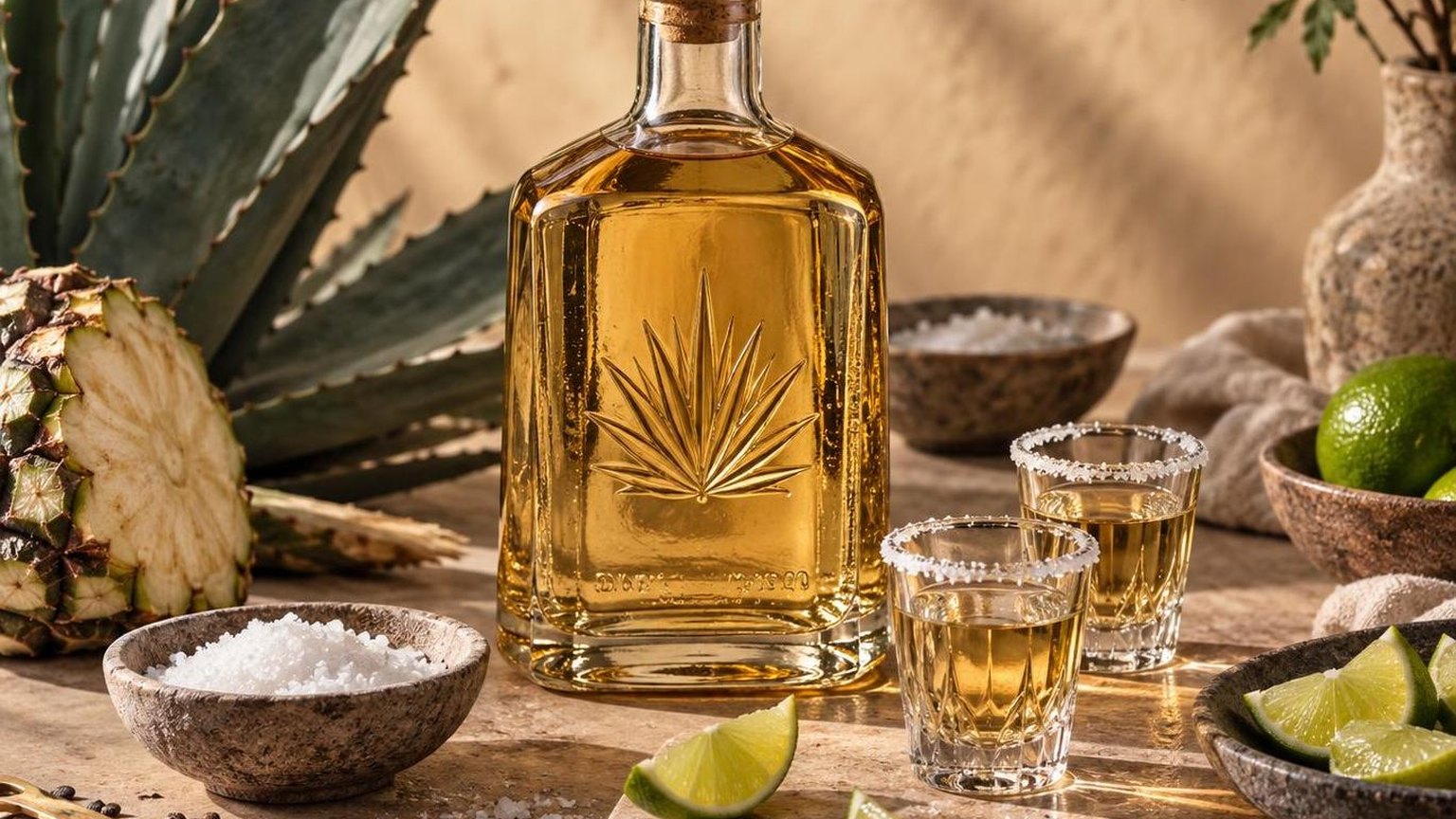
How to Serve Tequila Shots
Proper serving technique separates a memorable tequila shot from a forgettable one. Temperature, glassware, and accompaniments all influence how agave flavors hit the palate—and whether you actually enjoy the experience.
Ideal Serving Temperature
Blanco tequila for shots performs best between 55–60°F (13–16°C). This range suppresses harsh alcohol burn while preserving agave brightness. Avoid freezing tequila; temperatures below 40°F mute flavor compounds entirely.
Glassware Selection
The standard tequila shot uses a caballito glass, a tall narrow vessel holding approximately 2 oz (60 ml). A standard U.S. shot pour is 1.5 oz (44 ml). Wider-rimmed glasses release more aroma, benefiting reposado pours.
| Glass Type | Capacity | Best For |
| Caballito | 2 oz (60 ml) | Blanco shots |
| Veladora (votive) | 3 oz (90 ml) | Traditional cantina service |
| Standard shot glass | 1.5 oz (44 ml) | Casual settings |
The Salt-Lime Ritual
The classic “lick-shoot-suck” method originated in Mexican cantinas where rough mixto tequilas dominated. Salt on the hand’s webbing triggers saliva production, coating the palate.
Lime juice (pH ~2.0) neutralizes residual burn after swallowing.
With quality 100% agave tequila priced above $25–30 per bottle, skip the salt and lime. These tequilas deliver natural sweetness and pepper notes that salt overpowers.
Alternative Accompaniments
- Sangrita: A traditional Mexican chaser made from tomato juice, orange juice, lime, and chili. Served in an equal-sized glass alongside the shot.
- Verdita: A green chaser blending pineapple juice, cilantro, jalapeño, and mint—common in Jalisco’s tequila-producing region.
- Orange slice with cinnamon: A popular method in Germany and parts of Europe, pairing citrus sweetness with warm spice.
Pacing and Quantity
Standard tequila registers 38–40% ABV. A 1.5 oz shot contains roughly 0.6 standard drinks. The liver metabolizes approximately one standard drink per hour, so spacing shots 45–60 minutes apart reduces overconsumption risk significantly.
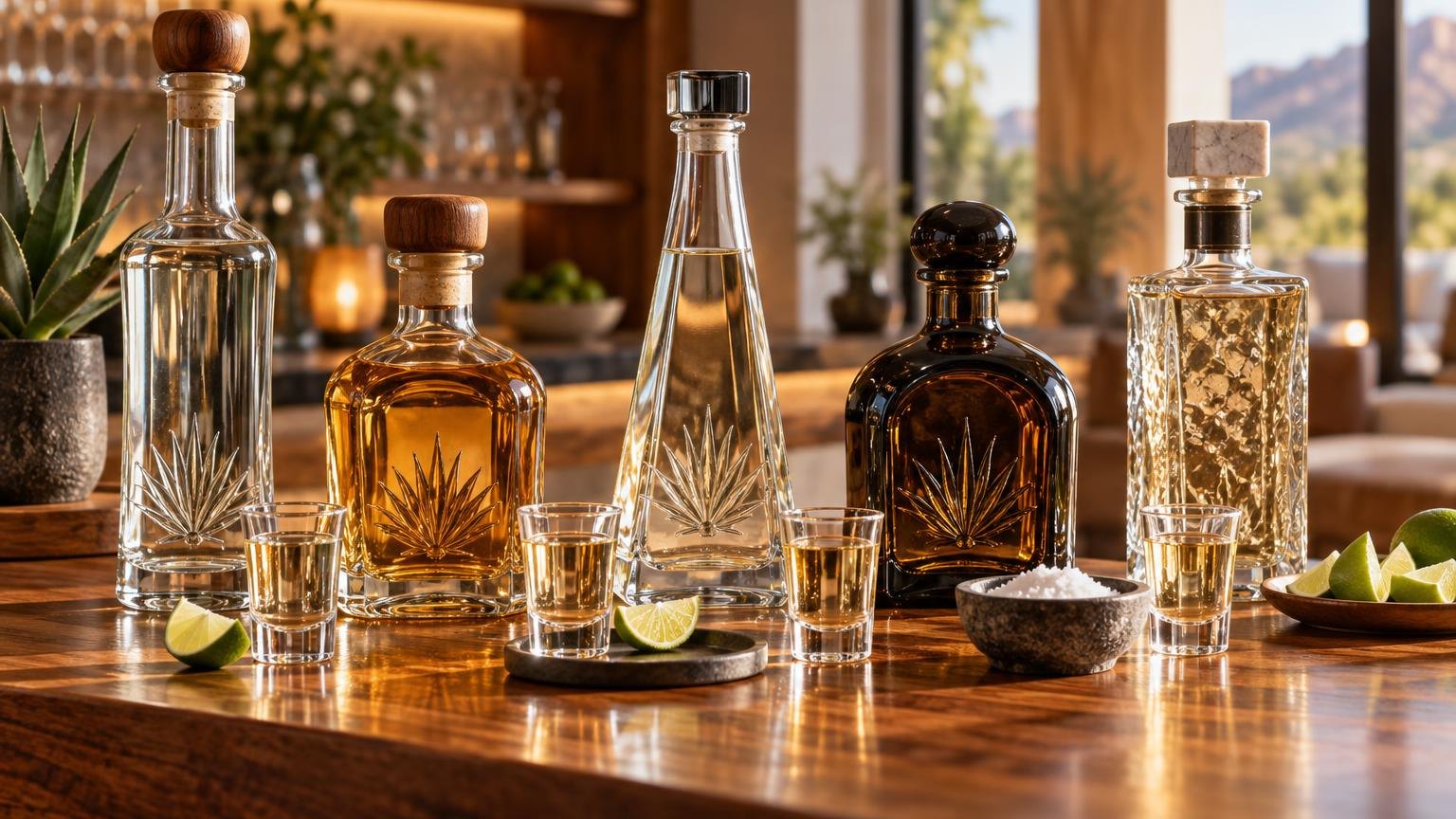
Tequila Shot Mistakes to Avoid
Even quality tequila becomes unpleasant when served incorrectly. Temperature, glassware, and pairing choices directly affect flavor perception—and most drinkers get at least one wrong.
Shooting Añejo or Extra Añejo
Aged tequilas priced $45–$150+ are engineered for sipping. Shooting a 3-year extra añejo eliminates the oak, vanilla, and caramel notes you paid for. Stick to blanco or joven expressions for shots.
Serving Too Cold or Too Warm
Freezing tequila numbs your palate and masks agave flavor. Excessively warm tequila amplifies alcohol burn. The ideal shot temperature sits in a narrow range.
| Temperature | Effect on Shot |
| Below 35°F (2°C) | Mutes agave sweetness; thickens mouthfeel artificially |
| 55–65°F (13–18°C) | Optimal range; balanced agave flavor, clean finish |
| Above 75°F (24°C) | Harsh ethanol burn dominates; unpleasant aftertaste |
Using Lime and Salt with Good Tequila
The salt-and-lime ritual originated to mask harsh flavors in low-quality mixto tequila. With a 100% agave blanco, these additions overpower the natural citrus and pepper notes already present in the spirit.
Pouring the Wrong Volume
A standard shot in the US is 1.5 oz (44 ml). Overpours of 2–2.5 oz turn a quick shot into an uncomfortable gulp. Underpours below 1 oz feel unsatisfying. Measure accurately.
Choosing Mixto Over 100% Agave
Mixto tequila contains as little as 51% blue agave, with the remaining 49% from cane sugar or corn syrup-based distillates. This split causes the headaches and harsh burn drinkers associate with tequila shots.
- Check the label: “100% de agave” must appear on the bottle by Mexican law (NOM-006-SCFI-2012)
- Verify the NOM number: Every legitimate tequila bottle carries a four-digit NOM identifying the distillery
- Avoid flavored options: Added sugars and artificial flavors—up to 75 ml of additives per liter in some brands—undermine quality
Avoiding these five mistakes transforms a forgettable tequila shot into one that actually showcases the spirit’s agave character.
Common Questions
What makes a tequila good specifically for shots?
A shot-worthy tequila should be smooth enough to drink neat without mixers, with minimal burn and a clean finish.
Blanco and reposado expressions between 38–40% ABV tend to work best because they deliver agave flavor without the harsh ethanol bite that causes grimacing.
Look for bottles labeled “100% de agave”—mixto tequilas (only 51% agave) use added sugars that increase hangover severity and produce a rougher swallow.
Is blanco or reposado tequila better for taking shots?
Blanco tequila delivers a bright, crisp agave-forward experience that pairs naturally with the quick pace of a shot, making it the traditional choice in Mexican cantinas.
Reposado, aged 2–12 months in oak barrels, offers a slightly softer, vanilla-tinged profile that many drinkers find easier to shoot.
Neither is objectively superior—blanco rewards those who enjoy clean agave intensity, while reposado suits drinkers who prefer rounded warmth.
Which specific tequila brands are best for shots under $30?
Espolòn Blanco (around $22–$26) consistently ranks among the smoothest budget-friendly options, with a peppery citrus finish that goes down clean.
Olmeca Altos Plata ($24–$28) uses a traditional tahona-crushed process that yields a rich, sweet agave character uncommon at its price point.
Cimarrón Blanco, often found near $20, is a bartender favorite across Mexico and the US for its honest agave flavor and remarkably low burn.
Does expensive tequila actually taste better as a shot?
Price correlates with smoothness up to roughly the $35–$50 range; beyond that, you’re paying for complexity best appreciated in a sipping glass, not a quick shot.
A $45 Fortaleza Still Strength Blanco at 46% ABV is exceptional but its nuanced minerality and cooked-agave depth gets lost when thrown back in one gulp.
Spending $25–$35 on a 100% agave blanco hits the sweet spot where quality noticeably reduces burn without wasting subtlety.
Why does some tequila burn more than others when shot?
Burn comes primarily from fusel alcohols and acetaldehyde—congeners produced during fermentation and distillation.
Tequilas made from fully mature 7–8 year old agave plants, slow-cooked in brick ovens (hornos) for 24–48 hours, and double-distilled in copper pot stills produce fewer of these irritating compounds.
Diffuser-made tequilas, which use high-pressure water and chemicals to extract sugars quickly, tend to generate a harsher, more chemical-tasting burn.
Should you use salt and lime when shooting good tequila?
The salt-and-lime ritual originated to mask the rough taste of low-quality mixto tequila—salt suppresses bitterness while lime’s citric acid cuts the ethanol sting.
With a quality 100% agave tequila like Tapatio Blanco or G4 Blanco, the training wheels are unnecessary and actually obscure the agave’s natural sweetness and pepper notes.
In Mexico, the traditional accompaniment for good tequila shots is sangrita, a chilled blend of tomato juice, orange juice, lime, and chile, sipped between rounds.
How should you chill tequila before taking shots?
Chilling tequila to around 55–60°F (13–15°C) by refrigerating the bottle for 30–45 minutes softens the alcohol’s sharpness without muting flavor—this is the ideal range for shots.
Freezing tequila below 32°F kills the aromatic compounds that make 100% agave expressions worth buying in the first place, turning a $30 bottle into something flavorless.
If the tequila needs to be frozen to be drinkable, the problem is the tequila, not the temperature.
How many calories are in a standard tequila shot?
A standard 1.5 oz (44 ml) shot of 100% agave tequila contains approximately 97–100 calories and zero carbohydrates, making it one of the lowest-calorie spirit options alongside vodka and gin.
Mixto tequilas can run slightly higher due to added sugars used during fermentation.
The caloric efficiency disappears quickly if you’re chasing shots with sugary margarita mix or sweetened sangrita—a single 8 oz margarita chaser adds 250–300 calories on top of the shot itself.
- How Much Does A Fifth Of Patron Tequila Cost?
- Does Tequila Have Yeast?
- Tequilla Bottle With Bell – What You Need to Know
- Blanco Vs Silver Tequila: Which Is Better?
- Best Don Julio Tequila – What You Need to Know
- What Tequila Has A Worm In It? The Most Accurate Answer
- All Alcohol Guides
- Tequila Regulatory Council (CRT) – Official NOM Standards (2024)
- U.S. Alcohol and Tobacco Tax and Trade Bureau – Distilled Spirits Standards of Identity (2023)
- FDA – Labeling Requirements for Distilled Spirits (2024)
- NIH/NIAAA – Understanding Alcohol's Impact on Health (2024)
- CDC – Dietary Guidelines for Alcohol (2023)
- USDA FoodData Central – Distilled Spirits Nutrient Data (2024)
- PubMed – Volatile Compound Analysis of 100% Agave Tequila (2017)
- University of California, Davis – Distilled Spirits Research, Department of Viticulture & Enology (2024)
- Wine Enthusiast – Top-Rated Blanco Tequilas for Sipping and Shots (2024)