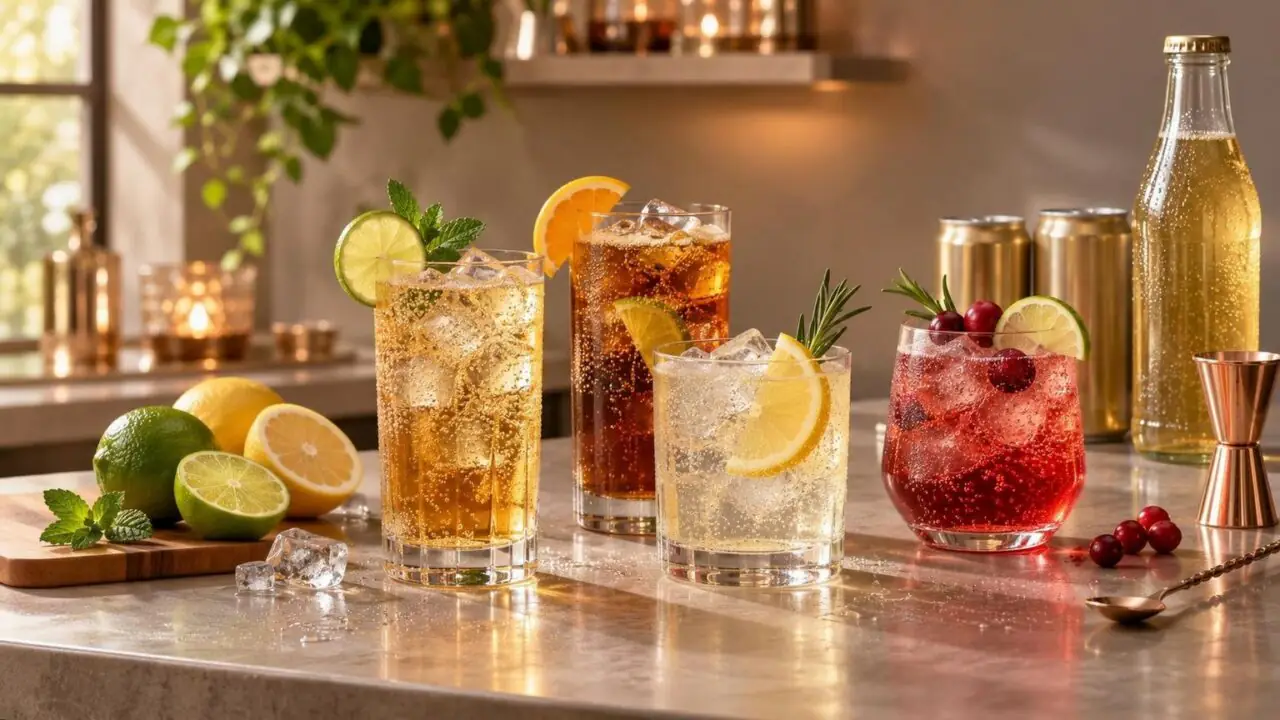
alcohol drinks with ginger ale are mixed drinks that pair the sweet, ginger-flavored soda with spirits such as whiskey, vodka, rum, or gin. Whiskey adds oak and spice; vodka keeps the flavor light; dark rum brings molasses notes.
Fresh lime balances the sweetness without masking the ginger.
The best pairing depends on whether you prefer a crisp highball or a richer, warming flavor. This guide covers spirit choices, easy combinations, and garnishes that complement each drink.
Use chilled ingredients and add ginger ale last to preserve carbonation, then stir gently rather than shaking the fizzy mixer.
Best Spirits to Mix With Ginger Ale
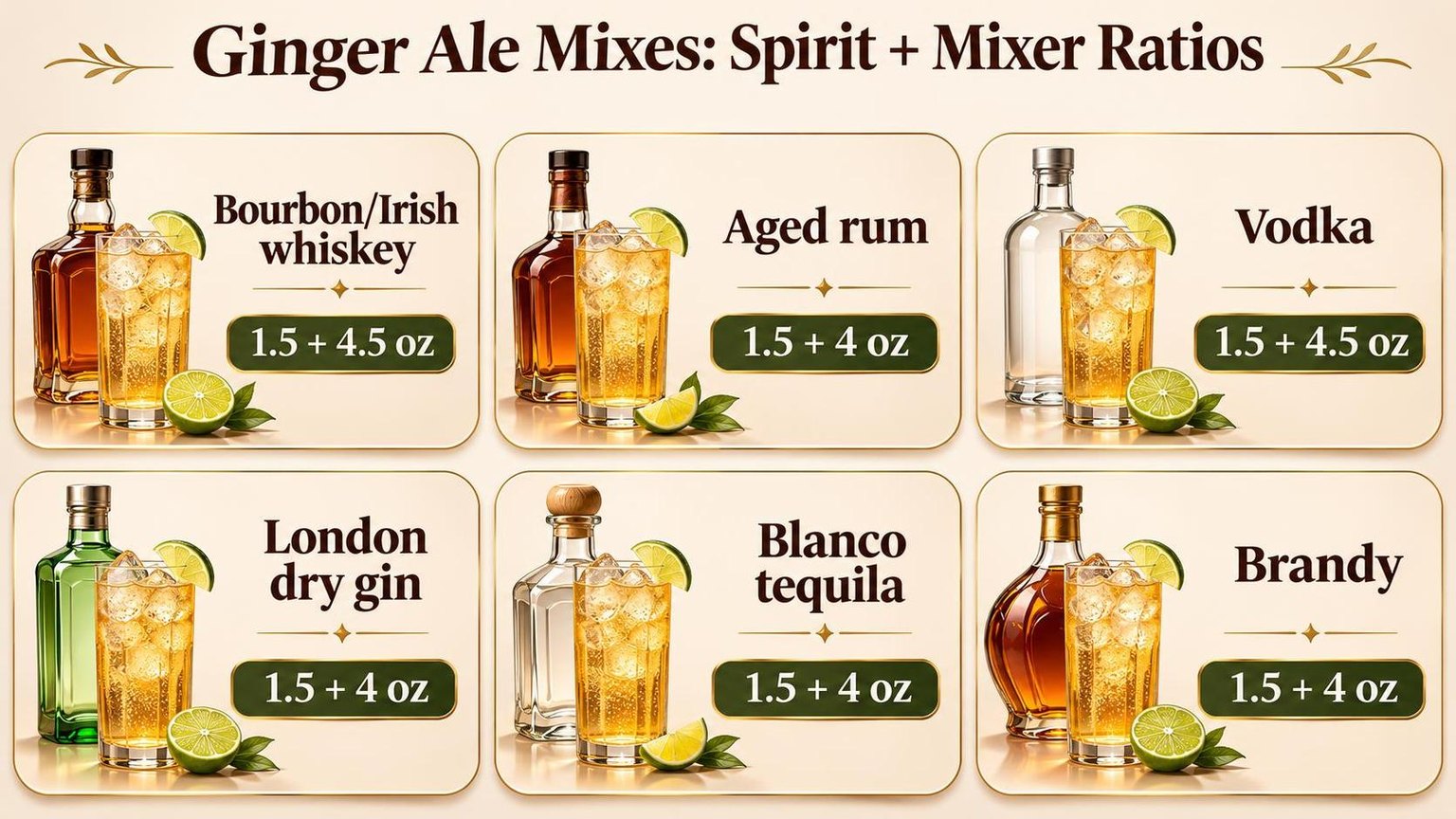
Whiskey is the classic ginger ale partner, but rum, vodka, gin, tequila, and brandy also work.
Choose the spirit for its flavor, then adjust the mixer: ginger ale contributes sweetness and carbonation as well as ginger, so a generous pour can hide delicate spirits.
Starting Ratios by Spirit
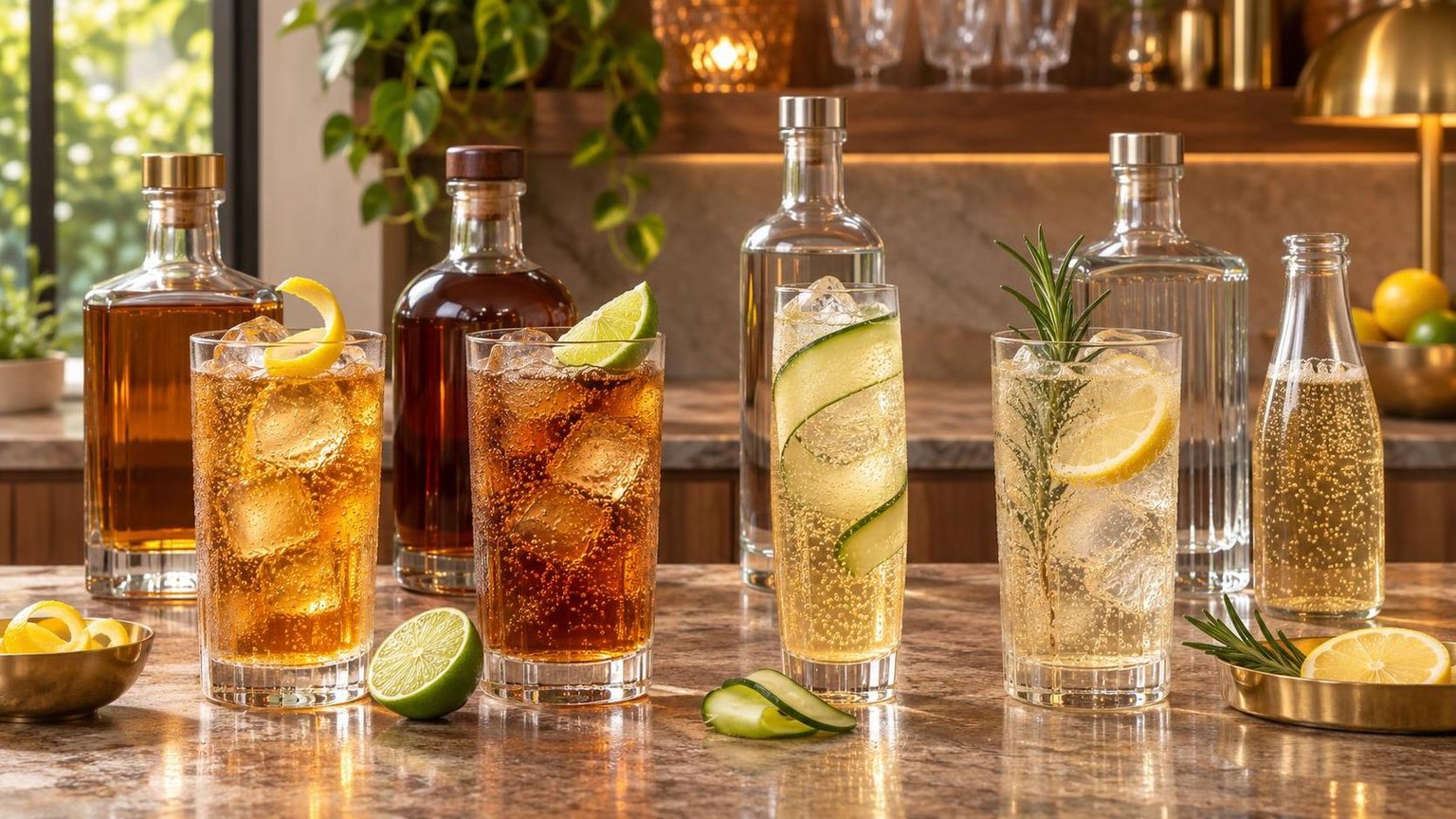
These are suggested starting builds, not official cocktail specifications. Measurements are US fluid ounces; pour over ice and adjust to your ginger ale’s sweetness.
| Spirit | Spirit pour | Ginger ale | Useful garnish |
| Bourbon or Irish whiskey | 1.5 oz | 4.5 oz | Lime wedge |
| Aged rum | 1.5 oz | 4 oz | Lime wedge |
| Vodka | 1.5 oz | 4.5 oz | Lemon wedge |
| London dry gin | 1.5 oz | 4 oz | Lemon peel |
| Blanco tequila | 1.5 oz | 4 oz | Grapefruit wedge |
| Brandy | 1.5 oz | 4 oz | Orange peel |
Whiskey: The Most Familiar Match
Bourbon’s vanilla and caramel notes complement ginger ale’s sweetness. Irish whiskey makes an approachable, lighter-tasting alternative; rye emphasizes peppery spice.
Jameson’s published Ginger & Lime recipe uses Irish whiskey, ginger ale, and a squeezed lime wedge, supporting this straightforward pairing.
Rum: Choose the Sweetness Carefully
Aged rum brings oak and baking-spice notes, while white rum produces a cleaner drink. Spiced rum can work, but vanilla flavoring and sweet ginger ale may become cloying together.
Start without added syrup, then squeeze in lime if the drink needs acidity.
Vodka: Let the Mixer Lead
Vodka is the least assertive choice here, making ginger ale quality especially important. Choose it when you want ginger and citrus rather than oak or botanicals.
This is a vodka highball, not the standard Moscow Mule: the International Bartenders Association’s Mule recipe specifies ginger beer.
Gin: Keep the Botanicals Noticeable
London dry gin contributes juniper and citrus that contrast with the mixer’s sweetness. A strongly flavored ginger ale can obscure subtle floral botanicals, so use a restrained mixer pour initially.
Express lemon peel over the glass for aroma without adding more sugar.
Tequila: Bright and Herbal
Blanco tequila preserves agave’s herbal, peppery character; reposado adds barrel-derived notes. Choose a bottle labeled 100% agave for this suggested build.
Grapefruit or lime adds acidity, but ginger ale does not replace grapefruit soda in a conventional Paloma.
Brandy: Fruit With Gentle Spice
Brandy brings fruit and oak flavors that suit ginger’s warmth. An entry-level mixing brandy is sufficient; expensive, mature bottles can lose their subtleties under a sweet mixer.
Orange peel reinforces the fruit aromas without making the drink sweeter.
Build and Serve
Add the spirit to an ice-filled glass, top with chilled ginger ale, and stir gently. NIAAA defines 1.5 ounces of 40% ABV spirits as one US standard drink.
Higher-proof bottles increase the alcohol in the same pour; adding mixer does not reduce that amount.
Whiskey Ginger and Bourbon Highball Recipes
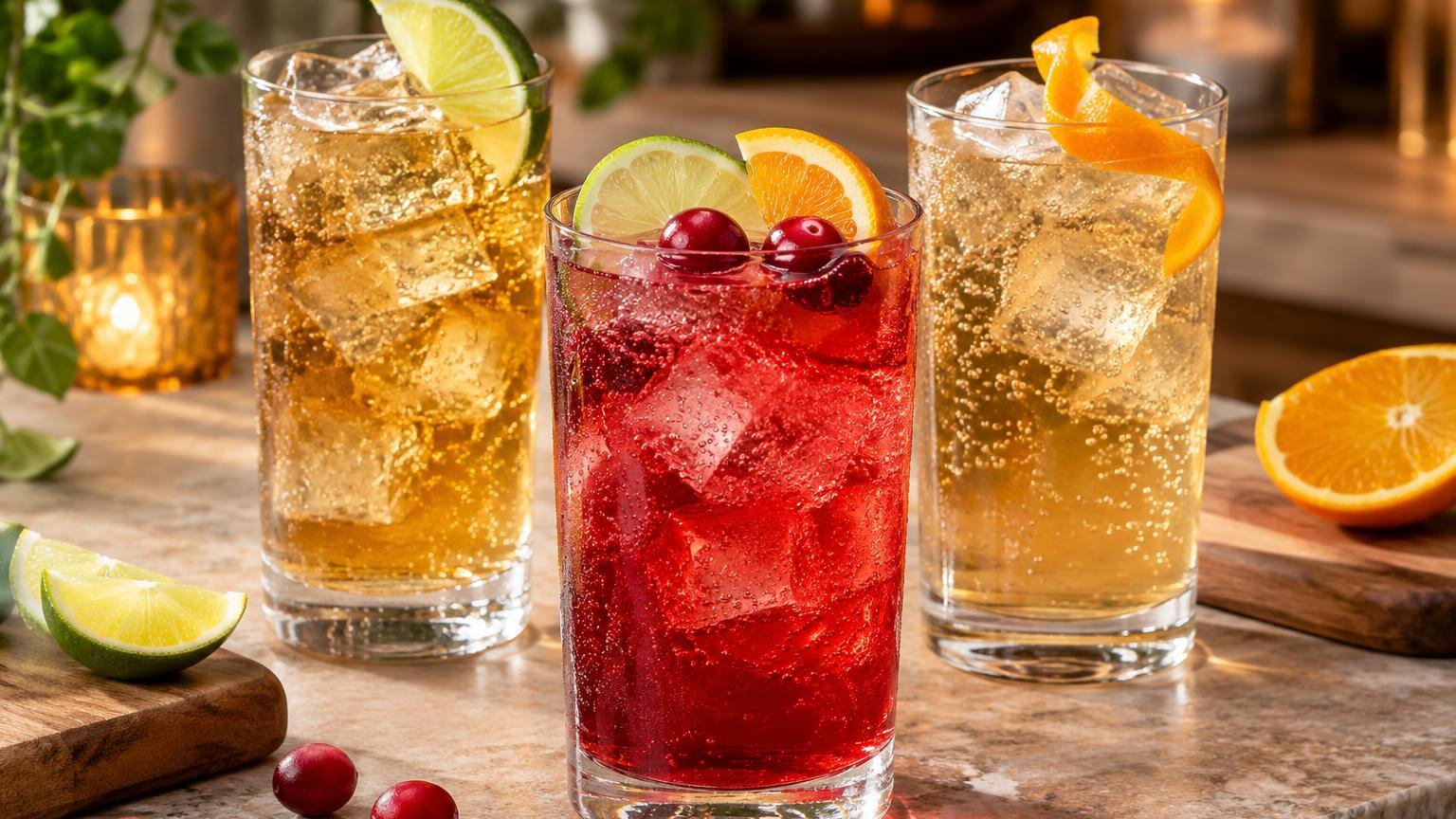
A whiskey ginger combines whiskey, ginger ale, and ice; bourbon makes a rounder version with vanilla and caramel notes.
These recipes use different proportions to suit the spirit, with citrus added as a finishing touch rather than a required ingredient.
Choose Your Starting Recipe
Use these house proportions as starting points, not fixed cocktail standards. Measure both ingredients: a free-poured spirit and an oversized mixer top-up can change the drink’s balance substantially.
| Recipe | Whiskey | Ginger ale | Approximate ABV before dilution |
| Whiskey ginger | 1½ fl oz blended Irish whiskey | 4½ fl oz | 10% |
| Bourbon highball | 2 fl oz bourbon | 4 fl oz | 13.3% |
Both strength estimates assume 80-proof whiskey, equivalent to 40% alcohol by volume. They exclude melting ice and citrus juice. Higher-proof bottles produce stronger drinks even when the poured volumes stay the same.
Build a Whiskey Ginger
- Fill a chilled highball glass with firm ice cubes. Choose a glass with enough room for the measured ingredients and ice without filling it to the rim.
- Add the measured Irish whiskey, then slowly pour in cold ginger ale. Pour close to the glass rather than from a height to limit foaming.
- Give the drink one gentle lift with a bar spoon to combine the ingredients. Avoid vigorous stirring, which encourages carbonation loss.
- Squeeze a lime wedge over the drink, taste, and drop it in if desired. Lime acidity balances perceived sweetness; it does not remove sugar.
Build a Bourbon Highball
Follow the same method using the bourbon proportions above. Start with an orange peel instead of lime: squeeze it over the surface to release its aromatic oils, then tuck it beside the ice. The peel adds aroma without introducing much juice.
Bourbon’s identity rests on production rules, not sweetness. Federal standards require a mash containing at least 51% corn and storage in charred new oak barrels.
That oak maturation helps explain the vanilla, caramel, and toasted notes that often complement ginger ale.
Source: U.S. bourbon production standards, 27 CFR § 5.143. https://www.ecfr.gov/current/title-27/section-5.143.
Adjust Flavor Without Losing Balance
- For a less sugary drink, replace part of the ginger ale with chilled club soda. Adding extra lime changes the flavor balance but leaves the original sugar in the glass.
- For a drier, spicier impression, try rye whiskey. Check the mixer label as well: ginger intensity and sugar content vary by brand.
- Keep the ginger ale refrigerated and open it immediately before mixing. Cold ingredients reduce early ice melt and help preserve the lively texture that defines a highball.
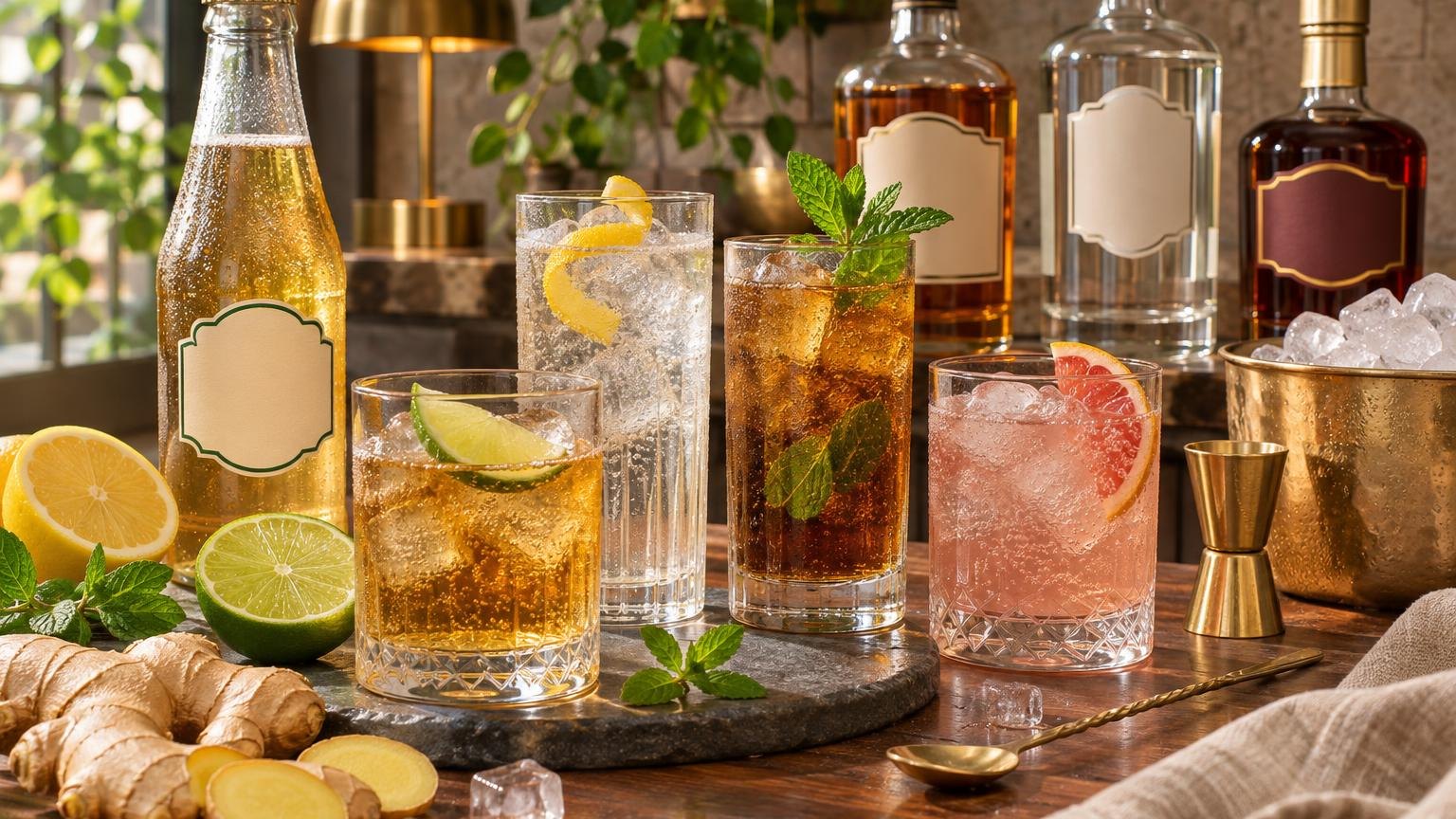
Vodka and Gin Cocktails With Ginger Ale
Vodka makes a clean, ginger-forward highball; gin adds juniper and other botanical flavors. Both work with ginger ale, but fresh citrus keeps the drink from tasting flat or overly sweet.
Two Starting Recipes
These single-serving builds use the same proportions so you can focus on the spirit’s flavor. Measure the citrus separately, use chilled ginger ale, and build directly in a tall glass rather than shaking the carbonated mixer.
| Ingredient | Vodka Ginger Ale | Gin Buck |
| Base spirit | 1½ fl oz vodka | 1½ fl oz London dry gin |
| Ginger ale | 4 fl oz | 4 fl oz |
| Fresh citrus juice | ½ fl oz lime juice | ½ fl oz lemon juice |
| Ice | Fill the glass | Fill the glass |
| Garnish | Lime wedge | Lemon wedge |
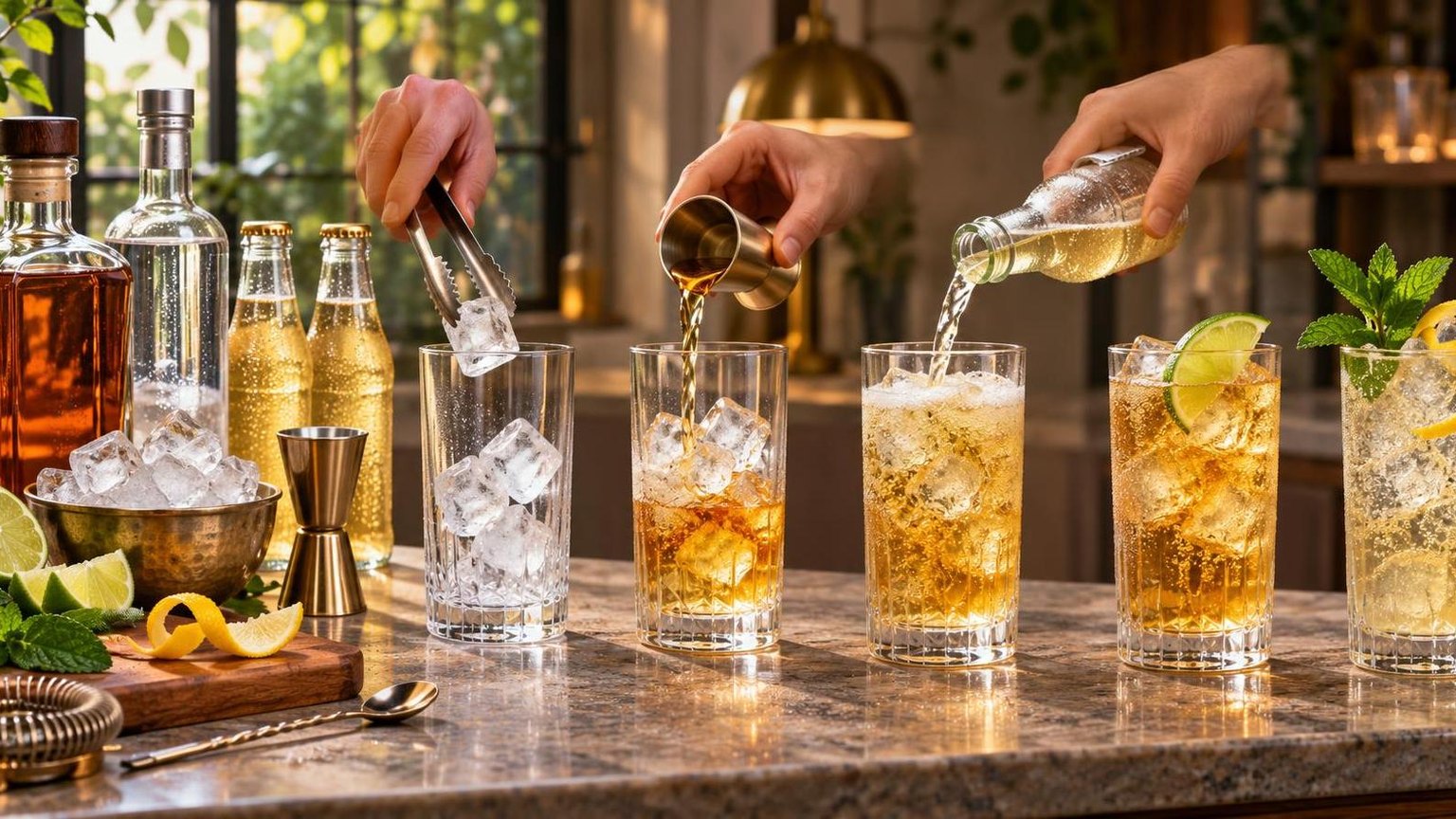
- Fill a 10–12 fl oz highball glass with ice. Add the measured spirit and citrus juice.
- Pour the ginger ale slowly down the inside of the glass. Stir gently to combine without driving off unnecessary carbonation.
- Add the garnish and serve immediately. Taste before adding syrup; the mixer already supplies sweetness.
Vodka: Keep the Mixer in Focus
Unflavored vodka leaves ginger ale’s sweetness, ginger character, and carbonation prominent. Lime adds acidity without introducing another sweet ingredient.
For this build, avoid sweetened flavored vodka unless you specifically want a dessert-like result.
This is not the standard Moscow Mule recipe. The International Bartenders Association specifies vodka, ginger beer, and lime juice for that cocktail.
Ginger ale creates a different highball; substituting it usually softens the ginger bite, though brands vary.
Reference: International Bartenders Association, Moscow Mule: https://iba-world.com/iba-cocktail/moscow-mule/.
Gin: Match Juniper With Citrus
A buck combines a spirit, citrus, and ginger ale or ginger beer; the gin version is commonly called a Gin Buck. London dry gin gives this recipe a juniper-led backbone. Lemon works well, while lime makes a sharper-tasting alternative.
Gin’s juniper character is not merely a tasting convention. U.S. regulations require gin to derive its main characteristic flavor from juniper berries.
Other botanicals vary by producer, so a strongly floral gin can produce a noticeably different drink.
Reference: 27 CFR § 5.144, gin identity standard: https://www.ecfr.gov/current/title-27/section-5.144.
Check Strength, Not Just Glass Size
Each recipe contains approximately one U.S. standard drink when made with 40% ABV spirit: 1½ fl oz supplies 0.6 fl oz of pure alcohol. Ginger ale and melting ice dilute its concentration but do not remove alcohol.
Check the bottle’s ABV before pouring, especially with higher-strength gin. Sugar-free ginger ale changes the mixer’s sugar content, not the alcohol dose. Measure the spirit rather than topping it up after tasting.
Reference: National Institute on Alcohol Abuse and Alcoholism, What Is a Standard Drink? https://www.niaaa.nih.gov/alcohols-effects-health/overview-alcohol-consumption/what-standard-drink.
Rum and Tequila Drinks With Ginger Ale
Ginger ale gives rum a softer, sweeter profile and adds gentle spice to tequila without the sharper heat of ginger beer.
Start with an unflavored spirit, chilled ginger ale, and fresh lime; the citrus helps balance the mixer’s sweetness without adding another sugary ingredient.
Two Starting Recipes
These recipes use the same proportions so you can taste how the base spirit changes the drink. Use a tall glass filled with ice, add the spirit and lime juice, then pour in ginger ale and stir gently to preserve carbonation.
| Ingredient or measure | Rum and ginger ale | Tequila and ginger ale |
| Base spirit | 1½ ounces aged rum | 1½ ounces blanco tequila |
| Chilled ginger ale | 4 ounces | 4 ounces |
| Fresh lime juice | ½ ounce | ½ ounce |
| Volume before ice dilution | 6 ounces | 6 ounces |
| Approximate ABV with 40% ABV spirits, before ice dilution | 10% | 10% |
Choosing Rum for Ginger Ale
Aged rum often contributes vanilla, oak, and caramel-like aromas that complement ginger ale. White rum usually makes a lighter-tasting highball, while spiced rum adds producer-dependent flavors such as vanilla, cinnamon, or clove.
Color alone does not reliably indicate a rum’s age or sweetness.
- Choose aged rum for depth. Its barrel-derived flavors can remain noticeable after dilution, especially with a mild ginger ale.
- Choose white rum for freshness. Lime and ginger stay prominent, making this a useful option when you want less oak character.
- Taste before adding syrup. Ginger ale already supplies sweetness, and some rums contain added sugar.
Do not label an ordinary rum-and-ginger-ale highball a Dark ’n Stormy. The International Bartenders Association’s recipe specifies Goslings rum and ginger beer, not ginger ale.
The substitution produces a milder drink, but it changes the recognized recipe.
Choosing Tequila for Ginger Ale
Blanco tequila emphasizes agave, pepper, and herbal notes; reposado adds barrel influence that can soften the drink’s profile.
Look for “100% agave” on the label if you want tequila made entirely from blue agave sugars rather than tequila that permits other fermentable sugars.
- Use blanco for a brighter drink. Fresh lime supports its peppery, vegetal character without introducing another mixer.
- Use reposado for rounder flavors. Oak and vanilla notes pair well with ginger, although individual bottles vary considerably.
- Keep garnishes simple. A lime wedge suits either version; squeeze it only after tasting because the recipe already includes lime juice.
The strength calculation assumes nonalcoholic ginger ale and excludes melting ice. Dilution lowers the finished ABV, but it does not reduce the amount of alcohol originally poured.
Sources: International Bartenders Association, Dark ’n Stormy specification: https://iba-world.com/dark-n-stormy/; Consejo Regulador del Tequila, tequila categories and labeling guidance: https://www.crt.org.mx/.
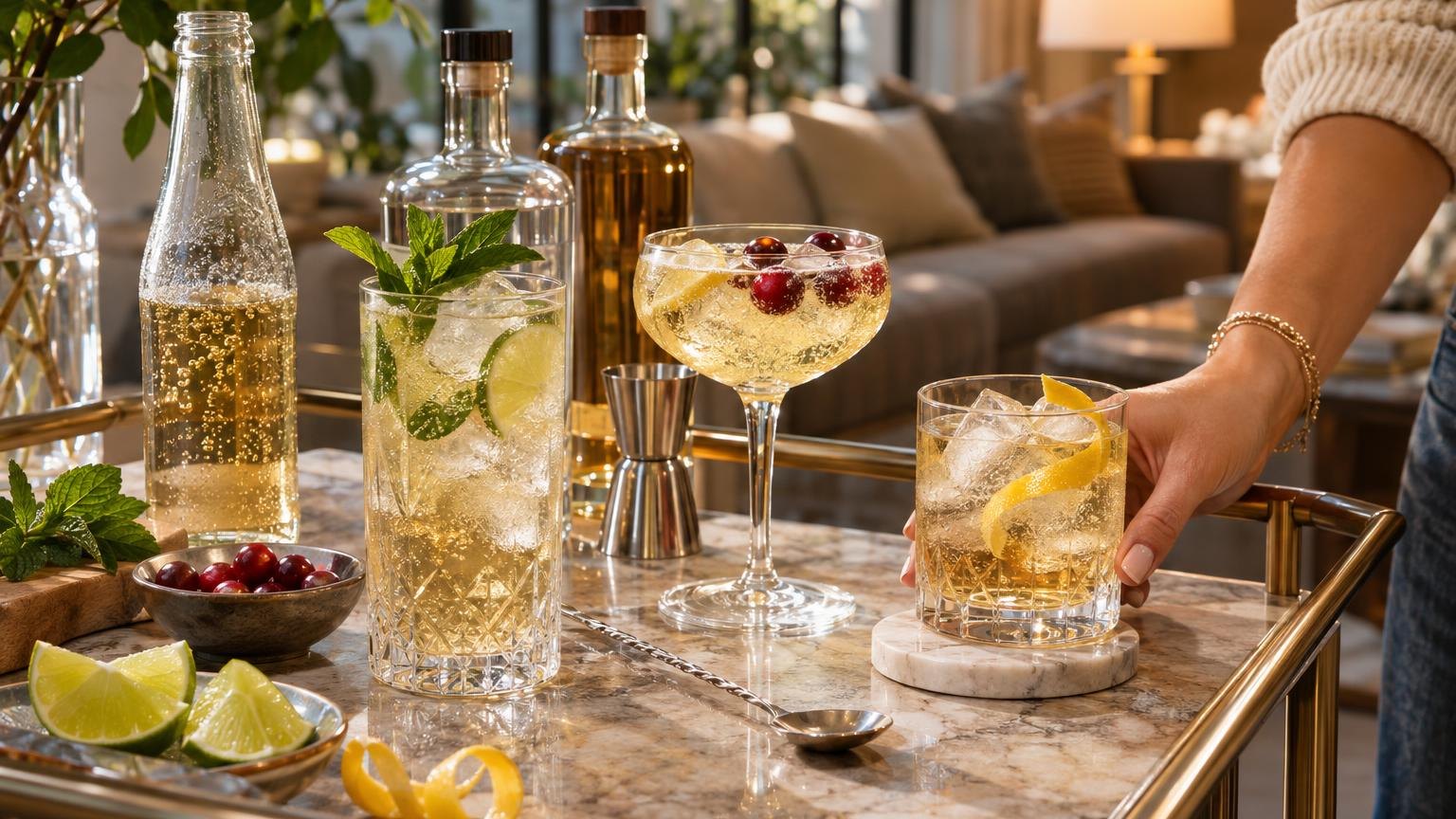
Ginger Ale Ratios for Balanced Cocktails
Build a ginger ale cocktail around the mixer’s sweetness and the spirit’s intensity, not a universal recipe. The ratios below provide starting points; ice, citrus, and the ginger ale brand determine how the finished drink tastes.
Choose a Starting Ratio
Measure both ingredients before adjusting. These examples use a spirit bottled at 40% alcohol by volume (ABV); calculated strengths exclude ice melt, citrus, and other additions, so they describe the initial mixture rather than the finished cocktail.
| Spirit-to-ginger-ale ratio | Spirit | Ginger ale | Initial ABV | Expected balance |
| 1:2 | 1.5 fl oz | 3 fl oz | 13.3% | Spirit-forward; suitable when whiskey or aged rum should remain prominent. |
| 1:3 | 1.5 fl oz | 4.5 fl oz | 10.0% | Mixer-led but still expressive; a practical starting point for a highball. |
| 1:4 | 1.5 fl oz | 6 fl oz | 8.0% | Lighter in alcohol concentration; ginger ale dominates the flavor. |
Calculate initial ABV by multiplying the spirit’s volume by its decimal ABV, then dividing by total liquid volume. Adding ginger ale lowers alcohol concentration, but it does not remove any alcohol from the glass.
Adjust Sweetness Without Losing Balance
- For whiskey or aged rum: Start with the spirit-forward option if you want oak, spice, and barrel-derived aromas to remain noticeable. Add mixer gradually if the alcohol feels too prominent.
- For vodka: Use the middle option to assess the ginger ale itself. Because vodka contributes relatively little flavor, the mixer’s sweetness, ginger character, and carbonation largely define the drink.
- For gin: Begin with the middle option, then taste for botanical clarity. Delicate floral notes can disappear under a strongly flavored or particularly sweet mixer.
- For excessive sweetness: Add lemon or lime juice in small measured increments. Acidity changes perceived balance; it does not reduce the sugar already present. More regular ginger ale adds sugar alongside dilution.
Control Ice, Temperature, and Alcohol Content
Use chilled ginger ale and fill the glass with solid ice before building. Stir gently to combine rather than shaking the carbonated mixer.
Ice melt changes both dilution and strength, making consistent ice and serving time important when comparing recipes.
Check the mixer’s nutrition label instead of assuming every brand has equivalent sweetness. Regular, reduced-sugar, and diet ginger ales can require different adjustments.
Ginger beer is not a direct flavor substitute: its ginger intensity and sweetness depend on the product.
Each table recipe contains the same alcohol: 1.5 fl oz of 40% ABV spirit. NIAAA defines that amount as one U.S. standard drink, containing approximately 14 grams of pure alcohol. A longer drink is not a smaller alcohol dose.
Source: National Institute on Alcohol Abuse and Alcoholism, “What Is a Standard Drink?” https://www.niaaa.nih.gov/alcohols-effects-health/overview-alcohol-consumption/what-standard-drink.
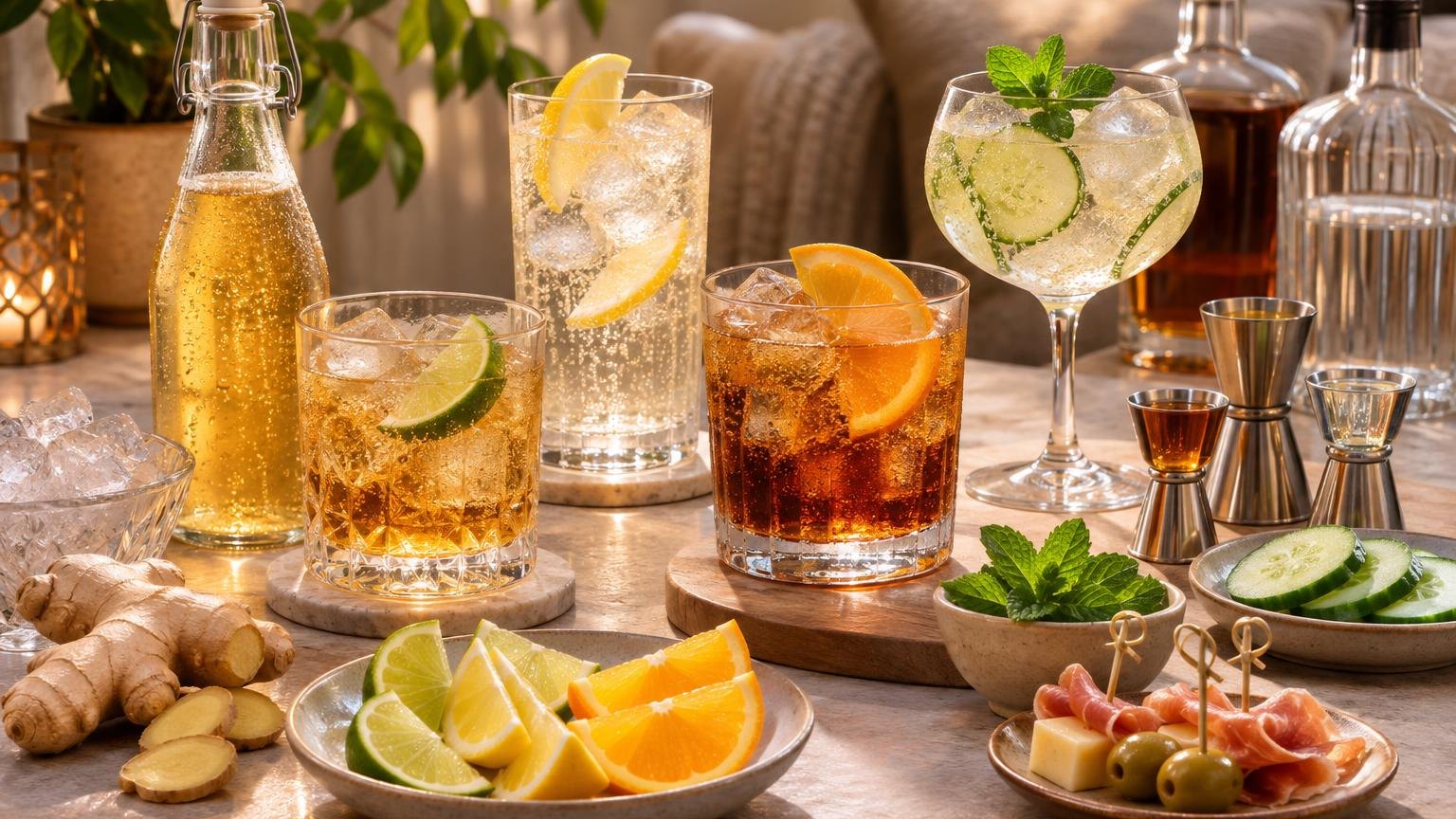
Frequently Asked Questions
What alcohol goes well with ginger ale?
Whiskey, rum, vodka, tequila, and brandy all pair with ginger ale: whiskey and brandy add oak notes, rum brings molasses or vanilla flavors, and vodka lets the mixer dominate.
Start with 1.5 ounces of spirit and 4 ounces of ginger ale, then adjust the mixer to taste.
How do you make a whiskey ginger?
Pour 2 ounces of bourbon, rye, or Irish whiskey over ice, add 4–6 ounces of chilled ginger ale, and stir gently once. Squeeze in a lime wedge for acidity; bourbon generally gives a sweeter-tasting drink, while rye often adds peppery spice.
Can you use ginger ale instead of ginger beer in a Moscow Mule?
Yes, but ginger ale usually produces a milder, less ginger-forward drink than ginger beer, the traditional mixer. Combine 2 ounces of vodka, 0.5 ounce of fresh lime juice, and 4 ounces of ginger ale over ice for this variation.
What kind of rum should you mix with ginger ale?
Use white rum for a lighter drink, aged rum for oak and caramel notes, or spiced rum for added vanilla and baking-spice flavors. Mix 1.5 ounces of rum with 4 ounces of ginger ale and 0.25–0.5 ounce of lime juice to balance the sweetness.
Does tequila taste good with ginger ale?
Blanco tequila gives ginger ale a peppery, agave-forward contrast, while reposado adds barrel-aged notes.
Combine 1.5 ounces of tequila, 4 ounces of ginger ale, and 0.5 ounce of fresh lime juice over ice; this is a tequila highball, not a traditional Paloma, which uses grapefruit.
Can you mix wine with ginger ale?
Yes; combine 3 ounces of chilled dry white wine or rosé with 2 ounces of ginger ale for a sweetened wine spritzer. Choose a dry wine to keep the drink from becoming overly sweet, and add the ginger ale last to preserve carbonation.
How strong is a drink made with liquor and ginger ale?
A drink containing 1.5 ounces of 40% ABV liquor and 4.5 ounces of nonalcoholic ginger ale is approximately 10% ABV before ice dilution.
It still contains one US standard drink—0.6 fluid ounce of pure alcohol—under NIAAA’s definition: https://www.niaaa.nih.gov/alcohols-effects-health/overview-alcohol-consumption/what-standard-drink.
How can you reduce sugar in alcoholic drinks with ginger ale?
Use zero-sugar ginger ale, or replace half the regular ginger ale with plain club soda to halve the sugar contributed by the mixer.
Choose an unflavored spirit rather than a sweetened liqueur, and use fresh citrus instead of syrup; reducing sugar does not reduce the alcohol in the pour.
- Where Is Sam Adams Beer Made?
- What Alcohol Goes With Ginger Ale?
- Crowler Vs Growler – What Is The Difference Between Them?
- What Is Root Beer Made Of? The Most Accurate Answer
- Cheap High Alcohol Content Beer That Delivers Value
- How To Chug Beer? A Real-World, No-Nonsense Guide for Beginners and Party Veterans
- Where Is Sagres Beer Made? Brewery, History & Tasting Guide
- All Alcohol Guides
- Jameson — Jameson, Ginger & Lime (n.d.)
- Jack Daniel’s — Jack & Ginger (n.d.)
- Liquor.com — Whiskey Ginger (n.d.)
- Liquor.com — Horse’s Neck (n.d.)
- National Institute on Alcohol Abuse and Alcoholism — What Is a Standard Drink? (n.d.)
- National Center for Complementary and Integrative Health — Ginger (n.d.)
- USDA and HHS — Dietary Guidelines for Americans, 2020–2025 (2020)
- Roberts and Robinson — Alcohol Concentration and Carbonation of Drinks: The Effect on Blood Alcohol Levels (2007)
- Marczinski and Stamates — Artificial Sweeteners Versus Regular Mixers Increase Breath Alcohol Concentrations in Male and Female Social Drinkers (2013)