The difference between Cabernet Sauvignon and Cabernet Franc is that Sauvignon ripens later and builds thicker skins, producing darker, fuller-bodied, more tannic wines, while Franc ripens earlier and yields lighter.
More aromatic reds with herbal, green-pepper notes.
DNA profiling from 1997 confirmed Franc is a parent of Sauvignon, crossed with Sauvignon Blanc in Bordeaux.
Both grapes anchor Bordeaux reds, yet they behave differently in the glass. Sauvignon delivers blackcurrant, cedar, and firm tannins that reward cellar aging, as Napa Valley bottlings demonstrate.
Franc offers raspberry, violet, and bell pepper flavors with softer texture and lower alcohol, shining as a varietal in the Loire Valley’s Chinon and as a Bordeaux blending partner.
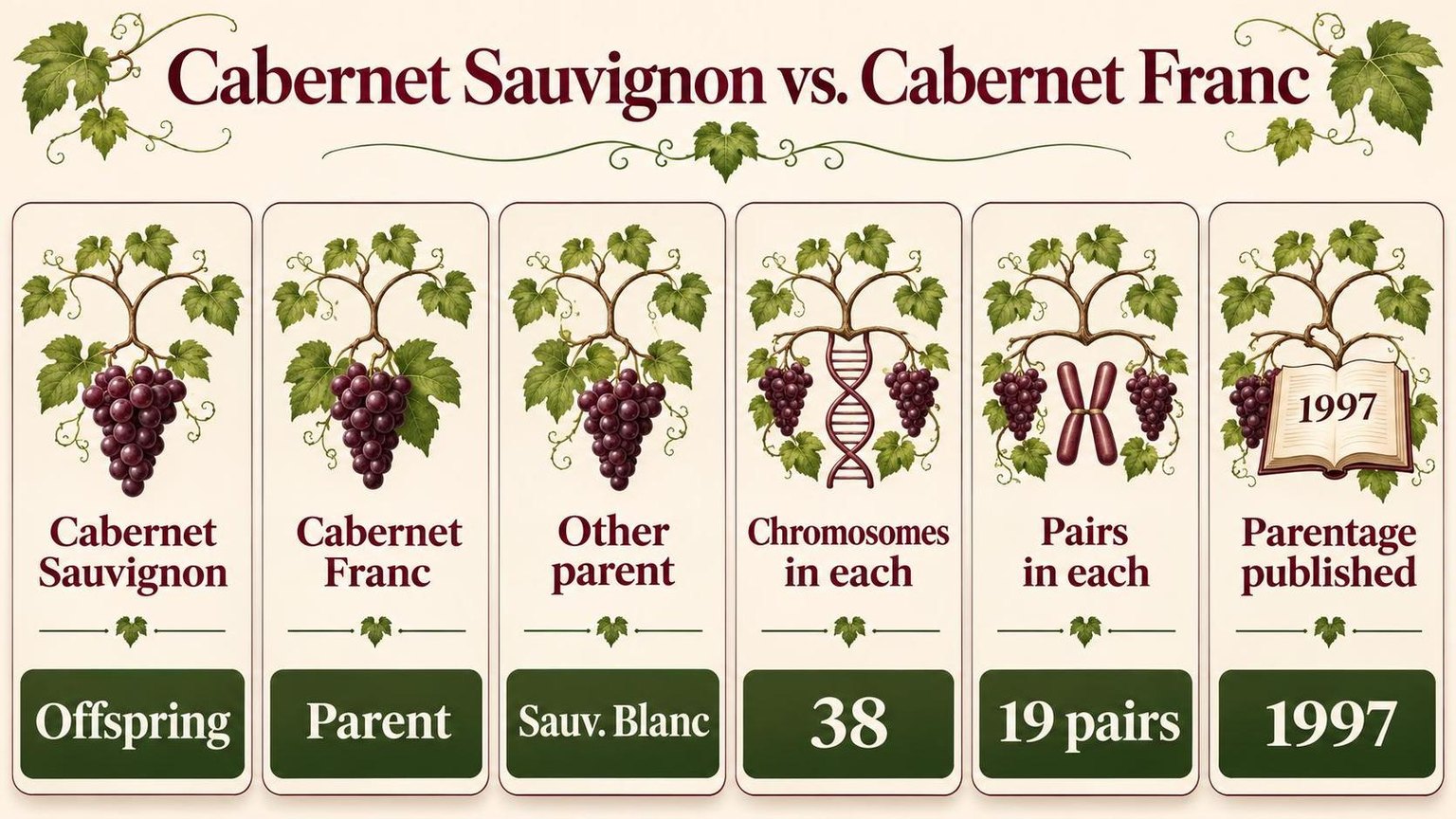
Grape Genetics and Parentage Compared
Cabernet Sauvignon is the offspring of Cabernet Franc and Sauvignon Blanc, not another name for Cabernet Franc.
Their family connection explains some shared aromatic tendencies, but each grape remains a distinct cultivar with its own genetic identity and growing characteristics.
The Confirmed Parent–Offspring Relationship
| Genetic detail | Cabernet Sauvignon | Cabernet Franc |
| Botanical species | Vitis vinifera. | Vitis vinifera. |
| Relationship to the other grape | Offspring of Cabernet Franc. | Parent of Cabernet Sauvignon. |
| Parents relevant to this comparison | Cabernet Franc and Sauvignon Blanc. | Cabernet Sauvignon belongs to its offspring generation, not its ancestry. |
| Standard chromosome complement | 38 chromosomes, arranged in 19 pairs. | 38 chromosomes, arranged in 19 pairs. |
| Landmark parentage publication | The parental pairing was published in 1997. | The same study established its contribution to Cabernet Sauvignon. |
John Bowers and Carole Meredith at the University of California, Davis, established the relationship through DNA profiling.
Their research appeared in Nature Genetics, providing genetic evidence rather than relying on similarities in grape names, leaf shapes, or wine flavors.
The analysis used microsatellites: variable, repeated DNA sequences that function as inherited markers.
Researchers checked whether Cabernet Sauvignon’s marker combinations were consistent with inheritance from Cabernet Franc and Sauvignon Blanc. The combined evidence identified the parental pairing.
This was a natural cross, not a modern laboratory breeding project. The genetic study established the parents; it did not establish an exact vineyard, grower, or date for the original seedling.
The cross is generally associated with southwestern France.
What That Ancestry Does—and Does Not—Explain
- Shared aromatic potential: Both Cabernets can express methoxypyrazines, compounds associated with bell pepper and leafy aromas. Sauvignon Blanc also carries this aromatic tendency.
- Different grape colors: A white-berried parent can produce dark-berried offspring. Berry color depends on inherited pigmentation genes, not a visual averaging of parental colors.
- Separate cultivar identities: Cabernet Sauvignon is neither a Cabernet Franc clone nor a blend. Sexual reproduction created a genetically distinct seedling.
Parentage does not prescribe a fixed flavor profile. Sun exposure, ripeness, climate, and winemaking influence how inherited traits appear in wine.
A Cabernet Franc bottle need not taste greener than a Cabernet Sauvignon bottle simply because Franc is the parent.
Cabernet Franc’s importance extends beyond Cabernet Sauvignon. It is also a confirmed parent of Merlot, with Magdeleine Noire des Charentes as Merlot’s other parent.
Consequently, Cabernet Sauvignon and Merlot are half-siblings through Cabernet Franc, despite their different names and typical wine styles.
Named clones within either Cabernet are selections propagated vegetatively, usually through cuttings and grafting. They preserve the cultivar’s identity while sometimes carrying mutations.
Grafting Cabernet Sauvignon onto a rootstock does not make that rootstock another genetic parent of the grape variety.
Primary sources: Bowers and Meredith, Nature Genetics (1997), “The parentage of a classic wine grape, Cabernet Sauvignon”: https://doi.org/10.1038/ng0597-84.
Merlot parentage: Boursiquot and colleagues, Australian Journal of Grape and Wine Research (2009).
Flavor Profiles Side by Side
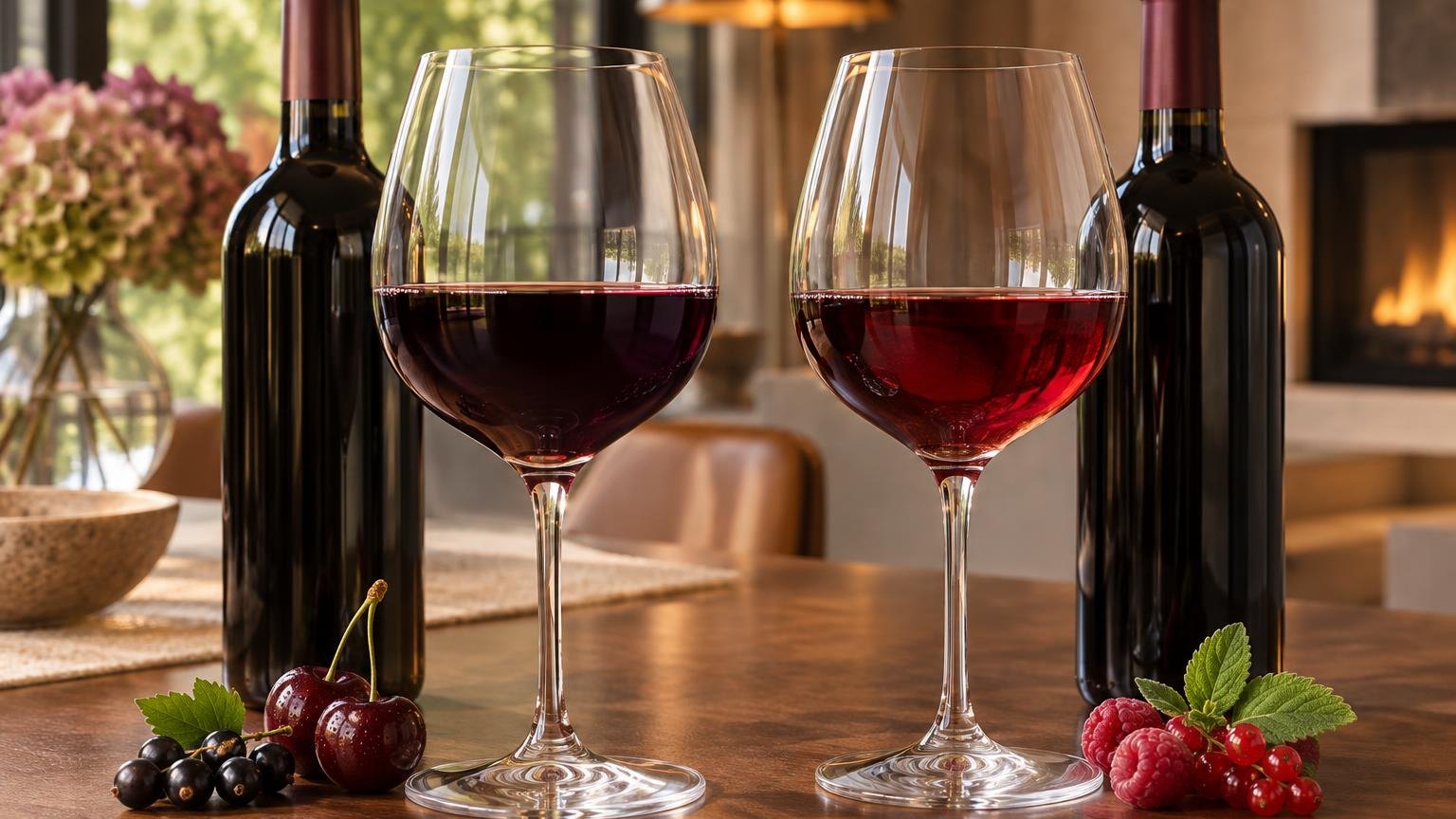
Cabernet Sauvignon usually emphasizes blackcurrant, darker fruit, and firmer tannins; Cabernet Franc more often combines raspberry or redcurrant with floral, leafy, and peppery aromas.
Both can taste herbal, and ripeness, extraction, and oak aging can narrow—or exaggerate—the difference.
| Sensory feature | Cabernet Sauvignon | Cabernet Franc |
| Typical fruit | Blackcurrant, blackberry, black cherry | Raspberry, redcurrant, cherry; darker fruit when riper |
| Nonfruit aromas | Green bell pepper, mint, sometimes violet | Violet, leafy herbs, green bell pepper |
| Typical structure | Fuller body and more assertive tannins | Medium body and generally less tannic weight |
| Oak-derived notes | Vanilla, toast, cedar, baking spice | Similar notes when oak-aged; less prominent in unoaked examples |
| Suggested comparison pour | 2 US fl oz, approximately 59 mL | 2 US fl oz, approximately 59 mL |
| Suggested tasting temperature | 60–65°F, approximately 16–18°C | 60–65°F, approximately 16–18°C |
Fruit, Flowers, and Green Notes
Blackcurrant, often described as cassis, is Cabernet Sauvignon’s classic reference point. Cabernet Franc frequently feels more red-fruited and fragrant, particularly in Loire Valley wines such as Chinon and Bourgueil.
These are recurring descriptors, not ingredients or guarantees for every bottle.
Both grapes can express methoxypyrazines, aroma compounds associated with green bell pepper. The Australian Wine Research Institute identifies isobutyl methoxypyrazine as an important contributor to this character.
A leafy aroma therefore does not, by itself, identify Cabernet Franc or prove that a wine is faulty.
Cooler conditions and less mature fruit can make green characters more noticeable. Riper examples commonly shift toward fuller fruit expression, although site, canopy exposure, and vintage matter.
Warm-climate Cabernet Franc can taste surprisingly dark-fruited; cool-climate Cabernet Sauvignon can be distinctly herbal.
Texture Changes the Flavor Impression
Tannins create drying and gripping sensations rather than aromas. Cabernet Sauvignon generally brings greater tannic weight, making its fruit seem more compact in youth.
Cabernet Franc often feels more supple, but concentrated, heavily extracted examples can still be firmly structured.
Acidity contributes tartness and freshness in both varieties. Cabernet Franc may seem especially lively when its body is lighter, but that impression does not establish a universal acidity ranking.
Harvest timing, climate, and cellar decisions prevent reliable grape-wide numerical comparisons.
Separate Grape Character From Winemaking
Vanilla and toast primarily indicate oak influence, not a unique Cabernet Sauvignon signature. New oak can give Cabernet Franc those same flavors.
Bottle aging can introduce savory, tobacco-like, or earthy impressions in either variety while fresh fruit becomes less prominent.
- Choose varietal-labeled bottles of similar vintage, region, and oak treatment to reduce obvious confounding factors.
- Smell before sipping, then assess fruit, herbal character, acidity, and tannin separately.
- Use the matched pours and temperatures above as tasting controls, not prescribed serving rules.
Sources: Robinson, Harding, and Vouillamoz, Wine Grapes (2012), Cabernet Sauvignon and Cabernet Franc entries; Australian Wine Research Institute guidance on methoxypyrazines and wine aroma.
The profiles summarize typical expressions rather than fixed chemical or sensory specifications.
Tannin Structure and Body Differences
Cabernet Sauvignon usually feels firmer and fuller-bodied than Cabernet Franc, with more persistent drying grip.
Cabernet Franc typically carries a lighter frame and less forceful tannins, although concentrated examples can be muscular and suitable for extended aging.
How Their Tannins Feel
Tannins are phenolic compounds extracted principally from grape skins and seeds during red winemaking; oak can contribute additional tannins.
Their interaction with salivary proteins helps produce astringency: the drying, sometimes rough sensation across your gums and inner cheeks.
Cabernet Sauvignon commonly delivers a more substantial tannic framework. Its small, thick-skinned berries offer considerable extraction potential, but berry anatomy alone cannot predict the finished wine’s grip.
Ripeness, fermentation conditions, maceration, and pressing decisions all affect extraction.
Cabernet Franc often feels less densely structured, especially in lighter Loire Valley styles. However, grape variety does not guarantee softness: firmly extracted Chinon or concentrated Saint-Émilion Cabernet Franc can show substantial tannin.
Cooler-grown examples may combine noticeable astringency with brisk acidity.
| Characteristic | Cabernet Sauvignon | Cabernet Franc |
| Typical tannic impression | Firm, substantial, persistent grip | Often less forceful; potentially firm |
| Typical body | Medium-full to full | Medium to full, depending on style |
| Controlled tasting temperature | 60°F / approximately 16°C | 60°F / approximately 16°C |
| Suggested comparison pour | 2 US fl oz / approximately 59 mL | 2 US fl oz / approximately 59 mL |
Why Body Is Not the Same as Tannin
Body describes perceived weight and fullness, not simply how dry your mouth feels. Alcohol, dissolved constituents, and the overall balance of acidity and sweetness influence that impression.
A wine can therefore feel relatively light yet distinctly tannic.
Warm-climate Cabernet Sauvignon often combines ripe fruit, elevated alcohol, and substantial extraction, producing a broad palate. Cabernet Franc from cooler sites frequently feels more lifted.
Yet ripe, concentrated Cabernet Franc can outweigh a restrained Cabernet Sauvignon; the producer and growing conditions matter.
There is no dependable grape-wide tannin concentration or alcohol cutoff that separates these varieties.
Published tannin measurements also depend on the analytical method, so a single numerical ranking would imply more certainty than the evidence supports.
Compare Grip Separately From Weight
Use the equal pours and matching temperatures above as tasting controls, not mandatory serving rules. Choose wines with similar vintages, alcohol levels, and oak treatment when possible.
Matching those variables makes the varietal tendencies easier to assess.
- Assess body while the wine moves across your tongue: does it feel slender, rounded, or broad?
- Assess tannin after swallowing or spitting: note drying intensity, texture, and persistence along your gums.
Sources: Waterhouse, Sacks, and Jeffery’s Understanding Wine Chemistry (2016) explains phenolics, astringency, and extraction. Robinson, Harding, and Vouillamoz’s Wine Grapes (2012) documents the varieties and their stylistic tendencies.
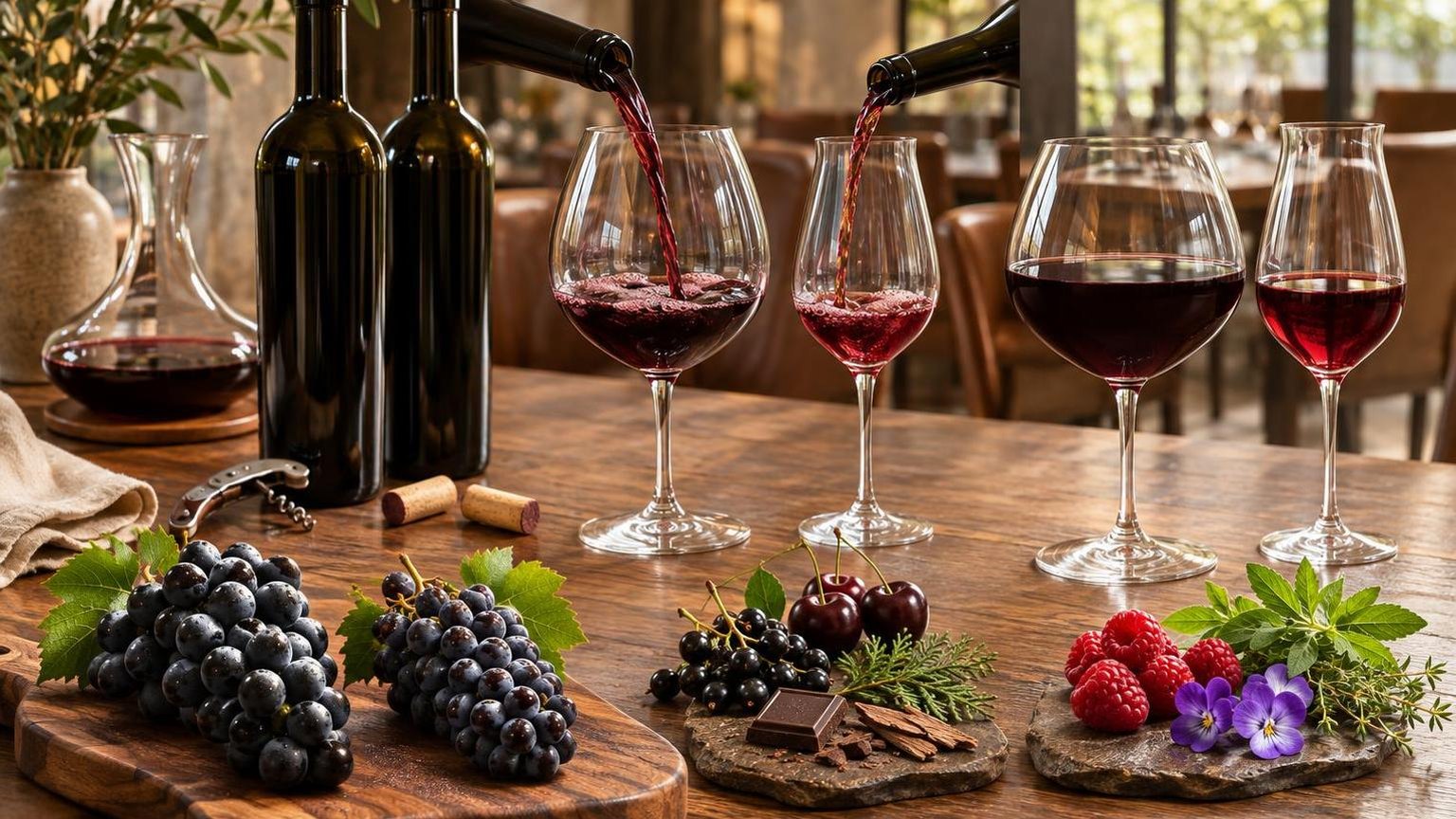
Growing Regions and Climate Preferences
Cabernet Sauvignon generally needs a warmer, longer growing season than Cabernet Franc to ripen reliably.
Cabernet Franc ripens earlier, making it better suited to cooler districts where autumn rain or falling temperatures can interrupt Cabernet Sauvignon’s final development.
How Climate Shapes Each Grape
Both varieties contain methoxypyrazines, compounds associated with bell pepper and leafy aromas. Their expression depends on ripeness, sunlight exposure, and vineyard management—not temperature alone.
Cool conditions or heavily shaded fruit can preserve pronounced herbal character in either grape.
Cabernet Sauvignon’s relatively late budbreak can help it avoid spring frost, but its late ripening increases exposure to autumn weather.
Cabernet Franc generally buds and ripens earlier: a useful harvest advantage in cooler climates, although early growth can increase spring-frost vulnerability.
The regional examples below show their geographic range. Latitude provides context, not a climate rating: elevation, ocean currents, slope, and exposure can make vineyards at similar latitudes behave very differently.
| Region | Approximate latitude | Cabernet growing context |
| Bordeaux, France | 45° N | Both varieties thrive; Cabernet Sauvignon is especially important in the Médoc. |
| Chinon, Loire Valley, France | 47° N | Cabernet Franc dominates local red-wine production. |
| Napa Valley, California | 38° N | Cabernet Sauvignon leads; Cabernet Franc appears in blends and varietal wines. |
| Mendoza, Argentina | 33° S | Both grow successfully, with elevation modifying warm, dry conditions. |
Bordeaux and the Loire: Different Strongholds
In Bordeaux’s Médoc and Graves, Cabernet Sauvignon benefits from gravelly, freely draining soils that warm readily. These conditions support ripening in a maritime climate where rainfall remains a harvest risk.
Merlot and Cabernet Franc provide complementary blending options rather than merely substituting for unripe Cabernet Sauvignon.
Cabernet Franc has a stronger identity in the Loire appellations Chinon, Bourgueil, and Saint-Nicolas-de-Bourgueil. Their comparatively cool growing conditions favor its earlier maturity.
Gravel and sand often yield approachable wines, while clay-limestone sites can produce more structured examples; producer decisions still matter.
In Saint-Émilion, Cabernet Franc also contributes substantially to some prestigious Bordeaux blends.
Its success there shows that calling it simply a “cool-climate grape” misses its adaptability and capacity to develop concentrated fruit in warmer settings.
Warmer Regions and Vineyard Decisions
Cabernet Sauvignon also excels in Napa Valley, Chile’s Maipo Valley, and Australia’s Coonawarra and Margaret River.
These are not interchangeable hot climates: maritime moderation, cool nights, and seasonal rainfall patterns help explain their distinct growing conditions and wine styles.
Cabernet Franc increasingly attracts attention in Argentina’s Uco Valley, where high-elevation sites combine strong sunlight with cool nights.
Neither variety benefits automatically from greater heat: excessive temperatures and water stress can disrupt ripening, making irrigation decisions and protective canopy management important.
Sources: UC Davis Foundation Plant Services grape-variety profiles; INAO appellation specifications for Chinon and Bourgueil; Bordeaux Wine Council regional guidance. Latitudes are rounded geographic reference points, not vineyard boundaries.
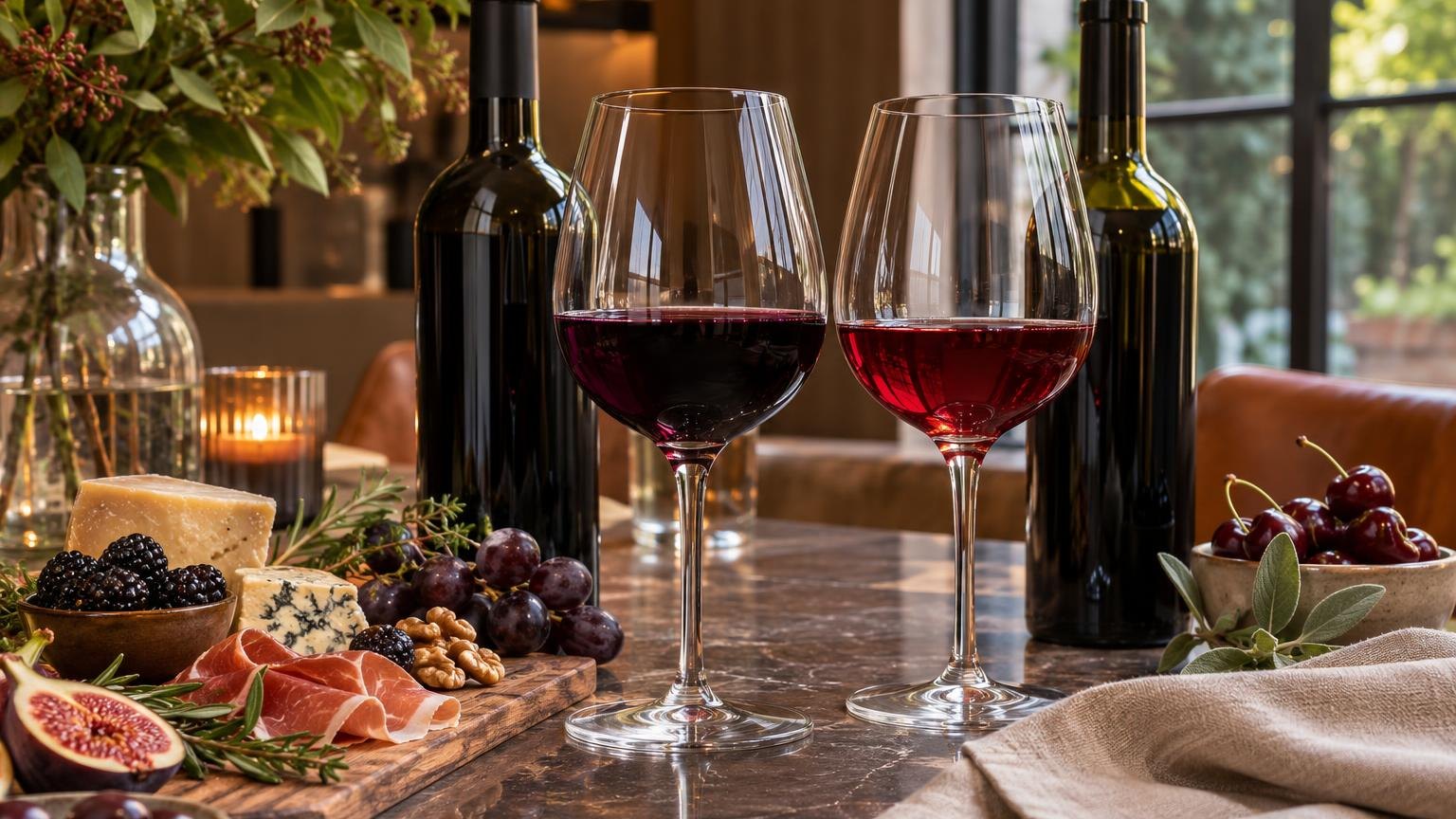
Best Food Pairings for Each Grape
Cabernet Sauvignon generally suits richer, more protein-heavy dishes, while Cabernet Franc often works better with leaner meats, herbs, and vegetables.
Choose by the wine’s actual weight and tannin: a concentrated, oak-aged Franc can need a heartier plate than a mature, softened Sauvignon.
Cabernet Sauvignon: Beef, Lamb, and Savory Richness
Cabernet Sauvignon’s typically firm tannins and concentrated black-fruit flavors favor food with substantial texture. Tannins interact with salivary proteins, creating a drying sensation; protein-rich food can soften that impression.
The goal is balance, not simply choosing the fattiest cut available.
- Grilled ribeye: Beef’s protein and fat suit a young, structured Cabernet. Browned edges complement roasted oak notes, but avoid heavy blackening, which can add bitterness.
- Rosemary-roasted lamb shoulder: Slow-cooked lamb provides richness, while rosemary connects with the grape’s herbal side. Choose a savory pan sauce rather than a sweet glaze.
- Braised short ribs: Tender meat and a reduced, savory sauce stand up to full-bodied examples. Keep barbecue sauce restrained; pronounced sweetness can make dry wine taste harsher.
- Aged cheddar: Its concentrated flavor, protein, and salt make it a more dependable match than delicate fresh cheeses that the wine may overwhelm.
Cabernet Franc: Herbs, Leaner Meats, and Earthy Vegetables
Cabernet Franc often offers red-fruit flavors, fresh acidity, and less imposing tannins, particularly in lighter Loire Valley examples.
Methoxypyrazines contribute bell-pepper and leafy aromas in both grapes; Franc’s herbal character can become an asset alongside green vegetables and fresh herbs.
- Roast pork tenderloin: Pair with thyme, sage, or a mustard pan sauce. Lean pork suits medium-bodied Franc without requiring the richness that benefits a powerful Sauvignon.
- Duck breast with lentils: Duck supplies enough richness for firmer examples, while lentils echo earthy notes. Skip a sugary fruit sauce unless its sweetness is minimal.
- Roasted peppers and eggplant: Browning adds depth, and peppers echo the wine’s vegetal aromas. Add olive oil and white beans for a more substantial vegetarian pairing.
- Mushroom tart: Pastry and a little cheese help balance mushroom umami, which can otherwise accentuate bitterness and astringency in tannic wines.
Serve for the Style, Not the Label Alone
These serving ranges are practical starting points, not fixed rules. Slightly cooler service can keep lighter Franc refreshing; serving either grape too cold makes its tannins feel more prominent.
| Wine style | Suggested serving temperature |
| Full-bodied Cabernet Sauvignon | 60–65°F (16–18°C) |
| Lighter-bodied Cabernet Franc | 55–60°F (13–16°C) |
Sources: The Oxford Companion to Wine, 5th edition (2023), informs grape and methoxypyrazine context.
WSET’s Understanding Wines: Explaining Style and Quality explains how food sweetness, umami, salt, and acidity affect perceived wine balance. Pairings apply those principles rather than promise universal matches.
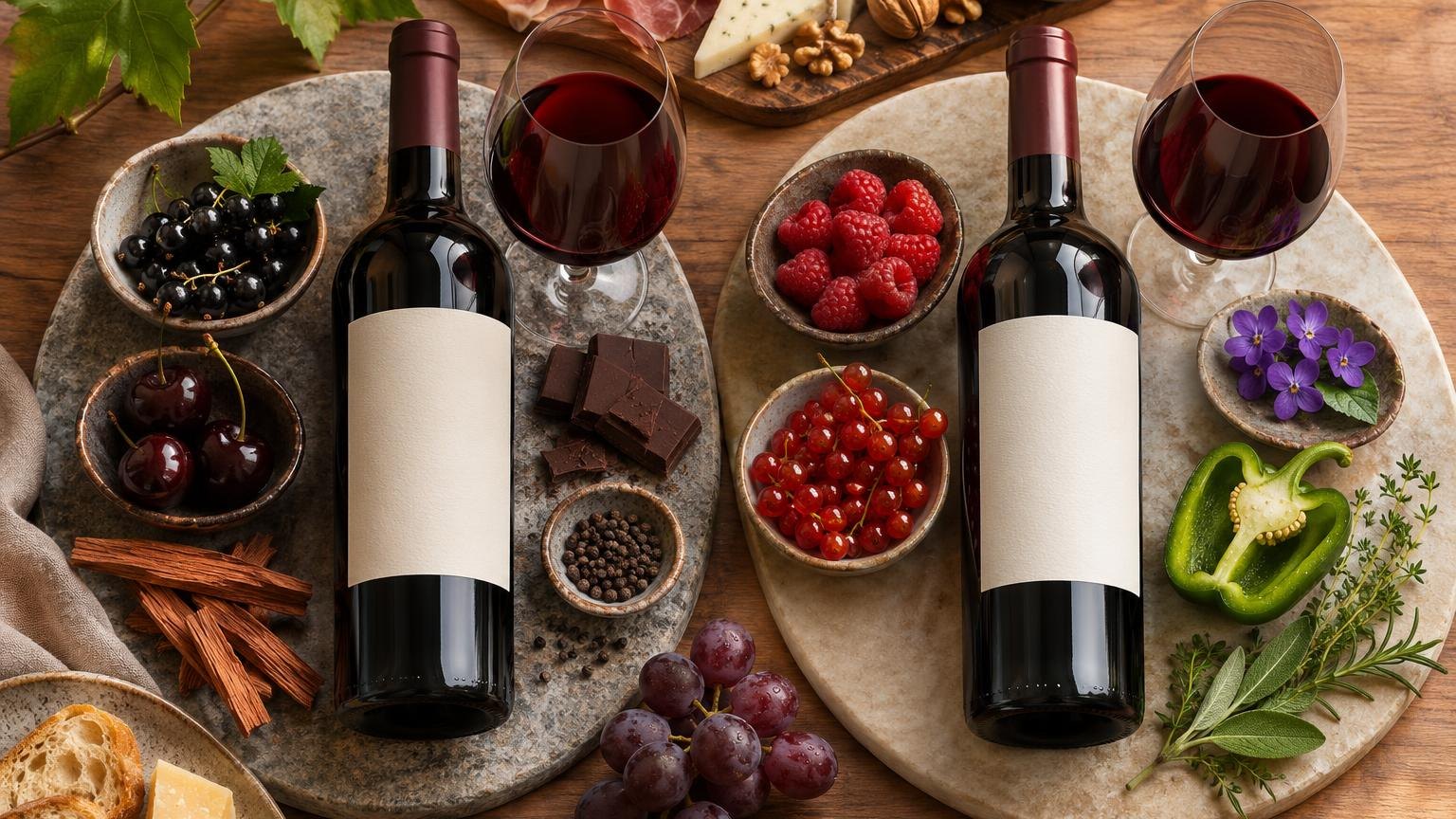
Questions Readers Ask
Cabernet Franc is a parent of Cabernet Sauvignon; the other parent is Sauvignon Blanc.
Bowers and Meredith’s 1997 study in Nature Genetics established this relationship through DNA analysis, confirming that these are related but distinct grape varieties.
How do Cabernet Sauvignon and Cabernet Franc differ in flavor?
Cabernet Sauvignon commonly shows blackcurrant, blackberry, and sometimes cedar notes, while Cabernet Franc often leans toward raspberry, red cherry, violet, and leafy herbs.
Both can show green-pepper aromas from methoxypyrazines, so that characteristic alone cannot reliably distinguish them.
Which wine is fuller-bodied and more tannic?
Cabernet Sauvignon generally produces fuller-bodied wines with firmer tannins, while Cabernet Franc often feels lighter and less astringent.
Extraction, ripeness, and blending can reverse that pattern: a concentrated Cabernet Franc can feel more powerful than a gently extracted Cabernet Sauvignon.
How do their ripening needs differ?
Cabernet Franc generally ripens earlier than Cabernet Sauvignon, making it better suited to places where autumn weather can interrupt ripening.
Cabernet Sauvignon needs a sufficiently warm, long growing season to develop ripe fruit flavors and mature tannins; either grape can taste markedly vegetal when underripe.
Which regions are known for each grape?
Cabernet Sauvignon is especially associated with Bordeaux’s Médoc, California’s Napa Valley, and Australia’s Coonawarra.
Cabernet Franc is the principal red grape of Loire appellations such as Chinon, Bourgueil, and Saumur-Champigny, and an important blending grape in Saint-Émilion.
Why do winemakers blend Cabernet Sauvignon with Cabernet Franc?
Cabernet Sauvignon often contributes dark fruit, tannic structure, and depth, while Cabernet Franc can add floral aromas, red-fruit character, and freshness.
Bordeaux producers use different proportions according to vineyard conditions and vintage, rather than following one fixed Cabernet-to-Cabernet formula.
Does Cabernet Sauvignon age longer than Cabernet Franc?
Structured Cabernet Sauvignon often ages well, but grape variety alone does not determine longevity.
Top examples of either grape can improve for 10–20 years or longer under suitable storage, while lighter, fruit-focused bottlings usually suit earlier drinking.
How should food pairings differ for Cabernet Sauvignon and Cabernet Franc?
Firm, full-bodied Cabernet Sauvignon pairs well with ribeye, lamb chops, and braised beef because protein and fat soften the perception of tannin.
Lighter, herbaceous Cabernet Franc often works better with roast chicken, pork tenderloin, lentils, and mushroom dishes, especially when rosemary or thyme echoes its savory aromas.
Related Reading
- Does Wine Expire if Unopened?
- How Long Does Boxed Wine Last Unopened? 13 Things You Need To Know (2026 Guide)
- How Many Beers Is a Bottle of Wine?
- How Many Calories Are in Taylor Port Wine?
- How Many Calories In A Bottle Of Merlot?
- All Alcohol Guides
- Bowers and Meredith, “The Parentage of a Classic Wine Grape, Cabernet Sauvignon” (1997)
- University of California Agriculture and Natural Resources, Wine Grape Varieties in California (2003)
- UC Davis Foundation Plant Services, Grape Registry (n.d.)
- Jancis Robinson, Cabernet Sauvignon (n.d.)
- Jancis Robinson, Cabernet Franc (n.d.)
- Wine Folly, Cabernet Sauvignon (n.d.)
- Wine Folly, Cabernet Franc (n.d.)
- Julius Kühn Institute, Vitis International Variety Catalogue (n.d.)