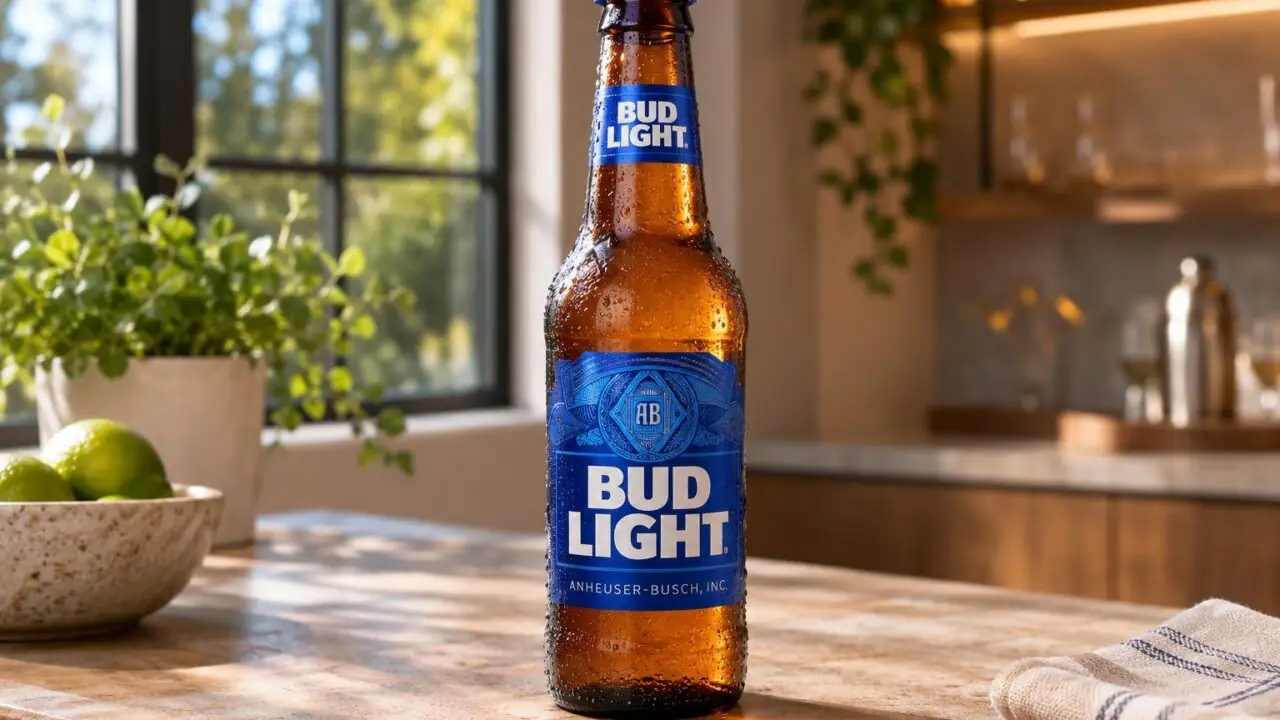
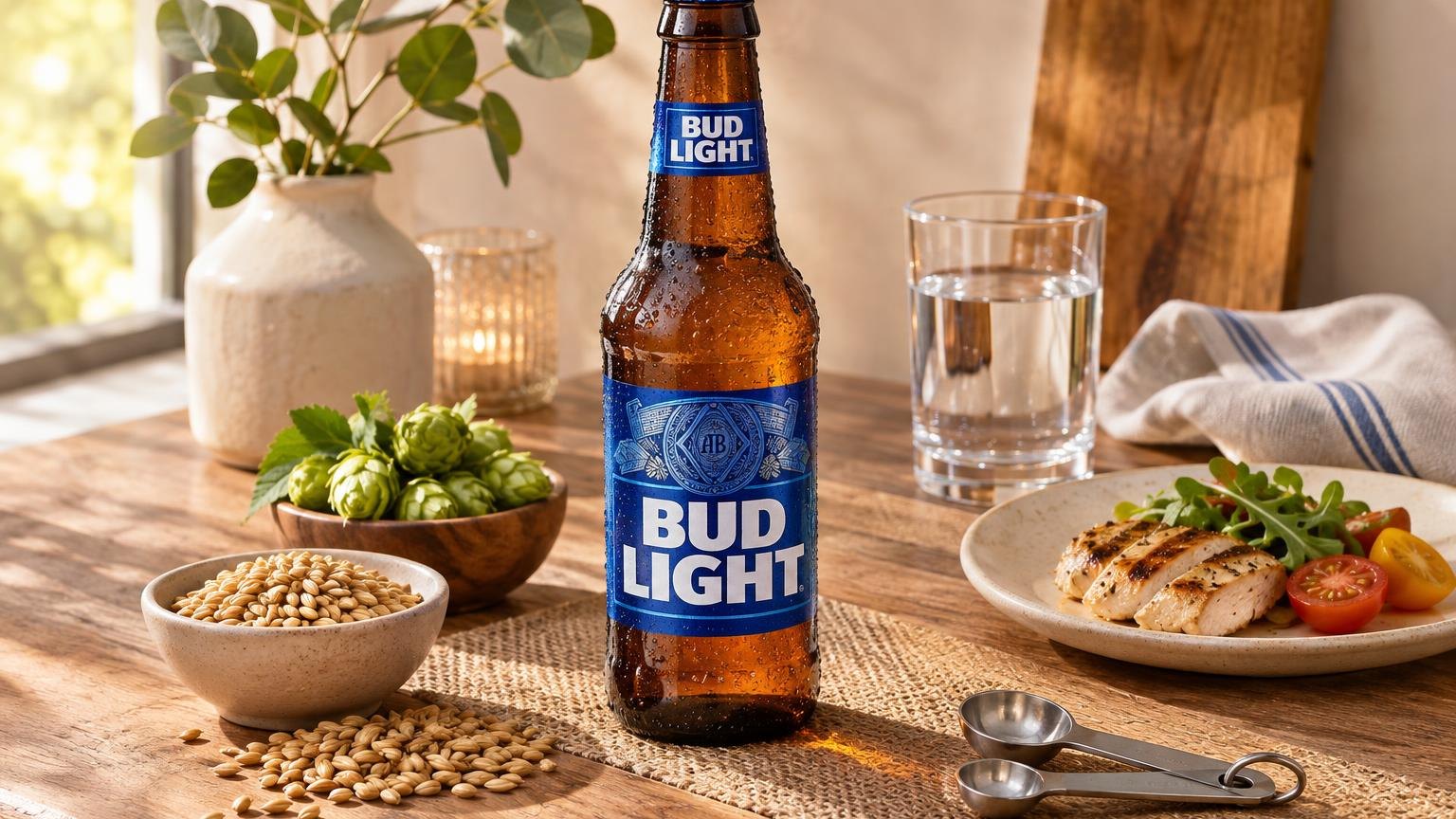
The calories in a Bud Light bottle total 110 per 12-ounce serving, according to Anheuser-Busch’s published nutrition data.
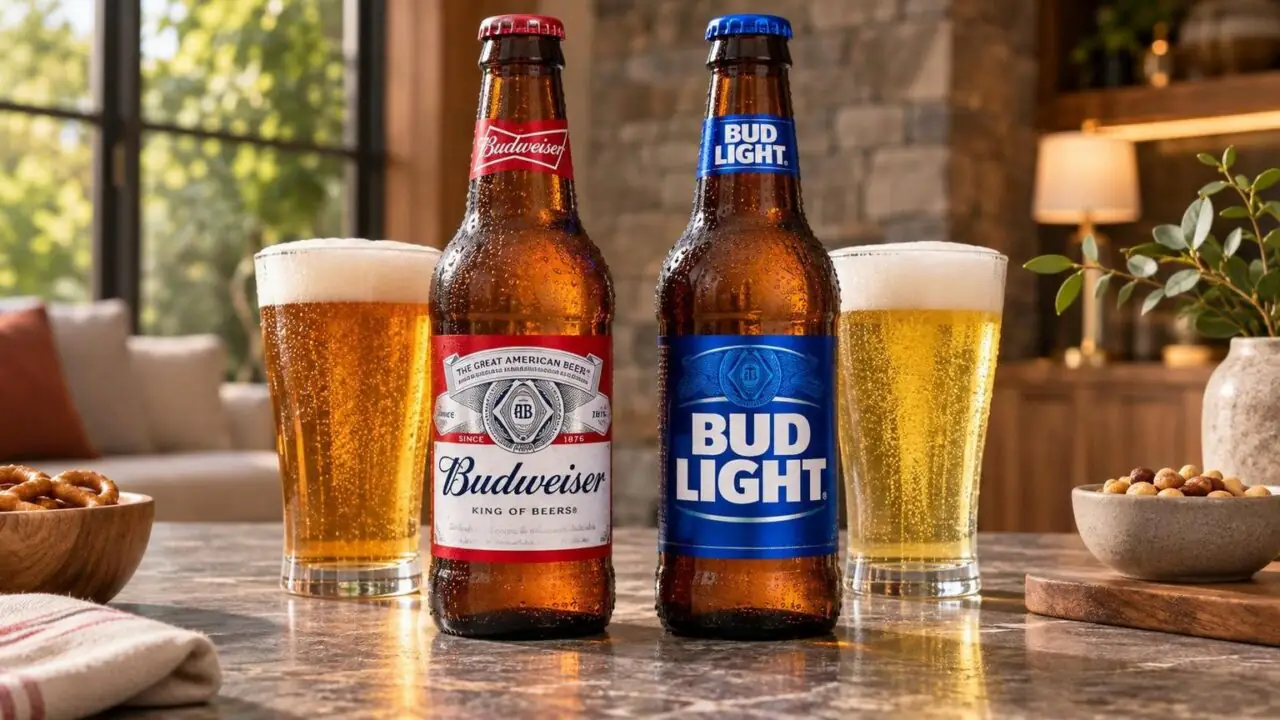
That places it among the lighter mainstream American lagers—roughly 24% fewer calories than standard Budweiser, which carries 145 calories in the same 12-ounce format.
Those 110 calories come almost entirely from alcohol (4.2% ABV) and 6.6 grams of carbohydrates, since beer contains no fat and negligible protein.
This guide breaks down the complete nutrition profile, compares Bud Light against Michelob Ultra and Coors Light, and explains what those numbers mean for your daily calorie budget.
Calorie Count in a Standard 12-Ounce Bottle
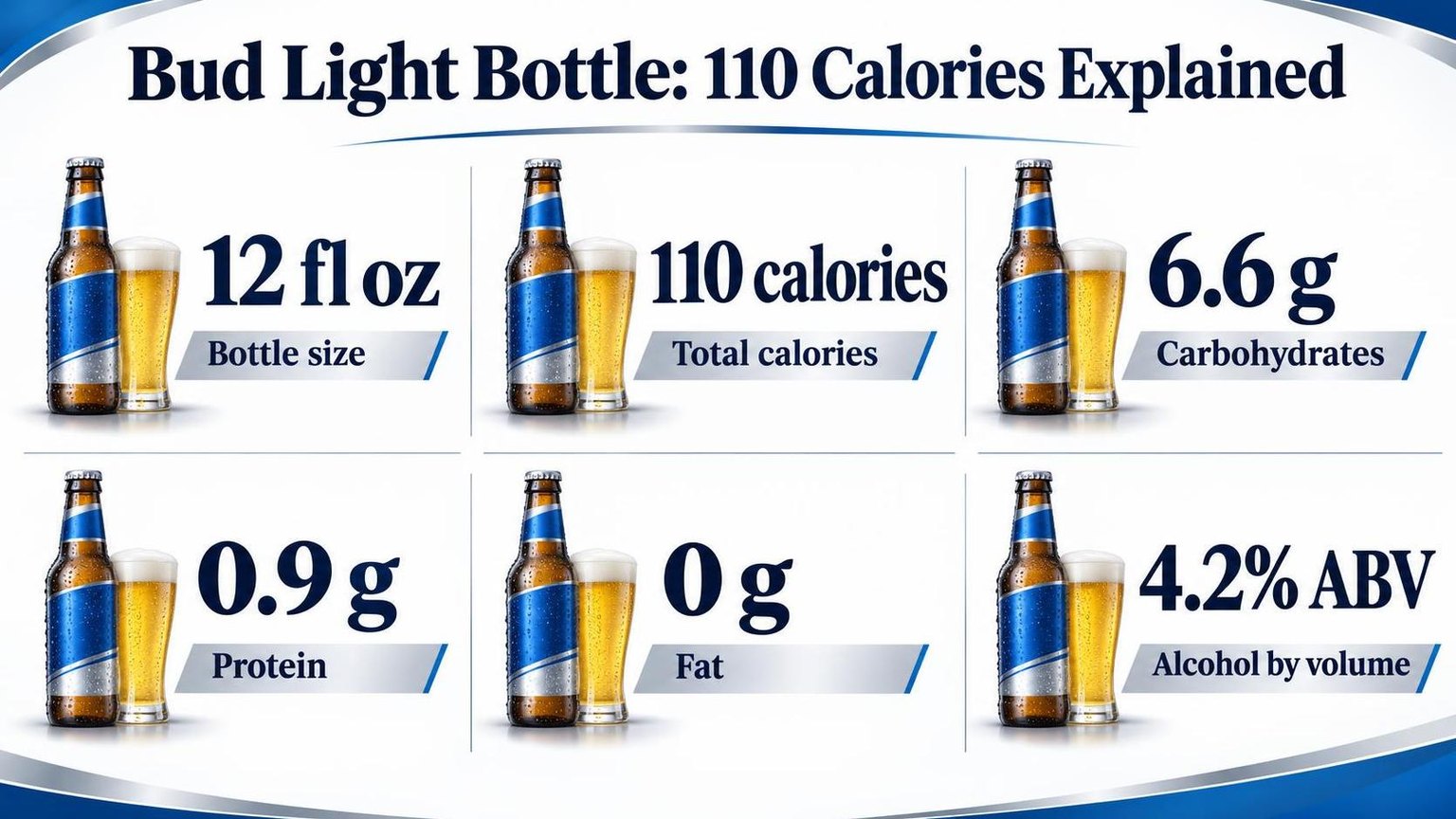
A standard 12-fluid-ounce bottle of Bud Light contains 110 calories, according to the brand’s published nutrition information.
That figure covers the entire bottle of regular Bud Light, not a smaller serving or a different product carrying the Bud Light name.
What the Bottle Contains
Bud Light’s standard serving information includes calories, carbohydrates, protein, and alcohol content.
These figures apply to the original beer sold in the United States; flavored versions and other Bud Light products require their own label checks.
| Measure | Per standard bottle |
| Serving volume | 12 US fluid ounces, approximately 355 mL |
| Calories | 110 |
| Carbohydrates | 6.6 g |
| Protein | 0.9 g |
| Fat | 0 g |
| Alcohol by volume | 4.2% |
Source: Bud Light’s official product and nutrition information, https://www.budlight.com. Check the package when buying a different size or variant, since the brand name alone does not establish the serving’s calorie count.
Why a Light Beer Still Has Calories
Alcohol supplies energy even when a beverage contains no fat. The standard nutritional conversion assigns approximately 7 calories per gram of alcohol. Consequently, carbohydrate content alone cannot explain or predict a beer’s total calories.
Fermentation converts some of the grain-derived sugars into alcohol, while some carbohydrates remain in the finished beer.
Both contribute to Bud Light’s energy content. “Light” does not mean calorie-free, alcohol-free, or suitable for unlimited consumption.
For food tracking, use the manufacturer’s stated total rather than trying to reconstruct it from rounded nutrient values.
Label rounding and the separate contribution from alcohol can make a homemade calculation differ from the published calorie figure.
Count the Amount You Actually Drink
The bottle material does not change the beer’s calories. When the recipe and fill volume match, glass and aluminum packaging hold the same calorie total. A larger container, however, requires a different serving entry in your tracking app.
| Standard bottles consumed | Total calories |
| 1 | 110 |
| 2 | 220 |
| 3 | 330 |
These totals cover the beer only. Food, mixers, or other drinks add their own calories. If you leave part of a bottle unfinished, log the portion consumed rather than automatically recording the full container.
Bottom line: Record 110 calories for a finished standard bottle of original Bud Light. Confirm the product name and container size first, especially when choosing among similarly branded beers.
Where Bud Light Calories Come From
A standard 12-fluid-ounce Bud Light bottle contains 110 calories, with most coming from alcohol rather than carbohydrates.
Bud Light’s published nutrition information lists 4.2% alcohol by volume (ABV), 6.6 grams of carbohydrates, 0.9 grams of protein, and zero grams of fat per serving.
Alcohol Supplies Most of the Energy
During fermentation, yeast converts fermentable sugars from the brewing grains into alcohol and carbon dioxide.
The alcohol remains in the finished beer and contributes calories, even though it does not appear under carbohydrates on a nutrition panel.
Alcohol provides approximately 7 calories per gram. Using the bottle’s volume and labeled ABV, a standard serving contains roughly 11.8 grams of alcohol. That makes alcohol the largest contributor to Bud Light’s calorie count.
| Calorie source | Amount per 12-ounce bottle | Calories per gram | Estimated contribution |
| Alcohol | Approximately 11.8 grams | 7 | Approximately 82 calories |
| Carbohydrates | 6.6 grams | 4 | Approximately 26 calories |
| Protein | 0.9 grams | 4 | Approximately 4 calories |
| Fat | 0 grams | 9 | 0 calories |
These calculations are estimates, not a replacement for the manufacturer’s stated calorie count. Rounded nutrient values, nominal ABV, and general calorie-conversion factors do not necessarily reproduce the label exactly.
Use the published 110 calories when logging a standard bottle.
Carbohydrates Are Not the Same as Sugar
Bud Light’s carbohydrate figure includes carbohydrates left after brewing and fermentation, including dextrins that yeast does not fully ferment. It does not mean the bottle contains that amount of table sugar.
Total carbohydrates and sugars are separate nutritional measurements.
Protein contributes only a small amount of energy, while the listed fat contributes none. Water makes up most of the beverage’s volume but supplies no calories.
Carbonation also adds no calories; dissolved carbon dioxide is not an energy source for the body.
What This Means When Counting Calories
Lower carbohydrate content does not make beer calorie-free. Alcohol still supplies substantial energy. For tracking purposes, record the complete bottle’s calories rather than calculating calories from carbohydrates alone.
Check the package size before using the standard-bottle figure.
Sources: Bud Light’s official product information, https://www.budlight.com/; USDA FoodData Central, https://fdc.nal.usda.gov/, for general nutritional reference; and NIAAA’s explanation of beverage volume and alcohol content.
Https://www.niaaa.nih.gov/alcohols-effects-health/overview-alcohol-consumption/what-standard-drink.
Bud Light Versus Regular Budweiser and Other Light Beers
Bud Light has fewer calories than regular Budweiser, but it is not the lowest-calorie option among major American light beers. Compare equal serving sizes: a larger bottle can erase the calorie advantage suggested by the word “light.”.
Calories, Carbohydrates, and Alcohol Compared
These figures cover the standard U.S. versions, not flavored extensions or stronger products sold under related names. Calories and carbohydrates apply to the serving shown; alcohol by volume describes the beer’s strength.
| Beer | Serving | Calories | Carbohydrates | ABV |
| Bud Light | 12 fl oz | 110 | 6.6 g | 4.2% |
| Regular Budweiser | 12 fl oz | 145 | 10.6 g | 5.0% |
| Coors Light | 12 fl oz | 102 | 5.0 g | 4.2% |
| Miller Lite | 12 fl oz | 96 | 3.2 g | 4.2% |
| Michelob ULTRA | 12 fl oz | 95 | 2.6 g | 4.2% |
Sources: the brands’ official U.S. product and nutrition information at https://www.budlight.com, https://www.budweiser.com, https://www.coorslight.com, https://www.millerlite.com, and https://www.michelobultra.com.
Check the package when buying a different formulation or a product outside the United States.
What the Differences Mean
Regular Budweiser contains both more alcohol and more carbohydrates than Bud Light. Both contribute energy, so the calorie difference does not come from carbohydrates alone.
That distinction matters when choosing beer for calorie tracking rather than simply looking for a lower carbohydrate count.
| Switch from Bud Light to an equal serving of: | Calorie change |
| Regular Budweiser | 35 more |
| Coors Light | 8 fewer |
| Miller Lite | 14 fewer |
| Michelob ULTRA | 15 fewer |
The light beers listed share the same ABV, yet their calories differ. Matching alcohol strength does not guarantee matching calorie content: residual carbohydrates and other components vary with the recipe and brewing process.
- For fewer calories: Michelob ULTRA has the lowest published calorie count in this group, followed closely by Miller Lite. Bud Light sits above the other light beers shown.
- For portion control: Check the bottle’s stated volume before logging it. Glass versus aluminum does not determine calories; the amount of beer and its formulation do.
- For alcohol intake: Do not treat a lower-calorie beer as alcohol-free or harmless. Switching among these light beers does not reduce alcohol consumed when serving size stays the same.
Bottom line: Bud Light reduces calories compared with regular Budweiser, while several competing light beers go lower. Choose using the actual label, serving size, and number of servings—not the “light” label alone.
How Alcohol and Carbs Drive the Number
A standard 12-fluid-ounce Bud Light bottle contains 110 calories, according to Bud Light’s published nutrition information. Most of that energy comes from alcohol, so the carbohydrate count alone cannot explain the calories on the label.
Alcohol supplies most of the energy
Bud Light’s alcohol by volume, or ABV, is 4.2%. ABV measures the proportion of the beer’s volume that is ethanol; it does not describe the percentage of calories supplied by alcohol.
Using the standard nutrition factors below, alcohol contributes approximately three-quarters of the bottle’s declared calories. These calculations are estimates, not a separate laboratory analysis of Bud Light.
| Component | Amount per 12-ounce bottle | Energy factor | Estimated calories |
| Alcohol | About 11.8 grams, calculated from 4.2% ABV | 7 calories per gram | 82 |
| Carbohydrate | 6.6 grams, published by Bud Light | 4 calories per gram | 26 |
| Finished beer | One standard bottle | Manufacturer’s declared total | 110 |
The alcohol estimate uses approximately 355 milliliters of beer and ethanol’s density of about 0.789 grams per milliliter. Multiplying beverage volume by ABV gives ethanol volume; multiplying that result by density converts it to grams.
During brewing, yeast converts fermentable sugars into alcohol and carbon dioxide. Some carbohydrates remain in the finished beer.
The nutrition label’s carbohydrate figure includes those remaining carbohydrates; it should not be read as a measurement of sugar alone.
Fermentation therefore does not simply make carbohydrate energy disappear. It changes the beer’s composition, leaving alcohol as an important energy source even when the finished beverage has relatively little carbohydrate.
The component estimates do not need to match the declared total exactly. Small amounts of protein, rounded nutrition values, and the assumptions used in this calculation can affect the result.
Use the manufacturer’s total when logging the bottle.
What matters when tracking calories
- Log the whole serving. Drinking part of a bottle changes your intake; the published total assumes you consume its full contents.
- Check the exact product. Bud Light’s figures do not automatically apply to other beers carrying similar branding.
- Do not calculate beer calories from carbohydrates alone. That approach leaves out its principal energy source: ethanol.
Sources: Bud Light’s official product information, https://www.budlight.com/; USDA FoodData Central, https://fdc.nal.usda.gov/, for standard alcohol and carbohydrate energy factors.
Calories Across Bottle, Can and Draft Sizes
A standard Bud Light bottle contains 110 calories. The container does not change the beer’s calorie density: a bottle, can or draft pour delivers the same calories when it contains the same volume of original Bud Light.
Calories by Serving Size
Bud Light’s published nutrition information uses a 12-US-fluid-ounce serving as its reference. The estimates below scale that serving proportionally and round to the nearest whole calorie.
They describe beer volume, not a guarantee that every package or draft size is available locally.
| Serving size, US fl oz | Container or serving example | Calories |
| 8 | Small measured draft pour | 73, estimated |
| 12 | Standard bottle or can | 110, published |
| 16 | Tallboy can or full US pint | 147, estimated |
| 20 | Large measured draft pour | 183, estimated |
| 22 | Large measured draft pour | 202, estimated |
| 24 | Large can | 220, estimated |
| 32 | Measured draft volume | 293, estimated |
Check the Package, Not Just the Brand
For packaged beer, read the net contents printed on the bottle or can. A taller container can hold multiple reference servings, even when it looks like a single drink. Use the entire container’s volume if you finish it.
These figures apply to original Bud Light, not Bud Light Platinum, Bud Light NEXT or flavored products carrying related branding. Different formulations have different nutrition profiles.
Use the specific product’s label rather than transferring the original beer’s calorie count.
Draft Calories Depend on the Actual Pour
A glass’s advertised capacity does not necessarily equal the volume of beer served. Head, unfilled space and the bar’s pouring practice affect how much liquid reaches the table. Ask for the serving volume when tracking draft calories.
- Confirm that menu ounces mean fluid ounces of beer, rather than simply the glass’s nominal capacity.
- Count refills and top-ups separately; they add beer beyond the initial serving.
- For a shared pitcher, track your own poured volume rather than assigning yourself the whole pitcher.
To estimate an unlisted portion, divide its US-fluid-ounce volume by the reference serving volume, then multiply by the reference calories. Round at the end. This remains an estimate because the published calorie figure is itself rounded.
Source: Bud Light’s official product nutrition information, https://www.budlight.com/. The table’s other calorie figures are proportional calculations, not separately published nutrition values for each container.
Fitting Bud Light Into Your Daily Calorie Budget
A standard 12-fluid-ounce bottle of Bud Light contains 110 calories. Count those calories alongside food, mixers, and other drinks when planning your day; “light” describes the beer, not a calorie-free addition to your meals.
Budget for the Amount You Actually Drink
The table uses a hypothetical 2,000-calorie daily budget, not a personalized recommendation. Your calorie needs depend on factors including age, body size, activity, and health goals.
| 12-ounce bottles | Total calories | Share of a 2,000-calorie budget |
| 1 | 110 | 5.5% |
| 2 | 220 | 11% |
| 3 | 330 | 16.5% |
Check the bottle size before logging it. Bud Light comes in different package sizes, and the familiar calorie figure applies specifically to the standard bottle discussed here.
Use the package’s serving information rather than assuming every container counts as one serving.
Count Alcohol Calories, Not Just Carbohydrates
Bud Light lists 6.6 grams of carbohydrate per standard bottle. Carbohydrate tracking alone therefore misses much of its energy: alcohol itself contributes calories.
For calorie budgeting, enter the beer’s stated total rather than calculating an estimate from carbohydrates alone.
For weight management, beer calories count toward total energy intake. However, fitting a drink into a calorie target does not make drinking risk-free. A calorie budget is an accounting tool, not a measure of alcohol safety.
Keep Meals Intact and Plan Ahead
- Log the drink before pouring. Reserve its calories in your food diary so you can see how it fits without relying on an end-of-day guess.
- Keep regular meals. Do not skip dinner to “save” calories for beer. Preserve foods that provide protein, fiber, and essential nutrients.
- Track the accompanying food. Chips, wings, dips, and late-night snacks belong in the same daily total. Record portions instead of treating them as incidental.
- Set your limit before drinking. Choose an amount in advance, and use water between drinks to help pace consumption. Water does not accelerate alcohol clearance.
If weight loss is your goal, review drinking alongside your overall eating pattern rather than treating one bottle as a make-or-break event. Reducing drinking frequency can free up calories without cutting nutritious food.
Sources: Bud Light’s official product information provides the calorie and carbohydrate figures: https://www.budlight.com/ .
The National Institute on Alcohol Abuse and Alcoholism explains alcohol’s calorie contribution: https://rethinkingdrinking.niaaa.nih.gov/ .
Frequently Asked Questions
How many calories are in a 12-ounce Bud Light bottle?
A standard 12-fluid-ounce Bud Light bottle contains 110 calories, according to Bud Light’s published nutrition information.
Regular Bud Light has 4.2% alcohol by volume (ABV); flavored versions and other Bud Light products can have different calorie counts.
How many calories are in a 16-ounce Bud Light bottle?
A 16-fluid-ounce Bud Light bottle contains approximately 147 calories, calculated from the brand’s listed 110 calories per 12 ounces.
Check the bottle’s volume before logging it, because a 16-ounce bottle holds one-third more beer than the standard size.
How many carbohydrates are in a Bud Light bottle?
Bud Light lists 6.6 grams of carbohydrates per 12-ounce serving, contributing approximately 26 calories. Carbohydrates do not account for the full 110 calories because alcohol also supplies energy—about 7 calories per gram.
Does a Bud Light bottle have fewer calories than Budweiser?
Yes: the brands’ published nutrition information lists 110 calories for 12 ounces of Bud Light and 145 calories for the same amount of regular Budweiser. Bud Light therefore has 35 fewer calories per standard bottle, or approximately 24% fewer.
How many calories are in two bottles of Bud Light?
Two standard 12-ounce Bud Light bottles contain 220 calories; three contain 330 calories. Two bottles supply 11% of a 2,000-calorie daily reference intake, although individual calorie needs vary.
Related Guides
- How To Smoke From A Pipe? Everything You Need for Smoking
- How Many Cups In 4 Pounds?
- What Is the Alcohol That Tastes Like Black Licorice?
- What Is Bourbon Made From?
- Fun Drinking Games with Cards for 2 Players
- What Does Cabernet Taste Like? The Answer You Must Know
- All Blog Guides
- Bud Light — Official Beer Nutrition Information (n.d.)
- Anheuser-Busch — Bud Light Brand Information (n.d.)
- NIAAA — What Is a Standard Drink? (n.d.)
- USDA and HHS — Dietary Guidelines for Americans, 2020–2025 (2020)
- Traversy and Chaput — Alcohol Consumption and Obesity: An Update (2015)
- MedlinePlus — Calorie Count: Alcoholic Beverages (n.d.)
- FDA — How to Understand and Use the Nutrition Facts Label (n.d.)
- Harvard T.H. Chan School of Public Health — Alcohol: Balancing Risks and Benefits (n.d.)