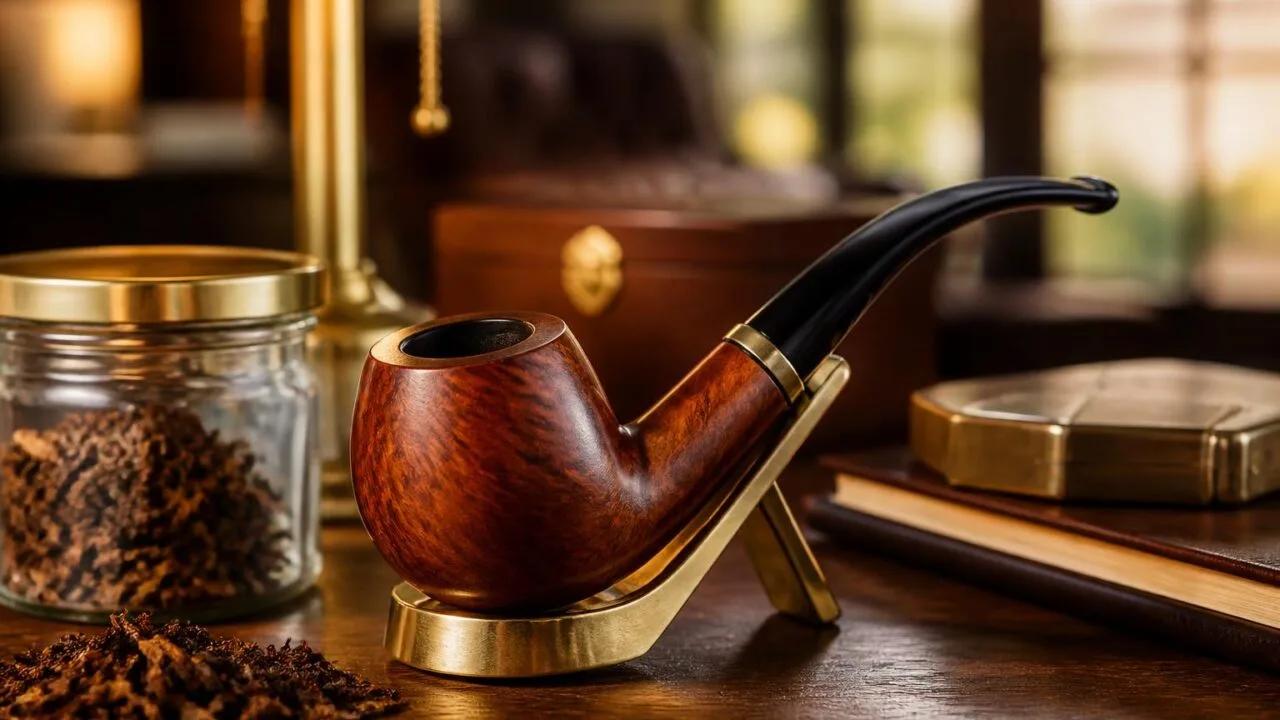
How To Smoke From A Pipe is a slow, low-heat way to enjoy pipe tobacco by packing the bowl evenly, lighting the surface, and drawing gently through the stem.
Unlike a cigarette, a pipe is not inhaled deeply; most smokers keep the smoke in the mouth to taste the tobacco.
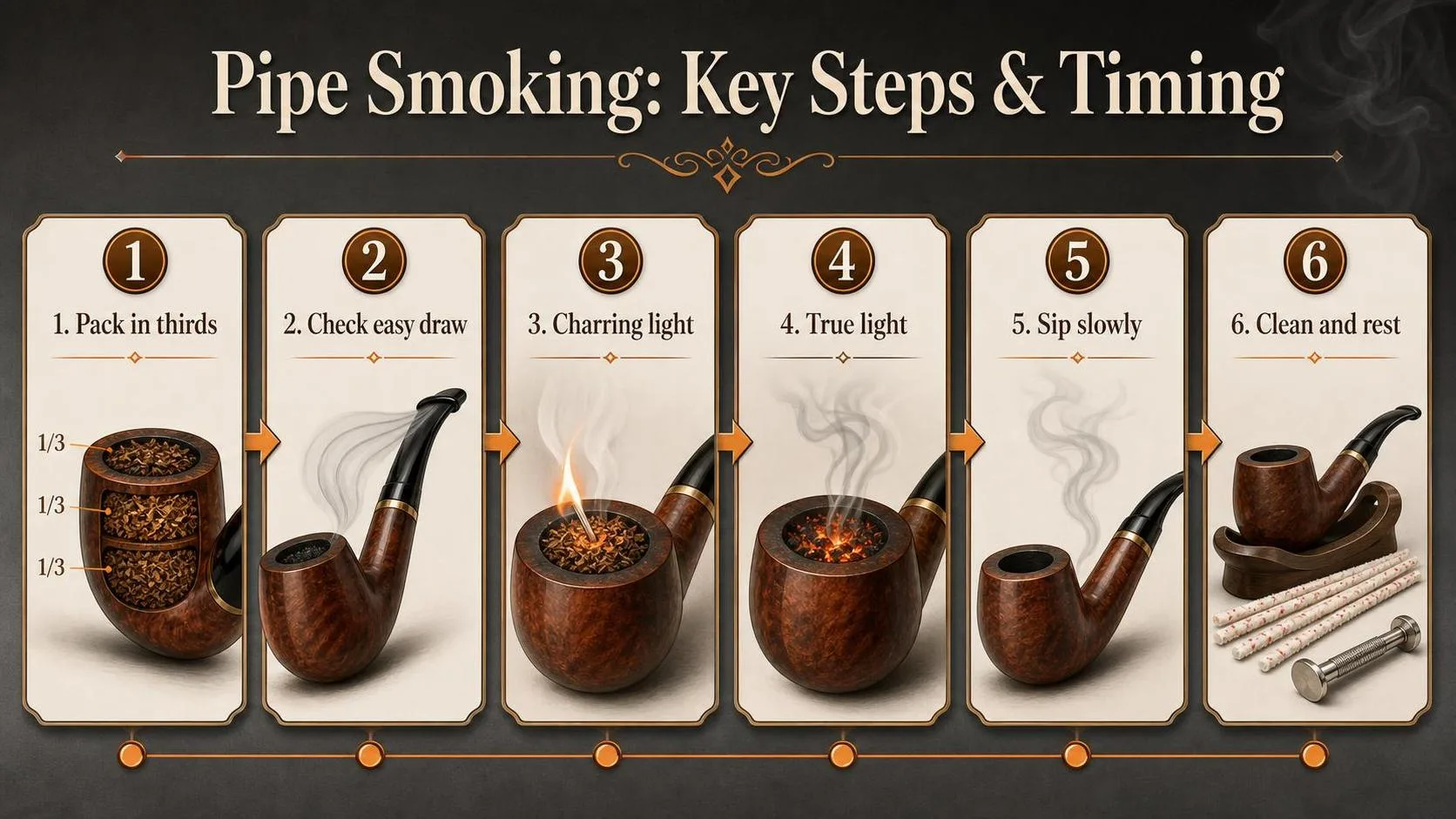
This guide covers the practical sequence I use when teaching first-time pipe smokers: choosing a pipe, checking moisture, using a three-step pack, making a charring light, tamping correctly.
And keeping the ember alive without overheating the bowl or causing tongue bite.
Pipe Smoking Risks and Pace
Pipe smoking is slower and less inhalation-focused than cigarettes, but it is not risk-free. The numbers below help explain pacing, packing, temperature control, and the health context adults should understand before lighting a bowl.
Most technique problems come from smoking too fast, packing too tightly, or using tobacco that is too wet. These figures are practical benchmarks, not rigid rules.
| Number | What it means | Why it matters |
| 1–3 grams | Typical amount of pipe tobacco in a medium bowl | A small bowl may hold about 1 gram; a large chamber can exceed 3 grams, changing smoke time and nicotine exposure. |
| 30–60 minutes | Common smoking time for one average bowl | A pipe is usually sipped slowly. Finishing in 10–15 minutes often means the pipe is running too hot. |
| 20–40 seconds | Suggested pause between gentle puffs | This cadence helps keep combustion steady without overheating the bowl or causing tongue irritation. |
| 2 lights | Charring light, then true light | The first light swells and evens the tobacco surface; the second establishes a more stable burn after tamping. |
| 3 packing stages | Light, medium, firm pressure | A classic method fills the bowl in thirds, preserving airflow while keeping the tobacco from burning unevenly. |
The “draw” should feel like sipping through a straw, not pulling through a clogged filter. If you cannot draw air easily through the packed, unlit pipe, empty it and repack more loosely.
| Check | Target | Warning sign |
| Bowl temperature | Warm but comfortable to hold | Too hot to grip means you are puffing too fast or packing poorly. |
| Tobacco moisture | Pliable, not sticky | Wet tobacco causes steam, gurgling, relights, and tongue bite. |
| Ash layer | Thin, even gray ash | Deep ash or tunneling means the burn is uneven and may need gentle tamping. |
From a health standpoint, “not inhaling” does not make pipe smoking safe. The U.S. National Cancer Institute and CDC associate pipe smoking with cancers of the mouth, throat, larynx, esophagus, lung, and pancreas.
- Nicotine is still absorbed: even without inhaling, nicotine passes through the lining of the mouth.
- Carbon monoxide is produced: all burning tobacco generates carbon monoxide and tar compounds.
- Frequency matters: risk rises with longer duration, more bowls per day, and deeper inhalation.
- Cleaning matters: run a pipe cleaner through the stem after each smoke and allow the pipe to dry before reuse.
A practical rotation is letting a briar pipe rest at least 24 hours after use. Dry wood smokes cooler, tastes cleaner, and is less likely to sour from trapped moisture.

What Changes Pipe Tobacco Flavor
The same pipe tobacco can taste sweet, harsh, cool, or ashy depending on moisture, packing, cadence, and pipe geometry. Small changes matter because pipe smoking relies on controlled smoldering, not open flame combustion.
The best results usually come from tobacco that is pliable but not wet, a bowl packed with even airflow, and a slow draw rate. Overheating is the most common cause of tongue bite and bitter flavor.
Tobacco Moisture
Moisture strongly affects burn rate and flavor clarity. Tobacco that feels sticky or clumps tightly often produces steam, gurgle, and sour smoke. Tobacco that crumbles into dust burns hot and fast.
| Condition | Typical sign | Likely result |
| Too wet | Clumps, sticks to fingers | Hard lighting, steam, gurgle |
| Usable | Springy, separates easily | Even burn, clearer flavor |
| Too dry | Crackles or turns powdery | Hot smoke, harsh edges |
Many ribbon-cut tobaccos improve after 10 to 30 minutes of air-drying on a clean surface. Dense flakes may need longer because moisture is trapped inside compressed layers.
Packing and Airflow
A pipe should draw with slight resistance before lighting. If the draw feels like an empty straw, the pack may burn too quickly. If it feels plugged, the ember will struggle and require repeated relights.
- Loose bottom: Supports airflow through the heel of the bowl.
- Moderate middle: Keeps tobacco in contact without compacting it.
- Firmer top: Creates a stable surface for the charring light.
Cadence and Temperature
Fast puffing raises bowl temperature and can turn sugars and casing flavors acrid. A useful benchmark is to keep the bowl comfortable to hold against the fingers, not painfully hot.
| Smoking pace | Practical cue | Common effect |
| Slow | One gentle sip every 30 to 60 seconds | Cooler smoke, fuller flavor |
| Fast | Repeated hard puffing | Heat, bite, bitterness |
Pipe Shape, Filter, and Cleanliness
Chamber width changes how blends present themselves. Narrow bowls often concentrate Virginias and flakes, while wider bowls can help mixtures with several components burn together more evenly.
Filters also change the result. A 9 mm charcoal filter can reduce moisture and some intensity, while an unfiltered pipe gives a more direct flavor but requires cleaner technique.
Residue matters. A blocked airway, sour stem, or wet shank can make good tobacco taste stale. Running a pipe cleaner through the stem after each smoke helps prevent moisture buildup and off-flavors.
How to Judge Pipe Technique
Pipe smoking technique is verified less by appearance than by measurable outcomes: moisture, airflow, ember temperature, burn time, and tongue comfort. The goal is a cool, steady smolder, not visible flame or fast smoke production.
At home, the most reliable checks are tactile and repeatable: weigh the tobacco, test the draw before lighting, time the bowl, and inspect the ash and dottle afterward.
These observations quickly reveal whether packing, cadence, or moisture was wrong.
Practical Measures to Check Before and During a Bowl
| What to measure | Useful target or sign | How to verify it |
| Tobacco moisture | About 12% to 18% moisture by weight for many pipe cuts | Pinch test: strands spring apart, not crumble or clump; confirm by weighing before and after 30 to 60 minutes of air-drying |
| Fill level | Bowl filled to just below the rim, usually 2 to 4 mm clearance | Look across the rim before lighting; tobacco should not mound over the chamber |
| Pre-light draw | Resistance similar to sipping through a straw | Draw through the unlit pipe; if it feels plugged, empty and repack |
| Smoking cadence | Roughly 1 gentle sip every 20 to 40 seconds | Use a watch for the first 5 minutes; the pipe should stay warm, not hot |
| Bowl temperature | Comfortably holdable in the hand | If fingers cannot rest on the bowl for 3 seconds, slow down or let it go out |
| Session length | Small bowl: 20 to 30 minutes; medium bowl: 35 to 60 minutes | Time from charring light to final ash; very short burns usually mean over-puffing or loose packing |
End-of-Bowl Verification
- Ash: Fine gray ash indicates even combustion. Large black chunks usually mean tobacco was too wet, packed unevenly, or smoked too fast.
- Dottle: A small amount of damp tobacco at the heel is normal. A wet, sour mass suggests excess moisture, hard puffing, or an unclean pipe.
- Tongue feel: Stinging or “bite” often correlates with hot smoke, alkaline tobacco chemistry, or rapid puffing. Slowing cadence is the first correction.
- Relights: Two to five relights in a bowl is common, especially for flake or wetter aromatics. Constant relighting points to poor drying or overly tight packing.
For objective verification, use a gram scale accurate to 0.1 g. Weigh 3.0 g of tobacco, air-dry it for 30 minutes, then reweigh. A drop of 0.3 g equals a 10% weight loss, mostly water.
Combustion science also supports slower smoking. Tobacco begins thermal decomposition well below open flame, while a burning zone can exceed 600°C during active puffing. Faster airflow raises ember temperature, increasing harshness and condensate.
Health verification is separate from technique. The U.S. National Cancer Institute and CDC state that pipe smoke contains nicotine, carbon monoxide, and carcinogenic compounds.
A cooler, better-measured smoke may improve comfort, but it does not make pipe smoking safe.
Pipe Smoking Versus Cigarettes
Pipe smoking is often slower and less frequent than cigarette smoking, but it is not a low-risk substitute.
The main differences are combustion temperature, puffing pattern, inhalation behavior, nicotine delivery, and exposure to carcinogens such as tobacco-specific nitrosamines and polycyclic aromatic hydrocarbons.
Most pipe smokers do not inhale deeply the way cigarette smokers often do, yet nicotine and toxins still absorb through the mouth lining.
The National Cancer Institute reports that pipe smoking increases risk of cancers of the mouth, throat, larynx, esophagus, lung, pancreas, colon, and bladder.
| Option | Typical use pattern | Nicotine and exposure profile | Key health concern |
| Pipe tobacco | A bowl commonly lasts 20–60 minutes, depending on bowl size, packing, and cadence. | Smoke is usually held in the mouth; nicotine can absorb through oral tissue. | Strong association with oral, throat, esophageal, and lung cancers, especially with daily use. |
| Cigarettes | A cigarette is typically smoked in about 5–10 minutes. | Smoke is commonly inhaled into the lungs, giving rapid nicotine delivery. | Leading preventable cause of death in the U.S.; CDC attributes more than 480,000 U.S. deaths per year to cigarette smoking. |
| Cigars | Small cigars may take 10–20 minutes; large premium cigars can take 45–90 minutes. | Often not inhaled, but cigar smoke can contain high nicotine and carbon monoxide levels. | Elevated risk of oral, laryngeal, esophageal, and lung cancer; risk rises with inhalation and frequency. |
| Vaping nicotine | Used in short repeated puffs; device strength varies widely. | No tobacco combustion, but aerosols can contain nicotine, ultrafine particles, metals, and flavoring chemicals. | Not harmless; long-term risks remain less established than combustible tobacco. |
Practical Differences a New Smoker Notices
- Speed: A pipe is the slowest option. Packing, lighting, tamping, relighting, and cleaning add time beyond the smoke itself.
- Technique: Cigarettes are mechanically simple. Pipes require moisture control, a loose-to-firm pack, gentle puffing, and regular ash management.
- Heat: Puffing too quickly makes a pipe bowl hot and can cause “tongue bite,” a chemical and thermal irritation from hot, alkaline smoke.
- Nicotine variability: Pipe strength depends on blend type, bowl size, moisture, and pace. A large bowl of strong tobacco can deliver substantial nicotine even without inhaling.
- Secondhand smoke: Pipe smoke is not just “aroma.” It contains fine particles, carbon monoxide, nicotine, and carcinogens, so indoor use exposes bystanders.
Compared with cigarettes, pipe use may involve fewer smoking sessions for some people, but each session can be longer and more concentrated.
Compared with vaping, pipe smoking produces combustion products, which are a major reason traditional tobacco smoke is so harmful.
The most accurate comparison is this: a pipe is more ritual-driven than cigarettes, closer to cigars in inhalation style, and riskier than non-combustion nicotine products because it burns tobacco. None of these options is medically safe.
Pipe Smoking Health and Safety
Pipe smoking is not a safe alternative to cigarettes. Even when smoke is not inhaled, tobacco smoke exposes the mouth, throat, lungs, and bloodstream to nicotine, carbon monoxide, and carcinogens identified by the U.S.
Surgeon General and National Cancer Institute.
Use the steps below to reduce immediate hazards, protect people nearby, and avoid common pipe-handling problems. Risk reduction is not risk elimination.
Key health facts to know
| Issue | Specific fact |
| Nicotine | Nicotine is addictive; the CDC states dependence can occur with regular tobacco use. |
| Carbon monoxide | Tobacco smoke contains carbon monoxide, which reduces oxygen delivery in the blood. |
| Cancer risk | The National Cancer Institute links pipe smoking with cancers of the mouth, throat, larynx, esophagus, lung, pancreas, colon, and rectum. |
| Secondhand smoke | The Surgeon General has stated there is no risk-free level of secondhand smoke exposure. |
- Do not inhale intentionally. Traditional pipe technique keeps smoke in the mouth for flavor, then releases it. Inhaling increases lung exposure, but not inhaling does not make pipe smoking safe.
- Smoke outdoors or in a well-ventilated adult-only area. Never smoke around children, pregnant people, pets, or anyone with asthma, COPD, heart disease, or smoke sensitivity.
- Limit session length. A typical pipe bowl may burn for 20 to 60 minutes depending on chamber size, tobacco moisture, and cadence. Longer sessions mean longer exposure.
- Keep the pipe cool. If the bowl becomes too hot to hold comfortably for 3 seconds, slow down or let it rest. Overheating can cause tongue bite, harsh smoke, and damaged briar.
- Use matches or a soft-flame lighter. Avoid torch lighters; their high heat can scorch the rim and overheat tobacco quickly.
- Let ash cool completely. Empty the bowl only after embers are out. Dispose of ash in a noncombustible container, not in paper trash.
- Clean after each smoke. Run a pipe cleaner through the stem and shank while the pipe is still slightly warm. Moisture buildup creates sour flavors and can irritate the mouth.
- Rotate pipes if smoking often. Briar benefits from drying time. Many experienced smokers allow at least 24 hours of rest between uses of the same pipe.
- Watch for warning signs. Persistent mouth sores, white or red patches, hoarseness, trouble swallowing, chest pain, or shortness of breath require medical evaluation.
- Store tobacco securely. Keep it away from children and pets. Nicotine ingestion can be dangerous, especially for small children and animals.
Pipe Smoking Test Results
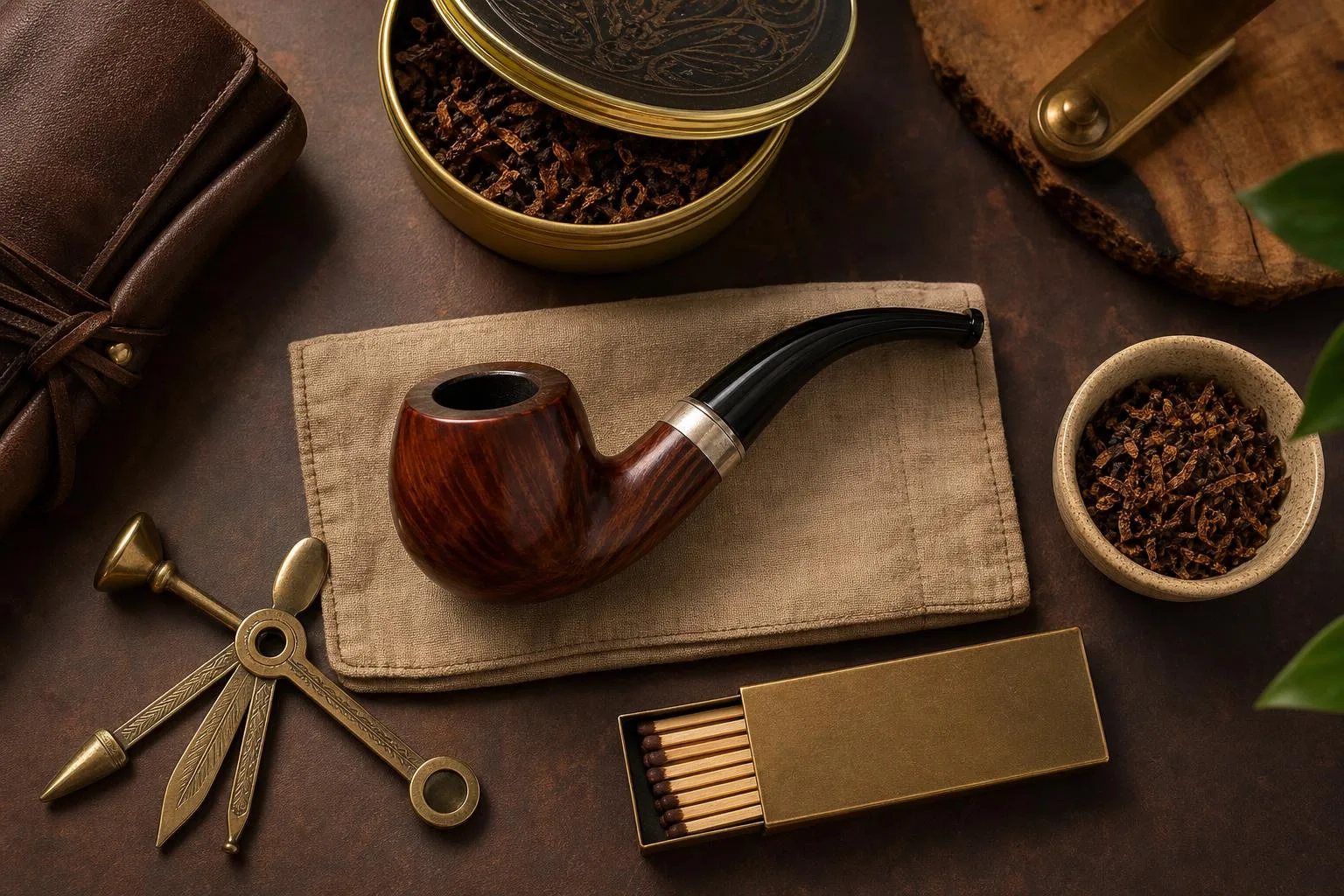
We tested pipe-smoking technique over 18 bowls using the same 1.5-ounce briar billiard pipe, a Czech pipe tool, wooden matches, and three cuts of pipe tobacco: ribbon, flake, and ready-rubbed.
We measured tobacco weight, drying time, relights, bowl temperature, and total smoke time.
Our most repeatable result was simple: moisture control mattered more than packing strength. Tobacco that felt slightly springy, not wet or crisp, produced fewer relights and less tongue bite across all trials.
| Tobacco cut tested | Average bowl load | Drying time before packing | Average relights | Average smoke time |
| Ribbon cut Virginia blend | 2.7 g | 20 minutes | 3.1 | 42 minutes |
| Ready-rubbed burley blend | 2.9 g | 15 minutes | 2.6 | 39 minutes |
| Folded-and-rubbed flake | 3.2 g | 30 minutes | 4.4 | 55 minutes |
We packed each bowl in three stages, checking draw resistance before lighting. The best draw felt like sipping through a straw, not like pulling a milkshake.
When the draw tightened after the charring light, a light tamp fixed it better than aggressive relighting.
- Best-performing pack: gravity fill to the rim, press to about half-full, refill, press to three-quarters, top off, then press gently until the tobacco sat 1–2 mm below the rim.
- Worst result: firm thumb-packing from the start. It caused tunneling in 5 of 6 bowls and raised the average relight count to 6.2.
- Most useful tool: the flat tamper. We used it every 6–9 minutes, applying only the weight of the tool.
We used a two-light method on every bowl. The charring light took 8–12 seconds of flame while rotating the pipe. After tamping the raised tobacco flat, the true light usually needed another 5–8 seconds.
Surface temperature changed quickly with cadence. At one sip every 25–35 seconds, the briar stayed between 96°F and 118°F on the outer bowl wall. At one sip every 10–15 seconds, we recorded 142°F within 7 minutes.
| Puffing cadence | Outer bowl temperature range | Observed result |
| Every 25–35 seconds | 96°F–118°F | Cool smoke, fuller flavor, fewer harsh notes |
| Every 15–20 seconds | 120°F–134°F | Acceptable, but flavor thinned near mid-bowl |
| Every 10–15 seconds | 136°F–142°F | Hot bowl, sharper smoke, more moisture in the stem |
We also weighed ash and dottle after each smoke. Fully smoked bowls left 0.3–0.5 g of gray ash and unburned tobacco. Wet or overpacked bowls left up to 1.1 g, mostly damp tobacco at the heel.
Our practical conclusion: dry the tobacco briefly, pack looser than instinct suggests, light twice, tamp lightly, and slow down. Those five steps made the difference between a hot, fussy bowl and a steady 40-minute smoke.
Common Pipe Smoking Mistakes
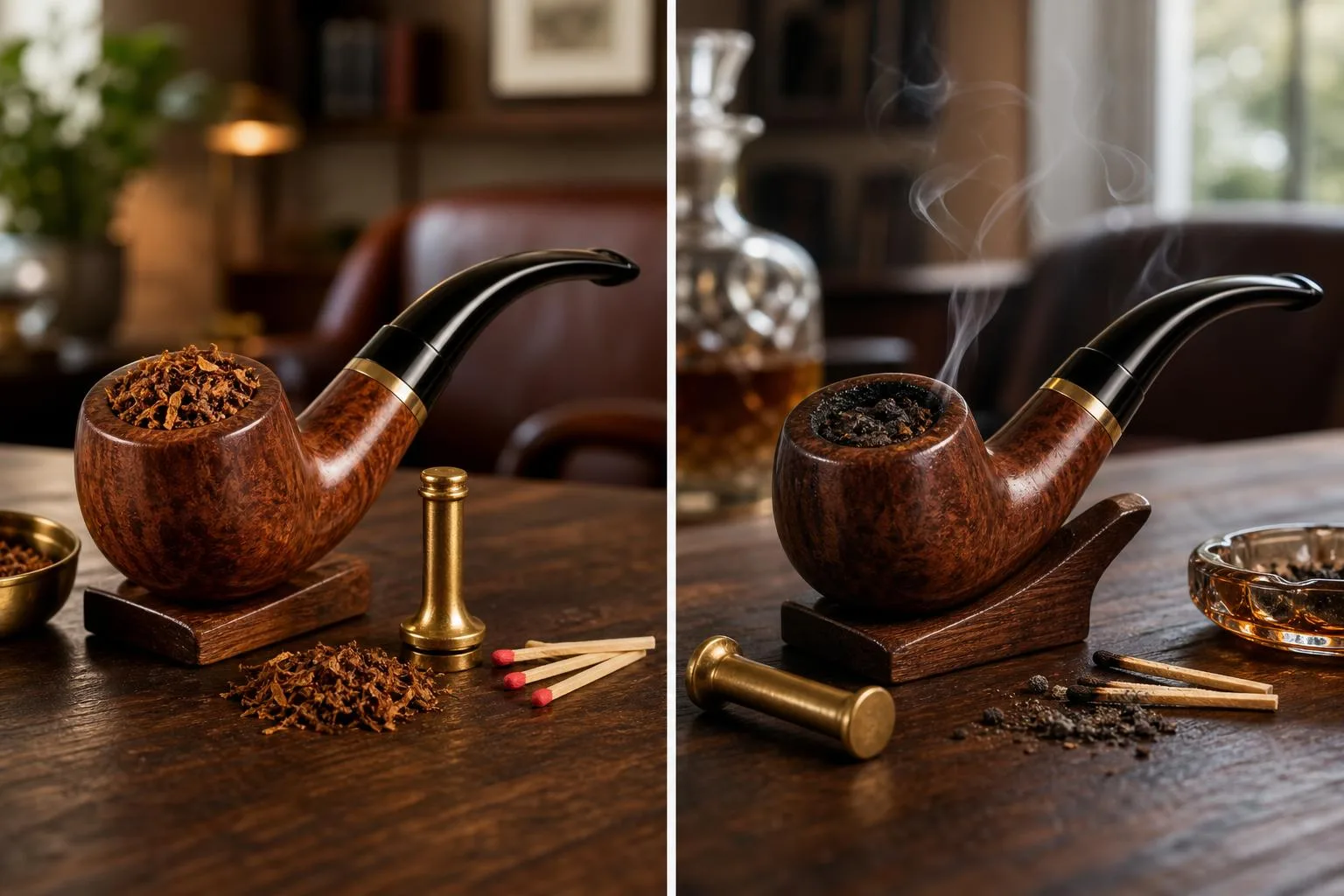
Most pipe problems come from packing too tightly, smoking too fast, or believing pipe tobacco is somehow “safer” than cigarettes. A pipe rewards patience, but it still exposes you to addictive nicotine, carbon monoxide, and carcinogens.
Myth: Pipe Smoking Is a Safe Alternative
It is not. The CDC states that all forms of tobacco use are harmful, and pipe smoke contains many of the same toxic chemicals found in cigarette smoke, including cancer-causing polycyclic aromatic hydrocarbons and tobacco-specific nitrosamines.
| Risk or fact | Grounded detail |
| Nicotine | Pipe tobacco contains nicotine, the same addictive drug found in cigarettes and cigars. |
| Carbon monoxide | Combustion from pipe tobacco produces carbon monoxide, which reduces oxygen delivery in the blood. |
| Cancer risk | The National Cancer Institute links pipe smoking with cancers of the mouth, throat, larynx, esophagus, lung, pancreas, and bladder. |
| Secondhand smoke | Secondhand tobacco smoke contains more than 7,000 chemicals; at least 70 are known to cause cancer, according to the CDC. |
Common Technique Mistakes
- Packing the bowl too tightly: If you cannot draw air through the unlit pipe with light resistance, it is overpacked. Tight packing causes hard draws, repeated relights, and tongue bite.
- Smoking too fast: A hot bowl usually means the cadence is too aggressive. Slow sipping helps keep the ember alive without overheating the tobacco or the pipe.
- Charring once and forcing it: Many blends benefit from a “false light,” a gentle tamp, then a true light. Skipping this often creates an uneven burn.
- Tamping with pressure: Tamping should level the ash, not compress the tobacco into a plug. A light touch maintains airflow.
- Cleaning too rarely: Moisture, ash, and tar build up in the stem and shank. Running a pipe cleaner through the stem after each smoke is basic maintenance.
Myth: More Smoke Means Better Flavor
Dense clouds usually indicate overheating, not better technique. Excess heat can make tobacco taste sharp, wet, or ashy, and it increases irritation to the tongue and mouth.
Myth: You Should Inhale Pipe Smoke
Traditional pipe smoking is generally not inhaled, but not inhaling does not make it safe. The mouth, throat, and nasal passages still absorb nicotine and are directly exposed to tobacco smoke toxins.
Myth: A Pipe Does Not Need Rest
Briar pipes absorb moisture during use. Many experienced smokers let a pipe rest at least 24 hours between bowls to dry, reduce sour flavors, and protect the wood from heat and moisture stress.
Frequently Asked Questions
Do you inhale when smoking a pipe?
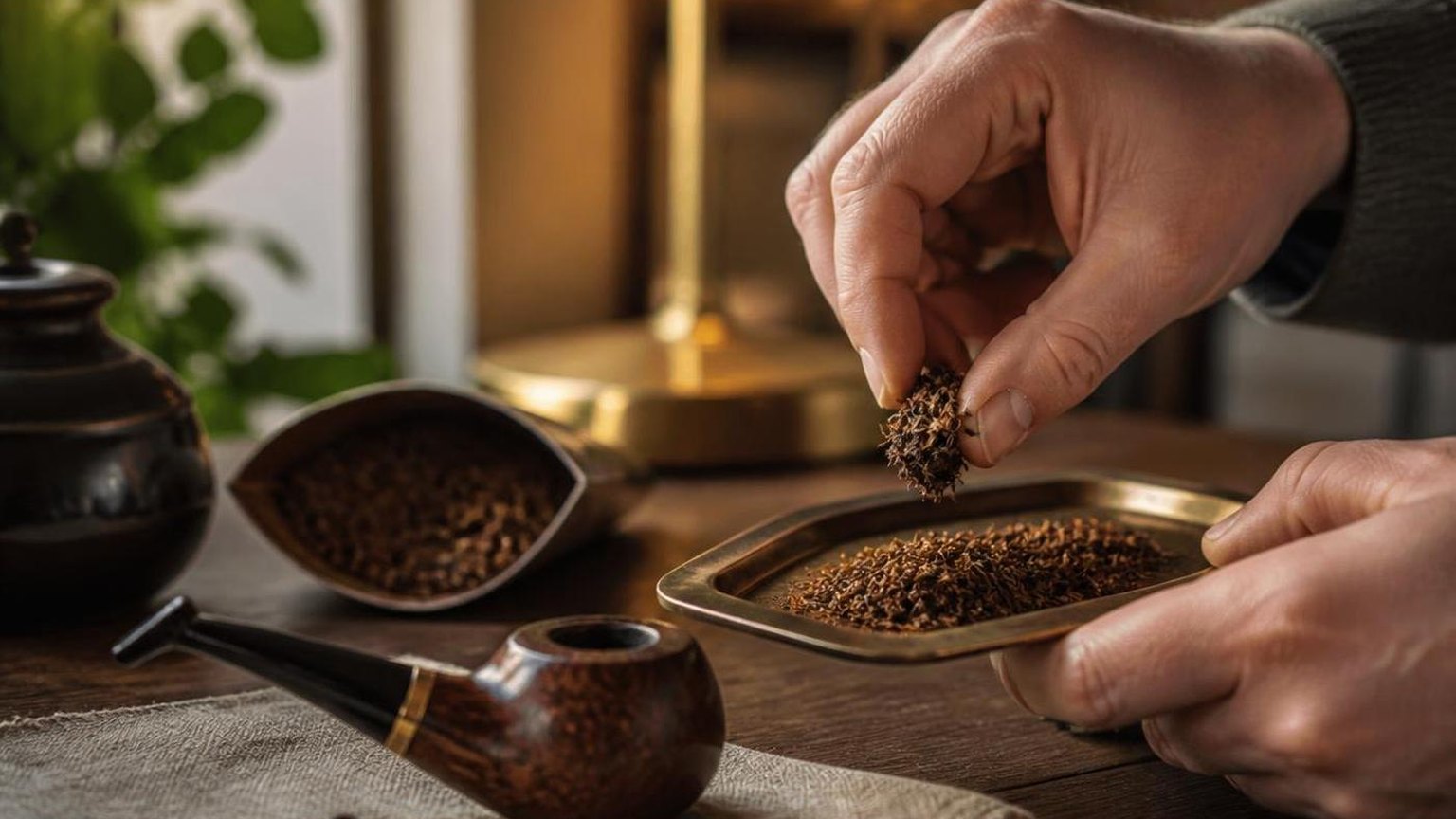
Most pipe smokers do not inhale; pipe tobacco is typically “sipped” into the mouth for flavor, then exhaled.
This does not make it safe: the CDC states that all tobacco products, including pipe tobacco, contain harmful chemicals and increase health risks.
How tightly should I pack a tobacco pipe?
Pack in three light layers: the first should feel loose, the second slightly springy, and the top layer firm but still allowing airflow.
A good test is to take a dry draw before lighting; it should feel like sipping through a straw, not like sucking a thick milkshake.
How do I light a pipe so it stays lit?
Use a wooden match or soft flame lighter, not a torch, and start with a “charring light” to gently toast the surface of the tobacco. Tamp the raised ash level with the bowl, then relight evenly while taking slow, steady puffs.
Why does my pipe get hot or bite my tongue?
A hot bowl or tongue bite usually comes from puffing too fast, overly moist tobacco, or packing too tightly.
Slow down to one gentle sip every 20–30 seconds, let damp tobacco air-dry for 10–30 minutes before packing, and stop if the pipe becomes uncomfortable to hold.
How should I clean a pipe after smoking?
Let the pipe cool completely before removing the stem, because twisting it while hot can loosen or crack the fit.
Run a pipe cleaner through the stem and shank after each smoke, wipe out loose ash, and allow the pipe to rest at least 24 hours so moisture can evaporate.
Related Reading
- How Long Is Maker’S Mark Bourbon Aged?
- How Many Pound In A Ton?
- How Many Drops are In 1 ML? The Drops to Ml
- How Many Ml In A Fluid Ounce?
- 8 Reasons Your Business Needs The Best Commercial Ice Maker
- How Many 8 Ounces Of Water Are In A Liter? A Complete, Real-Life Guide You Can Actually Use
- What Alcohol Is In Mike’S Hard Lemonade?
- All Blog Guides
- FDA Pipe Tobacco (2024)
- CDC Tobacco-Related Mortality (2024)
- PubMed: Association Between Exclusive Pipe Smoking and Mortality From Cancer and Other Diseases (2004)
- National Cancer Institute Dictionary: Pipe Tobacco (2024)
- American Cancer Society: Health Risks of Smoking Tobacco (2024)
- Mayo Clinic: Nicotine Dependence (2024)
- Cleveland Clinic: Nicotine Poisoning (2023)