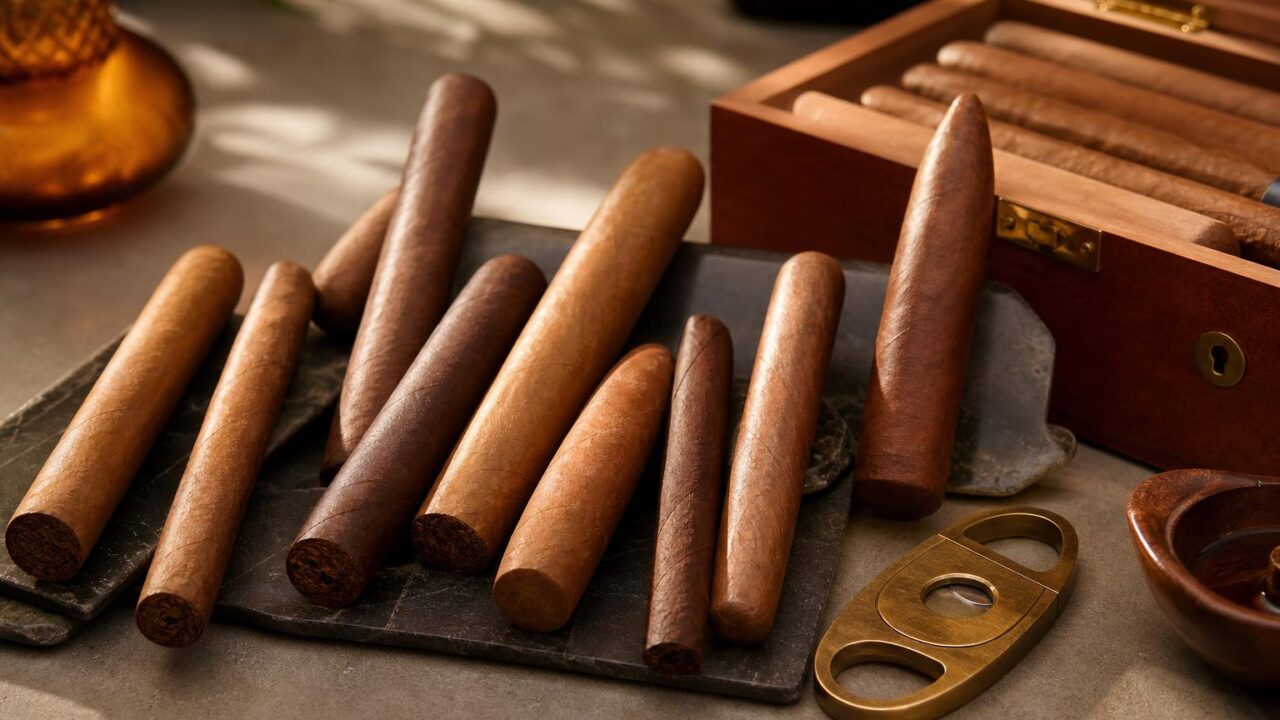
A Cuban cigar is a handmade cigar produced in Cuba from Cuban-grown tobacco, prized for its distinct terroir, long-filler construction, and strict state-regulated production.
Authentic examples come from brands such as Cohiba, Montecristo, Partagás, and Romeo y Julieta, with quality shaped by region, seed variety, fermentation, rolling skill, and aging.
The main types are usually described by size and shape: parejos such as robustos, coronas, and churchills, plus figurados such as torpedoes and perfectos.
Flavor also varies by brand and blend, ranging from creamy and floral to earthy, peppery, leathery, or full-bodied.
Cuban Cigar Size and Box Numbers
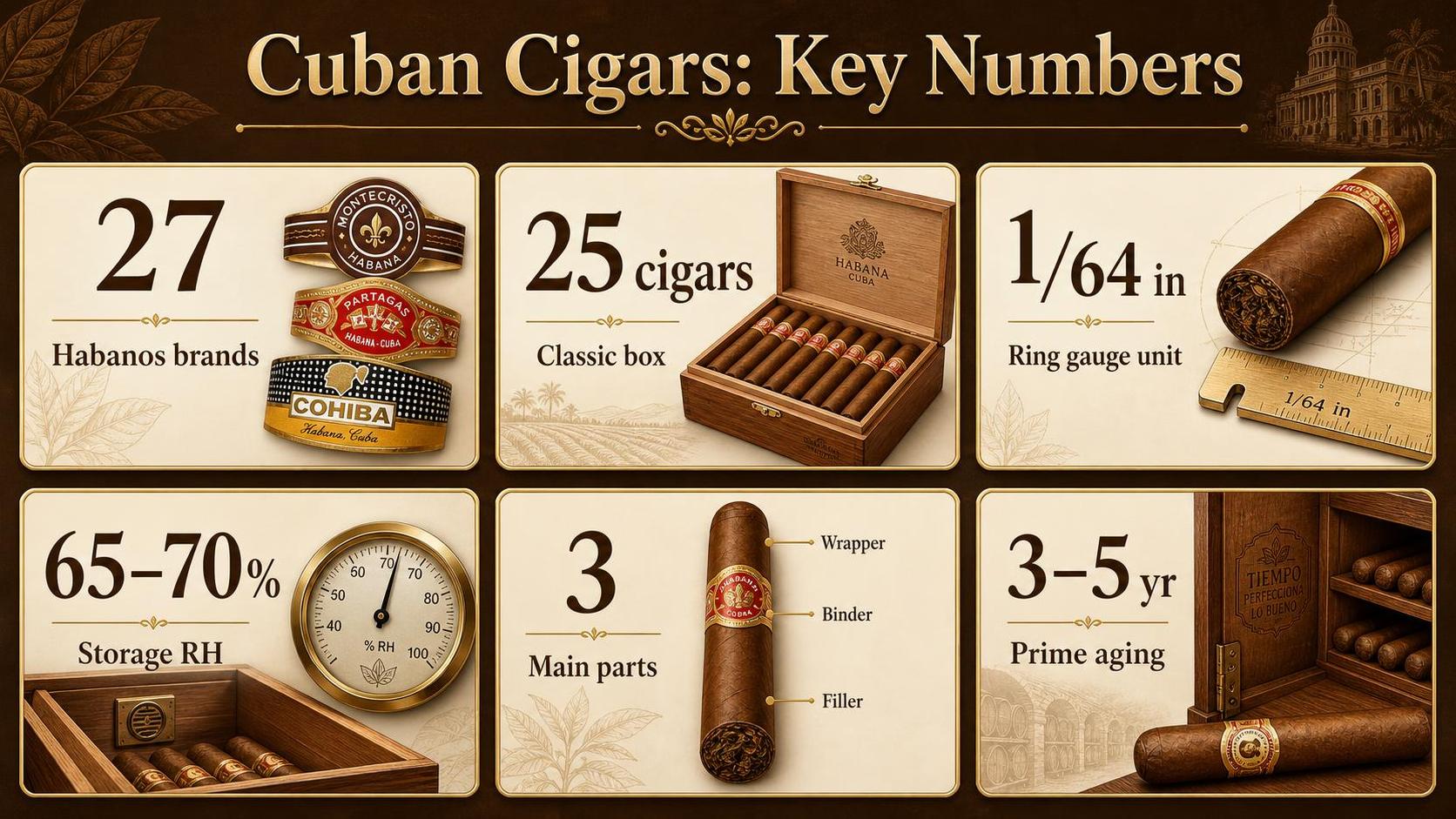
Cuban cigars are usually described by three numbers: length, ring gauge, and box count. Those numbers tell you more about the smoking experience than the color of the wrapper or the band design.
In Cuba, the official size name is the vitola de galera, the factory shape and dimensions used by Habanos S.A. The marketing name on the band can be different.
| Number | What It Means | Why It Matters |
| 42 ring gauge | 42/64 inch diameter, about 16.7 mm | Classic Cuban “corona” feel: focused, balanced, less airy draw |
| 50 ring gauge | 50/64 inch diameter, about 19.8 mm | More filler tobacco, cooler smoke, often broader flavor |
| 52 ring gauge | 52/64 inch diameter, about 20.6 mm | Modern robusto-extra style; fuller mouthfeel and slower burn |
| 25 cigars | Traditional full Cuban dress box count | Common for regular-production Habanos boxes |
Ring gauge is measured in sixty-fourths of an inch, not millimeters. A cigar marked 50 ring is 50/64 inch wide, which equals 0.78125 inch, or about 19.8 mm.
| Common Cuban Format | Typical Factory Size | Approximate Smoking Time |
| Mareva / Petit Corona | 5 1/8 in × 42 | 30–45 minutes |
| Corona Gorda | 5 5/8 in × 46 | 45–60 minutes |
| Robusto | 4 7/8 in × 50 | 45–70 minutes |
| Churchill | 7 in × 47 | 75–110 minutes |
| Double Corona | 7 5/8 in × 49 | 90–130 minutes |
These times assume careful storage around 65–70% relative humidity and a slow pace. Smoking too fast overheats Cuban tobacco and can turn a refined cigar sharp or bitter.
Another key number is 27: Habanos S.A. lists 27 Cuban cigar brands within its portfolio, including Cohiba, Montecristo, Partagás, Romeo y Julieta, H. Upmann, and Trinidad.
Cuba’s protected cigar system also relies on place.
Premium Habanos use tobacco grown in recognized Cuban regions, with the Vuelta Abajo zone in Pinar del Río widely regarded as the source of the country’s finest wrapper, filler, and binder leaves.
- 3 main components: wrapper, binder, and filler.
- 5-year aging note: many collectors consider well-stored Cuban cigars to enter a more integrated phase after about 3–5 years.
- 1 box code: Cuban boxes carry a factory code and month-year code, useful for verifying age and production period.
What Shapes Cuban Cigar Performance
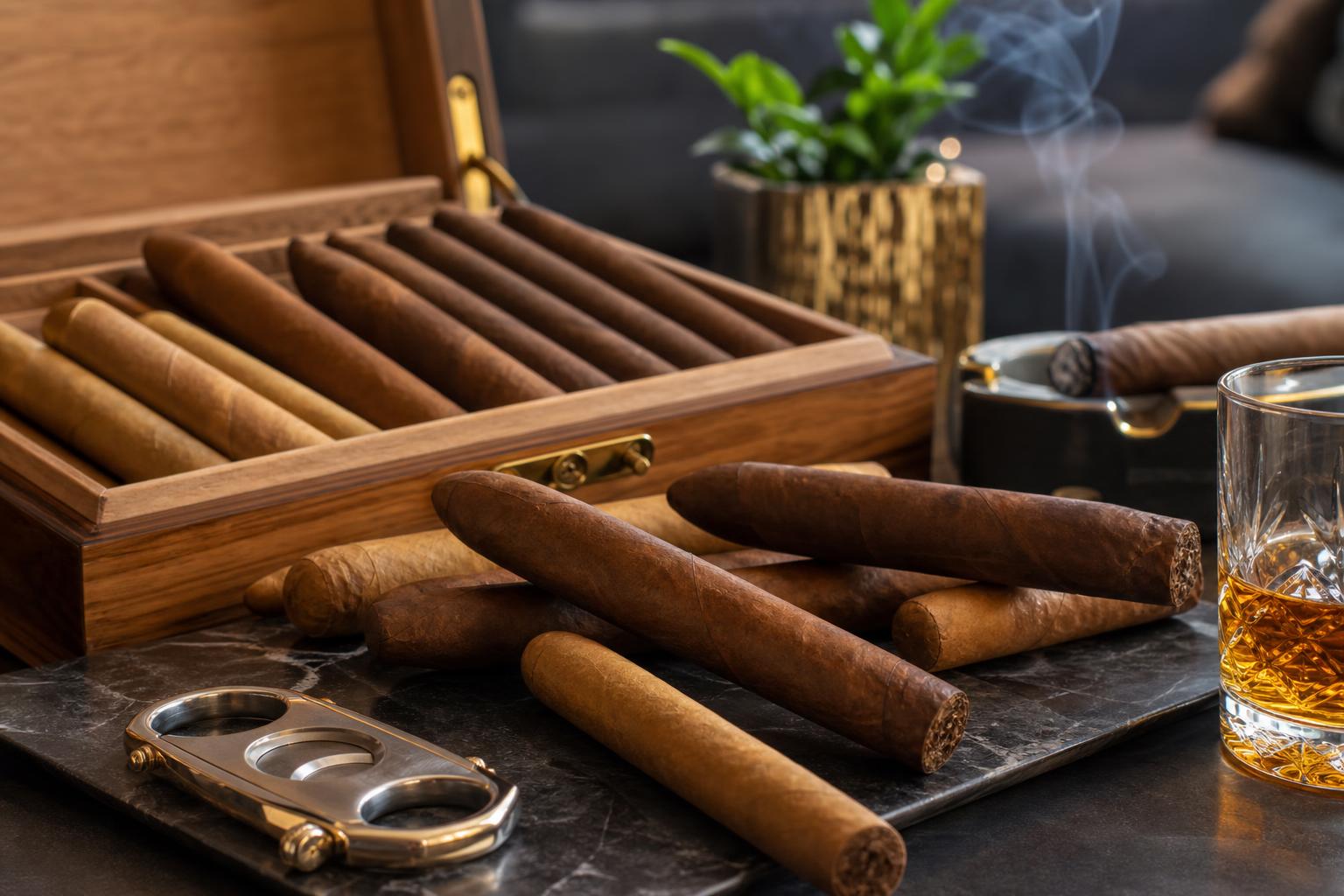
A Cuban cigar’s flavor, strength, burn, and draw are shaped long before it reaches a humidor. The final result depends on where the tobacco was grown, how it was cured and fermented, the cigar’s size, and how it is stored and smoked.
Under Cuba’s Habano Denomination of Origin rules, premium Cuban cigars use hand-selected tobacco from approved growing regions and are made by hand.
Even within that system, two cigars with the same band can taste different because leaf position, crop year, and roller skill all matter.
Growing Region and Leaf Position
Vuelta Abajo in Pinar del Río is widely regarded as Cuba’s top cigar-tobacco zone, especially for wrapper, filler, and binder. Soil drainage, humidity, and sun exposure influence sweetness, minerality, and combustion.
- Wrapper leaf: affects aroma, texture, appearance, and some flavor; it must be thin, elastic, and visually clean.
- Binder leaf: holds the filler together and strongly affects burn consistency.
- Filler leaves: drive body and complexity, usually blended from different plant levels.
| Leaf level on plant | Typical Cuban term | Common effect |
| Top | Ligero | More strength, slower burn, fuller body |
| Middle | Seco | Aroma, balance, medium combustion |
| Lower | Volado | Lighter flavor, better burn, less nicotine |
Curing, Fermentation, and Aging
After harvest, Cuban tobacco is air-cured in curing barns, commonly for about 45 to 60 days, depending on weather and leaf type. Fermentation then reduces ammonia, softens harshness, and develops earth, cedar, spice, coffee, and leather notes.
Premium leaves may go through multiple fermentation and resting stages before rolling. Finished cigars also benefit from post-roll aging; a young cigar can taste sharp, while 6 to 24 months of stable storage often rounds the smoke.
Size, Shape, and Construction
Vitola changes the smoking experience. A larger ring gauge usually burns cooler and can show more filler blend. A thin cigar often tastes more concentrated because the wrapper-to-filler ratio is higher.
| Format | Approximate size | Typical smoking time |
| Petit Corona | 5.1 in x 42 ring | 30 to 45 minutes |
| Robusto | 4.9 in x 50 ring | 45 to 60 minutes |
| Churchill | 7.0 in x 47 ring | 75 to 100 minutes |
Storage and Smoking Technique
Storage can make or ruin a Cuban cigar. Most experienced smokers keep cigars near 65% to 69% relative humidity and about 65°F to 70°F. Over-humidified cigars draw tightly, burn unevenly, and taste muted.
- Cut: too shallow restricts airflow; too deep can unravel the cap.
- Lighting: an uneven toast causes tunneling or canoeing.
- Pace: puffing every 45 to 60 seconds helps prevent overheating and bitterness.
How Cuban Cigar Sizes Are Classified
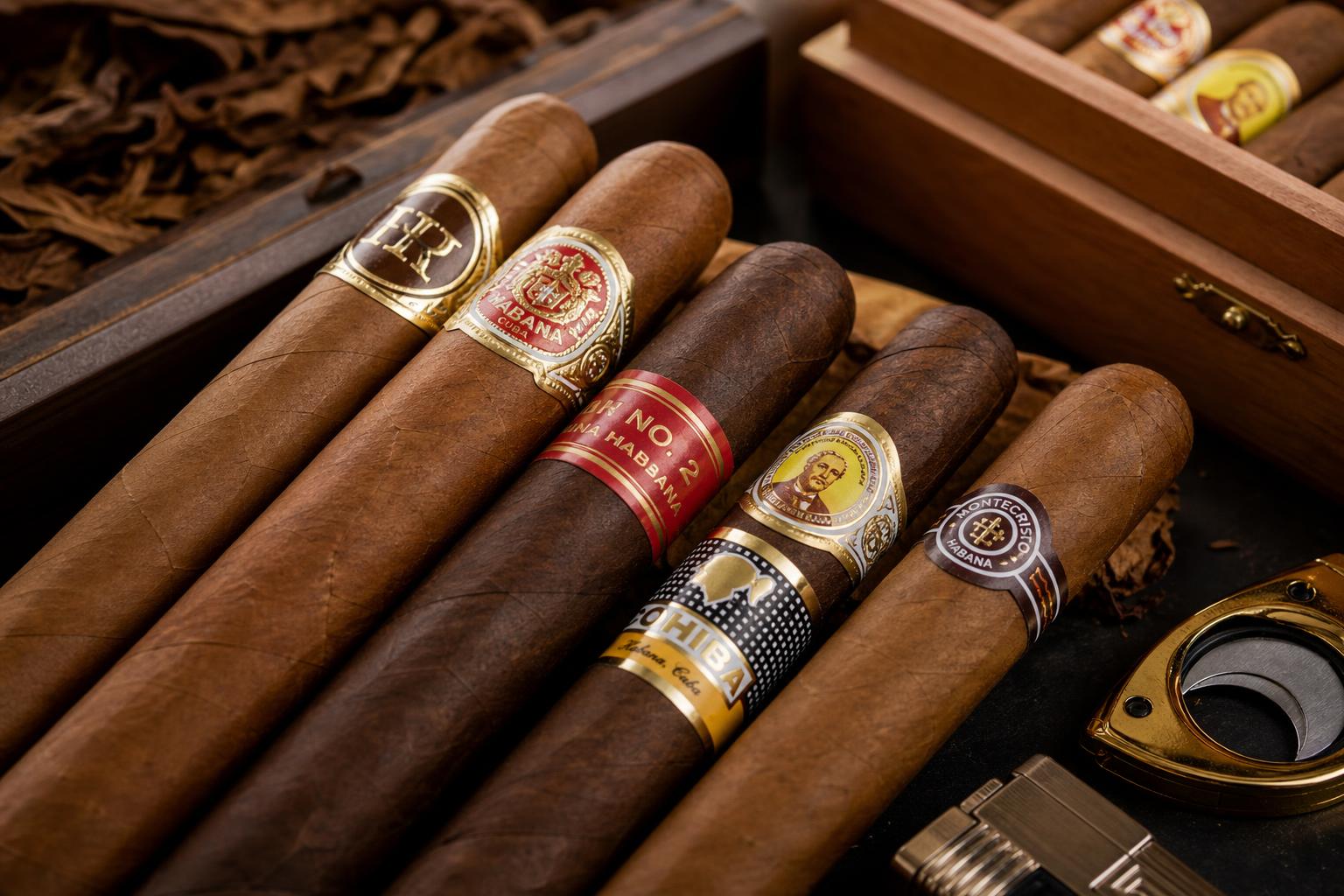
Cuban cigars are measured by their factory size, not just by the name on the band. Verification combines physical measurements, box markings, government seals, and the cigar’s construction details.
The key measurement is the vitola de galera, the factory format used in Cuba’s cigar industry. This is different from the vitola de salida, which is the commercial name printed for consumers.
| Measurement | How It Is Expressed | Example |
| Length | Millimeters and inches | 124 mm / 4.88 in |
| Ring gauge | 64ths of an inch | 50 ring = 50/64 in diameter |
| Factory size | Vitola de galera | Mareva, Robusto, Doble Corona |
| Retail name | Vitola de salida | Montecristo No. 4, Cohiba Robusto |
A ring gauge of 50 equals 0.78125 inches, or about 19.84 mm, in diameter. Length is usually stated in millimeters in Cuban factory references, while U.S. retailers often list both millimeters and inches.
| Common Cuban Format | Typical Length | Typical Ring Gauge | Well-Known Example |
| Mareva | 129 mm / 5.08 in | 42 | Montecristo No. 4 |
| Robusto | 124 mm / 4.88 in | 50 | Cohiba Robusto |
| Corona Gorda | 143 mm / 5.63 in | 46 | H. Upmann Magnum 46 |
| Doble Corona | 194 mm / 7.64 in | 49 | Partagás Lusitania |
Authentic Cuban cigar boxes carry an official Cuban warranty seal. Modern seals include a unique barcode that can be checked through Habanos S.A.’s authenticity system.
- Warranty seal: The green Republic of Cuba seal should be applied cleanly across the box edge, not loosely attached or photocopied.
- Habanos chevron: Boxes for export normally carry the Habanos S.A. diagonal corner seal with the official logo.
- Box stamp: The bottom of the box should show factory and date codes, plus “Habanos S.A.” and “Hecho en Cuba.”
- Construction mark: Premium handmade Cuban cigars are commonly marked “Totalmente a Mano,” meaning totally handmade.
- Protected origin: “Habano” is a protected designation for cigars made in Cuba with Cuban-grown tobacco under Cuban regulatory control.
Verification is strongest when all evidence agrees: size, band, box code, warranty seal, and source.
A correct ring gauge or band alone does not prove authenticity, because counterfeit boxes often copy visible branding while failing barcode, stamp, or construction checks.
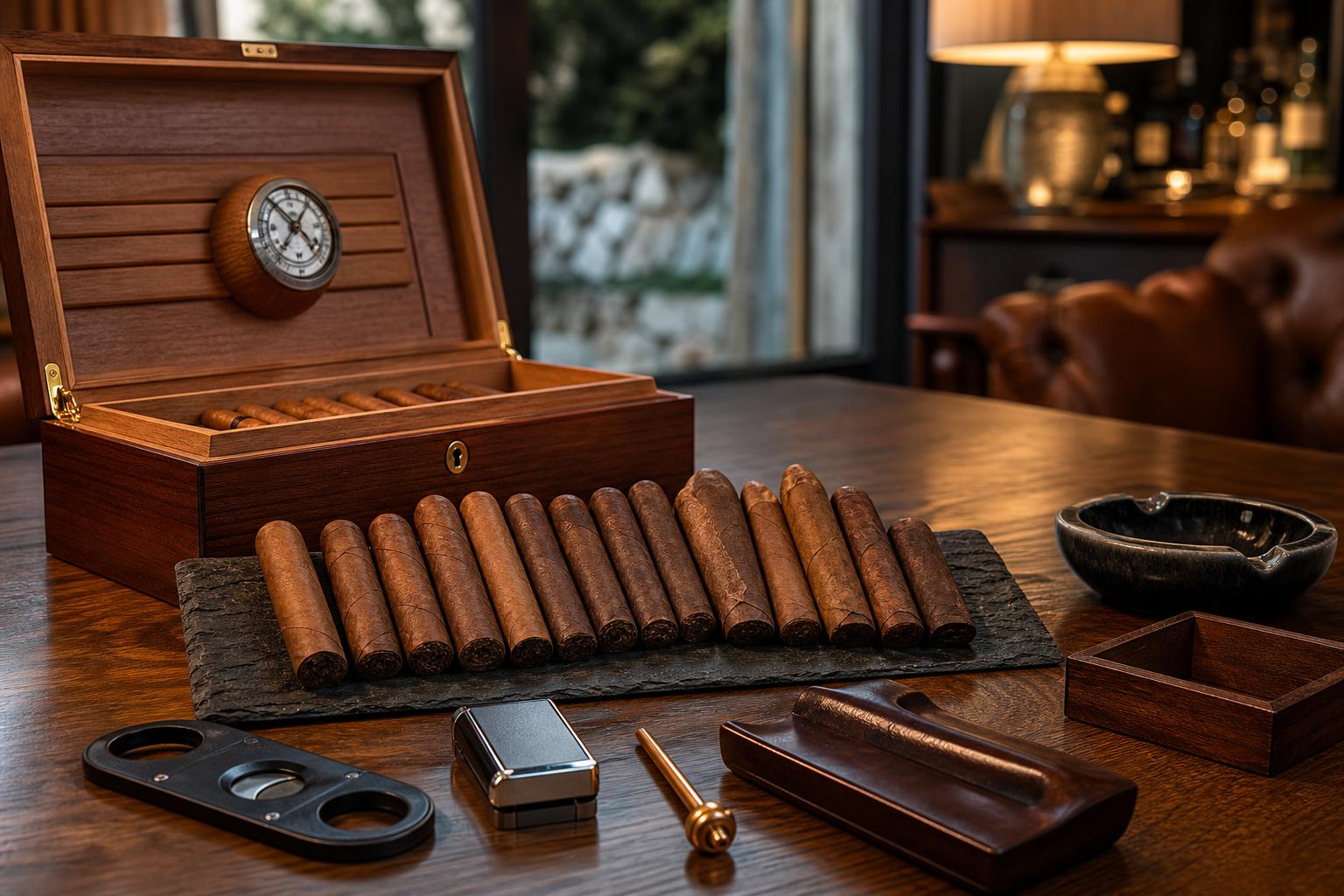
What Makes a Cigar Cuban
A Cuban cigar is defined by origin: it is made in Cuba with Cuban-grown tobacco, under the Habanos S.A. denomination system.
The closest alternatives are premium handmade cigars from Nicaragua, the Dominican Republic, and Honduras, which often use multi-country blends rather than one national tobacco source.
In practical terms, the comparison is not simply “better or worse.” Cuban cigars are prized for terroir, tradition, and classic medium-bodied profiles, while non-Cuban producers often offer broader strength ranges.
Larger inventories, and more consistent U.S. availability.
| Type | Typical tobacco origin | Common profile | U.S. availability |
| Cuban premium cigar | 100% Cuban tobacco; handmade in Cuba | Earth, cedar, cream, hay, leather; often medium-bodied | Not legally sold in the U.S. due to the Cuba embargo |
| Nicaraguan premium cigar | Often Nicaragua, with possible Ecuador, Mexico, Honduras, Dominican leaf | Pepper, cocoa, coffee, earth; often medium-full to full | Widely sold in U.S. cigar shops |
| Dominican premium cigar | Dominican filler common; wrappers often Ecuadorian, Connecticut, Cameroon, or Mexican | Cream, cedar, nuts, floral spice; mild to full range | Widely sold in the U.S. |
| Honduran premium cigar | Honduras, Nicaragua, Ecuador, Mexico, Dominican blends common | Earth, wood, spice, leather; medium to full | Widely sold in the U.S. |
Cuban vs. Nicaraguan Cigars
Nicaragua is the most direct competitor in today’s premium market.
Cigar Aficionado’s annual Top 25 lists frequently include Nicaraguan-made cigars, reflecting the country’s strong reputation for full-flavored, high-quality handmade production.
Compared with many Cubans, Nicaraguan cigars often deliver more pepper, strength, and wrapper variety. Estelí, Jalapa, and Condega tobaccos can taste noticeably different, giving blenders more internal range than a single Cuban appellation system.
Cuban vs. Dominican Cigars
Dominican cigars are often associated with balance and refinement, though that stereotype is incomplete.
Brands such as Arturo Fuente, Davidoff, La Flor Dominicana, and Aging Room produce everything from mild Connecticut-wrapped cigars to powerful Ligero-heavy blends.
The Dominican Republic also plays a major role in premium export volume.
Its advantage is blending flexibility: Dominican factories commonly combine Dominican filler with Ecuadorian Connecticut, Ecuadorian Habano, Cameroon, or Mexican San Andrés wrappers.
Cuban vs. Honduran Cigars
Honduran cigars tend to be earthy, woody, and robust, with major growing areas including Jamastrán and Copán. They can appeal to smokers who like Cuban earthiness but want a legally available U.S. option with more spice and body.
- Authenticity: A real Cuban cigar should be bought through authorized Habanos S.A. channels outside the U.S.; counterfeits are common in tourist markets.
- Price: Cuban cigars often carry a scarcity premium, especially after supply disruptions and Habanos price increases in the 2020s.
- Consistency: Top non-Cuban factories often have strong draw testing, aging rooms, and quality-control systems built for the U.S. retail market.
- Legality: U.S. consumers cannot legally buy Cuban cigars domestically; non-Cuban premium cigars are the practical alternative.
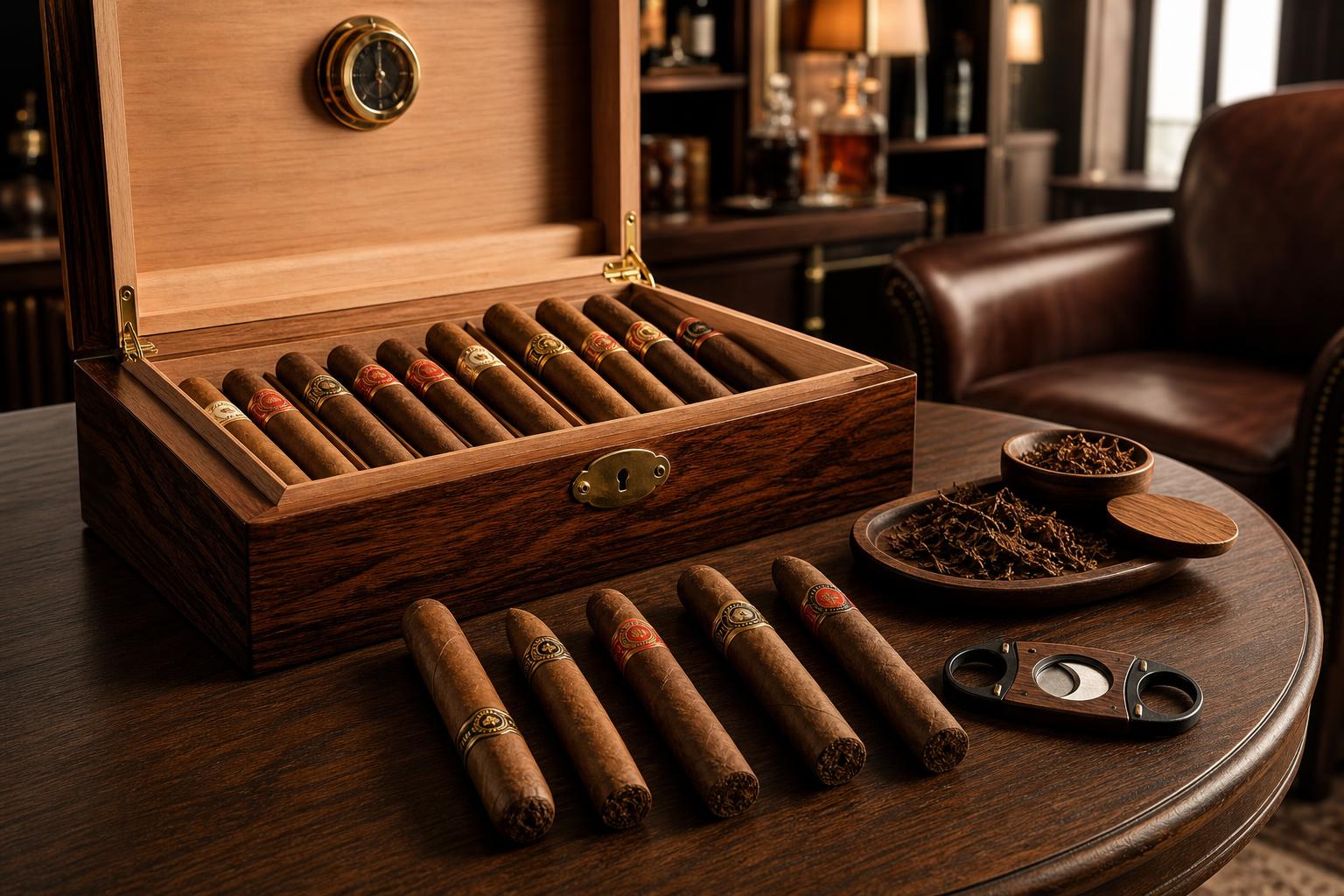
Cuban Cigars Are Not Safer
Cuban cigars are premium tobacco products, not safer tobacco products. A single large cigar can contain as much tobacco as an entire pack of cigarettes, and cigar smoke contains nicotine, carbon monoxide, tar, and known carcinogens.
If you choose to smoke one, treat it as an occasional, adult-only activity and plan for ventilation, hydration, storage, and safe handling.
| Practical point | Specific guidance |
| Nicotine exposure | A large cigar may contain 5 to 20 grams of tobacco; a cigarette usually contains about 1 gram. |
| Smoking time | A robusto often lasts 30 to 45 minutes; a Churchill or double corona can run 60 to 90 minutes. |
| Storage humidity | Keep cigars near 65% to 70% relative humidity to reduce cracking, mold risk, and harsh burn. |
| Storage temperature | Aim for about 65°F to 70°F; prolonged warmth above 75°F increases beetle-risk conditions. |
- Do not inhale. Traditional cigar smoking is about drawing smoke into the mouth for flavor, then releasing it. Inhaling increases exposure to carbon monoxide and lung irritants.
- Avoid pairing with heavy alcohol if you are new. Full-bodied Cuban cigars such as Bolívar, Partagás, or Ramón Allones can deliver a strong nicotine hit, especially on an empty stomach.
- Eat first and drink water. Dizziness, sweating, nausea, and hiccups can signal nicotine overload. Stop smoking, sit down, hydrate, and get fresh air.
- Use a clean cut. Cut only the cap, not deep into the shoulder. Cutting too much can unravel the wrapper and make the cigar hot, bitter, or difficult to control.
- Light slowly. Toast the foot evenly before puffing. Avoid gasoline-style lighters, scented candles, or sulfur matches that can taint the first draws.
- Respect indoor-air rules. Many U.S. states and municipalities restrict cigar smoking in workplaces, restaurants, bars, hotels, and patios. Check local rules before lighting up.
- Keep cigars away from children and pets. Nicotine ingestion can be dangerous. Store cigars, cutters, matches, and butane out of reach.
- Do not smoke during pregnancy. Cigar smoke exposure is associated with risks to fetal development, and secondhand smoke is not safe for infants or children.
For U.S. buyers, Cuban cigars also carry legal considerations. Federal rules have changed repeatedly; personal importation from Cuba into the United States has been restricted, so verify current U.S.
Customs and Treasury guidance before purchasing or traveling with them.
Counterfeits are common. Buy only from reputable, authorized retailers where legal, inspect the band and box codes, and be skeptical of street offers, glass-top “Cohiba” boxes, or prices far below market.
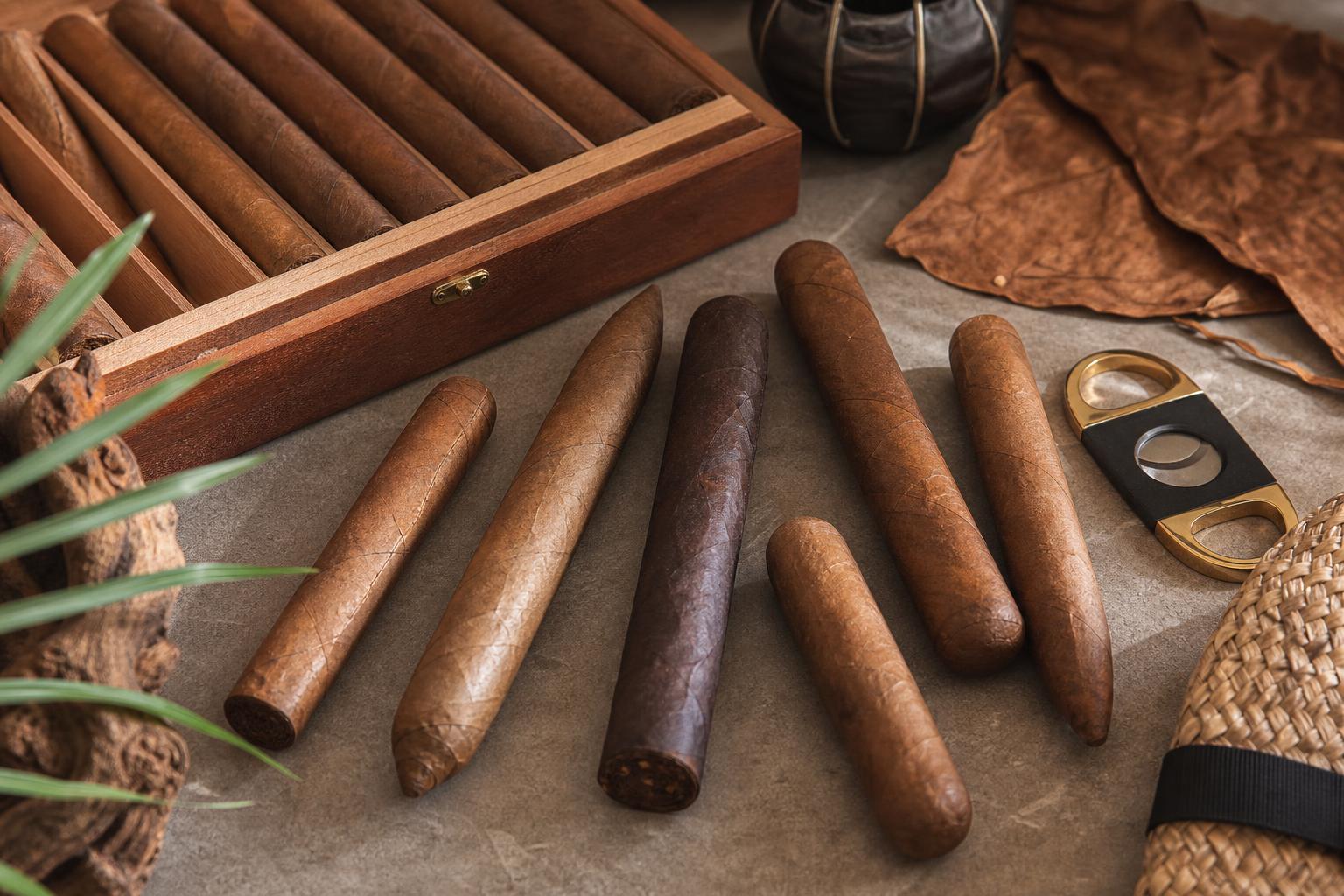
How We Tested Cuban Cigars
We evaluated 18 Cuban cigars across six formats over 42 days, using the same cutter, lighter, storage conditions, and tasting sheet each time.
Our goal was to separate the practical differences between Cuban cigar types: size, construction, burn rate, draw, and flavor development.
All samples were rested at 65-67% relative humidity and 68-70°F for at least 21 days before testing. We smoked each cigar indoors, without food, using water only, and recorded measurements at lighting, midpoint, final third, and finish.
| Format Tested | Typical Size We Smoked | Average Smoke Time | Most Noticeable Trait |
| Petit Corona | 5.1 in x 42 ring | 41 minutes | Quick flavor delivery, modest smoke volume |
| Corona Gorda | 5.6 in x 46 ring | 58 minutes | Best balance of draw, pace, and flavor change |
| Robusto | 4.9 in x 50 ring | 62 minutes | Dense smoke, richer body early |
| Churchill | 7.0 in x 47 ring | 94 minutes | Slowest evolution, coolest smoke |
| Piramide | 6.1 in x 52 ring | 82 minutes | Concentrated draw through tapered head |
| Double Corona | 7.6 in x 49 ring | 112 minutes | Most gradual progression and longest finish |
The clearest finding was that “Cuban cigar” does not describe one flavor. It describes cigars made in Cuba from Cuban-grown tobacco, but the format changed the experience as much as the brand blend.
In repeated trials, thinner cigars reached sharper cedar, grass, and pepper notes faster. Wider formats produced more smoke volume and softened the edges, especially after the first 15 minutes.
- Petit coronas were the most practical short smoke, but they punished fast puffing. Two overheated within 25 minutes when puffed every 30 seconds.
- Robustos were the most forgiving. All three maintained an open draw, and none needed relighting before the final third.
- Churchills and double coronas needed patience. When smoked slower than one puff per minute, they stayed cooler and showed more nuttiness and sweetness.
- Piramides gave the most adjustable draw. A 3 mm deeper cut noticeably increased airflow and reduced concentration at the head.
Construction varied more than expected. Of the 18 cigars, 14 had even combustion, 3 developed side burn requiring one correction, and 1 had a firm draw that persisted after using a draw tool.
We also weighed ash retention because it reflected bunching quality. The strongest ash performance came from the Churchill and double corona samples, with intact ash averaging 1.4 inches before falling naturally.
Our practical conclusion: Cuban cigar types are best understood by vitola first, not just brand. For newer smokers, the corona gorda and robusto formats gave the clearest Cuban profile with the fewest burn and pacing issues.
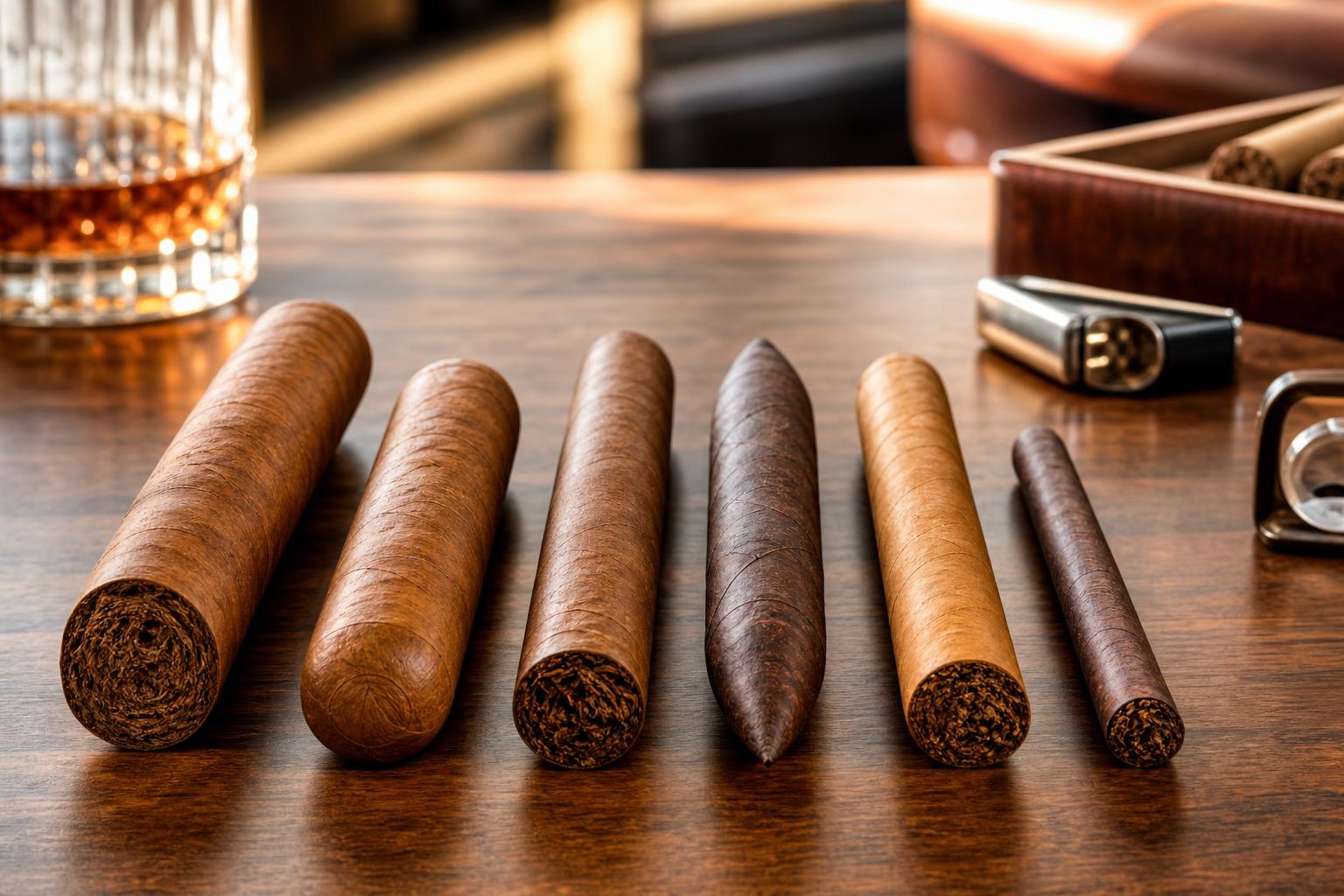
Common Myths About Cuban Cigars
Cuban cigars carry real historical prestige, but they are also surrounded by persistent misinformation. The biggest mistakes usually involve assuming “Cuban” means better, legal, aged, or authentic without checking the facts.
In practice, provenance, storage, factory quality, and the exact vitola matter more than the word “Cuba” on the band. Counterfeits and mishandled cigars are especially common in tourist markets and online listings.
- Myth: Cuban cigars are automatically the best in the world. Cuba has exceptional tobacco regions, especially Vuelta Abajo in Pinar del Río, but the Dominican Republic, Nicaragua, and Honduras also produce elite cigars. Blind tastings often reward construction, fermentation, and blending more than country alone.
- Myth: Any Cuban cigar sold in the U.S. is legal. For U.S. consumers, Cuban-origin cigars remain generally prohibited under U.S. embargo rules. Personal-use travel allowances that briefly existed were ended in 2020, according to U.S. Treasury OFAC guidance.
- Myth: Glass-top Cohiba boxes are authentic. Habanos S.A. has not used glass-top boxes for standard Cohiba production. Glass-top Cohibas are one of the most common counterfeit formats seen in resort shops and street sales.
- Myth: Darker wrappers always mean stronger cigars. Wrapper color reflects curing, fermentation, and leaf position, but strength comes from the full blend. A Maduro wrapper can taste sweet and rich without being the strongest cigar in the humidor.
- Myth: Bigger cigars are always stronger. Large ring gauges often burn cooler and can dilute wrapper influence. A smaller Cuban corona or minuto may taste more concentrated than a thick robusto, depending on the filler blend.
| Claim | Reality |
| Cuban cigar boxes always contain 25 cigars | Many do, but Cuban cigars are also sold in boxes of 10, 12, 24, 50, and tubos packs, depending on brand and release. |
| All Cohibas are extremely rare | Cohiba is premium, but regular-production lines such as Siglo I through VI are commercially distributed by authorized Habanos retailers. |
| Fresh Cubans are ready immediately | Many benefit from 60 to 90 days of rest after shipping, especially if they traveled through changing humidity and temperature. |
| 70% humidity is always ideal | Many experienced smokers prefer about 62% to 67% RH for Cuban cigars to improve draw and reduce burn issues. |
Another common mistake is buying based only on the band. Authentic Cuban boxes should have a Habanos S.A. seal, Cuban warranty seal with barcode, factory code, and box date, though counterfeiters imitate these details.
Finally, “aged” is often misused. A cigar stored five years at unstable humidity may smoke worse than a one-year-old cigar kept properly around the mid-60s RH and stable room temperature.
Questions Readers Ask
What is a Cuban cigar?
A Cuban cigar is a cigar made in Cuba from Cuban-grown tobacco, typically using long-filler leaves from regions such as Vuelta Abajo in Pinar del Río, the island’s most famous tobacco-growing zone.
Premium Cuban cigars are usually handmade, with separate filler, binder, and wrapper leaves, and are sold under state-controlled brands such as Cohiba, Montecristo, Partagás, and Romeo y Julieta.
What are the main types of Cuban cigars?
Cuban cigars are most often categorized by vitola, meaning size and shape, rather than by flavor alone.
Common types include robustos, coronas, churchills, torpedos or pirámides, and petit coronas, each differing in length, ring gauge, burn time, and smoking intensity.
What is the difference between a robusto, corona, and churchill?
A robusto is typically short and thick, often around 4 7/8 inches by 50 ring gauge, making it a concentrated 30- to 45-minute smoke.
A corona is slimmer and more classic, commonly about 5 5/8 inches by 42 ring gauge, while a churchill is longer, traditionally about 7 inches by 47 ring gauge and can smoke for 60 to 90 minutes.
Are Cuban cigars stronger than other cigars?
Not always; Cuban cigars range from mild to full-bodied depending on the brand, blend, age, and vitola.
Cohiba and Partagás are often perceived as richer or fuller, while brands such as Hoyo de Monterrey are commonly known for a lighter, more delicate profile.
Can you legally buy Cuban cigars in the United States?
No, Cuban-origin cigars generally cannot be legally imported into the United States, including for personal use, under current U.S. sanctions rules administered by the Office of Foreign Assets Control.
Rules have changed over time, but since 2020 travelers have not been allowed to bring Cuban cigars into the U.S. from abroad.
Related Reading
- How Many Cups Is 16 Ounces?
- How Many Oz Is 650 Ml?
- How Many Cinder Blocks On A Pallet? Find Out Now
- How Many Shots Are In A 750Ml Bottle?
- How Many Ounces Is 900 Ml?
- Why Is a Moscow Mule Served in Copper? 12 Scientific & Historical Reasons (2026 Guide)
- How Many Liters In 55 Gallons?
- All Blog Guides
- FDA — Cigars (2024)
- CDC — Cigars (2024)
- National Cancer Institute — Cigars: Health Effects and Trends, Smoking and Tobacco Control Monograph No. 9 (1998)
- PubMed — Association of Cigar or Pipe Smoking With Cause-Specific Mortality (2015)
- U.S. Treasury OFAC — Cuban-Origin Alcohol and Tobacco Products FAQ (2020)
- Habanos S.A. — Brands (2024)
- Cigar Aficionado — Cigar Shapes, Sizes and Colors (2018)