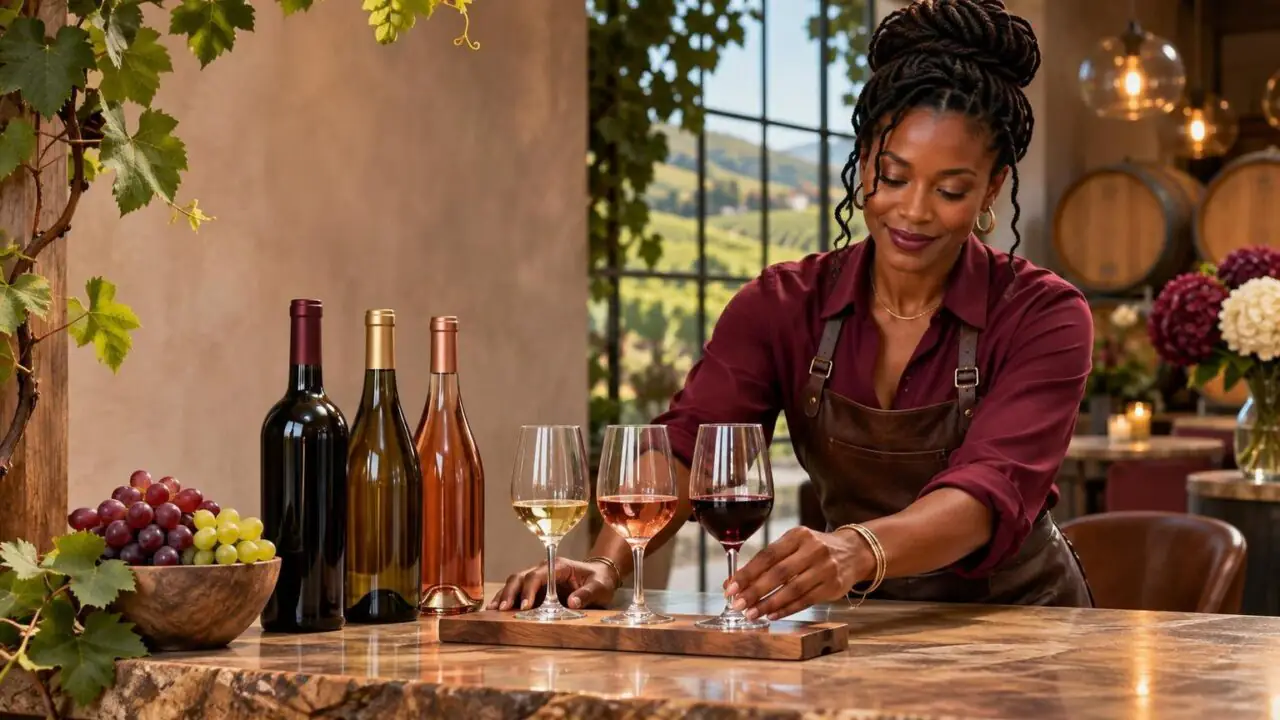
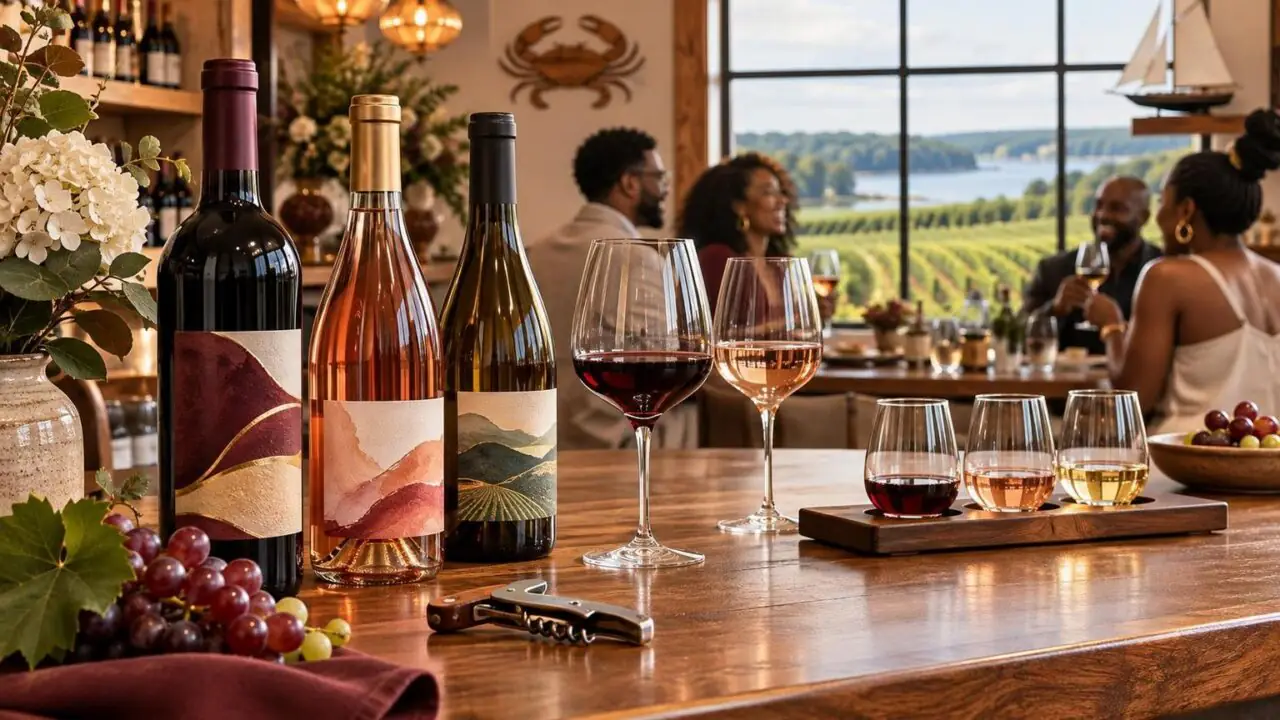
A black owned winery maryland travelers can visit typically operates as a small farm winery offering tastings, vineyard tours, and handcrafted grape or fruit wines, and these businesses remain rare within the state’s licensed wine industry.
Examples include producers in Silver Spring and on the Eastern Shore, several of which pour dessert wines, sangria-style blends, and dry reds at their tasting rooms.
- Maryland authorizes more than 100 farm wineries statewide, yet Black-owned
- Black Owned Wineries Shaping Maryland Wine
- Maryland’s Black-owned wine businesses include Philosophy Winery & Vineyard and Boyd Cru Wines. These producers expand representation through winemaking, brand ownership, and wine education, but visitors should distinguish a wine business from an estate vineyard with regular public tasting hours.
Philosophy Winery & Vineyard
Kimberly T. Johnson and Denise Matthews founded Philosophy Winery & Vineyard in Baltimore.
The business identifies itself as Maryland’s first African American women-owned winery, making its ownership a significant milestone in the state’s wine industry.
Johnson leads winemaking, while Matthews brings wine education and business experience.
Their partnership puts Black women in decision-making roles across production and customer engagement, rather than limiting their participation to marketing or hospitality.
Despite “Vineyard” appearing in its name, readers should not assume Philosophy offers a conventional estate-vineyard visit. Consult its current website for wine availability, events, and tasting arrangements before planning a trip.
Boyd Cru Wines
Jon’ll and Matthew Boyd founded Boyd Cru Wines as a Black-owned, family-owned Maryland wine business. Its identity centers on community and approachable wine experiences, with an emphasis on making wine feel accessible rather than exclusive.
The brand highlights Maryland-grown grapes and connects its wines with gatherings, food, and conversation.
That local agricultural connection matters: Black ownership describes who controls the business, while grape origin describes the wine’s relationship to Maryland’s growing regions.
| Producer | Founding year | Founders |
| Philosophy Winery & Vineyard | 2018 | Kimberly T. Johnson and Denise Matthews |
| Boyd Cru Wines | 2022 | Jon’ll and Matthew Boyd |
What to Verify Before Visiting
A search for “black owned winery maryland” can mix producers, retailers, temporary tastings, and unrelated business names.
Black Ankle Vineyards, for example, was founded by Ed Boyce and Sarah O’Herron; its name alone does not establish Black ownership.
- Confirm tasting locations directly with the producer. A mailing address or production facility may not welcome walk-in visitors.
- Check whether an advertised experience is a public tasting, ticketed event, or private booking.
- Read individual wine descriptions for grape origin. A Maryland-based business does not automatically make every bottle from estate-grown Maryland fruit.
Sources: Producer histories and ownership information: Philosophy Winery & Vineyard, philosophywinery.com; Boyd Cru Wines, boydcruwines.com. For Black Ankle’s founders, see blackankle.com.
Use current producer announcements for changing visitor arrangements.
Harriet Ross Reeves and Maryland Wine History
Harriet Ross Reeves is not a figure I can reliably identify in documented Maryland wine history.
Crediting her with founding a winery, cultivating grapes, or pioneering Black winemaking would require a traceable historical source, not an unsupported name in a modern article.
Separate the Name From Established History
The similar name does not establish a connection to Harriet Tubman. The National Park Service identifies Tubman’s birth name as Araminta Ross and her birthplace as Dorchester County, Maryland.
Her biography does not substantiate a wine-history claim about someone named Harriet Ross Reeves.
That distinction matters.
Maryland’s African American history and its winemaking history deserve accurate treatment, but geographical overlap and similar names cannot establish a person’s occupation, ownership, or contribution to an industry.
Documented Maryland Milestones
| Date | Documented milestone | Historical relevance |
| 1822 | Harriet Tubman was born in Dorchester County. | This belongs to Tubman’s biography, not evidence of winery ownership. |
| 1945 | Philip and Jocelyn Wagner established Boordy Vineyards. | Boordy identifies itself as Maryland’s first commercial winery. |
| 2018 | Kimberly Johnson and Denise Matthews founded Philosophy Winery. | Its founders identify it as Maryland’s first African American women-owned winery. |
Sources for these milestones are the National Park Service, https://www.nps.gov/hatu/; Boordy Vineyards, https://www.boordy.com/; and Philosophy Winery, https://www.philosophywinery.com/.
These sources support the individual entries, not a connection between Reeves and the businesses.
Where Black-Owned Winery History Is Clearer
For readers researching a black-owned winery in Maryland, Philosophy Winery offers a documented starting point.
Its founders’ names and business history provide an attributable account of Black women’s participation in the state’s wine industry.
Keep the ownership claim precise: “African American women-owned” describes a particular milestone. It does not automatically establish the earliest Black grape grower, wine producer, vineyard owner, or seller in Maryland.
Those are different historical questions requiring different evidence.
What Would Establish Reeves’s Role?
- A dated newspaper report identifying her wine business and location.
- A business directory, license, or tax record documenting commercial production.
- Property records paired with evidence of grape growing or winemaking.
- An archival collection connecting her full name to a specific Maryland enterprise.
Until such evidence is available, leave Reeves’s purported contribution unassigned. Presenting documented founders is more useful than attaching an unverified historical figure to Maryland’s Black-owned wine businesses.
Where to Visit Black Owned Maryland Wineries
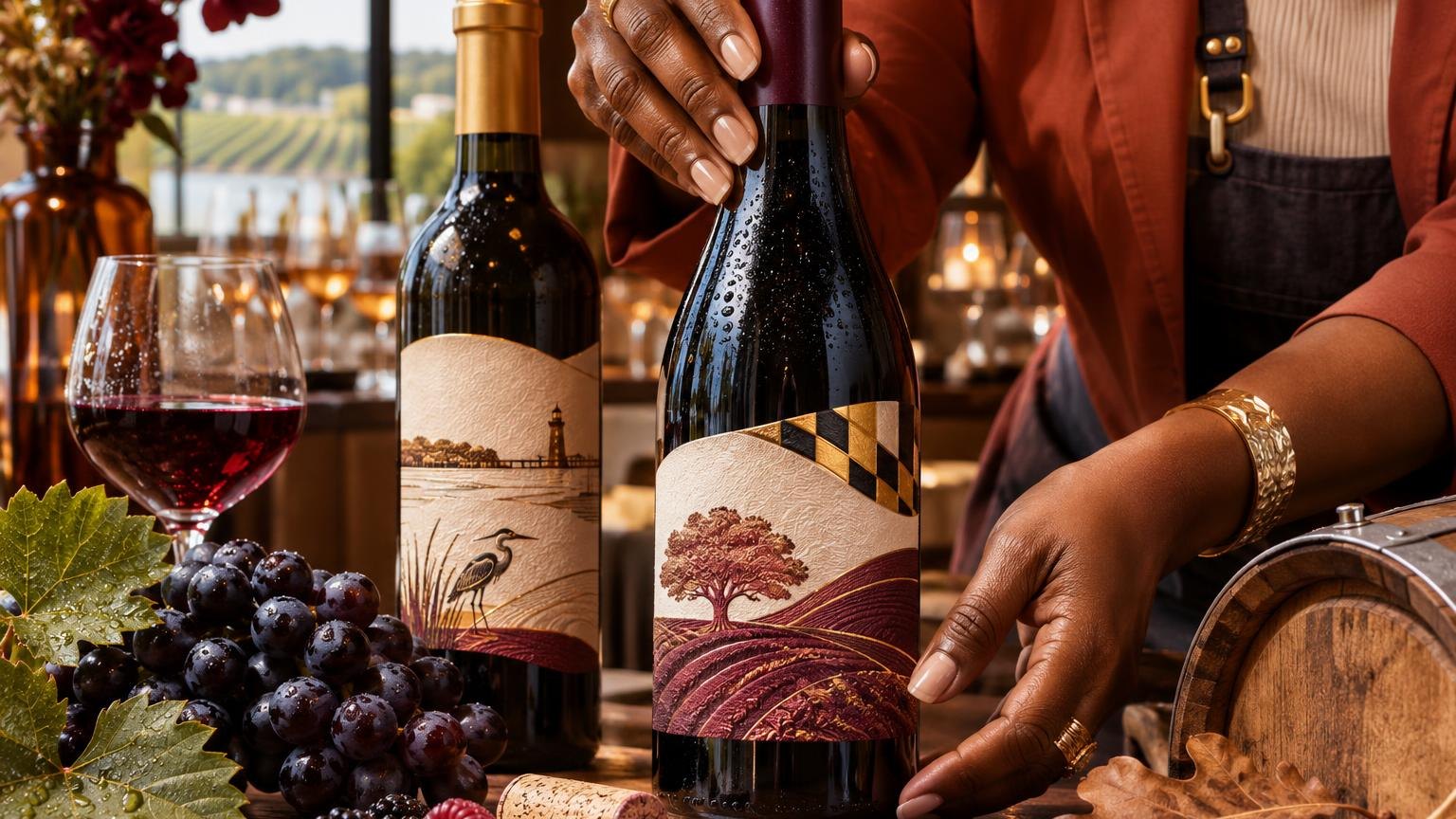
Start with Boyd Cru Wines and Philosophy Winery when planning visits around Black-owned Maryland wine businesses.
Their visitor experiences differ, so confirm the venue, reservation requirements, and event schedule before treating either destination as a walk-in vineyard stop.
| Wine business | Maryland base | Founding or launch year |
| Boyd Cru Wines | Savage, Howard County | Launched in 2023 |
| Philosophy Winery | Baltimore | Founded in 2018 |
Boyd Cru Wines: Check the Savage Mill Location
Founded by Jon’ll and Matthew Boyd, Boyd Cru Wines is a Black-owned, family-owned Maryland wine business. Its Savage Mill location gives visitors a destination in Howard County rather than requiring a trip to a rural vineyard estate.
Check the winery’s current booking information for tasting availability, ticketed programming, and opening hours.
Savage Mill is a historic mill complex with shops and other businesses; visiting the complex does not automatically guarantee access to a hosted wine tasting.
Use the producer’s website for current visitor information and its founding story: https://www.boydcruwines.com/.
Philosophy Winery: Follow Baltimore Tasting Opportunities
Kimberly T. Johnson and Denise L. Matthews founded Philosophy Winery, recognized as Maryland’s first Black women-owned winery.
The Baltimore-based business is an important stop for discovering Black winemaking in the state, but visitors should distinguish the producer from a conventional vineyard attraction.
Look for announced tastings, public appearances, and other visitor opportunities before traveling. Confirm the address attached to your specific booking or event.
A business address, production location, or retail stockist should not be assumed to offer the same experience as a staffed tasting room.
Consult the winery directly for its story and current opportunities: https://www.philosophywinery.com/.
Plan Around Confirmed Access, Not Assumptions
- Reserve first. Check whether admission covers a guided tasting, individual pours, or a special event. Do not assume wine purchases include a tasting.
- Verify the setting. Neither Black ownership nor Maryland branding automatically means an estate vineyard with public grounds.
- Arrange transportation. Choose a designated driver or confirm ride availability before drinking, especially when attending an evening event.
- Check food policies. Ask about on-site food, outside snacks, and age restrictions before bringing a group.
The Maryland Wineries Association provides additional statewide planning information at https://marylandwine.com/.
Use it to discover nearby destinations, then confirm each business’s ownership and visitor arrangements through its own published information.
Wines to Try and Tasting Room Tips
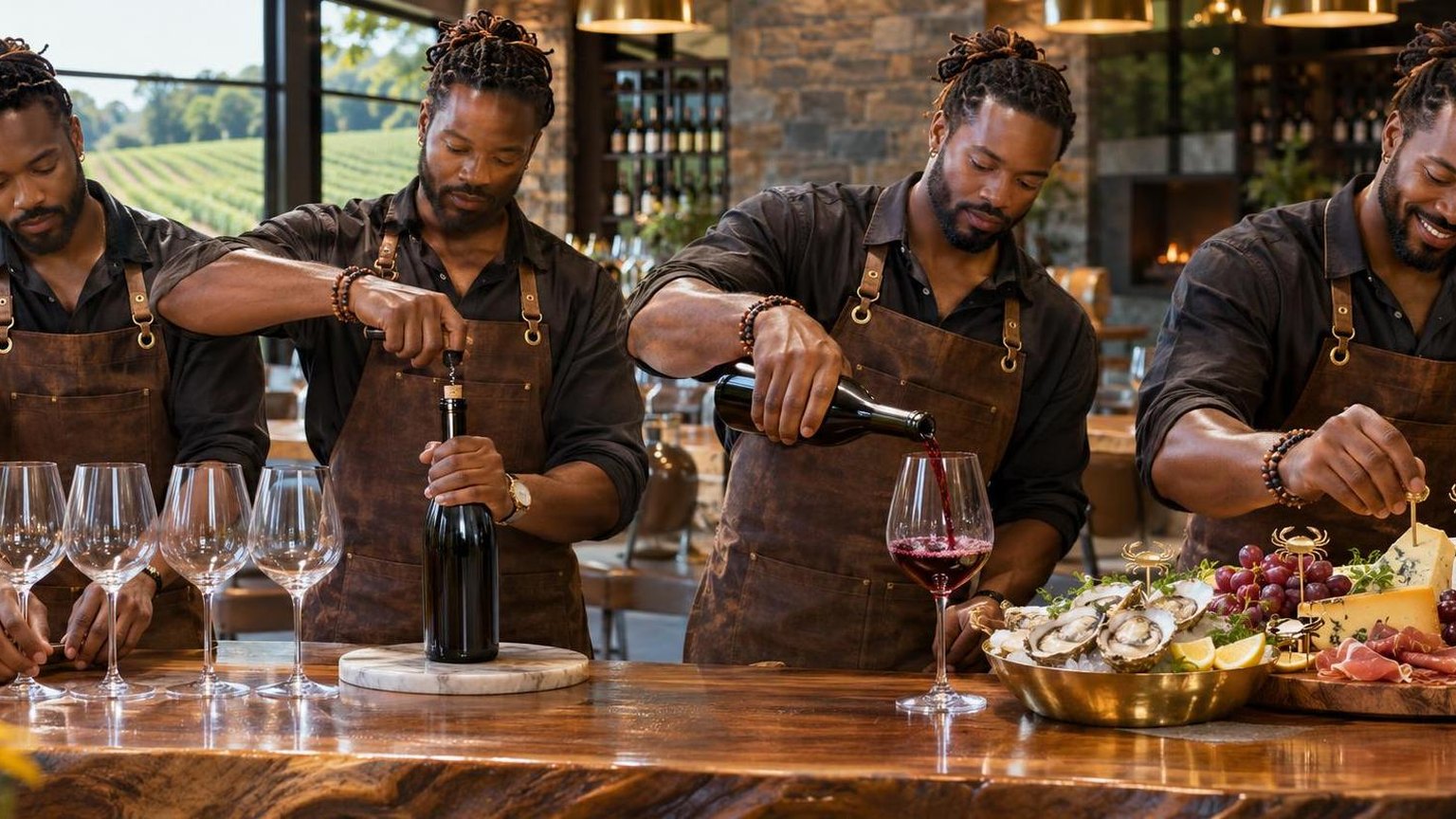
At a Black-owned winery in Maryland, choose wines from the current tasting list rather than an outdated review.
Philosophy Winery & Vineyard, founded in 2018 by Denise Matthews and Kimberly Johnson, offers a starting point for exploring Black women’s contributions to Maryland wine.
Choose a Flight That Shows Different Styles
Ask the host to arrange available wines from lighter and drier to fuller-bodied or sweeter. The styles below are tasting targets, not a claim that every producer currently stocks each bottle.
- Chardonnay: Ask whether the wine saw oak, stainless steel, or both. Compare citrus and apple notes with toast or vanilla; oak treatment and fermentation choices can change the wine’s character substantially.
- Dry rosé: Check sweetness before ordering. Pink color does not establish sugar content, and a darker rosé is not necessarily sweeter than a pale one.
- Cabernet Franc: When available, look for red-fruit, floral, peppery, or herbal notes. Ask where the grapes grew rather than assuming a Maryland business uses exclusively Maryland-grown fruit.
- A sweeter selection: Save it until after dry wines. Ask for residual sugar information if you want a clearer answer than “smooth” or “fruit-forward,” neither of which establishes sweetness.
Let Serving Temperature Help
Temperature affects aroma, texture, and perceived alcohol. These general service ranges follow Wine & Spirit Education Trust guidance; they describe wine styles, not individual Maryland bottlings.
| Wine style | Serving temperature |
| Light-bodied white or rosé | 43–50°F |
| Full-bodied white | 50–55°F |
| Medium- or full-bodied red | 59–64°F |
Confirm the Experience Before Traveling
For Philosophy or Boyd Cru Wines, another Black-owned Maryland wine business, confirm the actual tasting location and format directly.
A winery’s business address, production space, vineyard, and public event venue are not necessarily the same place.
- Check the booking: Confirm reservations, tasting fees, cancellation terms, food availability, accessibility, and whether the event includes seated service.
- Bring identification: Maryland’s legal drinking age is 21. Ask separately about policies for children and nondrinking guests.
- Plan transportation: Choose a designated driver or arrange a ride beforehand. Use a spit cup when offered; finishing every pour is unnecessary.
Sources: Producer information and current visit details: https://www.philosophywinery.com/ and https://www.boydcruwines.com/. General wine-service guidance: Wine & Spirit Education Trust, https://www.wsetglobal.com/.
Supporting Black Vintners in Maryland
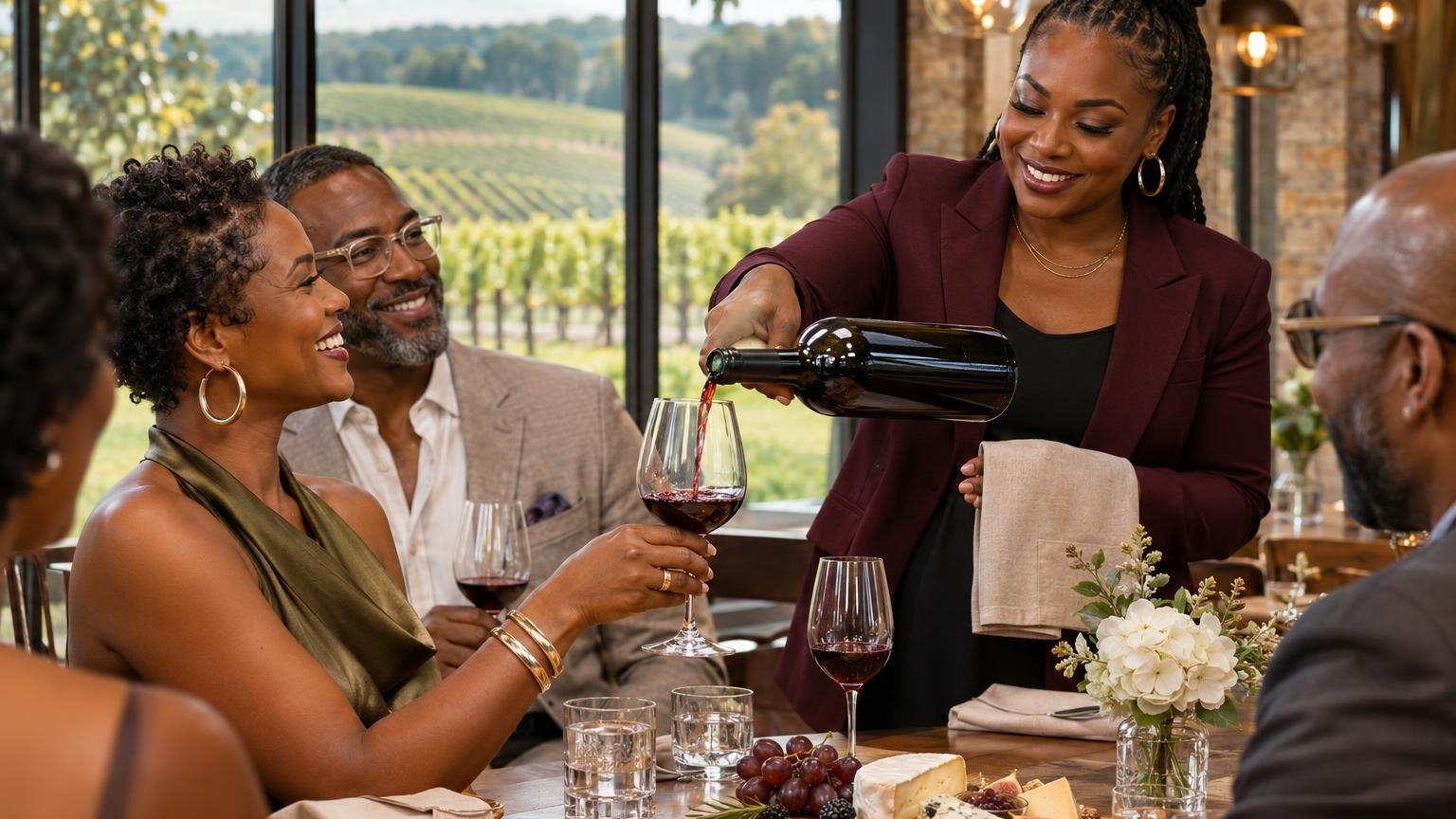
Supporting Black vintners in Maryland starts with buying their wines and understanding the businesses behind them.
Philosophy Winery & Vineyard and Boyd Cru Wines offer concrete starting points, but check each producer’s current ordering options and event calendar before planning a visit.
Know the People Behind the Label
Philosophy Winery & Vineyard was founded in 2018 by Kimberly T. Johnson and Denise Matthews. The Baltimore-based business identifies itself as Maryland’s first Black women-owned winery.
Its founders bring winemaking and wine-service experience to a business that expands representation in the state’s wine industry.
Boyd Cru Wines is a Black-owned, family-owned Maryland wine business founded by Jon’ll and Matthew Boyd.
Its emphasis on community and approachable wine experiences gives supporters another way to engage with Black entrepreneurship beyond a single bottle purchase.
Consult the producers’ own websites for their founder stories, available wines, and purchasing information: https://www.philosophywinery.com/ and https://www.boydcruwines.com/.
Treat older event listings and third-party tasting-room descriptions as leads, not confirmation of current access.
Make Your Purchase Count
- Buy directly when practical. Use the winery’s official sales channels. Direct purchases give the producer the retail sale rather than routing your entire purchase through an outside retailer; shipping, fulfillment, and payment-processing costs still apply.
- Attend producer-led tastings. Book through the organizer’s current listing. Ask who made the wine, where the grapes grew, and which production decisions shaped its flavor. These questions recognize the vintner’s expertise rather than reducing the business to its ownership identity.
- Request bottles locally. Ask a Maryland wine shop or restaurant whether it can source a named producer. Give staff the winery’s exact name; availability depends on distribution arrangements, inventory, and the business’s purchasing policies.
- Share useful recommendations. Name the bottle, describe what you tasted, and disclose complimentary samples. A specific, honest review helps another customer choose more effectively than unsupported praise.
Check Logistics Before Traveling
A Maryland wine business does not automatically operate an estate vineyard or a walk-in tasting room. Grape growing, winemaking, business ownership, and hospitality can occur at different locations.
Confirm the actual event address, reservation requirements, accessibility, and food policy before leaving.
Alcohol purchasers must be at least 21. Confirm delivery eligibility and identification requirements directly with the seller, and arrange a designated driver for tastings.
Repeat purchases and informed recommendations provide more sustained support than a one-time social-media mention.
Planning Your Maryland Wine Country Trip
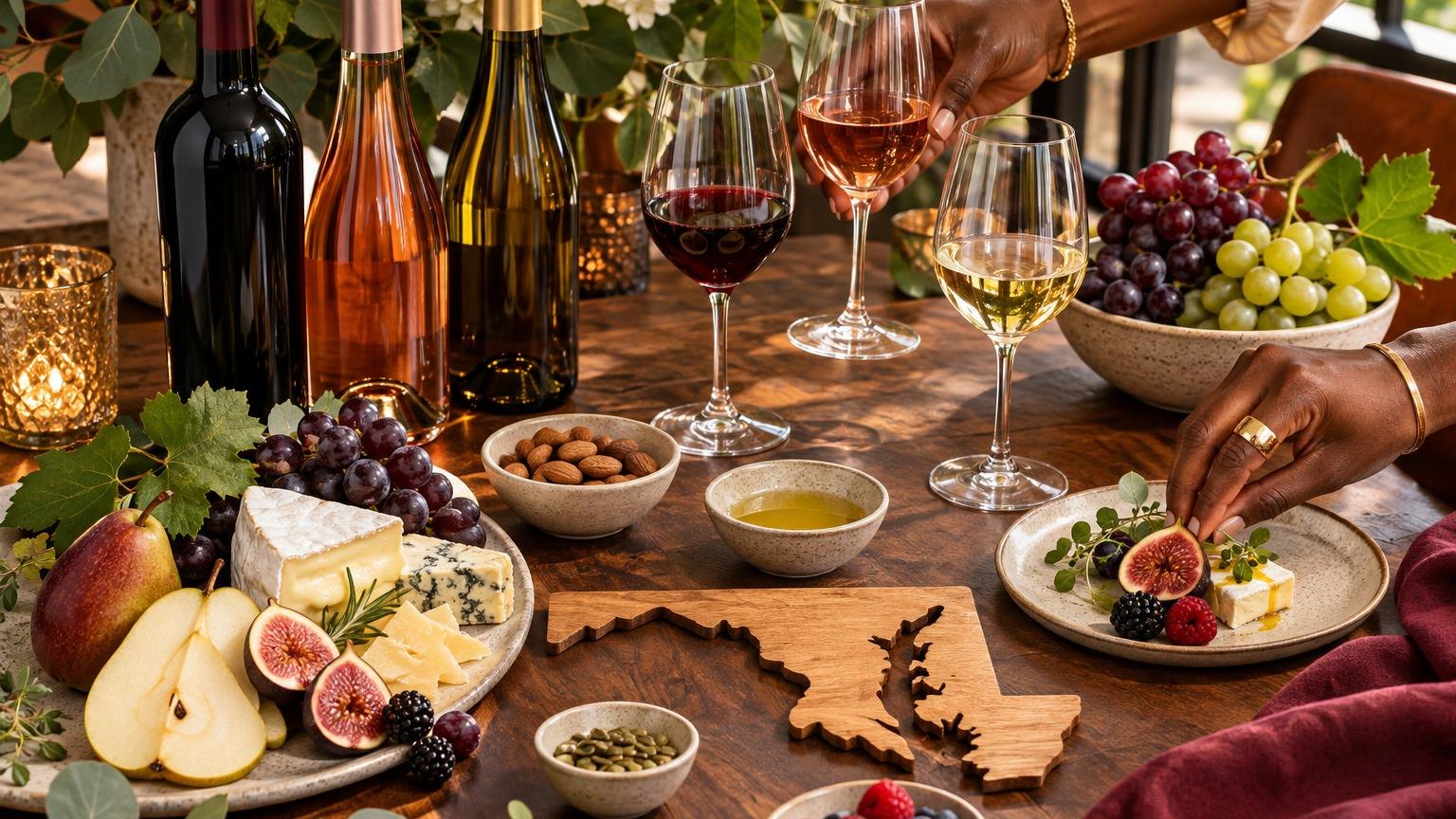
Plan a Maryland Black-owned wine itinerary around confirmed tastings, not assumptions about vineyard access.
A wine brand, production facility, and public tasting room are different things; the address attached to a business does not necessarily identify somewhere you can visit.
Confirm the Producer and the Experience
Start with Philosophy Winery & Vineyard, founded by Kimberly Johnson and Denise Matthews, and Boyd Cru Wines, founded by Jon’ll and Matthew Boyd. Both are Maryland Black-owned wine businesses.
Check their official websites for current experiences before building your route.
- Confirm the actual tasting address, event date, and reservation requirements directly with the producer.
- Ask whether the experience is a seated tasting, release party, dinner, or retail purchase. These offer different opportunities to meet the people behind the wine.
- Check accessibility, seating, food availability, outside-food rules, and policies for children and pets.
- Verify cancellation terms and whether the tasting fee includes anything beyond the wines poured.
Do not use a winery’s name as evidence of ownership. Likewise, “Maryland winery” does not automatically mean every bottle contains estate-grown Maryland grapes. Ask which wines use local fruit and where the grapes were grown.
Build the Route Around Confirmed Stops
Choose your overnight base after securing your main tasting. Baltimore, the Washington suburbs, and rural vineyard destinations are not interchangeable starting points.
Map the actual addresses and check traffic for your intended departure time rather than relying on a statewide winery list.
Use the Maryland Wineries Association directory to identify nearby additions, then verify hours with each business. Leave room for lunch and conversation.
If supporting Black ownership is your priority, confirm that independently; a general winery directory is not an ownership certification.
Arrange Transportation Before Tasting
Book a designated driver or transportation service in advance. For rural appointments, confirm the return pickup rather than assuming an app-based ride will be available.
Tasting pours still contain alcohol, and food does not make someone safe to drive.
| Planning reference | U.S. fact |
| Minimum legal drinking age | 21 years. |
| Standard wine drink | 5 fluid ounces at 12% alcohol by volume. |
| Pure alcohol per standard drink | Approximately 14 grams. |
The National Institute on Alcohol Abuse and Alcoholism supplies the standard-drink figures; stronger wines contain more alcohol per equal-sized pour. Use these figures for awareness, not as a driving threshold.
Planning sources: Philosophy Winery & Vineyard and Boyd Cru Wines official listings; Maryland Wineries Association; National Institute on Alcohol Abuse and Alcoholism, “What Is a Standard Drink?”.
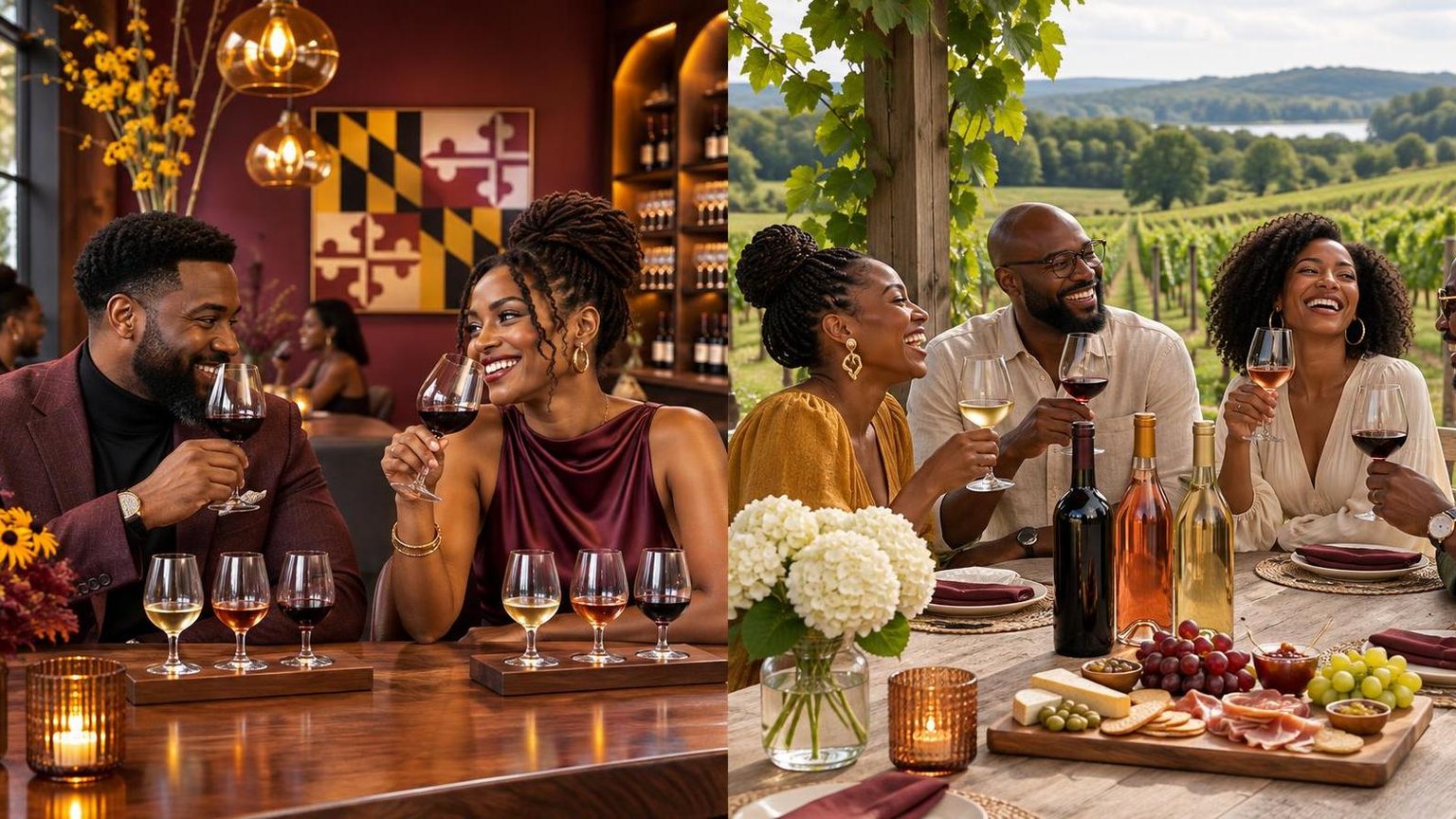
Questions People Ask Most
Which Black-owned wineries are in Maryland?
Boyd Cru Wines and Philosophy Winery & Vineyard are two Black-owned Maryland wine businesses. Start with their official websites for wines, events, and purchasing information: boydcruwines.com and philosophywinery.com.
Who owns Boyd Cru Wines?
Jon and Candice Boyd founded Boyd Cru Wines, which launched in 2023. The company identifies itself as Maryland’s first Black family-owned winery, a distinction specifically about family ownership rather than all Black-owned wineries.
Source: Boyd Cru Wines, boydcruwines.com.
What makes Philosophy Winery & Vineyard significant?
Kimberly T. Johnson and Denise Matthews-Harp founded Philosophy Winery & Vineyard in 2018. The Baltimore-area business identifies itself as Maryland’s first winery owned by African American women.
Source: Philosophy Winery & Vineyard, philosophywinery.com.
Is Black Ankle Vineyards a Black-owned Maryland winery?
No. Black Ankle Vineyards was founded by Ed Boyce and Sarah O’Herron; “Black Ankle” is not an indication of Black ownership.
Its official history identifies the founders and explains the winery’s connection to its Mount Airy property: blackankle.com.
Does a Black-owned Maryland winery necessarily have its own vineyard?
No; winery ownership, vineyard ownership, and grape origin are separate facts.
Federal labeling rules require an “estate bottled” wine to meet specific growing, production, and location requirements, so do not assume that description applies simply because a business calls itself a winery.
Source: Alcohol and Tobacco Tax and Trade Bureau, Wine Labeling: Estate Bottled, ttb.gov.
Can you visit Boyd Cru Wines or Philosophy Winery without booking?
Check each producer’s current visitor information before traveling; a business address does not establish that walk-in tastings are available.
Use Boyd Cru Wines’ and Philosophy Winery’s official event listings to confirm the venue, date, reservation requirements, and whether the experience includes a tasting.
Can Black-owned Maryland wineries ship wine to your home?
Shipping availability depends on the winery’s licenses and the destination state, not its ownership identity.
Maryland permits licensed direct wine shipments to eligible consumers age 21 or older, with an adult signature required at delivery; confirm that the producer accepts your delivery address before ordering.
Source: Maryland Alcohol, Tobacco, and Cannabis Commission, Direct Wine Shipper guidance, atcc.maryland.gov.
- What Does The Term Bruising Mean In Bartending?
- What Is Gin & Juice Drink?
- What Is the Drinking Age in the Bahamas?
- What Does Pinot Noir Taste Like? Most Correct Answer
- How Many 20 Oz in a 2 Liter?
- Patron Silver Price Guide – What Are The Prices Of Patron Silver Tequila?
- Did Jesus Drink Alcohol?
- All Blog Guides
- Boyd Cru Wines (n.d.)
- Philosophy Winery & Vineyard (n.d.)
- Maryland Wineries Association (n.d.)
- Association of African American Vintners (n.d.)
- Maryland Office of Tourism (n.d.)
- Visit Howard County (n.d.)
- Maryland Alcohol, Tobacco, and Cannabis Commission (n.d.)
- Alcohol and Tobacco Tax and Trade Bureau: Wine (n.d.)
- U.S. Small Business Administration: Minority-Owned Businesses (n.d.)