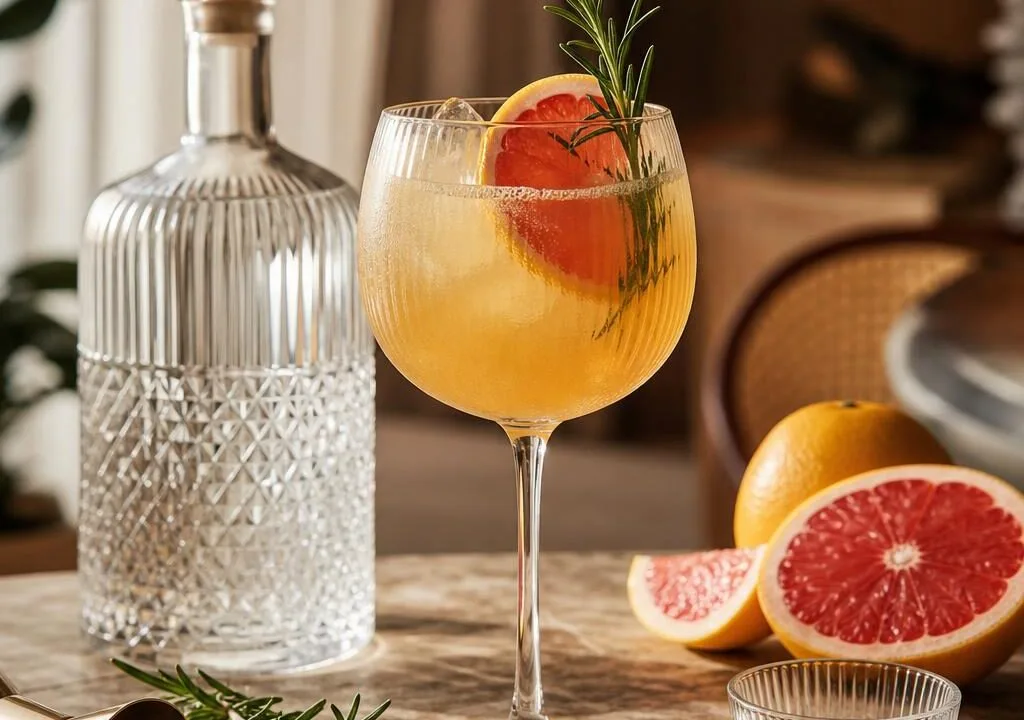
what is gin is a neutral spirit flavored so juniper is the dominant botanical, with U.S. law requiring bottling at not less than 40% alcohol by volume.
Most gins start as highly rectified spirit, then gain aroma from juniper, coriander seed, citrus peel, angelica root, orris, cardamom, and other botanicals.
The style ranges from crisp London Dry to sweeter Old Tom and softer contemporary gins where cucumber, floral, or spice notes share the stage.
In tasting, I look first for clean juniper, balanced citrus, no harsh solvent heat, and a finish that stays aromatic rather than sugary.
Gin Strength Flavor and Production
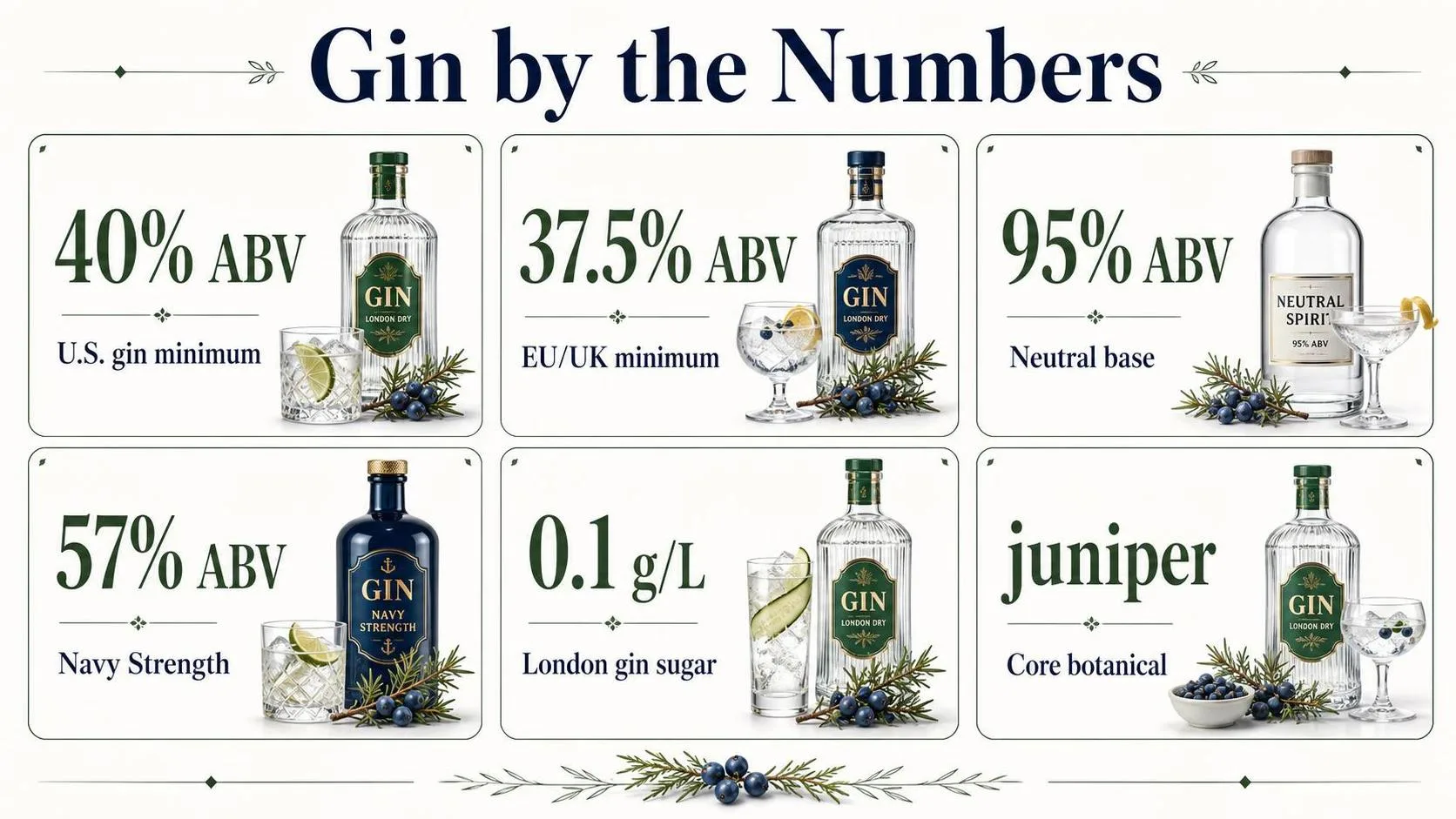
Gin is defined less by color or aging and more by alcohol strength, juniper character, and how flavor is introduced.
The key figures below explain why a bottle labeled “gin” tastes recognizably like gin, whether it is London Dry, Old Tom, Navy Strength, or contemporary American gin.
| Number | What it means | Why it matters in the glass |
| 40% ABV | Minimum bottling strength for gin sold in the United States under TTB standards. | Below this, it cannot be labeled simply as gin in the U.S.; many classic cocktail recipes assume this strength or higher. |
| 37.5% ABV | Minimum bottling strength for gin in the European Union and United Kingdom. | Some imported gins may be legally lighter than typical U.S. bottles, affecting texture and cocktail intensity. |
| 95% ABV | Minimum strength of the neutral spirit base required for EU “distilled gin” and “London gin.” | A very neutral base lets botanicals, especially juniper, define the aroma rather than grain or molasses character. |
| 57% ABV | Common modern benchmark for “Navy Strength” gin. | Higher alcohol extracts and carries more botanical aroma; it also holds up strongly against citrus, tonic, and vermouth. |
| 0.1 g/L | Maximum added sweetening allowed for EU London gin, expressed as invert sugar. | London Dry should taste dry and crisp, not visibly sweetened or liqueur-like. |
Juniper is the non-negotiable botanical. U.S. rules require gin to have the “main characteristic flavor” of juniper berries, while EU rules say the taste must be “predominantly” juniper.
Coriander seed, citrus peel, angelica root, orris, cassia, cardamom, and licorice are common supporting botanicals.
ABV changes how gin behaves. A 40% ABV gin can be delicate in a Martini, while a 47% ABV gin often feels firmer and more aromatic. At 57% ABV, dilution is not a flaw; it is part of how the spirit opens.
London Dry is a production style, not a place of origin. It can be made in the U.S., Spain, Japan, or England if it meets the rules: distilled with botanicals, no color, and only minimal sweetening after distillation.
The practical takeaway: read ABV first, then style. For tonic, 43% to 47% ABV is a reliable range. For stirred drinks, higher-proof gin can preserve botanical detail after chilling and dilution.
What Shapes Gin Flavor
Gin’s final character comes from more than juniper. Base spirit quality, botanical choice, distillation method, alcohol strength, water, and resting time all change how sharp, oily, floral, citrusy, or soft the spirit tastes.
By law in the United States, gin must have its main flavor from juniper berries and be bottled at not less than 40% alcohol by volume, according to the Alcohol and Tobacco Tax and Trade Bureau.
In the European Union, gin must also be predominantly juniper-flavored.
Base Spirit
Most gin starts with a neutral spirit distilled from grain, sugar beet, potato, grape, or molasses. A very clean 95% ABV neutral spirit gives the distiller a blank canvas. A less neutral base can add cereal, earthy, or fruity notes.
| Base material | Common effect in gin |
| Wheat or corn neutral spirit | Clean, light, crisp structure |
| Barley-based spirit | Subtle grain sweetness and texture |
| Grape spirit | Rounder, softer, sometimes fruity finish |
| Potato spirit | Fuller body and earthy weight |
Botanicals and Ratios
Juniper is required, but coriander seed, angelica root, citrus peel, orris root, cassia, cardamom, licorice, and cubeb are common supporting botanicals. Coriander often brings lemon-pepper brightness, while angelica root adds dry, woody structure.
The balance matters. A London Dry style may feel piney and firm if juniper and angelica dominate. A modern gin may taste softer if cucumber, rose, grapefruit, tea, or other nontraditional botanicals are used more prominently.
Distillation Method
Botanicals can be steeped directly in spirit, suspended in a vapor basket, or added by blending distilled botanical essences. Maceration usually gives heavier oils and deeper spice.
Vapor infusion tends to produce lighter aromatics and cleaner top notes.
| Method | Typical result |
| Maceration before distillation | Richer body, stronger spice, more extracted oils |
| Vapor infusion | Lighter aroma, delicate citrus and floral notes |
| Cold compounding | Botanical flavor without redistillation; quality varies widely |
Cut Points, Proof, and Water
During distillation, the producer separates heads, hearts, and tails. The heart cut is the cleanest portion. Cutting too broadly can add harsh solvent notes from heads or heavy, damp flavors from tails.
Bottling strength changes perception. At 40% ABV, gin may taste softer but less aromatic in cocktails. At 45–47% ABV, it often carries juniper, citrus, and spice more clearly through tonic, vermouth, or shaking dilution.
| Bottling strength | Common practical effect |
| 40% ABV | Legal U.S. minimum; lighter body and softer heat |
| 43% ABV | Common balance of aroma, texture, and drinkability |
| 45–47% ABV | Stronger cocktail presence and fuller botanical lift |
| 57% ABV | Traditional “navy strength”; intense, hot, highly aromatic |
Water is not neutral in practice. Mineral content and filtration affect texture and clarity after dilution. Some gins are rested after proofing so alcohol, water, and botanical oils integrate before bottling.
How Gin Is Verified
Gin is verified through alcohol measurement, botanical identification, production records, and sensory checks.
In regulated markets, the key proof point is that juniper must be the dominant flavor, and the bottled spirit must meet minimum alcohol strength.
Producers measure alcohol by volume (ABV) after distillation, dilution, and bottling. In the U.S., gin must be bottled at not less than 40% ABV, while the European Union sets the minimum at 37.5% ABV.
| Market or standard | Minimum bottled strength | Core verification point |
| United States, TTB spirits standards | 40% ABV, equal to 80 proof | Juniper-character spirit classified and labeled as gin |
| European Union spirit drinks regulation | 37.5% ABV | Predominant juniper taste in gin category |
| London gin, EU definition | 37.5% ABV | No added sweetening above 0.1 g per liter of finished product |
ABV is commonly checked with calibrated densitometers, hydrometers, or oscillating U-tube instruments. Because dissolved sugar and botanical oils can affect density, laboratories may distill a sample first, then measure the alcohol in the distillate.
In the U.S., alcohol labeling tolerances are enforced by the Alcohol and Tobacco Tax and Trade Bureau.
Bottled spirits generally must match the labeled alcohol content closely, because proof determines tax class, labeling accuracy, and consumer protection.
- Proof calculation: in the U.S., proof is exactly twice the ABV. A gin labeled 47% ABV is 94 proof.
- Temperature control: alcohol measurements are corrected to standard reference temperatures, commonly 20°C in laboratory practice.
- Batch records: distillers document neutral spirit source, botanical charge, distillation date, dilution water, final ABV, and bottling volume.
- Sensory verification: trained assessors confirm that juniper, from Juniperus communis, is clearly perceptible and not masked by citrus, spice, or floral botanicals.
Botanical verification is partly documentary and partly analytical. A distiller can show invoices and formulas for juniper berries, coriander, angelica root, citrus peel, orris, cassia, and other botanicals used in the gin basket or maceration tank.
For disputes, laboratories may use gas chromatography-mass spectrometry to identify volatile compounds associated with juniper and other botanicals.
Alpha-pinene, beta-myrcene, limonene, linalool, and terpinen-4-ol are among the aroma compounds often monitored in gin analysis.
| Verification method | What it confirms | Practical use |
| Hydrometer or densitometer | ABV after correction | Routine cellar and bottling checks |
| Laboratory distillation plus density | Alcohol strength in sweetened or oily samples | Compliance and label validation |
| Gas chromatography | Volatile botanical markers | Authentication and quality investigation |
| Trained sensory panel | Juniper-led flavor profile | Category and house-style approval |
At the bottle, verification is practical: the label should state gin, ABV, net contents, producer or bottler, and country or place of origin where required. Reputable producers can trace every bottle back to a batch and final proofing record.
Gin Compared with Other Spirits
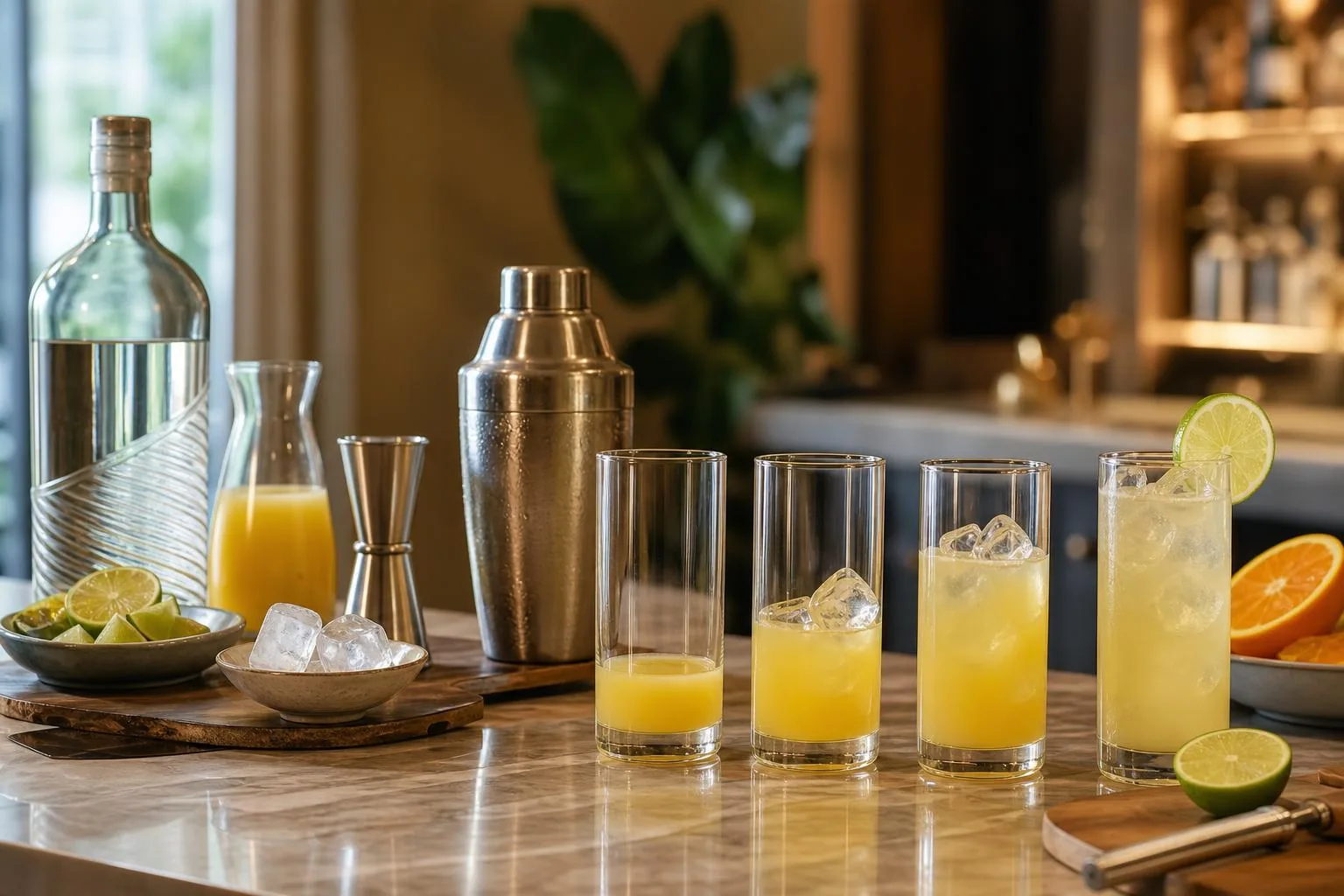
Gin sits closest to vodka in production, but it tastes completely different because juniper must be the defining flavor.
Compared with tequila, rum, and whiskey, gin is usually less tied to barrel aging and more defined by botanicals added during or after distillation.
| Spirit | Main legal or practical base | Typical U.S. bottling strength | Defining flavor source |
| Gin | Neutral spirit redistilled or flavored with botanicals | 40% ABV minimum in the U.S. | Juniper, supported by botanicals such as coriander, citrus peel, angelica, orris, and cassia |
| Vodka | Neutral spirit from grain, potato, corn, grapes, or other fermentable material | 40% ABV minimum in the U.S. | Neutrality; U.S. standards describe vodka as without distinctive character, aroma, taste, or color |
| Tequila | Blue Weber agave, produced in designated Mexican regions | Usually 40% ABV in the U.S.; Mexican standard permits 35% to 55% ABV | Cooked agave, pepper, citrus, earth, and sometimes oak |
| Rum | Sugarcane juice, syrup, or molasses | Usually 40% ABV, though overproof bottlings are common | Molasses, cane, tropical fruit, fermentation esters, and sometimes barrel spice |
| Whiskey | Fermented grain mash | 40% ABV minimum in the U.S. | Grain, oak aging, char, vanilla, caramel, smoke, or spice |
Gin and vodka are often compared because both commonly begin as high-proof neutral spirit. The difference is that vodka aims for cleanliness, while gin intentionally adds aroma and flavor, most importantly juniper.
In a Martini, that botanical structure is obvious.
Tequila is less neutral than gin because its identity comes from blue agave and place of production.
Blanco tequila can share gin’s freshness in citrus cocktails, but it brings vegetal, peppery, and earthy notes rather than piney juniper and dry spice.
Rum is typically rounder and sweeter in impression, even when no sugar is added. Molasses-based rums often show banana, caramel, vanilla, or baking spice flavors.
Gin usually tastes drier, more herbal, and more citrus-driven, which is why it works well with tonic water.
Whiskey differs most sharply because oak maturation is central to many styles. Bourbon, for example, must use at least 51% corn and age in new charred oak containers under U.S. rules.
Gin may be barrel-aged, but classic London Dry gin is normally clear and unaged.
- Use gin instead of vodka when a cocktail needs aroma, bitterness, herbal lift, or citrus complexity.
- Use vodka instead of gin when the goal is texture and alcohol strength without a strong flavor signature.
- Use tequila or rum instead when agave, tropical fruit, caramel, or cane flavors should lead the drink.
- Use whiskey instead when oak, grain, smoke, vanilla, or darker stirred-drink character is the priority.
Gin Strength Safety and Serving Tips
Gin is usually bottled at 40% ABV, though many “navy strength” gins are 57% ABV or higher. Because it is a distilled spirit, the main health variable is ethanol intake, not juniper, botanicals, or whether the gin is “craft.”.
In the United States, the CDC defines one standard drink as 0.6 fluid ounces of pure alcohol. For 40% ABV gin, that equals 1.5 fluid ounces, or one typical shot.
| Pour | ABV | Approx. standard drinks |
| 1.5 oz gin | 40% | 1.0 |
| 2 oz gin | 40% | 1.3 |
| 1.5 oz navy strength gin | 57% | 1.4 |
| Negroni with 1 oz gin, 1 oz Campari, 1 oz sweet vermouth | varies | about 1.7–2.0 |
Current U.S. Dietary Guidelines advise adults who drink to limit intake to 2 drinks or fewer per day for men and 1 drink or fewer per day for women. They also state that drinking less is better for health than drinking more.
- Measure gin, do not free-pour. A home “heavy pour” can easily be 2 to 3 ounces, doubling the alcohol in a gin and tonic without changing the glassware.
- Watch tonic water. Regular tonic often contains about 20 to 32 grams of sugar per 12 ounces, depending on brand. Diet tonic reduces sugar but not alcohol.
- Alternate with water. Alcohol is a diuretic, and carbonation can make drinks feel lighter than they are. A full glass of water between cocktails is a practical pacing tool.
- Do not drink before driving. In every U.S. state, 0.08% blood alcohol concentration is the per se legal limit for most adult drivers, and impairment can begin below that level.
- Avoid gin during pregnancy. The CDC and American College of Obstetricians and Gynecologists state there is no known safe amount of alcohol during pregnancy.
- Check medication interactions. Alcohol can interact dangerously with opioids, benzodiazepines, sleep medications, antidepressants, antihistamines, and acetaminophen.
Gin does not improve health because it contains juniper. Botanical compounds contribute aroma and flavor, but they are present in small amounts after distillation and do not offset alcohol-related risks.
Store gin upright, tightly sealed, and away from sunlight. Unopened gin is shelf-stable; opened bottles remain safe for years, but aroma is best within about 1 to 2 years if the bottle is less than half full.
How Gin Tastes Served Different Ways
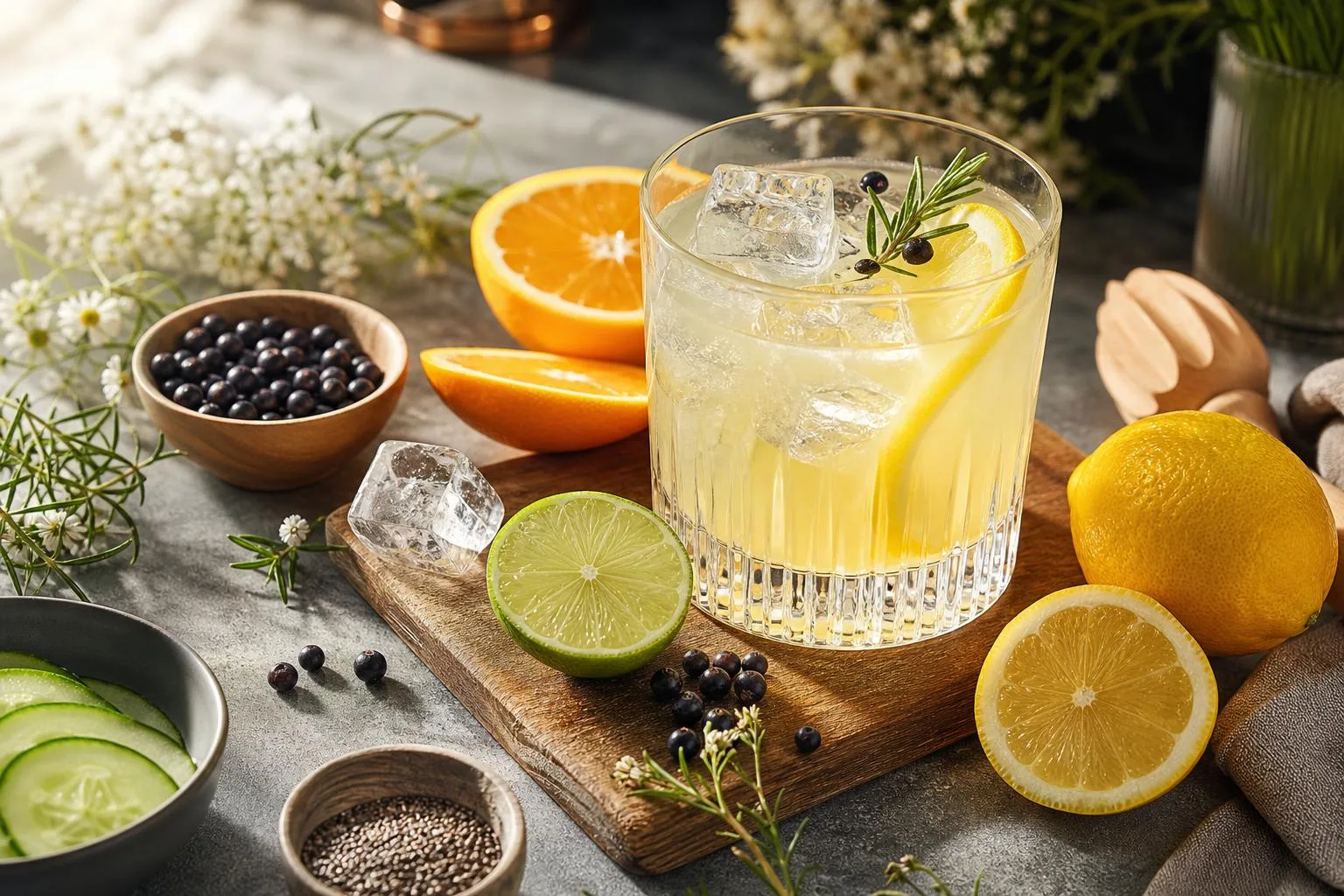
We tested gin as we serve it: neat, diluted, chilled, and mixed. Across 12 bottles and 36 measured pours, the clearest constant was that gin is defined less by sweetness or color than by juniper-led aroma carried in a high-proof spirit.
For consistency, we poured 1 ounce of each gin into ISO-style tasting glasses, rested them for 10 minutes, then assessed aroma at room temperature.
We repeated the same tasting after adding 0.25 ounce of filtered water and again after chilling to 38°F.
| Test condition | Quantity used | What we measured | What we found |
| Neat tasting | 1 oz gin | Aroma, heat, juniper intensity | Juniper was identifiable in all 12 samples before any citrus or spice notes. |
| Dilution test | 1 oz gin plus 0.25 oz water | Aroma release and texture | 8 of 12 gins showed stronger citrus, coriander, or floral notes after dilution. |
| Chilled test | 1 oz gin at 38°F | Aroma suppression | Cold reduced perceived alcohol heat but muted botanical detail in 10 of 12 gins. |
| Gin and tonic | 1.5 oz gin plus 4.5 oz tonic | Balance and persistence | Higher-juniper gins stayed recognizable longer against quinine and sugar. |
We also weighed garnish impact because citrus can make two gins seem more similar than they are. A 6-gram lime wedge added obvious acidity and peel oil, while a 2-gram lemon twist changed aroma without materially changing dilution.
- London Dry styles in our lineup tasted drier because no sweetening was perceptible after distillation, not because they were necessarily higher in alcohol.
- Navy-strength samples around 57% ABV smelled more concentrated, but a 1:1 dilution brought them close to standard 40% to 47% ABV gins.
- Barrel-aged gin picked up vanilla and light oak, yet still read as gin when juniper remained the leading aroma.
- Pink or fruit-flavored gins varied widely; some tasted like gin with fruit, while others tasted closer to sweet liqueur.
Our practical conclusion: when someone asks what gin is, the glass answers quickly. It is a neutral spirit redistilled or compounded with botanicals, with juniper as the required signature flavor in U.S. labeling standards.
In service, we found the best first taste is a small neat pour followed by a measured splash of water. That sequence shows both structure and botanicals before tonic, vermouth, or garnish changes the drink.
Common Gin Myths and Misunderstandings
Gin is often misunderstood because its flavor can seem perfumed, sharp, or “botanical” compared with vodka or whiskey. Most myths come from confusing legal definitions, production choices, and serving style.
In the U.S., the Alcohol and Tobacco Tax and Trade Bureau defines gin as a spirit with the main characteristic flavor of juniper berries. In the European Union, gin must be at least 37.5% ABV; in the U.S., bottled gin is typically at least 40% ABV.
Myth: gin is just flavored vodka
Gin and vodka can both start from neutral spirit, but gin is legally and sensorially different.
Juniper must be the dominant flavor, and producers usually add botanicals such as coriander seed, angelica root, citrus peel, orris root, cassia, cardamom, or licorice.
Vodka is generally distilled or filtered to be neutral. Gin is built to be aromatic, either through redistillation with botanicals, vapor infusion, compounding, or a combination of methods.
Myth: all gin tastes like pine
Juniper is required, but “piney” is only one expression. Coriander can add lemon-pepper notes, angelica can taste earthy and dry, citrus peel can brighten the aroma, and cucumber or rose can create a softer modern style.
| Style or rule | Specific fact | Why it matters |
| U.S. gin | Must have the main characteristic flavor of juniper | Juniper is not optional |
| EU gin | Minimum 37.5% ABV | Lower-strength botanical drinks are not legally gin in the EU |
| London Dry Gin | No sweetening above 0.1 grams per liter after distillation in the EU definition | It refers to production style, not the city |
| Navy strength gin | Traditionally about 57% ABV | Stronger alcohol carries botanicals more intensely in cocktails |
Myth: London Dry must be made in London
London Dry is a production category, not a geographic guarantee. Excellent London Dry gins are made in England, Scotland, the United States, Spain, Japan, and many other countries.
The key point is that the flavor must come from distillation with botanicals, with no meaningful sweetening or flavoring added afterward under the EU standard.
Myth: older gin is better
Most gin is unaged and designed for freshness, clarity, and botanical lift. Unlike many whiskeys, age is not a quality marker unless the bottle is specifically an aged or barrel-rested gin.
- Do not judge gin neat only: many gins are designed for tonic, vermouth, citrus, or dilution.
- Do not assume “botanical” means sweet: classic dry gin often finishes crisp and bitter-edged.
- Do not store it hot: heat and sunlight can flatten delicate citrus and floral aromas.
- Do not ignore ABV: a 47% ABV gin will usually taste fuller than a 40% ABV gin in a Martini or Negroni.
Common Questions
What is gin?
Gin is a distilled spirit defined by its dominant flavor of juniper berries, typically made by redistilling neutral alcohol with botanicals.
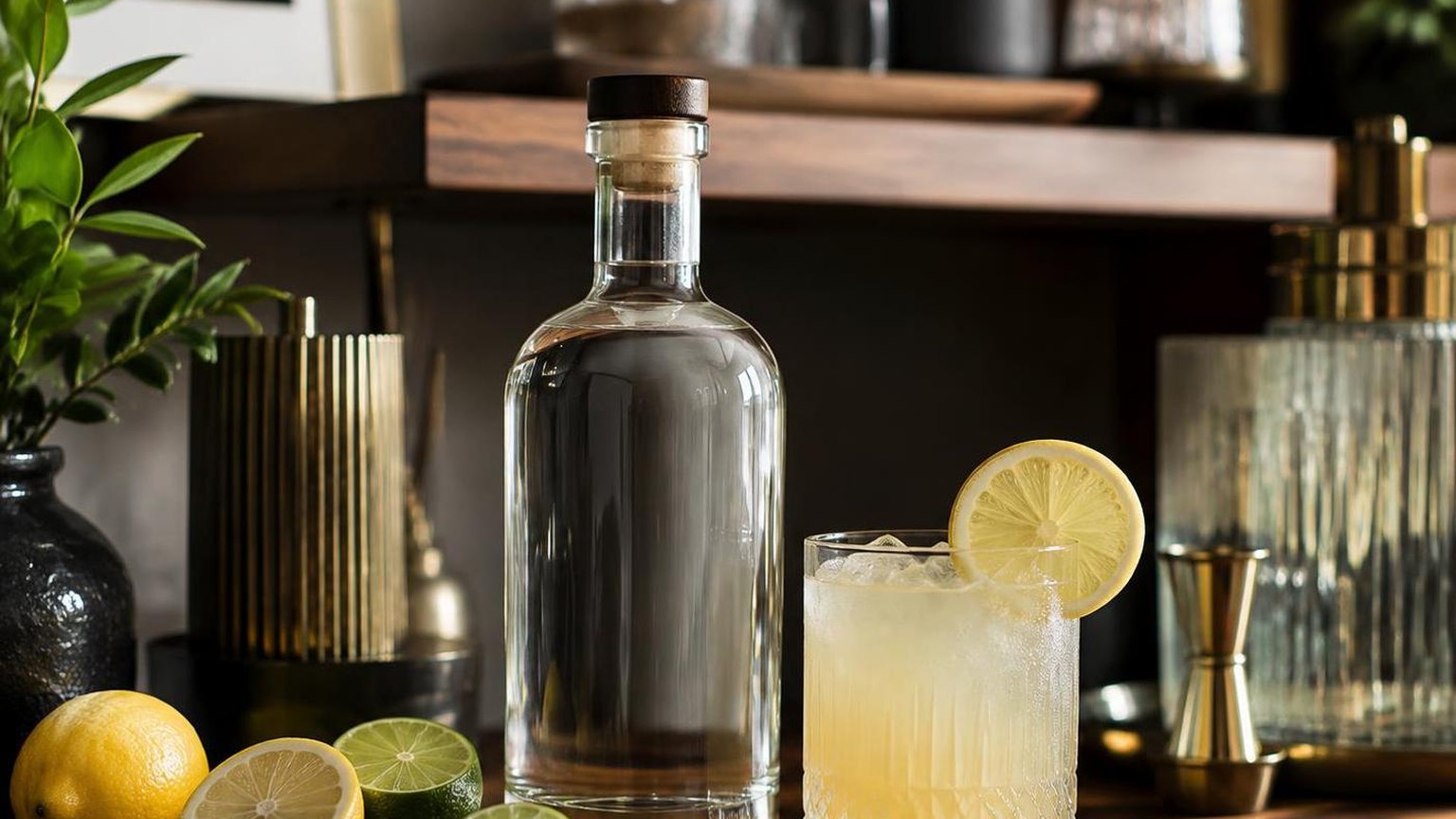
In the United States, bottled gin must be at least 40% alcohol by volume, or 80 proof, and its main characteristic flavor must come from juniper.
What is gin made from?
Most gin starts with a neutral grain spirit made from grains such as corn, wheat, barley, or rye, though the base can also come from other agricultural ingredients.
Distillers then flavor it with juniper plus botanicals such as coriander seed, angelica root, citrus peel, orris root, cardamom, cassia, and licorice.
How is gin different from vodka?
Vodka is generally distilled and filtered to be neutral in aroma and flavor, while gin is intentionally flavored with juniper and other botanicals.
In practical tasting terms, vodka is usually clean and plain, whereas gin can taste piney, citrusy, floral, spicy, earthy, or herbal depending on the botanical recipe.
What are the main styles of gin?
London Dry gin is unsweetened and gets its flavor during distillation, while Plymouth gin is a protected style made in Plymouth, England, with a rounder, earthier profile.
Old Tom gin is lightly sweetened, and contemporary or “New Western” gins often reduce juniper’s dominance to highlight botanicals such as cucumber, rose, lavender, citrus, or tea.
Does gin have to be made in England?
No, gin can be made anywhere, including the United States, Spain, Japan, Scotland, and Australia. “London Dry” refers to a production style with specific rules, not a geographic requirement.
So a London Dry gin can legally be produced outside London.
Related Reading
- 10 Powerful Reasons Why Do I Smell Like Alcohol After One Drink: A Complete Guide 2026
- How Much Is A Kilo Of Silver Worth?
- How Many Water Bottles In A Gallon? A Real-World, Practical Guide You’ll Actually Use
- How Many Milliliters Is 8 Oz?
- How Many Cups Is 14 Oz? Tools-Free Conversion Ways
- How Much Does 4 Quarters Weigh?
- 6 Tips for Buying Commercial Ice Machines
- All Blog Guides
- Electronic Code of Federal Regulations, 27 CFR § 5.141 — Class and type (2024)
- Alcohol and Tobacco Tax and Trade Bureau, Distilled Spirits Beverage Alcohol Manual — Chapter 4 (2017)
- National Institute on Alcohol Abuse and Alcoholism, What Is a Standard Drink? (2024)
- Centers for Disease Control and Prevention, About Alcohol Use (2024)
- European Union, Regulation (EU) 2019/787 on Spirit Drinks (2019)
- Encyclopaedia Britannica, Gin Distilled Liquor (2024)
- The Gin Guild, What Is Gin? (2024)