Anethole Chemistry Behind Black Licorice Spirits
Anethole supplies the familiar sweet, licorice-like aroma in many anise-flavored spirits, including ouzo, pastis, and sambuca. Its chemistry explains why these drinks smell intensely aromatic and why clear examples can turn milky when water is added.
The Molecule Behind the Flavor
Trans-anethole is an aromatic ether found in anise, star anise, and fennel oils. These botanicals are different plants, but their shared aroma compound creates overlapping flavor signatures.
A licorice-like taste therefore does not establish that a spirit contains licorice root.
The molecule contains a benzene ring, a methoxy group, and a propenyl side chain. Its largely nonpolar structure makes it poorly soluble in water but much more compatible with ethanol.
The trans form is the principal naturally occurring anethole isomer associated with these botanicals.
| Chemical property | Anethole fact |
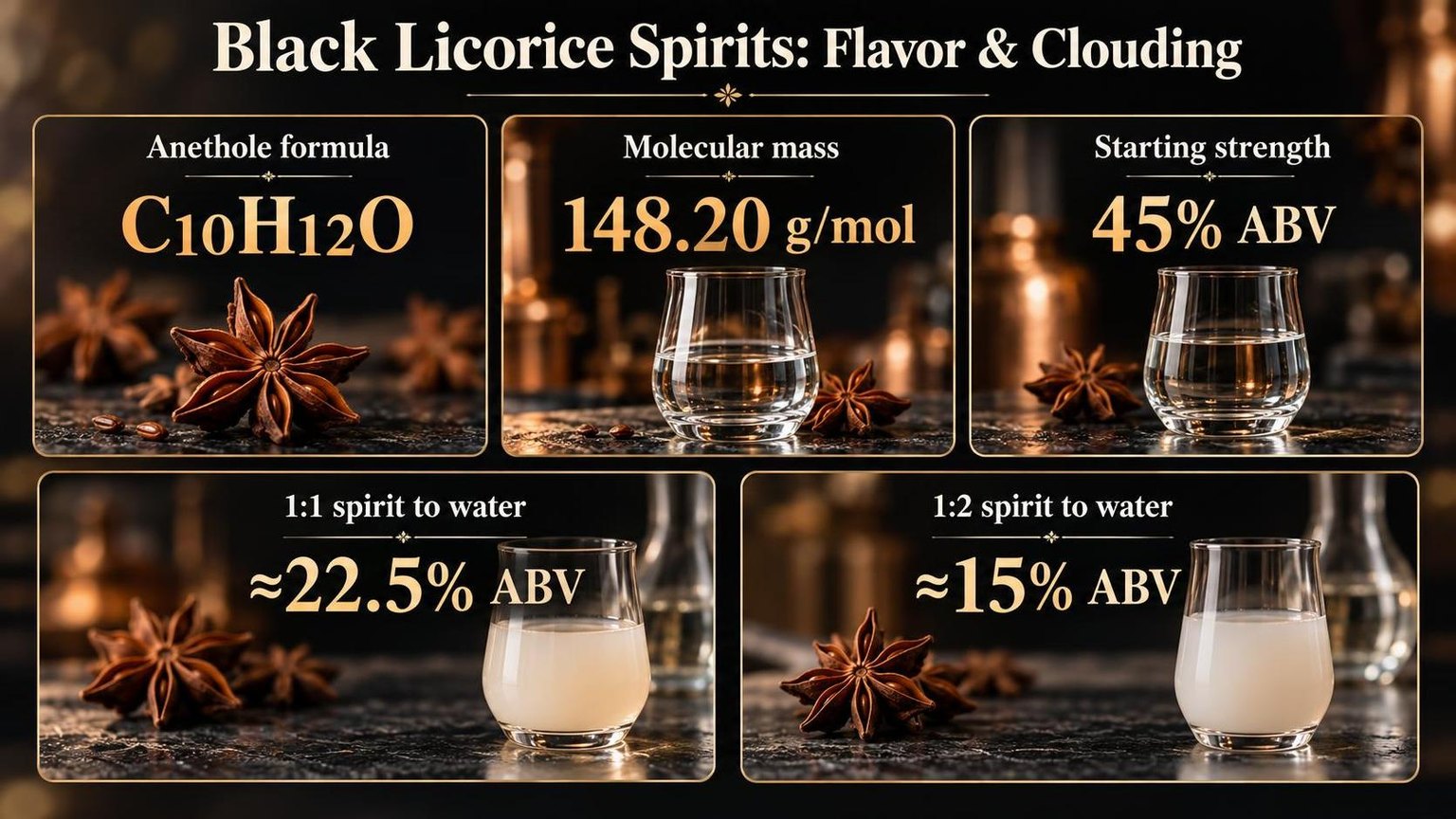
| Molecular formula | C10H12O |
| Molecular mass | 148.20 g/mol |
Source: PubChem, Anethole compound record, https://pubchem.ncbi.nlm.nih.gov/compound/Anethole.
Molecular mass describes the compound itself, not how much anethole a bottle contains; that concentration depends on the producer’s botanical recipe and processing.
Why Water Creates the Louche
In a sufficiently alcoholic mixture, anethole-rich oil remains dissolved. Adding water reduces the mixture’s ability to keep that oil in solution.
Tiny oil-rich droplets then form and scatter visible light, producing the cloudy appearance called the louche, or ouzo effect.
This is spontaneous emulsification, not a reaction that creates a new flavor molecule.
The classic experimental account is Vitale and Katz’s 2003 Langmuir paper, “Liquid Droplet Dispersions Formed by Homogeneous Liquid–Liquid Nucleation: The Ouzo Effect,” https://doi.org/10.1021/la026842o.
The following dilution examples illustrate the change in alcohol concentration. They assume a spirit starting at 45% alcohol by volume and approximately additive liquid volumes; actual ethanol–water mixing involves some volume contraction.
| Spirit-to-water ratio by volume | Approximate final ABV |
| 1:1 | 22.5% |
| 1:2 | 15% |
Neither value is a universal clouding threshold. Anethole concentration, other dissolved oils, sugar, temperature, and starting alcohol strength all affect when droplets appear.
A stronger louche does not, by itself, prove higher quality or greater botanical intensity.
What the Chemistry Means in the Glass
- Add water gradually to a clear anise spirit and watch for clouding. This makes the solubility change directly observable without requiring laboratory equipment.
- Keep temperature consistent when comparing pours. Cooling also changes solubility, so chilled water and room-temperature water can produce different appearances.
- Separate aroma from added sugar. Anethole contributes a sweet sensory character, but it is not sugar; sweetness also depends on the spirit’s formulation.
Actual licorice root introduces additional chemistry, notably glycyrrhizin, a sweet-tasting compound distinct from anethole.
Check botanical and ingredient information rather than treating “black licorice flavored” as a precise ingredient declaration.
Sambuca Ouzo and Absinthe Compared
Sambuca, ouzo, and absinthe share an anise-driven flavor that many drinkers describe as black licorice.
Their sweetness, botanical recipes, and serving traditions differ substantially, so choosing between them means deciding whether you want a dessert-like liqueur, a food-friendly aperitif, or a more herbal spirit.
| Spirit | Alcohol strength | Sweetness and defining character |
| Sambuca | EU minimum: 38% ABV. | EU minimum sugar: 350 g/L, expressed as invert sugar. Sweet, concentrated anise. |
| Ouzo | Minimum: 37.5% ABV. | Generally less sweet than sambuca, with anise and supporting botanicals. |
| Absinthe | Common commercial range: approximately 45–74% ABV, not a universal legal standard. | Traditionally unsweetened, with anise, fennel, and wormwood. |
Sambuca: The Sweetest Starting Point
Sambuca is the closest match when “black licorice flavored alcohol” means something sweet and candy-like. Its regulated sugar minimum gives it a dense, syrupy texture.
Green anise, star anise, or both provide the characteristic aroma; actual licorice root is not required.
Italian serving traditions include drinking it neat after dinner, adding it to espresso, or serving it with coffee beans. Clear sambuca is the standard reference point.
Products marketed as black sambuca can include additional flavorings, so color alone does not establish their ingredients.
Ouzo: Anise Built for the Table
Ouzo is a protected geographical indication associated with Greece and Cyprus, not a generic name for every anise spirit. Recipes can include fennel, mastic, and other botanicals alongside anise.
Compared with sambuca, its generally lighter sweetness makes it more comfortable beside savory food.
Serve it with cool water and meze such as olives, grilled seafood, or feta. Adding water commonly turns clear ouzo cloudy: dilution reduces the solubility of aromatic oils, producing tiny droplets that scatter light.
This is the “ouzo effect,” not evidence of spoilage.
Absinthe: More Herbal, Not Hallucinogenic
Traditional absinthe combines grand wormwood, green anise, and fennel. Wormwood adds herbal complexity and bitterness, but well-made absinthe should not taste exclusively bitter.
Both green and clear styles exist; a green color does not prove authenticity or quality.
Slowly add cold water to open its aroma and soften the alcohol. Sugar is optional, not a defining ingredient. Avoid flaming preparations: burning alcohol adds risk without improving the traditional service.
Absinthe’s historical reputation for hallucinations does not describe the effects of compliant modern products.
Which Should You Choose?
- Choose sambuca for pronounced sweetness, coffee pairings, and an after-dinner pour.
- Choose ouzo for a diluted aperitif alongside salty, savory dishes.
- Choose absinthe for layered herbal aromas and a water-dilution ritual.
Sources: Regulation (EU) 2019/787, Annex I, for sambuca standards; the EU eAmbrosia geographical-indication register for ouzo; Vitale and Katz, “Liquid Droplet Dispersions Formed by Homogeneous Liquid–Liquid Nucleation:
‘The Ouzo Effect,’” for dilution chemistry.
Glycyrrhizin Versus Anethole Flavor Divide
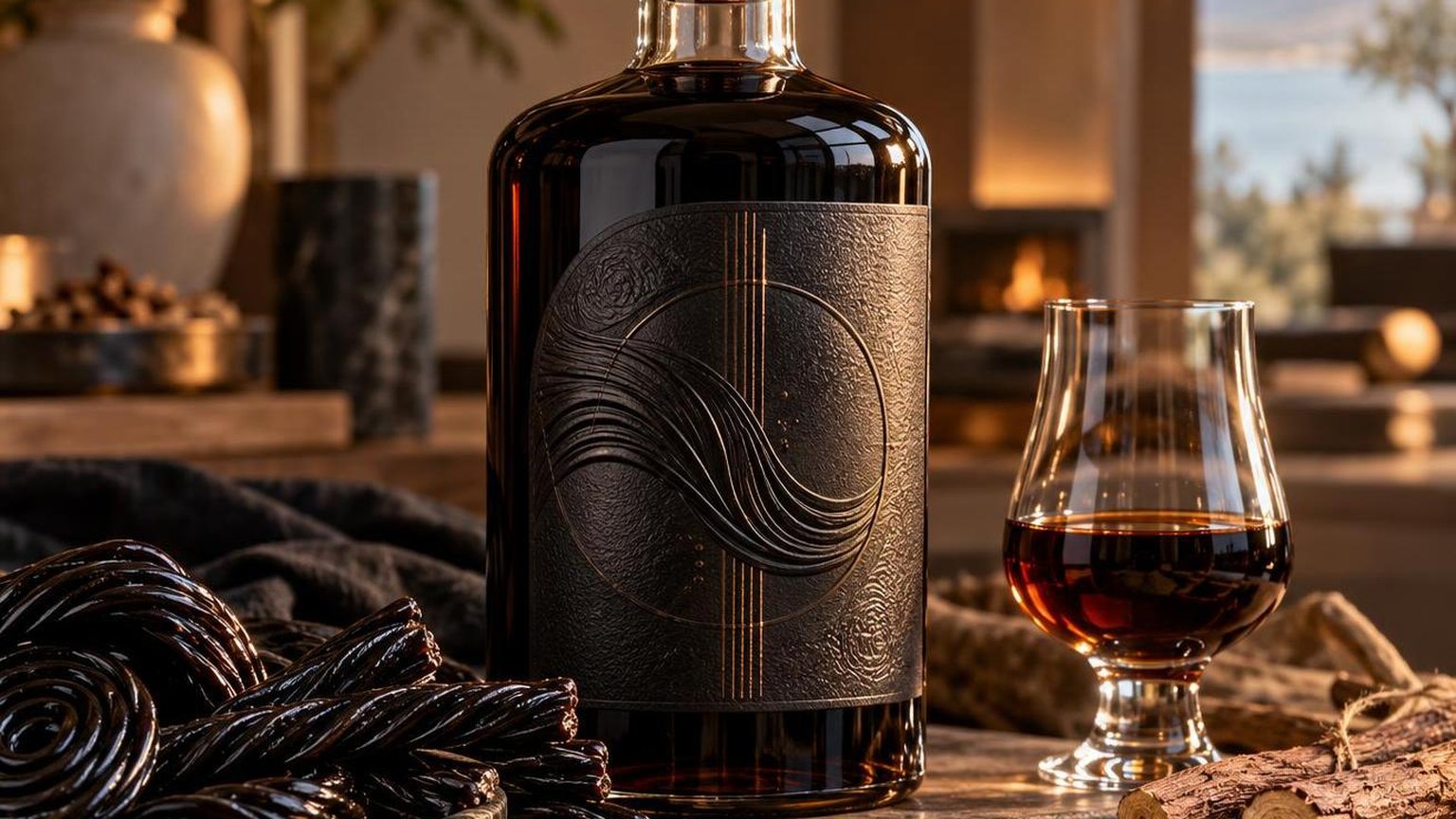
Black-licorice flavor does not prove that an alcoholic drink contains licorice root. Anethole supplies the familiar anise aroma, while glycyrrhizin contributes licorice root’s sweetness and carries a different health concern.
Similar Sensory Impressions, Different Chemistry
Anethole is an aromatic compound found in anise, star anise, and fennel. Glycyrrhizin, also called glycyrrhizic acid, is a sweet-tasting triterpenoid saponin found in licorice root.
These ingredients can overlap in a recipe, but they are not interchangeable chemical names.
Anethole chiefly explains why ouzo, sambuca, and other anise-forward drinks remind people of black licorice. Glycyrrhizin contributes persistent sweetness rather than supplying anethole’s characteristic aroma.
Neither the flavor description nor the drink’s color establishes whether actual licorice extract is present.
Pastis Makes the Distinction Measurable
European Union rules explicitly require pastis to contain natural licorice-root extracts.
The regulation specifies separate concentration ranges for anethole and glycyrrhizic acid, making pastis a useful example of a spirit in which both compounds matter.
| Compound | Required concentration in EU-defined pastis | Main sensory contribution |
| Anethole | 1.5–2 grams per liter | Characteristic anise aroma. |
| Glycyrrhizic acid | 0.05–0.5 grams per liter | Licorice-root sweetness. |
Source: Regulation (EU) 2019/787, Annex I, category 26. These are product-category requirements, not universal concentrations for every licorice-flavored alcoholic drink.
They also are not recommended intake levels or evidence that a particular serving is medically safe.
Production method matters, too. Anethole can carry into a spirit during distillation; glycyrrhizin is nonvolatile and does not ordinarily distill over.
However, producers can add licorice extracts afterward. “Distilled” therefore does not, by itself, establish that the finished bottle contains no glycyrrhizin.
Cloudiness after adding water is another distinction. Anethole-rich oils can leave solution as ethanol becomes diluted, producing the louche associated with anise spirits. That cloudiness is not a test for glycyrrhizin content.
Why the Difference Matters for Health
Glycyrrhizin can disrupt the body’s cortisol regulation, promoting sodium retention and potassium loss. Consequences can include elevated blood pressure, swelling, and abnormal heart rhythms.
The National Center for Complementary and Integrative Health identifies particular concerns for people with hypertension or heart or kidney conditions.
The FDA warns that adults aged 40 or older eating 2 ounces of black licorice daily for at least 2 weeks could develop an irregular heart rhythm.
That candy-based warning cannot be converted into a safe number of drinks without knowing their glycyrrhizin content.
- Check for “licorice root,” “liquorice,” or “licorice extract,” rather than relying on tasting notes.
- Ask the producer about glycyrrhizin when a medical condition or medication makes licorice relevant.
- Do not treat anethole-only flavoring as making alcohol harmless; alcohol has independent health risks.
Bottles to Buy Under Thirty Dollars
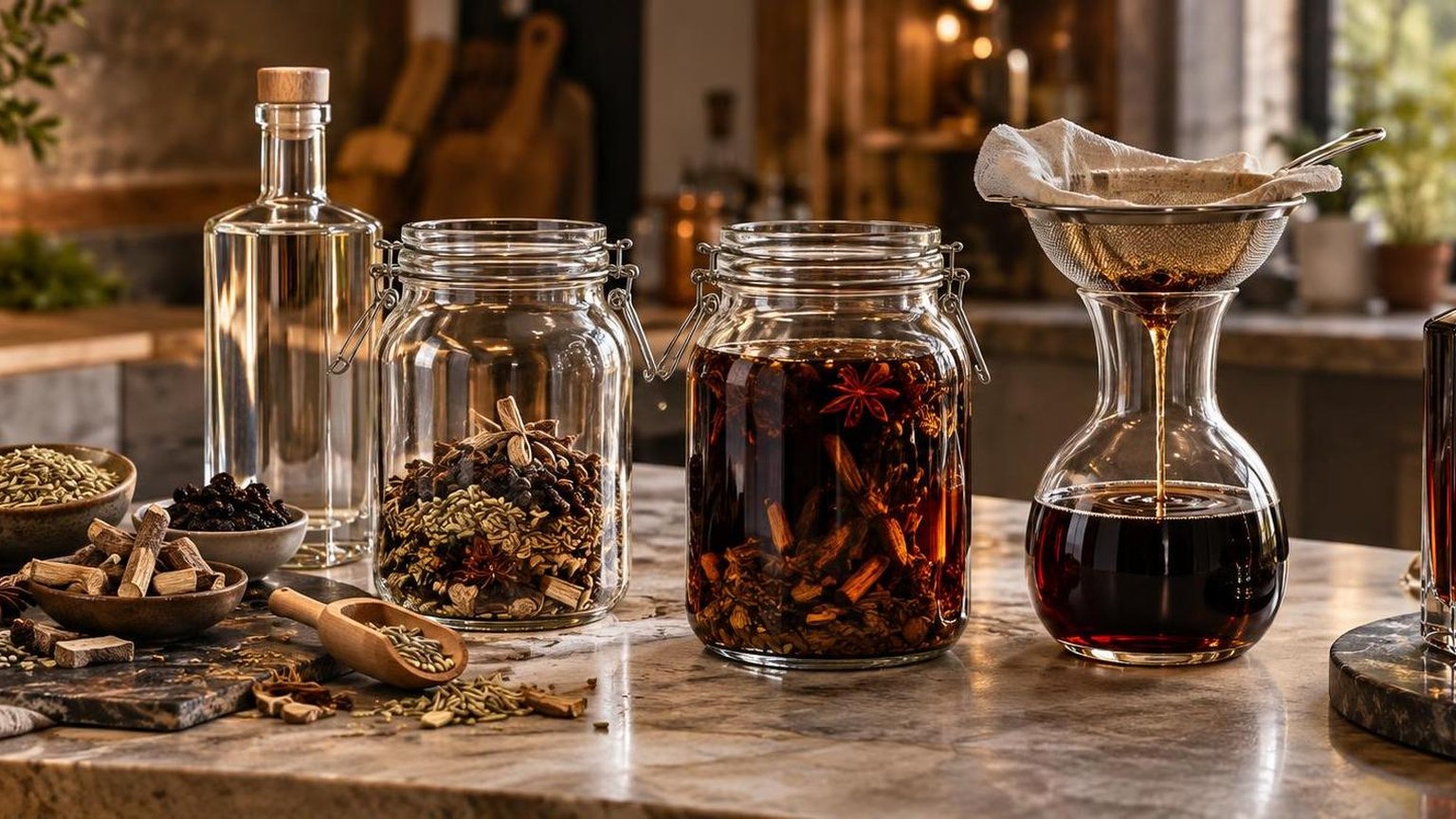
For black-licorice flavor below thirty dollars, start with sambuca or ouzo rather than absinthe.
Anise supplies the familiar candy-like aroma; sambuca adds pronounced sweetness, while ouzo generally tastes less syrupy and works better diluted with water.
Compare These Budget Bottles
These are approximate US shopping ranges, not verified live offers. Prices exclude tax and shipping; availability varies by state. The strengths below refer to US-market bottlings, so check the label when buying imported stock.
| Bottle | Size | ABV | Target shelf price | Best fit |
| Romana Sambuca | 750 mL | 42% | $22–$29 | Sweet, concentrated anise |
| Ouzo 12 | 750 mL | 40% | $19–$26 | Water-diluted aperitif |
| Metaxa Ouzo | 750 mL | 40% | $20–$28 | Anise with additional botanical character |
Romana Sambuca: Choose It for Candy-Like Sweetness
Romana is the clearest starting point if “black licorice” means a sweet, lingering flavor rather than a dry herbal drink. Buy the standard clear sambuca.
Its transparent appearance does not mean a weaker anise impression, and dark coloring is unnecessary for this flavor profile.
Serve it chilled in a small cordial glass, or add a little to coffee. Sambuca is a sweetened liqueur, not a neutral spirit; using it as a direct replacement for vodka will substantially change a cocktail’s sweetness and aroma.
Ouzo 12: Choose It for Mixing with Water
Ouzo 12 makes sense when you want anise without sambuca’s syrupy presentation. Add cool water gradually and taste as you go. Dilution softens the alcohol and turns the drink cloudy as anise-derived aromatic oils become less soluble.
That cloudiness is normal, not spoilage. Pair the diluted drink with olives, feta, or grilled seafood rather than treating it like a shot. Ouzo can contain sugar, so “less syrupy” should not be confused with sugar-free.
Metaxa Ouzo: Choose It for Botanical Variety
Metaxa Ouzo offers another Greek route into the category, with anise alongside other botanicals.
It is a separate product from Metaxa’s familiar amber spirits: check that the bottle explicitly says “Ouzo.” Buy it when its local price beats Ouzo 12, not because the brand name guarantees superiority.
Check the Label Before Paying
- Prioritize style. Pick sambuca for dessert-like sweetness and ouzo for a water-lengthened aperitif.
- Check the total. A shelf price below the cap can exceed it after local taxes or delivery fees.
- Distinguish anise from licorice root. Similar flavor does not establish identical ingredients. Consult the producer if avoiding licorice root for medical reasons.
Product references: Romana’s brand information through Sazerac, https://www.sazerac.com/; Ouzo 12, https://www.ouzo12.com/; and Metaxa, https://www.metaxa.com/.
These identify the products and styles; the shopping ranges above are estimates, not producer-set prices.
Pairing and Serving Temperature for Anise Liqueurs
Black-licorice-flavored alcohol pairs best when food balances its anise aroma, sweetness, and alcoholic strength.
Serve dry, diluted styles with salty appetizers, and reserve sweeter liqueurs for coffee or restrained desserts rather than treating every anise spirit as interchangeable.
Choose Temperature and Dilution by Style
The temperatures below are practical serving targets, not legal definitions or universal producer instructions. Measure the finished drink rather than the bottle: chilled water and ice change both temperature and concentration.
| Style | Finished serving temperature | Suggested starting serve |
| Pastis | 6–10°C / 43–50°F | 25 mL spirit with 125 mL cold water; Ricard’s recommended spirit-to-water ratio is 1:5. |
| Ouzo | 10–15°C / 50–59°F | 25 mL spirit with 25–50 mL cool water; adjust dilution to taste. |
| Sambuca | 12–16°C / 54–61°F | 25 mL neat, lightly chilled; serve water separately. |
| Absinthe | 8–12°C / 46–54°F | 20 mL spirit with 60–100 mL cold water; follow the bottle’s guidance. |
Ricard’s official serving guidance supports the pastis dilution above: https://www.ricard.com/. The other pours are starting suggestions, not fixed traditional formulas.
Absinthe belongs in this flavor discussion, but it is generally a spirit rather than a sweetened liqueur.
Add water before ice when preparing pastis. Water dilution produces the cloudy louche because anethole-rich oils become less soluble as alcohol concentration falls.
This cloudiness is expected; it does not indicate spoilage or prove that one bottle is better than another.
Match the Food to the Sweetness
- Pastis: Pair a well-diluted glass with olives, anchovy toast, or grilled sardines. Its herbal intensity stands up to briny flavors, while dilution keeps the alcohol from overwhelming the food. Avoid heavily sweetened sauces that make the aperitif seem harsh by contrast.
- Ouzo: Serve with grilled octopus, feta, cucumber, or lemon-dressed seafood. These meze-style combinations provide salt, acidity, and contrasting textures. Keep chili restrained: alcohol can intensify the burning sensation, especially when the drink contains little water.
- Sambuca: Choose espresso, dark chocolate, or plain almond biscotti. Its pronounced sweetness suits bitter and toasted flavors better than syrup-soaked desserts. Under EU rules, sambuca contains at least 350 grams of sweetening products per liter, expressed as invert sugar.
- Absinthe: Try a diluted, unsweetened preparation with savory fennel dishes or mild goat cheese. Taste before adding sugar; botanical bitterness and any existing sweetness vary by product. Strong blue cheese can overwhelm subtler herbal notes.
The sambuca sugar requirement appears in Regulation (EU) 2019/787, Annex I, category 36: https://eur-lex.europa.eu/eli/reg/2019/787/oj. It explains why sambuca needs a different pairing strategy from an unsweetened anise spirit.
For a shared meal, keep drinking water available and refresh small servings rather than repeatedly topping up glasses. Dilution lowers the drink’s concentration, not the total alcohol in the original pour.
Questions People Ask Most
Which alcoholic drinks taste like black licorice?
Ouzo, pastis, sambuca, arak, and absinthe commonly have a black-licorice-like flavor because they contain anise or related botanicals.
Sambuca typically delivers a sweeter profile, while absinthe adds wormwood and other herbs for a more complex, sometimes bitter finish.
Does black-licorice-flavored alcohol contain actual licorice?
Not necessarily: anise, star anise, and fennel contain anethole, an aromatic compound that produces a familiar licorice-like flavor without licorice root.
Pastis is an exception worth checking: EU Regulation 2019/787 requires it to contain natural licorice-root extracts alongside its anise flavor.
Why does anise-flavored alcohol turn cloudy when you add water?
Anethole dissolves readily in alcohol but poorly in water, so dilution causes tiny oil droplets to form and scatter light.
This effect, called the louche or ouzo effect, is normal in drinks such as ouzo, pastis, and absinthe; it does not indicate spoilage.
Is sambuca a sweet black-licorice-flavored liqueur?
Yes. Under EU Regulation 2019/787, sambuca must contain at least 350 grams of sweetening products per liter, expressed as invert sugar, and have a minimum alcohol content of 38% ABV.
Those requirements distinguish its concentrated sweetness from many other anise-flavored spirits.
How should you serve pastis if its licorice flavor tastes too strong?
Dilute it with cold water rather than drinking it as a straight spirit: Ricard recommends one part pastis to five parts water. Pour the pastis first, add water, then add ice; this softens both the alcohol intensity and the concentrated anise flavor.
Further Reading
- How Many 16.9 Ounces Bottles In A Gallon?
- What Is Straight Bourbon?
- How Many Ounces Is A Water Bottle?
- What Is the Legal Drinking Age in Mexico?
- What Is A Store Pick Bourbon?
- How Many Kg Is 40 Pounds?
- The Top 5 Most Famous Cigar Smokers
- How Many Ml In A Fluid Ounce?
- All Blog Guides
- U.S. Food and Drug Administration — Black Licorice: Trick or Treat? (2017)
- National Center for Complementary and Integrative Health — Licorice Root (n.d.)
- Therapeutic Advances in Endocrinology and Metabolism — Licorice Abuse: Time to Send a Warning Message (2012)
- European Union — Regulation (EU) 2019/787: Spirit Drink Definitions, Including Aniseed-Flavoured Spirits (2019)
- Encyclopaedia Britannica — Absinthe (n.d.)
- Encyclopaedia Britannica — Ouzo (n.d.)
- National Library of Medicine, PubChem — Anethole (n.d.)