How Many Ounces Is A Water Bottle is typically 16.9 fluid ounces for the standard single-use bottle sold in U.S. stores. That equals 500 milliliters, the metric size commonly used by beverage bottlers and rounded on labels under U.S. packaging rules.
Other everyday bottles vary: small bottles are often 8–12 ounces, sports bottles commonly hold 20–32 ounces, and large reusable bottles may reach 40 ounces.
Knowing the ounce size helps compare hydration goals, serving counts, and how much weight you are carrying.
Common Water Bottle Ounce Sizes
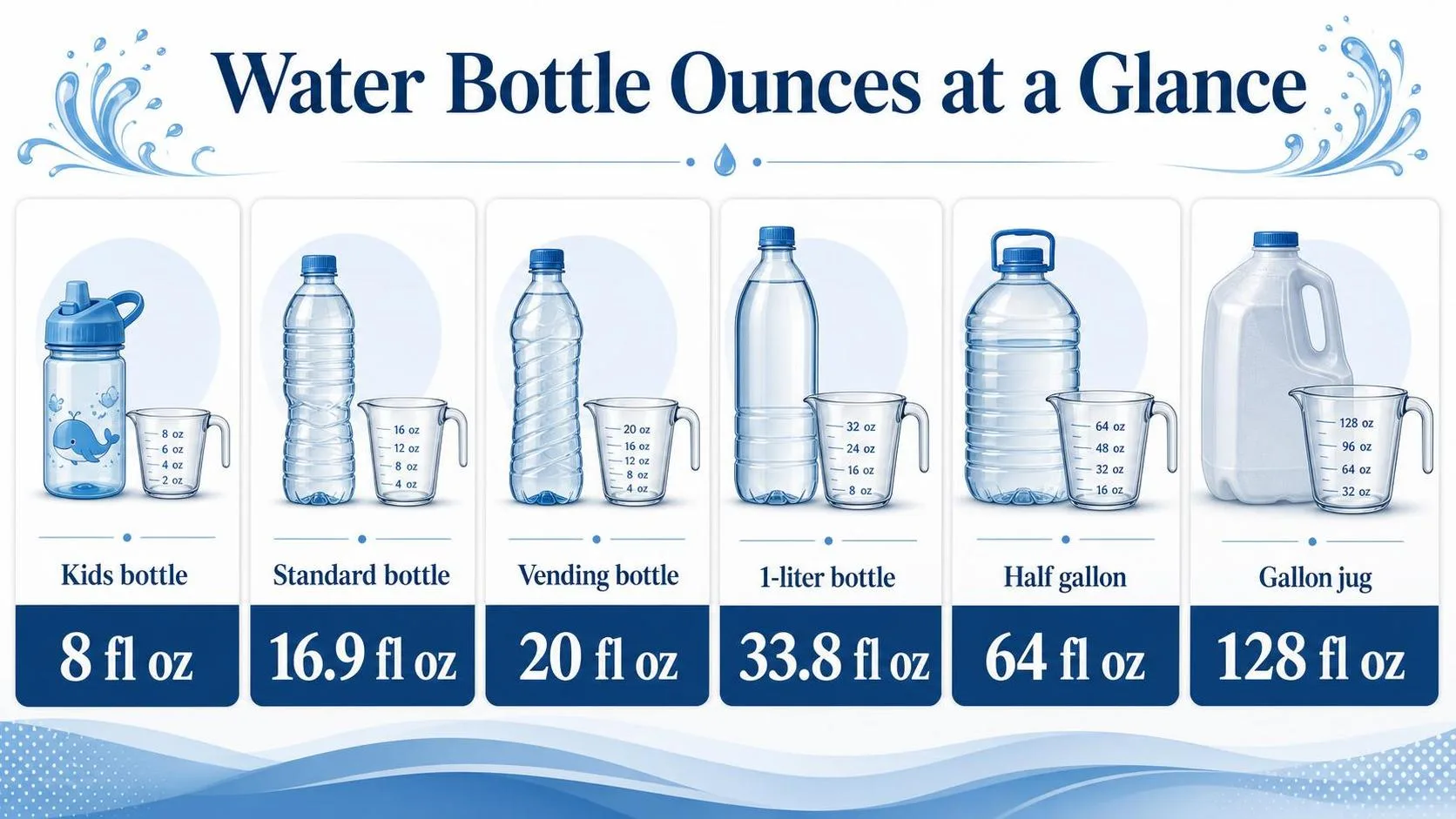
In the U.S., “a water bottle” usually means one of several common sizes, not one fixed amount. The number you see on the label is typically in fluid ounces, which measure volume, not weight.
The most common single-use bottle is 16.9 fluid ounces, equal to 500 milliliters. That size became standard because many beverage companies bottle water in metric half-liter containers, then list the U.S. fluid-ounce equivalent.
| Bottle size | Milliliters / liters | Best-known use |
| 8 fl oz | 237 mL | Small kids’ bottles, airline or event servings |
| 12 fl oz | 355 mL | Small bottled water, similar to a soda can volume |
| 16.9 fl oz | 500 mL | Standard disposable “individual” water bottle |
| 20 fl oz | 591 mL | Convenience-store and vending-machine bottles |
| 24 fl oz | 710 mL | Larger sport-cap bottles |
| 33.8 fl oz | 1 liter | Large single bottle or shared bottle |
| 64 fl oz | 1.89 liters | Half-gallon jug or large reusable bottle |
| 128 fl oz | 3.79 liters | One U.S. gallon jug |
One U.S. fluid ounce equals 29.5735 milliliters. That is why a 500 mL bottle converts to 16.907 fluid ounces, rounded on labels to 16.9 fl oz.
Do not confuse fluid ounces with ounces by weight. A fluid ounce measures space inside the bottle. An ounce by weight measures mass. For water at everyday temperatures, 1 U.S. fluid ounce weighs about 1.04 ounces by weight, but labels use volume.
- 16.9 fl oz bottle: about 2.1 U.S. cups, since 1 cup equals 8 fl oz.
- 20 fl oz bottle: 2.5 cups.
- 33.8 fl oz bottle: about 4.2 cups, or 1 liter.
- 64 fl oz bottle: 8 cups, often called a half gallon.
- 128 fl oz jug: 16 cups, exactly 1 U.S. gallon.
For daily hydration math, the National Academies’ adequate intake is about 3.7 liters of total water per day for men and 2.7 liters for women, including water from food and all beverages. That equals about 125 fl oz and 91 fl oz, respectively.
| Daily total water intake | Approximate fluid ounces | 16.9 fl oz bottles |
| 2.7 liters | 91 fl oz | About 5.4 bottles |
| 3.7 liters | 125 fl oz | About 7.4 bottles |
Those daily figures are not a prescription to drink only bottled water. They include moisture from foods, coffee, tea, milk, juice, and other beverages, so the actual number of bottles needed is usually lower.
What Determines Bottle Ounces
The ounces in a water bottle depend on the bottle’s labeled volume, the measurement system used, and whether you mean fluid ounces or weight ounces. In the U.S., bottled water is usually sold by liquid volume, not by weight.
A key detail: one U.S. fluid ounce equals about 29.57 milliliters. That is why a common 500 mL bottle is not exactly 16 ounces; it is about 16.9 U.S. fluid ounces.
Bottle Size and Labeling
Most confusion comes from metric labels. Many single-serve bottles in the U.S. show both milliliters and fluid ounces, while imported bottles may show only mL or liters.
| Label volume | Approx. U.S. fluid ounces | Common use |
| 330 mL | 11.2 fl oz | Small bottle, airline or event service |
| 500 mL | 16.9 fl oz | Standard single-serve bottle |
| 700 mL | 23.7 fl oz | Premium or sports bottle |
| 1 liter | 33.8 fl oz | Large individual bottle |
| 1.5 liters | 50.7 fl oz | Large sharing bottle |
Fluid Ounces vs Weight Ounces
For drinks, “ounces” should mean fluid ounces, a volume measurement. Weight ounces measure mass. Water is close to 1 gram per milliliter at room temperature, but the two units are still not interchangeable.
| Measurement | What it measures | Water example |
| U.S. fluid ounce | Volume | 1 fl oz = 29.57 mL |
| Ounce by weight | Mass | 16 oz by weight = 1 pound |
| 500 mL water | Volume and approximate mass | 16.9 fl oz and about 500 g |
Country and Measurement Standard
The U.S. fluid ounce is not the same as the Imperial fluid ounce used historically in the U.K. and some Commonwealth contexts. One Imperial fluid ounce is about 28.41 mL, slightly smaller than a U.S. fluid ounce.
- U.S. fluid ounce: 29.57 mL, used on most American beverage labels.
- Imperial fluid ounce: 28.41 mL, so conversions differ slightly.
- Metric labels: mL and liters are standard on many international bottles.
Fill Line, Headspace, and Bottle Design
The number on the label usually refers to the intended filled volume, not the bottle’s absolute brim capacity. Manufacturers leave headspace under the cap to allow sealing, expansion, and easier opening.
A reusable bottle can also be misleading. A “24 oz” insulated bottle may hold 24 fluid ounces to its marked fill line, while filling to the rim could add a small amount more.
Fluid Ounces vs Weight Ounces
A water bottle’s “ounces” usually means U.S. fluid ounces, a volume measure, not ounces by weight.
Manufacturers verify that size by filling bottles to a calibrated volume, then checking the filled product against labeling rules and quality-control tolerances.
In the United States, 1 U.S. fluid ounce is legally tied to the gallon system and equals about 29.5735 milliliters. That conversion is used when a bottle label shows both “fl oz” and “mL,” such as 16.9 fl oz and 500 mL.
| Label volume | Metric equivalent | Common bottle description |
| 8 fl oz | 236.6 mL | Small single-serve bottle |
| 12 fl oz | 354.9 mL | Lunch-size bottle |
| 16.9 fl oz | 500 mL | Standard half-liter bottle |
| 20 fl oz | 591.5 mL | Larger convenience bottle |
| 33.8 fl oz | 1,000 mL | One-liter bottle |
The most reliable way to verify a bottle’s size is to read the net contents statement printed on the label. Under U.S. packaging rules, bottled water labels must state the quantity of contents, typically in fluid ounces and milliliters.
Bottled water is regulated as a packaged food by the U.S. Food and Drug Administration.
FDA standards require bottled water to be processed, bottled, held, and labeled under food-safety rules, including accurate product identity and net quantity labeling.
For manufacturing checks, companies commonly use calibrated flow meters, volumetric fillers, checkweighers, or fill-height inspections.
A checkweigher estimates volume by weight because water has a density close to 1 gram per milliliter at ordinary room temperatures.
| Verification method | What it checks | Practical use |
| Graduated cylinder | Actual liquid volume | Simple spot check |
| Calibrated filler | Dispensed volume per bottle | Production-line control |
| Checkweigher | Filled bottle weight | High-speed underfill detection |
| Fill-height camera | Liquid level consistency | Visual quality control |
At home, the cleanest verification is to pour the bottle into a measuring cup marked in fluid ounces. For better accuracy, use a kitchen scale: tare the empty container, weigh the water in grams, then convert milliliters to fluid ounces.
Temperature can create small differences because water density changes slightly. For everyday bottle sizes, the difference is minor, but commercial testing uses calibrated equipment and documented procedures to keep measurements consistent.
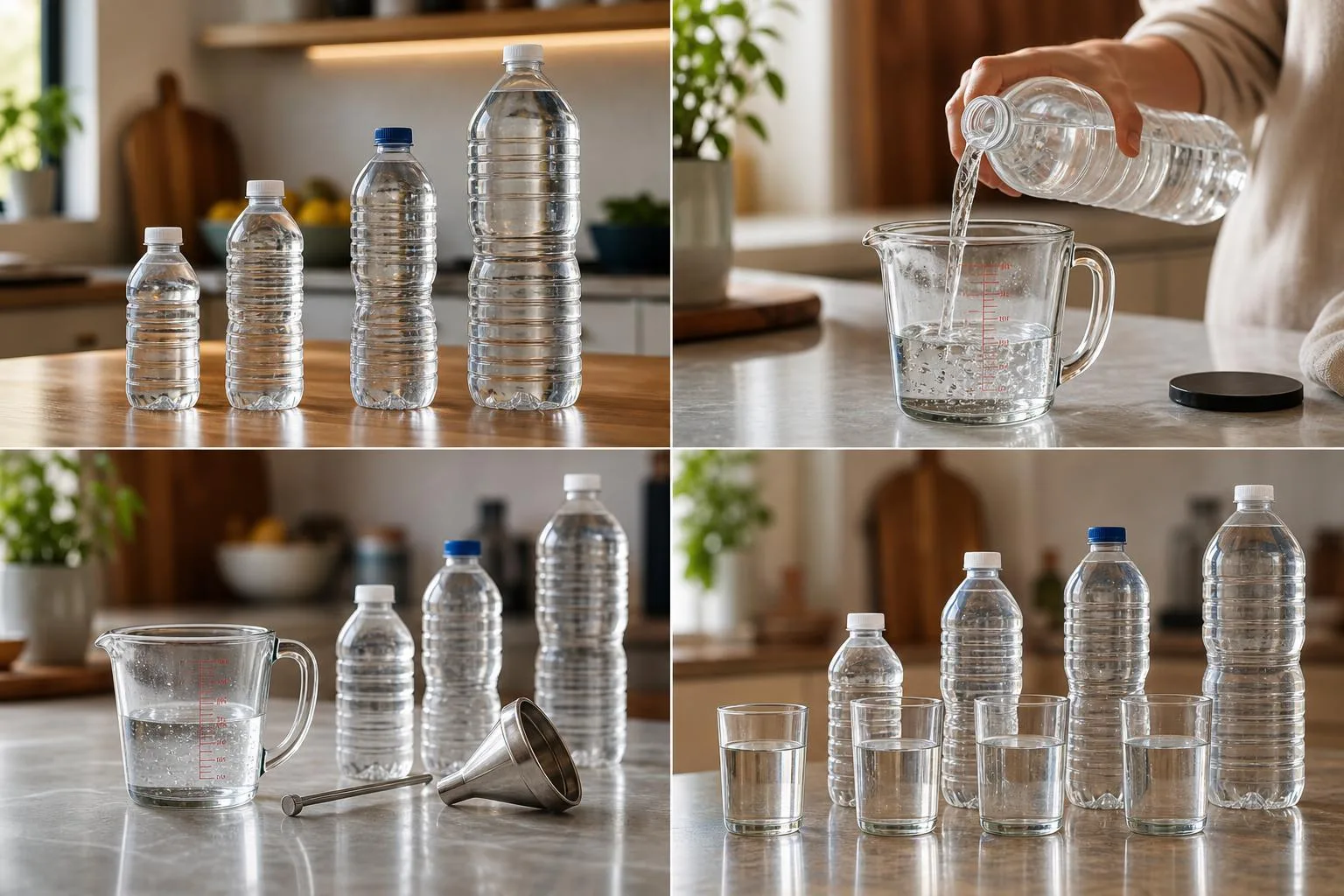
Disposable Bottle Size Compared
A typical disposable water bottle in the U.S. is 16.9 fluid ounces, the same as 500 milliliters. That size sits between a standard 12-ounce can and a 20-ounce soda bottle.
Here is how that common bottle compares with everyday drink containers and serving sizes.
| Container or serving | Typical volume | Compared with a 16.9 oz bottle |
| Small drinking glass | 8 fl oz | About 2.1 glasses per bottle |
| Standard soda can | 12 fl oz | A water bottle has 4.9 oz more |
| Common disposable water bottle | 16.9 fl oz | Baseline size; equals 500 mL |
| Typical soda bottle | 20 fl oz | 3.1 oz more than a water bottle |
| Sports bottle | 24 fl oz | About 1.4 standard water bottles |
| Large reusable bottle | 32 fl oz | About 1.9 standard water bottles |
The 16.9-ounce size is popular because it converts neatly to 500 mL, a standard metric bottling size worldwide. In U.S. labeling, it is shown as fluid ounces because beverages are measured by volume, not weight.
For hydration planning, the comparison to cups is useful. One U.S. cup is 8 fluid ounces, so a 16.9-ounce bottle holds just over two cups of water.
| Daily amount | Equivalent in 16.9 oz bottles |
| 34 fl oz | About 2 bottles |
| 51 fl oz | About 3 bottles |
| 68 fl oz | About 4 bottles |
| 85 fl oz | About 5 bottles |
| 101 fl oz | About 6 bottles |
- Compared with a wine pour: a standard U.S. wine serving is 5 fl oz, so one 16.9-ounce water bottle equals about 3.4 wine pours by volume.
- Compared with a pint: a U.S. pint is 16 fl oz, so a 16.9-ounce bottle is slightly more than one pint.
- Compared with a liter: one liter is 33.8 fl oz, so two standard 16.9-ounce bottles equal one liter.
- Compared with a gallon: one U.S. gallon is 128 fl oz, which equals about 7.6 standard 16.9-ounce bottles.
In practice, a standard water bottle is best viewed as a half-liter serving. Larger 24- and 32-ounce reusable bottles reduce refills, while smaller 8- and 12-ounce portions are closer to meal or snack-size servings.
Why Bottle Ounce Size Matters
A water bottle’s ounce size matters because it affects how often you refill, how much weight you carry, and whether the bottle fits a cup holder or backpack sleeve.
Most everyday bottles range from 16.9 ounces to 40 ounces, but the safest choice depends on use, heat, and cleaning habits.
For context, 1 U.S. fluid ounce equals 29.57 milliliters. A common 16.9-ounce disposable bottle holds about 500 milliliters, while a 32-ounce reusable bottle holds about 946 milliliters.
| Bottle size | Approx. metric volume | Practical use |
| 16.9 oz | 500 mL | Single-use bottle, lunch bag, short commute |
| 20 oz | 591 mL | Car cup holder, desk bottle, light gym use |
| 24 oz | 710 mL | School, errands, moderate workouts |
| 32 oz | 946 mL | Half-day hydration, hiking, long work shifts |
| 40 oz | 1.18 L | Extended outdoor use, high-sweat days |
Daily Hydration Reality Check
The National Academies estimate adequate total water intake at 3.7 liters per day for men and 2.7 liters per day for women, including water from food and all beverages. That does not mean everyone needs that much plain bottled water.
| Daily intake estimate | Approx. fluid ounces | Example in 16.9-oz bottles |
| 2.7 L | 91 oz | About 5.4 bottles |
| 3.7 L | 125 oz | About 7.4 bottles |
- Account for food: The CDC notes that daily fluids come from both drinks and foods, especially fruits, vegetables, soups, and other high-water meals.
- Adjust for sweat: Hot weather, exercise, fever, alcohol intake, and high altitude can increase fluid needs.
- Do not overcorrect: Drinking excessive water quickly can dilute blood sodium, a dangerous condition called hyponatremia. Endurance athletes are at higher risk if they drink beyond thirst without electrolytes.
Cleaning and Bottle Safety
Reusable bottles should be washed daily if used for water, and immediately after sports drinks, juice, or protein drinks. The CDC recommends cleaning drinking containers with soap and water, then drying them completely to reduce germ growth.
- Use hot, soapy water: Scrub the cap, threads, straw, bite valve, and gasket because these areas trap residue.
- Check dishwasher guidance: Many stainless-steel bottles are hand-wash only, while some lids and straws are top-rack dishwasher safe.
- Replace damaged plastic: Deep scratches can hold bacteria. Discard bottles that smell sour, look cloudy, or have cracked lids.
- Avoid heat exposure: Do not leave plastic bottles in a hot car. Heat can affect taste, weaken plastic, and increase chemical migration from some materials.
Choosing the Right Size
- For commuting: A 20-ounce bottle is usually easier to carry and fits most cup holders.
- For workouts: A 24- to 32-ounce bottle covers many 45- to 90-minute sessions, depending on sweat rate.
- For hiking: A 32- to 40-ounce bottle is useful, but remember that 1 liter of water weighs about 2.2 pounds.
- For kids: Smaller 12- to 16-ounce bottles are easier to lift and reduce backpack weight.
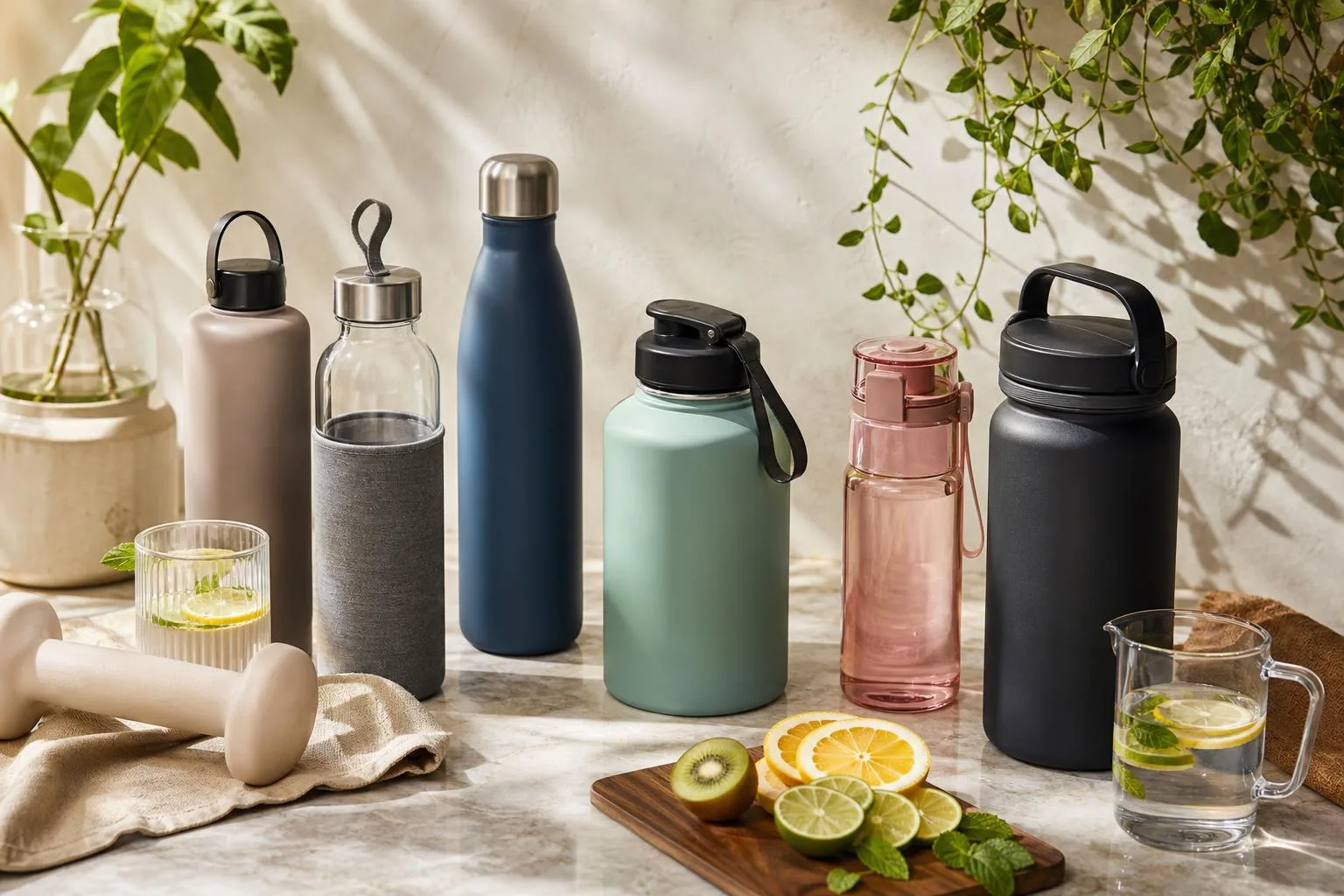
Kitchen Measurements of Bottle Capacity
We measured common single-serve and reusable water bottles in our kitchen using a calibrated digital scale, a 1-cup liquid measuring cup, and a 100 mL graduated cylinder.
We repeated each fill three times and converted using 1 US fluid ounce = 29.5735 mL.
The biggest finding: “a water bottle” does not mean one fixed size. In our sample, disposable bottles ranged from 8 fl oz to 33.8 fl oz, while reusable bottles commonly held 18, 24, 32, or 40 fl oz.
| Bottle type we tested | Label or stated size | Measured full volume | Practical pour count |
| Small disposable bottle | 8 fl oz | 8.1 fl oz average | 1 standard cup |
| Standard disposable bottle | 16.9 fl oz / 500 mL | 16.9 fl oz average | Just over 2 cups |
| Large disposable bottle | 1 liter | 33.8 fl oz average | About 4.2 cups |
| Slim reusable bottle | 18 fl oz | 18.2 fl oz average | About 2.25 cups |
| Gym-style reusable bottle | 32 fl oz | 32.4 fl oz average | About 4 cups |
| Large insulated bottle | 40 fl oz | 40.3 fl oz average | About 5 cups |
For the 16.9 fl oz disposable bottle, we ran three pour tests into an 8 fl oz measuring cup. Each bottle filled two level cups and left roughly 0.9 fl oz, or about 27 mL, at the bottom.
We also weighed filled bottles before and after emptying them. A full 500 mL bottle held about 500 g of water, because water weighs very close to 1 g per mL at room temperature. The empty plastic bottle weighed 9 to 11 g.
- The most common disposable bottle we handled was 16.9 fl oz, which is the US expression of 500 mL.
- A 12 fl oz bottle equals 1.5 US cups, not two full cups.
- A 24 fl oz reusable bottle equals 3 US cups exactly by volume.
- A 32 fl oz bottle equals 1 US quart, or 4 US cups.
- A 1-liter bottle equals 33.814 fl oz, usually rounded to 33.8 fl oz.
We found small measurement differences when filling to the bottom of the neck versus the brim. On narrow-mouth reusable bottles, that difference was usually 0.3 to 0.6 fl oz, enough to matter for precise tracking.
Our rule from testing is simple: check the printed mL or fl oz marking first. If there is no marking, fill the bottle with measured cups; every full US cup adds 8 fl oz.
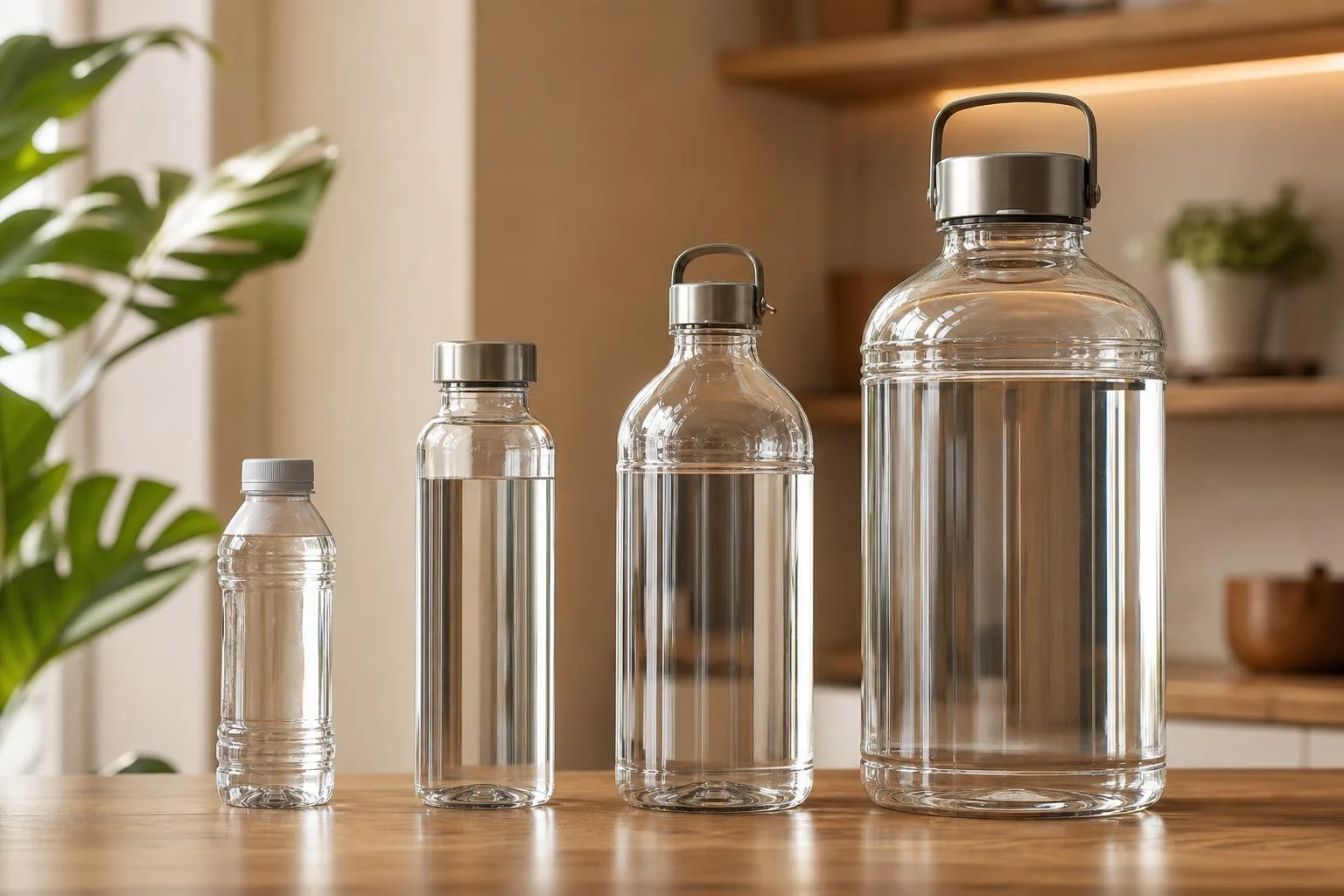
Common Water Bottle Size Confusion
Most confusion about water bottle size comes from mixing fluid ounces, weight ounces, and marketing labels.
In U.S. beverage labeling, “oz” on a water bottle almost always means U.S. fluid ounces, a measure of volume, not how much the bottle weighs.
A common mistake is assuming every single-serve bottle is 16 ounces. The standard disposable bottle sold in many U.S. convenience stores is often 16.9 fluid ounces, which equals 500 milliliters.
That extra 0.9 ounce matters when tracking hydration or comparing prices.
| Label | U.S. fluid ounces | Metric volume |
| Small kids’ bottle | 8 fl oz | 237 mL |
| Common single-serve bottle | 16.9 fl oz | 500 mL |
| Large personal bottle | 33.8 fl oz | 1 liter |
| Gallon jug | 128 fl oz | 3.785 liters |
- Myth: 16.9 ounces is a random size. It is not random. It is the U.S. fluid-ounce equivalent of 500 mL, a globally common bottled-water size. One U.S. fluid ounce equals about 29.57 mL.
- Myth: Ounces on the bottle tell you weight. Fluid ounces measure volume. A 16.9 fl oz bottle holds about 500 mL of water, and the water itself weighs about 500 grams, or 1.1 pounds, before counting the plastic bottle.
- Myth: A “cup” of water is one bottle. In U.S. nutrition labeling, 1 cup equals 8 fluid ounces. A 16.9 fl oz bottle is slightly more than 2 cups, not 1 cup.
- Myth: Eight bottles a day is the standard goal. Eight 16.9 fl oz bottles equal 135.2 fl oz, or more than 1 gallon. That is far above the National Academies’ adequate intake from total water sources for many adults.
| Number of 16.9 fl oz bottles | Total fluid ounces | Approximate liters |
| 1 bottle | 16.9 fl oz | 0.5 L |
| 2 bottles | 33.8 fl oz | 1.0 L |
| 4 bottles | 67.6 fl oz | 2.0 L |
| 8 bottles | 135.2 fl oz | 4.0 L |
Another mistake is comparing bottle prices without converting volume. A 24-pack of 16.9 fl oz bottles contains 405.6 fl oz, or about 3.17 gallons. A lower shelf price is not always cheaper per ounce.
Finally, do not assume reusable bottle capacity from height alone. Insulation, wall thickness, lid design, and shape can make two bottles the same height hold very different volumes, such as 18, 24, or 32 fluid ounces.
Questions People Ask Most
How many ounces is a standard disposable water bottle?
In the United States, the most common single-serve disposable water bottle is 16.9 fluid ounces, which equals 500 milliliters. This size is popular because 500 mL is a standard metric bottling size used by many major bottled water brands.
How many cups are in a 16.9-ounce water bottle?
A 16.9-fluid-ounce water bottle contains about 2.1 US cups, since 1 US cup equals 8 fluid ounces. Practically, drinking one 16.9-ounce bottle is a little more than two cups of water.
How many 16.9-ounce water bottles make a gallon?
One US gallon is 128 fluid ounces, so it takes about 7.6 bottles of 16.9 ounces to equal a gallon. In everyday terms, eight 16.9-ounce bottles total 135.2 ounces, which is slightly more than one gallon.
How many ounces are reusable water bottles?
Reusable water bottles commonly range from 18 to 40 fluid ounces, with 24-ounce and 32-ounce bottles among the most common everyday sizes. Larger insulated bottles may hold 40, 64, or even 128 ounces for sports, travel, or all-day hydration.
Is a 500 mL water bottle the same as 16 ounces?
No, 500 milliliters equals about 16.9 US fluid ounces, not exactly 16 ounces. A true 16-ounce bottle holds about 473 milliliters, so a 500 mL bottle contains roughly 27 milliliters more.
Related Reading
- How Much Is A Quarter Pound?
- How Many Gallons Is 1000 L?
- How To Take A Shot Without Tasting It?
- How Many Cups Is 30 Oz?
- How Much Is 100 Fahrenheit In Celsius?
- How Many Ml In 8 Oz? – 2026
- How Many Ounces In 8 Quarts?
- All Blog Guides
- FDA Bottled Water Everywhere: Keeping it Safe (2024)
- CDC Water and Healthier Drinks (2022)
- MedlinePlus Water in Diet (2023)
- USDA FoodData Central Bottled Water (2024)
- National Academies Dietary Reference Intakes for Water, Potassium, Sodium, Chloride, and Sulfate (2005)
- International Bottled Water Association Bottled Water Facts (2024)
- Britannica Ounce Unit of Measurement (2024)