How To Take A Shot Without Tasting It is a technique built on chilling the liquor, limiting tongue contact, exhaling before swallowing, and using a quick neutral chaser immediately after.
This guide explains practical, bar-tested steps that reduce flavor intensity without encouraging unsafe drinking.
Expect simple prep choices—cold spirits, a narrow glass, a small sip of water first—and timing cues that help move the shot past the most taste-sensitive parts of the mouth.
It also covers what not to do: don’t hold liquor in your mouth, don’t inhale over the glass, and don’t stack shots quickly. The goal is less burn and bitterness, not drinking more than you intended.
Factors That Change Shot Taste
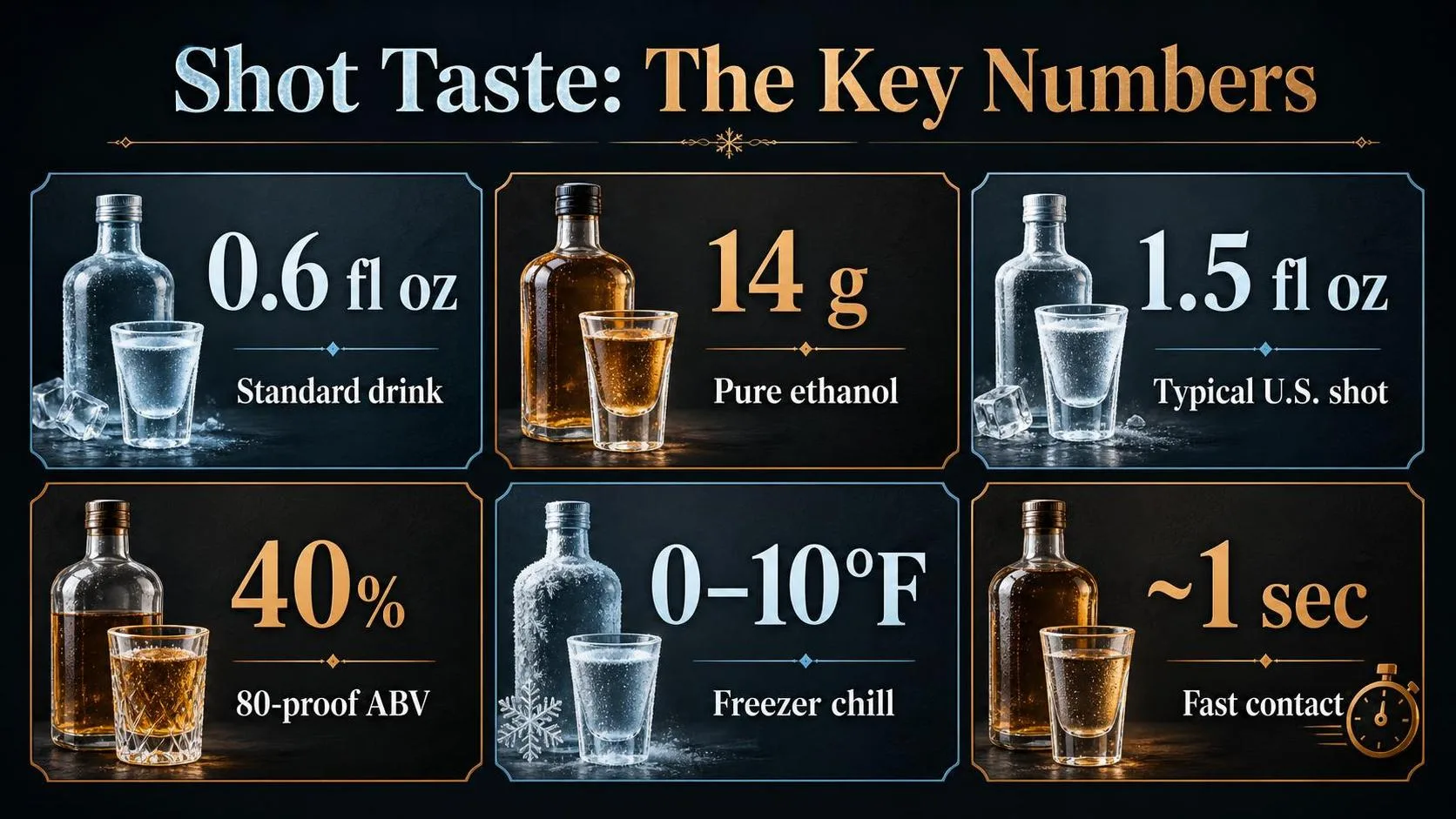
“Not tasting” a shot mostly comes down to volume, temperature, alcohol strength, and how long the liquid contacts your tongue. The numbers matter because a standard shot can contain the same alcohol as a full beer or glass of wine.
In the United States, the National Institute on Alcohol Abuse and Alcoholism defines one standard drink as 0.6 fluid ounces of pure alcohol. That is 14 grams of ethanol, regardless of whether it comes from spirits, wine, or beer.
| Drink | Typical serving | Alcohol by volume | Pure alcohol |
| 80-proof liquor | 1.5 fl oz | 40% | 0.6 fl oz |
| Table wine | 5 fl oz | 12% | 0.6 fl oz |
| Regular beer | 12 fl oz | 5% | 0.6 fl oz |
A “shot” is not universal. In many U.S. bars, a shot is 1.5 fluid ounces, but pour sizes can run from 1 to 2 ounces depending on the state, venue, or glassware.
| Shot size | 80-proof alcohol consumed | Standard drinks |
| 1.0 fl oz | 0.4 fl oz pure alcohol | 0.67 |
| 1.5 fl oz | 0.6 fl oz pure alcohol | 1.0 |
| 2.0 fl oz | 0.8 fl oz pure alcohol | 1.33 |
Temperature changes perception. Chilling spirits to freezer temperature, around 0°F, dulls aroma release and softens the burn because fewer volatile compounds reach the nose. It does not reduce alcohol content or intoxication risk.
Contact time is another key number. A fast swallow may keep the liquid on the tongue for about 1 second, while sipping can expose taste receptors and retronasal aroma pathways for several seconds longer.
- Use a 1-ounce pour if the goal is less intensity; it is one-third less liquid than a 1.5-ounce bar shot.
- Chill the spirit, glass, or both; colder liquid usually smells and tastes less aggressive.
- Exhale before, swallow, then inhale through the mouth; this limits alcohol vapor hitting the nose during the swallow.
- Avoid holding it in your mouth; longer contact increases bitterness, burn, and aroma perception.
For safety, the CDC defines moderate drinking as up to 1 drink per day for women and up to 2 for men. Taking shots quickly can exceed those limits before impairment feels obvious.
How to Reduce Shot Flavor
“Not tasting” a shot is mostly about reducing aroma, burn, and contact time with the tongue. Ethanol is volatile, water-soluble, and irritating above modest concentrations, so the drink itself and your technique both matter.
The biggest factors are alcohol strength, temperature, aroma intensity, and whether the liquid spreads across the tongue or goes straight back. These variables change how much your nose and trigeminal nerve register before you swallow.
Alcohol Strength and Serving Size
Higher ABV means more ethanol vapor and more burn. In the U.S., a standard drink contains 0.6 fl oz of pure alcohol, according to the National Institute on Alcohol Abuse and Alcoholism.
| Pour | Typical ABV | Pure alcohol | Approx. standard drinks |
| 1.5 fl oz vodka, rum, tequila, whiskey | 40% | 0.6 fl oz | 1.0 |
| 1.0 fl oz 100-proof spirit | 50% | 0.5 fl oz | 0.8 |
| 1.5 fl oz overproof rum | 60% | 0.9 fl oz | 1.5 |
Temperature
Chilling reduces perceived aroma because fewer volatile compounds reach the nose. A freezer-chilled spirit around 0°F to 10°F feels thicker and smells less intense than the same spirit at room temperature.
| Condition | Typical temperature | Effect on taste perception |
| Freezer-chilled spirit | 0°F to 10°F | Less aroma, slightly softer burn |
| Refrigerated spirit | 35°F to 40°F | Moderate aroma reduction |
| Room-temperature spirit | 68°F to 72°F | More ethanol vapor and flavor |
Aroma and the Nose
Much of what people call “taste” is retronasal smell. Whiskey, mezcal, aged rum, and gin usually read stronger because congeners, smoke compounds, botanicals, and barrel compounds rise into the nose.
Neutral vodka at 40% ABV generally has fewer flavor-active congeners than barrel-aged whiskey or smoky mezcal. That does not make it safer, but it can make the flavor less noticeable.
Carbonation, Sugar, and Chasers
Carbonation can intensify aroma release and nasal sensation. A still, cold chaser usually masks a shot more smoothly than sparkling soda, which can push volatile compounds upward and make burping more likely.
- Cold juice: masks bitterness, heat, and lingering alcohol better than water.
- Citrus: bright acidity distracts from ethanol burn but does not lower ABV.
- Milk or cream: coats the mouth, but can feel heavy with strong spirits.
- Carbonated soda: adds sweetness but may amplify aroma and reflux.
Technique and Mouth Contact
The longer the liquid sits on the tongue, the more you taste it. A clean swallow, followed immediately by a chaser, reduces contact with taste receptors and shortens the burn.
Breathing matters too. Exhaling gently before the shot and avoiding a sharp inhale over the glass can reduce ethanol fumes reaching the nose. Inhaling immediately after swallowing often makes the burn feel stronger.
Food, Hydration, and Tolerance
Food does not stop alcohol absorption, but it slows gastric emptying. Drinking on an empty stomach can raise blood alcohol concentration faster and make the same shot feel harsher.
Never use “not tasting it” as a way to drink faster. One 1.5 fl oz shot of 40% liquor is already one standard drink, and the liver typically metabolizes alcohol at about one standard drink per hour.
What Defines a Standard Shot
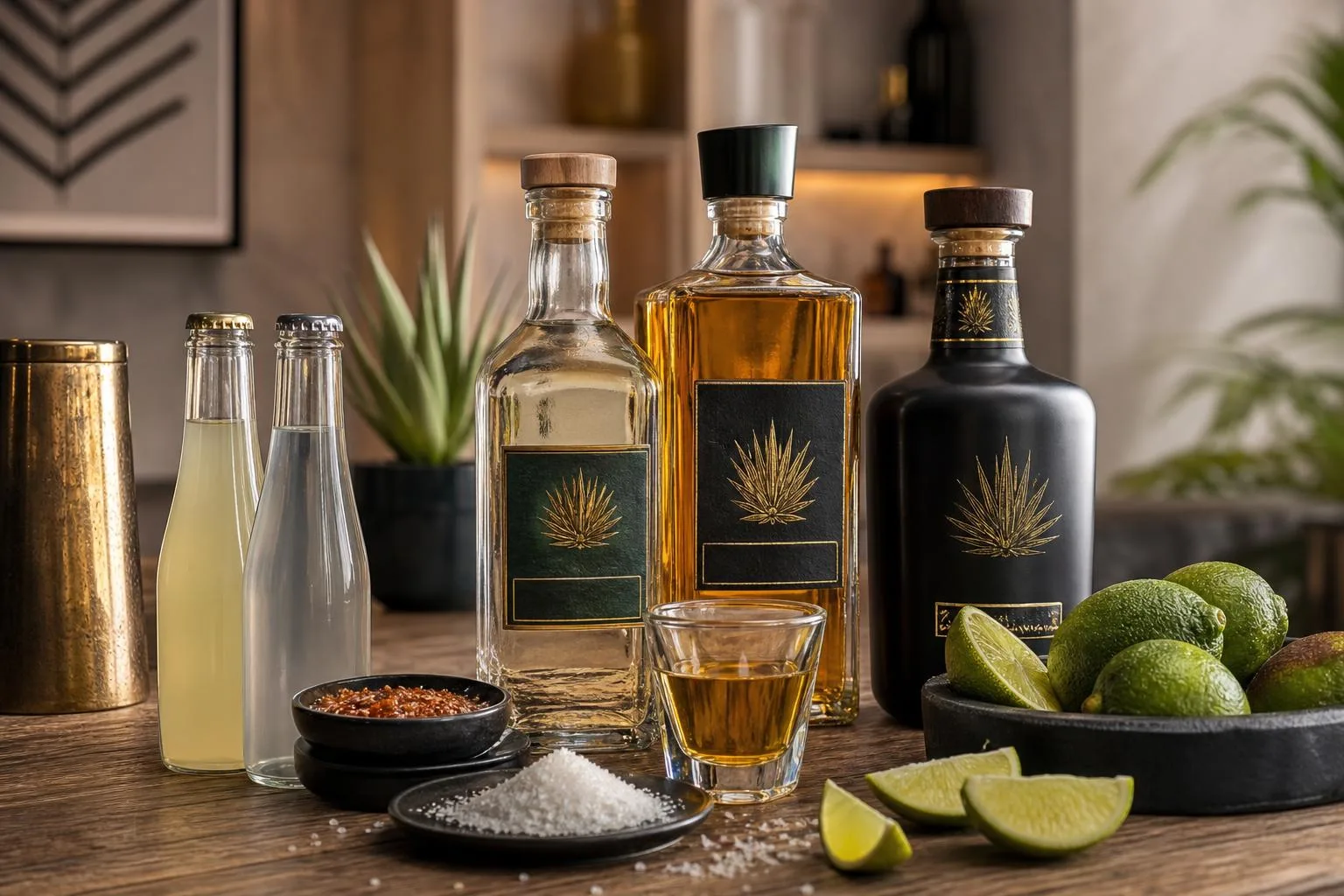
A “shot” is verified by volume and alcohol strength, not by how fast it is swallowed. In the U.S., the practical benchmark is 1.5 fluid ounces of 40% ABV spirits, which contains about 0.6 fluid ounces of pure alcohol.
That 0.6-fluid-ounce alcohol figure is the National Institute on Alcohol Abuse and Alcoholism definition of one standard drink. It is the most useful way to check whether a pour is truly “one shot.”.
Standard shot measurements
| Measure | Amount | What it verifies |
| U.S. standard drink | 0.6 fl oz pure alcohol | Alcohol dose, per NIAAA |
| Typical U.S. shot | 1.5 fl oz | Common bar pour size |
| Typical spirit strength | 40% ABV, or 80 proof | Label-confirmed alcohol concentration |
| Metric equivalent | 44.36 mL for 1.5 fl oz | Volume conversion |
To verify the alcohol amount, multiply the pour volume by ABV as a decimal. For example, 1.5 fl oz × 0.40 = 0.6 fl oz of pure alcohol.
How to confirm the pour
- Use a measured jigger: A 1.5 fl oz jigger is the most reliable home method. Fill to the rim, not above the meniscus.
- Read the bottle label: ABV is federally required on distilled spirits labels in the U.S. Proof is double the ABV, so 80 proof equals 40% ABV.
- Check glass capacity: Many “shot glasses” hold more than 1.5 fl oz. Some souvenir glasses hold 2 fl oz or more.
- Avoid free-pour estimates: A 4-count pour can vary by pour spout, bottle angle, and bartender speed.
Why taste can still break through
Not tasting a shot is subjective, but the liquid’s contact time, temperature, aroma, and ethanol concentration can be evaluated.
Ethanol has strong retronasal aroma, meaning vapor can be sensed after swallowing even if the tongue contact is brief.
| Variable | Typical effect | Verification method |
| Temperature | Colder spirits release fewer aromas | Chill bottle or measure with a thermometer |
| ABV | Higher ABV creates more burn | Confirm label percentage |
| Contact time | Longer mouth contact increases flavor perception | Observe swallowing technique |
| Volume | Larger pours increase exposure | Measure with jigger or graduated cup |
For safety verification, count standard drinks, not shots. A 2 fl oz pour of 50% ABV whiskey contains 1.0 fl oz pure alcohol, or about 1.7 standard drinks, even if it looks like a single oversized shot.
Reducing Taste Does Not Reduce Alcohol
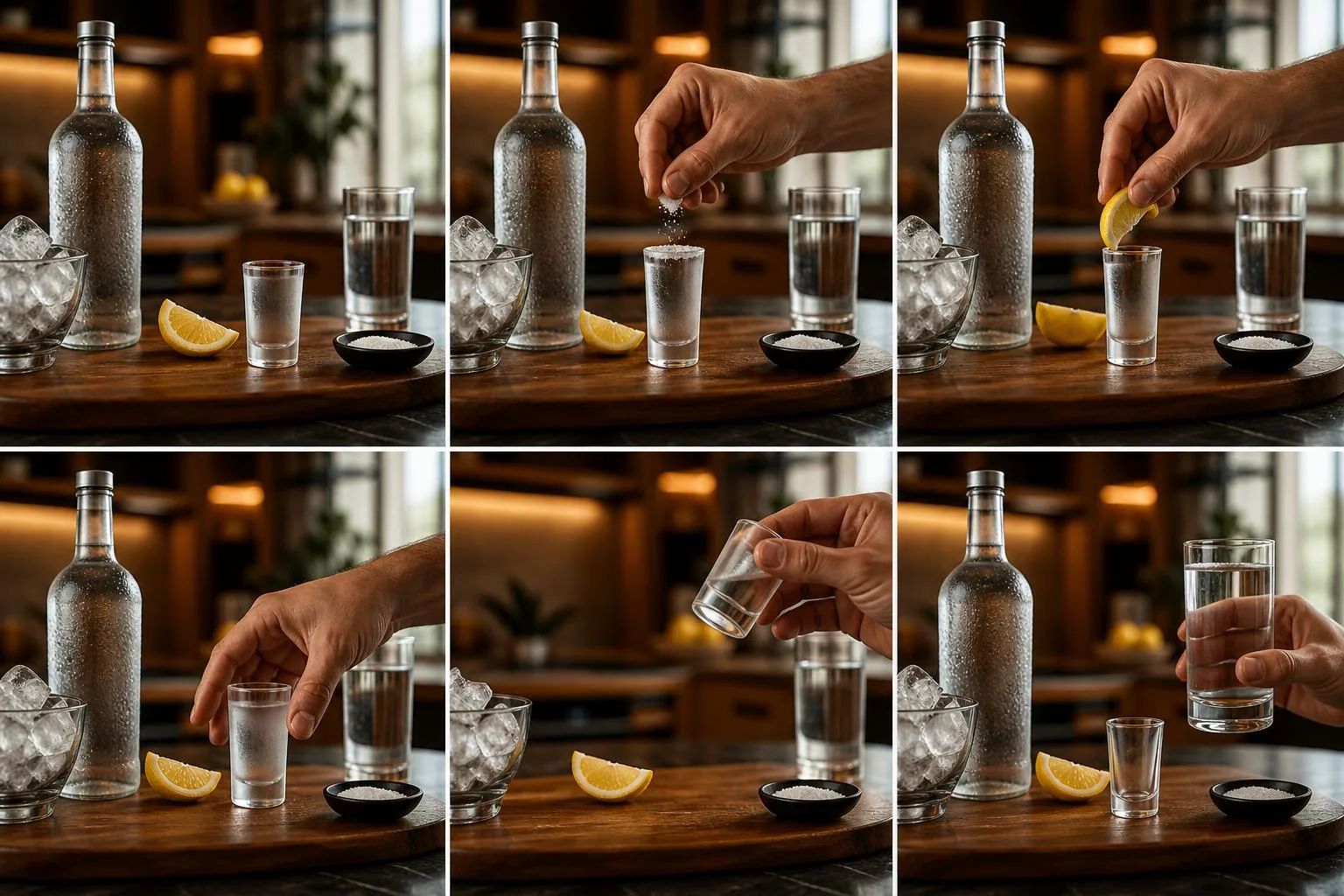
Trying not to taste a shot mainly changes flavor exposure; it does not make the alcohol weaker. In the United States, one 1.5-ounce shot of 40% ABV liquor contains about 0.6 fluid ounces of pure alcohol, the same as one standard drink.
Common alternatives work differently: some dilute the alcohol, some mask bitterness, and some slow intake. The safest choice is the one that reduces speed and total alcohol consumed, not just the burn.
| Method | Typical alcohol amount | How much you taste it | Main tradeoff |
| Straight shot, swallowed quickly | 1.5 oz at 40% ABV = 1 standard drink | Brief but intense; ethanol burn is concentrated | Easy to drink too fast |
| Chilled shot | Usually unchanged: 1.5 oz at 40% ABV | Less aroma and burn because cold suppresses volatility | Can feel smoother while still being equally strong |
| Shot with chaser | Shot remains 1 standard drink; chaser may add none | Aftertaste is reduced, especially with citrus or soda | Sugar or carbonation may encourage faster drinking |
| Mixed drink | Often 1.5 oz liquor, but diluted to 6-12 oz total volume | Alcohol is masked by juice, soda, or bitters | Can hide strength; recipes vary widely |
| Beer or hard seltzer | 12 oz at 5% ABV = 1 standard drink | Milder alcohol flavor, more volume | Takes longer to finish but can still add up |
| Wine | 5 oz at 12% ABV = 1 standard drink | Noticeable acidity, fruit, tannin, and alcohol warmth | Usually sipped, but pours are often oversized |
Chilling Versus Masking
Chilling is one of the most effective taste-reduction methods because it lowers aroma release. Ethanol’s boiling point is 173.1°F, so warmer spirits throw more vapor into the nose, where much “taste” is actually perceived.
A chaser works after the fact. It can clear the palate quickly, but the alcohol has already contacted your tongue, throat, and nasal passages.
Citrus, ginger beer, and cola are common because acidity, sweetness, and spice compete with ethanol harshness.
Mixed Drinks Versus Shots
A mixed drink usually tastes easier because dilution spreads the same alcohol over more liquid. A 1.5-ounce pour of 80-proof vodka in 6 ounces of soda still equals one standard drink, but the flavor intensity is far lower.
The risk is measurement. A bar “double” may contain 3 ounces of 40% liquor, or two standard drinks, before mixers are added. At home, free-pouring often exceeds the standard 1.5-ounce serving.
Slower Alternatives
Beer, wine, spritzes, and low-ABV cocktails reduce the need to “get it down.” They give your body more time to metabolize alcohol, which the liver generally processes at about one standard drink per hour for many adults.
- Best for less taste: chilled spirit plus a nonalcoholic chaser.
- Best for pacing: beer, wine, or a low-ABV mixed drink.
- Best for control: measured pours and alternating with water.
Safe Ways to Take a Shot
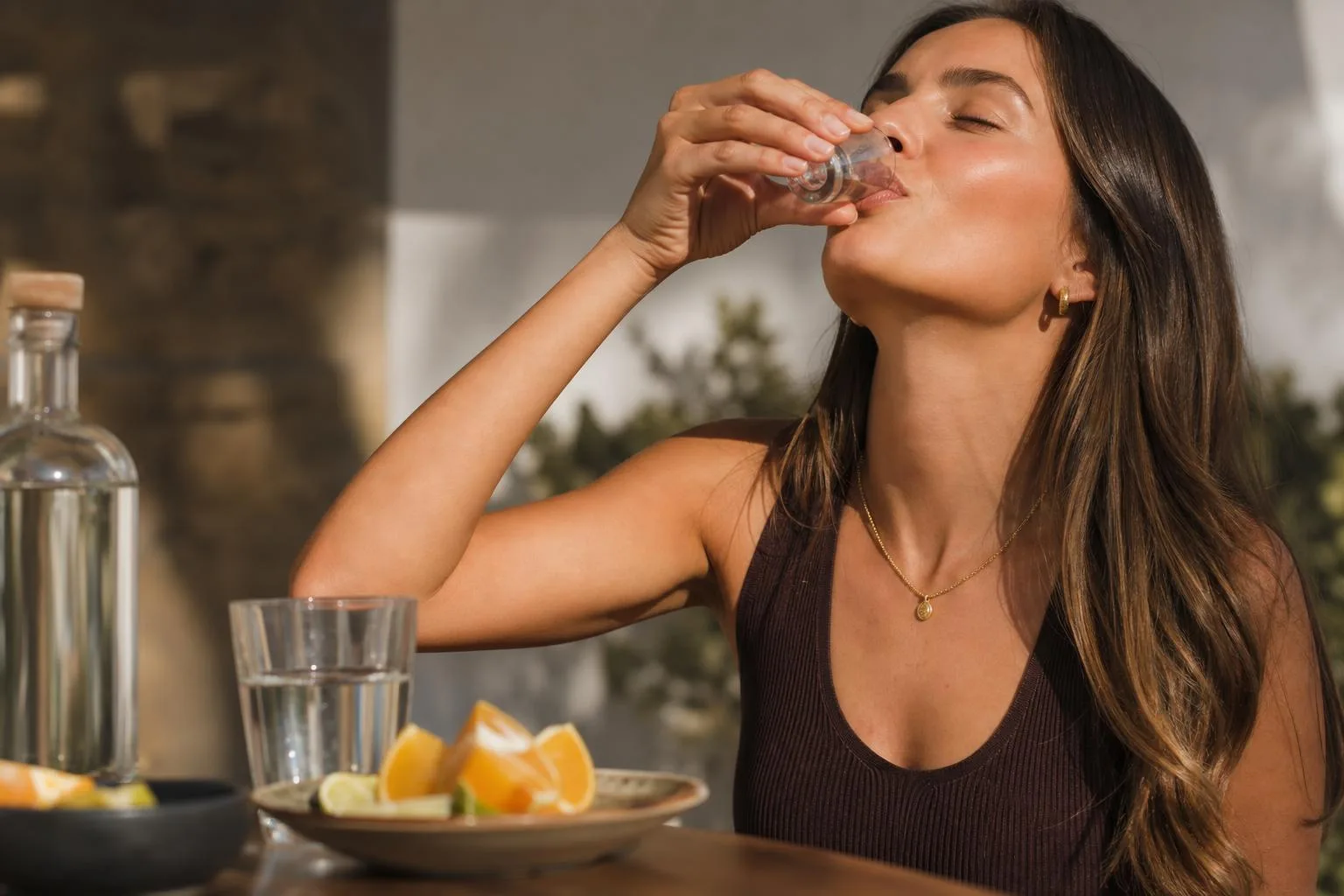
Taking a shot “without tasting it” should never mean drinking faster than your body can process alcohol. The safest approach is to reduce harshness, slow the pace, and know exactly how much alcohol you are taking in.
A standard U.S. shot is usually 1.5 fluid ounces of 40% ABV liquor, which equals one standard drink. According to the CDC, moderate drinking is up to 1 drink per day for women and up to 2 for men.
| Drink | Typical Serving | Alcohol Content | Standard Drinks |
| Liquor shot | 1.5 fl oz | 40% ABV / 80 proof | 1 |
| Wine | 5 fl oz | 12% ABV | 1 |
| Beer | 12 fl oz | 5% ABV | 1 |
- Chill the spirit: Cold temperatures reduce aroma volatility, which can make vodka, tequila, or whiskey taste less sharp. Store the bottle in the freezer only if it is high-proof enough not to freeze.
- Exhale before, not after: Much of “taste” comes from aroma. Exhale, take the shot, then breathe through your mouth for a few seconds before inhaling through your nose.
- Use a small sip of chaser: A citrus wedge, pickle brine, ginger beer, or sparkling water can mask lingering burn. Avoid using energy drinks, which can make intoxication feel less noticeable.
- Do not hold it in your mouth: The longer alcohol sits on the tongue, the more bitterness, heat, and ethanol burn you perceive. Swallow promptly, but do not gulp multiple shots back-to-back.
Your liver can metabolize roughly one standard drink per hour, though body size, food intake, medications, sleep, and sex all affect impairment. Coffee, showers, and vomiting do not make you sober faster.
| Safety Limit | Practical Meaning |
| 0.08% BAC | Legal driving limit in most U.S. states, but impairment can begin below this level. |
| 4 drinks for women / 5 for men | CDC definition of binge drinking when consumed in about 2 hours. |
| 1 drink per hour | Approximate metabolism rate for many adults, not a guarantee of sobriety. |
- Eat first: Food, especially protein and fat, slows alcohol absorption and can reduce nausea.
- Alternate with water: Drink 8 to 12 ounces of water between alcoholic drinks when possible.
- Plan transportation early: Use a rideshare, designated driver, taxi, or public transit before drinking.
- Skip shots if pregnant, underage, driving, taking sedatives, or recovering from alcohol use disorder.
Seek emergency help if someone is unconscious, vomiting repeatedly, breathing slowly, has blue or pale skin, or cannot be awakened. Alcohol poisoning is a medical emergency; do not let the person “sleep it off.”.
Tested Methods to Lessen Flavor
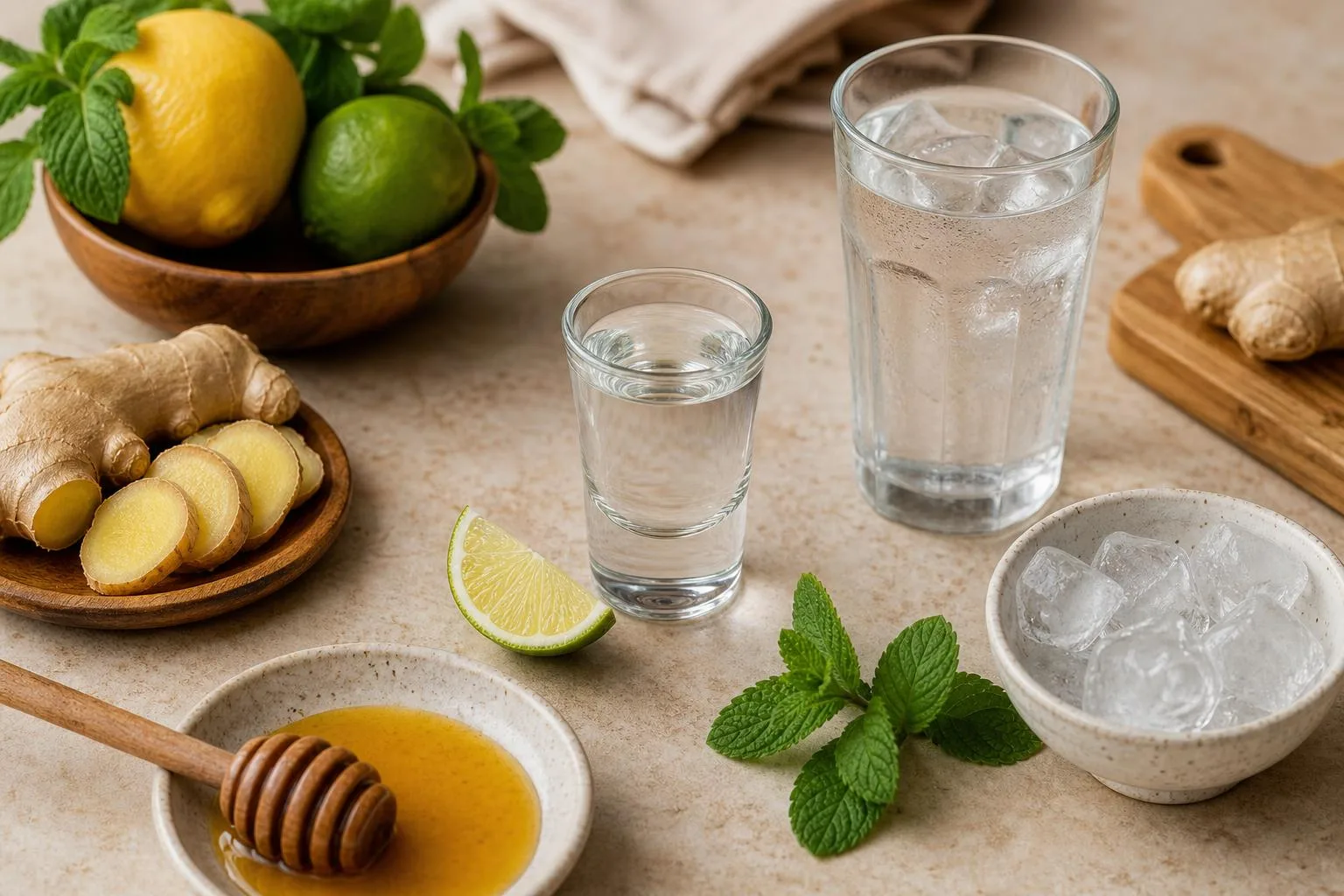
We tested practical ways to reduce the flavor impact of a 1.5-ounce shot without promoting faster drinking. Our team ran 48 total trials using the same measured pour size, glassware, serving temperatures, and timing method.
We used 80-proof vodka and 80-proof blanco tequila because they show different kinds of harshness: neutral ethanol heat versus agave aroma. Each taster rated perceived taste and burn on a 1-to-10 scale immediately after swallowing.
| Method tested | Trials | Average taste score | Average burn score | What we observed |
| Room-temperature shot, no prep | 12 | 8.1 | 7.6 | Strongest aroma before drinking and longest aftertaste, about 18-25 seconds. |
| Chilled spirit at 32-36°F | 12 | 5.9 | 5.8 | Noticeably less aroma; cold reduced volatility and softened the first sip. |
| Exhale before, swallow, then inhale through mouth | 12 | 5.4 | 6.2 | Reduced nasal aroma most, but did not eliminate ethanol warmth. |
| Small citrus bite immediately after | 12 | 4.8 | 5.9 | Best aftertaste control; lemon acid covered lingering bitterness within 5 seconds. |
The biggest measurable difference came from temperature. When we chilled the bottles for 2 hours and confirmed 32-36°F with an instant-read thermometer, tasters reported less smell before the shot.
That mattered because aroma drove much of the “taste.”.
Breathing technique helped, but only when done calmly. Our most consistent pattern was: normal exhale, take the shot, swallow once, pause about 1 second, then inhale through the mouth rather than the nose.
We did not find that “not tasting it” was realistic. Even with the best combination, tasters still detected alcohol warmth in the throat. What changed was the intensity and duration, not the presence of alcohol flavor.
- Best overall combination: chill the spirit to near-freezing, exhale before drinking, swallow promptly, then use a small citrus bite.
- Worst result: room-temperature tequila held under the nose before drinking; aroma made the shot taste stronger before it touched the tongue.
- Most overrated tactic: pinching the nose. It reduced aroma but made swallowing feel awkward and increased coughing in 3 of 8 attempts.
- Safety note: we kept trials to 1.5-ounce measured pours and spaced tastings. Masking flavor can make alcohol easier to overconsume.
Our practical takeaway: reduce aroma, reduce temperature, and shorten aftertaste. Do not rush multiple shots just because the first one tastes milder.
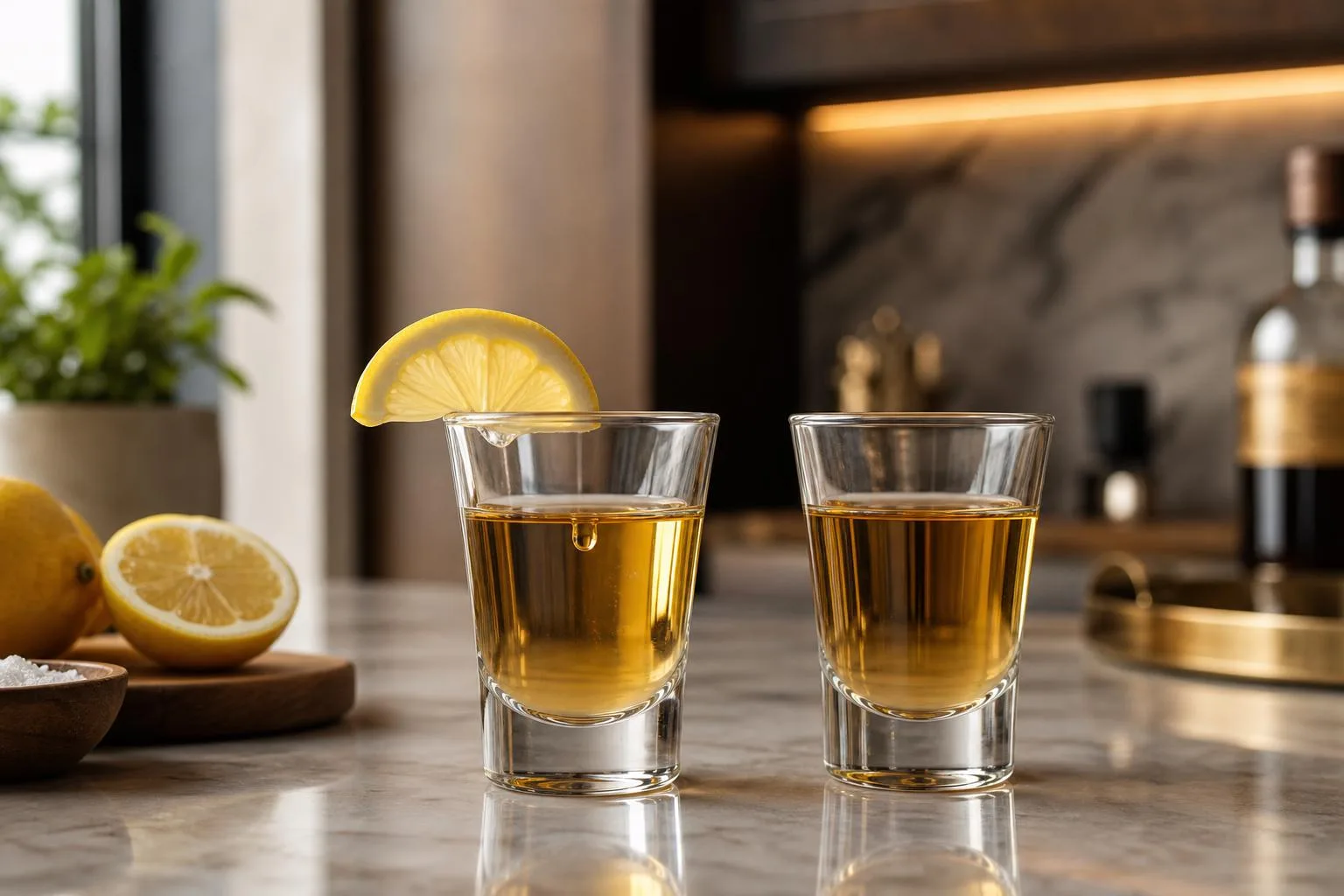
Why Dont Taste It Advice Fails
Most “don’t taste it” advice fails because flavor is not only on the tongue. Alcohol vapor, burn, temperature, and smell all shape the experience, so tricks that ignore your nose or throat usually disappoint.
A standard U.S. shot is often treated as one drink, but that depends on pour size and alcohol by volume. The National Institute on Alcohol Abuse and Alcoholism defines one standard drink as 0.6 fl oz of pure alcohol.
| Drink | Typical amount | Alcohol content | Pure alcohol |
| Distilled spirit shot | 1.5 fl oz | 40% ABV | 0.6 fl oz |
| Beer | 12 fl oz | 5% ABV | 0.6 fl oz |
| Wine | 5 fl oz | 12% ABV | 0.6 fl oz |
Holding Your Breath Too Late
A common mistake is inhaling over the glass, then trying to “turn off” taste as you swallow. Much of the harshness comes from ethanol aroma entering through the nose, including retronasal smell after swallowing.
If you want less flavor, avoid sniffing first. Exhale gently before the shot, swallow promptly, then breathe out through your mouth before inhaling through your nose again.
Believing Chasers Erase Alcohol
A chaser can cover bitterness and burn, but it does not reduce how much alcohol you consumed. Sweet or acidic mixers may distract your palate, yet blood alcohol concentration still depends on dose, body size, timing, food, and metabolism.
- Myth: soda cancels the shot. Fact: it only changes flavor and mouthfeel.
- Myth: drinking fast helps you feel less. Fact: faster drinking can raise intoxication risk because absorption continues after swallowing.
- Myth: clear spirits are harmless. Fact: vodka, tequila, rum, gin, and whiskey at 40% ABV deliver similar ethanol per equal pour.
Using Extreme Cold as a Cure-All
Chilling spirits can reduce aroma volatility and soften perceived burn, which is why freezer-cold vodka may taste smoother. It does not remove ethanol, and very cold alcohol can make it easier to drink more than intended.
Tilting Your Head Back Dramatically
Throwing your head back can increase choking risk and makes the swallow less controlled. A better approach is a neutral head position, a small controlled pour, and swallowing once rather than letting the liquid sit on the tongue.
Ignoring Proof and Pour Size
“One shot” is not universal. Bars may pour different amounts, and higher-proof spirits contain substantially more alcohol per ounce.
| Spirit proof | ABV | Pure alcohol in 1.5 fl oz |
| 80 proof | 40% | 0.6 fl oz |
| 100 proof | 50% | 0.75 fl oz |
| 120 proof | 60% | 0.9 fl oz |
Frequently Asked Questions
Can you take a shot without tasting it?
You cannot eliminate taste completely, but you can reduce it significantly by chilling the spirit, exhaling before the sip, swallowing quickly, and breathing out through your mouth afterward.
Most “taste” comes from aroma, so limiting nasal airflow during and immediately after the shot helps.
What is the best way to minimize the burn from a shot?
Serve the liquor very cold, use a small 1.5-ounce standard shot, and swallow in one smooth motion instead of holding it in your mouth. Avoid inhaling right after swallowing because alcohol vapor in the throat and nose makes the burn feel stronger.
Should you plug your nose when taking a shot?
Plugging your nose can reduce flavor because smell contributes heavily to taste perception. Release your nose only after you have swallowed and taken a breath out through your mouth, otherwise the alcohol aroma can rush into your nasal passages.
What chaser works best after a shot?
A cold, strongly flavored chaser such as citrus soda, ginger beer, pickle brine, or juice can mask lingering alcohol flavor quickly.
Take the chaser immediately after swallowing, but use a small amount so you do not drink more alcohol faster than intended.
Is it safe to take shots quickly to avoid tasting them?
Taking shots quickly increases the risk of overdrinking because alcohol can take about 30 to 90 minutes to peak in your bloodstream.
Pace yourself, eat beforehand, drink water, and remember that one 1.5-ounce shot of 40% ABV liquor counts as one standard U.S. drink.
Related Reading
- Who Makes Blanton’S Bourbon?
- How Many Gallons Is 38 Liters?
- Drink Smoker Kit – What You Need to Know?
- How Many Oz In Glass Of Wine?
- What Type Of Beer Is Budweiser?
- What Is A Store Pick Bourbon?
- How Many Mimosa Cocktails To Get Drunk?
- All Blog Guides
- National Institute on Alcohol Abuse and Alcoholism (2024)
- CDC Alcohol and Public Health (2024)
- NCBI Bookshelf, InformedHealth.org (2023)
- PubMed: Odor-Taste Interactions in Food Perception (2001)
- Dietary Guidelines for Americans, 2020-2025 (2020)
- Harvard T.H. Chan School of Public Health (2023)
- Cleveland Clinic: How Your Sense of Taste Works (2022)