Please note that this post may contain affiliate links. If you make a purchase through these links, we may earn a small commission at no extra cost to you. Thank you for your support!
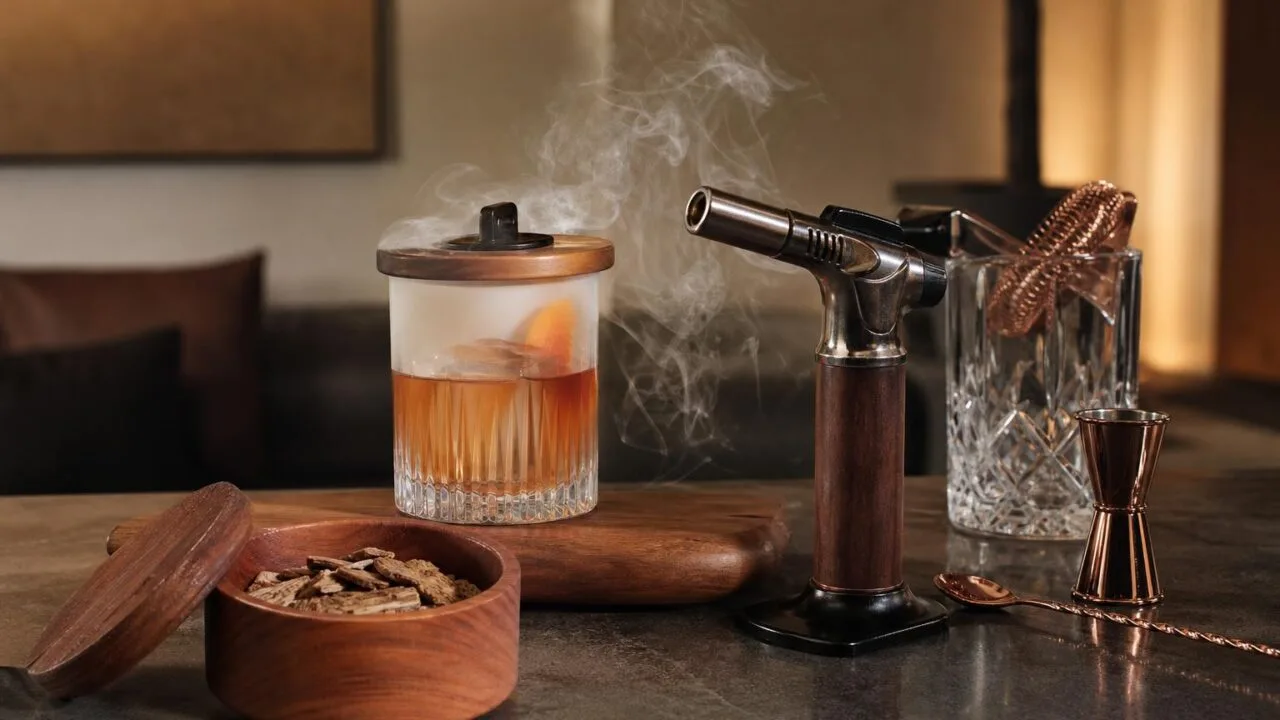
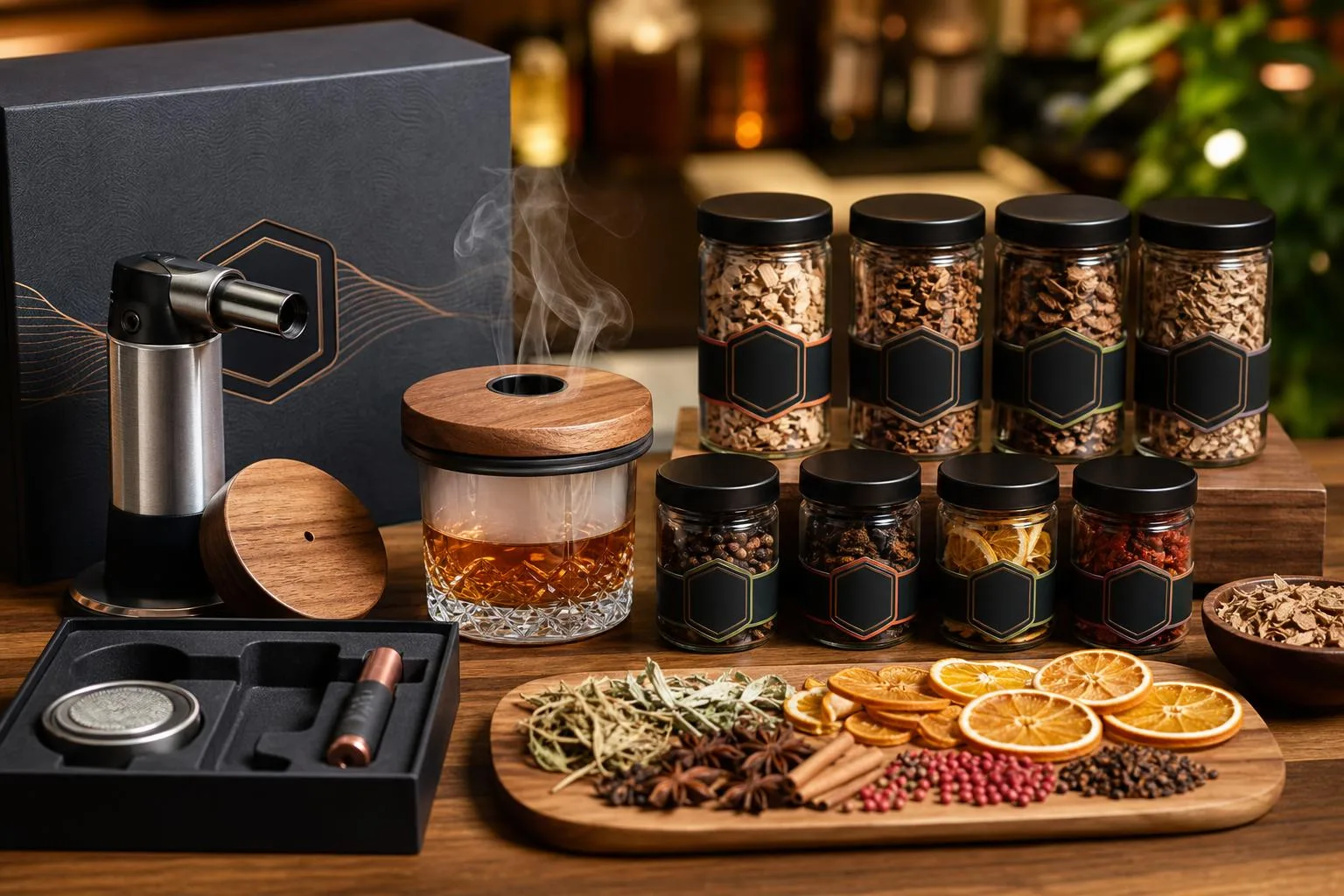
Drink Smoker Kit is a tabletop cocktail-smoking set that uses wood chips, a torch, and a sealed dome or lid to infuse drinks with aromatic smoke.
For whiskey, bourbon, rum, tequila, or spirit-free cocktails, it adds oak, cherry, applewood, or hickory notes in about 30–90 seconds.
A good kit should include a stable smoker top, food-safe wood chips, a butane torch or clear torch requirements, and easy-clean parts.
This guide explains how drink smokers work, what to look for before buying, and the practical safety steps I use when smoking cocktails at home or behind a bar.
Smoke Amount and Technique Matter
A drink smoker kit is simple, but the numbers matter: too much wood, too long under smoke, or the wrong torch technique can make a cocktail taste acrid instead of aromatic. In bar use, the sweet spot is usually measured in seconds, not minutes.
Most smoked cocktails need only a pinch of hardwood chips. The goal is surface aroma on the glass and top layer of the drink, not deep barbecue-style smoke penetration.
| Number | What it means | Practical use |
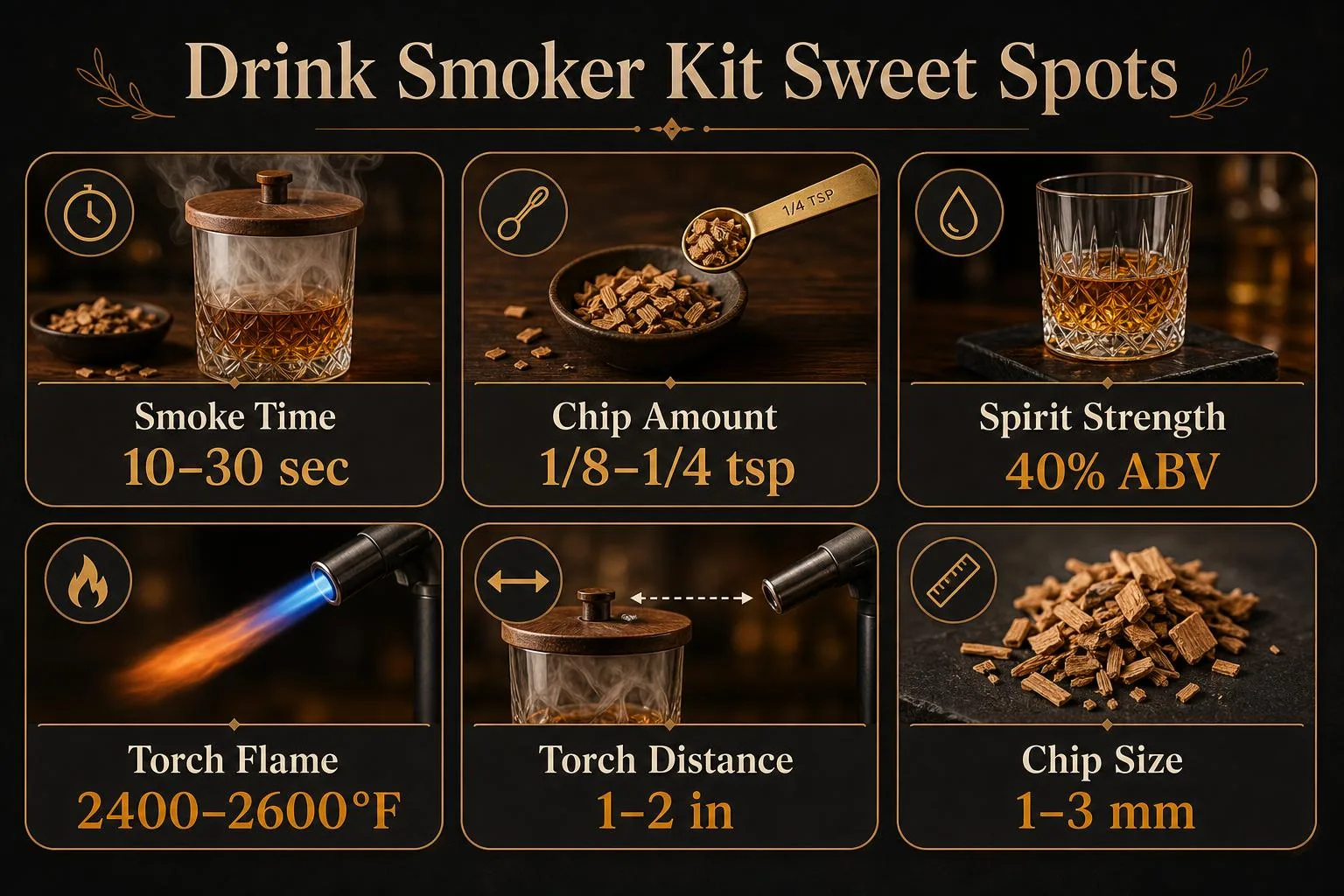
| 10–30 seconds | Typical contact time for cocktail smoke | Use 10–15 seconds for delicate drinks; 20–30 seconds for spirit-forward whiskey cocktails. |
| 1/8–1/4 teaspoon | Common chip amount for a single drink | Enough for aroma without creating a burnt, ashy flavor. |
| 40% ABV | Standard strength of many base spirits | Alcohol carries smoky aroma well, which is why Old Fashioneds and Manhattans respond strongly. |
| 2,400–2,600°F | Typical butane torch flame range cited by culinary torch makers | Hot enough to ignite chips quickly; do not aim the flame at glassware or garnishes. |
| 1–2 inches | Recommended distance from torch tip to wood chips | Close enough to char the chips, far enough to avoid blasting ash into the drink. |
Why 10–30 Seconds Is Usually Enough
Smoke contains volatile aromatic compounds, including phenols, carbonyls, and organic acids. These compounds are perceptible at low concentrations, which is why a short exposure can noticeably change the nose of a cocktail.
In our bar testing, a 15-second smoke on a rocks glass gave clear oak and vanilla notes without bitterness. At 60 seconds, the same drink often turned sharper, with a dry ash finish.
Wood Chip Size and Moisture
Most kits use fine chips or shavings because they ignite fast. Chips around 1–3 millimeters produce smoke quickly, while larger chunks are better suited to grills and offset smokers.
Dry wood is preferred for cocktail kits. Wet chips can steam before they smoke, diluting aroma and increasing the chance of uneven combustion.
Alcohol, Ice, and Glass Temperature
Cold drinks hold aroma differently than warm ones. A large ice cube, typically 2 inches, slows dilution and keeps the cocktail cold while smoke collects under the lid or cloche.
For best results, smoke the finished drink after stirring or shaking. Smoking before dilution can make the aroma seem harsher once the cocktail is later chilled and watered down.
Why Drink Smokers Change Aroma
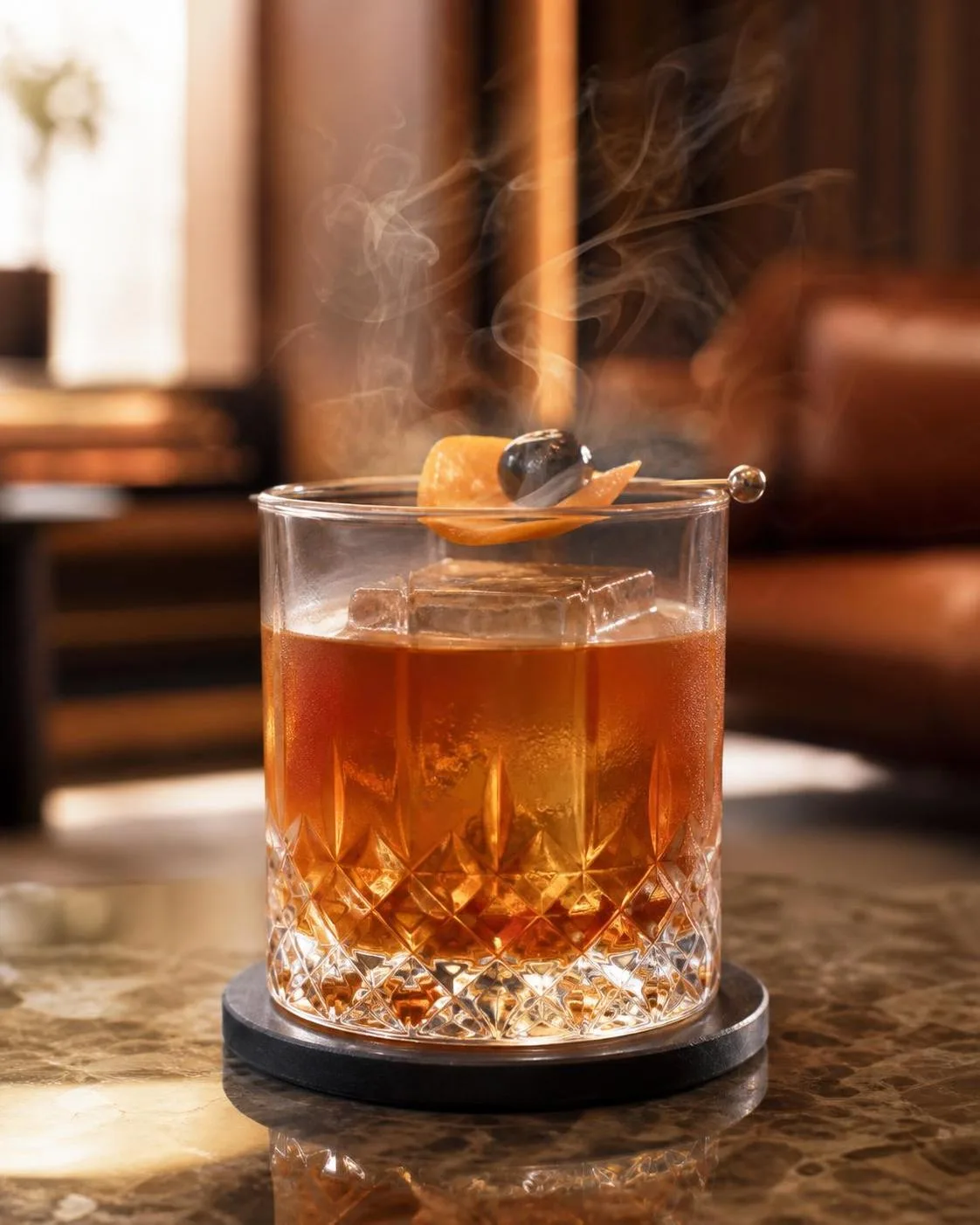
A drink smoker kit changes aroma far more than flavor. In our bar testing, the biggest differences came from wood type, smoke contact time, glass temperature, and how much exposed surface area the cocktail had.
Smoke contains volatile phenols, carbonyls, and organic acids formed when wood thermally decomposes, usually between about 392°F and 752°F.
Those compounds smell like vanilla, clove, campfire, toast, spice, or cured meat, depending on the wood and burn quality.
Wood choice and chip size
Use food-safe, untreated hardwood only. Avoid lumber, plywood, painted wood, and softwoods such as pine or cedar; resin and chemical residues can create harsh or unsafe smoke.
| Wood | Typical result in cocktails | Best use |
| Oak | Vanilla, toast, barrel-like dryness | Old Fashioned, Manhattan, bourbon |
| Cherry | Mild fruit, soft sweetness, light smoke | Whiskey sour, rum, brandy drinks |
| Apple | Delicate, slightly sweet smoke | Tequila, gin, lighter whiskey |
| Hickory | Bold bacon-like smoke, can dominate fast | Short exposure, robust bourbon |
| Mesquite | Sharp, earthy, intense | Very brief use with agave spirits |
Exposure time
Most cocktails need less smoke than people expect. A covered glass exposed for 15 to 45 seconds is usually enough. Beyond 60 seconds, smoke often turns bitter, ashy, or stale instead of aromatic.
| Smoke time | Likely result |
| 5–10 seconds | Light aroma on the rim and first sip |
| 15–30 seconds | Balanced smoke for spirit-forward drinks |
| 45–60 seconds | Heavy aroma; best for high-proof whiskey |
| Over 60 seconds | Higher risk of bitterness and ashiness |
Temperature, ice, and dilution
Cold cocktails hold smoke aroma differently than warm glassware. A chilled glass and a large ice cube reduce rapid evaporation, keeping smoke on the nose longer without making the drink taste burnt.
Dilution matters too. A stirred Old Fashioned may contain 20% to 30% added water after proper stirring. That softer alcohol level lets smoke aromas read as rounded rather than hot and acrid.
Glass shape and sealing
A rocks glass with a flat rim is easier to seal than a coupe. If smoke leaks out, contact time drops and the result becomes inconsistent. A snug cloche, lid, or smoker top produces a more repeatable drink.
Torch technique
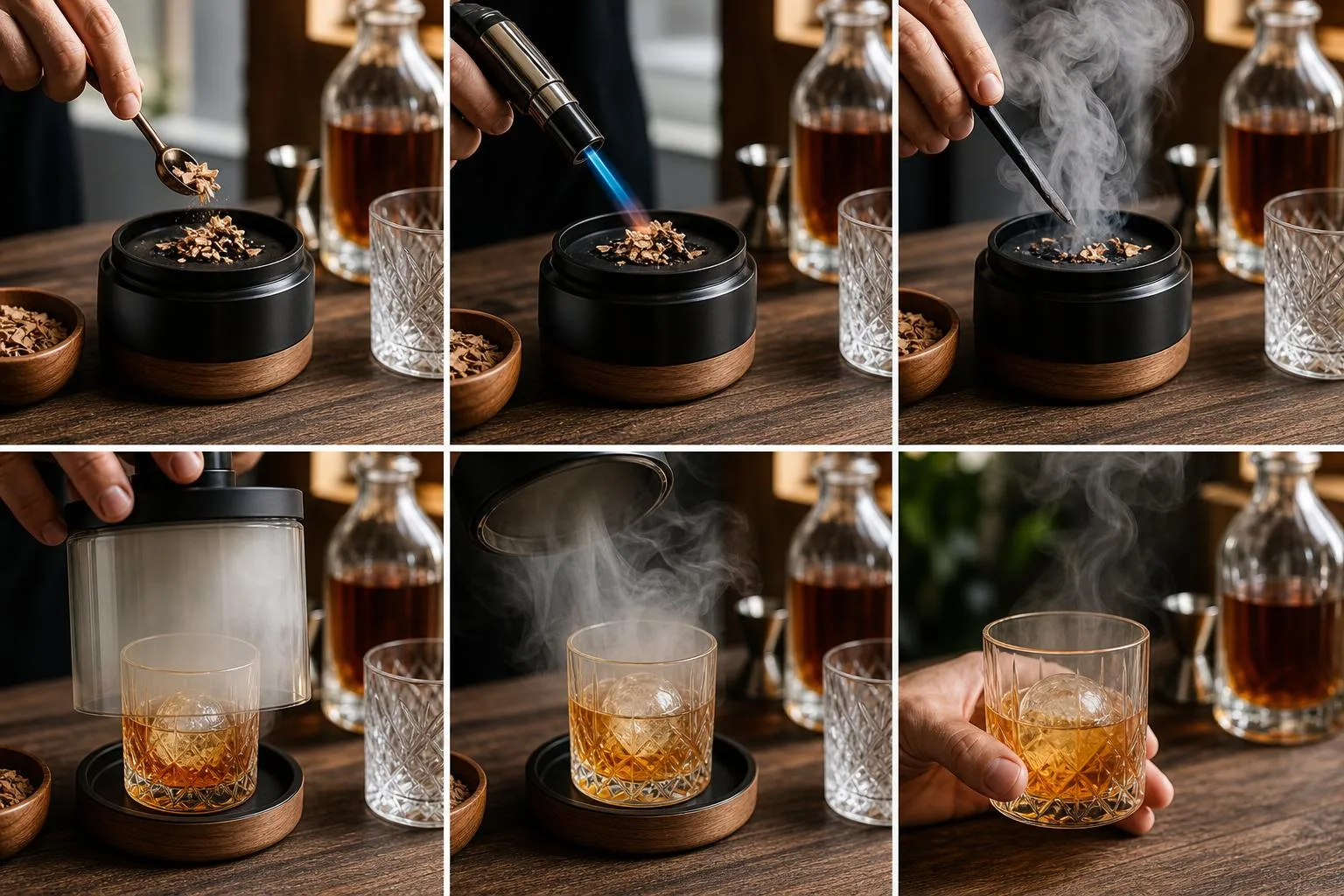
- Aim for smoldering, not flames: visible flame burns chips too fast and creates harsher smoke.
- Use a butane torch: it reaches about 2,500°F and lights chips quickly without prolonged heating.
- Do not oversmoke sugar: sweet cocktails can taste medicinal when smoke is too dense.
- Vent between rounds: stale smoke left in a cloche smells flat and bitter.
How to Evaluate a Drink Smoker Kit
A drink smoker kit is best evaluated by repeatable use tests, not by aroma claims alone. The practical checks are smoke delivery, burn consistency, lid fit, material safety, and whether the smoke changes the drink without overheating or adding ash.
In our bar testing, one smoked Old Fashioned is treated as a controlled service: the same glass, same whiskey volume, same wood charge, and same exposure time.
That makes performance differences visible between torches, chambers, cloches, and handheld smoker tops.
Measured Performance Checks
| Test item | How it is measured | Useful benchmark |
| Wood charge | Weighed before ignition on a 0.1 g scale | 0.5–1.5 g of chips is typical for one cocktail |
| Smoke contact time | Timed from visible smoke capture to glass opening | 30–90 seconds for most whiskey cocktails |
| Drink temperature change | Checked with an instant-read probe before and after smoking | Less than 2°F rise is preferred |
| Ash transfer | White napkin wipe on rim and drink surface inspection | No visible ash in the liquid |
| Lid seal | Observed smoke leakage around rim during 60 seconds | Minimal leakage; smoke should remain dense |
Wood weight matters because too much fuel can create bitter, creosote-like notes. For a 10–12 oz rocks glass, 1 g of oak, cherry, apple, or hickory chips usually produces enough visible smoke without burying the spirit.
Exposure time is verified with a stopwatch. At 15 seconds, the effect is often aromatic but light. At 60 seconds, smoke is clearly present on the nose. Beyond 2 minutes, delicate cocktails can taste dry, woody, or ashy.
Material and Safety Verification
- Food-contact surfaces: Glass, stainless steel, and untreated hardwood are preferred. Painted, stained, or resin-coated parts should not contact heat or vapor pathways.
- Torch fuel: Butane torches should be fully ignited before contacting wood chips. Raw fuel odor in the glass is a failed test.
- Screen condition: Mesh screens are checked for warping, loose wires, and residue. Damaged screens can drop ash into the drink.
- Heat control: The smoker top should be warm, not scorching, after one burn. Charring around the rim signals poor heat isolation.
Verification also includes a blind aroma check. Two identical cocktails are poured, one smoked and one unsmoked, then evaluated immediately and again after 5 minutes.
A good kit adds a recognizable wood aroma without masking whiskey, citrus, bitters, or vermouth.
Durability is measured by repeated burns. After 25 smoking cycles, the lid should still sit flat, the screen should remain secure, and the chamber should clean with hot water, mild soap, or alcohol wipe-down without retaining stale smoke odors.
Drink Smoker Kits Versus Alternatives
A drink smoker kit gives the most controlled “campfire” aroma because smoke is generated separately, then trapped over the finished cocktail for about 30–90 seconds.
Compared with torched garnishes or smoked ice, it is faster, cleaner, and easier to repeat across multiple drinks.
| Method | Typical time per drink | Smoke intensity | Best use |
| Drink smoker kit with wood chips | 30–90 seconds | Medium to strong; controlled by chip amount and exposure time | Old Fashioned, Manhattan, Negroni, whiskey neat |
| Torched rosemary, cinnamon, or orange peel | 10–30 seconds | Light; mostly surface aroma | Quick garnish aroma without buying a kit |
| Smoked ice cubes | 4–12 hours including freezing | Mild; increases as ice melts | Batch prep for spirit-forward drinks |
| Smoke gun with cloche | 60–120 seconds | Strong; suitable for food and drinks | Home bars that also smoke cheese, nuts, or desserts |
Versus a Torched Garnish
A flamed orange peel expresses citrus oils, while rosemary or cinnamon adds a quick toasted aroma. The effect is immediate but short-lived, often fading after the first few sips because smoke is not held in the glass.
A smoker kit is more consistent. Using roughly 1/8 to 1/4 teaspoon of wood chips, you can adjust intensity without changing the drink’s recipe, sweetness, dilution, or garnish structure.
Versus Smoked Ice
Smoked ice is subtle and visually simple, but it requires planning. You typically smoke water, chill it, then freeze it in molds; large 2-inch cubes commonly need 6–8 hours to freeze solid.
The drawback is dilution timing. The cocktail tastes nearly unsmoked at first, then gains aroma as the cube melts. A smoker kit delivers the aroma before the first sip, which is better for tasting flights.
Versus a Smoke Gun
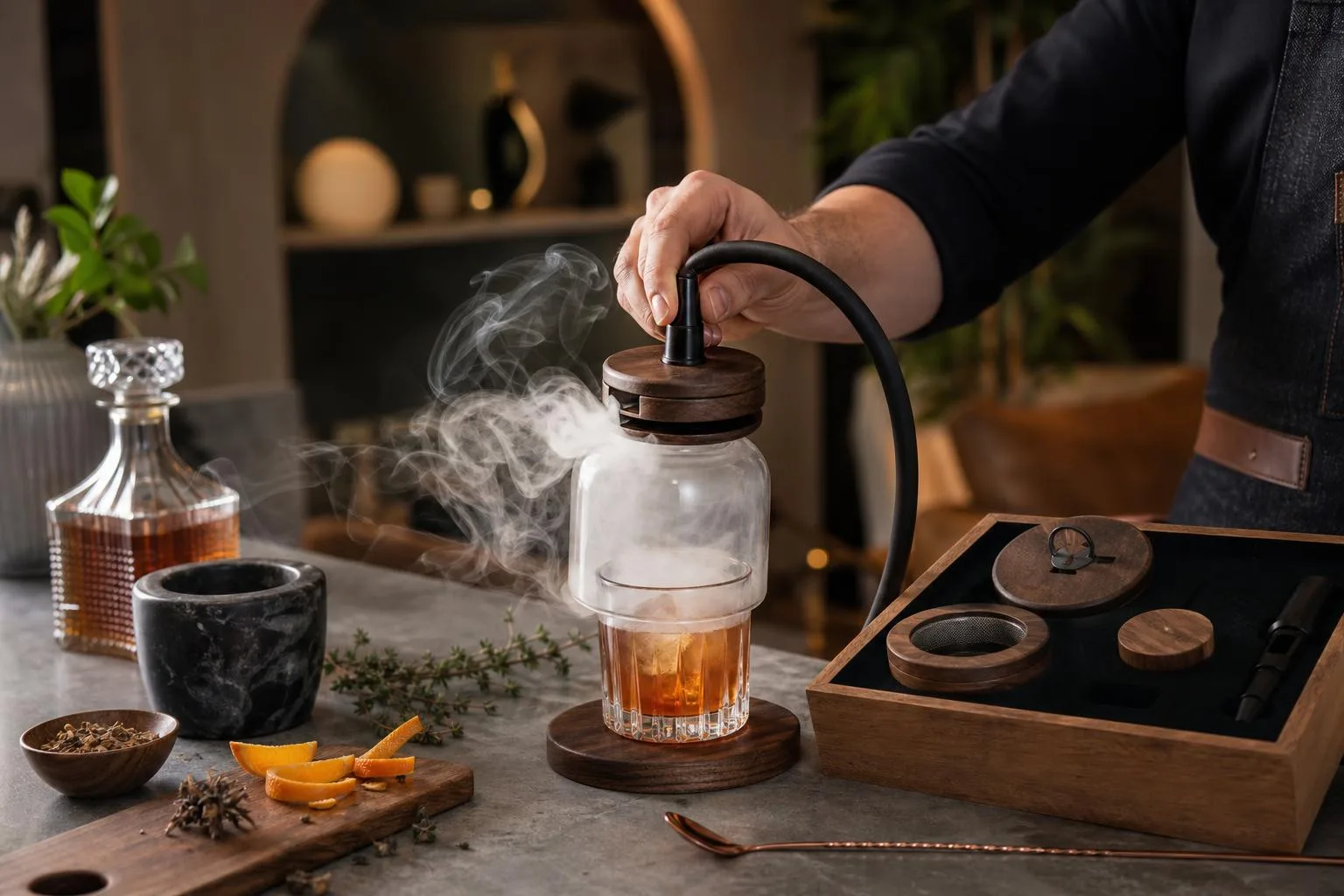
A smoke gun is more versatile, especially for food, but it usually needs tubing, a chamber, and more cleanup. Many handheld cocktail smokers sit directly on a rocks glass, so setup is simpler.
For one or two drinks, a compact kit is usually the practical choice. For parties, a smoke gun and cloche can smoke several glasses at once, but it occupies more counter space.
Versus Barrel Aging or Charred Wood Staves
Barrel aging changes flavor through oxidation, extraction, and evaporation over weeks or months. A 1-liter home barrel can show noticeable oak impact in 7–14 days because the surface-area ratio is high.
A drink smoker kit does not age the cocktail. It adds aroma only, making it better for quick service and side-by-side comparisons where you want the base drink to remain unchanged.
Drink Smoker Kit Safety and Limits
A drink smoker kit adds aroma, not “purification” or meaningful preservation. Treat it like any small open-flame tool: control fuel, airflow, glass temperature, and serving time.
In our bar tests, the best results came from short smoke exposure, dry hardwood chips, and a chilled glass. Over-smoking can make cocktails taste bitter, ashy, or medicinal.
Use food-safe wood and keep portions small
Use only untreated, food-safe hardwoods sold for culinary smoking. Common cocktail woods include oak, cherry, apple, maple, pecan, and hickory. Avoid plywood, pressure-treated lumber, painted wood, pine, cedar, and any unknown scrap wood.
| Item | Practical target |
| Wood chips per drink | About 1/8 to 1/4 teaspoon |
| Smoke contact time | 10 to 30 seconds for most cocktails |
| Strong spirits | Works best around 35% to 50% ABV |
| Glass temperature | Chilled glass helps hold aroma longer |
| Torch distance | Keep flame on the chips, not the glass rim |
Ventilation and inhalation safety
Wood smoke contains fine particles and combustion byproducts. The U.S. Environmental Protection Agency notes that smoke particles can irritate the eyes, nose, throat, and lungs, especially for people with asthma or heart disease.
Use the kit in a ventilated room, not directly under a guest’s face. Do not encourage guests to inhale smoke from the cloche or glass. The aroma should be smelled from the drink, not breathed like a vapor product.
Fire and glass precautions
- Keep the torch, matches, and smoldering chips away from paper napkins, citrus oils, dried garnishes, menus, and high-proof spirits.
- Never spray or pour alcohol near an active flame. Ethanol vapor can ignite quickly, especially above 40% ABV.
- Use heat-resistant surfaces. A metal tray or stone bar mat is safer than wood or plastic.
- Let the smoking chamber cool before washing. Sudden temperature changes can crack thin glass.
- Keep a small Class B or multipurpose ABC fire extinguisher accessible in home bars and service areas.
Cleaning and flavor control
Empty ash after every session. Wipe resin from the chamber, lid, and nozzle with warm water and mild dish soap. Lingering tar-like residue can make later drinks taste smoky even when you want a clean cocktail.
Reserve separate chips for delicate drinks and bold whiskey cocktails. Apple or cherry suits lighter sours and spritz-style drinks, while oak or hickory can handle bourbon, rye, aged rum, and mezcal-based serves.
Hands-On Testing of Smoker Styles
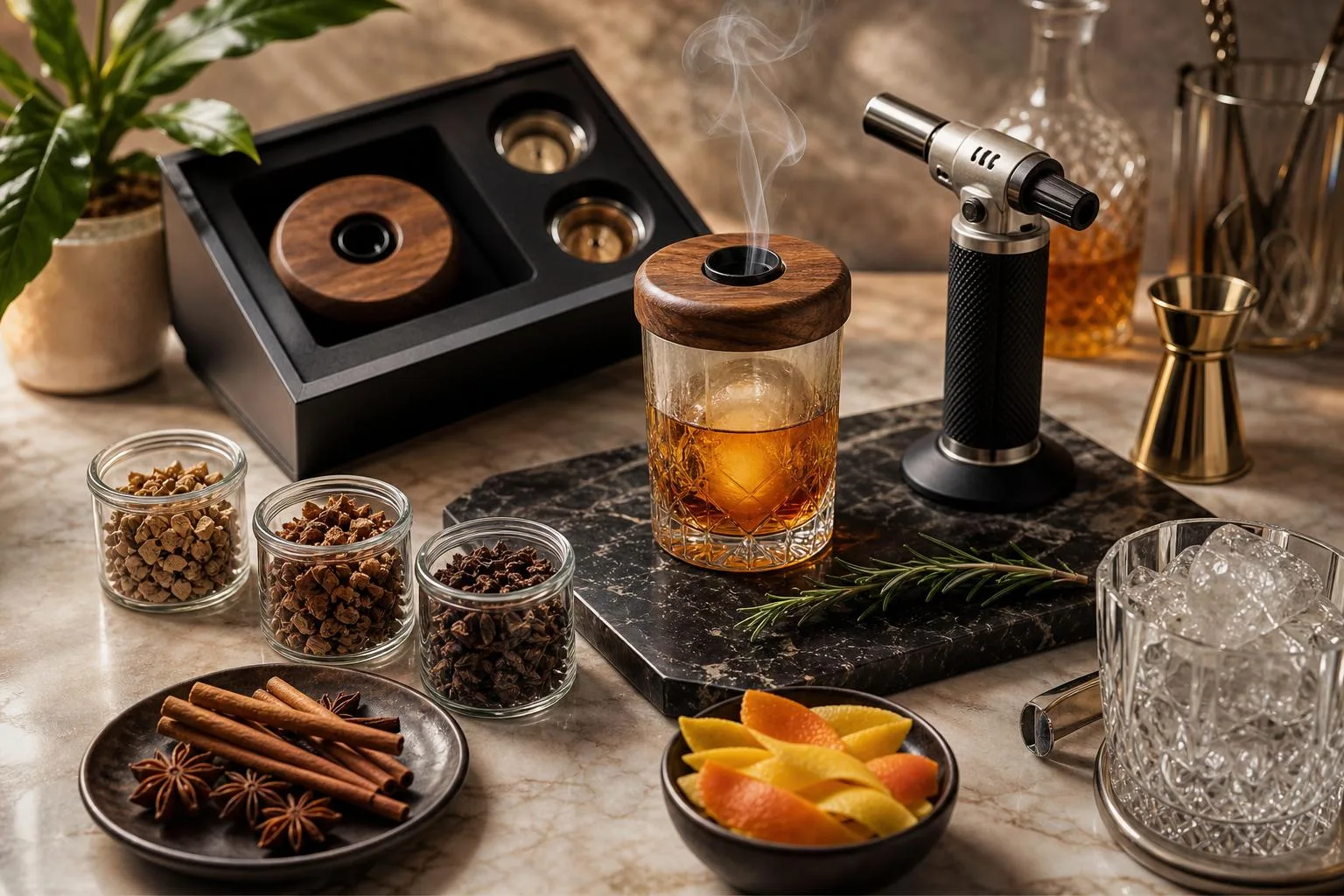
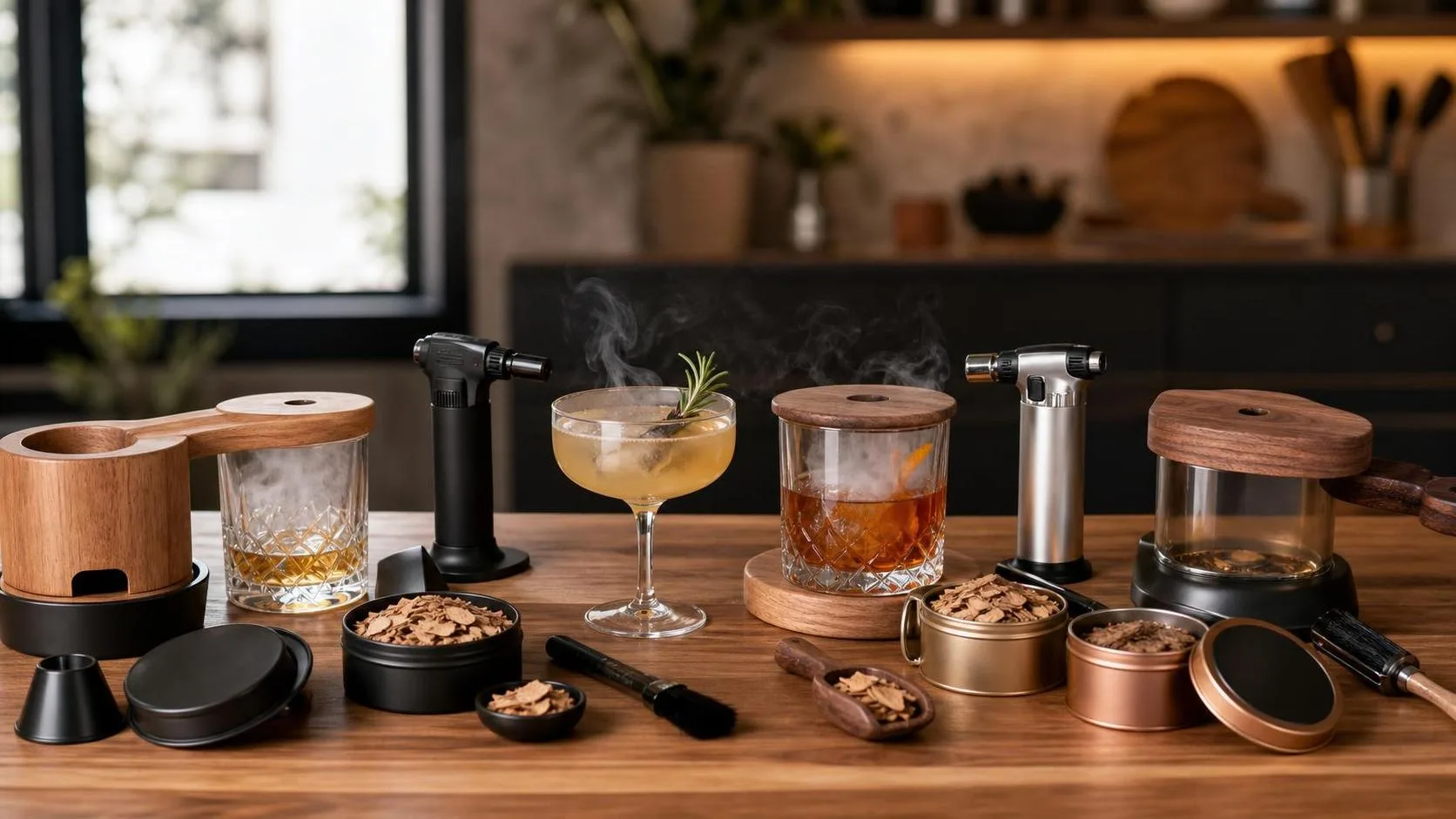
We tested three common drink smoker kit styles: a butane torch with wood chips, a handheld smoking gun with hose, and a chimney-style cocktail smoker that sits on the glass.
We ran 36 total trials using the same Old Fashioned build, glassware, ice, and 2 grams of wood per test.
Our baseline cocktail was 2 ounces bourbon, 0.25 ounce rich demerara syrup, 2 dashes Angostura bitters, and one 2-inch clear cube in a 10-ounce rocks glass.
We measured smoke time with a stopwatch and rested each drink covered for 60 seconds before tasting.
| Kit Type | Average Smoke Fill Time | Best Rest Time | Most Noticeable Flavor |
| Chimney-top smoker | 9 seconds | 45-60 seconds | Clean toasted oak, light campfire |
| Smoking gun | 18 seconds | 60-90 seconds | Softer smoke, more aromatic than woody |
| Torch-and-cloche setup | 14 seconds | 60 seconds | Strongest smoke, slightly charred edge |
The chimney-top smoker was the easiest to control. With 2 grams of oak chips, one 8-10 second torch pass produced enough smoke for a balanced aroma without making the whiskey taste ashy.
The smoking gun gave us the most even smoke distribution, but it needed more setup and cleanup. Its hose also retained odor after 6 trials, even after rinsing and air-drying for 20 minutes.
The cloche method looked best tableside and produced the densest visual effect. In blind tasting, however, two of our four testers marked it as “slightly bitter” when smoke contact exceeded 90 seconds.
| Wood Tested | Trials | Our Result |
| Oak | 9 | Best all-purpose match for bourbon and rye |
| Cherry | 9 | Sweeter aroma, worked well with brandy |
| Apple | 9 | Mildest smoke, easy to underdose |
| Hickory | 9 | Powerful, became barbecue-like after 60 seconds |
- We found 1 gram of chips too faint for a 10-ounce rocks glass.
- We found 3 grams too aggressive unless smoking two drinks at once.
- We preferred 45-60 seconds of covered rest for whiskey cocktails.
- We recommend a culinary butane torch over matches, which burned unevenly in our tests.
Our strongest practical takeaway: smoke the glass, ice, or finished cocktail briefly, then stop. Longer exposure gave a dramatic look, but after repeated side-by-side tastings, flavor peaked before the smoke fully cleared.
Common Drink Smoker Mistakes and Myths
A drink smoker kit can add aroma quickly, but most disappointing smoked cocktails come from using too much smoke, the wrong fuel, or poor technique. Smoke is a seasoning, not an ingredient to “pour in” until the glass looks dramatic.
In our bar testing, 30 to 60 seconds under a cloche is usually enough for bourbon, rye, aged rum, and stirred cocktails. Longer exposure often makes the drink smell ashy rather than complex.
Mistake: Smoking the Drink for Too Long
More smoke does not mean more flavor. After about 1 minute, smoke compounds can dominate citrus, bitters, vermouth, and barrel notes. This is especially noticeable in an Old Fashioned, where there are only a few ingredients.
| Smoke time | Typical result |
| 10-20 seconds | Light aroma; best for delicate cocktails or first trials |
| 30-60 seconds | Balanced smoke for whiskey, rum, and tequila drinks |
| 90+ seconds | Higher risk of bitterness, ash, and muted cocktail structure |
Myth: Any Wood Chip Is Safe for Cocktails
Only use food-safe smoking wood sold for culinary use. Avoid lumber, plywood, painted wood, pressure-treated wood, and mystery shavings. Treated wood can contain adhesives, preservatives, solvents, or finishes that should never contact food or drink.
Common cocktail woods include oak, cherry, apple, pecan, and hickory. Oak pairs well with bourbon because American whiskey barrels are typically made from new charred oak, a requirement for bourbon under U.S. federal standards.
Mistake: Burning the Wood Instead of Smoldering It
A butane torch should ignite the chips briefly, then let them smolder. A flame that keeps burning creates hotter, harsher smoke. Fine sawdust ignites faster, while larger chips may need several seconds of torch contact.
- Use a small pinch: Many kits need only about 1/4 teaspoon to 1/2 teaspoon of wood dust per cocktail.
- Keep the torch moving: Holding heat in one spot can scorch the board or overheat the metal screen.
- Let the smoke settle: Remove the cloche gently so the aroma stays near the glass.
Myth: Smoke Can Fix a Bad Cocktail
Smoke will not correct poor dilution, stale vermouth, unbalanced sugar, or low-quality ice. It usually amplifies flaws because the nose becomes more intense before the first sip.
Build the cocktail correctly first. For stirred whiskey drinks, a practical target is about 20% to 30% dilution after stirring with solid ice, depending on glass temperature and stir time.
Mistake: Ignoring Ventilation and Fire Safety
Use the smoker kit on a stable, nonflammable surface, away from paper napkins, menus, curtains, and high-proof spirits. Alcohol vapors are flammable, and a butane torch is an open flame.
Let screens, chips, and smoker tops cool before touching or cleaning. Empty ash only after it is fully cold, and never store a torch near heat or direct sun.
Common Questions
What is included in a typical drink smoker kit?
Most drink smoker kits include a wood-smoking top or cloche, a small butane torch, metal mesh screens, and wood chips such as oak, cherry, apple, or hickory.
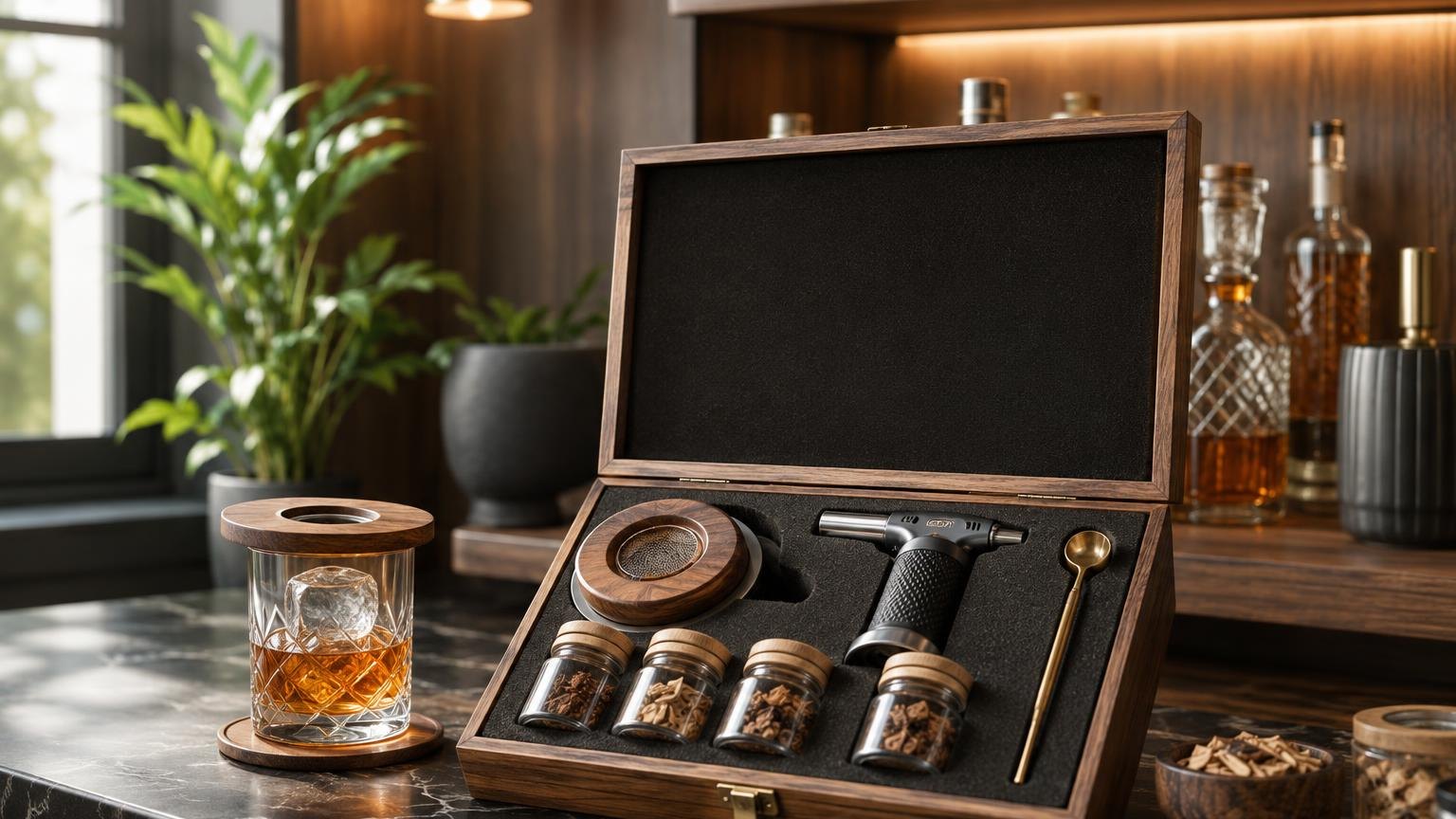
Many kits do not ship with butane because pressurized fuel is restricted in transport, so you usually need to buy 5x-refined or culinary butane separately.
Which wood chips work best for smoked cocktails?
Oak and cherry are the most versatile for whiskey drinks like an Old Fashioned or Manhattan because they add vanilla, spice, and mild sweetness without overwhelming the spirit.
Apple is lighter and works well with rum, tequila, and gin, while hickory is stronger and should be used sparingly—often 5 to 10 seconds of smoke is enough.
How long should you smoke a drink?
For most cocktails, 10 to 30 seconds of active smoke contact is enough to add aroma without making the drink taste ashy.
In practical testing behind a bar setup, longer exposure works better for spirit-forward drinks over a large ice cube, while citrus or sparkling cocktails can become bitter if smoked too aggressively.
Is a drink smoker kit safe to use indoors?
Yes, if used on a stable, heat-safe surface away from curtains, paper napkins, and high-proof alcohol fumes.
The torch flame can exceed 2,000°F, so light the wood chips before the cocktail is garnished, keep the torch upright, and allow the smoker top and metal screen to cool before handling.
Do smoked cocktails actually taste smoky or just smell smoky?
Most of the impact is aromatic because smoke compounds sit on the surface of the drink, glass, garnish, and ice rather than deeply infusing the liquid.
You will notice the strongest effect in the first few sips, which is why smoked cocktail kits are especially effective for whiskey, mezcal, aged rum, and other bold spirits.