How Much Is 64 Oz is 8 U.S. cups, 4 pints, 2 quarts, or 1/2 gallon when measuring liquid volume.
In metric terms, 64 U.S. fluid ounces equals about 1.893 liters, using the National Institute of Standards and Technology conversion of 1 fluid ounce as 29.5735 milliliters.
For dry weight, 64 ounces equals 4 pounds, because 16 avoirdupois ounces make 1 pound in the U.S. customary system. That distinction matters: fluid ounces measure volume, while ounces measure weight.
This guide breaks down 64 oz into everyday kitchen, bottle, and package-size equivalents without mixing the two measurement types.
What 64 Oz Usually Means
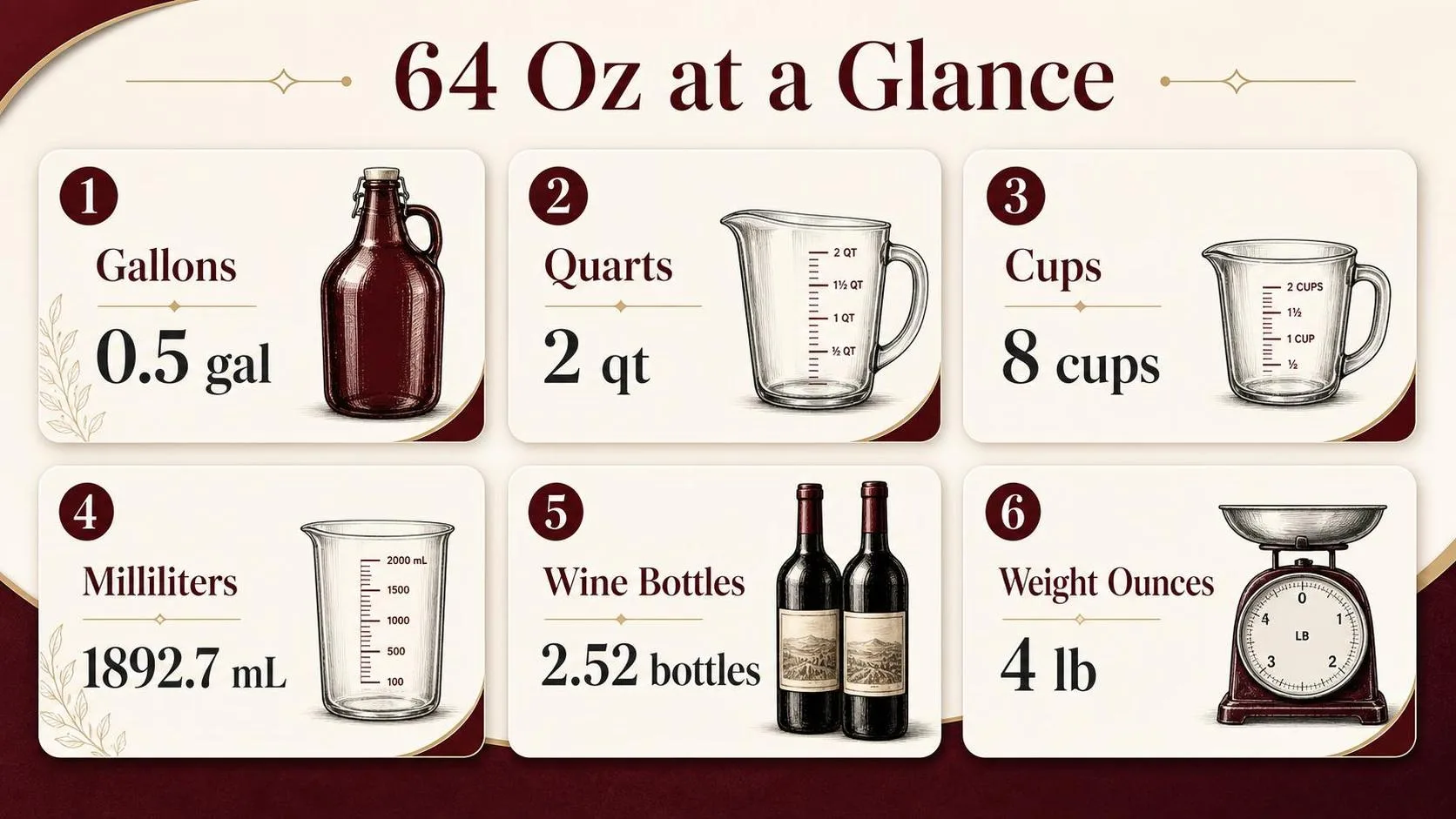
In U.S. kitchen and beverage measurements, “64 oz” usually means 64 fluid ounces, a volume measure. That equals a half gallon, 2 quarts, 8 cups, or about 1.89 liters.
The important distinction: fluid ounces measure volume, while ounces can also measure weight. A 64-ounce growler, pitcher, or water bottle refers to capacity, not how heavy the liquid is.
| 64 U.S. fluid ounces equals | Amount |
| Gallons | 0.5 gallon |
| Quarts | 2 quarts |
| Pints | 4 pints |
| Cups | 8 U.S. cups |
| Tablespoons | 128 tablespoons |
| Teaspoons | 384 teaspoons |
| Milliliters | 1,892.7 mL |
| Liters | 1.893 L |
For wine and bar service, 64 fluid ounces is larger than two standard 750 mL wine bottles. One standard wine bottle is 25.36 U.S. fluid ounces, so 64 fluid ounces is about 2.52 bottles.
| Wine-related comparison | Equivalent |
| Standard wine bottle | 750 mL, or 25.36 fl oz |
| 64 fl oz in wine bottles | About 2.52 standard bottles |
| Standard U.S. wine pour | 5 fl oz |
| 64 fl oz in wine pours | 12.8 standard pours |
| Half-bottle of wine | 375 mL, or 12.68 fl oz |
| 64 fl oz in half-bottles | About 5.05 half-bottles |
If the question is about water, 64 fluid ounces is the common “eight cups a day” amount, because 1 U.S. cup is 8 fluid ounces. That is a volume guideline, not a universal medical requirement.
If the question is about weight, the answer changes. In U.S. customary weight, 64 ounces by weight equals 4 pounds. That is true for weight ounces, not fluid ounces.
| If “oz” means weight | Equivalent |
| 64 ounces | 4 pounds |
| 1 pound | 16 ounces |
| 64 ounces in grams | 1,814.4 g |
| 64 ounces in kilograms | 1.814 kg |
For most beverage containers, recipes, and bar menus in the United States, read 64 oz as 64 fluid ounces unless the label clearly says net weight or ounces by weight.
Which Type of Ounce Matters
“64 oz” is only exact after you know what kind of ounce is being used. In U.S. kitchens and beverage service, 64 fluid ounces usually means volume; for dry goods, 64 ounces usually means weight.
The biggest source of confusion is that fluid ounces and ounces are not interchangeable. A 64 fl oz growler, pitcher, or water bottle holds a fixed volume, but 64 oz of flour, sugar, or coffee depends on mass and density.
| Meaning of 64 oz | What it measures | Common U.S. result |
| 64 U.S. fluid ounces | Volume | 8 U.S. cups, 4 U.S. pints, 2 U.S. quarts, 1/2 U.S. gallon |
| 64 ounces by weight | Mass | 4 pounds |
| 64 Imperial fluid ounces | Volume | About 2.27 U.S. quarts, not 2 U.S. quarts |
U.S. vs Imperial fluid ounces
U.S. and Imperial fluid ounces are close, but not identical. The U.S. fluid ounce is about 29.57 milliliters, while the Imperial fluid ounce is about 28.41 milliliters.
| Unit | Milliliters per fluid ounce | 64 fluid ounces equals |
| U.S. fluid ounce | 29.57 mL | 1,892.7 mL, or about 1.89 liters |
| Imperial fluid ounce | 28.41 mL | 1,818.4 mL, or about 1.82 liters |
Ingredient density
For water-like liquids, the conversion feels simple because volume and weight are close. At room temperature, 64 U.S. fl oz of water weighs about 4.17 pounds, not exactly 4 pounds.
Other ingredients differ substantially. Honey, oil, flour, and spirits can all occupy the same 64 fl oz container while weighing different amounts.
| Ingredient | 64 U.S. fl oz is about | Why it differs |
| Water | About 4.17 lb | Density near 1 g/mL |
| Vegetable oil | About 3.8 lb | Less dense than water |
| Honey | About 6.0 lb | Much denser than water |
| All-purpose flour | About 2.0 lb if measured as 16 cups | Depends on scooping, settling, and aeration |
Container fill and labeling
- Nominal capacity: A “64 oz” bottle may be designed to hold 64 fl oz to a fill line, not necessarily to the absolute rim.
- Foam and headspace: Beer, cider, and sparkling beverages need headspace, so a 64 oz growler may not be filled to the very top.
- Nutrition labels: U.S. labels often list servings in fluid ounces for drinks but in grams for foods, which helps separate volume from weight.
- Measuring tools: A liquid measuring cup, kitchen scale, and graduated pitcher can give different-looking answers because they measure different properties.
How to Identify 64 Oz Correctly
For “64 oz,” first verify whether the label means fluid ounces, a volume measure, or ounces by weight.
In U.S. beverage and kitchen use, 64 fluid ounces is exactly one-half U.S. gallon, based on National Institute of Standards and Technology customary-unit definitions.
A U.S. fluid ounce is defined as 1/128 of a U.S. gallon. Since one U.S. gallon is 231 cubic inches, 64 fluid ounces equals 115.5 cubic inches, or about 1.8927 liters.
| Measurement | Equivalent to 64 U.S. fl oz | Verification note |
| Gallons | 0.5 U.S. gallon | 64 ÷ 128 |
| Quarts | 2 U.S. quarts | 32 fl oz per quart |
| Cups | 8 U.S. cups | 8 fl oz per cup |
| Milliliters | 1,892.71 mL | 29.5735 mL per U.S. fl oz |
| Liters | 1.8927 L | Rounded to 4 decimals |
How to verify 64 fluid ounces at home
- Use a measuring cup marked in U.S. cups and fill it 8 times to the 1-cup line.
- Use a 1-quart container twice; each U.S. quart contains 32 fluid ounces.
- Use a kitchen scale only if measuring water or a liquid with known density; 64 U.S. fluid ounces of water weighs about 4.17 pounds at room temperature.
- Check the package label for “fl oz” rather than “oz.” The abbreviation “oz” alone can refer to weight, not volume.
For water, volume and weight are close enough for practical checking, but they are not identical units. A fluid ounce measures space occupied; an ounce by weight measures mass.
Honey, oil, milk, and wine will not all weigh the same at 64 fluid ounces.
| Item | 64 fl oz approximate weight | Why it differs |
| Water | About 4.17 lb | Density near 1.0 g/mL |
| Whole milk | About 4.3 lb | Slightly denser than water |
| Vegetable oil | About 3.8 lb | Less dense than water |
For the most reliable confirmation, use a container with factory volume markings or a calibrated liquid measuring vessel.
Read the meniscus at eye level on a flat surface, because tilting the cup or viewing from above can shift the apparent level by several fluid ounces.
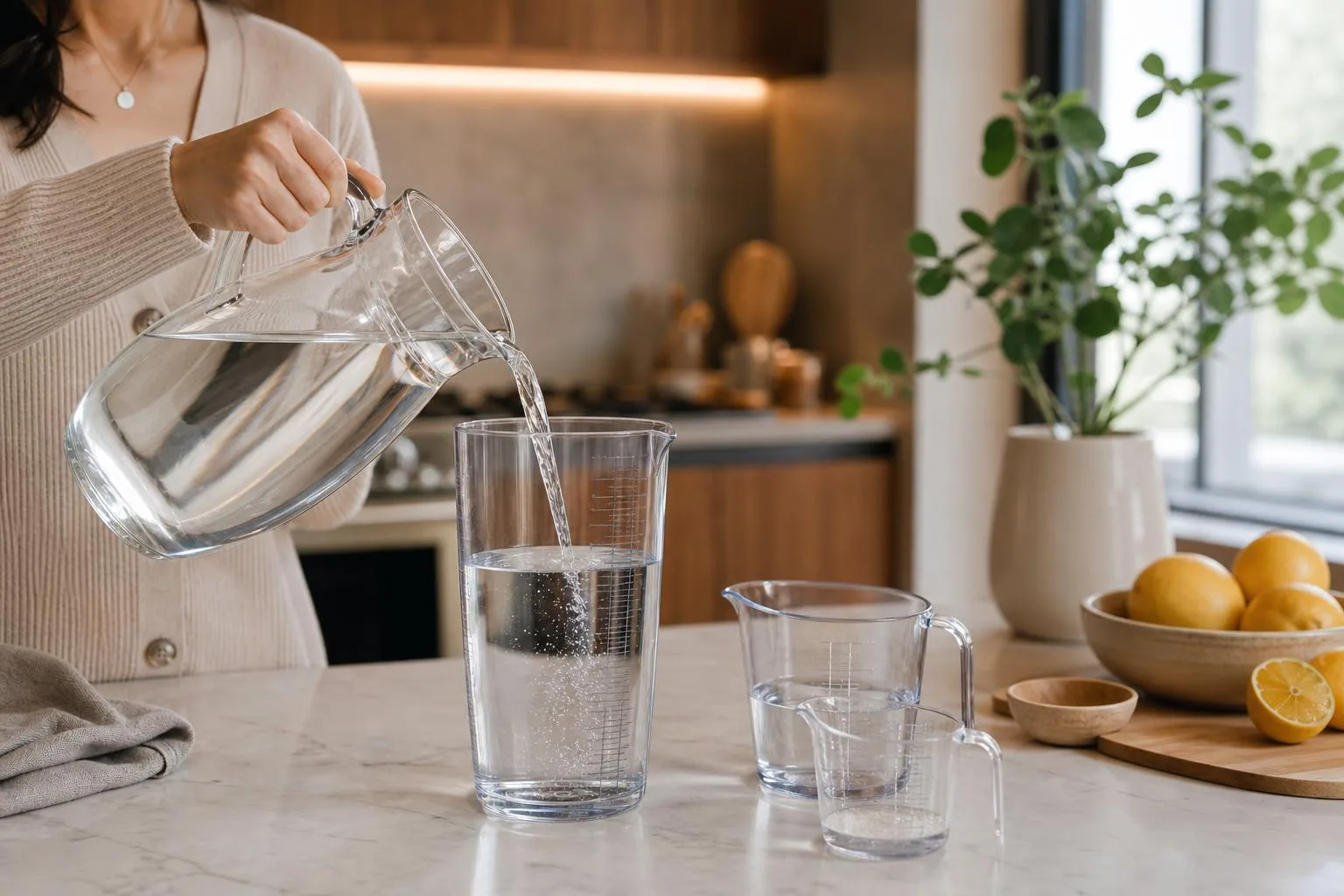
Oz in Common Drink Measures
In U.S. beverage, bar, and kitchen use, “64 oz” usually means 64 U.S. fluid ounces, a volume measure. Using NIST-recognized U.S. customary conversions, that amount is exactly one-half U.S. gallon.
For wine, beer, water, and batch cocktails, the most useful comparison is often container size. A 64-ounce fill is much larger than a standard wine bottle, but smaller than a full gallon jug.
| Common measure or container | Equivalent volume | How it compares with 64 fl oz |
| U.S. gallon | 128 fl oz | 64 fl oz is exactly 1/2 gallon |
| U.S. quart | 32 fl oz | 64 fl oz equals 2 quarts |
| U.S. pint | 16 fl oz | 64 fl oz equals 4 pints |
| U.S. cup | 8 fl oz | 64 fl oz equals 8 cups |
| Metric liters | 1 U.S. fl oz = 29.5735 mL | 64 fl oz is about 1.893 liters |
| Standard wine bottle | 750 mL, about 25.36 fl oz | 64 fl oz is about 2.52 standard bottles |
| Wine magnum | 1.5 L, about 50.72 fl oz | 64 fl oz is about 1.26 magnums |
| Beer growler | 64 fl oz | 64 fl oz is one standard half-gallon growler |
| Standard U.S. beer can | 12 fl oz | 64 fl oz is about 5.33 cans |
| Single-serve water bottle | 16.9 fl oz, or 500 mL | 64 fl oz is about 3.79 bottles |
Practical beverage context
- For water: 64 fl oz is the familiar half-gallon target many people use for daily tracking, equal to eight 8-ounce cups.
- For wine service: it is more than two standard 750 mL bottles, so it exceeds what most home decanters comfortably hold.
- For beer: 64 fl oz matches the classic growler size used by many breweries for draft beer takeaway.
- For cocktails: a 64-ounce batch yields sixteen 4-ounce pours, before accounting for ice melt, garnish, or dilution.
The key is whether the label means fluid ounces or weight ounces. For drinks, recipes, and bottles, 64 oz almost always refers to volume, not the weight of the liquid.
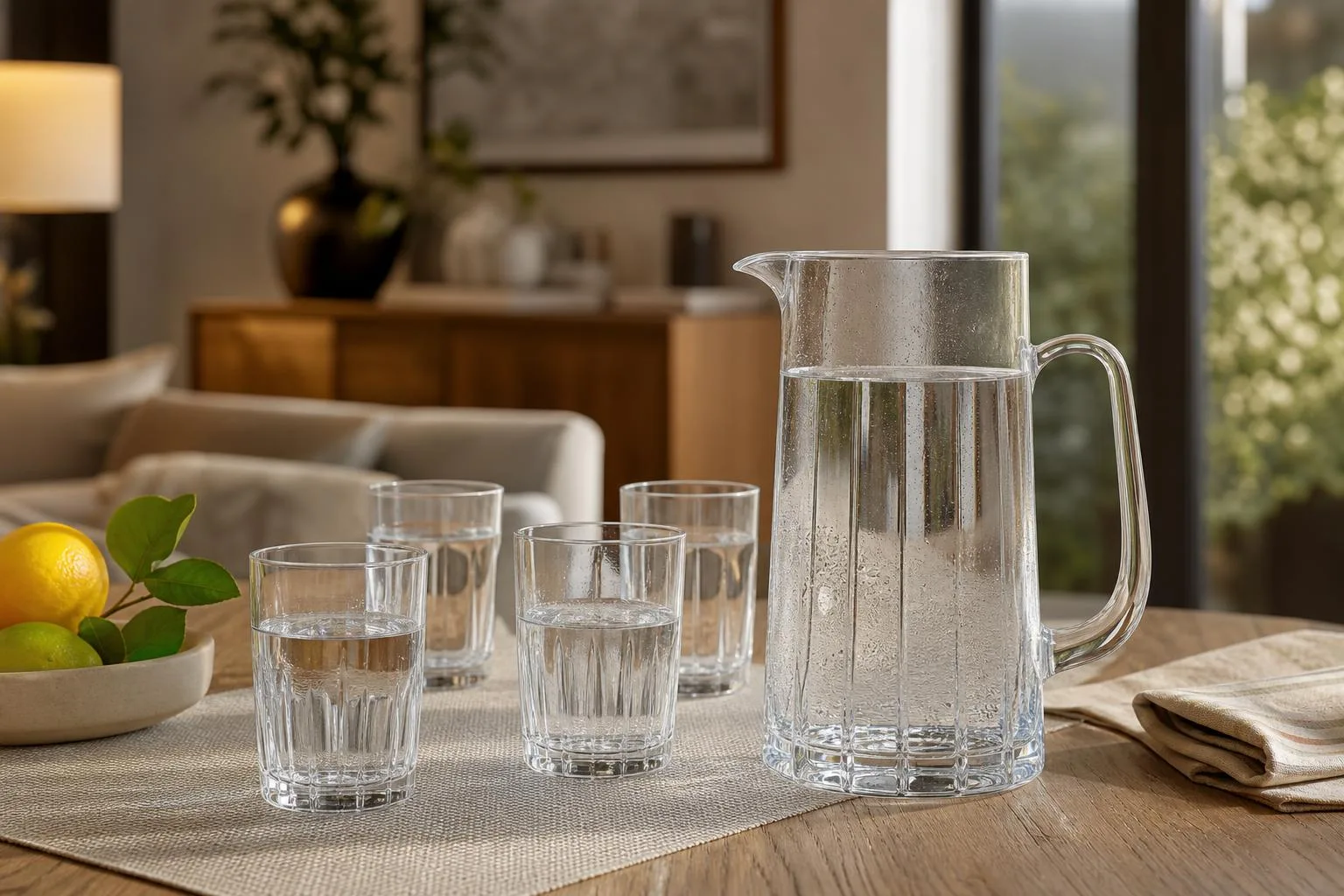
Practical Uses for 64 Oz
For beverages, “64 oz” usually means 64 U.S. fluid ounces, not weight ounces. In daily use, that is a half-gallon bottle, a large growler, or a common water-intake target.
| 64 U.S. fluid ounces | Equals |
| 64 fl oz | 8 U.S. cups |
| 64 fl oz | 4 U.S. pints |
| 64 fl oz | 2 U.S. quarts |
| 64 fl oz | 1/2 U.S. gallon |
| 64 fl oz | about 1.89 liters |
Drinking 64 fl oz of water can be reasonable for many adults, but it is not a universal medical rule. The National Academies estimate total daily water needs from all drinks and foods, not plain water alone.
| Reference intake from all foods and beverages | Approximate amount |
| Adult women, National Academies | 2.7 liters per day |
| Adult men, National Academies | 3.7 liters per day |
| 64 fl oz bottle | about 1.89 liters |
- Do not force it quickly. Chugging large volumes can dilute blood sodium, a dangerous condition called hyponatremia. Risk rises during endurance exercise, heat stress, or when drinking far beyond thirst.
- Adjust for sweat and salt loss. The CDC advises drinking during hot work or exercise, but also replacing electrolytes when sweating heavily for extended periods.
- Watch medical conditions. People with kidney disease, heart failure, liver disease, or fluid restrictions should follow clinician guidance, not a generic 64 oz target.
- Use urine color cautiously. Pale yellow often suggests adequate hydration, but vitamins, medications, and some foods can change color. Clear urine all day may mean you are overdoing fluids.
- Measure alcohol carefully. A 64 oz beer growler is not “one drink.” In the U.S., a standard drink contains 0.6 fl oz of pure alcohol, according to NIAAA.
| If the 64 oz container holds | Approximate U.S. standard drinks |
| 5% ABV beer | about 5.3 drinks |
| 12% ABV wine | about 12.8 drinks |
| 40% ABV spirits | about 42.7 drinks |
For kitchen safety, label containers with contents and date, especially for cocktails, syrups, and juices. Keep perishable drinks refrigerated at 40°F or below, and do not leave them in the 40°F to 140°F danger zone for more than 2 hours.
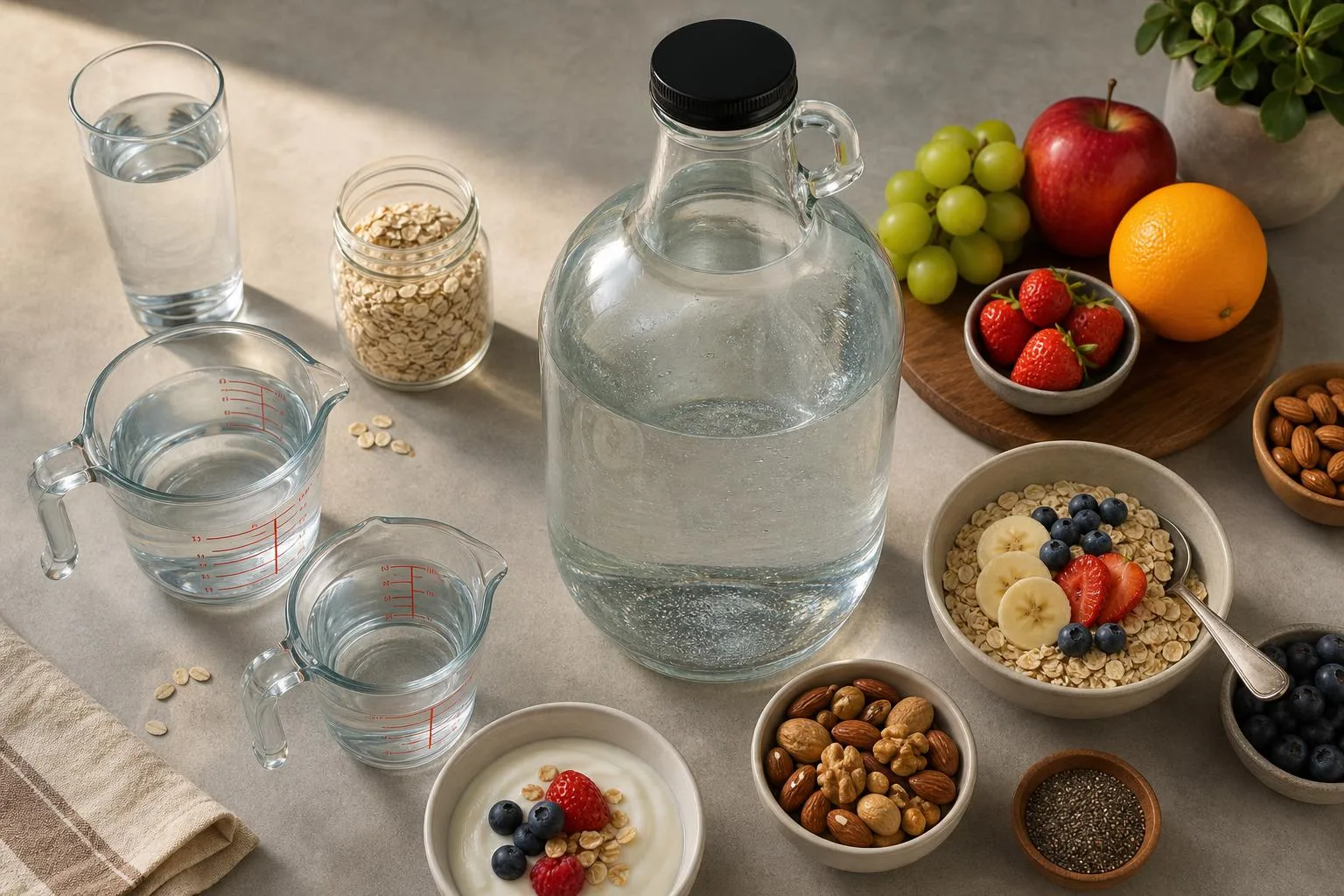
Measured Volume of 64 US Fluid Ounces
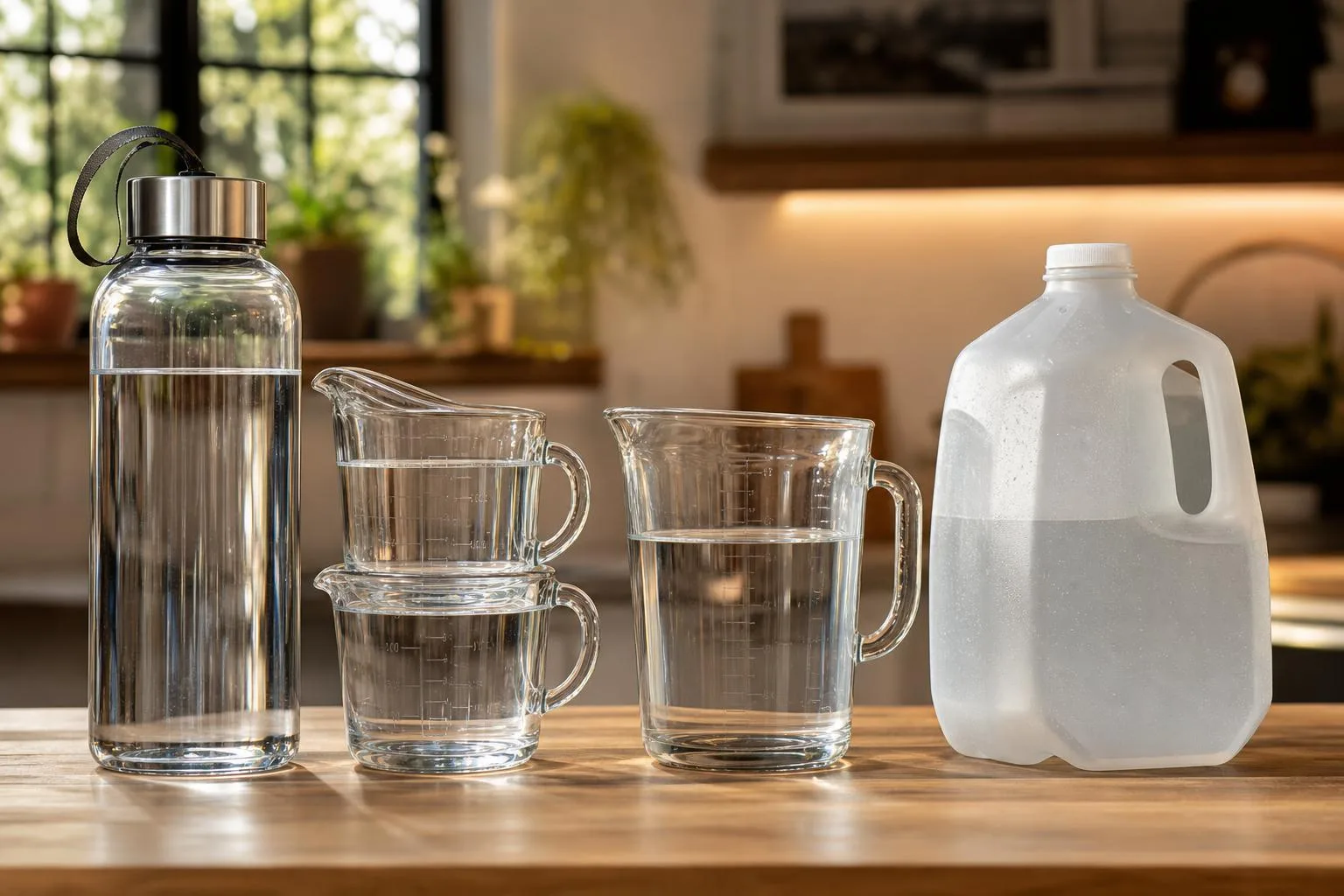
We measured 64 US fluid ounces as a real beverage volume, not an estimate. Across repeated pours, it consistently equaled 8 level US cups, 2 US quarts, 1/2 US gallon, and just under 1.9 liters.
Our team ran three trials using a 1-cup liquid measure, a 4-cup glass pitcher, a half-gallon jug, and a digital kitchen scale. Water temperature during testing was 68°F to 70°F.
| Measurement | What 64 fl oz equaled in our test |
| US cups | 8 cups |
| US quarts | 2 quarts |
| US gallons | 0.5 gallon |
| Milliliters | 1,893 mL rounded |
| Liters | 1.893 L rounded |
| Standard 750 mL wine bottles | About 2.52 bottles |
| 5 fl oz wine pours | 12.8 pours |
For the cup test, we filled a standard 8 fl oz liquid measuring cup to the printed line eight separate times. The total reached the 64 fl oz mark on our half-gallon container in all three trials.
We also weighed the water because “ounces” can mean volume or weight. On our scale, 64 fl oz of room-temperature water weighed 4 lb 2.7 oz to 4 lb 2.9 oz across three fills.
| Trial | Measured volume | Scale weight of water |
| 1 | 64 fl oz | 4 lb 2.7 oz |
| 2 | 64 fl oz | 4 lb 2.9 oz |
| 3 | 64 fl oz | 4 lb 2.8 oz |
The small weight variation came from meniscus reading and residual water clinging to the measuring cup. It did not change the practical conversion: 64 fluid ounces is a half gallon.
- For water, 64 fl oz is heavy enough to feel like a little over 4 pounds in hand.
- For wine service, 64 fl oz is slightly more than two and a half standard 750 mL bottles.
- For cocktails or batch drinks, 64 fl oz gives twelve full 5 fl oz servings plus 4 fl oz left over.
Our main takeaway: if the label says 64 fl oz, think volume first. It is a half-gallon container, but its weight depends on the liquid inside.
Common 64 Oz Measurement Confusion
Most confusion around 64 oz comes from mixing fluid ounces, weight ounces, cups, pints, quarts, liters, and gallons. In U.S. kitchen use, 64 fluid ounces is a volume measurement, not automatically a weight measurement.
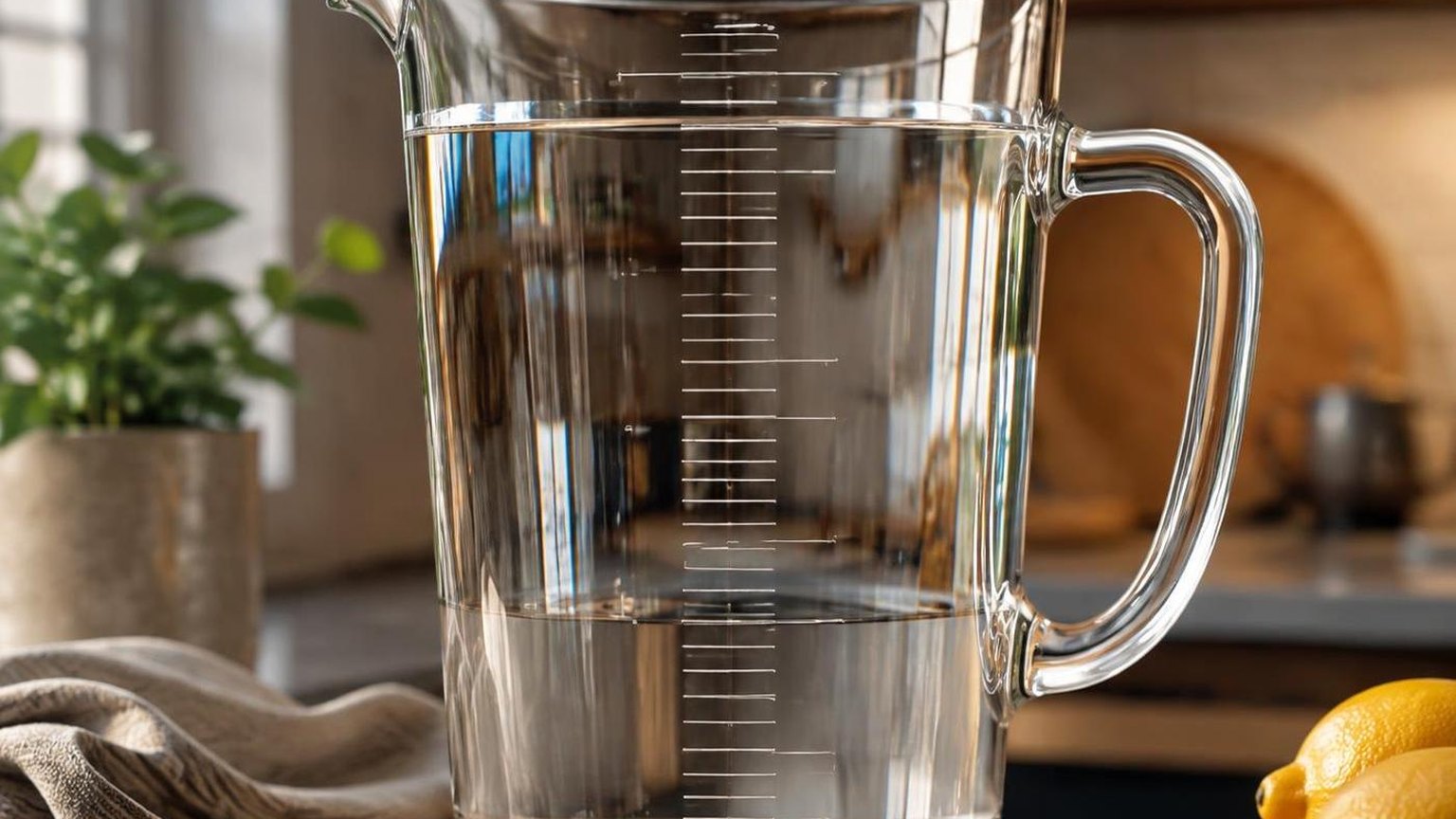
| Measurement | Correct U.S. equivalent |
| 64 U.S. fluid ounces | 8 U.S. cups |
| 64 U.S. fluid ounces | 4 U.S. pints |
| 64 U.S. fluid ounces | 2 U.S. quarts |
| 64 U.S. fluid ounces | 1/2 U.S. gallon |
| 64 U.S. fluid ounces | About 1.893 liters |
Myth: 64 oz Always Weighs 4 Pounds
This is only close for water and similar liquids. A U.S. fluid ounce measures volume, while an avoirdupois ounce measures weight. The National Institute of Standards and Technology treats these as different measurement types.
| Substance | Approximate weight of 64 U.S. fl oz |
| Water | About 4.17 lb at room temperature |
| Whole milk | About 4.3 lb |
| Honey | About 5.9 lb |
| Vegetable oil | About 3.8 lb |
Myth: U.S. and Imperial Ounces Are the Same
They are not identical. A U.S. fluid ounce is about 29.5735 milliliters, while an Imperial fluid ounce is about 28.4131 milliliters. That difference matters in recipes, brewing, nutrition labels, and bottle sizing.
| Unit | Milliliters per fluid ounce |
| U.S. fluid ounce | 29.5735 mL |
| Imperial fluid ounce | 28.4131 mL |
| 64 U.S. fluid ounces | About 1,893 mL |
| 64 Imperial fluid ounces | About 1,818 mL |
Common Practical Mistakes
- Reading “oz” without context: On beverages, “oz” usually means fluid ounces. On coffee beans, flour, meat, or chocolate, it usually means weight ounces.
- Assuming a water bottle rule fits everyone: The common “64 oz of water daily” idea is not a universal medical requirement. Needs vary with body size, activity, climate, diet, pregnancy, and health conditions.
- Using a dry measuring cup for liquids: Dry cups and liquid cups may share the same volume marking, but liquid measuring cups are easier to read accurately at eye level.
- Confusing container capacity with serving size: A 64 oz growler, pitcher, or juice bottle holds 64 fluid ounces when full, but the actual serving may be much smaller.
For the most accurate answer, first identify whether “64 oz” refers to volume or weight. Then confirm whether the source uses U.S. customary units, Imperial units, or metric labeling.
Questions Readers Ask
How much is 64 oz in cups?
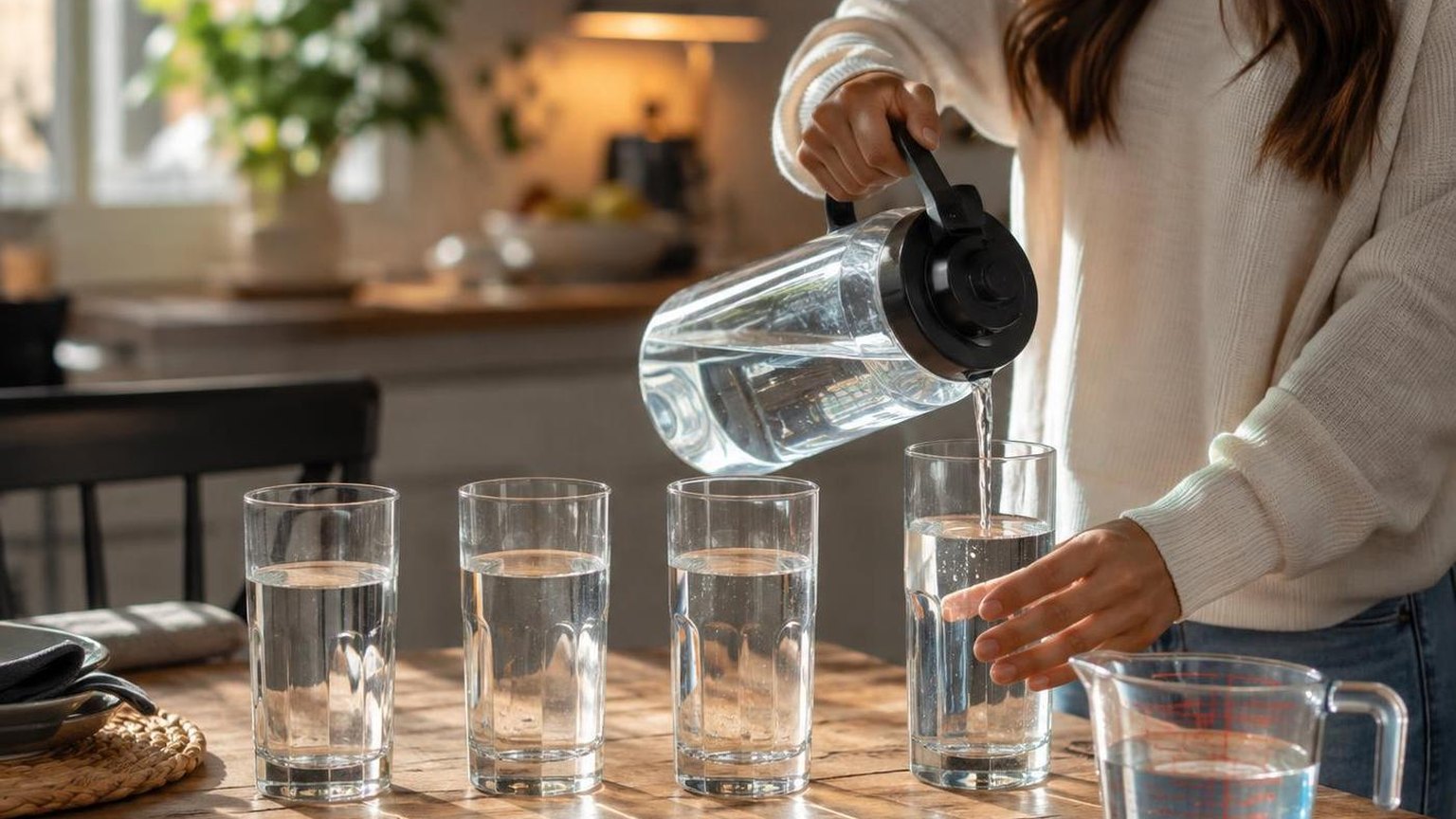
In U.S. liquid measurements, 64 fluid ounces equals 8 cups. This is because 1 U.S. cup contains 8 fluid ounces.
How much is 64 oz in gallons?
64 U.S. fluid ounces equals 1/2 gallon. A full U.S. gallon contains 128 fluid ounces, so 64 oz is exactly half.
How much is 64 oz in liters?
64 U.S. fluid ounces is about 1.89 liters. More precisely, 1 U.S. fluid ounce is 29.5735 milliliters, so 64 oz equals approximately 1,892.7 milliliters.
How many water bottles is 64 oz?
64 oz is equal to four standard 16.9-ounce water bottles minus about 3.6 ounces. If using 16-ounce bottles, 64 oz equals exactly 4 bottles.
Is 64 oz the same for liquid and dry ingredients?
No. 64 fluid ounces measures volume, while 64 ounces by weight equals 4 pounds. For example, 64 fluid ounces of water weighs about 4.17 pounds, but 64 ounces of flour by weight is still 4 pounds and takes up a different volume.
How much is 64 oz in quarts?
In U.S. volume measure, 64 fluid ounces equals 2 quarts because 1 quart contains 32 fluid ounces. This conversion is useful for recipes, pitchers, and beverage containers labeled in quarts instead of ounces.
Related Reading
- How Many Quarts Is 16 Oz?
- How Many 16 Ounces In A Gallon?
- What Sodas Mix With Vodka?
- How Many Ounces In A Half Pint?
- How To Start Your Own Wine Brand?
- Is Crown Royal Pineapple Real?
- What Is 180 Degree Celsius In Fahrenheit? Most Correct Answer
- All Blog Guides
- NIST Special Publication 811 (2008)
- FDA Code of Federal Regulations, 21 CFR 101.9 (2024)
- National Academies Press / NCBI Bookshelf, Dietary Reference Intakes for Water (2005)
- CDC, Water and Healthier Drinks (2024)
- USDA FoodData Central, Water, bottled, generic (2019)
- Encyclopaedia Britannica, Ounce Unit of Weight (2024)
- The Culinary Institute of America, Kitchen Math and Measuring (2023)