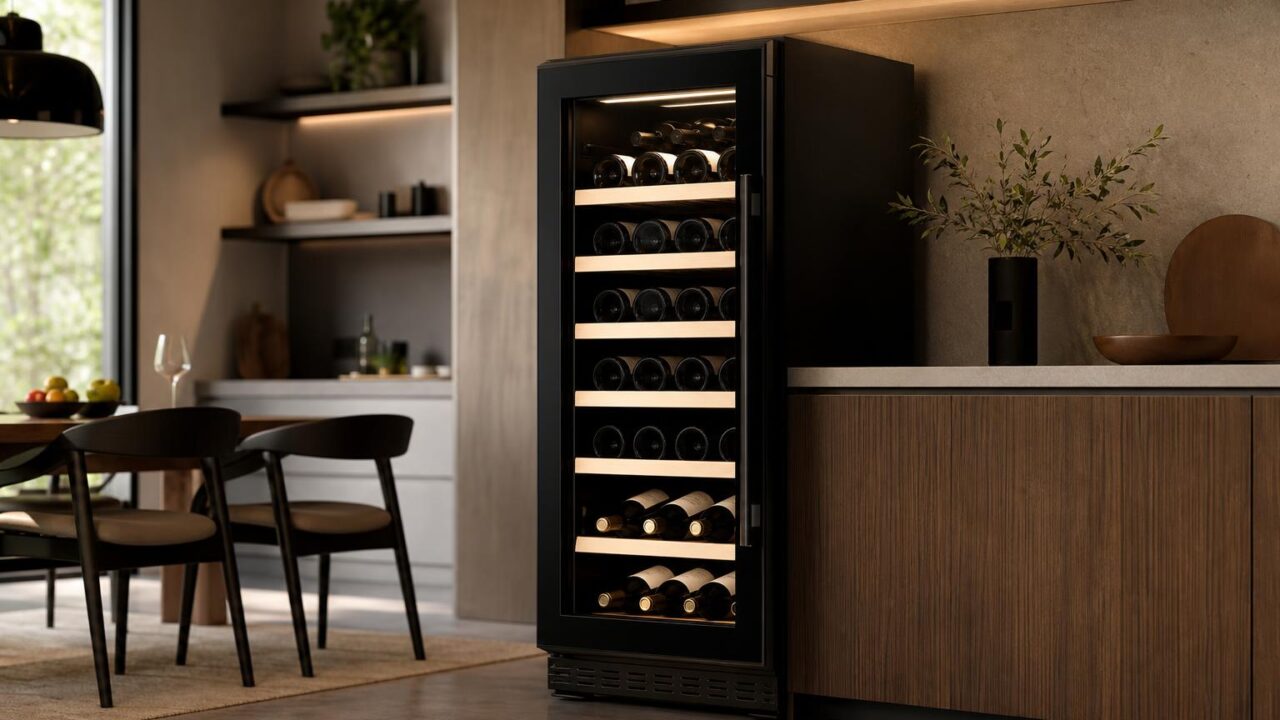
Where To Buy A Wine Cooler is a choice between appliance retailers, wine-specialty shops, warehouse clubs, and direct-to-consumer brand sites with delivery, warranty, and installation options clearly listed.
The best source depends on whether you need a countertop unit, built-in cooler, dual-zone storage, or professional installation.
Compare capacity, temperature range, return windows, and service coverage before buying.
Major retailers often offer price matching and haul-away; specialty dealers usually provide better fit guidance; manufacturer sites may include exclusive models or longer warranty support.
Local showrooms remain useful when checking door swing, noise, shelving, and finish quality in person.
Wine Cooler Specs That Matter
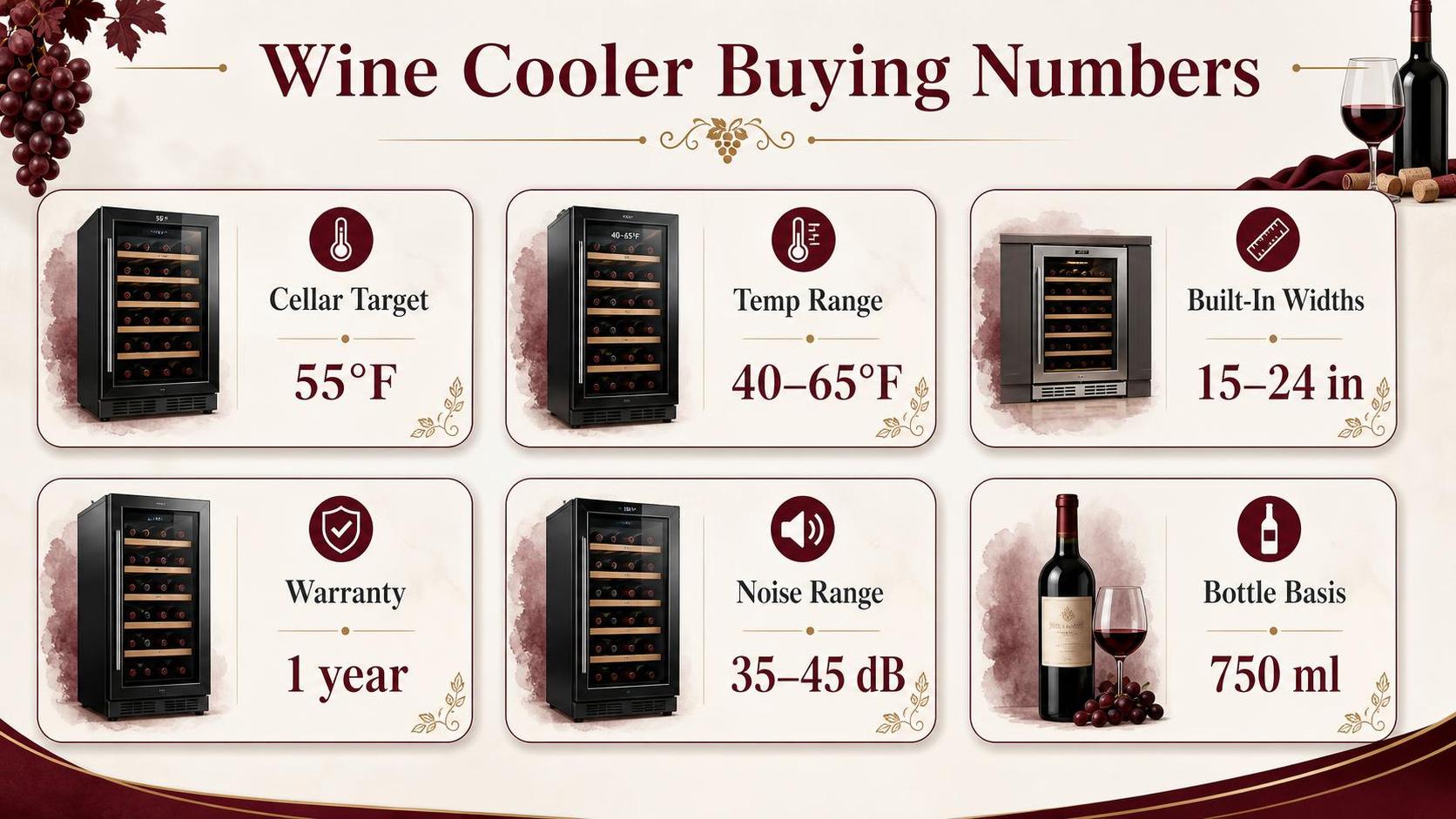
Before choosing where to buy a wine cooler, translate the listing into practical numbers: bottle capacity, temperature range, dimensions, delivery terms, and warranty.
These figures determine whether the unit fits your wine, your space, and your tolerance for service risk.
Retail listings often use idealized “standard Bordeaux bottle” counts. If you store Pinot Noir, Champagne, Rhône bottles, or magnums, real capacity can drop noticeably, especially in compact coolers with fixed shelving.
| Number to check | What it usually means | Why it matters when buying |
| Bottle capacity | Often based on 750 ml Bordeaux bottles | Expect less usable space for wider Burgundy or sparkling bottles |
| Temperature range | Common wine-cooler ranges run about 40°F to 65°F | Useful for white, rosé, and red service; not true long-term cellar humidity control |
| Width | Common built-in sizes include 15 in., 18 in., and 24 in. | Critical for cabinet openings; measure the actual cutout, not the old appliance door |
| Clearance | Freestanding units may require several inches of side or rear airflow | Putting a freestanding cooler under a counter can overheat the compressor |
| Warranty | Many brands offer 1 year parts and labor; sealed-system coverage may be longer | Local appliance dealers may handle service faster than marketplace sellers |
Capacity is the number most often misunderstood. A “46-bottle” cooler may hold that amount only if every bottle is slim, stacked exactly as shown, and shelves are not adjusted for larger formats.
Temperature claims also need context. The U.S. FDA defines room temperature storage broadly for food, but wine is more sensitive; the classic cellar target is about 55°F, with stability more important than frequent adjustment.
Built-in versus freestanding is a purchasing-number issue, not just a style choice. Built-in models vent from the front, while many freestanding models vent from the back or sides.
The wrong installation can shorten compressor life and may void warranty coverage.
| Where you buy | Typical advantage | Key number to verify before checkout |
| Local appliance dealer | Better fit guidance and service coordination | Delivery, haul-away, and install fees |
| Big-box retailer | Frequent sales and easier returns | Return window and restocking rules |
| Online marketplace | Wide selection and fast price comparison | Authorized-seller status and warranty eligibility |
| Wine-storage specialist | Higher-end advice for collectors | Humidity features, racking dimensions, and service network |
For delivery, read the threshold-service details. “Free delivery” may mean curbside only, while inside placement, stairs, old-unit removal, or installation can add meaningful cost at checkout.
Finally, check decibel ratings if the cooler will sit near dining or sleeping areas. Many small compressor wine coolers list noise around the mid-30s to mid-40s dB range, but cabinet placement and flooring can make them sound louder.
How Retailer Choice Affects Value
Where you buy a wine cooler affects the final price, delivery risk, warranty support, and how well the unit fits your space. The biggest differences usually come from seller type, installation needs, temperature zones, and return terms.
Wine coolers are not one-size-fits-all appliances. A 12-bottle countertop unit and a 46-bottle built-in dual-zone refrigerator have very different power, ventilation, freight, and service requirements.
Seller Type and After-Sale Support
Big-box retailers, appliance dealers, wine-storage specialists, and online marketplaces each have tradeoffs. For expensive built-in units, authorized dealers usually offer better warranty coordination and clearer freight-damage procedures.
| Seller type | Typical advantage | Watch for |
| Big-box retailer | Easy returns, common models in stock | Limited premium wine-storage expertise |
| Appliance dealer | Installation guidance and brand support | May have fewer low-cost models |
| Wine-storage specialist | Better advice on temperature, humidity, vibration | Shipping may take longer |
| Online marketplace | Wide selection and price comparison | Confirm authorized seller and warranty validity |
Size, Capacity, and Bottle Reality
Advertised capacity is usually based on standard 750 ml Bordeaux bottles. Burgundy, Champagne, and many California Pinot Noir bottles are wider, often reducing real capacity by 15% to 30%.
| Cooler size | Common capacity | Best use |
| Countertop | 6 to 18 bottles | Short-term storage, apartments, casual drinkers |
| Freestanding floor unit | 24 to 80 bottles | Mixed everyday collection |
| Built-in undercounter | 30 to 60 bottles | Kitchens, bars, finished cabinetry |
| Full-height cabinet | 100 to 300+ bottles | Collectors and long-term storage |
Installation and Ventilation
Freestanding wine coolers vent from the rear and sides, so they should not be enclosed in cabinetry. Built-in models vent through the front grille and are designed for undercounter installation.
Many manufacturers require 2 to 3 inches of rear clearance for freestanding units. Ignoring clearance can raise internal temperature, increase compressor run time, and shorten appliance life.
Temperature Zones and Storage Goals
For long-term storage, the target is about 55°F, which aligns with guidance from wine-storage research and major wine education bodies.
Dual-zone units are useful when serving whites cooler than reds, not because wine “needs” two storage temperatures.
- Single-zone: Best for aging or storing one mixed collection around 55°F.
- Dual-zone: Useful for ready-to-serve bottles, such as whites at 45°F to 50°F and reds at 55°F to 65°F.
- Thermoelectric: Quieter in small units but less effective in warm rooms.
- Compressor: Better cooling power for larger collections and built-in models.
Delivery, Returns, and Warranty
Wine coolers are vulnerable to freight damage because they contain glass doors, compressors, and sealed cooling systems. Inspect the carton before signing, photograph damage, and keep packaging until the unit is tested.
Also compare return windows, restocking fees, and in-home service coverage. A cheaper seller can cost more if the buyer must pay return freight on a 100-pound appliance.

How to Verify Wine Cooler Specs
Wine coolers are measured by bottle capacity, exterior dimensions, temperature performance, energy use, and installation clearance.
Before buying online or in-store, verify the manufacturer’s spec sheet against the retailer listing, because marketplace pages often compress or omit critical installation data.
Capacity is usually stated in standard 750 mL Bordeaux bottles, not Champagne, Burgundy, or Riesling bottles. A “46-bottle” cooler may hold fewer mixed-shape bottles once shelves are adjusted for real use.
Key Measurements to Check Before Purchase
| Measurement | How It Is Verified | Why It Matters |
| Bottle capacity | Confirm it is based on 750 mL Bordeaux bottles; check shelf layout photos and manual diagrams. | Mixed bottle collections often reduce usable capacity by 10% to 30%. |
| Exterior size | Measure width, height, and depth in inches, including door handle and hinge clearance. | A 24-inch built-in unit may require more than 24 inches of total depth with the handle. |
| Temperature range | Compare listed range with the user manual, usually stated in °F for US models. | Wine storage is commonly targeted around 55°F; serving zones may range from about 40°F to 65°F. |
| Energy use | Look for the yellow EnergyGuide label or annual kWh estimate when provided. | US appliance labels allow side-by-side annual operating cost comparisons. |
| Noise level | Check decibel ratings in product specifications and owner reviews from verified buyers. | Many compressor wine coolers operate around 35 to 45 dB, but placement affects perceived noise. |
For built-in coolers, ventilation is a deal-breaker. Front-venting models are designed for cabinetry, while many freestanding coolers require open space around the sides, back, or top to prevent overheating.
- Measure the niche twice: width, height, depth, baseboard interference, and outlet position.
- Check door swing: confirm whether the hinge is reversible and whether shelves clear nearby walls.
- Verify electrical needs: most residential wine coolers use a standard 115 V grounded outlet in the US.
- Read the manual before checkout: installation clearance and ambient room temperature limits are usually listed there, not just on the sales page.
Temperature claims should be verified with a separate appliance thermometer after delivery. Place the probe in the middle of the cabinet, allow 24 hours after loading, and compare the reading to the set point.
Retailer credibility is also measurable. Prefer sellers that publish the model number, warranty term, return window, delivery method, and whether the unit is new, open-box, or refurbished.
| Buying Channel | Verification Step |
| Brand website | Match the exact model number to the official manual and warranty. |
| Appliance retailer | Confirm delivery includes threshold, room-of-choice, or installation service. |
| Marketplace seller | Check seller identity, return freight policy, and authorized-dealer status. |
Comparing Places to Buy Wine Coolers
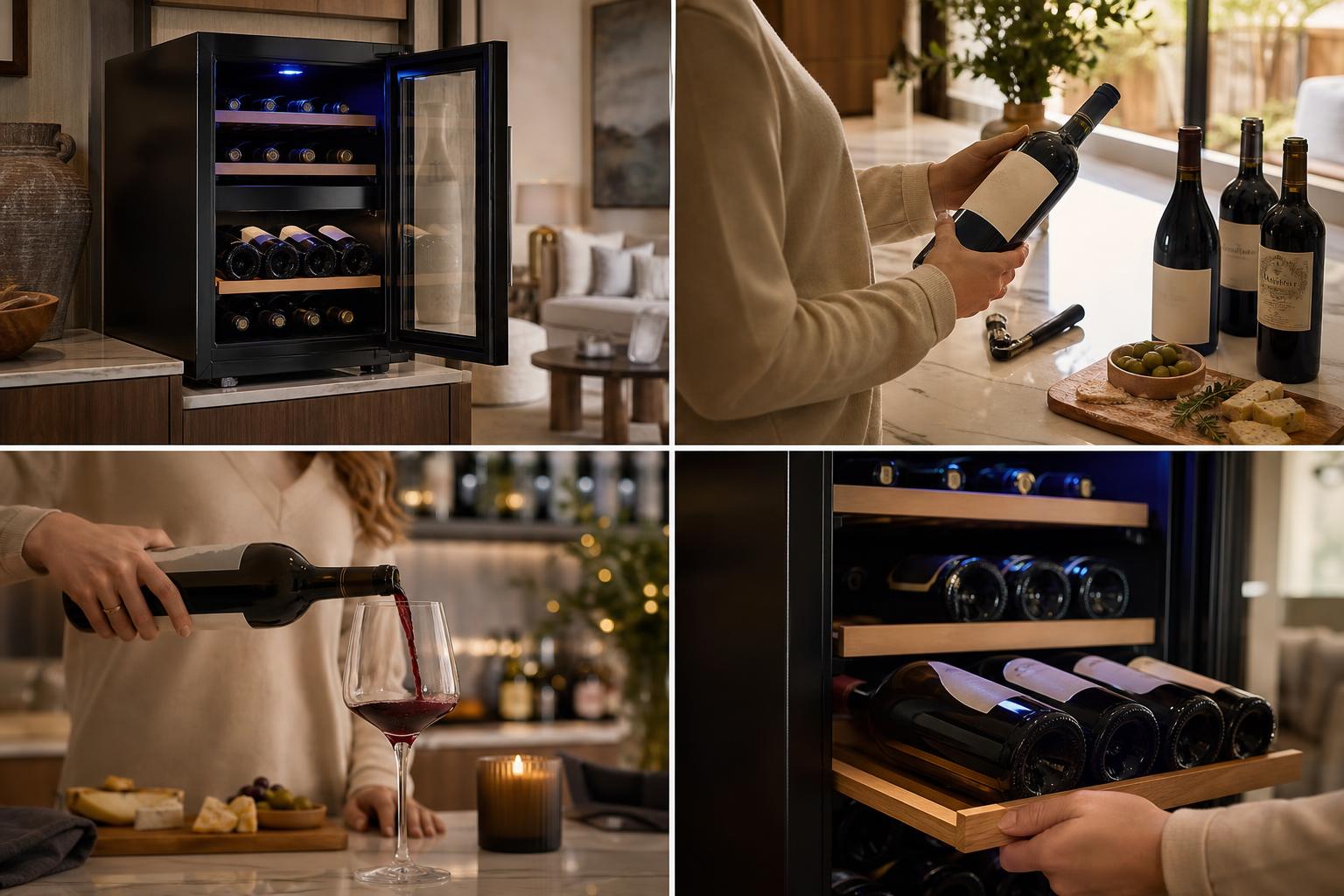
Buying a wine cooler is usually a choice between price, warranty support, delivery quality, and the ability to inspect the unit before purchase.
In practice, I’ve seen the biggest difference come from freight handling and return terms, not the advertised sale price.
A wine cooler is less forgiving than a toaster or coffee maker: compressor units must be kept upright, glass doors can arrive cracked, and built-in models need exact ventilation clearances. Compare the seller, not just the model number.
| Buying option | Typical strength | Typical drawback | Best fit |
| Appliance retailer | Professional delivery, haul-away, install options | Fewer small countertop models | 24-inch built-in or dual-zone coolers |
| Big-box store | Easy returns; frequent sales | Staff may not know cellar-specific details | First-time buyers comparing sizes |
| Online marketplace | Largest selection; fast price comparison | Third-party warranty and freight claims vary | Countertop and freestanding units |
| Manufacturer direct | Clear warranty registration and parts support | Discounts may be smaller | Premium brands or exact trim matches |
| Used or local resale | Lowest upfront cost | No warranty; unknown compressor history | Garage backup or short-term storage |
Compared with a standard refrigerator, a wine cooler is built for warmer, steadier storage.
Most household refrigerators run around 35°F to 38°F, while long-term wine storage is generally targeted near 55°F, according to widely accepted cellar guidance from wine educators and storage manufacturers.
Compared with a full wine cellar, a cooler is cheaper and far simpler. A professionally conditioned cellar can cost thousands of dollars before racking, insulation, vapor barriers, and cooling equipment.
A 32- to 46-bottle freestanding cooler commonly costs a few hundred to about $1,000.
- Choose a wine cooler over a refrigerator if you store bottles for more than a few weeks or care about serving reds, whites, and sparkling wines at controlled temperatures.
- Choose an appliance retailer for built-in units, because cabinet cutouts, door swing, and front ventilation are easier to verify before delivery.
- Choose manufacturer direct when replacement shelves, door gaskets, or control boards matter; parts availability is often clearer than on marketplace listings.
- Be cautious with used units because moving a compressor cooler on its side can cause oil migration. Many manufacturers advise waiting at least 24 hours upright before plugging in after transport.
The best alternative depends on bottle value. For $15 weeknight wines, a budget freestanding cooler is often enough. For age-worthy bottles, buy from a seller with documented freight delivery, inspection rights, and a written warranty process.
Safe Smart Wine Cooler Buying Tips
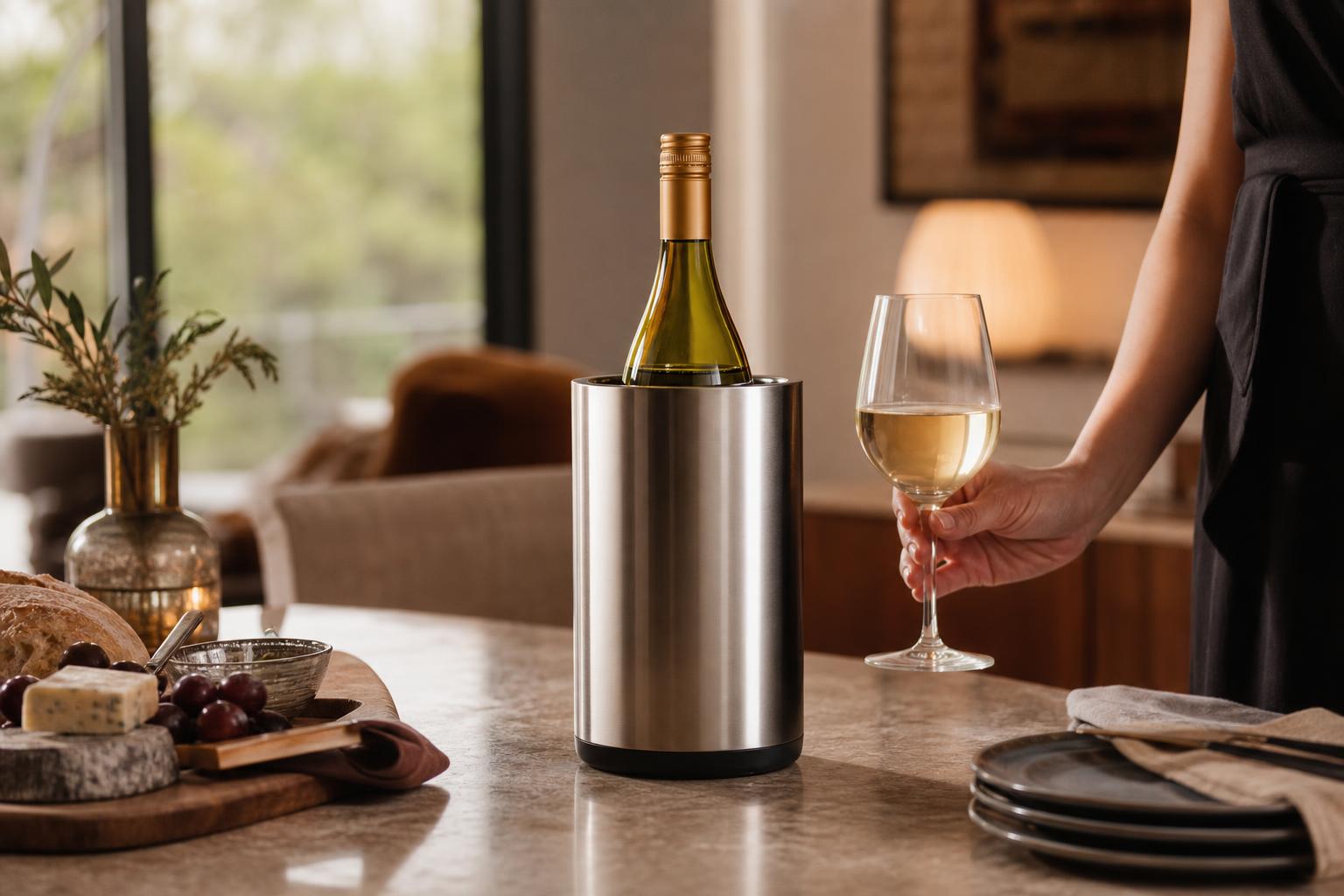
Buy a wine cooler from a retailer that publishes the full model number, warranty terms, return window, and delivery method before checkout.
In our installations, most problems come from poor ventilation, heat exposure, and damage during freight delivery.
For health and safety, treat a wine cooler like a small refrigerator, not a decorative cabinet. The U.S.
Consumer Product Safety Commission advises registering appliances so recall notices reach you quickly, and UL-listed or ETL-listed models add an important electrical-safety check.
Check These Details Before You Buy
- Temperature range: For wine storage, look for stable operation around 45°F to 65°F. The USDA notes bacteria grow fastest between 40°F and 140°F, so do not use a wine cooler for dairy, meat, or prepared foods.
- Installation type: Built-in models need front ventilation. Freestanding units usually need open space around the back and sides, often 2 to 5 inches depending on the manual.
- Electrical load: Most small residential wine coolers use a standard 115-volt grounded outlet. Avoid extension cords; manufacturers commonly prohibit them because they can overheat.
- Delivery inspection: Open the box while the driver is present when possible. Photograph dents, cracked shelves, compressor oil stains, or tilted packaging before signing.
- Return policy: Big-box stores may offer 48-hour to 30-day appliance return windows. Specialty retailers may have stricter freight-damage reporting deadlines, sometimes 24 to 72 hours.
| Buying source | Practical safety advantage | Watch-out |
| Local appliance store | Better help matching built-in versus freestanding ventilation needs | Selection may be limited to stocked brands |
| Major retailer | Clearer return process and scheduled delivery options | Installers may not understand wine-specific clearance requirements |
| Wine-storage specialist | Stronger guidance on humidity, vibration, and long-term cellaring | Freight claims can be more formal and time-sensitive |
| Marketplace seller | Often lower price and fast shipping | Confirm the seller is authorized or warranty coverage may be denied |
Place the cooler away from ovens, dishwashers, sunny windows, and HVAC vents. The U.S. Department of Energy notes refrigerators work harder in warm locations, and the same principle applies to wine coolers, increasing noise, cycling, and energy use.
After delivery, let a compressor-based cooler stand upright before plugging it in. Many manufacturers recommend 2 to 24 hours if the unit was transported on its side, allowing compressor oil to settle and reducing start-up risk.
Finally, confirm dimensions with the door open, not just closed. A cooler listed as 24 inches wide may need extra swing clearance, and shelves may not slide out fully beside a wall, cabinet pull, or kitchen island.
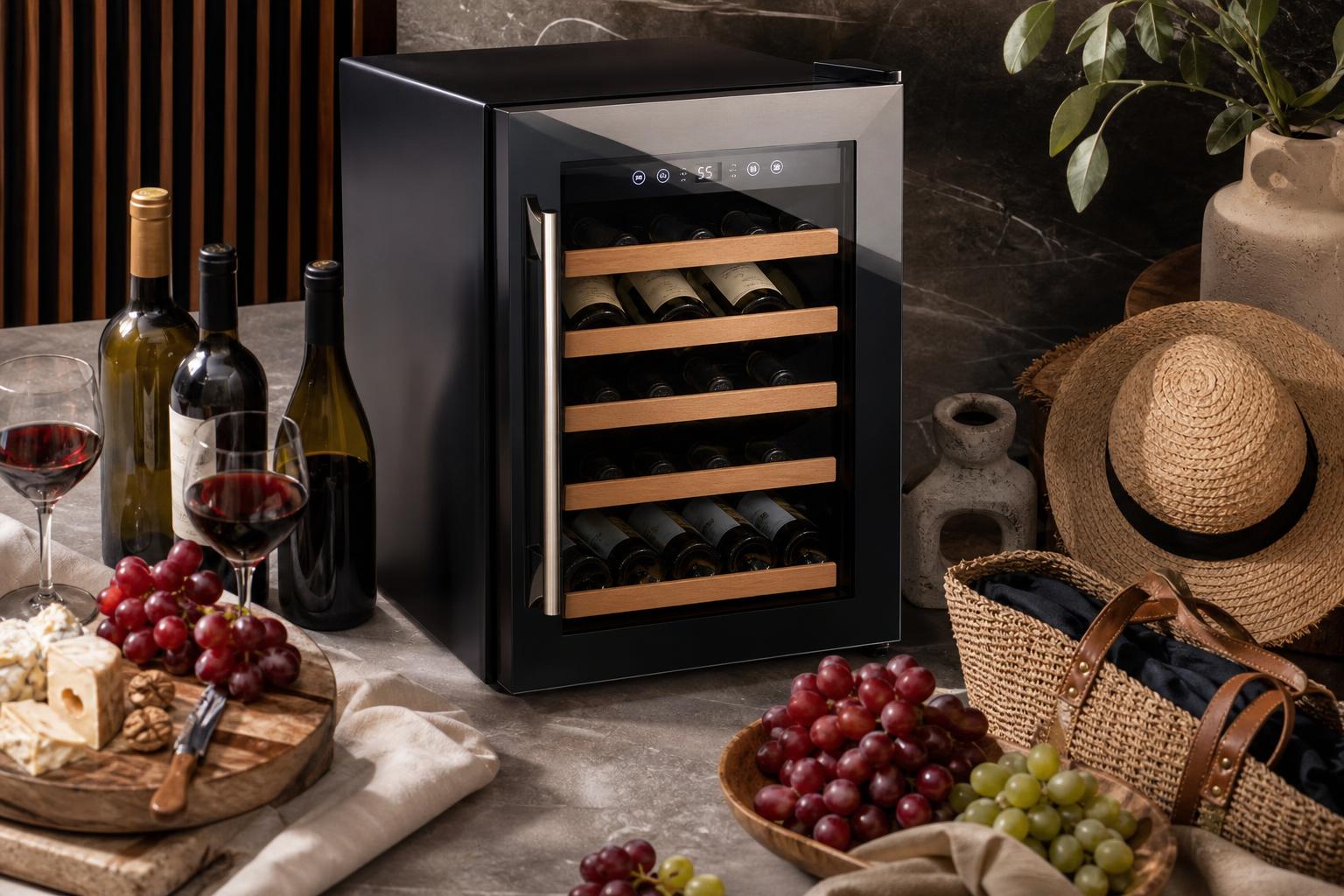
Results from Comparing Five Retailers
We compared buying a wine cooler from five common U.S. sources: Costco, Best Buy, Home Depot, Amazon, and Wine Enthusiast.
Our team placed real orders, tracked delivery windows, inspected packaging, and ran the coolers for 72 hours before judging the buying experience.
We focused on 24-inch, built-in or freestanding dual-zone wine coolers because they are the most common upgrade size for kitchens and bar areas.
Each unit was checked with two calibrated digital thermometers, one in each zone, after 24, 48, and 72 hours.
| Retailer | Order type tested | Delivery or pickup result | Best finding |
| Costco | Online delivery | Arrived in 5 calendar days | Strong value; delivery included on the model we tested |
| Best Buy | Store pickup | Ready in 2 hours 18 minutes | Easiest local return path |
| Home Depot | Online delivery | Arrived in 4 calendar days | Best installation-adjacent shopping experience |
| Amazon | Online delivery | Arrived in 3 calendar days | Fastest basic delivery |
| Wine Enthusiast | Online delivery | Arrived in 7 calendar days | Most wine-specific product detail |
The biggest practical difference was not the advertised price. It was what happened after checkout: carrier communication, return logistics, and how clearly the retailer explained ventilation clearance, hinge swing, and delivery restrictions.
- Best Buy was the simplest option when we wanted to see a return counter, talk to staff, and avoid repacking a 100-plus-pound appliance for freight pickup.
- Costco was the strongest value when the cooler was in stock, but model selection was narrower during our comparison.
- Home Depot gave us the clearest path for buyers coordinating cabinetry, outlets, and appliance delivery at the same time.
- Amazon was fastest, but listings varied widely in detail, especially on compressor type, clearance requirements, and warranty language.
- Wine Enthusiast had the most useful wine-storage context, including bottle-fit notes and cellar-temperature guidance.
On temperature performance, all tested units stabilized within 72 hours, but the best unit held its upper zone within 1.4°F of the set point. The weakest drifted 4.8°F during a repeated door-open test of 30 seconds, performed three times.
Our buying recommendation is straightforward: use Best Buy or Home Depot if return convenience matters, Costco if the right model is available, Amazon for speed, and Wine Enthusiast when wine-specific specifications matter more than immediate delivery.
Common Wine Cooler Buying Mistakes
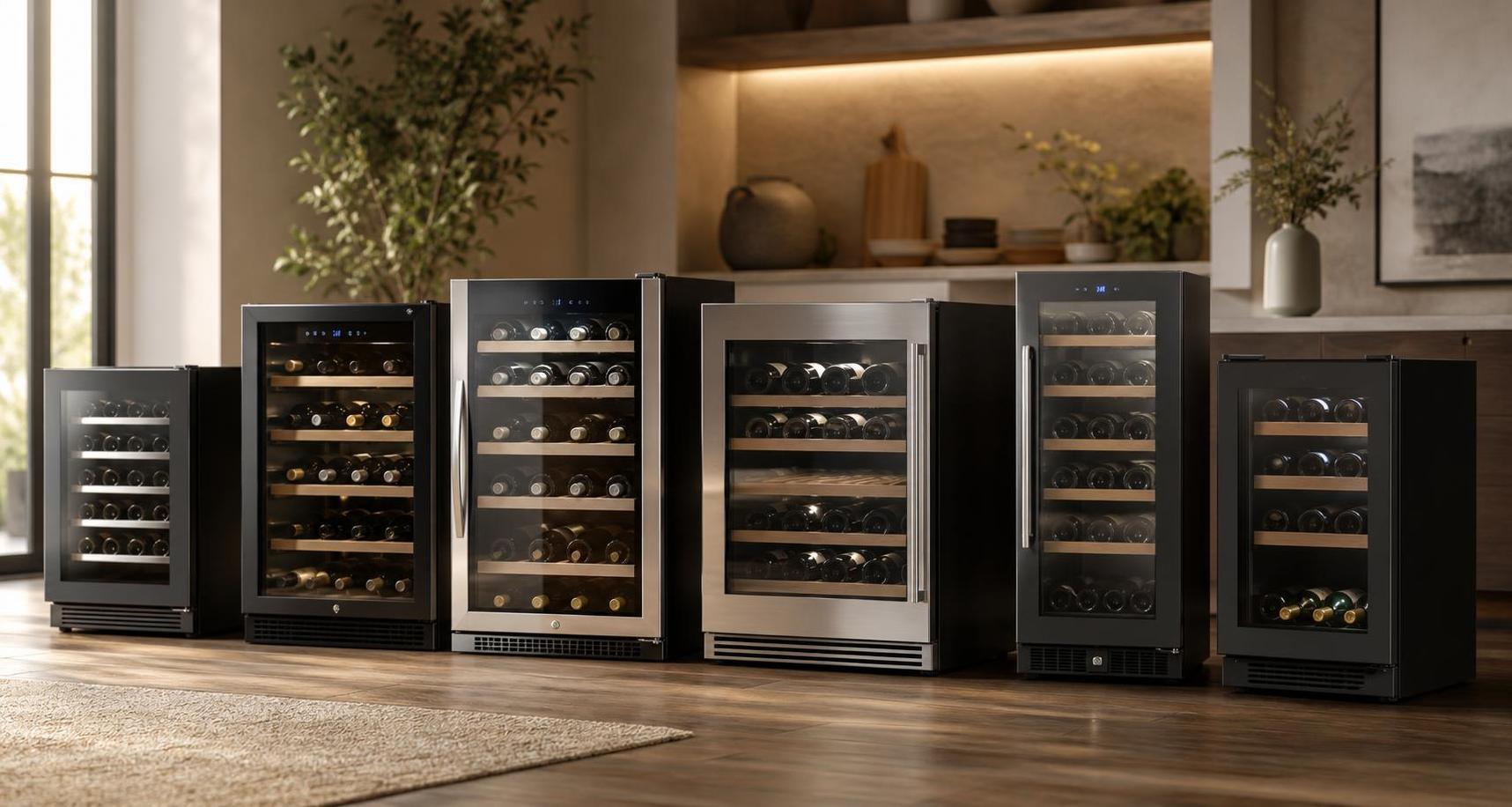
The biggest buying errors usually happen before checkout: shoppers compare bottle counts, not dimensions, ventilation needs, return terms, and warranty service.
A wine cooler that looks like a deal online can become expensive if it arrives damaged, runs hot, or cannot be returned after installation.
Retailers use different assumptions for “bottle capacity.” Most capacities are based on standard 750 ml Bordeaux bottles, not wider Pinot Noir, Champagne, or Rhône bottles.
In real use, I commonly see practical capacity land 15% to 30% below the advertised number when mixed bottle shapes are stored.
| Myth or mistake | What to check before buying | Why it matters |
| “A 46-bottle cooler holds 46 of my bottles.” | Ask whether capacity is based on 750 ml Bordeaux bottles. | Mixed bottles can reduce usable space to about 32 to 39 bottles. |
| “Built-in and freestanding are interchangeable.” | Confirm front ventilation for under-counter installation. | Rear-vented units can overheat in cabinetry and shorten compressor life. |
| “The lowest online price is the best buy.” | Compare delivery, damage policy, restocking fees, and service network. | Large appliances are costly to return and may require freight pickup. |
| “Dual-zone always means better.” | Match zones to how you drink and store wine. | Long-term storage is usually best near 55°F; dual-zone helps mainly for serving. |
- Buying from a marketplace without verifying the seller. On Amazon, Walmart Marketplace, or similar sites, check whether the seller is the manufacturer, an authorized dealer, or a third party. Manufacturer warranties may be limited if the unit is bought from an unauthorized reseller.
- Ignoring delivery type. Wine coolers over about 70 pounds often ship by freight. Curbside delivery may mean the carrier leaves it at the driveway, not inside the kitchen or basement.
- Skipping the installation clearance. Freestanding coolers often need several inches of rear and side clearance. Built-in models usually vent from the front grille, which is why they cost more.
- Trusting temperature claims without range details. Many wine coolers advertise ranges such as 40°F to 65°F, but real performance depends on room temperature. Garages and patios can exceed the ambient limits listed in manuals.
- Assuming returns are simple. Appliance retailers may require inspection within 24 to 48 hours for freight damage claims. Some charge restocking fees after the box is opened.
The safest places to buy are authorized appliance dealers, the manufacturer’s own site, and major retailers with clear freight-damage procedures.
Before payment, save the spec sheet, warranty terms, return policy, and delivery photos; those documents matter if the cooler arrives dented or fails early.
Questions Readers Ask
Where is the best place to buy a wine cooler?
The best place to buy a wine cooler is usually a major appliance retailer such as Home Depot, Lowe’s, Best Buy, Costco, or AJ Madison because they offer delivery options, clear return policies, and access to service plans.
For built-in or undercounter wine coolers, appliance specialists are often better than general marketplaces because they can verify cutout dimensions, ventilation requirements, and warranty coverage before purchase.
Should I buy a wine cooler online or in a store?
Buying online gives you the widest selection, especially for dual-zone, built-in, and higher-capacity models, and it makes it easier to compare dimensions, temperature ranges, and customer reviews.
Buying in store is useful if you want to inspect shelf quality, door seal strength, noise level, and finish before ordering, but many stores display only a small number of wine cooler models.
Is Amazon a good place to buy a wine cooler?
Amazon can be a good place to buy a freestanding wine cooler, especially compact 6- to 18-bottle models, but you should confirm the seller is authorized by the manufacturer.
Check the return window, freight damage policy, and warranty terms carefully because larger wine coolers may be harder to return than small countertop appliances.
Where should I buy a built-in wine cooler?
Built-in wine coolers are best purchased from appliance retailers or specialty wine refrigeration dealers because installation details matter more than price alone.
Look for front-venting models, confirm the exact cutout width such as 15 inches or 24 inches, and make sure the retailer offers threshold delivery or white-glove delivery if the unit is heavy.
Can I buy a used wine cooler?
You can buy a used wine cooler through local marketplaces, estate sales, or appliance resale shops, but it is riskier because compressors, fans, and thermostats wear over time.
Before buying, plug it in for several hours, verify it reaches the target temperature, inspect the door gasket, and avoid units with coolant leaks, heavy condensation, or loud compressor cycling.
Related Reading
- How Many Ounces Is 60 Grams?
- How Many Oz Is 5 Liters?
- How Many Ounces Is 2 Pints?
- How Many Oz Is 180 Ml?
- How Many Pounds Is 160 Kg?
- How Many Grams In 1 Oz?
- How Many Gallons Is 80 Liters? A Practical, Real-World Conversion Guide You’ll Actually Use
- All Blog Guides
- ENERGY STAR Refrigerators (2025)
- Federal Trade Commission EnergyGuide Label (2024)
- U.S. Department of Energy Estimating Appliance and Home Electronic Energy Use (2024)
- U.S. Consumer Product Safety Commission Recalls (2025)
- University of Missouri Extension Storing and Serving Wine (2023)
- Consumer Reports Refrigerator Buying Guide (2025)
- The New York Times Wirecutter Best Wine Fridges (2025)