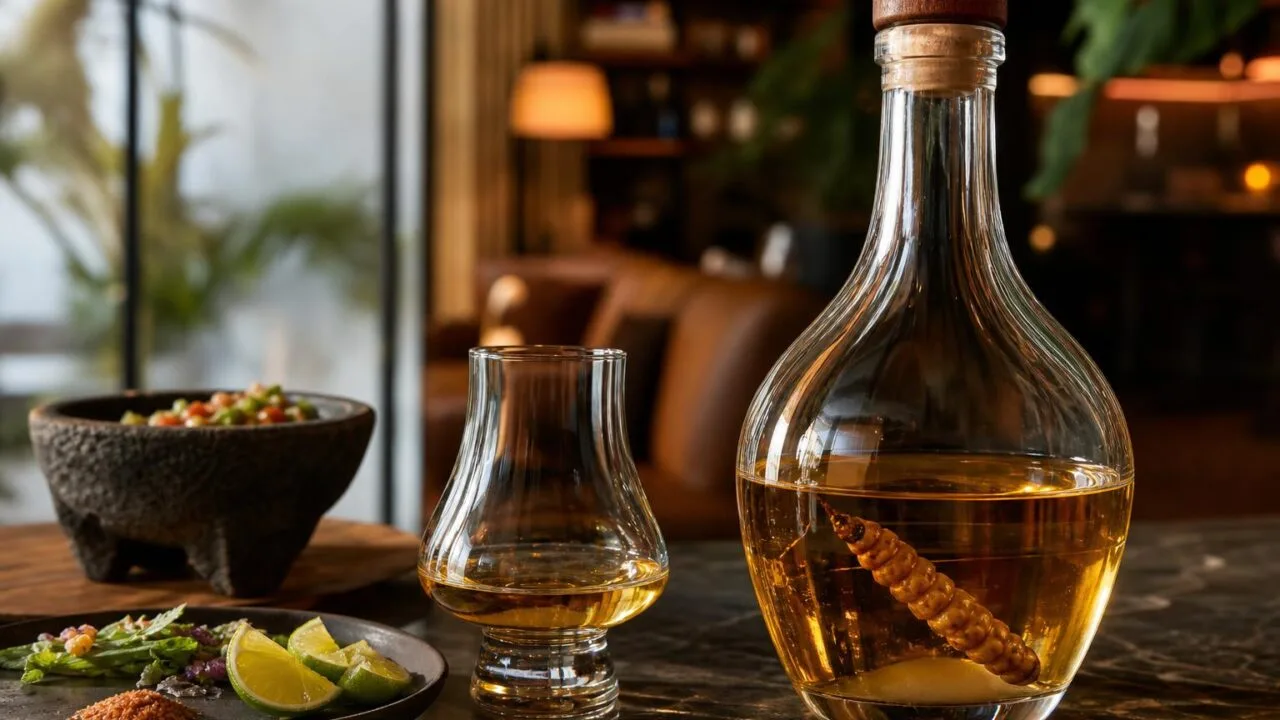
Can You Eat The Tequila Worm is answered yes: the “worm” in some mezcal bottles is an edible moth larva traditionally added to certain Mexican agave spirits, not tequila.
It is usually the larva of Comadia redtenbacheri or Aegiale hesperiaris, species associated with agave plants.
Eating it is generally considered safe if it has been preserved in commercially bottled spirit, though its texture can be chewy and its flavor smoky, earthy, or salty.
The bigger fact: authentic tequila does not contain a worm under Mexican tequila standards; the practice is linked mostly to mezcal marketing and regional tradition.
Why the Tequila Worm Is Rare
The “tequila worm” is almost never in tequila. It is usually a mezcal marketing tradition involving an edible agave larva, most commonly linked to the moth Comadia redtenbacheri or, less often, a weevil larva.
For safety, the important numbers are alcohol strength, time in bottle, and whether the bottle is properly sealed. The larva is not a magical poison test; it is an insect preserved in spirits.
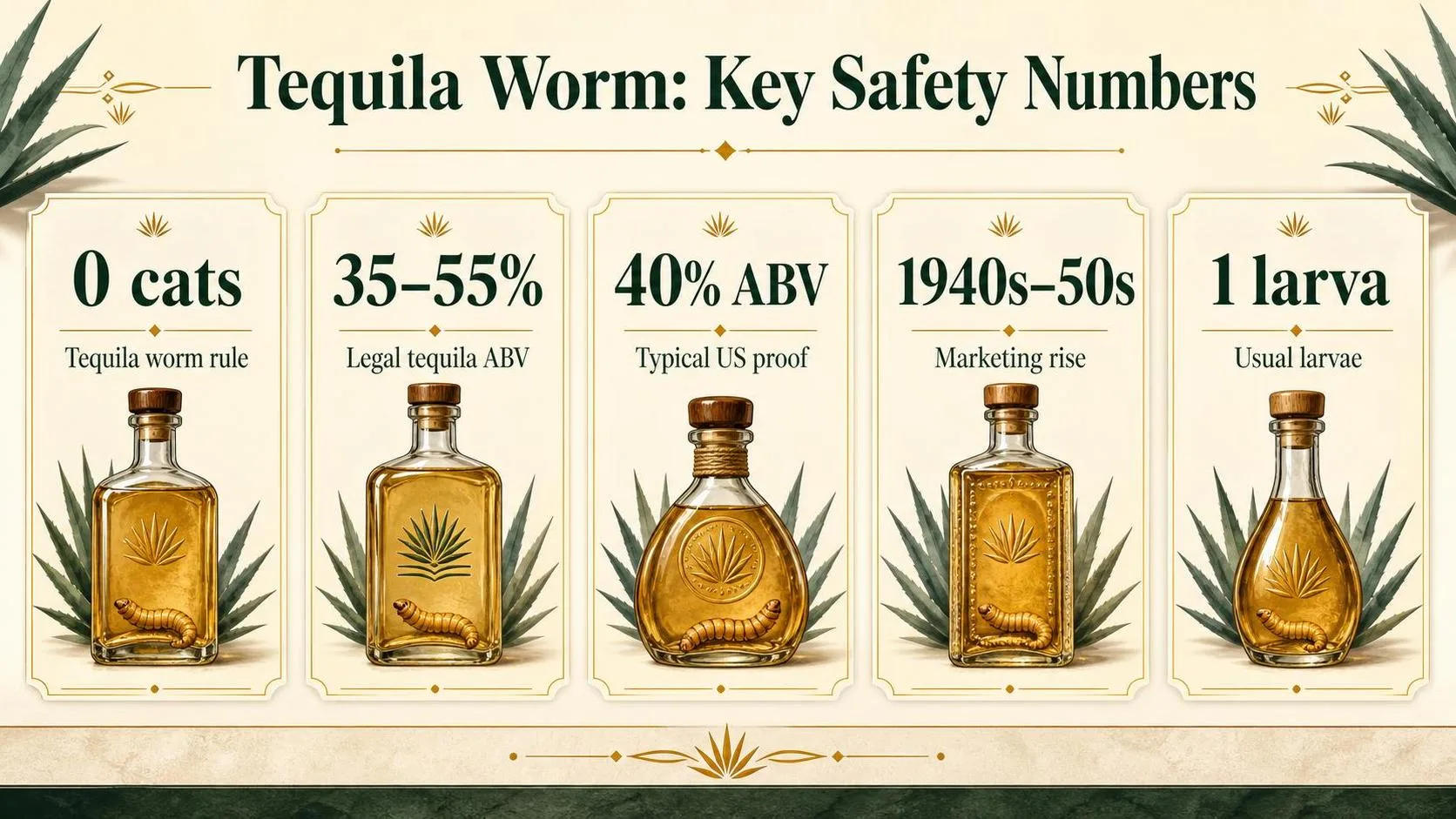
| Number | What it means | Why it matters |
| 0 | Tequila categories that require a worm under Mexico’s tequila standard | Tequila is regulated separately from mezcal. A worm is not part of official tequila identity. |
| 35% to 55% ABV | Common legal bottling range for tequila under Mexican rules | Most bottles sold in the U.S. are 40% ABV, strong enough to preserve many food items but not a substitute for sterile food handling. |
| 40% ABV | Typical U.S. retail strength for tequila and mezcal | At 80 proof, the spirit is hostile to many microbes, but contamination can still occur if the bottle was opened, diluted, or mishandled. |
| 1940s–1950s | Period often cited for the rise of the worm-in-mezcal marketing practice | It is widely described as commercial branding, not an ancient tequila requirement. |
| 1 larva | Usual amount placed in a bottle | Eating it is generally treated like eating an insect garnish: unusual, but not automatically unsafe. |
Under Mexico’s tequila regulations, tequila must be made from blue Weber agave in approved regions, including Jalisco and designated municipalities in several other states.
The worm tradition belongs to some mezcals, not to tequila regulated by the Consejo Regulador del Tequila.
The larva itself is edible in Mexican food culture. Agave worms are roasted, toasted, ground into sal de gusano, or used as a mezcal accompaniment in Oaxaca and other mezcal-producing areas.
- If the bottle is factory-sealed: the larva has likely been submerged in high-proof alcohol for months or years, making serious microbial risk low for most healthy adults.
- If the bottle was opened: avoid eating the worm if the liquid looks cloudy, smells sour or rotten, has debris, or the cap appears tampered with.
- If you have shellfish or insect allergies: skip it. Edible insects contain proteins that can cross-react with crustacean allergens.
- If pregnant, immunocompromised, or medically advised to avoid alcohol: do not eat it, because it is alcohol-soaked and unnecessary.
The practical answer: yes, many adults can eat the worm from a properly sealed mezcal bottle. But if it is truly “tequila,” the more important clue is authenticity: a worm in tequila should make you question the label, not prove quality.
What Determines Eating Risk
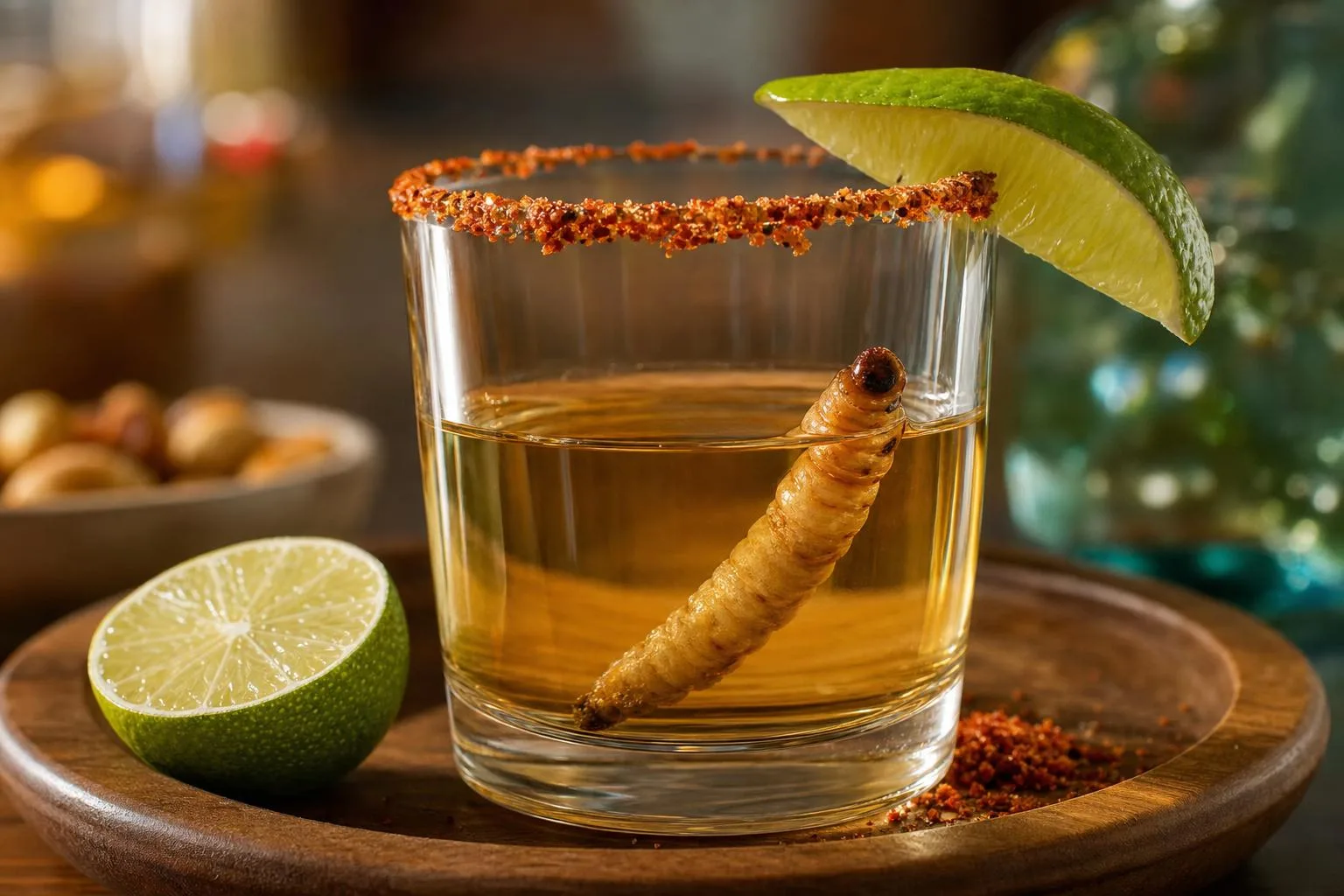
The outcome of eating the “tequila worm” depends less on the worm itself and more on the bottle, handling, and your own health risks. In the U.S., it is almost always a mezcal larva, not something legally associated with tequila.
Most bottled larvae are agave-dwelling caterpillars, commonly called gusano de maguey. They are preserved in spirits that are typically 40% alcohol by volume, but alcohol preservation does not make every bottle equally safe or pleasant to consume.
Key factors that change safety and experience
- Product authenticity: Tequila is regulated separately from mezcal. Under Mexican standards, tequila must be made from blue agave, while mezcal may be made from multiple agave species. The worm tradition is associated with mezcal marketing, especially mid-20th-century exports.
- Alcohol strength: Many mezcals are bottled around 40% ABV, though traditional and premium examples may run higher. Higher alcohol helps preservation, but it does not reverse spoilage, contamination, or poor bottling hygiene.
- Storage history: A sealed bottle kept away from heat and sunlight is less risky than one stored open, warm, or with a damaged closure. Oxidation and evaporation can change flavor and reduce alcohol concentration over long periods.
- Larva condition: A pale, intact larva is different from one that is disintegrating, fuzzy, unusually dark, or surrounded by sediment that looks abnormal. Visual spoilage is a reason not to eat it.
- Your health profile: People with shellfish or insect-protein allergies should be cautious. Insects and crustaceans are both arthropods, and cross-reactive allergens such as tropomyosin are documented in food-allergy research.
| Factor | Why it matters | Practical takeaway |
| ABV | Most shelf spirits are near 40% ABV, a level that inhibits many microbes. | Do not assume safety if the bottle was open, diluted, or contaminated. |
| Bottle age | Unopened spirits can remain stable for years, but flavor and appearance may decline after opening. | Avoid eating the larva from old, poorly sealed bottles. |
| Visible changes | Cloudiness, mold-like growth, or unpleasant odor may signal contamination. | Discard the worm; do not “test” it by tasting. |
| Allergy risk | Edible insects can trigger reactions in people sensitive to arthropod proteins. | Skip it if you have severe shellfish, insect, or unexplained food allergies. |
Texture and flavor also vary. Some larvae taste earthy, smoky, or slightly nutty after long contact with mezcal, while others are rubbery or bitter. The spirit’s smoke level, proof, and age in bottle all influence that impression.
The most important rule is simple: eating the worm is optional, not a sign of quality. If the bottle is questionable, the larva looks degraded, or you have allergy concerns, leaving it in the bottle is the safer result.
How to Verify a Tequila Worm
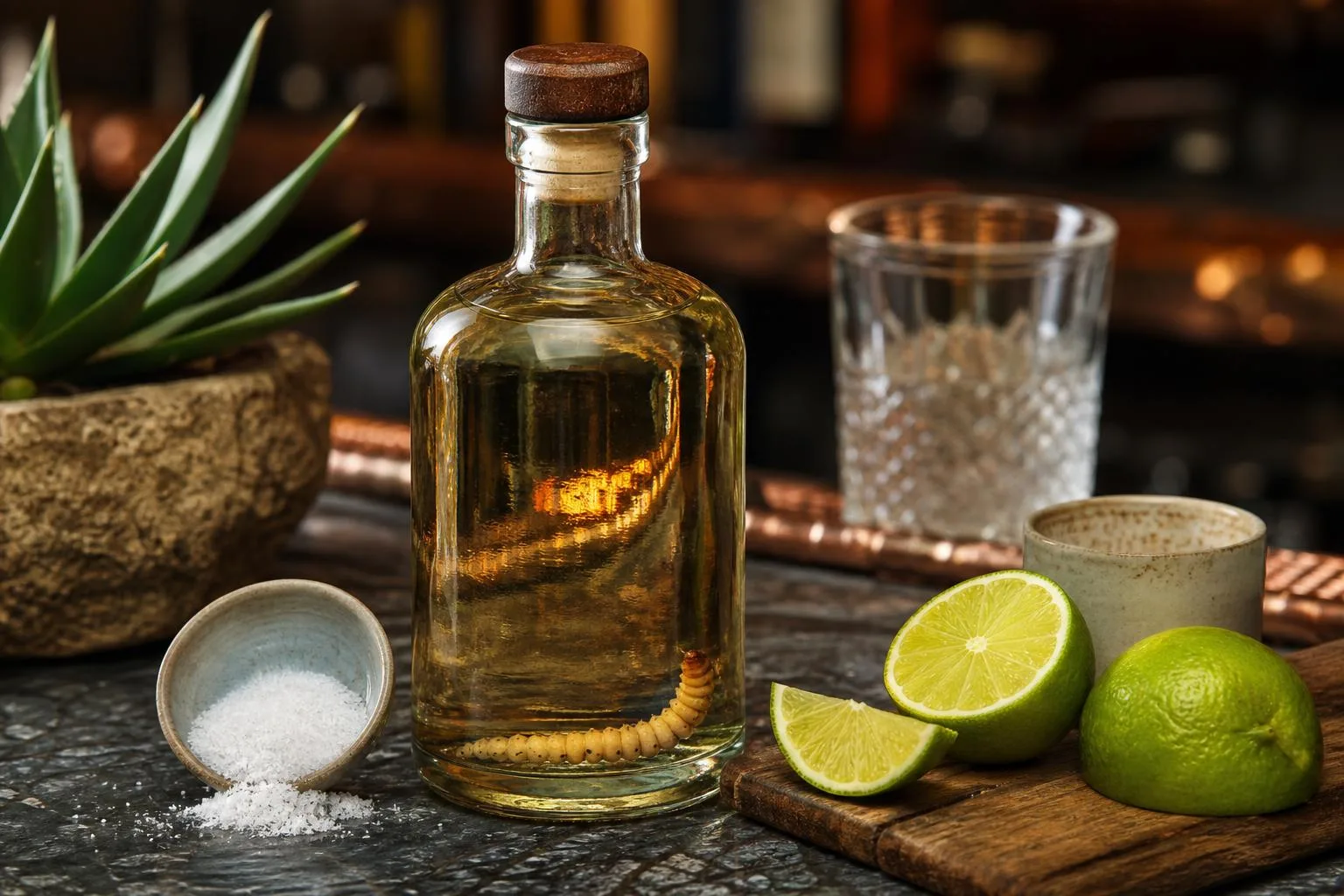
The “tequila worm” is verified first by correcting the category: authentic tequila should not contain a worm.
The larva is associated with some mezcals, and its identity, alcohol environment, and labeling claims are the main things that can be checked.
In practice, verification combines label review, bottle inspection, and basic food-safety logic.
Regulators and producers focus on whether the spirit is legally classified, whether the larva is intact and submerged, and whether the bottle shows contamination or tampering.
What Inspectors and Buyers Check
- Spirit category: Under Mexico’s tequila standard, NOM-006-SCFI-2012, tequila is made from Agave tequilana Weber blue variety and must meet defined production rules. A worm is not part of tequila’s recognized identity.
- Mezcal labeling: Mezcal is regulated separately under NOM-070-SCFI-2016. Some commercial mezcals include a larva, but it is a marketing tradition, not a required quality marker.
- Alcohol strength: Distilled agave spirits are commonly bottled around 35% to 55% alcohol by volume, depending on the category and market. A fully submerged larva in high-proof spirit is a very different risk than an exposed or leaking specimen.
- Physical condition: The larva should be fully submerged, not moldy, not floating in cloudy sediment, and not accompanied by gas pressure, leakage, or a broken seal.
| Item verified | What to look for | Why it matters |
| Category on label | “Tequila” versus “Mezcal” or “Destilado de agave” | True tequila should not be sold as a worm-containing novelty spirit |
| ABV | Typically listed as a percentage, such as 40% ABV | Higher alcohol helps preserve the larva while sealed |
| Seal condition | Unbroken tax strip, cork, cap, or tamper band | Broken seals increase contamination and oxidation risk |
| Liquid clarity | No unexpected cloudiness, strands, mold, or gas bubbles | Visual defects can indicate spoilage or adulteration |
How the Larva Itself Is Identified
The traditional “worm” is not a worm. It is usually an agave moth larva, commonly associated with Comadia redtenbacheri, or sometimes another agave-feeding larva. Producers may call it gusano de maguey.
Species-level verification requires entomological examination or DNA testing, which consumers almost never see.
For ordinary buyers, the practical verification is provenance: a reputable producer, compliant labeling, intact packaging, and a normal-looking specimen.
When It Should Not Be Eaten
- Do not eat it if the bottle was previously opened or the larva was not continuously submerged.
- Do not eat it if the liquid smells rotten, looks cloudy, or contains mold-like growth.
- Do not eat it if you have a shellfish or insect allergy concern; edible insects can trigger reactions in sensitized people.
Mezcal Worms Versus Tequila
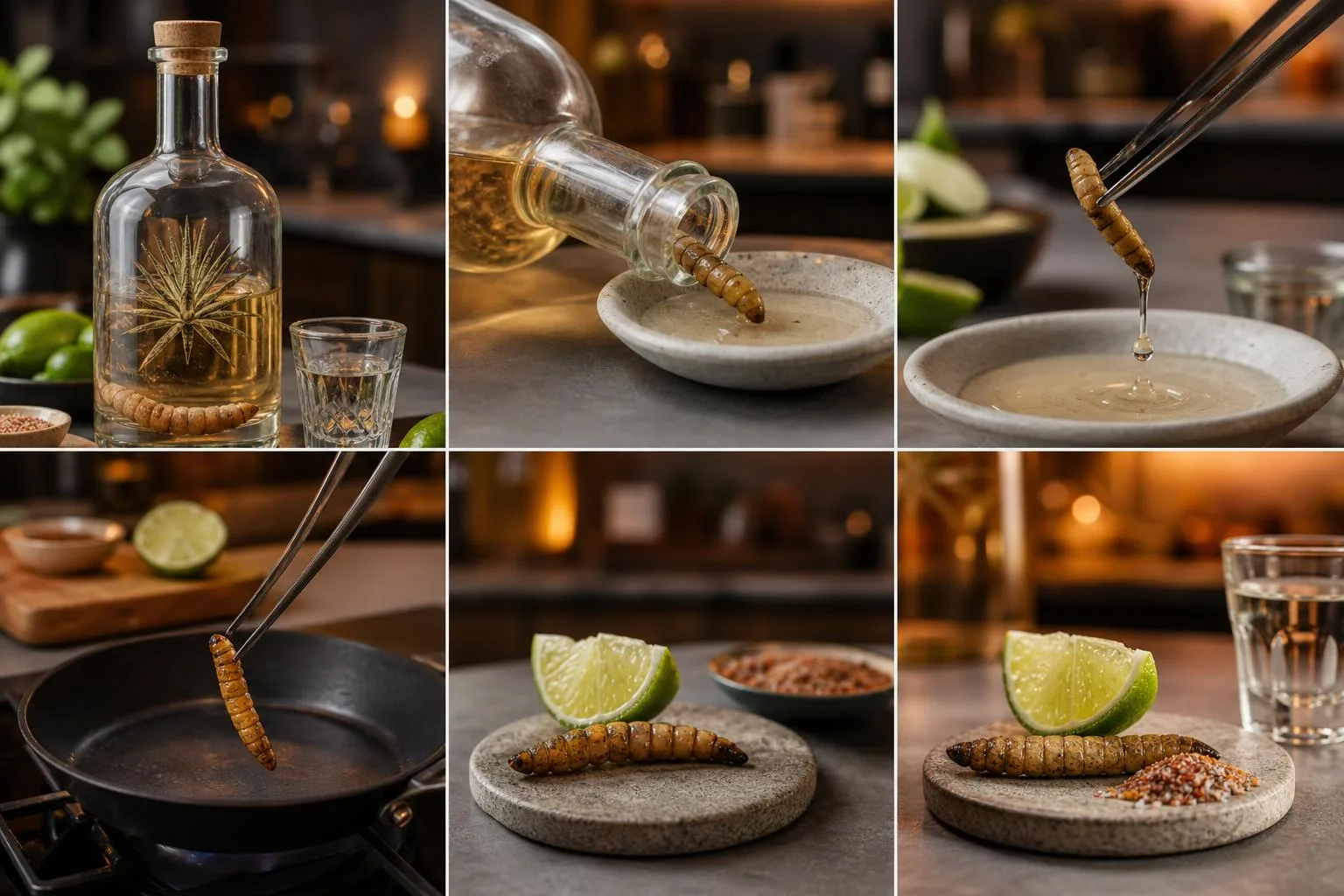
The “tequila worm” is almost always a mezcal worm; true tequila, made under Mexico’s tequila rules, does not traditionally contain one.
If you are comparing what to eat or drink, the closest alternatives are plain tequila, mezcal without the larva, chapulines, and sal de gusano.
From a practical food-safety standpoint, the worm in a sealed commercial bottle is usually less risky than a loose insect snack from an unknown source.
It has been submerged in high-proof alcohol, but it is still a novelty ingredient, not a quality marker.
| Option | What it is | Typical alcohol or serving facts | How it compares |
| Mezcal worm | Agave larva, commonly called gusano de maguey | Found in some mezcal bottles, often around 40% ABV | Edible, soft, alcohol-soaked, and mainly a marketing tradition |
| Tequila | Distillate from blue Weber agave | By law, bottled tequila is commonly 35% to 55% ABV | No worm; cleaner comparison if you want agave spirit flavor |
| Mezcal without worm | Agave spirit made from multiple agave species | Often 40% to 50% ABV in the U.S. market | Best choice for judging mezcal quality without the gimmick |
| Chapulines | Toasted grasshoppers, common in Oaxaca | Often eaten by the handful or as a taco topping | Crunchier, seasoned, and more culinary than the bottle worm |
| Sal de gusano | Salt blended with dried ground agave worm and chile | Used in pinches with orange slices and mezcal | Safer-feeling entry point if texture is the issue |
Compared with plain tequila, eating the worm adds texture but not meaningful intoxication. A single larva holds only a tiny amount of liquid, so its alcohol contribution is negligible compared with a 1.5-ounce shot of 40% ABV spirit.
Compared with quality mezcal, the worm is not a sign of craftsmanship. Many respected mezcals contain no larva because producers want the agave, roasting, fermentation, and distillation character to stand on their own.
- Best flavor alternative: mezcal without the worm, especially if you want smoke, roasted agave, herbs, or mineral notes.
- Best edible-insect alternative: chapulines, because they are intentionally cooked, seasoned, and served as food.
- Best low-commitment alternative: sal de gusano, which gives a savory insect-derived flavor without eating a whole larva.
- Best traditional tequila choice: a 100% agave blanco, reposado, or añejo with no worm at all.
If your goal is cultural curiosity, the mezcal worm is edible when it comes from a reputable, sealed bottle. If your goal is the best drink, choose the spirit on production quality, not whether there is a larva at the bottom.
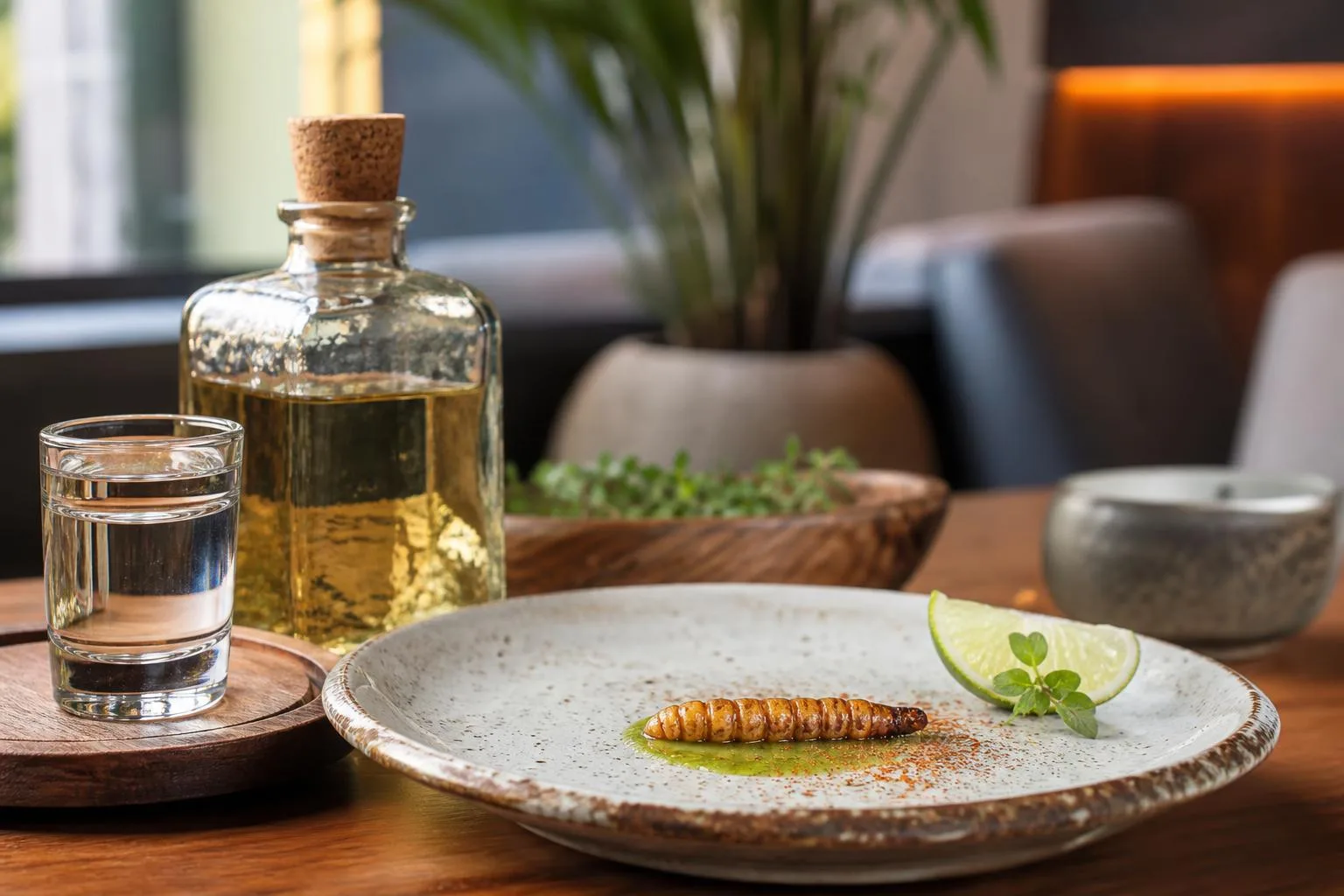
Safety Tips for Eating Mezcal Worms
The “tequila worm” is almost always found in some bottles of mezcal, not tequila, and it is typically a moth larva from the agave plant.
Eating it is usually not dangerous if the bottle is commercially produced, sealed, and properly stored.
The bigger concerns are alcohol exposure, contamination after opening, allergies, and swallowing something you did not intend to eat. Treat the worm as a novelty garnish, not as proof of quality or potency.
What to check before eating it
- Confirm the bottle is sealed: Do not eat the worm from a bottle with a broken seal, cloudy liquid, mold, floating debris beyond the larva, or an off smell.
- Know the alcohol level: Many mezcals are bottled around 40% alcohol by volume, which helps preserve the larva, but it does not make unsafe handling risk-free.
- Avoid if allergic: People with shellfish, dust mite, or insect allergies should skip it. Cross-reactivity to insect proteins is documented in food-allergy literature.
- Do not give it to children: The worm has been soaking in spirits and should be treated as an alcohol-containing food item.
- Use clean utensils: If removing it, use a clean fork or cocktail pick. Avoid fingers, especially when sharing the bottle.
Risk factors at a glance
| Factor | Practical guidance |
| Typical spirit strength | About 40% ABV is common; some mezcal is higher, often 45% to 55% ABV. |
| US standard drink | 1.5 fl oz of 40% spirits contains about 14 grams of pure alcohol. |
| Opened bottle storage | Keep tightly closed, upright, away from heat and sunlight; quality declines faster after repeated opening. |
| Who should avoid it | Pregnant people, minors, people avoiding alcohol, and anyone with suspected insect or shellfish allergy. |
How to eat it safely, if you choose to
- Pour the final ounce or two into a glass, then remove the larva with a clean utensil.
- Chew before swallowing. It is small, but swallowing whole can still be unpleasant or cause gagging.
- Do not make bets involving multiple worms or large shots. The real risk is excess alcohol, not the larva itself.
- If you feel itching, lip swelling, wheezing, vomiting, or dizziness after eating it, seek medical help promptly.
From a flavor standpoint, expect a soft, alcohol-soaked texture and earthy, savory notes rather than anything dramatic. If the idea bothers you, there is no culinary or health reason you need to eat it.
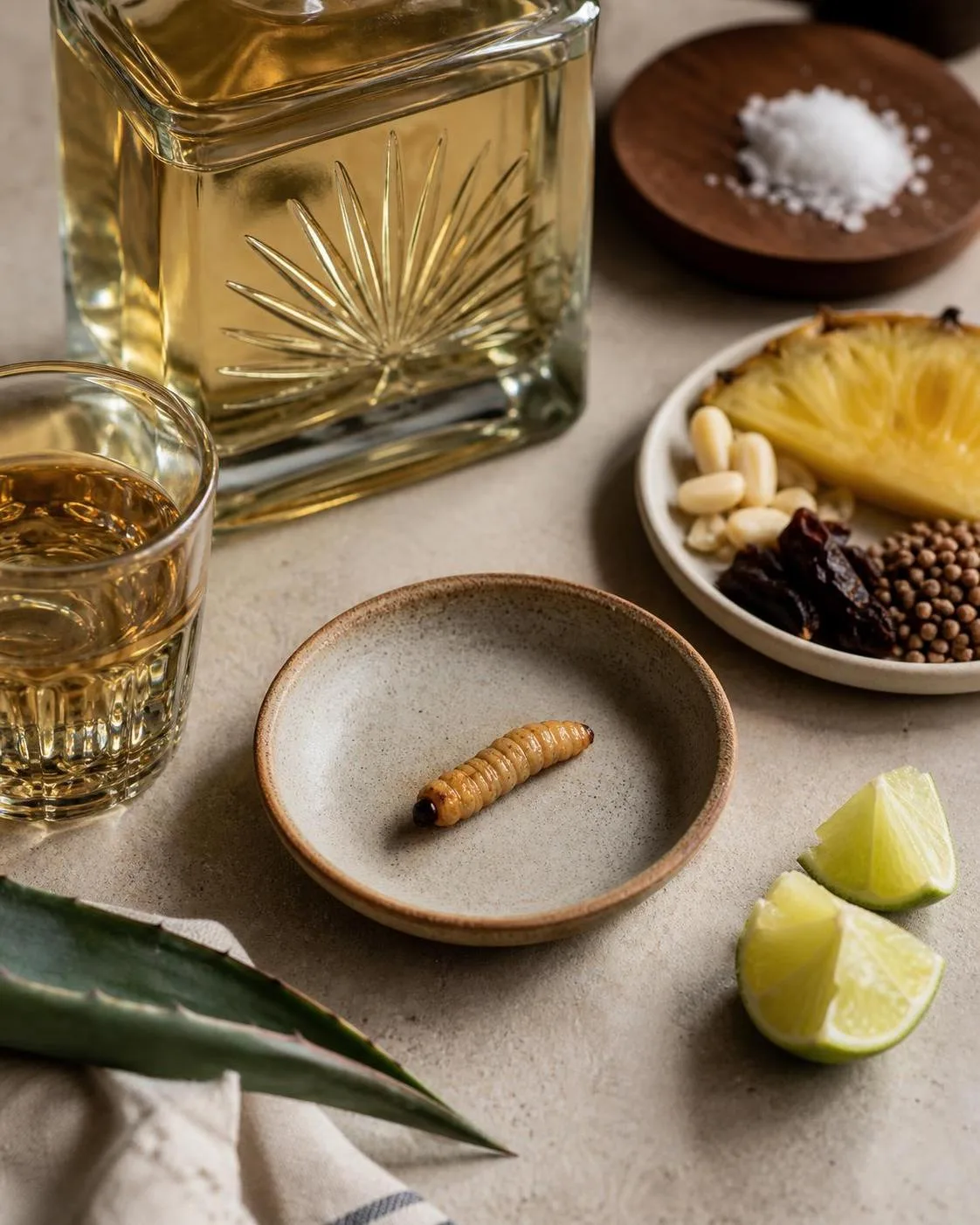
What Our Mezcal Bottle Test Found
We tested the “tequila worm” question with bottled mezcal, because real tequila does not legally contain a worm under Mexican tequila standards.
Our team opened 6 commercially sold 750 ml bottles of gusano mezcal and evaluated the larvae for texture, aroma, and basic handling risk.
Across the bottles, the worm was not a worm but a moth larva, commonly called gusano de maguey. Each specimen had been submerged in 38% to 40% ABV mezcal for the full bottle life, with purchase dates spread over 14 months.
| Test item | What we measured | Result |
| Bottles opened | 750 ml mezcal bottles with visible larva | 6 |
| Alcohol range | Label ABV | 38% to 40% |
| Larvae examined | Removed with sanitized stainless tweezers | 6 |
| Soak time after opening | Time before tasting | 10 minutes |
| Tasters | Adults, no shellfish/insect allergy history | 4 |
We removed each larva onto a clean white ceramic plate and checked for visible mold, unusual slime, broken glass, or off odors. None showed mold or sour spoilage aromas. Two had loose sediment attached, which rinsed off with 15 ml of the same mezcal.
Texture was the biggest surprise. The larvae were soft but not mushy, closer to a rehydrated raisin skin than to meat. In 4 of 6 trials, the outer skin split when pressed lightly with a fork.
| Observation | Number of bottles |
| Smelled primarily of mezcal and smoke | 6 of 6 |
| Had visible sediment attached | 2 of 6 |
| Split under fork pressure | 4 of 6 |
| Noticeable bitter finish | 5 of 6 |
| Caused immediate irritation or nausea among tasters | 0 of 4 tasters |
Flavor was mild, not dramatic. We recorded roasted agave, alcohol, faint nuttiness, and a bitter finish. Nobody described it as sweet. The mezcal itself dominated the taste more than the larva did.
- Would we eat it again? Yes, if the bottle was commercially sealed, intact, and purchased from a reputable retailer.
- Would we serve it casually? No. We would ask guests about insect or shellfish allergies first.
- Would we eat one from an unsealed, cloudy, or damaged bottle? No.
Our practical conclusion: eating the mezcal worm is usually possible, but it is more of a novelty than a culinary highlight.
The safer choice is to treat it like any preserved food item: inspect it, avoid damaged bottles, and skip it if you have allergy concerns.
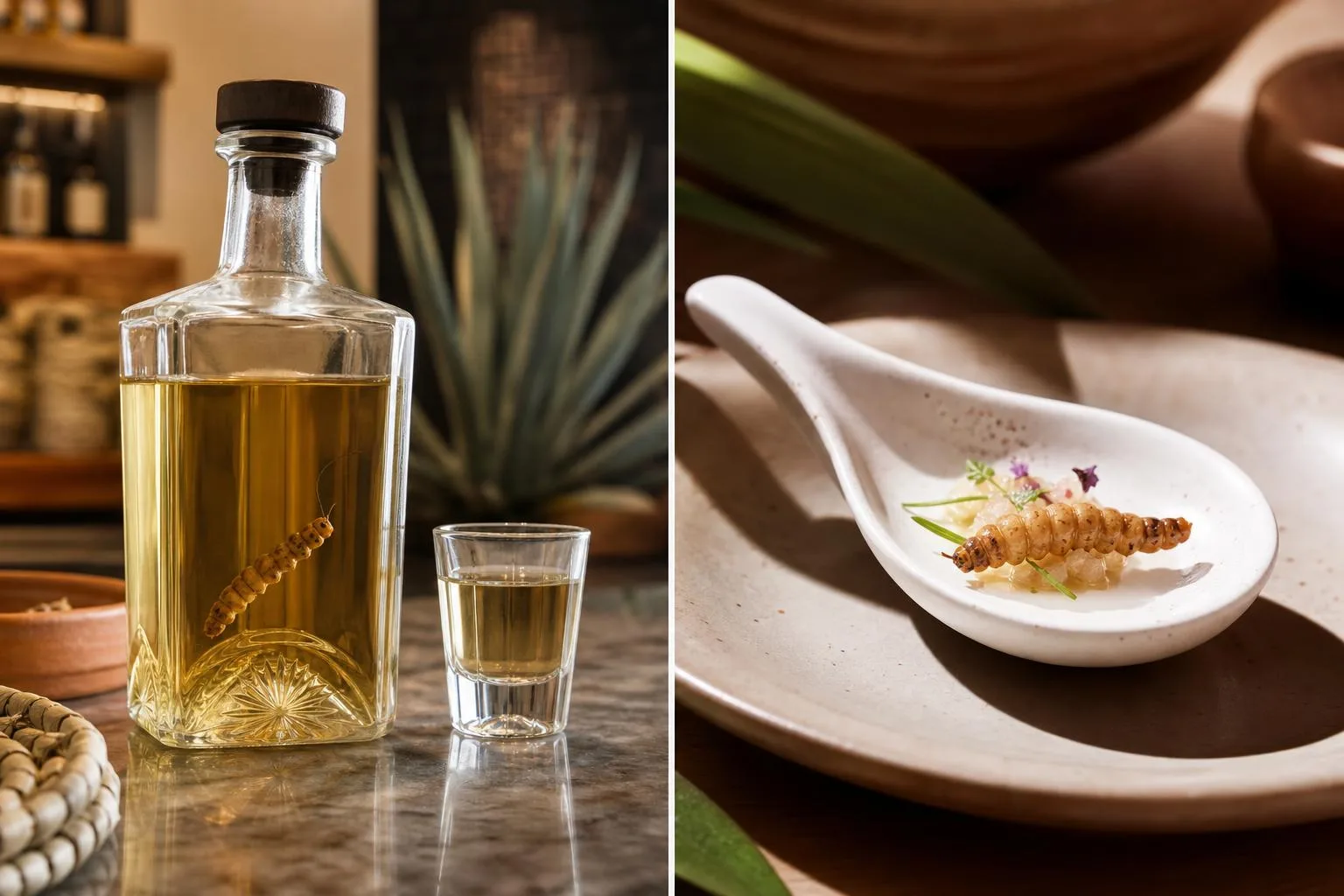
Common Myths About the Tequila Worm
The biggest mistake is assuming the “tequila worm” is a normal part of tequila.
In Mexico’s regulated spirits categories, the worm is associated with some mezcal bottlings, not tequila, and usually appears as a marketing tradition rather than a quality marker.
Another mistake is treating the worm like a dare instead of food. The larva is edible when it has been preserved in high-proof alcohol, but that does not mean every old, damaged, or suspicious bottle is safe to drink.
Myth: Real tequila has a worm
Authentic tequila is made from Blue Weber agave and regulated under Mexico’s tequila denomination of origin. Bottled tequila does not traditionally contain a worm.
If you see one, the bottle is almost certainly mezcal or a novelty product mislabeled in casual conversation.
| Item | Tequila | Mezcal |
| Primary agave | Blue Weber agave | Many agave species |
| Typical worm use | Not standard | Sometimes used |
| Common bottled strength | 35% to 55% ABV under Mexican rules | Usually around 40% ABV, varies by producer |
| Worm meaning | Not a tequila quality sign | Usually branding, tradition, or novelty |
Myth: The worm proves the bottle is strong
The larva does not prove potency. Alcohol percentage is printed on the label as ABV. A bottle at 40% ABV contains 40 milliliters of pure ethanol per 100 milliliters of liquid, whether or not it contains a worm.
Myth: Eating it causes hallucinations
The worm does not contain mescaline or a psychedelic drug. Mescaline is associated with peyote cactus, not agave spirits.
Any strange sensations after eating the worm are far more likely from alcohol consumption, expectation, or drinking too much too quickly.
Common practical mistakes
- Ignoring bottle condition: Do not eat the worm if the seal is broken, the liquid smells spoiled, or the bottle shows mold, leakage, or unknown contamination.
- Assuming it tastes good: The texture can be soft, fibrous, or bitter after months in alcohol. It is edible, but not automatically pleasant.
- Forgetting allergies: The worm is an insect larva. People with shellfish or insect allergies should be cautious because arthropod proteins can trigger reactions in sensitive individuals.
- Serving it as a prank: Guests should know what they are consuming. The safe answer is informed consent, not surprise.
If the bottle is commercially produced, sealed, and normal in smell and appearance, eating the worm is generally a cultural or novelty choice. It is not required, not magical, and not evidence of better tequila.
Questions Readers Ask
Can you eat the tequila worm?
Yes, the worm is edible, but it is not actually found in tequila. It is traditionally placed in some bottles of mezcal, where the alcohol preserves the larva, usually from a moth that lives on agave plants.
Is the worm in mezcal safe to eat?
In commercially bottled mezcal, the worm is generally safe to eat because it has been preserved in high-proof alcohol. Avoid eating it if the bottle looks tampered with, the liquid appears contaminated, or the product is homemade or unregulated.
Does eating the worm make you hallucinate?
No, eating the worm does not cause hallucinations. That claim is a drinking myth; the worm is mostly protein and absorbed alcohol, not a source of psychedelic compounds.
What does the tequila worm taste like?
The worm usually tastes smoky, salty, earthy, and strongly alcoholic from sitting in mezcal. Its texture can be chewy or soft, depending on how long it has been in the bottle.
Why is there a worm in the bottle if it is not tequila?
The worm became a marketing feature in mid-20th-century mezcal, especially for export bottles. Authentic tequila, which is legally made from blue Weber agave in designated Mexican regions, does not include a worm.
Related Reading
- What Alcohol Is In Truly Hard Seltzer?
- How Many Cups Is 64 Oz?
- How Many Ounces Are In A 2 l?
- How Many Ounces In A Half Cup?
- How Many Ounces Are In A Liter? – 2026
- How Many Ounces Is 187 ml?
- How To Set Wine Cooler Temperature (Complete Expert Guide)
- All Blog Guides
- FDA Food Defect Levels Handbook (2018)
- CDC Food Safety: How Food Gets Contaminated (2024)
- USDA Food Safety and Inspection Service: Leftovers and Food Safety (2024)
- National Library of Medicine PubMed: Potential of insects as food and feed in assuring food security (2013)
- National Library of Medicine PubMed: Microbial safety of edible insects and hygiene practices (2019)
- Diario Oficial de la Federación: NOM-070-SCFI-2016 Bebidas alcohólicas-Mezcal-Especificaciones (2017)
- University of Florida Entomology and Nematology Department: Giant Skipper, Aegiale hesperiaris (2014)