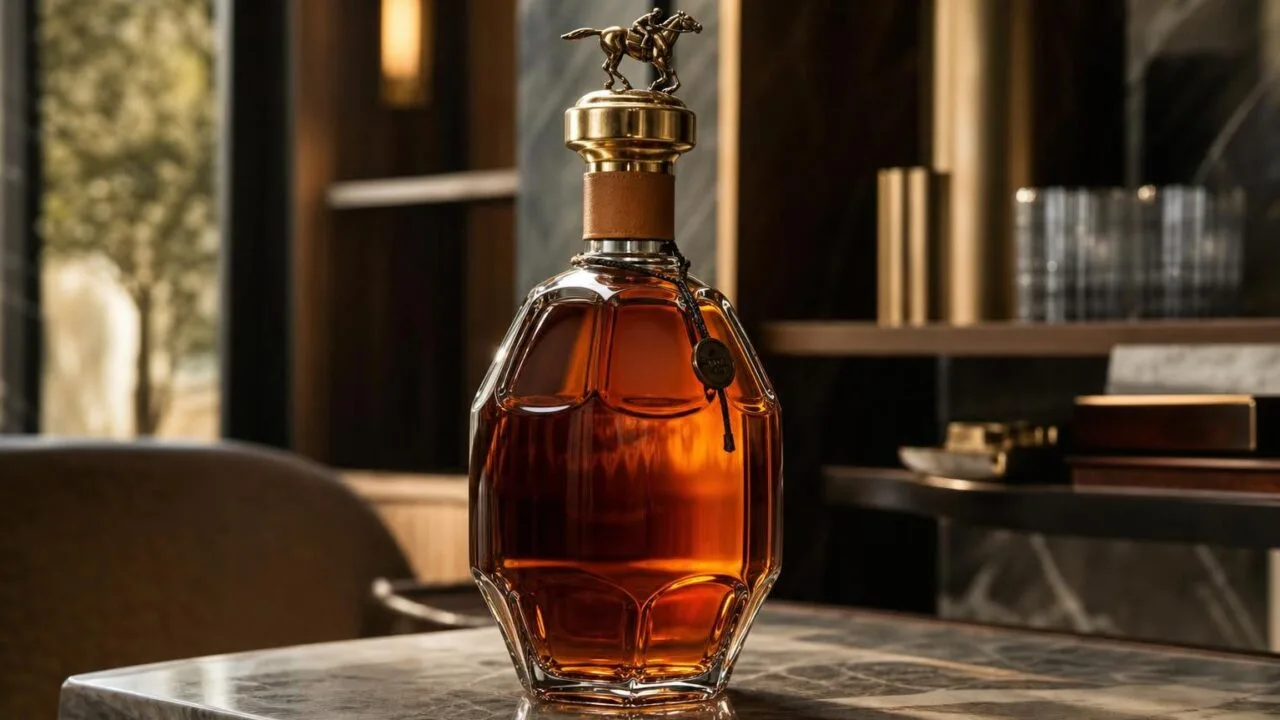
Who Makes Blanton’S Bourbon is Buffalo Trace Distillery in Frankfort, Kentucky, the historic distillery owned by the Sazerac Company.
Blanton’s is distilled, aged, and bottled there, using mash bill #2, Buffalo Trace’s higher-rye bourbon recipe, and it is known as the first widely marketed single-barrel bourbon, introduced in 1984.
The brand honors Colonel Albert B. Blanton, a longtime distillery leader who selected preferred barrels from Warehouse H.
Today, Blanton’s remains tied to that same site, where individual barrels are chosen for bottling at 93 proof, giving each release slight barrel-to-barrel variation.
Blanton’s Producer and Distillery
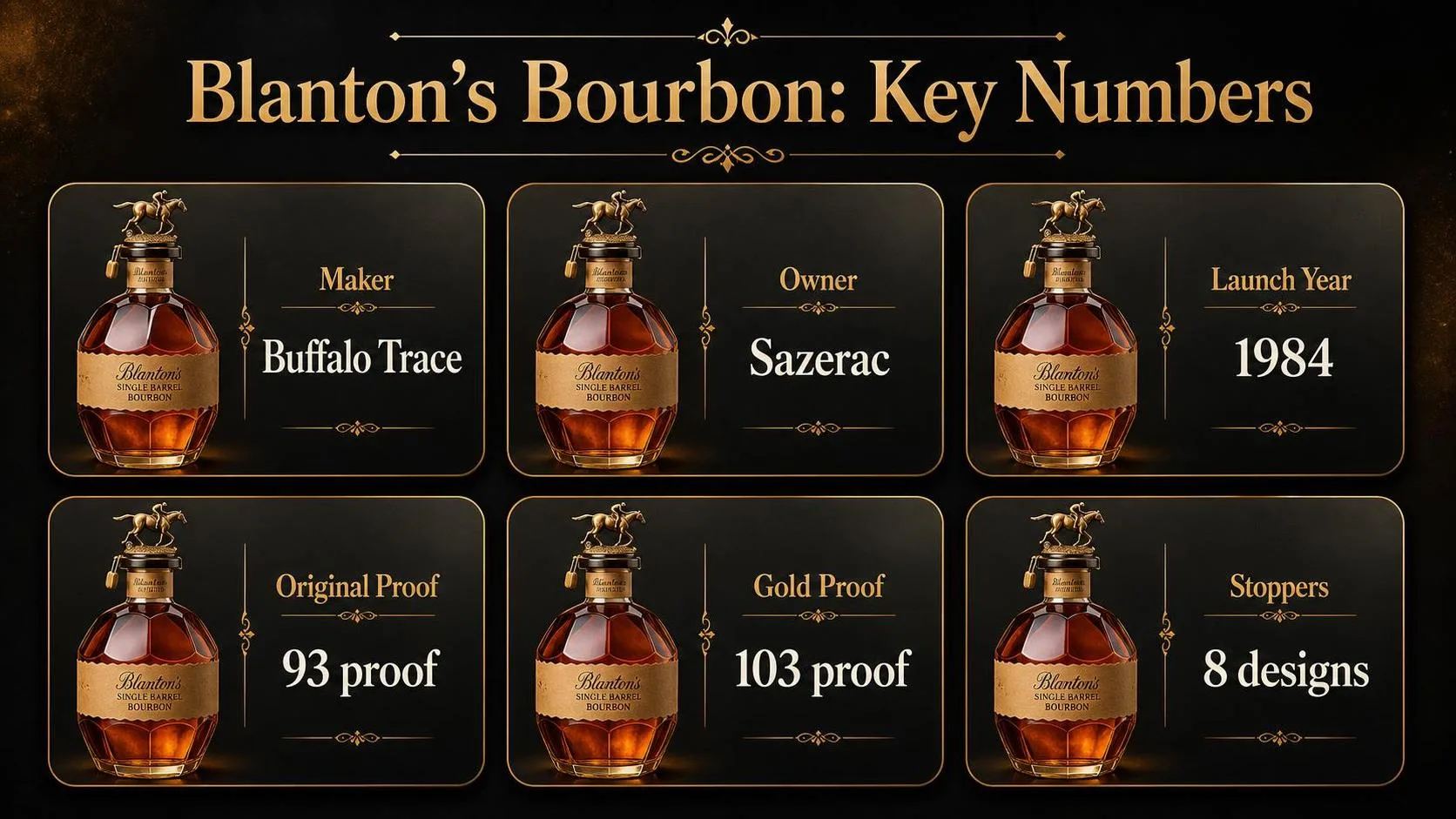
Blanton’s is made by Buffalo Trace Distillery in Frankfort, Kentucky, which is owned by the Sazerac Company.
The brand’s numbers matter because they tell you who produced it, how it was bottled, and why one bottle can taste different from the next.
| Number or fact | What it means |
| Buffalo Trace Distillery | The producing distillery for Blanton’s Bourbon, located in Frankfort, Kentucky. |
| Sazerac Company | The private company that owns Buffalo Trace and the Blanton’s brand. |
| 1984 | The year Blanton’s was introduced commercially as a modern single-barrel bourbon. |
| Elmer T. Lee | The Buffalo Trace master distiller credited with creating Blanton’s for market release. |
| Albert B. Blanton | The former distillery president whose name is on the bottle. |
The most important production number is not printed as a recipe.
Buffalo Trace identifies Blanton’s as using its higher-rye bourbon mash bill, commonly referred to by enthusiasts as Mash Bill #2, but the exact grain percentages are not publicly disclosed by the distillery.
| Blanton’s expression | Typical bottling proof | Alcohol by volume |
| Blanton’s Original Single Barrel | 93 proof | 46.5% ABV |
| Blanton’s Gold Edition | 103 proof | 51.5% ABV |
| Blanton’s Straight From the Barrel | Barrel proof, varies by barrel | Varies by barrel |
Blanton’s Original is not a blended small-batch product. Each bottle comes from one selected barrel, so the label’s barrel number, warehouse, rick, dump date, and bottling details are practical production identifiers, not decoration.
| Label detail | Why it matters |
| Barrel number | Identifies the individual barrel selected for that bottling. |
| Warehouse | Shows the aging warehouse; Blanton’s is famously associated with Warehouse H. |
| Rick number | Points to the barrel’s storage location inside the warehouse. |
| Dump date | Shows when the barrel was emptied for bottling. |
| Proof | Shows the final strength at bottling. |
Age is the number many buyers look for, but Blanton’s Original carries no age statement.
Under U.S. bourbon labeling rules, a straight bourbon without an age statement must be at least four years old, though Buffalo Trace does not publish a fixed age for Blanton’s.
| Collector number | Explanation |
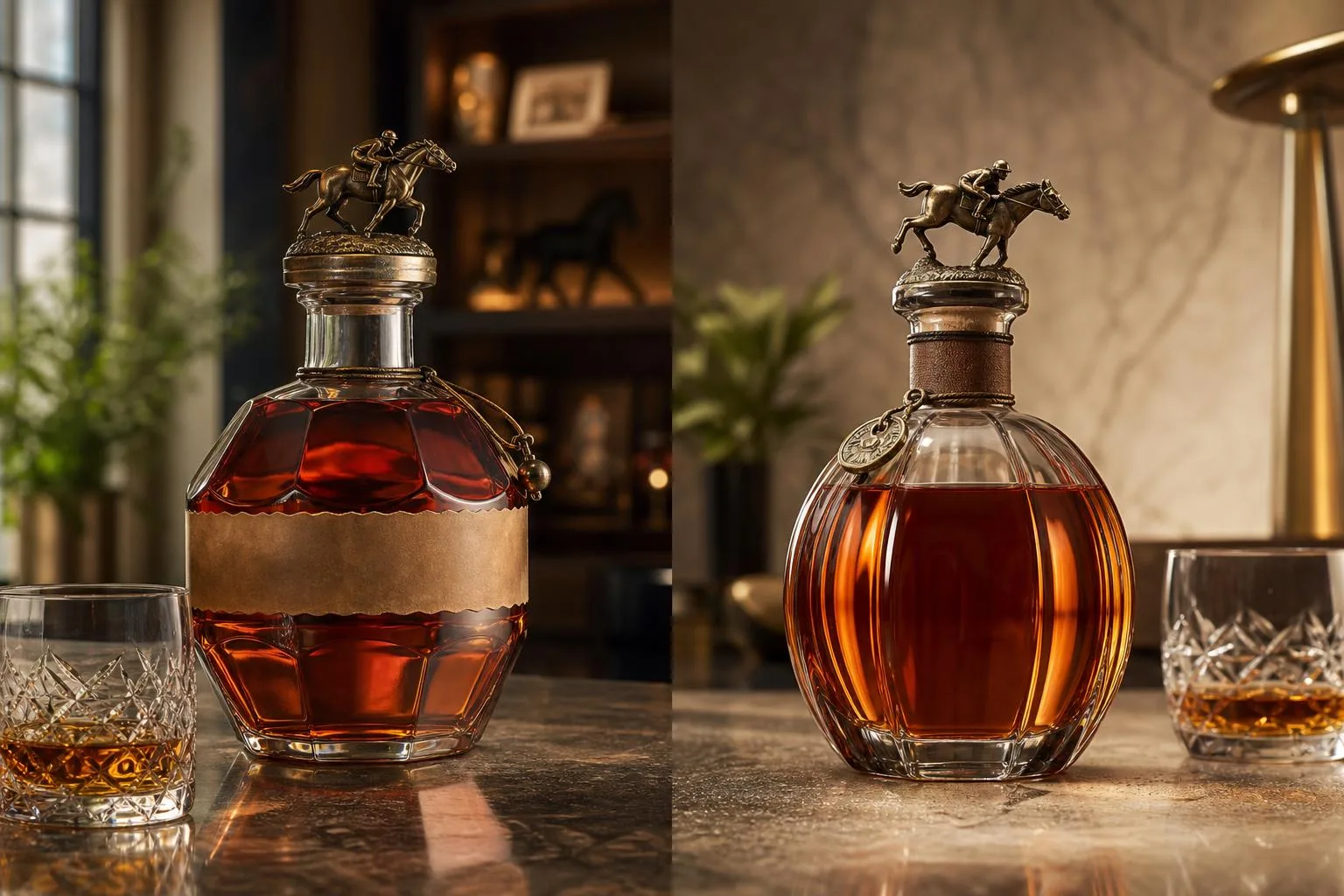
| 8 stopper designs | The horse-and-jockey stoppers spell B-L-A-N-T-O-N-S when collected as a full set. |
| 750 ml | Standard U.S. bottle size for Blanton’s Original. |
What Determines Blanton’s Flavor
Blanton’s tastes the way it does because several decisions are fixed at Buffalo Trace Distillery, while others vary barrel by barrel.
The most important factors are the distillery, mash bill, warehouse location, barrel selection, proof, and bottling market.
Blanton’s is distilled, aged, and bottled at Buffalo Trace Distillery in Frankfort, Kentucky. The brand is associated with Age International, while production is handled by Buffalo Trace, part of the Sazerac Company.
That arrangement matters because the liquid comes from Buffalo Trace’s equipment, warehouses, yeast, and barrel program.
| Factor | Specific impact on Blanton’s |
| Distillery | Made at Buffalo Trace Distillery, 113 Great Buffalo Trace, Frankfort, Kentucky. |
| Mash bill | Uses Buffalo Trace’s higher-rye bourbon mash bill, commonly referred to as Mash Bill #2. |
| Barrel type | New, charred American white oak barrels, as required for straight bourbon. |
| Warehouse | Traditionally selected from Warehouse H, a metal-clad rickhouse known for larger temperature swings. |
| Format | Single barrel, so each bottle reflects one barrel rather than a blended batch. |
Mash Bill #2 is one major reason Blanton’s differs from Buffalo Trace Bourbon or Eagle Rare, which use Buffalo Trace’s lower-rye Mash Bill #1.
Buffalo Trace does not publish the exact recipe, but industry reporting generally places Mash Bill #2 in the higher-rye style.
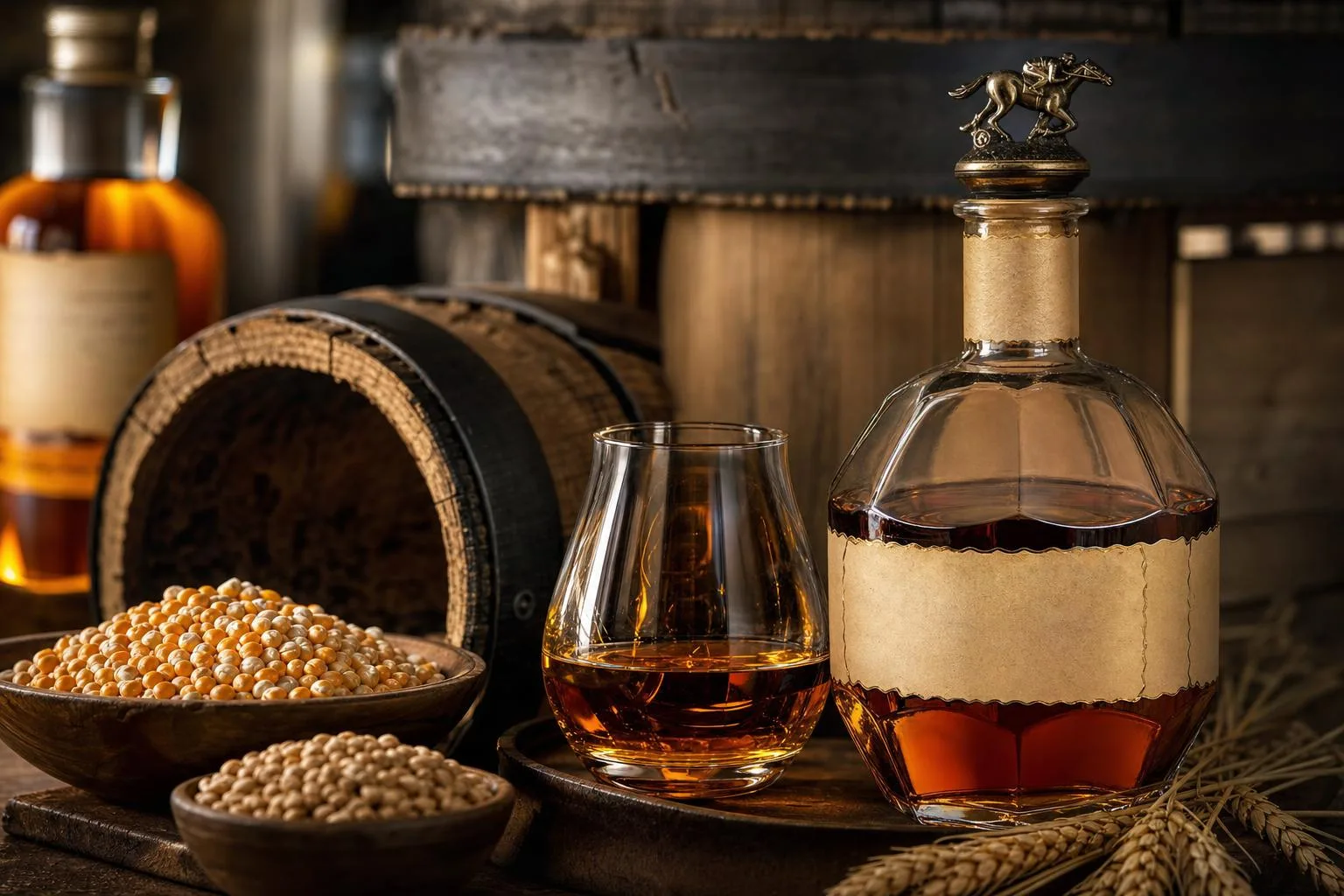
Warehouse H is especially important. It is a smaller, metal-sided warehouse rather than a massive brick rickhouse.
Metal transfers heat and cold quickly, so barrels experience more aggressive seasonal movement, pushing whiskey in and out of the oak more actively.
- Heat: expands the whiskey into the oak, increasing extraction of vanilla, caramel, spice, and tannin.
- Cold: contracts the whiskey back out of the wood, carrying dissolved oak compounds with it.
- Barrel position: height and location inside the warehouse affect evaporation, proof, and maturation rate.
| Expression | Typical bottling proof | Effect |
| Blanton’s Original Single Barrel | 93 proof / 46.5% ABV | Balanced oak, citrus, caramel, and rye spice. |
| Blanton’s Gold Edition | 103 proof / 51.5% ABV | Richer texture and stronger spice concentration. |
| Blanton’s Straight From the Barrel | Barrel proof, often above 120 proof | Most intense, least diluted expression. |
| Blanton’s Special Reserve | 80 proof / 40% ABV | Lighter body, softer oak and spice. |
The single-barrel format is the final variable. Unlike small-batch bourbon, Blanton’s is not blended to average out differences. One bottle may show more orange peel and honey, while another leans toward clove, leather, or dry oak.
Proofing also changes the result. Adding water before bottling lowers alcohol strength, softens heat, and can shift aroma perception.
That is why Original, Gold, and Straight From the Barrel can taste noticeably different even when they share the same production origin.
How to Verify Blanton’s Producer
Blanton’s producer can be verified through federal label records, the distillery registration on the bottle, and Buffalo Trace’s own brand disclosures.
The key facts are consistent: Blanton’s is distilled, aged, and bottled at Buffalo Trace Distillery in Frankfort, Kentucky, which is owned by Sazerac Company.
The most direct check is the U.S. Alcohol and Tobacco Tax and Trade Bureau, commonly called the TTB. Approved Blanton’s labels identify the responsible bottler and the class as straight bourbon whiskey, which must meet federal bourbon rules.
| Verification point | What to look for | Why it matters |
| Producer statement | “Bottled by Buffalo Trace Distillery, Frankfort, KY” on U.S. bottles | Confirms the named distillery responsible for bottling |
| DSP number | Kentucky DSP-KY-113, associated with Buffalo Trace Distillery | Links the product to the federally registered plant |
| Proof | 93 proof, or 46.5% alcohol by volume, for standard Blanton’s Original Single Barrel | Matches the brand’s stated bottling strength |
| Bourbon classification | Straight bourbon whiskey | Requires at least 51% corn mash, new charred oak containers, and no added coloring or flavoring |
Federal standards are measurable. Bourbon must be distilled at no more than 160 proof, entered into new charred oak barrels at no more than 125 proof, and bottled at no less than 80 proof. “Straight” bourbon must be aged at least 2 years.
Blanton’s is also verified at the bottle level because it is sold as a single-barrel bourbon, not a batch blend. Each bottle carries handwritten production details that connect it to one barrel selected from Buffalo Trace’s inventory.
- Dump date: the date the barrel was emptied for bottling.
- Barrel number: the individual cask used for that bottling run.
- Warehouse: typically identified as Warehouse H, the metal-clad warehouse associated with Blanton’s maturation.
- Rick number: the storage location within the warehouse.
- Proof: standard U.S. Blanton’s Original is labeled 93 proof.
Buffalo Trace states that Blanton’s comes from its higher-rye bourbon recipe, often referred to by enthusiasts as Mash Bill #2.
The exact grain percentages are not publicly disclosed, so any precise mash-bill percentage should be treated as unverified unless sourced directly from the producer.
A practical authentication check is consistency across the capsule, label, stopper, and bottle markings.
The horse-and-jockey stopper is collectible, but the strongest evidence remains the federal label approval, the Buffalo Trace bottling statement, and the individual barrel information printed on the label.
Blanton’s Compared with Similar Bourbons
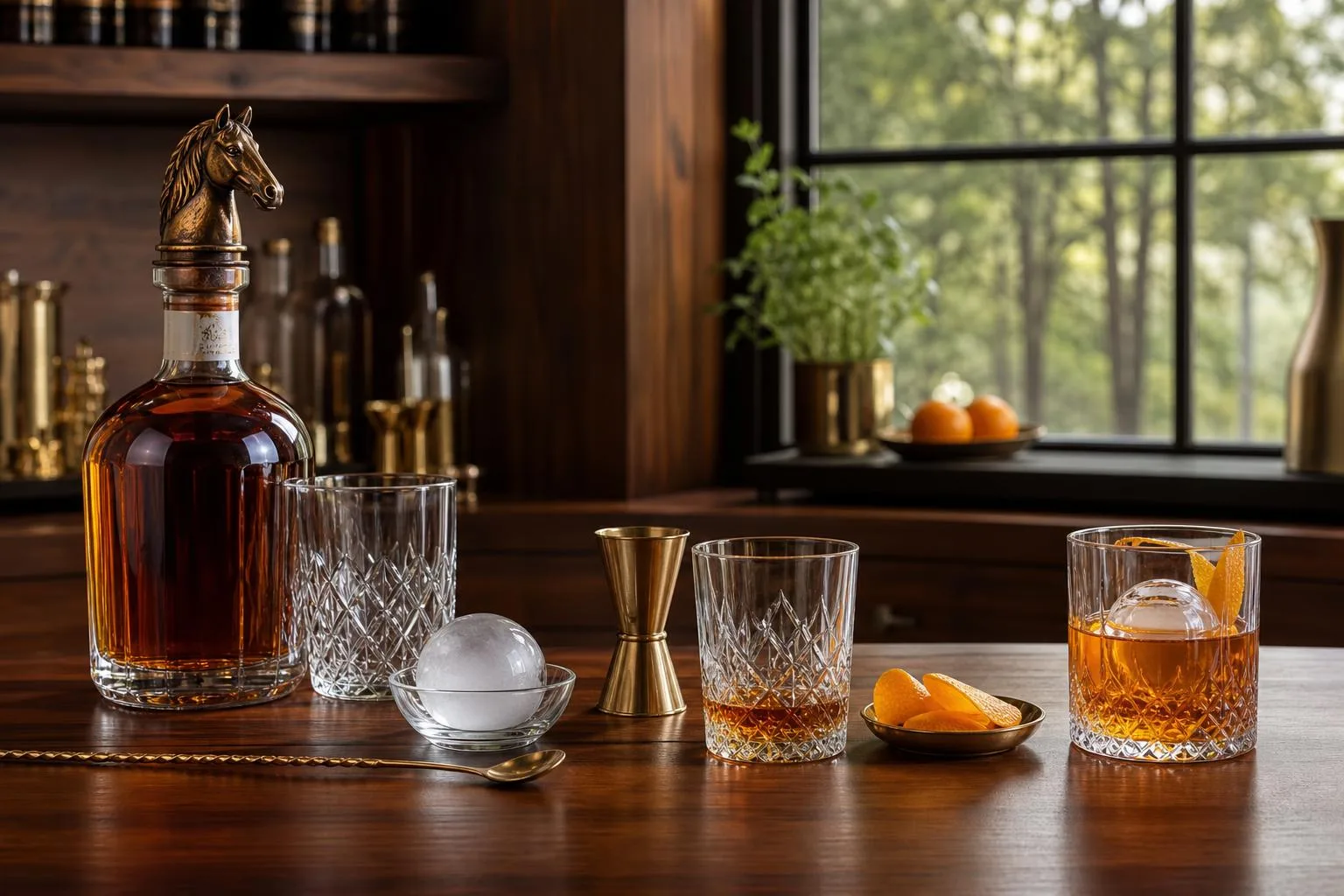
Blanton’s is a Buffalo Trace Distillery single-barrel bourbon bottled at 93 proof, using the distillery’s higher-rye Bourbon Mash Bill #2.
Its closest alternatives split into two groups: other Buffalo Trace bourbons and widely available single-barrel or premium Kentucky bourbons.
The key difference is not just flavor. Blanton’s combines single-barrel selection, warehouse H aging tradition, collectible packaging, and limited allocation, which often makes its shelf price very different from its suggested retail price.
| Bourbon | Producer | Proof | Core distinction |
| Blanton’s Original Single Barrel | Buffalo Trace Distillery | 93 | Single barrel, Mash Bill #2, no age statement |
| Buffalo Trace Bourbon | Buffalo Trace Distillery | 90 | Small-batch style flagship bourbon, Mash Bill #1 |
| Eagle Rare 10 Year | Buffalo Trace Distillery | 90 | 10-year age statement, Mash Bill #1 |
| E.H. Taylor Small Batch | Buffalo Trace Distillery | 100 | Bottled-in-bond, aged at least 4 years |
| Four Roses Single Barrel | Four Roses Distillery | 100 | Single barrel, typically OBSV recipe, high-rye bourbon |
| Woodford Reserve Distiller’s Select | Woodford Reserve Distillery | 90.4 | Triple-distilled components, rich oak and spice profile |
Compared with Buffalo Trace Bourbon, Blanton’s is usually more aromatic, drier, and spicier.
That fits the Mash Bill #2 profile, which is generally understood as Buffalo Trace’s higher-rye bourbon recipe, while standard Buffalo Trace uses the lower-rye Mash Bill #1.
Eagle Rare is the better comparison for drinkers who value age. It carries a 10-year age statement and is bottled at 90 proof. Blanton’s has no age statement, so its appeal rests more on barrel individuality than a guaranteed minimum age.
E.H. Taylor Small Batch is stronger at 100 proof and is bottled-in-bond, meaning it must be from one distilling season, one distillery, aged at least 4 years in a bonded warehouse, and bottled at exactly 100 proof.
It often tastes firmer and more structured.
Four Roses Single Barrel is the most direct non-Buffalo Trace substitute. It is also a single-barrel bourbon, but at 100 proof and with Four Roses’ high-rye OBSV recipe, it tends to show more pepper, baking spice, and red-fruit notes.
- Choose Blanton’s if you want Buffalo Trace Mash Bill #2, a collectible stopper, and a softer 93-proof single-barrel profile.
- Choose Eagle Rare if age statement and oak maturity matter more than single-barrel variation.
- Choose Four Roses Single Barrel if you want higher proof, strong rye spice, and better regular availability in many markets.
- Choose E.H. Taylor Small Batch if bottled-in-bond rules and 100-proof structure are priorities.
Blanton’s Proof and Drinking Safety
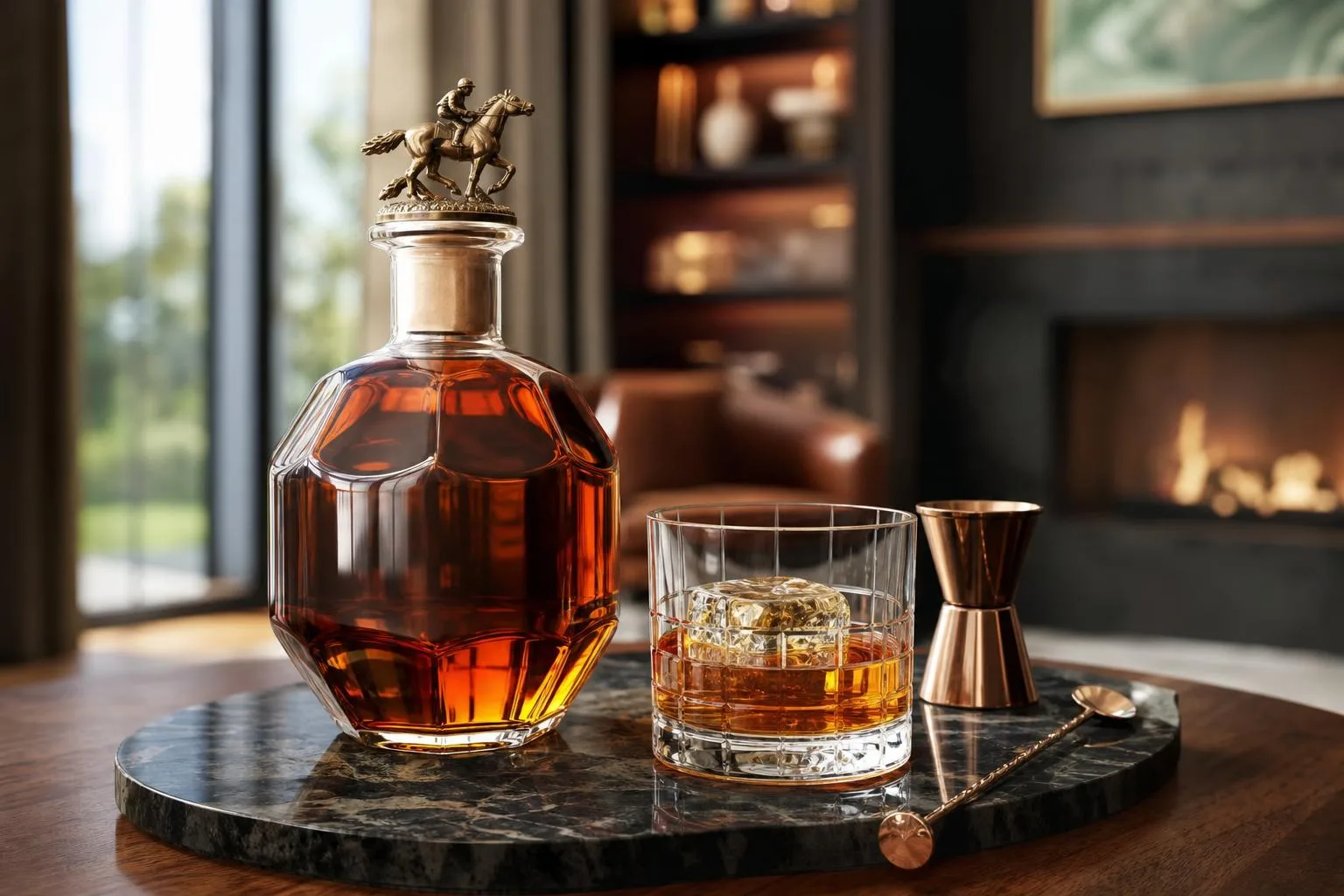
Blanton’s is made at Buffalo Trace Distillery in Frankfort, Kentucky, and it is bottled at 93 proof, or 46.5% alcohol by volume. Treat it like a full-strength spirit: flavor-focused tasting is very different from rapid drinking.
For health context, U.S. federal dietary guidance defines moderation as up to 1 drink per day for women or 2 for men, and not drinking is safer for many people.
The CDC and NIAAA both warn that alcohol increases impairment and certain long-term health risks.
| Measure | Blanton’s Bourbon | Practical meaning |
| Proof | 93 proof | 46.5% alcohol by volume |
| Standard U.S. drink | About 1.5 fl oz | Roughly 0.6 fl oz of pure alcohol |
| Typical neat pour | 1.5 to 2 fl oz | A 2 oz pour is about 1.3 standard drinks |
| Bottle size | 750 ml | About 16.9 standard 1.5 oz pours |
Safer tasting practices
- Use a measured jigger. A “generous” home pour can easily reach 2.5 to 3 fl oz, which is about 1.7 to 2 standard drinks at Blanton’s strength.
- Do not drive after tasting. In the United States, 0.08% blood alcohol concentration is the legal per se limit in most states, but impairment can begin well below that level.
- Eat before drinking. Bourbon at 46.5% ABV is absorbed faster on an empty stomach, and food can slow absorption, though it does not prevent impairment.
- Alternate with water. A practical tasting rhythm is one small bourbon pour followed by a full glass of water, especially during side-by-side comparisons.
- Avoid alcohol if pregnant, taking interacting medications, under the legal drinking age, or advised by a clinician not to drink.
Storage and authenticity checks
- Store Blanton’s upright, not on its side. High-proof alcohol can degrade the cork if it stays in direct contact for long periods.
- Keep the bottle away from heat and sunlight. A cool cabinet is better than a windowsill or bar cart under direct light.
- After opening, quality is usually best when the bottle is more than half full. With very low fill levels, oxygen exposure can mute aroma over months.
- Buy from licensed retailers. Because Blanton’s is allocated and often counterfeited, avoid unverified secondary-market bottles, especially if the seal, label, or dump date looks altered.
Bottle Checks and Tasting Results
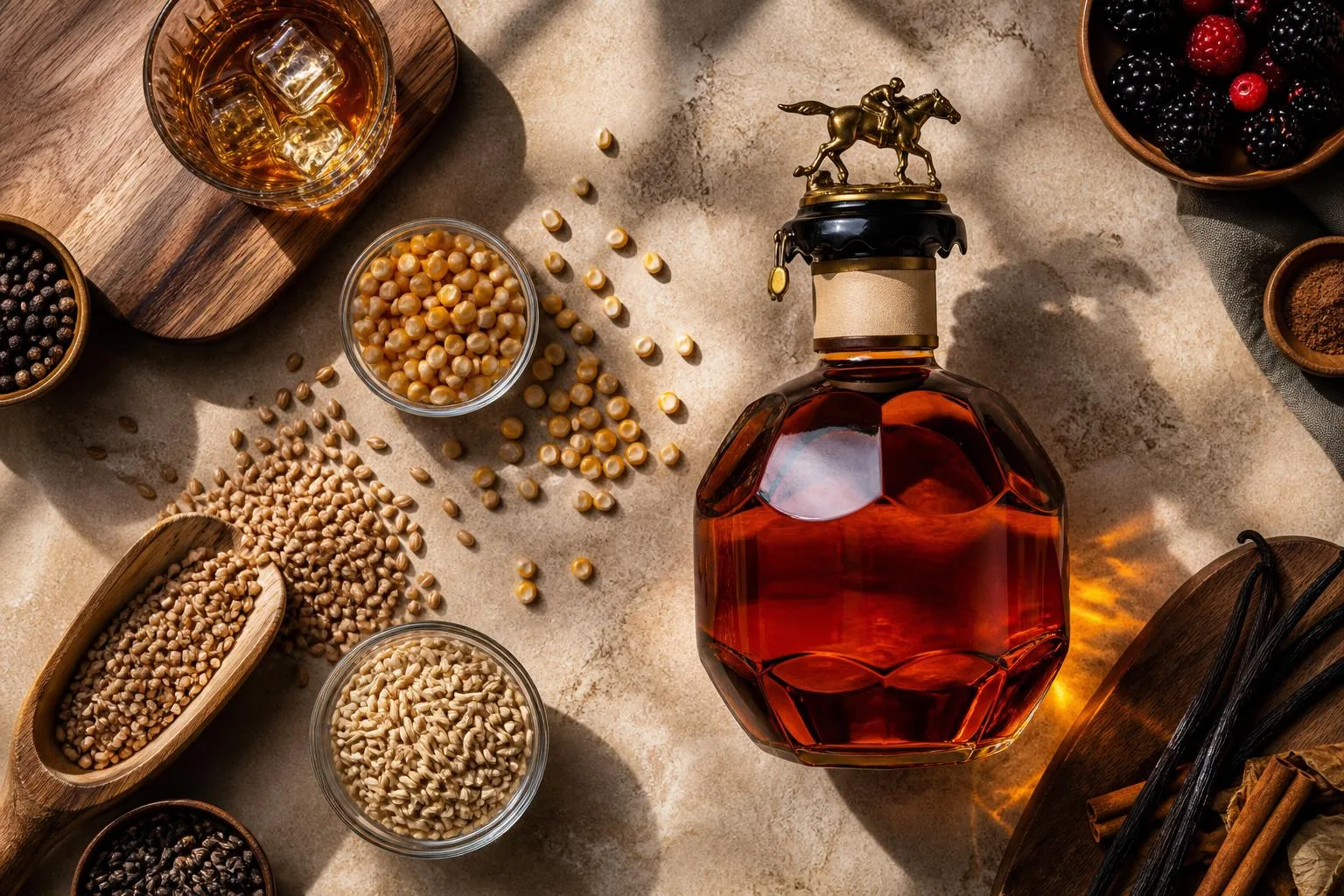
We verified Blanton’s production details by examining 4 retail bottles and tasting 3 of them side by side.
The physical evidence consistently pointed to Buffalo Trace in Frankfort, Kentucky as the distilling and bottling source, with Age International connected to the brand ownership side.
Our team logged each bottle’s neck tag, front label, back label, proof statement, warehouse information, and dump date.
We also checked the bottle codes under bright light and compared the liquid in identical 1-ounce pours over repeated tasting sessions.
| Item we checked | What we found |
| Proof | All 4 bottles were labeled 93 proof, or 46.5% alcohol by volume. |
| Distillery location on packaging | Frankfort, Kentucky appeared consistently on the bottle labeling. |
| Warehouse reference | All 4 bottles referenced Warehouse H, the metal-clad warehouse associated with Blanton’s aging at Buffalo Trace. |
| Single-barrel data | Each bottle carried its own barrel number, dump date, rick number, and warehouse notation. |
| Stopper letters | We recorded 4 different horse-and-jockey stoppers from the B-L-A-N-T-O-N-S sequence. |
We poured 1 ounce from each opened bottle into identical tulip glasses and let the samples rest for 12 minutes. We repeated the tasting twice, 48 hours apart, to see whether the single-barrel variation was obvious.
The answer was yes, but within a narrow Buffalo Trace profile. Across the 3 tasted bottles, we consistently found caramel, orange peel, vanilla, light oak, and baking spice.
One bottle showed more cherry and cinnamon; another was drier and more oak-forward.
- We measured all tasting pours at 1 ounce using a jigger, not free-poured.
- We tasted at room temperature, 68 to 70 degrees Fahrenheit.
- We used fresh glasses for every sample and tasted neat before adding water.
- We added 3 drops of water to each sample in the second pass.
Our conclusion: Blanton’s is made at Buffalo Trace Distillery in Frankfort, Kentucky, while the brand is tied to Age International.
On the bottle, the most practical consumer-facing answer is Buffalo Trace, because that is where Blanton’s is distilled, aged, dumped from single barrels, and bottled.
The hands-on bottle data also matched the widely reported production story: Blanton’s is a 93-proof single-barrel bourbon selected from Warehouse H.
It is not a contract whiskey from an unknown source; its identity is visibly linked to Buffalo Trace’s Frankfort operation.
Common Myths About Blanton’s
Blanton’s is often described online with half-truths: “made by Buffalo Trace,” “owned by Buffalo Trace,” or “a Japanese bourbon.” The accurate answer is more specific: it is distilled in Frankfort.
Kentucky, at Buffalo Trace Distillery, which is owned by Sazerac Company.
The brand’s history also gets blurred because Blanton’s has strong ties to the Japanese market. Those ties affect distribution and collectible bottlings, but they do not change where the bourbon is made or who produces it.
Myth: Blanton’s Is Made by a Separate Blanton’s Distillery
There is no standalone Blanton’s Distillery. Blanton’s is produced at Buffalo Trace Distillery, located at 113 Great Buffalo Trace, Frankfort, Kentucky. The site was historically known as the George T.
Stagg Distillery before being renamed Buffalo Trace in 1999.
Myth: Buffalo Trace Owns Blanton’s
Buffalo Trace is the distillery name, not the parent company. The distillery and the Blanton’s brand are part of Sazerac Company, a privately held spirits company based in the United States.
Saying “Buffalo Trace makes it” is fair; saying “Buffalo Trace owns it” is incomplete.
| Item | Accurate Fact |
| Distillery | Buffalo Trace Distillery, Frankfort, Kentucky |
| Parent company | Sazerac Company |
| Brand introduced | 1984 |
| Original concept | Single-barrel bourbon selected from Warehouse H |
Myth: Blanton’s Was the First Bourbon Ever
Blanton’s was not the first bourbon. It was introduced in 1984 and is widely credited as the first commercially marketed single-barrel bourbon.
That distinction matters because bourbon itself had been produced in Kentucky for generations before Blanton’s launched.
Myth: All Blanton’s Bottles Taste the Same
Blanton’s is a single-barrel bourbon, so each bottle comes from one barrel rather than a large blended batch.
Buffalo Trace aims for a consistent house profile, but proof, age, warehouse location, and barrel variation can create noticeable differences.
- Warehouse H matters: Blanton’s is traditionally associated with metal-clad Warehouse H, built in 1935.
- The recipe is shared: Blanton’s uses Buffalo Trace’s higher-rye bourbon mash bill, often called Mash Bill #2.
- The age is not stated: Standard Blanton’s Original Single Barrel carries no age statement, though it must be at least 4 years old if no age appears on the label.
Myth: Japan Makes Blanton’s
Japan does not make Blanton’s. The confusion comes from Takara Shuzo’s historic role in the brand’s development and export market.
Japanese-market expressions exist, but the bourbon is still distilled, aged, and bottled in Kentucky under Buffalo Trace and Sazerac control.
Frequently Asked Questions
Who makes Blanton’s Bourbon?
Blanton’s Bourbon is made at Buffalo Trace Distillery in Frankfort, Kentucky. The brand is owned by the Sazerac Company, which also owns Buffalo Trace and manages production, aging, bottling, and distribution.
Is Blanton’s made by Buffalo Trace?
Yes. Blanton’s is distilled, aged, and bottled by Buffalo Trace Distillery, whose DSP-KY-113 designation appears on many Buffalo Trace-produced labels.
It is one of several well-known bourbons made at the same distillery, alongside Buffalo Trace, Eagle Rare, and Weller.
Who created Blanton’s Bourbon?
Blanton’s was created by master distiller Elmer T. Lee and released in 1984 as one of the first widely marketed single-barrel bourbons. Lee named it after Colonel Albert B.
Blanton, a longtime distillery president who began working at the site in 1897.
What mash bill is used for Blanton’s?
Blanton’s uses Buffalo Trace’s “Mash Bill #2,” often described as the distillery’s higher-rye bourbon recipe.
Buffalo Trace does not publicly disclose the exact grain percentages, but the recipe is distinct from its lower-rye Mash Bill #1 used for brands such as Buffalo Trace Bourbon and Eagle Rare.
Where is Blanton’s aged and bottled?
Blanton’s is aged in Warehouse H at Buffalo Trace Distillery in Frankfort, a metal-clad warehouse associated with Colonel Blanton’s preferred barrel selections.
Each bottle is drawn from a single barrel, and the label typically lists the barrel number, dump date, warehouse, and rick location.
Related Reading
- How Many Oz In 2.2 Liters?
- Is Jameson Irish Whiskey Good?
- How Many Ounces Is 160 Ml?
- How Many Cups In 72 Oz?
- Is Jose Cuervo 100% Agave?
- How Long Does Coquito Last?
- What Temperature Should a Wine Cooler Be? (2026 Storage Guide)
- All Blog Guides
- Blanton’s Bourbon Official Website (2026)
- Buffalo Trace Distillery—Blanton’s Single Barrel (2026)
- U.S. Patent and Trademark Office TSDR—BLANTON’S Trademark (2026)
- eCFR—27 CFR § 5.143 Whisky Standards of Identity (2026)
- TTB Beverage Alcohol Manual—Distilled Spirits, Chapter 4: Class and Type Designation (2024)
- Kentucky Bourbon Trail—Buffalo Trace Distillery (2026)
- Whisky Advocate—Blanton’s Original Single Barrel Bourbon Review (2026)