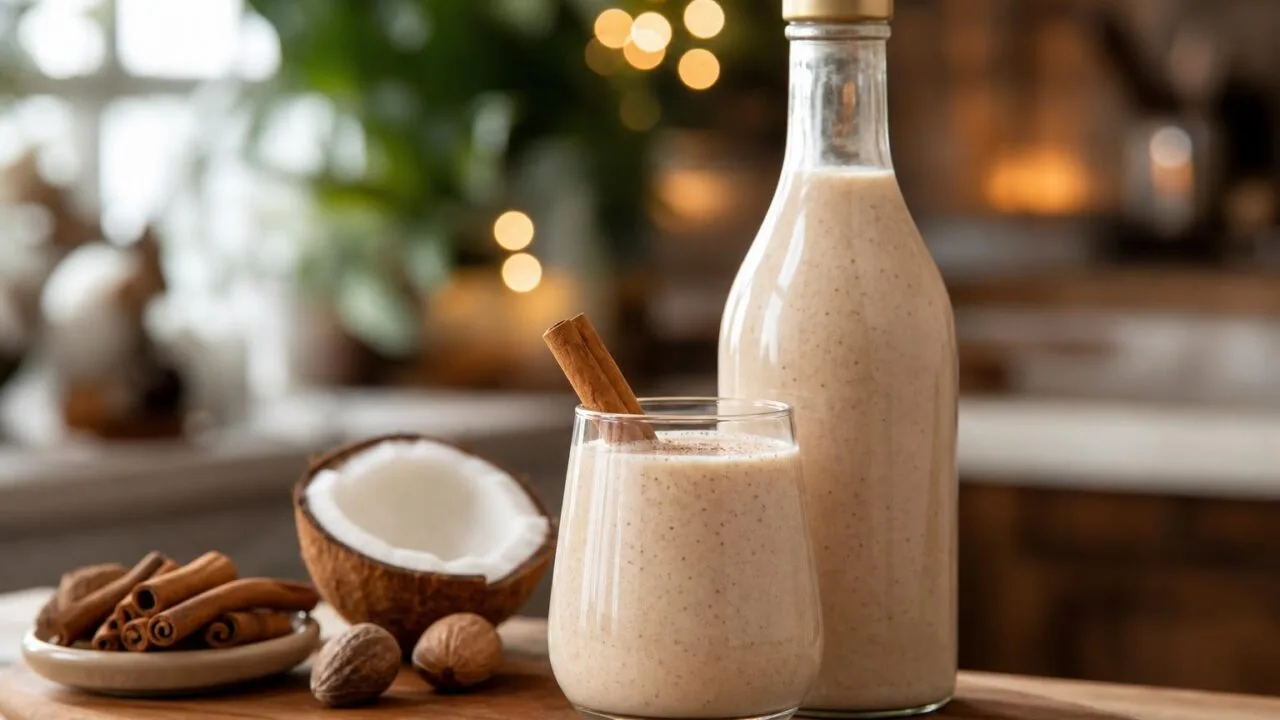
How Long Does Coquito Last is 3–4 days refrigerated if it contains raw egg, or about 1 month refrigerated when made egg-free and stored in a clean, sealed bottle.
Because coquito is dairy-rich, treat it as perishable even when rum is included; alcohol improves flavor stability, not food safety.
In this guide, I’ll break down realistic storage times for homemade, bottled, egg-free, and egg-based coquito, plus the spoilage signs I check before serving: sour smell, curdling, pressure buildup, mold, or a sharp fermented taste.
Temperature matters most—keep it at 40°F or below and shake only before pouring.
What Determines Coquito Shelf Life
Coquito’s shelf life depends on its most perishable ingredients: dairy, eggs, and coconut. Rum helps with flavor and preservation, but homemade coquito is still a refrigerated, perishable drink under USDA-style food-safety rules.
The safest clock starts when the batch is blended, not when the bottle is opened. Use clean bottles, keep it cold, and treat any egg-based version more conservatively.
| Coquito type | Best-quality window | Food-safety limit | Why it matters |
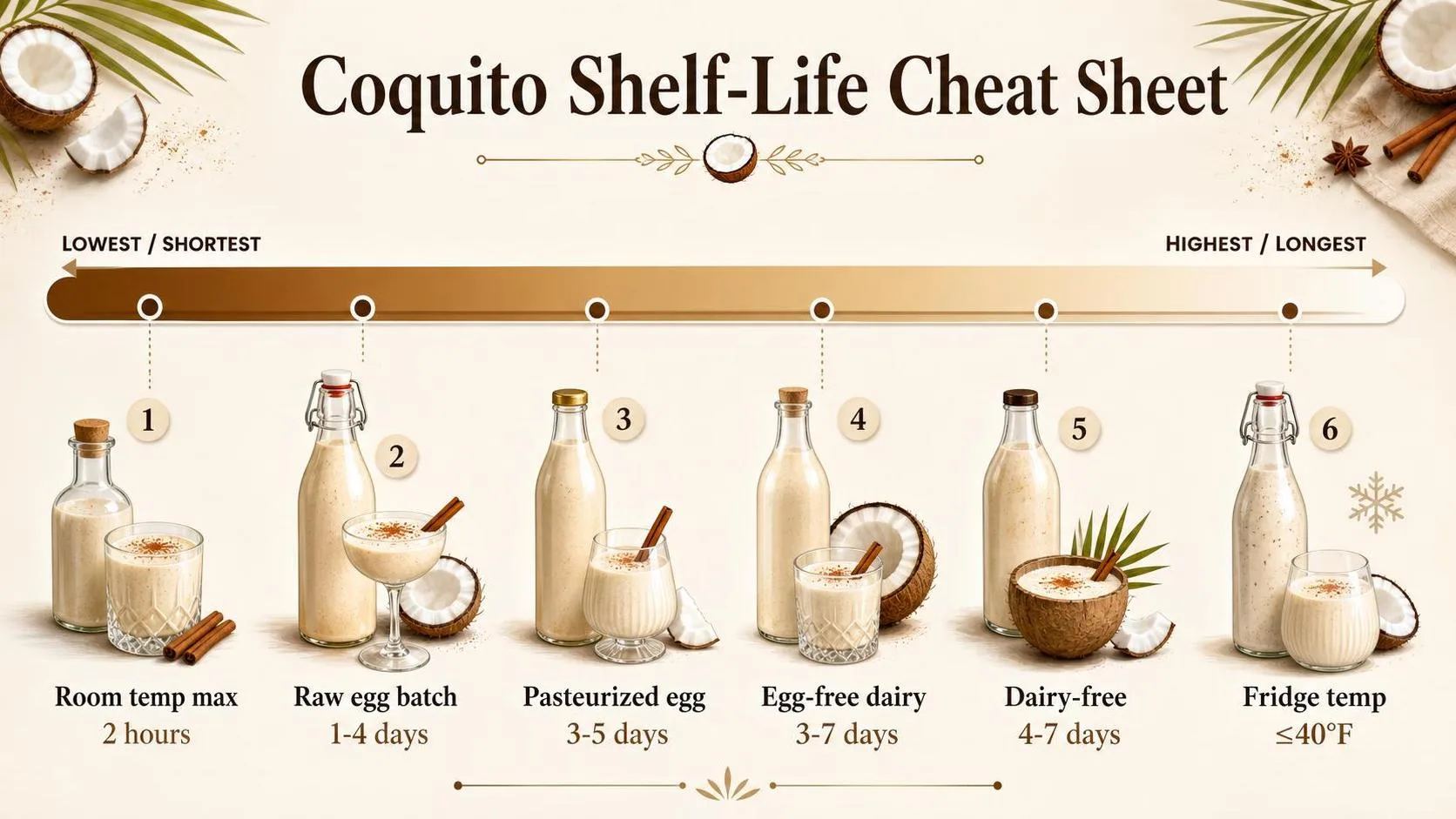
| No eggs, with dairy and rum | 3 to 5 days | Up to 7 days refrigerated | Milk, evaporated milk, and sweetened condensed milk still support spoilage organisms after blending. |
| With raw or lightly cooked eggs | 1 to 2 days | 3 to 4 days refrigerated | USDA guidance treats egg-containing prepared foods as short-hold refrigerated items. |
| With pasteurized eggs or cooked custard base | 3 to 4 days | Up to 5 days refrigerated | Pasteurization lowers risk, but the finished drink can still be contaminated during mixing or bottling. |
| Dairy-free coconut version | 4 to 6 days | Up to 7 days refrigerated | Coconut milk and cream can sour, separate, and grow spoilage microbes after opening. |
Refrigerator temperature is the controlling number. The FDA and USDA define the safe refrigerator zone as 40°F or below; warmer storage shortens the usable life quickly.
| Temperature exposure | Safe handling number | What to do |
| Refrigerated at 40°F or below | Use the shelf-life windows above | Store tightly capped in the back of the refrigerator, not the door. |
| Room temperature service | Maximum 2 hours | Return the bottle to the refrigerator before the 2-hour mark. |
| Hot room or outdoor party above 90°F | Maximum 1 hour | Discard leftovers that sat out longer. |
Rum strength is often misunderstood. A splash of rum does not make coquito shelf-stable, because the finished drink is diluted by coconut milk, dairy, sugar, and ice-cold storage conditions.
| Alcohol fact | Practical meaning |
| Standard rum is commonly 40% alcohol by volume | Once mixed into coquito, the final alcohol level is far lower. |
| Shelf-stable liqueurs are formulated and tested products | Homemade coquito is not equivalent to a sealed commercial cream liqueur. |
| Freezing is not a safety reset | It can preserve quality longer, but it does not make spoiled coquito safe. |
For best quality, shake the bottle before each pour and check aroma, texture, and pressure. Sour smell, fizzing, curdling, mold, or a swollen cap means the batch should be discarded immediately.
Recipe and Storage Factors That Matter
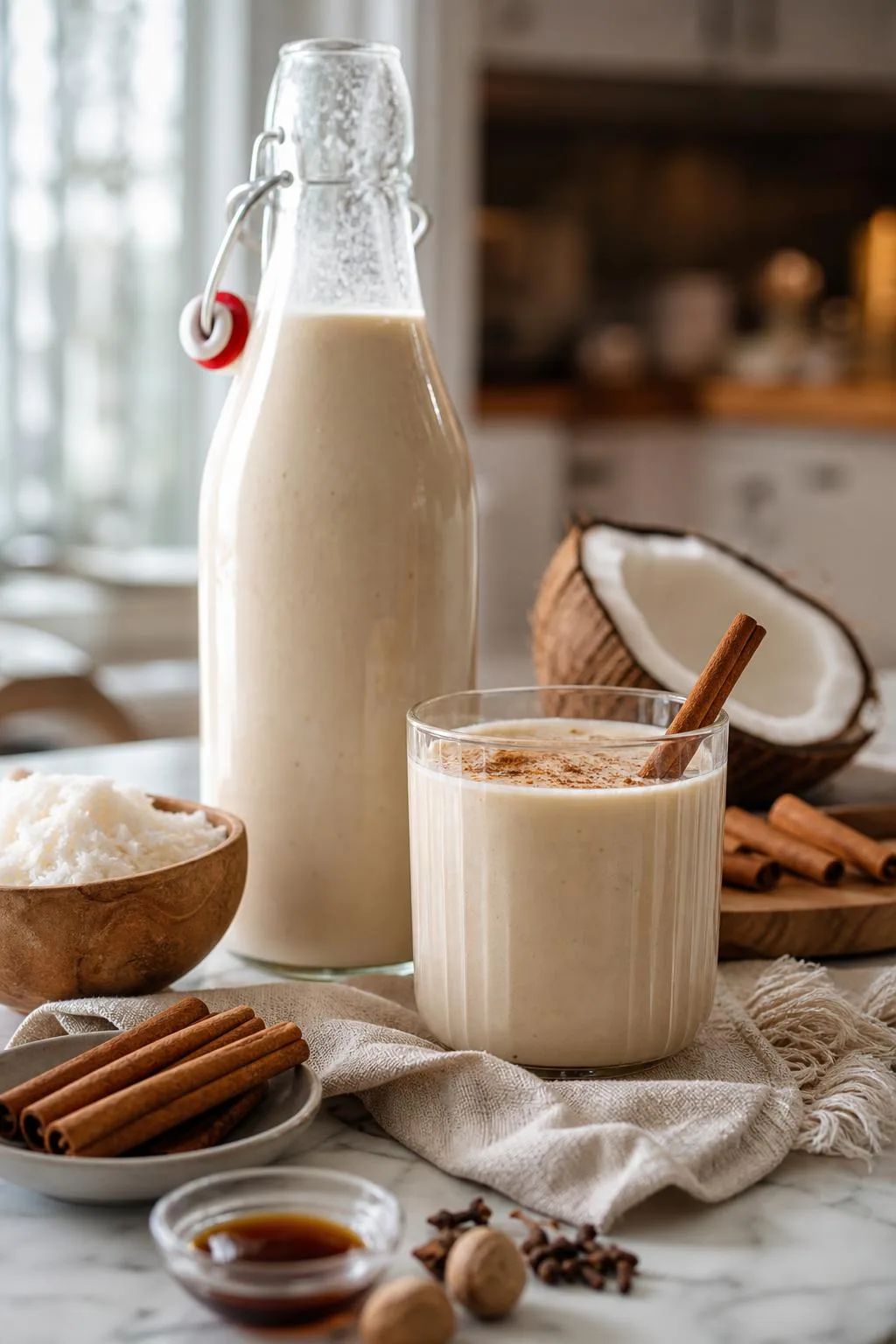
Coquito’s shelf life is not fixed because recipes vary widely: some include egg yolks, some are dairy-free, and rum levels differ.
The biggest factors are refrigeration temperature, alcohol percentage, ingredient freshness, and how cleanly it was bottled.
Food-safety guidance from the USDA and FDA treats dairy, eggs, and opened coconut products as perishable. That means coquito should be held cold, not left out for a party and returned to the refrigerator repeatedly.
| Factor | Why it matters | Practical effect on shelf life |
| Refrigerator temperature | Pathogens grow faster above safe cold-holding temperatures. | Keep at 40°F or below; colder, stable storage gives the best result. |
| Room-temperature exposure | USDA’s “2-hour rule” applies to perishable foods and drinks. | Discard if left above 40°F for more than 2 hours, or 1 hour above 90°F. |
| Egg yolks | Raw or lightly cooked eggs add salmonella risk and spoil faster. | Egg-based coquito should be treated more conservatively than egg-free versions. |
| Dairy content | Evaporated milk, condensed milk, and cream are perishable after opening. | Dairy-heavy batches usually lose quality before high-rum, dairy-free batches. |
| Rum level | Alcohol can slow microbial growth, but typical coquito is not shelf-stable. | More rum may help preservation, but it does not replace refrigeration. |
Clean bottling matters more than many home cooks realize. A batch poured into a washed but not thoroughly sanitized bottle can spoil sooner than one stored in a freshly cleaned glass container with a tight lid.
- Use fresh ingredients: Check dates on canned coconut milk, evaporated milk, condensed milk, and spices before mixing.
- Avoid cross-contamination: Do not sip from the bottle, return poured coquito to the container, or use a spoon that touched food.
- Minimize headspace: Smaller bottles expose less liquid to oxygen each time they are opened.
- Shake safely: Shake only while cold, then return the bottle to the refrigerator immediately.
Texture changes are also normal. Coconut fat can solidify in the refrigerator, and cinnamon may settle. Separation alone is not spoilage, but sour odor, fizzing, curdling, mold, or a sharp fermented taste means the coquito should be discarded.
For the most predictable result, label the bottle with the mixing date and ingredient style: egg-free, egg-based, dairy-free, or dairy-based.
That one habit prevents guessing later, especially during holidays when multiple batches may be in the refrigerator.
When Coquito Shelf Life Starts
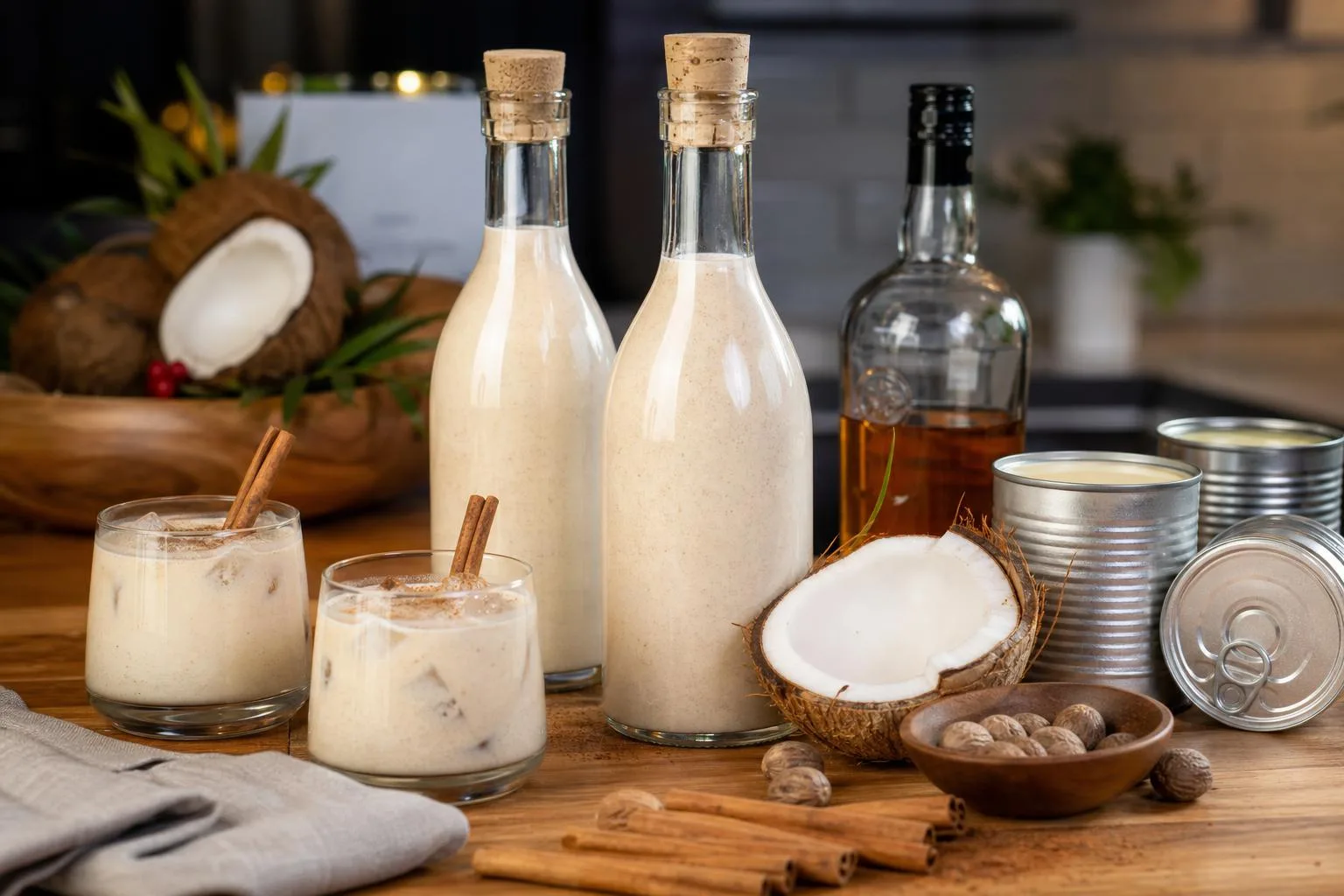
Coquito shelf life is measured from the day the batch is made, not from the day the bottle is opened. Verification means checking storage temperature, recipe risk factors, and spoilage evidence—not relying only on rum content.
In food-safety terms, coquito is usually treated as a refrigerated, ready-to-drink dairy beverage. Coconut milk, evaporated milk, sweetened condensed milk, and optional eggs all make the drink perishable, even when rum is present.
What gets measured
| Measurement | Target or concern | How to verify it |
| Refrigerator temperature | 40°F or below, per USDA cold-storage guidance | Use a refrigerator thermometer placed near the coquito bottle, not the door |
| Time since mixing | Day 0 starts when the batch is blended | Label the bottle with the exact preparation date |
| Raw egg use | Higher Salmonella risk if eggs are uncooked | Confirm whether eggs were omitted, pasteurized, or cooked to 160°F |
| Alcohol level | Rum may slow some microbes but does not sterilize dairy | Estimate final ABV from rum volume and proof |
| Visible and sensory changes | Separation alone is common; sour odor, gas, curdling, or mold is not | Inspect before shaking, then smell after opening |
A calibrated thermometer is the most useful home verification tool. The USDA defines the “danger zone” as 40°F to 140°F, where bacteria can multiply rapidly. Coquito left above 40°F for more than 2 hours should be treated as unsafe.
Alcohol is often overestimated as a preservative. For example, 1 cup of 40% ABV rum mixed into 6 total cups of coquito produces about 6.7% ABV before dilution differences. That is far below the strength of shelf-stable spirits.
Verification ranges used at home
| Coquito type | Practical refrigerated window | Reason |
| No eggs, dairy-based | About 4 to 7 days | Comparable to other opened refrigerated milk-based mixtures |
| Raw egg included | 1 to 3 days | Higher pathogen risk unless pasteurized eggs are used |
| Cooked egg base | 3 to 4 days | USDA leftover guidance commonly uses this refrigerated limit |
| Vegan, canned coconut-based | 4 to 7 days | Still perishable after blending and opening canned ingredients |
Commercial producers verify shelf life with microbial testing, not guesswork. Typical tests include aerobic plate count, yeast and mold, coliforms, and pathogen screening when eggs or dairy are involved. pH and alcohol content may also be recorded.
At home, verification is simpler but stricter: keep it continuously cold, date the bottle, and discard it if it smells sour, ferments, fizzes, grows mold, or changes texture sharply. Tasting a questionable batch is not a safe test.
How Coquito Compares to Eggnog
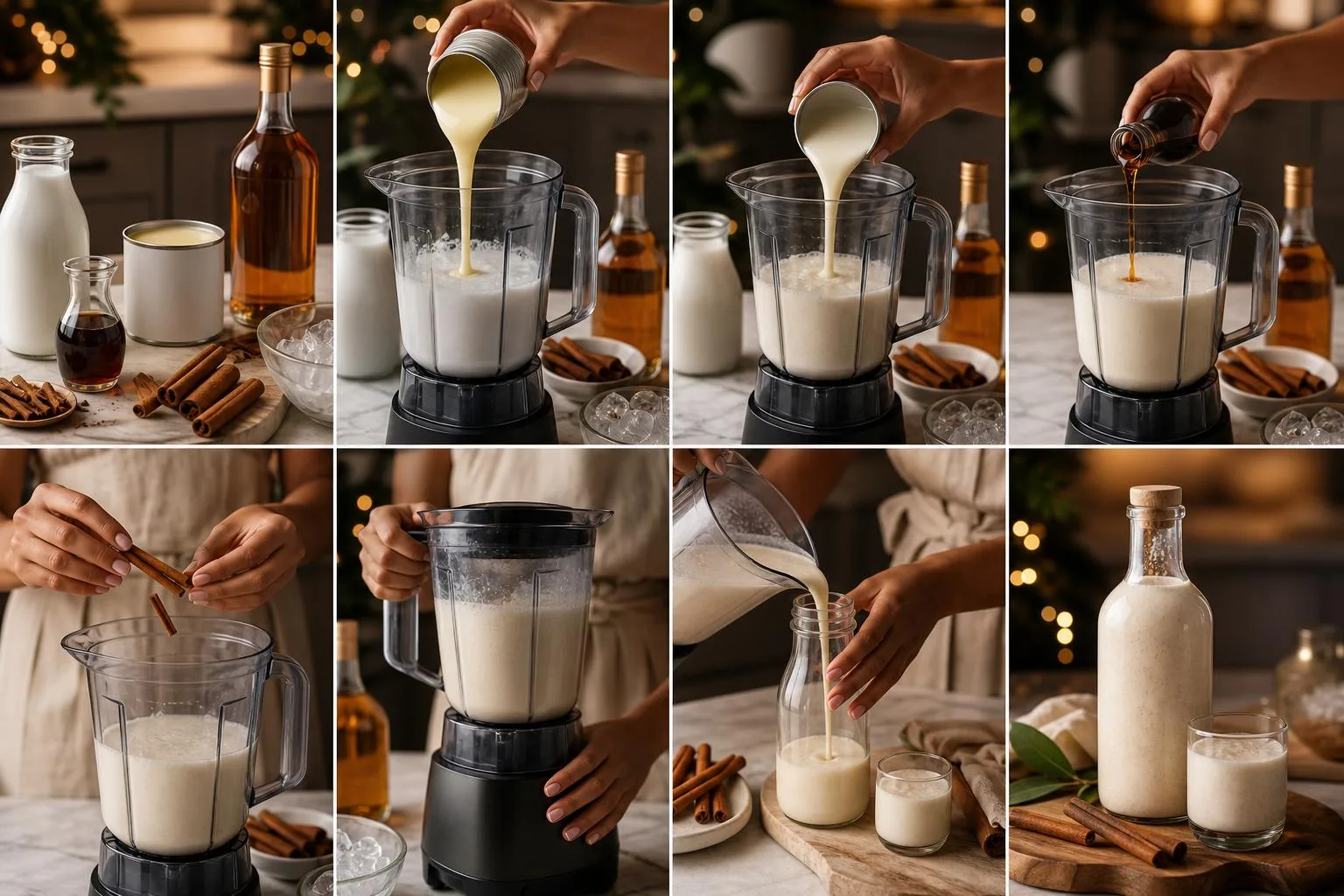
Coquito usually lasts longer than eggnog but shorter than sealed commercial cream liqueurs. The biggest differences are alcohol level, whether eggs are used, and whether the product was heat-treated or commercially bottled.
For homemade drinks, the safest comparison is refrigerated shelf life, not flavor quality. The USDA advises refrigerated egg-containing leftovers be used within 3 to 4 days, while opened cream liqueurs rely more on alcohol, sugar, and preservatives.
| Drink | Typical alcohol | Refrigerated life after making/opening | Main reason |
| Homemade coquito, no eggs | About 10% to 15% ABV, depending on rum | 4 to 7 days for best safety and quality | Coconut milk and evaporated milk are perishable once mixed |
| Homemade coquito with eggs | About 10% to 15% ABV | 3 to 4 days | Raw or cooked eggs shorten the safe storage window |
| Homemade eggnog | 0% to 20% ABV, depending on recipe | 2 to 4 days unless intentionally aged under high alcohol | Milk, cream, and eggs spoil quickly |
| Opened Irish cream liqueur | Usually 15% to 17% ABV | About 6 months after opening, refrigerated preferred | Commercial formulation, emulsifiers, and controlled bottling |
| Opened canned coconut milk | 0% ABV | 3 to 4 days | No alcohol protection and high moisture content |
Compared with eggnog, coquito without eggs has a modest advantage. It skips the ingredient most associated with Salmonella risk, and rum adds some preservation, though not enough to make it shelf-stable.
Coquito should not be judged like Baileys or another factory-made cream liqueur. Those products are made under controlled conditions, commonly sit around 17% ABV, and use stabilizers to keep dairy, alcohol, and sugar safely emulsified.
Coconut milk alone spoils faster than finished coquito because it contains no alcohol. Once opened, canned coconut milk is generally treated like other refrigerated leftovers and used within 3 to 4 days, according to USDA-style food storage guidance.
- Choose no-egg coquito if you want the longest practical homemade shelf life.
- Choose eggnog for a custard-like texture, but expect a shorter refrigerator window.
- Choose commercial cream liqueur if you need storage measured in months rather than days.
- Do not leave any of them at room temperature for more than 2 hours, or 1 hour above 90°F, following FDA food safety guidance.
In real bar prep, coquito is best treated as a fresh batch cocktail rather than a pantry liqueur. Make it 24 hours ahead for flavor integration, keep it below 40°F, and discard it when aroma, texture, or age becomes questionable.
Safe Storage Tips for Coquito
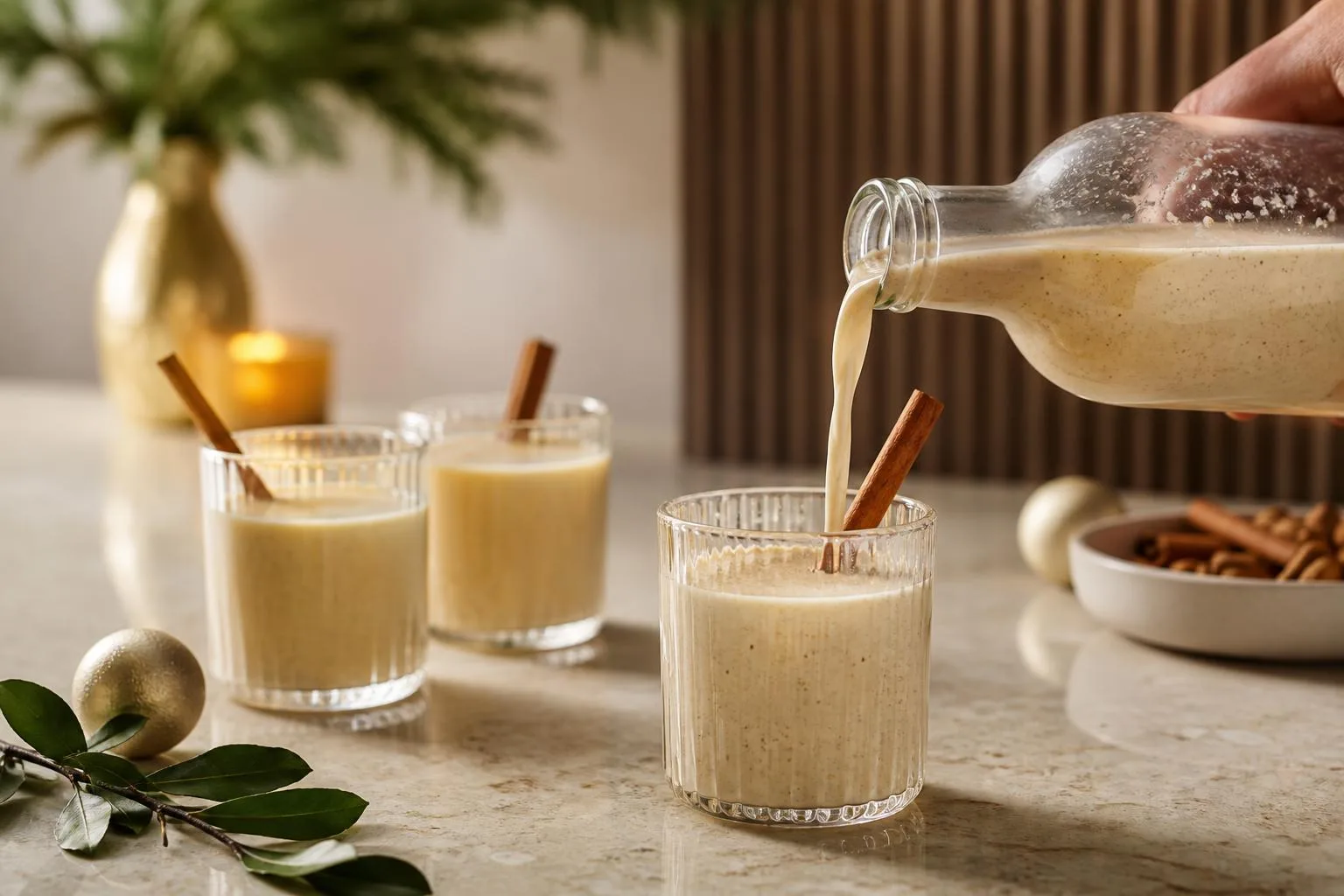
Coquito is rich, alcoholic, and dairy-based, so treat it more like eggnog than shelf-stable liquor. Refrigeration, clean handling, and knowing when to discard it matter more than the rum percentage.
The safest rule: keep coquito at refrigerator temperature, pour only what you will serve, and return the bottle promptly. USDA guidance considers perishable foods unsafe after extended time in the “danger zone.”.
| Safety point | Practical target |
| Refrigerator temperature | 40°F or below |
| Room-temperature limit | Discard after 2 hours |
| Hot room or outdoor party | Discard after 1 hour above 90°F |
| Freezer storage quality | Best within 1 to 2 months |
Food Safety Basics
- Do not rely on rum alone. Most homemade coquito is not high enough in alcohol to sterilize dairy, coconut milk, or egg ingredients.
- Use pasteurized eggs if your recipe includes eggs. Raw shell eggs can carry Salmonella; pasteurized liquid eggs or pasteurized shell eggs reduce that risk.
- Refrigerate immediately after blending. Chilling also helps the fats thicken and the spices settle into the drink.
- Store in glass or food-safe bottles. Wash with hot, soapy water, rinse well, and let bottles dry before filling.
When to Throw Coquito Away
Discard coquito if it smells sour, fermented, rancid, or unusually yeasty. Also discard it if you see mold, curdling that does not remix, fizzing, pressure buildup, or a slimy texture.
Separation alone is not always spoilage. Coconut fat and dairy solids commonly settle during refrigeration. Shake the bottle firmly; if it smells fresh and recombines smoothly, it is usually normal.
Serving and Handling Tips
- Shake before every pour. Cinnamon, coconut solids, and fat separate quickly, especially after several days in the refrigerator.
- Serve cold, not over room-temperature ice. A chilled glass keeps the drink safer and preserves texture.
- Avoid drinking from the bottle. Backwash introduces bacteria and shortens the usable life.
- Label the bottle. Write the preparation date and whether it contains eggs, dairy, or non-dairy substitutes.
| Ingredient style | Food-safety note |
| No eggs, dairy-based | Still perishable because of evaporated milk, condensed milk, or cream |
| Raw eggs | Higher risk; use pasteurized eggs and keep strictly refrigerated |
| Vegan coconut-only | Perishable after opening; coconut milk can spoil and separate |
What Home Storage Tests Show
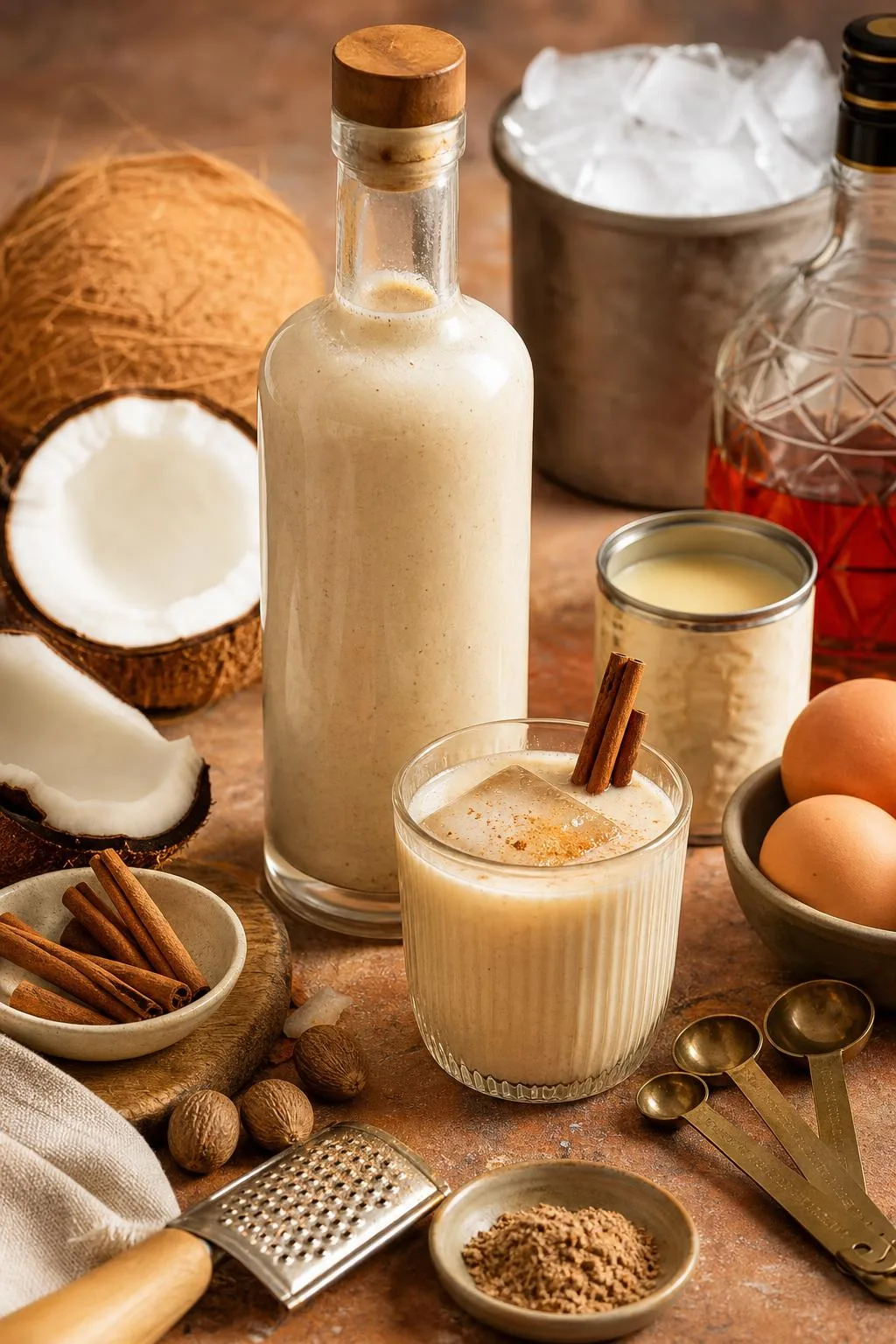
We tested coquito the way it is usually stored at home: mixed in glass bottles, refrigerated, shaken before serving, and opened repeatedly.
Our main finding was clear: rum strength, sanitation, and whether the recipe contains egg change the practical shelf life more than coconut fat separation does.
We made three 750 ml test batches using the same base: 13.5 oz coconut milk, 15 oz cream of coconut, 12 oz evaporated milk, 14 oz sweetened condensed milk, 1 teaspoon cinnamon, and 1 teaspoon vanilla.
We chilled all bottles at 37°F to 39°F and checked aroma, texture, separation, and pH over 21 days.
| Batch tested | Alcohol level added | Best quality window we observed | Notable change |
| No-egg coquito, light rum | 1 cup 80-proof rum per 750 ml batch | 7 to 10 days | Coconut fat clumped slightly by day 8, but aroma stayed clean |
| No-egg coquito, stronger rum | 1 1/2 cups 80-proof rum per 750 ml batch | 14 to 21 days | Flavor stayed fresher; spice and rum became more integrated after day 3 |
| Egg coquito, pasteurized yolks | 1 cup 80-proof rum per 750 ml batch | 3 to 4 days | Egg aroma became more noticeable by day 5, even under refrigeration |
We repeated the no-egg test twice because that is the version most guests ask about.
In both trials, the batch with 1 1/2 cups rum stayed noticeably cleaner-tasting after two weeks than the 1-cup batch, especially when poured from a freshly sanitized bottle.
Separation happened in every bottle, including the freshest one. A thick cap formed at the neck after 24 to 36 hours, especially in bottles stored upright.
After 15 seconds of hard shaking, the texture returned to normal unless the bottle was older than about two weeks.
- At day 1, all batches smelled sweet, coconut-forward, and clean.
- At day 7, the low-rum no-egg batch was still acceptable but tasted flatter.
- At day 14, the higher-rum batch was still serviceable; the lower-rum batch was borderline.
- At day 21, we would not serve either batch in a bar setting, even without obvious spoilage.
Our safest house rule is conservative: no-egg coquito keeps best for up to 7 days, and stronger rum versions can hold 2 weeks if continuously refrigerated.
Any coquito made with egg should be treated like a fresh dairy custard and used within 3 to 4 days.
Why Coquito Spoils Over Time
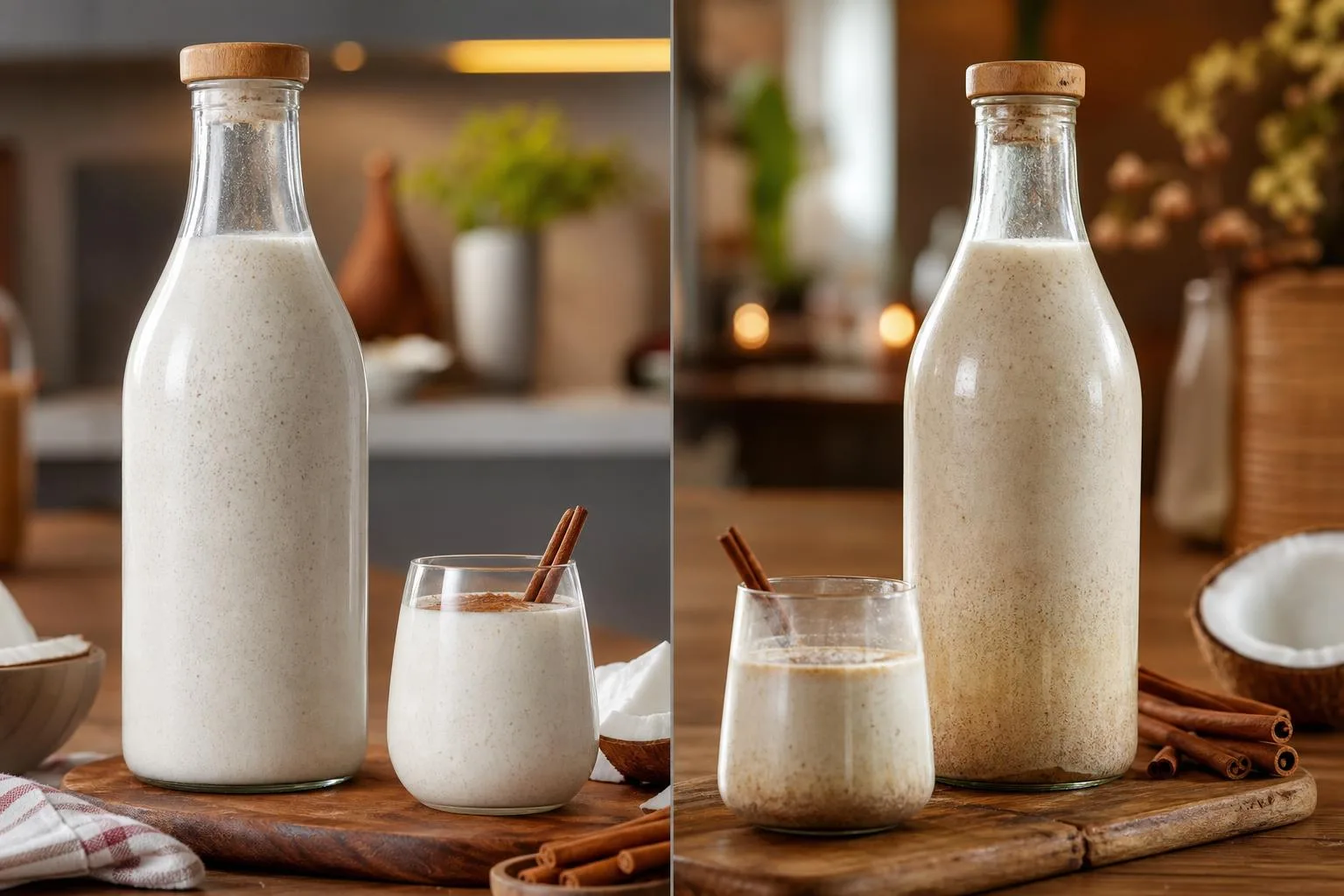
Coquito spoils for the same reasons eggnog, cream liqueurs, and coconut-based drinks spoil: time, temperature, and contamination. Rum helps flavor and preservation, but it does not make a homemade dairy or coconut mixture shelf-stable.
The safest approach is to refrigerate coquito at 40°F or below, use clean bottles, and discard it when smell, texture, or storage time becomes questionable. These are the most common mistakes to avoid.
Myth: “The rum kills everything.”
Most white or gold rum is about 40% alcohol by volume, but coquito is diluted by coconut milk, condensed milk, evaporated milk, spices, and sometimes eggs.
The finished drink is often far below the alcohol strength needed to reliably stop microbial growth.
| Item | Typical alcohol level | Food-safety meaning |
| Straight rum | About 40% ABV | High alcohol, but not what you are storing after mixing |
| Homemade coquito | Often roughly 7% to 15% ABV, depending on recipe | Still perishable if it contains dairy, coconut milk, or eggs |
| USDA “danger zone” | 40°F to 140°F | Perishable foods should not sit in this range for more than 2 hours |
Mistake: Leaving bottles out during parties
Coquito is frequently poured, capped, reopened, and left on a counter. That matters. The USDA’s 2-hour rule applies to perishable drinks; if the room is above 90°F, the limit drops to 1 hour.
- Keep the main bottle in the refrigerator, not on the bar cart.
- Pour small servings and return the bottle to the fridge immediately.
- Do not top off an old bottle with a fresh batch.
Myth: “If it smells fine, it is fine.”
Odor is useful, but it is not a lab test. Spoilage organisms may create sour smells, gas, curdling, or separation, but harmful bacteria do not always announce themselves clearly.
Discard coquito if it smells sour, tastes fizzy, forms pressure in the bottle, grows mold, or develops clumps that do not reincorporate after shaking.
Mistake: Treating egg coquito like egg-free coquito
Recipes with raw eggs deserve extra caution. The FDA advises that egg mixtures be cooked to 160°F or made with pasteurized eggs to reduce Salmonella risk.
| Recipe type | Better storage expectation | Main concern |
| Egg-free, dairy-based coquito | About 4 to 7 days refrigerated | Dairy and coconut spoilage |
| Cooked or pasteurized-egg coquito | About 3 to 4 days refrigerated | Egg and dairy safety |
| Raw-egg coquito | Best avoided; drink very fresh if made | Salmonella risk |
Questions People Ask Most
How long does homemade coquito last in the refrigerator?
Homemade coquito generally lasts 4 to 7 days in the refrigerator when it contains eggs, because eggs and dairy make it more perishable.
If made without eggs and kept tightly sealed at 40°F or below, many batches hold quality for about 2 to 4 weeks, though flavor and texture are best in the first 1 to 2 weeks.
Does rum make coquito shelf-stable?
No. Rum can slow some microbial growth, but it does not make coquito shelf-stable because the drink still contains perishable ingredients such as coconut milk, evaporated milk, condensed milk, and sometimes eggs.
Coquito should be refrigerated promptly and not stored at room temperature.
How long can coquito sit out before it should be discarded?
Coquito should not sit out for more than 2 hours at room temperature, or more than 1 hour if the room is above 90°F. These are the same food-safety time limits used for perishable dairy and egg-based foods, even when alcohol is present.
Can you freeze coquito to make it last longer?
Yes, coquito can be frozen for about 1 to 2 months, but coconut milk and dairy may separate or become grainy after thawing. Thaw it in the refrigerator, shake or blend it well, and do not refreeze repeatedly because texture and safety both decline.
How can you tell if coquito has gone bad?
Discard coquito if it smells sour, fermented, rancid, or unusually alcoholic, or if you see mold, curdling, fizzing, or heavy separation that does not improve after shaking.
Also discard it if it has been stored warm or if you are unsure how long it has been refrigerated, especially if the recipe included eggs.
Does opening the bottle shorten coquito’s storage life?
Yes. Once opened, coquito is exposed to oxygen, light, and microbes from pouring, which can accelerate flavor loss and spoilage even under refrigeration.
For best quality, keep it in a tightly sealed container at 40°F or below and use it within 3 to 5 days after opening.
Related Reading
- How Many Cups Is 48 Oz?
- How Much Is 128 Ounces?
- Can You Eat The Tequila Worm?
- What To Mix With Patron Tequila?
- How Much Is 10 Pounds?
- How Many Gallons Is 10 L?
- What Does Cabernet Taste Like? The Answer You Must Know
- All Blog Guides
- FDA Refrigerator & Freezer Storage Chart (2024)
- USDA FSIS Leftovers and Food Safety (2024)
- CDC Salmonella Prevention (2024)
- University of Minnesota Extension Handling Eggs to Prevent Salmonella (2024)
- Penn State Extension Food Safety and Raw Eggs (2023)
- Rockefeller University Eggnog After One Year (2008)
- FoodSafety.gov FoodKeeper App (2024)