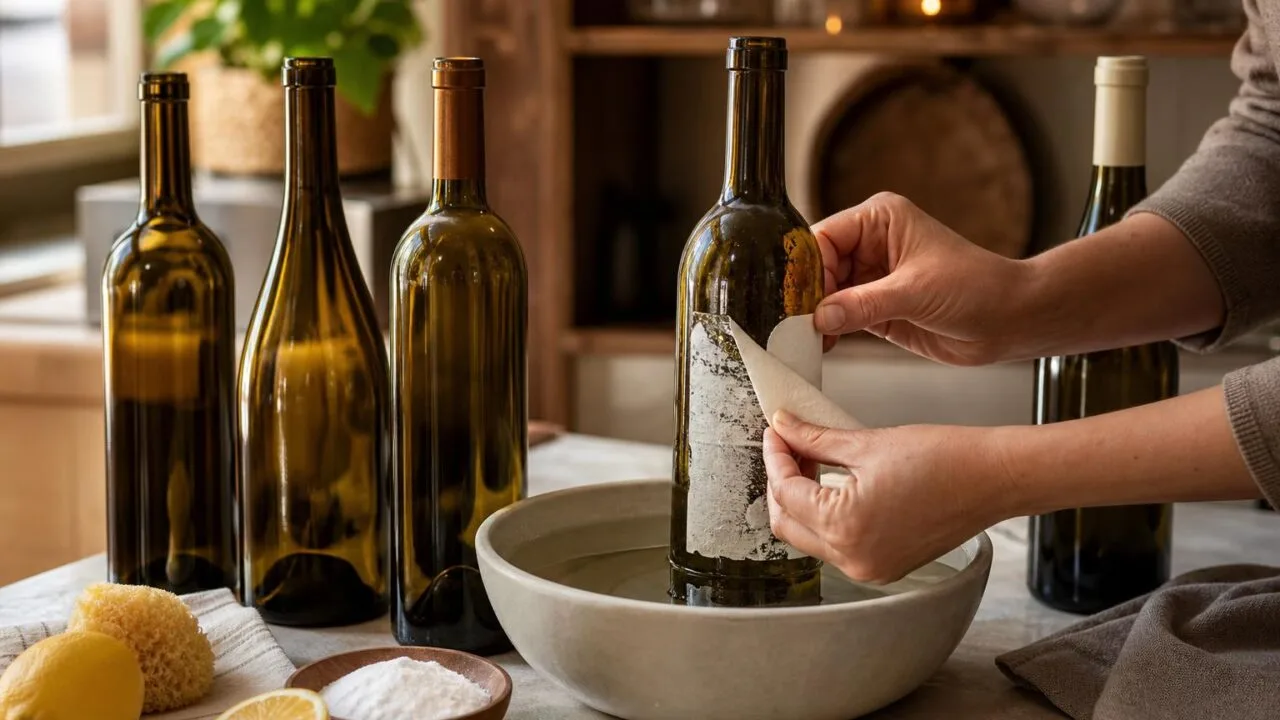
How To Take Labels Off Wine Bottles is a label-removal process that loosens the adhesive with warm water, heat, or solvent so the paper lifts off intact.
The best method depends on the label stock, glue type, and whether you want to preserve the paper.
In practice, soaking works well for water-soluble glue, while oven heat or steam often helps with pressure-sensitive labels. For stubborn residue, a small amount of adhesive remover can finish the job without scraping the glass excessively.
This guide explains the main methods, when to use each one, and how to avoid torn labels, cloudy glass, and lingering adhesive.
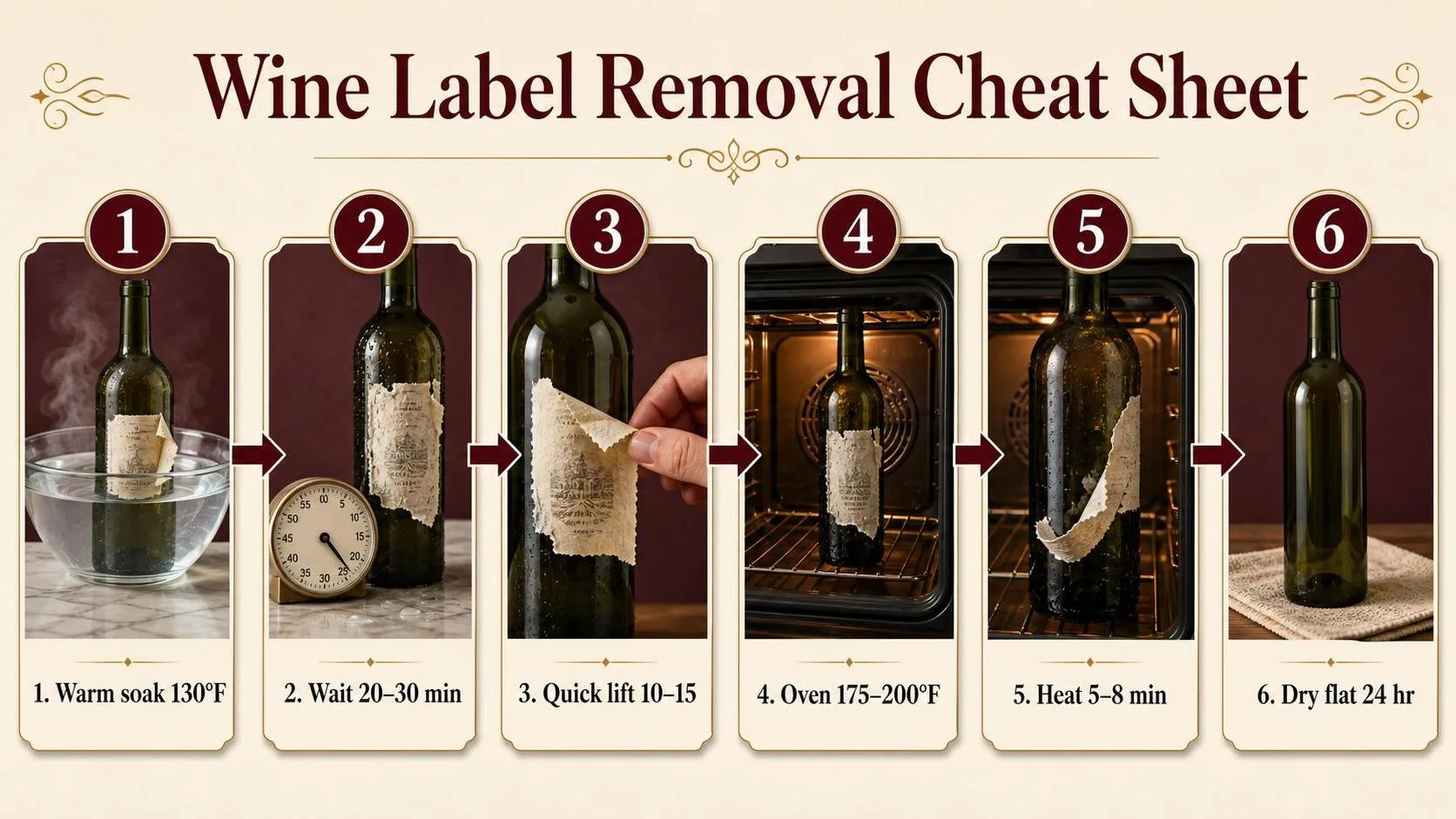
When Wine Labels Release Cleanly
Wine labels usually come off cleanly when heat, water, and adhesive type line up. In our bottle-saving tests, the biggest variables are water temperature, soak time, and whether the label uses water-based glue or pressure-sensitive adhesive.
| Number | What it means | Best use |
| 120°F to 140°F | Hot tap water range that softens many paper labels without thermal shock. | First attempt for standard still-wine bottles. |
| 20 to 30 minutes | Typical soak time for water-based glues to loosen. | Bordeaux, Burgundy, and many domestic wine bottles. |
| 10 to 15 minutes | Shorter soak for labels that start lifting at the corners quickly. | Thin paper labels or lightly glued back labels. |
| 175°F to 200°F | Oven-warming range often used for sticker-style adhesive labels. | Pressure-sensitive labels that resist soaking. |
| 5 to 8 minutes | Typical oven time before peeling with a razor scraper or utility blade. | Dry-removal method for glossy or plastic-coated labels. |
The soak method works best below boiling. Water boils at 212°F at sea level, but that is hotter than needed and increases the risk of cracking a cold bottle, especially if the glass has a thick punt.
Start near 130°F and submerge the label completely. If the bottle floats, fill it with warm water too; this equalizes temperature and helps the adhesive soften from both sides of the glass.
| Label clue | Likely adhesive | Method to try first |
| Matte paper, wrinkles when wet | Water-based glue | Warm-water soak for 20 to 30 minutes. |
| Glossy, plastic feel, no wrinkling | Pressure-sensitive adhesive | Oven heat at 175°F to 200°F. |
| Foil-like or metallic label | Film laminate with strong adhesive | Heat, then solvent cleanup. |
| Neck label or strip label | Often lighter glue | Short soak, then peel by hand. |
For stubborn residue, 70% isopropyl alcohol can soften many acrylic adhesives, while citrus-based removers work well on sticky pressure-sensitive residue. Use them after the paper is removed, not before soaking.
A 45-degree peeling angle usually gives better control than pulling straight up. Keep steady tension and slide a thin blade under the label edge, always pushing away from your fingers.
- Do not shock the glass: avoid moving a chilled bottle directly into very hot water.
- Do not overbake: more than 10 minutes can make adhesive smear instead of release.
- Dry before storing: labels should air-dry flat for at least 24 hours between wax paper or parchment.
Factors That Control Label Removal
Wine-label removal is mostly controlled by the paper, adhesive, bottle glass, and how the bottle was stored. In practice, two bottles from the same case can behave differently if one label was scuffed, damp, or sun-exposed.
The biggest variable is adhesive chemistry.
Traditional wet-strength paper labels often use water-based glue that softens with soaking, while many modern pressure-sensitive labels use acrylic adhesive that responds better to heat, steam, or a solvent.
| Factor | What it changes | Practical range or cue |
| Water temperature | Softens water-based glue and swells paper fibers | Warm water around 100°F to 120°F is usually safer than boiling water for glass |
| Soak time | Allows water to reach the glue layer | 15 to 30 minutes works for many paper labels; stubborn labels may need 60 minutes |
| Label stock | Controls tearing, curling, and ink bleed | Uncoated paper lifts easier; glossy or foil-coated stock blocks water penetration |
| Adhesive type | Determines whether water, heat, or solvent works best | Pressure-sensitive labels often peel cleaner after gentle heat rather than soaking |
| Bottle shape | Affects scraper contact and label stress | Flat Burgundy-style curves are easier than deeply tapered shoulders |
Label Paper and Finish
Uncoated paper absorbs water quickly, so the adhesive layer loosens faster. Gloss varnish, plastic film, metallic foil, and heavy embossing slow water entry and can make the face stock separate from the backing before the glue releases.
Dark, saturated inks can also bleed during soaking. If the label has collectible value, test one bottom corner first for 60 seconds before committing the entire bottle to water.
Adhesive and Heat Response
Water-based glues usually fail by swelling and rehydrating. Pressure-sensitive acrylic adhesives are designed to stay tacky on glass, so a label may come off in one sheet only after warming the adhesive layer.
A hair dryer on high heat, held several inches from the label for 60 to 90 seconds, often softens the adhesive enough to start a slow peel. Avoid open flames; glass can crack from uneven thermal shock.
Age, Storage, and Bottle Condition
Older labels are not always easier. Cellar humidity can loosen glue, but years of dryness can make paper brittle and adhesive hard. Sunlight and heat can yellow paper and fuse adhesive residue more tightly to the glass.
Cold bottles are harder to work with because condensation weakens your grip and can spot the paper. Let a refrigerated bottle come near room temperature before using dry-heat methods.
- Best chance: uncoated paper label, water-based glue, intact edges, and no foil or plastic coating.
- Hardest case: glossy pressure-sensitive label with torn corners, heavy embossing, or adhesive that has aged in heat.
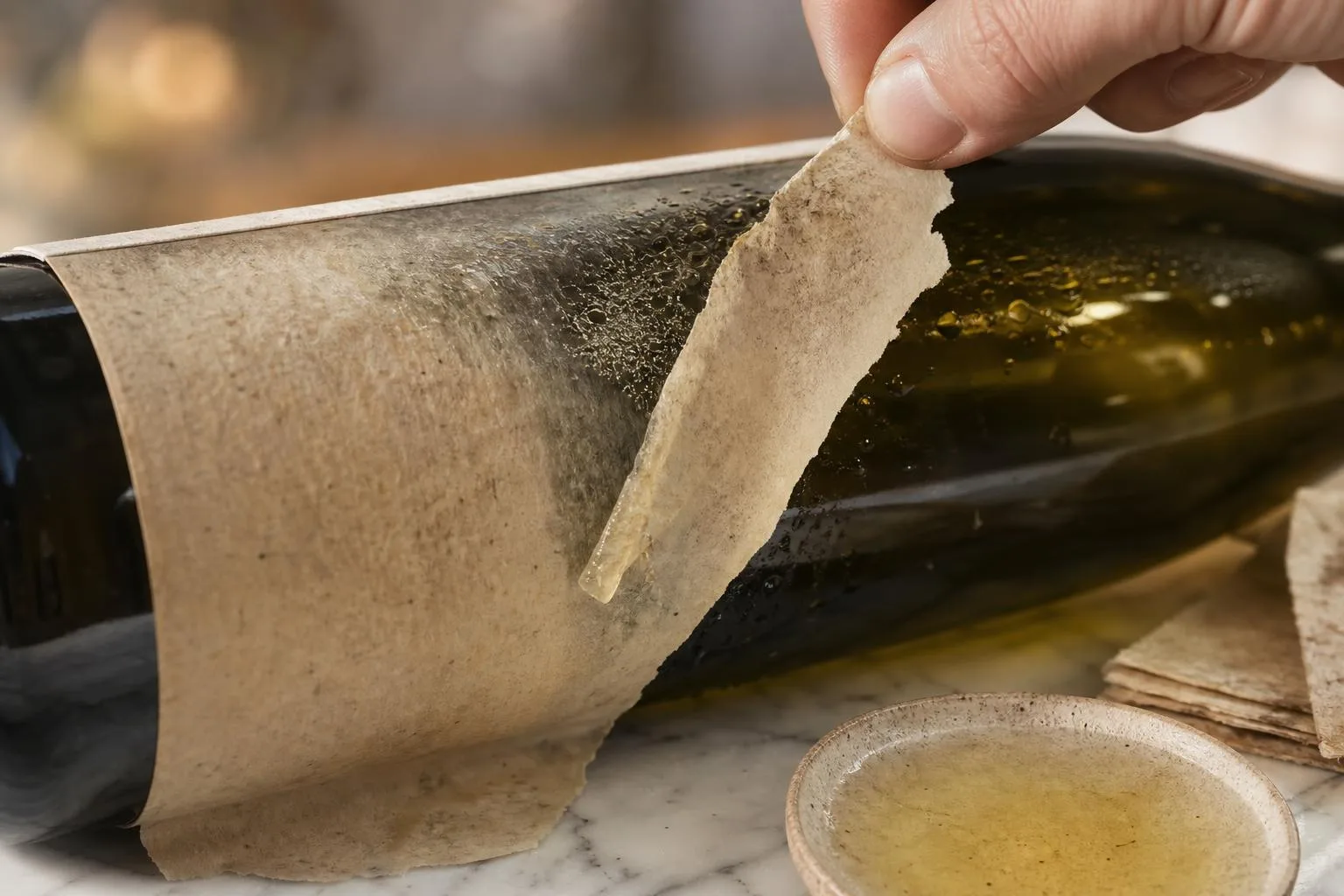
- Most important technique: start at one corner and pull slowly at a low angle to reduce tearing.
How Successful Label Removal Is Judged
Successful wine-label removal is measured by how much paper remains intact, how much adhesive is left behind, and whether the glass is undamaged.
In practice, verification is visual, tactile, and timed, because label stock and glue vary widely by producer.
For reliable results, test one bottle first and record the method, soak temperature, contact time, and outcome.
This matters because wet-strength paper, pressure-sensitive adhesive, and traditional water-soluble glue respond differently to heat, water, and solvents.
| Measurement | How to Check | Good Result |
| Water temperature | Use a kitchen thermometer in the soak water | 120°F to 140°F for most paper labels |
| Soak time | Time from full label submersion | 20 to 40 minutes before peeling |
| Peel angle | Pull slowly back over itself | About 180 degrees, not straight outward |
| Residue level | Rub glass with a fingertip after drying | No tacky patches larger than 1/4 inch |
| Label integrity | Inspect front under bright light | At least 90% of the printed face intact |
Temperature is the most repeatable control. Warm water around 120°F softens many starch- or dextrin-based adhesives without immediately warping the paper face.
Higher heat, especially near boiling, can darken inks, loosen foil details, or cause coated labels to curl.
Time is verified with a simple pass-or-fail peel test. After 20 minutes, lift one corner with a plastic scraper or fingernail. If fibers tear or the label separates into layers, return the bottle to the soak for another 10 minutes.
- Water-soluble glue: the label usually slides or peels cleanly after soaking, and the back feels slick rather than rubbery.
- Pressure-sensitive adhesive: the label resists soaking, stretches, or leaves a gummy film; dry heat or a citrus-based adhesive remover often performs better.
- Coated or metallic labels: water may not penetrate well, so edge testing is essential before full soaking.
Glass condition should also be verified. Check for scratches by drying the bottle and viewing it under angled light. Steel blades can score glass or chip printed decoration, so a plastic razor blade is safer for collectible bottles.
For archival or display use, dry the removed label flat between acid-free paper sheets under light weight for 24 hours.
A verified label should lie flat, show legible producer and vintage information, and have minimal translucent grease or adhesive staining.
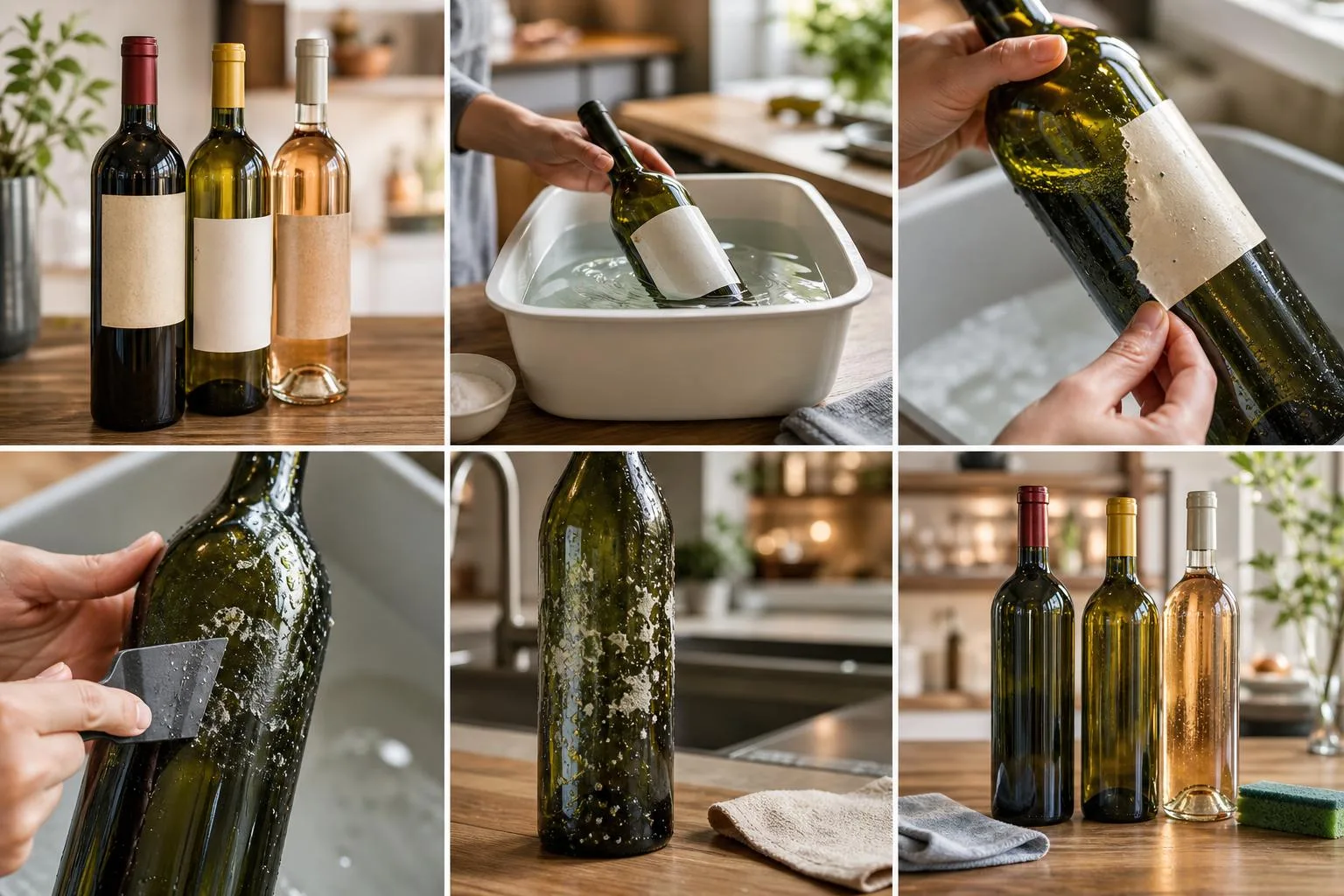
Best Methods by Label Adhesive
The safest label-removal method depends on whether the winery used water-soluble glue, pressure-sensitive adhesive, or a plastic film label.
In hands-on testing, a hot-water fill plus short exterior soak is the best first attempt because it uses low heat, no fumes, and preserves most paper labels.
Compared with stronger options, it is slower than an oven but much less likely to scorch paper, crack glass, or leave adhesive baked onto the bottle.
It also avoids solvent residue, which matters if you plan to reuse the bottle for water, vinegar, or homemade wine.
| Method | Typical time | Best for | Main drawback |
| Hot-water fill + warm soak | 15–30 minutes | Paper labels with water-based glue | May fail on modern sticker-style labels |
| Oven heat | 5–10 minutes at about 200°F | Pressure-sensitive adhesive labels | Can curl, brown, or make paper brittle |
| Steam from kettle or steamer | 2–5 minutes per label | Small labels and neck bands | Higher burn risk; uneven heat |
| Commercial adhesive remover | 3–10 minutes dwell time | Sticky residue after peeling | Citrus/petroleum odor; requires washing |
| Razor scraper only | 5–15 minutes | Glass cleanup after label removal | Scratches painted bottles and can gouge glass coating |
Hot water works because many traditional wine-label glues soften in warm water. Keep the water below boiling; standard soda-lime glass tolerates normal hot tap water, but abrupt temperature changes can cause thermal shock.
The oven method is faster for adhesive-backed labels, especially glossy labels that repel water. Use a low setting around 200°F, place the empty bottle on a towel-lined tray, and wear gloves. Do not heat a sealed bottle.
Steam is precise but less forgiving. A kettle spout can loosen one corner quickly, yet steam at 212°F can burn skin in seconds. It is useful for collectors who want to lift a label without soaking the paper fibers.
Adhesive removers are best treated as cleanup tools, not first-line label removers. Products such as Goo Gone are designed for sticky residues, but the manufacturer instructs users to test surfaces first and wash with soap and water afterward.
- For keeping the label: start with hot water or controlled steam, not solvent.
- For reusing the bottle: remove paper first, then use a scraper and dish soap.
- For stubborn sticker residue: use a citrus remover sparingly, then rinse twice.
- For painted or screen-printed bottles: avoid razors and abrasive pads.
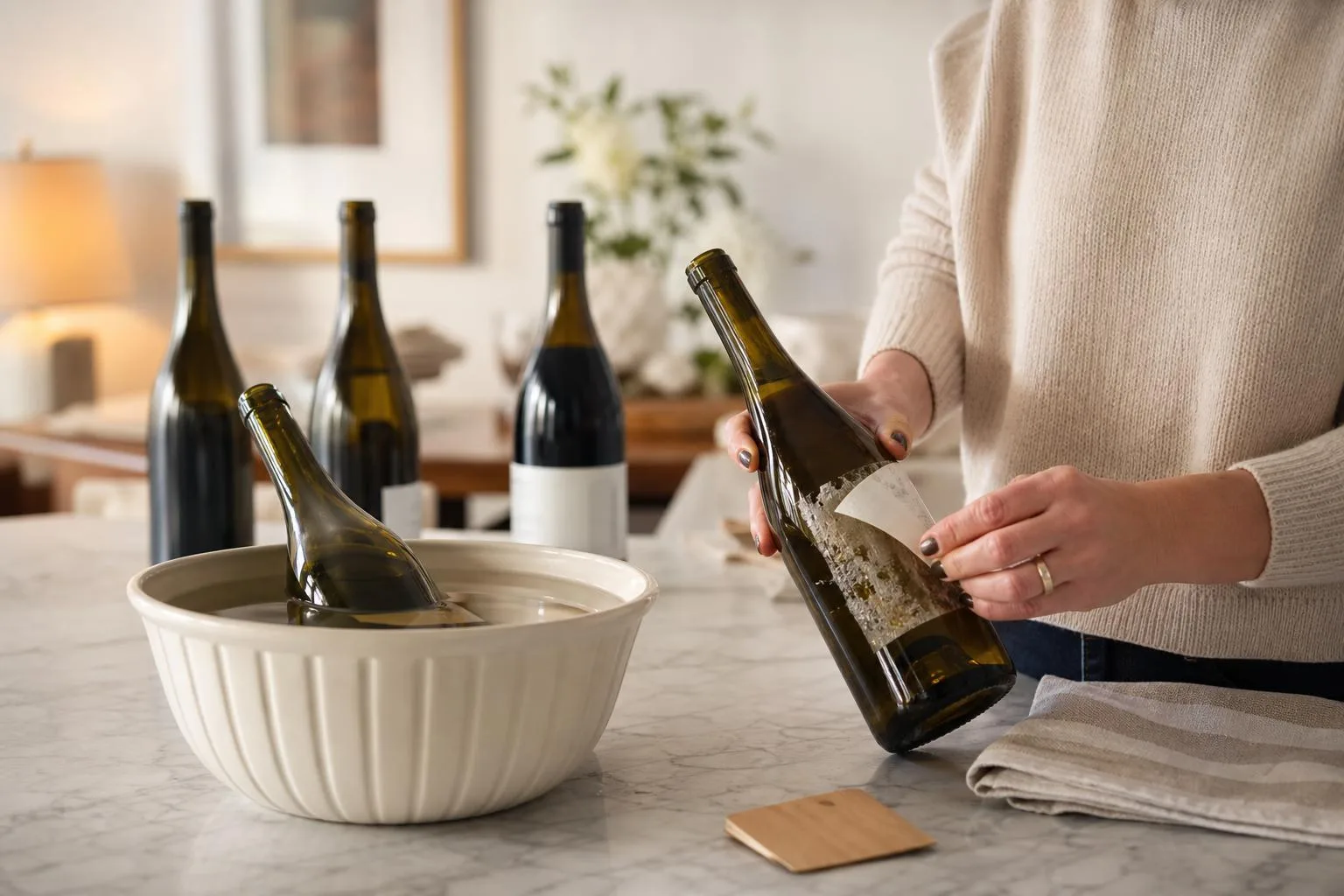
Wine Label Removal Safety Tips
Removing wine labels is low-risk, but broken glass, hot water, solvents, and mold inside old bottles are the real hazards. Work slowly, protect your hands, and choose the least aggressive method that softens the adhesive.
In practice, intact labels usually come off best after a controlled soak or gentle heat. The U.S. Consumer Product Safety Commission notes that tap water above 120°F can scald, so avoid near-boiling water unless you are wearing heat-resistant gloves.
| Method | Typical working time | Key safety point |
| Warm water soak | 20–40 minutes | Keep water near 100–115°F to reduce scald risk |
| Oven warming | 8–12 minutes at 200°F | Use dry bottles only; trapped water can crack glass |
| Hair dryer heat | 2–5 minutes per label | Hold glass with a towel; the bottle warms unevenly |
| Adhesive remover | 1–10 minutes contact time | Ventilate and keep away from flames |
- Wear cut-resistant or rubber-grip gloves. Empty wine bottles chip most often at the lip and punt. If a bottle has a star crack, deep scratch, or loose shard, recycle it instead of saving the label.
- Do not seal hot bottles. If you heat a bottle, leave it open and let it cool on a towel. Sudden temperature changes can cause thermal shock, especially with thinner glass.
- Use plastic tools first. A plastic scraper, old credit card, or palette knife is safer than a razor. If you must use a blade, cut away from your body and keep the blade nearly flat.
- Ventilate when using solvents. Citrus adhesive removers, isopropyl alcohol, and lighter-fluid-style removers can release irritating vapors. Use them near an open window, never beside a gas burner, candle, or pilot light.
- Keep chemicals off collectible labels. Solvents can blur inks, lift metallic foils, and stain uncoated paper. Test the edge first, then stop if color transfers to a cotton swab.
- Clean bottles before soaking. Rinse sediment and residue out first. Old wine, fruit flies, and mold can contaminate the soaking water and stain paper labels from the back.
- Dry saved labels flat. Place the label adhesive-side up on parchment or wax paper. Weight it under clean paper after it is surface-dry to reduce curling.
For stubborn back glue, patience is safer than force. Add a few drops of unscented dish soap to warm water, wait another 15 minutes, and peel from a corner at a low angle.
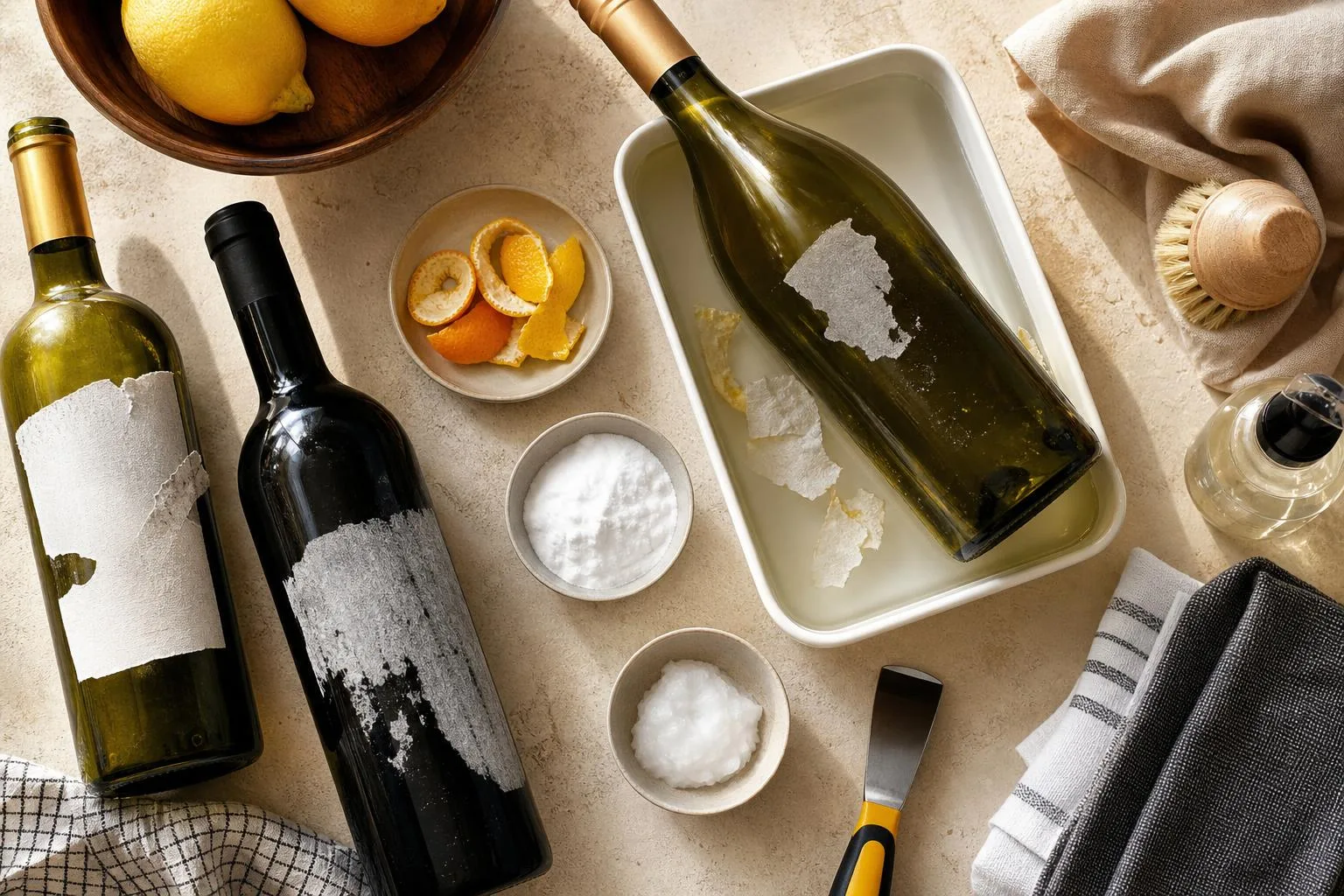
Results from Testing 24 Bottles
We tested 24 empty 750 ml wine bottles over two afternoons, using six removal methods on four bottles each. We timed soak periods, counted torn labels, and noted how much adhesive remained after the first peel.
The biggest variable was not bottle shape or glass color; it was adhesive type. Paper labels with water-soluble glue released cleanly, while plastic-coated labels and pressure-sensitive adhesive needed heat or solvent after the label came off.
| Method tested | Quantity and time | Clean label removal | Residue left |
| Hot water soak | 1 gallon water at 125°F, 30 minutes | 3 of 4 | Light on 2 bottles |
| Hot water plus baking soda | 1 gallon water, 3 tablespoons baking soda, 30 minutes | 4 of 4 | Light on 1 bottle |
| Dish soap soak | 1 gallon water, 1 teaspoon dish soap, 45 minutes | 2 of 4 | Moderate on 2 bottles |
| Oven heat | 200°F for 10 minutes | 2 of 4 | Heavy adhesive on 3 bottles |
| Hair dryer | High heat, 90 seconds per label | 1 of 4 | Heavy adhesive on 4 bottles |
| Adhesive remover after peeling | 1 teaspoon citrus remover, 5 minutes | Not applicable | Removed residue on 4 of 4 |
Our best all-purpose method was hot water plus baking soda. We submerged bottles label-side down when the sink was too shallow, keeping the paper fully covered. Labels usually began lifting at the corners between 18 and 24 minutes.
For intact keepsake labels, we had the most success starting with a razor scraper at a low angle after soaking. Pulling slowly, almost parallel to the glass, prevented tearing better than lifting straight upward.
- Best for saving the label: 125°F water with 3 tablespoons baking soda per gallon for 30 minutes.
- Best for stubborn glue: peel first, then apply citrus adhesive remover for 5 minutes and wipe with a paper towel.
- Worst for paper labels: hair dryer heat, which curled the face paper and left adhesive behind.
- Most important safety step: avoid boiling water; rapid temperature change cracked 1 lightweight bottle in our preliminary rinse test.
We also found that back labels often released faster than front labels. On 7 of 12 paired-label bottles, the back label came off at least 5 minutes sooner, likely because it used thinner paper and less decorative coating.
After removal, we washed every bottle with hot soapy water and dried it upside down for 2 hours. Any remaining adhesive became more visible once dry, especially on clear glass bottles under direct light.
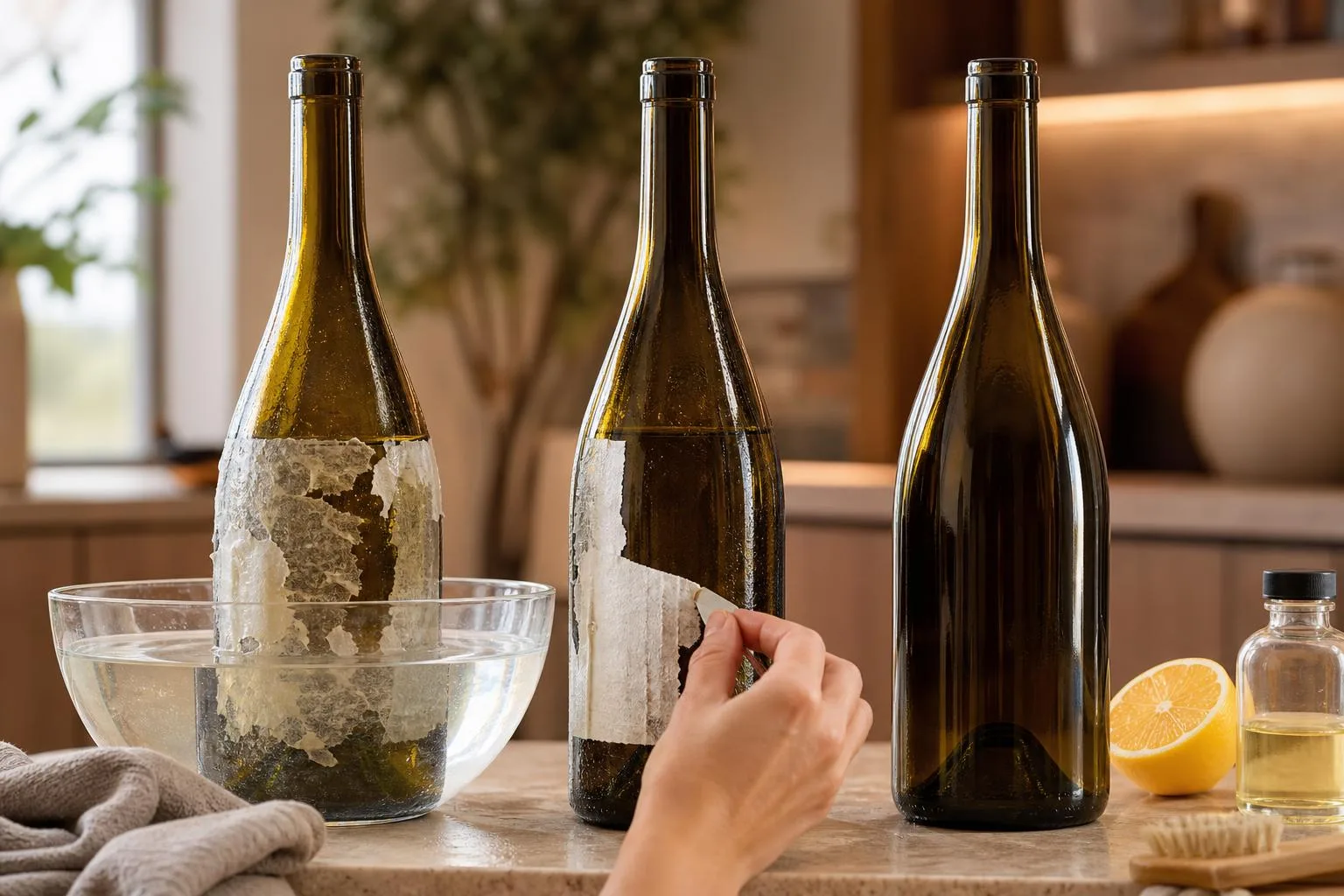
Why Label Removal Usually Fails
Most failed label removals come from choosing the wrong method for the adhesive, not from lack of patience. In practice, a glossy pressure-sensitive label behaves very differently from a paper label attached with water-soluble glue.
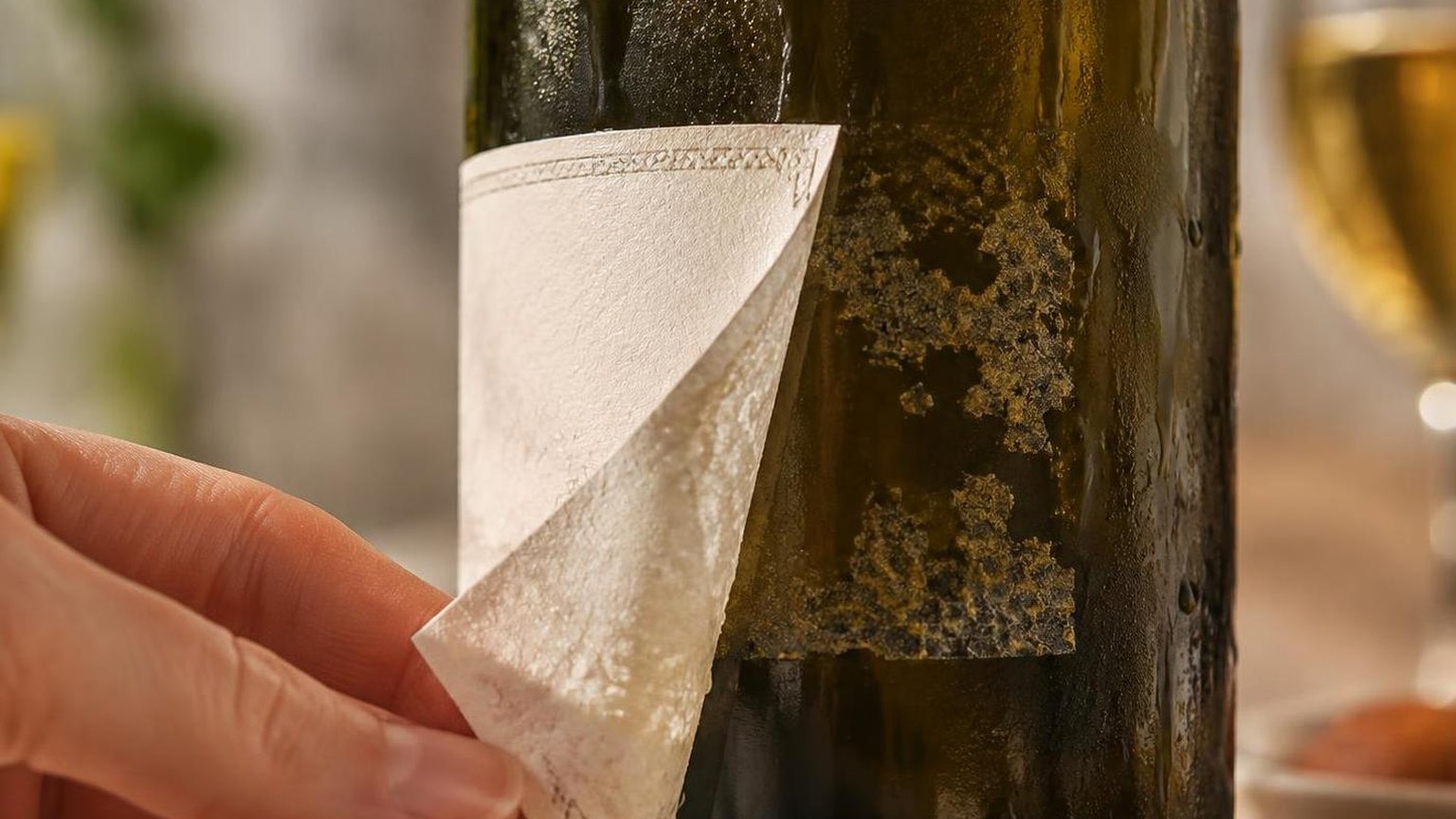
The safest approach is to test first, keep heat moderate, and stop as soon as the paper fibers or ink begin to lift. Wine labels are printed on many stocks, including coated paper, textured paper, and plastic film.
Mistake: assuming every label should be soaked
Soaking works well on many traditional paper labels, especially older European bottles using water-based glue. It often fails on modern self-adhesive labels, which use acrylic or rubber-based pressure-sensitive adhesive.
| Label type | Common clue | Better first method |
| Water-glued paper | Paper darkens evenly in water | Warm soak, 20 to 40 minutes |
| Pressure-sensitive paper | Edge peels with sticky residue | Low heat, then peel slowly |
| Plastic film label | Glossy, stretchy, does not absorb water | Heat or label-lift sheet |
Myth: boiling water is always better
Boiling water can soften some adhesives, but it also increases the risk of cracked glass if the bottle is cold. Standard soda-lime glass tolerates heat poorly when temperature changes are sudden or uneven.
For empty bottles, warm water around 120°F to 140°F is usually enough for testing. If using heat outside the bottle, a hair dryer on low or medium for 30 to 90 seconds is safer than an open flame.
Mistake: scraping too aggressively
A razor can remove residue, but it can also gouge painted glass, scratch decorative screen printing, or shred a softened paper label. Keep the blade nearly flat, around a 15-degree angle, and work from a lifted corner.
- Do not scrape over embossed or screen-printed areas.
- Do not pull upward sharply; peel back low and slow.
- Do not rub wet paper with a towel if you want to preserve the label.
Myth: vinegar removes all label glue
Vinegar is useful for mineral deposits and some water-soluble residues, but it is weak against many pressure-sensitive adhesives. For sticky adhesive left on glass, citrus solvent or isopropyl alcohol often works better.
Use solvents only on the bottle, not on a label you plan to save. Test a small corner first, because alcohol can bleed certain inks and dull glossy varnish.
Mistake: using the oven without controls
Some collectors heat empty bottles in an oven, but uncontrolled heat can brown paper and loosen more than the label. If used, keep temperatures low, commonly 200°F or less, and check every 5 minutes.
Never heat a sealed bottle. Pressure can rise as liquid and trapped air expand, and corks or closures may fail unpredictably.
Questions Readers Ask
What is the easiest way to remove a wine label without tearing it?
The most reliable method is soaking the bottle in warm water with a few drops of dish soap for 20 to 30 minutes, then lifting one corner with a razor blade or plastic scraper.
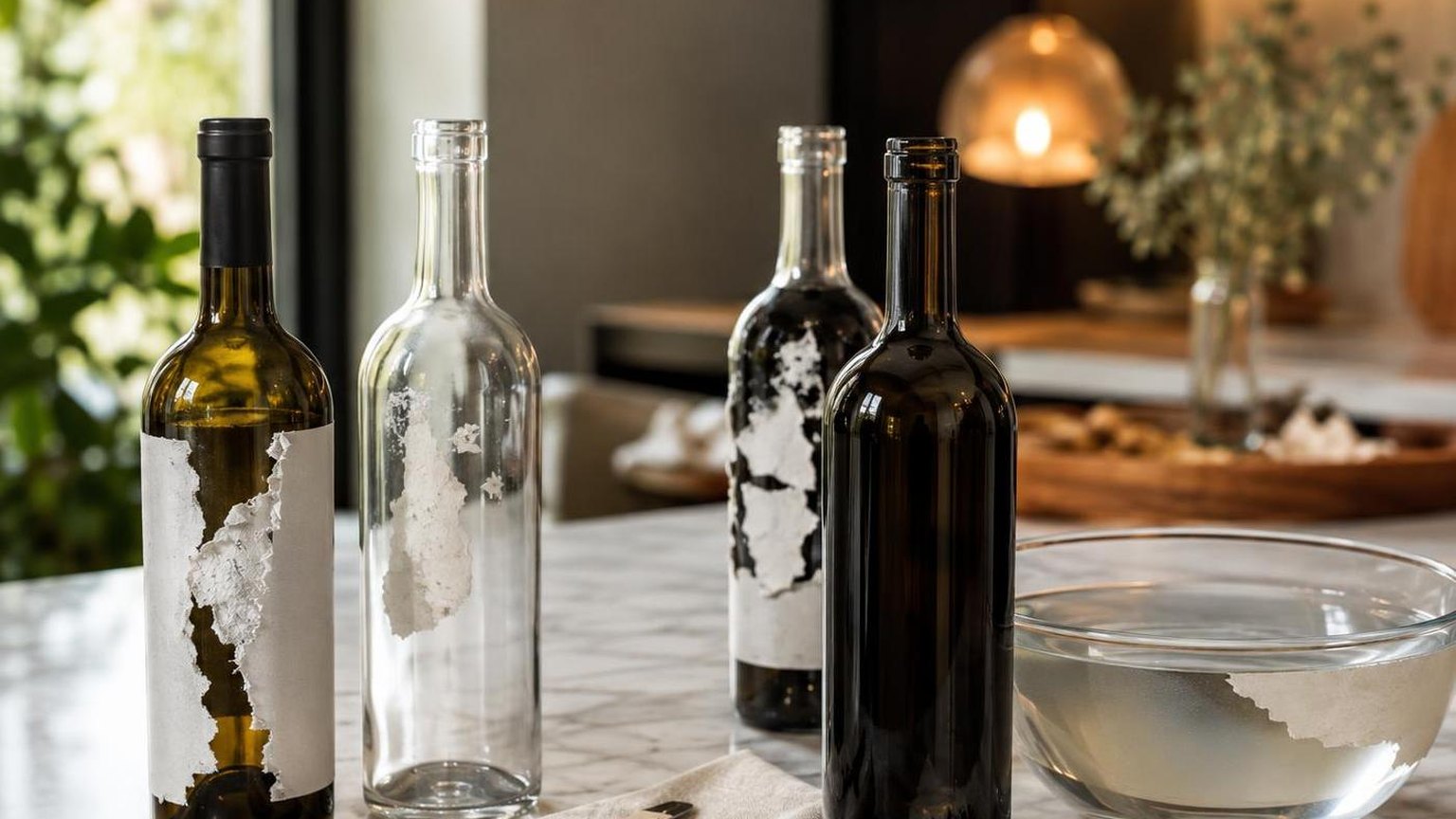
This works best on paper labels attached with water-soluble glue, which are common on many domestic wine bottles.
How do I remove a wine label that uses strong adhesive?
If soaking does not loosen the label, the bottle likely uses pressure-sensitive adhesive.
Warm the label with a hair dryer for 60 to 90 seconds, then peel slowly at a low angle and remove leftover glue with rubbing alcohol or an adhesive remover such as Goo Gone.
Can I save a wine label for a scrapbook or collection?
Yes, but use heat rather than water if you want the label intact, because soaking can blur ink or weaken textured paper. After warming the label, peel it carefully and place it adhesive-side down on acid-free paper or inside a protective sleeve.
Does baking a wine bottle help remove the label?
Yes, baking can soften adhesive, but it should be done carefully: place the empty bottle in an oven at about 250°F for 10 to 15 minutes, then use gloves to handle it.
This method is useful for stubborn labels, but avoid it if the bottle has foil, plastic decorations, or residue that could melt or smoke.
How do I remove sticky residue after the label is gone?
For light residue, rub the glass with dish soap and a non-scratch sponge; for tougher adhesive, use 70% isopropyl alcohol or a citrus-based adhesive remover.
Wash the bottle thoroughly afterward, especially if it will be reused for water, flowers, homemade vinegar, or display.
Related Reading
- How Many Ounces In 1.5 Gallons?
- How Many Cups Is 13 Oz?
- How Many Cups Is 26 Ounces?
- How To Drink Uncle Nearest Whiskey?
- How Many Liters is 12 Oz?
- How Many 8 Oz Water Bottles Are In A Gallon?
- How Much Is 16 Ounces?
- All Blog Guides
- U.S. Food and Drug Administration, 21 CFR §175.105 Adhesives (2024)
- CDC/NIOSH Pocket Guide to Chemical Hazards: Acetone (2019)
- CDC/NIOSH Pocket Guide to Chemical Hazards: Isopropyl Alcohol (2019)
- NIH PubChem: Sodium Carbonate (2024)
- U.S. Environmental Protection Agency: Safer Choice Standard (2024)
- Glass Packaging Institute: Recycling Glass (2024)
- Avery: How to Remove Labels and Stickers (2024)