Black and White Cocktail Origins
The name “Black and White cocktail” does not identify one universally agreed historical recipe.
For versions combining dark coffee liqueur with pale cream, the clearest historical context is the Black Russian and White Russian family, rather than a documented, separately invented classic.
The Black Russian Connection
Liquor.com credits bartender Gustave Tops with creating the Black Russian at Brussels’ Hotel Metropole for Perle Mesta, the American ambassador to Luxembourg. The drink combined vodka and coffee liqueur without cream.
Its name referenced the vodka’s Russian association and the liqueur’s dark color—not a Russian birthplace.
This distinction matters: the documented predecessor came from Belgium. Describing a coffee-and-cream Black and White cocktail as an old Russian recipe confuses the naming convention with the drink’s geographical origin.
| Date | Historical reference | Relevance |
| 1949 | Tops creates the Black Russian in Brussels, according to Liquor.com. | Establishes the vodka-and-coffee-liqueur foundation. |
| 1960s | The White Russian emerges as a cream-containing variation. | Connects the dark base with the pale ingredient. |
| 1998 | The Big Lebowski reaches cinemas. | The Dude’s signature drink renews the White Russian’s cultural visibility. |
How Cream Changed the Story
The White Russian adds cream to the Black Russian’s basic structure. Liquor.com places that development in the decade shown above but does not establish a definitive inventor.
That leaves a gap between the documented Black Russian creation story and later claims about who first added dairy.
Cream also provides the visual contrast that makes “black and white” an intuitive description. When poured gently over the darker mixture, it can create contrasting zones before mixing.
That presentation explains the name’s appeal; it does not prove a distinct historical origin.
What the Name Can Reliably Tell You
- A vodka, coffee-liqueur, and cream recipe belongs stylistically to the White Russian family.
- A recipe using different spirits, chocolate liqueur, or another pale ingredient needs its own provenance; color alone cannot establish ancestry.
- A modern menu name is not evidence of an independently documented classic cocktail.
For FlightWineBar readers, the accurate framing is therefore recipe-specific: describe the ingredients first, then identify the relevant cocktail lineage.
Unless a dated menu, recipe book, or attributable bartender account establishes otherwise, avoid assigning the Black and White name a single inventor or birthplace.
Sources: Liquor.com, “Black Russian”: https://www.liquor.com/recipes/black-russian/; “White Russian”: https://www.liquor.com/recipes/white-russian/.
Classic Recipe and Ingredient Ratios
“Black and white cocktail” does not identify one universally standardized recipe.
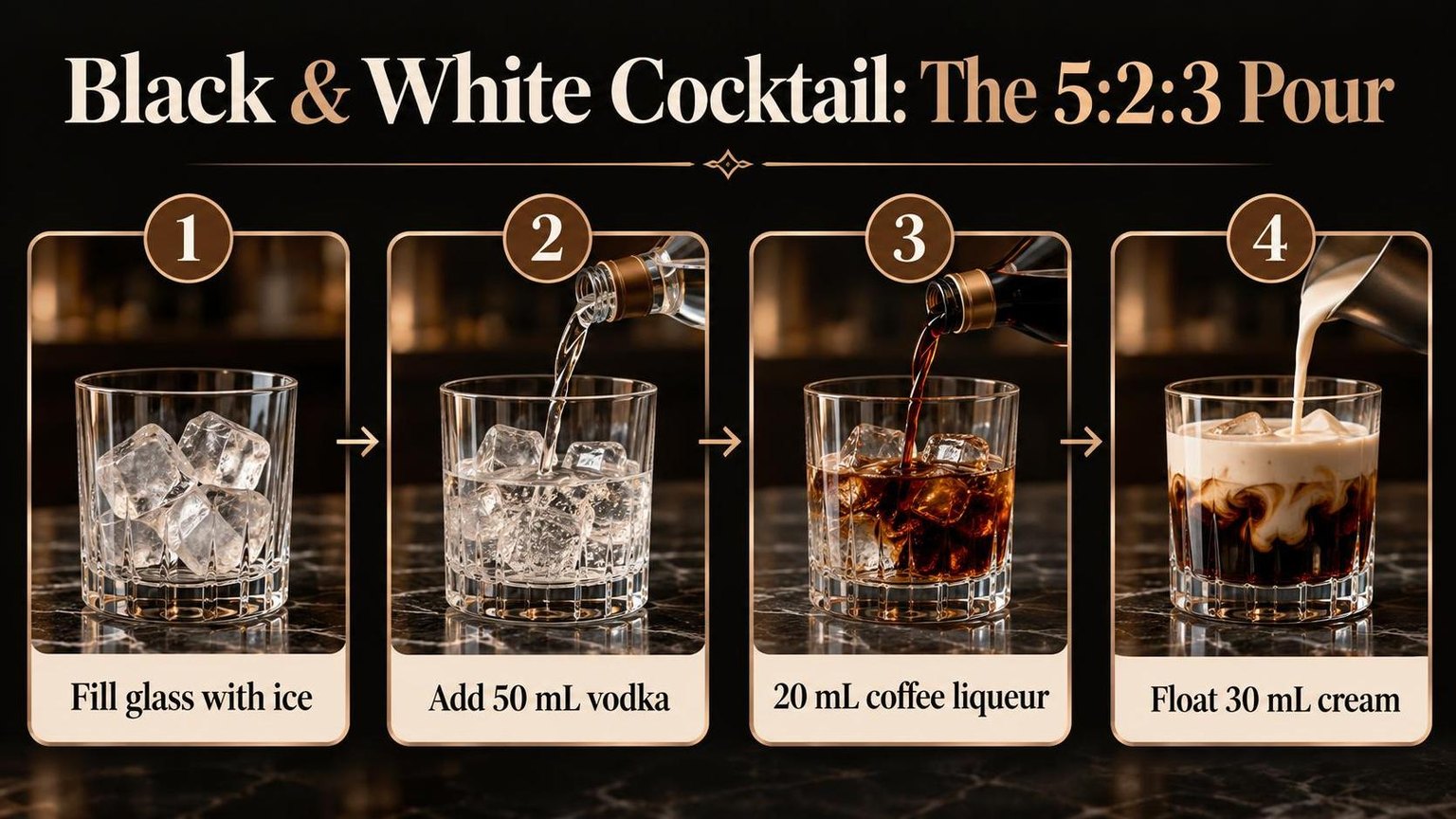
For the creamy vodka-and-coffee version, use the classic White Russian structure: vodka and coffee liqueur beneath a pale cream layer, with proportions that keep sweetness and richness controlled.
A Reliable Starting Ratio
The International Bartenders Association’s Black Russian recipe provides the foundation: vodka and coffee liqueur served over ice. Its published variation adds fresh cream for a White Russian.
The cream measure below is a practical starting point, not an official specification for a separately standardized Black and White.
| Ingredient | Measure | Ratio parts |
| Vodka | 50 mL | 5 |
| Coffee liqueur | 20 mL | 2 |
| Fresh heavy cream | 30 mL | 3 |
| Total before ice dilution | 100 mL | 10 |
This formulation preserves the IBA’s vodka-to-coffee-liqueur balance while adding enough cream for a distinct pale cap.
Measure with a jigger rather than pouring by eye; coffee liqueur supplies both sweetness and flavor, so an oversized pour changes the drink noticeably.
Build the Drink Over Ice
- Fill a chilled rocks glass with solid ice cubes. Leave sufficient room for the measured ingredients and gentle stirring.
- Add the vodka and coffee liqueur. Stir until the glass feels cold and the ingredients are evenly combined.
- Pour the cold cream slowly over the back of a spoon held close to the surface. This reduces disturbance and encourages a visible light layer.
- Serve immediately for contrast. Stir before drinking if you prefer consistent coffee-and-cream flavor rather than a cream-heavy first sip.
Choose Ingredients for Balance
Use unflavored vodka for a clean base. Vanilla vodka changes the flavor profile and can increase perceived sweetness, even when it contains no added sugar.
Coffee liqueurs differ in sugar content, coffee intensity, and alcohol strength; changing brands can alter the result without changing the measurements.
Heavy cream provides body and a pronounced visual contrast. Half-and-half produces a lighter texture; milk makes a thinner drink and usually creates less distinct layering.
These substitutions remain usable, but they do not deliver the same mouthfeel.
Skip additional syrup initially: coffee liqueur already contributes sugar. Taste after stirring, then adjust the next drink rather than masking an unbalanced pour.
Use fresh, refrigerated cream, and avoid adding citrus juice, which can destabilize dairy and undermine the smooth texture.
Reference: International Bartenders Association, “Black Russian,” for the vodka-and-coffee foundation and cream-based White Russian variation.
Choosing Gin and Crème de Cacao
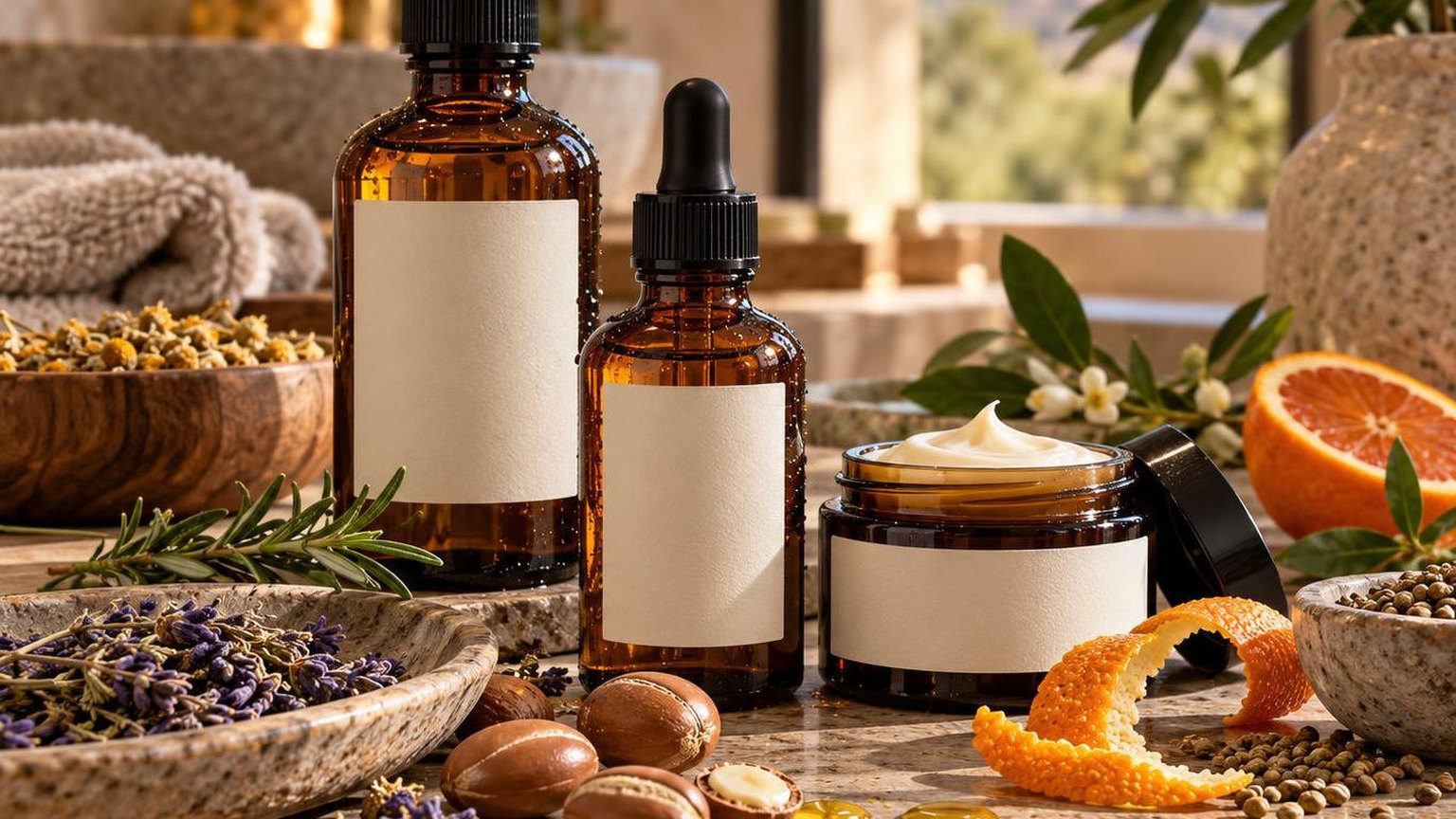
For a gin-based Black and White cocktail, choose a juniper-led gin and a crème de cacao that tastes distinctly of cocoa.
White crème de cacao keeps the drink pale; brown crème de cacao changes its color but does not automatically deliver stronger chocolate flavor.
Choose Gin for Structure
London dry gin provides a useful starting point: juniper, citrus peel, and dry spice can remain recognizable beneath a sweet chocolate liqueur. “Dry” describes the gin style, not the finished cocktail; crème de cacao still supplies sugar.
Tanqueray London Dry emphasizes juniper alongside coriander, angelica, and licorice. Plymouth Original offers a rounder alternative, with seven botanicals including orange peel and green cardamom.
Neither requires an expensive, barrel-aged expression: oak can complicate the clean gin-and-cocoa contrast.
| Bottle | Published ABV | Selection reason |
| Tanqueray London Dry, US bottling | 47.3% | Assertive juniper and sufficient strength to remain distinct after dilution. |
| Plymouth Original | 41.2% | A rounder botanical profile for a less angular result. |
| Giffard Crème de Cacao White | 25% | A clear cocoa liqueur that preserves a pale presentation. |
Check your bottle rather than assuming every market carries the same strength. Gin bottlings vary internationally, and a substitution changes both alcohol concentration and botanical intensity. Higher proof alone does not guarantee better balance.
Choose Cacao for Flavor, Not Darkness
Crème de cacao is a sweet cocoa-flavored liqueur; “crème” does not mean it contains dairy cream. White versions are clear, not white-chocolate liqueurs.
Brown versions bring color, but sweetness, vanilla intensity, and cocoa character depend on the producer.
- Choose white for appearance. It avoids adding a brown tint, especially when the recipe includes cream.
- Evaluate aroma before mixing. Look for recognizable cocoa rather than a vanilla-dominated or confectionery aroma.
- Do not substitute chocolate cream liqueur directly. Dairy or other creamy ingredients change texture, opacity, and mixing behavior.
Taste a small sample of the cacao diluted with water before committing to a bottle. Dilution makes its sweetness and flavor easier to assess.
Then test it in the actual recipe: citrus, cream, and serving temperature can each change how prominently chocolate registers.
Sources: Producer descriptions and published strengths: Tanqueray, https://www.tanqueray.com/; Plymouth Gin, https://www.plymouthgin.com/; Giffard, https://www.giffard.com/. Consult current labels for the bottles sold in your market.
Step by Step Mixing Technique
For this black and white cocktail, use a dark vodka–coffee liqueur base and a pale cream layer.
This version follows the International Bartenders Association’s Black Russian proportions, then adds cream for contrast; “black and white” is not a universally standardized cocktail name.
Measure and Prepare
Measure the ingredients with a graduated jigger. The quantities below produce one serving before dilution, with enough cream to form a visible top layer without overwhelming the coffee flavor.
| Ingredient | Amount | Purpose |
| Vodka | 50 ml | Provides the spirit base. |
| Coffee liqueur | 20 ml | Adds sweetness, coffee flavor, and dark color. |
| Cold heavy cream | 30 ml | Creates the pale upper layer. |
The vodka and coffee liqueur measurements come from the International Bartenders Association’s Black Russian recipe.
The cream addition and floating method below are adaptations for this layered presentation, not an official IBA Black Russian preparation.
Build the Dark Base
- Choose a clear rocks glass with approximately 250 ml capacity. Add solid ice cubes, leaving space beneath the rim for pouring and gentle stirring.
- Pour the vodka and coffee liqueur directly over the ice. Keep cream out of the glass at this stage so the base remains uniformly dark.
- Stir for approximately 10 seconds with a bar spoon. Move the ice smoothly around the glass rather than churning it. This combines the spirits and starts chilling and diluting the mixture; exact dilution depends on ice size, temperature, and stirring time.
Float the Cream
- Measure cold, pourable heavy cream. Do not whip it: whipped cream produces a topping rather than the fluid layer intended here.
- Hold a bar spoon with its convex back facing upward, immediately above the drink’s surface. Position it near the inside wall for control.
- Pour the cream slowly over the spoon’s back, keeping the stream narrow. The spoon spreads the flow and reduces its momentum, limiting how deeply the cream penetrates the dark base.
- Stop pouring once the measured cream is added. Do not stir afterward if you want to preserve the black-and-white appearance.
Check and Serve
Serve immediately. A little feathering where cream meets coffee liqueur is normal; a sharply defined boundary is temporary, not guaranteed. If the cream plunges downward, move the spoon closer to the surface and pour more slowly next time.
Present the layers intact, then let the drinker stir for a more uniform flavor.
Garnish and Glassware Presentation
A black and white cocktail looks clearest when the glass exposes the contrast between its dark and pale components.
Match the presentation to the recipe: preserve distinct layers when intended, or use a restrained garnish to create contrast on a uniformly mixed drink.
Choose Glassware That Shows the Contrast
Use clear, undecorated glass rather than colored or heavily cut crystal. A stemmed glass suits a chilled, strained serving; a rocks glass suits a recipe served over ice.
The capacities below are practical choices, not standardized requirements for a cocktail with this name.
| Glass | Suggested capacity | Presentation use |
| Coupe or small martini glass | 5–6 US fl oz; approximately 148–177 mL | Strained cocktails without ice; an open surface displays a pale foam or cream topping. |
| Double rocks glass | 10–12 US fl oz; approximately 296–355 mL | Ice-served versions; clear sidewalls reveal the boundary between dark liquid and cream. |
These figures describe glass capacity, not the amount of alcohol to pour. Leave approximately 1 cm of space below the rim to reduce spills and keep cream or foam away from the drinker’s fingers.
Chill the serving glass while preparing the drink, then empty any chilling ice and water before pouring.
Dave Arnold’s Liquid Intelligence (2014) explains the relationship between ice, cooling, and dilution; adding ice to the finished cocktail changes its temperature and concentration as it melts.
Keep Garnishes Small and Deliberate
- Dark chocolate: Shave a small amount onto the pale surface immediately before serving. Fine shavings provide contrast without requiring a coated rim, which can smear onto hands and clothing.
- Cocoa powder: Dust a narrow crescent through a fine sieve. Leave most of the surface uncovered so the white component remains visible; a thick coating can taste dry and obscure the presentation.
- Coffee beans: If coffee is part of the recipe, place 3 roasted beans on stable foam. Beans may sink through liquid cream, so use chocolate shavings when the topping cannot support them.
For a layered version, pour the upper component slowly over the back of a spoon held near the surface.
This reduces turbulence, but it cannot make every recipe layer: dissolved sugar, alcohol content, temperature, and the composition of the cream affect the result.
Wipe the rim and outside of the glass before service. Add the garnish last and serve promptly, before chocolate moistens, cocoa darkens, or the contrasting layers begin to merge.
Variations on the Black and White
For a Black and White built around vodka, coffee liqueur, and cream, variations work best when they change one element at a time.
Keep the coffee recognizable, then adjust richness, sweetness, or presentation rather than adding several competing flavors.
Choose Your Coffee-and-Cream Balance
These single-serving formulas offer starting points, not interchangeable official recipes. The Black Russian follows the International Bartenders Association’s specification; the Mudslide follows Kahlúa’s equal-parts formula.
The remaining versions are suggested adaptations. All quantities below are in milliliters.
| Variation | Vodka | Coffee liqueur | Additional ingredients |
| Black Russian | 50 | 20 | None |
| Cream-topped Black and White | 50 | 20 | 30 heavy cream |
| Mudslide | 30 | 30 | 30 Irish cream liqueur |
| Oat-based variation | 50 | 20 | 30 unsweetened oat creamer |
| Espresso variation | 40 | 20 | 20 cooled espresso; 20 heavy cream |
Match the Method to the Variation
- Black Russian: Build the vodka and coffee liqueur over ice in an old-fashioned glass and stir gently. Removing cream exposes the spirit and coffee flavors; it does not remove the sugar supplied by the liqueur.
- Cream-topped: Stir the alcoholic ingredients over ice, then pour cold cream slowly over the back of a spoon. This encourages a pale upper layer. Stir before drinking if you prefer consistent flavor rather than a cream-first sip.
- Mudslide: Shake the vodka, coffee liqueur, and Irish cream with ice, then strain over fresh ice. Irish cream contributes alcohol and sweetness as well as texture. Kahlúa’s published version uses a chocolate garnish; ice cream is not required.
- Oat-based: Stir rather than float for a more uniform drink. Choose an unsweetened product because coffee liqueur already supplies sweetness. Check every ingredient’s label before describing the finished cocktail as dairy-free or vegan.
- Espresso: Cool the coffee before mixing so it does not rapidly melt the serving ice. Stir it into the vodka and liqueur, then add cream. Espresso adds coffee intensity without requiring another dose of sweet liqueur.
Finish Without Overloading
Choose unsweetened cocoa for a dry chocolate aroma or a light grating of nutmeg for warm spice. Chocolate syrup changes sweetness, not merely appearance.
Taste the mixed drink before adding it, particularly when Irish cream already supplies a dessert-like profile.
Recipe references: International Bartenders Association, “Black Russian”; Kahlúa, “Mudslide.” Ingredient brands differ in sugar content, alcohol strength, and texture, so substitutions can change the finished balance.
Frequently Asked Questions
What is a black and white cocktail?
“Black and white cocktail” is an ambiguous drink name, so check the ingredients rather than assuming one standard recipe.
A coffee-and-cream version contrasts dark coffee liqueur with white cream; adding vodka makes it a White Russian–style drink.
How do you make a coffee-and-cream black and white cocktail?
For a White Russian–style version, stir 50 ml vodka and 20 ml coffee liqueur with ice in a rocks glass, then gently pour 30 ml heavy cream over the top.
The vodka and coffee-liqueur measurements follow the International Bartenders Association’s Black Russian recipe; the cream adds the white component.
How do you keep the black and white layers separate?
Add the coffee liqueur and vodka first, then pour cold heavy cream slowly over the back of a spoon held near the surface. Pouring gently limits mixing and creates a temporary pale layer; stirring removes the contrast.
Can you make a black and white cocktail without dairy?
Replace the cream with an equal volume of unsweetened oat cream or another plant-based cream alternative, choosing one intended for coffee or mixing.
The substitute’s fat content and density affect both texture and layering, so expect different results from heavy cream.
How does it differ from a Black Russian?
The International Bartenders Association specifies 50 ml vodka and 20 ml coffee liqueur for a Black Russian, served over ice without cream.
A black and white coffee-and-cream version adds a pale dairy or plant-based component, changing its appearance, texture, and perceived sweetness.
Can you prepare a black and white cocktail ahead of time?
Mix the vodka and coffee liqueur ahead, then add fresh ice and cream when serving to preserve the visual contrast and avoid dilution.
USDA food-safety guidance limits perishable dairy at room temperature to two hours, or one hour above 90°F; alcohol does not make the cream shelf-stable.
Further Reading
- What Alcohol Is In A Martini? Answer By Expert
- Malibu Sunrise Drink: The Best Tropical Cocktail Recipe (Step-by-Step 2026 Guide)
- What Is Passoa Drink? Understand The Simplest Way
- What To Mix With Hpnotiq?
- Smoked Cocktail Kit – Comprehensive Guide
- Cocktail Smoker Kit – Comprehensive Guide
- All Alcohol Guides
- Liquor.com — White Russian Cocktail Recipe (n.d.)
- Liquor.com — Black Russian Cocktail Recipe (n.d.)
- BBC Good Food — White Russian Recipe (n.d.)
- BBC Good Food — Black Russian Recipe (n.d.)
- Kahlúa — White Russian Cocktail Recipe (n.d.)
- National Institute on Alcohol Abuse and Alcoholism — Alcohol Metabolism: An Update (2007)
- USDA and HHS — Dietary Guidelines for Americans, 2020–2025 (2020)
- US Food and Drug Administration — Raw Milk Misconceptions and the Danger of Raw Milk Consumption (n.d.)