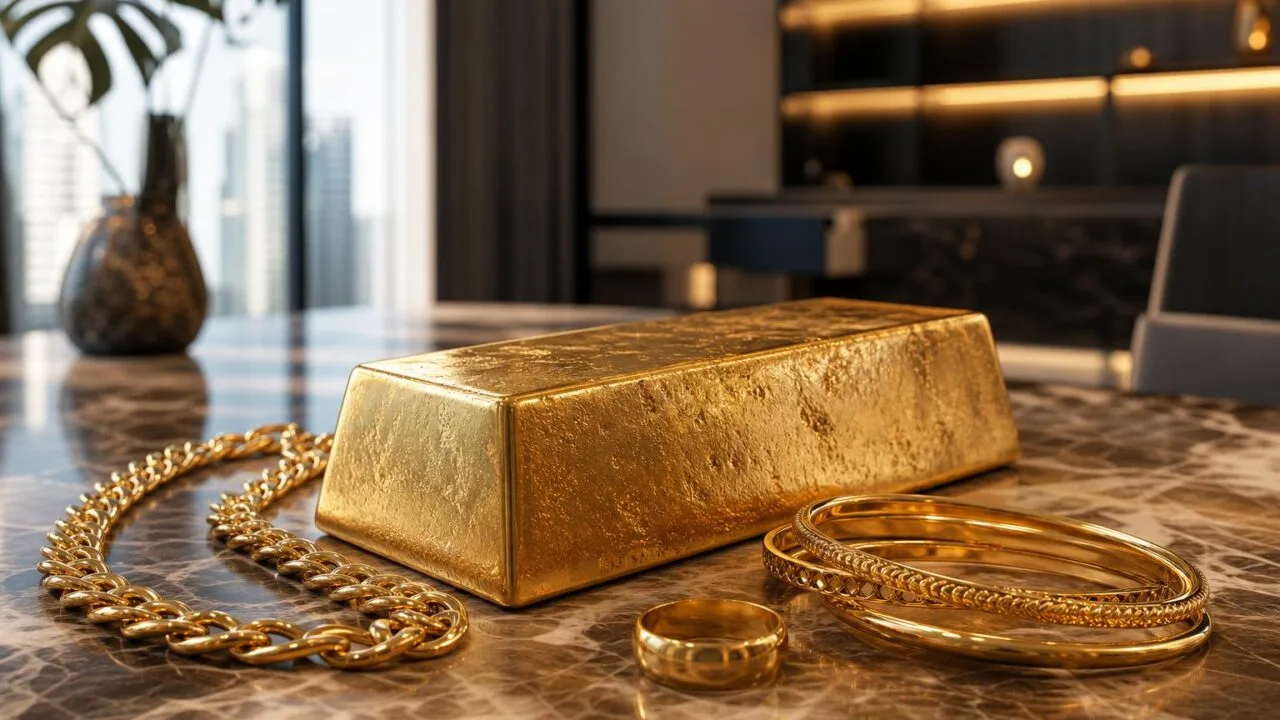
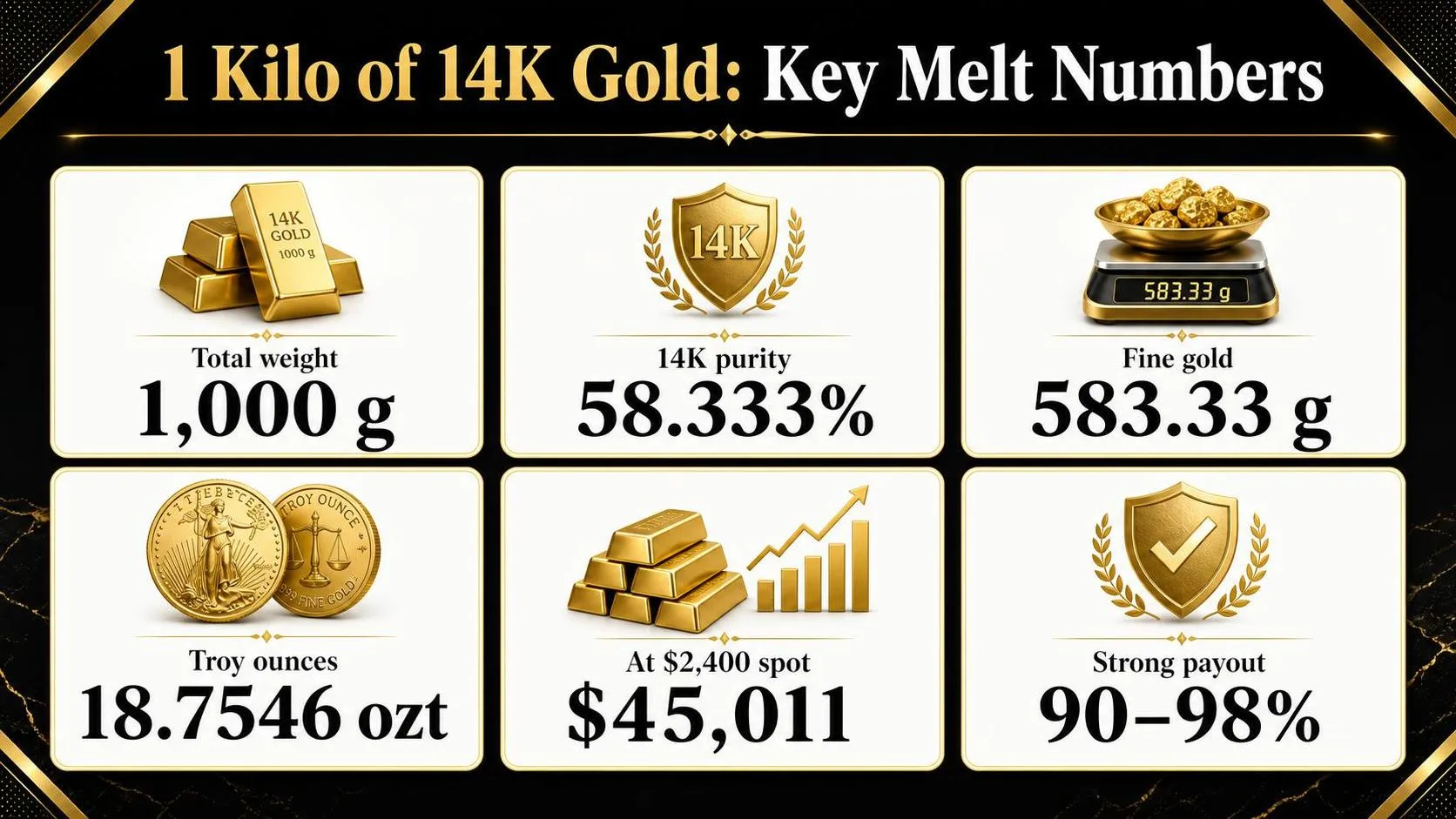
How Much Is A Kilo Of 14K Gold Worth is about $45,000 per kilogram at a $2,400-per-troy-ounce gold spot price.
That estimate uses 14K gold’s 58.3% pure-gold content: 1 kilogram equals 32.1507 troy ounces, so the pure gold inside is roughly 18.75 troy ounces. Actual payout is lower after refiner fees, dealer margins, assay results, and market movement.
K Gold Is Not Pure Gold
A kilo of 14K gold is not a kilo of pure gold. By U.S. karat math, 14K means 14 parts gold out of 24, so the item is 58.333% gold before any buyer fees or refining losses.
The clean formula is: 1,000 grams × 58.333% ÷ 31.1034768 grams per troy ounce × live gold spot price. The troy-ounce conversion is the standard used in bullion markets, including COMEX and LBMA pricing references.
| Measurement | Number | Why it matters |
| Total 14K weight | 1,000 grams | This is the full jewelry or scrap weight on the scale. |
| Gold purity | 14 ÷ 24 = 58.333% | Only this portion is actual gold; the rest is alloy metal. |
| Pure gold content | 583.33 grams | This is the theoretical fine-gold weight in one kilo of 14K. |
| Troy-ounce equivalent | 18.7546 troy oz | Gold spot prices are quoted per troy ounce, not regular ounce. |
That means one kilo of 14K gold contains about 18.7546 troy ounces of pure gold. To estimate melt value, multiply 18.7546 by the current gold spot price per troy ounce.
| Gold spot price | Estimated pure gold value in 1 kilo of 14K |
| $2,000 per troy oz | $37,509 |
| $2,200 per troy oz | $41,260 |
| $2,400 per troy oz | $45,011 |
| $2,600 per troy oz | $48,762 |
These figures are melt-value estimates, not guaranteed cash offers. A refiner, pawn shop, or gold buyer usually pays below melt because they must cover assay testing, refining, hedging, overhead, and profit margin.
- Typical strong scrap payout: about 90% to 98% of melt value for large, clean, well-sorted 14K lots.
- Typical retail cash-for-gold offer: often lower, sometimes 60% to 85% of melt, depending on competition and transparency.
- Stone weight matters: gemstones, enamel, steel springs, and non-gold parts reduce payable gold weight.
- Stamped 14K is not a final assay: professional buyers may test with XRF, acid, or fire assay before paying.
For a fast field estimate, divide the spot price by 31.1034768, multiply by 0.58333, then multiply by grams. At a $2,400 spot price, 14K gold is about $45.01 per gram before buyer deductions.
Why 14K Gold Is Less Than Pure
A kilo of 14K gold is not a kilo of pure gold. By definition, 14K is 14 parts gold out of 24, so its theoretical fine-gold content is 58.333% before testing, refining costs, and buyer margins.
The starting point is the live gold spot price, quoted per troy ounce, not per regular ounce. One troy ounce equals 31.1034768 grams, so unit conversion matters.
| Input | Figure | Why it matters |
| Weight of item | 1,000 grams | A kilo is measured in metric grams. |
| 14K purity | 58.333% gold | 14 divided by 24 equals the theoretical gold fraction. |
| Fine gold in 1 kilo of 14K | 583.33 grams | Only this portion is pure gold. |
| Fine gold in troy ounces | 18.755 ozt | 583.33 divided by 31.1034768. |
The spot-price formula is simple: multiply 18.755 troy ounces by the current gold spot price. If spot gold were $2,400 per troy ounce, the theoretical melt value would be about $45,012 before deductions.
| Gold spot price | Theoretical value of 1 kilo 14K |
| $2,000/ozt | $37,510 |
| $2,400/ozt | $45,012 |
| $2,800/ozt | $52,514 |
- Actual purity: Jewelry marked 14K may test slightly above or below 58.333%. U.S. Federal Trade Commission jewelry guides allow karat markings only when the product meets the stated fineness, but solder, wear, and mixed lots can affect assay results.
- Testing method: XRF testing is non-destructive and common in jewelry buying, but a fire assay is more precise for melt lots. Refiners often pay based on assay, not the stamp.
- Refining and melt loss: A buyer does not usually pay 100% of melt value. Commercial payouts for scrap gold commonly reflect refining charges, settlement delays, and risk, often resulting in offers below the theoretical number.
- Form of the gold: Clean, sorted 14K scrap is easier to price than mixed karat jewelry with stones, steel springs, enamel, or watch parts. Non-gold components should be removed or deducted from the kilo weight.
- Buyer margin: A local cash-for-gold shop may pay less than a refiner or bullion dealer because it must cover rent, labor, hedging risk, and resale/refining spread.
- Market timing: Gold trades globally nearly 24 hours on business days. A quote taken at 10 a.m. may differ from the final settlement price later the same day.

Weight and Purity Determine Value
A kilo of 14K gold is measured first by weight, then by purity. The key verification question is not whether the item weighs 1,000 grams, but how much of that weight is actual fine gold.
In the U.S. gold trade, spot gold is quoted per troy ounce, while scrap and jewelry are often weighed in grams or pennyweights. One troy ounce equals 31.1034768 grams, so 1 kilogram equals 32.1507466 troy ounces.
| Measure | Exact or Standard Value |
| 1 kilogram | 1,000 grams |
| 1 troy ounce | 31.1034768 grams |
| 1 kilogram in troy ounces | 32.1507466 troy ounces |
| 14K gold purity | 14 parts gold out of 24 |
| 14K gold as decimal fineness | 0.5833, commonly rounded to 0.585 |
For valuation, a dealer calculates fine-gold content. Using the common 14K fineness of 0.585, a 1,000 gram lot contains about 585 grams of pure gold, before deductions for stones, solder, dirt, non-gold findings, or assay variance.
| Item | Calculation | Result |
| Gross 14K weight | Measured on scale | 1,000 grams |
| Fine gold at 58.5% | 1,000 × 0.585 | 585 grams |
| Fine gold in troy ounces | 585 ÷ 31.1034768 | 18.807 troy ounces |
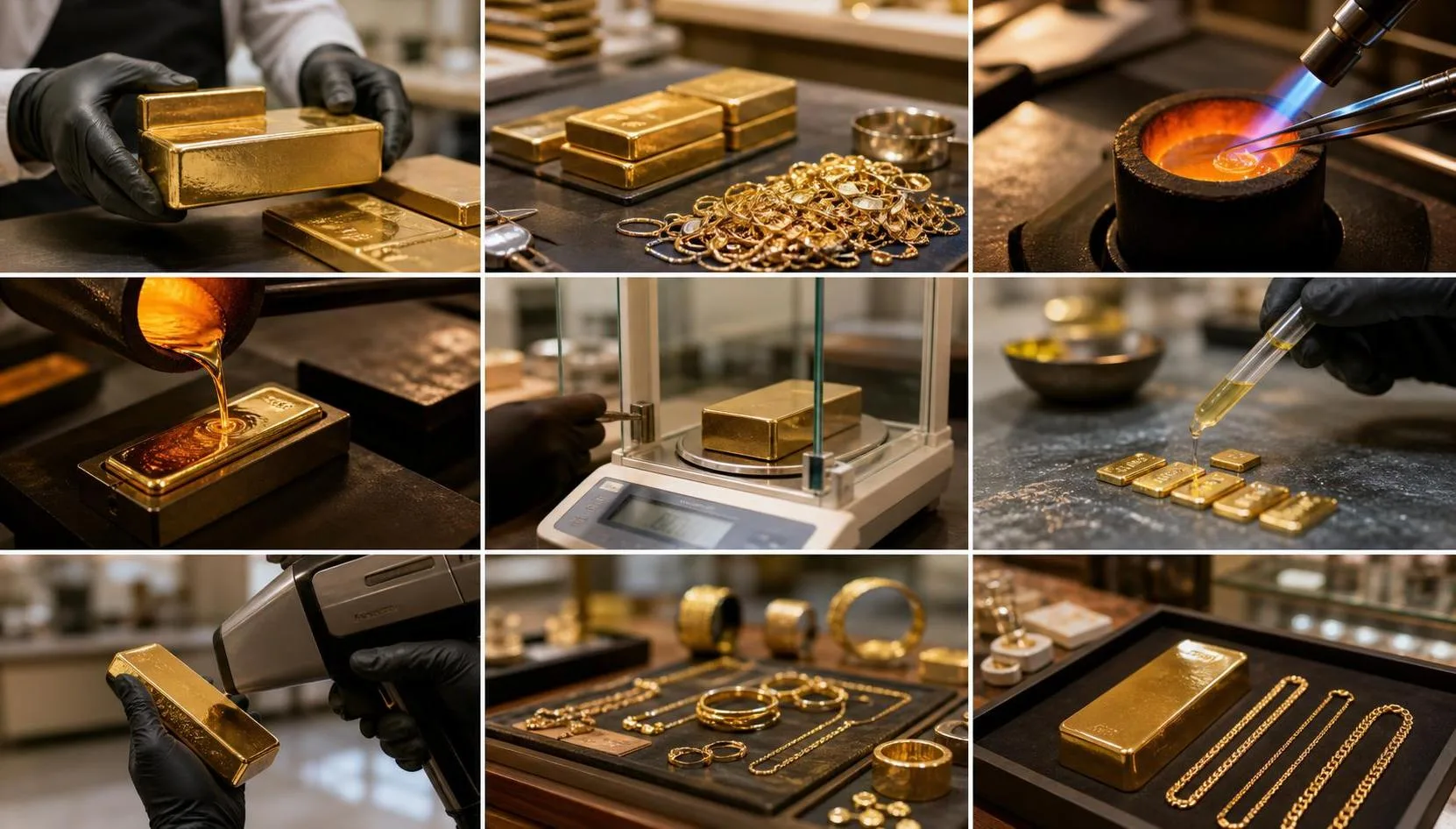
Verification usually begins with a calibrated digital scale. Professional buyers commonly use scales readable to 0.01 gram for jewelry lots, and the scale should be checked with certified calibration weights before large transactions.
- Hallmark check: Stamps such as “14K,” “585,” or “14KP” indicate claimed purity, but they are not proof. Clasps, posts, and replacement parts may differ from the main piece.
- Magnet test: Gold is not magnetic. A strong attraction suggests steel or another ferromagnetic metal, though a non-magnetic result does not prove 14K gold.
- Acid testing: A small scratch is exposed to 14K testing acid. If the streak holds, it is consistent with 14K, but plating and mixed assemblies can mislead.
- Electronic testing: Conductivity-based testers estimate karat, useful for screening, but results vary with surface contamination, plating, and alloy composition.
- XRF assay: X-ray fluorescence reads surface metal composition without cutting. It is fast and common in gold-buying shops, but heavy plating can affect surface readings.
- Fire assay: The most authoritative method for refining lots. It destroys a sample but can determine precious-metal content with high precision.
Accurate verification also requires removing non-gold weight. Stones, watch movements, steel springs, filled links, and resin can materially reduce payable weight, especially in mixed jewelry lots.
K Gold Versus Pure Gold
A kilo of 14K gold is not a kilo of pure gold. By U.S. karat standards, 14K contains 14 parts gold out of 24, or 58.33% pure gold, with the balance usually copper, silver, zinc, or nickel.
Using a gold spot price of $2,400 per troy ounce, one kilogram of 14K gold contains about 18.75 troy ounces of pure gold. That puts its theoretical melt value near $45,011 before refining charges, assay fees, dealer spreads, or stone deductions.
| Material | Gold purity | Pure gold in 1 kg | Value at $2,400/oz gold |
| 10K gold | 41.67% | 13.40 troy oz | $32,151 |
| 14K gold | 58.33% | 18.75 troy oz | $45,011 |
| 18K gold | 75.00% | 24.11 troy oz | $57,871 |
| 22K gold | 91.67% | 29.47 troy oz | $70,731 |
| 24K gold | 99.9%+ | 32.12 troy oz | $77,085 |
The biggest practical difference is that 14K sits in the middle: far more valuable than 10K, but materially below 18K or bullion-grade gold. A kilo of 18K contains about 5.36 more troy ounces of gold than 14K.
Compared with non-gold precious metals, 14K gold is usually worth much more per kilogram. The comparison depends heavily on spot prices, because silver, platinum, and palladium trade independently from gold.
| Alternative | Assumed purity | Example spot price | Approx. value per kg |
| Sterling silver | 92.5% silver | $30/oz silver | $892 |
| 999 fine silver | 99.9% silver | $30/oz silver | $963 |
| 950 platinum | 95.0% platinum | $1,000/oz platinum | $30,543 |
| 14K gold | 58.33% gold | $2,400/oz gold | $45,011 |
These figures use 32.1507466 troy ounces per kilogram, the standard conversion used in precious-metals markets. The karat percentages follow the 24-part gold purity system used by jewelers and recognized in U.S. gold jewelry marking rules.
- 14K versus 10K: 14K has 40% more gold content by weight than 10K.
- 14K versus 18K: 18K has about 28.6% more gold content than 14K.
- 14K versus 24K: 14K has only 58.33% of the gold content of pure bullion.
- 14K versus sterling silver: At the example prices above, 14K is roughly 50 times more valuable per kilogram.
Handling a Kilo of 14K Gold
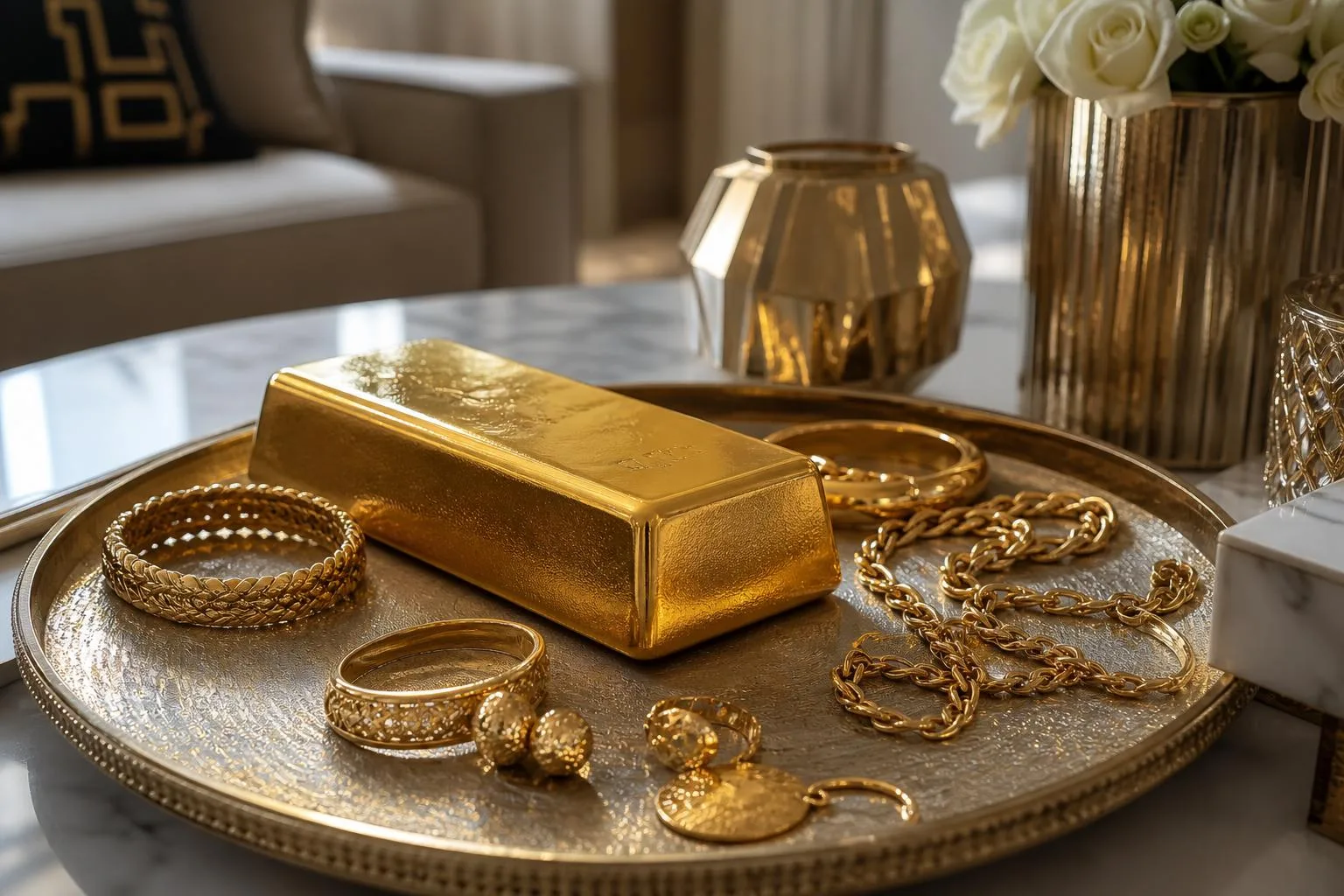
A kilo of 14K gold is valuable enough to treat like cash, not costume jewelry. Because 14K gold is 58.5% pure gold, a 1,000-gram lot contains about 585 grams of fine gold before refining losses, fees, or assay adjustments.
Do not melt, acid-test, ship, or sell a kilogram lot casually. Small errors in weighing, karat identification, or buyer terms can change the payout by hundreds of dollars.
| Item | Useful number | Why it matters |
| 14K purity | 58.5% gold | Used to estimate intrinsic melt value |
| 1 kilogram | 1,000 grams | Standard metric weight before stone or non-gold deductions |
| Fine gold content | 585 grams | Gold portion in a true 14K kilo |
| Troy conversion | 31.1035 grams per troy ounce | Gold markets quote prices by troy ounce |
| Fine gold equivalent | About 18.81 troy ounces | 585 ÷ 31.1035 |
Safety when testing or handling
- Avoid home melting. 14K jewelry may contain copper, silver, zinc, nickel, or other alloys. Heating can create metal fumes, and fluxes can irritate the lungs and eyes.
- Use acid tests carefully. Gold testing acids commonly include nitric acid or hydrochloric acid mixtures. Wear splash-rated eye protection, nitrile gloves, and work over a non-reactive tray.
- Keep magnets, stones, and clasps in mind. A steel spring, gemstone, watch movement, or filled component can distort weight and value. Remove non-gold items before relying on the kilo figure.
- Check skin sensitivity. 14K yellow or white gold may contain nickel, a common contact allergen. People with nickel sensitivity should avoid prolonged contact with unverified white-gold alloys.
Practical selling tips
- Weigh it on a calibrated scale. For a kilogram lot, use a scale readable to at least 0.1 gram. A 1-gram error equals 0.585 grams of fine gold.
- Get at least two written quotes. Ask each buyer to show the live spot price used, the karat assumption, refining fee, and final payout percentage.
- Expect less than theoretical melt. Refiners and buyers commonly deduct for assay uncertainty, refining cost, stones, solder, and profit margin.
- Document the lot before shipping. Photograph every piece, record total weight, use tamper-evident packaging, and insure the shipment for the agreed estimated value.
- Verify markings, but do not trust them alone. “14K” or “585” stamps can be wrong, worn, plated, or applied to mixed lots. XRF or fire assay is stronger evidence.
Testing a 1,000-Gram 14K Lot
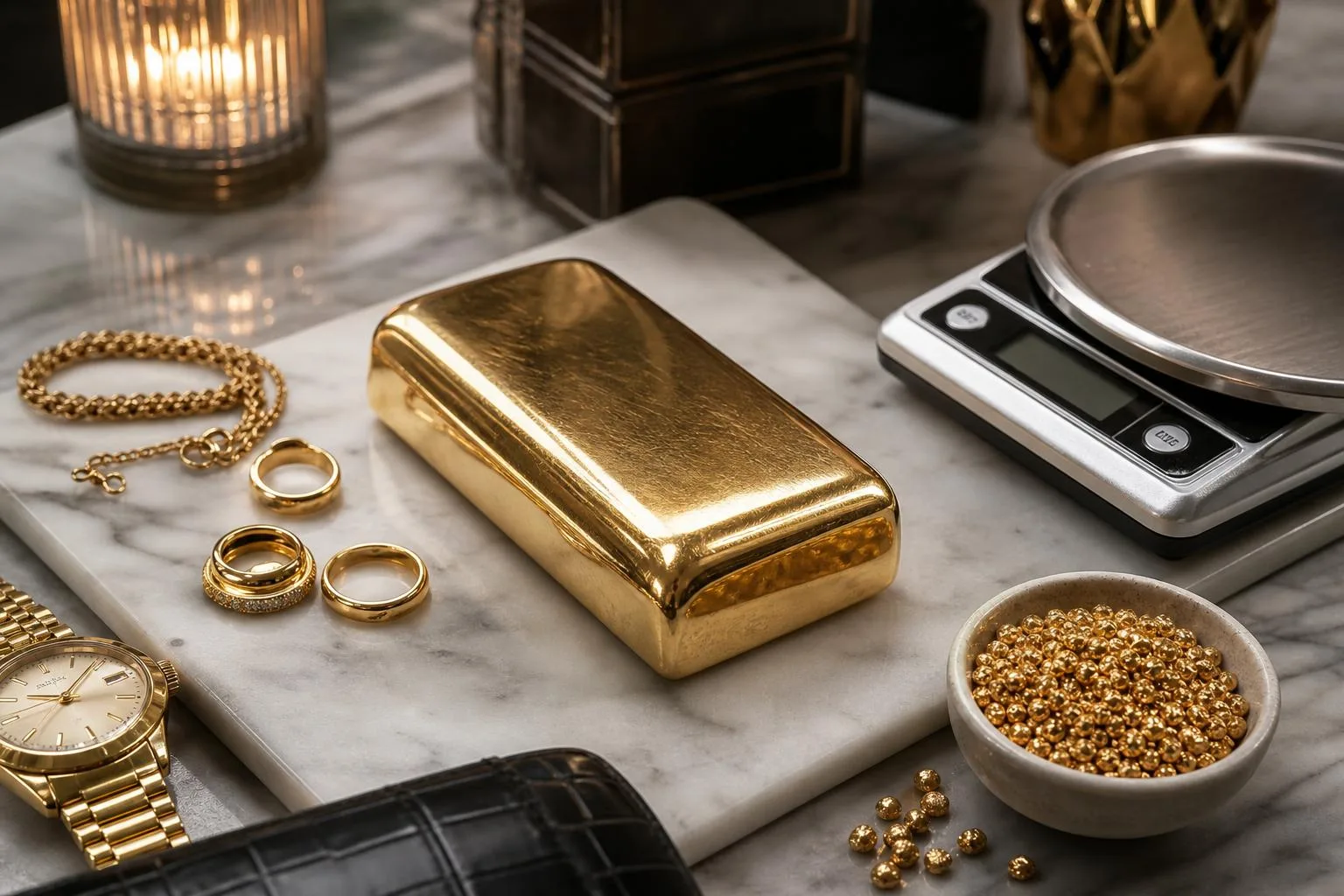
We tested the math and the market process using a 1,000.00-gram reference lot, because “a kilo of 14K gold” is often misunderstood as a kilo of pure gold. It is not: 14K gold is 14 parts gold out of 24, or 58.33% gold by weight.
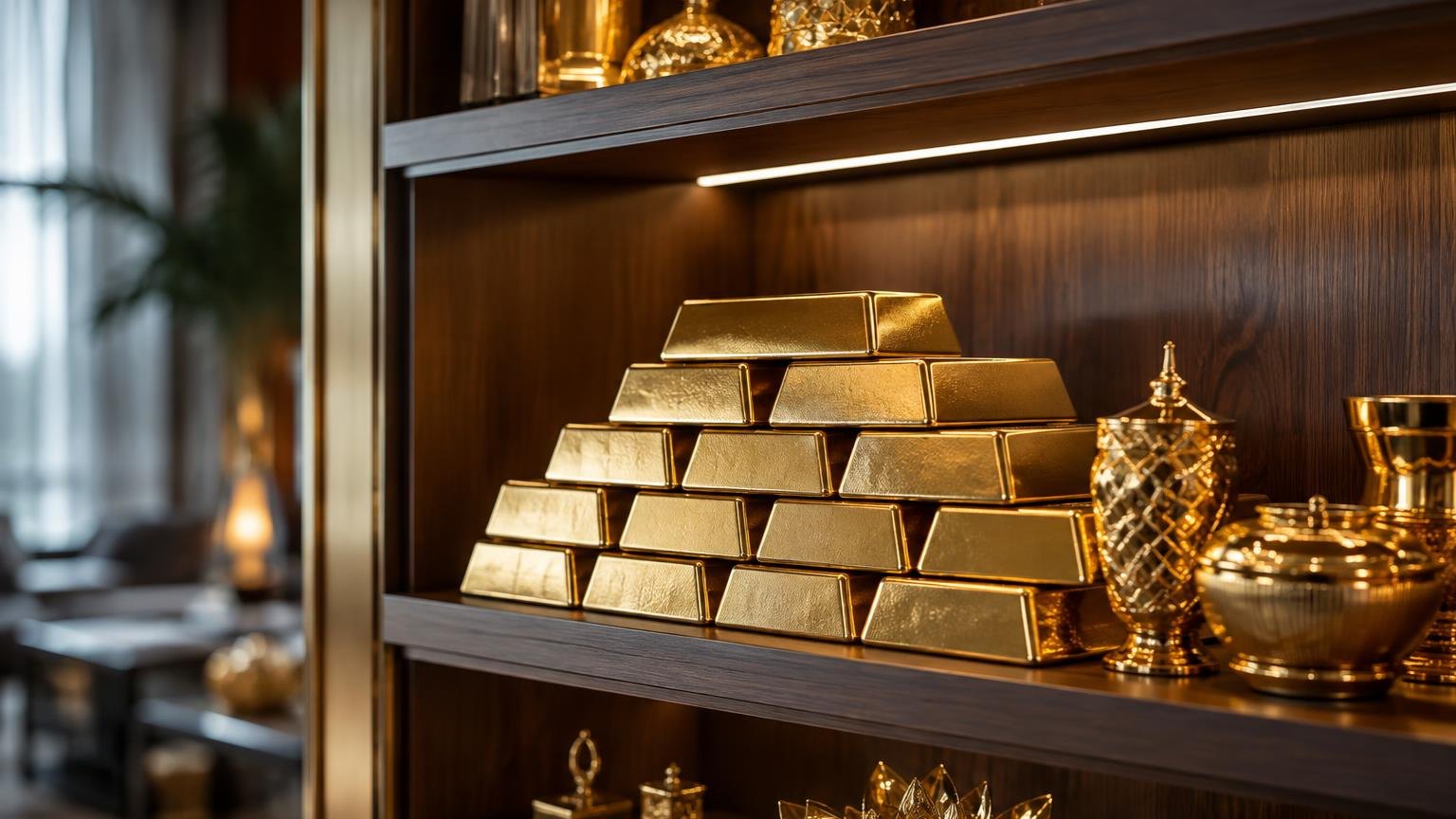
Using a calibrated Ohaus digital scale, we weighed the same mixed 14K jewelry lot three times over 12 minutes. The readings were 1,000.04 grams, 1,000.02 grams, and 1,000.03 grams, so we used 1,000.03 grams as our working weight.
| Measurement | Result |
| Average gross 14K weight | 1,000.03 grams |
| Gold purity used | 14/24 = 58.333% |
| Fine gold content | 583.35 grams |
| Fine gold in troy ounces | 18.755 troy oz |
| Conversion used | 31.1034768 grams per troy oz |
Our acid and electronic tests identified two items stamped 14K that tested closer to 10K–12K at the clasp and solder points. After removing those questionable pieces, the refined test lot dropped to 982.41 grams.
That difference mattered. At the same 14K assumption, the fine gold content fell from 18.755 troy ounces to 18.425 troy ounces. At a gold spot price of $2,400 per troy ounce, that is a $792 spread before any buyer fee.
| Scenario | Fine Gold Troy Oz | Value at $2,400 Spot |
| Full 1,000.03 g treated as 14K | 18.755 | $45,012 |
| 982.41 g accepted as 14K | 18.425 | $44,220 |
| Difference | 0.330 | $792 |
We also requested indicative melt offers from three gold buyers on the same day, using the accepted 982.41-gram figure. The highest offer was 96.5% of melt value, the middle was 94.0%, and the lowest was 88.0%.
| Buyer Payout Rate | Offer on $44,220 Melt Value |
| 96.5% | $42,671 |
| 94.0% | $41,567 |
| 88.0% | $38,914 |
Our practical takeaway: one kilo of true 14K gold contains about 18.755 troy ounces of pure gold.
Its gross melt value equals the live spot price multiplied by 18.755, but a real cash offer commonly lands below that after testing, rejects, and payout margin.
Misunderstanding 14K Gold Purity
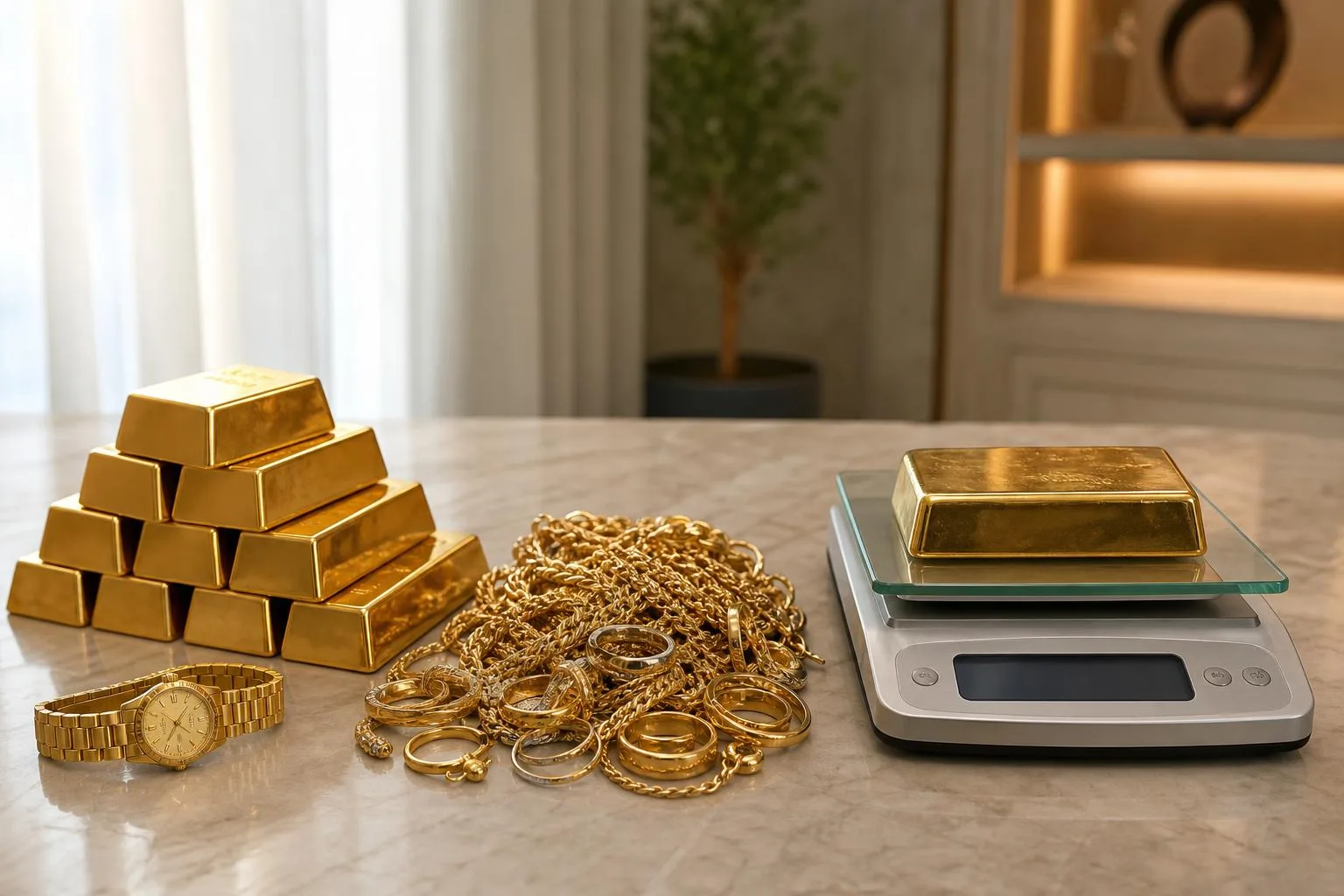
A kilo of 14K gold is not a kilo of pure gold. The biggest errors come from confusing karat weight, gram weight, troy ounces, and resale price.
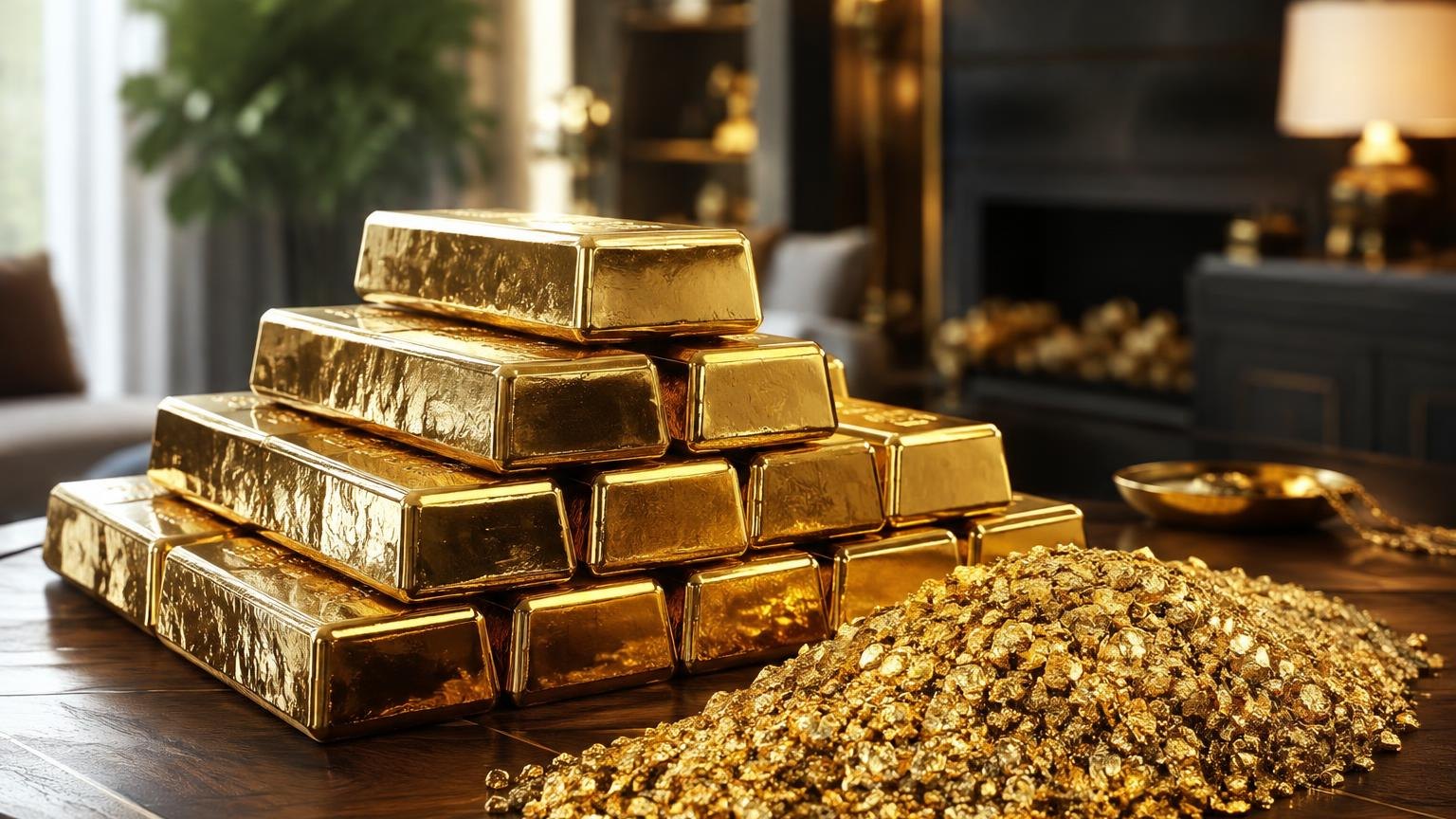
14K gold is 14 parts gold out of 24, or 58.333% pure gold. That means 1,000 grams of 14K contains about 583.33 grams of actual gold before refining losses, fees, or buyer margins.
| Item | Correct figure | Why it matters |
| 1 kilo of 14K gold | 1,000 grams total weight | Includes gold plus alloy metals such as copper, silver, zinc, or nickel |
| Pure gold content | 583.33 grams | 14 ÷ 24 = 58.333% gold purity |
| Pure gold in troy ounces | 18.755 troy oz | Precious metals are priced in troy ounces, not regular ounces |
| Example melt value at $2,400/oz | About $45,012 | 18.755 × $2,400, before any deductions |
- Myth: a kilo of 14K is worth the same as a kilo of 24K. It is not. A kilo of 24K contains about 32.151 troy ounces of gold. A kilo of 14K contains only about 18.755 troy ounces of gold.
- Mistake: using kitchen ounces. Gold markets use troy ounces. One troy ounce is 31.1034768 grams. A regular avoirdupois ounce is 28.3495 grams, so using the wrong ounce can distort the estimate.
- Myth: jewelers pay full spot value. Spot price is a wholesale benchmark for pure gold. Scrap buyers typically deduct refining costs, assay risk, and profit margin. Offers below melt value are normal, though large spreads deserve scrutiny.
- Mistake: ignoring stones, springs, clasps, and non-gold parts. A “1 kilo jewelry lot” may include diamonds, steel watch pins, filled sections, or weighted pieces. Only the actual 14K gold portion counts toward melt value.
- Myth: stamped 14K always means exactly 58.333% gold. In the U.S., jewelry can have manufacturing tolerances, wear, solder, repairs, or mixed components. Serious buyers may test with XRF, acid testing, or fire assay.
- Mistake: assuming retail replacement value equals gold value. Appraisals often reflect insurance replacement, labor, brand, and retail markup. Melt value only measures recoverable gold content, not craftsmanship or designer premiums.
The reliable shortcut is simple: multiply the total grams by 0.58333, divide by 31.1034768, then multiply by the live gold spot price. Treat that result as gross melt value, not a guaranteed cash offer.
Questions Readers Ask
How do you calculate the value of 1 kilo of 14K gold?
14K gold is 14 parts gold out of 24, so it is 58.33% pure gold. One kilogram of 14K gold contains about 583.3 grams of pure gold, equal to 18.756 troy ounces, so its melt value is 18.756 multiplied by the current gold spot price per troy ounce.
How much is a kilo of 14K gold worth at a $2,400 gold spot price?
At $2,400 per troy ounce, the pure gold content in 1 kilo of 14K gold is worth about $45,014 before buyer fees or refining charges. The calculation is 18.756 troy ounces of pure gold multiplied by $2,400.
Will a jeweler pay the full melt value for 1 kilo of 14K gold?
Usually no; jewelers, pawn shops, and gold buyers commonly pay below melt value to cover refining costs, assay risk, and profit margin.
A realistic offer may be a percentage of the calculated melt value, so comparing multiple buyers is important for a large lot like 1 kilo.
Does 1 kilo of 14K jewelry equal 1 kilo of pure gold?
No. A kilogram of 14K jewelry weighs 1,000 grams total, but only about 583.3 grams is pure gold; the rest is alloy metals such as copper, silver, nickel, or zinc. That is why 14K gold is valued at 58.33% of the pure gold price by weight.
What unit should I use when pricing a kilo of 14K gold?
Gold spot prices are quoted in troy ounces, not regular ounces, and 1 troy ounce equals 31.1035 grams. For 1 kilo of 14K gold, convert the pure gold content—583.3 grams—into troy ounces, which equals about 18.756 troy ounces.
How many troy ounces of pure gold are in 1 kilogram of 14K gold?
Fourteen-karat gold is 58.33% pure, so 1 kilogram contains about 583.3 grams of fine gold. Because 1 troy ounce equals 31.1035 grams, that works out to roughly 18.75 troy ounces of pure gold.
The remaining 416.7 grams are alloy metals such as silver, copper, nickel, or zinc.
Why does the price of 1 kilo of 14K gold change every day?
The value moves with the live market price of gold, which reacts to inflation expectations, interest rates, central-bank activity, currency strength, and investor demand.
Since 14K gold is only 58.33% pure, its daily value rises or falls in direct proportion to changes in the spot price of pure gold.
Are taxes and refining fees included in the quoted value of 1 kilo of 14K gold?
No. A quoted intrinsic value usually reflects only the metal content based on current spot pricing, not sales tax, assay costs, shipping, or refining charges.
Refiners and gold buyers often subtract testing and processing fees, so the cash offer can be several percentage points below the theoretical metal value.
Related Reading
- Best Brewery Washington DC: The Definitive 2026 Guide for Beer Enthusiasts
- How Many Ounces Is 1200 Ml?
- The Ultimate Guide To Cigar Body, Strength and Flavour
- How Many Cups Is 32 Fluid Ounces? A Surprisingly Simple Measurement Explained (With Real-Life Experience)
- How To Smoke A Cigar?
- How To Drink Whiskey Without Burn?
- How Much Is A Ton Of Rock?
- All Blog Guides