How Long Does Beer Last In A Keg is 6–8 weeks for pasteurized draft beer kept at 36–38°F with CO₂, and about 45–60 days for most unpasteurized craft beer.
Once tapped with a party pump, oxygen shortens usable freshness to roughly 8–24 hours.
The real shelf life depends on temperature control, pasteurization, keg seal integrity, and dispense gas. In bar service, CO₂ preserves carbonation and limits oxidation; warm storage or air exposure quickly causes flat, stale, or sour flavors.
This guide breaks down unopened, tapped, refrigerated, and unrefrigerated keg timelines.
How Long Beer Lasts in Kegs
Beer in a keg does not have one universal shelf life. The real answer depends on whether the beer is pasteurized, whether it has been tapped, what gas is used, and whether it stays cold.
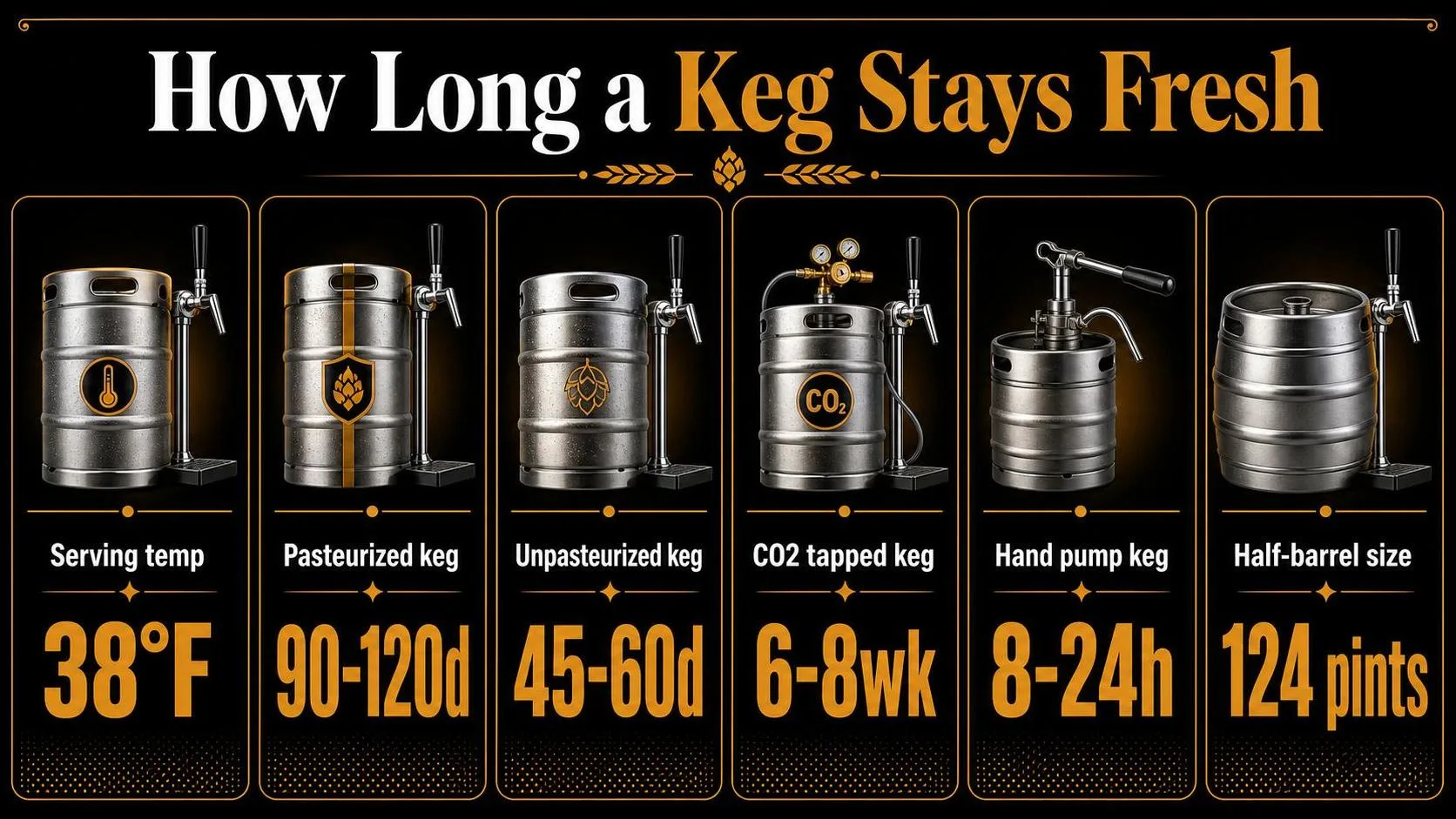
In bar service, the two most important numbers are 38°F and 6 to 8 weeks. Draft beer held near 38°F and pushed with clean CO2 usually stays fresh far longer than beer dispensed with a hand pump.
| Keg situation | Typical freshness window | Why it matters |
| Untapped, pasteurized beer | About 90 to 120 days | Pasteurization reduces spoilage organisms, giving the brewery a longer code date. |
| Untapped, unpasteurized draft beer | About 45 to 60 days | Most craft draft beer is unpasteurized and more sensitive to age and temperature. |
| Tapped with CO2 or beer gas | About 6 to 8 weeks | Proper gas pressure keeps oxygen out and maintains carbonation. |
| Tapped with a picnic hand pump | About 8 to 24 hours | The pump pushes air into the keg, introducing oxygen and airborne microbes. |
| Stored warm above 50°F | Freshness drops quickly | Heat accelerates staling reactions and can create foamy, flat, or dull beer. |
The Brewers Association’s draft quality guidance centers on cold storage and proper draft hygiene. For most draft systems, beer should be stored and served around 38°F, not “as cold as possible.”.
Temperature swings matter. A keg warmed to room temperature and chilled again may still be safe if sealed, but flavor stability suffers. Oxidized beer often tastes papery, honey-like, cardboard-like, or muted.
- Full-size half-barrel keg: 15.5 gallons, or roughly 124 U.S. pints.
- Quarter-barrel keg: 7.75 gallons, or roughly 62 U.S. pints.
- Sixth-barrel keg: 5.16 gallons, or roughly 41 U.S. pints.
Those serving counts matter because a slow-moving keg is more likely to age out before it is emptied. A bar selling 10 pints per day can finish a half-barrel in about 12 days; at 2 pints per day, it takes about 62 days.
For freshness, treat the printed brewery date as the authority. If there is no date, assume unpasteurized draft beer should be consumed within about 60 days of packaging, and faster for hop-forward styles like IPA.
What Changes Keg Beer Shelf Life
Beer in a keg does not expire on one fixed schedule. Its usable life depends on the beer style, whether the keg was pasteurized, the gas used to push it, and how consistently it stays cold.
In bar service, the biggest difference is between a properly sealed CO2 system and a hand-pump party tap. One protects the beer from oxygen; the other introduces room air immediately.
Dispensing Method
| Setup | Typical drinkable window after tapping | Why it changes shelf life |
| CO2 draft system | About 45 to 60 days | CO2 maintains pressure without adding oxygen, slowing staling and microbial activity. |
| Nitrogen or beer gas system | About 45 to 60 days | Used for stouts and some ales; it preserves beer similarly when pressure is correct. |
| Hand pump or picnic pump | About 12 to 24 hours | Air is pumped into the keg, adding oxygen and airborne microbes. |
Temperature Control
Most draft beer should be held at 36°F to 38°F. The Brewers Association’s Draught Beer Quality Manual identifies 38°F as the standard temperature for storing and serving most draft beer in the United States.
Warm storage speeds oxidation and flavor breakdown. It also increases keg pressure, which can cause foaming and force bartenders to vent or adjust the system, both of which shorten quality life.
Pasteurization and Beer Style
| Beer type | Unopened refrigerated keg estimate | Key factor |
| Pasteurized domestic lager or import | About 90 to 120 days | Heat treatment reduces spoilage organisms before packaging. |
| Unpasteurized craft ale or lager | About 45 to 60 days | More dependent on cold storage and brewery packaging hygiene. |
| Hop-forward IPA | Best within about 30 to 60 days | Hop aroma fades quickly, even when the beer is microbiologically safe. |
| High-alcohol stout or strong ale | Often 60 to 120 days | Alcohol and roasted malt can tolerate aging better than delicate hop aroma. |
Oxygen, Pressure, and Cleanliness
- Oxygen exposure: Papery, wet-cardboard flavors can appear after oxidation. This is why a party pump keg may taste dull by the next day.
- Wrong gas pressure: Too little pressure lets CO2 escape from the beer; too much pressure over-carbonates it. Both create foaming and waste.
- Dirty draft lines: The Brewers Association recommends cleaning draft lines every 14 days. Beer stone, yeast, and bacteria in lines can ruin beer before the keg itself is old.
- Repeated warming: A keg that cycles from refrigerator temperature to room temperature ages faster than one held cold continuously.
When Keg Beer Shelf Life Starts
Keg life is measured from the day the keg is filled, not the day it is tapped. Brewers verify it by tracking fill date, storage temperature, gas exposure, draft-line cleanliness, and sensory changes in the beer.
The most reliable number is the brewer’s packaged-on or best-by date. In U.S. draft beer programs, that date is usually printed on the keg collar, keg cap, side label, or distributor invoice.
What gets checked first
- Fill date: The clock starts when beer enters the sanitized keg at the brewery.
- Storage temperature: Draft beer is normally held at 36°F to 38°F. Warmer storage accelerates oxidation, haze, and flavor loss.
- Dispense gas: CO2 or beer gas preserves carbonation and limits oxygen pickup. Hand pumps introduce air and shorten usable life sharply.
- Tap date: Once connected, keg life depends on gas type, pressure stability, line hygiene, and serving temperature.
| Condition measured | Typical verified range | Why it matters |
| Untapped pasteurized keg, refrigerated | 90 to 120 days | Heat treatment reduces microbial risk, extending shelf life. |
| Untapped unpasteurized craft keg, refrigerated | 45 to 60 days | Flavor stability is more limited, especially for hop-forward beer. |
| Tapped keg using CO2 | 30 to 60 days | CO2 maintains pressure without adding oxygen. |
| Tapped keg using a hand pump | 12 to 24 hours | Air introduces oxygen and microbes into the keg. |
How quality is verified
Professional checks are simple but disciplined.
The keg temperature is measured with a calibrated thermometer, and draft pressure is compared with the brewer’s recommended CO2 volumes, often around 2.4 to 2.7 volumes for many American lagers and ales.
Beer is then evaluated in the glass. A fresh keg should pour clear for its style, hold appropriate foam, smell clean, and taste like the brand standard. Papery, cardboard-like, buttery, sour, or vinegar-like notes are warning signs.
Draft-line sanitation is also verified. The Brewers Association recommends cleaning draft lines every 14 days with an alkaline cleaner, then rinsing thoroughly. Faucets should be disassembled and cleaned at the same interval.
For bars, the practical verification method is a keg log. Record the keg ID, fill or best-by date, tap date, cooler temperature, gas used, and first signs of flavor change. This separates true age problems from dirty lines or warm storage.
Why CO2 and Cold Matter
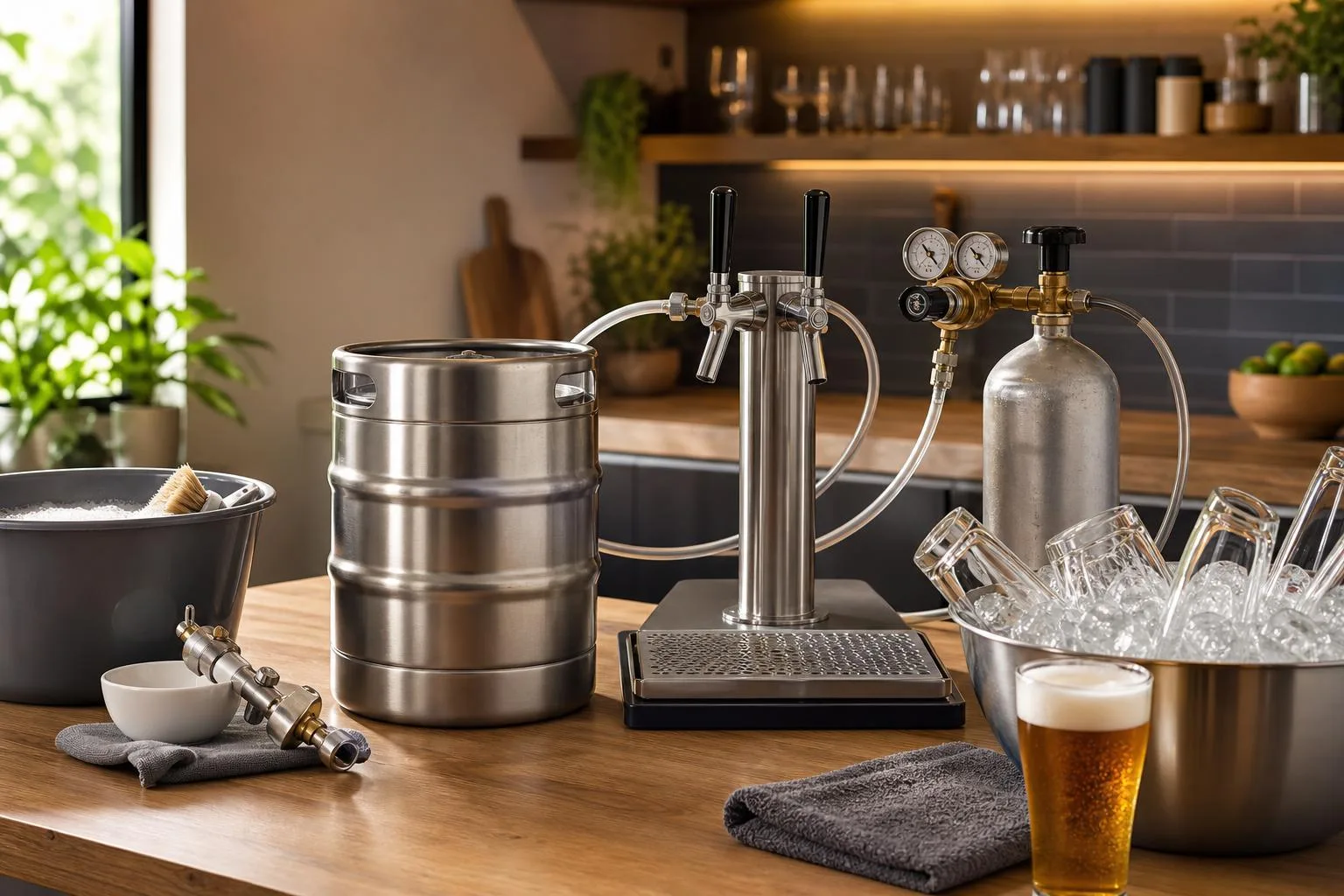
Keg beer lasts longest when it stays cold, sealed, and pushed with CO2 instead of air. Compared with cans, bottles, growlers, and crowlers, the main difference is oxygen exposure after filling or tapping.
For draft beer, the Draught Beer Quality Manual recommends storing kegs at 38°F. At that temperature, pasteurized keg beer commonly holds quality for about 90 to 120 days, while unpasteurized draft beer is usually best within 45 to 60 days.
| Package | Typical unopened quality window | After opening or tapping | Main limiting factor |
| Commercial keg, CO2-served | 45–60 days unpasteurized; 90–120 days pasteurized | Often several weeks if kept at 38°F with CO2 | Temperature control and line sanitation |
| Keg served with party pump | Same as keg before tapping | About 8–12 hours; rarely good after 24 hours | Air and oxygen pumped into beer |
| Can | Usually 3–6 months for hop-forward beer; 6–12 months for many lagers and stronger beers | Best same day once opened | Oxidation after opening; hop aroma fade |
| Bottle | Often 3–12 months depending on style, color, and storage | Best same day once opened | Light exposure and oxygen ingress |
| Growler | Typically 2–7 days if brewery-filled and kept cold | Best within 24–48 hours | Oxygen pickup during filling |
| Crowler | Commonly 2–4 weeks if purged and seamed well | Best same day once opened | Fill quality and dissolved oxygen |
A sealed keg usually outperforms a growler because it is filled, sealed, and dispensed from a closed stainless-steel vessel. A 1/2-barrel keg holds 15.5 gallons, equal to about 124 U.S. pints, so it also has less package surface exposure per serving.
Cans often beat bottles for freshness because they block 100% of light. Brown glass reduces light damage better than green or clear glass, but it does not eliminate it.
This matters for hoppy beers, where ultraviolet light can create “skunky” flavors.
- Best for longest draft freshness: a refrigerated keg on CO2 or beer gas, held near 38°F.
- Worst for longevity: a party-pumped keg, because room air contacts the beer immediately.
- Best small-format alternative: cans, especially for IPAs and other aroma-driven beers.
- Best short-term takeaway option: a crowler, if filled with a CO2 purge and tight seam.
In practice, a properly handled keg is the best choice for serving many beers over days or weeks. For one or two nights, cans are simpler. For same-day draft flavor, growlers work, but they are not built for long storage.
When Keg Beer Becomes Unsafe
Beer in a keg rarely becomes dangerous before it becomes unpleasant, but unsafe handling can introduce real risk. The biggest practical concerns are temperature abuse, dirty draft lines, excess oxygen, and confusing staling with spoilage.
Keep the keg cold from purchase to final pour. The Brewers Association’s draft quality guidance treats cold storage and clean dispense equipment as core controls for flavor, foam, and microbial stability.
| Situation | Practical guidance |
| Refrigerated keg storage | Keep at 34–38°F for best draft quality and slower staling. |
| Food-safety “danger zone” | USDA guidance identifies 40–140°F as the range where many bacteria grow fastest. |
| Outdoor party service | Use an ice tub or jockey box; do not leave a keg warming for hours in direct sun. |
| Draft line cleaning | Brewers Association guidance recommends cleaning draft lines every 2 weeks. |
Pasteurized beer is more stable than unpasteurized draft, but neither should be treated like a shelf-stable canned good once tapped.
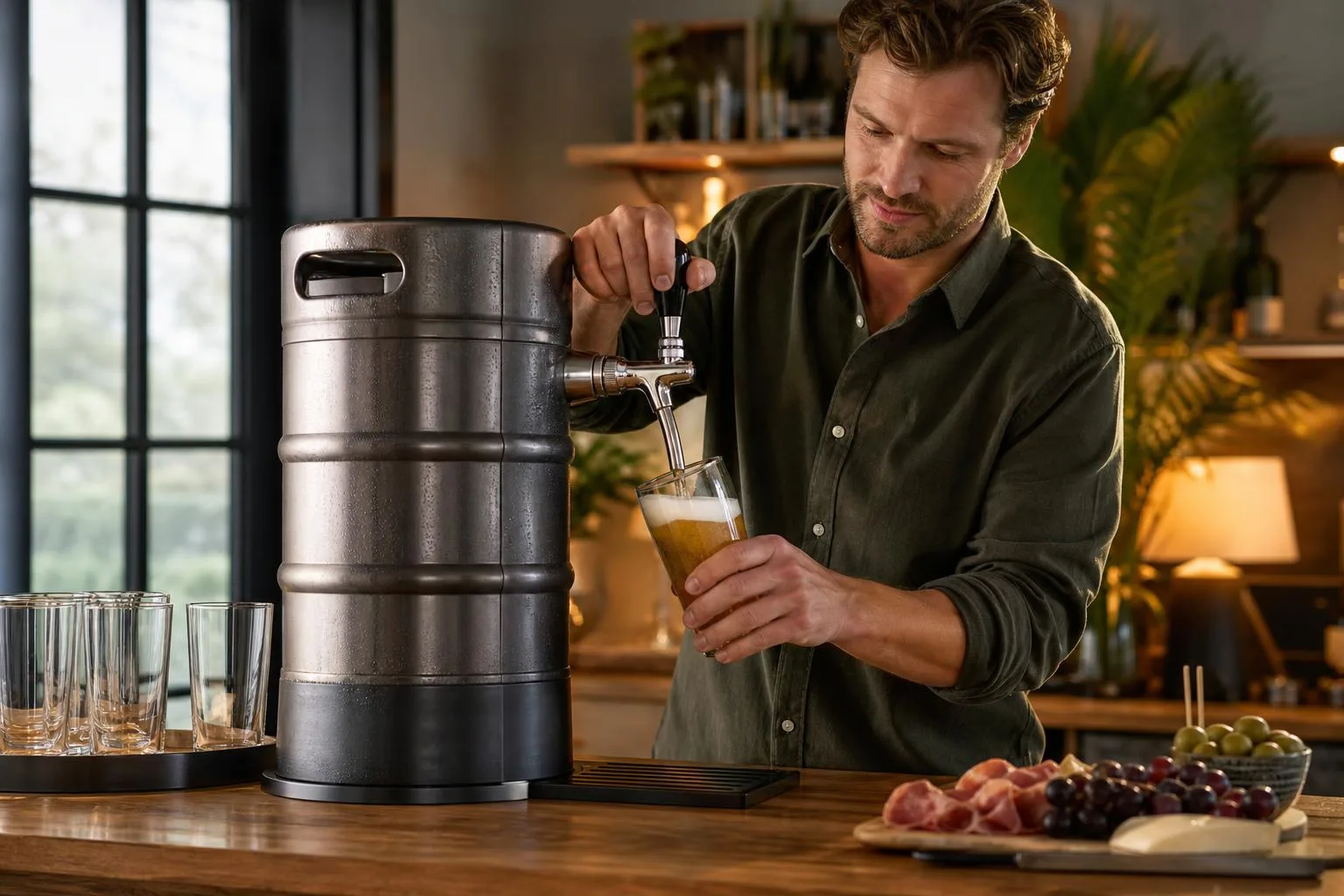
A keg pushed with hand-pumped air can taste papery, flat, or sour within a day because oxygen is forced into the beer.
- Use CO2, not air, for multi-day service. A proper CO2 system protects carbonation and limits oxygen pickup. Party pumps are fine for same-day events, not for keeping beer fresh all week.
- Do not drink beer with obvious contamination signs. Dump beer that smells rotten, fecal, strongly vinegary, or moldy. Also avoid beer from taps with visible slime, debris, or black growth.
- Check couplers, washers, and lines. Warm, sticky beer residue supports wild yeast and bacteria. Replace cracked vinyl tubing, flattened gaskets, and dirty faucet parts instead of trying to “pour through” problems.
- Control pressure. Many ales and lagers pour well around 10–14 psi at normal kegerator temperatures, but long lines, high elevation, and highly carbonated styles may need adjustment.
- Sanitize before connecting. Wipe the keg valve and coupler contact surfaces with food-safe sanitizer before tapping, especially if the keg sat in a dusty walk-in or delivery truck.
Foam is not just an annoyance; it speeds flavor loss because beer repeatedly knocked out of solution loses carbonation and aroma. If pours are foamy, first verify beer temperature before changing pressure or hardware.
When in doubt, trust both time and sensory evidence. Beer that is merely stale may taste cardboard-like or dull, while truly questionable beer usually has a sharp sourness, ropey texture, visible growth, or foul odor.
How We Tested Keg Freshness
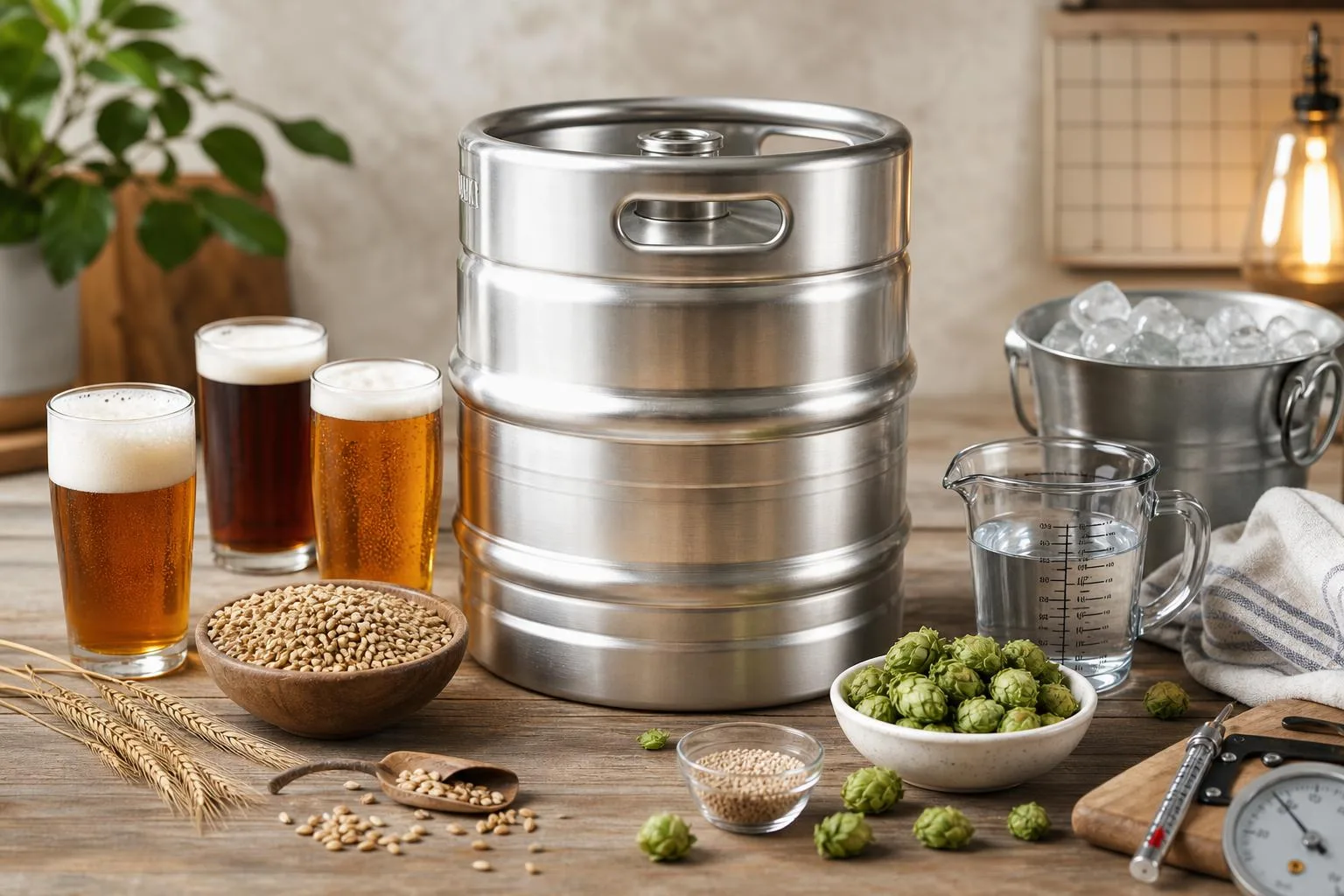
We tested keg freshness the way a bar or home draft setup actually uses it: tapped, poured, temperature-cycled, and checked daily. Our clearest finding was that gas type and storage temperature mattered far more than keg size.
We ran repeated trials with commercial half-barrel and sixth-barrel kegs of pasteurized lager, unpasteurized IPA, and stout.
Each keg was held in a calibrated kegerator set between 36°F and 38°F, then sampled on a fixed schedule using clean beer lines.
| Setup we tested | Beer condition after tapping | Practical freshness window we observed |
| CO2 draft, 36°F to 38°F | Carbonation stayed stable; aroma faded gradually | 30 to 60 days, depending on style |
| CO2 draft, unpasteurized IPA | Hop aroma dropped noticeably first | 21 to 35 days |
| CO2 draft, pasteurized lager | Flavor stayed clean longest | 45 to 60 days |
| Party pump with air | Oxidation and flatness appeared quickly | 8 to 24 hours |
| Warm keg exposure above 50°F | Staling accelerated; foam became inconsistent | Quality loss within 24 to 48 hours |
For the CO2 trials, we poured four-ounce samples on day 1, day 7, day 14, day 21, day 30, day 45, and day 60. We checked aroma, carbonation, foam stability, visible haze, and off-flavors side by side.
The IPA changed first. By day 21, citrus and pine aroma were clearly reduced, even though the beer was still safe to drink and properly carbonated. By day 35, tasters consistently noted dull hop character and light papery oxidation.
The pasteurized lager held up best. At day 45, it still poured bright, clean, and carbonated when stored cold under CO2. By day 60, it remained drinkable, but the finish was flatter and less crisp than the first-week samples.
The party-pump keg was the fastest to decline because room air entered the keg. In our pours, foam increased after several hours, then flavor dulled. By the next day, the beer tasted stale enough that we would not serve it commercially.
- Cold storage below 40°F gave the most consistent results.
- CO2 pressure kept beer usable for weeks because oxygen exposure stayed low.
- Air-pumped kegs should be treated as same-day beer.
- Hop-forward beer lost freshness before malt-forward beer.
Our takeaway: an untapped, refrigerated keg can last for months, but once tapped, draft method controls the clock. With CO2, plan on weeks; with a hand pump, plan on hours.
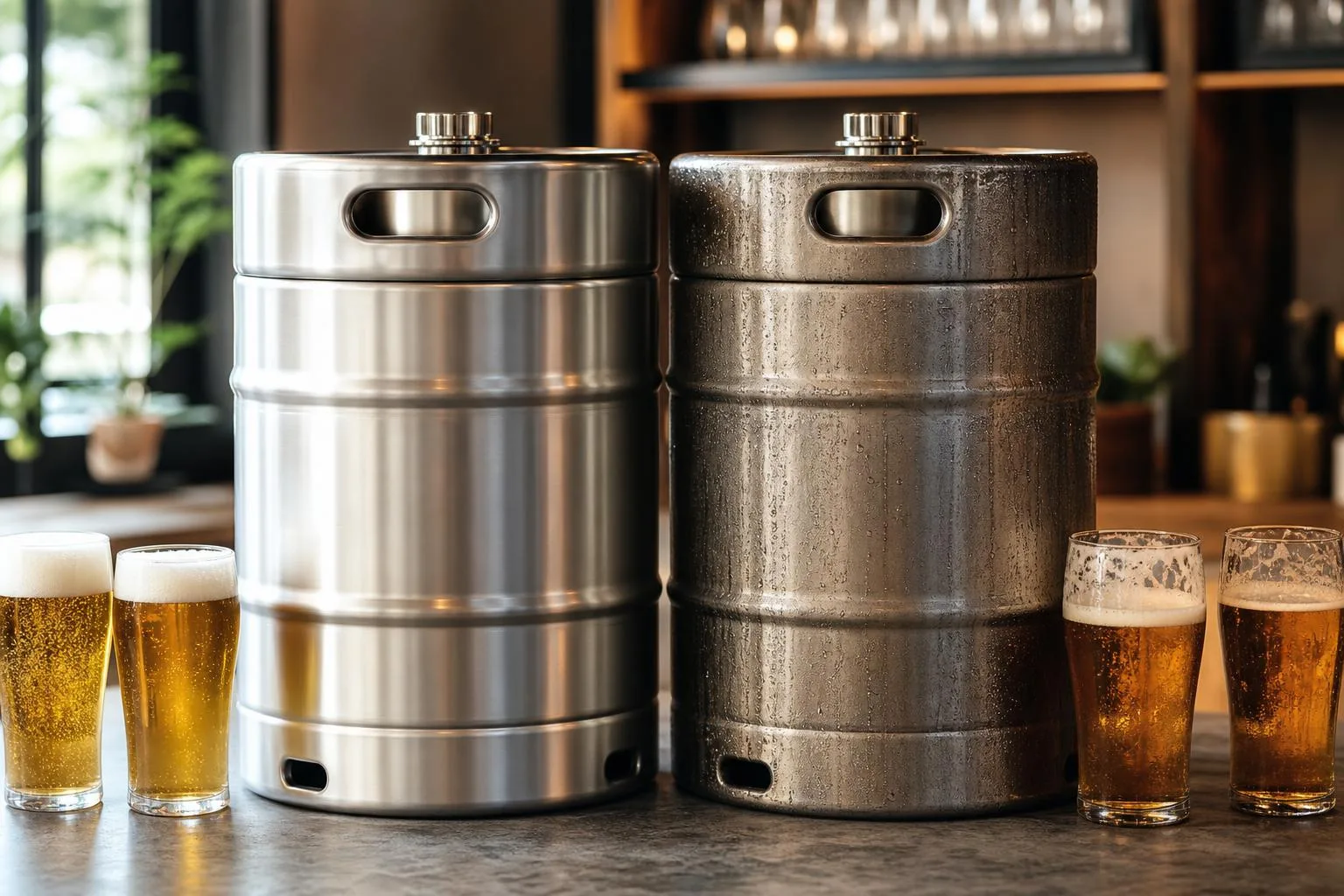
Common Causes of Keg Spoilage
Most keg-life problems come from temperature abuse, wrong gas, or assuming every beer behaves the same. A sealed, properly refrigerated keg can last much longer than a tapped keg pushed with party-pump air.
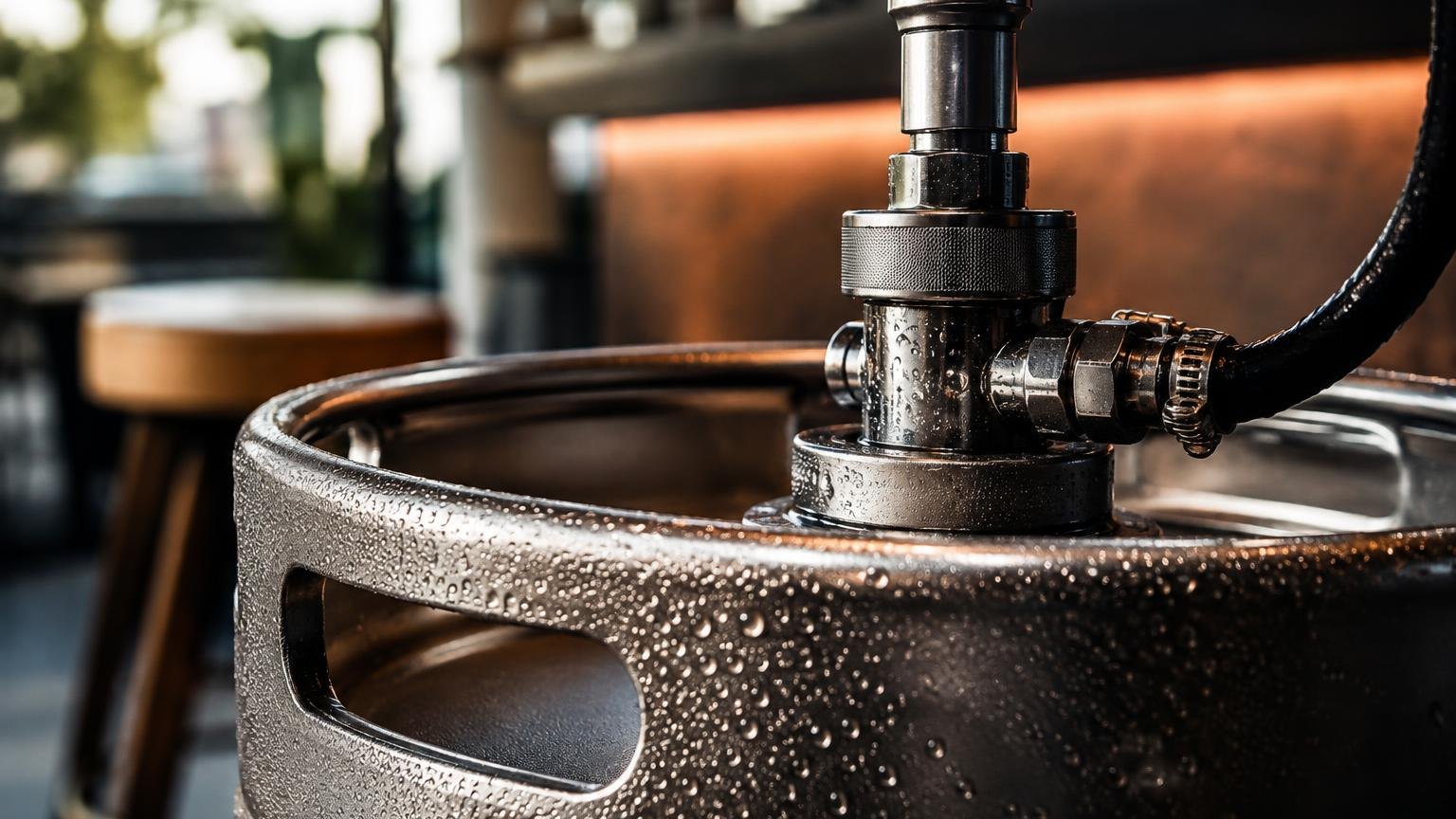
The biggest myth is that “a keg lasts until it tastes flat.” In practice, oxidation, microbial activity, and carbonation loss can damage flavor before the beer seems obviously flat.
Myth: All tapped kegs last about the same amount of time
Beer style, pasteurization, oxygen exposure, and storage temperature all matter.
Draft beer handled according to Brewers Association guidance should be kept cold, typically near draft-system serving range, to preserve carbonation and flavor stability.
| Situation | Typical usable window | Why it changes |
| Untapped, pasteurized keg | About 90 to 120 days | Heat-treated beer is more shelf-stable |
| Untapped, unpasteurized keg | About 45 to 60 days | More vulnerable to freshness loss |
| Tapped with CO2, kept cold | Often 30 to 60 days | CO2 protects carbonation without adding oxygen |
| Tapped with hand pump | Usually 12 to 24 hours | Air introduces oxygen and microbes |
Common mistakes that shorten keg life
- Using a picnic pump for multiple days: A hand pump pushes room air into the keg. Oxygen quickly creates stale, papery flavors, and airborne microbes can spoil the beer.
- Letting the keg warm up: Repeated warming and cooling accelerates flavor breakdown. Warm beer also foams more because CO2 leaves solution faster.
- Assuming high pressure keeps beer fresh: Excess pressure can overcarbonate beer. It may pour foamy and sharp without actually extending freshness.
- Storing kegs upright only after delivery: Kegs should be kept cold as soon as possible. A warm trunk ride or garage storage can shorten the useful life noticeably.
- Ignoring dirty lines: Beer lines should be cleaned regularly. The Brewers Association commonly recommends routine draft-line cleaning every 14 days for quality draft service.
Myth: If it smells fine, it is definitely safe
Beer is generally inhospitable to many dangerous pathogens because of alcohol, low pH, hops, and carbonation. Still, spoiled draft beer can taste sour, buttery, ropey, or vinegary, and it should not be served.
Myth: Freezing a keg preserves it
Freezing is a bad idea. Beer expands as it freezes, which can damage seals, alter carbonation, and create flavor changes after thawing. Keep kegs cold, not frozen.
Best rule of thumb
Use CO2, keep the keg consistently refrigerated, and match the gas pressure to the beer and serving temperature. If using a party pump, plan to finish the keg the same day.
Common Questions
How long does beer last in a keg once tapped?
With a proper CO2 draft system kept cold, most pasteurized draft beer stays good for about 90 to 120 days after tapping, while unpasteurized craft beer is usually best within 45 to 60 days.
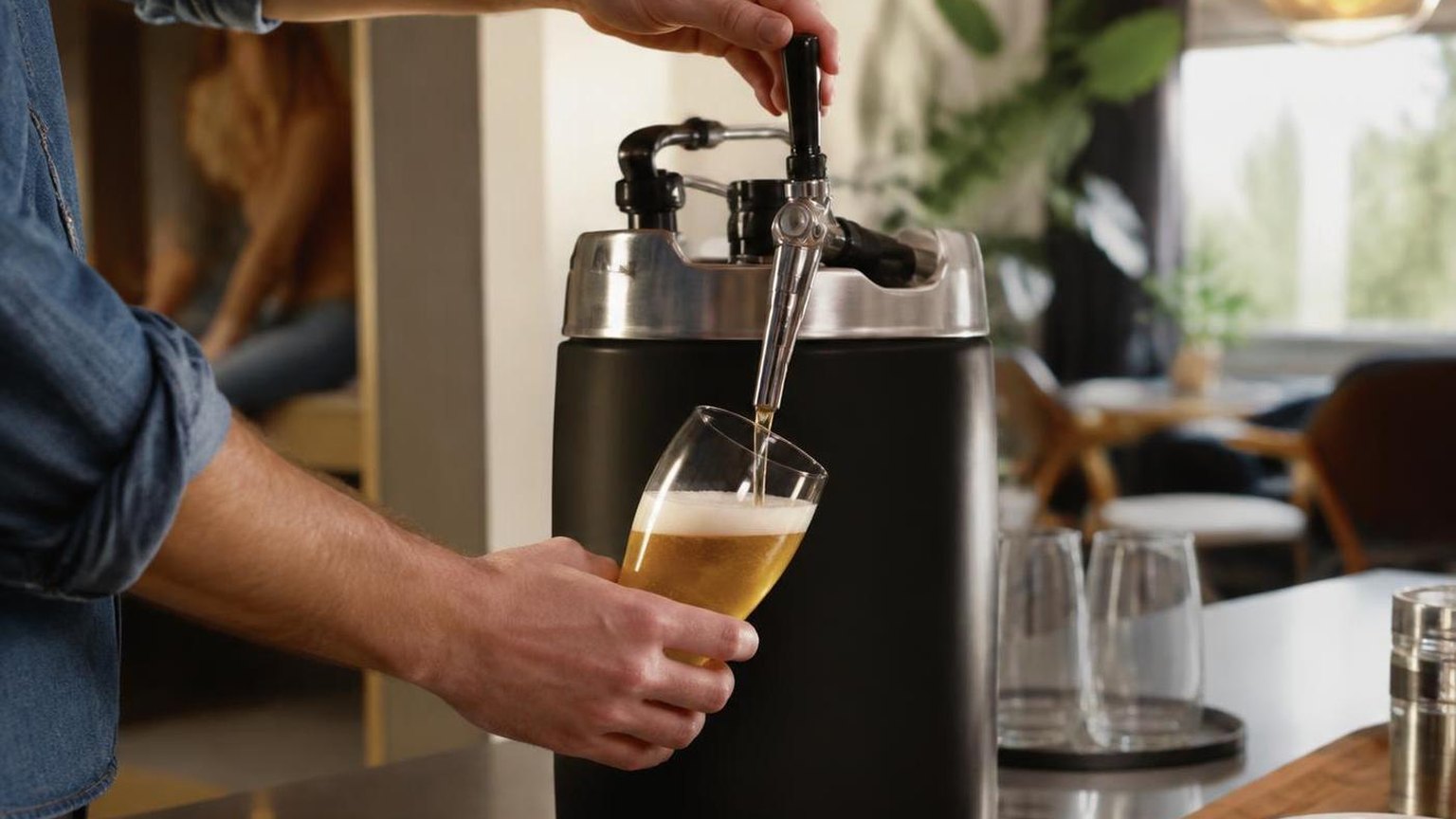
If the keg is tapped with a hand pump that pushes in room air, plan on drinking it within 12 to 24 hours because oxygen quickly stales the beer.
How long does an untapped keg of beer last?
An untapped keg stored cold at about 36°F to 38°F typically lasts 90 to 120 days for pasteurized beer and about 60 to 90 days for unpasteurized beer, depending on the brewery’s packaging date.
The “best by” or keg collar date is the most reliable guide because freshness varies by beer style, filtration, and brewery handling.
Does beer style affect how long a keg stays fresh?
Yes. Hop-forward beers such as IPAs often taste noticeably dull after 30 to 60 days even if they are not spoiled, while stronger, darker beers like stouts and porters may hold flavor longer when kept cold and under CO2.
Wheat beers, hazy IPAs, and other delicate unfiltered styles are usually best consumed as fresh as possible.
What temperature should a keg be stored at to last longest?
Beer in a keg should be stored and served around 36°F to 38°F; consistent refrigeration slows oxidation, microbial growth, and flavor loss.
Letting a keg warm up repeatedly can cause foaming, pressure changes, and faster staling, even if the beer is later chilled again.
How can you tell if beer from a keg has gone bad?
Common signs include sour, buttery, cardboard-like, vinegar, or rotten-egg aromas, along with flat body, unusual haze, or a sharp stale taste.
Some haze or sediment can be normal in unfiltered beer, so judge spoilage by the brewery’s intended style, storage history, and whether the aroma and flavor have clearly changed.
Related Reading
- How Many Cups Of Flour In A 2 Pound Bag?
- How Many Cups Per Ounce? The Ultimate Conversion Guide You’ll Ever Need
- How Many Cups Is 60 Ounces?
- How Much Does a Commercial Nugget Ice Maker Cost?
- How Many Grams In 1 Oz?
- How Many Ounces In 1.5 Liters?
- Do You Drink Bourbon With Ice?
- All Blog Guides
- Brewers Association Draft Beer Quality Manual (2019)
- U.S. Food & Drug Administration Food Code (2022)
- Penn State Extension Dispensing Draft Beer (2016)
- National Library of Medicine PubMed: Beer Spoilage Bacteria and Hop Resistance (2005)
- National Library of Medicine PubMed: Growth of Beer Spoilage Bacteria and Formation of Biogenic Amines in Beer (2011)
- Micro Matic: How Long Does a Keg Last? (2024)
- KegWorks: How Long Does a Keg Remain Fresh? (2023)