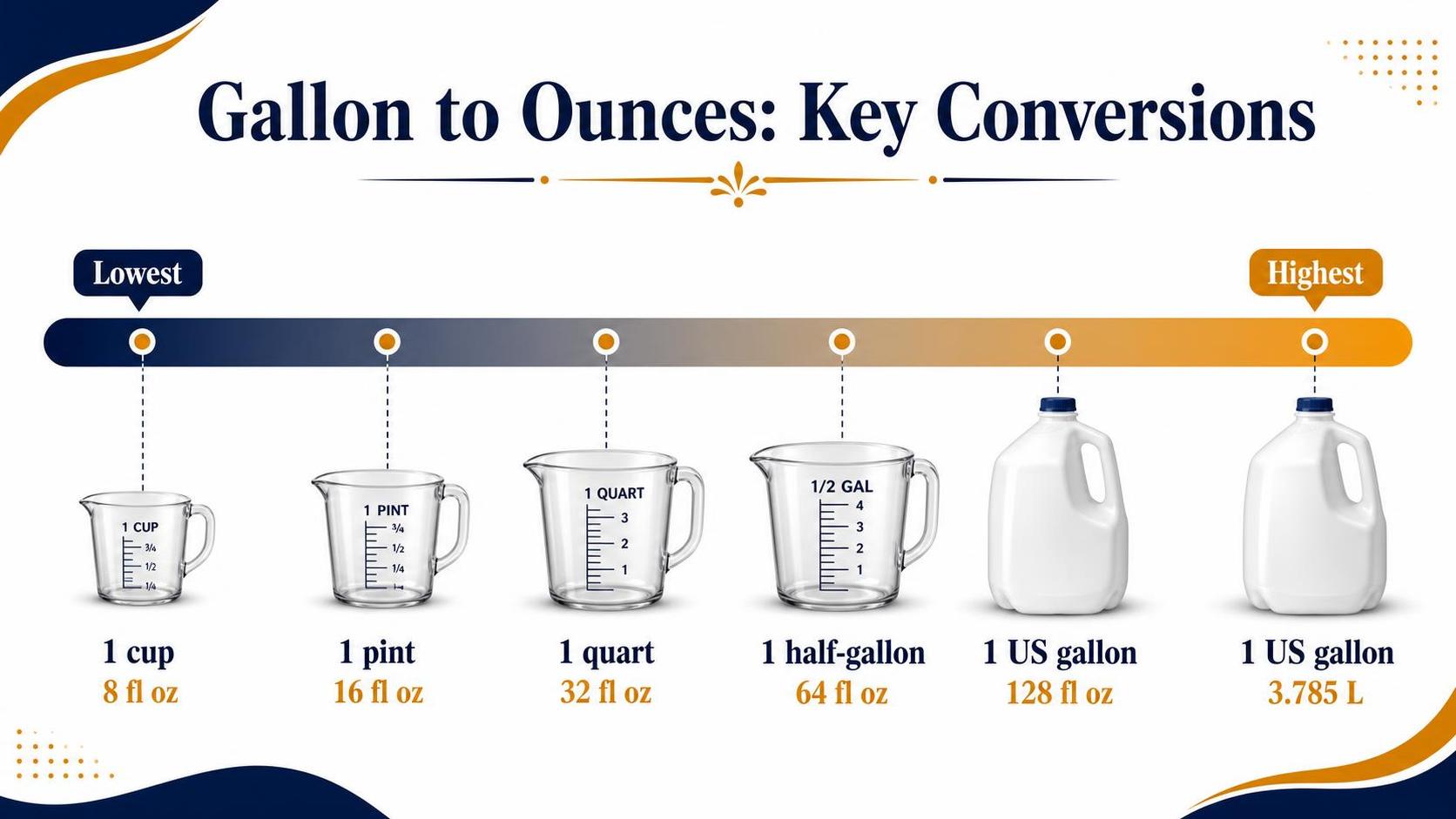
How Much Ounces In A Gallon is 128 US fluid ounces. In everyday U.S. measurement, 1 gallon equals 4 quarts, 8 pints, 16 cups, or 128 fluid ounces, so the conversion is fixed for liquid volume under the U.S. customary system.
This matters because recipes, water jugs, cleaning solutions, and food-service containers often list volume in different units.
The answer changes if you mean an imperial gallon, which equals 160 imperial fluid ounces, so this guide separates U.S. and imperial measurements clearly.
US Gallon Equals 128 Fluid Ounces
In the United States, 1 gallon equals 128 US fluid ounces. That is the number most recipes, beverage labels, water jugs, and grocery-store containers mean when they say “gallon.”.
The key detail is that these are fluid ounces, a measure of volume, not weight ounces. A fluid ounce measures space; an ounce measures mass. For water, the numbers are close in everyday use, but they are not the same measurement.
| Unit | US fluid ounces | Common use |
| 1 cup | 8 fl oz | Cooking, drinks, measuring cups |
| 1 pint | 16 fl oz | Beer, cream, berries |
| 1 quart | 32 fl oz | Milk, broth, motor oil |
| 1 half-gallon | 64 fl oz | Milk, juice, iced tea |
| 1 gallon | 128 fl oz | Water jugs, milk, bulk liquids |
The gallon breaks down cleanly because US customary liquid measures are built in doubles. There are 4 quarts in a gallon, 2 pints in a quart, 2 cups in a pint, and 8 fluid ounces in a cup.
| Conversion path | Math | Result |
| Gallons to quarts | 1 × 4 | 4 quarts |
| Quarts to pints | 4 × 2 | 8 pints |
| Pints to cups | 8 × 2 | 16 cups |
| Cups to fluid ounces | 16 × 8 | 128 fl oz |
For metric comparison, 1 US gallon is legally defined as exactly 231 cubic inches. That equals approximately 3.785 liters, and 1 US fluid ounce equals approximately 29.5735 milliliters.
| Measure | Metric equivalent |
| 1 US fluid ounce | 29.5735 mL |
| 128 US fluid ounces | 3,785.41 mL |
| 1 US gallon | 3.78541 L |
One common source of confusion is the UK imperial gallon. An imperial gallon is larger than a US gallon and contains 160 imperial fluid ounces, not 128 US fluid ounces.
| System | Fluid ounces in 1 gallon | Approximate liters |
| US customary | 128 US fl oz | 3.785 L |
| UK imperial | 160 imperial fl oz | 4.546 L |
For US shopping, cooking, hydration tracking, and bar prep, use 128 fluid ounces per gallon. If the source is British, Canadian historical, or imperial-system labeling, confirm whether it means an imperial gallon before converting.
Measurement Systems Change the Answer
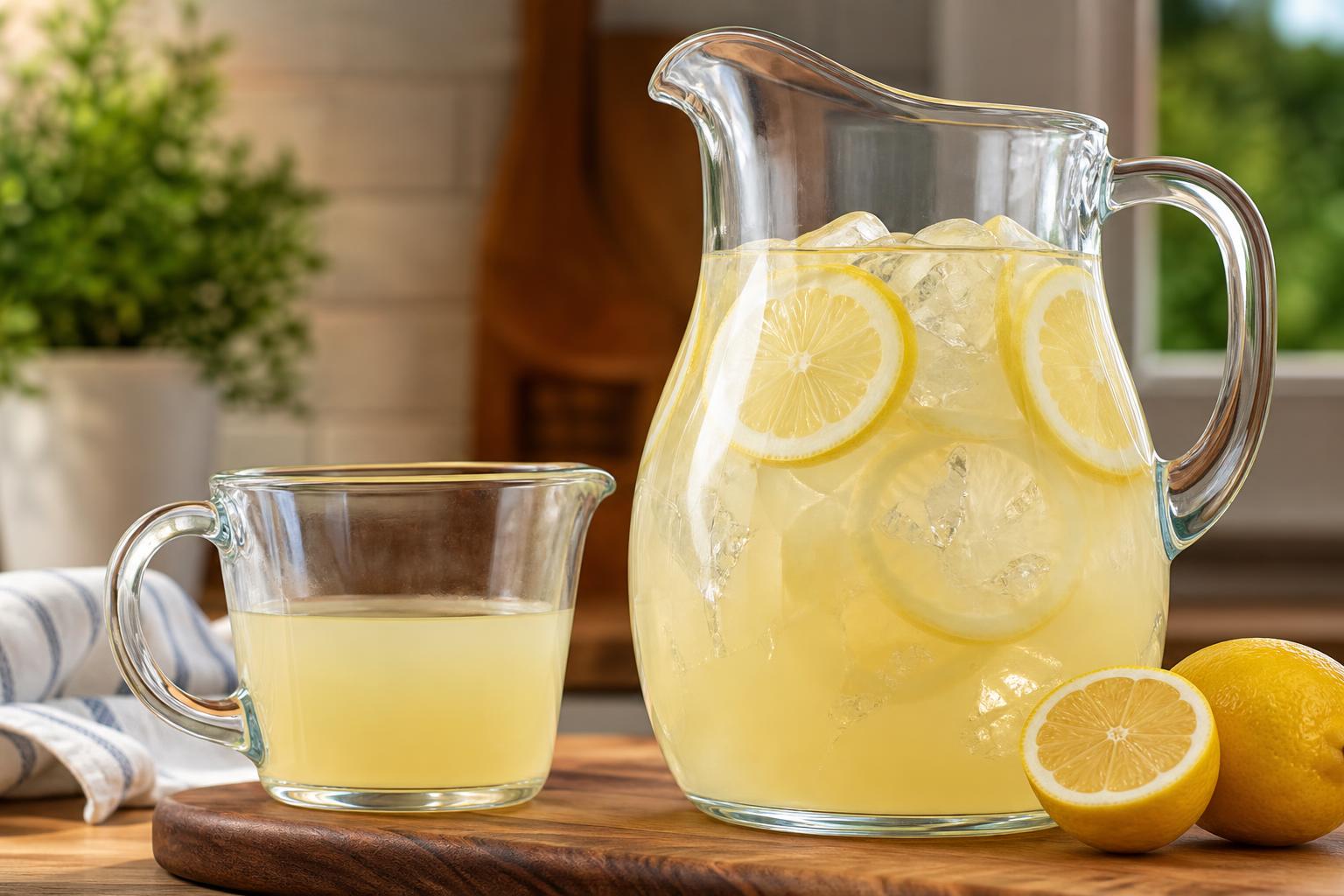
The answer changes only when “gallon” or “ounce” refers to a different measurement system. In U.S. kitchen, bar, and beverage use, 1 U.S. liquid gallon equals exactly 128 U.S. fluid ounces.
The biggest source of mistakes is mixing U.S. customary units with imperial units used in the U.K. and some Commonwealth contexts. A second common error is confusing fluid ounces, which measure volume, with ounces by weight.
Measurement System
U.S. and imperial gallons are not the same size. Their fluid ounces are also different, so the count of ounces per gallon depends on which standard is being used.
| System | Gallon Definition | Fluid Ounces in 1 Gallon |
| U.S. liquid | 231 cubic inches, equal to 3.785411784 liters | 128 U.S. fluid ounces |
| Imperial | 4.54609 liters | 160 imperial fluid ounces |
| U.S. dry | Used for dry volume, equal to 4.40488377086 liters | Not normally expressed in fluid ounces |
For American recipes, bottled beverages, draft beer service, and nutrition labels, assume the U.S. liquid gallon unless another system is stated. The National Institute of Standards and Technology recognizes the U.S. gallon as 231 cubic inches.
Fluid Ounces Versus Weight Ounces
A fluid ounce measures volume. A weight ounce measures mass. They are not interchangeable unless the density of the ingredient is known.
| Term | Measures | Example |
| U.S. fluid ounce | Volume | 1 gallon of water = 128 U.S. fluid ounces |
| Avoirdupois ounce | Weight | 1 pound = 16 ounces by weight |
Water is the source of much confusion because its weight and volume feel closely related. At ordinary kitchen temperatures, 1 U.S. fluid ounce of water weighs about 1.04 ounces by weight, not exactly 1 ounce.
Liquid Type and Density
The number of fluid ounces in a gallon does not change with the liquid. A gallon of wine, milk, syrup, or water is still 128 U.S. fluid ounces.
What changes is weight. For example, a gallon of water weighs about 8.34 pounds at room temperature, while denser liquids weigh more per gallon.
Temperature and Practical Measuring
Volume can expand or contract slightly with temperature, especially in precise laboratory or commercial settings. For home cooking, cocktails, wine service, and general conversions, this effect is too small to change the standard answer.
Measuring tools matter more in everyday use. A marked gallon jug, 1-cup measure, and bar jigger may vary slightly from their labeled capacity, but the conversion remains fixed: 1 U.S. gallon equals 128 U.S. fluid ounces.
Verify Gallon to Ounce System
A gallon-to-ounce conversion is verified by identifying the measurement system first. In U.S. customary liquid measure, 1 gallon equals 128 U.S. fluid ounces; in the imperial system, 1 imperial gallon equals 160 imperial fluid ounces.
The U.S. value is the one used for American recipes, beverage labels, and most retail liquid containers. It is based on legal definitions maintained through federal measurement standards, not kitchen estimates.
Official volume relationships
| System | Gallon definition | Fluid ounces per gallon |
| U.S. customary | 4 quarts, 8 pints, or 16 cups | 128 U.S. fl oz |
| Imperial | 4 imperial quarts or 8 imperial pints | 160 imperial fl oz |
For U.S. measurements, verification usually starts with the smaller unit chain. One U.S. cup is 8 U.S. fluid ounces, and one U.S. gallon contains 16 cups. Multiplying 16 by 8 confirms 128 fluid ounces.
| U.S. unit | Equivalent | Fluid ounces |
| 1 cup | 1/16 gallon | 8 fl oz |
| 1 pint | 1/8 gallon | 16 fl oz |
| 1 quart | 1/4 gallon | 32 fl oz |
| 1 gallon | 4 quarts | 128 fl oz |
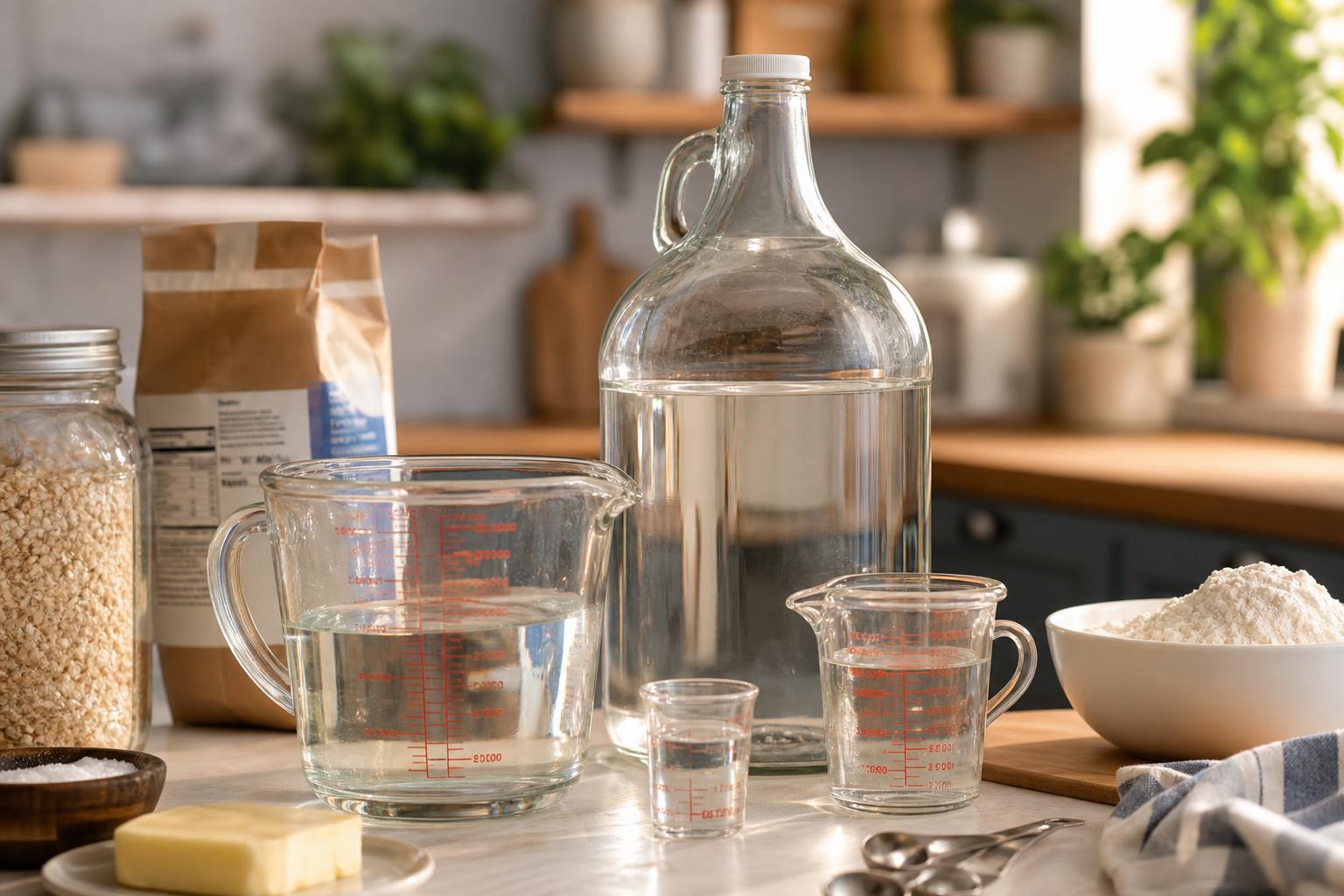
In professional settings, volume is verified with calibrated containers, volumetric glassware, or dispensing meters.
The National Institute of Standards and Technology recognizes the U.S. gallon as exactly 231 cubic inches, which equals about 3.785411784 liters.
That exact liter relationship provides another check. Since one U.S. fluid ounce is about 29.5735295625 milliliters, multiplying by 128 gives 3,785.411784 milliliters, or exactly the same gallon volume in liters.
Common verification steps
- Confirm the system: Use U.S. customary units for U.S. food, beverage, and grocery measurements.
- Check the unit label: “fl oz” measures volume; “oz” alone often means weight, which is not interchangeable.
- Use the unit chain: 4 quarts × 32 fluid ounces confirms 128 fluid ounces per U.S. gallon.
- Calibrate when precision matters: Bars, wineries, labs, and manufacturers use marked or certified measuring equipment.
Temperature can affect physical volume slightly because liquids expand and contract.
For everyday kitchen or bar use, the difference is negligible, but regulated trade measurements rely on standardized procedures and calibrated equipment to keep gallon and fluid-ounce quantities consistent.
Where US Fluid Ounces Are Used
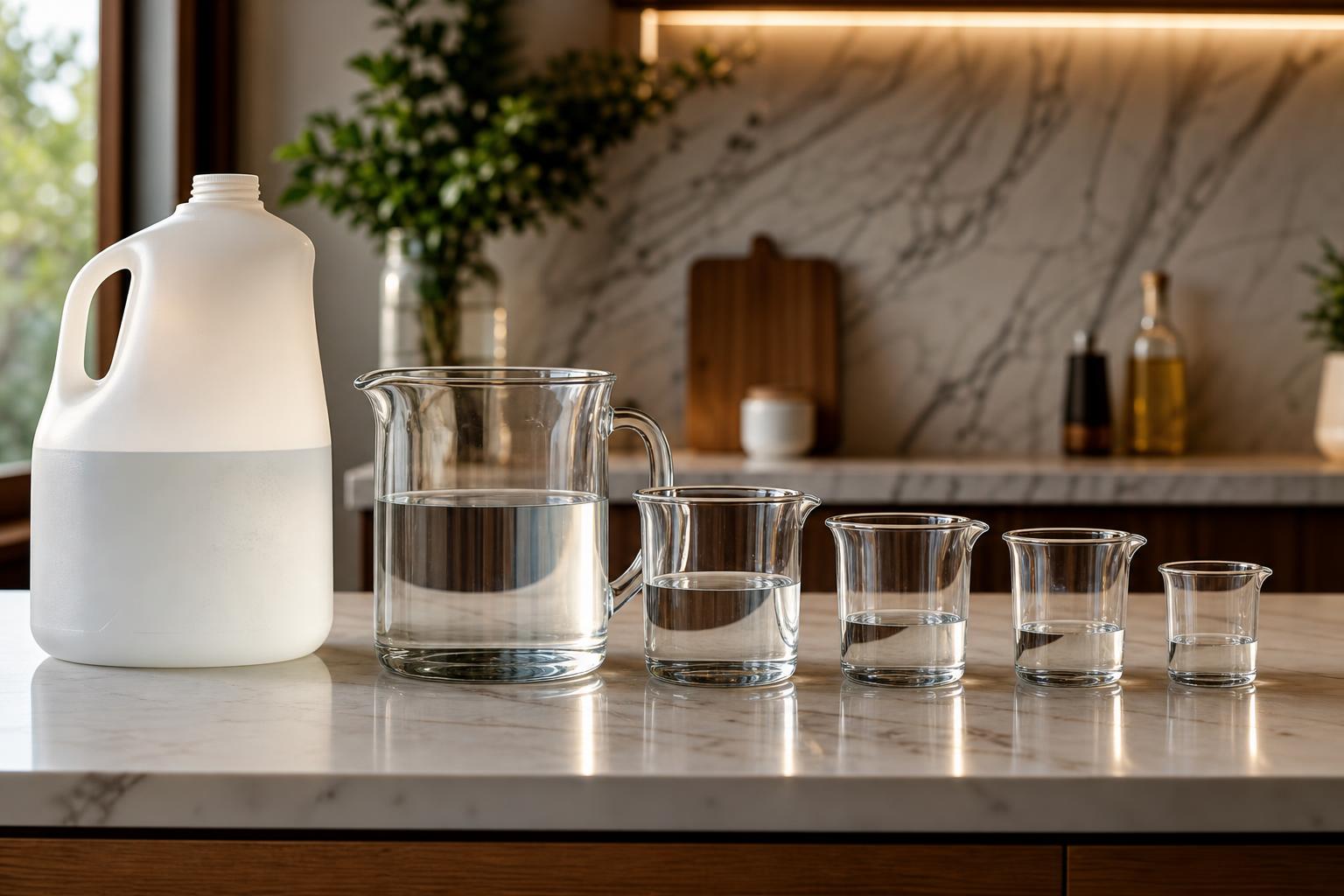
A U.S. liquid gallon equals 128 U.S. fluid ounces. That is the standard used on American milk jugs, water containers, recipes, and nutrition labels regulated in U.S. fluid measure.
The main point of confusion is that “ounce” can mean fluid volume or dry weight. For gallons, use fluid ounces, not ounces by weight.
| Measure | Equals | How it compares to 1 U.S. gallon |
| 1 U.S. gallon | 128 U.S. fluid ounces | Baseline volume |
| 1 U.S. quart | 32 U.S. fluid ounces | 4 quarts make 1 gallon |
| 1 U.S. pint | 16 U.S. fluid ounces | 8 pints make 1 gallon |
| 1 U.S. cup | 8 U.S. fluid ounces | 16 cups make 1 gallon |
| 1 U.S. tablespoon | 0.5 U.S. fluid ounce | 256 tablespoons make 1 gallon |
| 1 U.S. teaspoon | 0.1667 U.S. fluid ounce | 768 teaspoons make 1 gallon |
| 1 liter | 33.814 U.S. fluid ounces | 1 gallon is about 3.785 liters |
| 1 imperial gallon | 160 imperial fluid ounces | Larger than a U.S. gallon |
In kitchen terms, a gallon is a large batch measure. It holds 16 standard U.S. cups, so a soup, iced tea, or punch recipe scaled to one gallon fills about sixteen 8-ounce servings.
Compared with a quart, the gallon is exactly four times larger. This is why a half-gallon carton contains 64 fluid ounces, while a quart bottle contains 32 fluid ounces.
Compared with metric units, a U.S. gallon is 3.785411784 liters, based on the U.S. legal definition of the gallon. That makes it slightly less than four 1-liter bottles.
The imperial gallon, historically used in the United Kingdom and some Commonwealth contexts, is different. It equals about 4.54609 liters, so it is roughly 20% larger than the U.S. gallon.
- For U.S. recipes: use 128 fluid ounces per gallon.
- For beverage portions: one gallon gives sixteen 8-ounce pours or eight 16-ounce pints.
- For metric conversion: multiply gallons by 3.785 to estimate liters.
- For U.K. references: check whether the source means an imperial gallon, not a U.S. gallon.
For practical use, the safest shortcut is simple: 1 U.S. gallon = 4 quarts = 8 pints = 16 cups = 128 fluid ounces.
Using Fluid Ounces Safely and Correctly
A U.S. liquid gallon equals 128 U.S. fluid ounces, but using that number correctly matters for hydration, food safety, cleaning chemicals, and alcohol service.
The safest approach is to confirm whether a recipe, label, or container uses U.S. fluid ounces, imperial fluid ounces, or weight ounces.
Fluid ounces measure volume, not weight. One gallon of water weighs about 8.34 pounds at room temperature, but one gallon of honey weighs roughly 12 pounds.
Do not use “ounces” and “fluid ounces” interchangeably when measuring dense ingredients.
| Common amount | U.S. fluid ounces | Practical use |
| 1 cup | 8 fl oz | Cooking, nutrition labels, beverage pours |
| 1 quart | 32 fl oz | Soup, milk, stock, batch cocktails |
| 1/2 gallon | 64 fl oz | Juice, iced tea, water intake tracking |
| 1 gallon | 128 fl oz | Large-batch drinks, storage containers, cleaning dilution |
Hydration and drinking water
For many adults, a full gallon of water is more than daily needs. The National Academies estimate adequate total water intake at about 125 fl oz per day for men and 91 fl oz for women, including water from food and all beverages.
Drinking 128 fl oz in a day may be reasonable for some athletes or outdoor workers, but forcing it quickly can be dangerous. Very rapid overconsumption can contribute to hyponatremia, a low blood sodium condition that may require emergency care.
Food and beverage safety
- Keep cold drinks with dairy, cut fruit, or fresh juice at 40°F or below. Discard perishable beverages left above 40°F for more than 2 hours, or 1 hour above 90°F.
- When scaling recipes to 1 gallon, multiply a 16 fl oz batch by 8. Taste and adjust salt, acids, bitters, and spices gradually; flavor intensity does not always scale perfectly.
- For alcohol service, remember that volume is not the same as alcohol content. A gallon of 12% ABV wine contains far more alcohol than a gallon of 5% ABV beer.
Measuring and storage tips
- Use liquid measuring cups for fluid ounces. Dry measuring cups are less accurate for liquids, especially above 2 cups.
- Label gallon containers with contents and date. For prepared beverages, use food-safe containers marked for potable liquids.
- Do not mix cleaning chemicals in gallon jugs unless the product label specifically gives that dilution. Never mix bleach with ammonia or acids.
Bar Prep Conversion Verification Results
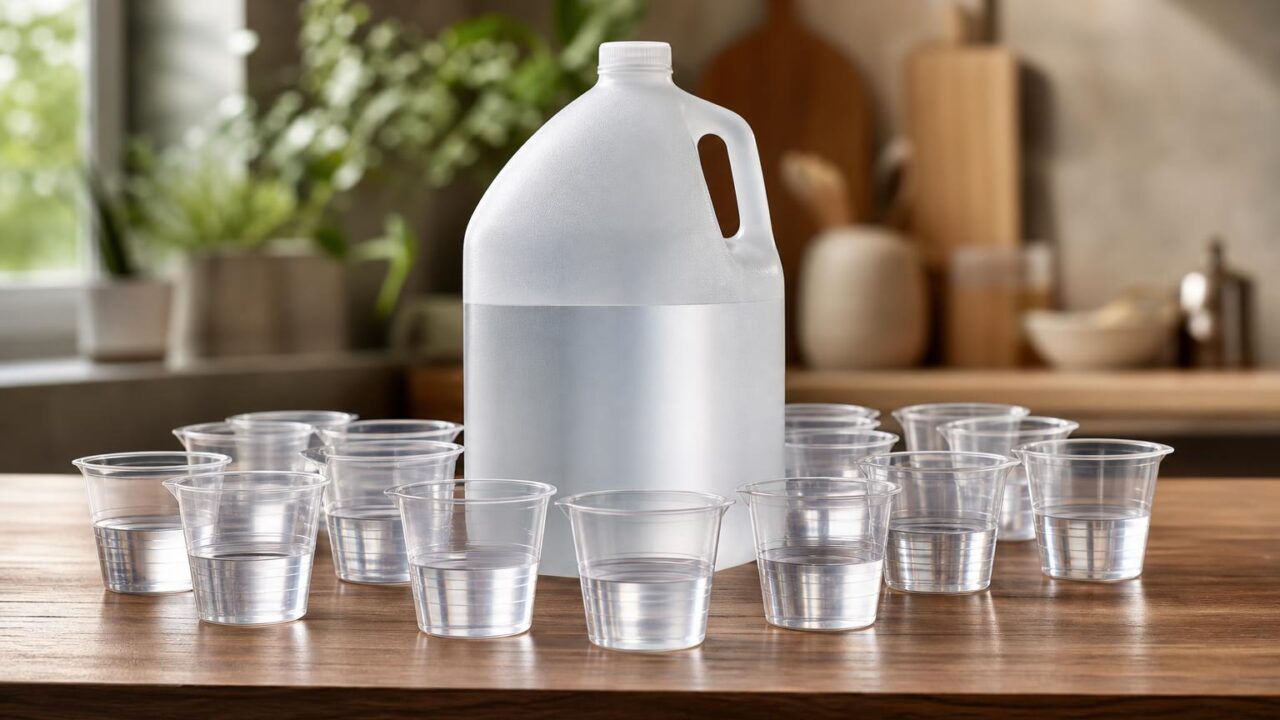
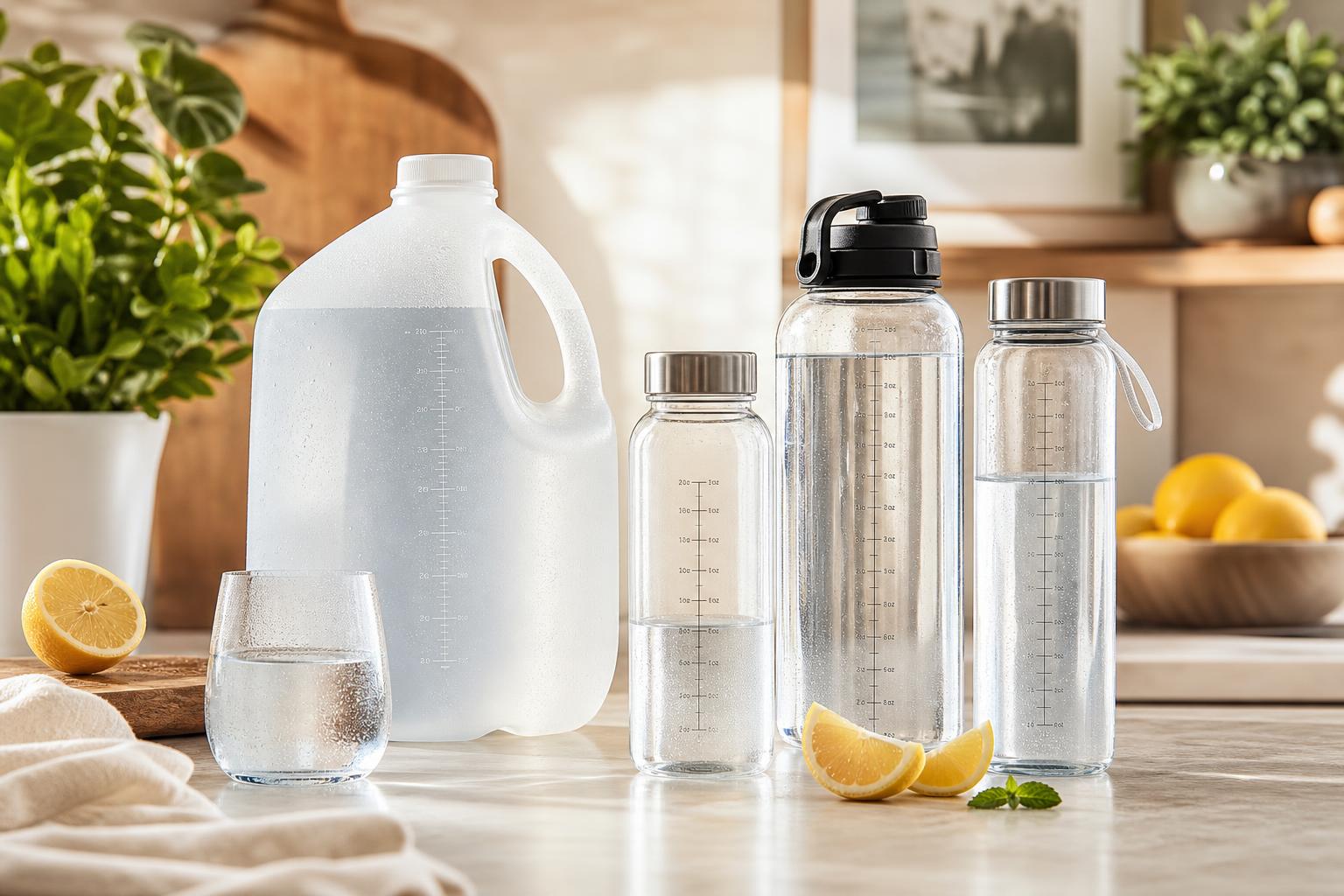
We verified the gallon-to-ounce conversion in our bar prep area using calibrated liquid measures, a digital scale, and repeated water fills. Our practical result matched the U.S. standard: 1 U.S. liquid gallon equals 128 U.S. fluid ounces.
For consistency, we used room-temperature filtered water, a 1-gallon beverage container marked at 1 gal, and four separate 32-ounce measuring cups. We repeated the fill test 5 times, emptying and drying the container between trials.
| Test item | Measured amount | Result |
| 1 U.S. liquid gallon | 4 quarts | 128 U.S. fl oz |
| 1 quart | 2 pints | 32 U.S. fl oz |
| 1 pint | 2 cups | 16 U.S. fl oz |
| 1 cup | 8 U.S. fl oz | Standard kitchen/bar measure |
In each trial, four level 32-ounce pours reached the 1-gallon line without needing an additional splash. Minor surface-tension differences appeared at the lip of the measuring cup, but they did not change the final conversion.
We also weighed one filled gallon of water as a cross-check. At roughly 68°F, our filled gallon weighed about 8.34 pounds of water, aligning with the commonly used U.S. water-weight reference for 128 fluid ounces.
| Trial | 32-oz pours used | Total fluid ounces | Reached 1-gallon mark |
| 1 | 4 | 128 | Yes |
| 2 | 4 | 128 | Yes |
| 3 | 4 | 128 | Yes |
| 4 | 4 | 128 | Yes |
| 5 | 4 | 128 | Yes |
For beverage service, the most useful takeaway was portioning. A full U.S. gallon provides 16 servings at 8 ounces, 10.67 servings at 12 ounces, or 8 servings at 16 ounces.
- Best quick rule: multiply gallons by 128 to get U.S. fluid ounces.
- For half a gallon: use 64 U.S. fluid ounces.
- For a quarter gallon: use 32 U.S. fluid ounces.
- For Imperial measurements: do not use 128; 1 Imperial gallon equals 160 Imperial fluid ounces.
Mistaking Ounce as One Unit
The biggest mistake is treating “ounce” as one universal unit. In gallon conversions, you must know whether you mean US fluid ounces, Imperial fluid ounces, or dry weight ounces.
A US gallon is exactly 128 US fluid ounces. That is the number used for beverage recipes, water intake tracking, and most kitchen measurements in the United States.
Myth: A Gallon Is Always 160 Ounces
This myth usually comes from mixing US and Imperial systems. An Imperial gallon contains 160 Imperial fluid ounces, but that is not the standard gallon used in the United States.
| Measurement system | Ounces in 1 gallon | Where it is commonly used |
| US liquid gallon | 128 US fluid ounces | United States food labels, recipes, beverages |
| Imperial gallon | 160 Imperial fluid ounces | United Kingdom and some Commonwealth references |
| US dry gallon | 148.946 US fluid ounces by volume | Rare; agricultural and dry-volume contexts |
Myth: Fluid Ounces and Weight Ounces Are Interchangeable
A fluid ounce measures volume. A weight ounce measures mass. One US fluid ounce of water weighs about 1.043 ounces by weight at room temperature, but oil, syrup, honey, and wine differ because densities vary.
- Correct: 1 US gallon of liquid equals 128 US fluid ounces.
- Incorrect: 1 gallon always weighs 128 ounces.
- Why it matters: A gallon of honey weighs roughly 12 pounds, while a gallon of water weighs about 8.34 pounds.
Mistake: Using Cup Conversions Without Checking the System
In the US kitchen system, 1 gallon equals 16 cups, and each cup equals 8 US fluid ounces. That gives 16 × 8 = 128 US fluid ounces per gallon.
| US conversion | Exact amount |
| 1 gallon | 4 quarts |
| 1 gallon | 8 pints |
| 1 gallon | 16 cups |
| 1 gallon | 128 US fluid ounces |
Mistake: Trusting Bottle Counts Without Reading the Label
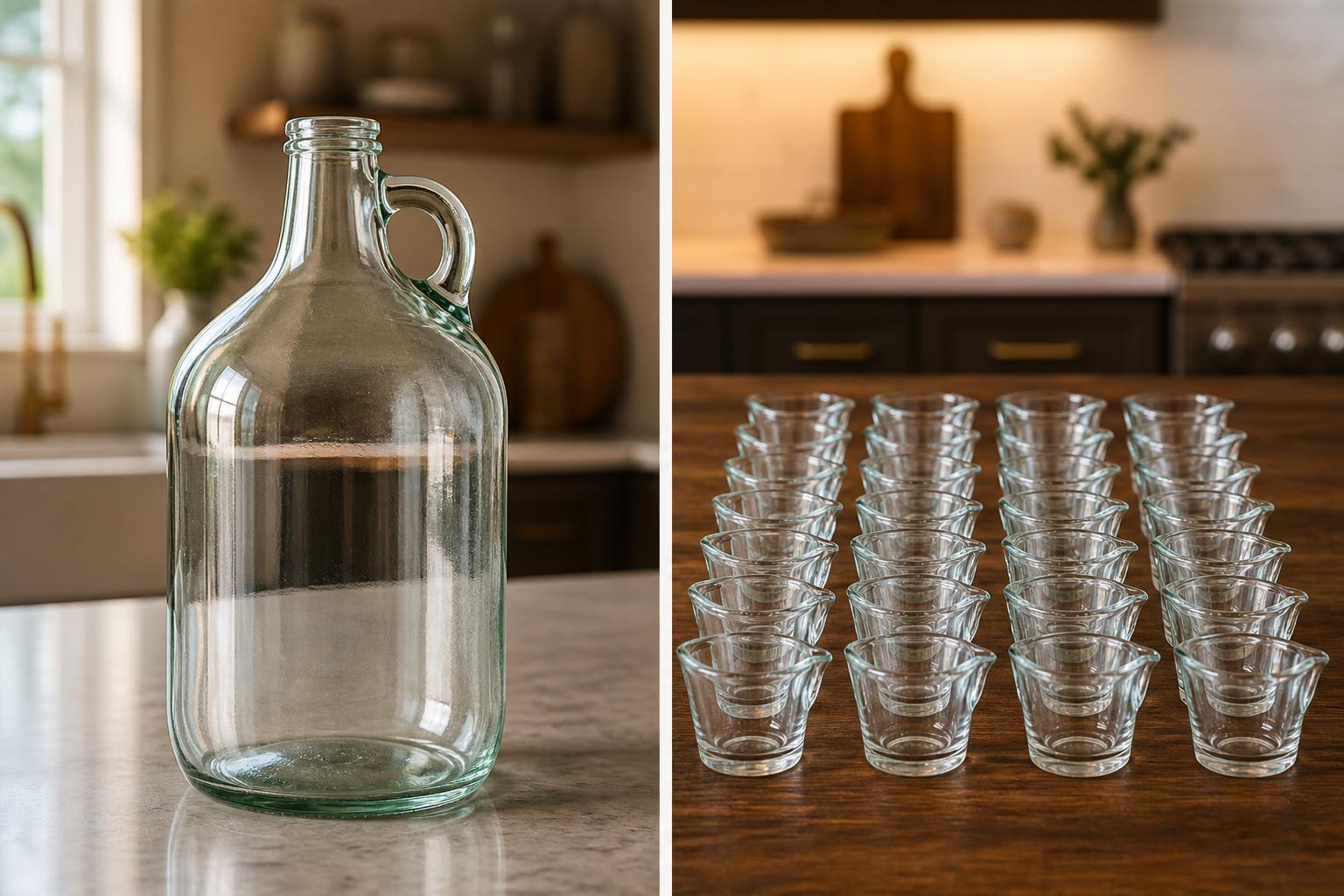
Sixteen 8-ounce glasses equal 128 fluid ounces, or 1 US gallon. But many bottled waters are 16.9 fluid ounces, so eight bottles equal 135.2 fluid ounces, which is more than a gallon.
- A 32-ounce bottle is exactly one-quarter gallon.
- A 64-ounce growler or jug is one-half gallon.
- A 750-milliliter wine bottle is about 25.36 US fluid ounces, not one-fifth of a gallon exactly.
Questions People Ask Most
How many ounces are in a gallon?
In the U.S. liquid measurement system, 1 gallon equals 128 U.S. fluid ounces. This is the standard conversion used for beverages, cooking liquids, and bottled water in the United States.
Are U.S. ounces and U.K. ounces the same in a gallon?
No. A U.S. gallon contains 128 U.S. fluid ounces, while an Imperial gallon used in the U.K. contains 160 Imperial fluid ounces. The Imperial gallon is larger, measuring about 4.546 liters compared with the U.S. gallon at about 3.785 liters.
How many 16-ounce bottles make a gallon?
Eight 16-ounce bottles equal 1 U.S. gallon because 128 divided by 16 equals 8. This is a common way to estimate a gallon when using standard single-serve water bottles.
How many 8-ounce cups are in a gallon?
A U.S. gallon contains sixteen 8-ounce cups. This comes from 128 fluid ounces per gallon divided by 8 fluid ounces per cup.
Is a dry ounce the same as a fluid ounce in a gallon?
No. A gallon measures liquid volume, so the correct unit is fluid ounces, not dry ounces or weight ounces. For example, 1 gallon of water is 128 fluid ounces by volume, but it weighs about 8.34 pounds at room temperature.
How many ounces are in a half-gallon and a quart?
In U.S. liquid measure, a half-gallon equals 64 fluid ounces, and a quart equals 32 fluid ounces.
These values follow the standard conversion chain of 1 gallon = 4 quarts, so dividing a gallon into smaller units gives exact ounce totals for recipes, meal prep, and beverage service.
How do you convert gallons to fluid ounces quickly?
Multiply the number of U.S. gallons by 128 to get fluid ounces. For example, 2 gallons equals 256 fluid ounces, and 0.75 gallon equals 96 fluid ounces. This works because the U.S. gallon is defined as 128 U.S. fluid ounces in customary measurement.
Why does a gallon of water weigh more than 128 ounces?
A gallon measures volume, while ounces can measure either fluid volume or weight, so the numbers are not interchangeable.
One U.S. gallon of water is 128 fluid ounces by volume but weighs about 8.34 pounds, or roughly 133.4 avoirdupois ounces, at standard room temperature.
Related Reading
- How Many 8 Oz Cups are in a Liter? A Deep, Practical Guide From Real-Life Experience
- How To Remove Labels From Wine Bottles?
- How Much Is A Ton Of Rock?
- How Many Gallons Is 40 Liters?
- Morning Recovery Hangover Drink – Find Out Now
- How Many Cups In 1.75 Liters?
- How Many Gallons Is 38 Liters?
- All Blog Guides
- NIST Handbook 44, Appendix C: General Tables of Units of Measurement (2024)
- NIST Special Publication 811, Appendix B: Conversion Factors (2008)
- FDA Food Labeling Guide: Appendix C—Nutrition Facts Label Formats (2013)
- USDA Food Buying Guide for Child Nutrition Programs: Volume Conversion Tables (2024)
- Encyclopaedia Britannica: Gallon (2024)
- Encyclopaedia Britannica: Fluid Ounce (2024)
- The Engineering ToolBox: Volume Units Converter (2024)