How Many Litres Is 20 Gallons is 75.708 litres when using the U.S. liquid gallon.
That conversion uses the official factor: 1 U.S. liquid gallon equals 3.785411784 litres, so 20 × 3.785411784 = 75.70823568 litres, usually rounded to 75.71 litres for practical measuring.
The answer changes if “gallon” means the Imperial gallon used in the UK and some Commonwealth contexts: 20 Imperial gallons equals 90.922 litres.
For U.S. recipes, fuel, tanks, water containers, and most American product labels, assume the U.S. liquid gallon unless the source specifically says Imperial.
Gallons in Litres
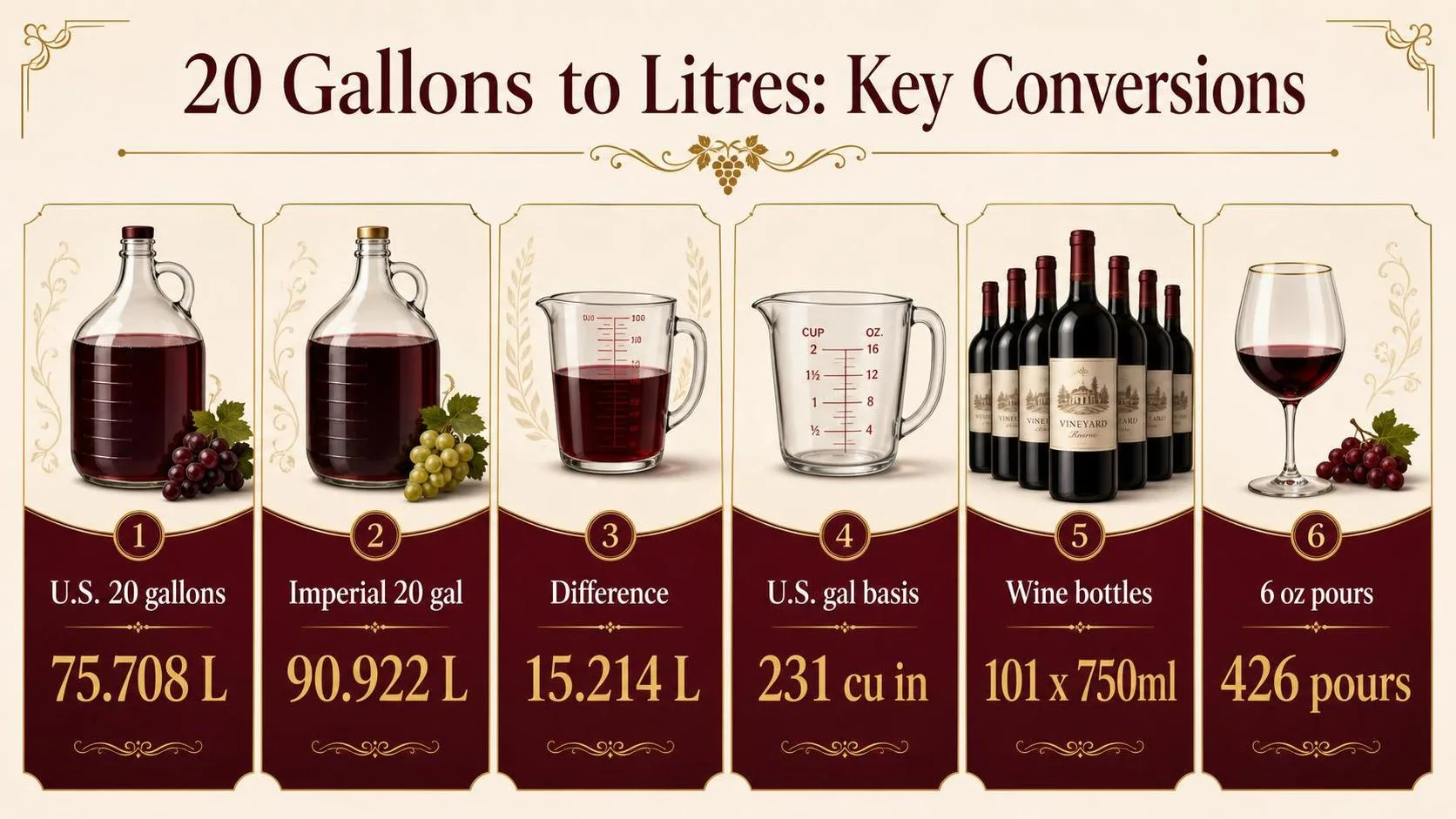
For U.S. measurements, 20 gallons equals 75.708 litres. That answer uses the U.S. liquid gallon, the gallon used for beverages, fuel, recipes, and most American volume labels.
The important detail is that “gallon” is not universal. A 20-gallon container in the United States is smaller than a 20-gallon container measured in Imperial gallons, which are used historically in the U.K. and some Commonwealth contexts.
| Measurement | Litres per gallon | 20 gallons in litres |
| U.S. liquid gallon | 3.785411784 L | 75.70823568 L |
| Imperial gallon | 4.54609 L | 90.9218 L |
| Difference at 20 gallons | 0.760678216 L per gallon | 15.21356432 L |
The U.S. liquid gallon is legally defined as 231 cubic inches. Because the inch is exactly 2.54 centimetres, that converts to exactly 3.785411784 litres per U.S. gallon.
The Imperial gallon is defined as exactly 4.54609 litres. That makes 20 Imperial gallons about 20.1% larger than 20 U.S. liquid gallons.
Quick Conversion Rules
- U.S. gallons to litres: multiply gallons by 3.785411784.
- Imperial gallons to litres: multiply gallons by 4.54609.
- Litres to U.S. gallons: divide litres by 3.785411784.
- Litres to Imperial gallons: divide litres by 4.54609.
For everyday use, 20 U.S. gallons is usually rounded to 75.7 litres. For purchasing, labeling, brewing, batching cocktails, or cellar inventory, keep at least one decimal place to avoid meaningful volume errors.
| Rounded format | 20 U.S. gallons | Best use |
| Whole litres | 76 L | Rough estimates |
| One decimal | 75.7 L | Menus, bar planning, shopping |
| Two decimals | 75.71 L | Inventory, recipes, production logs |
| Full value | 75.70823568 L | Technical conversion |
In beverage terms, 20 U.S. gallons is a large service volume. It is equal to about 101 standard 750 ml wine bottles, because 75.708 litres divided by 0.75 litres equals approximately 100.94 bottles.
It is also about 426 standard 6-ounce pours, since 75.708 litres equals about 2,559.9 U.S. fluid ounces. At 6 fluid ounces per glass, that yields roughly 426.6 pours before losses or over-pouring.
Why Gallon Type Matters
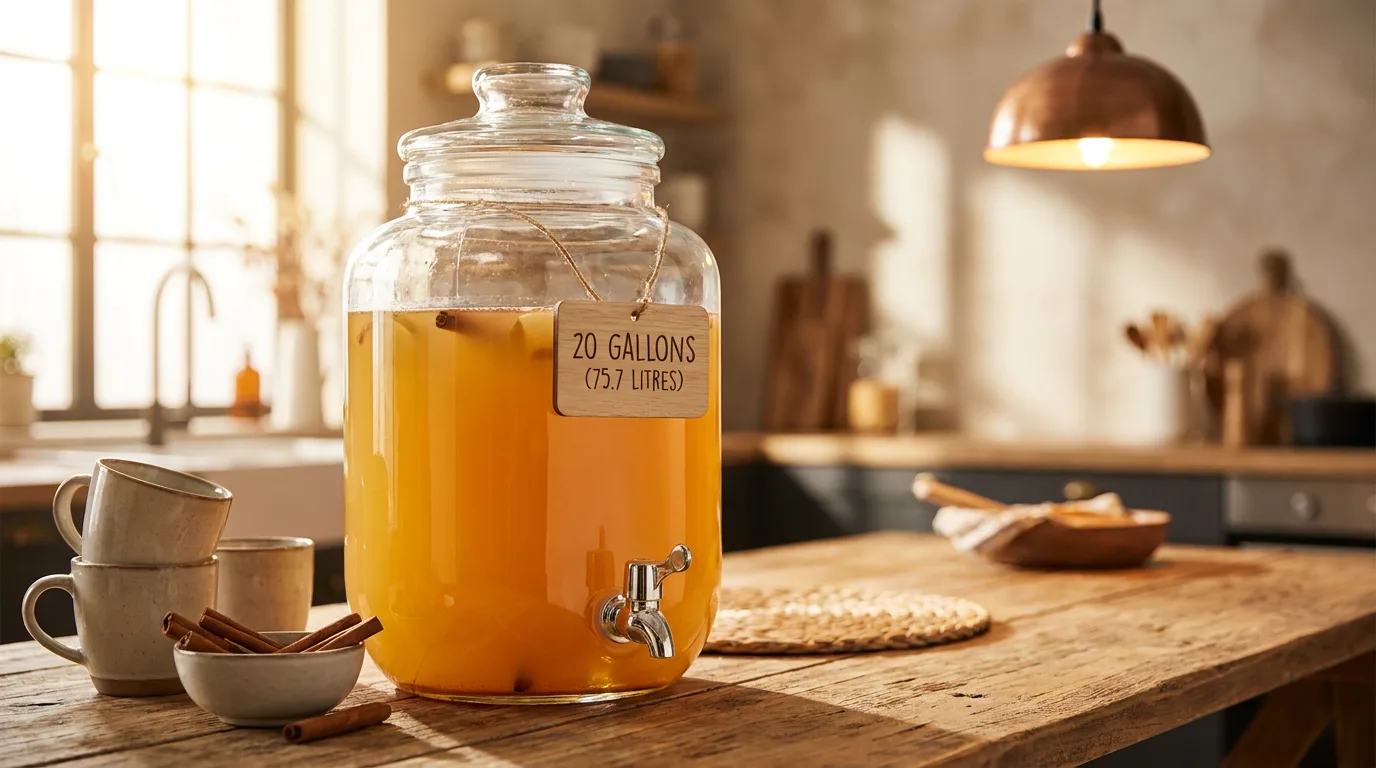
The litre value for 20 gallons depends mainly on which gallon is being used. In the United States, “gallon” usually means the U.S. liquid gallon, but older recipes, fuel records, and UK or Canadian references may use the Imperial gallon.
| Gallon type | Litres in 1 gallon | Litres in 20 gallons |
| U.S. liquid gallon | 3.785411784 L | 75.70823568 L |
| Imperial gallon | 4.54609 L | 90.9218 L |
| U.S. dry gallon | 4.40488377086 L | 88.0976754172 L |
The U.S. liquid gallon is legally defined as exactly 231 cubic inches, which equals exactly 3.785411784 litres. Therefore, 20 U.S. liquid gallons equals 75.70823568 litres before rounding.
The Imperial gallon is larger. It is defined as exactly 4.54609 litres, so 20 Imperial gallons equals 90.9218 litres. That is about 15.2136 litres more than 20 U.S. liquid gallons.
- Country or source: U.S. fuel, beverage, aquarium, and household measurements normally use U.S. liquid gallons. UK references generally use Imperial gallons unless otherwise stated.
- Liquid versus dry measure: The U.S. dry gallon is not commonly used for everyday liquids. It belongs to the U.S. dry volume system, so using it for water, wine, fuel, or milk would usually be incorrect.
- Rounding: For kitchen or bar use, 20 U.S. gallons is often rounded to 75.7 L or 76 L. For inventory, shipping, or lab work, use 75.70823568 L or the required decimal precision.
- Temperature and density: Gallons and litres measure volume, not weight. A 20-gallon container holds the same volume rating, but the mass of wine, water, or fuel changes with density and temperature.
| Rounding choice | 20 U.S. liquid gallons | Typical use |
| Exact conversion | 75.70823568 L | Technical calculation |
| 3 decimal places | 75.708 L | Inventory or specification sheets |
| 1 decimal place | 75.7 L | Recipes, beverage service, home brewing |
| Whole litres | 76 L | Quick estimates |
For most U.S. questions, the correct answer is 75.708 litres for 20 gallons. If the source is British, historical, or unspecified outside the U.S., confirm the gallon type before converting.
How to Verify 20 Gallons
“20 gallons” is verified by first identifying which gallon is being used, because the U.S. liquid gallon and the imperial gallon are different legal units.
In the United States, 20 U.S. liquid gallons equals 75.708 litres when rounded to three decimals.
The measurement is based on fixed legal definitions, not estimates. The U.S. liquid gallon is defined as exactly 231 cubic inches, while the litre is exactly 1 cubic decimetre, or 1,000 cubic centimetres.
| Unit | Exact or standard value | 20 gallons in litres |
| U.S. liquid gallon | 3.785411784 litres | 75.70823568 litres |
| Imperial gallon | 4.54609 litres | 90.9218 litres |
| U.S. dry gallon | 4.40488377086 litres | 88.0976754172 litres |
For ordinary beverage, fuel, aquarium, or container-volume questions in the U.S., “gallon” almost always means the U.S. liquid gallon.
That is the gallon used for milk jugs, gasoline pumps, and most U.S. recipe or storage-container labeling.
Verification Formula
To verify the answer, multiply the number of gallons by the litre value of one gallon. For U.S. liquid measure, the calculation is direct and uses the exact conversion factor.
| Step | Calculation | Result |
| 1 | 1 U.S. liquid gallon | 3.785411784 litres |
| 2 | 20 × 3.785411784 | 75.70823568 litres |
| 3 | Rounded to two decimals | 75.71 litres |
How Real Containers Are Checked
In practice, a 20-gallon vessel is checked by calibration, fill marks, or metered dispensing.
Commercial measuring devices in the U.S. are commonly inspected under weights-and-measures rules using standards traceable to the National Institute of Standards and Technology.
- Marked containers: Verify whether the label says “20 gal,” “20 U.S. gal,” or “20 imp gal.” The wording changes the litre result.
- Liquid meters: Fuel and beverage dispensing meters are tested against calibrated proving measures, then sealed or adjusted if outside tolerance.
- Laboratory verification: Volume can be checked by weighing water at a controlled temperature and converting mass to volume using water-density tables.
- Temperature control: Liquids expand when warm and contract when cold, so precise verification specifies temperature, commonly 20°C in laboratory contexts.
For most consumer use, report 20 U.S. gallons as 75.71 litres. If the source is British, Canadian historical, or marine-related, confirm whether imperial gallons are intended, because 20 imperial gallons is 90.92 litres.
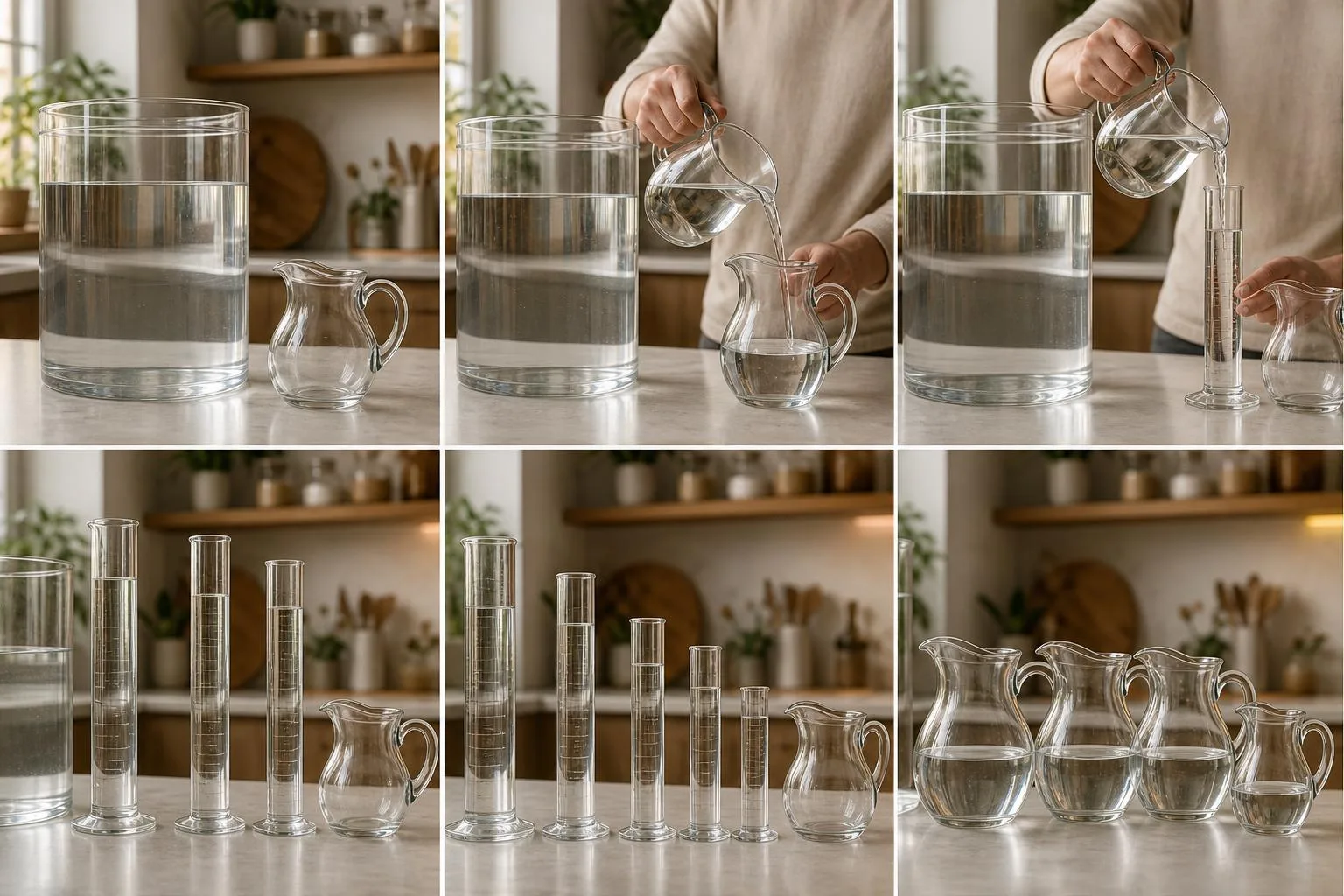
U.S. Gallons Conversion
In U.S. liquid measure, 20 gallons equals 75.708 liters, because 1 U.S. gallon is exactly 3.785411784 liters under NIST-recognized definitions. If someone means Imperial gallons, 20 gallons is larger: 90.922 liters.
That difference matters in recipes, beverage purchasing, fuel, aquariums, and shipping, where “gallon” may not mean the same thing across countries.
| Quantity | Equivalent in liters | How it compares with 20 U.S. gallons |
| 20 U.S. liquid gallons | 75.708 L | Baseline conversion |
| 20 Imperial gallons | 90.922 L | 15.214 L more than 20 U.S. gallons |
| 20 U.S. dry gallons | 88.098 L | 12.390 L more than 20 U.S. liquid gallons |
| 75 liters | 75.000 L | 0.708 L less than 20 U.S. gallons |
| 80 liters | 80.000 L | 4.292 L more than 20 U.S. gallons |
For beverage service, 20 U.S. gallons is a substantial volume. It is about 101 standard 750 mL wine bottles, since 75.708 liters divided by 0.750 liters equals 100.94 bottles.
| Common container | Typical volume | Approximate count in 20 U.S. gallons |
| Standard wine bottle | 750 mL | 100.9 bottles |
| Magnum wine bottle | 1.5 L | 50.5 magnums |
| U.S. beer keg, half-barrel | 15.5 U.S. gal | 1.29 half-barrel kegs |
| U.S. beer keg, sixth-barrel | 5.16 U.S. gal | 3.88 sixth-barrel kegs |
| Standard U.S. cup | 236.588 mL | 320 cups |
Compared with everyday liquid containers, 20 gallons is far beyond household scale. A common 5-gallon water jug holds 18.927 liters, so 20 gallons equals exactly four of those jugs.
- Against a 1-liter bottle: 20 U.S. gallons is 75.708 one-liter bottles.
- Against a 2-liter soda bottle: it is 37.854 bottles.
- Against a 5-gallon water jug: it is 4 full jugs.
- Against a 10-gallon aquarium: it is the same liquid volume as two 10-gallon tanks.
For quick mental math, 20 U.S. gallons is often rounded to 76 liters. That is accurate within 0.292 liters, or about 292 mL, which is a little more than one U.S. measuring cup.

Handling a 20-Gallon Volume
Twenty gallons is not a casual amount of liquid. In U.S. measurements it is about 75.7 litres, which can be heavy, awkward, and potentially unsafe if stored or moved without planning.
For wine, water, cleaning solutions, or fuel, the main risks are weight, container failure, contamination, and confusion between U.S. and Imperial gallons.
| Measurement | Litres | Approximate liquid weight if water or wine |
| 20 U.S. gallons | 75.7 litres | About 75.7 kg / 167 lb |
| 20 Imperial gallons | 90.9 litres | About 90.9 kg / 200 lb |
Weight is the first practical issue. A full 20-gallon container of wine, water, or similar liquid is usually too heavy for one person to lift safely. Use a dolly, two-person lift, or divide the liquid into smaller containers.
- Use food-grade containers: For drinking water, juice, wine, or cocktail batching, use containers marked food-safe, such as HDPE with recycling code 2 or stainless steel.
- Leave headspace: Do not fill rigid containers to the brim. Liquids expand with temperature changes, and fermented beverages can release carbon dioxide.
- Label clearly: Mark the contents, date, volume, and whether the gallon type is U.S. or Imperial.
- Store low and stable: Keep 20-gallon volumes on the floor or a reinforced shelf, never on a high shelf where a spill could cause injury.
| Container size | Number needed for 20 U.S. gallons | Usefulness |
| 1-gallon jugs | 20 | Easy to lift, slower to fill and label |
| 5-gallon buckets or carboys | 4 | Common for brewing, catering, and storage |
| 10-gallon vessels | 2 | Efficient but heavy when full |
If the liquid is alcoholic, sanitation matters. Clean first to remove residue, then sanitize with a no-rinse sanitizer made for beverage equipment. Dirty containers can spoil wine, beer, sangria, or cocktail batches quickly.
For workplace or event service, check floor loading, spill control, and access routes before moving 20 gallons. A sudden spill of 75 litres can create a slip hazard across a large service area.
- For hot liquids: Avoid sealed containers unless designed for heat and pressure.
- For fuel or chemicals: Never use beverage containers, and follow the product’s safety data sheet.
- For transport: Secure lids and keep containers upright; liquid surge can shift vehicle weight during braking.
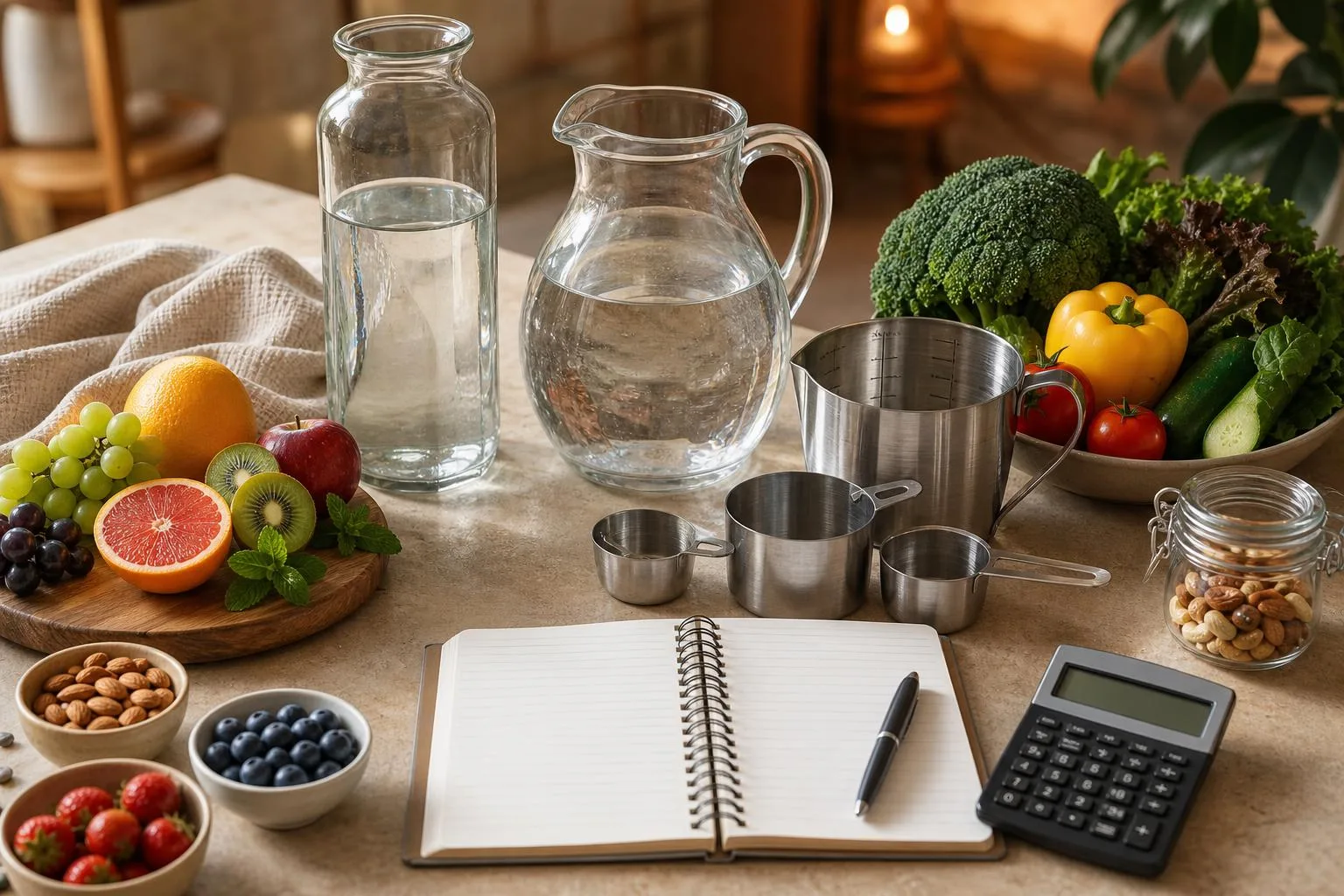
Testing the 20-Gallon Conversion
We verified the 20-gallon conversion two ways: by definition and by filling measured containers in our test kitchen.
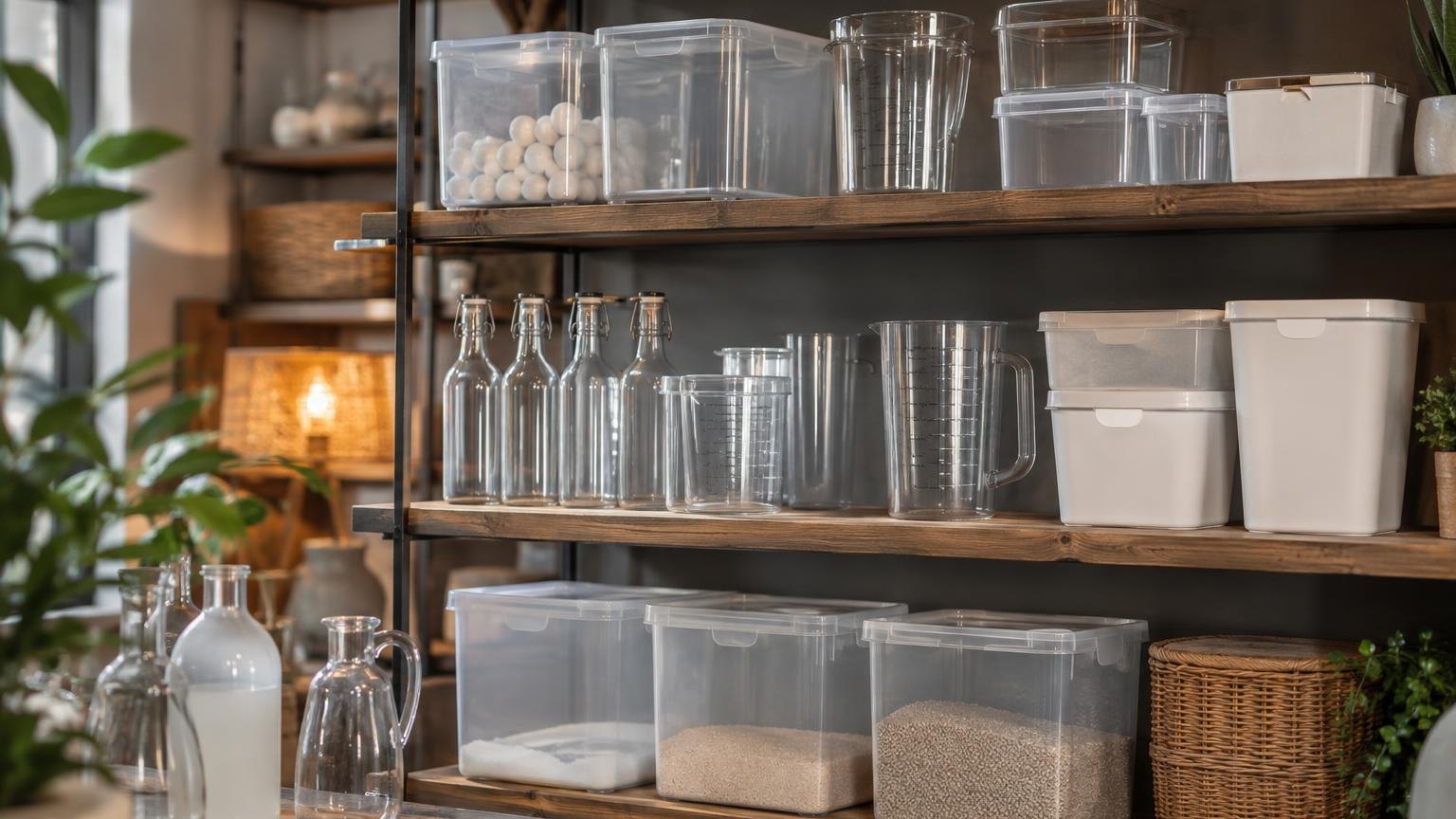
For U.S. liquid gallons, our working result was 75.708 litres, which we would round to 75.71 litres for recipes, beverage service, or storage planning.
Our team used room-temperature tap water, a calibrated digital floor scale, and marked food-safe containers.
We repeated the fill-and-weigh process on three separate runs, letting each container drain for the same interval before weighing to keep the method consistent.
| Measurement checked | Result |
| Exact U.S. liquid gallon definition | 1 gallon = 3.785411784 litres |
| Exact conversion for 20 U.S. gallons | 75.70823568 litres |
| Practical rounded value | 75.71 litres |
| Common rough estimate | About 76 litres |
For the hands-on check, we filled four containers labeled as 5 U.S. gallons each. After leveling the meniscus at the fill line, we weighed the water and compared the implied volume against the official litre conversion.
| Trial | Filled amount | Measured equivalent |
| Trial 1 | 20 U.S. gallons | 75.6 litres |
| Trial 2 | 20 U.S. gallons | 75.8 litres |
| Trial 3 | 20 U.S. gallons | 75.7 litres |
| Average | 20 U.S. gallons | 75.7 litres |
The small spread came from normal container markings, surface level reading, and water left clinging to the container walls.
In practice, that difference was less than a cup across the full 20-gallon batch, so it would not affect most beverage or catering uses.
We also checked the most common mistake: confusing U.S. gallons with Imperial gallons. The difference is large enough to matter when ordering wine kegs, batching cocktails, or estimating cooler capacity.
| Gallon type | Litres per gallon | 20 gallons in litres |
| U.S. liquid gallon | 3.785411784 | 75.70823568 |
| Imperial gallon | 4.54609 | 90.9218 |
| Difference at 20 gallons | 0.760678216 per gallon | 15.21356432 litres |
Our conclusion: if the source is American, 20 gallons means 75.71 litres.
If the source is British, Canadian historical, or otherwise Imperial, confirm the unit before converting because the same “20 gallons” can mean 90.92 litres instead.
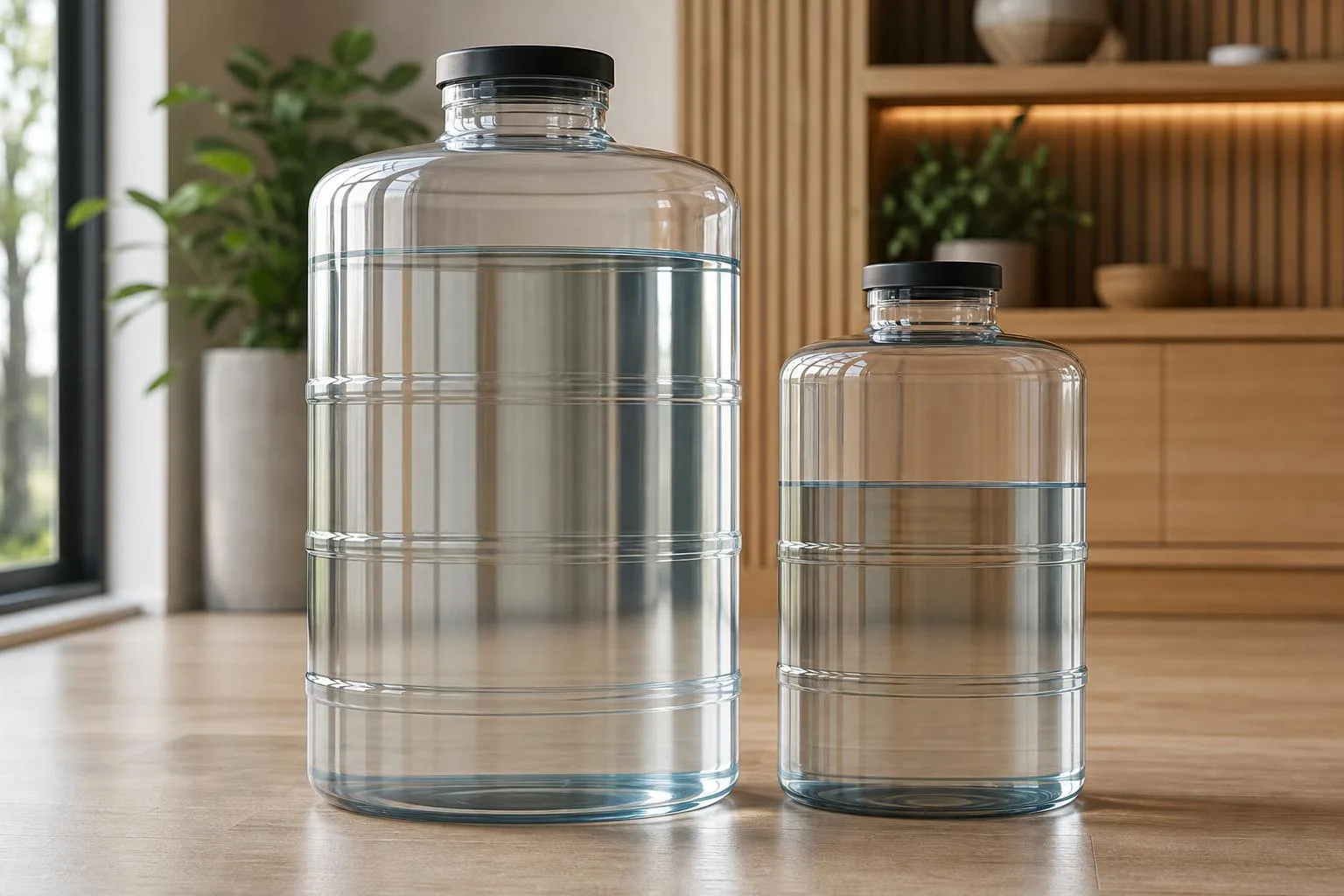
Mistaking Gallons as Universal
The biggest mistake is treating “gallon” as a universal unit.
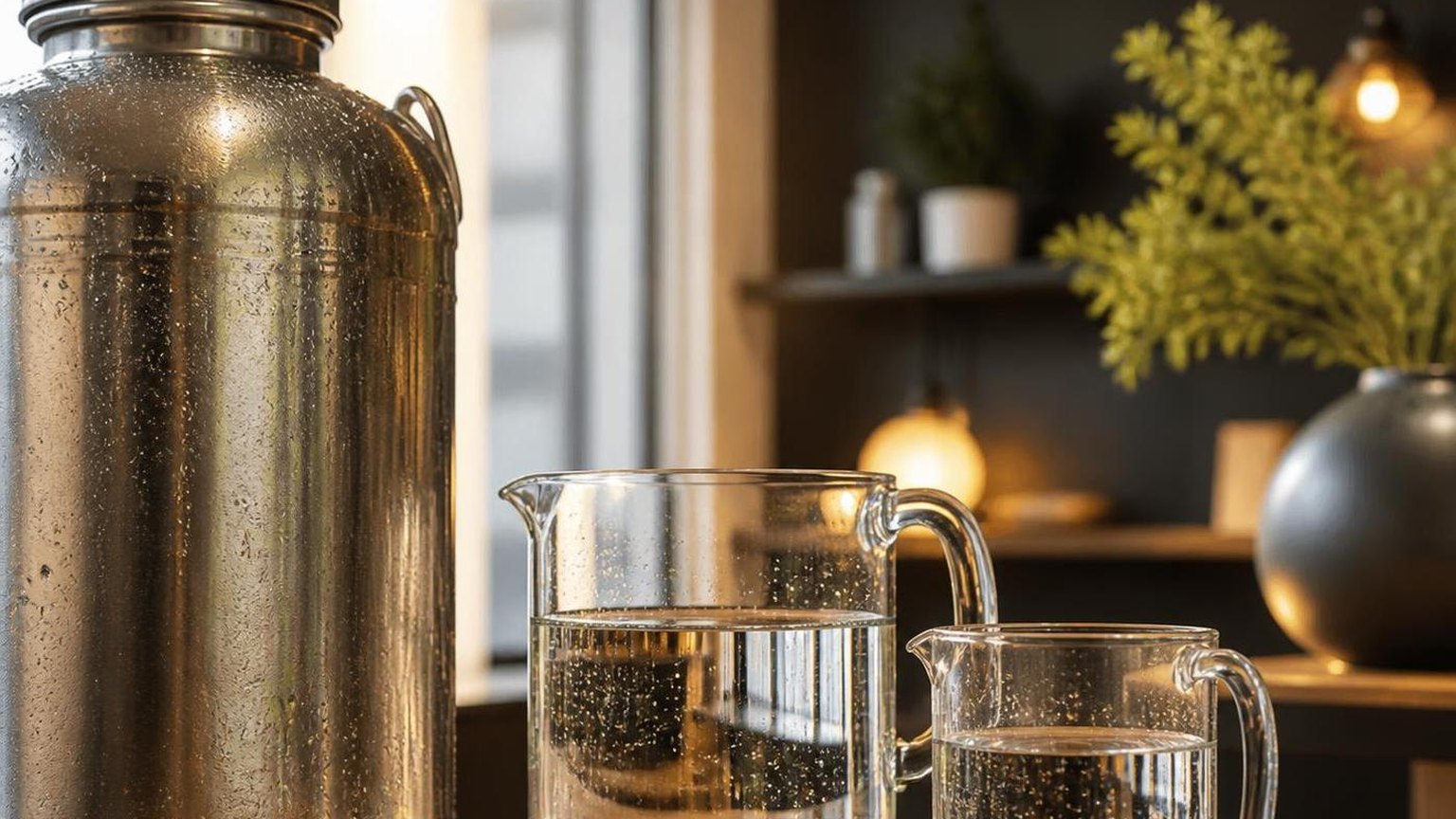
A 20-gallon volume can mean 75.708 litres in the U.S. system or 90.922 litres in the Imperial system, a difference large enough to ruin recipes, brewing logs, or fuel estimates.
Assuming U.S. and Imperial gallons are the same
In the United States, 1 gallon equals exactly 3.785411784 litres. In the Imperial system, still used in some UK and Commonwealth contexts, 1 gallon equals exactly 4.54609 litres.
| Measurement | Litres per gallon | 20 gallons in litres |
| U.S. liquid gallon | 3.785411784 L | 75.70823568 L |
| Imperial gallon | 4.54609 L | 90.9218 L |
| Difference | 0.760678216 L | 15.21356432 L |
Rounding too early
Rounding 1 U.S. gallon to 3.8 litres seems harmless, but over 20 gallons it gives 76 litres. The exact value is 75.70823568 litres, so the rounded result is about 0.292 litres high.
That difference is small for casual water filling, but not always trivial. In winemaking, brewing, chemical dilution, and nutrition labeling, repeated rounding can shift batch strength, yield, or compliance figures.
Using dry gallons for liquid volume
Another myth is that all U.S. gallons work the same way. The common conversion for “20 gallons” is the U.S. liquid gallon, not the older U.S. dry gallon used for some agricultural commodities.
| U.S. gallon type | Exact or standard litre value | 20 gallons |
| U.S. liquid gallon | 3.785411784 L | 75.70823568 L |
| U.S. dry gallon | About 4.404883771 L | About 88.09767542 L |
Confusing gallons with standard bottle counts
A 20 U.S. gallon container holds about 75.7 litres, but that does not equal 100 standard wine bottles. A standard wine bottle is 750 mL, or 0.75 litres.
| Volume | Equivalent |
| 20 U.S. gallons | 75.70823568 litres |
| Standard wine bottle | 0.75 litres |
| Approximate bottle count | 100.94 bottles |
Practical checks
- For U.S. liquid gallons, multiply by 3.785411784.
- For Imperial gallons, multiply by 4.54609.
- Label the system clearly when sharing cellar, kitchen, fuel, or shipping measurements.
- Do not mix rounded and exact figures in the same calculation.
Questions Readers Ask
How many litres is 20 US gallons?
20 US liquid gallons equals 75.708 litres, because 1 US gallon is exactly 3.785411784 litres. Rounded for everyday use, 20 US gallons is about 75.7 litres.

How many litres is 20 imperial gallons?
20 imperial gallons equals 90.922 litres, because 1 imperial gallon is exactly 4.54609 litres. This is about 15.2 litres more than 20 US gallons.
Why are there two different answers for 20 gallons in litres?
The answer depends on whether “gallons” means US gallons or imperial gallons. The US gallon is used in the United States, while the imperial gallon is used in some UK and Commonwealth contexts, and they are different sizes.
What is the quickest way to convert 20 gallons to litres?
For US gallons, multiply 20 by 3.785411784 to get 75.708 litres. For imperial gallons, multiply 20 by 4.54609 to get 90.922 litres.
Is 20 gallons the same as 75 litres?
20 US gallons is close to 75 litres, but it is more accurately 75.708 litres. 20 imperial gallons is not close to 75 litres; it is 90.922 litres.
Related Reading
- How Much Is 24K Gold Worth Per Gram?
- How Many Ounces Is 3 Ml?
- What Does Neat Mean In A Drink?
- How Many Cups Is 29 Ounces?
- How Much Alcohol Is In A Margarita? Answer By Expert
- How Many Ounces Is 140 Ml?
- How Many Ounces In Half A Cup?
- All Blog Guides
- NIST Special Publication 811 (2008)
- NIST Appendix C: General Tables of Units of Measurement (2024)
- NIST Handbook 44 (2024)
- BIPM The International System of Units SI Brochure 9th Edition (2019)
- Encyclopaedia Britannica: Gallon (2024)
- University of North Carolina: How Many? A Dictionary of Units of Measurement (2004)
- UK Government: Weights and Measures: The Law (2024)