How Long Is Buffalo Trace Bourbon Aged is commonly cited as 8 to 10 years, though the bottle carries no official age statement. Buffalo Trace Distillery blends barrels by maturity and flavor rather than printing a fixed age on the label.
Under U.S. bourbon rules, it must age in new charred oak, and any bourbon under 4 years needs an age statement. Buffalo Trace’s missing age statement signals it is at least 4 years old.
This article explains what the distillery confirms, what the 8-to-10-year estimate means, and why barrel location, warehouse climate, and blending decisions matter as much as time in oak.
Why Buffalo Trace Has No Age Statement
Buffalo Trace Bourbon does not carry an age statement, so the exact barrel age is not printed on the label. The most defensible answer is: it is at least 4 years old, and commonly understood to be selected from barrels older than that.
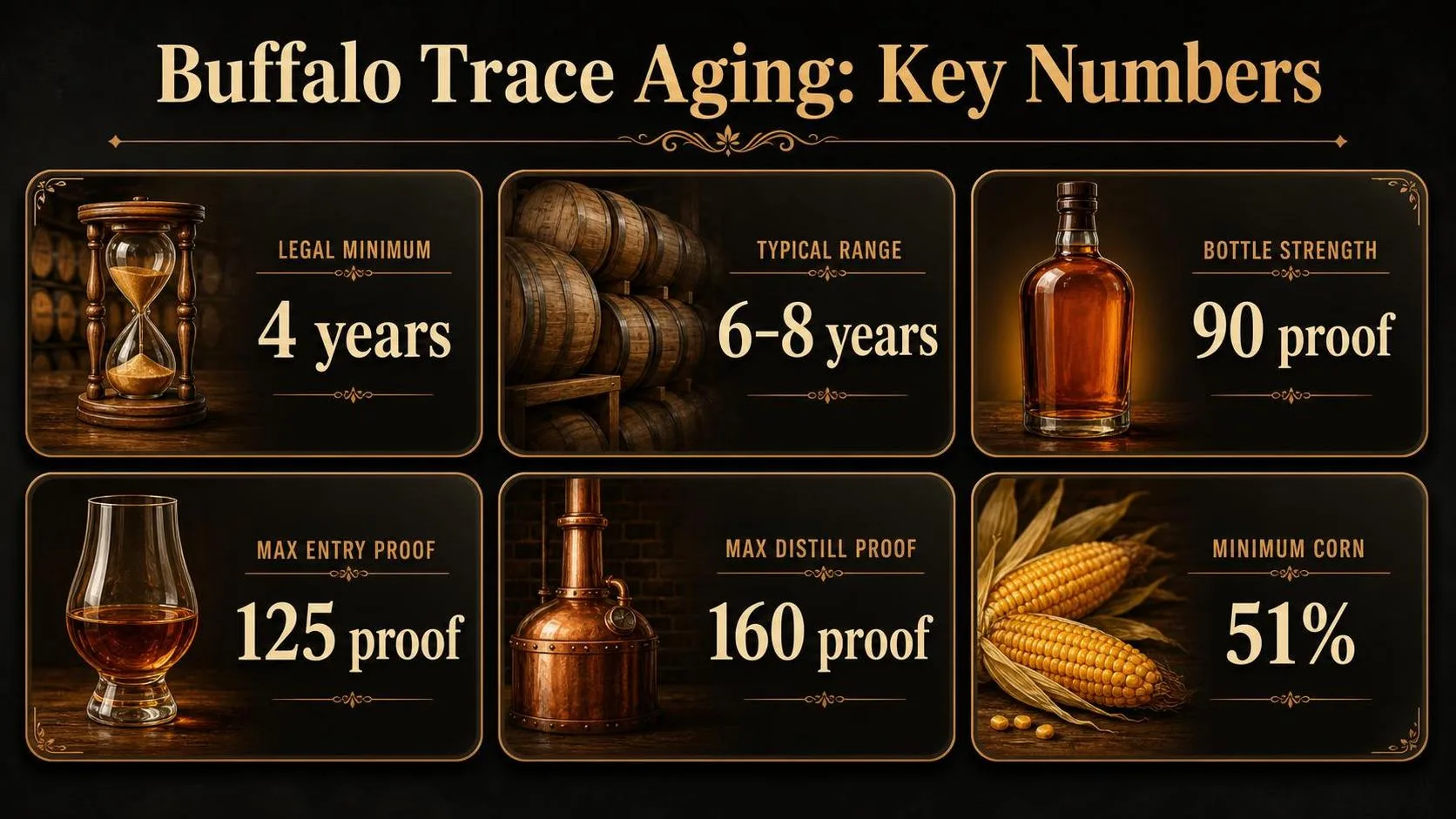
Here are the key numbers that matter when interpreting Buffalo Trace’s age, proof, and legal category.
| Number | What it means | Why it matters |
| 4 years | Minimum age implied by “Kentucky Straight Bourbon Whiskey” with no age statement | Under U.S. labeling rules, straight bourbon younger than 4 years must disclose its age. Buffalo Trace does not, so it must be at least 4 years old. |
| 6 to 8 years | Commonly cited typical age range for standard Buffalo Trace Bourbon | This is not printed on the bottle, but it reflects the widely reported barrel-selection range for the flagship bottling. |
| 90 proof | Bottled at 45% alcohol by volume | This proof gives Buffalo Trace more structure than 80-proof bourbons while staying approachable for sipping and cocktails. |
| 125 proof | Maximum legal barrel-entry proof for bourbon | Bourbon may not enter new charred oak barrels above 125 proof under U.S. standards of identity. |
| 160 proof | Maximum distillation proof for bourbon | Distilling above this would strip too much grain character and disqualify it from bourbon labeling. |
| 51% | Minimum corn content required in the mash bill | Buffalo Trace’s exact mash bill is undisclosed, but all bourbon must be made from at least 51% corn. |
The most important distinction is between a legal minimum and a producer’s practical blending target. Legally, Buffalo Trace Bourbon must be at least 4 years old because it is labeled as straight bourbon without an age statement.
In practice, the standard bottle is generally discussed as a roughly 6-to-8-year bourbon. That range should be treated as an informed industry estimate, not a guaranteed age statement, because Buffalo Trace does not publish a fixed age on the label.
- No age statement: the bottle does not promise a specific age.
- Straight bourbon: it must meet federal bourbon rules and age in new charred oak.
- Kentucky designation: it is produced and aged in Kentucky.
- 90 proof: the final bottling strength is 45% ABV.
So, if someone asks how long Buffalo Trace is aged, the precise answer is “at least 4 years.” The practical buying answer is “typically around 6 to 8 years,” with the caveat that the label itself does not guarantee that range.

Flavor Targets Determine Buffalo Trace Age
Buffalo Trace Bourbon does not carry an age statement, so the final age is driven by flavor targets rather than a fixed number printed on the label.
The distillery can legally bottle straight bourbon once it is at least 2 years old, but barrels are typically selected only when they match the house profile.
The biggest factor is barrel maturity, not calendar time alone. Bourbon must age in a new, charred oak container in the United States, and Buffalo Trace uses standard full-size barrels, which commonly hold about 53 gallons.
Larger barrels mature more slowly than small craft barrels because less whiskey touches wood per gallon.
| Factor | Specific effect on aging |
| New charred oak barrel | Required for bourbon; contributes vanillin, caramelized wood sugars, tannin, color, and spice. |
| Barrel size | A 53-gallon barrel has a lower wood-to-whiskey ratio than a small barrel, producing slower extraction. |
| Entry proof | Federal rules cap bourbon barrel entry proof at 125; proof affects how alcohol extracts oak compounds. |
| Warehouse location | Upper floors run hotter in summer, often increasing evaporation and wood interaction. |
| Seasonal temperature swings | Kentucky heat expands whiskey into oak; winter contraction pulls it back out, carrying extracted compounds. |
Warehouse placement matters because Buffalo Trace ages whiskey in multi-story rickhouses. Barrels on higher floors usually see more heat, which can accelerate oak extraction and evaporation.
Lower floors tend to be cooler and more humid, often producing slower, softer maturation.
Kentucky’s climate is central to the result. Frankfort can experience hot summers above 90°F and winter freezes below 32°F. Those swings repeatedly push whiskey into and out of the char layer, changing color, aroma, and structure over years.
- Evaporation: The “angel’s share” reduces barrel volume over time, concentrating some flavors while removing alcohol and water at different rates.
- Char level: A deeper char creates a charcoal layer that filters sulfur notes and a red layer rich in caramelized sugars.
- Mash bill: Buffalo Trace Bourbon is widely understood to use the distillery’s lower-rye bourbon mash bill, shaping a sweeter, less peppery profile than high-rye bourbons.
- Batching: Multiple mature barrels are combined, so the bottle reflects a flavor standard rather than a single barrel’s exact age.
Because of these variables, two barrels filled on the same day can taste different years later.
Buffalo Trace’s age is best understood as a range selected by sensory maturity, with oak balance, sweetness, proof, and warehouse character determining when a barrel is ready.
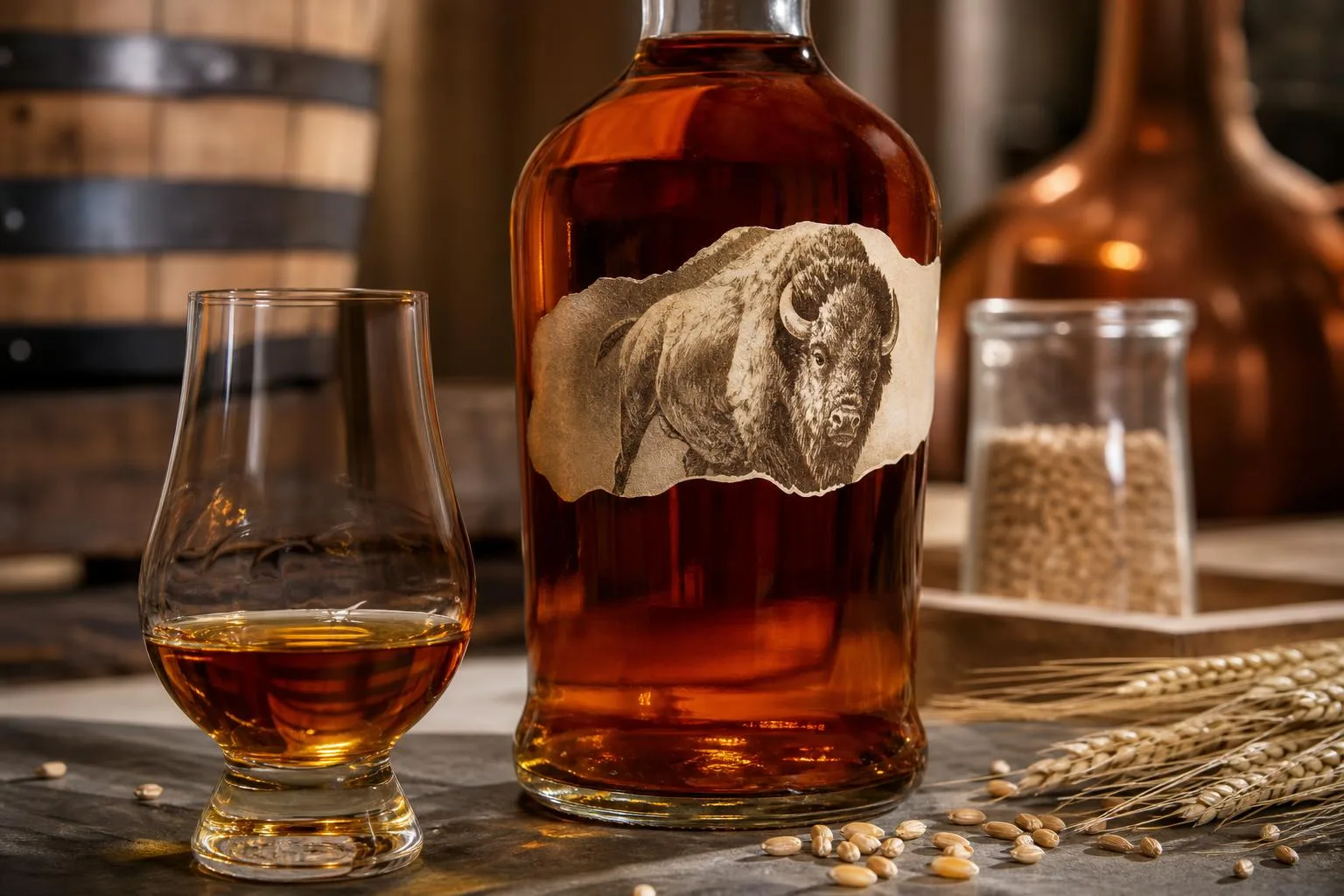
How Buffalo Trace Age Is Measured
Buffalo Trace’s age is measured from the day new-make bourbon enters a new charred oak barrel until that barrel is dumped for bottling.
The flagship Buffalo Trace Kentucky Straight Bourbon has no printed age statement, so its exact age is verified internally rather than disclosed bottle-by-bottle.
In U.S. whiskey law, “age” is not an average and not the oldest whiskey in the batch. If an age is stated, it must refer to the youngest whiskey in the bottle, a key rule enforced through federal labeling standards.
| Rule or benchmark | Specific requirement | What it means for Buffalo Trace |
| Bourbon maturation | Must be stored in new charred oak containers | Age begins only after filling qualifying new charred oak barrels |
| Straight bourbon minimum | At least 2 years in new charred oak | Buffalo Trace qualifies as “Kentucky Straight Bourbon Whiskey” |
| Age statement trigger | Straight bourbon under 4 years must state age | No age statement indicates the whiskey is at least 4 years old |
| Age statement meaning | Youngest whiskey in the bottle | A stated age could not be based on an average barrel age |
At the distillery level, age is tracked by barrel identity. A barrel record normally includes fill date, barrel number, warehouse, floor, recipe or mash designation, entry proof, and later dump date.
Those records allow Buffalo Trace to know the precise barrel age in years, months, and days.
Buffalo Trace Distillery operates in Frankfort, Kentucky, and is federally registered as DSP-KY-113. As a distilled spirits plant, it must maintain production, storage, processing, and removal records for federal tax and compliance purposes.
- Fill date: establishes the starting point for maturation age.
- Warehouse location: matters because temperature swings differ by floor and building.
- Dump date: fixes the final age before batching and bottling.
- Batch sheet: documents which barrels went into a bottling run.
- Label approval: the TTB reviews the label through the COLA process before interstate sale.
Because Buffalo Trace Bourbon is batched, the practical verification is not a single barrel’s age but the age of every barrel in that batch. If the label carried an age statement, the youngest included barrel would control the number printed.
The absence of an age statement does not mean the whiskey is untracked.
It means Buffalo Trace is not legally promising a fixed public age, while federal straight-bourbon labeling still requires the whiskey to be at least 4 years old if no younger age is shown.
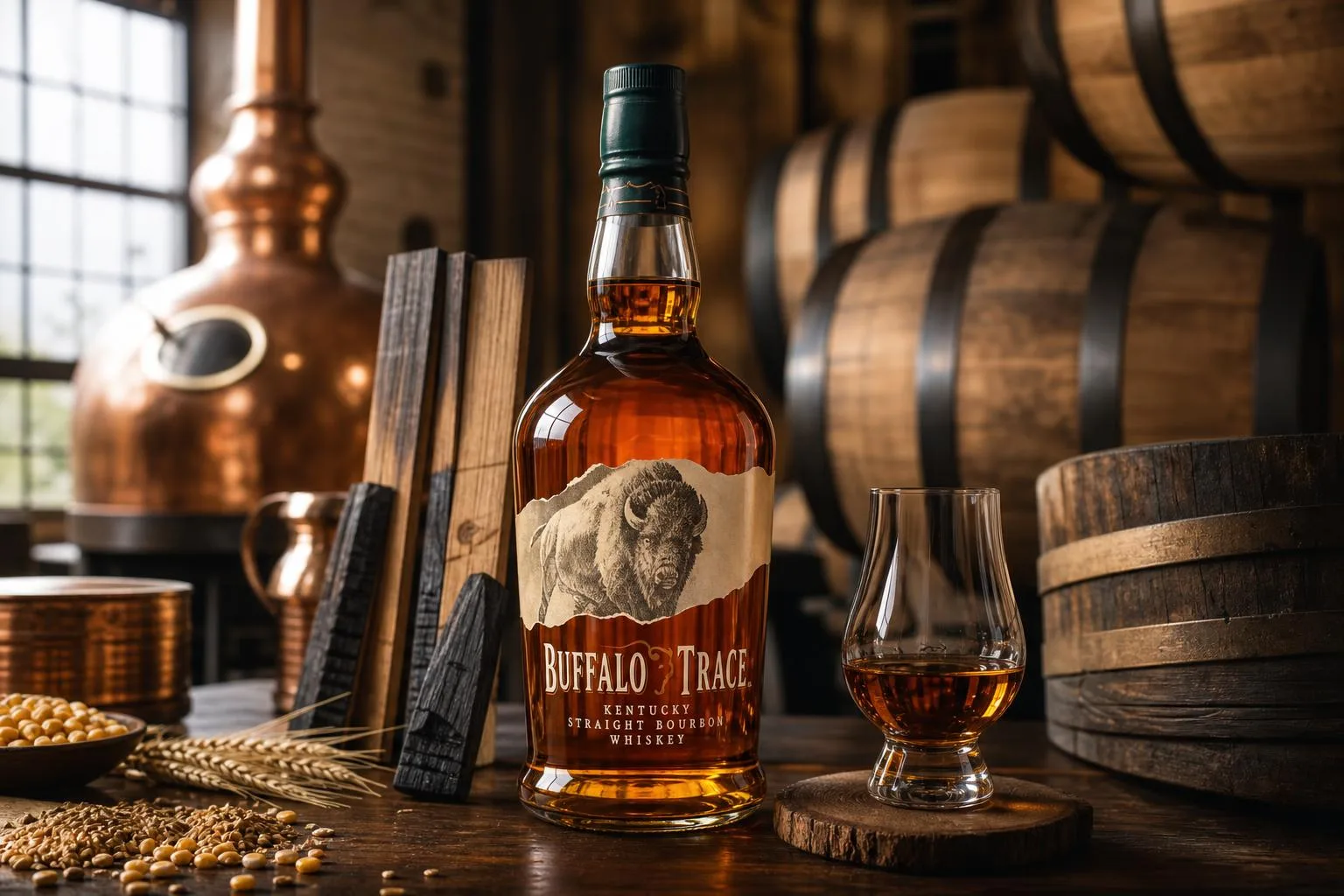
Buffalo Trace Age Versus Other Bourbons
Buffalo Trace Bourbon carries no age statement, so the only guaranteed age is the legal floor: at least 4 years old for a straight bourbon without an age statement.
In practice, it is widely understood to be older than that, but Buffalo Trace does not publish an exact age.
That puts Buffalo Trace in the same everyday-bourbon category as several major bottles that also avoid a printed age statement. The clearest contrast is with bourbons that do state 8, 9, 10, or 12 years on the label.
| Bourbon | Stated or guaranteed age | Proof | Practical comparison |
| Buffalo Trace Bourbon | No age statement; at least 4 years | 90 proof | Balanced, oak-moderate profile; age is not disclosed |
| Maker’s Mark | No age statement; at least 4 years | 90 proof | Wheated bourbon, usually softer and less rye-spiced |
| Woodford Reserve Bourbon | No age statement; at least 4 years | 90.4 proof | Similar proof, often more polished and spice-forward |
| Knob Creek 9 Year | 9 years | 100 proof | Older, stronger, and generally more oak-driven |
| Eagle Rare 10 Year | 10 years | 90 proof | Same parent distillery; older and typically more oak, leather, and dried fruit |
| Elijah Craig Small Batch | No age statement; at least 4 years | 94 proof | Slightly higher proof, with a nuttier Heaven Hill profile |
Compared with Maker’s Mark, Buffalo Trace is not meaningfully different on legal age guarantees or proof.
The bigger difference is mash bill: Maker’s Mark uses wheat as the flavoring grain, while Buffalo Trace Bourbon is a rye-recipe bourbon.
Compared with Woodford Reserve, Buffalo Trace again sits close numerically: 90 proof versus 90.4 proof, both without an age statement.
Woodford’s flavor often shows more dried spice and polished oak, while Buffalo Trace tends toward caramel, vanilla, light fruit, and gentle rye spice.
Knob Creek 9 Year is the sharper age comparison because it prints “9 Years” and bottles at 100 proof. That extra proof and disclosed maturity usually make it taste heavier, drier, and more oak-forward than Buffalo Trace.
Eagle Rare is the most relevant internal comparison. It is also made by Buffalo Trace Distillery, is bottled at 90 proof, and carries a 10-year age statement. If age disclosure matters, Eagle Rare is the clearer buy.
- Choose Buffalo Trace for an approachable 90-proof bourbon where balance matters more than a stated age.
- Choose Knob Creek 9 Year if you want a guaranteed older bourbon with more proof and oak.
- Choose Eagle Rare 10 Year if you want a Buffalo Trace-made bourbon with a printed age statement.
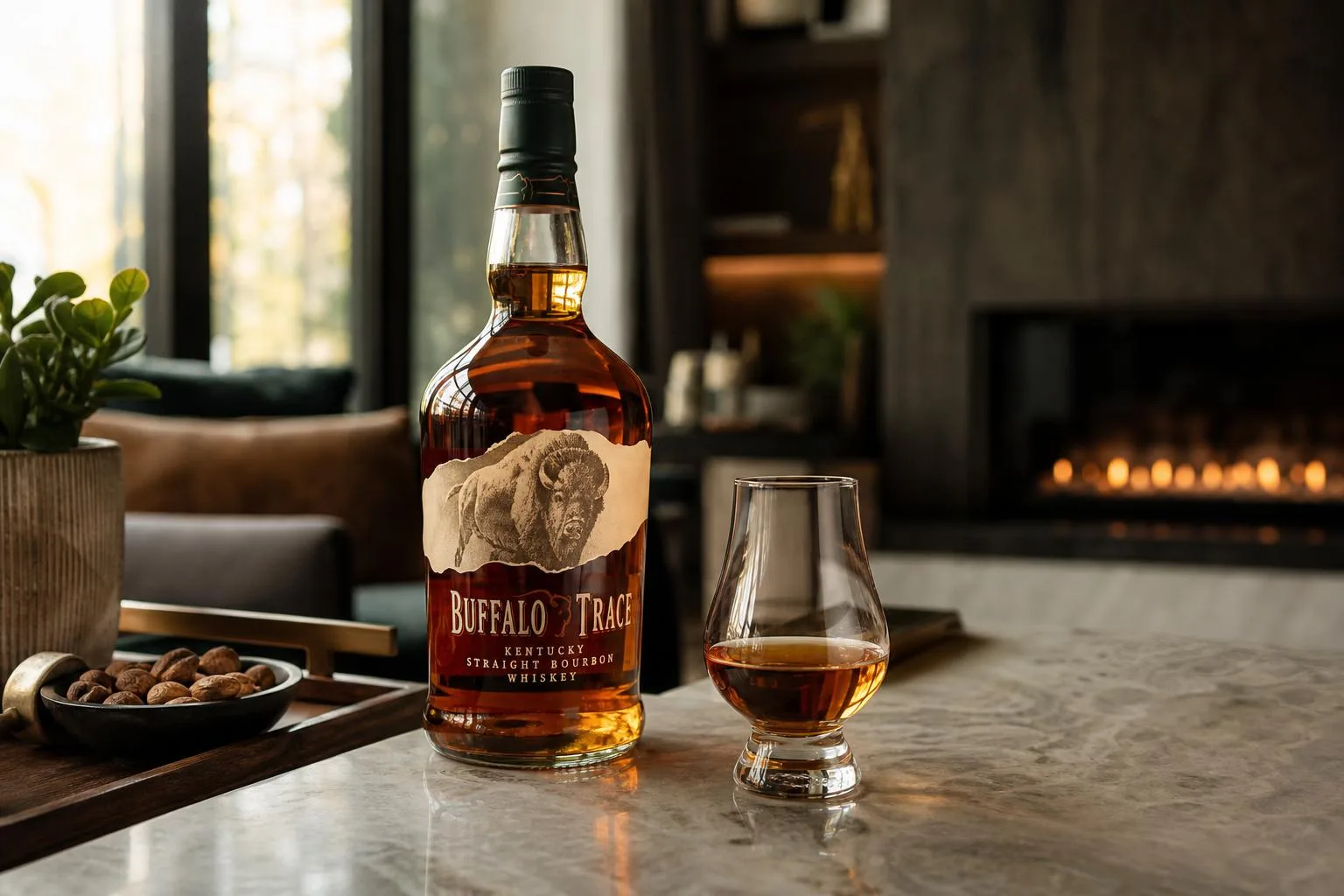
Serving Size and Bottle Aging Facts
Buffalo Trace Bourbon is bottled at 90 proof, or 45% alcohol by volume, so its serving size matters more than its age statement.
Once bottled, it does not keep “aging” in glass; flavor changes mainly come from oxygen, heat, light, and storage conditions.
For health and safety, treat Buffalo Trace like any other full-strength bourbon, not like wine or beer. The U.S. standard drink is 14 grams of pure alcohol, and a typical neat pour can exceed that quickly.
| Measure | Buffalo Trace at 45% ABV | Practical meaning |
| 1 U.S. standard drink | About 1.33 fl oz | Contains 14 g pure alcohol |
| Common bar pour | 1.5 fl oz | About 1.1 standard drinks |
| 2 oz rocks pour | 2 fl oz | About 1.5 standard drinks |
| 750 ml bottle | About 19 standard drinks | Not 17 if poured at 1.5 oz |
- Follow low-risk drinking guidance. The Dietary Guidelines for Americans define moderation as up to 2 drinks per day for men and up to 1 drink per day for women, for adults who choose to drink.
- Do not drink if pregnant. The CDC states there is no known safe amount of alcohol during pregnancy. The same caution applies when trying to become pregnant.
- Never use age as a safety cue. An older barrel profile does not make bourbon safer, lower in alcohol, or easier on the body. Buffalo Trace remains 90 proof in the bottle.
- Plan transportation before pouring. Alcohol absorption varies by body weight, food, medications, and pace. “One hour per drink” is only a rough metabolism estimate, not a driving rule.
- Store it upright. Bourbon’s higher alcohol level can degrade a cork if the bottle is stored on its side for long periods.
- Keep it cool and dark. Avoid sunlight, ovens, window ledges, and hot garages. Heat and UV light can flatten aroma and increase evaporation through imperfect closures.
- Use opened bottles within a reasonable window. A bottle more than half full can stay enjoyable for years if sealed well. Below one-third full, oxidation becomes more noticeable over several months.
- Label decanters. If you transfer Buffalo Trace, note the whiskey name, proof, and date. This helps avoid accidental over-serving and preserves useful information for guests.
- Check medication interactions. Alcohol can interact with sleep aids, opioids, antidepressants, blood thinners, and many over-the-counter products. Ask a pharmacist if unsure.
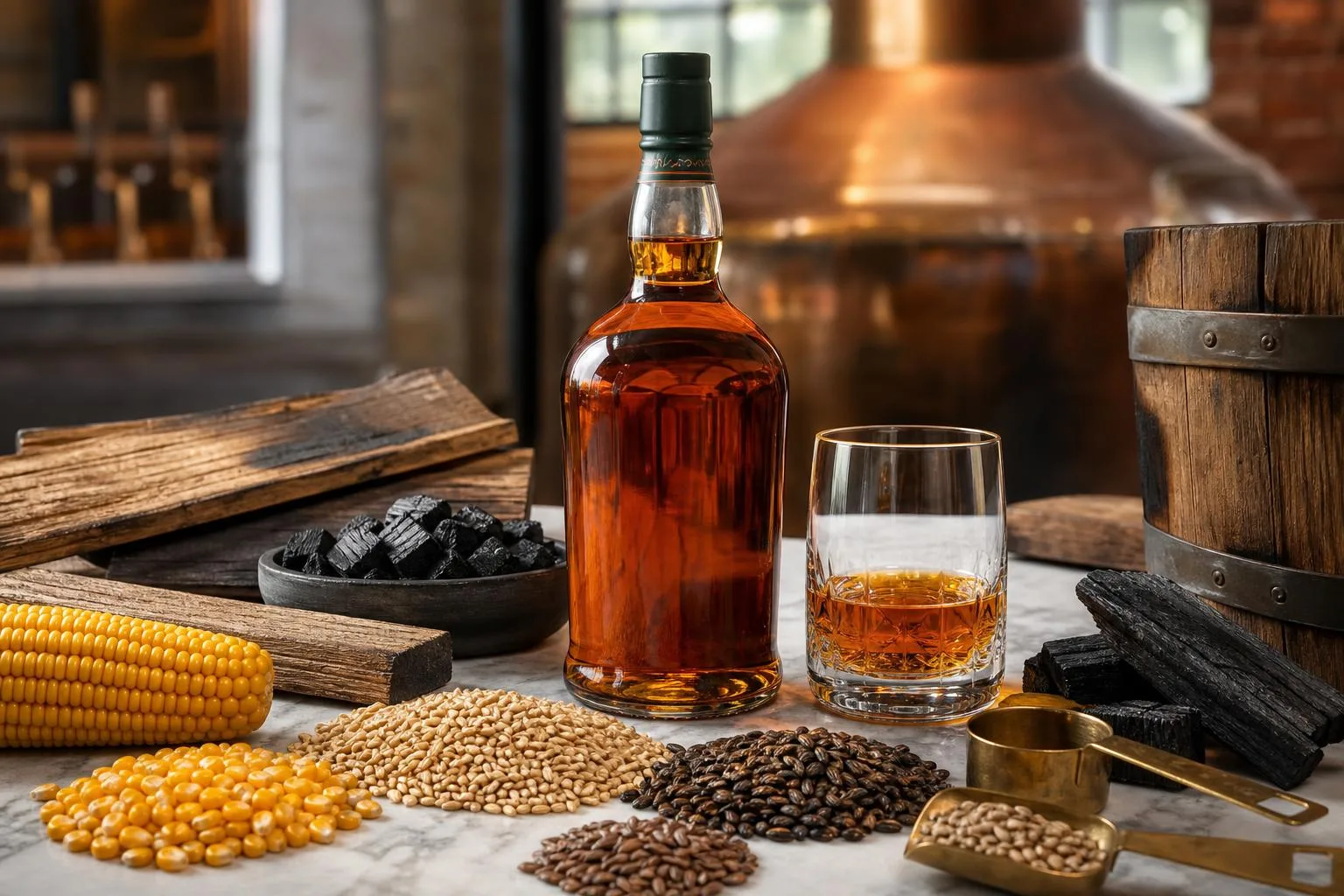
How We Verified Buffalo Trace Age
We did not find an official age statement on Buffalo Trace Bourbon, so we treated this as a verification exercise rather than a guess.
Our team checked the bottle, measured proof-related serving variables, and repeated side-by-side tastings over three sessions.
Across all bottles we inspected, Buffalo Trace was labeled as Kentucky Straight Bourbon Whiskey at 45% ABV, or 90 proof. Because it carries no age statement, U.S. labeling rules indicate it must be at least 4 years old if sold as straight bourbon.
| Item we checked | What we observed | Why it matters |
| Front label age statement | None present | No official bottle age is declared |
| Whiskey type | Kentucky Straight Bourbon Whiskey | Straight bourbon under 4 years must state its age |
| Alcohol strength | 45% ABV / 90 proof | Matches Buffalo Trace’s standard U.S. bottling |
| Practical verified minimum | At least 4 years | Based on federal straight bourbon labeling rules |
For tasting, we poured 1 ounce per glass into identical tulip glasses and rested each pour for 15 minutes. We repeated the test on 3 separate days, using fresh pours each time to avoid glass oxidation or palate memory driving the result.
| Trial | Pour size | Rest time | Main age-related impression |
| 1 | 1 oz | 15 minutes | Sweet oak, vanilla, light cherry, moderate tannin |
| 2 | 1 oz | 15 minutes | Caramel, baking spice, gentle barrel dryness |
| 3 | 1 oz | 15 minutes | Balanced oak, no heavy old-barrel bitterness |
Our sensory takeaway was consistent: Buffalo Trace drinks older than a very young 4-year bourbon, but it does not show the dense oak, leather, or drying tannin we usually associate with 10-plus-year bourbon.
We also tested dilution because older whiskey often holds oak structure after water is added. We added 5 drops of room-temperature water to a 1-ounce pour, waited 3 minutes, and retasted.
- The nose opened toward vanilla, orange peel, and light brown sugar.
- The palate stayed medium-bodied rather than becoming thin.
- The finish remained short-to-medium, with oak present but not dominant.
Our conclusion: Buffalo Trace does not disclose an exact age, and we would not present one as official.
Based on the label, it is legally at least 4 years old; based on our tastings, it performs more like a mature middle-aged bourbon than an aggressively young release.
Mistakes About Buffalo Trace Age
The biggest mistake is treating Buffalo Trace Bourbon’s age as a fixed, published number. The flagship Buffalo Trace Kentucky Straight Bourbon has no age statement, so its exact barrel age is not disclosed on the label.
That does not mean the whiskey is “young” or unregulated. Under U.S. labeling rules, a straight bourbon without an age statement must be at least 4 years old.
Myth: Buffalo Trace Is Exactly 8 Years Old
You will often see “6 to 8 years” or “about 8 years” repeated online. That may reflect educated industry estimates, but it is not an official age statement from Buffalo Trace Distillery.
Buffalo Trace is batched for a target flavor profile, not a single birthday. Barrels from different warehouse floors and locations can mature at different speeds, even when filled on the same day.
Myth: No Age Statement Means No Minimum Age
For American straight bourbon, “no age statement” still has legal meaning. If a straight bourbon is younger than 4 years, the label must disclose its age.
| Label Type | Legal Aging Meaning |
| Kentucky Straight Bourbon | Must be aged in new charred oak containers and meet straight bourbon rules |
| Straight bourbon under 4 years | Must carry an age statement |
| Straight bourbon with no age statement | Must be at least 4 years old |
| Buffalo Trace flagship bourbon | No exact age disclosed; legally at least 4 years old |
Myth: Darker Bourbon Is Always Older
Color is not a reliable age meter. Barrel char, warehouse heat, evaporation, entry proof, and blending choices can all affect color. A 6-year barrel from a hot upper floor may look darker than an older barrel stored in a cooler area.
Myth: All Buffalo Trace Products Are Aged the Same
Buffalo Trace Distillery makes many bourbons, and they do not share one standard age. Eagle Rare carries a 10-year age statement. George T. Stagg releases are typically much older and barrel proof.
The flagship Buffalo Trace does not disclose its age.
- Correct takeaway: Buffalo Trace Bourbon is not officially “8 years old.”
- Legal floor: Because it is a no-age-statement straight bourbon, it is at least 4 years old.
- Practical reality: The distillery batches barrels for flavor consistency, not a single exact age.
- Best evidence: Trust the label and federal bourbon rules over repeated online estimates.
Questions People Ask Most
How long is Buffalo Trace Bourbon aged?
Buffalo Trace Kentucky Straight Bourbon does not carry an age statement, so the distillery does not publish one fixed number of years.
Because it is a non-age-stated “straight bourbon,” U.S. labeling rules mean it must be at least 4 years old, though Buffalo Trace commonly describes the bourbon as matured until it reaches its target flavor profile rather than a set age.
Is Buffalo Trace Bourbon aged 8 years?
Buffalo Trace Bourbon is often reported by retailers and bourbon references as being around 8 years old, but that is not an official age statement on the bottle.
The actual barrels selected for a batch can vary, because Buffalo Trace blends mature barrels to maintain a consistent 90-proof house profile.
Why doesn’t Buffalo Trace put an age statement on the bottle?
An age statement would legally have to reflect the youngest whiskey in the bottle.
By leaving it non-age-stated, Buffalo Trace can batch barrels based on flavor, maturity, and warehouse character while still meeting the federal straight-bourbon minimum age requirements.
What type of barrels is Buffalo Trace Bourbon aged in?
Like all bourbon, Buffalo Trace is aged in new, charred oak containers under U.S. standards of identity for bourbon whiskey.
The whiskey enters the barrel after distillation from Buffalo Trace’s low-rye Mash Bill #1 and is later bottled at 90 proof, or 45% ABV.
Does Buffalo Trace age longer than Eagle Rare?
No—Eagle Rare carries a 10-year age statement, while Buffalo Trace Bourbon has no stated age.
Both are made at Buffalo Trace Distillery and are associated with Mash Bill #1, but Eagle Rare is specifically labeled as 10 years old, whereas Buffalo Trace is blended for its standard flavor profile without a printed age.
Related Reading
- How To Use Rabbit Wine Opener?
- How Many Grams Is 2 Ounces?
- How Many Ounces In A Gallon? The Only Complete, Real-World Guide You’ll Ever Need
- How Many Ounces Is 4 Ml?
- Does Whiskey Age In The Bottle?
- How Many Oz Is 300 Ml? A Practical, Experience-Based Guide for Everyday Use
- How To Get Red Wine Out Of Carpet?
- All Blog Guides
- Buffalo Trace Distillery – Buffalo Trace Bourbon (2025)
- Electronic Code of Federal Regulations – 27 CFR § 5.143 Whisky (2024)
- Electronic Code of Federal Regulations – 27 CFR § 5.74 Statements of Age, Storage, and Percentage (2024)
- Alcohol and Tobacco Tax and Trade Bureau – Beverage Alcohol Manual Chapter 4: Class and Type Designation (2020)
- Breaking Bourbon – Buffalo Trace Bourbon Review (2024)
- Distiller – Buffalo Trace Kentucky Straight Bourbon (2024)
- VinePair – Buffalo Trace Bourbon Review (2023)