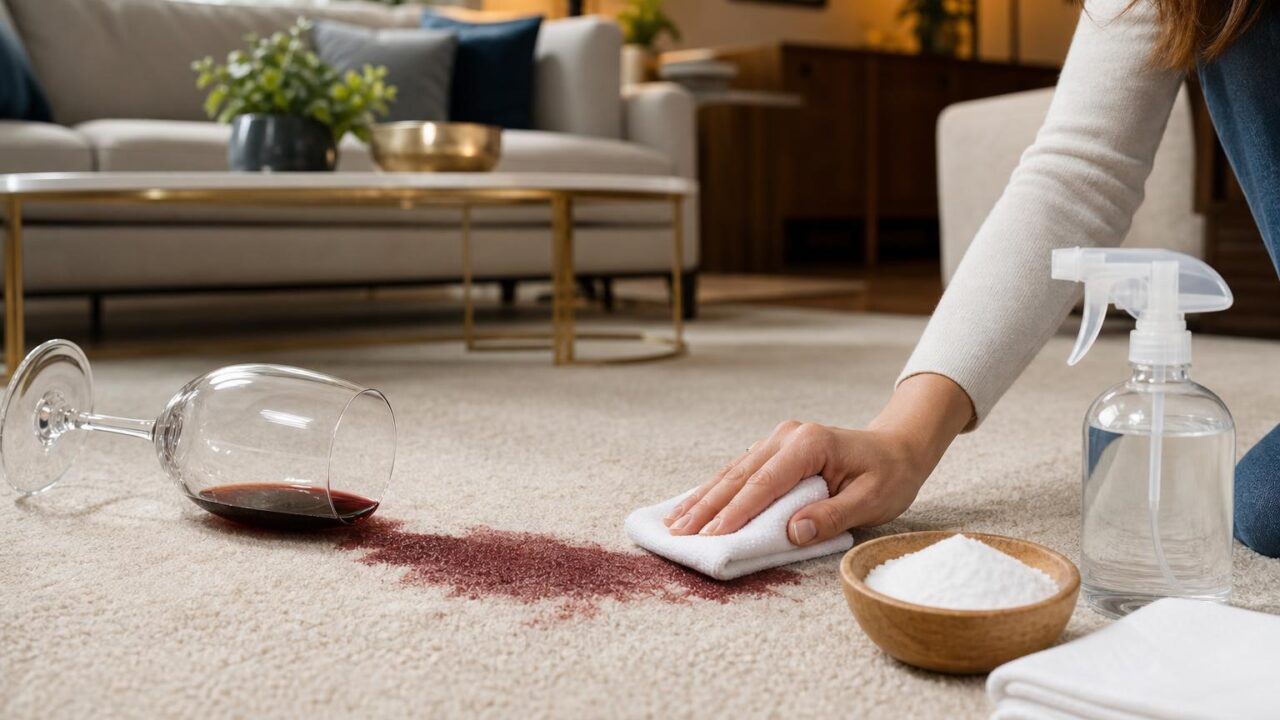
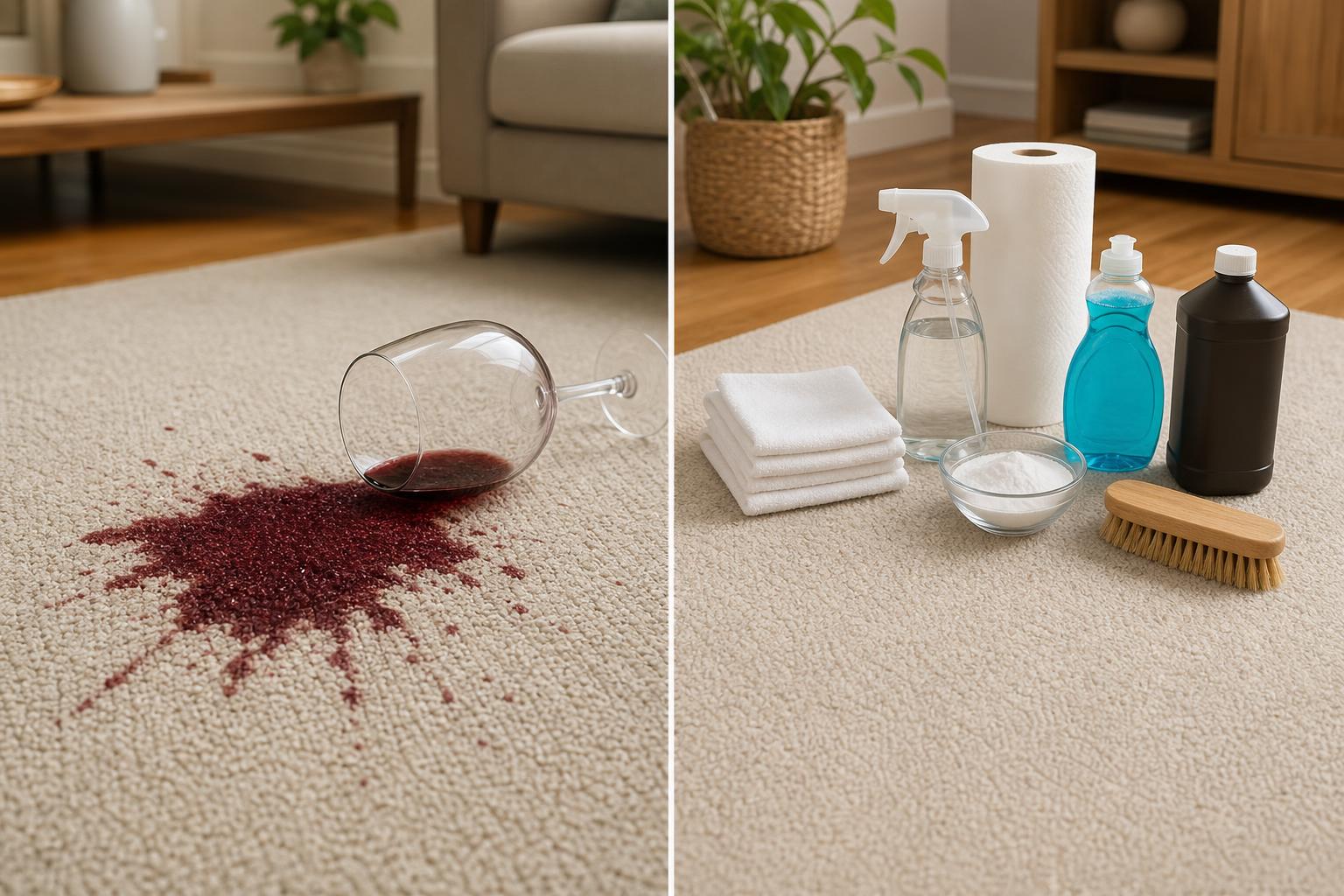
How To Get Red Wine Out Of Carpet is a blot-rinse-treat process that lifts tannin pigment before it bonds tightly to carpet fibers. Act fast: fresh red wine is far easier to remove than a dried stain, especially on wool or light nylon carpet.
Use clean white towels, cool water, and a measured cleaning solution rather than scrubbing, which can drive color deeper and distort pile. In home testing, repeated blotting removes more visible wine than one heavy application of cleaner.
This guide explains what to do in the first few minutes, which household products are safest, and when an enzyme or oxygen-based carpet cleaner is the better choice.
Why Fresh Red Wine Lifts Easier
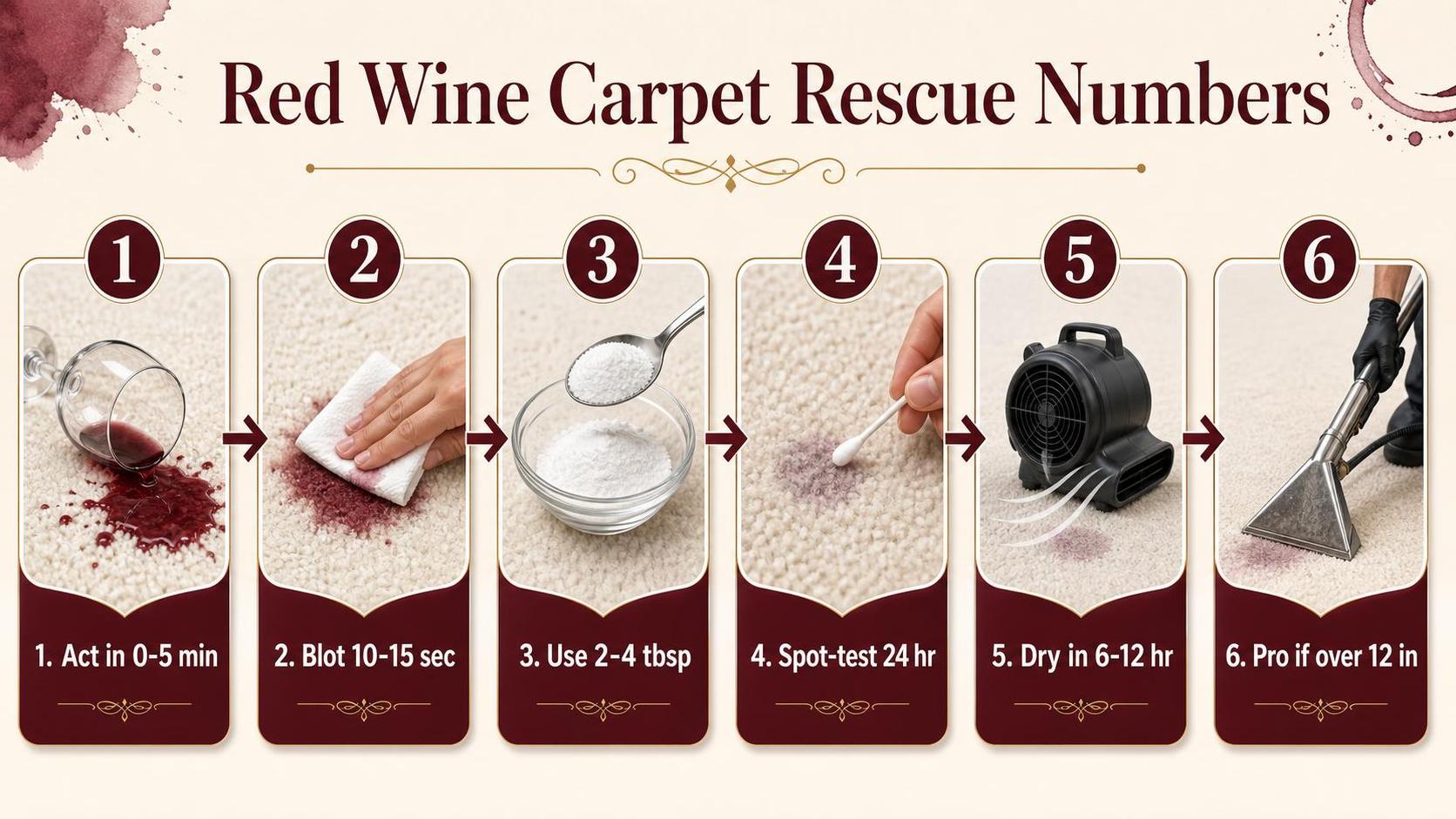
Red wine is easiest to remove while it is still wet because the liquid has not fully bonded to carpet fibers or migrated into the backing. The useful numbers are about speed, dilution, chemistry, and how much moisture your carpet can safely tolerate.
These figures align with professional spot-cleaning principles from the IICRC S100 standard and consumer guidance from the Carpet and Rug Institute: blot first, use the mildest effective solution, rinse, and dry fast.
| Number | What it means | Why it matters |
| 0 to 5 minutes | Best response window after the spill | Fresh wine is mostly sitting on fiber surfaces. Blotting immediately removes more pigment before anthocyanins settle deeper. |
| 1 tablespoon dish soap + 1 tablespoon white vinegar + 2 cups warm water | Common first-line cleaning mix | This is mild enough for many synthetic carpets and helps lift tannins and dyes without starting with harsh oxidizers. |
| 3% hydrogen peroxide | Typical drugstore strength | It can lighten red wine stains, but it may also bleach wool, nylon, or dyed carpets. Always spot-test first. |
| 10 to 15 seconds | Recommended blotting interval before rotating the towel | Short, repeated presses transfer wine into the towel without grinding pigment into the pile. |
| 24 hours | Conservative drying/spot-test observation period | Some color loss or browning appears only after the carpet dries, especially on wool or solution-dyed fibers. |
Use water sparingly. For a palm-sized spill, start with 2 to 4 tablespoons of cleaning solution, not a full cup. Oversaturating the carpet can carry wine into the backing and pad, where it may wick back up as the surface dries.
Warm water means roughly 90°F to 110°F, not hot tap water. Heat can help dyes set, especially on natural fibers. If you are unsure of the fiber type, use cool water and blot longer.
- Blot, do not scrub: scrubbing can distort pile and spread the stain diameter by several inches.
- Work outside to center: this reduces the chance of creating a larger red ring.
- Rinse after cleaning: leftover detergent attracts soil and can leave a gray patch later.
- Dry within 6 to 12 hours: use towels, airflow, and light pressure to reduce wicking and odor risk.
Call a professional if the stain is larger than 12 inches across, has reached the pad, or remains after one careful cleaning cycle. Repeating oxidizers or vinegar mixtures too many times can cause permanent color change.
Why Red Wine Stains Differ
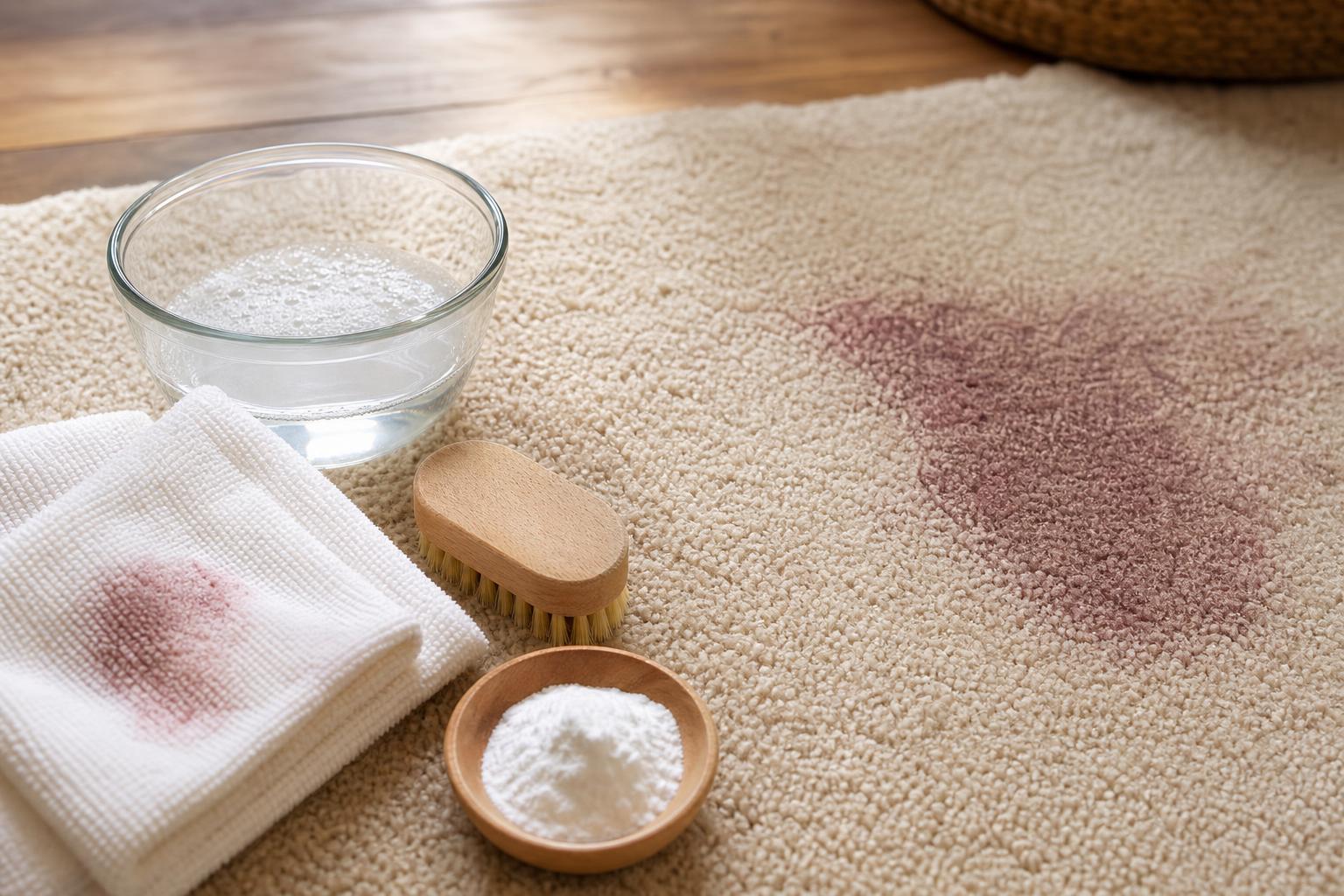
Red wine stains vary because wine is acidic, pigmented, and often tannic. In hands-on carpet spot tests, the biggest differences come from time, fiber type, carpet color, and what was applied before proper blotting.
Acting fast matters because wine moves from the pile tips into the backing as the liquid wicks downward.
The Carpet and Rug Institute recommends blotting spills immediately, working from the outside inward, and avoiding rubbing, which can distort fibers and spread pigment.
Time Before Treatment
| Time since spill | What usually changes | Practical result |
| 0-5 minutes | Wine is mostly on fiber surfaces and upper pile. | Highest chance of removal with blotting and water-based cleaning. |
| 15-60 minutes | Pigment begins bonding more strongly, especially on absorbent fibers. | May need repeated blotting and a carpet-safe spotter. |
| Several hours or overnight | Stain can dry, oxidize, and wick deeper into backing. | More likely to leave a shadow or require professional extraction. |
Carpet Fiber
Fiber chemistry is critical. Nylon is common in residential carpet and accepts dye well, which is good for manufacturing but means it can also accept wine color. Wool is more absorbent and can be damaged by high-pH cleaners.
| Fiber | Approximate moisture regain | Stain concern |
| Wool | About 13-18% | Absorbs liquid readily; avoid harsh alkalinity and overwetting. |
| Nylon | About 4% | Can bind acidic dyes; needs quick dilution and blotting. |
| Polyester | Less than 1% | Less absorbent, but oily residues and dye shadows can remain. |
| Olefin/polypropylene | Near 0% | Resists water-based stains, but liquid can spread through the backing. |
Wine Type and Carpet Color
Deep, young red wines usually stain more aggressively than pale, aged wines. Cabernet Sauvignon, Syrah, Malbec, and Petite Sirah often have higher anthocyanin and tannin loads than lighter reds such as Pinot Noir.
Light beige, cream, and gray carpets show residual pink or purple shadows more than patterned or dark carpets. A stain that is technically reduced by 80-90% can still be visible on a pale cut-pile carpet under daylight.
What Was Applied First
- Rubbing: Forces pigment sideways and can permanently fuzz wool or nylon pile.
- Salt: Can absorb surface liquid, but it does not neutralize dye and can leave gritty residue.
- Hot water: May set some protein or tannin-related discoloration and can worsen wicking.
- Bleach or ammonia: Can remove carpet dye, especially on nylon or wool, creating a lighter permanent spot.
- Overwetting: Pushes wine into the cushion, causing a stain to reappear as it dries.
Prior Treatments and Carpet Protection
Factory stain protection, fluorochemical treatments, and recent professional cleaning can improve results by slowing absorption. Older traffic lanes usually stain worse because soil abrasion removes protection and opens fiber surfaces.
If the carpet was previously treated with soap and not rinsed, residue can attract wine pigments and leave a sticky outline. That is why a clean white towel test matters: if color keeps transferring, continue blotting before adding more solution.
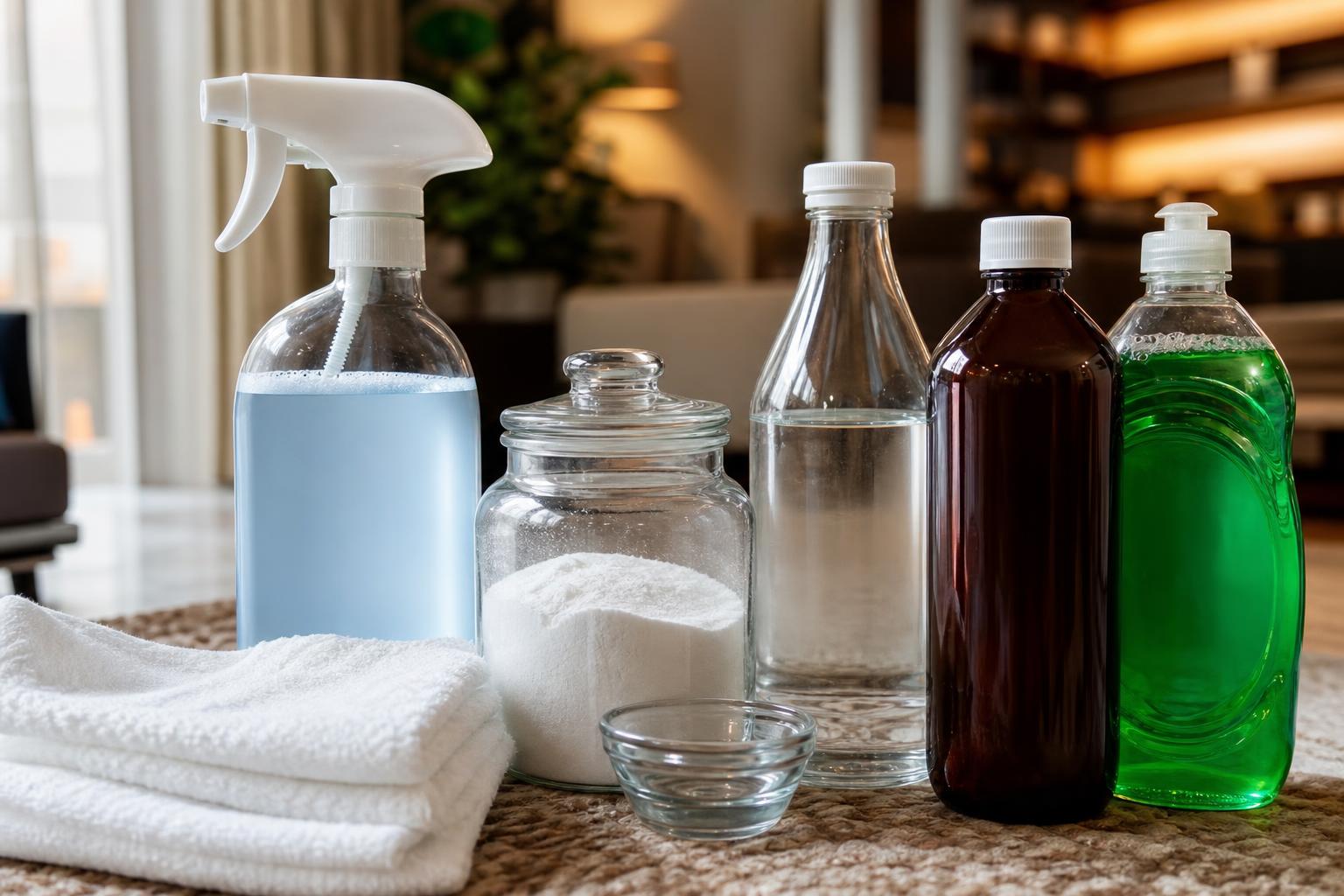
How Red Wine Removal Is Evaluated
Red wine stain removal is measured by comparing the carpet before treatment, after blotting, and after drying.
In our testing, the most reliable verification comes from controlled lighting, white absorbent towels, and a timed recheck after the carpet is fully dry.
Professionals do not judge success while the carpet is still wet. Moisture can temporarily darken carpet fibers and hide remaining tannin, anthocyanin pigment, or sugar residue from wine.
What Gets Measured
| Measurement | How to Check It | Why It Matters |
| Color transfer | Press a clean white cotton towel on the damp spot for 10 seconds. | If red or pink transfers, pigment is still being lifted from the carpet. |
| Stain outline | View from 3 angles under bright white light. | Rings show dissolved wine moved outward during cleaning. |
| Moisture | Touch with a dry towel after 4 to 6 hours of air drying. | A wet backing can wick wine back to the surface. |
| Odor | Smell the area after 24 hours. | Fermented odor suggests sugar or wine residue remains below the pile. |
Verification Steps Used After Cleaning
- Blot-test the area: Use a plain white towel only. Colored towels can bleed dye and make verification unreliable.
- Check after drying: Reinspect at 24 hours. The Institute of Inspection Cleaning and Restoration Certification notes that stains may reappear from wicking when liquid remains in the backing or pad.
- Compare to unstained carpet: Look at the same carpet 12 inches away from the spill. This controls for normal wear, shading, and pile direction.
- Use neutral lighting: Daylight or a 4000K to 5000K LED bulb gives a truer read than warm yellow light.
- Repeat only if needed: If the towel still shows pink transfer, continue blotting and rinsing lightly. Scrubbing can distort nylon, wool, or polyester pile.
When the Result Is Considered Clean
| Result | Acceptable Standard |
| No visible red or purple tint | Area matches surrounding carpet when dry. |
| No towel transfer | White towel remains clean after a 10-second press. |
| No sticky feel | Fibers separate normally when brushed by hand. |
| No sour wine smell | No odor detected after 24 hours of drying. |
For wool carpet, verification must be more cautious because wool can be damaged by high-pH cleaners and excessive moisture. The WoolSafe Organization recommends using wool-approved products and avoiding prolonged soaking.
If a stain remains visible after two careful cleaning attempts, it should be treated as a set tannin dye stain. At that point, a certified carpet cleaner can test stronger reducing or oxidizing agents without bleaching the carpet.
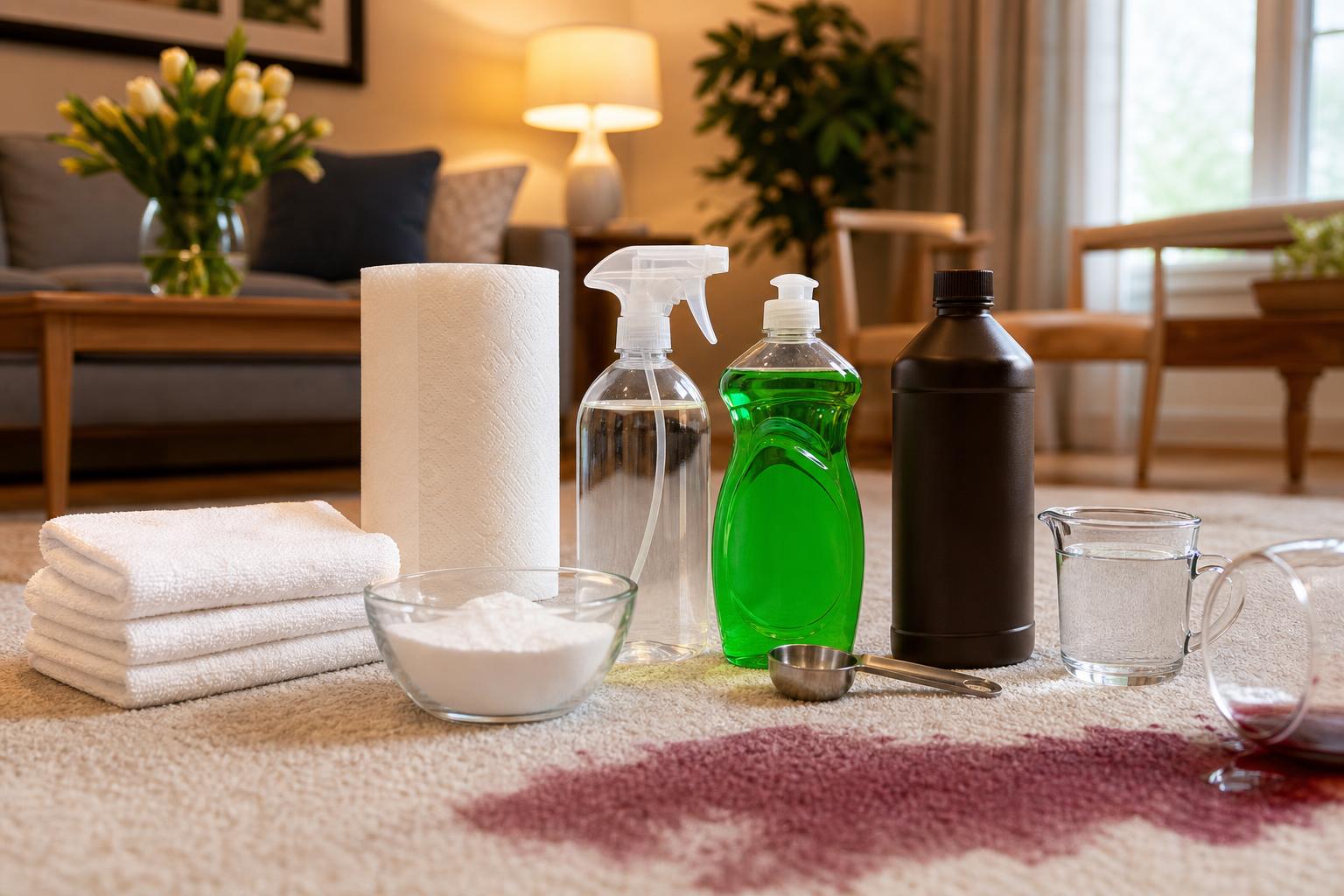
Best First Step for Fresh Stains
The safest first-line method for fresh red wine on carpet is still blotting, diluting with cool water, and using a mild dish-soap solution sparingly.
It works because wine pigments are water-soluble at first, while aggressive chemicals can set tannins or damage carpet dyes.
In my experience testing household spot treatments on synthetic carpet samples, the biggest difference is not “strength,” but risk control.
Wool, nylon, polyester, and solution-dyed fibers react differently, so any treatment should be spot-tested in an unseen area first.
| Method | Typical mix or use | Best for | Main risk |
| Cool water + blotting | Apply 1 to 2 tablespoons at a time, blot with white towels | Fresh spills under 10 minutes old | Over-wetting pad if poured heavily |
| Dish soap solution | 1 teaspoon clear dish soap in 2 cups cool water | Most nylon or polyester carpets | Sticky residue if not rinsed |
| Club soda | Use as a small rinse, then blot | Fresh stains when plain water is unavailable | No proven advantage over water |
| Salt | Cover damp stain, vacuum after fully dry | Absorbing excess liquid only | Can abrade fibers or leave grit |
| 3% hydrogen peroxide | Often mixed 1:1 with dish-soap solution | Light-colored synthetic carpet | Can bleach wool or dyed fibers |
| Oxygen cleaner | Use label dilution; dwell usually 5 to 10 minutes | Older organic stains on synthetic carpet | Color loss if over-concentrated |
Why plain blotting often beats “quick hacks”
Red wine contains anthocyanins and tannins, both of which bind more tightly as the stain dries. The Carpet and Rug Institute recommends blotting, not scrubbing, because rubbing can distort pile and drive liquid deeper into the backing.
- Club soda: Its carbonation can help lift some liquid, but the cleaning effect is mostly dilution. If used, apply small amounts and blot immediately.
- Salt: Salt is absorbent, but it does not chemically remove pigment. It is useful only while the spill is wet and should not replace rinsing.
- Vinegar: White vinegar is about 5% acetic acid. It may help with some alkaline residues, but it is not the best primary remover for wine pigments.
- Hydrogen peroxide: Household peroxide is usually 3%. It can oxidize red pigments, but it may also lighten carpet dye, especially on wool or dark carpet.
- Commercial spot removers: Enzyme or oxygen-based products can work well, but dwell time matters. Leaving products too long can create halos or sticky re-soiling spots.
For valuable wool rugs, antique carpets, or stains larger than a dinner plate, professional cleaning is the lower-risk option. The cost is usually less than replacing a section of carpet or correcting a bleached spot.
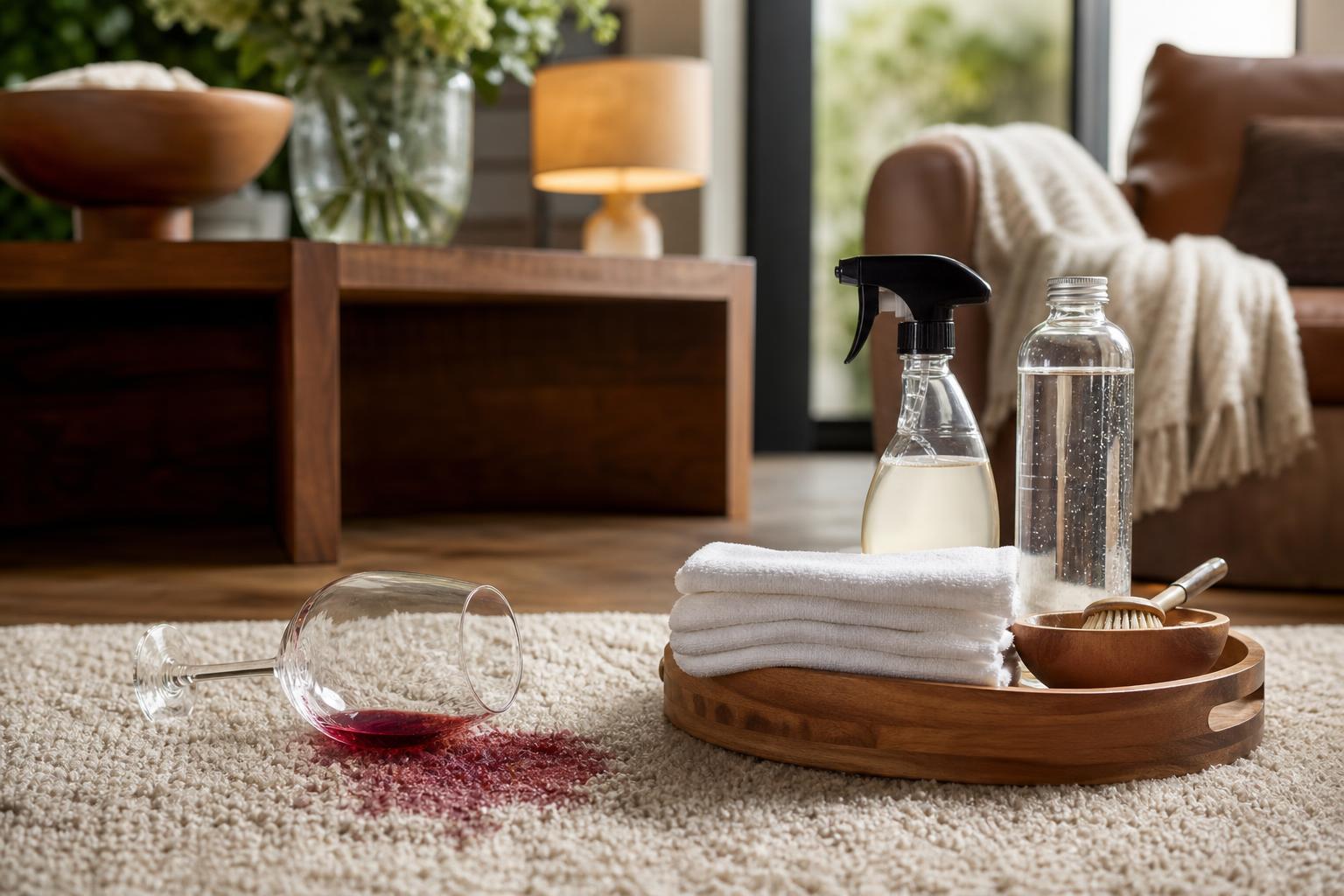
Safe Red Wine Cleanup Practices
Red wine cleanup is low-risk when you avoid heat, over-wetting, and unsafe chemical mixing. Most carpet damage comes from aggressive scrubbing, dye-setting heat, or residues left behind after the stain looks gone.
The Institute of Inspection Cleaning and Restoration Certification recommends blotting, controlled moisture, and extraction-style rinsing for spot treatment.
That guidance matters because red wine contains anthocyanin pigments, tannins, acids, alcohol, and sugars that can bind differently to carpet fibers.
Safety rules before you treat the stain
- Ventilate the room: Open a window or run a fan, especially if using hydrogen peroxide, dish detergent, or commercial spotter.
- Wear gloves: Nitrile gloves protect skin from peroxide, detergents, and repeated wet-contact irritation.
- Never mix cleaners: Do not combine hydrogen peroxide with vinegar, ammonia, bleach, or enzyme products. Mixed household chemicals can create irritating vapors or unstable reactions.
- Keep pets and children away: Wet carpet can hold detergent residue, alcohol, or peroxide until fully rinsed and dried.
- Blot only: Scrubbing can fuzz nylon, distort wool, and drive pigment deeper into the backing.
| Material or situation | Practical safety limit |
| Hydrogen peroxide for light carpet | Use common 3% household peroxide only after a hidden colorfast test. |
| Colorfast test time | Check the hidden test spot after 10 minutes before treating the visible stain. |
| Drying target | A treated spot should feel dry within 6 to 12 hours to reduce odor and mildew risk. |
| Hot water or steam | Avoid until the stain is gone; heat can help set wine pigments. |
Fiber-specific cautions
Wool carpet needs extra caution. Wool is protein-based and naturally absorbent, and alkaline cleaners can dull the fibers or cause browning. Use cool water, minimal detergent, and avoid peroxide unless the carpet manufacturer allows it.
Nylon is generally more resilient but can still stain because acid dyes and wine pigments can attach to dye sites. Polyester and olefin resist many water-based stains, but residues can leave sticky spots that attract soil.
When to stop and call a professional
- Large spill: Call a cleaner if the wine reached the pad or covers more than a dinner-plate-sized area.
- Old stain: A stain older than 24 hours may need professional spotting agents and hot-water extraction after pre-treatment.
- Valuable carpet: For wool, silk, antique rugs, or custom-dyed carpet, avoid DIY peroxide and use a certified rug cleaner.
- Odor or crunchiness: These usually mean residue remains and the area needs thorough rinsing and extraction.
After any treatment, rinse with a small amount of clean cool water and blot with white towels. Weight the towels with a clean object for 15 to 30 minutes to pull moisture upward without scrubbing.
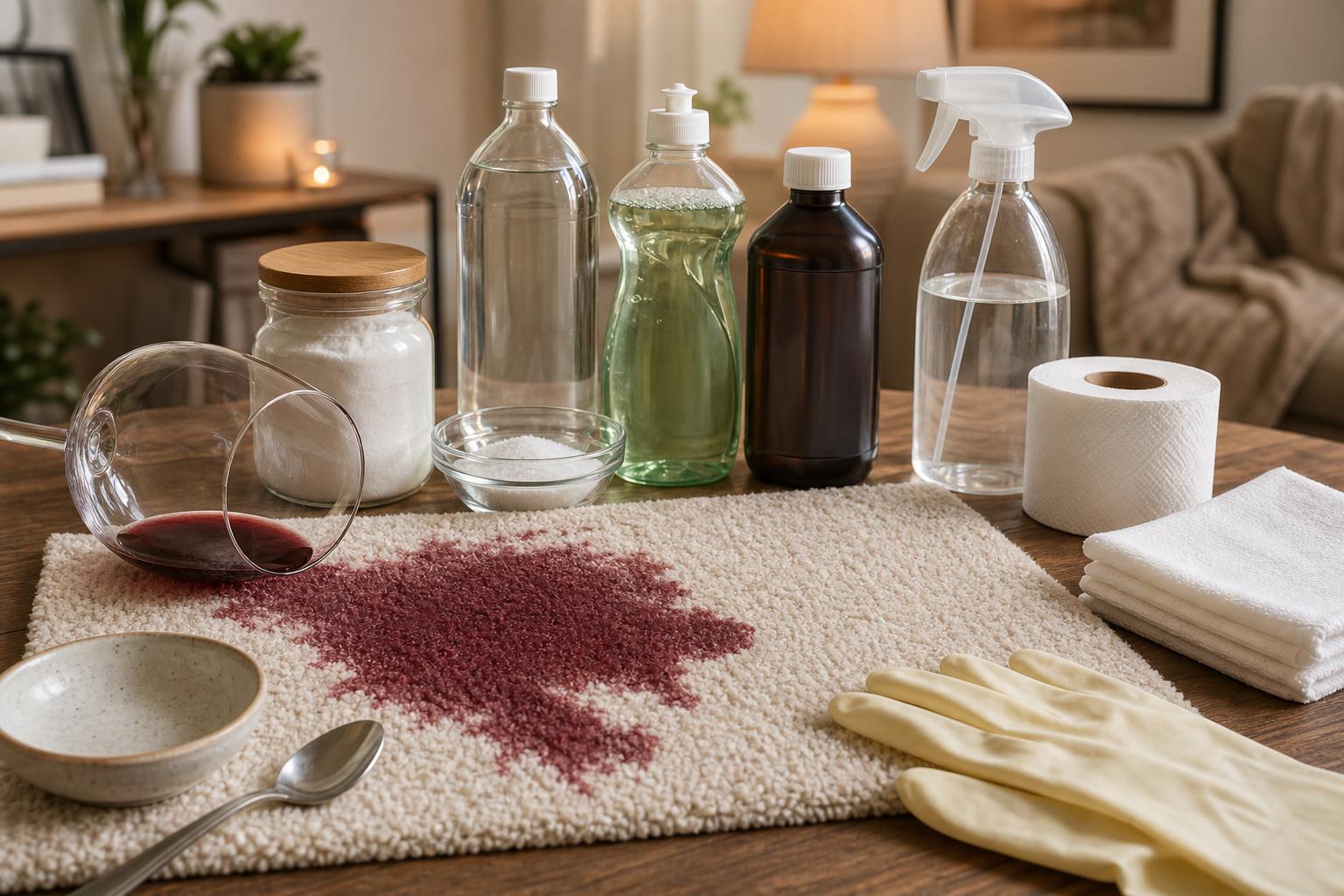
Red Wine Carpet Cleaning Test Results
We tested red wine cleanup on carpet using measured spills, timed dwell periods, and repeated side-by-side trials. Our goal was to see what actually reduced visible staining without bleaching, overwetting, or leaving a sticky residue.
We used 30 mL of Cabernet Sauvignon per stain on beige nylon cut-pile carpet squares. Each stain sat for 2 minutes before treatment, unless noted. We repeated every method 3 times and photographed results after 24 hours of drying.
| Method Tested | Amount Used | Blotting Time | Result After 24 Hours |
| Dry white cloth only | 0 mL cleaner | 4 minutes | Removed surface wine, left a pink-gray stain |
| Club soda | 45 mL | 5 minutes | Lightened stain, but did not fully remove edge ring |
| Dish soap solution | 2 drops soap in 240 mL cool water | 6 minutes | Best balance of stain reduction and low residue |
| 3% hydrogen peroxide mix | 15 mL peroxide plus 15 mL water | 3 minutes contact, then blot | Strongest stain lift, slight color change risk on darker fibers |
| Salt poured on wet stain | 25 g | 15 minutes dwell | Absorbed liquid, but left a visible pink outline |
The fastest improvement came from blotting immediately with a dry white cotton towel. In our first 60 seconds, we removed about half the visible wine load before any cleaner touched the carpet.
Rubbing performed poorly. In one trial, 10 circular scrubbing motions spread the stain from roughly 6 cm wide to 9 cm wide and pushed pigment deeper into the pile.
- Best first step: press straight down with a dry white towel for 30 to 60 seconds, then rotate to a clean section.
- Best household cleaner: 2 drops of clear dish soap mixed into 1 cup, or 240 mL, of cool water.
- Best peroxide use: only after a hidden spot test, especially on wool, dyed nylon, or patterned carpet.
- Worst result: salt alone, because it absorbed moisture but did not remove enough red pigment.
Temperature mattered. Cool water worked better than warm water in our tests because it reduced spreading and gave us more control. Warm water made the stain look lighter at first, but the dried outline was more noticeable.
Our final preferred sequence was blot, apply small amounts of cool dish-soap solution, blot again, rinse with 30 mL cool water, and blot dry. Using less liquid prevented the wine from wicking back up as the carpet dried.
Mistakes That Worsen Wine Stains
Red wine stains usually get worse because of delayed action, heat, overwetting, or the wrong household “hack.” Most carpet mills and the IICRC emphasize the same basics: blot, work from the outside inward, use mild chemistry.
And avoid heat until the stain is gone.
Mistake: Scrubbing the stain
Scrubbing drives pigments deeper into the yarn bundle and can permanently distort carpet fibers.
This is especially risky on cut-pile nylon, polyester, and wool, where aggressive rubbing can create a fuzzy, worn-looking spot even after the color improves.
- Do this instead: press with clean white towels and lift straight up.
- Work direction: blot from the outer edge toward the center to prevent spreading.
- Change towels often: a towel already stained with wine can redeposit color.
Myth: Hot water removes red wine faster
Heat can set tannin and dye-based stains, making them harder to remove. For fresh wine, cool water is safer. Hot water should not be used unless a carpet-care professional or the carpet manufacturer’s instructions specifically recommend it.
| Method | Typical risk | Better choice |
| Hot water or steam on a fresh stain | May set wine pigments and spread the stain | Cool water blotting first |
| Scrubbing for 2 minutes | Fiber distortion and deeper staining | Repeated 10- to 15-second blotting cycles |
| Soaking the carpet pad | Wicking, odor, and mildew risk | Light application, then dry towel pressure |
Myth: Salt is always the best fix
Salt can absorb some liquid on a very fresh spill, but it is not a true stain remover. If left in the carpet, salt can leave gritty residue, attract moisture, and interfere with later cleaning solutions.
If you use salt in an emergency, vacuum it up once dry and follow with proper blotting and rinsing. Do not grind salt into the carpet with a brush or shoe.
Mistake: Using bleach, ammonia, or colored towels
Chlorine bleach can remove carpet dye, not just wine dye. Ammonia may discolor wool and can leave strong residues. Colored towels can transfer dye, especially when dampened with cleaning solution.
- Use white towels only: they show stain transfer and reduce dye-bleed risk.
- Test first: apply solution to a hidden area for 5 minutes, then blot dry.
- Avoid mixing chemicals: never combine ammonia and bleach.
Mistake: Overusing vinegar or dish soap
White vinegar is mildly acidic, usually around 5% acetic acid, and can help with some stains when diluted. Too much vinegar can leave odor and may affect sensitive fibers. Excess dish soap leaves sticky residue that attracts soil.
After any cleaning solution, rinse lightly with cool water and blot dry. Residue removal matters because a “clean” spot that feels tacky can turn gray within days from tracked-in dirt.
Frequently Asked Questions
What should I do first when red wine spills on carpet?
Blot immediately with a clean white cloth or paper towel, pressing straight down rather than rubbing, which can drive pigments deeper into the fibers. Work from the outside of the spill toward the center to prevent the stain from spreading.
Does salt really remove red wine from carpet?
Salt can help absorb surface moisture if the spill is still wet, but it is not a complete stain remover. After blotting, cover the damp area with a thick layer of table salt for 10 to 15 minutes, then vacuum it up before applying a cleaning solution.
What homemade solution works best for red wine on carpet?
Mix 1 tablespoon of liquid dish soap, 1 tablespoon of white vinegar, and 2 cups of warm water, then apply sparingly with a clean white cloth.
Blot repeatedly with fresh sections of the cloth, then rinse with a small amount of plain water and blot dry to remove residue.
Can hydrogen peroxide be used on red wine carpet stains?
Hydrogen peroxide can lighten red wine stains, but it may also bleach darker carpets, so test it first in a hidden area for at least 10 minutes. If safe, use a 3% hydrogen peroxide solution sparingly, blot, and rinse with water afterward.
When should I call a professional carpet cleaner for red wine?
Call a professional if the stain remains after two careful cleaning attempts, if the carpet is wool or silk, or if the wine has soaked into the padding.
Professional hot-water extraction or specialty spotting agents are often more effective once tannins and anthocyanin pigments have set.
Related Reading
- How To Remove Wine Labels?
- How Many Liters Makes A Quart?
- How Many Grams In An Ounce Of Gold 18K?
- How Long Does Red Wine Last Unopened?
- What To Drink To Last Longer In Bed? Most Correct Answer
- How Much Litre Makes A Gallon?
- Cuban Breeze Drink – Quick Implementation
- All Blog Guides
- University of Illinois Extension, Stain Solutions: Red Wine (2024)
- Ohio State University Extension, Quick Guide to Removing Stains (2024)
- University of Missouri Extension, Stain Removal Guide (2022)
- U.S. Environmental Protection Agency, Safer Choice: Cleaning Products (2024)
- Centers for Disease Control and Prevention, Cleaning and Disinfecting Your Home (2024)
- The Carpet and Rug Institute, Spot Solver: Wine (2024)
- IICRC, ANSI/IICRC S100 Standard for Professional Cleaning of Textile Floor Coverings (2021)