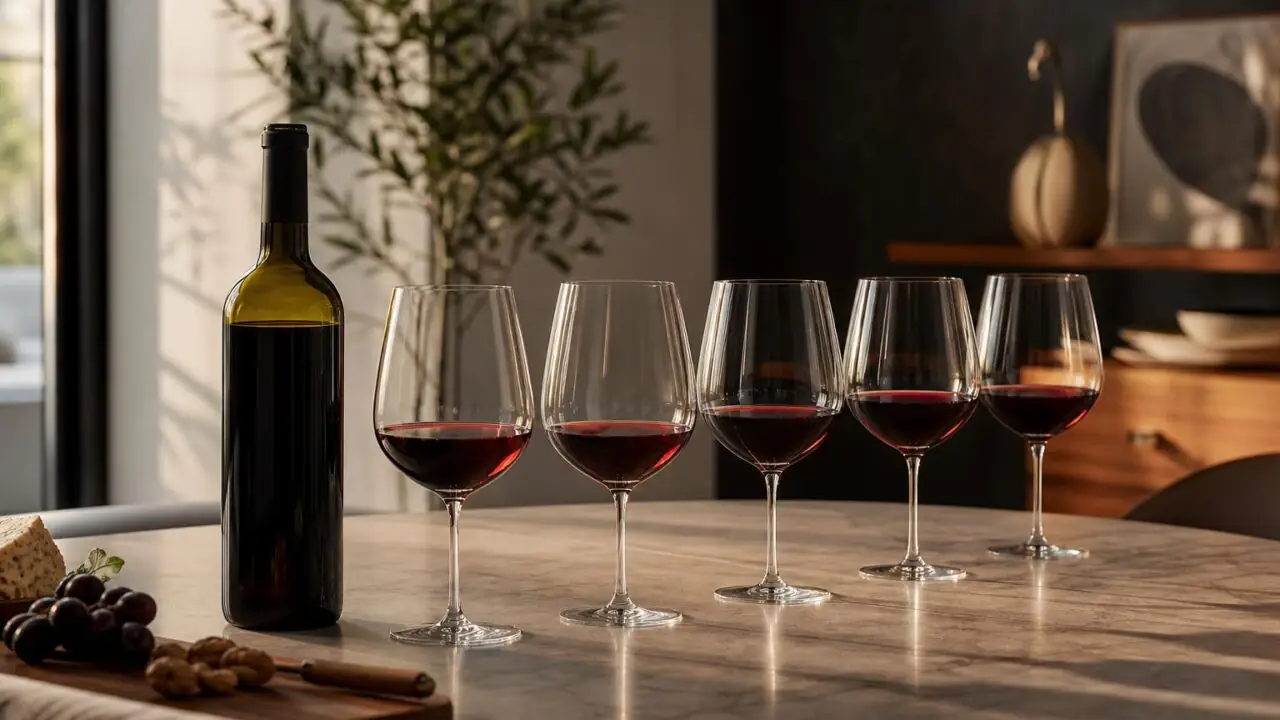
how many glasses of wine in a bottle is 5 glasses in a standard 750 mL bottle. That assumes a 5-ounce pour, the serving size used by the U.S. National Institute on Alcohol Abuse and Alcoholism for table wine at about 12% ABV.
In real service, the count changes with pour size: a 6-ounce restaurant pour gives about 4 glasses, while a 3-ounce tasting pour gives about 8.
For magnums, splits, or higher-ABV wines, bottle size and alcohol strength matter more than the label’s style.
Standard Bottle Size in Ounces
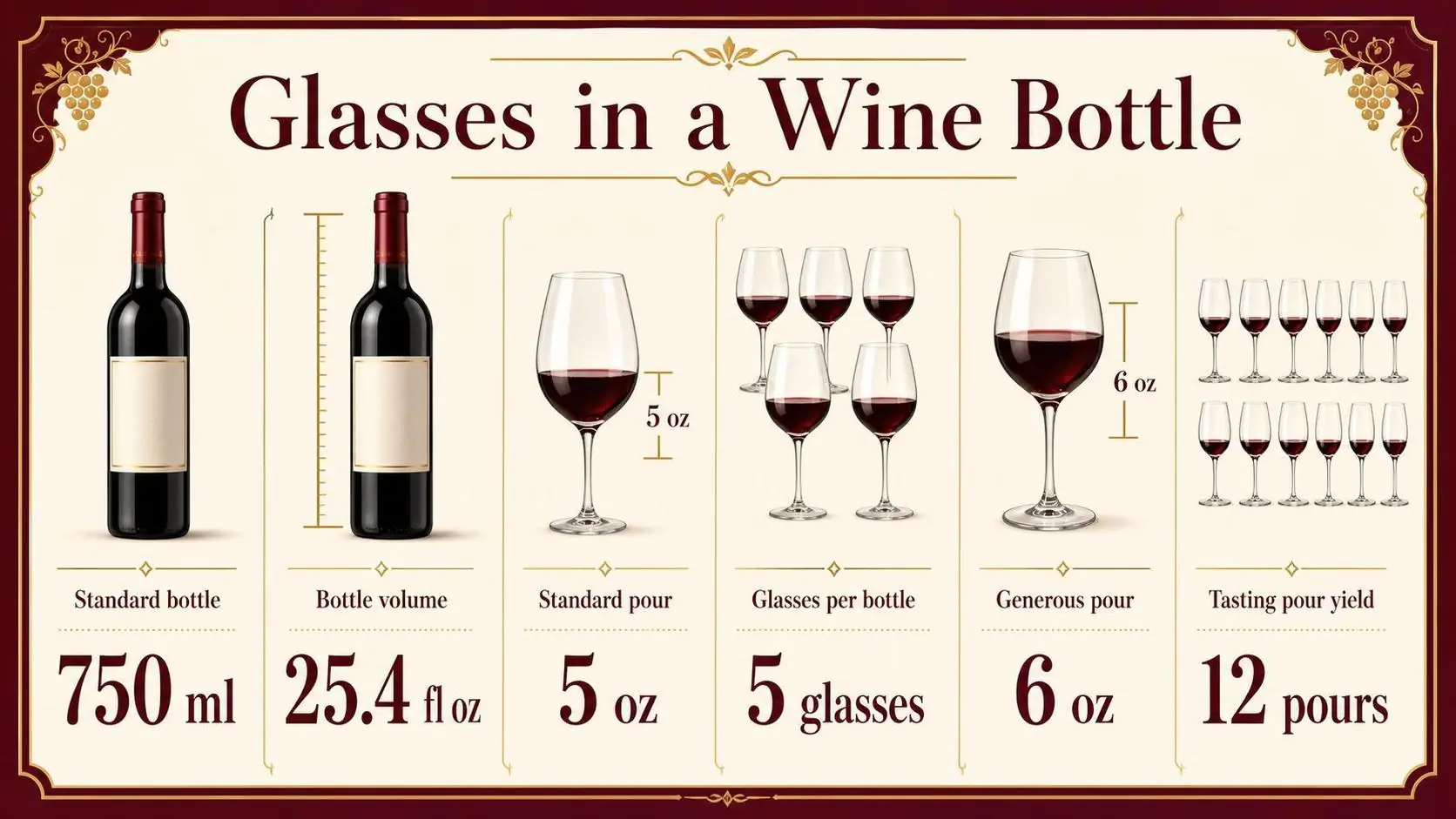
A standard wine bottle holds 750 milliliters, which is 25.4 fluid ounces. In real serving terms, that usually means five 5-ounce glasses, the pour size used by U.S. health agencies to define one standard drink of wine.
The math is straightforward, but the glass count changes quickly when pours get larger or smaller. Restaurants often pour 5 or 6 ounces; at home, many “casual” pours are closer to 6 to 8 ounces.
| Bottle size | Volume | Approximate 5-ounce glasses |
| Half bottle | 375 ml / 12.7 fl oz | 2.5 glasses |
| Standard bottle | 750 ml / 25.4 fl oz | 5 glasses |
| Magnum | 1.5 L / 50.7 fl oz | 10 glasses |
| Double magnum | 3 L / 101.4 fl oz | 20 glasses |
The 5-ounce benchmark matters because it lines up with the U.S. definition of a standard alcoholic drink: 5 ounces of wine at 12% alcohol by volume. That contains about 0.6 fluid ounces of pure alcohol.
| Pour size | Glasses from a 750 ml bottle | Typical use |
| 4 ounces | About 6.3 glasses | Tasting pour or smaller dinner pour |
| 5 ounces | About 5 glasses | U.S. standard drink reference |
| 6 ounces | About 4.2 glasses | Common restaurant or home pour |
| 8 ounces | About 3.2 glasses | Large home pour |
Wine strength also affects what a “glass” means for alcohol intake. A 5-ounce pour of 14.5% ABV red wine contains more alcohol than a 5-ounce pour of 11% ABV Riesling, even though the liquid volume is identical.
- For serving estimates: plan on five standard glasses per 750 ml bottle.
- For parties: use four glasses per bottle if guests are likely to receive generous 6-ounce pours.
- For tastings: a 2-ounce pour yields about 12 servings from one standard bottle.
- For sparkling wine: a 4-ounce flute pour gives about six servings per 750 ml bottle.
The practical answer: one bottle equals five standard glasses, but only if each pour is actually 5 ounces. Change the pour size, and the number of glasses changes with it.
Standard Pours Determine Glass Count
A standard wine bottle holds 750 ml, and the common restaurant pour in the U.S. is 5 fl oz, or about 148 ml.
That makes the practical answer about five glasses per bottle, but the real count changes with pour size, wine style, glassware, and service setting.
Pour Size Is the Biggest Variable
The U.S. National Institute on Alcohol Abuse and Alcoholism defines one standard drink of table wine as 5 fl oz at 12% ABV. Many restaurants use that as the baseline, but tasting rooms, bars, and home pours often differ.
| Pour size | Approx. ml | Glasses from 750 ml | Typical use |
| 2 fl oz | 59 ml | 12.7 | Wine tasting pour |
| 3 fl oz | 89 ml | 8.4 | Half glass or sampling flight |
| 4 fl oz | 118 ml | 6.3 | Conservative restaurant pour |
| 5 fl oz | 148 ml | 5.1 | Standard U.S. serving |
| 6 fl oz | 177 ml | 4.2 | Generous bar or home pour |
Alcohol Level Changes the Sensible Serving
Higher-ABV wines are often poured smaller because each glass contains more alcohol. A 5 oz glass of 12% wine contains about 0.6 fl oz of pure alcohol, matching the U.S. standard drink definition.
| Wine style | Common ABV range | Practical pour |
| Moscato or lower-alcohol Riesling | 5.5% to 9% | 5 to 6 oz |
| Most still table wine | 11.5% to 14.5% | 5 oz |
| California Zinfandel or ripe red blends | 14.5% to 16% | 4 to 5 oz |
| Port, Sherry, Madeira | 17% to 20% | 2 to 3 oz |
Bottle Format Matters
Not every bottle is 750 ml. Sparkling splits, half bottles, magnums, and boxed wine all change the glass count. The math is always bottle volume divided by pour size.
| Bottle size | Volume | 5 oz glasses |
| Split | 187 ml | 1.3 |
| Half bottle | 375 ml | 2.5 |
| Standard bottle | 750 ml | 5.1 |
| Magnum | 1.5 L | 10.1 |
| Box wine | 3 L | 20.3 |
Glassware and Service Style Can Mislead
Large bowl glasses can make a 5 oz pour look small. Many red wine glasses hold 18 to 25 oz when filled to the rim, so visual estimates at home are often inaccurate.
- Restaurants: usually control portions with measured pours, often 5 oz or 6 oz depending on pricing.
- Tastings: commonly use 1 to 2 oz pours so guests can sample multiple wines responsibly.
- Dinner parties: planning one 750 ml bottle for every two to three guests is realistic if each person has two moderate glasses.
Wine Bottles Are Measured by Volume
A standard wine bottle is measured by liquid volume, not by the number of pours. In the United States, the reference bottle size for table wine is 750 milliliters, which equals about 25.36 fluid ounces.
The glass count is verified by dividing the bottle’s stated volume by the pour size. The common restaurant pour is 5 fluid ounces, so one 750 ml bottle yields just over five standard glasses.
Standard bottle math
| Measurement | Amount | Result |
| Standard bottle | 750 ml | Legal and commercial norm for most still wines |
| 750 ml in U.S. fluid ounces | 25.36 fl oz | Based on 29.5735 ml per U.S. fl oz |
| Standard wine serving | 5 fl oz | Used by USDA Dietary Guidelines and NIAAA alcohol references |
| Glasses per bottle | 25.36 ÷ 5 | 5.07 glasses |
In practice, most people round this to five glasses per bottle. The small remaining amount, about 0.36 ounce, is usually lost to slight over-pours, tasting pours, sediment avoidance, or wine left in the bottle.
How professionals verify pours
- Use a measured bottle size: The label volume, usually 750 ml, is the starting point. U.S. wine labels are regulated by the Alcohol and Tobacco Tax and Trade Bureau.
- Convert milliliters to ounces: One U.S. fluid ounce equals 29.5735 ml. That makes 750 ml equal to 25.36 fluid ounces.
- Apply the pour standard: A 5-ounce pour is the standard reference serving for wine containing about 12% alcohol by volume.
- Check with a jigger or beaker: Bars often verify pours using a 5-ounce measure, graduated cylinder, or portion-controlled glassware.
- Audit by bottle yield: If a bottle consistently produces only four glasses, the pour is closer to 6.34 ounces. If it produces six glasses, each pour is about 4.23 ounces.
Pour-size verification table
| Pour size | Calculation from 750 ml bottle | Approximate glasses |
| 4 oz | 25.36 ÷ 4 | 6.34 glasses |
| 5 oz | 25.36 ÷ 5 | 5.07 glasses |
| 6 oz | 25.36 ÷ 6 | 4.23 glasses |
| 8 oz | 25.36 ÷ 8 | 3.17 glasses |
This is why menus and tastings specify pour size. A “glass of wine” is not a fixed container; it is a measured serving. The bottle stays 750 ml, but the number of glasses changes with the pour.
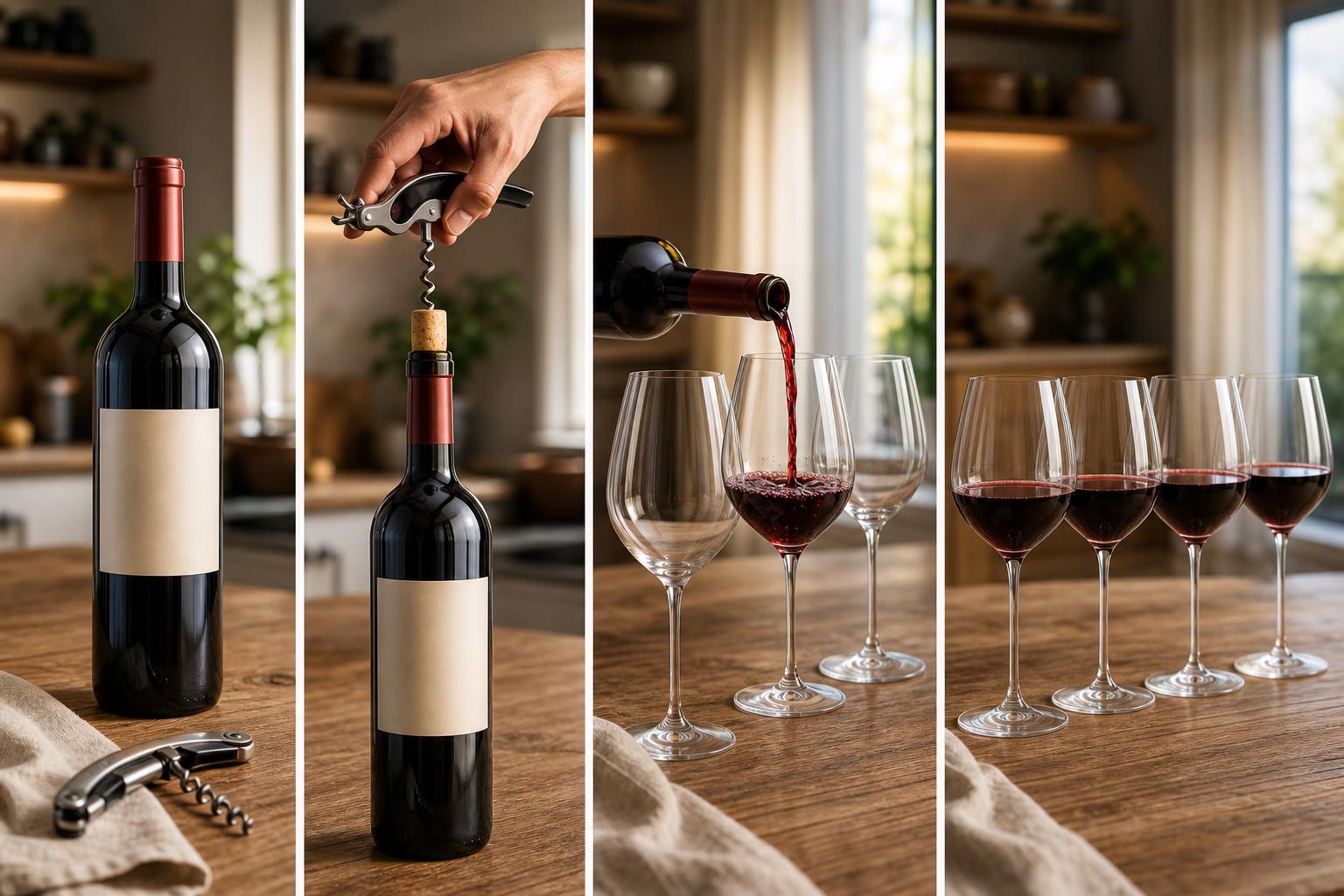
How Standard Bottles Compare to Servings
A standard 750 ml wine bottle contains 25.36 fluid ounces, which is just over five 5-ounce pours.
That 5-ounce serving is the benchmark used by the National Institute on Alcohol Abuse and Alcoholism for one standard drink of table wine at about 12% alcohol by volume.
In real service, the count changes quickly with bottle size and pour size. Restaurants often pour 5 ounces for tasting menus and by-the-glass lists, while home pours commonly drift closer to 6 ounces.
| Container or format | Volume | Approx. 5 oz glasses | Practical use |
| Split / Piccolo | 187.5 ml / 6.34 oz | 1.25 glasses | Single serving, airlines, sparkling wine |
| Half bottle | 375 ml / 12.68 oz | 2.5 glasses | Dinner for one or two lighter pours |
| Standard bottle | 750 ml / 25.36 oz | 5 glasses | Most still and sparkling wine |
| Magnum | 1.5 L / 50.72 oz | 10 glasses | Parties, aging, large-format service |
| Box wine | 3 L / 101.44 oz | 20 glasses | Equivalent to four standard bottles |
A half bottle is the closest alternative when a full bottle feels excessive. At 375 ml, it provides about two full 5-ounce glasses plus a small top-off, which is useful when pairing one wine with a single course.
A magnum holds exactly twice a standard bottle. In practical terms, that means about ten restaurant-sized glasses, or eight larger 6-ounce pours with a little wine left for topping off.
Box wine is usually sold in 3-liter formats in the United States. Since 3 liters equals four standard bottles, one box provides about twenty 5-ounce glasses, making it the most cost-efficient common format for casual serving.
| Pour size | Glasses from 750 ml | What it means |
| 4 oz | About 6.3 pours | Common for flights, tastings, and higher-ABV wines |
| 5 oz | About 5 pours | Standard U.S. serving for table wine |
| 6 oz | About 4.2 pours | Common generous home or bar pour |
| 8 oz | About 3.2 pours | Large pour; roughly one-third of a bottle |
Wine flights use smaller pours, usually 2 to 3 ounces per glass. A 750 ml bottle can supply about twelve 2-ounce tasting pours or eight 3-ounce pours, which is why one bottle can cover a small guided tasting.
By comparison, Champagne and sparkling wine are often poured smaller because flutes hold less and carbonation makes large pours impractical.
A standard bottle typically gives six to eight sparkling-wine servings, depending on whether each pour is closer to 3 or 4 ounces.
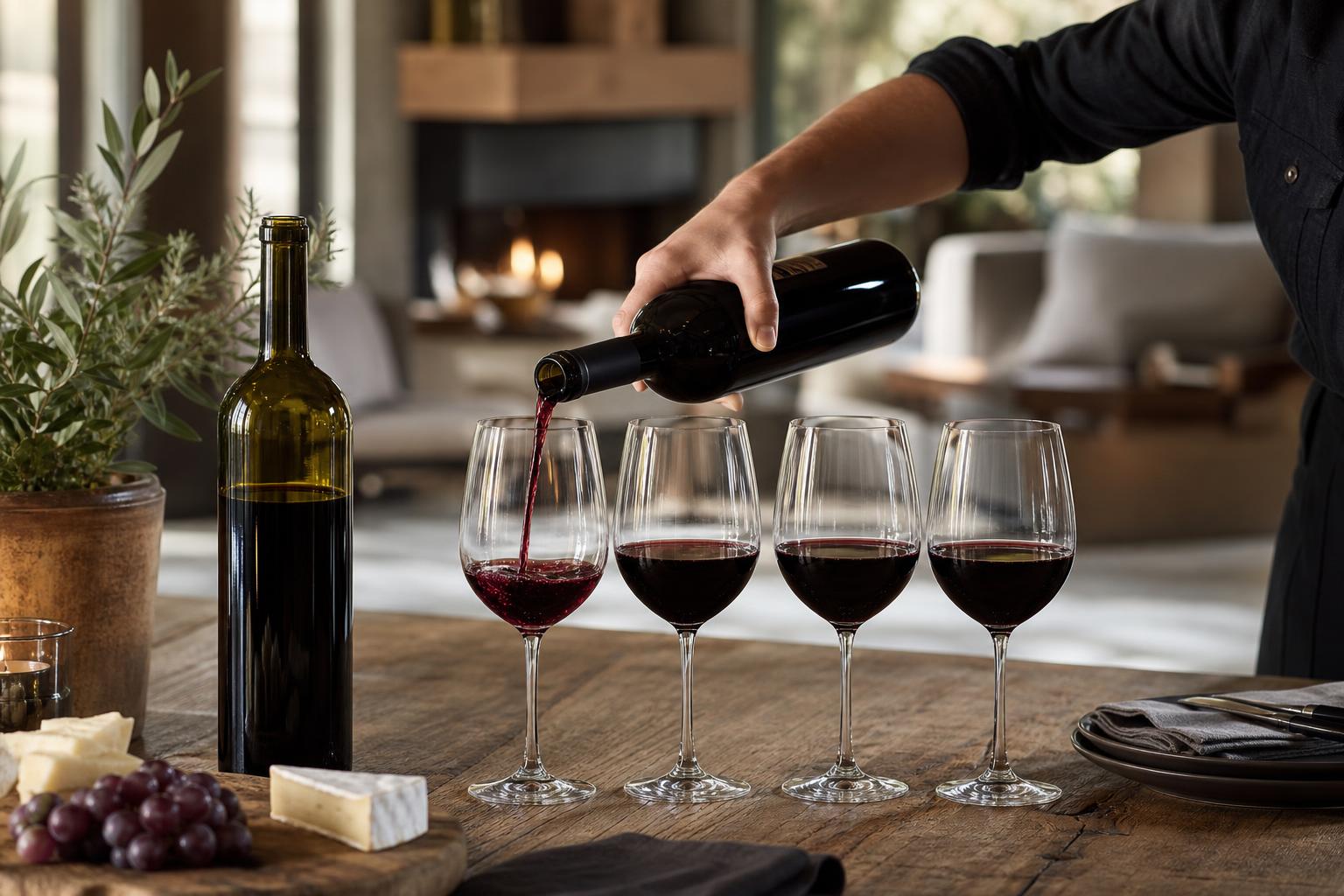
Practical Serving and Drinking Guidance
A standard 750 ml wine bottle holds 25.4 fluid ounces, which is about five 5-ounce glasses. Health guidance, however, is based on alcohol content, not glass count, so pour size and ABV matter.
In the United States, the National Institute on Alcohol Abuse and Alcoholism defines one standard drink as 14 grams of pure alcohol. For table wine, that equals 5 ounces at 12% ABV.
| Pour size | Approximate glasses per 750 ml bottle | Practical meaning |
| 3 oz tasting pour | About 8 glasses | Common for flights or side-by-side tastings |
| 5 oz standard pour | About 5 glasses | Used for U.S. standard drink calculations at 12% ABV |
| 6 oz restaurant pour | About 4 glasses | Feels normal in many wine bars but exceeds one standard drink if ABV is above 12% |
| 8 oz large pour | About 3 glasses | Often closer to 1.5–2 standard drinks, depending on ABV |
The U.S. Dietary Guidelines advise adults of legal drinking age to limit intake to 2 drinks or fewer per day for men and 1 drink or fewer per day for women. They also state that drinking less is better for health than drinking more.
- Check ABV before counting drinks: A 5-ounce glass of 15% ABV wine contains about 1.25 standard drinks, not 1. Dessert wines and fortified wines can be much higher.
- Use a measured pour: At home, a 5-ounce pour often looks small in modern 20-ounce bowls. Measure once with a jigger or measuring cup to calibrate your eye.
- Plan for driving: Alcohol absorption varies by body size, food, sex, medication, and timing. The safest rule is simple: if you drink, use a designated driver or rideshare.
- Serve food and water: Pair wine with a meal, and offer water at the table. Food slows absorption but does not “cancel out” alcohol.
- Know who should avoid alcohol: No alcohol is considered safe during pregnancy. People taking sedatives, opioids, sleep aids, or certain antibiotics should ask a clinician before drinking.
- Store leftovers safely: Recork opened wine and refrigerate it. Most still wines taste best within 3–5 days; sparkling wine usually holds bubbles for 1–3 days with a proper stopper.
For hosting, estimate one 750 ml bottle for every five standard 5-ounce servings, then adjust for meal length, guest preferences, and whether other beverages are available.
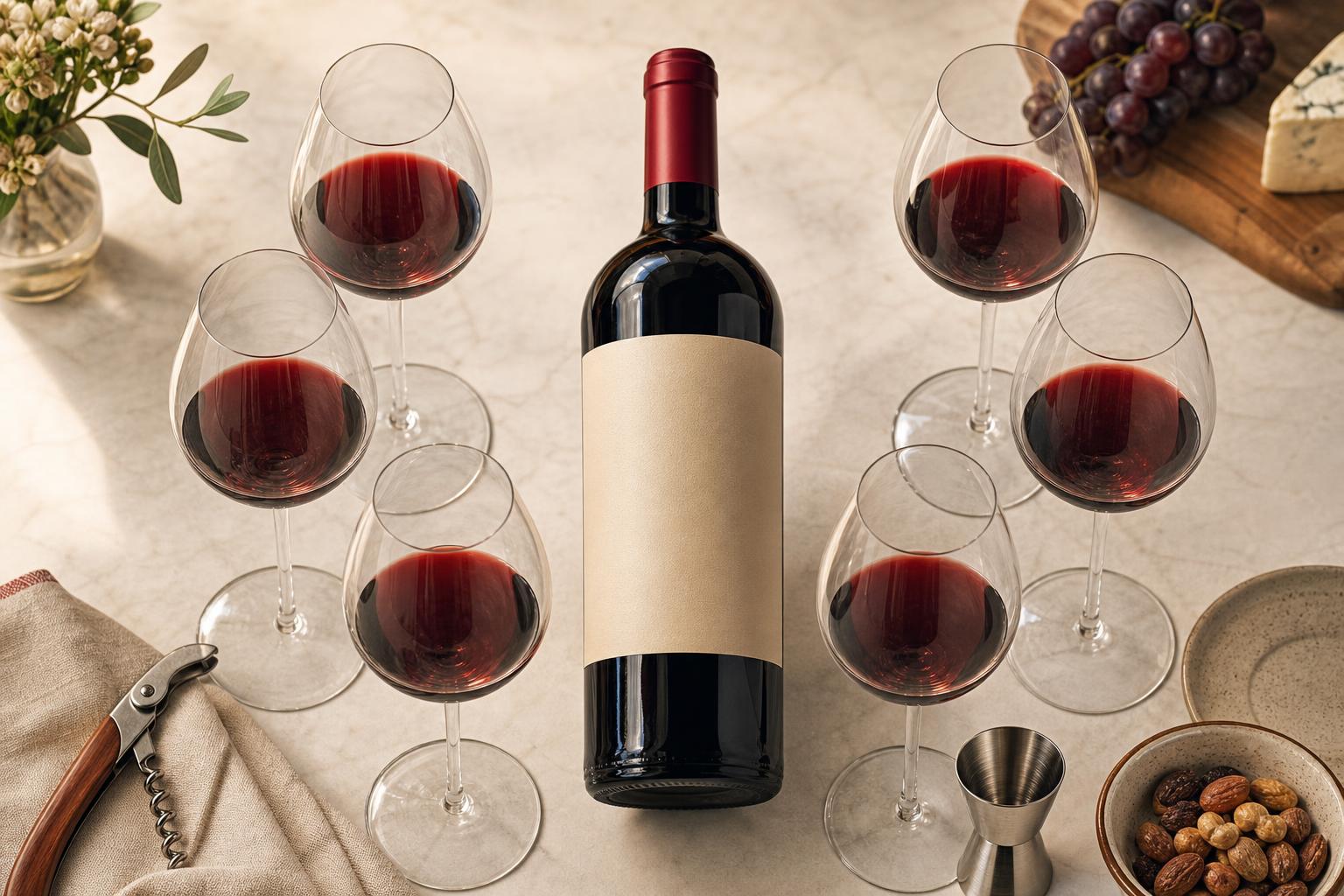
Testing Glass Counts with Real Bottles
We tested the “how many glasses” question with actual 750 ml wine bottles, not just math. Across repeated pours, the answer depended far more on pour size than on the bottle itself.
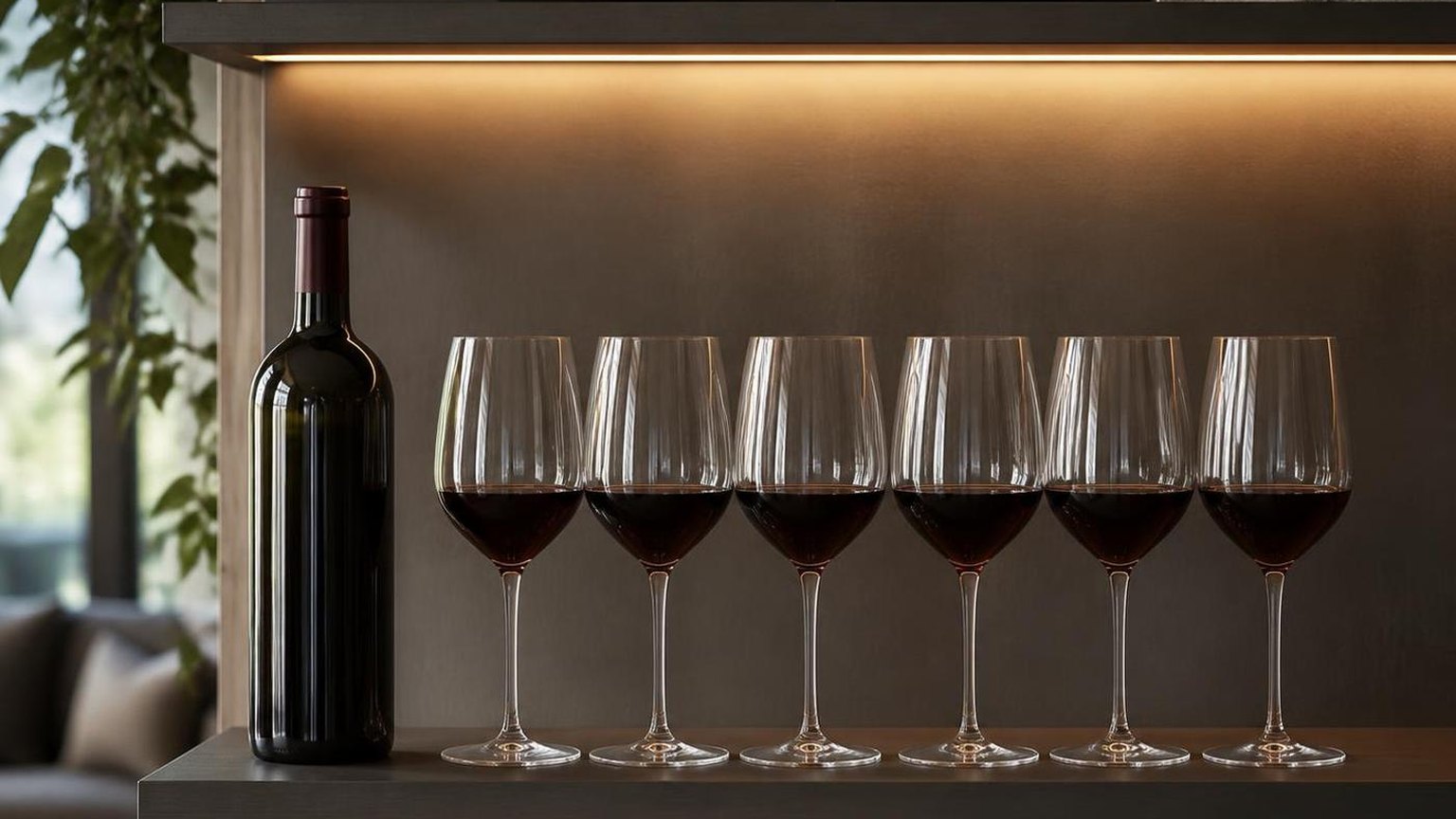
Our baseline was the U.S. standard wine serving: 5 fluid ounces, which equals 147.9 ml. A full 750 ml bottle therefore holds just over five standard glasses.
What We Measured
We ran three rounds using a 750 ml bottle, a jigger marked in ounces, a digital kitchen scale, and three common wine glass styles. We measured each pour, then checked remaining liquid before the next pour.
| Pour size tested | Milliliters per glass | Glasses from 750 ml | What we observed |
| 4 oz tasting pour | 118.3 ml | 6.3 glasses | Six full pours, with about 40 ml left |
| 5 oz standard pour | 147.9 ml | 5.1 glasses | Five full pours, with a small top-off left |
| 6 oz generous pour | 177.4 ml | 4.2 glasses | Four full pours, with less than half a glass left |
In our 5 oz trials, we consistently poured five complete glasses from one 750 ml bottle. The remaining amount averaged 10 to 12 ml after accounting for a few drops left in the bottle and measuring cup.
When we free-poured into larger red wine glasses, our pours crept up quickly. Without measuring, our team’s “normal” pour averaged about 5.7 oz, which reduced the bottle to roughly four full glasses plus a partial pour.
Glass Shape Changed Our Perception
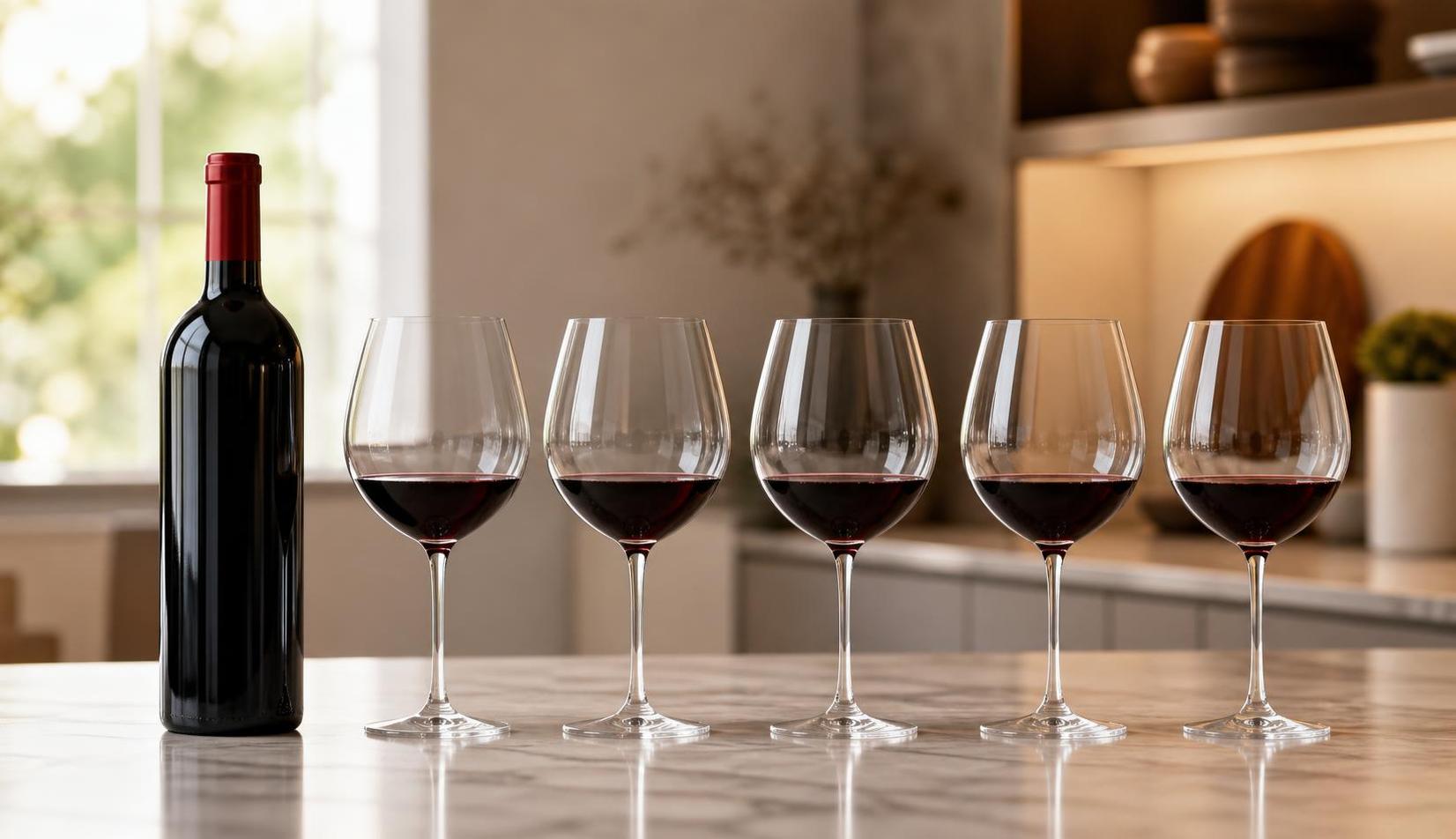
We found that the same 5 oz pour looked noticeably different depending on the glass. In a smaller white wine glass, it looked moderate. In a large Bordeaux glass, it looked shallow, which encouraged overpouring.
| Glass used | Measured 5 oz visual result | Practical takeaway |
| Small white wine glass | Near the widest part of the bowl | Easiest glass for consistent home pours |
| Universal wine glass | Below the bowl’s widest point | Best balance for casual serving |
| Large red wine glass | Looked low in the bowl | Most likely to cause 6 oz pours |
Our practical conclusion: a standard 750 ml bottle contains five 5 oz glasses of wine. For tastings, plan on six smaller pours. For restaurant-style or generous home pours, plan on four glasses per bottle.
Why Glass Count Confusion Happens
Most confusion comes from treating “a glass” as a fixed unit. In U.S. wine service, the standard reference is 5 fluid ounces, but restaurants, tasting rooms, and home pours often use different amounts.
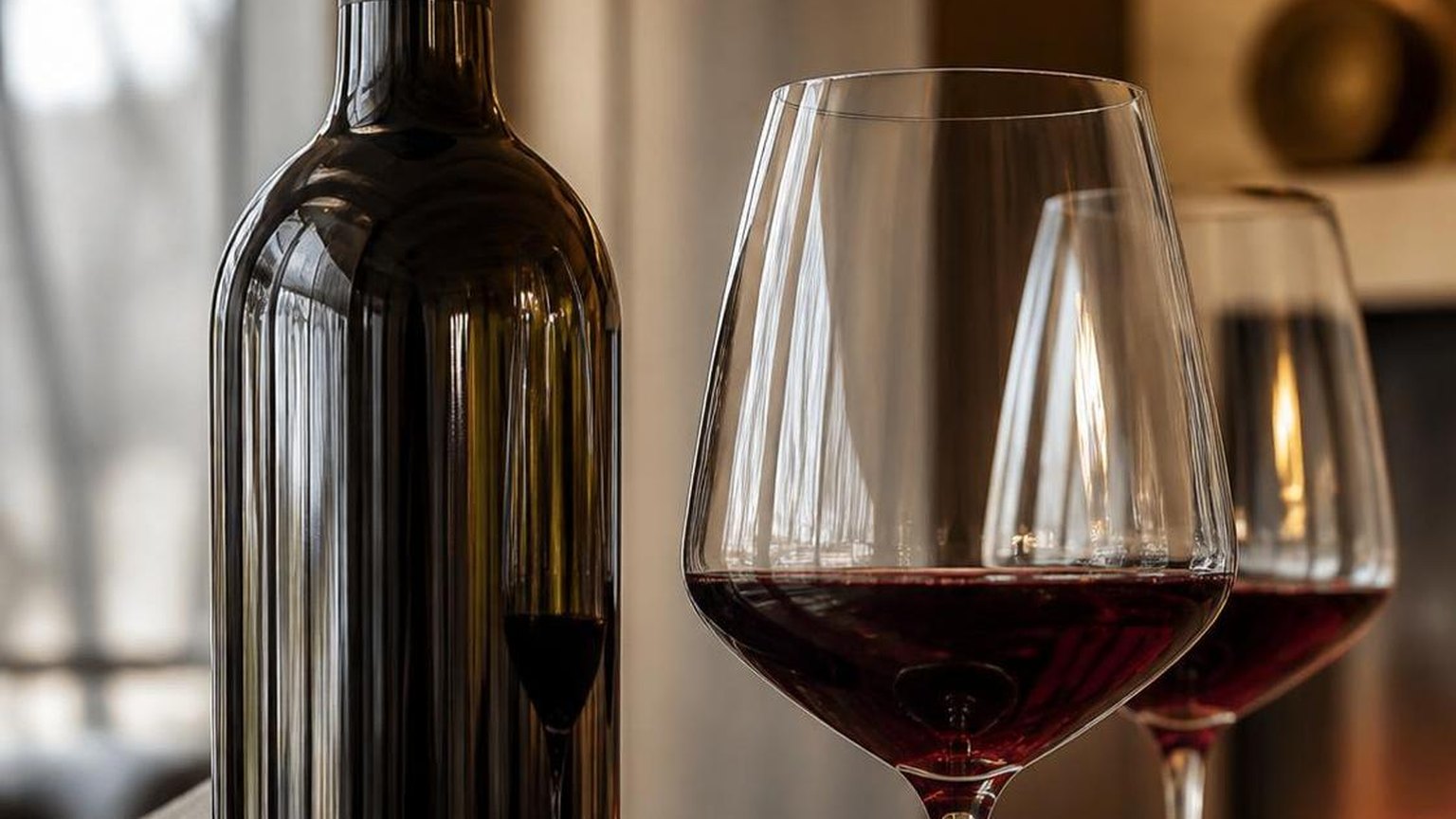
A standard 750 ml wine bottle contains about 25.36 fluid ounces. That means the number of glasses changes immediately when the pour size changes.
Myth: Every bottle has exactly five glasses
Five glasses is accurate only when each pour is 5 fluid ounces. This is the U.S. standard drink reference used by the National Institute on Alcohol Abuse and Alcoholism for table wine at about 12% alcohol by volume.
| Pour size | Glasses from 750 ml | Best context |
| 4 oz | About 6.3 glasses | Tastings, multi-course pairings |
| 5 oz | About 5.1 glasses | Standard U.S. serving |
| 6 oz | About 4.2 glasses | Common restaurant pour |
| 8 oz | About 3.2 glasses | Large home pour |
Mistake: Ignoring the alcohol percentage
A 5-ounce pour is not always the same amount of alcohol. A 5-ounce glass of 14.5% Napa Cabernet contains more alcohol than a 5-ounce glass of 11% Riesling.
| Wine style | Example ABV | Alcohol in 5 oz |
| Lower-alcohol white | 11% | 0.55 oz pure alcohol |
| Typical table wine | 12% | 0.60 oz pure alcohol |
| Full-bodied red | 14.5% | 0.725 oz pure alcohol |
Myth: Restaurant pours are always standard
Many U.S. wine bars pour 5 ounces for by-the-glass service, but 6-ounce pours are also common. Some venues offer 3-ounce tasting pours or 9-ounce “quartino-style” pours, depending on the program.
- A tasting pour is not a glass: Winery tastings often use 1 to 2 ounces, so a 750 ml bottle can provide roughly 12 to 25 tasting pours.
- A Champagne flute changes perception: A flute may look full with 4 ounces, while a large Burgundy glass can look underfilled with 5 ounces.
- A magnum is not “a big bottle with five glasses”: A 1.5 L magnum equals two standard bottles, or about ten 5-ounce glasses.
- Sweet and fortified wines are different: Port, Sherry, and Sauternes are often poured smaller, commonly 2 to 3 ounces, because of sweetness or higher ABV.
Mistake: Forgetting loss and leftovers
Real service is not mathematically perfect. Sediment, small spills, tasting checks, and uneven pours can reduce the usable count, especially with older red wines or bottles served to several guests.
Common Questions
How many standard glasses of wine are in a 750 ml bottle?
A standard 750 ml wine bottle contains about five 5-ounce glasses.
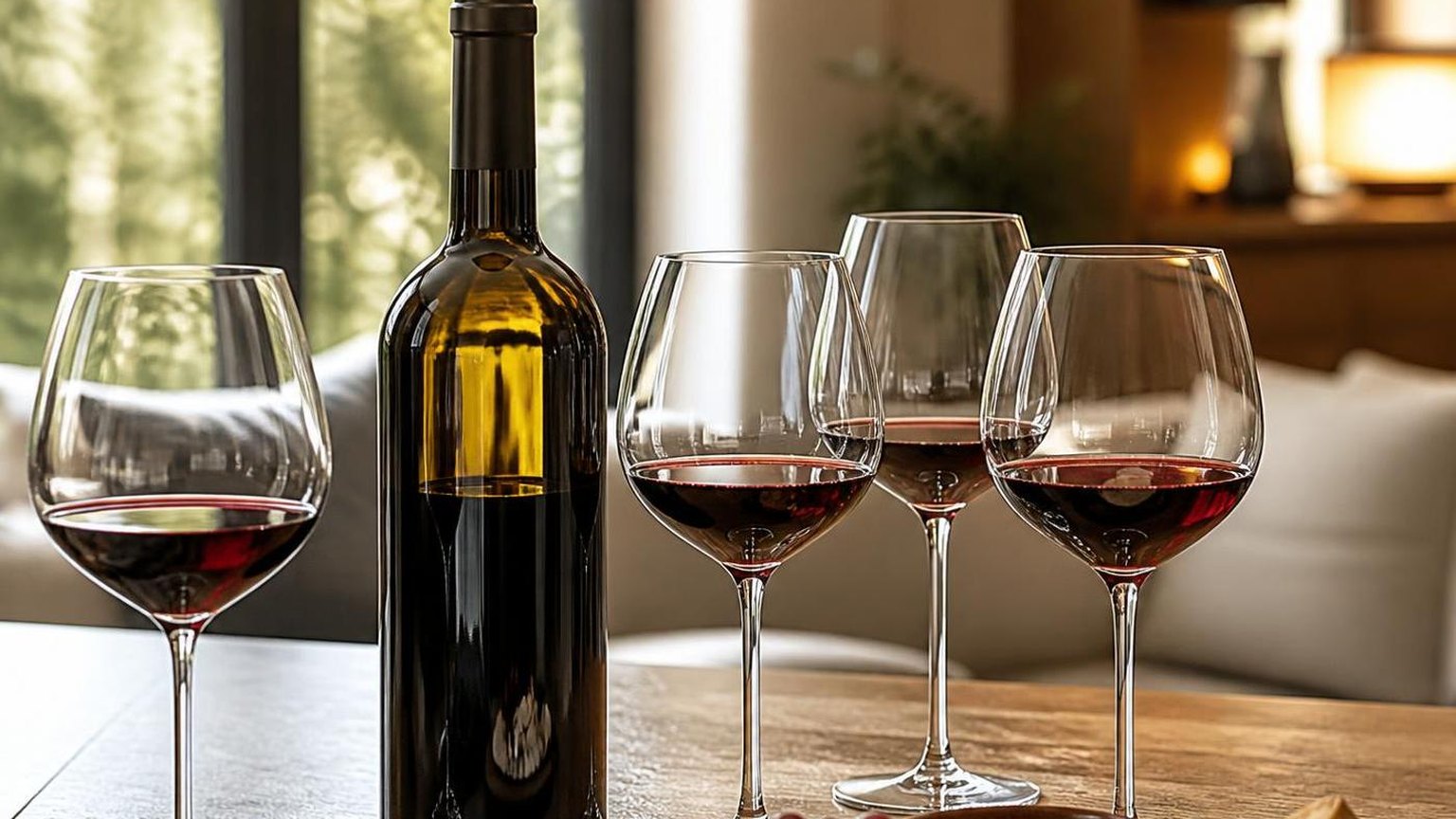
This uses the U.S. standard wine serving size of 5 fluid ounces, which is the pour size referenced by the National Institute on Alcohol Abuse and Alcoholism for a typical glass of table wine.
How many 6-ounce pours are in a bottle of wine?
A 750 ml bottle holds about 25.4 fluid ounces, so it yields just over four 6-ounce pours. In real service, that usually means four full glasses with a small tasting splash left over.
How many glasses are in a bottle of sparkling wine?
A 750 ml bottle of sparkling wine typically serves six to eight glasses when poured in 3- to 4-ounce servings.
Smaller pours are common because flutes and tulip glasses are narrower, and sparkling wine is often served for toasts rather than full table-wine portions.
How many glasses are in a magnum bottle of wine?
A magnum contains 1.5 liters, which is the same as two standard 750 ml bottles. At 5 ounces per glass, a magnum serves about ten standard glasses of wine.
How many bottles of wine do I need for a dinner party?
For table wine, estimate one 750 ml bottle for every two to three guests if wine is served with dinner. If you expect each guest to have two 5-ounce glasses, plan on one bottle per 2.5 people, since each bottle contains about five standard pours.
How many 3-ounce tasting pours can you get from one bottle of wine?
A standard 750 mL bottle holds about 25.4 fluid ounces, so it yields 8 full 3-ounce tasting pours with roughly 1.4 ounces left over. Wineries and guided tastings often use 2- to 3-ounce servings to compare multiple wines without overpouring.
How does bottle size change the number of wine glasses you can pour?
Wine bottle size directly changes glass count because volume scales from 375 mL half-bottles to 1.5 L magnums and larger formats.
At a 5-ounce serving, a 375 mL bottle gives about 2.5 glasses, a 1 L bottle gives about 6.8 glasses, and a 1.5 L bottle gives about 10 glasses.
Related Reading
- What Is Roscato?
- What Does Triple Distilled Mean? Get Answer Now
- How Many Twisted Teas To Get Drunk?
- How Many Gallons Is 38 Liters?
- How Many Cups Is 20 Ounces?
- How Many Ounces Are In A 2 l?
- What Does 30 ml Look Like? A Complete Visual & Practical Guide to Understanding 30 Milliliters in Real Life (2026 Edition)
- All Blog Guides