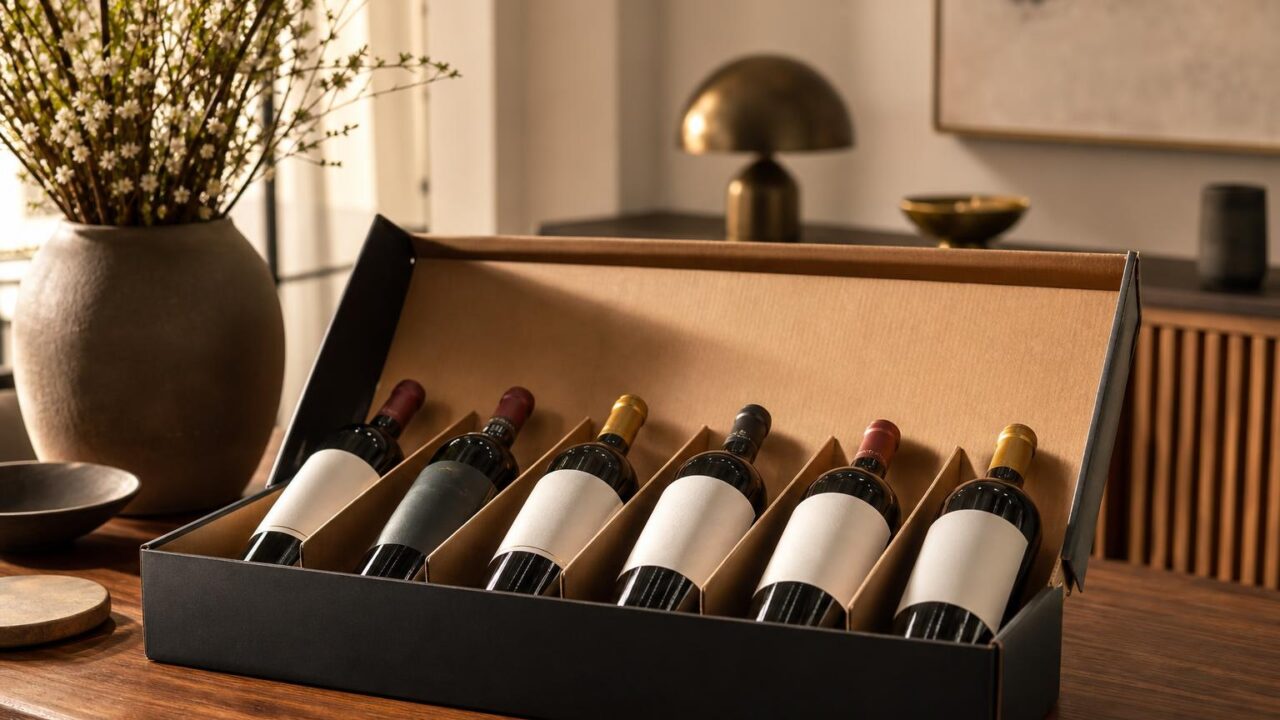
How Many Bottles In A Case Of Wine is 12 bottles.
In the U.S. wine trade, a standard case usually means twelve 750-milliliter bottles, totaling 9 liters of wine, though some wineries and retailers also sell 6-bottle half-cases for premium, sparkling, or direct-to-consumer orders.
Knowing the case size matters when comparing discounts, planning an event, or estimating storage space. A 12-bottle case weighs roughly 30 to 40 pounds depending on glass weight and packaging, and it equals about 60 standard 5-ounce servings.
Always confirm the bottle count before buying, because “case” can vary by format.
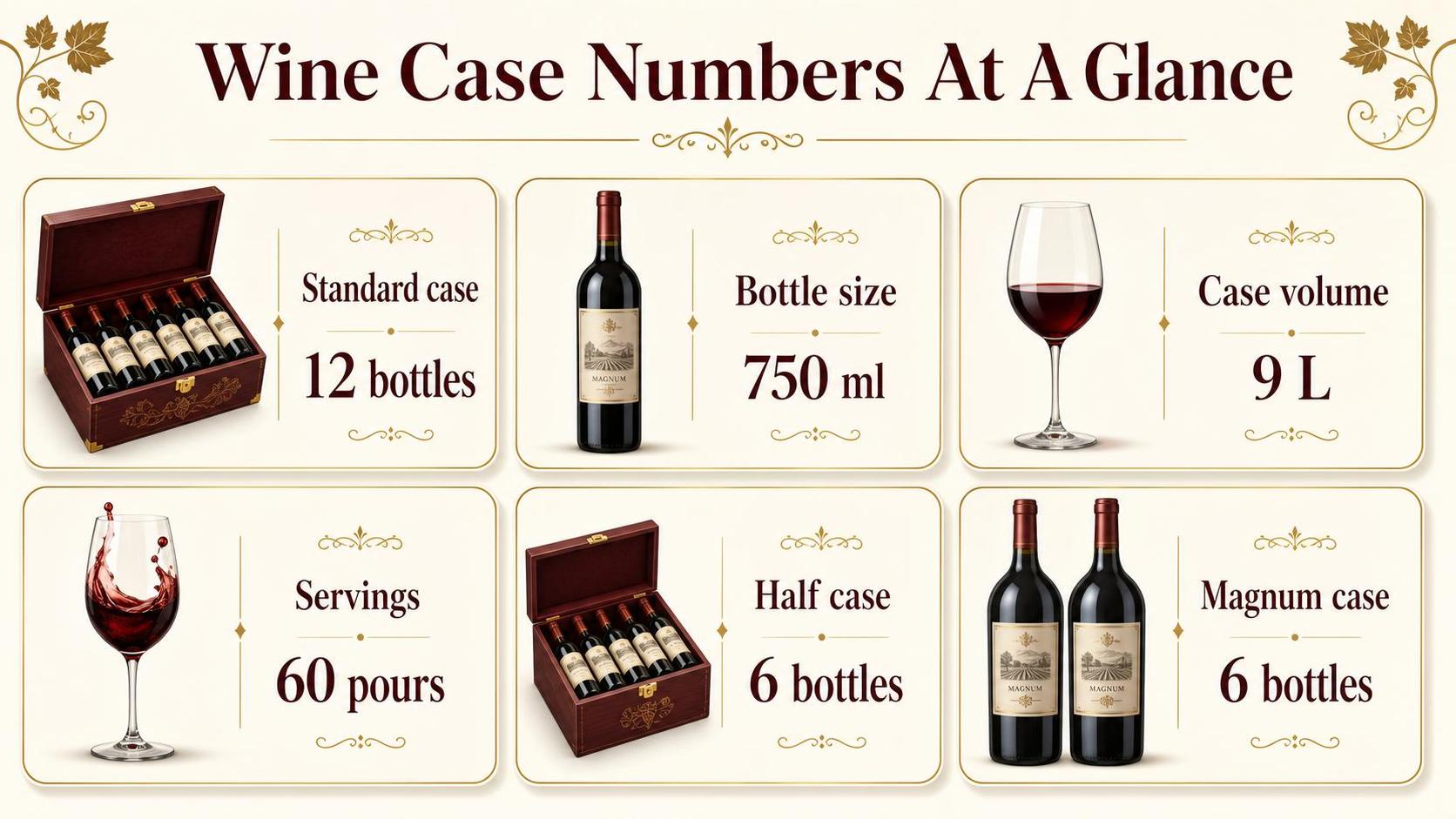
Standard Case Has 12 Bottles
A standard case of wine contains 12 bottles, and each standard bottle holds 750 milliliters. That makes a full case 9 liters of wine, equal to about 60 five-ounce servings.
Those numbers matter because wineries, retailers, distributors, and shipping carriers price and move wine by case.
In the U.S., the 750 ml bottle is the standard wine container size recognized in federal labeling rules by the Alcohol and Tobacco Tax and Trade Bureau.
| Package | Bottles | Total volume | Approx. 5 oz pours |
| Standard bottle | 1 | 750 ml / 0.75 L | 5 pours |
| Standard case | 12 | 9 L | 60 pours |
| Half case | 6 | 4.5 L | 30 pours |
The pour count is based on a 5-ounce serving, the reference serving size used in U.S. nutrition and alcohol guidance. One 750 ml bottle contains 25.36 fluid ounces, so it yields just over five restaurant-style pours.
Why 12 Bottles Became The Default
The 12-bottle case is the trade norm because it balances volume, weight, storage efficiency, and pricing. A full 12-bottle case is large enough for wholesale handling but still practical for cellar storage and retail pickup.
| Case type | Common use | What to expect |
| 12-bottle case | Retail, wholesale, cellar buying | Most common still-wine case |
| 6-bottle case | Premium wine, club shipments, mixed packs | Common for higher-value or limited wines |
| 3-bottle case | Gift sets, samples, small allocations | Less common, often promotional |
Not every “case” means 12 bottles. Many wineries ship 6-bottle cases, especially for expensive wines, wine club orders, or mixed selections. Sparkling wine may also appear in 6-bottle packs because heavier glass increases shipping weight.
How Bottle Size Changes The Math
Case count and total volume are separate questions. Twelve 750 ml bottles equal 9 liters, but twelve half-bottles equal only 4.5 liters. Large formats change serving counts quickly.
| Bottle size | Volume | 12-bottle case volume |
| Half bottle | 375 ml | 4.5 L |
| Standard bottle | 750 ml | 9 L |
| Magnum | 1.5 L | 18 L |
- Most U.S. wine cases: 12 standard 750 ml bottles.
- Most half cases: 6 standard bottles.
- Most full cases by volume: 9 liters total.
- Most practical serving estimate: about 60 five-ounce pours per standard case.
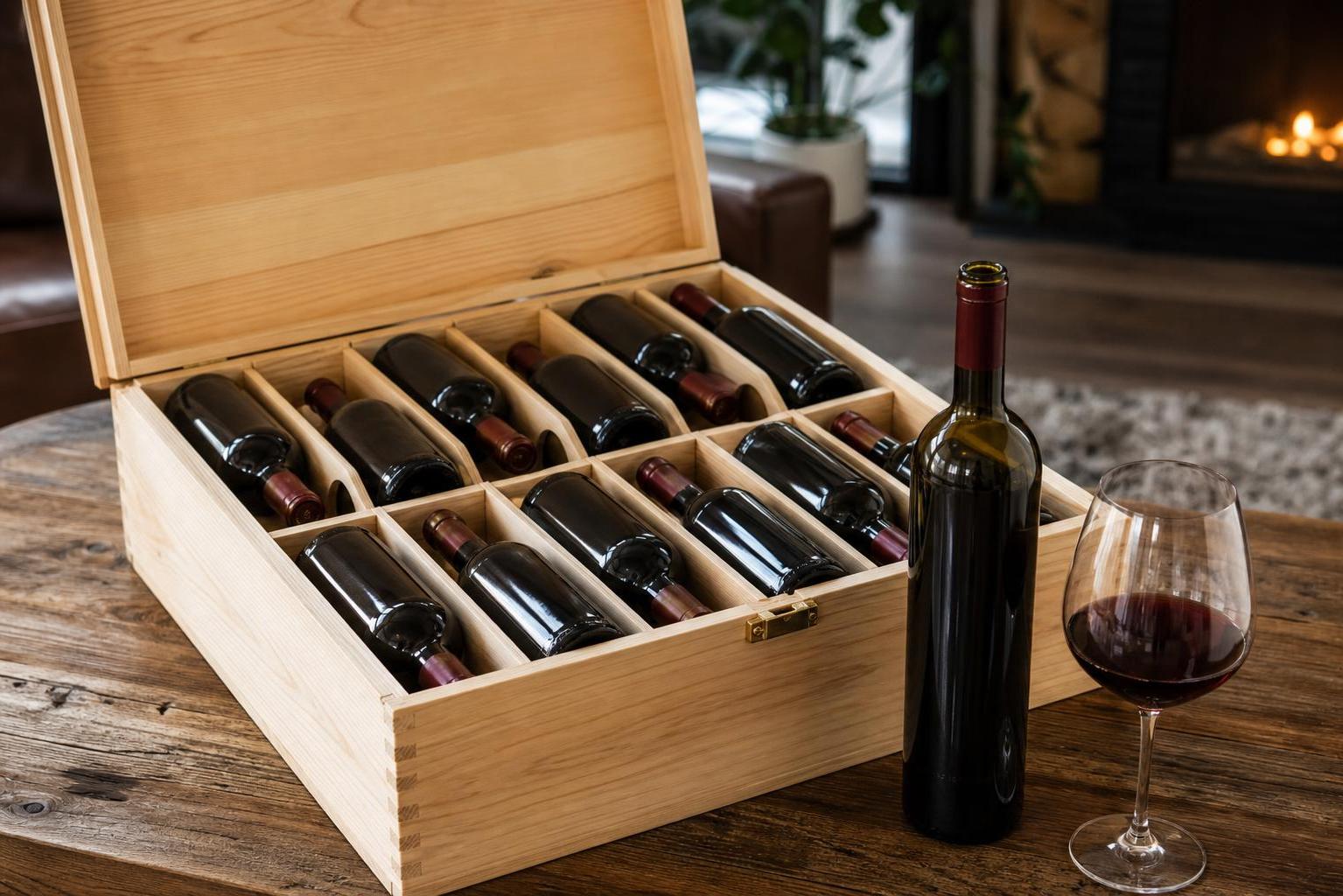
Case Size Varies by Convention
A “case of wine” usually means 12 standard 750 ml bottles in the U.S., but that is a trade convention, not a universal package size. The count changes when bottle size, packaging, shipping limits, or retailer language changes.
The fastest way to verify the answer is to check total volume, not just bottle count. U.S. wine labels are regulated by the Alcohol and Tobacco Tax and Trade Bureau, and 750 ml is the dominant standard bottle size.
Bottle size changes the count
Cases are often built around a practical total volume and carton weight. A 12-bottle case of 750 ml wine contains 9 liters, which is why “9L case” is common in wholesale and distribution.
| Bottle format | Volume per bottle | Common case count | Total wine |
| Split or piccolo | 187 ml | 24 bottles | 4.488 liters |
| Half bottle | 375 ml | 12 or 24 bottles | 4.5 or 9 liters |
| Standard bottle | 750 ml | 12 bottles | 9 liters |
| Magnum | 1.5 liters | 6 bottles | 9 liters |
| Jeroboam | 3 liters | 3 bottles | 9 liters |
Packaging and shipping constraints matter
Glass is heavy. A typical 750 ml bottle weighs about 2.65 to 3.5 pounds when full, depending on glass weight. A 12-bottle case commonly lands around 32 to 42 pounds before extra shipping materials.
Because of that, many wineries and online retailers ship in 1, 2, 3, 6, or 12-bottle cartons. A “half case” almost always means 6 bottles of 750 ml wine, or 4.5 liters total.
Retailer wording can differ from distributor wording
In retail, “case discount” may apply to 12 bottles, even if the bottles are mixed across producers. In wholesale, a case often refers to the original sealed carton from the winery or importer.
- Solid case: Usually 12 identical 750 ml bottles from one SKU.
- Mixed case: Usually 12 total bottles, often selected across styles or producers.
- Half case: Usually 6 bottles, especially for direct-to-consumer winery shipments.
- Large-format case: Often fewer bottles because each bottle holds more wine.
Product type can also change the answer
Sparkling wine, dessert wine, boxed wine, canned wine, and large-format bottles may not follow the 12-bottle assumption. For example, a 3-liter box equals 4 standard 750 ml bottles, while a 250 ml can equals one-third of a standard bottle.
Verify Cases by Count and Volume
A wine “case” is verified by counting individual bottles and confirming total liquid volume, not by box size alone. In U.S. wine trade usage, the benchmark case is 12 bottles of 750 ml wine, totaling 9 liters.
That 9-liter figure matters because distributors, importers, and retailers often price, tax, and inventory wine by case equivalent.
At receiving, the carton count, bottle size, and invoice description should all match before the wine is accepted into stock.
| Case format | Bottle size | Bottles per case | Total volume |
| Standard still wine case | 750 ml | 12 | 9.0 liters |
| Half case | 750 ml | 6 | 4.5 liters |
| Magnum case | 1.5 liters | 6 | 9.0 liters |
| Split or half-bottle case | 375 ml | 24 | 9.0 liters |
The legal bottle size is checked against the label and the container. The U.S. Alcohol and Tobacco Tax and Trade Bureau recognizes metric “standards of fill” for wine under 27 CFR §4.72, including 375 ml, 750 ml, and 1.5 liters.
- Count the bottles: Open or visually inspect the carton when receiving. A standard 750 ml case should contain 12 bottles unless the invoice clearly says 6-pack, 3-pack, or another format.
- Confirm the bottle size: Read the front or back label for the net contents statement, such as 750 ml or 1.5 L. Do not assume all cartons with 12 slots are standard 750 ml cases.
- Match the invoice: Distributor invoices usually list quantity by case and unit. For example, “1 cs” of 12/750 ml means 12 bottles, while “1 cs” of 6/750 ml means six bottles.
- Check the case equivalent: Convert the shipment to liters when comparing formats. Six magnums and twelve 750 ml bottles both equal 9 liters.
| Invoice notation | Meaning | Bottles received | Liters received |
| 12/750 ml | 12 bottles, each 750 ml | 12 | 9.0 |
| 6/750 ml | 6 bottles, each 750 ml | 6 | 4.5 |
| 6/1.5 L | 6 magnums, each 1.5 liters | 6 | 9.0 |
In practical cellar work, the fastest verification is carton label first, invoice second, bottle label third. If any one of those disagrees, treat the case as an exception and document it before shelving or selling the wine.
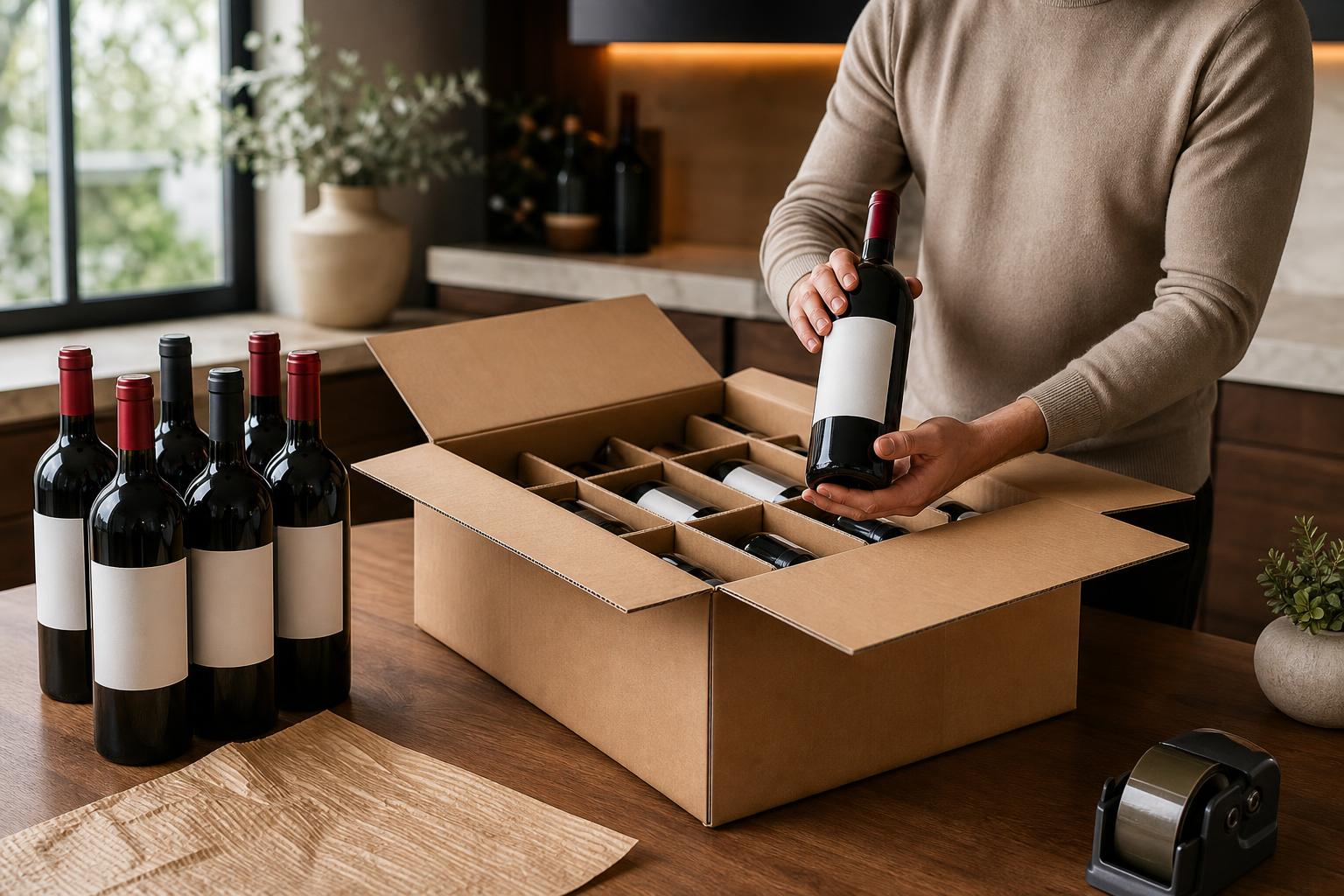
Standard Case Equals Nine Liters
A standard U.S. wine case holds 12 bottles of 750 ml each, or 9 liters total. That equals 60 standard 5-ounce pours, using the serving size recognized in U.S. dietary guidance for table wine.
Other case formats are common in tasting rooms, retail shipping, club allocations, and restaurant purchasing. The bottle count changes, but the easiest comparison is total liters and approximate 5-ounce servings.
| Format | Bottles or containers | Total volume | Approx. 5-ounce pours |
| Standard wine case | 12 x 750 ml bottles | 9.0 liters | 60 pours |
| Half case | 6 x 750 ml bottles | 4.5 liters | 30 pours |
| Magnum case | 6 x 1.5 L bottles | 9.0 liters | 60 pours |
| Split or piccolo case | 24 x 187 ml bottles | 4.488 liters | About 30 pours |
| Boxed wine case equivalent | 3 x 3 L boxes | 9.0 liters | 60 pours |
| Jeroboam equivalent | 3 x 3 L bottles | 9.0 liters | 60 pours |
The 6-bottle half case is the most common alternative for consumers. It is easier to carry, cheaper to ship, and often used by wineries for club shipments when weather or cost makes a full 12-bottle case impractical.
A magnum case usually contains 6 bottles, not 12. Because each magnum is 1.5 liters, a 6-magnum case contains the same 9 liters as a standard 12-bottle case.
Small-format bottles change the math quickly. A 187 ml split is one quarter of a 750 ml bottle, so 24 splits equal just under 6 standard bottles, not a full case.
For boxed wine, the comparison depends on box size. A 3-liter box equals 4 standard 750 ml bottles, so three 3-liter boxes match a full 12-bottle case by volume.
- Best match by volume: 6 magnums, 3 three-liter boxes, or 3 Jeroboams each equal 9 liters.
- Best for mixed buying: a 6-bottle half case lets you sample more styles with less storage commitment.
- Best for events: a 12-bottle case remains the clearest planning unit because it provides about 60 five-ounce pours.
Retailers may also use “case” loosely for packaging, especially with sparkling wine, large formats, or imported cartons. Always confirm both bottle count and bottle size before comparing price per bottle or price per liter.
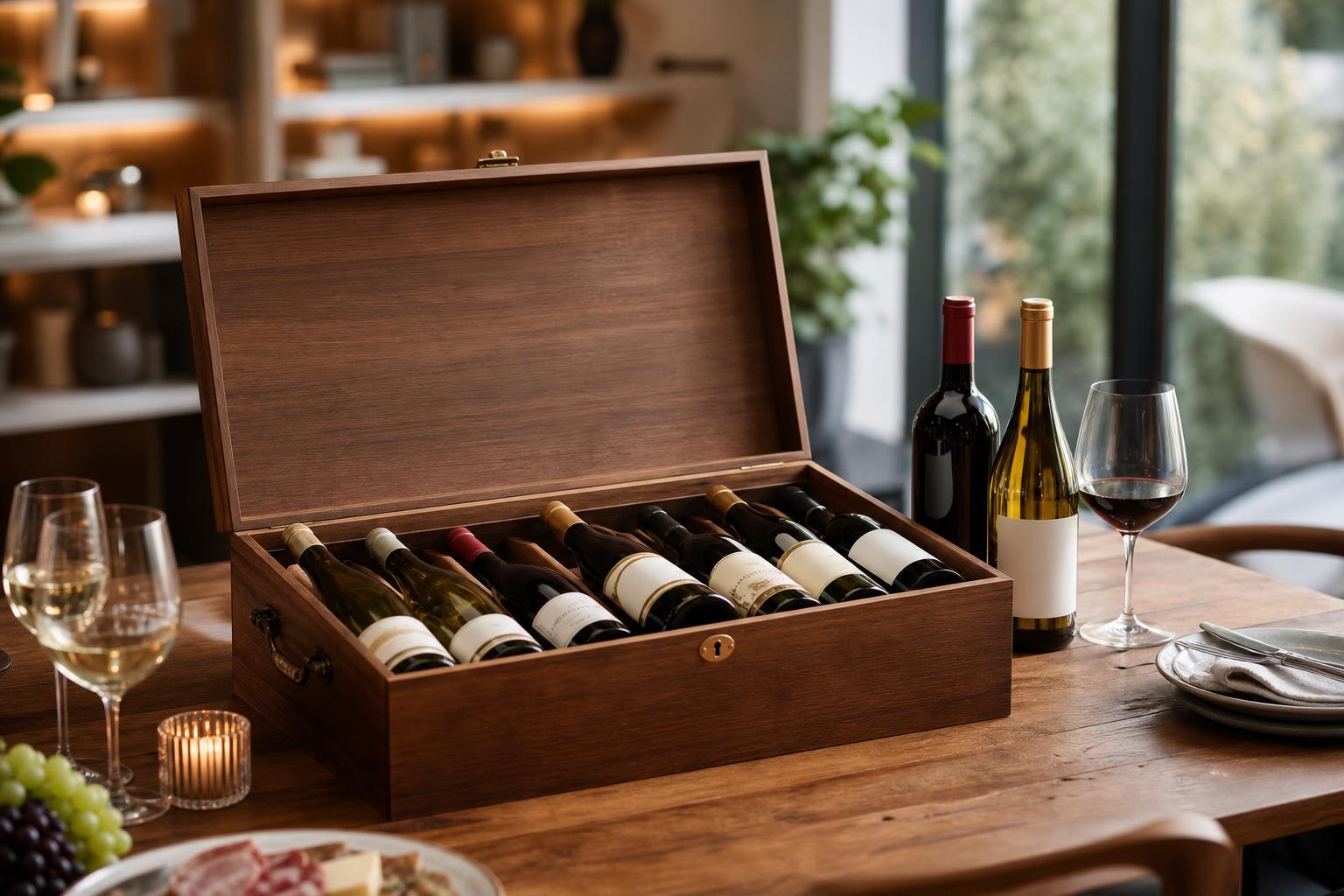
Safe Handling of Wine Cases
A standard wine case usually holds 12 bottles of 750 mL wine, or 9 liters total. That is convenient for storage and buying, but it also means a full case is heavy, contains many servings, and should be handled with care.
| Item | Specific figure |
| Standard bottle | 750 mL, about 25.4 fl oz |
| Standard case | 12 bottles, 9 liters total |
| Typical 5 oz pours per bottle | About 5 servings |
| Typical 5 oz pours per case | About 60 servings |
| Approximate case weight | 35 to 40 lb, depending on glass and packaging |
For health planning, use the U.S. standard drink definition: 14 grams of pure alcohol. According to the National Institute on Alcohol Abuse and Alcoholism, 5 fl oz of wine at 12% ABV equals one standard drink.
| Wine ABV | Alcohol in a 5 oz pour | Practical note |
| 12% | About 14 g alcohol | Counts as 1 U.S. standard drink |
| 14.5% | About 17 g alcohol | More than 1 standard drink |
| 15.5% | About 18 g alcohol | Common in some bold reds |
The CDC’s 2020-2025 Dietary Guidelines summary states that adults who drink should limit intake to 2 drinks or fewer per day for men and 1 drink or fewer per day for women. Some people should not drink at all.
- Do not drink alcohol if you are pregnant, under the legal drinking age, taking interacting medications, or planning to drive.
- If serving a case at an event, count glasses, not bottles. One 12-bottle case provides roughly 60 five-ounce pours.
- Offer water and food. Alcohol absorption is faster on an empty stomach.
- Use a measured pourer or jigger for tastings; “restaurant pours” can be 6 to 8 oz, not 5 oz.
For lifting, treat a case like a heavy grocery crate. A 40 lb box lifted from the floor can strain the back, especially when the cardboard is damp or the load shifts.
- Lift with both hands from the bottom, not by the top flaps.
- Keep the case close to your torso and avoid twisting while carrying.
- For stairs, move one case at a time or use a hand truck rated for the load.
- Store cases on low shelves, ideally below shoulder height, to reduce drop risk.
For quality and safety, store wine away from heat and sunlight. A practical home target is 55°F, with short-term storage generally acceptable around 45°F to 65°F if temperatures are stable.
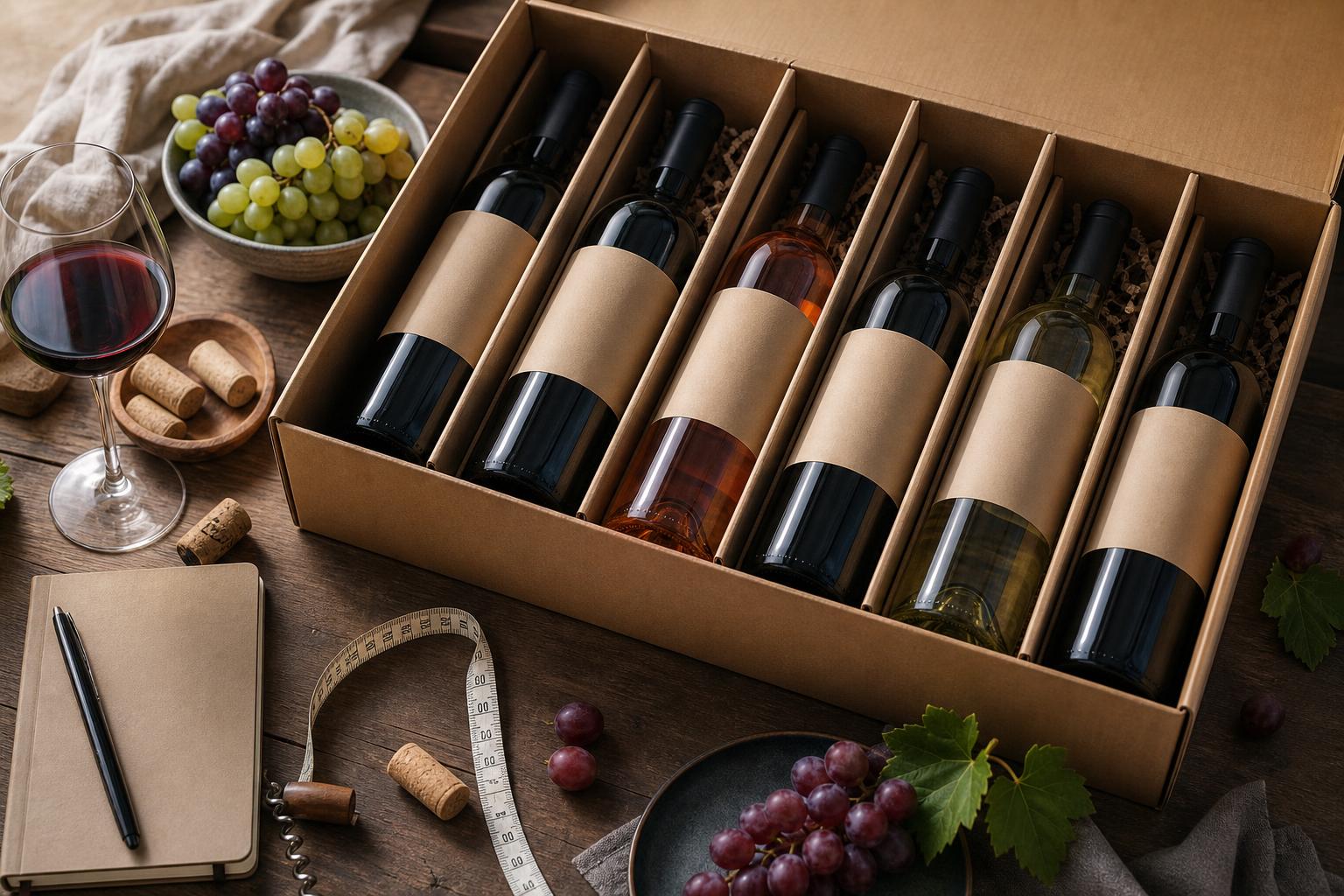
Checking Wine Cases in Practice
We checked actual cases in our storage room, behind the bar, and during receiving to confirm what “a case of wine” means in practice. For standard still wine, every full case we handled contained twelve 750 ml bottles, totaling 9 liters.
We repeated the count across domestic, French, Italian, Spanish, and New Zealand shipments. The only time the bottle count changed was when the bottle size changed or the supplier labeled the box as a half-case, sampler, or mixed pack.
| Case type we handled | Bottles in case | Bottle size | Total wine volume |
| Standard still wine case | 12 | 750 ml | 9 liters |
| Half-case | 6 | 750 ml | 4.5 liters |
| Magnum case | 6 | 1.5 liters | 9 liters |
| Split or piccolo case | 24 | 375 ml | 9 liters |
We also weighed incoming cases on a calibrated shipping scale because case weight matters for storage and staff handling. A typical twelve-bottle 750 ml case landed between 34 and 42 pounds, depending on glass thickness and packaging.
| Measured item | Lowest weight observed | Highest weight observed | What changed the weight |
| 12-bottle 750 ml case | 34 lb | 42 lb | Glass weight, cardboard, dividers |
| 6-bottle 750 ml half-case | 18 lb | 23 lb | Bottle shape and carton style |
| 6-bottle magnum case | 39 lb | 47 lb | Heavier 1.5 liter glass |
For service planning, the twelve-bottle case was the most useful baseline. At 750 ml per bottle, we pour about five 5-ounce glasses per bottle, so one standard case yields roughly sixty 5-ounce pours.
- We counted twenty standard 750 ml cases during receiving; all held twelve bottles.
- We checked six half-cases from boutique importers; all held six bottles.
- We opened four magnum cases; each held six 1.5 liter bottles.
- We timed restocking: moving and shelving one standard case took us about 3 to 5 minutes.
Our practical conclusion: when a U.S. wine shop, distributor, or restaurant says “case of wine” without qualification, assume twelve 750 ml bottles.
Confirm the count only when ordering half-bottles, magnums, sparkling wine, mixed packs, or half-cases.
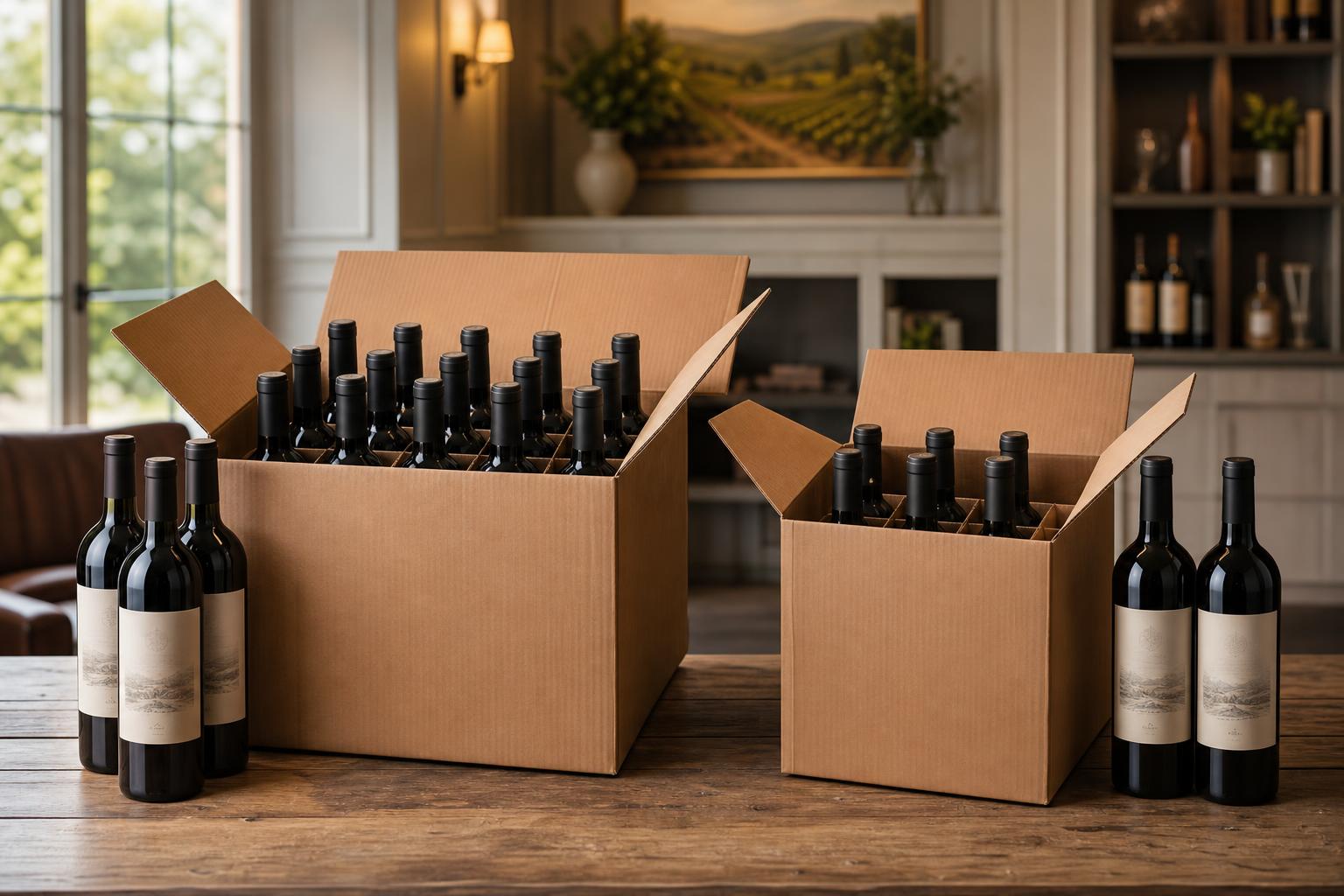
Why Wine Case Counts Cause Confusion
Most confusion about wine cases comes from mixing retail language with shipping, bottle-size, and tax terminology. In U.S. wine retail, a standard case almost always means 12 bottles of 750 ml wine, totaling 9 liters.
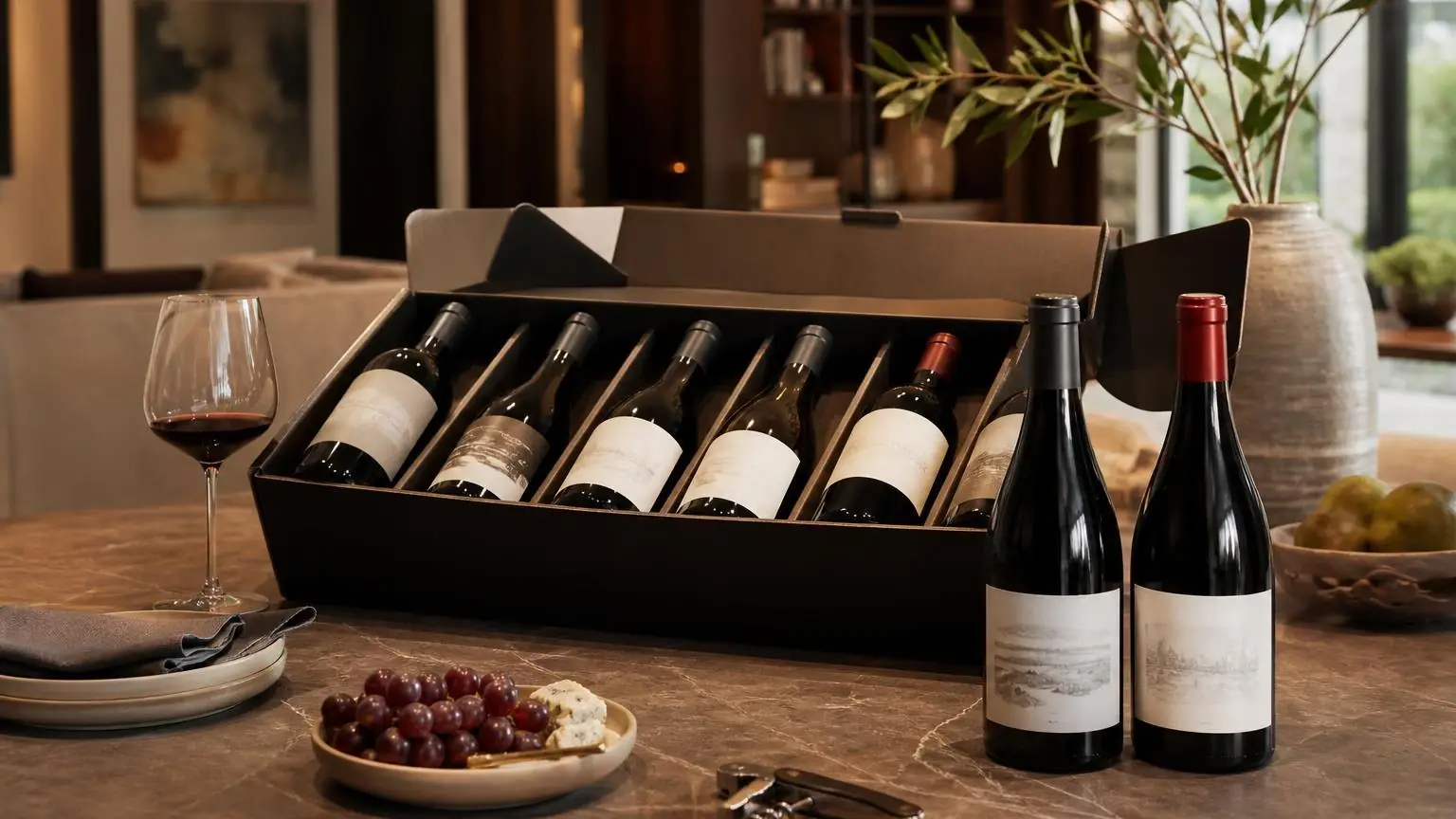
That said, “case” is not universal across every format. A six-pack of magnums, a 24-pack of half-bottles, and a 12-pack of standard bottles can all equal the same 9-liter volume.
Myth: Every case always contains 12 bottles
This is the most common mistake. Twelve bottles is standard only when the bottle size is 750 ml. Wineries, importers, and retailers also sell cases based on equivalent volume, especially for large-format and small-format bottles.
| Bottle format | Volume per bottle | Bottles in 9-liter equivalent case |
| Half bottle | 375 ml | 24 bottles |
| Standard bottle | 750 ml | 12 bottles |
| Magnum | 1.5 liters | 6 bottles |
| Double magnum | 3 liters | 3 bottles |
Myth: A case discount means a sealed winery case
A “case discount” often means you bought 12 standard bottles, not that you received a factory-sealed box. Many wine shops allow mixed cases, such as 6 reds and 6 whites, while still applying a 10% or 15% discount.
- Retail case: Usually 12 bottles of 750 ml wine selected by the customer or retailer.
- Winery case: Often a sealed 12-bottle carton of the same wine, vintage, and lot.
- Mixed case: A 12-bottle purchase assembled from different wines.
Myth: Six bottles is “half a case” in every context
Six 750 ml bottles equal 4.5 liters, which is half of a standard 9-liter case. But six magnums equal 9 liters, so that shipment is a full case by volume, even though it contains only 6 bottles.
Myth: Case size and serving count are the same thing
A 750 ml bottle contains about five 5-ounce pours, since 750 ml equals 25.36 fluid ounces. A 12-bottle case therefore provides about 60 standard 5-ounce servings, not 72 or 48.
| Purchase | Total volume | Approximate 5-ounce pours |
| 1 standard bottle | 750 ml | 5 pours |
| 6 standard bottles | 4.5 liters | 30 pours |
| 12 standard bottles | 9 liters | 60 pours |
Myth: A case of wine has a fixed weight
There is no single weight for a case. A 12-bottle case of still wine commonly weighs about 35 to 40 pounds, depending on glass weight, packaging, closures, and whether the bottles are lightweight or heavy premium glass.
Frequently Asked Questions
How many bottles are in a standard case of wine?
A standard case of wine contains 12 bottles, and in the U.S. those bottles are usually 750 milliliters each. That means a full standard case holds 9 liters of wine total, equivalent to about 60 five-ounce pours.
Are all wine cases 12 bottles?
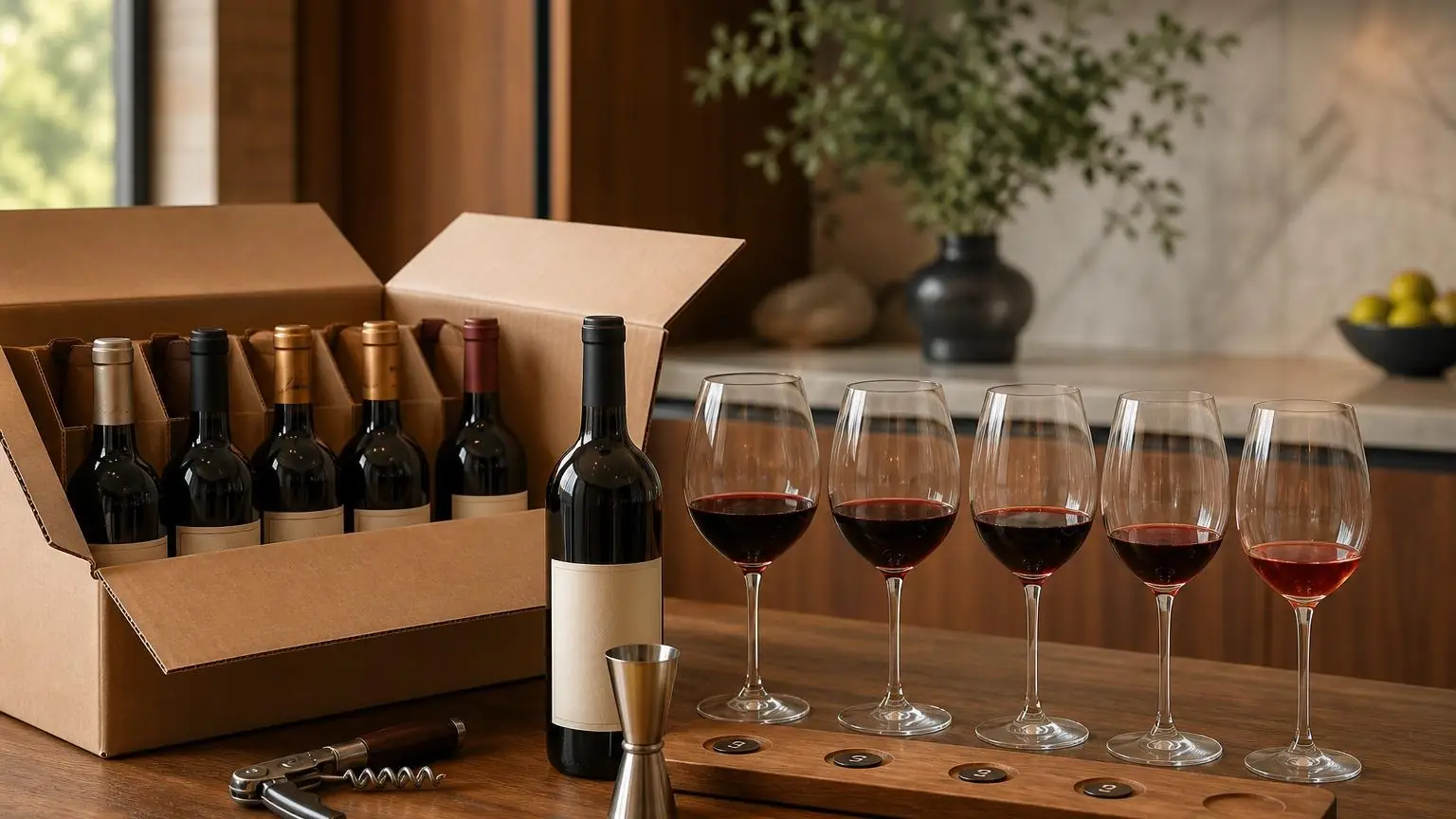
No, 12 bottles is the standard full case, but many retailers and wineries also sell 6-bottle half cases. You may also see 3-bottle, 4-bottle, or mixed-pack cartons, especially for tasting sets, club shipments, or premium bottles.
How many bottles are in a case of Champagne or sparkling wine?
A standard case of Champagne or sparkling wine is also typically 12 bottles of 750 milliliters.
Because sparkling bottles are heavier and built to withstand pressure, a case often weighs more than a still-wine case even when the bottle count is the same.
How many cases are in a pallet of wine?
In U.S. distribution, a pallet commonly holds 56 standard 12-bottle cases, though the exact number can vary by bottle shape, carton size, and warehouse stacking rules. At 56 cases, that equals 672 bottles or 504 liters of wine.
How much does a 12-bottle case of wine weigh?
A typical 12-bottle case of 750 ml still wine weighs about 35 to 45 pounds. The range depends on bottle weight, glass thickness, packaging, and whether the wine is still or sparkling.
How many liters of wine are in a 12-bottle case?
A standard 12-bottle case filled with 750 mL bottles contains 9 liters of wine total. That equals 12 standard bottles, 60 five-ounce servings, or the same volume as one full 9-liter case format used in retail and warehouse inventory.
How many glasses of wine does one case provide?
One 750 mL bottle yields about five 5-ounce glasses, so a 12-bottle case provides roughly 60 glasses. Using the USDA standard drink measure of 5 ounces of table wine at about 12% ABV, that case also equals approximately 60 standard servings.
How many magnums are needed to equal a 12-bottle case?
A magnum holds 1.5 liters, which equals two standard 750 mL bottles. Because a standard case contains 12 bottles, you would need six magnums to match the same total volume of 9 liters in a full 12-bottle case.
Related Reading
- How Many Ml Is 5 Oz?
- How Many Gallons Is 38 Liters?
- How Many Cups Per Pound?
- 11 Essential Facts About How Much Is 1.5 L (2026 Full Conversion, Hydration, Cooking, Health & Everyday Usage Guide)
- How Much Is 7 Liters In Gallons?
- How Many Ounces Is 2 Pints?
- Which Bourbon Is Similar To Woodford Reserve?
- All Blog Guides
- Electronic Code of Federal Regulations, 27 CFR § 4.72 Standards of Fill for Wine (2024)
- Alcohol and Tobacco Tax and Trade Bureau, Wine Labeling (2024)
- National Institute on Alcohol Abuse and Alcoholism, What Is a Standard Drink? (2024)
- Cornell Law School Legal Information Institute, 27 CFR § 4.72 Standards of Fill for Wine (2024)
- Wine Institute, U.S. Wine Consumption (2024)
- International Organisation of Vine and Wine, Statistics (2024)
- Society of Wine Educators, Certified Specialist of Wine Study Guide (2023)