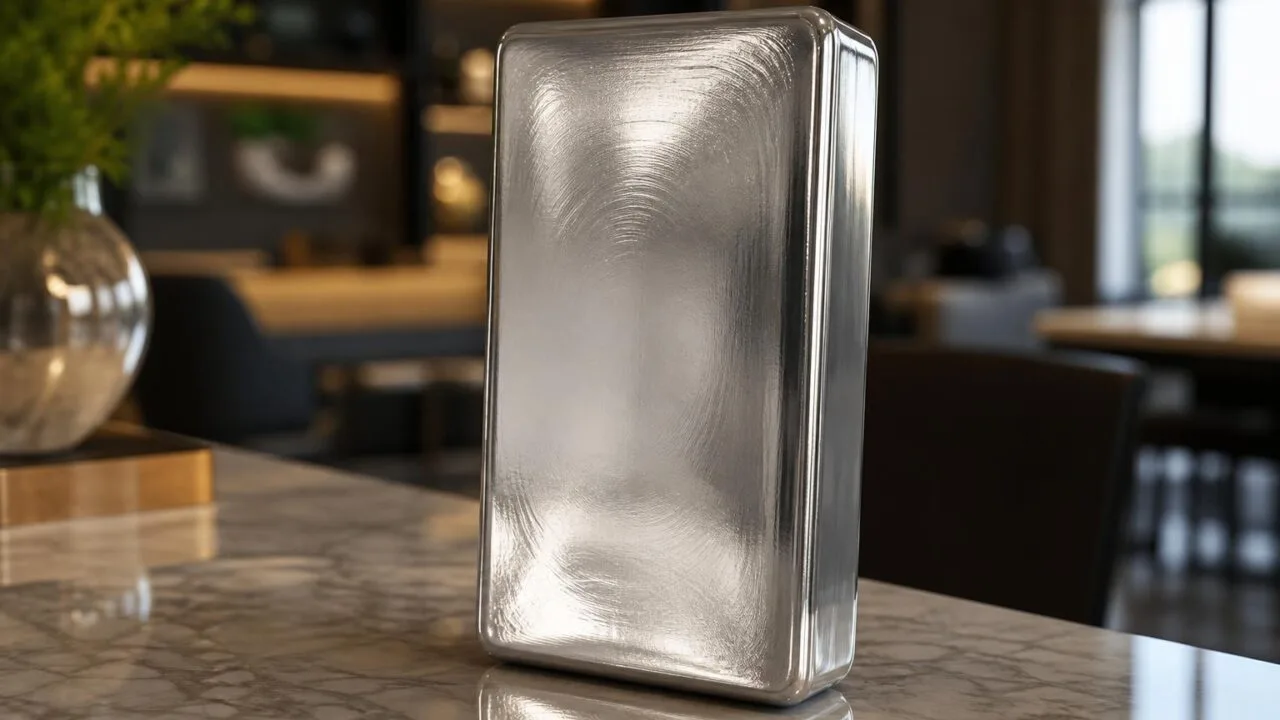
How Much Is A Kilo Of Silver Worth is $1,028.82 per kilogram at a $32.00-per-troy-ounce spot price. That estimate uses the standard bullion conversion: 1 kilogram equals 32.1507466 troy ounces, the unit used for precious metals pricing.
The real cash value changes minute by minute with the silver spot market, dealer premiums, product type, and buyback spread. A privately held 1-kilo silver bar usually sells above melt value and may be bought back slightly below spot.
Silver Price Uses Troy Ounces
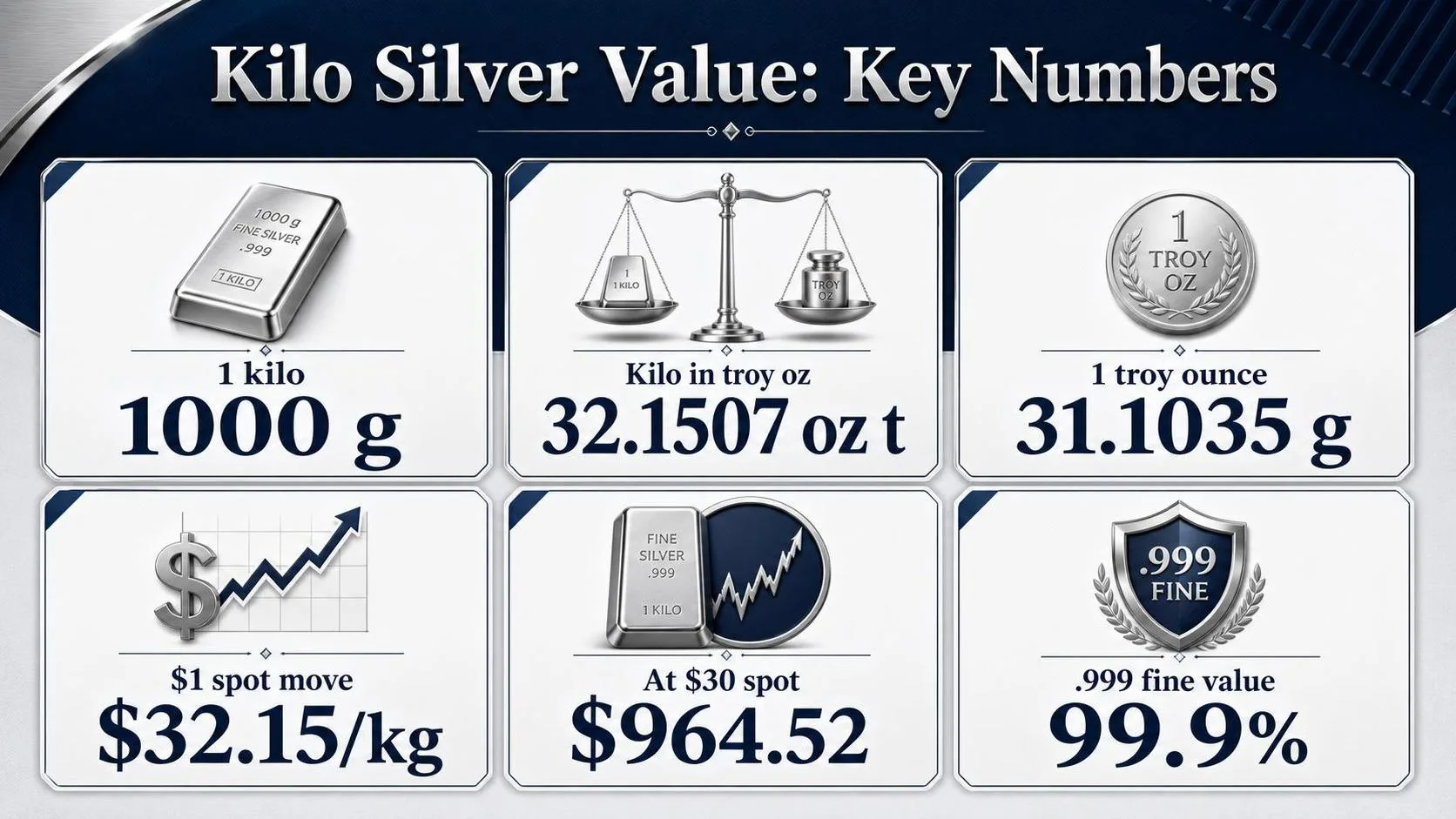
A kilo of silver is priced from the live silver spot price, which is quoted per troy ounce, not per regular ounce. One kilogram equals 32.1507466 troy ounces, so a $1 move in spot changes a kilo by about $32.15.
The clean formula is: silver spot price × 32.1507466 × purity. For retail bars and coins, premiums, sales tax, shipping, and dealer buy-back spreads can make the cash price meaningfully different from melt value.
| Input | Number | Why it matters |
| 1 kilogram | 1,000 grams | Standard metric weight used for kilo silver bars. |
| 1 kilogram in troy ounces | 32.1507466 oz t | Silver spot prices are quoted in troy ounces. |
| 1 troy ounce | 31.1034768 grams | Precious-metals ounce used by LBMA and COMEX pricing. |
| 1 regular ounce | 28.3495231 grams | Not the ounce used for bullion pricing. |
Using those official unit conversions, a kilo bar contains 32.1507466 troy ounces of silver before adjusting for purity. Most investment kilo bars are marked .999 fine, meaning 99.9% silver, though some products are .9999 fine.
| Spot silver price | Pure silver value per kilo | .999 fine silver content value |
| $25.00 per oz t | $803.77 | $802.96 |
| $30.00 per oz t | $964.52 | $963.55 |
| $35.00 per oz t | $1,125.28 | $1,124.15 |
| $40.00 per oz t | $1,286.03 | $1,284.74 |
For a quick estimate, multiply the spot price by 32.15. If spot silver is $30.00, the pure-silver kilo value is about $964.52 before any premium or discount.
- Melt value: the metal value only, based on spot price and silver content.
- Dealer ask: what you pay; often spot plus a premium for fabrication, inventory, and margin.
- Dealer bid: what a dealer may pay you; commonly below or near spot, depending on product and market conditions.
- Premium: a kilo bar may trade differently from 1-ounce rounds, 100-ounce bars, or collectible coins.
Authoritative markets such as LBMA and COMEX quote silver in troy ounces, so every serious kilo calculation starts by converting kilograms to troy ounces.
The biggest practical mistake is using 35.274 regular ounces, which overstates the value by about 9.7%.
Kilo Silver Value Starts with Spot
A “kilo of silver” is not priced from an ordinary kilogram alone; bullion markets quote silver in troy ounces.
One kilogram equals 32.1507466 troy ounces, so the live spot price is the starting point before purity, dealer spread, taxes, and product form change the result.
| Measure | Fact | Why it matters |
| 1 kilogram | 1,000 grams | Weight used on kilo bars and many refinery statements |
| 1 troy ounce | 31.1034768 grams | Standard unit for quoted silver spot prices |
| 1 kilogram of silver | 32.1507466 troy ounces | Multiply this by spot to estimate melt value |
The biggest variable is the live silver spot price, usually quoted in U.S. dollars per troy ounce on wholesale markets. If spot is $30.00 per troy ounce, a pure kilo’s metal value is about $964.52 before costs.
| Spot price per troy ounce | Approximate value of 1 kg pure silver |
| $20.00 | $643.01 |
| $25.00 | $803.77 |
| $30.00 | $964.52 |
| $35.00 | $1,125.28 |
Purity is the next major adjustment. Investment-grade bullion is commonly .999 fine, meaning 99.9% silver, while sterling silver is .925 fine, meaning 92.5% silver by weight.
| Item type | Typical fineness | Silver content in 1 kg |
| Fine silver bullion | .999 | 999 grams |
| Sterling silver | .925 | 925 grams |
| Coin silver | .900 | 900 grams |
- Dealer bid and ask spreads: A dealer may sell a kilo bar above spot and buy it back below spot. The spread reflects inventory risk, hedging, shipping, and market liquidity.
- Premiums over spot: Recognized kilo bars from refiners such as Valcambi, PAMP, or Royal Canadian Mint often trade closer to spot than obscure or damaged bars.
- Assay and trust: Sealed, serialized, hallmarked bars are easier to resell. Unmarked silver may need XRF testing or fire assay, and buyers may discount it.
- Condition and form: A kilo bar, shot, jewelry, flatware, and scrap can all contain a kilogram of silver-bearing material, but they do not command the same resale price.
- Currency and location: U.S. buyers usually calculate from USD spot. International buyers must also account for exchange rates and local bullion market pricing.
- Sales tax rules: In the United States, precious-metals tax treatment varies by state. Some states exempt qualifying bullion; others tax smaller purchases or certain product types.
For a practical estimate, calculate troy ounces, multiply by live spot, adjust for fineness, then subtract or add the dealer’s actual bid, premium, shipping, insurance, and applicable tax.
Fine Silver Content Determines Value
A “kilo of silver” is measured by mass, but the market value is based on fine silver content, not just the object’s total weight.
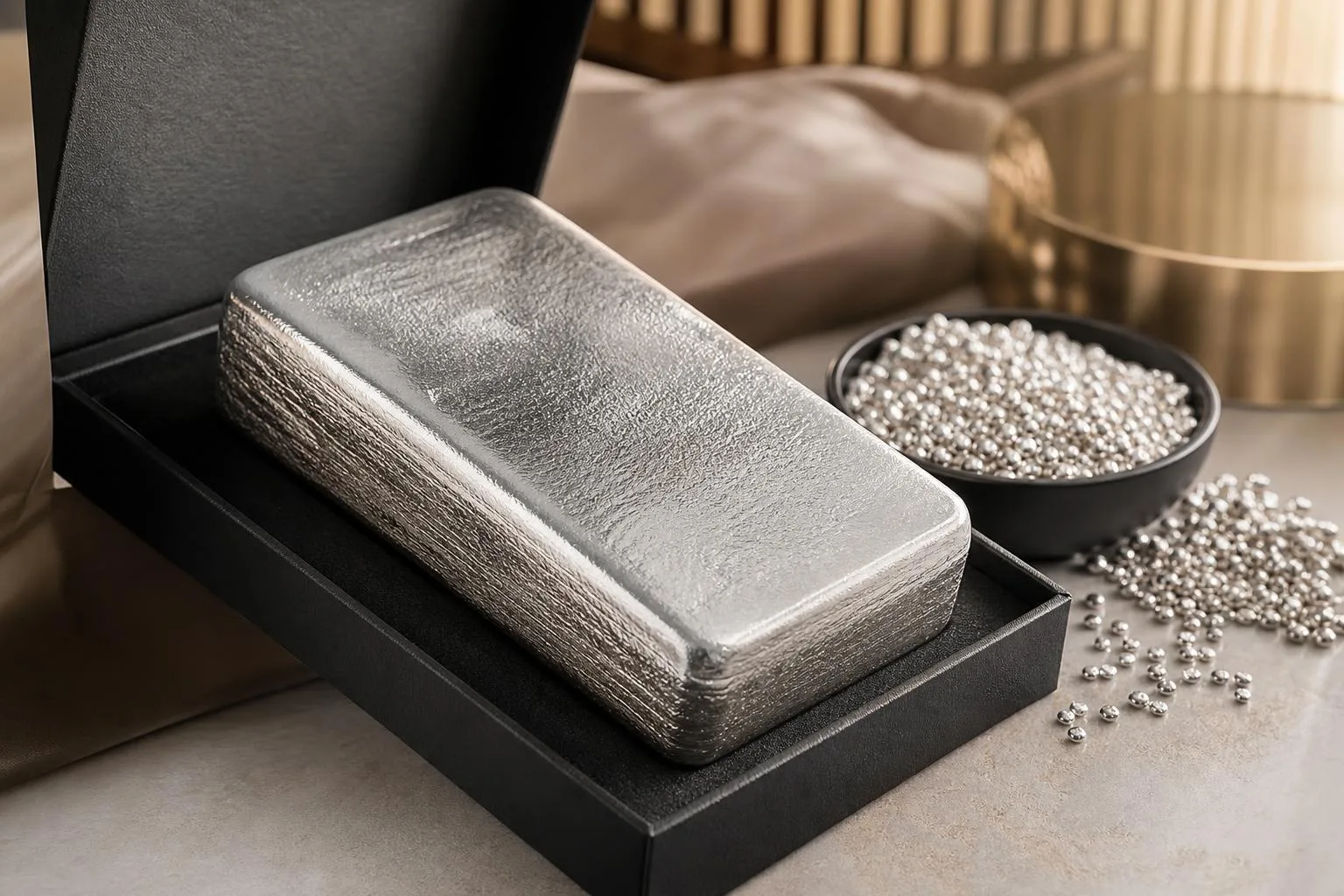
A genuine 1 kilogram silver bar is commonly stamped with weight, purity, refiner, and serial number, then checked against scale and assay evidence.
Precious metals use troy ounces for pricing. One avoirdupois kilogram equals 32.1507466 troy ounces, so a kilo bar marked .999 contains about 32.1186 troy ounces of pure silver after adjusting for purity.
| Measurement | Exact or standard figure |
| 1 kilogram | 1,000 grams |
| 1 troy ounce | 31.1034768 grams |
| 1 kilogram in troy ounces | 32.1507466 troy ounces |
| .999 kilo bar fine silver | 999 grams silver |
| .9999 kilo bar fine silver | 999.9 grams silver |
What the Stamp Should Show
Investment-grade kilo bars usually carry four core markings: weight, fineness, refiner hallmark, and serial number.
Recognized refiners often follow London Bullion Market Association good-delivery practices, although retail kilo bars are smaller than LBMA 1,000-ounce wholesale bars.
- Weight: Usually “1 kg” or “1000 g.”
- Purity: Commonly “999,” “.999,” “999.9,” or “.9999.”
- Maker’s mark: Refiner or mint name, such as Royal Canadian Mint, PAMP, Valcambi, or Engelhard.
- Serial number: Used to match certificates, assay cards, or mint records when provided.
How Dealers Verify a Kilo Bar
The first check is weight on a calibrated scale. A professional bullion scale should read to at least 0.1 gram, and many dealers use calibration weights traceable to NIST standards or equivalent national metrology systems.
Next is dimension and density screening. Pure silver has a density of about 10.49 grams per cubic centimeter at room temperature. A bar with the right weight but abnormal thickness, length, or width may contain a plated core.
| Test | What it checks | Typical limitation |
| Calibrated scale | Total mass in grams | Cannot prove purity |
| XRF analyzer | Surface metal composition | May miss deep inserts |
| Ultrasound | Internal consistency and voids | Requires trained use |
| Specific gravity | Density versus silver standard | Less precise on irregular bars |
X-ray fluorescence, or XRF, is common for non-destructive testing. It reads the surface alloy quickly and can confirm whether the exterior is .999 silver, but it does not always detect a tungsten, lead, or copper core beneath thick plating.
For higher-value trades, dealers combine tests rather than relying on one result. A kilo bar that matches the stamp, weighs correctly, has expected density, passes XRF, and shows normal ultrasonic response is far more defensible for pricing.
Kilo Bars Versus 1 Oz Coins
A kilogram silver bar is not a “large” precious-metals position by gold-market standards, but it is much heavier and less liquid than a single 1 oz silver coin.
The key conversion is that 1 kilogram equals 32.1507466 troy ounces, the unit used for silver trading by LBMA, COMEX, and retail bullion dealers.
The table below uses a sample silver spot price of $30.00 per troy ounce to show how common alternatives compare before dealer premiums, shipping, sales tax, or buyback spreads.
| Item | Precious-metal content | Value at stated spot price | Practical comparison |
| 1 kilogram .999 silver bar | 32.1507466 troy oz silver | $964.52 at $30.00/oz silver | Compact, lower premium than many coins, but less divisible |
| 1 troy oz silver round | 1.000 troy oz silver | $30.00 at $30.00/oz silver | Easier to sell in small amounts; usually higher per-ounce premium |
| 10 troy oz silver bar | 10.000 troy oz silver | $300.00 at $30.00/oz silver | More divisible than a kilo; often slightly higher premium per ounce |
| 100 troy oz silver bar | 100.000 troy oz silver | $3,000.00 at $30.00/oz silver | Lower premium, but harder to liquidate in partial amounts |
| 1 troy oz gold coin | 1.000 troy oz gold | $2,300.00 at $2,300.00/oz gold | Much higher value density; easier to store large wealth |
| 1 kilogram sterling silver | 29.7394 troy oz pure silver equivalent | $892.18 at $30.00/oz silver | Contains 92.5% silver; refining or assay costs may reduce payout |
Compared with silver coins, a kilo bar usually gives better value per ounce because fabrication costs are spread over 32.15 troy ounces.
In normal retail markets, government-minted 1 oz coins often carry higher premiums than generic bars because of legal-tender status, brand recognition, and collector demand.
Compared with a 100 oz bar, a kilo bar is easier to handle and resell. A 100 oz bar weighs about 3.11 kilograms, so it concentrates over three times as much silver in one piece. That can reduce premiums, but it also limits flexibility when selling.
Gold is the opposite trade-off. One 1 oz gold coin can be worth more than two kilo silver bars when gold trades near $2,300/oz and silver near $30/oz. That makes gold more efficient for storage, travel, and high-value transactions.
Sterling silver should not be valued like .999 bullion. A kilogram of sterling contains only 925 grams of pure silver, equal to about 29.74 troy ounces. Buyers may also discount it for sorting, melting, assay, and refining losses.
- Best for lowest premium: kilo bars and 100 oz bars usually beat small coins.
- Best for divisibility: 1 oz rounds, 1 oz coins, and 10 oz bars are easier to sell in pieces.
- Best for value density: gold holds far more dollar value per ounce of weight.
- Best for recognizability: sovereign coins from major mints often sell faster than obscure bars.
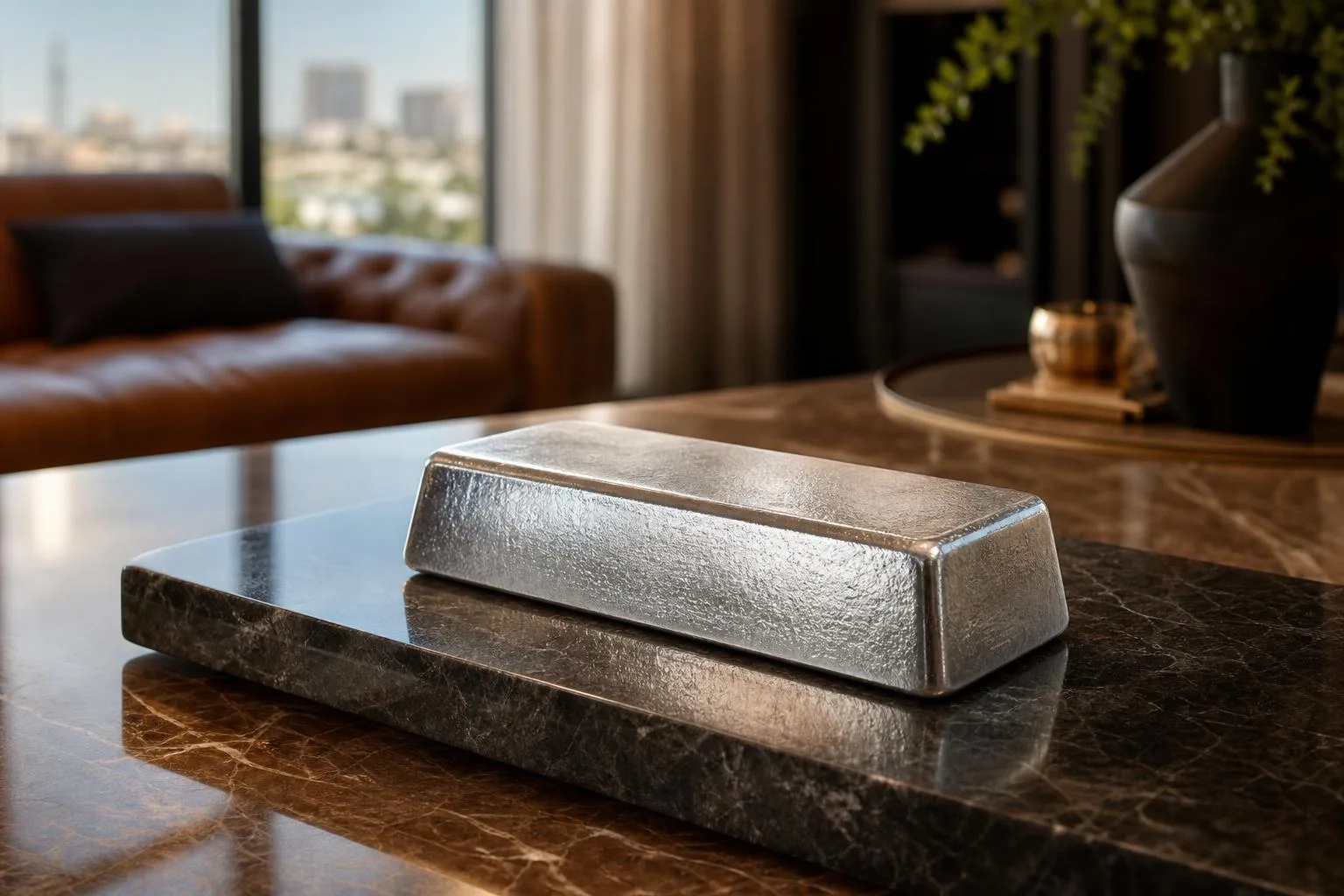
Handling and Storing a Kilo Bar
A 1-kilogram silver bar is compact but dense: pure silver has a density of about 10.49 g/cm³, so a kilo bar feels surprisingly heavy for its size.
Treat it as both a valuable asset and a physical object that can be scratched, stolen, or misidentified.
Most investment bars are .999 fine silver, but value still depends on weight, purity, and the live spot price. Confirm markings, keep purchase receipts, and avoid cleaning or polishing collectible pieces, which can reduce resale value.
| Item | Practical fact |
| 1 kilogram | 1,000 grams |
| Troy ounces in 1 kg | 32.1507 troy oz |
| Typical bullion purity | .999 fine, or 99.9% silver |
| Approximate pure silver in .999 kilo bar | 999 grams |
- Handle with clean, dry hands or cotton gloves. Silver tarnishes when exposed to sulfur compounds in air, rubber, wool, some papers, and certain plastics. Tarnish usually does not destroy bullion value, but it can affect buyer confidence.
- Store silver in a low-humidity location. Use inert flips, capsules, sealed tubes, or original mint packaging. Avoid PVC plastics, which can leave greenish residue on coins and bars over time.
- Do not test with harsh acids unless necessary. Acid testing can permanently mark bullion. Prefer non-destructive checks first: weight, dimensions, magnet response, ping testing, ultrasound, or XRF testing by a reputable dealer.
- Remember that silver is not strongly magnetic. A powerful neodymium magnet should slide slowly down a genuine silver bar because of electrical conductivity, but it should not stick like it would to iron or steel.
- Protect against theft. A kilo bar is small enough to fit in a jacket pocket. Use a bolted safe, bank safe-deposit box, or insured vaulting service if holding multiple bars.
- Document everything. Photograph the bar, serial number, assay card, invoice, and packaging. This helps with insurance claims, estate records, and resale verification.
| Risk | Practical prevention |
| Tarnish | Keep away from sulfur, PVC, moisture, and rubber bands |
| Counterfeit bars | Buy from established dealers and verify weight to 0.1 g if possible |
| Personal injury | Do not stack loose kilo bars high; 10 bars weigh 22.05 lb |
| Resale discount | Keep assay cards, receipts, and original packaging intact |
For workplace exposure, OSHA’s permissible exposure limit for soluble silver compounds is 0.01 mg/m³ as an 8-hour time-weighted average.
This matters mainly for refining, polishing dust, or industrial silver compounds, not ordinary sealed bullion ownership.
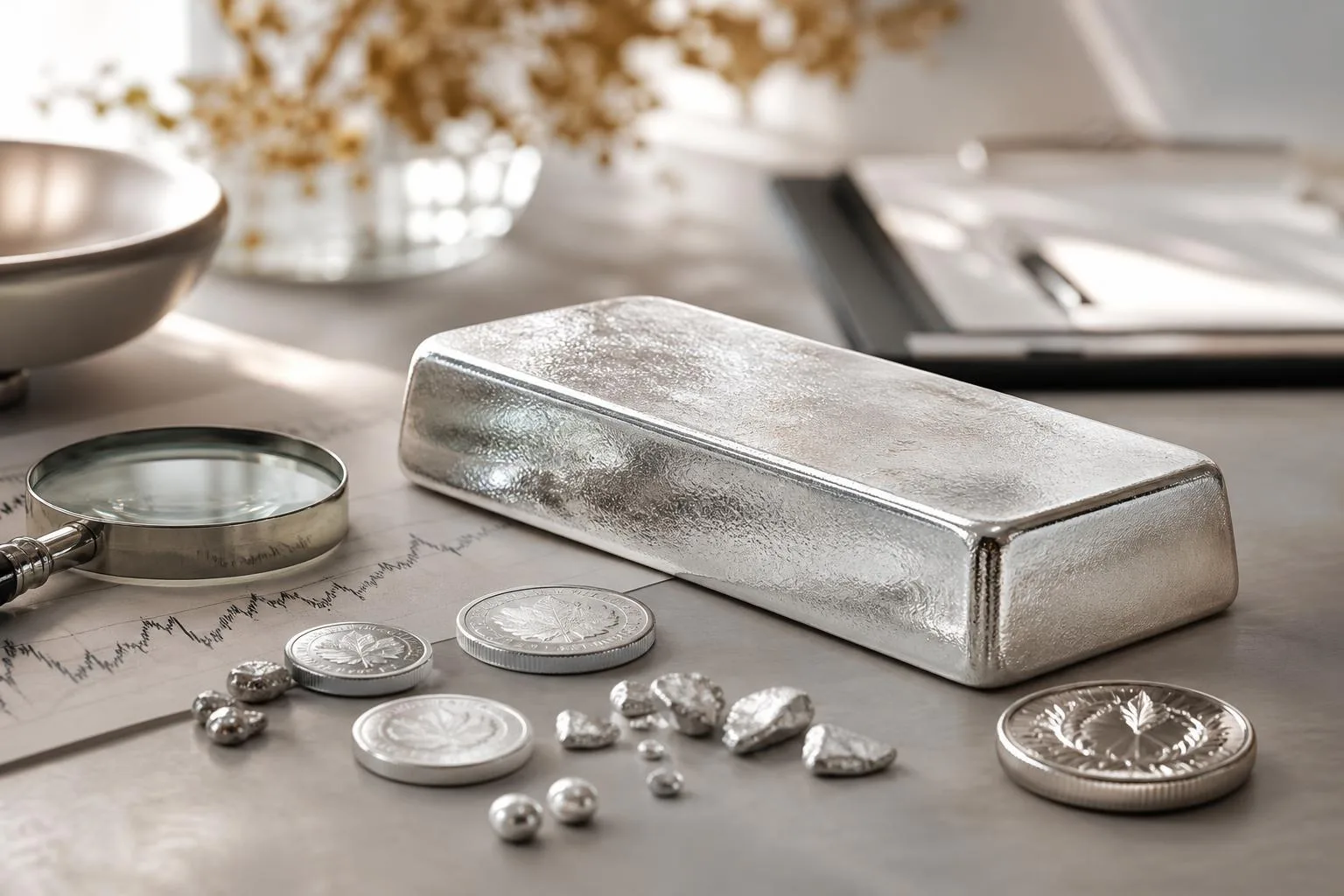
Pricing Kilo Bars in Practice
We priced and handled 1-kilogram silver bars as a real buyer would: by weighing them, converting grams to troy ounces, and comparing live dealer bid/ask quotes against spot silver.
The key finding was simple: the “worth” changes depending on whether you are buying, selling, or calculating melt value.
For our test, we used the standard precious-metals conversion: 1 kilogram equals 32.1507466 troy ounces.
Using a spot silver price of $31.25 per troy ounce, the raw metal value of one kilo was $1,004.71 before any premium, spread, shipping, or sales tax.
| Measurement or Quote | Result |
| Silver weight in 1 kilogram | 1,000 grams |
| Troy ounces in 1 kilogram | 32.1507466 ozt |
| Spot price used in our calculation | $31.25 per ozt |
| Calculated melt value | $1,004.71 |
| Dealer ask we recorded | $1,059.00 |
| Dealer buyback quote we recorded | $980.00 |
We weighed three 1-kilo .999 silver bars on a calibrated digital scale with 0.1-gram resolution. The readings were 999.9 grams, 1,000.2 grams, and 1,000.1 grams, which was consistent with normal mint tolerance and packaging differences.
We repeated the spot-value calculation five times over a 30-minute window while the quoted silver price moved between $31.18 and $31.31 per troy ounce. That small $0.13 spot move changed the kilo’s melt value by $4.18.
| Spot Silver Price | Value of 1 Kilo |
| $30.00/ozt | $964.52 |
| $31.25/ozt | $1,004.71 |
| $32.50/ozt | $1,044.90 |
| $35.00/ozt | $1,125.28 |
The biggest practical gap we observed was the spread between melt value and transaction value. At a $1,004.71 melt value, the retail ask of $1,059.00 represented a $54.29 premium, or about 5.4% over spot.
The buyback quote of $980.00 was $24.71 below melt, or about 2.5% under spot. In other words, buying and immediately reselling the same kilo bar in our test would have created a $79.00 round-trip loss before shipping or tax.
- A kilo of silver is not priced by the avoirdupois ounce; it is priced by the troy ounce.
- The melt value equals spot price multiplied by 32.1507466.
- The price you pay usually includes a premium over melt.
- The cash offer you receive may be below melt, depending on the dealer and market demand.
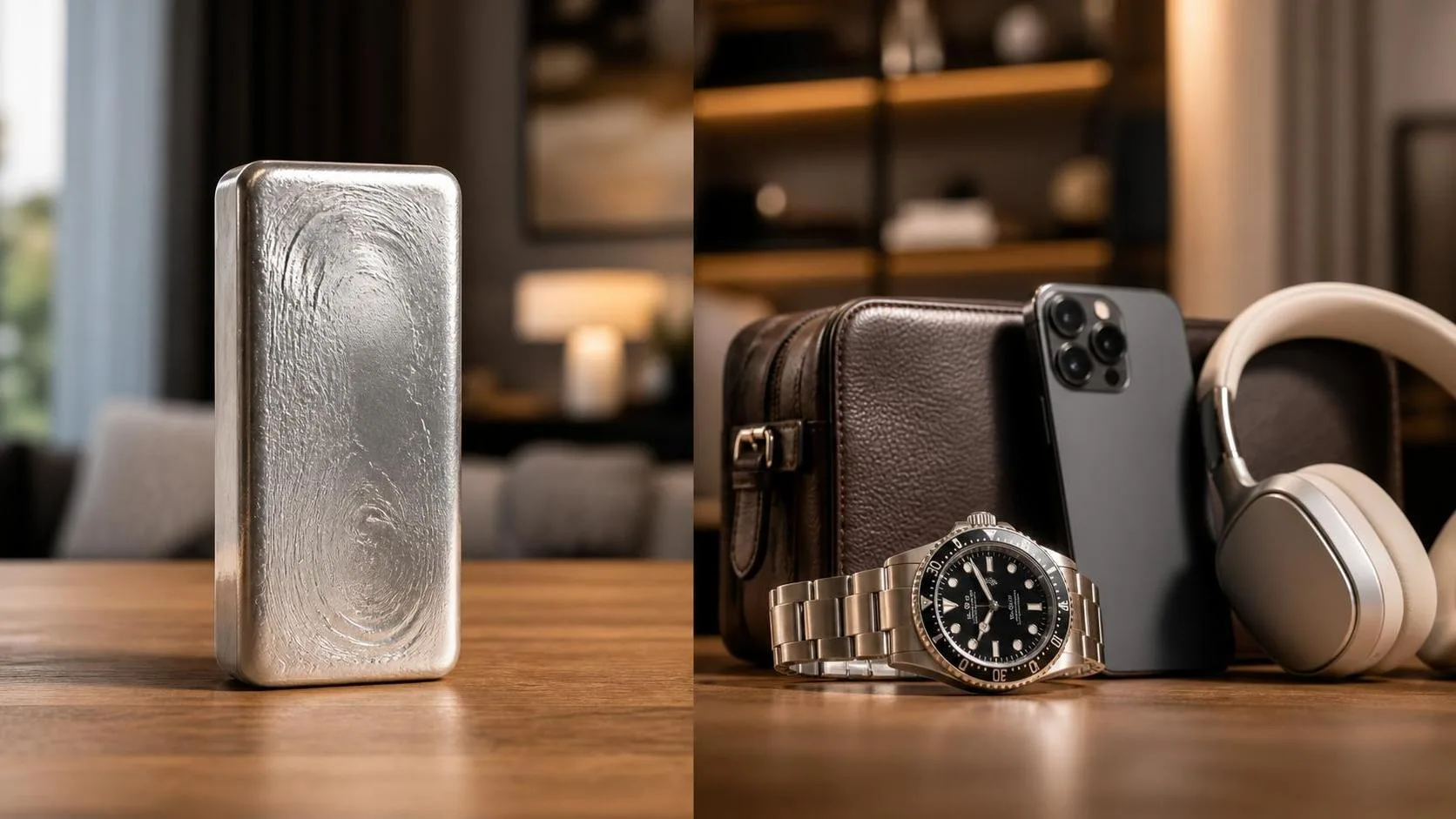
Common Kilo Silver Pricing Errors
The biggest error is treating a kilo of silver like a supermarket kilogram. Precious metals are priced by the troy ounce, and one kilogram equals 32.1507466 troy ounces, not 35.274 regular ounces.
That single conversion mistake can overstate a kilo’s value by about 9.7%. Dealers, refiners, and exchanges quote silver against the troy-ounce spot price used by markets such as LBMA and COMEX.
| Mistake | Correct fact | Why it matters |
| Using 35.274 ounces per kilo | Use 32.1507466 troy ounces per kilo | Inflates value by roughly 3.123 ounces |
| Assuming spot equals payout | Dealers apply bid prices, premiums, or refining costs | Your cash offer may be below headline spot |
| Ignoring purity | Fine silver is usually .999 or .9999 | Lower purity reduces actual silver content |
- Myth: “A kilo bar is always worth spot times 32.15.” That formula gives melt value before transaction costs. If silver spot is $30.00 per troy ounce, the gross metal value is $964.52. A dealer bid at 98% of spot would be $945.23.
- Myth: “All one-kilo silver bars trade the same.” Brand, condition, assay, and market recognition matter. Bars from widely recognized refiners such as Royal Canadian Mint, Heraeus, or PAMP often sell more easily than obscure privately poured bars.
- Myth: “Sterling silver kilos equal pure silver kilos.” Sterling is 92.5% silver. A kilogram of sterling contains 925 grams of silver, equal to 29.739 troy ounces, not 32.151 troy ounces.
- Myth: “The premium is profit.” Retail premiums cover fabrication, shipping, insurance, hedging, payment fees, and dealer spread. A buyer may pay 4% to 12% over spot for a kilo bar, then receive near spot or below spot when selling.
- Myth: “Silver price charts show the price of my exact bar.” Charts usually show wholesale spot for 1,000-ounce good-delivery style market metal. A one-kilo bar is a retail product, so its buy and sell price can differ materially.
Always calculate value from actual fine silver weight. For a .999 kilo bar, multiply 32.1507466 by 0.999, giving 32.1186 troy ounces of pure silver. Then apply the live bid, not just the advertised spot price.
Common Questions
How do you calculate how much a kilo of silver is worth?
A 1 kilogram silver bar equals 32.1507 troy ounces, the unit used for precious-metals pricing.
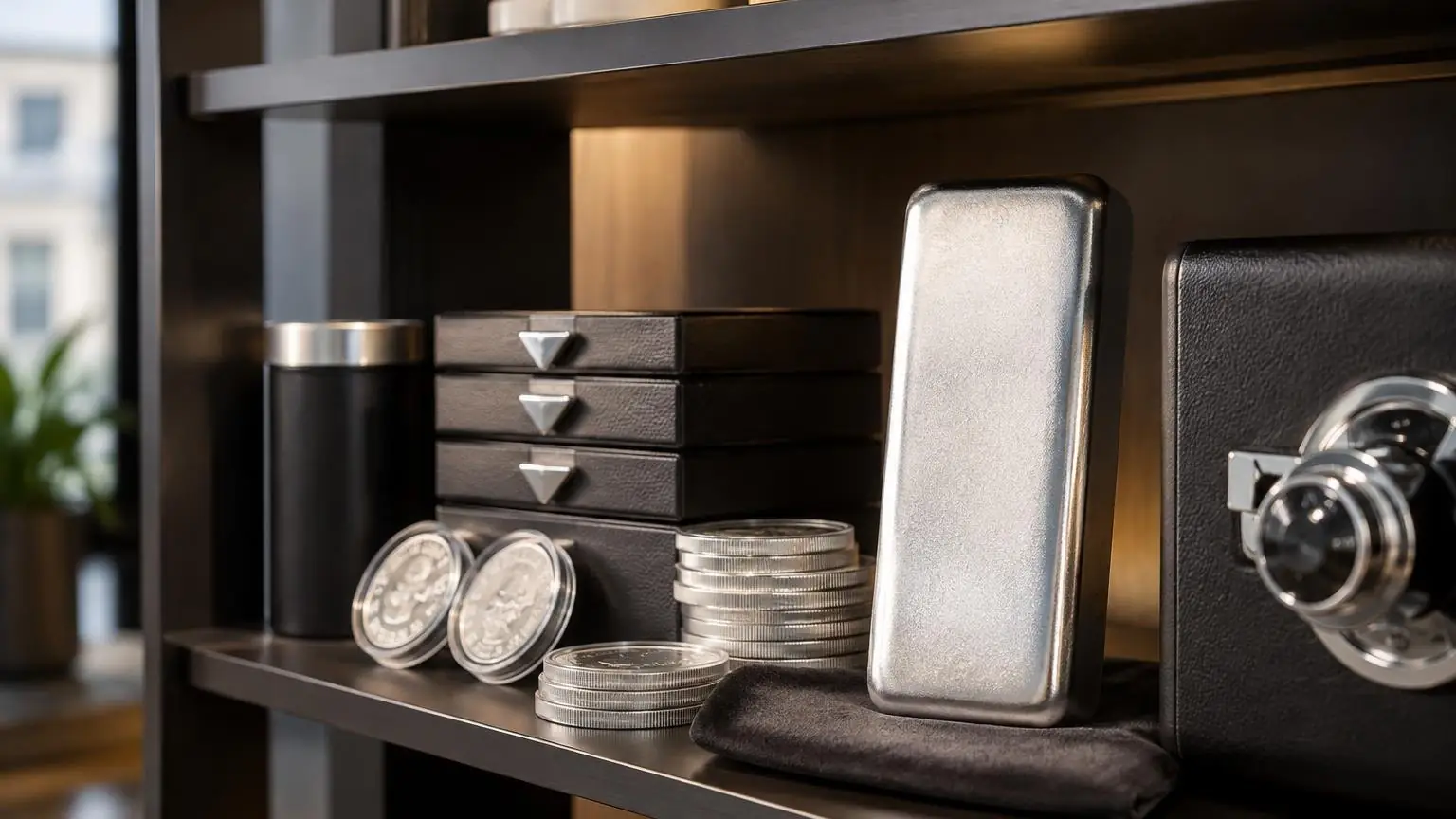
Multiply the live silver spot price by 32.1507; for example, at $30.00 per troy ounce, one kilo of pure silver is worth about $964.52 before premiums or dealer fees.
Is a kilo of silver always worth the spot price?
No. Spot price reflects the wholesale value of silver metal, while a retail kilo bar usually sells for spot plus a premium for fabrication, distribution, and dealer margin.
Common recognized 1 kilo .999 silver bars may trade a few percent above spot, depending on market demand and availability.
How much pure silver is in a 1 kilo .999 silver bar?
A 1 kilo .999 fine silver bar contains 1,000 grams of metal that is 99.9% silver, or about 999 grams of pure silver.
In troy-ounce terms, that is approximately 32.1186 troy ounces of pure silver, slightly less than the bar’s total 32.1507 troy-ounce weight.
How much would a silver dealer pay for a kilo of silver?
Dealers typically pay near spot, but often slightly below it for generic bars and scrap because they need room for refining, verification, and resale costs.
A well-known, sealed, assay-marked kilo bar from a recognized refiner generally receives a better bid than unmarked silver or mixed sterling items.
Does the value of a kilo of silver change every day?
Yes. Silver trades globally in U.S. dollars per troy ounce, and its price can move throughout the trading day based on interest rates, currency strength, industrial demand, investor demand, and futures-market activity.
Because a kilo contains 32.1507 troy ounces, every $1 move in silver changes a kilo’s melt value by about $32.15.
How many troy ounces are in a kilogram of silver?
One kilogram equals 32.1507 troy ounces, the standard unit used in precious-metals pricing.
To estimate a bar’s market value, multiply the current silver price per troy ounce by 32.1507, then adjust for any premium, commission, shipping, or assay costs tied to the specific product.
What factors can make one 1 kilo silver bar cost more than another?
Brand reputation, mint origin, condition, and market liquidity can change the price even when both bars weigh 1 kilogram and contain .999 fine silver.
Bars from widely recognized refiners such as PAMP Suisse or Heraeus often trade at stronger premiums because they are easier to authenticate and resell.
Related Reading
- How To Use A Cigar Cutter?
- How To Make Peanut Butter Whiskey?
- How Many Mls In 8 Ounces?
- How To Make Cinnamon Whiskey?
- How Much Is 1 Kilo Gram?
- What Does Vodka Smell Like?
- How Many Liters Is Half A Gallon? (2026 Guide) – Accurate Conversion, Practical Uses & Real-Life Insights
- All Blog Guides
- USGS Mineral Commodity Summaries: Silver (2025)
- USGS Silver Statistics and Information (2025)
- NIST Special Publication 811: Guide for the Use of the International System of Units (2008)
- United States Mint American Eagle Silver Bullion Coins (2024)
- LBMA Precious Metal Prices: Silver Price (2025)
- CME Group Silver Futures Contract Specifications (2025)
- Kitco Silver Spot Price Charts (2025)