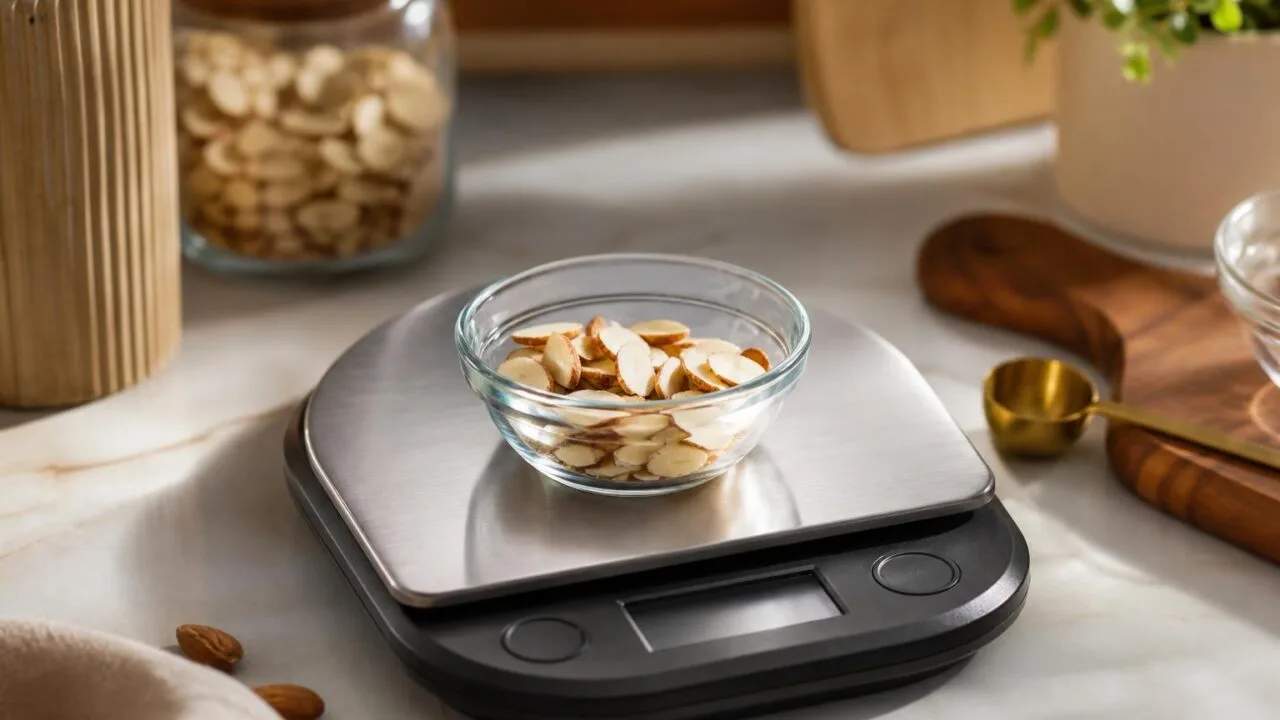
How Many Grams Is 2 Ounces is 56.699 grams. In everyday kitchen use, that is usually rounded to 56.7 grams, or sometimes 57 grams when a recipe does not require laboratory-level precision.
The conversion uses the international avoirdupois ounce: 1 ounce equals exactly 28.349523125 grams, so 2 × 28.349523125 = 56.69904625 grams. That standard is used for food labels, postal weights, and most U.S. household measurements.
If you are weighing ingredients, set the scale to grams and target 56.7 g for accuracy. For packaged goods, nutrition labels may round serving weights, so a listed “2 oz” portion can appear as 56 g or 57 g depending on rounding rules.
Ounces in Grams
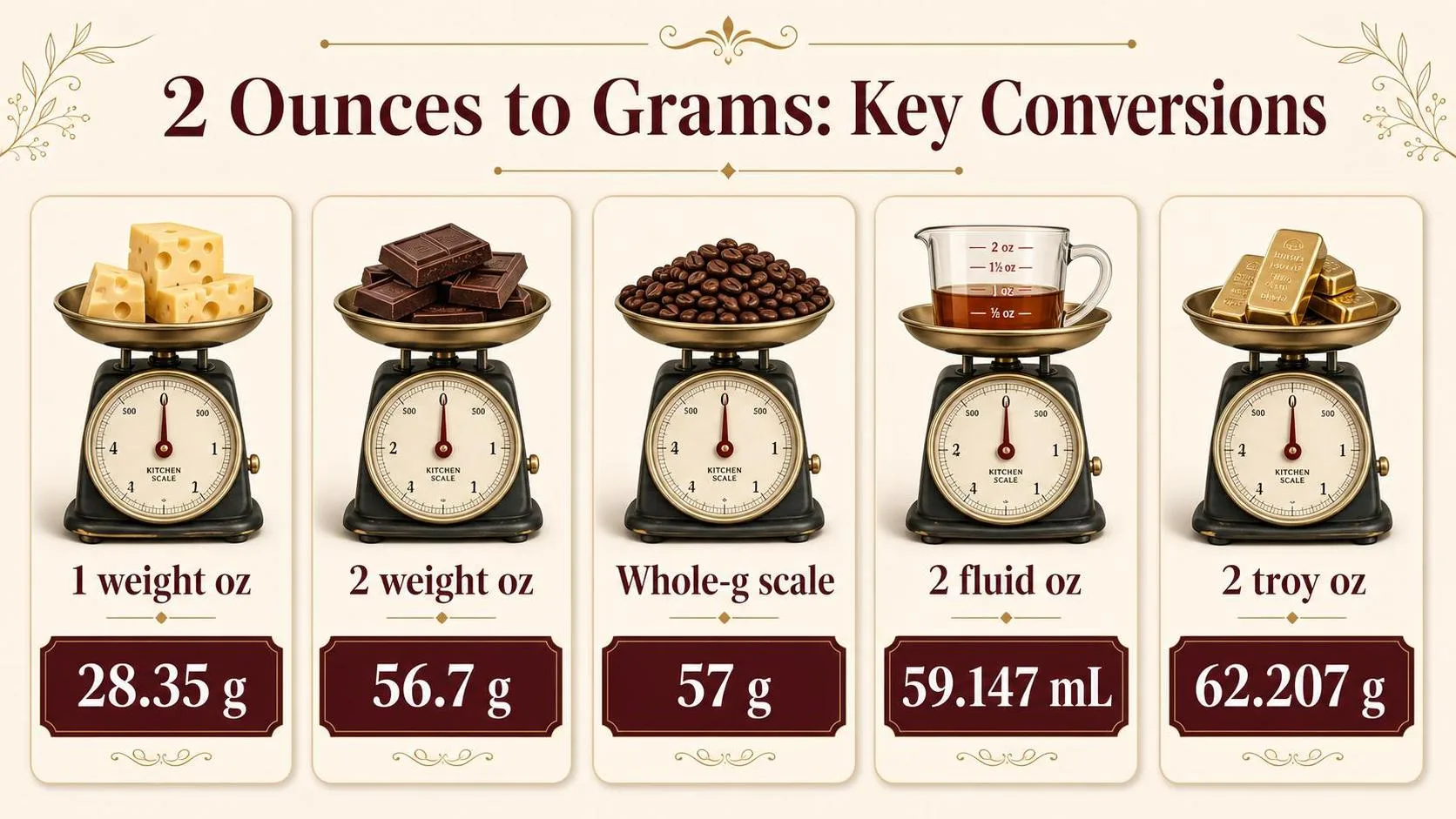
Two ounces equals 56.699 grams when you are using the standard U.S. weight ounce. In kitchen use, that is normally rounded to 56.7 grams, or 57 grams when a whole-number scale is all you have.
The exact conversion comes from the international avoirdupois ounce, the ounce used for packaged foods, cheese, meat, nuts, chocolate, coffee, and most U.S. recipes.
| Measurement | Exact grams | Practical kitchen rounding |
| 1 ounce | 28.349523125 grams | 28.35 grams |
| 2 ounces | 56.69904625 grams | 56.7 grams |
| 2 ounces on a whole-gram scale | 56.69904625 grams | 57 grams |
For cooking, the difference between 56.7 grams and 57 grams is only 0.3 gram. That is less than the weight of many individual chocolate chips, so it rarely changes a savory dish, cheese board, or snack portion.
For baking, cocktails with measured solids, or wine-bar prep where consistency matters, use 56.7 grams if your scale reads tenths of a gram. Use 57 grams if your scale reads only whole grams.
| Common item | 2 ounces in grams | Why it matters |
| Cheese for a small plate | 56.7 grams | Useful for portioning chèvre, cheddar, or manchego consistently |
| Chocolate for baking | 56.7 grams | More reliable than measuring chopped chocolate by volume |
| Nuts for a snack pour | 56.7 grams | Helps match nutrition labels and portion costs |
| Coffee beans | 56.7 grams | Enough for several brewed servings, depending on brew ratio |
Do not confuse weight ounces with fluid ounces. A weight ounce measures mass, while a fluid ounce measures volume. Two U.S. fluid ounces is 59.147 milliliters, but its gram weight changes depending on the ingredient’s density.
| Type of ounce | What it measures | 2 ounces equals |
| Avoirdupois ounce | Weight or mass | 56.699 grams |
| U.S. fluid ounce | Volume | 59.147 milliliters |
| Troy ounce | Precious metals | 62.207 grams |
The legally defined U.S. food-label ounce is the avoirdupois ounce, tied to the pound. Since one pound is exactly 453.59237 grams and one pound contains 16 ounces, one ounce is exactly 28.349523125 grams.
That is why “2 oz” on a food package, recipe by weight, or deli scale should be read as 56.7 grams unless the label clearly says fluid ounces.
Rounded Gram Value for 2 Ounces
For standard U.S. weight measurement, 2 ounces equals 56.699 grams, usually rounded to 56.7 grams. The result changes only when the “ounce” type, rounding rule, or measured material changes.
The Type of Ounce Used
Most kitchen, postal, and grocery measurements in the United States use the avoirdupois ounce. That is the ounce meant when a recipe says “2 oz cheese” or a package lists “net wt 2 oz.”.
| Ounce type | Grams in 1 ounce | Grams in 2 ounces | Common use |
| Avoirdupois ounce | 28.349523125 g | 56.69904625 g | Food, mail, body weight, retail goods |
| Troy ounce | 31.1034768 g | 62.2069536 g | Gold, silver, precious metals |
The troy ounce is about 9.7% heavier than the avoirdupois ounce. That difference matters for bullion pricing, but not for ordinary cooking or nutrition labels.
Rounding and Scale Precision
Digital kitchen scales usually round to either 1 gram or 0.1 gram. A scale set to whole grams will show 57 g for 2 ounces, while a more precise scale may show 56.7 g.
| Conversion style | Displayed result for 2 oz |
| Exact avoirdupois conversion | 56.69904625 g |
| Rounded to 0.1 g | 56.7 g |
| Rounded to nearest gram | 57 g |
| Common rough kitchen estimate | 56 g or 57 g |
Weight Ounces vs Fluid Ounces
A weight ounce measures mass. A fluid ounce measures volume. They are not interchangeable unless you know the density of the ingredient.
For water at typical kitchen temperatures, 2 U.S. fluid ounces weighs about 59.1 grams because 1 U.S. fluid ounce is 29.5735 milliliters. Olive oil, honey, flour, and wine will weigh differently for the same volume.
| Measurement | What it measures | Approximate grams for 2 units |
| 2 oz | Weight | 56.7 g |
| 2 U.S. fl oz water | Volume | About 59.1 g |
| 2 U.S. fl oz olive oil | Volume | About 54 g |
Ingredient Packing and Form
When “2 ounces” is weighed on a scale, chopped, shredded, melted, or whole forms convert to the same 56.7 grams. The problem appears when people use cups or spoons instead of a scale.
- Two ounces of shredded cheese by weight is 56.7 grams, but its cup volume varies with shred size and packing.
- Two ounces of flour by weight is 56.7 grams, but a scooped cup can be much heavier than a spooned cup.
- Two ounces of liquid by volume is not automatically 56.7 grams unless density supports it.
How 2 Ounces Is Defined
Two ounces is verified by using the international avoirdupois ounce, the standard ounce used for food, packages, and kitchen scales in the United States.
By definition, 1 ounce equals exactly 28.349523125 grams, so 2 ounces equals exactly 56.69904625 grams.
In practical kitchen use, this is normally rounded to 56.7 grams. For nutrition labels and recipes, it may also appear as 57 grams, depending on the rounding rule being used.
| Measurement | Exact gram value | Common rounded value |
| 1 ounce | 28.349523125 grams | 28.35 grams |
| 2 ounces | 56.69904625 grams | 56.7 grams |
| 2 ounces for food labeling | 56.69904625 grams | 57 grams |
The conversion is not an estimate. The avoirdupois pound is defined as exactly 0.45359237 kilograms, and 1 pound contains 16 avoirdupois ounces. Dividing 453.59237 grams by 16 gives 28.349523125 grams per ounce.
| Standard | Defined value | Result |
| 1 avoirdupois pound | 453.59237 grams | Exact legal definition |
| 1 pound | 16 ounces | Avoirdupois system |
| 453.59237 ÷ 16 | 28.349523125 grams | 1 ounce |
| 28.349523125 × 2 | 56.69904625 grams | 2 ounces |
How to verify 2 ounces on a scale
- Use a digital scale that displays grams to at least 0.1 gram for kitchen accuracy.
- Place an empty bowl or container on the scale, then press tare or zero.
- Add the ingredient until the display reads 56.7 grams for 2 ounces.
- If the scale only shows whole grams, use 57 grams as the closest practical reading.
- For very precise work, such as coffee dosing or baking formulas, use 56.70 grams if the scale supports 0.01-gram resolution.
Verification depends on what is being weighed. Two fluid ounces of water is not the same measurement as 2 ounces by weight, although water is close under common kitchen conditions.
For dry ingredients, powders, cheese, meat, and chocolate, use weight, not volume.
| Item being checked | Correct method | 2-ounce target |
| Dry ingredient | Weigh in grams | 56.7 grams |
| Solid food | Weigh in grams | 56.7 grams |
| Packaged food serving | Check label rounding | Usually 57 grams |
| Liquid volume | Use fluid ounces | Not the same as weight ounces |
A reliable check is to weigh a known calibration mass. Many kitchen scales can be tested with a 50-gram calibration weight; the reading should be very close to 50.0 grams before measuring 56.7 grams.
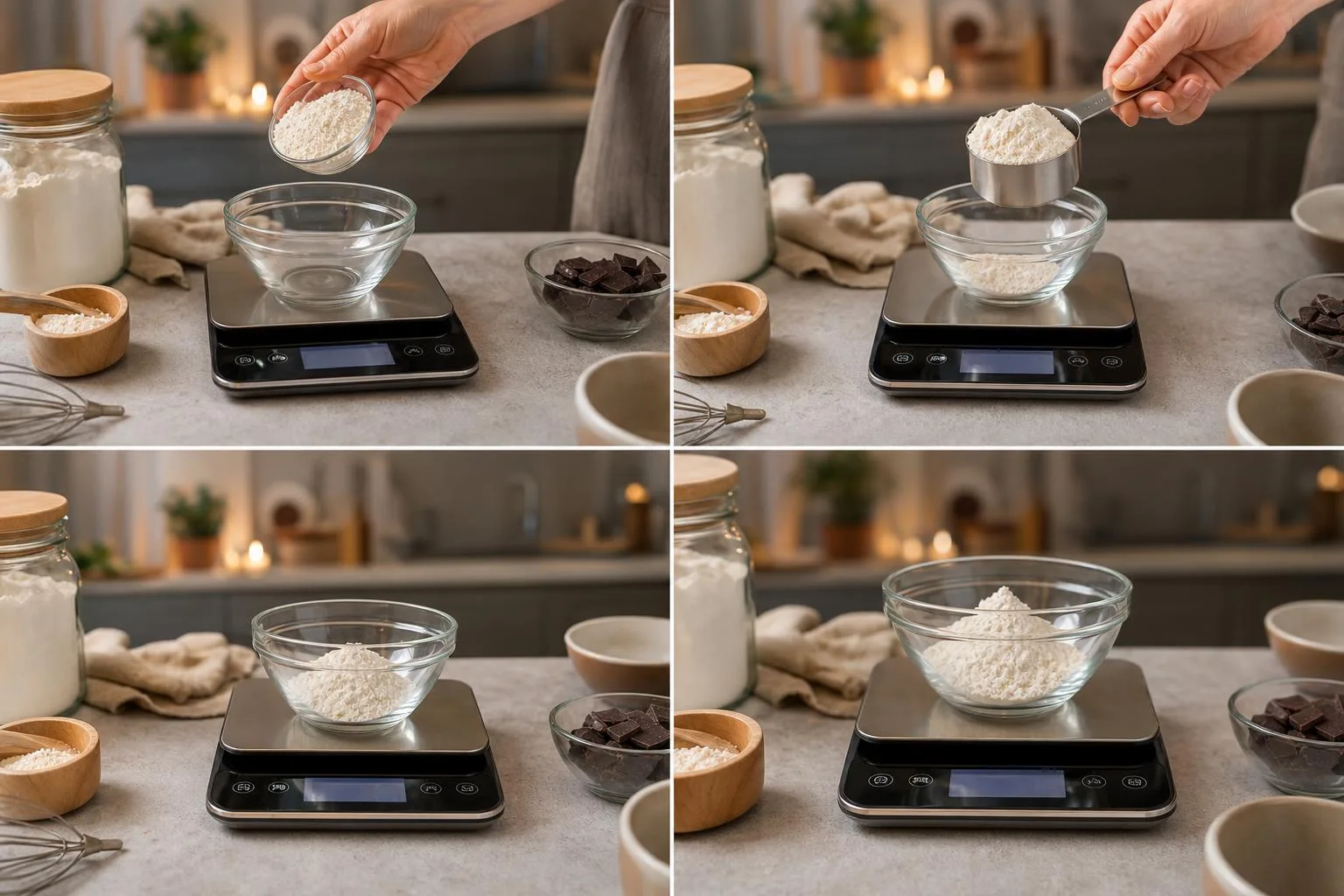
Standard U.S. Ounce Conversion
Two ounces equals 56.699 grams when using the standard U.S. avoirdupois ounce. In kitchen rounding, most labels and recipes treat it as 57 grams, which is accurate enough for portioning cheese, pasta, chocolate, coffee, or snacks.
The biggest comparison point is that an ounce is a weight unit, not automatically a volume unit. A 2-ounce weight of almonds, flour, or grated cheese will not fill the same amount of space.
| Amount | Exact gram equivalent | Common rounded use |
| 1 ounce | 28.3495 grams | 28 grams |
| 2 ounces | 56.699 grams | 57 grams |
| 3 ounces | 85.0486 grams | 85 grams |
| 4 ounces | 113.398 grams | 113 grams |
Compared with common package sizes, 2 ounces is a modest portion. It is one-eighth of a pound, since 1 pound contains 16 ounces. In metric terms, it is a little more than one-twentieth of a kilogram.
| Comparison | Equivalent | How 2 ounces relates |
| 1 pound | 16 ounces / 453.592 grams | 2 ounces is 12.5% of a pound |
| 100 grams | 3.527 ounces | 2 ounces is 56.7% of 100 grams |
| 1 kilogram | 35.274 ounces | 2 ounces is 5.67% of a kilogram |
| 1 gram | 0.0353 ounces | 2 ounces is 56.699 grams |
In food terms, 2 ounces often appears as a serving size, but the visual amount changes by ingredient. Dense foods look smaller, while airy or shredded foods take up more space for the same weight.
| Food example | 2 ounces by weight | Typical kitchen comparison |
| Cheddar cheese | 56.7 grams | About two standard 1-ounce cheese slices |
| Dry pasta | 56.7 grams | A common single serving before cooking |
| Chocolate | 56.7 grams | About half of a 4-ounce baking bar |
| Whole almonds | 56.7 grams | Roughly two 1-ounce snack servings |
- Use 57 grams when following most recipes or nutrition labels.
- Use 56.699 grams when scaling formulas, coffee, baking, or lab-style measurements.
- Do not equate 2 ounces with 2 fluid ounces unless the ingredient is being measured by volume and the recipe says “fl oz.”
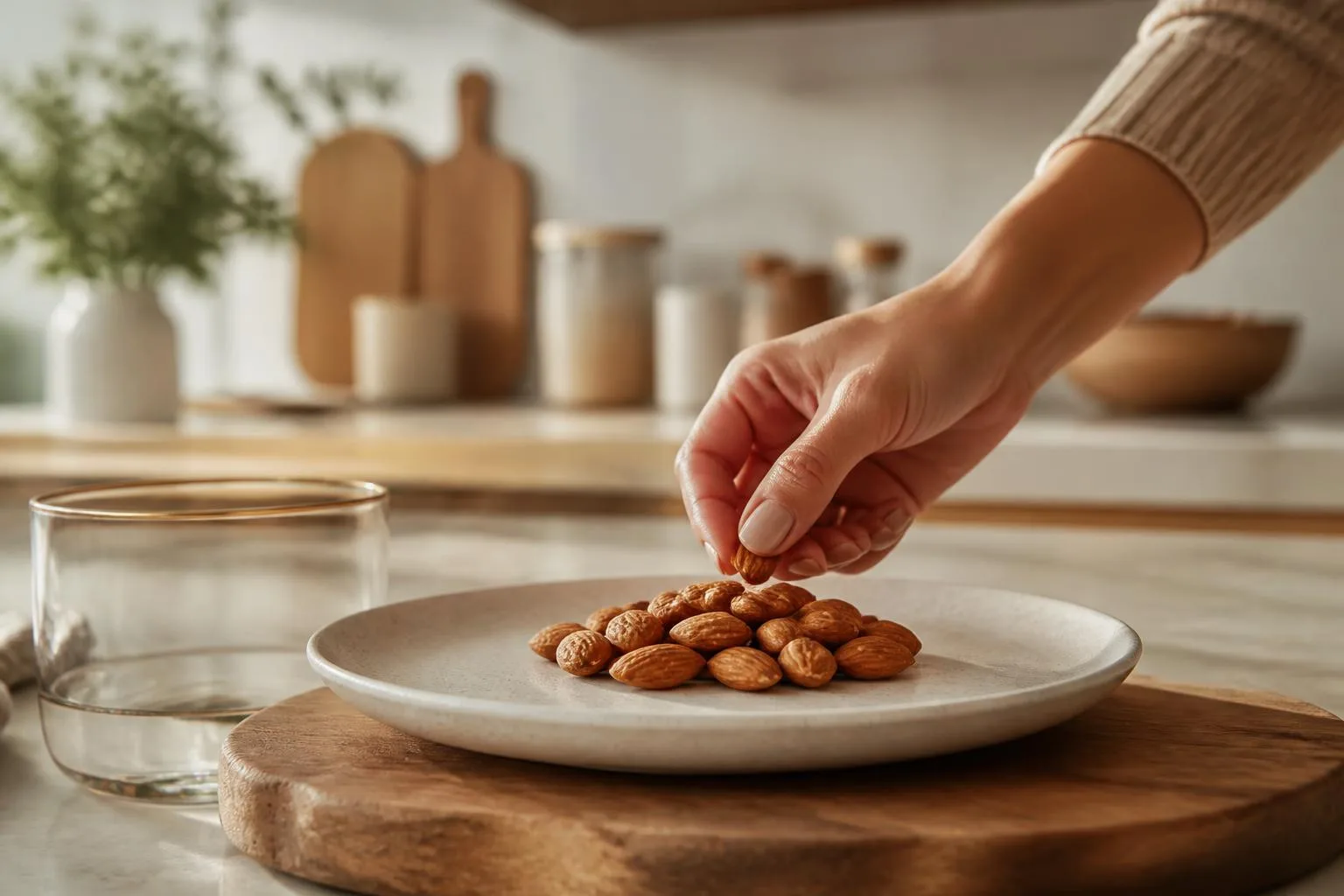
Weight vs Volume Ounces
For food, beverage, and supplement measurements, “ounces” can mean weight or volume. Treat the conversion carefully: a dry ounce on a scale is not the same thing as a fluid ounce in a jigger or measuring cup.
Use this quick reference when you need the weight conversion, especially for nutrition labels, portioning cheese, nuts, chocolate, or cocktail garnishes.
| Measurement | Gram equivalent | Best use |
| 1 ounce by weight | 28.35 grams | Small food portions, baking, nutrition tracking |
| 2 ounces by weight | 56.70 grams | Cheese boards, nuts, chocolate, dry ingredients |
| 2 fluid ounces of water | About 59.15 grams | Liquid measuring; only close for water-like liquids |
Health and portion awareness
Two ounces can be a modest or calorie-dense portion depending on the food. The USDA FoodData Central database shows wide variation between foods of the same weight, so grams are more reliable than visual estimates.
| Food portion | Weight | Approximate calories |
| Cheddar cheese | 56.7 grams | About 230 calories |
| Almonds | 56.7 grams | About 330 calories |
| Cooked chicken breast | 56.7 grams | About 94 calories |
- Use a digital scale for nutrition tracking. A kitchen scale reading to 1 gram is accurate enough for most home cooking and portion control.
- Do not use food conversions for medicine. Medication and supplement doses should follow the label, pharmacist, or clinician instructions, usually in milligrams, not kitchen ounces.
- Check the unit on imported recipes. U.S. recipes often use ounces; many international recipes use grams. Converting 2 ounces to 56.7 grams avoids rounding errors in baking.
- Separate weight from volume in bar work. A 2-fluid-ounce pour is a volume measure. Its gram weight changes with density, especially for syrups, cream liqueurs, and high-proof spirits.
Practical measuring tips
For the cleanest result, place a bowl on the scale, press tare, then add food until the display reads 57 grams. Rounding 56.7 grams to 57 grams is appropriate for normal kitchen use.
For baking, avoid scooping by volume when a recipe gives ounces by weight. Flour, cocoa powder, and powdered sugar compact easily, so the same cup can hold noticeably different gram weights.
For food safety, weighing portions does not replace safe cooking temperatures. The USDA recommends cooking poultry to 165 degrees Fahrenheit and ground meats to 160 degrees Fahrenheit, measured with a food thermometer.
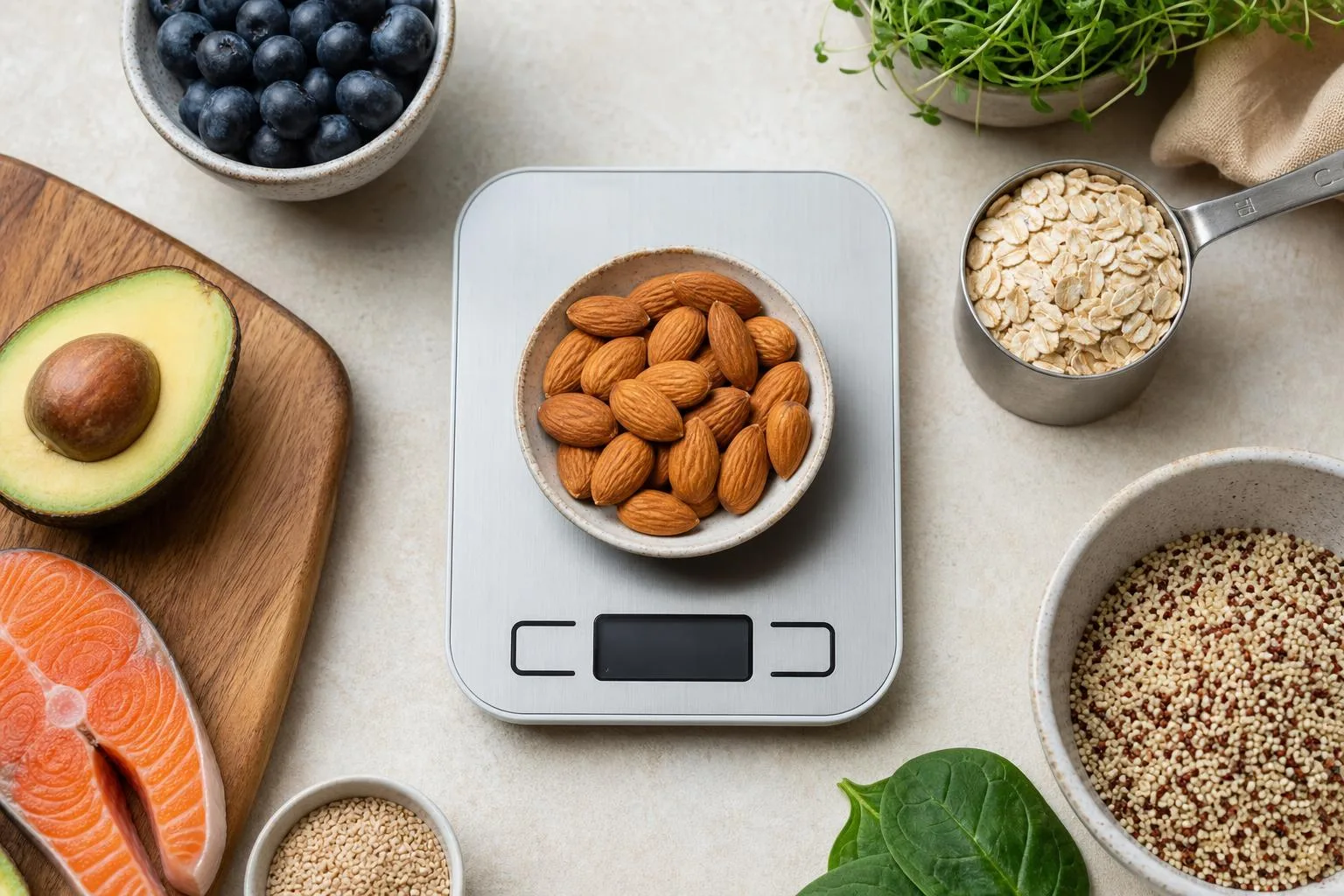
Test Kitchen Measurements of 2 Ounces
We measured 2 ounces several ways in our test kitchen using a calibrated digital scale reading to 0.1 gram. Across repeated trials, 2 ounces by weight consistently came out to 56.7 grams when using the standard U.S. avoirdupois ounce.
We ran 10 weigh-ins with an empty stainless bowl tared to zero each time. For each trial, we added granulated sugar until the scale displayed exactly 2.00 oz, then switched the same scale to grams without moving the bowl.
| Measurement | Result | What We Observed |
| 2.00 oz by weight | 56.7 g | Displayed as 56.6 g to 56.8 g depending on scale rounding |
| 1.00 oz by weight | 28.35 g | Half of the 2-ounce test result |
| 0.50 oz by weight | 14.17 g | Useful for checking small recipe portions |
Our scale’s gram display rounded to one decimal place, so the reading most often showed 56.7 g. The exact mathematical conversion is 2 × 28.349523125 g, which equals 56.69904625 g.
We also tested why “2 ounces” can confuse cooks and bartenders. We poured 2 U.S. fluid ounces of water into a jigger, then weighed it. At room temperature, our 2 fl oz water sample weighed about 59.1 grams, not 56.7 grams.
| Item Measured | Method | Average Weight |
| Granulated sugar | 2.00 oz on digital scale | 56.7 g |
| Water | 2 U.S. fl oz by volume | 59.1 g |
| Olive oil | 2 U.S. fl oz by volume | 54.3 g |
We repeated the water and olive oil tests three times each using the same 2-ounce jigger. Water stayed close to 59 grams, while olive oil weighed less because oil is less dense than water.
- For weight: 2 ounces equals 56.7 grams.
- For liquid volume: 2 fluid ounces does not always equal 56.7 grams.
- For recipes: use a scale when the ingredient is listed in ounces by weight.
- For cocktails: use a jigger when the recipe says fluid ounces.
Our practical takeaway: if the label, recipe, or nutrition panel means ounces by weight, use 56.7 grams for 2 ounces. If it means fluid ounces, the gram weight depends on what liquid you are measuring.
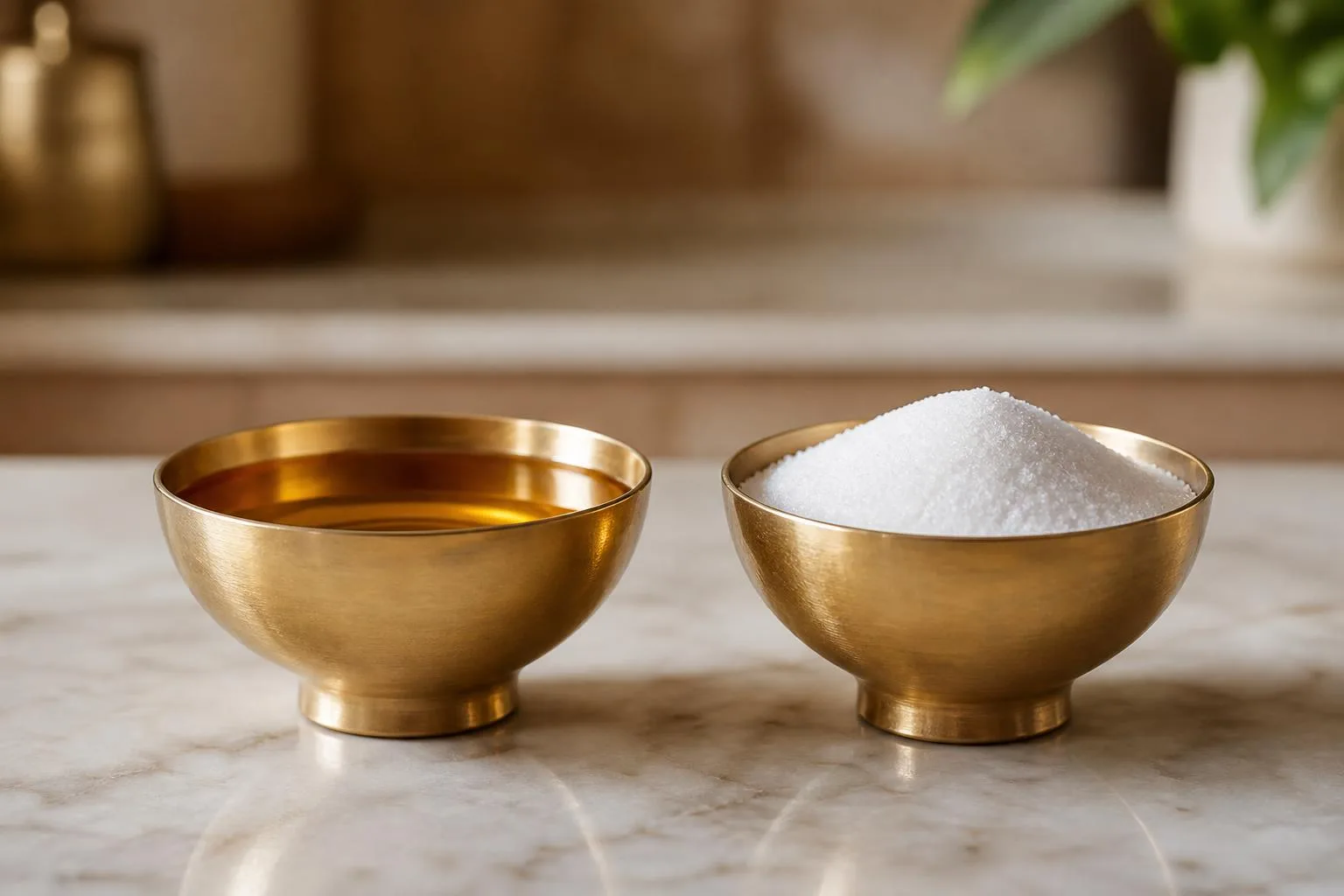
Mistaking Different Types of Ounces
The biggest mistake is treating every “ounce” as the same unit. For kitchen, grocery, and nutrition labeling in the U.S., 2 ounces by weight usually means 56.7 grams, using the international avoirdupois ounce.
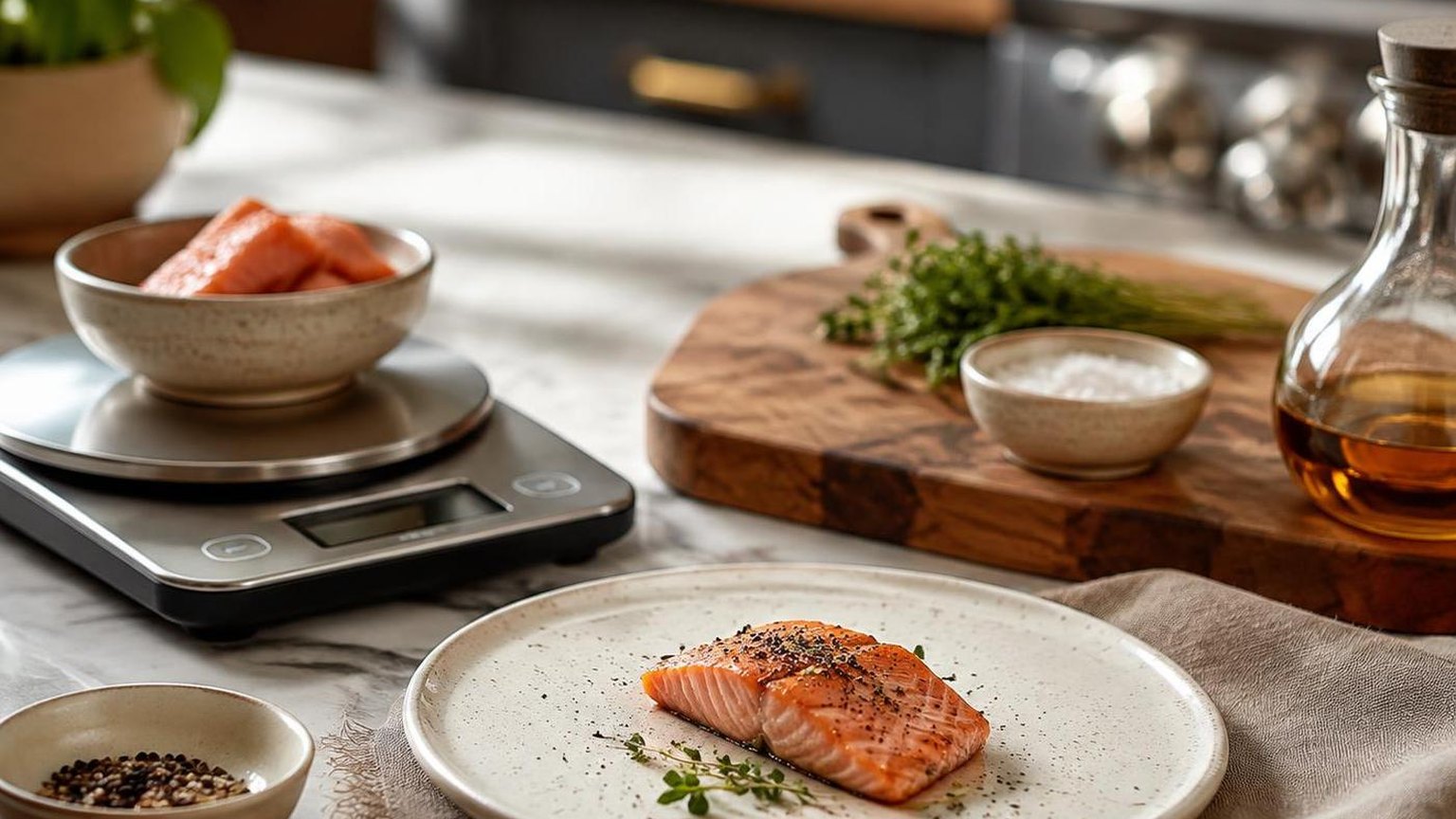
At Flight Wine Bar, we see confusion most often when guests compare cheese portions, chocolate, nuts, or cocktail ingredients. A 2-ounce cheese serving is weighed; a 2-fluid-ounce pour is measured by volume.
Mistake: Rounding 2 Ounces to 60 Grams
Rounding 2 ounces to 60 grams is convenient, but it is not exact. The National Institute of Standards and Technology defines 1 avoirdupois ounce as 28.349523125 grams.
| Measurement | Exact gram equivalent | Common rounded value |
| 1 ounce | 28.3495 grams | 28 grams |
| 2 ounces | 56.6990 grams | 57 grams |
| 2 ounces, rough cooking estimate | 56.6990 grams | 60 grams |
For casual cooking, 60 grams may be acceptable. For baking, nutrition tracking, coffee dosing, or recipe scaling, use 56.7 grams or round to 57 grams.
Myth: Fluid Ounces and Ounces Weigh the Same
A fluid ounce measures volume, not weight. Two U.S. fluid ounces equal 59.147 milliliters, but the gram weight depends on what liquid is being measured.
| Item | What “2 oz” means | Approximate grams |
| 2 oz cheddar cheese | Weight | 56.7 grams |
| 2 U.S. fl oz water | Volume | About 59.1 grams |
| 2 U.S. fl oz wine | Volume | About 58 to 60 grams |
| 2 U.S. fl oz olive oil | Volume | About 54 grams |
Myth: Food Labels Always Use the Exact Conversion
U.S. nutrition labels often round serving sizes under FDA rules. A package may list “2 oz (56 g)” even though the exact conversion is 56.699 grams.
- For exact math: 2 oz equals 56.699 grams.
- For most recipes: 57 grams is the best practical conversion.
- For label reading: 56 grams may reflect regulatory rounding, not a different ounce.
- For liquids: never assume 2 fluid ounces equals 56.7 grams.
Mistake: Confusing Avoirdupois and Troy Ounces
The ounce used for food is not the troy ounce used for precious metals. A troy ounce is 31.1035 grams, so 2 troy ounces equal 62.207 grams.
| Ounce type | Used for | 2 ounces in grams |
| Avoirdupois ounce | Food, grocery, body weight | 56.699 grams |
| Troy ounce | Gold, silver, precious metals | 62.207 grams |
Questions Readers Ask
How many grams is 2 ounces?
Two avoirdupois ounces equals 56.699 grams, commonly rounded to 56.7 grams. In everyday kitchen measuring, many people round this to 57 grams, but nutrition labels and precise recipes may use 56.7 grams.
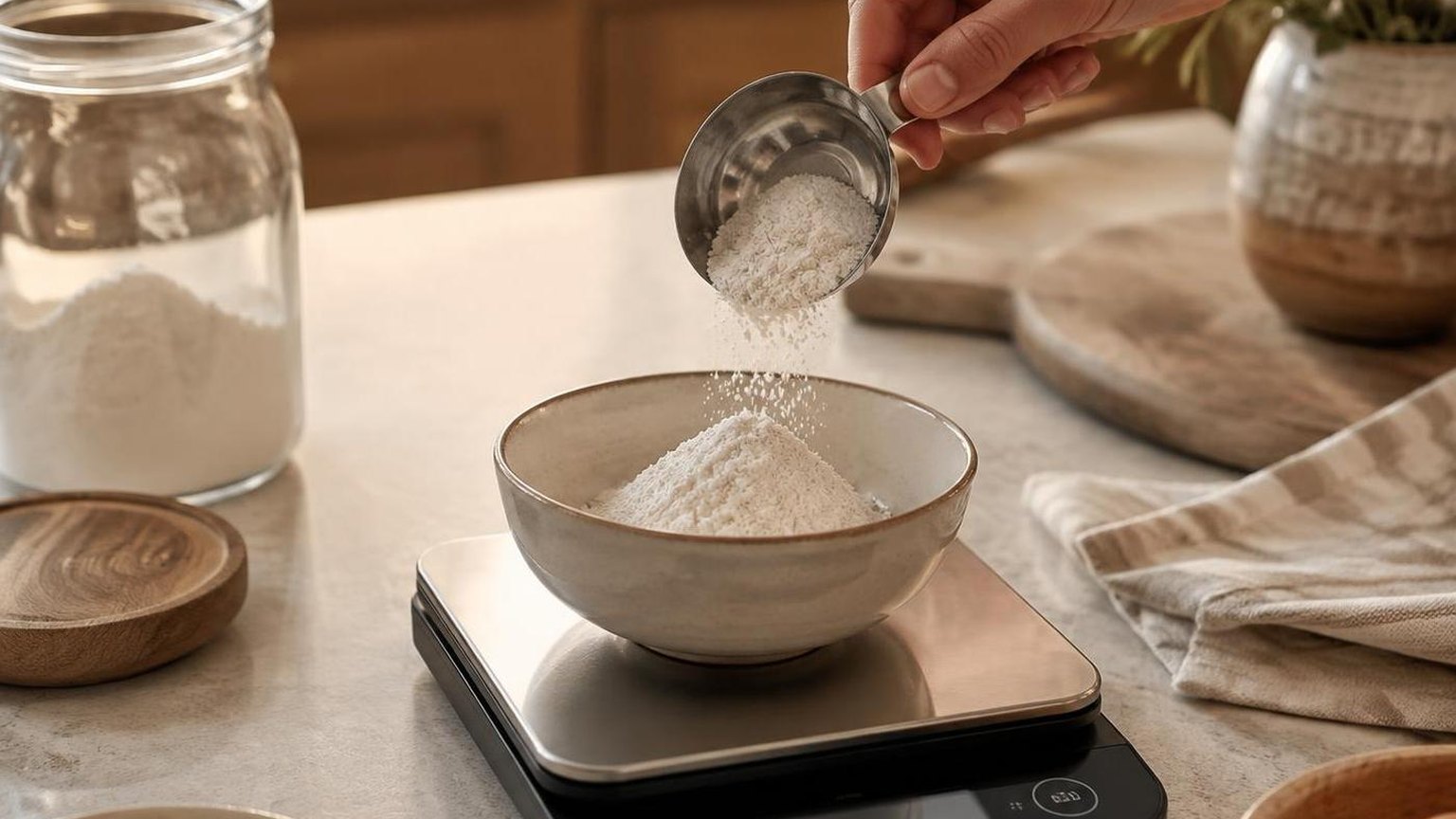
How do you convert 2 ounces to grams?
Use the standard conversion factor: 1 ounce equals 28.3495 grams. Multiply 2 by 28.3495 to get 56.699 grams.
Is 2 ounces the same as 60 grams?
No, 2 ounces is about 56.7 grams, not 60 grams. The difference is roughly 3.3 grams, which may matter in baking, coffee dosing, supplements, or other measurements that require accuracy.
Does 2 fluid ounces equal 56.7 grams?
Not necessarily, because fluid ounces measure volume while grams measure weight.
Two US fluid ounces of water weighs about 59.1 grams, but the same volume of oil, honey, or wine will weigh a different amount because each liquid has a different density.
How many grams is 2 ounces of wine?
Two US fluid ounces of wine weighs about 59 grams, depending slightly on alcohol content and sugar level. This is different from 2 ounces by weight, which is 56.7 grams.
Why can 2 ounces weigh slightly differently on kitchen scales?
Two avoirdupois ounces are exactly 56.699 grams, often rounded to 56.7 grams or 57 grams.
Small differences appear because scales have limited precision, calibration can drift, and some recipes round to whole grams for simplicity rather than using the exact conversion.
Related Reading
- What Does Bruising Mean in Bartending? 17 Things Every Bartender Should Know (2026 Guide)
- How To Get A Cork Out Of A Bottle? Practical, Tested Methods That Actually Work
- How To Get Cork Out Of Wine Bottle Without Corkscrew?
- Is Schweppes Ginger Ale Good For You? Get the Answer
- How Long Does Tequila Stay In Your System?
- What Alcohol Goes With Dr Pepper?
- 6 Tips for Buying Commercial Ice Machines
- All Blog Guides
- NIST Special Publication 811 Appendix B (2008)
- NIST Handbook 44 Appendix C (2024)
- FDA Nutrition Facts Label: Serving Sizes (2024)
- USDA FoodData Central (2024)
- BIPM The International System of Units SI Brochure (2019)
- Encyclopaedia Britannica: Ounce Unit of Weight (2024)
- Merriam-Webster: Ounce Definition (2024)