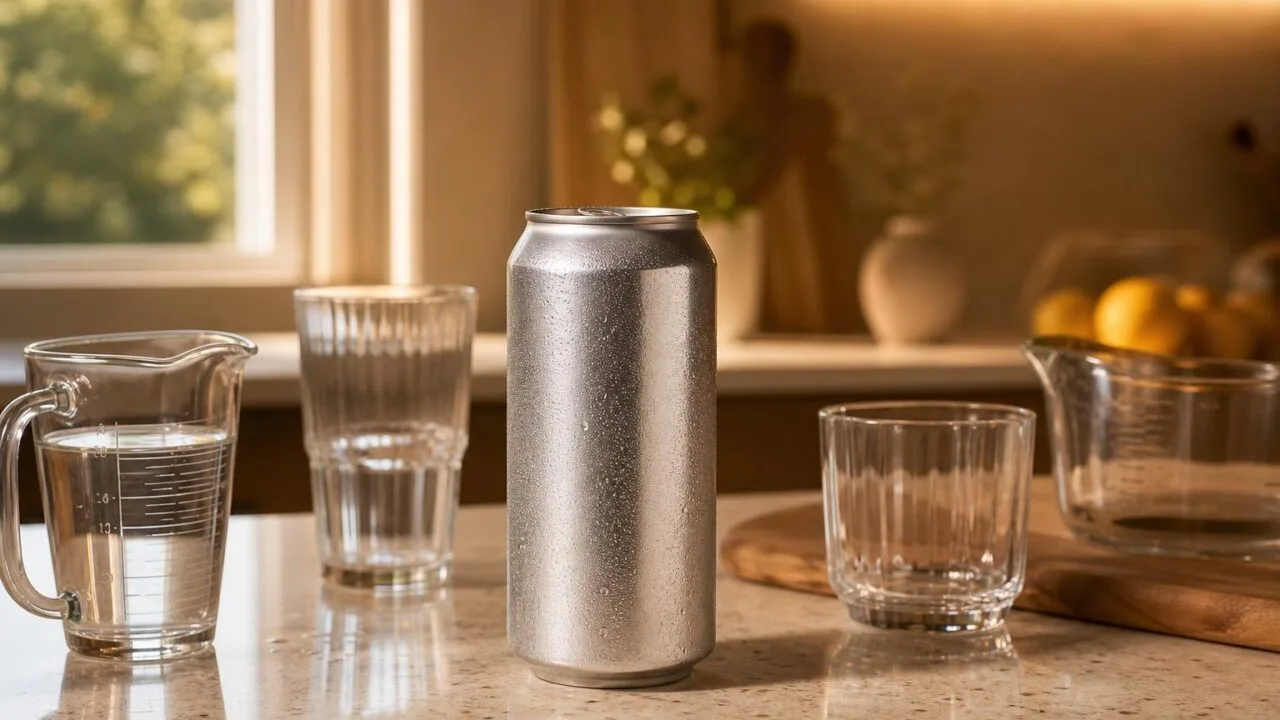
How Many Ounces In A Can is 12 fluid ounces for the standard U.S. beverage can. That equals 355 milliliters, the size most shoppers recognize from soda, seltzer, beer, and ready-to-drink cocktails sold in American grocery and liquor stores.
Can sizes are not universal, though. Slim cans often hold 8.4, 10, or 12 fluid ounces, while tallboys commonly hold 16, 19.2, or 24 fluid ounces. Food cans use net weight instead of fluid volume, so labels may show ounces by weight.
This guide separates fluid ounces from weight ounces, explains common U.S. can formats, and shows how to read labels accurately before portioning, mixing, storing, or comparing prices.
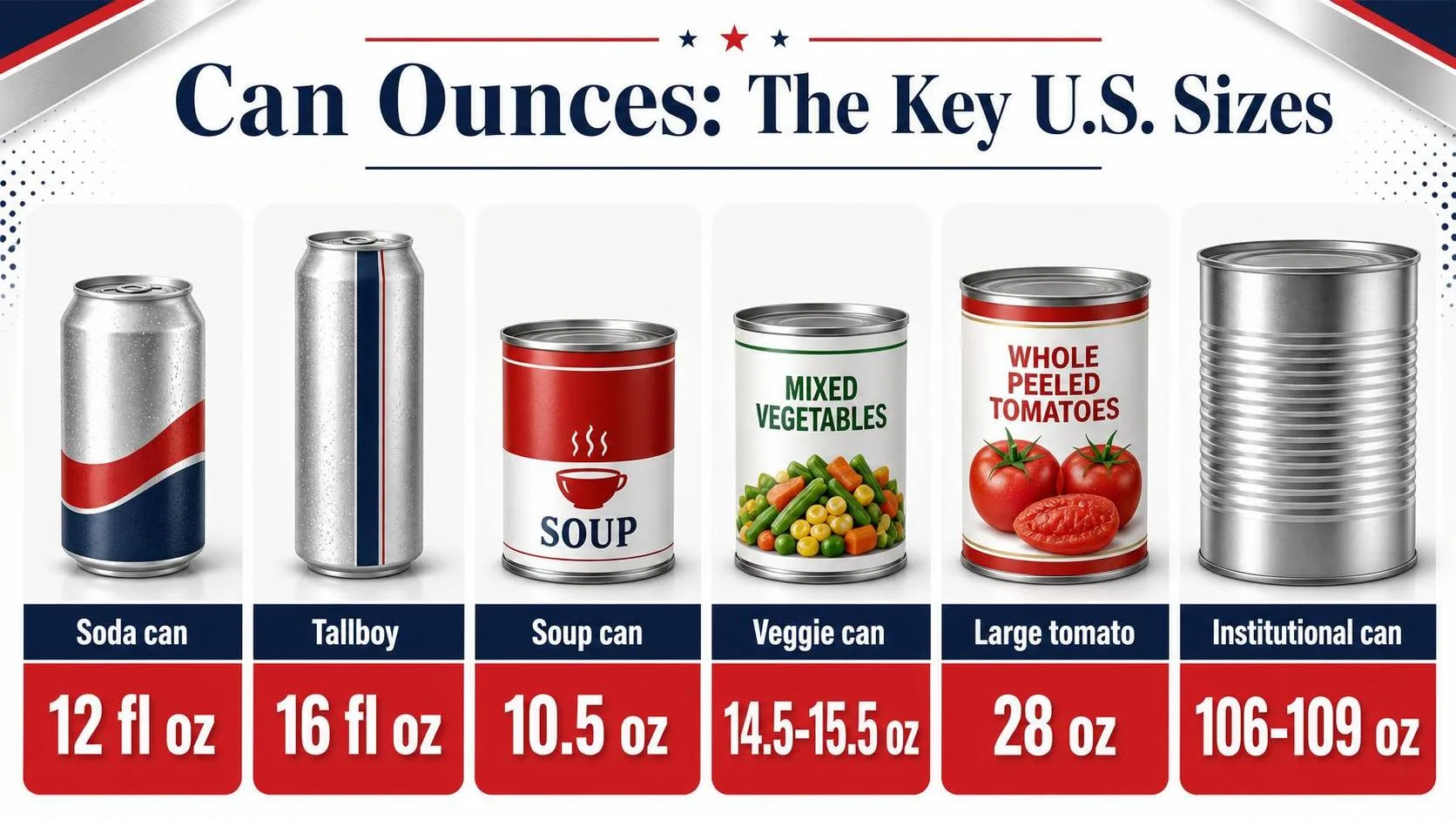
Fluid Ounces vs Weight Ounces
In the U.S., “ounces in a can” usually means either fluid ounces for volume or ounces by weight for food. A 12 fl oz soda can, a 12 oz beer can, and a 15 oz bean can do not measure the same thing.
Fluid ounces measure liquid volume. Ounces on most canned foods are net weight, meaning the weight of food plus liquid inside, not the can itself.
Common U.S. Beverage Can Sizes
| Can type | Typical size | Metric equivalent | Where you see it |
| Standard soda can | 12 fl oz | 355 mL | Cola, sparkling water, energy drinks |
| Slim can | 12 fl oz | 355 mL | Hard seltzer, canned cocktails |
| Tallboy | 16 fl oz | 473 mL | Beer, cider, craft beverages |
| Imperial pint can | 19.2 fl oz | 568 mL | Craft beer “stovepipe” cans |
| Large beverage can | 24 fl oz | 710 mL | Beer, tea, energy drinks |
A standard 12 fl oz can equals 1.5 U.S. cups, because 1 cup is 8 fl oz. A 16 fl oz can equals exactly 2 cups, which is why tallboys are often described as pint cans.
Common Canned Food Sizes
| Food can label | Typical net weight | Approximate volume | Common contents |
| Small tomato paste can | 6 oz | About 3/4 cup | Tomato paste |
| Standard vegetable can | 14.5 to 15.5 oz | About 1 3/4 cups | Beans, corn, peas, tomatoes |
| Condensed soup can | 10.5 oz | About 1 1/4 cups | Condensed soups |
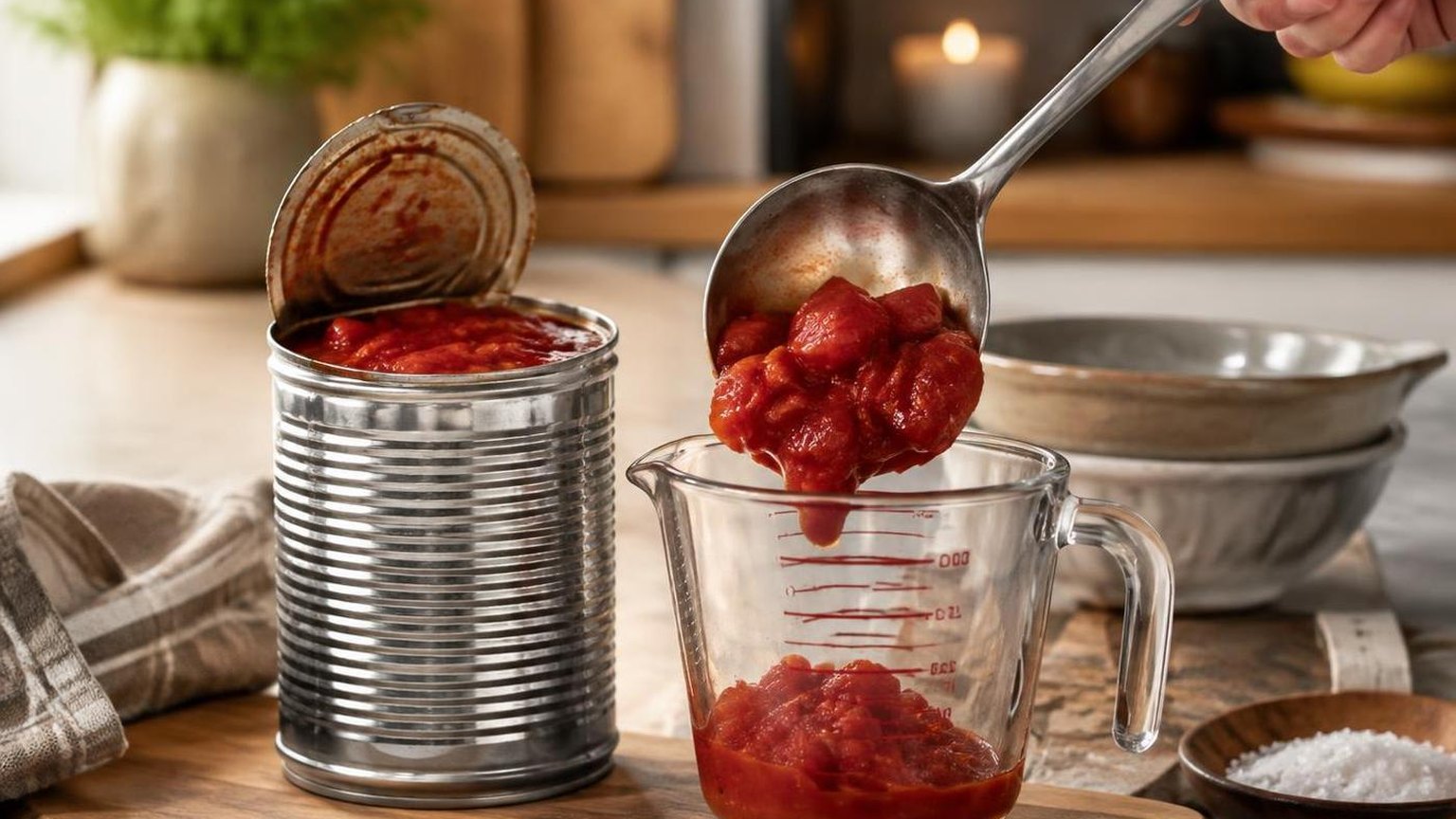
| Large tomato can | 28 oz | About 3 1/2 cups | Crushed, diced, or whole tomatoes |
| Institutional can | 106 to 109 oz | About 12 to 13 cups | Foodservice vegetables, fruit, sauces |
The important distinction is density. A 15 oz can of beans weighs 15 ounces, but it does not contain 15 fluid ounces of volume. Beans, syrup, brine, tomatoes, and condensed soup all pack differently.
- 12 fl oz is the default U.S. can size for soda and many beers.
- 16 fl oz is one U.S. pint and equals 2 cups.
- 14.5 to 15.5 oz is the standard range for many canned vegetables and beans.
- 28 oz is the common large can size for tomatoes and some fruit.
- 10.5 oz is the classic condensed soup can size used in many recipes.
For recipes, use the label’s unit carefully. If it says “fl oz,” measure volume. If it says “oz” on canned food, treat it as net weight unless the recipe gives a cup measurement.
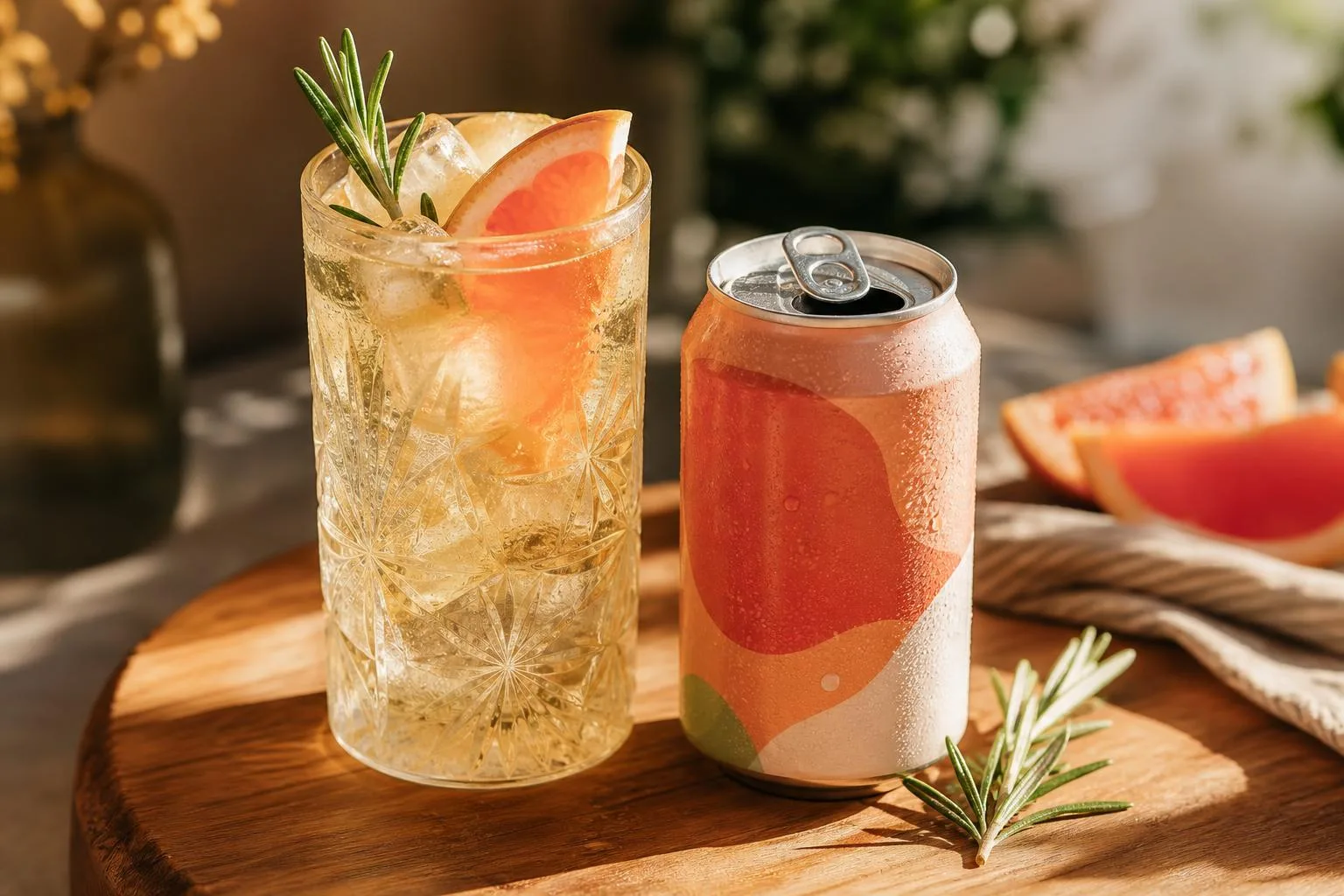
What Determines Ounces in a Can
The number of ounces in a can depends on what is being measured: liquid volume, net weight, or drained weight. In the United States, beverage cans usually show fluid ounces, while food cans often show weight ounces under FDA labeling rules.
The biggest source of confusion is that fluid ounces measure volume, and ounces measure weight. A 12 fl oz soda can and a 12 oz can of beans are not equivalent measurements.
| Can type | Common label amount | What it means |
| Standard soda or beer can | 12 fl oz | Liquid volume, equal to about 355 mL |
| Tall beer can | 16 fl oz | Liquid volume, equal to about 473 mL |
| Slim energy drink can | 8.4 fl oz | Liquid volume, equal to about 250 mL |
| Condensed soup can | 10.5 oz | Net weight, not fluid volume |
| Vegetable can | 14.5 oz to 15 oz | Net weight including liquid or packing medium |
Product Category
Beverages are the most straightforward because they are sold by volume.
The familiar U.S. aluminum can for soda, sparkling water, and many beers is 12 fluid ounces, which the National Institute of Standards and Technology converts as approximately 354.9 milliliters.
Wine, cocktails, coffee, and energy drinks use more varied can sizes. Common formats include 187 mL, 250 mL, 355 mL, and 375 mL, so checking the label matters more than relying on the can’s shape.
Labeling Rule Used
Food cans are commonly labeled by net weight because the contents are partly solid. Under FDA labeling requirements, the “net quantity of contents” must describe the amount of food in the package, excluding the container itself.
- Net weight: total edible contents, including sauce, brine, syrup, or water.
- Drained weight: the amount left after liquid is removed, often used for tuna, olives, and canned mushrooms.
- Fluid ounces: volume of a liquid, commonly used for drinks, broth, and evaporated milk.
Can Design and Fill Level
Two cans that look similar may not hold the same amount. Diameter, height, dome shape, and headspace all affect capacity.
Beverage cans also need room for carbonation pressure, so the physical container volume is slightly greater than the labeled serving volume.
For practical use, trust the printed label first. If a recipe calls for “one can,” verify whether it means 12 fl oz of liquid, 14.5 oz net weight, or a specific drained amount.
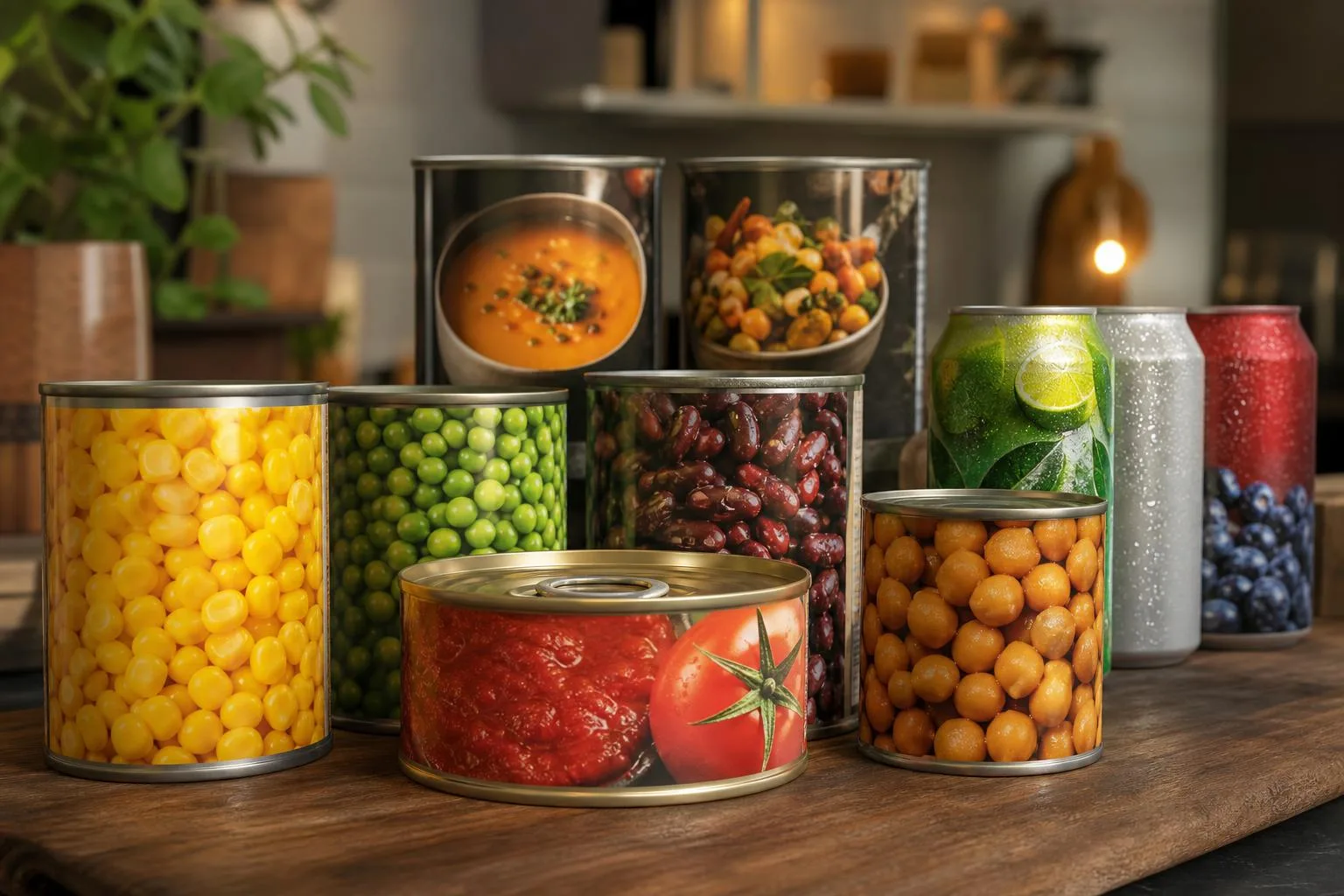
Net Quantity on Can Labels
A can’s “ounces” are verified as net quantity, not by the outside size of the container. For drinks, that usually means U.S. fluid ounces; for foods, it usually means net weight in avoirdupois ounces.
Manufacturers measure the product that goes into the can, then regulators verify whether the labeled amount is truthful.
In the United States, package quantity rules are built around NIST Handbook 133, FDA food-labeling rules, and, for alcoholic beverages, TTB requirements.
| Label example | What is measured | Common verification method |
| 12 fl oz beer or soda | Liquid volume | Fill-height check, weight-to-volume conversion, or direct volume test |
| 16 fl oz canned cocktail | Liquid volume | Net contents check against fluid-ounce declaration |
| 15 oz canned beans | Net weight of food and liquid | Gross weight minus empty can weight |
| 5 oz tuna | Net weight, often with drained-weight considerations | Weighing under standardized drain procedures |
For beverages, the basic reference is that 1 U.S. fluid ounce equals 29.5735 milliliters. A standard 12 fl oz can therefore contains about 354.9 mL, while a 16 fl oz can contains about 473.2 mL.
| Can label | Metric equivalent | Typical category |
| 7.5 fl oz | 221.8 mL | Mini soda can |
| 8.4 fl oz | 248.4 mL | Energy drink slim can |
| 12 fl oz | 354.9 mL | Standard beer or soda can |
| 16 fl oz | 473.2 mL | Tallboy beer or energy drink |
| 19.2 fl oz | 567.8 mL | Stovepipe beer can |
On a packaging line, verification is usually done by checkweighers, calibrated scales, and documented sampling. The filled can is weighed, the tare weight of the empty can is subtracted, and density is used when the label is declared by volume.
Carbonated drinks need special control because temperature and carbonation affect fill height. Plants commonly use fill-level inspectors after seaming, while quality-control technicians confirm actual contents with calibrated laboratory equipment.
- Net contents exclude the aluminum can, lid, tab, carton, and any packing material.
- Fluid ounces measure volume, so they apply to beer, soda, seltzer, and cocktails.
- Ounces by weight measure mass, so they apply to canned vegetables, meat, seafood, and pet food.
- Metric units often appear with U.S. units because federal labeling rules encourage dual declarations.
Regulators do not require every single can to contain exactly the labeled amount.
Instead, official inspections evaluate lots using statistical procedures, while prohibiting unreasonable shortages and requiring the average contents to meet the label declaration.
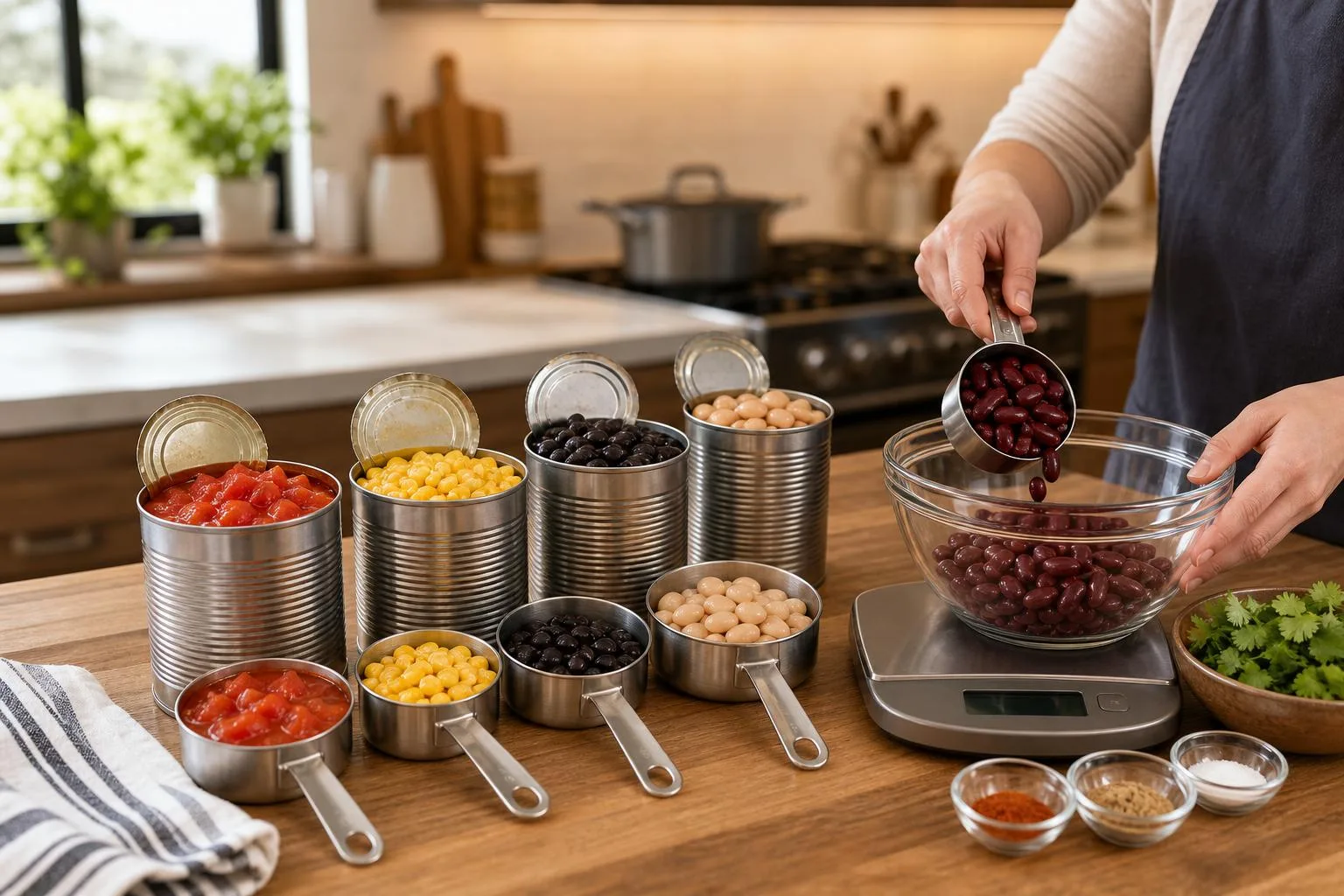
Fluid Ounces in a Soda Can
A standard U.S. beverage can holds 12 U.S. fluid ounces, which equals 1.5 cups or about 355 milliliters. That makes it smaller than a pint glass, larger than a typical mini can, and equal to many single-serve bottled sodas and beers.
In practical terms, one 12-ounce can is the baseline serving used for many carbonated drinks, beers, hard seltzers, and canned cocktails.
Nutrition labels in the U.S. list serving size in fluid ounces for liquids, so comparing containers by ounces is the most direct method.
| Container or measure | Typical volume | Compared with a 12 oz can |
| Mini can | 7.5 fl oz | 4.5 fl oz less |
| Standard can | 12 fl oz | Same size |
| Tallboy can | 16 fl oz | 4 fl oz more |
| Imperial pint can | 19.2 fl oz | 7.2 fl oz more |
| Standard U.S. pint | 16 fl oz | 4 fl oz more |
| U.S. cup measure | 8 fl oz | 4 fl oz less |
The closest common alternative is the 12-ounce bottle. Many bottled sodas, domestic beers, and flavored malt beverages use the same 12-fluid-ounce fill as a standard can, so the serving volume is identical even though the packaging differs.
| Equivalent measure | Amount |
| 1 standard can | 12 U.S. fl oz |
| Cups | 1.5 cups |
| Tablespoons | 24 tbsp |
| Milliliters | About 355 mL |
| Liters | About 0.355 L |
A 16-ounce tallboy is one-third larger than a standard can. For beer or hard seltzer, that means a 16-ounce can contains the same liquid volume as 1.33 standard 12-ounce cans.
A 19.2-ounce can, often used for craft beer and ready-to-drink cocktails, equals 1.6 standard cans. This size is sometimes called a “stovepipe” can and is noticeably larger than both a 16-ounce tallboy and a 12-ounce can.
- For soda: a 7.5-ounce mini can is 62.5% of a standard 12-ounce can.
- For beer: a 12-ounce can is one regular serving size, while a 16-ounce can is 1.33 servings by volume.
- For measuring recipes: one 12-ounce can equals exactly 1.5 U.S. cups, useful when replacing canned liquids with measured ingredients.
- For metric labels: 12 U.S. fluid ounces rounds to 355 mL, the metric amount commonly printed on U.S. beverage cans.
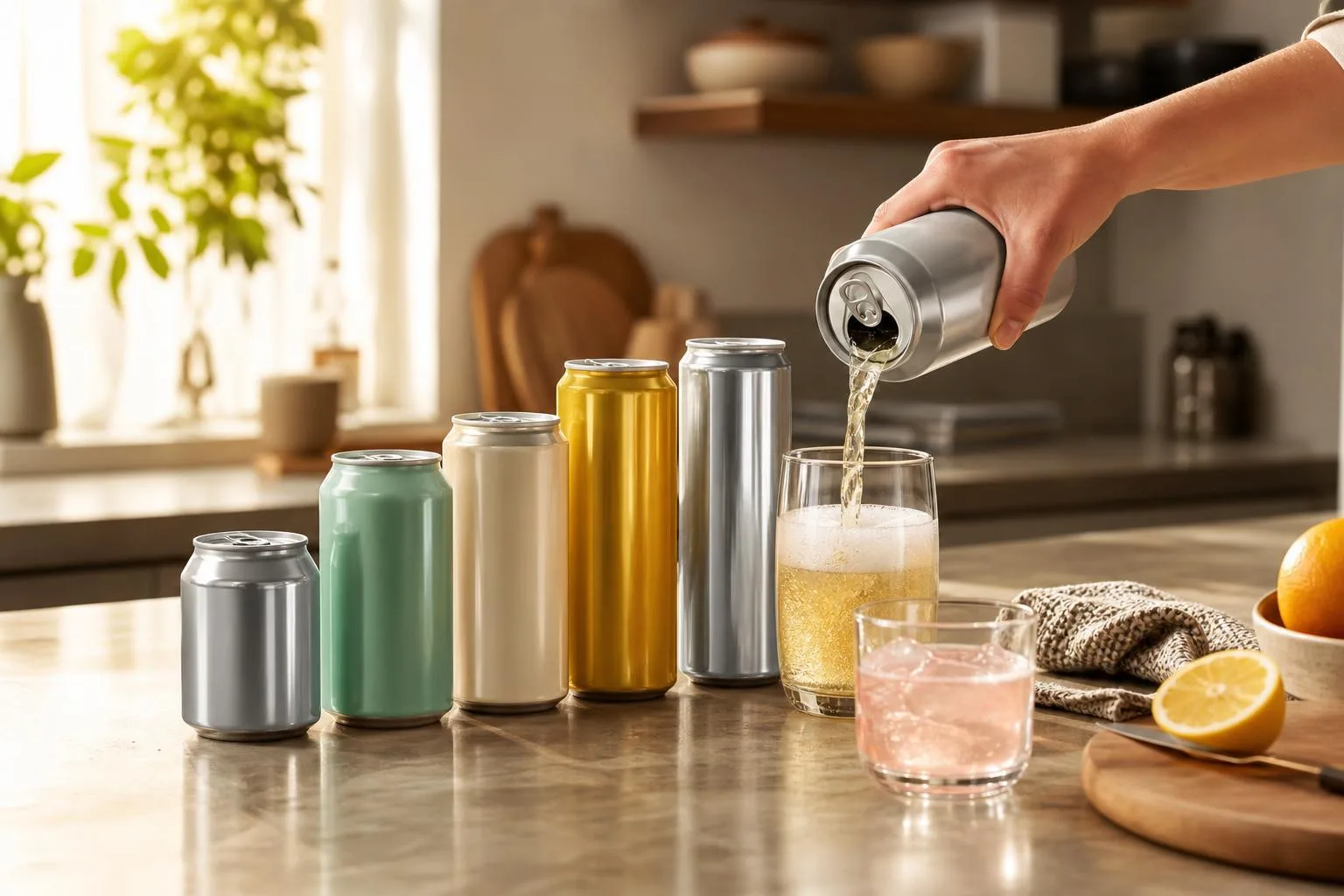
How Can Size Affects Intake
Can size matters because ounces translate directly into sugar, caffeine, alcohol, sodium, and total calories consumed.
In the U.S., fluid ounces measure volume, while nutrition labels list serving size, servings per container, and nutrients regulated by the FDA.
Always check whether the can is one serving or more. Many drinks look “single-serve,” but the label may divide the can into multiple servings, which changes the real intake if you drink the whole container.
Common Can Sizes and What to Watch
| Can type | Typical size | Practical health note |
| Soda can | 12 fl oz | Often contains about 39 g added sugar in a regular cola, near the American Heart Association daily limit for men and above the limit for women. |
| Tall beer can | 16 fl oz | More than one standard 12 fl oz beer; alcohol intake rises with both volume and ABV. |
| Energy drink can | 16 fl oz | Can contain 160 mg caffeine or more; the FDA cites 400 mg per day as an amount not generally associated with dangerous effects for most adults. |
| Canned soup | 10.5–19 fl oz | Sodium can be high; the Dietary Guidelines advise less than 2,300 mg sodium per day for adults. |
Alcohol: Ounces Are Not the Whole Story
For beer, wine, cocktails, and canned spritzers, alcohol by volume matters as much as can size. The CDC defines one U.S. standard drink as 0.6 fl oz of pure alcohol.
| Beverage | Standard drink equivalent |
| Regular beer | 12 fl oz at 5% ABV |
| Wine | 5 fl oz at 12% ABV |
| Distilled spirits | 1.5 fl oz at 40% ABV |
| Strong canned cocktail | 12 fl oz at 8% ABV equals about 1.6 standard drinks |
- Read the label before pouring: “12 fl oz” is volume, not calories or alcohol strength. Check serving count, ABV, sugar, sodium, and caffeine.
- Use a measuring cup once: Pour a familiar can into a measuring cup to see what 8, 12, or 16 fl oz looks like in your glassware.
- Chill cans safely: Do not freeze sealed carbonated cans. Expanding liquid and pressure can rupture the container.
- Inspect before drinking: Discard cans that are bulging, leaking, badly rusted, spurting liquid, or smell off. The USDA warns that bulging cans can signal dangerous microbial activity.
- Rinse tops when needed: If a can has dust, sticky residue, or storage grime, rinse and wipe the lid before opening to reduce contamination around the drinking surface.
- Account for children and pregnancy: Caffeine, alcohol, and high-sugar beverages have different risk profiles for children, pregnant people, and people with heart or blood pressure conditions.
Measuring Can Ounces in Practice
We measured common cans in our bar prep area using a calibrated digital scale, a 500 mL graduated cylinder, and room-temperature products.
Our goal was to verify what “ounces in a can” means in real handling: fluid ounces for drinks, net-weight ounces for foods.
For carbonated drinks, we chilled cans, opened them, waited 30 seconds for foam to settle, then poured slowly down the cylinder wall. Each beverage size was measured in three separate cans from the same retail multipack.
| Can type tested | Label claim | Our average measured contents | What the ounces mean |
| Standard soda can | 12 fl oz | 12.02 fl oz | Liquid volume |
| Slim hard seltzer can | 12 fl oz | 11.98 fl oz | Liquid volume |
| Tall beer can | 16 fl oz | 16.01 fl oz | Liquid volume |
| Small energy drink can | 8.4 fl oz | 8.39 fl oz | Liquid volume |
| Condensed soup can | 10.5 oz | 10.54 oz by weight | Net weight, not fluid volume |
| Canned tomatoes | 14.5 oz | 14.57 oz by weight | Net weight, not fluid volume |
The biggest practical takeaway: a drink can’s ounces are usually fluid ounces, while pantry cans usually show weight ounces. A 12 fl oz soda can is not the same kind of measurement as a 12 oz can of beans.
We also checked serving accuracy with a jigger, because this matters for wine cocktails, spritzes, and canned mixers. A standard 12 fl oz can gave us eight full 1.5 fl oz pours, with only a few drops left after careful pouring.
- Standard 12 fl oz cans consistently filled a 12-ounce bar glass close to the rim when poured without ice.
- With ice, the same can usually filled two short mixed-drink glasses in our tests.
- Foam affected the first reading by up to about 0.2 fl oz, so we only recorded after bubbles settled.
- Food cans varied more after draining, because label weight includes liquid, sauce, or syrup unless marked “drained weight.”
We found label claims to be very close for sealed beverages. The confusion comes less from inaccurate cans and more from mixing up fluid ounces, weight ounces, and serving expectations.
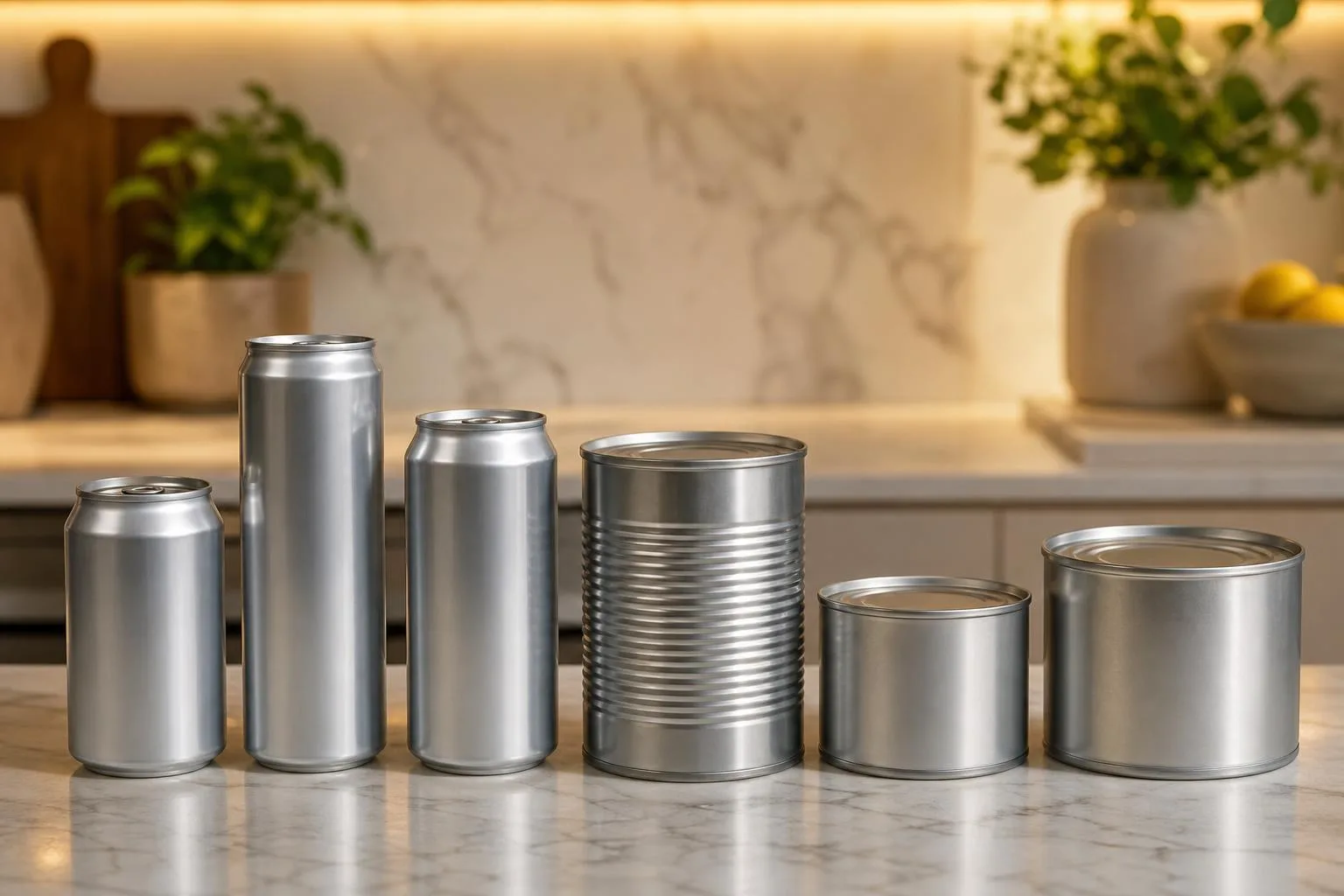
Common Confusion About Can Ounces
Can sizes are easy to misread because “ounces” can mean volume or weight, and labels often mix serving size, net contents, and package count.
In U.S. food and beverage labeling, fluid ounces measure volume, while ounces on many foods measure net weight.
Most mistakes happen when people assume every can is 12 fluid ounces. That is common for soda and beer, but it is not a universal can size.
Myth: one can always equals 12 ounces
A 12-fluid-ounce can is standard for many carbonated drinks and beers, but canned foods vary widely. The FDA allows U.S. labels to show net quantity in fluid measure for liquids and weight for solids or semi-solids.
| Product type | Common can amount | What the ounces mean |
| Soda or beer | 12 fl oz | Liquid volume |
| Energy drink | 8.4, 12, or 16 fl oz | Liquid volume |
| Condensed soup | 10.5 oz | Net weight |
| Evaporated milk | 12 fl oz | Liquid volume |
| Canned tomatoes | 14.5 oz or 28 oz | Net weight |
| Tuna | 5 oz | Net weight before draining |
Myth: fluid ounces and ounces are interchangeable
They are not the same measurement. One U.S. fluid ounce is a volume measurement equal to about 29.57 milliliters. One avoirdupois ounce is a weight measurement equal to 28.35 grams.
- 12 fl oz of water weighs about 12.5 ounces by weight at room temperature.
- 12 fl oz of oil weighs less than water because oil is less dense.
- 12 oz of canned beans describes weight, not a 12-fluid-ounce volume.
Myth: the number on the front is always what you can pour
For beverages, the labeled amount is usually the drinkable volume. For canned foods packed in water, brine, syrup, or oil, the front label may include both food and packing liquid.
That matters with tuna, beans, olives, and fruit. A 5-ounce can of tuna does not yield 5 ounces of drained fish. USDA and manufacturer data commonly place drained tuna yield closer to 3 to 4 ounces, depending on pack style.
Myth: “serving size” equals “can size”
The Nutrition Facts panel separates serving size from container size. A 16-fluid-ounce energy drink may list one serving per can today, while older labels often showed 8 fluid ounces as one serving.
Always check “servings per container” before calculating calories, alcohol, caffeine, sodium, or sugar. Two cans with the same ounce amount can have very different nutrition totals.
Myth: metric labels are just rough guesses
Metric equivalents on U.S. cans are not decorative. A 12-fluid-ounce beverage is usually labeled 355 mL, and a 16-fluid-ounce can is typically 473 mL. These are standard conversions used for packaging and compliance.
Common Questions
How many ounces are in a standard soda or beer can?
A standard U.S. soda or beer can holds 12 fluid ounces, which equals about 355 milliliters. This measurement is for liquid volume, not the weight of the drink or the empty aluminum can.
How many ounces are in a tallboy can?
A typical tallboy can contains 16 fluid ounces, equal to one U.S. pint or about 473 milliliters. Some larger cans are also sold in 19.2-ounce, 24-ounce, or 25-ounce formats, especially for beer and ready-to-drink cocktails.
How many ounces are in a small mini can?
Mini cans of soda commonly hold 7.5 fluid ounces, which is about 222 milliliters. These are smaller than the standard 12-ounce can and are often sold for portion control or lunch boxes.
Are canned food ounces the same as drink can ounces?
No. Drink cans are usually labeled in fluid ounces, which measure volume, while canned foods are usually labeled by net weight in ounces.
For example, a “15-ounce” can of beans refers to the weight of the food and liquid inside, not 15 fluid ounces of volume.
How many ounces are in a #10 can?
A #10 can typically holds about 109 to 117 fluid ounces by volume, or roughly 6 to 7 pounds of food depending on the product. It is a large food-service can commonly used for tomato products, fruit, vegetables, and sauces.
How many ounces are in a slim can of sparkling water or energy drink?
Many slim cans sold in the U.S. hold 12 fluid ounces, the same volume as a standard soda can, but use a taller, narrower shape. Some energy drinks use 8.4-ounce or 16-ounce slim cans, so the printed fluid-ounce label is the reliable measure.
How do you convert milliliters on a can label into U.S. ounces?
Use the conversion 1 U.S. fluid ounce = 29.5735 milliliters. A 330 mL can equals about 11.2 fluid ounces, and a 500 mL can equals about 16.9 fluid ounces, which is why imported drinks often look slightly different from common U.S. can sizes.
Related Reading
- How Long Does Red Wine Last Unopened?
- How Much Is 200 Ml In Oz?
- How Many Ounces In 4 Liters?
- Can A Fine Whiskey Age Overnight?
- What Does Aperitif Ouzo Smell Like? The Deep, Aromatic Truth Behind Greece’s Most Iconic Spirit
- How Much Is An Ounce To A Cup? – A Real-Life, Hands-On Conversion Guide You’ll Actually Trust
- 7 Tips for Maintaining a Commercial Ice Machine
- All Blog Guides