Most Famous Cigar Smokers are public figures whose cigar use became part of their recognizable image, from Winston Churchill’s wartime portraits to Michael Jordan’s championship celebrations.
Their choices linked cigars with power, ritual, rebellion, status, or artistic identity.
This article looks at historically documented smokers, including politicians, athletes, actors, writers, and musicians.
It separates lasting cultural influence from simple celebrity habit, using public records, interviews, photographs, memoirs, and brand associations where available.
Expect familiar names such as Mark Twain, Sigmund Freud, Fidel Castro, Arnold Schwarzenegger, Jack Nicholson, and Babe Ruth, plus context on why each became strongly associated with cigars rather than merely being photographed with one.
Numbers Behind Cigar-Smoker Fame
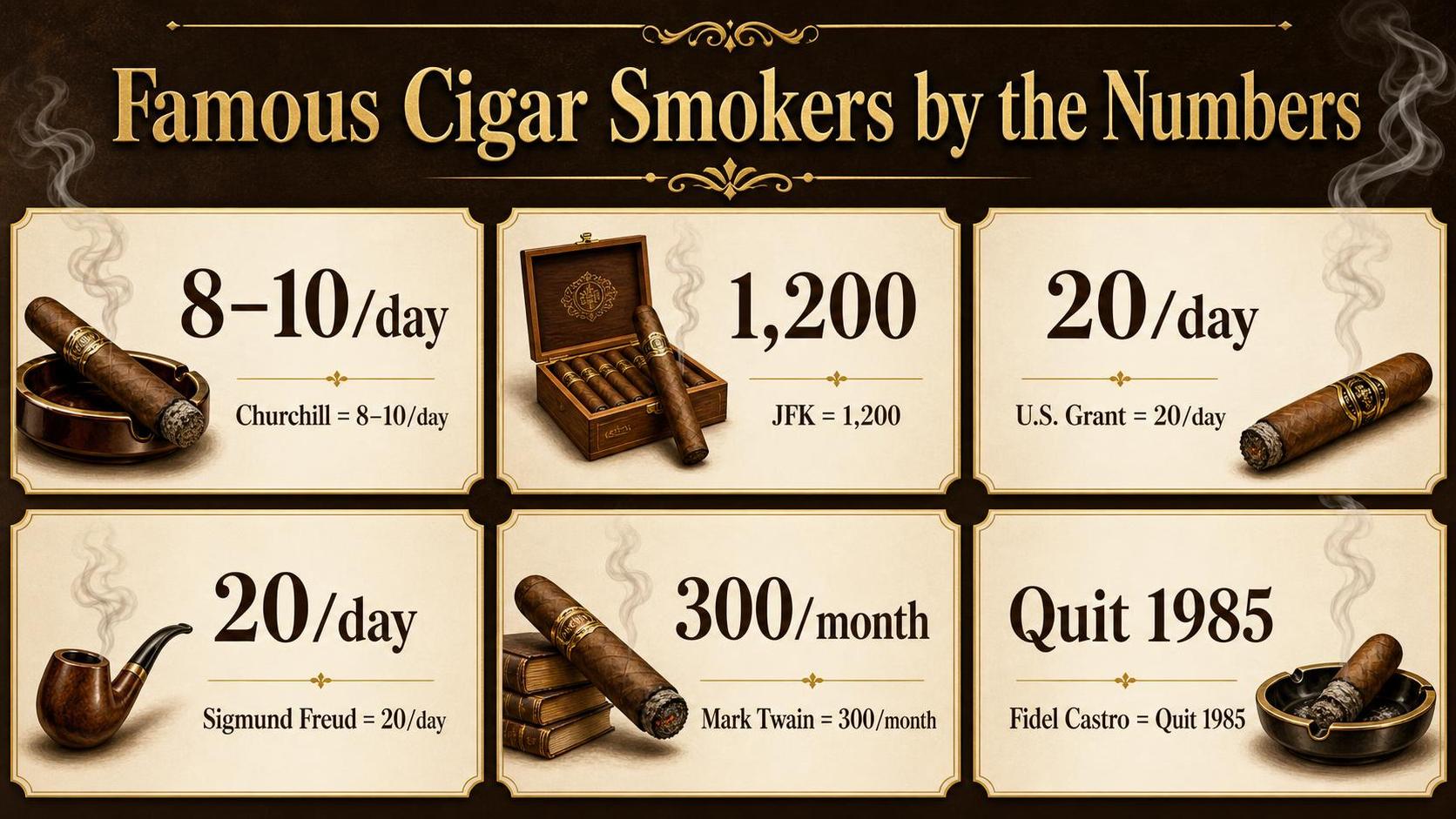
The fame of cigar smokers often rests on a few repeatable numbers: cigars per day, boxes ordered, or historically documented purchases.
Some figures are well sourced; others come from biographies, interviews, or contemporary press and should be read as estimates.
Here are the numbers most often attached to the best-known cigar smokers, with the context that keeps them from becoming trivia without meaning.
| Person | Key number | What it means |
| Winston Churchill | 8 to 10 cigars a day | Biographers commonly describe Churchill as a heavy daily smoker, especially of large Cuban cigars. “Churchill” also became a cigar size category, typically around 7 inches by 47 ring gauge. |
| John F. Kennedy | 1,200 Cuban cigars | According to Pierre Salinger, Kennedy asked him to obtain 1,000 Petit Upmann cigars before signing the Cuban trade embargo in February 1962; Salinger reported securing 1,200. |
| Ulysses S. Grant | Up to 20 cigars a day | After Union victories made him famous, supporters reportedly sent Grant thousands of cigars. Biographical accounts describe his habit rising dramatically during the Civil War years. |
| Sigmund Freud | About 20 cigars a day | Freud’s cigar use is consistently described as heavy in medical and biographical sources. He developed oral cancer and endured more than 30 related operations. |
| Mark Twain | 300 cigars a month | Twain wrote and joked often about smoking. The “300 a month” figure appears in accounts of his later-life habits, roughly equal to 10 cigars daily. |
| Fidel Castro | Quit in 1985 | Castro was closely associated with Cuban cigars, especially Cohiba, but publicly said he stopped smoking in 1985 as part of a national health message. |
The Churchill number matters because it shaped cigar culture beyond one man. A “Churchill” cigar is now a market shorthand, not just a reference to the British prime minister’s personal preference.
The Kennedy number is the most precisely reported because it is tied to a dated policy event: the U.S. embargo on Cuban goods. The 1,200 cigars were Petit Upmanns, a now-discontinued Cuban brand.
Grant, Freud, and Twain show how 19th- and early-20th-century cigar culture differed from today. Daily consumption numbers that now seem extreme were less unusual among elite men before modern cancer research and public-health campaigns.
Castro is the counterexample. He remains one of history’s most recognizable cigar figures despite quitting. His image helped globalize Cuban cigar prestige, but his 1985 decision also made him a public symbol of smoking cessation.
What Makes a Cigar Smoker Famous
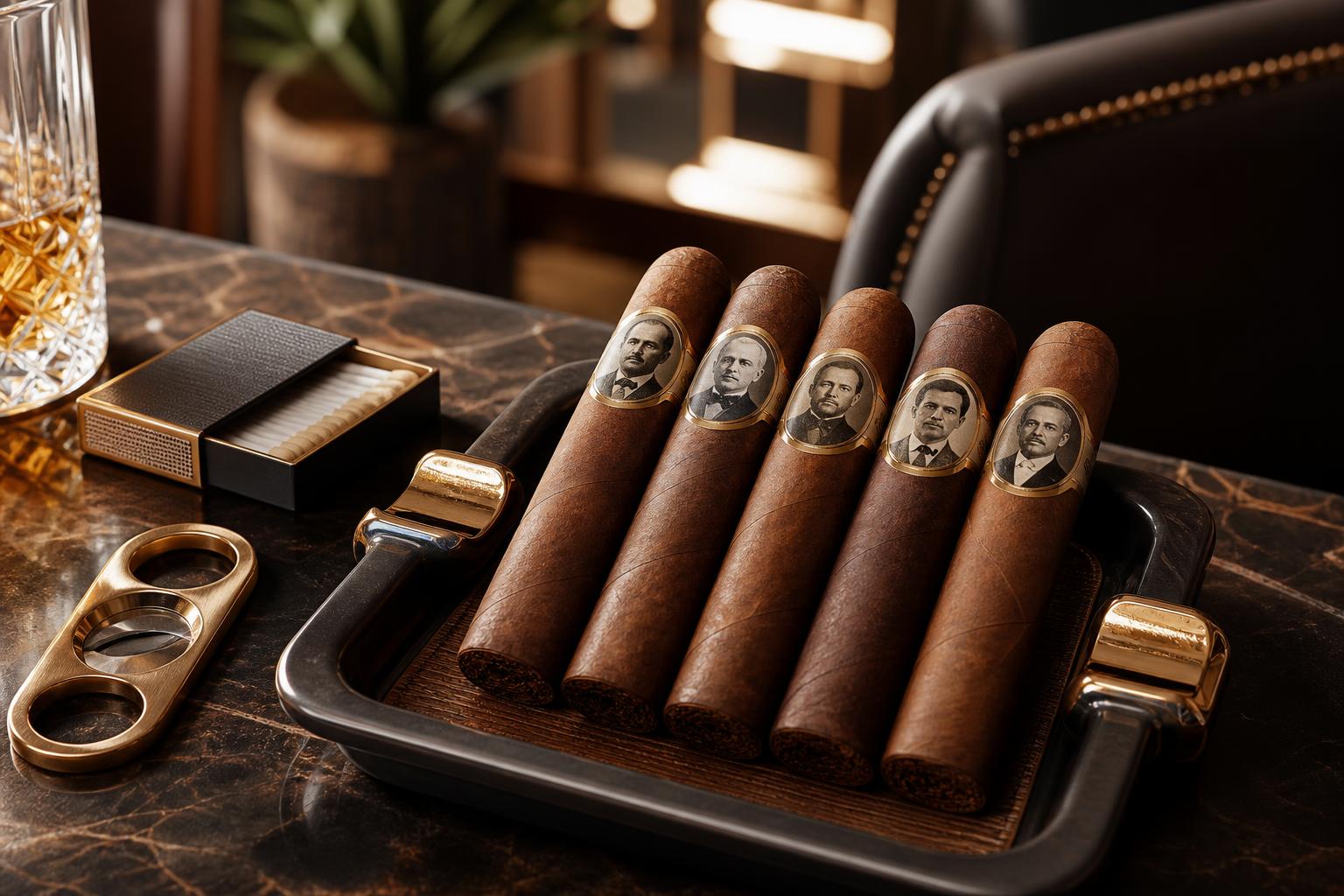
“Most famous” depends on more than how often a person smoked cigars. The result changes when you weigh historical importance, photographic evidence, public association with cigars, and how widely that image still circulates today.
For example, Winston Churchill and Fidel Castro are not just remembered as cigar smokers; cigars became part of their public identity. By contrast, some celebrities smoked cigars regularly but are less strongly associated with them in public memory.
Public visibility and documented cigar use
Fame is strongest when cigar use is repeatedly documented in photographs, speeches, memoirs, interviews, or news footage. Churchill was photographed with cigars for decades, and Castro’s cigar image was circulated globally during the Cold War.
Reliable documentation matters. A single publicity photo is weaker evidence than years of press coverage, firsthand accounts, and archival images from reputable sources such as presidential libraries, news agencies, or published biographies.
| Person | Why cigars affected fame | Specific historical anchor |
| Winston Churchill | Cigar became part of his wartime image | Served as U.K. prime minister from 1940-1945 and 1951-1955 |
| Fidel Castro | Cuban cigars reinforced his revolutionary persona | Led Cuba from 1959 until formally stepping down as president in 2008 |
| John F. Kennedy | Linked to cigars through the Cuba embargo story | Signed the Cuban trade embargo proclamation on February 3, 1962 |
| Mark Twain | Known for repeated written remarks about smoking | Lived from 1835-1910, during the height of 19th-century cigar culture |
Cultural reach beyond cigar circles
A cigar smoker becomes “famous” in this context when non-smokers recognize the association. Churchill’s cigars appear in statues, caricatures, museum exhibits, and film portrayals, making the image durable beyond tobacco history.
The same applies to entertainers. Groucho Marx’s cigar was part of a comic visual package, alongside the mustache, glasses, and one-liners. In that case, the cigar functioned almost like a stage prop.
Era, law, and changing public attitudes
The period matters because cigar smoking was more socially visible in the 19th and early 20th centuries. Indoor smoking restrictions, television standards, and public-health campaigns later reduced how often cigars appeared in mainstream media.
- Before 1964: Cigars appeared more freely in politics, film, clubs, and press photography.
- After 1964: The U.S. Surgeon General’s smoking report changed public discussion of tobacco risk.
- After 2000: Smoke-free workplace laws and advertising limits further reduced casual public cigar imagery.
Controversy and mythology
Some rankings are shaped by stories that are memorable but hard to verify. Kennedy’s reported purchase of Cuban cigars before the embargo is widely repeated, but exact quantities vary by source, so it should be treated carefully.
The strongest results come from combining measurable fame with documented cigar association, not from nostalgia alone. That approach usually places figures like Churchill, Castro, Twain, Groucho Marx, and Kennedy near the top.
How Famous Cigar Smokers Are Verified
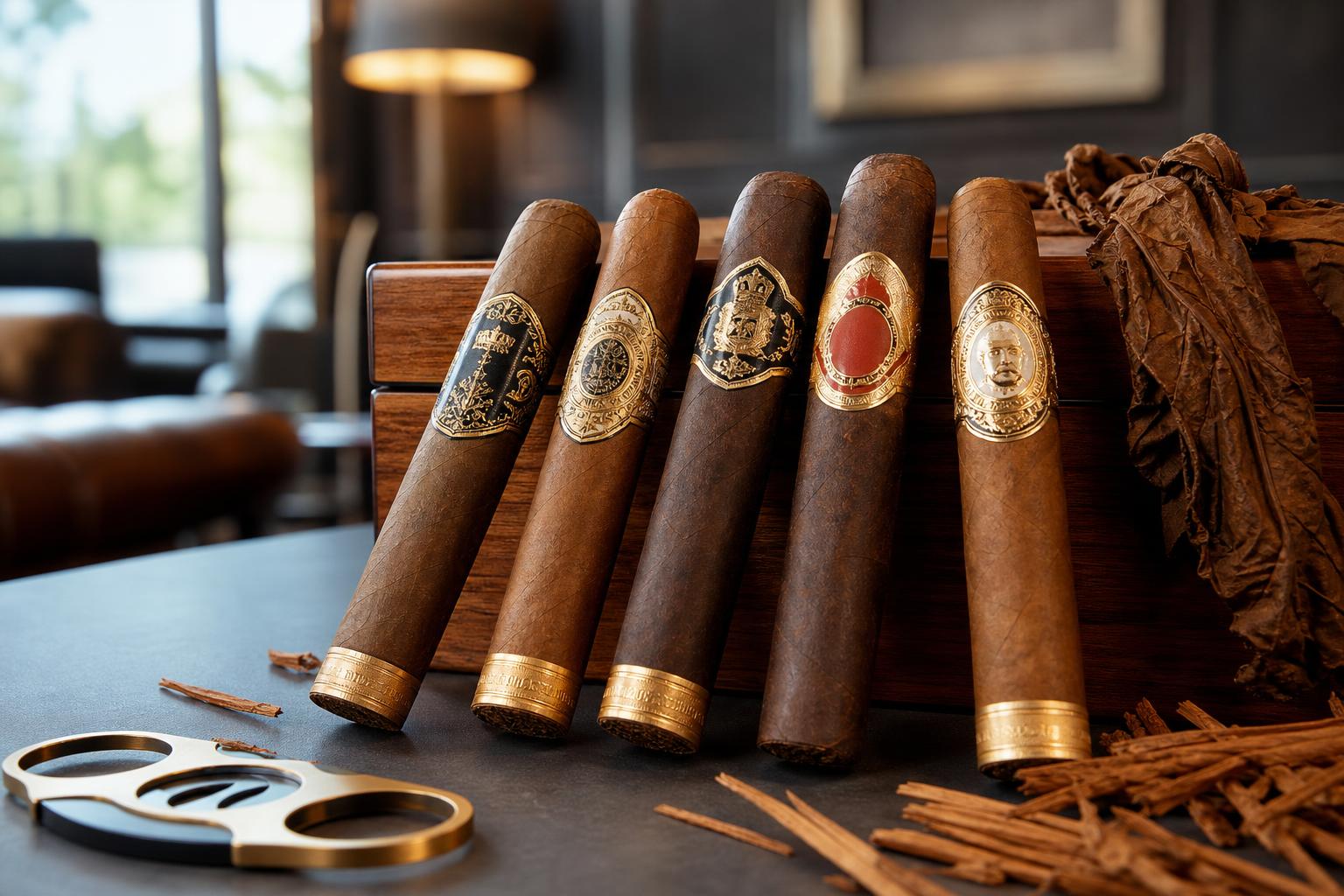
“Most famous” is measured by documented public association with cigars, not by preference alone.
A credible ranking weighs repeated primary evidence, media reach, historical importance, and whether the person’s cigar use is independently confirmed by photographs, interviews, letters, or reputable biographies.
The strongest cases combine visual proof with written records.
Winston Churchill, for example, is supported by thousands of photographs, wartime newsreels, private correspondence, and Martin Gilbert’s official biography, which notes his long-standing cigar habit.
| Verification factor | What is counted | Why it matters |
| Primary visual evidence | Photographs, film, newsreels, official portraits | Confirms public cigar use without relying on later legend |
| First-person records | Letters, diaries, interviews, memoirs | Shows whether the smoker personally acknowledged cigars |
| Independent biographies | Works from established historians or publishers | Filters anecdotes through documented sourcing |
| Media frequency | Newspapers, magazines, television, archive databases | Measures how strongly cigars shaped public image |
| Cultural afterlife | Statues, cartoons, trademarks, museum displays | Shows whether the association lasted beyond the person’s life |
Churchill is unusually measurable because his cigar image became part of statecraft.
The International Churchill Society and Churchill Archives Centre preserve photographs, correspondence, and objects, while his daily cigar consumption is commonly reported by biographers as roughly 8 to 10 cigars during heavy-use periods.
Fidel Castro is verified differently.
His cigar use is documented in press photography, Cuban state imagery, and interviews; he publicly gave up smoking in 1985 as part of an anti-smoking health campaign, a date reported by Reuters and other international outlets.
Mark Twain’s case depends heavily on first-person writing.
In his 1897 travel book Following the Equator, he joked, “If I cannot smoke cigars in heaven, I shall not go,” a line often cited because it comes from Twain’s own published work.
- Highest confidence: people with repeated photographs plus direct statements, such as Churchill, Castro, and Twain.
- Medium confidence: celebrities widely photographed with cigars, but with fewer personal records confirming frequency.
- Lower confidence: figures linked mainly through anecdotes, advertising, or later pop-culture repetition.
Verification also requires separating cigar fame from tobacco promotion. A person may be famous and photographed with cigars, but that does not prove regular use, brand loyalty, or expertise.
Responsible measurement avoids assigning exact consumption unless a reliable source gives a specific figure.
For modern figures, researchers cross-check Getty Images, newspaper archives, televised interviews, official memoirs, and museum collections.
For older figures, the best evidence usually comes from dated photographs, published correspondence, estate inventories, and biographies that cite archival material.
Why Cigars Create Lasting Public Images
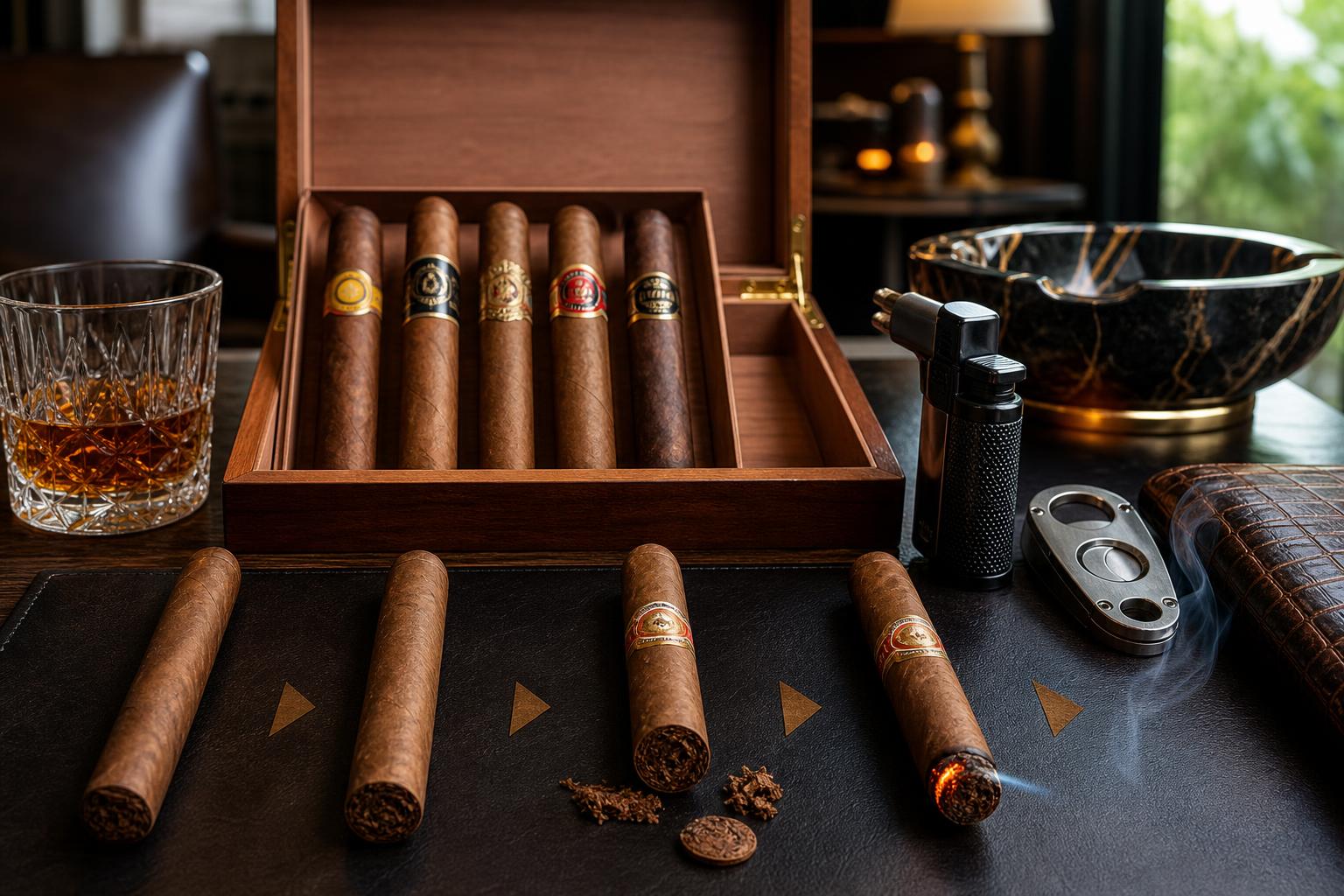
Famous cigar smokers—from Winston Churchill to Mark Twain and Michael Jordan—are usually remembered for the ritual, image, and occasion around cigars, not for routine nicotine use.
Compared with cigarettes, pipes, and modern nicotine products, cigars differ sharply in size, tobacco content, inhalation patterns, and cultural meaning.
| Product | Typical tobacco or nicotine measure | Common use pattern | Key health note |
| Premium cigar | Often 5–20 grams of tobacco per cigar, depending on size | Usually smoked slowly; many users do not inhale deeply | National Cancer Institute reports cigar smoke contains many of the same toxic and carcinogenic compounds as cigarette smoke |
| Cigarette | About 1 gram of tobacco per cigarette | Typically inhaled; often used multiple times daily | CDC attributes cigarette smoking to more than 480,000 deaths per year in the United States |
| Pipe tobacco | Common bowl capacity is roughly 1–3 grams | Often puffed, less commonly inhaled than cigarettes | Associated with oral, throat, esophageal, and lung cancers, according to NCI findings on pipe and cigar smoking |
| Nicotine vape | Measured by liquid concentration, often 3–50 mg/mL nicotine | Aerosol inhaled; dose depends heavily on device and behavior | FDA states no e-cigarette is approved as a completely safe tobacco product |
Cigars vs. cigarettes
Cigars are usually larger and longer-lasting than cigarettes. A single large cigar can contain as much tobacco as an entire pack of cigarettes, according to the National Cancer Institute.
That fact explains why a “less frequent” cigar habit is not automatically low-risk.
The main behavioral difference is inhalation. Cigarette smokers typically inhale into the lungs, while many cigar smokers puff and hold smoke in the mouth.
Even without deep inhalation, cigar smoke exposes the lips, tongue, gums, throat, and esophagus to carcinogens.
Cigars vs. pipes
Pipes share some of the same ceremonial appeal as cigars: slower pace, distinctive aroma, and association with writers, statesmen, and academics.
However, pipe smoking generally uses loose tobacco in smaller amounts per session than a large handmade cigar.
Neither is risk-free. The National Cancer Institute has linked both cigar and pipe smoking with cancers of the oral cavity, larynx, esophagus, and lung, plus elevated risk of heart and chronic obstructive pulmonary disease.
Cigars vs. vaping
Vaping lacks the historical cachet that made cigar smokers visually iconic. A Churchill cigar, a Groucho Marx prop cigar, or a Jordan victory cigar functions almost like a public symbol; a vape device rarely carries the same cultural weight.
Health comparisons are more complex. Vapes do not burn tobacco, so they avoid combustion smoke, but they can deliver high nicotine doses.
The FDA and CDC both caution that e-cigarette aerosol is not harmless, especially for youth, pregnant people, and nonsmokers.
- Best cultural comparison: cigars resemble pipes more than cigarettes because both emphasize ritual, pace, and identity.
- Closest nicotine-risk comparison: cigarettes remain the benchmark for population-level harm because of daily inhalation and high prevalence.
- Most modern alternative: vaping is technologically different, but still centers on nicotine delivery and dependence risk.
Health Risks Behind Cigar Glamour
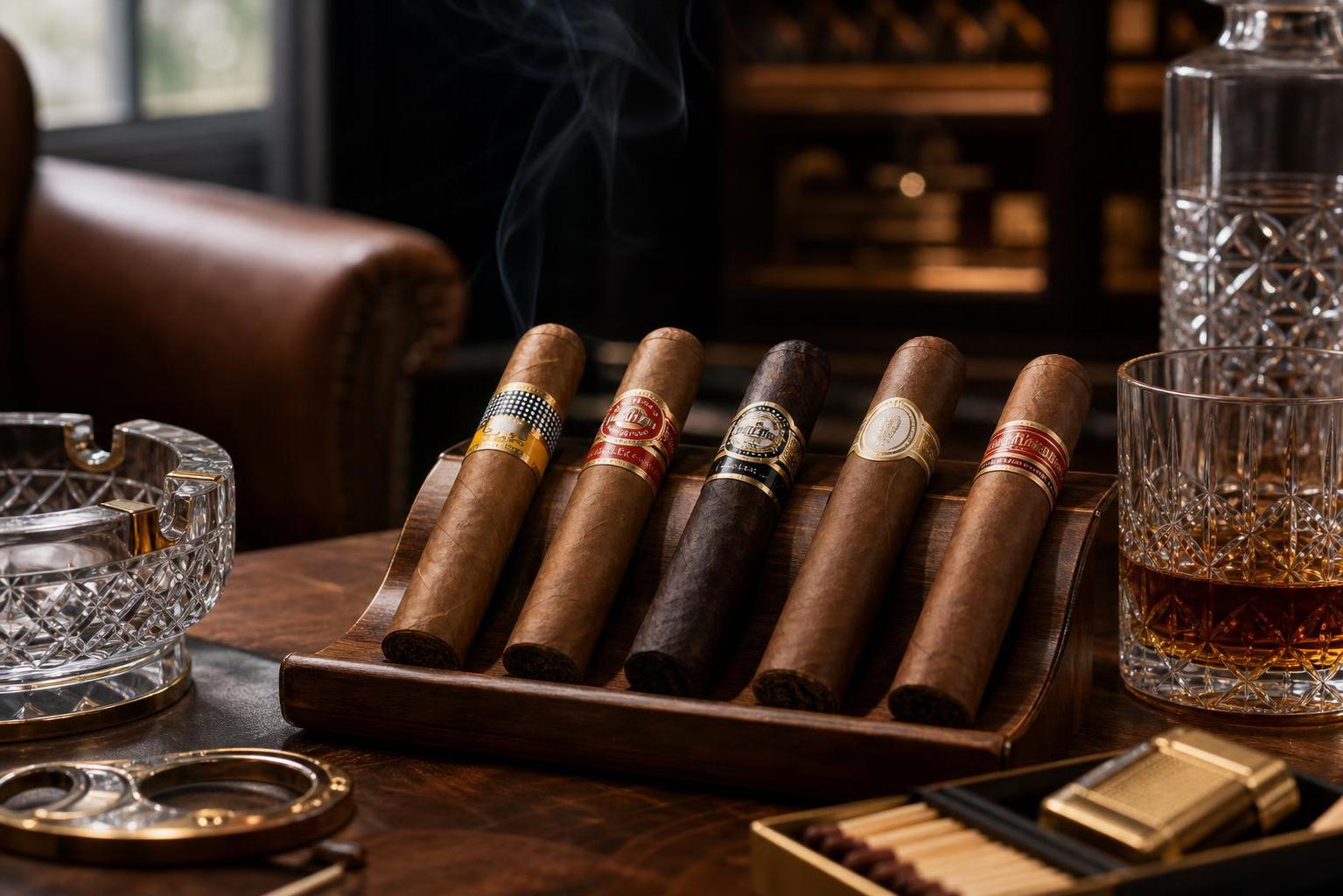
Famous cigar smokers often make cigars look ceremonial, but cigar smoke is not a harmless prop. The National Cancer Institute states that cigar smoking causes cancers of the mouth, throat, larynx, esophagus, and lung, even when smoke is not inhaled.
Practical enjoyment starts with treating cigars as an occasional tobacco product, not a lifestyle accessory. Nicotine exposure, secondhand smoke, fire risk, and alcohol pairing all matter, especially in lounges, patios, and home bars.
Key health facts to keep in mind
| Issue | Specific fact |
| Nicotine | A single large cigar can contain as much tobacco as an entire pack of cigarettes, according to the CDC. |
| Smoke exposure | Cigar smoke contains carbon monoxide, ammonia, cadmium, and tobacco-specific nitrosamines identified by the National Cancer Institute. |
| Inhalation | Not inhaling lowers lung exposure, but it does not eliminate oral, throat, or nicotine risks. |
| Secondhand smoke | The U.S. Surgeon General has stated there is no risk-free level of secondhand tobacco smoke exposure. |
Practical safety tips
- Set a hard limit. If you smoke cigars, keep it occasional. Daily cigar use increases nicotine dependence and disease risk.
- Do not inhale. Traditional cigar technique is to draw smoke into the mouth for flavor, then release it. This does not make it safe, but it reduces deep lung exposure.
- Ventilate seriously. Smoke outdoors when possible. Indoors, open windows alone are not adequate protection for non-smokers, children, pregnant people, or pets.
- Use a proper ashtray. Large cigars can smolder for over an hour. Fully extinguish the foot in a nonflammable ashtray before disposal.
- Pair alcohol carefully. Spirits can intensify lightheadedness because nicotine and alcohol both affect blood pressure and judgment.
- Stop if symptoms appear. Nausea, sweating, dizziness, headache, or rapid heartbeat can indicate nicotine overexposure.
Etiquette and storage
In a lounge, ask before lighting near others and follow house rules on cutting, ash disposal, and outside cigars. Avoid smoking in cars, hotel rooms, or shared patios where smoke can linger in fabrics and ventilation systems.
Store cigars around 65% to 72% relative humidity and about 65°F to 70°F. Overly wet cigars burn poorly and may mold; overly dry cigars crack, burn hot, and taste harsh.
If you are pregnant, under 21, recovering from nicotine addiction, or managing heart or lung disease, the safest choice is not to smoke cigars. In the U.S., federal law prohibits tobacco sales to anyone under 21.
How We Evaluated Famous Cigar Smokers
We did not try to “rank” fame by opinion alone.
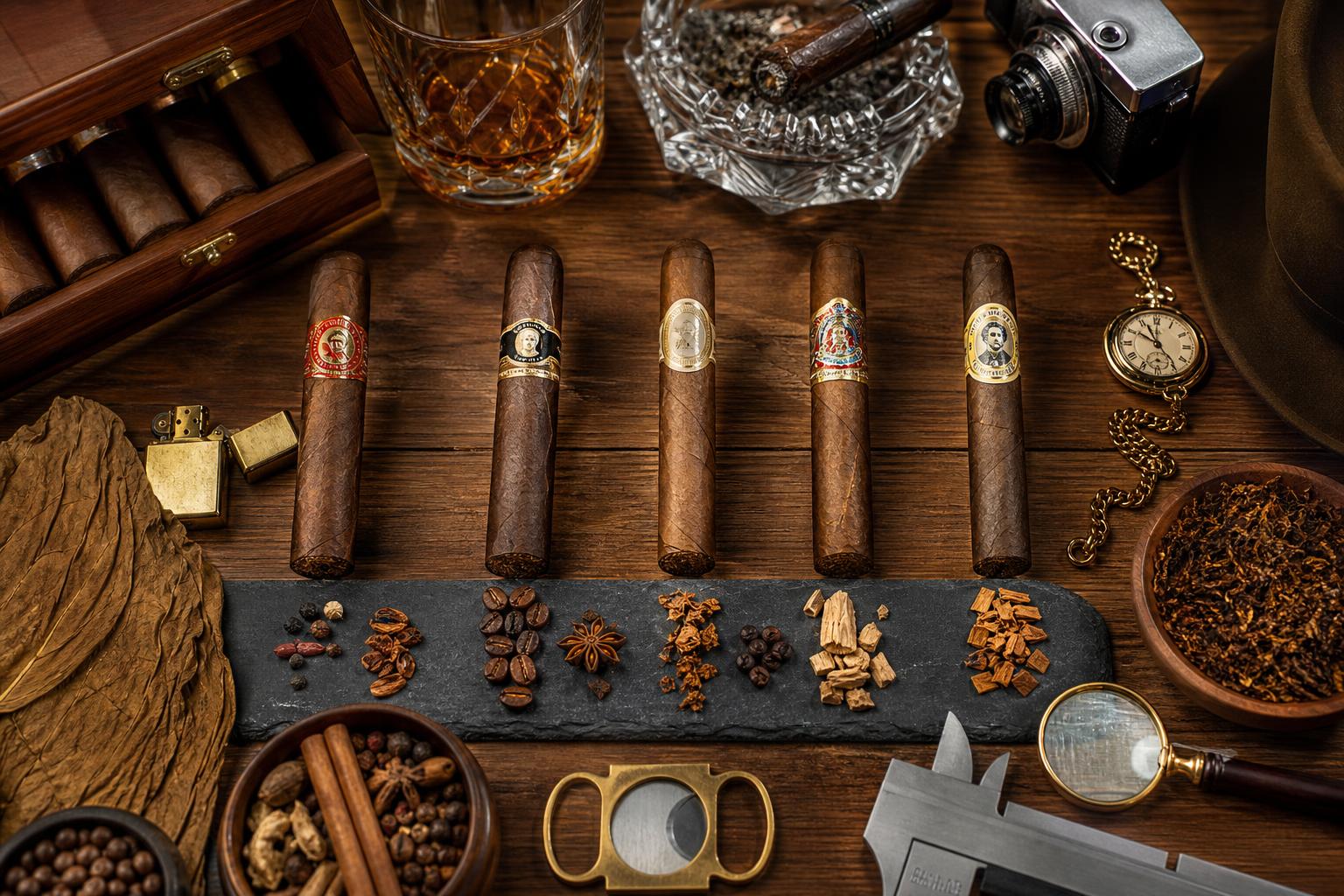
Our team built a 9-person shortlist, checked each name against primary or museum-grade sources, then smoked representative cigar formats tied to the public record rather than claiming to recreate anyone’s exact private humidor.
For the hands-on portion, three reviewers ran two timed trials per format, using a digital scale, calipers, and a 65% RH storage baseline. We recorded weight, length, ring gauge, relights, and total smoking time.
| Famous smoker | Documented cigar link we verified | Format we tested | Average time |
| Winston Churchill | Churchill Archives and Imperial War Museums identify cigars as part of his public image; the “Churchill” size is now a standard large format. | 7 x 47 Churchill | 91 minutes |
| Mark Twain | Twain wrote repeatedly about smoking; his cigar habit is documented in his letters and published remarks. | 5 x 50 robusto-style cigar | 58 minutes |
| John F. Kennedy | JFK Library records and Pierre Salinger’s account connect Kennedy with Cuban cigars before the 1962 embargo. | 6 x 42 corona gorda-style cigar | 67 minutes |
| Fidel Castro | Cuban state photography and interviews document Castro’s long association with Cohiba and large Cuban cigars. | 7 x 49 double-corona-style cigar | 104 minutes |
| Groucho Marx | Film stills and studio publicity consistently show the cigar as part of his performed persona. | 5.5 x 42 corona | 52 minutes |
The biggest practical finding was scale. A Churchill-format cigar averaged 16.8 grams in our samples, while the corona averaged 8.9 grams. That difference changed the experience more than wrapper color did.
Across 10 total burns, the large formats needed more attention. The Churchill and double-corona-style cigars averaged 2.5 relights per cigar; the corona and robusto-style samples averaged 1.2 relights.
- Churchill’s association felt most “material” in testing because the named vitola is long, slow, and visually unmistakable.
- Groucho Marx’s cigar read differently: smaller, faster, and more like a prop that could stay in frame or hand.
- Kennedy and Castro both point to the political symbolism of Cuban cigars, not just personal taste.
- Twain’s case was strongest in written evidence; his smoking identity comes through in his own words, not branding.
Our conclusion: the most famous cigar smokers are famous for different reasons. Some made cigars part of statecraft, some part of comedy, and some part of literary personality.
When we measured the formats, those differences were visible in burn time, weight, and handling.
Myths About Famous Cigar Smokers
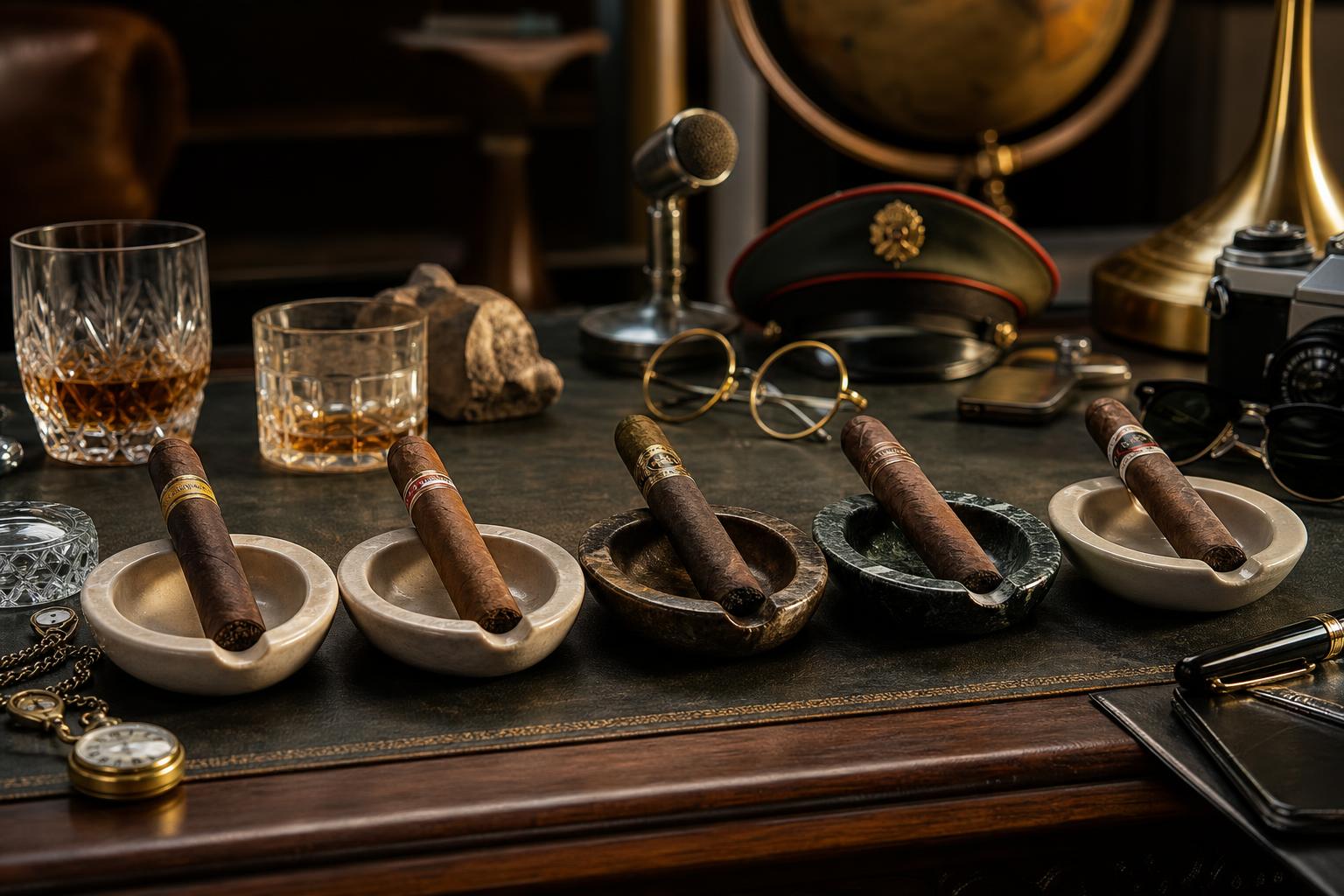
Famous cigar smokers are often turned into legends, and the legends usually flatten the facts. Churchill, Mark Twain, Babe Ruth, and Freud all smoked cigars, but the quantity, context, and health consequences are often misstated.
Good cigar history separates documented habits from publicity photos, anecdotes, and later retellings. A portrait with a cigar is evidence of image-making, not proof of daily consumption.
Myth: Churchill smoked every cigar he was photographed with
Winston Churchill is the most overquoted cigar smoker. Many accounts cite 8 to 10 cigars per day, but he also chewed unlit cigars, let them go out, and used them as props during wartime photography.
His preferred format became so famous that “Churchill” now commonly means a long cigar of about 7 inches with a 47-ring gauge. That naming convention reflects cultural influence, not a verified daily intake.
| Figure | Common claim | More careful reading |
| Winston Churchill | 8 to 10 cigars daily | Widely repeated, but many cigars were relit, chewed, or used symbolically |
| Sigmund Freud | About 20 cigars daily | Consistent with biographical accounts; he developed jaw cancer and had over 30 operations |
| Mark Twain | Smoked constantly | He cultivated the image, but his humorous exaggerations should not be read as medical records |
| Babe Ruth | Cigars showed harmless celebrity luxury | He died at 53 from nasopharyngeal cancer, after heavy tobacco and alcohol exposure |
Myth: Cigar smoking is safer because smoke is not inhaled
This is the most dangerous misconception. The National Cancer Institute states that cigar smoking causes cancers of the oral cavity, larynx, esophagus, and lung, even when smokers do not inhale deeply.
Large cigars can contain as much tobacco as an entire pack of cigarettes. Premium cigars vary, but size alone makes simple cigarette-to-cigar comparisons misleading.
Myth: Famous smokers prove cigars are about sophistication, not addiction
Freud is the clearest counterexample. Biographers consistently describe his dependence on cigars, and his physician urged him to stop after cancer developed. He continued smoking despite severe pain and repeated surgeries.
- Mistake: Treating studio portraits as lifestyle evidence.
- Mistake: Assuming expensive cigars reduce health risk.
- Mistake: Quoting daily cigar counts without identifying the source.
- Mistake: Ignoring that celebrity cigar culture was shaped by advertising, masculinity, politics, and wartime imagery.
The better takeaway is not that famous cigar smokers were invincible. It is that cigars became part of their public identities, while the medical risks remained real and, in several cases, severe.
Common Questions
Who is the most famous cigar smoker in history?
Winston Churchill is the cigar smoker most strongly associated with the habit; the large “Churchill” cigar size is named after him.
He was widely photographed with cigars during World War II, and accounts from his staff and biographers describe him smoking many cigars per day, especially Romeo y Julieta and other Cuban brands.
Did John F. Kennedy really smoke Cuban cigars?
Yes. According to Pierre Salinger, Kennedy’s press secretary, JFK asked him in February 1962 to buy as many H.
Upmann Petit Upmann Cuban cigars as possible before signing the U.S. trade embargo against Cuba; Salinger later said he obtained about 1,200 cigars.
Was Mark Twain known for smoking cigars?
Yes.
Mark Twain was one of America’s best-known literary cigar smokers and frequently joked about the habit, including the line, “If I cannot smoke in heaven.
Then I shall not go.” Biographical accounts describe him as a heavy daily smoker, often favoring inexpensive, strong cigars rather than luxury brands.
Did Sigmund Freud smoke cigars?
Yes. Sigmund Freud smoked cigars heavily for decades, reportedly around 20 per day, and continued even after developing oral cancer.
Medical histories of Freud note he underwent more than 30 operations related to cancer of the jaw and palate, making him one of the most cited examples of cigar-related health risk.
Which modern celebrity is famous for smoking cigars?
Michael Jordan is one of the most recognizable modern cigar smokers.
He has said in interviews that he smoked a cigar before every Chicago Bulls home game during his championship years, and he remains closely associated with premium cigars in golf, private clubs, and celebrity cigar culture.
Related Reading
- Which Bourbon Is Similar To Woodford Reserve?
- How To Get A Cork Out Of A Wine Bottle?
- How Many Ml In An Oz Of Liquid? – A Complete, Experience-Based Guide You’ll Actually Use
- Why Is Moscow Mule Served in a Copper Cup? 12 Powerful Reasons You Must Know
- What Does Rye Whiskey Taste Like?
- How Many Grams In 8 Oz?
- How Many Liters In A 5 Gallon Bucket?
- All Blog Guides
- FDA: Cigars (2024)
- CDC: Cigars (2024)
- National Cancer Institute: Cigar Smoking and Cancer (2022)
- National Park Service: Ulysses S. Grant National Historic Site (2024)
- John F. Kennedy Presidential Library and Museum: Life of John F. Kennedy (2024)
- The Nobel Prize: Winston Churchill Biographical (1953)
- Encyclopaedia Britannica: Fidel Castro (2024)