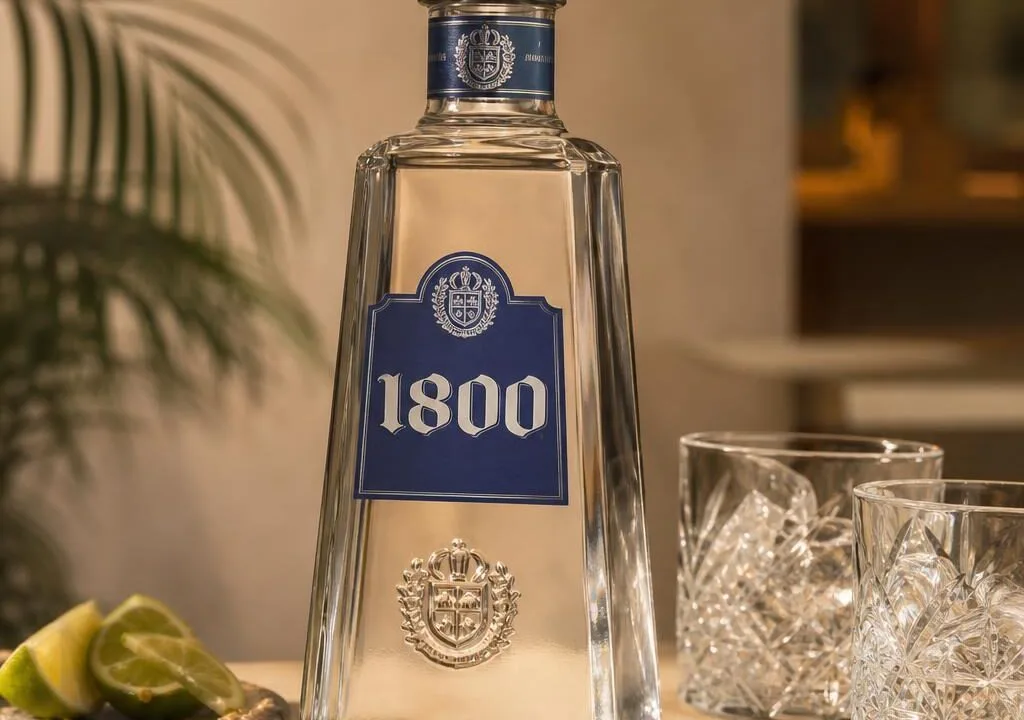
Is 1800 Tequila Good: yes, 1800 is a reliable mid-shelf tequila brand, known for 100% blue Weber agave expressions, clean bottle-to-bottle consistency, and broad U.S. availability.
Its Plata, Reposado, Añejo, and Cristalino bottlings generally suit cocktails, casual sipping, and value-focused buyers better than collectors seeking estate-specific or additive-free verified tequila.
Why 1800 Tequila Meets Basics
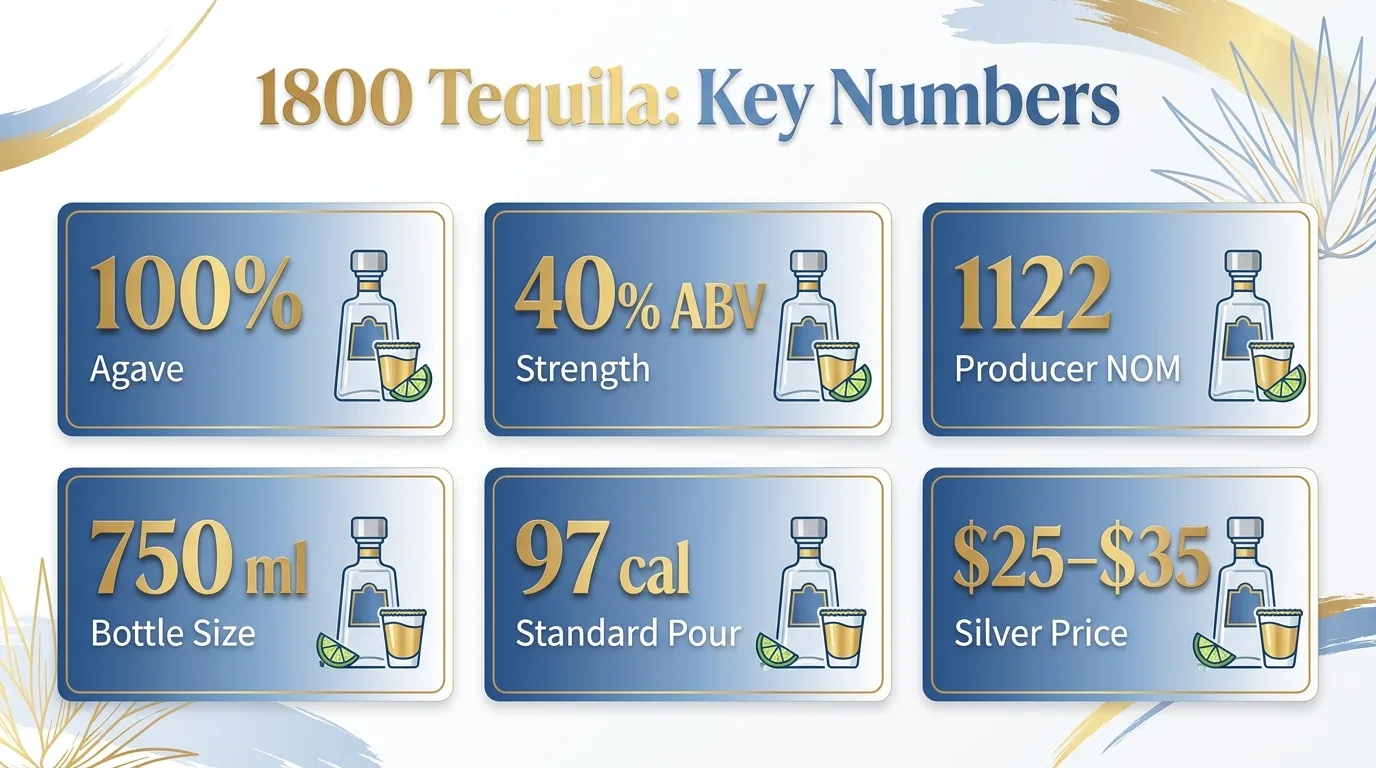
1800 Tequila is “good” in the sense that its core bottles meet the important baseline numbers: 100% blue Weber agave, 40% ABV, and legitimate tequila production in Jalisco.
The better question is whether its price, aging, and style match what you want to drink.
| Number | What it means | Why it matters |
| 100% | Made from 100% blue Weber agave, not a mixto tequila. | This is the minimum quality line I look for before recommending any sipping or cocktail tequila. |
| 40% ABV / 80 proof | The standard U.S. bottling strength for 1800 Silver, Reposado, Añejo, and Cristalino. | Normal strength: enough structure for cocktails, but not a high-proof flavor bomb. |
| NOM 1122 | Commonly listed on 1800 bottles; this identifies the certified tequila producer. | A NOM lets you trace the distillery, not just the brand name on the label. |
| 750 ml | The typical U.S. retail bottle size. | Useful for judging value against similar tequilas like Espolòn, Olmeca Altos, and Patrón. |
Under Mexico’s tequila rules, blanco tequila may be unaged or rested under 2 months. Reposado must age at least 2 months, añejo at least 1 year, and extra añejo at least 3 years in oak containers.
| 1800 expression | Typical aging category | Practical read |
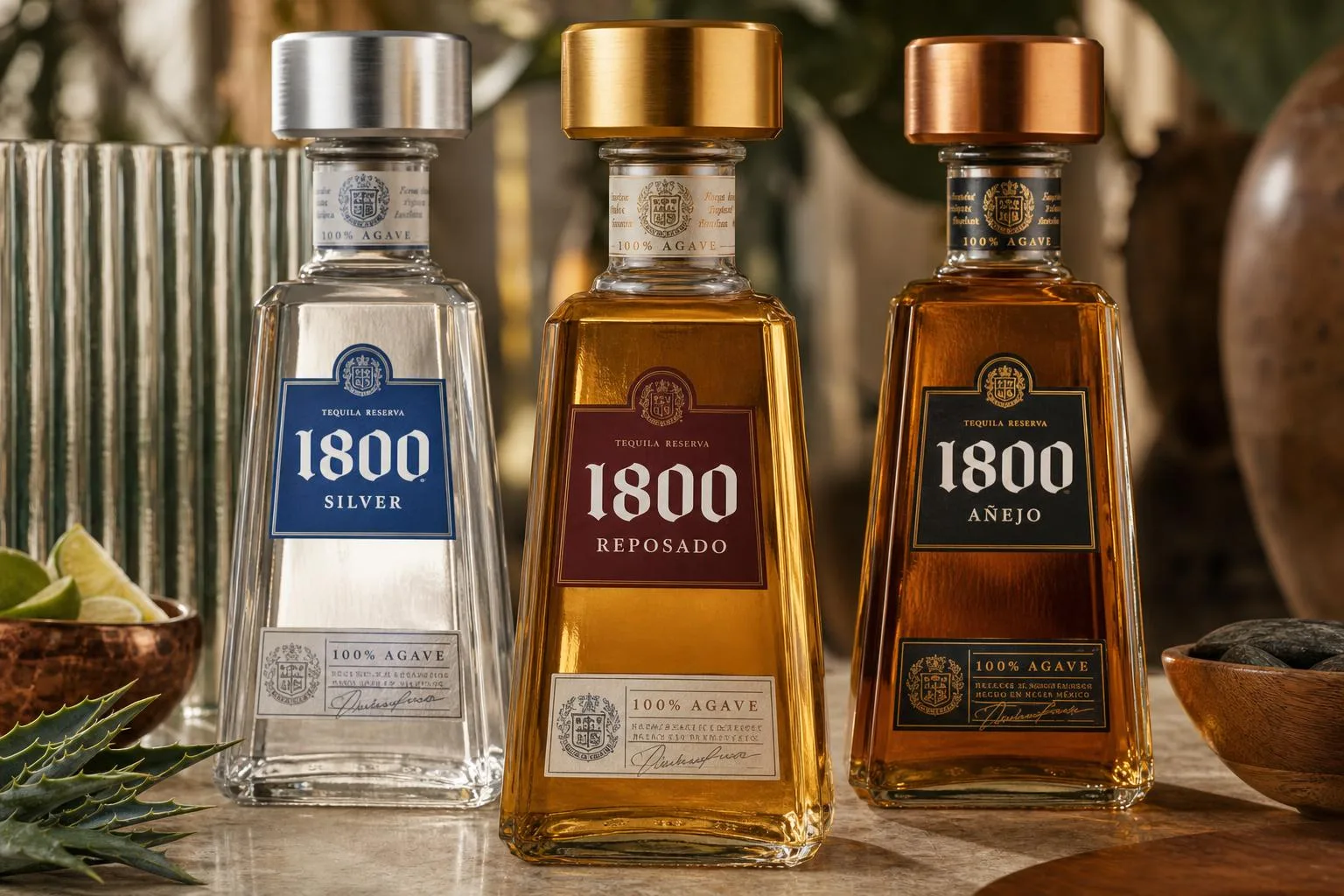
| 1800 Silver | Blanco | Best for margaritas, Palomas, and mixed drinks where clean agave and citrus matter. |
| 1800 Reposado | Reposado; brand states at least 6 months in oak | More vanilla and spice than Silver, but still cocktail-friendly. |
| 1800 Añejo | Añejo; aged over 1 year | Softer and oakier, better neat than Silver if you like whiskey-like notes. |
| 1800 Cristalino | Filtered aged tequila | Smooth and polished, but filtration can reduce some agave and oak intensity. |
Calories are straightforward: a 1.5-ounce pour of 40% ABV tequila is about 97 calories, with 0 grams of carbs, sugar, and fat before mixers. A margarita changes the math quickly because syrup, liqueur, or bottled sour mix adds sugar.
Price is where 1800’s score depends on the shelf. In many U.S. stores, 750 ml bottles often land around $25–$35 for Silver, $30–$40 for Reposado, and $35–$50 for Añejo.
At those numbers, it is a solid mainstream buy, not a boutique bargain.
What Determines Whether 1800 Tastes Good
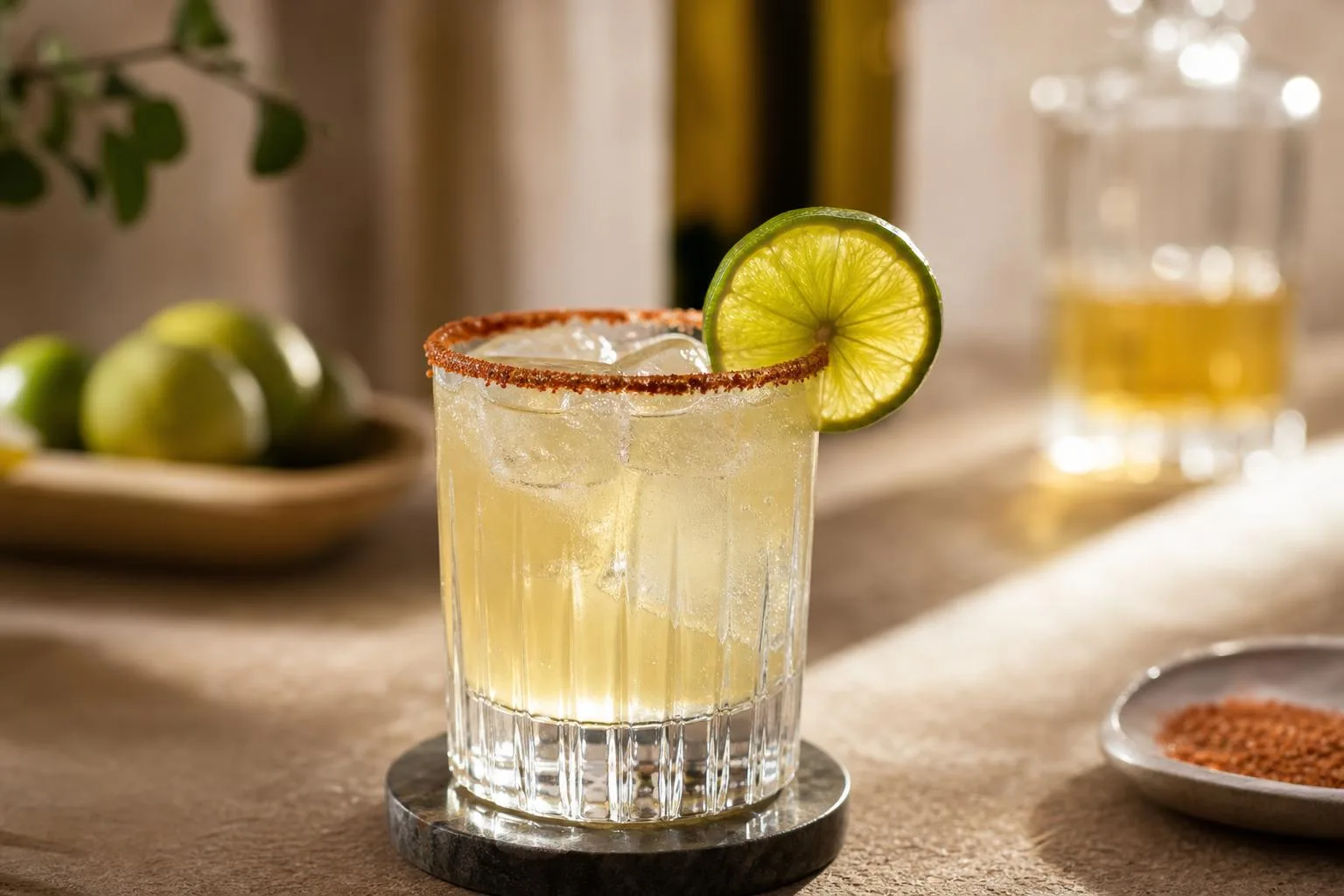
Whether 1800 Tequila tastes “good” depends heavily on which bottle is being judged, how it is served, and what benchmark you use.
The brand is large-scale, 100% blue Weber agave tequila from Jalisco, but its expressions are built for different drinkers and uses.
The biggest variables are aging, sweetness perception, oak influence, price expectations, and whether you are sipping neat or mixing. A $25 blanco should not be judged like a $90 traditionally made añejo.
| Expression | Typical style impact | Best use |
| 1800 Silver | Unaged or very lightly rested; cleaner agave, pepper, citrus, less oak | Margaritas, Palomas, chilled shots |
| 1800 Reposado | Aged at least 2 months by tequila law; more vanilla, spice, and soft oak | Highballs, rocks, casual sipping |
| 1800 Añejo | Aged at least 1 year by tequila law; darker oak, caramel, baking spice | Neat, rocks, spirit-forward cocktails |
| 1800 Cristalino | Aged tequila filtered to remove color; smoother profile, less visible oak color | Sipping for drinkers who prefer polished, soft tequila |
Production scale also matters. 1800 is associated with NOM 1122, the same registered distillery number tied to Tequila Cuervo La Rojeña in Jalisco.
That does not automatically make it bad, but it signals a high-volume production environment rather than a small-batch, estate-only profile.
Tequila regulations also affect flavor expectations. Under the Mexican tequila standard, blanco may be unaged, reposado must age at least 2 months, añejo at least 1 year, and extra añejo at least 3 years in oak containers.
- Agave content: Core 1800 bottles are labeled 100% agave, which is a meaningful step above mixto tequila that may contain up to 49% non-agave sugars before fermentation.
- Oak: Reposado and añejo expressions taste sweeter and rounder because barrel aging adds vanilla, toast, coconut, and spice notes.
- Proof: Most standard 1800 expressions sold in the U.S. are 40% ABV, or 80 proof, which favors approachability over intensity.
- Additives: Tequila rules allow small amounts of permitted additives such as caramel color, oak extract, glycerin, and sugar-based syrup without front-label disclosure, up to regulatory limits.
- Serving temperature: Chilling reduces alcohol burn but also mutes cooked agave, pepper, and citrus aromas.
The result is most favorable when 1800 is judged as an accessible, reliable, mid-shelf tequila. It is less convincing if compared with additive-free, traditionally fermented, tahona-crushed, or high-proof tequilas designed for agave-focused sipping.
How to Verify 1800 Tequila Quality
Whether 1800 Tequila is “good” is not just a taste opinion; it can be checked against tequila law, label disclosures, production traceability, and sensory consistency.
The most important verification points are 100% blue agave status, NOM registration, alcohol strength, category, and absence of obvious quality faults.
1800 Tequila is sold in the U.S. as a 100% de agave tequila, typically bottled at 40% alcohol by volume, or 80 proof.
That matters because mixto tequila may legally contain only 51% agave sugars, while 100% agave tequila must be made entirely from Agave tequilana Weber blue variety sugars.
| Verification point | What to check | Why it matters |
| Agave statement | “100% de agave” or “100% agave” on the label | Confirms it is not a 51% agave mixto tequila |
| NOM number | Four-digit producer code on the bottle | Identifies the authorized distillery registered with Mexico’s tequila regulator |
| Class | Blanco, Reposado, Añejo, Cristalino, or similar | Shows aging category and expected flavor profile |
| ABV | Usually 40% ABV in the United States | Confirms legal strength and allows fair comparison with peers |
| Seal and import label | CRT or official tequila designation plus U.S. importer details | Supports authenticity and legal importation |
Tequila authenticity is overseen in Mexico by the Consejo Regulador del Tequila, commonly called the CRT.
The CRT certifies producers under the Tequila Denomination of Origin, which covers specific regions, mainly Jalisco and limited municipalities in Guanajuato, Michoacán, Nayarit, and Tamaulipas.
The NOM number is one of the most useful bottle-level checks. “NOM” stands for Norma Oficial Mexicana, and the number links a tequila to an approved production facility.
If a bottle lacks a NOM, it should not be treated as a properly certified tequila.
For 1800, verification should also include category expectations. A Blanco should be clean, peppery, citrusy, and agave-forward. Reposado should show light oak, vanilla, and cooked agave.
Añejo should have more barrel influence, including caramel, spice, and toasted wood.
- Visual check: Blanco should be clear; aged expressions may range from pale straw to amber, depending on barrel time and filtration.
- Aroma check: Look for cooked agave, citrus, pepper, vanilla, or oak rather than solvent, plastic, or harsh chemical notes.
- Taste check: Good tequila should show agave character, controlled sweetness, moderate alcohol heat, and a finish that is not aggressively bitter.
- Price check: In many U.S. stores, standard 750 ml 1800 expressions often sit in the accessible premium range, commonly around the mid-$20s to mid-$40s depending on state, tax, and expression.
These checks do not prove that every drinker will prefer 1800, but they do confirm it meets key objective markers: certified tequila status, 100% agave labeling, standard U.S. bottling strength, and category-appropriate flavor benchmarks.
How 1800 Compares on the Shelf
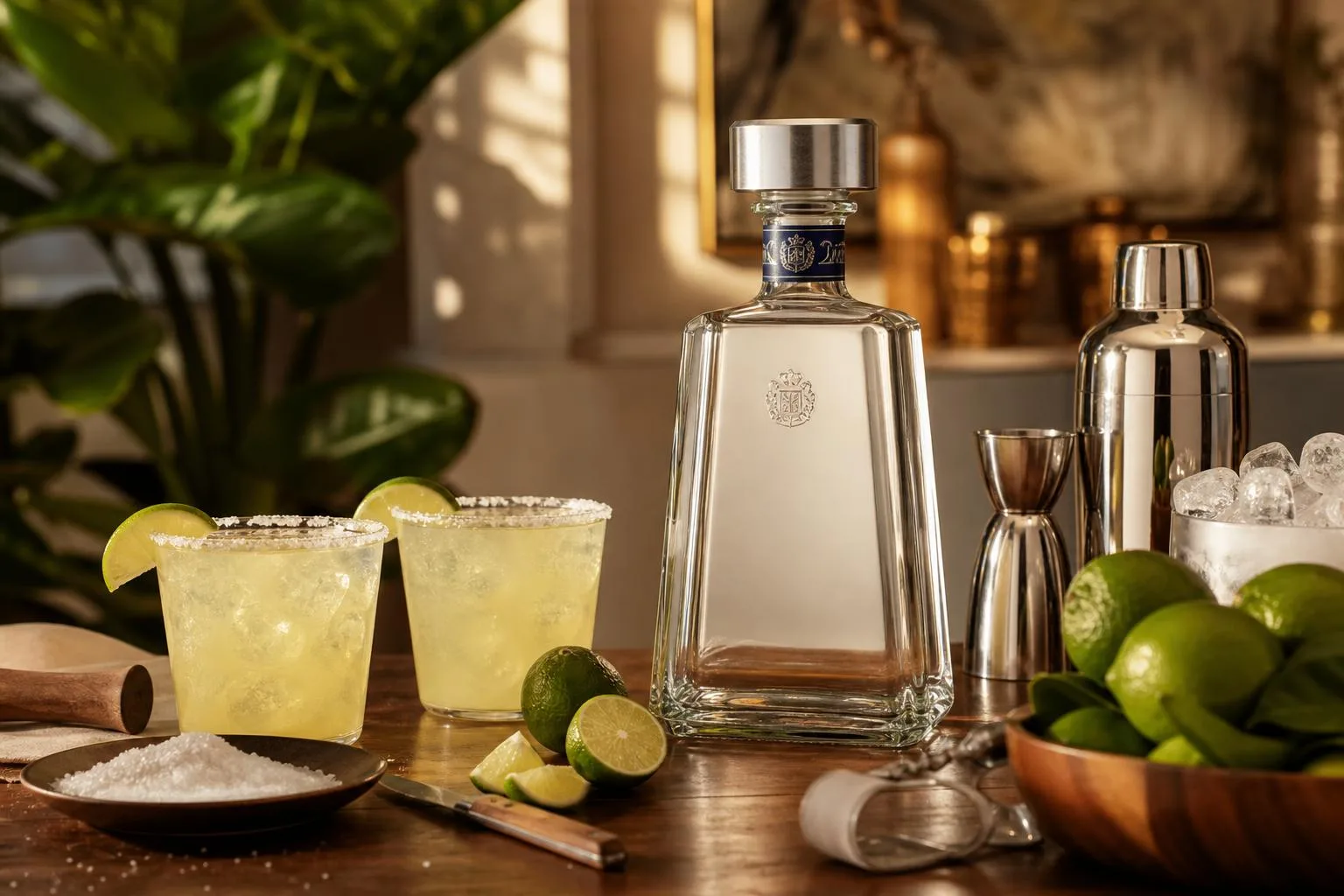
1800 sits in the middle of the U.S. tequila shelf: noticeably better than mixto “gold” tequila, but usually less expressive than the best value 100% agave bottles.
Its main advantage is consistency, wide availability, and a clean enough profile for margaritas.
The key fact: 1800 Silver, Reposado, Añejo, and Cristalino are labeled 100% blue Weber agave and are typically bottled at 40% ABV in the U.S.
That puts them in a different category from cheaper mixto tequilas, which may contain up to 49% non-agave fermentable sugars under tequila regulations.
| Tequila | Typical U.S. 750 ml price | ABV | Agave status | Best use |
| 1800 Silver | $25–$32 | 40% | 100% blue agave | Margaritas, Palomas, casual shots |
| Jose Cuervo Especial Gold | $15–$22 | 40% | Mixto, not 100% agave | Budget mixed drinks |
| Espolòn Blanco | $24–$30 | 40% | 100% blue agave | Cocktails, better value sipping |
| Olmeca Altos Plata | $24–$32 | 40% | 100% blue agave | Margaritas, highballs |
| Don Julio Blanco | $45–$55 | 40% | 100% blue agave | Sipping, premium cocktails |
| Patrón Silver | $45–$55 | 40% | 100% blue agave | Sipping, gift bottle |
Against Jose Cuervo Especial, 1800 is the easy upgrade. The 100% agave labeling matters: it generally brings cleaner cooked-agave flavor, less sugary harshness, and fewer “college bar” associations.
For only about $8–$12 more, 1800 is usually worth it.
Against Espolòn Blanco and Olmeca Altos Plata, the decision is closer. Espolòn often tastes brighter and pepperier, while Altos tends to show more earthy agave.
1800 Silver is smoother and softer, but can feel less distinctive in a tequila-forward drink.
Compared with Don Julio Blanco or Patrón Silver, 1800 is not as polished for neat sipping. Don Julio usually has a cleaner citrus-agave finish; Patrón is lighter and more refined.
But in lime-heavy margaritas, the $15–$25 price gap is often hard to justify.
- Best budget upgrade: choose 1800 over mixto tequila when the label does not say “100% agave.”
- Best cocktail value: Espolòn or Olmeca Altos may beat 1800 if you want stronger agave character.
- Best party bottle: 1800 Reposado is a safe crowd-pleaser for shots and mixed drinks.
- Best sipping choice: move to Don Julio, Patrón, or a verified additive-free tequila if neat drinking is the goal.
Bottom line: 1800 is good, not exceptional. It is a dependable 100% agave tequila that makes sense when priced under about $30, especially for margaritas, Palomas, and casual entertaining.
Health Effects and Serving Tips
1800 Tequila is typically bottled at 40% ABV, so its health impact is the same as other 80-proof spirits: the main risk is alcohol dose, not whether the label is “100% agave.” Use it like a full-strength liquor, not a lighter drink.
In the United States, the NIAAA defines one standard drink as 0.6 fl oz of pure alcohol. For 40% ABV tequila, that equals a 1.5 fl oz pour.
| Drink or pour | Approx. alcohol | Practical meaning |
| 1.5 fl oz 1800 Silver, Reposado, or Añejo at 40% ABV | 1 standard drink | About 97 calories before mixers |
| 3 fl oz tequila in a large margarita | 2 standard drinks | Easy to underestimate because it is one glass |
| 12 fl oz beer at 5% ABV | 1 standard drink | Comparable alcohol to one tequila shot |
| 5 fl oz wine at 12% ABV | 1 standard drink | Comparable alcohol to one tequila shot |
- Measure pours. A bar jigger is usually 1.5 fl oz on the large side. Free-pouring can turn one drink into 2 drinks quickly, especially in Palomas, margaritas, and ranch waters.
- Watch mixers. Straight tequila has no sugar, but premade margarita mix, agave syrup, orange liqueur, and grapefruit soda can add substantial sugar and calories. A Tommy’s-style margarita with 0.5 fl oz agave syrup is meaningfully lighter than many 8–12 oz restaurant margaritas.
- Do not rely on “100% agave” for hangover prevention. 1800’s main tequilas are 100% blue Weber agave, which is a quality marker, but dehydration, total alcohol intake, sleep disruption, and congeners still matter.
- Avoid alcohol in high-risk situations. The CDC advises no alcohol during pregnancy. Alcohol should also be avoided before driving, operating equipment, swimming, or combining with sedatives, opioids, sleep medications, or certain anxiety medicines.
- Follow low-risk limits. The U.S. Dietary Guidelines define moderation as up to 1 drink per day for women and up to 2 for men, and they do not recommend starting to drink for health benefits.
- Store it safely. Keep 1800 upright, tightly closed, and away from heat and sunlight. Unlike wine, tequila does not improve after opening, but high-proof spirits are shelf-stable when properly sealed.
If tasting 1800 side by side, pour 0.5 oz samples instead of full shots. That lets you compare Silver, Reposado, and Añejo without unintentionally consuming several standard drinks.
Our Side by Side 1800 Tasting
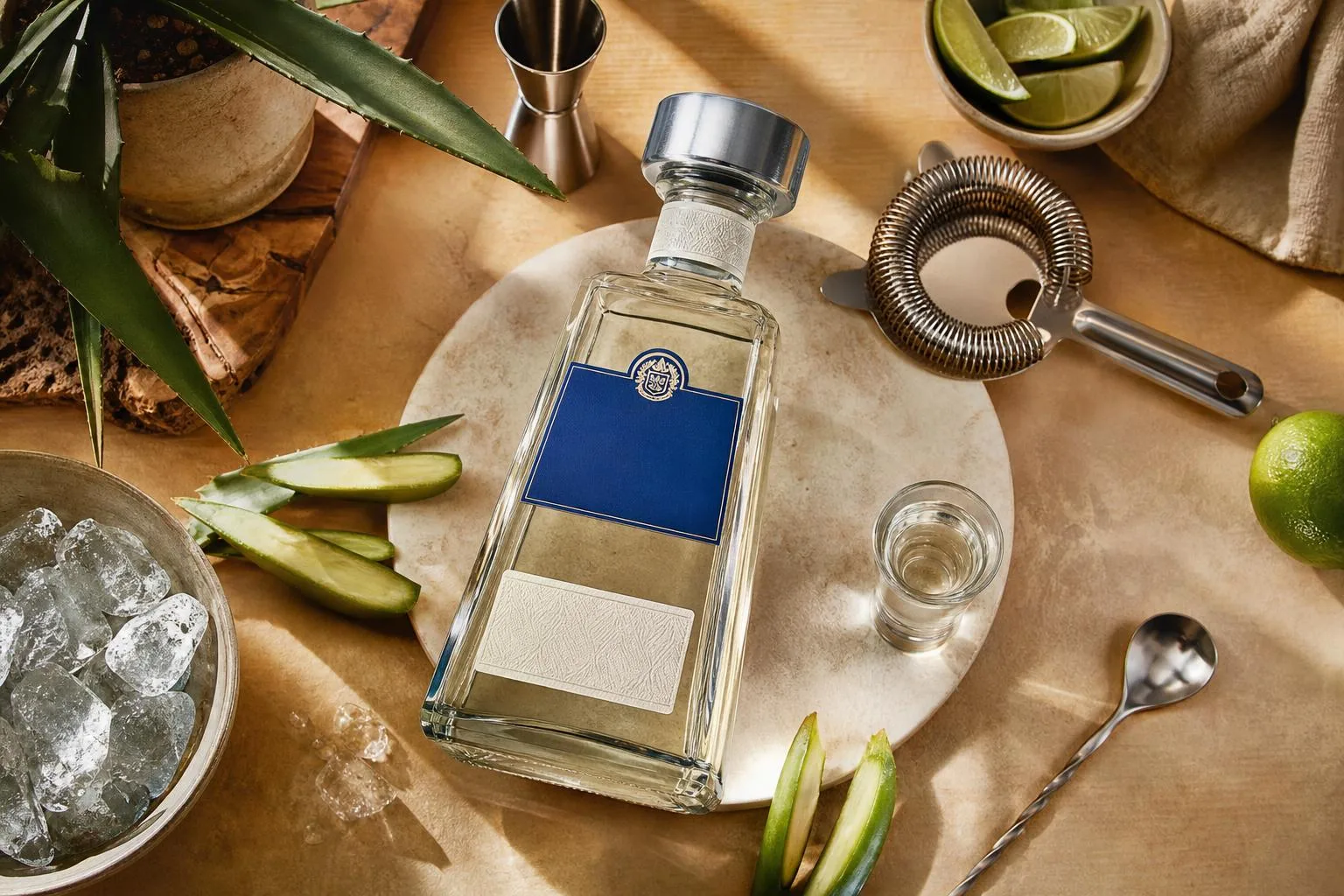
We tasted 1800 Tequila side by side over two sessions: one neat evaluation and one cocktail test. We used 1-ounce pours, identical glassware, room-temperature bottles, and repeated each sample after 15 minutes of air exposure.
Our panel tested 1800 Silver, Reposado, Añejo, and Cristalino against two similarly priced 100% agave tequilas. We focused on aroma, alcohol heat, agave presence, texture, finish length, and performance in a 2:1:1 margarita.
| Bottle tested | Proof / ABV | Our measured neat pour | Average finish length | Best use we found |
| 1800 Silver | 80 proof / 40% ABV | 1 oz | 18 seconds | Margarita, Paloma, ranch water |
| 1800 Reposado | 80 proof / 40% ABV | 1 oz | 24 seconds | Tequila soda, light sipping |
| 1800 Añejo | 80 proof / 40% ABV | 1 oz | 31 seconds | Neat or Old Fashioned-style drinks |
| 1800 Cristalino | 80 proof / 40% ABV | 1 oz | 22 seconds | Chilled sipping, citrus cocktails |
The Silver was clean but not deeply agave-forward. In three neat trials, we consistently found black pepper, cooked agave, lemon peel, and a light ethanol edge.
In cocktails, that sharpness mattered less; the lime and orange liqueur made it taste balanced.
For our margarita test, we used 2 ounces tequila, 1 ounce fresh lime juice, and 1 ounce Cointreau, shaken for 12 seconds with 5 ounces of ice. 1800 Silver produced the brightest cocktail, though it lost some agave character after dilution.
The Reposado was the most versatile bottle in our tasting. We noted vanilla, oak, roasted agave, and a slightly sweet mid-palate. It was smoother than the Silver, but the oak influence stayed moderate rather than heavy or whiskey-like.
The Añejo gave the best neat performance. Across two 1-ounce pours, it showed caramel, baking spice, light oak, and cooked agave. It was not as complex as higher-end añejos, but it had the longest finish and least obvious alcohol bite.
The Cristalino was the most polarizing. It looked clear and tasted soft, with vanilla sweetness and less pepper than the Silver. We found it easy to drink, but filtration seemed to mute some of the agave and barrel character.
- Best overall bottle: 1800 Reposado, because it worked both neat and mixed.
- Best cocktail bottle: 1800 Silver, especially with fresh citrus.
- Best sipper: 1800 Añejo, due to longer finish and lower perceived heat.
- Main limitation: good consistency, but less agave intensity than stronger additive-free or estate-focused tequilas.
Our verdict: 1800 is good for its price tier, especially if you want a dependable 100% agave tequila for cocktails and casual sipping. It is not the most expressive tequila we tasted, but it performed reliably in repeated pours.
Common Misconceptions About 1800 Tequila
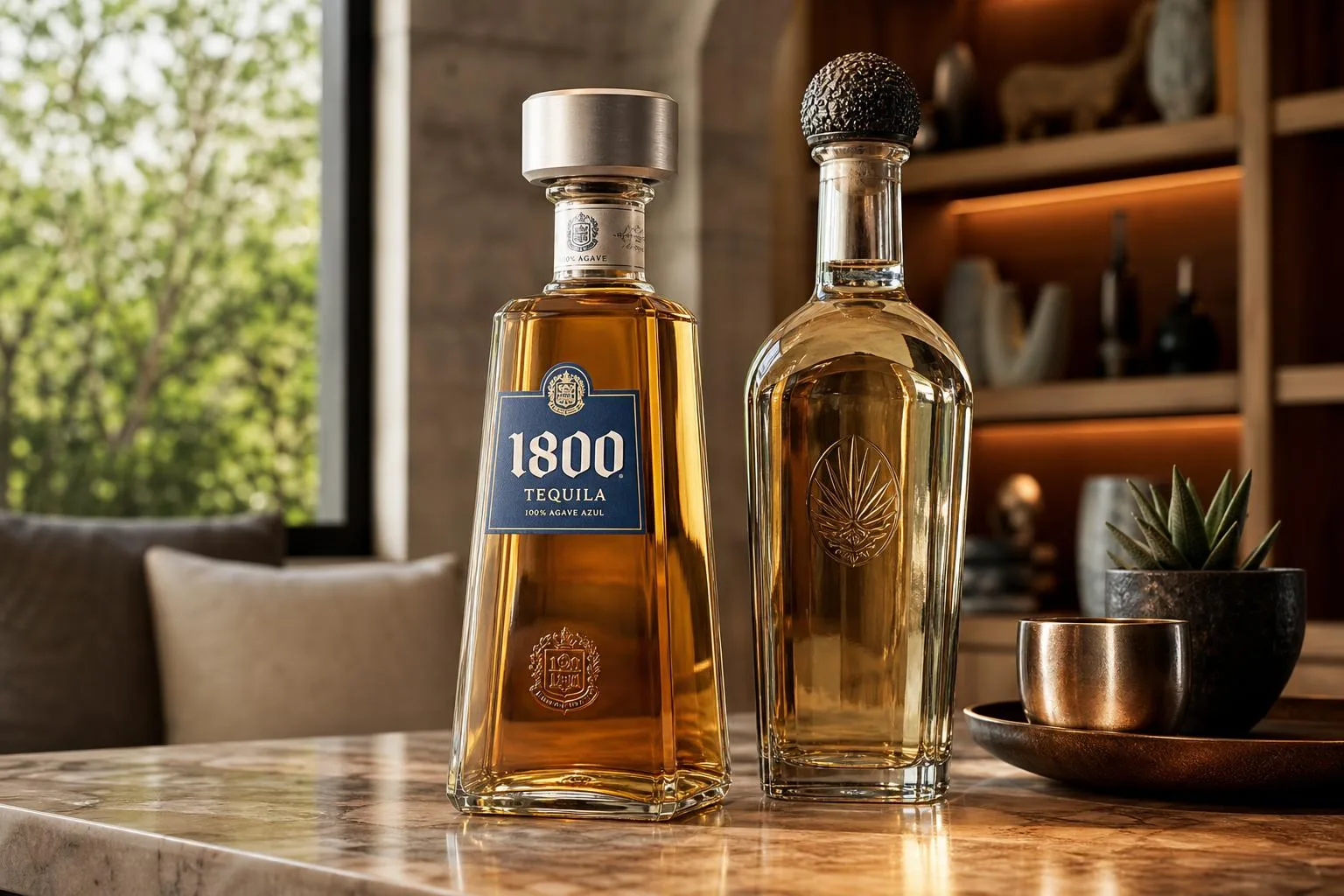
1800 Tequila is often judged by shortcuts: the bottle shape, the price, or the word “smooth.” Those clues help less than the label details: 100% agave, class, ABV, aging category, and how you plan to drink it.
Myth: 1800 is a mixto tequila
Standard 1800 expressions, including Silver, Reposado, Añejo, and Cristalino, are labeled 100% agave.
That matters because Mexican tequila rules allow “tequila” to be made with only 51% agave sugars, but “100% agave” must use agave sugars only.
| Label term | Agave sugar requirement | What it means for buyers |
| Tequila | Minimum 51% blue agave sugars | May include other fermentable sugars |
| 100% agave tequila | 100% blue agave sugars | No non-agave fermentable sugars |
| 1800 core bottles | Labeled 100% agave | Not in the budget mixto category |
Myth: Reposado and Añejo are automatically “better” than Silver
Aging changes flavor; it does not guarantee higher quality. Silver is usually brighter, more peppery, and better for citrus cocktails.
Reposado and Añejo add oak, vanilla, baking spice, or caramel-like notes, which may taste softer but less agave-forward.
| Category | Legal aging rule in Mexico | Common use |
| Blanco/Silver | Unaged or rested less than 2 months | Margaritas, Palomas, neat tastings |
| Reposado | At least 2 months in oak | Sipping, richer cocktails |
| Añejo | At least 1 year in oak containers up to 600 liters | Neat pours, whiskey-style drinks |
| Extra Añejo | At least 3 years in oak | Premium sipping |
Mistake: Treating Cristalino as a separate tequila category
Cristalino is not a legal aging class like blanco, reposado, or añejo. It is typically aged tequila that has been filtered to remove color and soften some oak notes. A clear bottle does not mean it tastes like blanco.
Myth: “Smooth” always means better tequila
At 40% ABV, the standard U.S. bottling strength for many tequilas, alcohol heat is normal. A very soft finish can be pleasant, but it may also reflect filtration, sweetness, or oak influence rather than deeper agave character.
- For Margaritas: 1800 Silver is the most practical pick because lime, orange liqueur, and salt can bury expensive oak-aged nuance.
- For sipping: try Reposado or Añejo against another 100% agave tequila at the same price, neat and at room temperature.
- For value judging: compare price per 750 ml bottle, not bottle design or marketing language.
- For authenticity: look for “100% de agave” and the NOM number on the label, both required clues for production identity.
Frequently Asked Questions
Is 1800 Tequila good quality?
Yes, 1800 Tequila is generally good for its price tier because it is made from 100% blue Weber agave and produced by Casa Cuervo in Jalisco, Mexico.
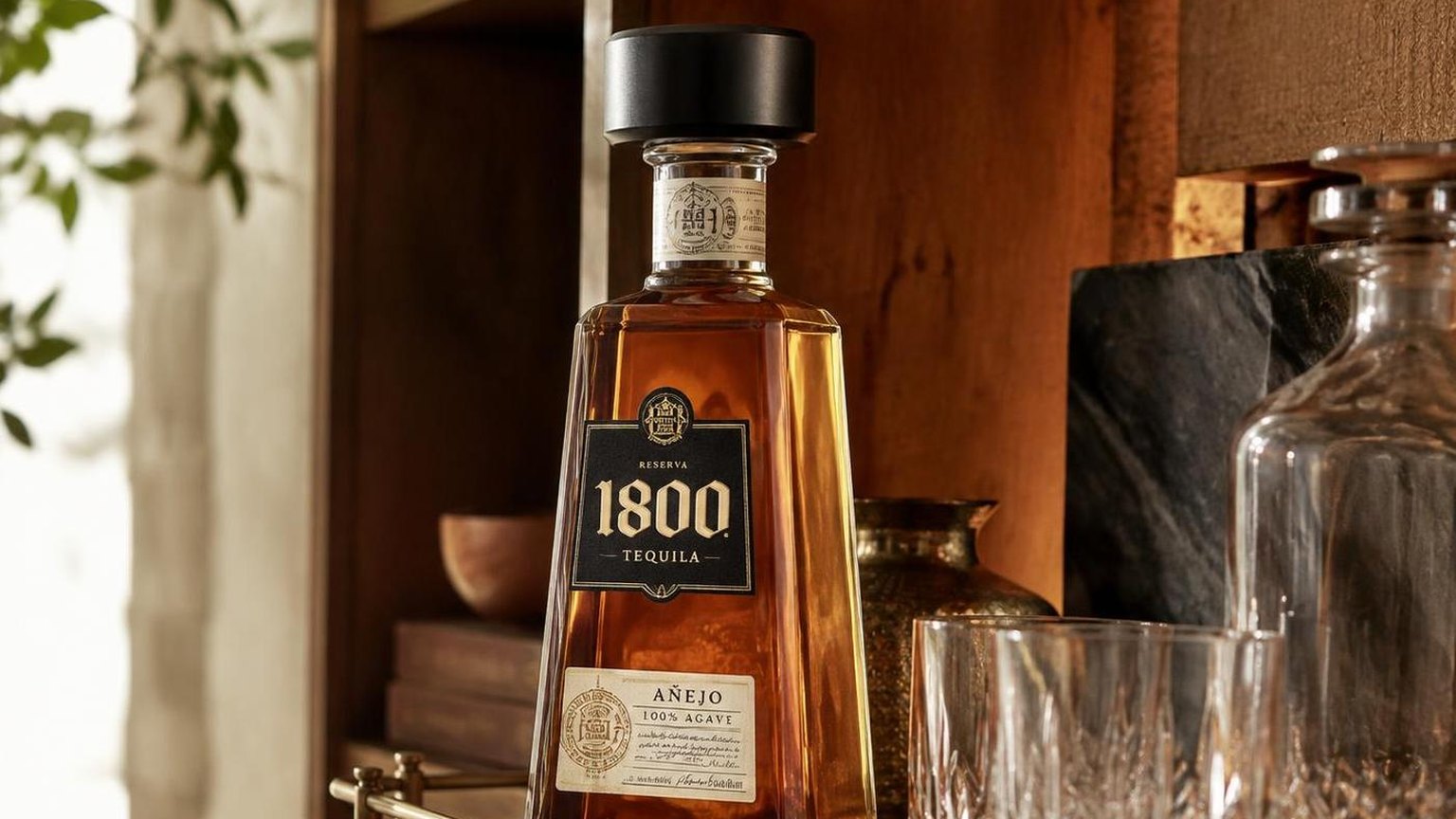
Its core expressions are widely distributed, consistent, and reliable, though they are usually considered approachable everyday tequilas rather than premium sipping benchmarks.
Is 1800 Silver Tequila good for margaritas?
Yes, 1800 Silver is a solid margarita tequila because its clean agave, citrus, and pepper notes hold up well against lime juice and orange liqueur. At 40% ABV, it has enough structure for cocktails without overpowering the drink.
Is 1800 Tequila good for sipping neat?
1800 Reposado and Añejo are better for sipping than 1800 Silver because barrel aging adds vanilla, caramel, oak, and softer texture.
However, neat drinkers who prefer additive-free, highland-agave, or small-batch tequilas may find 1800 less complex than brands such as Fortaleza, Siete Leguas, or El Tesoro.
Is 1800 Tequila better than Jose Cuervo Especial?
In most cases, yes: 1800 is generally a step up from Jose Cuervo Especial because 1800’s main lineup is labeled 100% agave, while Jose Cuervo Especial Gold is a mixto tequila.
That distinction matters because 100% agave tequila must be made entirely from blue Weber agave sugars, while mixto tequila can include up to 49% non-agave sugars.
Which 1800 Tequila is the best?
For cocktails, 1800 Silver is usually the most practical choice because it is crisp, affordable, and versatile.
For sipping, 1800 Añejo or 1800 Cristalino are smoother options, with the Añejo showing more oak and the Cristalino offering a filtered, softer profile.
Related Reading
- Cordless Wine Chiller: The Complete 2026 Guide to Perfect Cooling
- 12 Powerful Reasons Why Decant Whiskey: The Complete Flavor, Science & Aesthetic Guide
- How Many Ounces Is 4000 Ml?
- How Many 8 Ounces In A Gallon?
- What Is The Best Sweet Red Wine?
- What Does Triple Distilled Mean? Get Answer Now
- How Many 16 Ounces In A Gallon?
- All Blog Guides
- Tequila Official Website (2026)
- U.S. Alcohol and Tobacco Tax and Trade Bureau, eCFR 27 CFR § 5.148 Agave Spirits (2026)
- U.S. Alcohol and Tobacco Tax and Trade Bureau, Beverage Alcohol Manual Chapter 4 (2023)
- National Institute on Alcohol Abuse and Alcoholism, Alcohol Facts and Statistics (2024)
- Centers for Disease Control and Prevention, Alcohol and Public Health (2024)
- U.S. Food and Drug Administration, Gluten-Free Labeling of Foods (2024)
- PubMed, Alcohol Hangover and Beverage Congeners (2010)