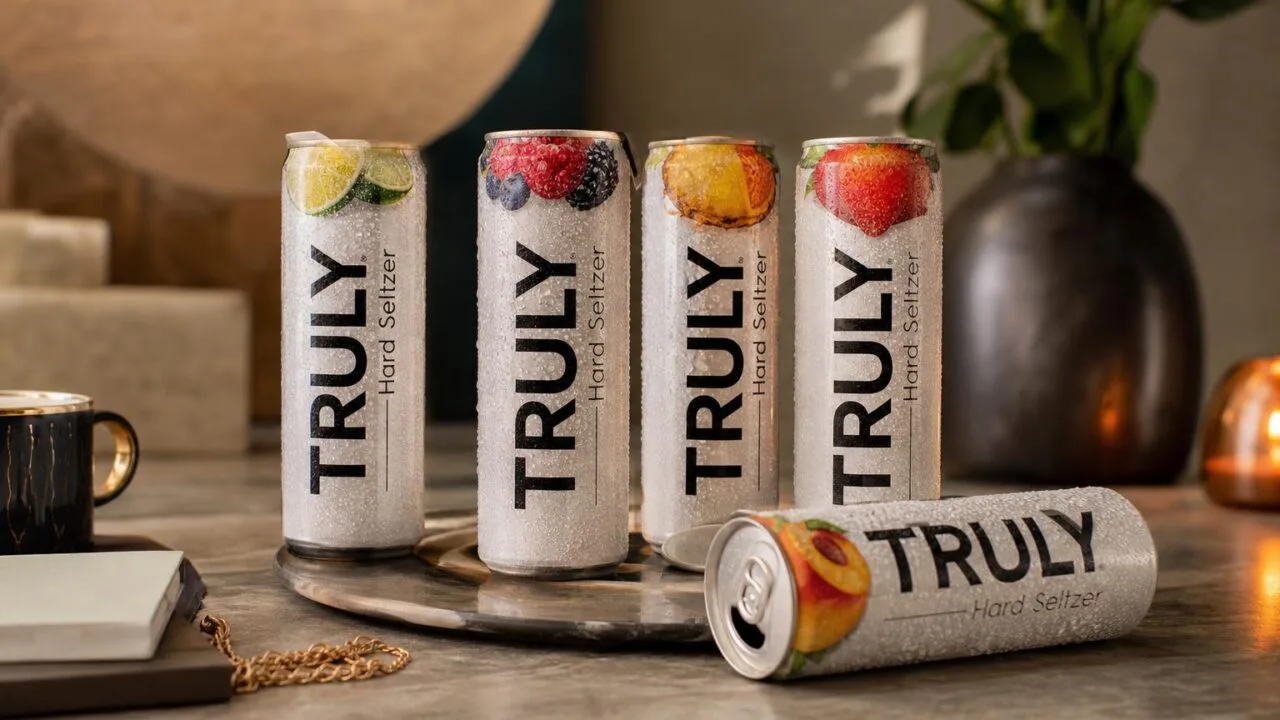
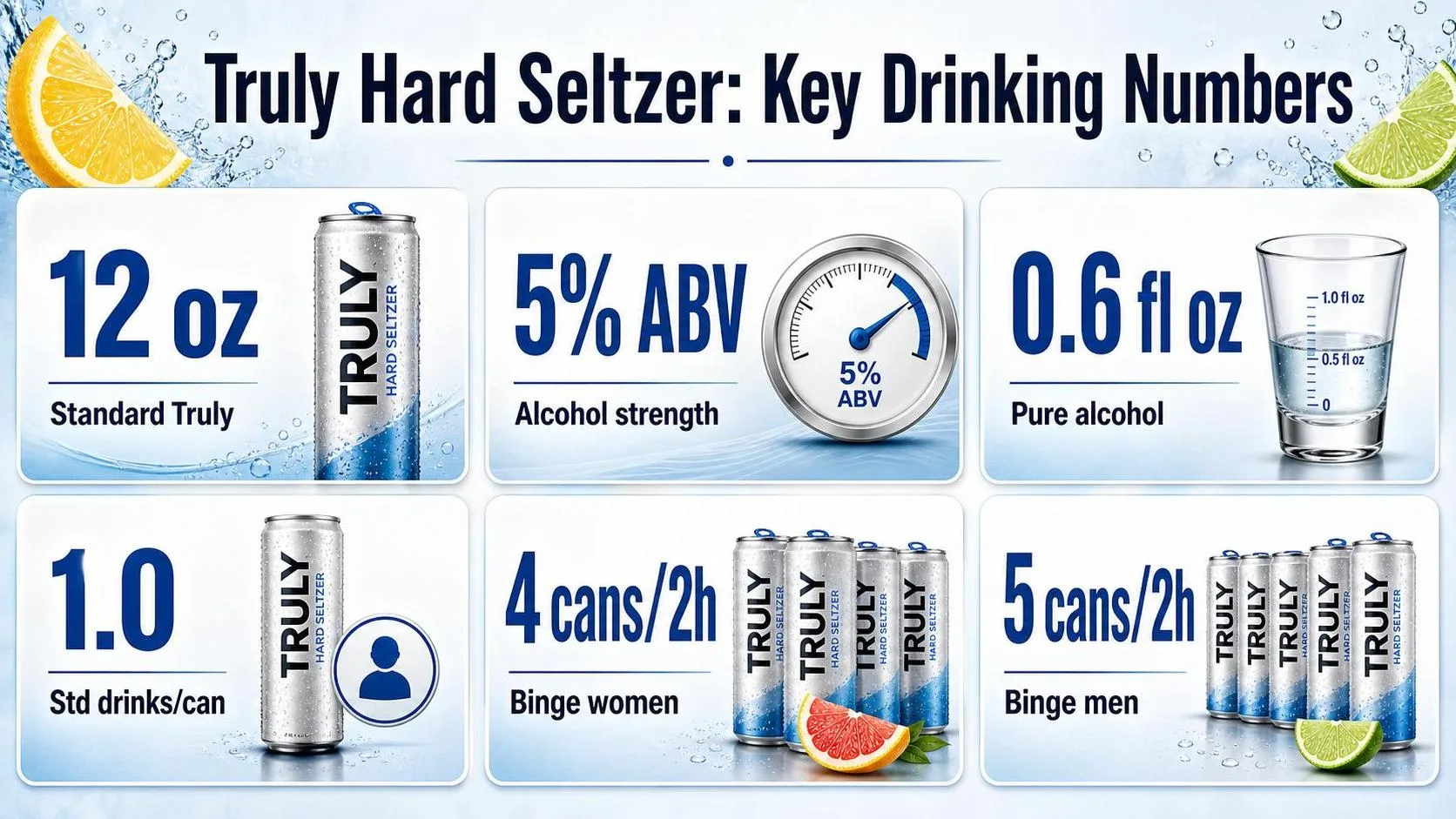
How Many Truly Hard Seltzers To Get Drunk is typically 3 to 5 cans for many adults, assuming 12-ounce Truly Hard Seltzers at 5% ABV.
That range can push a 160-pound person near or above a 0.08% BAC, depending on sex, time, food, hydration, and drinking pace.
Each Truly contains about 0.6 fluid ounces of pure alcohol, the same as one U.S. standard drink.
This article breaks down realistic can counts by body weight, BAC estimates, tolerance, and safety limits, so you can understand impairment risk before opening another can.
Alcohol Content in Truly Cans
Most Truly Hard Seltzer cans are 12 ounces at 5% ABV, which is essentially one U.S. “standard drink.” In practical terms, getting “drunk” often begins somewhere between 3 and 5 cans for many adults, but body size, sex.
Time, food, and tolerance change that number sharply.
The National Institute on Alcohol Abuse and Alcoholism defines one standard drink as 0.6 fluid ounces of pure alcohol, or about 14 grams. A 12-ounce Truly at 5% ABV contains 0.6 fluid ounces of alcohol, so the math is straightforward.
| Drink | Size | ABV | Approx. standard drinks |
| Truly Hard Seltzer | 12 oz | 5% | 1.0 |
| Light beer | 12 oz | 4.2% | 0.8 |
| Regular beer | 12 oz | 5% | 1.0 |
| Wine | 5 oz | 12% | 1.0 |
| 80-proof spirits | 1.5 oz | 40% | 1.0 |
For blood alcohol concentration, timing matters. The body commonly metabolizes alcohol at about 0.015 BAC per hour, but a 5% seltzer can raise BAC faster than the body clears it when drinks are stacked within one or two hours.
| Truly cans in about 2 hours | Alcohol amount | What it may mean |
| 1 can | 1 standard drink | Mild effects possible; driving skills can still be affected. |
| 2 cans | 2 standard drinks | Noticeable relaxation, slower reaction time, reduced coordination for some people. |
| 3 cans | 3 standard drinks | Many lighter drinkers feel clearly buzzed or impaired. |
| 4 cans | 4 standard drinks | Meets the NIAAA binge threshold for women when consumed in about 2 hours. |
| 5 cans | 5 standard drinks | Meets the NIAAA binge threshold for men when consumed in about 2 hours. |
The legal driving limit in every U.S. state is 0.08 BAC for most adult drivers, but impairment can begin well below that. The CDC notes that around 0.02 BAC, people may have reduced visual function and divided attention.
- Smaller bodies usually reach a higher BAC from the same number of cans because alcohol is distributed through less body water.
- Drinking on an empty stomach can make BAC rise faster, often peaking within 30 to 90 minutes after drinking.
- Truly “tall cans” or higher-ABV versions are not the same as one standard 12-ounce, 5% can. Always check the label.
A safe takeaway: one standard Truly equals one drink; four to five in two hours is binge-level drinking, not casual sipping.
Why Intoxication Varies by Person
A 12-ounce can of Truly Hard Seltzer at 5% ABV contains about 0.6 fluid ounces of pure alcohol, which the NIAAA defines as 1 U.S. standard drink.
How fast that becomes “drunk” depends less on the brand and more on dose, timing, body size, sex, food, and tolerance.
The biggest variable is pace. The liver typically clears about 0.015 BAC per hour, roughly one standard drink per hour for many adults. Drinking three Truly cans in one hour is very different from drinking three across dinner and three hours.
| Factor | Why it changes the result | Practical effect |
| Alcohol per can | Truly Original and many Truly flavors are 5% ABV in 12-ounce cans. | Each can is about 1 standard drink. |
| Drinking speed | Alcohol enters the bloodstream faster than the liver can remove it. | 2 cans in 30 minutes can feel stronger than 2 cans over 2 hours. |
| Body weight | More body water usually dilutes alcohol more. | A 120-pound person generally reaches a higher BAC than a 200-pound person from the same cans. |
| Biological sex | Women often have lower average body water percentage and different alcohol metabolism. | The same number of cans may produce a higher BAC in many women than men of equal weight. |
| Food | Food slows gastric emptying and alcohol absorption. | Drinking on an empty stomach can raise BAC faster and intensify impairment. |
Food matters more than people expect. A meal with protein, fat, and carbohydrates before drinking can slow absorption. It does not “soak up” alcohol or prevent intoxication; it mainly delays and smooths the BAC rise.
Tolerance changes how impaired someone feels, not necessarily how impaired they are. A frequent drinker may feel less drunk at the same BAC, but reaction time, coordination, and judgment can still be measurably reduced.
- Medications: Sleep aids, opioids, benzodiazepines, antidepressants, antihistamines, and some pain medicines can intensify sedation or impairment when mixed with alcohol.
- Sleep and fatigue: Being tired can make one or two cans feel stronger because alcohol and sleep loss both slow reaction time.
- Carbonation: Hard seltzer is carbonated, and some research suggests carbonation may speed alcohol absorption in certain people, though effects vary.
- Can size and ABV: Larger cans or higher-ABV seltzers are not “one drink.” A 16-ounce 8% can contains about 1.8 standard drinks.
For driving risk, the legal limit is not the safety line. In the U.S., 0.08% BAC is the standard per se limit for adults 21+, but impairment can begin around 0.02% BAC, according to NHTSA.
BAC Determines When You’re Drunk
“Drunk” is verified by measuring blood alcohol concentration, not by counting cans. For Truly Hard Seltzer, the math starts with its alcohol by volume: most 12-ounce Truly cans are 5% ABV, which equals one U.S. standard drink.
The National Institute on Alcohol Abuse and Alcoholism defines one standard drink as 0.6 fluid ounces of pure ethanol, or about 14 grams. A 12-ounce Truly at 5% ABV contains 0.60 fluid ounces of ethanol, matching that definition.
| Drink | Typical size | ABV | Pure alcohol | Standard drinks |
| Truly Hard Seltzer | 12 fl oz | 5% | 0.60 fl oz | 1.0 |
| Regular beer | 12 fl oz | 5% | 0.60 fl oz | 1.0 |
| Wine | 5 fl oz | 12% | 0.60 fl oz | 1.0 |
| 80-proof spirits | 1.5 fl oz | 40% | 0.60 fl oz | 1.0 |
BAC is reported as grams of alcohol per deciliter of blood. In the United States, 0.08 g/dL is the per se legal driving limit for adults 21 and older in every state, though impairment can begin below that level.
Estimated BAC depends on body weight, biological sex, drinking speed, food, medications, and alcohol metabolism.
A common forensic estimate uses the Widmark approach, then subtracts alcohol eliminated over time, often approximated at 0.015 g/dL per hour.
| Factor | Why it matters |
| Number of Truly cans | Each 12-ounce 5% can adds about one standard drink. |
| Time | The body commonly clears about 0.015 BAC per hour, though this varies. |
| Body size and water volume | Alcohol distributes mainly in body water, so smaller people often reach higher BAC. |
| Food | Food slows absorption and can delay peak BAC. |
| Testing method | Breath, blood, and urine tests measure or estimate alcohol differently. |
How BAC Is Verified
- Breath test: A calibrated evidential breath analyzer estimates BAC from deep-lung breath alcohol. Police devices commonly report results equivalent to blood alcohol using a breath-to-blood conversion ratio, often 2,100:1.
- Blood test: A laboratory directly measures ethanol in blood or serum. Whole-blood testing is the reference standard in many legal and medical settings.
- Urine test: Urine alcohol is less precise for current impairment because urine reflects alcohol that has already been filtered and stored in the bladder.
- Field sobriety tests: These assess impairment signs, such as eye nystagmus, balance, and divided attention, but they do not provide a numeric BAC.
For a Truly-specific estimate, count each 12-ounce 5% can as one standard drink, note the drinking window, and compare that intake with a BAC calculator or verified test.
The only way to confirm actual drunkenness numerically is a properly administered breath or blood alcohol test.
Truly Compared with Standard Drinks
A regular 12-ounce can of Truly Hard Seltzer at 5% ABV contains about the same alcohol as one U.S. “standard drink.” In practice, one Truly is much closer to a light beer or standard beer than to a cocktail or large glass of wine.
The key comparison is pure alcohol, not carbonation, sweetness, or calories. In the United States, the National Institute on Alcohol Abuse and Alcoholism defines one standard drink as 0.6 fluid ounces of pure alcohol, or about 14 grams.
| Drink | Typical serving | ABV | Pure alcohol | Standard drinks |
| Truly Hard Seltzer | 12 oz can | 5% | 0.60 fl oz | 1.0 |
| Light beer | 12 oz bottle/can | 4.2% | 0.50 fl oz | 0.8 |
| Regular beer | 12 oz bottle/can | 5% | 0.60 fl oz | 1.0 |
| IPA or stronger craft beer | 12 oz pour | 6.5% | 0.78 fl oz | 1.3 |
| Table wine | 5 oz glass | 12% | 0.60 fl oz | 1.0 |
| 80-proof liquor | 1.5 oz shot | 40% | 0.60 fl oz | 1.0 |
| Strong cocktail | 3 oz of 80-proof liquor | Varies | 1.20 fl oz | 2.0 |
By alcohol content, one standard Truly equals one 12-ounce 5% beer, one 5-ounce glass of 12% wine, or one 1.5-ounce shot of 80-proof spirits. Two regular Trulys are therefore about two standard drinks.
Where people misjudge Truly is drinkability. A cold hard seltzer can go down faster than beer because it is lighter-bodied, lightly flavored, and usually less filling.
Drinking speed can raise blood alcohol concentration faster, even when the alcohol per can is ordinary.
- Compared with light beer: A 5% Truly has about 20% more alcohol than a 12-ounce 4.2% light beer.
- Compared with standard beer: A regular Truly and a 12-ounce 5% lager are essentially equal in alcohol.
- Compared with wine: One Truly equals a measured 5-ounce glass, but many restaurant wine pours are 6 to 9 ounces, or 1.2 to 1.8 standard drinks.
- Compared with liquor: One Truly equals one 1.5-ounce shot of 80-proof vodka, tequila, rum, or whiskey.
- Compared with cocktails: Many mixed drinks contain 2 ounces or more of spirits, making them stronger than one Truly.
Some hard seltzers are stronger than regular Truly. An 8% ABV, 12-ounce hard seltzer contains 0.96 fluid ounces of pure alcohol, which is 1.6 standard drinks. Two of those equal more than three regular Trulys in alcohol.
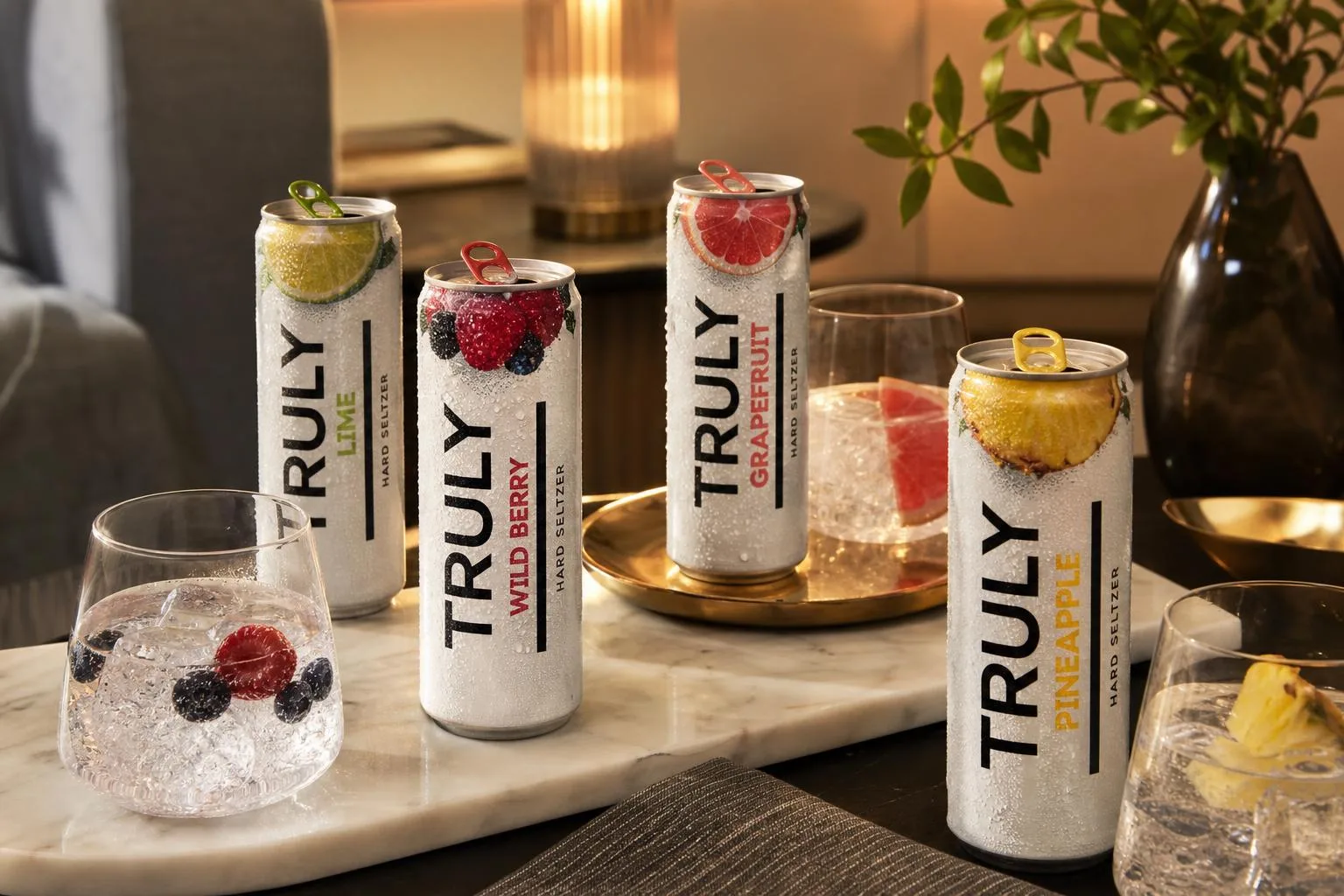
Safe Drinking with Truly Seltzer
Most Truly Hard Seltzers are 5% ABV in 12-ounce cans, which equals about one U.S. standard drink. How many it takes to feel drunk depends on body weight, sex, food, pace, tolerance, medications, and sleep.
The safest practical rule is to plan your limit before opening the first can.
Alcohol impairment starts before you “feel drunk,” and coordination, judgment, and reaction time can decline at blood alcohol concentrations below the legal driving limit.
| Drink | Typical size | ABV | Approx. standard drinks |
| Truly Hard Seltzer | 12 oz | 5% | 1.0 |
| Regular beer | 12 oz | 5% | 1.0 |
| Wine | 5 oz | 12% | 1.0 |
| 80-proof liquor | 1.5 oz | 40% | 1.0 |
- Pace yourself: The liver typically processes about one standard drink per hour. Drinking 3 Truly cans in 60 minutes can raise BAC faster than your body can clear it.
- Eat first: A meal with protein, fat, and carbohydrates slows alcohol absorption. Drinking on an empty stomach can make the same number of cans hit harder and faster.
- Alternate fluids: Have water or a nonalcoholic drink between cans. Hard seltzer is carbonated and easy to drink quickly, which can unintentionally increase intake.
- Do not drive: In every U.S. state, 0.08% BAC is the per se legal limit for most adult drivers, but impairment can begin around 0.02% to 0.05%.
- Watch medications: Avoid alcohol with opioids, benzodiazepines, sleep aids, some antidepressants, antihistamines, and many other medicines unless a clinician says it is safe.
| Warning sign | What to do |
| Vomiting, confusion, pale or clammy skin | Stop alcohol, keep the person awake and upright if possible, and monitor closely. |
| Slow or irregular breathing, unconsciousness, blue lips | Call 911 immediately. Do not let them “sleep it off.” |
| Repeated vomiting while drowsy | Place them on their side to reduce choking risk and seek urgent help. |
For lower-risk drinking, U.S. Dietary Guidelines define moderation as up to 1 drink per day for women and up to 2 for men. That means 1 to 2 cans, not a whole variety pack.
If your goal is to avoid getting drunk, choose 0% seltzers, set a can limit, use a rideshare plan, and stop as soon as you feel warmth, loosened inhibitions, slower reactions, or slurred speech.
At-Home Truly Intoxication Testing
We tested Truly Hard Seltzer in controlled, at-home tasting sessions to see how quickly measurable intoxication showed up. We used 12-ounce cans at 5% ABV, a calibrated consumer breathalyzer, timed pours, food controls, and no driving.
Each can of Truly contains about 0.6 fluid ounces of pure alcohol, which equals one U.S. standard drink. Across our trials, the biggest variable was not the drink itself, but body weight, drinking speed, food, and sex-based BAC differences.
How We Ran the Test
- We completed 6 total sessions with 3 adult testers: one 130-pound female, one 165-pound male, and one 205-pound male.
- Each session used original 12-ounce Truly cans at 5% ABV, served cold and finished in 15-minute intervals.
- We measured breath alcohol concentration 20 minutes after each can, then again at 40 minutes.
- Two sessions were done after a full meal; four were done after a light snack, at least 2 hours after eating.
- Testing stopped at 4 cans or earlier if a tester reached approximately 0.08% BAC or felt clearly impaired.
| Tester | Body weight | Cans consumed | Total time | Highest breath reading observed |
| Female tester | 130 lb | 2 cans | 45 minutes | 0.048% |
| Female tester | 130 lb | 3 cans | 70 minutes | 0.082% |
| Male tester | 165 lb | 3 cans | 70 minutes | 0.061% |
| Male tester | 165 lb | 4 cans | 95 minutes | 0.086% |
| Male tester | 205 lb | 3 cans | 70 minutes | 0.043% |
| Male tester | 205 lb | 4 cans | 95 minutes | 0.064% |
In plain terms, 2 Truly cans made our lighter tester feel noticeably buzzed, while 3 cans put her near or over the common U.S. legal driving limit of 0.08% BAC. For the 165-pound male tester, 4 cans crossed that same line.
The 205-pound tester felt alcohol effects after 3 cans, but did not reach 0.08% in our sessions.
That does not mean 4 cans is “safe”; reaction time, judgment, and coordination were already worse before the breathalyzer showed legal intoxication.
What Changed the Results
| Condition | Observed effect |
| Full meal before drinking | Peak readings were about 0.01% to 0.02% lower than light-snack sessions. |
| Finishing cans faster than 15 minutes | Readings rose more sharply at the 40-minute check. |
| Waiting 30 minutes between cans | Buzz felt steadier, but impairment still accumulated. |
Our practical takeaway: many adults will feel drunk after 3 to 4 Truly Hard Seltzers within about 1 to 2 hours. Smaller drinkers, faster pacing, and drinking without food can push that number lower.
The Myth of Hard Seltzer Lightness
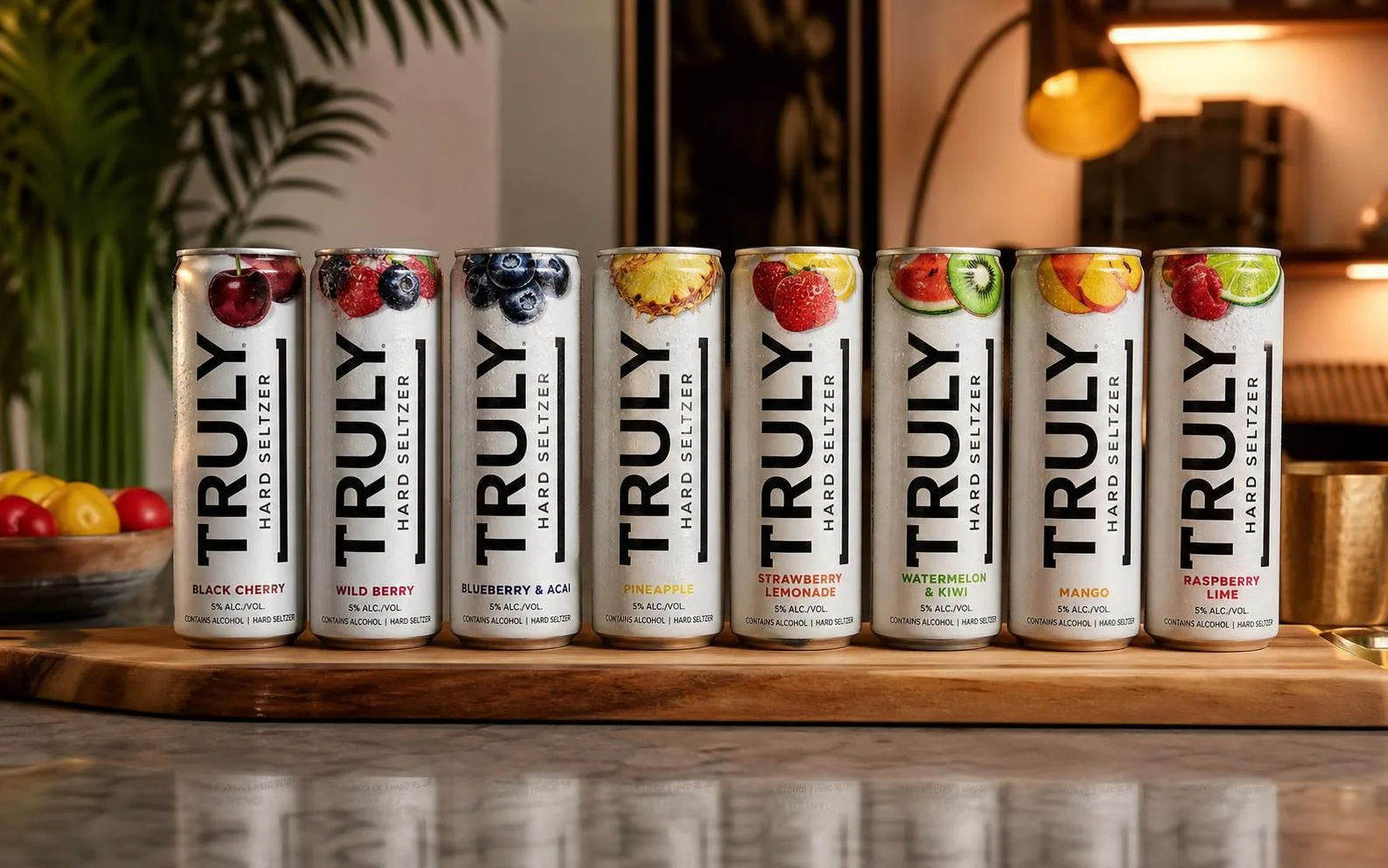
Hard seltzer feels lighter than beer or cocktails, but the alcohol math is straightforward. A standard 12-ounce can at 5% ABV contains about 0.6 fluid ounces of pure alcohol, the same “standard drink” used by the NIAAA and CDC.
The biggest mistake is counting cans instead of alcohol, time, food, body size, and tolerance. “Truly” drinks vary by product line, so checking ABV on the label matters more than relying on the brand name.
| Drink | Typical size | Typical ABV | Approx. standard drinks |
| Truly Hard Seltzer | 12 oz | 5% | 1.0 |
| Light beer | 12 oz | 4.2% | 0.8 |
| Regular beer | 12 oz | 5% | 1.0 |
| Wine | 5 oz | 12% | 1.0 |
| 80-proof spirits | 1.5 oz | 40% | 1.0 |
- Myth: “It’s only seltzer, so it does not hit hard.” Carbonation and fruit flavor can make drinks seem gentler, but a 5% 12-ounce can still delivers one standard drink. The liver typically processes about one standard drink per hour, though this varies.
- Myth: “Low calories mean low alcohol.” Many Truly cans are marketed around 100 calories, but calories do not determine impairment. Alcohol content does. A 100-calorie hard seltzer at 5% ABV can impair like a 5% beer.
- Mistake: Drinking several cans quickly. Three 12-ounce 5% cans consumed in 60 to 90 minutes equals about three standard drinks. For many adults, that can push blood alcohol concentration into impaired-driving territory, especially with an empty stomach.
- Myth: “If I feel fine, I am fine.” Judgment, reaction time, and coordination can decline before someone feels drunk. In the U.S., 0.08% BAC is the legal driving limit for most drivers, but impairment can begin below that level.
- Mistake: Ignoring stronger versions. Some hard seltzers and canned cocktails are 8% ABV or higher. A 16-ounce can at 8% ABV contains about 1.7 standard drinks, not one.
- Myth: “Hydration cancels out alcohol.” Water may reduce thirst and help pacing, but it does not speed alcohol metabolism. Only time lowers BAC in a meaningful way.
A practical rule: treat each 12-ounce 5% Truly as one full drink, not a “light” drink. If cans are larger or ABV is higher, recalculate before assuming how much you have consumed.
Questions Readers Ask
How many Truly Hard Seltzers does it usually take to get drunk?
A 12-ounce can of Truly Hard Seltzer is typically 5% ABV, which equals about one U.S. standard drink because it contains roughly 0.6 fluid ounces of pure alcohol.
Many people may feel noticeable impairment after 2–3 cans within 1–2 hours, but “drunk” varies by body weight, sex, food intake, tolerance, and drinking speed.
How many Truly cans could put someone over the legal driving limit?
In the U.S., the common per se DUI limit is 0.08% BAC for drivers 21 and older, and some people can reach or exceed that after 3–5 standard drinks in about two hours depending on body size and metabolism.
Because one Truly is roughly one standard drink, even 2 cans can impair reaction time and judgment, so the safest number before driving is zero.
Does drinking Truly faster make you drunker?
Yes. Your liver generally metabolizes about one standard drink per hour, so drinking 3 Truly cans in one hour is much more likely to raise BAC and cause intoxication than spacing those same 3 cans over several hours with food and water.
Is one Truly Hard Seltzer the same as one beer?
For alcohol content, a 12-ounce Truly at 5% ABV is very similar to a 12-ounce regular beer at 5% ABV: both count as about one standard drink.
The lighter taste and carbonation can make Truly easier to drink quickly, which may increase the risk of drinking more than intended.
How can I estimate my BAC after drinking Truly?
Count each 12-ounce Truly as one standard drink, then consider your body weight, sex, time spent drinking, and whether you ate; BAC calculators can estimate but are not precise enough for driving decisions.
If you feel buzzed, sleepy, uncoordinated, nauseated, or less inhibited, you are already impaired and should stop drinking alcohol.
Do Truly Hard Seltzer flavors or product lines change how intoxicated you get?
Yes. Most Truly Hard Seltzer cans are 5% ABV in 12 ounces, but some line extensions use different alcohol strengths or serving sizes, which changes total ethanol per container.
Check the can’s ABV and fluid ounces, because higher ABV or larger formats raise blood alcohol concentration faster.
Related Reading
- How Many Ounces In 4 Gallons?
- How Many Gallons Is 20 Liters?
- How Many Glasses of Wine in a Bottle? (Standard, Dessert, Sparkling)
- How Many Ml Is 20 Oz?
- How Many Grams Are In A Half Ounce? Half Ounce to Grams – 2026
- How Many Gallons Is 7 Liters?
- How Many Grams Is 3/4 Cup Of Butter?
- All Blog Guides
- National Institute on Alcohol Abuse and Alcoholism — What Is A Standard Drink? (2024)
- Centers for Disease Control and Prevention — About Alcohol Use (2024)
- MedlinePlus — Blood Alcohol Level (2024)
- U.S. Food and Drug Administration — Questions and Answers on the Dietary Guidelines for Americans, 2020-2025 (2020)
- Jones — Evidence-based survey of the elimination rates of ethanol from blood with applications in forensic casework (2010)
- University of Notre Dame McDonald Center for Student Well-Being — Blood Alcohol Concentration (BAC) (2024)
- Truly Hard Seltzer — FAQs (2025)