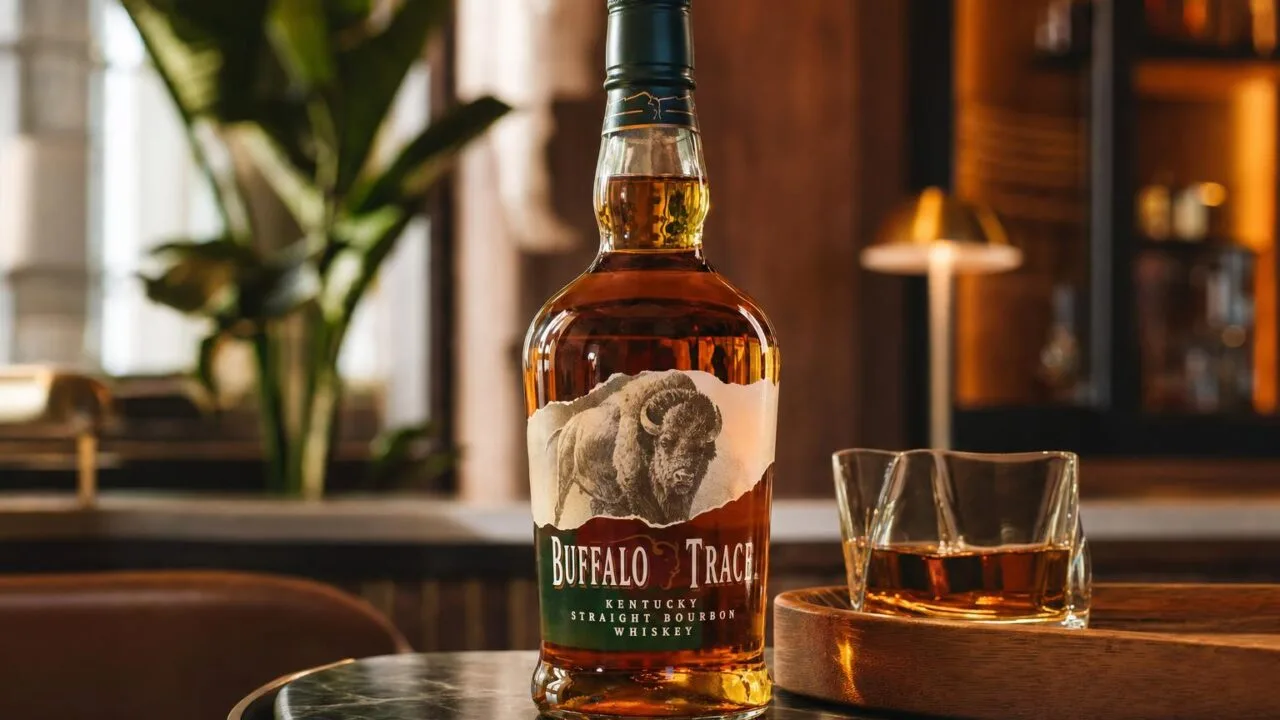
What Is So Great About Buffalo Trace is its rare combination of historic Kentucky production, consistent flavor, and unusually fair pricing for a widely awarded straight bourbon.
Made at a distillery operating on the same Frankfort site since the late 1700s, it delivers caramel, vanilla, oak, and baking spice without demanding collector-level spending.
Its reputation also comes from proof in the glass: 90 proof, aged in new charred oak, and produced by the same distillery behind Pappy Van Winkle, Eagle Rare, W.L. Weller, and Blanton’s.
That mix of accessibility, pedigree, and balance explains why Buffalo Trace remains a benchmark bourbon.
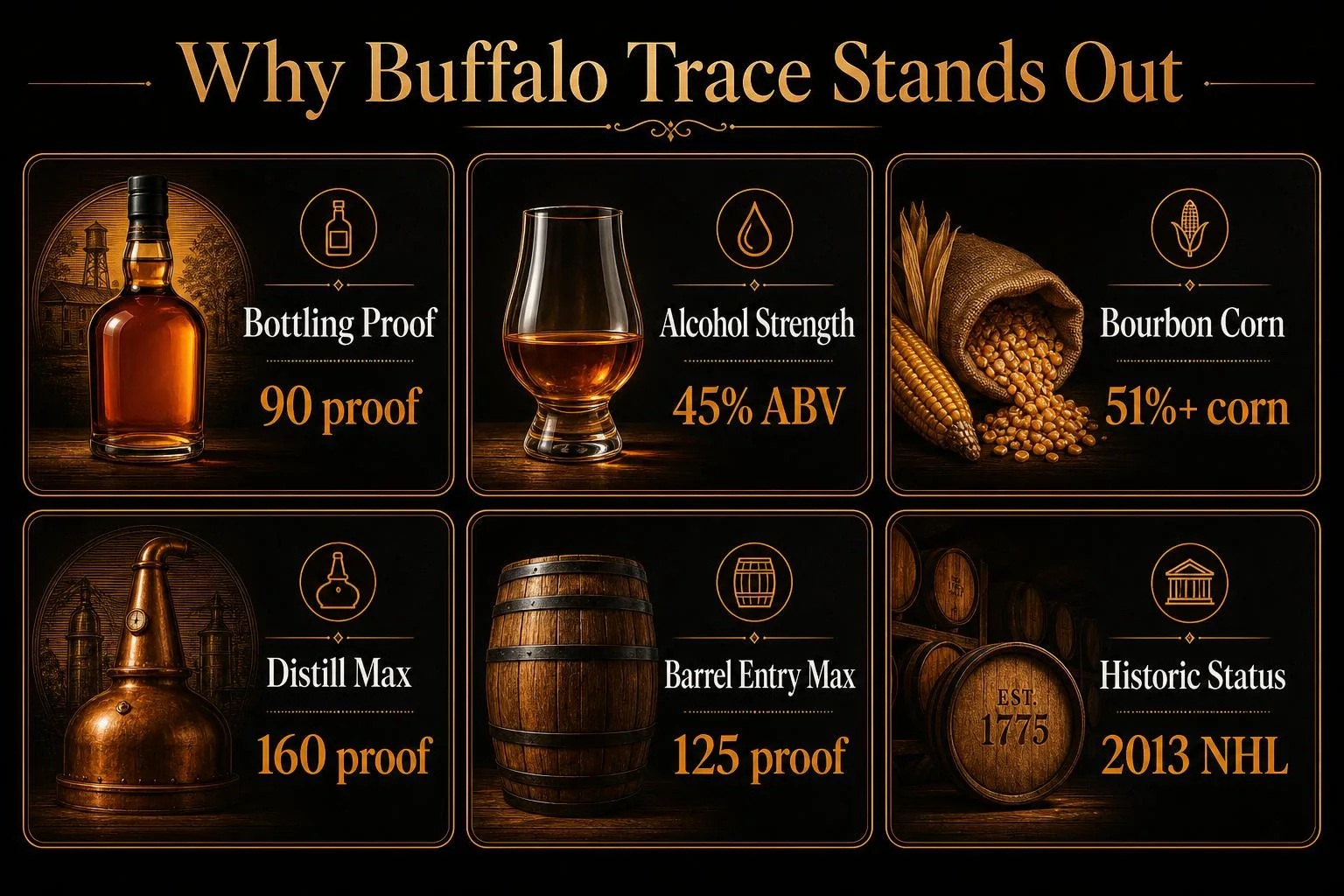
Why Buffalo Trace Stands Out
Buffalo Trace’s appeal is not one magic statistic. It is the combination of proof, price, production scale, historic distilling, and a mature flavor profile that usually drinks above its shelf position.
The brand is also unusually transparent where it matters: bottling strength, Kentucky straight bourbon status, and distillery provenance. Some details, such as exact age and mash bill percentages, remain undisclosed.
| Number | What it means |
| 90 proof / 45% ABV | Buffalo Trace is bottled stronger than the legal 80-proof minimum, giving more aroma, texture, and oak presence without becoming hot. |
| No age statement | It must be at least 4 years old if no age is stated under U.S. rules for straight bourbon, but Buffalo Trace does not publish the exact age. |
| 51%+ corn | All bourbon must be made from a mash of at least 51% corn. Buffalo Trace’s exact recipe is proprietary, but it is widely understood as the distillery’s lower-rye bourbon mash bill. |
| New charred oak | By law, bourbon must age in new charred oak containers. That is where Buffalo Trace gets vanilla, caramel, spice, and much of its color. |
| 160 proof maximum distillation | Federal bourbon rules cap distillation at 160 proof, preserving grain character instead of creating a neutral spirit. |
| 125 proof maximum barrel entry | Bourbon cannot enter the barrel above 125 proof. Lower entry proof can help preserve sweetness and wood balance during aging. |
| 1792 site history | Buffalo Trace Distillery traces distilling on its Frankfort, Kentucky site to the late 18th century, one reason the label carries more heritage than many modern brands. |
| 2013 National Historic Landmark | The distillery was designated a National Historic Landmark, a rare distinction that supports its reputation as more than a marketing-built whiskey name. |
The 90-proof choice is central. At 45% ABV, Buffalo Trace has enough concentration for cocktails like an Old Fashioned, but it remains approachable neat for drinkers moving up from lighter bourbons.
The missing age statement is often misunderstood. It does not mean young whiskey by default; it means the producer has flexibility to blend barrels for a consistent house profile instead of hitting one printed age.
The legal bourbon numbers matter because they set a high floor. Corn provides sweetness, new charred oak adds vanilla and toast, and proof limits keep the whiskey from becoming overly industrial or stripped of character.
The historic numbers explain the trust factor. Buffalo Trace is not simply a popular bottle; it comes from an operating Kentucky distillery with deep records, significant scale, and federally recognized historic importance.
That is why the whiskey’s reputation survives hype cycles. The numbers show a bourbon built around balance: above-minimum proof, traditional production rules, undisclosed but mature blending, and a distillery pedigree few competitors can match.
How Production Choices Shape Flavor
Buffalo Trace’s appeal is not one magic ingredient; it is the interaction of grain, yeast, distillation limits, oak, warehouse climate, and barrel selection.
In the glass, those choices show up as vanilla, toffee, orange peel, light spice, and a soft finish rather than aggressive heat.
Several important rules are fixed by U.S. bourbon law, while the distillery’s own production choices shape the house style.
| Factor | Specific fact | Effect on Buffalo Trace |
| Bourbon legal standard | At least 51% corn; distilled at no more than 160 proof; entered into new charred oak at no more than 125 proof; bottled at no less than 80 proof, per TTB standards. | Creates the sweet corn-and-oak framework behind the caramel, vanilla, and baking-spice profile. |
| Bottling strength | Buffalo Trace Kentucky Straight Bourbon is bottled at 90 proof, or 45% ABV. | Higher than the legal minimum, but still approachable; it carries flavor without the burn of many barrel-proof releases. |
| Mash bill | Buffalo Trace does not publish the exact recipe, but the bourbon is widely identified with the distillery’s “Mash Bill #1,” a lower-rye bourbon mash bill. | Lower rye generally means less sharp pepper and more rounded notes: corn sweetness, honey, vanilla, and soft spice. |
| Oak maturation | It must age in new, charred oak; as a straight bourbon, it must be aged at least 2 years if labeled straight. | Charred oak contributes vanillin, caramelized sugars, tannin, color, and toasted-coconut notes. |
- Warehouse placement matters. Buffalo Trace ages whiskey in Kentucky rickhouses, where upper floors tend to run hotter and drier while lower floors stay cooler. Heat pushes whiskey into the oak; cooling draws it back out, changing extraction and evaporation.
- Barrel variation is real. Two barrels filled the same day can taste different after years in different warehouse positions. That is why batching is critical: the final Buffalo Trace profile depends on which mature barrels are chosen and blended.
- Yeast affects aroma. Buffalo Trace uses proprietary yeast cultures. Fermentation influences fruity esters, which help explain the bourbon’s apple, citrus, and light floral notes alongside oak sweetness.
- Proofing water changes texture. After maturation, whiskey is reduced to bottling proof. Careful proofing can make the bourbon feel rounder and more integrated, especially at 90 proof.
- Consistency is part of the achievement. Buffalo Trace is not a single-barrel product. Its reputation comes from delivering a recognizable profile bottle after bottle despite natural variation in wood, weather, and aging location.
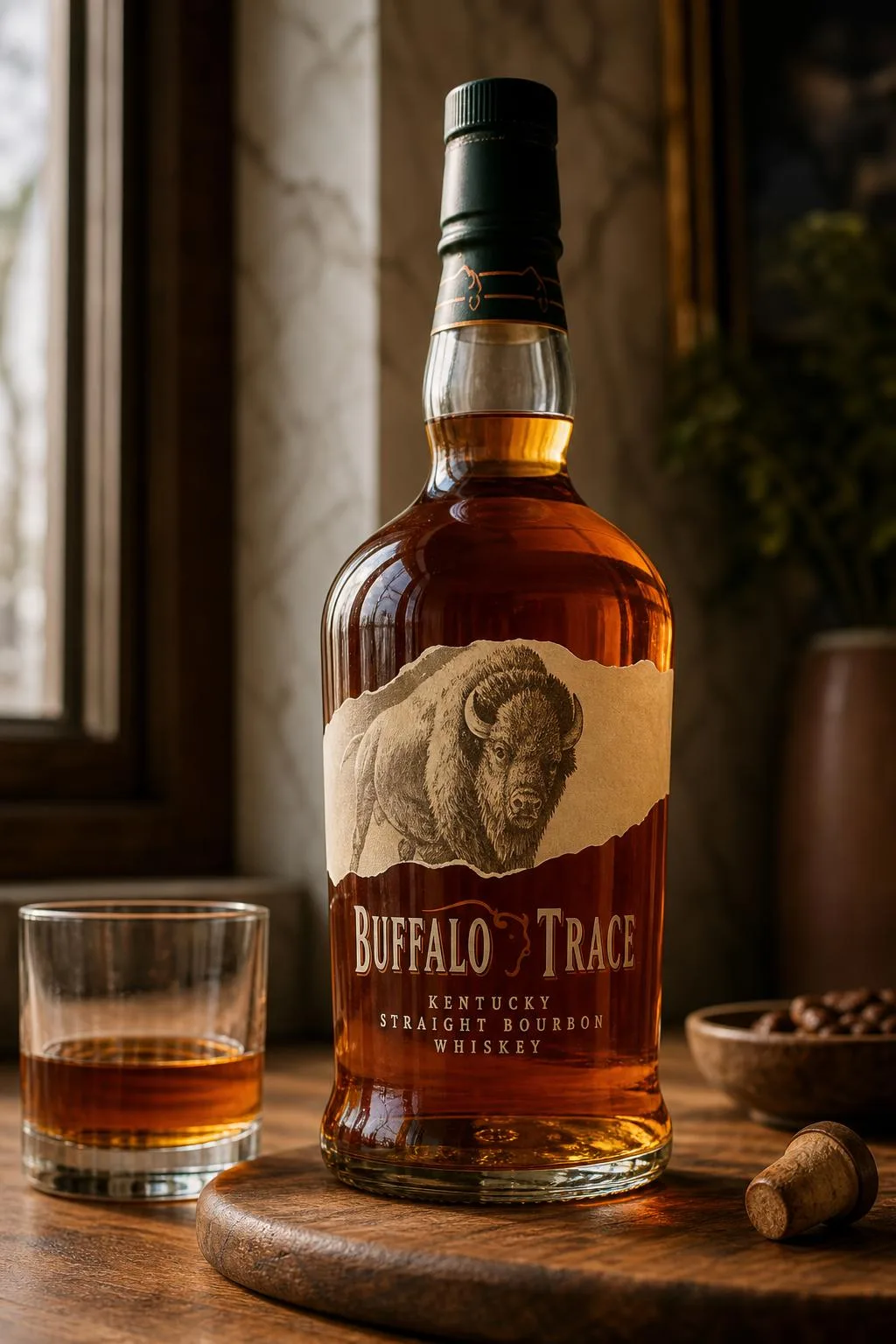
Awards Reviews and Market Reputation
Buffalo Trace’s reputation is not measured by folklore alone. It is checked through federal whiskey standards, label approvals, blind tasting results, production facts, and repeatable bottle-to-bottle sensory performance.
The first verification point is legal classification. Buffalo Trace Kentucky Straight Bourbon must meet the U.S. federal standard of identity for bourbon, which is enforced by the Alcohol and Tobacco Tax and Trade Bureau.
| Verification point | Required standard or fact | Why it matters |
| Bourbon grain bill | At least 51% corn under U.S. rules | Confirms it is legally bourbon, not just “American whiskey” |
| Distillation strength | No more than 160 proof | Preserves grain and fermentation character |
| Barrel entry | No more than 125 proof | Controls extraction from new charred oak |
| Barrel type | New charred oak container | Creates bourbon’s vanilla, caramel, spice, and color |
| Bottling strength | Buffalo Trace is bottled at 90 proof, or 45% ABV | Places it above the 80-proof legal minimum |
Age is also verifiable. Because the label says “Kentucky Straight Bourbon Whiskey” and carries no age statement, federal rules require the whiskey to be at least 4 years old. If it were younger, the age would have to appear on the label.
Production consistency is measured at scale. Buffalo Trace Distillery operates in Frankfort, Kentucky, and has more than 200 years of distilling history.
The site is a National Historic Landmark, a rare designation that verifies its documented industrial and architectural significance.
- Proof control: Buffalo Trace is consistently bottled at 90 proof, giving tasters a stable benchmark across batches.
- Category compliance: TTB label approvals verify the stated class, type, alcohol content, and producer information before legal sale.
- Sensory checks: Quality teams compare aroma, palate, finish, color, and oak balance against an internal profile before release.
- Market verification: Repeat purchases and broad distribution test whether the flavor profile remains dependable outside the distillery.
External validation comes from competitions and professional reviews, but those should be read carefully. A medal confirms a panel’s judgment on a submitted sample; it does not prove every bottle is identical.
The stronger evidence is the combination of legal standards, controlled proof, mature straight-bourbon status, and long-term consistency.
In practical terms, Buffalo Trace is measured by whether a 750 ml bottle delivers recognizable bourbon markers: caramel, vanilla, light baking spice, moderate oak, and a clean 90-proof finish.
Its strength is that these traits are easy to verify repeatedly, not just admire once.
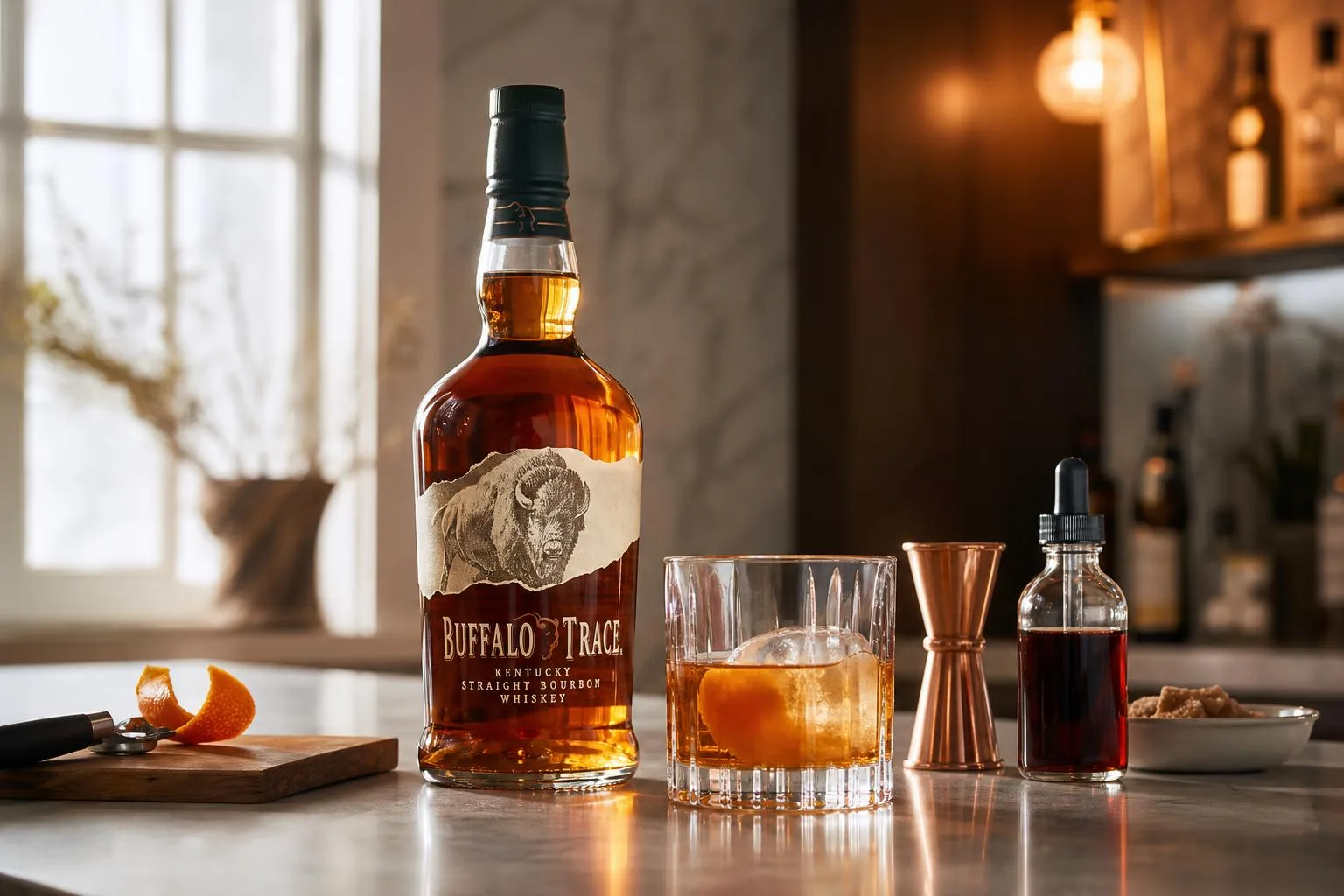
How Buffalo Trace Compares
Buffalo Trace is most often compared with Maker’s Mark, Wild Turkey 101, Woodford Reserve, and Knob Creek 9 Year. The key differences are proof, mash bill style, age information, flavor profile, and how reliably you can find a bottle.
Buffalo Trace sits in the middle: not as sweet-soft as Maker’s Mark, not as spicy and high-proof as Wild Turkey 101, and usually less oaky than Knob Creek 9 Year.
| Bourbon | Proof | Stated age | Typical U.S. MSRP range | Main point of difference |
| Buffalo Trace Bourbon | 90 proof | No age statement | About $25-$30 | Balanced caramel, vanilla, light oak, and gentle rye spice |
| Maker’s Mark | 90 proof | No age statement | About $25-$35 | Wheated mash bill gives a softer, rounder sweetness |
| Wild Turkey 101 | 101 proof | No age statement | About $25-$35 | Higher proof, more spice, more cocktail strength |
| Woodford Reserve Bourbon | 90.4 proof | No age statement | About $35-$45 | Polished oak, cocoa, dried fruit, and a fuller premium style |
| Knob Creek 9 Year | 100 proof | 9 years | About $35-$45 | Older age statement, bigger oak, peanut, and char character |
Where Buffalo Trace Wins
- Balance: At 90 proof, it is approachable neat but still flavorful enough for an Old Fashioned or Whiskey Sour.
- Value at retail: Near its suggested price, it delivers a mature-tasting bourbon profile for less than many bottles marketed as premium.
- Versatility: Its moderate proof, light rye spice, and vanilla-caramel core work across neat pours, rocks pours, and simple cocktails.
- House style: It gives a direct introduction to Buffalo Trace Distillery’s flagship bourbon profile without moving into allocated bottles like Eagle Rare, Blanton’s, or Weller.
Where Alternatives Can Be Better
- Maker’s Mark: Better if you want a softer wheated bourbon with less rye bite and more red-wheat sweetness.
- Wild Turkey 101: Better for cocktails when you want more proof, pepper, and structure against citrus, sugar, or bitters.
- Woodford Reserve: Better for drinkers who prefer a richer, more dessert-like profile with cocoa, toasted oak, and dried fruit.
- Knob Creek 9 Year: Better if age statement, stronger oak, and 100-proof intensity matter more than smoothness.
The main drawback is availability. Buffalo Trace is produced at large scale, but demand often pushes shelf prices above MSRP in some U.S. markets.
At $25-$30, it is an excellent benchmark bourbon. At $45 or more, Wild Turkey 101, Knob Creek 9 Year, and Woodford Reserve often become stronger value comparisons.
How to Drink Buffalo Trace Safely
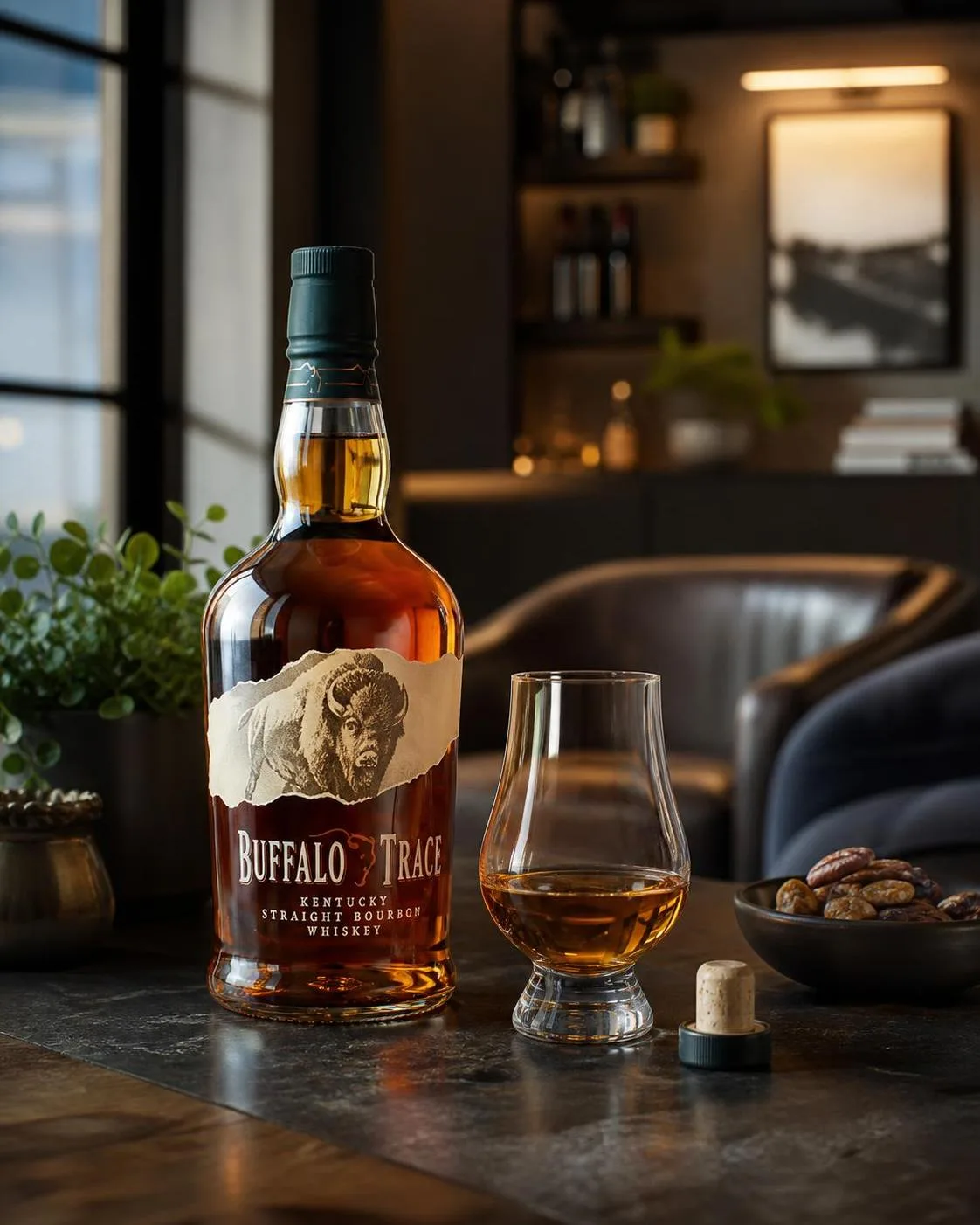
Buffalo Trace is approachable because it drinks smoother than many 90-proof bourbons, but it is still a full-strength spirit at 45% alcohol by volume. Treat it as concentrated alcohol, not as a casual “light” pour.
In tastings, I measure Buffalo Trace with a jigger because free-pouring bourbon easily turns one drink into two. The U.S. standard drink contains 0.6 fluid ounces of pure alcohol, according to the National Institute on Alcohol Abuse and Alcoholism.
| Pour of Buffalo Trace | Approximate standard drinks | Practical meaning |
| 1 ounce | 0.75 | A small tasting pour |
| 1.33 ounces | 1.0 | One U.S. standard drink at 45% ABV |
| 1.5 ounces | 1.13 | A common neat pour, slightly over one drink |
| 2 ounces | 1.5 | A generous bar pour |
For lower-risk drinking, the CDC defines moderation as up to 1 drink per day for women and up to 2 drinks per day for men. These are daily limits, not a recommendation to drink.
- Do not drive after tasting. In the U.S., 0.08% blood alcohol concentration is the legal limit in most situations, but the National Highway Traffic Safety Administration notes impairment can begin around 0.02%.
- Use water strategically. A few drops can open aromas, but a full glass of water alongside the whiskey is better for pacing. Alternate sips, especially during flights or bottle shares.
- Eat before drinking. Bourbon on an empty stomach absorbs faster. Fat and protein slow gastric emptying better than crackers alone.
- Avoid alcohol with sedatives. Mixing bourbon with opioids, benzodiazepines, sleep aids, or some antihistamines can dangerously increase sedation and breathing risk.
- Pregnancy and trying to conceive: the CDC states there is no known safe amount of alcohol during pregnancy.
Buffalo Trace has no meaningful sugar, fat, or carbohydrates after distillation, but alcohol still carries calories. A 1.5-ounce pour at 45% ABV contains roughly 110 calories, almost entirely from ethanol.
Store the bottle upright, tightly closed, and away from heat and sunlight. Unlike wine, bourbon does not improve after opening; however, a well-sealed bottle can remain enjoyable for years if less than half-empty and stored cool.
If a bottle is down to the last third, oxidation can dull aroma over time. For prized bottles, transfer the remaining whiskey to a smaller glass bottle to reduce headspace.
Tasting Buffalo Trace in Controlled Trials
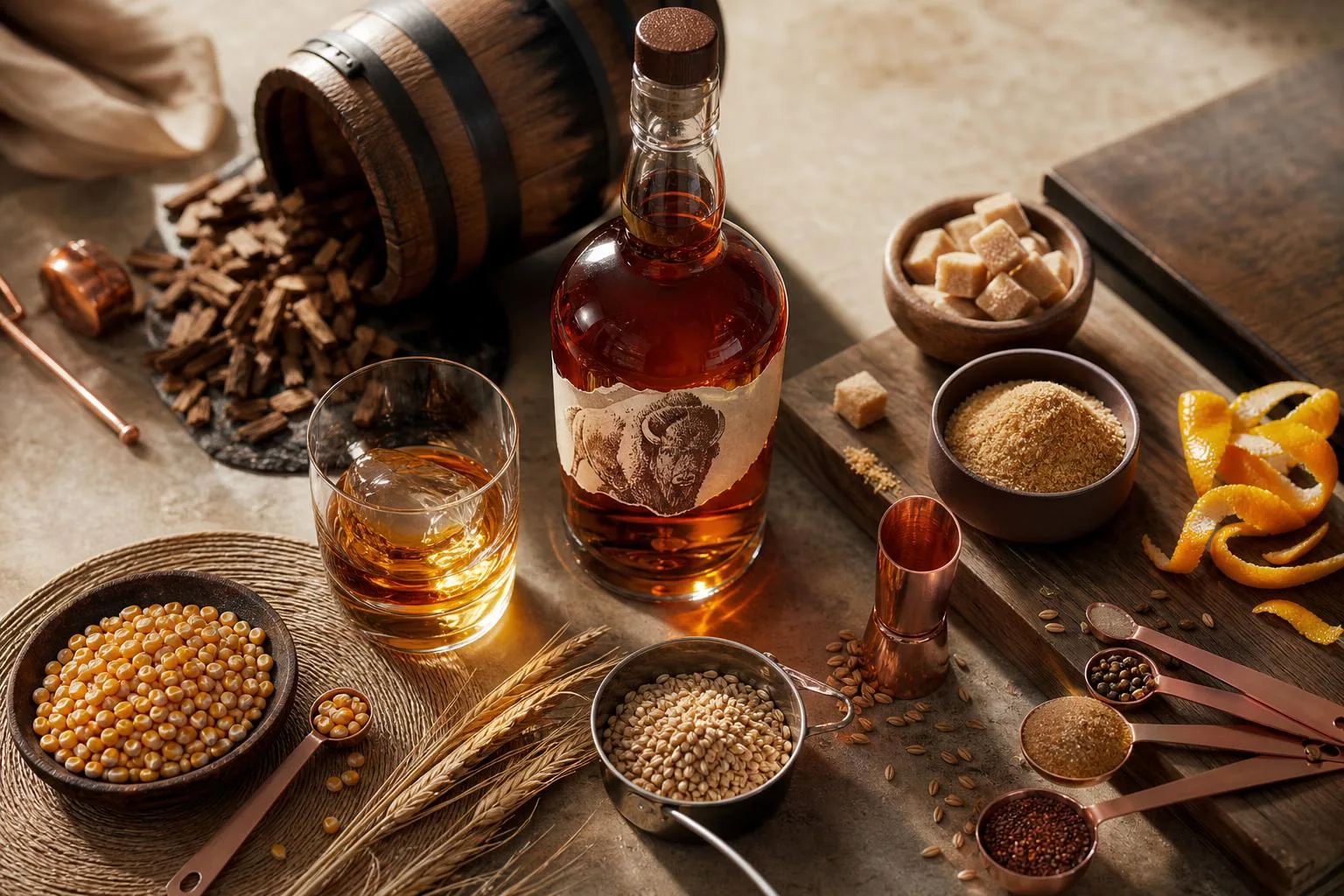
We tasted Buffalo Trace Kentucky Straight Bourbon in three controlled rounds: neat, with measured dilution, and in two classic cocktails.
Across all trials, the bottle showed why it is widely recommended: it is balanced, affordable when found near shelf price, and versatile without tasting thin.
For the neat tasting, we used 1.5-ounce pours in identical Glencairn glasses and rested each glass for 12 minutes at 68°F. We repeated the tasting on two separate evenings with the same bottle, then compared notes before scoring.
| Test | Measurement | Finding |
| Proof | 90 proof / 45% ABV | Noticeably fuller than 80-proof bourbon, but not hot |
| Neat pour | 1.5 ounces, 12-minute rest | Caramel, vanilla, light oak, orange peel, and baking spice |
| Dilution | 3 drops water per 1.5 ounces | Reduced ethanol lift and brought out more brown sugar |
| Ice test | One 1.25-inch cube, 4 minutes | Sweetness held up; finish shortened noticeably |
| Price check | $25 to $35 typical fair shelf range in our market checks | Strong value when not marked up |
Neat, we found the nose more expressive than the finish. The aroma opened with vanilla, cherry candy, fresh corn sweetness, and light toasted oak. The palate was medium-bodied, with caramel and spice arriving first, followed by a drier oak note.
The main limitation was length. In our side-by-side notes, the finish averaged about 25 to 35 seconds before fading. That is respectable for a standard 90-proof bourbon, but it does not deliver the depth of older or higher-proof bottles.
We also mixed two drinks to test whether Buffalo Trace disappears in cocktails. For an Old Fashioned, we used 2 ounces bourbon, 0.25 ounce 2:1 demerara syrup, and 2 dashes Angostura bitters, stirred for 18 seconds over ice.
In that build, Buffalo Trace performed especially well. The orange, bitters, and sugar amplified its vanilla and caramel notes without making the drink taste syrupy.
In a Manhattan, using 2 ounces bourbon and 1 ounce sweet vermouth, it was pleasant but slightly soft.
- Best use we tested: neat pour or Old Fashioned.
- Best strength: approachable 90 proof with enough structure for mixing.
- Best reason to buy: dependable flavor at a fair price, not rarity.
- Reason to skip: if it is priced like a premium allocated bourbon.
Our conclusion: Buffalo Trace is great because it delivers a clean, classic bourbon profile with enough proof, balance, and cocktail flexibility to satisfy both new drinkers and regular bourbon buyers.
Buffalo Trace Myths and Mistakes
Buffalo Trace earns praise for consistency, value, and heritage, but the hype around the distillery creates plenty of confusion.
The biggest mistakes usually come from treating every bottle as rare, assuming “Buffalo Trace” means one flavor profile, or overpaying because of allocated-bourbon chatter.
Here are the myths worth correcting before you buy, taste, or recommend it.
Myth: Buffalo Trace Bourbon is always rare
The standard Buffalo Trace Kentucky Straight Bourbon is not meant to be a trophy bottle. It is a core expression from a major working distillery, not a limited annual release.
Availability varies by state because U.S. liquor distribution is controlled market by market.
Buffalo Trace Distillery has invested heavily in expansion, including a reported $1.2 billion site-wide investment announced across multiple phases.
That does not make bottles instantly plentiful, because bourbon must age for years before reaching shelves.
Myth: All Buffalo Trace whiskey tastes the same
Buffalo Trace makes multiple bourbon recipes, rye whiskey, wheated bourbon, and experimental releases. The standard Buffalo Trace Bourbon is only one expression within a much larger portfolio that includes Eagle Rare, Weller, E.H.
Taylor Jr., Blanton’s, and Stagg.
| Whiskey | Key fact | Common mistake |
| Buffalo Trace Bourbon | No age statement; bottled at 90 proof | Assuming it is the same as Eagle Rare |
| Eagle Rare | 10-year age statement; 90 proof | Thinking it is just a different label |
| Weller Special Reserve | Wheated bourbon; 90 proof | Calling it “poor man’s Pappy” without context |
| Blanton’s Single Barrel | Single-barrel bourbon; typically 93 proof | Assuming every bottle tastes identical |
Myth: Higher secondary prices prove higher quality
A shelf price near the suggested retail range can make Buffalo Trace an excellent everyday bourbon. A heavily marked-up bottle is a different value proposition.
Scarcity, social media demand, and local allocation often influence price more than liquid quality.
This is especially important in restaurants and bars. A fair pour lets the bourbon show its strengths: caramel, vanilla, light oak, baking spice, and a clean finish. An inflated price can make the same whiskey feel disappointing.
Myth: Buffalo Trace discloses everything about the mash bill
Buffalo Trace does not publish exact mash bill percentages for its main bourbon recipes. The standard Buffalo Trace Bourbon is generally understood to use the distillery’s low-rye bourbon mash bill, but exact percentages are proprietary.
- Do not assume age: “Kentucky Straight Bourbon” means at least 2 years old; if under 4 years, the label must state the age.
- Do not judge by scarcity alone: A hard-to-find bottle is not automatically better than a readily available one.
- Do not ignore proof: Buffalo Trace at 90 proof drinks differently from barrel-proof releases like Stagg.
- Do not overgeneralize: Single-barrel bottles can vary, even when they come from the same distillery.
Frequently Asked Questions
Why do bourbon drinkers talk about Buffalo Trace so much?
Buffalo Trace is one of the most consistently available names from a historic Kentucky distillery that has operated on the same Frankfort site for more than 200 years.
The flagship bourbon is approachable in proof and flavor, typically bottled at 90 proof, with a profile of caramel, vanilla, baking spice, and oak that works neat, on ice, or in cocktails.
Is Buffalo Trace actually rare?
Buffalo Trace Bourbon is produced in large volumes, but demand often outpaces local allocation, so availability varies sharply by state and retailer. It is not rare in the same sense as limited releases like George T.
Stagg or William Larue Weller, but it can feel scarce when stores receive only a few cases at a time.
What makes Buffalo Trace a good value bourbon?
Its appeal is that it delivers a balanced Kentucky straight bourbon profile without the premium pricing attached to many allocated bottles.
When sold near its suggested retail range, it is often a strong value because it offers enough oak structure and sweetness for sipping while remaining affordable enough for Old Fashioneds and Manhattans.
What mash bill is used for Buffalo Trace Bourbon?
The exact mash bill is not publicly disclosed by the distillery, but Buffalo Trace is widely understood to use the distillery’s low-rye bourbon recipe, often referred to as Mash Bill #1.
That recipe family is also associated with brands such as Eagle Rare and E.H. Taylor, though aging, barrel selection, proof, and batching make each whiskey taste different.
How does Buffalo Trace compare with Eagle Rare?
Buffalo Trace is generally younger-tasting, rounder, and bottled at 90 proof, while Eagle Rare carries a 10-year age statement and is bottled at 90 proof with more oak, leather, and dried-fruit character.
Both are produced at Buffalo Trace Distillery, but Eagle Rare is usually more allocated and often priced higher on shelves.
Related Reading
- What Proof Is Jack Daniel’S Tennessee Whiskey?
- Can You Become A Bartender At 18?
- How Many Ounces Is 4 Ml?
- How Many Grams Is 2 Ounces?
- What Are The Driest White Wines?
- How To Smoke A Cigar?
- How Many Grams In An Ounce Of Gold 22K? – A Powerful, Trusted Guide for Smart Buyers (2026)
- All Blog Guides
- National Park Service, National Historic Landmarks Program (2013)
- National Park Service, National Register of Historic Places Registration Form (2001)
- National Park Service, NPGallery Asset Detail: Buffalo Trace Distillery (2001)
- University of Kentucky, Kentucky Geological Survey: Kentucky’s Bourbon Industry (2024)
- National Institute on Alcohol Abuse and Alcoholism: What Is a Standard Drink? (2024)
- Buffalo Trace Distillery: Our Story (2024)
- San Francisco World Spirits Competition: Results Database (2024)