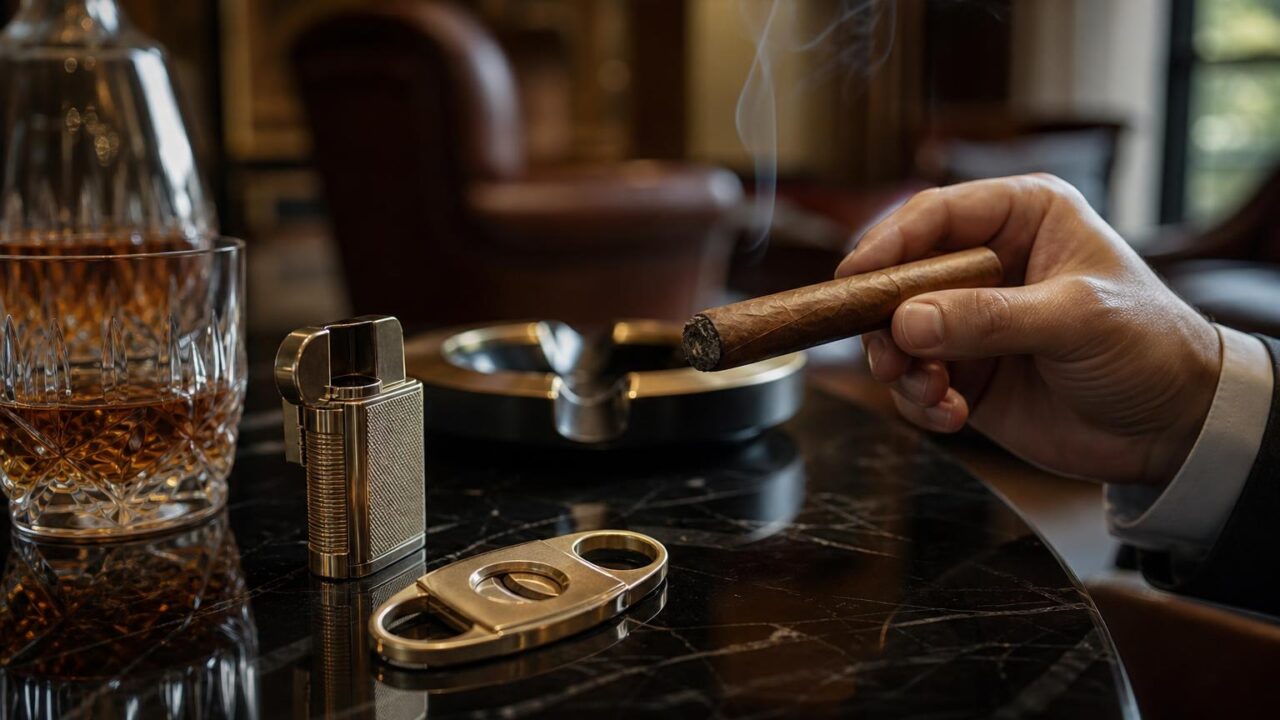
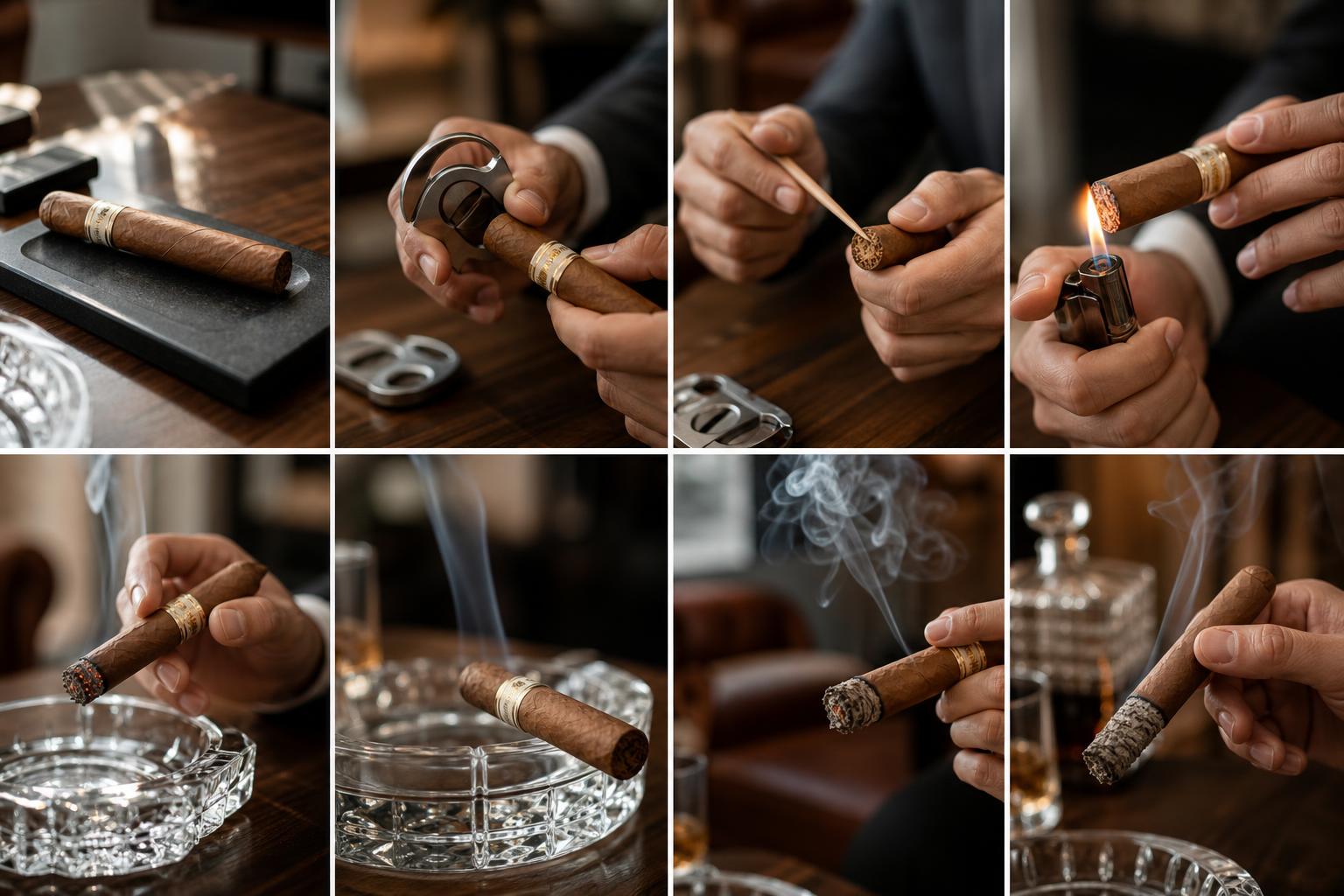
How To Smoke A Cigar is a slow, deliberate ritual: cut the cap cleanly, toast the foot, light without inhaling, and draw a puff every 30–60 seconds. The goal is flavor, aroma, and relaxation—not nicotine intensity or speed.
Use a sharp guillotine or punch cutter, rotate the cigar while lighting, and let the ash build to about 1 inch before tapping. A typical cigar lasts 30–90 minutes, depending on size, ring gauge, and pace.
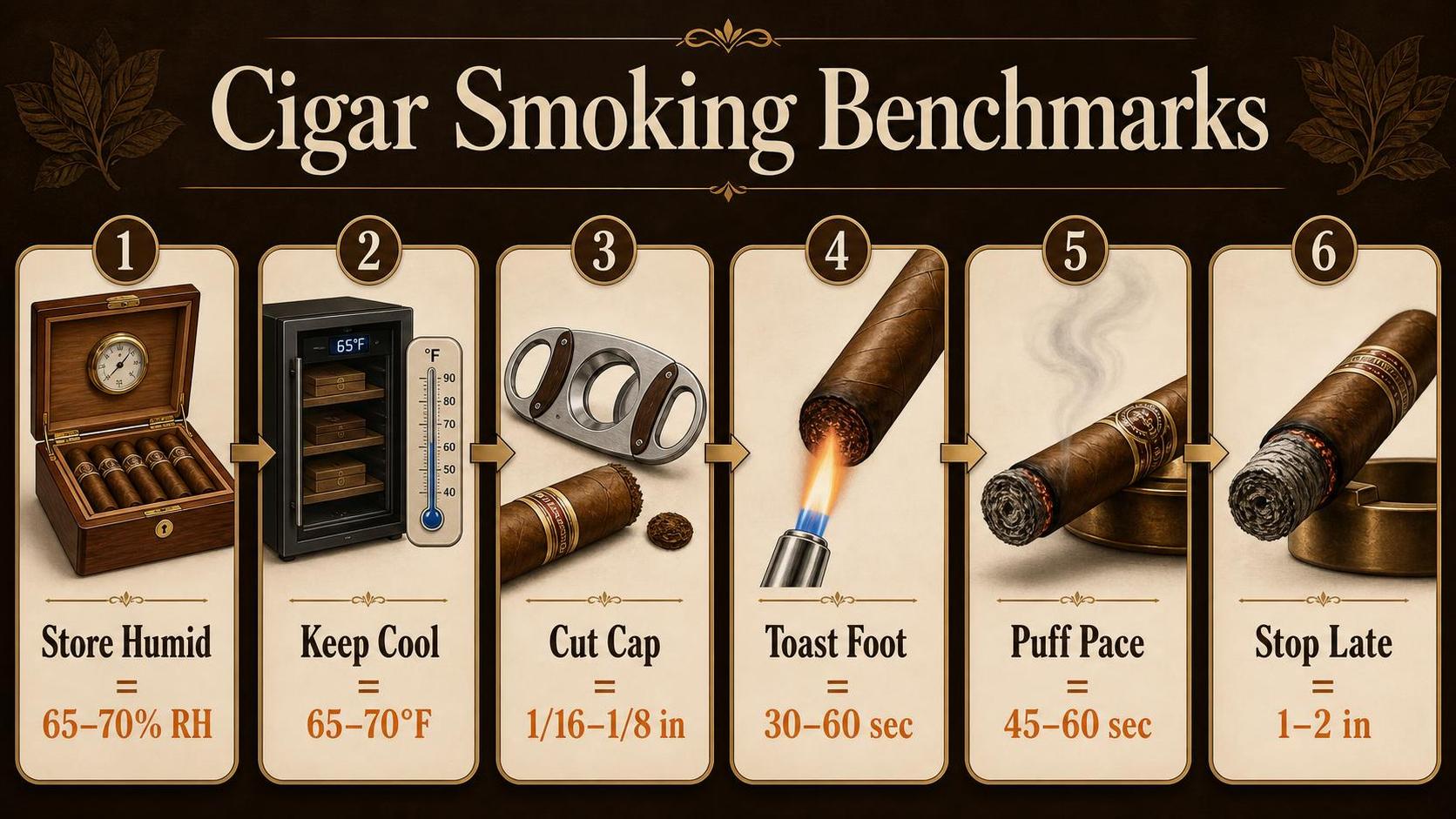
Core Principles of Smoking a Cigar
Cigar smoking is mostly pacing, temperature control, and knowing when to stop. The numbers below are practical benchmarks used by tobacconists and experienced cigar smokers to keep the cigar burning cool and tasting balanced.
These are not rigid rules. Wrapper, filler blend, humidity, ring gauge, and your draw all change the experience, but these ranges are a reliable starting point.
| Number | What it means | Why it matters |
| 65%–70% RH | Ideal humidor relative humidity range | Too dry burns hot and fast; too wet can cause tight draws and uneven combustion. |
| 65°F–70°F | Common storage temperature range | Helps preserve oils and reduces mold risk. Temperatures above 72°F can encourage tobacco beetle activity. |
| 1/16–1/8 inch | Typical cap cut depth | Cut just enough to open the head. Cutting too deep can unravel the wrapper. |
| 30–60 seconds | Time to toast and light the foot | A slow, even light prevents scorching and helps the cigar start with a clean burn line. |
| 45–60 seconds | Average time between puffs | This pacing keeps the smoke cooler and avoids bitterness from overheating. |
A cigar is not inhaled like a cigarette. Draw smoke into your mouth, taste it, then let it out. Premium cigar smoke is alkaline and concentrated; inhaling usually causes harshness, coughing, dizziness, or nausea.
Ring gauge matters because it changes airflow, burn rate, and perceived strength. A 50-ring cigar is 50/64 inch wide, or about 0.78 inch. Larger cigars often burn cooler, but they are not automatically stronger.
| Size example | Approximate dimensions | Typical smoking time |
| Robusto | 5 inches x 50 ring | 35–50 minutes |
| Toro | 6 inches x 50–54 ring | 60–75 minutes |
| Churchill | 7 inches x 47–50 ring | 75–100 minutes |
Ash length is preference, not status. Letting ash reach about 1 inch is usually safe. Longer ash can insulate the burn, but it may fall unpredictably, especially outdoors or with a looser-rolled cigar.
- Rotate lightly: Turn the cigar every few puffs if one side burns faster.
- Touch up early: Correct a burn line when it is about 1/4 inch uneven, not after it tunnels.
- Stop near the final third: Many cigars become hotter and stronger in the last 1–2 inches.
- Rest if dizzy: Nicotine absorption through the mouth is real; sugar and water help many smokers recover.
The best “number” is still your pace. If the cigar feels hot near the band, tastes sharp, or needs constant relighting, slow down, check humidity, or choose a different size next time.
What Shapes Cigar Smoking Quality
The quality of a cigar smoke is shaped before the flame ever touches the foot. Storage, cut, lighting, pace, and the cigar’s construction all change flavor, burn rate, heat, and draw.
In practice, the biggest differences I notice come from humidity and smoking speed. A well-made cigar can taste harsh if it is too wet, too dry, overheated, or cut poorly.
Humidity and Storage
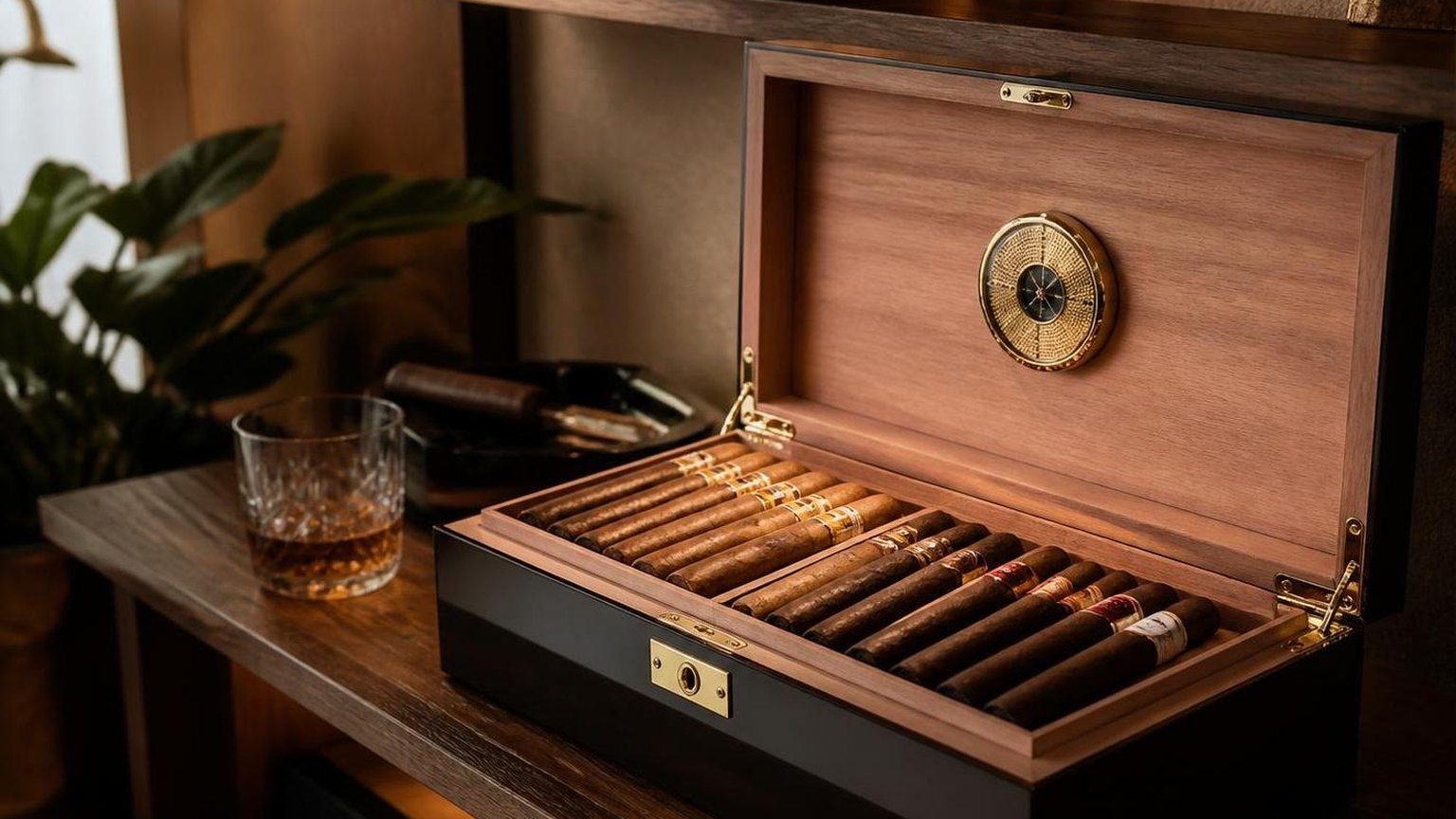
Premium cigars are hygroscopic, meaning they absorb and release moisture. Most cigar retailers and humidor manufacturers target roughly 65% to 70% relative humidity, with room temperature near 65°F to 70°F.
| Condition | Typical Result |
| Below 60% RH | Wrapper may crack, burn runs hot and fast, smoke can taste sharp. |
| 65% to 70% RH | Balanced draw, steady burn, fuller aroma and cleaner flavor. |
| Above 72% RH | Tight draw, uneven burn, bitter steaminess, higher mold risk. |
Cut and Draw
The cut controls airflow. Removing too little cap makes the draw tight; cutting too deep can unravel the wrapper. On a parejo cigar, cut just above the shoulder, usually about 1/16 inch from the head.
A good draw should feel like sipping through a straw with slight resistance. If it feels plugged before lighting, do not force heavy puffs; that overheats tobacco and concentrates bitterness.
Lighting Technique
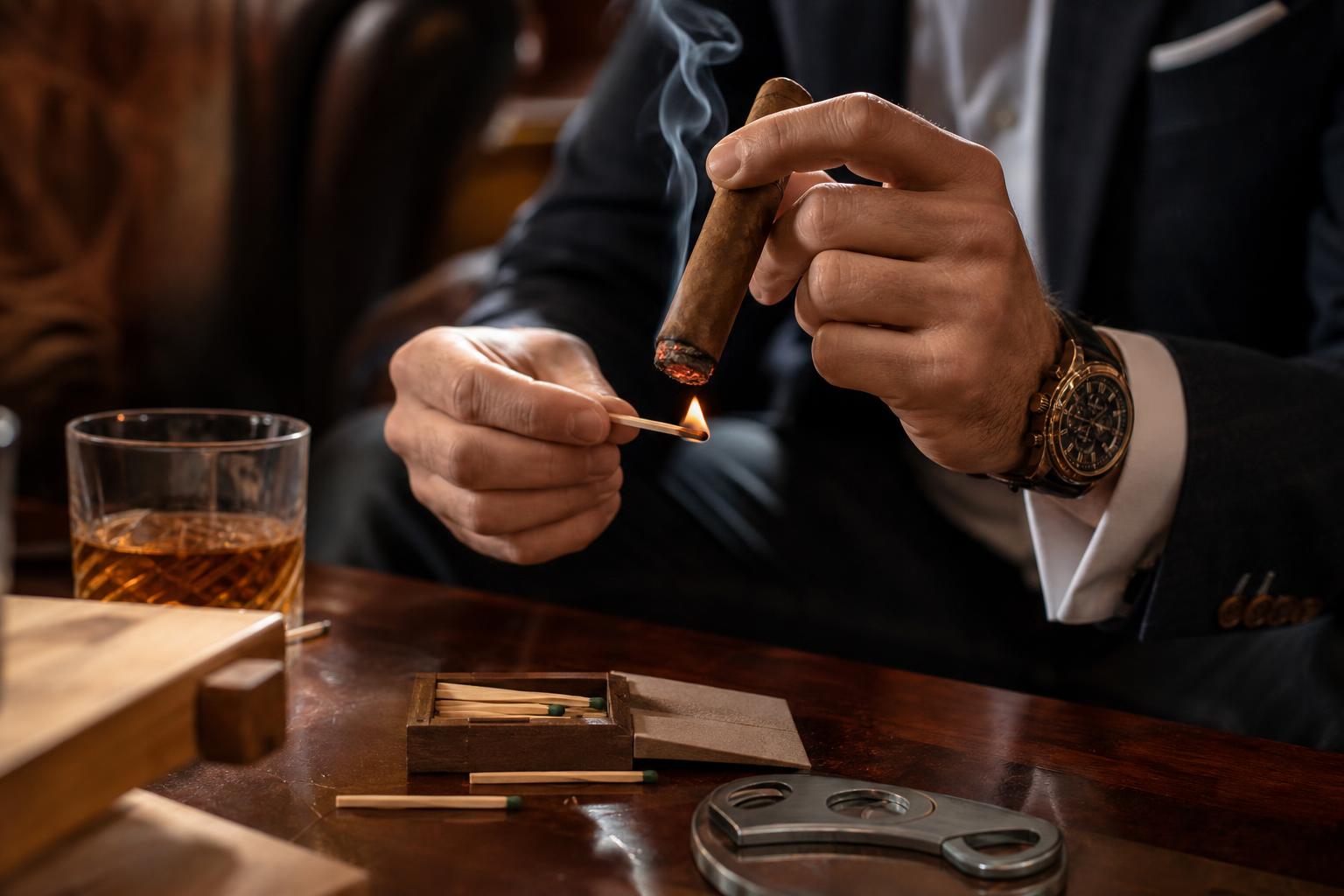
Use butane or a wooden match when possible. Gasoline-style lighters and scented candles can add off-flavors. Toast the foot first, then draw gently while rotating the cigar until the entire foot glows evenly.
An uneven light causes canoeing, where one side burns faster. Correct it early by briefly applying flame to the slower-burning edge, not by constant puffing.
Pace, Heat, and Smoke Time
Cigars are not meant to be inhaled. According to the FDA and CDC, cigar smoke contains nicotine and toxic combustion products; the smoke is typically tasted in the mouth and then released.
| Smoking Pace | Effect |
| One puff every 30 seconds | Cigar runs hot; flavors turn peppery, bitter, or ashy. |
| One puff every 60 to 90 seconds | Cooler smoke, steadier burn, clearer flavor development. |
| Several minutes unattended | Cigar may need relighting; flavor can become stale. |
Cigar Size, Wrapper, and Construction
- Ring gauge: Larger cigars often burn cooler because more filler surrounds the ember; small cigars can intensify quickly.
- Length: A 5-inch robusto often lasts 30 to 45 minutes, while a 7-inch Churchill may run 60 to 90 minutes.
- Wrapper: Darker wrappers can add sweetness, earth, cocoa, or pepper, but strength depends on the whole blend, not color alone.
- Construction: Firm spots, loose bunching, or poor rolling affect airflow and cause tunneling, canoeing, or frequent relights.
How Cigar Performance Is Evaluated
Cigar smoking is measured by physical size, moisture condition, burn behavior, and draw resistance. Verification is practical: use a ruler, ring gauge, calibrated hygrometer, visual inspection, and a careful cold draw before lighting.
Size: Length and Ring Gauge
Cigar length is measured in inches. Diameter is measured as ring gauge, where 1 ring equals 1/64 inch. A 50-ring cigar is 50/64 inch, or 0.781 inch, across.
| Common name | Typical length | Typical ring gauge | What it affects |
| Robusto | 4.75 to 5.5 in | 48 to 52 | Shorter smoke, fuller smoke density |
| Toro | 6 in | 50 to 54 | Balanced burn time and airflow |
| Churchill | 7 in | 47 to 50 | Longer development, cooler smoke |
| Corona | 5.5 to 6 in | 42 to 46 | More wrapper influence per puff |
To verify size, measure from cap to foot with a ruler. Use a cigar ring gauge card or caliper at the widest round section, avoiding box-pressed corners because they distort diameter readings.
Humidity and Storage Condition
Moisture is verified with a hygrometer inside the humidor, not by guessing. Most premium cigars smoke properly when stored around 65% to 70% relative humidity at about 65°F to 70°F.
| Reading | Likely result when smoking | Verification cue |
| Below 60% RH | Dry, hot, fast burn | Wrapper may crack; foot feels brittle |
| 65% to 70% RH | Even burn, clean draw | Firm body with slight spring |
| Above 72% RH | Tight draw, relights, bitterness | Foot feels spongy; burn may canoe |
Calibrate an analog or digital hygrometer before relying on it. A standard salt test should read 75% RH in a sealed container after 6 to 8 hours; adjust or note the difference.
Draw, Cut, and Burn Verification
The cut is verified before lighting by checking that the cap is opened without splitting the shoulder. Cut only about 1/16 to 1/8 inch from the head on most parejo cigars.
- Cold draw: Before lighting, draw gently. It should feel like sipping through a straw, not pulling through a blocked filter.
- Toast line: The foot should glow evenly across the filler before the first puff.
- Burn line: A minor waviness under 1/4 inch is normal; a persistent canoe needs correction.
- Ash structure: Premium long-filler cigars often hold 1 inch or more of ash when properly humidified and evenly lit.
During smoking, verification is sensory and visual. Harsh heat, rapid softening, repeated relights, or a tunnel down the center usually point to humidity, construction, or lighting errors.
How Cigars Differ from Alternatives
Smoking a premium cigar is slower, less inhalation-focused, and more ritual-driven than cigarettes, cigarillos, pipe tobacco, or vaping. The biggest practical differences are time, tobacco mass, smoke handling, and nicotine exposure.
Health agencies including the CDC and FDA state that cigar smoke contains toxic and cancer-causing chemicals, even when it is not inhaled. “Not inhaling” reduces lung exposure but does not make cigar smoking safe.
| Product | Typical use time | Tobacco amount | How it is usually smoked |
| Premium handmade cigar | 45–120 minutes | Often 5–20 grams per cigar | Drawn into the mouth, usually not inhaled |
| Cigarette | 5–10 minutes | About 0.7–1.0 gram per cigarette | Usually inhaled into the lungs |
| Cigarillo | 10–25 minutes | Commonly 1–3 grams | May be inhaled, especially by cigarette users |
| Pipe tobacco | 30–60 minutes per bowl | Often 2–4 grams per bowl | Sipped through the mouth, usually not inhaled |
| Nicotine vape | Variable | No tobacco leaf burned | Aerosol is inhaled |
Compared with a cigarette, a cigar is not meant to be smoked quickly. A common pace is about one puff every 30–60 seconds, which keeps the cigar cooler and reduces bitterness.
Cigarettes are engineered for frequent inhalation and rapid nicotine delivery. Cigars deliver nicotine through the mouth lining as well as through any inhaled smoke, so a large cigar can still produce a substantial nicotine dose.
- Versus cigarettes: cigars are slower, larger, and usually not inhaled. However, the National Cancer Institute has reported that some large cigars can contain as much tobacco as an entire pack of cigarettes.
- Versus cigarillos: premium cigars are generally handmade, longer-filler products; cigarillos are smaller, faster, and often machine-made. Cigarillos are more commonly flavored and may be used more like cigarettes.
- Versus pipe smoking: both are typically “sipped” rather than inhaled. Pipe tobacco requires more frequent relighting and tamping, while a well-lit cigar needs mostly rotation, pacing, and ash management.
- Versus vaping: cigars burn cured tobacco leaf and produce combustion smoke. Vapes heat liquid into aerosol; they avoid tobacco combustion but can still deliver nicotine and other chemicals.
For technique, the cigar is closest to pipe smoking: slow draws, no lung inhale, and attention to heat. For nicotine and health risk, it should not be treated as harmless or merely ceremonial.
Cigar Smoking Health Risks and Safety
Cigar smoking is not a safe alternative to cigarettes, even if you do not inhale.
The National Cancer Institute reports that cigar smoke contains toxic and cancer-causing chemicals, including carbon monoxide, nitrosamines, and polycyclic aromatic hydrocarbons.
Use these practical safeguards to reduce avoidable risk, protect others nearby, and keep the cigar experience controlled rather than careless.
Know the health risks before you light
- Do not inhale. Premium cigars are typically puffed for flavor, not inhaled. Inhaling increases exposure to carbon monoxide and fine particulates.
- Limit frequency. Daily cigar use carries substantially higher risk than occasional use. The CDC states that regular cigar smoking increases risk of cancers of the mouth, throat, larynx, and esophagus.
- Avoid cigars if pregnant. Tobacco smoke exposure during pregnancy is linked to low birth weight, preterm birth, and other complications.
- Keep cigars away from minors. In the U.S., federal law prohibits selling tobacco products to anyone under 21.
| Practical safety point | Specific guidance |
| Smoking time | A robusto often lasts 30–45 minutes; a Churchill may last 60–90 minutes. |
| Puff pace | Take about 1 puff every 45–60 seconds to avoid overheating the tobacco. |
| Humidity storage | Keep cigars near 65–70% relative humidity for best burn and draw. |
| Room ventilation | Smoke outdoors or in a dedicated, ventilated space; secondhand cigar smoke is harmful. |
Smoke responsibly and avoid common problems
- Eat beforehand. Nicotine can cause dizziness, nausea, sweating, or lightheadedness, especially for new smokers. A full stomach and water help reduce discomfort.
- Pair alcohol carefully. Whiskey, rum, and wine can intensify dehydration and lightheadedness. Start with water nearby, especially with stronger cigars.
- Do not relight endlessly. A cigar that has gone cold for hours often tastes stale and harsh because tar and moisture condense in the remaining tobacco.
- Let it go out naturally. Do not crush a cigar like a cigarette. Rest it in the ashtray and it will extinguish on its own.
- Respect local rules. Many U.S. cities restrict smoking in bars, patios, parks, workplaces, and hotel rooms. Check posted signs before lighting.
If you feel chest pain, severe nausea, shortness of breath, or faintness, stop smoking immediately and move to fresh air. Seek medical help if symptoms persist or feel unusual.
Our Test of Cigar Smoking Techniques
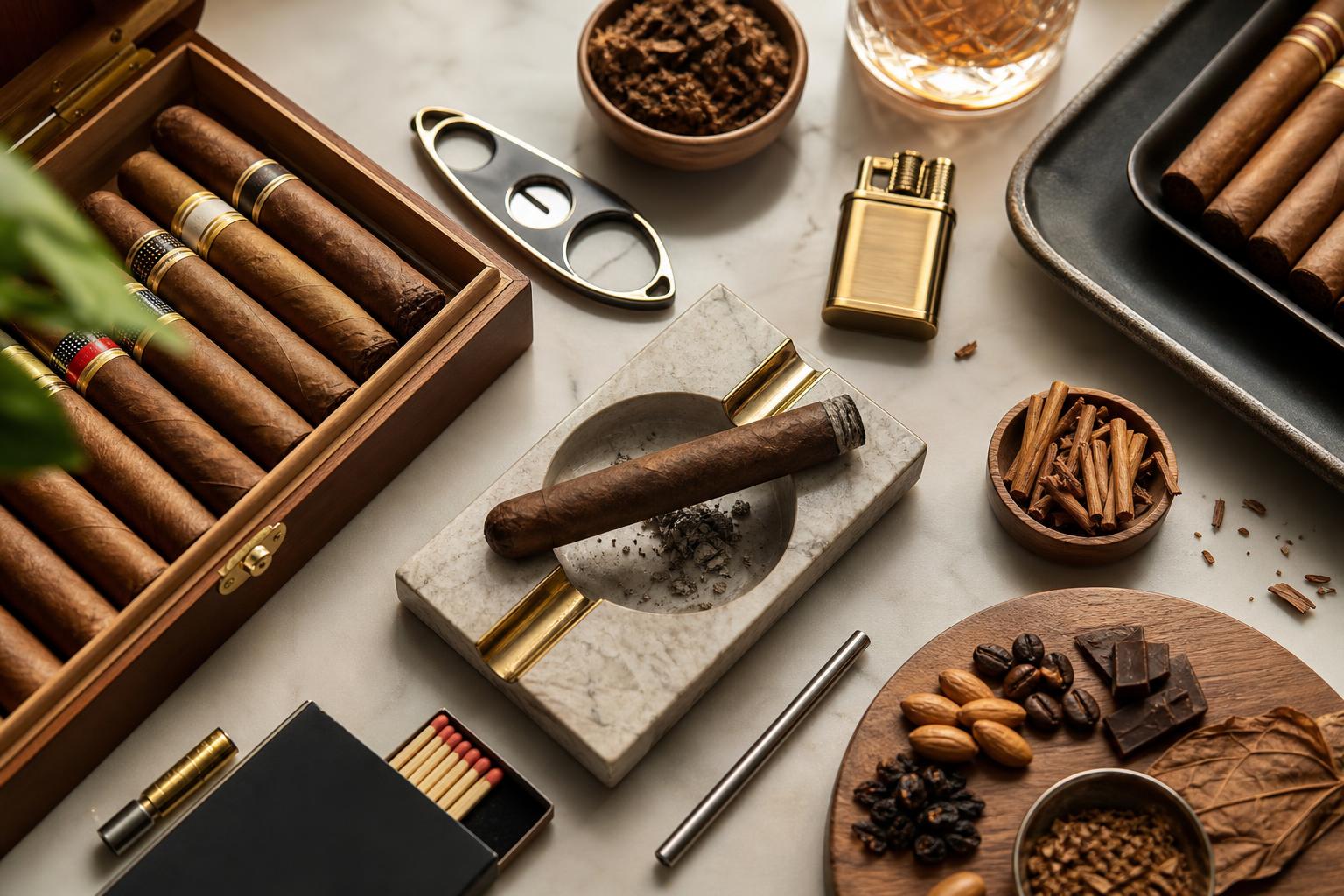
We tested cigar technique with 12 premium long-filler cigars over four sessions, using a guillotine cutter, V-cutter, cedar spills, butane soft-flame lighter, and torch lighter.
We timed each stage, measured cut depth with digital calipers, and tracked burn corrections, relights, draw resistance, and ash stability.
Our most consistent results came from cutting less than expected. On parejo cigars, removing about 1.5 to 2.0 mm of cap gave an open draw without fraying the wrapper or causing loose tobacco in the mouth.
| Test variable | What we tested | Best result we observed |
| Cut depth | 1.0 mm, 2.0 mm, and 3.5 mm | 2.0 mm gave the cleanest draw on 7 of 8 parejos |
| Lighting time | 45, 60, and 90 seconds | 60 to 75 seconds produced the most even initial burn |
| Puff interval | 30, 45, 60, and 90 seconds | 60 seconds kept temperature and flavor most stable |
| Relight threshold | 45, 75, and 120 seconds resting | After 90 seconds, most cigars needed a touch-up or relight |
We found that toasting the foot mattered more than the flame type. Holding the cigar above, not inside, the flame and rotating it for about one minute reduced early canoeing in 9 of 12 cigars.
The torch lighter was fastest, averaging 52 seconds to a complete light, but it also overheated the rim twice when held too close. The soft flame averaged 74 seconds and produced fewer scorched wrapper edges.
- We got the cleanest start by toasting until the foot glowed evenly, then taking 2 short ignition puffs.
- Drawing hard during lighting caused a hot, bitter first inch in 4 trials.
- Resting the cigar between puffs preserved sweetness and reduced harshness after the midpoint.
- Tapping ash too often made the burn less stable; letting 1 inch form worked better.
Our average smoke time for robusto-sized cigars was 58 minutes, with the shortest at 44 minutes and the longest at 71 minutes. Faster smoking consistently raised the wrapper temperature and made the final third sharper.
We also confirmed that retrohaling should be optional and minimal. A full retrohale was too intense for newer smokers on every full-bodied cigar we tested, while a small partial retrohale revealed spice without overwhelming the palate.
The most reliable sequence was simple: inspect humidity, make a shallow clean cut, toast patiently, puff once per minute, rotate as needed, and stop when flavor turns hot or acrid. For our team, that was usually with 1.5 to 2 inches remaining.
Common Cigar Smoking Mistakes and Myths
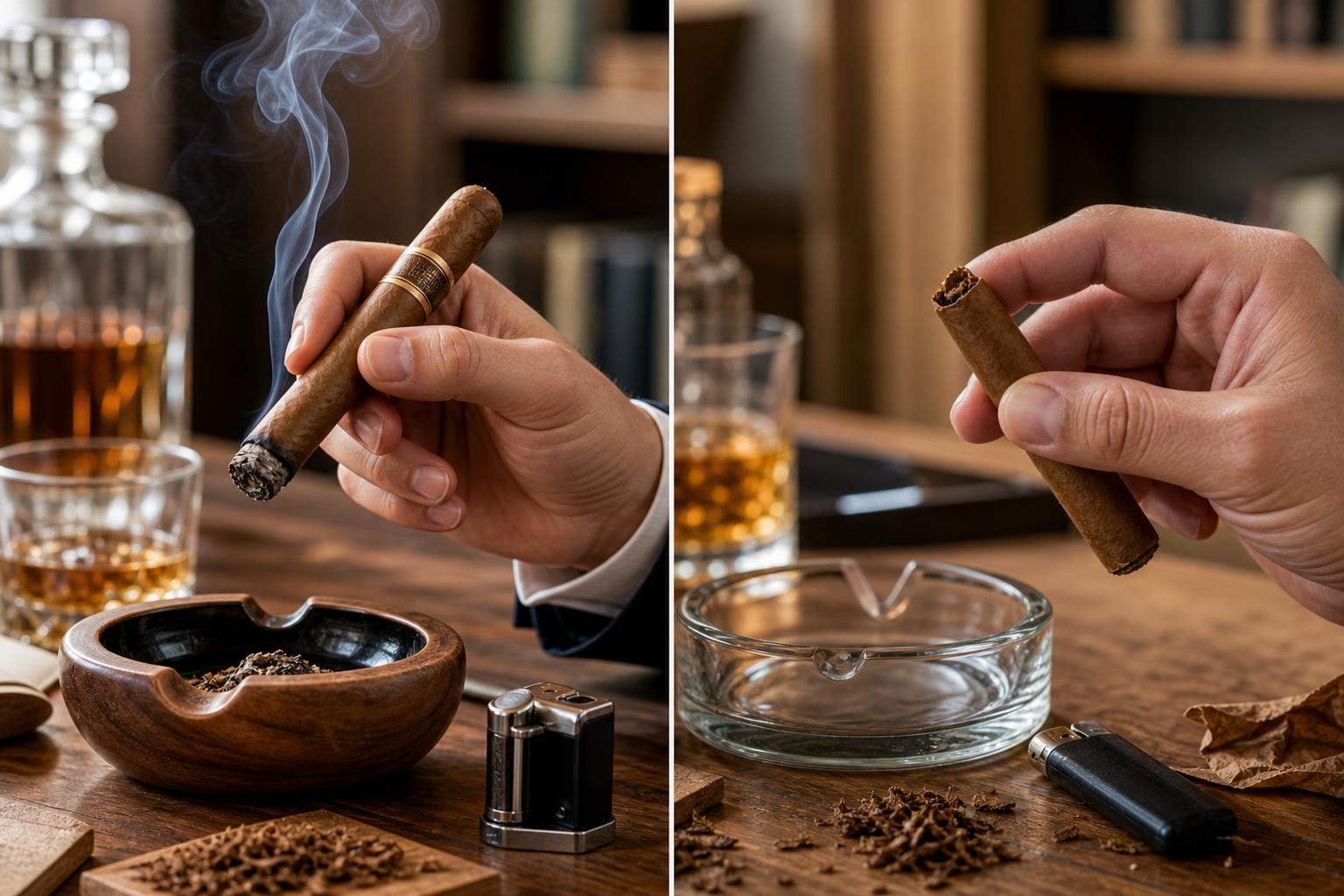
Most bad cigar experiences come from overheating the tobacco, cutting too much cap, or treating a premium cigar like a cigarette. A cigar is designed to smolder slowly; rushing it changes the flavor, texture, and combustion.
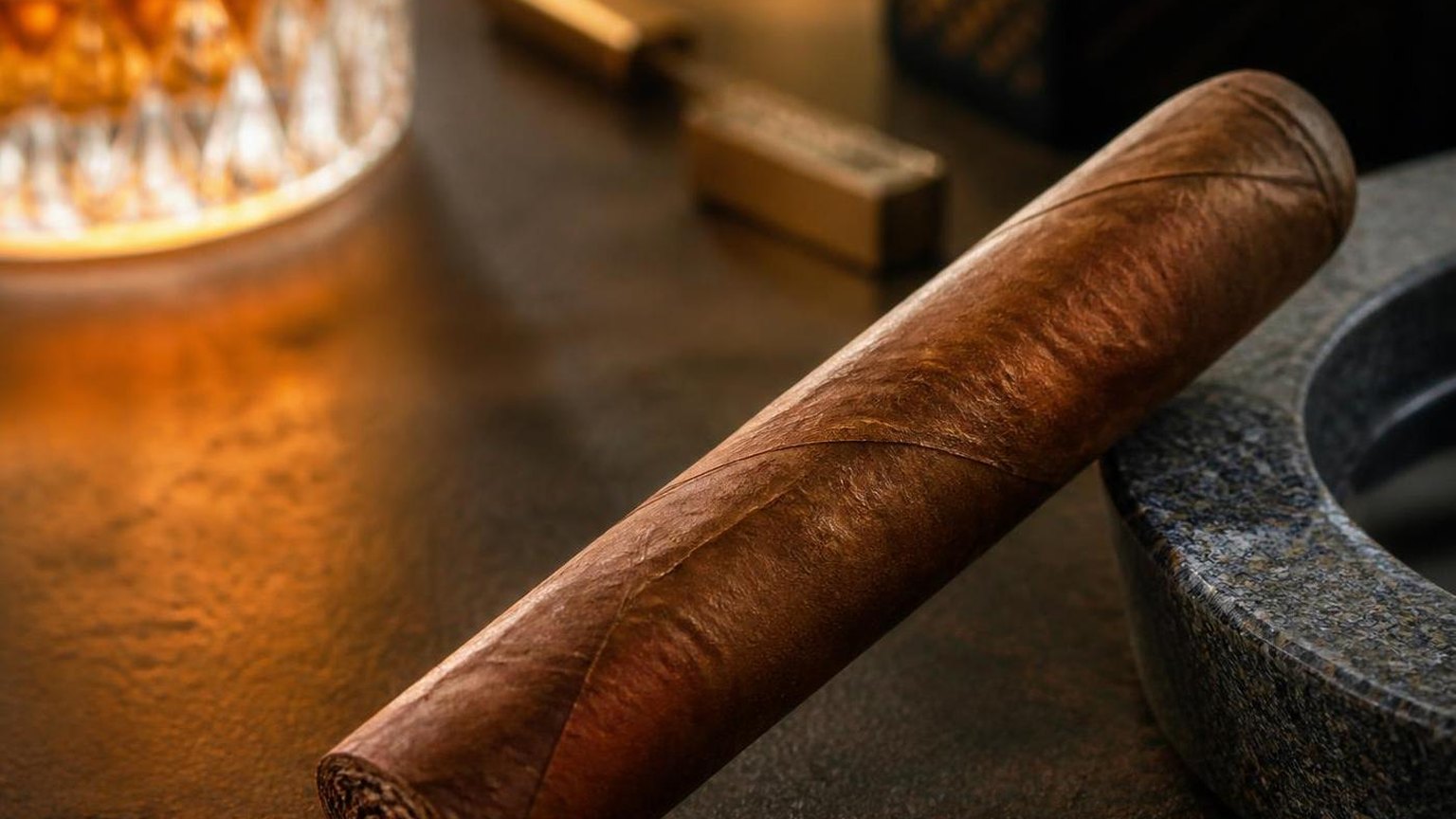
According to the FDA and CDC, cigars contain nicotine and produce toxic smoke; they are not a “safe” tobacco product. Technique can improve taste, but it does not remove health risk.
Mistakes That Ruin the Smoke
- Inhaling: Premium cigars are meant to be tasted in the mouth, not inhaled into the lungs. Cigar smoke is more alkaline than cigarette smoke, so nicotine absorbs through the mouth lining.
- Cutting below the cap: Remove only the closed tip. Cutting too deep can unravel the wrapper, which is the most fragile and expensive leaf on many handmade cigars.
- Lighting with direct flame too long: Charring the foot black creates bitter, ashy flavors. Toast the foot evenly, then draw gently while rotating.
- Puffing too fast: Heat builds quickly. A cigar that is too hot tastes sharp, metallic, or sour, and the wrapper may split.
- Grinding it out: Do not crush a cigar like a cigarette. Let it rest in the ashtray; it will go out naturally with less odor.
| Technique point | Practical target | Why it matters |
| Puff pace | About 1 puff every 45-60 seconds | Keeps the ember cooler and reduces bitterness |
| Cut depth | Roughly 1/16 to 1/8 inch on many parejos | Opens the draw without removing the entire cap |
| Storage humidity | 65-70% relative humidity | Helps prevent cracking, swelling, and tight draws |
| Relight window | Best within 1-2 hours | Stale tar and cold smoke make old relights harsh |
Common Myths
- “The darker the cigar, the stronger it is.” Not always. Maduro wrappers are darker because of longer fermentation or processing, but strength depends on the full blend, especially the filler tobacco.
- “A long ash proves quality.” Firm ash can suggest good construction and mineral content, but it is not a full quality test. Flavor, draw, burn, and balance matter more.
- “You should dip cigars in whiskey.” Dipping can damage the wrapper and overpower the blend. Pair the cigar with a drink instead.
- “White plume and mold are the same.” They are not. Mold can appear fuzzy or blue-green and may grow on the foot; discard questionable cigars, especially if mold reaches the filler.
The best rule is simple: keep the cigar cool, dry enough to burn cleanly, and unhurried. If the flavor turns bitter, slow down before blaming the cigar.
Questions People Ask Most
Do I inhale cigar smoke?
No. Cigar smoke is meant to be drawn into the mouth for flavor, then released; inhaling delivers a much harsher dose of nicotine and combustion byproducts than most cigar smokers expect.
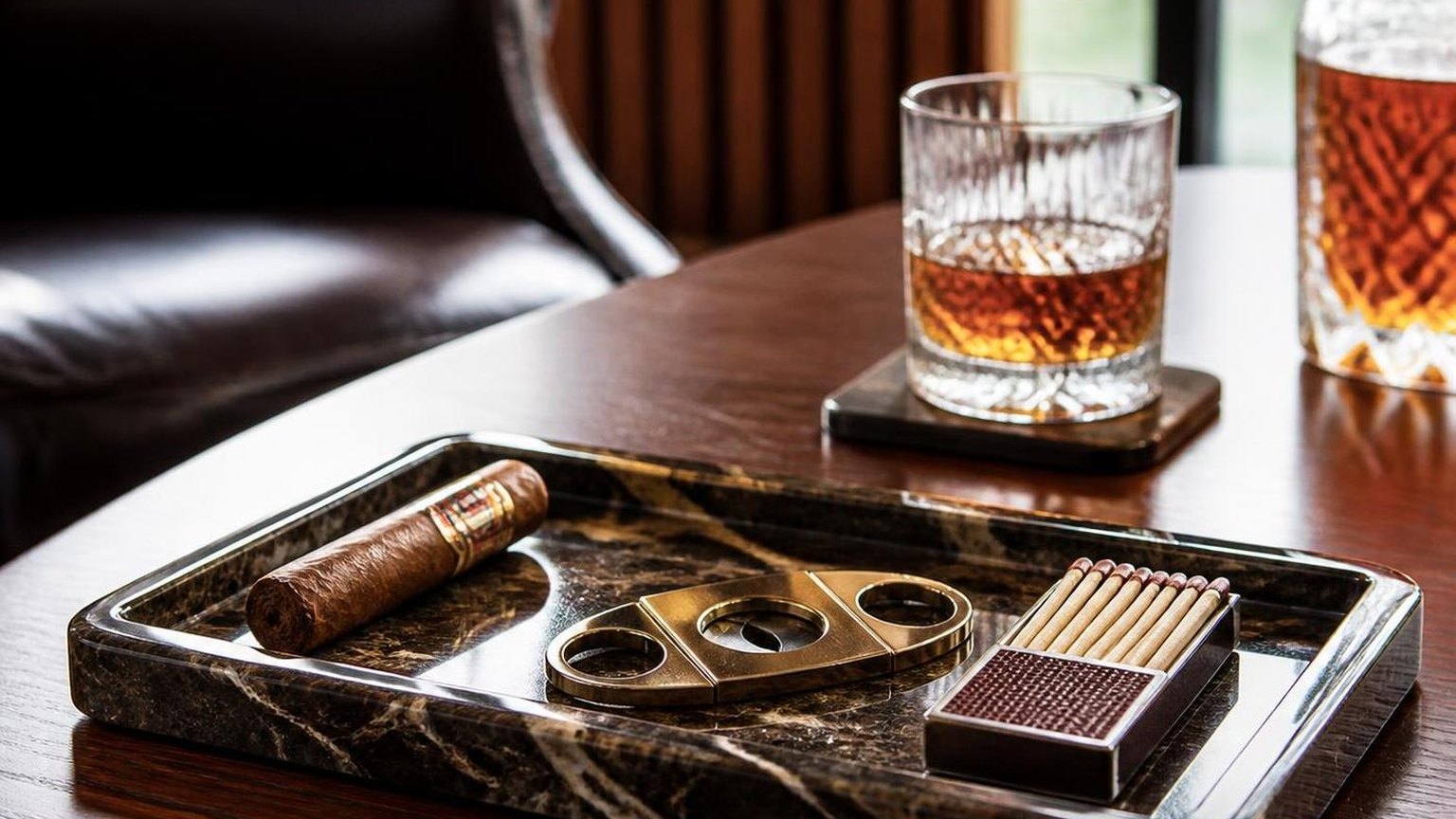
Take slow “puffs” rather than breaths, especially with full-strength cigars.
How do I cut a cigar correctly?
Cut only the cap at the closed head of the cigar, usually about 1/16 to 1/8 inch from the tip, so the wrapper does not unravel.
A straight cutter, V-cutter, or punch can work, but the goal is a clean opening that gives airflow without tearing the cap.
How should I light a cigar?
Use butane, cedar spills, or wooden matches, and toast the foot evenly before drawing on the cigar. Hold the flame just below the tobacco rather than burying the cigar in it, rotating until the entire foot glows evenly.
How often should I puff a cigar?
A good pace is about one puff every 30 to 60 seconds. Puffing too fast overheats the tobacco, making the cigar taste bitter and sharp, while puffing too slowly can cause it to go out.
Do I need to tap off cigar ash right away?
No. Let the ash build to roughly 1 inch if the cigar is burning evenly, because the ash can help regulate temperature. When it looks loose or cracked, gently roll it off in the ashtray instead of flicking it like a cigarette.
How long should a cigar smoke last?
A cigar’s smoking time depends on size and ring gauge. A 5 x 50 robusto often lasts about 45 to 60 minutes, while a 6 x 52 toro can run 60 to 90 minutes if smoked slowly. Rushing it raises heat, harshness, and uneven burn risk.
How should I put out a cigar when I am finished?
Set the cigar in an ashtray and let it go out on its own rather than crushing it like a cigarette. Most cigars self-extinguish within a few minutes because they contain no burn accelerants.
Crushing the wrapper can release sharper odors and create unnecessary mess.
Related Reading
- Why Do They Call Alcohol Spirits?
- How Much Is 64 Oz In Liters?
- Is Tequila Bad For Gout?
- How Many Ounces Is 1200 Ml?
- What Time Can You Buy Alcohol In Ohio?
- Top 15 Substitution for Shaoxing Wine (Ranked 2026)
- 12 Powerful Reasons Why Decant Whiskey: The Complete Flavor, Science & Aesthetic Guide
- All Blog Guides