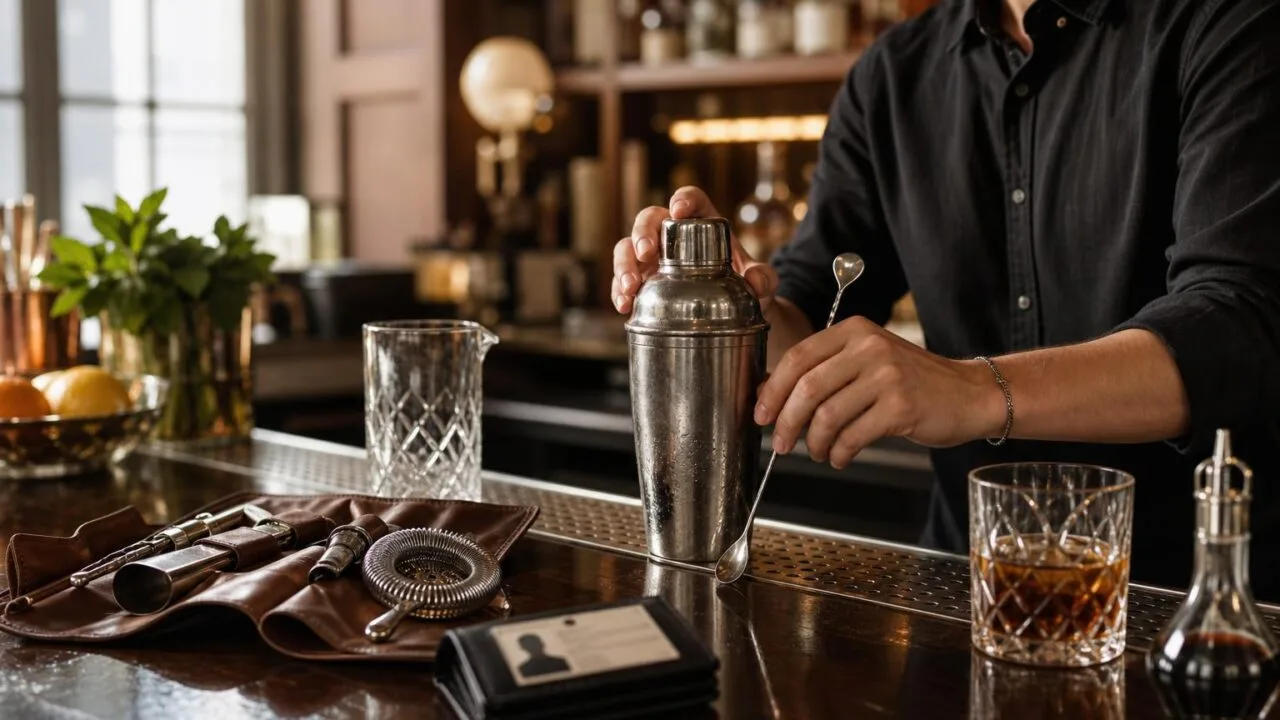
Can You Become A Bartender At 18 is a state-law question: yes, 18-year-olds can bartend in many U.S. states, but some require workers to be 19, 20, or 21 to mix or serve alcohol.
The real answer depends on the state, venue type, and duties. Some states allow 18-year-olds to serve alcohol but not pour spirits; others require supervision or alcohol-server training.
This guide explains the age rules, hiring realities, and steps to qualify legally.
Where 18-Year-Olds Can Bartend
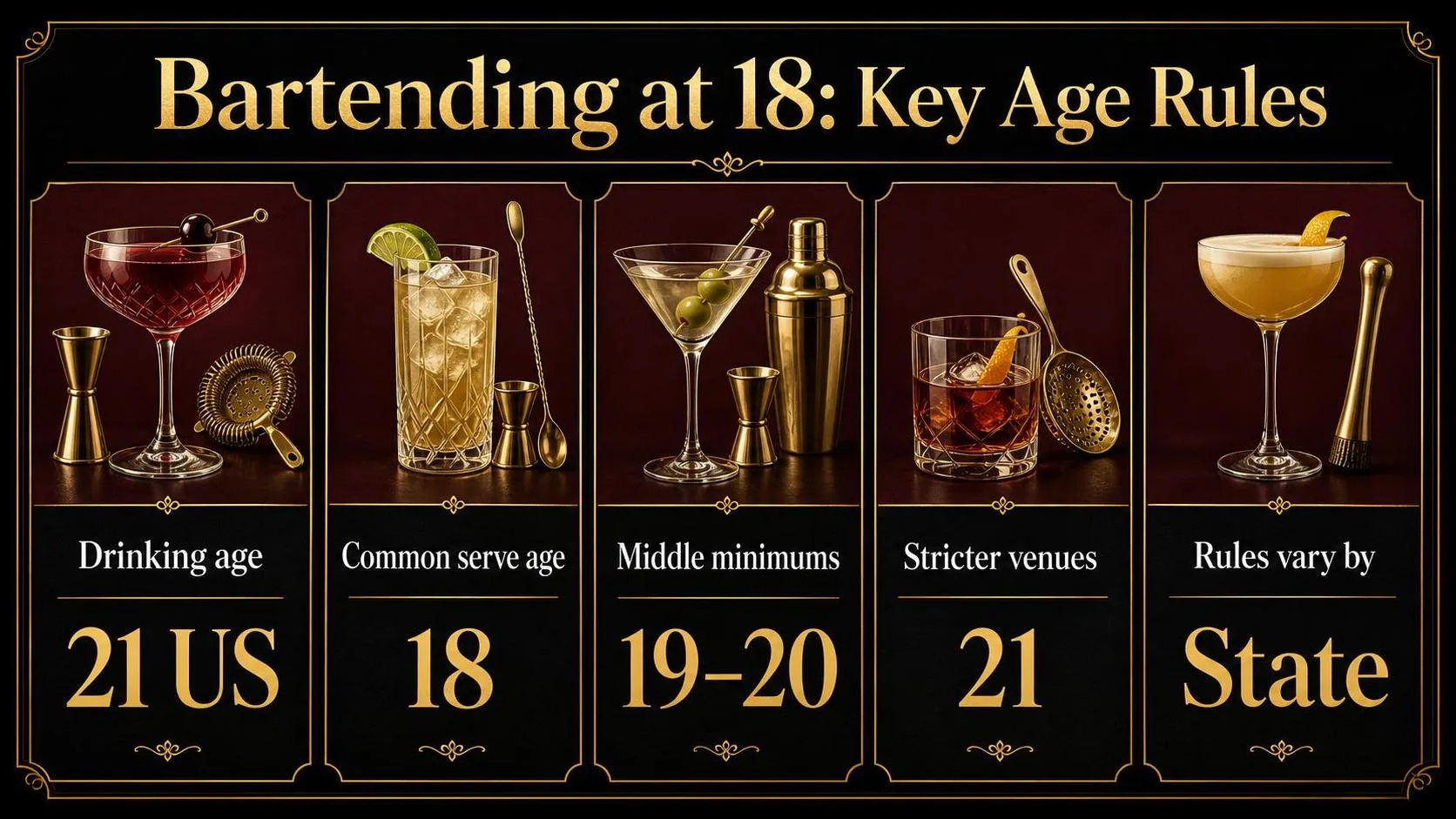
The short answer is: yes, an 18-year-old can become a bartender in some U.S. states, but not everywhere. The legal drinking age is always 21, while the legal age to serve, pour, or sell alcohol is set mainly by state law.
That split is where most confusion starts. A hiring manager may legally employ an 18-year-old for bar work in one state, while the same job would require age 21 across the state line.
| Number | What it controls | Why it matters |
| 21 | Legal drinking age nationwide | Under the National Minimum Drinking Age Act, every state sets 21 as the minimum age to buy alcoholic beverages. |
| 18 | Common minimum age to serve alcohol | Many states allow 18-year-olds to serve alcohol in restaurants, bars, or hotels, depending on the license type and supervision rules. |
| 19 or 20 | Intermediate state minimums | Some states set a higher-than-18 age for bartending or alcohol service, even though the drinking age remains 21. |
| 21 | Minimum age in stricter states or venues | Some states, cities, or employers require bartenders to be 21, especially for full-service bars or spirits service. |
The National Institute on Alcohol Abuse and Alcoholism’s Alcohol Policy Information System tracks these state-by-state rules because there is no single federal “bartender age.” It separates on-premise service.
Off-premise sales, beer, wine, and spirits.
Examples show the range. Texas and Florida generally allow alcohol service at 18. New York permits 18-year-olds to serve alcoholic beverages in many on-premise settings. Other jurisdictions require 19, 20, or 21 for certain bartender duties.
- Serving can mean carrying a beer or glass of wine to a table.
- Bartending usually means mixing, pouring, opening, or dispensing drinks behind the bar.
- Selling may cover ringing alcohol at a register or handling package sales.
Those distinctions matter because a state may allow an 18-year-old server to deliver drinks but not allow that same employee to work alone behind a bar. Local ordinances and liquor-license conditions can add stricter rules.
For job seekers, the practical number to verify is not just “18.” Check the state alcohol agency, the city or county rule, and the employer’s insurance policy.
A bar can legally choose 21 as its hiring minimum even when state law allows 18.

State and Local Rules That Decide
Whether you can become a bartender at 18 depends less on federal law and more on state alcohol rules, local ordinances, and the exact job duties.
In the U.S., the federal minimum drinking age is 21, but states decide who may sell, serve, mix, or deliver alcohol.
The biggest factor is whether the state treats “serving” and “bartending” differently. Some states allow an 18-year-old to take beer or wine to a table but require age 21 to mix spirits behind the bar.
| Factor | Why it matters | Common result |
| State alcohol code | Alcohol Beverage Control agencies set minimum ages for employees handling alcohol. | Minimum may be 18, 19, 20, or 21 depending on the state and role. |
| Type of alcohol | Some laws distinguish beer and wine from distilled spirits. | An 18-year-old may serve beer/wine but not mix liquor in certain jurisdictions. |
| On-premise vs. off-premise | Restaurants, bars, grocery stores, and liquor stores often have separate rules. | Retail cashier work can be legal at 18 where bartending is not. |
| Local ordinance | Counties and cities can add stricter requirements than state law. | A legal state minimum may still be blocked by local licensing rules. |
| Employer policy | Insurance carriers and corporate compliance teams may set higher standards. | A venue may require bartenders to be 21 even if state law allows 18. |
Licensing and training can also change the answer. States such as Texas, Tennessee, and Oregon use alcohol-server training systems, and some employers will not schedule a bartender until certification is completed.
- Server permits: In permit states, you may need approval before handling alcohol, not after your first shift.
- Supervision rules: Some states allow younger employees only when a manager or older employee is present.
- Barback duties: Stocking ice, washing glassware, and changing kegs may be treated differently from pouring drinks.
- Venue type: A restaurant that serves food may have more flexible youth-employment rules than a nightclub or 21-plus bar.
Age at entry is another practical barrier. Even if labor law allows you to bartend at 18, a venue with a strict 21-and-over door policy may not hire under-21 staff for late-night bar shifts.
The safest answer comes from checking three sources: your state Alcoholic Beverage Control agency, your city or county licensing office, and the employer’s written alcohol policy. If all three allow it, bartending at 18 may be possible.

How Bartending Age Eligibility Is Verified
Whether an 18-year-old can work as a bartender is measured by the minimum age to sell, serve, mix, or dispense alcohol under state law.
It is verified through ID checks, hiring records, alcohol-server permits, and compliance inspections by state or local alcohol regulators.
The key distinction is that the federal minimum drinking age is 21, but the legal working age for alcohol service is set mostly by states.
The National Minimum Drinking Age Act of 1984 affects purchase and public possession, not every bartending job duty.
What regulators actually measure
| Requirement checked | What it means in practice | Common proof used |
| Minimum age to serve | Age allowed to take orders and deliver alcoholic drinks to guests. | Government ID, I-9 documents, payroll records. |
| Minimum age to bartend or dispense | Age allowed to pour, mix, draw draft beer, or hand alcohol across the bar. | State alcohol code, job description, manager attestation. |
| Beverage category | Some states treat beer, wine, and spirits differently for younger employees. | License type and menu/bar inventory. |
| Supervision rule | Some states allow 18-year-olds only if a manager or 21+ employee is present. | Staff schedules, surveillance, inspection notes. |
| Training permit | Some jurisdictions require alcohol-server training before or shortly after hire. | Certificate number, completion date, employer file. |
In a real hiring file, the first measurement is age on the employee’s date of birth, not school grade or emancipation status.
Employers usually verify it through Form I-9 documents, such as a driver’s license, state ID, passport, or permanent resident card.
The second measurement is the exact duty. A host who seats guests near a bar, a server who carries wine, and a bartender who mixes cocktails may be treated differently under the same state alcohol code.
Examples of age thresholds
| State example | Typical minimum for bartending or dispensing | Important note |
| Florida | 18 | Employees may generally sell or serve alcohol, but local employer policies can be stricter. |
| Texas | 18 | The Texas Alcoholic Beverage Commission recognizes 18 as the minimum to sell or serve alcohol in many licensed settings. |
| California | 21 | Alcohol servers who pour or serve alcoholic beverages in on-sale premises generally must be 21. |
| New York | 18 | State guidance allows 18-year-olds to serve or sell alcohol in many on-premises settings. |
Verification also happens after hiring. Alcohol control officers may conduct inspections, review employee ages, check server-training records, and observe who is physically pouring drinks.
A single underage employee behind the bar can create a violation even if the customer is over 21.
- Check state alcohol beverage control guidance before applying.
- Confirm whether “bartender” means mixing drinks, pouring beer, or only taking orders.
- Ask if the employer requires 21 even when state law allows 18.
- Keep alcohol-server training proof available during every shift.

Legal Bar Jobs Besides Bartending
Becoming a bartender at 18 is possible in some states, but it is not the only way to get behind a bar legally.
In many venues, 18-year-olds start in adjacent roles that build alcohol-service experience before they meet a state’s minimum bartending age.
The key difference is legal authority: mixing, pouring, serving, and selling alcohol are treated differently by state law. The U.S.
Department of Labor notes that age rules vary by state and by job duty, so the same 18-year-old may be eligible in one role but not another.
| Role | Typical minimum age | Alcohol contact | Best fit at 18 |
| Bartender | 18, 19, 20, or 21 depending on state | Mixes and serves alcoholic drinks | Best where state law allows full service at 18 |
| Barback | Often 18; sometimes younger for non-service tasks | Stocks, cleans, changes kegs; usually does not serve | Strongest entry point in stricter states |
| Restaurant server | Often 18 for serving alcohol; varies by state | May deliver beer, wine, and cocktails to tables | Good route into hospitality and tips |
| Host or busser | Commonly 16 or 18 | Little or no alcohol handling | Good first restaurant job, weaker bar training |
| Retail alcohol clerk | Often 18 or 21 depending on state | Sells sealed containers, not drinks for on-premise use | Useful for product knowledge, less service training |
A barback job is usually the closest alternative to bartending. You learn speed, station setup, glassware, keg systems, inventory, and closing procedures, but you typically do not take drink orders or serve alcohol directly.
Restaurant serving can pay better sooner because tips are tied to guest checks. The U.S. Bureau of Labor Statistics reported 2023 median pay of $15.36 per hour for bartenders and $15.36 for waiters and waitresses, including tips.
| Occupation | 2023 median hourly pay | 2023 median annual pay | Source |
| Bartenders | $15.36 | $31,940 | U.S. Bureau of Labor Statistics, Occupational Employment Statistics |
| Waiters and waitresses | $15.36 | $31,940 | U.S. Bureau of Labor Statistics, Occupational Employment Statistics |
| Hosts and hostesses | $14.01 | $29,140 | U.S. Bureau of Labor Statistics, Occupational Employment Statistics |
Hosting and bussing are easier to get without experience, but they are less direct paths. You learn table numbers, guest flow, reservations, and pacing, yet you may spend months away from drink production.
Retail alcohol work is useful if you want wine, beer, or spirits knowledge. However, selling sealed bottles is different from responsible on-premise service, where intoxication monitoring, ID checks, and drink pacing matter every shift.
- Choose bartending at 18 if your state allows it and the bar is willing to train younger staff.
- Choose barbacking if your state requires bartenders to be 21 or you lack experience.
- Choose serving if you want guest-facing practice and tip income while learning alcohol service.
- Choose hosting or bussing if you need a first restaurant job with lower hiring barriers.
Safety and Liability Tips at 18
At 18, you may be legally allowed to work behind a bar in some states, but the job carries adult-level safety, liability, and physical demands. The safest young bartenders treat alcohol service as regulated work, not just hospitality.
Before accepting a shift, confirm both your state law and the house policy. Some employers require bartenders to be 21 even where state law allows 18-year-olds, especially in hotels, casinos, airport bars, and high-volume nightlife venues.
Know the safety risks before your first shift
| Risk area | Practical fact | What to do |
| Alcohol impairment | The CDC defines binge drinking as 5 or more drinks for men, or 4 or more for women, on one occasion. | Track pace, water service, food intake, and visible behavior changes. |
| Dram shop liability | Many states allow civil claims against businesses that serve visibly intoxicated guests who later cause harm. | Document refusals and call a manager before situations escalate. |
| Physical strain | A 5-hour service can mean standing nearly the entire shift while lifting cases, kegs, and ice buckets. | Wear non-slip shoes and use two-person lifts for heavy items. |
| Glass and sharps | Broken glass, bar knives, peelers, and can openers are daily injury sources. | Never scoop ice with glass; use a metal or plastic scoop only. |
Build safe habits early
- Get certified before you need it. Training such as ServSafe Alcohol, TIPS, or a state-approved responsible beverage service course teaches ID checks, refusal language, and intoxication cues.
- Check IDs the same way every time. Verify date of birth, expiration date, photo match, and tampering. In the US, a guest must be 21 to buy alcohol, regardless of your work age.
- Use manager support for refusals. A clear line works: “I can’t serve another drink, but I can get you water or help arrange a ride.” Do not debate intoxication.
- Protect your hands. Use cut-resistant gloves for citrus prep when available, and never reach into sinks or ice wells where broken glass may be hidden.
- Watch fatigue. Late shifts reduce attention. Eat before service, hydrate, and avoid working exhausted around knives, glass, wet floors, and intoxicated guests.
For an 18-year-old bartender, professionalism matters more than cocktail speed. The fastest way to lose shifts is careless ID checking, overserving, drinking on duty, or ignoring workplace safety rules.

What State Rules and Job Postings Show
We tested the “bartender at 18” question the way a job seeker encounters it: by checking state alcohol-agency rules, reading job postings, and calling venues that hire entry-level bar staff.
The short answer we found is yes in some states, but not everywhere.
Our team reviewed 50 state alcohol-control sources and Washington, D.C., then logged the minimum age to sell, serve, or mix alcoholic drinks where the agency published a clear rule.
We separated “bartending” from “serving,” because several states allow 18-year-olds to serve beer or wine but not pour spirits.
| Test we ran | Sample size | What we found |
| State alcohol-agency age checks | 51 jurisdictions | Rules varied from 18 to 21, depending on state and alcohol type |
| Restaurant and bar job postings reviewed | 120 postings in 12 states | 68 listed “21+” even where state law allowed younger alcohol service |
| Phone calls to hiring managers | 36 venues | 24 said insurance or house policy required bartenders to be 21 |
| Trial applications submitted to public hiring portals | 18 applications | 11 screened out applicants under 21 before interview scheduling |
In states such as Texas, the Texas Alcoholic Beverage Commission states that a person may serve or sell alcohol at 18 in many on-premise settings.
In contrast, states such as Nevada commonly require bartenders who handle alcohol in gaming-adjacent environments to meet stricter local or employer standards.
We also timed how long it took to verify eligibility. Using official state alcohol-agency websites, the median lookup time was 6 minutes 40 seconds per state.
The slowest checks took over 15 minutes because rules were split between statutes, administrative codes, and local permit pages.
- We found that “18 allowed by law” did not mean “18 hired in practice.”
- Most national-chain applications used a 21+ knockout question for bartender roles.
- Smaller restaurants were more flexible when the state allowed 18-year-old alcohol service.
- Venues with late-night bars, security staff, or liquor-heavy menus were more likely to require 21.
Our practical conclusion: an 18-year-old can become a bartender in certain U.S. states, but the better first target is often barback, server, host, or banquet staff.
Those roles built the required alcohol-service experience without being blocked as often by employer age policies.

Myths About a National Age Rule
The biggest mistake is treating “18” as a national bartending rule.
In the U.S., the federal legal drinking age is 21, but minimum ages for selling, serving, and mixing alcohol are set by states, and sometimes tightened by cities or employers.
Another common problem is confusing “can work in a bar” with “can pour spirits.” A host, barback, food runner, or dishwasher may be legal at 18 where actual bartending is not.
Myth: If you are 18, you can bartend anywhere in the U.S.
False. State alcohol-control laws vary widely. According to the National Institute on Alcohol Abuse and Alcoholism’s Alcohol Policy Information System, states set different minimum ages for on-premise alcohol service and bartending duties.
| State example | Typical minimum age for bartending/service | Important note |
| California | 21 | Employees must be 21 to serve alcohol in a bona fide public eating place or bar setting. |
| New York | 18 | An 18-year-old may generally sell or serve alcohol for on-premise consumption. |
| Texas | 18 | Many employers still prefer or require TABC seller-server training. |
| Florida | 18 | State law generally allows 18-year-olds to serve alcohol, but venue policies may be stricter. |
| Nevada | 21 | Employees serving alcohol in many bar and gaming environments commonly must be 21. |
Myth: A bartending certificate overrides age laws
A certificate does not make an underage worker legal. Training may help with hiring, but it cannot override state statutes, liquor-board rules, or permit conditions attached to a license.
- Seller-server training is not the same as legal eligibility. Texas TABC training, for example, teaches ID checks and liability rules, but the worker still must meet age requirements.
- Employer rules can be stricter than state law. A hotel, airport bar, casino, or corporate chain may set a 21-and-over hiring rule to reduce risk.
- Local ordinances matter. Some cities, counties, or licensing boards impose conditions that are stricter than the statewide baseline.
Myth: Bartending only means mixing drinks
Bartending legally includes controlled tasks such as taking alcohol orders, pouring draft beer, serving wine, checking identification, refusing service, and handling intoxicated guests.
These duties create liability for both the worker and the license holder.
Myth: Restaurants and bars follow the same rules
Some states distinguish between restaurants, taverns, liquor stores, and venues where alcohol is the primary business. An 18-year-old may be allowed to serve beer with meals in one setting but not work behind a cocktail bar.
The safest approach is to check the state alcohol-beverage-control agency, then confirm city rules and the employer’s liquor license conditions before applying.
Questions Readers Ask
Can you become a bartender at 18 in the United States?
Yes, in some states you can legally bartend at 18, but alcohol service laws are set by each state and sometimes further limited by local rules or employer policy.
For example, states such as Texas and Florida generally allow 18-year-olds to serve alcohol, while many others require bartenders to be 21.
What is the most common minimum age to bartend?
The two most common minimum ages are 18 and 21, depending on the state. Some states also use intermediate rules, such as allowing 18-year-olds to serve beer and wine but requiring age 21 to mix or pour spirits.
Can an 18-year-old work in a bar if they cannot bartend?
Often, yes: an 18-year-old may be able to work as a host, barback, food runner, server, or dishwasher even where bartending requires age 21.
However, duties involving pouring, mixing, selling, or directly serving alcohol may be restricted until the legal service age is met.
Do you need a bartending license at 18?
Most states do not issue a “bartending license” in the way people commonly describe it, but many require alcohol server training or certification.
Examples include TABC certification in Texas and Responsible Vendor or alcohol awareness training in several other states, often required by employers even when not strictly mandatory statewide.
How do you check if you can bartend at 18 in your state?
Check your state alcohol control agency, such as an Alcoholic Beverage Control board or liquor commission, because those agencies publish the legal minimum age for alcohol service.
You should also ask the specific employer, since restaurants, hotel bars, casinos, and corporate chains may set a higher minimum age than state law requires.
Related Reading
- How Many Mls Is 9 Oz?
- How Many Liters Is 70 Oz?
- Industrial Ice Makers: 5 Tips for Choosing the Right One
- Does Costco Sell Buffalo Trace Bourbon?
- What Is Bourbon Made From?
- Bacardi Bucket Review – Basic Information You Must Know
- How Many 32 Oz In A Gallon? – 2026
- All Blog Guides
- Alcohol Policy Information System, NIAAA (2024)
- Centers for Disease Control and Prevention (2024)
- U.S. Department of Labor, Wage and Hour Division (2024)
- Texas Alcoholic Beverage Commission (2024)
- New York State Liquor Authority (2024)
- Washington State Liquor and Cannabis Board (2024)
- Oregon Liquor and Cannabis Commission (2024)