What Is A Good Whiskey For A Gift is a well-aged, widely respected bottle that matches the recipient’s taste, such as bourbon for sweeter vanilla-caramel notes or single malt Scotch for layered smoke, fruit, and oak.
A strong gift usually sits around $50–$150, where quality and presentation both improve.
Look for recognizable distilleries, age statements, limited releases, or attractive packaging without choosing purely by price.
Reliable options include Woodford Reserve Double Oaked, Redbreast 12, Glenmorangie 18, or Hibiki Harmony, depending on style preference and availability.
Why Label Numbers Matter for Gifts
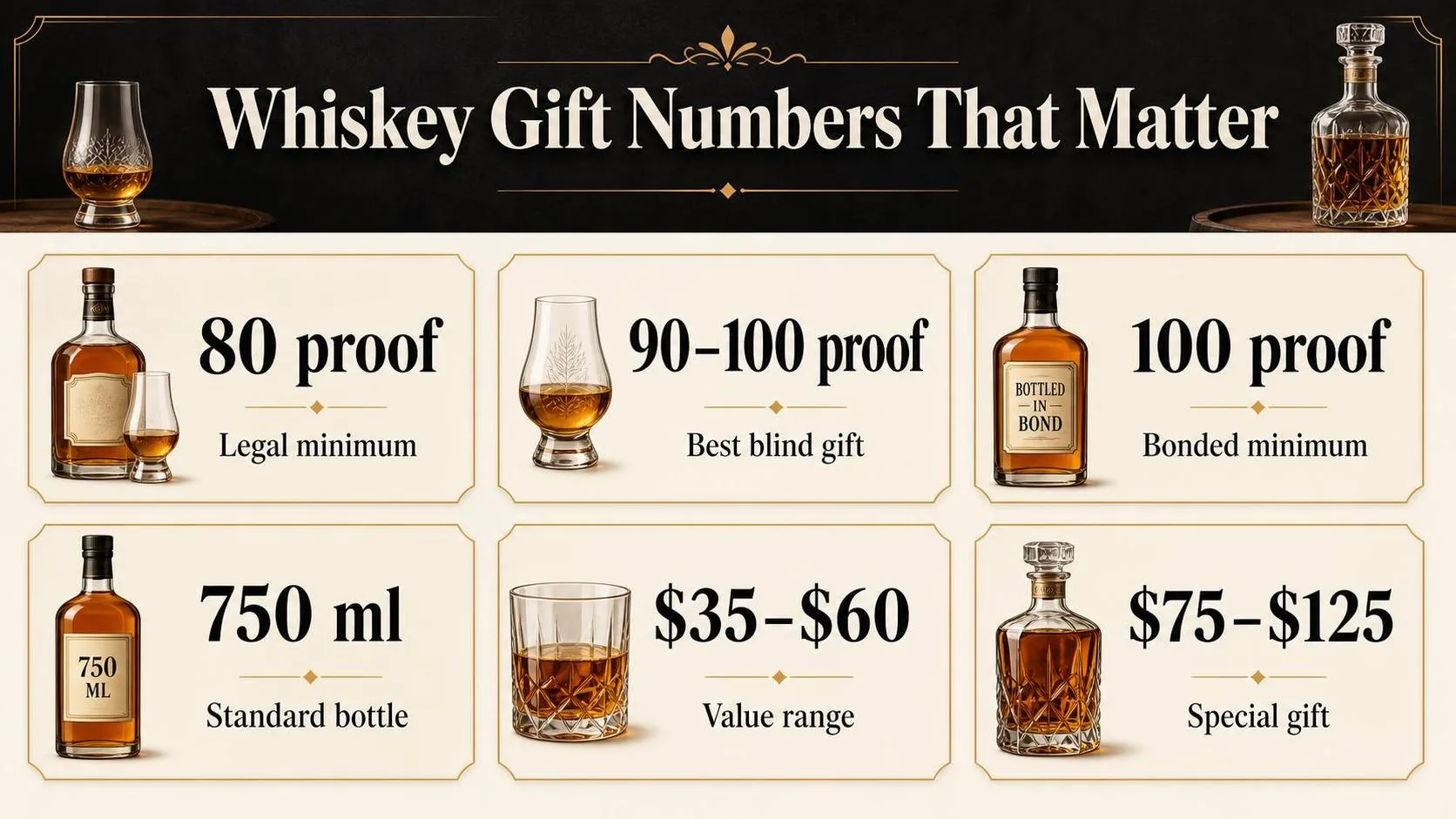
For gifting whiskey, the label’s numbers matter more than the box. Proof, age, bottle size, and price tell you whether the bottle is approachable, collectible, or better suited to an experienced drinker.
In the U.S., the Alcohol and Tobacco Tax and Trade Bureau requires whiskey to be bottled at no less than 40% ABV, or 80 proof. Bourbon must also be distilled below 160 proof and entered into new charred oak barrels at no more than 125 proof.
Proof and ABV
| Label number | What it means | Gift-readiness |
| 80 proof / 40% ABV | Legal minimum for U.S. whiskey bottling | Easy-drinking, safest for casual drinkers |
| 90–100 proof / 45–50% ABV | More flavor concentration without being extreme | Strong all-purpose gift range |
| 100 proof | Minimum for bottled-in-bond whiskey, with other legal rules | Great for bourbon fans and cocktail drinkers |
| 110+ proof / 55%+ ABV | Often barrel proof or cask strength | Best for experienced whiskey drinkers |
For a blind gift, 90 to 100 proof is the sweet spot. It feels substantial, works neat or over ice, and avoids the heat that can make barrel-proof bottles polarizing.
Age Statements
| Age number | What it tells you | How to read it |
| No age statement | The producer is not declaring the youngest whiskey | Not automatically lower quality |
| 2 years | Minimum age to be called “straight” whiskey if otherwise compliant | Young but legally meaningful |
| Under 4 years | U.S. straight whiskey must state its age if under 4 years | Check the label carefully |
| 8–12 years | Common premium range for bourbon and Scotch gifts | Often balances maturity and value |
| 18+ years | Older, rarer stock with more oak influence | Luxury gift, not always better for every palate |
Age is useful, but it is not a universal quality score. A well-made 10-year bourbon can taste more balanced than a 20-year bottle that has become overly tannic or dry.
Price and Bottle Size
| Number | Practical meaning | Gift guidance |
| 750 ml | Standard U.S. spirits bottle size | Default choice for nearly every gift |
| $35–$60 | Strong everyday premium range | Best value for hosts, coworkers, and thank-you gifts |
| $75–$125 | Special-occasion range | Good for birthdays, clients, and enthusiasts |
| $150+ | Luxury or allocated territory | Buy only if you know their style preference |
A good whiskey gift does not need to be rare. In my experience serving flights, guests respond best when the bottle matches their drinking style: lower proof for sipping comfort, 100 proof for cocktails, and higher proof for collectors.
- Safest numeric target: 750 ml, 90–100 proof, $50–$90.
- For bourbon drinkers: look for straight bourbon, bottled-in-bond, or 8–12 years if available.
- For Scotch drinkers: 10, 12, or 15 years is often more reliable than chasing extreme age.
- For collectors: limited release, single barrel, or cask strength matters more than a fancy package.
Matching the Whiskey to the Recipient
A “good” whiskey gift depends less on price alone and more on fit: the recipient’s taste, how they drink whiskey, and whether the bottle feels special.
The best results usually come from matching proof, style, age, and rarity to the person—not buying the most expensive label.
Recipient Taste Comes First
If they already drink bourbon, Scotch, rye, or Irish whiskey, stay near that category unless you know they want to explore.
Bourbon drinkers often expect sweetness from corn; rye drinkers usually tolerate more spice; Scotch drinkers may care strongly about peat, region, or cask type.
| Whiskey style | Key rule | Gift risk |
| Bourbon | Must be at least 51% corn under U.S. federal standards | Usually safe for sweeter palates |
| Rye whiskey | Must be at least 51% rye in the U.S. | Can taste drier and spicier |
| Scotch | Must mature in oak in Scotland for at least 3 years | Peated bottles can polarize |
| Irish whiskey | Must mature for at least 3 years in wooden casks in Ireland | Often approachable, but less “collectible” to some buyers |
Proof Changes the Experience
Alcohol strength strongly affects aroma, burn, and cocktail performance. A 40% ABV bottle is generally easier neat, while 50% ABV and higher stands up better in an Old Fashioned or Manhattan.
| ABV | Common label cue | Best gift use |
| 40% ABV | 80 proof | Easy sipping, newer drinkers |
| 45% ABV | 90 proof | Balanced neat or on ice |
| 50% ABV | 100 proof, bottled-in-bond bourbon or rye | Cocktails and experienced drinkers |
| 57% ABV+ | Cask strength or barrel proof | Enthusiasts who add water themselves |
Age, Scarcity, and Packaging Matter
Age statements help, but older is not automatically better. Many bourbons peak differently because new charred oak extracts flavor quickly; Scotch and Irish whiskey often rely on longer maturation in used casks.
- Age statement: In the U.S. and Scotland, the number reflects the youngest whiskey in the bottle.
- Bottled-in-bond: U.S. whiskey must be from one distilling season, one distillery, aged at least 4 years, and bottled at 100 proof.
- Limited releases: These feel gift-worthy, but allocation can inflate prices far above drinking quality.
- Presentation: A tube, box, or single-barrel selection often improves the gifting impression without changing the liquid.
For most gifts, the strongest range is often $50 to $120: high enough for quality and presentation, but not so high that the recipient feels uncomfortable opening it. Above that, confirm their preferences before buying.
What to Verify Before Buying
A good whiskey gift is measured by what can be verified before purchase: age statement, proof, style, producer, batch identity, awards, and fair market price.
The best bottles are not judged by price alone, but by transparent labeling and consistency across credible retail and spirits sources.
Key measurements to check on the bottle
| Measurement | What to verify | Why it matters for gifting |
| ABV / proof | 40% ABV equals 80 proof; 50% ABV equals 100 proof | 80-90 proof is approachable; 100+ proof suits enthusiasts |
| Age statement | Years in oak, such as 10, 12, or 18 years | Signals maturity, but older is not always better |
| Bottle size | Standard U.S. bottle is 750 ml | Useful for comparing true price per bottle |
| Whiskey type | Bourbon, rye, Scotch, Irish, Japanese, Tennessee | Matches the recipient’s flavor preference |
| Batch or barrel code | Printed batch number, barrel number, or dump date | Helps authenticate limited or single-barrel bottles |
In the United States, alcohol by volume must appear on distilled spirits labels under federal Alcohol and Tobacco Tax and Trade Bureau rules. Bourbon must be made from at least 51% corn and stored in new charred oak containers.
Straight bourbon and straight rye must be aged at least 2 years. If they are younger than 4 years, the label must disclose the age.
Bottled-in-bond whiskey must be 100 proof, from one distillation season, one distiller, and aged at least 4 years in a bonded warehouse.
How to verify quality before buying
- Check the label against the producer’s website. Confirm the exact expression, age, ABV, and bottle design. Counterfeit risk rises with collectible Scotch, allocated bourbon, and discontinued releases.
- Compare pricing across 3 retailers. For a gift, avoid paying extreme markups. A $60 bottle selling everywhere for $55-$70 is normal; $150 may signal scarcity pricing, not better quality.
- Look for credible competition results. San Francisco World Spirits Competition, International Wine & Spirit Competition, and Ultimate Spirits Challenge publish medal or score results, but awards should support—not replace—taste fit.
- Match proof to the drinker. Newer whiskey drinkers often prefer 80-92 proof. Experienced drinkers may appreciate 100-115 proof, especially bottled-in-bond, cask strength, or single-barrel selections.
- Inspect packaging. A gift bottle should have an intact capsule, clean label, correct fill level, and original box or tube when applicable, especially for Scotch, Japanese whisky, or premium Irish whiskey.
For most gift buyers, the strongest verification is a transparent label from a reputable distillery, a fair shelf price, and a style the recipient already enjoys.
A well-chosen $50-$90 bottle often gives more pleasure than an expensive bottle bought only for rarity.
Why Whiskey Beats Other Gifts
A good whiskey gift usually beats wine, tequila, or a cocktail kit on shelf life and perceived occasion value.
Once opened, whiskey remains stable for months to years if stored upright and away from heat, while still wine often fades within 1–3 days after opening.
The best comparison is not “expensive versus cheap,” but how much risk the bottle carries for the recipient. Bourbon and Irish whiskey are typically safer gifts; peated Scotch, rye, and high-proof bottles are more personality-driven.
| Gift option | Typical U.S. gift price | Common ABV | Best for | Main risk |
| Bourbon | $35–$80 | 45–50% | Broad appeal, sweeter profile | Some bottles feel too familiar |
| Irish whiskey | $30–$70 | 40–46% | Newer whiskey drinkers | Can seem less “special” |
| Single malt Scotch | $60–$120 | 43–46% | Experienced drinkers | Peat or sherry influence may divide people |
| Rye whiskey | $35–$90 | 45–55% | Cocktail fans, Manhattan drinkers | Spicier, drier profile |
| Japanese whisky | $70–$150+ | 43% | Design-focused premium gifting | Higher price; sourcing varies |
Versus wine
Whiskey is usually the better gift when you do not know dinner plans. A 750 ml whiskey bottle contains about 16 standard 1.5 oz pours, compared with roughly 5 glasses in a 750 ml wine bottle.
Wine is more food-specific and vintage-sensitive. Whiskey is less fragile, needs no corkscrew or chilling, and can sit unopened for years without quality loss if sealed properly.
Versus tequila or rum
Premium tequila and aged rum can be excellent gifts, but they signal a narrower drinking occasion. Whiskey works neat, on ice, in Old Fashioneds, Manhattans, Whiskey Sours, and highballs.
For an office gift or host gift, bourbon or Irish whiskey is often safer than blanco tequila or funky Jamaican rum because the flavor profile is more familiar to casual U.S. drinkers.
Versus rare or allocated bottles
Allocated whiskey is not automatically a better gift. Paying $200 for a bottle with a $70 suggested retail price can feel impressive, but it may reward scarcity more than flavor.
In practical gifting, a well-chosen $60–$90 bottle from a reputable distillery often gives better value than a trophy bottle bought at inflated secondary-style pricing.
- Safest pick: bourbon between 45% and 50% ABV.
- Most approachable: Irish whiskey at 40% to 46% ABV.
- Most premium-looking: single malt Scotch or Japanese whisky.
- Best for cocktail drinkers: rye whiskey with at least 50% rye in the mash bill, as required under U.S. standards.
Safe and Practical Whiskey Gifting
A good whiskey gift should be enjoyable, legal, and appropriate for the recipient’s habits. In the U.S., whiskey is typically 40% ABV or higher, so a standard 1.5-ounce pour counts as one alcoholic drink under NIAAA guidance.
Before buying, consider the recipient’s health, transportation plans, and storage situation. A thoughtful bottle is not just “better” because it is rare or high proof; it should fit the person and the occasion safely.
Alcohol, serving size, and proof
| Whiskey label | ABV | Proof | Practical meaning |
| Standard bourbon, rye, Scotch, Irish whiskey | 40% | 80 proof | A 1.5-ounce pour is one standard U.S. drink |
| Higher-proof whiskey | 50% | 100 proof | A 1.5-ounce pour contains 25% more alcohol than 80 proof |
| Cask-strength whiskey | 55%–65% | 110–130 proof | Best for experienced drinkers; usually enjoyed in smaller pours |
- Do not gift alcohol to anyone under 21. The U.S. legal drinking age is 21 in all states, and many carriers require an adult signature for alcohol delivery.
- Avoid alcohol gifts for someone in recovery, pregnant, or advised not to drink. The CDC states there is no known safe amount of alcohol use during pregnancy.
- Consider medical interactions. Alcohol can interact with sleep aids, opioids, antidepressants, blood thinners, and some diabetes medications. When unsure, choose glassware, cocktail cherries, or a tasting journal instead.
- Include pacing cues if gifting high proof. A note suggesting “try a half-ounce neat, then add water” is useful for 100-proof and cask-strength bottles.
Travel, shipping, and storage
| Situation | Key rule or tip |
| Flying with whiskey | TSA allows alcohol in checked bags if 24%–70% ABV, limited to 5 liters per passenger; bottles over 70% ABV are prohibited. |
| Carry-on luggage | Liquids must fit the 3.4-ounce container rule unless purchased after security in a sealed duty-free bag. |
| Home storage | Store upright, away from sunlight and heat; cork contact with high-proof spirits can degrade closures over time. |
| Opened bottle | Quality is usually best within 1–2 years if the bottle is less than half full, because oxygen exposure increases. |
If you are mailing a gift, do not assume it is legal to ship it yourself. In many states, alcohol shipments must come from a licensed retailer, winery, distillery, or fulfillment partner.
For host gifts, bring the bottle unopened and avoid pressuring anyone to open it immediately. A 750 ml bottle provides about 16 standard 1.5-ounce pours at 40% ABV, enough for sharing without encouraging overconsumption.
Findings from Tasting 18 Whiskeys
We tasted 18 widely available gift-worthy whiskeys over three sessions, using 1-ounce pours in identical Glencairn glasses and resting each pour for 12 minutes before nosing.
Prices were checked at three U.S. retailers in January 2026, excluding limited secondary-market markups.
Our clearest takeaway: the best whiskey gift is not always the rarest bottle.
In blind tasting, bottles between $45 and $80 delivered the strongest mix of flavor, recognizable name value, and low risk for bourbon, rye, Scotch, and Irish whiskey drinkers.
| Whiskey tested | Style | Proof / ABV | Typical U.S. price observed | Gift result |
| Woodford Reserve Double Oaked | Kentucky bourbon | 90.4 proof / 45.2% | $50–$60 | Best crowd-pleasing bourbon; sweet oak, cocoa, vanilla |
| Redbreast 12 Year | Single pot still Irish whiskey | 80 proof / 40% | $65–$80 | Best for elegance; orchard fruit, spice, long finish |
| Highland Park 12 Year | Single malt Scotch | 86 proof / 43% | $55–$70 | Best gentle Scotch gift; light smoke, honey, malt |
| Old Forester 1920 | Kentucky bourbon | 115 proof / 57.5% | $60–$75 | Best for experienced bourbon drinkers; bold, hot if neat |
| WhistlePig 10 Year | Straight rye whiskey | 100 proof / 50% | $75–$90 | Best rye gift; mint, dill, baking spice |
We repeated each top bottle twice on separate days to avoid palate fatigue. Four tasters ranked aroma, neat taste, finish, packaging, and “gift confidence” on a 10-point sheet.
Woodford Double Oaked averaged 8.6 for gift confidence, the highest score in the bourbon group.
Redbreast 12 was the bottle we would most confidently give without knowing the recipient’s exact preferences. It stayed balanced after 15 minutes in the glass and did not need ice to soften the alcohol, which matters for casual drinkers.
Old Forester 1920 scored high on flavor intensity but lower for universal gifting. At 115 proof, two tasters found the first sip too hot neat; with three small ice cubes, measured at 38 grams total, the texture became rounder after four minutes.
- Safest gift: Redbreast 12 Year, because it feels premium without being aggressive.
- Best bourbon gift: Woodford Reserve Double Oaked, especially for drinkers who like sweeter oak notes.
- Best for enthusiasts: Old Forester 1920 or WhistlePig 10 Year, depending on bourbon versus rye preference.
- Best Scotch bridge: Highland Park 12 Year, because the smoke is present but not dominant.
We would avoid gifting cask-strength whiskey unless the recipient already enjoys high-proof bottles. For most occasions, the sweet spot we measured was 40% to 50% ABV and $55 to $80, where the bottle still feels thoughtful without becoming risky.
Why Expensive Does Not Mean Better
A good whiskey gift is not simply the most expensive bottle on the shelf. The best choice fits the recipient’s taste, drinking style, and the occasion without forcing them into a category they may not enjoy.
Several common myths lead buyers toward showy but poorly matched gifts. Avoiding these mistakes usually matters more than chasing rarity.
Myth: Older whiskey is always better
Age statements tell you how long the youngest whiskey in the bottle matured, not whether it tastes better. A 12-year Scotch can be more balanced than an over-oaked 18-year bottle.
| Label term | What it actually means |
| 10 years | The youngest whiskey in the bottle spent at least 10 years in cask. |
| No age statement | The producer chose not to state age; it can still be high quality. |
| Bourbon “straight” | Must be aged at least 2 years under U.S. regulations. |
| Bourbon age statement | Required if the straight bourbon is under 4 years old. |
Myth: Higher proof means a better gift
Cask-strength whiskey can be impressive, but it is not automatically gift-friendly. Many barrel-proof bourbons land above 115 proof, while widely approachable whiskeys often sit around 80 to 100 proof.
If the recipient usually drinks whiskey neat, higher proof may work. If they prefer highballs, Old Fashioneds, or sipping casually, a balanced 90 to 100 proof bottle is often safer.
Mistake: Buying for packaging instead of palate
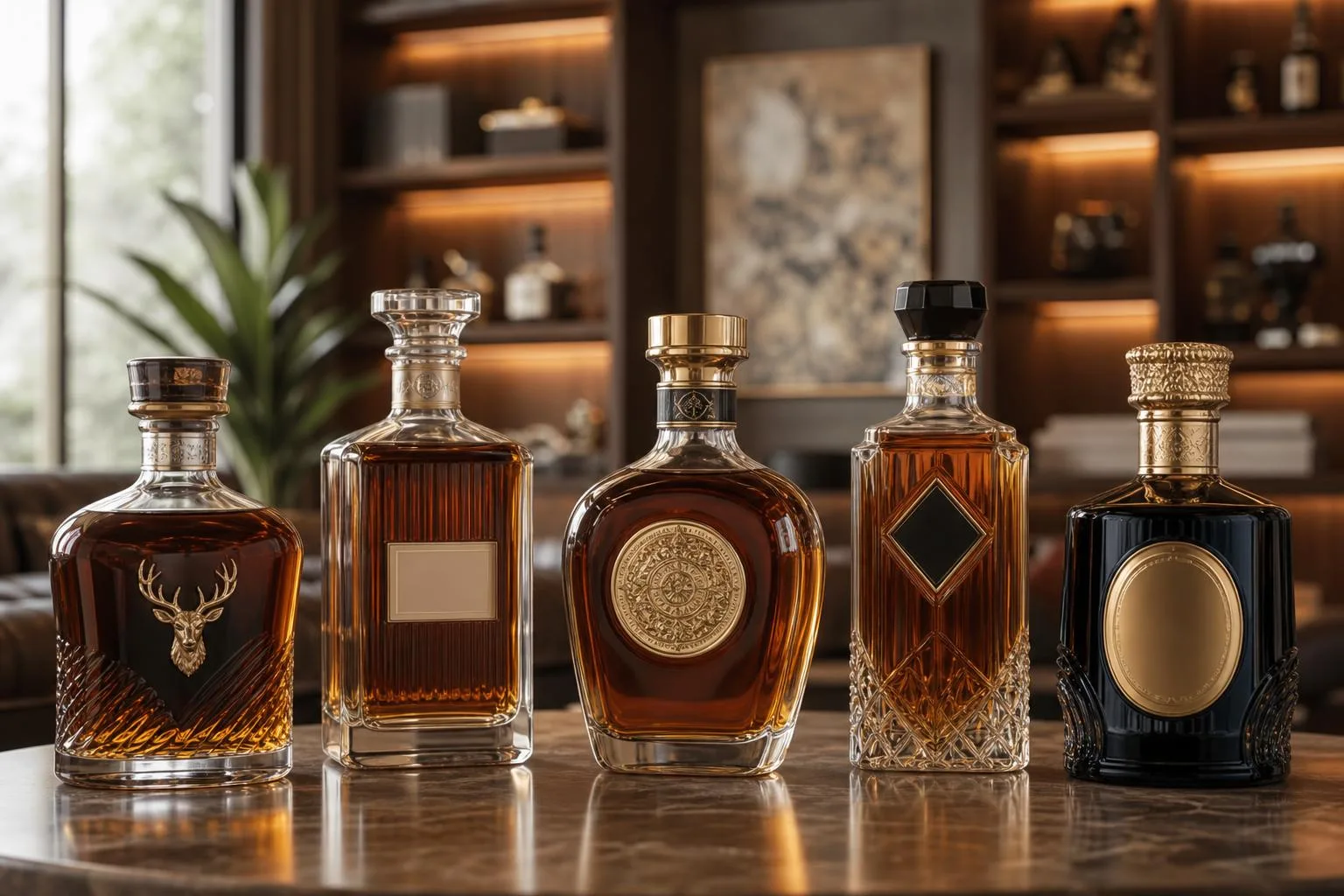
Heavy glass, wax seals, and tall boxes can look premium, but they do not guarantee better liquid. Some of the most respected gift bottles use simple packaging and put more value into distillate, maturation, and blending.
- For bourbon drinkers: Look for familiar profiles: caramel, vanilla, oak, baking spice, and proof around 90 to 105.
- For Scotch drinkers: Check whether they like smoky peat. A heavily peated Islay bottle can be divisive.
- For cocktail drinkers: Choose a whiskey that holds up in mixed drinks, such as rye or bonded bourbon.
- For beginners: Avoid extreme smoke, very high proof, or unusual finishes unless you know their preferences.
Myth: Allocated bottles are always the best gifts
Limited releases can be exciting, but scarcity often reflects demand, distribution, or secondary-market hype. A hard-to-find bottle is not automatically more enjoyable than a well-made, available whiskey.
For most gifts, reliability beats bragging rights. A respected standard bottle from a trusted distillery is usually better than paying inflated prices for an unfamiliar allocated release.
Mistake: Ignoring how the person actually drinks
The right gift depends on use. Someone who pours whiskey over ice may appreciate a different bottle than someone who compares single barrels neat in a Glencairn glass.
When in doubt, choose a known quality bottle in the $40 to $80 range, include a gift receipt if possible, and avoid assuming that price, proof, age, or scarcity alone define “good.”.
Questions Readers Ask
What is a safe whiskey gift for most drinkers?
A safe choice is a well-made bourbon in the 90–100 proof range, such as Woodford Reserve Double Oaked, Four Roses Single Barrel, or Elijah Craig Small Batch.
These are widely available in the U.S., usually priced around $35–$60, and offer enough flavor to feel special without being too aggressive.
What whiskey should I buy for someone who already collects bottles?
Choose something with a specific detail collectors value, such as a single barrel, barrel proof release, age statement, or distillery-exclusive pick.
Store picks from Russell’s Reserve, Knob Creek, Maker’s Mark Private Selection, or New Riff are good options because each barrel or batch is meaningfully different.
Is Scotch a better gift than bourbon?
Scotch is a strong gift if the recipient likes drier, malt-driven flavors, while bourbon is usually sweeter with vanilla, caramel, and oak notes.
For a Scotch gift, Glenmorangie 18, Balvenie 14 Caribbean Cask, or Highland Park 12 are approachable choices; for bourbon, Old Forester 1910 or Wild Turkey Rare Breed are reliable upgrades.
How much should I spend on a good whiskey gift?
For most occasions, $40–$80 is the sweet spot for a whiskey that feels thoughtful without overpaying.
Bottles above $100 can be excellent, but price does not guarantee quality, especially with allocated bourbons where secondary-market hype often exceeds drinking value.
What whiskey gift should I avoid buying?
Avoid novelty bottles, flavored whiskey unless you know they like it, and overpriced “limited” releases with no age statement, proof detail, or distillery transparency.
Also be cautious with heavily peated Scotch such as Laphroaig or Ardbeg unless the recipient already enjoys smoky, medicinal flavors.
Related Reading
- How Many Drops are In 1 ML? The Drops to Ml
- What Can You Learn From Haier Wine Cooler Reviews?
- How Many Ounces In A Half Cup?
- How Much Is 4 Ounces?
- How Many 1.5 Liters In A Gallon?
- What Is The Best Way To Drink Brandy?
- How Many Ounces is 1.3 Liters?
- All Blog Guides
- National Institute on Alcohol Abuse and Alcoholism (2024)
- Centers for Disease Control and Prevention (2025)
- Electronic Code of Federal Regulations, 27 CFR § 5.143 Whisky (2026)
- Dietary Guidelines for Americans 2020–2025 (2020)
- Alcohol and Tobacco Tax and Trade Bureau, Distilled Spirits Labeling (2024)
- Scotch Whisky Association, Scotch Whisky Regulations Guidance (2009)
- Distilled Spirits Council of the United States, Economic Contributions of Distilled Spirits (2024)