What Alcohol Is In Hard Seltzer is typically neutral alcohol produced by fermenting cane sugar, malted barley, or grain, then blending it with carbonated water and flavoring.
In the U.S., many leading cans sit around 4% to 5% ABV, similar to light beer, though some “high alcohol” versions reach 8% ABV or more.
The exact source matters because it affects labeling, taxation, and flavor. Cane-sugar and grain-based seltzers taste especially clean, while malt-based versions may carry faint cereal notes.
Distilled spirits are less common but used in some canned cocktails that look like hard seltzer, so the ingredient panel is the best place to verify the alcohol base.
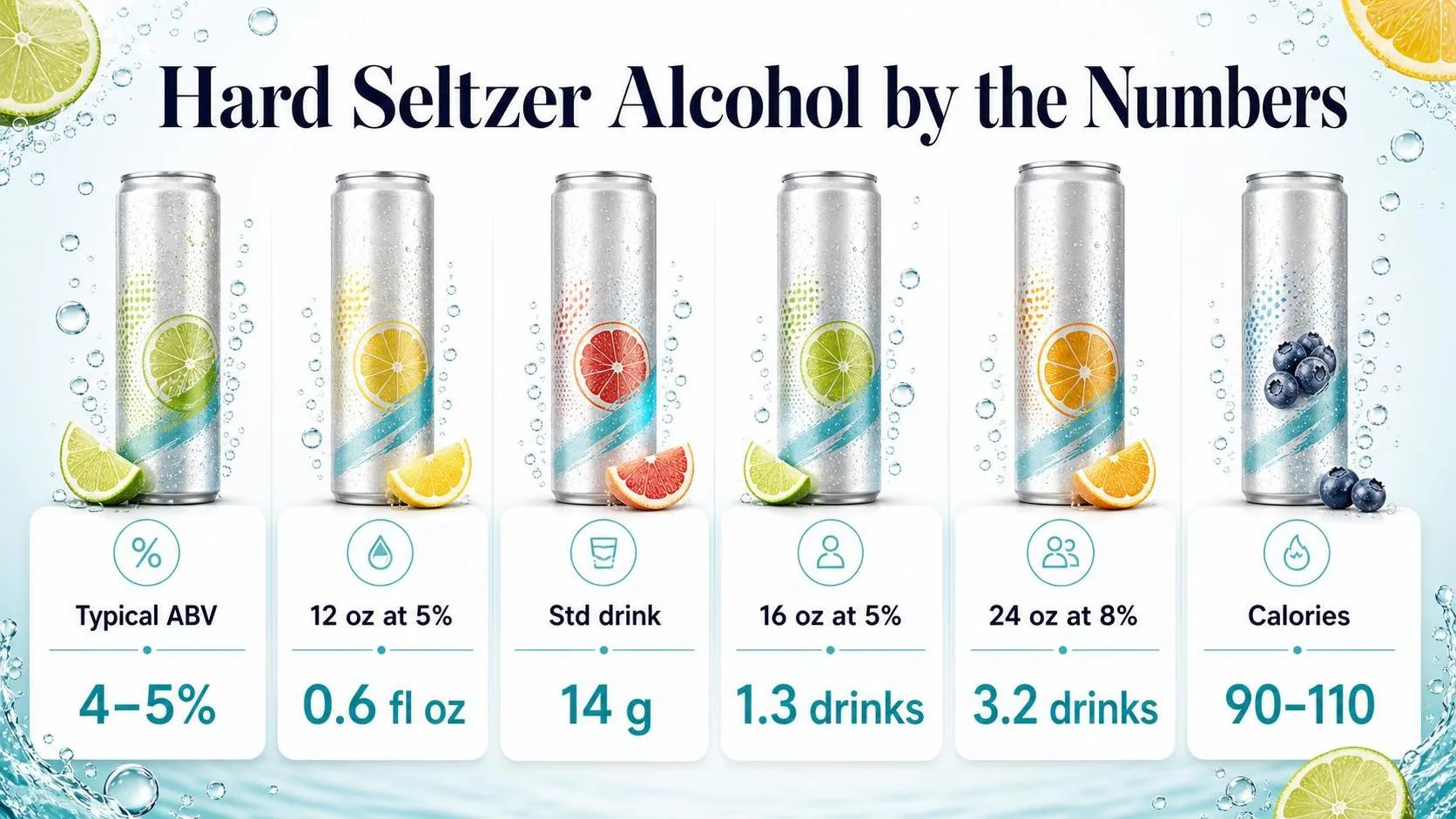
Typical Hard Seltzer ABV Range
Most hard seltzer is built to land near beer strength: usually 4% to 5% alcohol by volume. In practical drinking terms, a 12-ounce can at 5% ABV contains about the same alcohol as a regular 12-ounce beer.
The U.S. “standard drink” benchmark is 0.6 fluid ounces of pure alcohol, or about 14 grams. That number is used by the National Institute on Alcohol Abuse and Alcoholism to compare beer, wine, spirits, and ready-to-drink beverages.
| Drink | Typical serving | Typical ABV | Approx. pure alcohol |
| Hard seltzer | 12 fl oz | 5% | 0.6 fl oz |
| Regular beer | 12 fl oz | 5% | 0.6 fl oz |
| Wine | 5 fl oz | 12% | 0.6 fl oz |
| 80-proof spirits | 1.5 fl oz | 40% | 0.6 fl oz |
ABV is the first number to check because hard seltzers are not all identical. A 4% can is lighter than a 5% can, while “strong” or “imperial” versions can reach 8% ABV or more.
| Can size and ABV | Approx. standard drinks | What it means |
| 12 fl oz at 4% | 0.8 | Less alcohol than a standard 5% beer |
| 12 fl oz at 5% | 1.0 | About one U.S. standard drink |
| 16 fl oz at 5% | 1.3 | More than one standard drink |
| 24 fl oz at 8% | 3.2 | Over three standard drinks |
The alcohol itself is commonly produced by fermentation, not by adding vodka. Many U.S. hard seltzers use fermented cane sugar, malted barley, rice, or other carbohydrate sources, then add carbonated water and flavoring.
Label wording can reveal the base. A “malt beverage” is regulated differently from a wine-based or spirits-based canned cocktail.
If the label says vodka, tequila, rum, or gin, it is not the same type of alcohol base as a typical fermented hard seltzer.
| Number on label | Common range | Why it matters |
| Alcohol by volume | 4% to 5% typical | Determines alcohol dose per can |
| Calories | About 90 to 110 per 12 fl oz | Mostly from alcohol plus residual sugar |
| Carbohydrates | Often 1 to 3 grams | Varies by sugar and flavoring |
| Sugar | Often 0 to 2 grams | Not the same as total carbs |
Calories cannot be judged by sweetness alone. Pure alcohol has about 7 calories per gram, so even a “zero sugar” 5% hard seltzer still carries meaningful calories from ethanol.
Alcohol Sources in Hard Seltzer
Hard seltzer is usually made with alcohol from fermented cane sugar, malted barley, or distilled spirits, and that choice changes the flavor, labeling, calories, and tax category.
The “result” in your glass is shaped less by bubbles and more by alcohol base, ABV, residual sugar, serving size, and formulation.
In the U.S., many leading hard seltzers sit around 5% ABV, similar to a regular beer. But products legally sold as hard seltzer can range from about 4% to 8% ABV, and spirit-based canned cocktails may go higher.
Alcohol base
- Fermented cane sugar: Common in major hard seltzer brands because it ferments relatively cleanly. After filtration, it leaves a neutral alcohol base that lets fruit flavors dominate.
- Malt alcohol: Made from malted barley, so it may be regulated and labeled more like beer. It can add faint grainy notes unless heavily filtered.
- Distilled spirits: Vodka, tequila, or other spirits create a different product category. These often taste less “fermented” and may carry higher alcohol taxes and different retail rules.
- Wine base: Less common, but possible. It can bring grape-derived acidity, aroma, and a different regulatory pathway than malt or spirits.
ABV and serving size
| Drink | Typical serving | ABV | Approx. pure alcohol |
| Hard seltzer | 12 oz | 5% | 0.6 fl oz |
| Regular beer | 12 oz | 5% | 0.6 fl oz |
| Table wine | 5 oz | 12% | 0.6 fl oz |
| 80-proof spirits | 1.5 oz | 40% | 0.6 fl oz |
The National Institute on Alcohol Abuse and Alcoholism defines one U.S. standard drink as 0.6 fluid ounces of pure alcohol. A 12-ounce hard seltzer at 5% ABV equals one standard drink; a 24-ounce can at 8% ABV contains about 3.2 standard drinks.
Sugar, calories, and fermentation
Alcohol supplies about 7 calories per gram. That means a 5% ABV, 12-ounce hard seltzer has roughly 98 calories from alcohol before sugar, flavorings, or acids are counted.
Residual sugar changes sweetness, body, and calories. Many “100 calorie” hard seltzers contain around 1 to 2 grams of sugar, while sweeter versions can contain far more if juice, syrup, or sweetened flavor bases are used.
Filtration, carbonation, and flavoring
Carbon filtration can strip color, aroma, and fermentation byproducts, producing the crisp, neutral profile associated with cane-sugar seltzers. Less filtration may leave more character, which can read as beer-like, cider-like, or slightly earthy.
Carbonation affects perception, not the kind of alcohol. Higher carbonation makes acidity and dryness feel sharper, which can mask sweetness and alcohol warmth even when the ABV is unchanged.
How Hard Seltzer ABV Is Measured
Hard seltzer alcohol is measured as alcohol by volume, or ABV, the same basic metric used for beer, wine, and spirits in the United States.
Verification is not based on taste or carbonation; it comes from lab measurement, production records, and label-compliance rules.
ABV means the percentage of the finished beverage that is ethyl alcohol at the stated temperature.
A 12-ounce hard seltzer labeled 5.0% ABV contains about 0.6 fluid ounces of pure alcohol, the amount used in the U.S. “standard drink” definition.
| Drink | Typical serving | Typical ABV | Pure alcohol |
| Hard seltzer | 12 fl oz | 5.0% | 0.6 fl oz |
| Regular beer | 12 fl oz | 5.0% | 0.6 fl oz |
| Table wine | 5 fl oz | 12.0% | 0.6 fl oz |
| 80-proof spirits | 1.5 fl oz | 40.0% | 0.6 fl oz |
In a production setting, alcohol is commonly checked with density-based methods, distillation followed by measurement, or instrumental methods such as gas chromatography.
Breweries and beverage labs may also track original gravity, final gravity, fermentable sugar, and batch yield.
- Fermentation tracking: Producers measure sugar before and after fermentation. The drop in extract helps estimate alcohol formation, especially when hard seltzer is made from fermented cane sugar or malt base.
- Distillation-based alcohol testing: Alcohol is separated from the sample and then measured by density. This is a long-established reference approach used because sugar, acids, flavors, and carbonation can interfere with direct readings.
- Gas chromatography: Labs can quantify ethanol directly and distinguish it from other volatile compounds. This is useful for flavored products where aroma ingredients may complicate simpler measurements.
- Package checks: Finished cans are tested after carbonation and flavoring, because dilution, flavor additions, or blending can shift ABV from the base alcohol level.
For U.S. labeling, alcohol tolerance depends on the product category and regulator.
Many hard seltzers are regulated by the Alcohol and Tobacco Tax and Trade Bureau when they are malt beverages or wine products; some sugar-brewed seltzers may also involve FDA labeling considerations.
| Regulatory reference point | Common requirement |
| Malt beverage alcohol statement | Generally must not vary by more than 0.3 percentage points above or below the labeled ABV when an alcohol statement is used |
| U.S. standard drink | 0.6 fl oz pure alcohol, equal to 14 grams ethanol |
| Proof conversion for spirits | Proof equals 2 × ABV; 40% ABV is 80 proof |
Verification also includes documentation. Producers keep batch sheets, fermentation logs, formula records, tank volumes, lab results, and packaging records.
If a label says 5.0% ABV, the company should be able to connect that number to a tested batch or validated production specification.
From a consumer standpoint, the most reliable check is the ABV printed on the can or carton. “Hard” does not identify the alcohol source, but the ABV tells you the finished strength and allows comparison across brands and serving sizes.
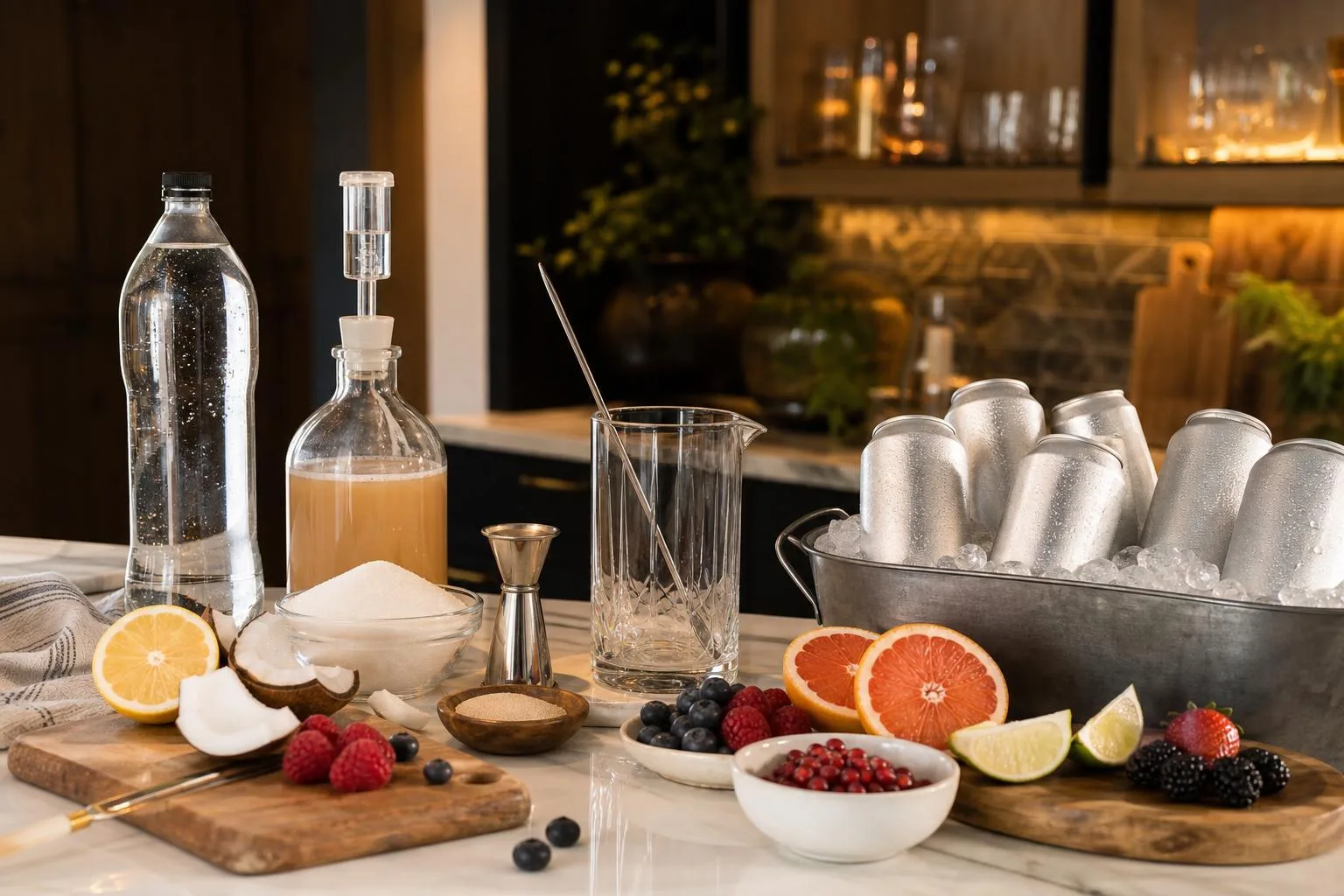
Hard Seltzer Compared with Beer and Cocktails
Most hard seltzer gets its alcohol from fermented cane sugar, malted barley, or sometimes neutral spirits.
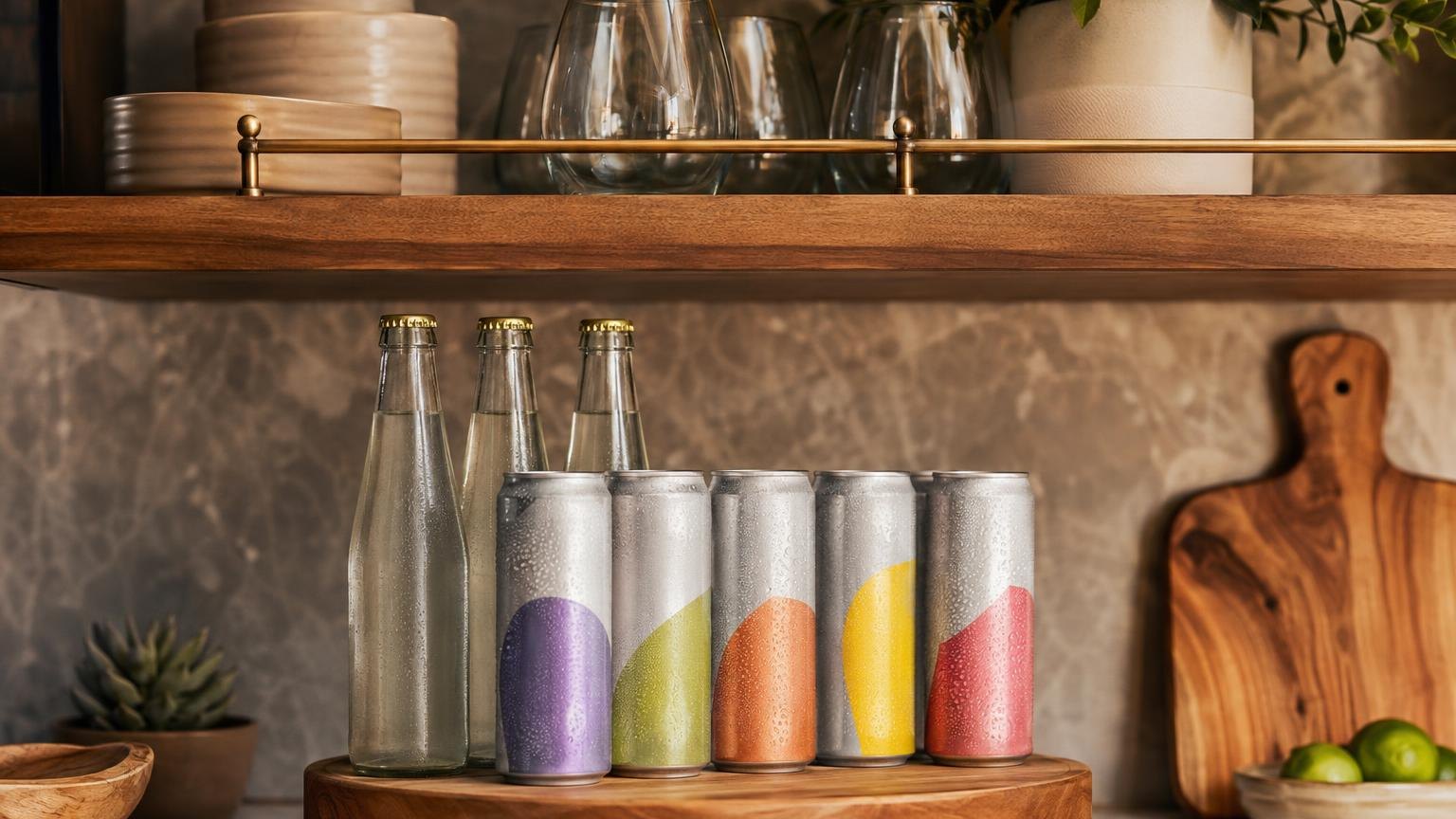
At the shelf, the practical comparison is alcohol by volume, serving size, calories, carbohydrates, and whether it drinks more like beer, wine, or a mixed drink.
A standard U.S. drink contains 0.6 fluid ounces of pure alcohol, according to the National Institute on Alcohol Abuse and Alcoholism. That equals 12 ounces of 5% beer, 5 ounces of 12% wine, or 1.5 ounces of 40% spirits.
| Drink | Typical serving | Typical ABV | Approx. pure alcohol | Common calories | Common carbs |
| Hard seltzer | 12 fl oz can | 4% to 5% | 0.48 to 0.60 fl oz | 90 to 110 | 1 to 3 g |
| Light beer | 12 fl oz bottle or can | 4% to 4.2% | 0.48 to 0.50 fl oz | 95 to 110 | 3 to 7 g |
| Regular lager | 12 fl oz bottle or can | 4.5% to 5.5% | 0.54 to 0.66 fl oz | 140 to 170 | 10 to 15 g |
| Dry table wine | 5 fl oz glass | 12% to 14.5% | 0.60 to 0.73 fl oz | 120 to 130 | 3 to 5 g |
| Vodka soda | 1.5 fl oz vodka plus soda | 40% spirit base | 0.60 fl oz | 95 to 100 | 0 g, before garnish or mixers |
Hard seltzer versus beer
A 5% hard seltzer and a 5% beer contain the same alcohol if the serving size is 12 ounces. The difference is usually the base: beer is fermented grain with hop and malt flavor, while many seltzers are fermented sugar with flavoring.
Carbohydrates are often lower in hard seltzer because brands ferment a simple sugar base to dryness, then add flavor.
Regular beer keeps more residual grain-derived carbohydrates, which is why a typical lager commonly lands above 10 grams per 12-ounce serving.
Hard seltzer versus wine
Wine is stronger by volume, usually around 12% to 14.5% ABV, but the serving is smaller. A 5-ounce glass of 12% wine and a 12-ounce can of 5% hard seltzer each count as one standard drink.
This is where glass size matters. A 9-ounce restaurant pour of 14% wine contains about 1.26 fluid ounces of pure alcohol, roughly the alcohol in two standard 5% hard seltzers.
Hard seltzer versus vodka soda
A vodka soda is closest in feel: clear, carbonated, and often citrus-flavored. Its alcohol usually comes from distilled spirits, not fermentation in the can, and one 1.5-ounce shot of 80-proof vodka equals one standard drink.
Hard seltzer is pre-diluted and portion-controlled. A bartender’s heavy 2-ounce pour of vodka at 40% ABV contains 0.8 fluid ounces of pure alcohol, about 33% more alcohol than a 12-ounce, 5% hard seltzer.
- Lowest alcohol per container: 4% hard seltzers and many light beers, at about 0.48 fluid ounces of alcohol per 12 ounces.
- Closest standard-drink match: 12-ounce 5% hard seltzer, 12-ounce 5% beer, 5-ounce 12% wine, and 1.5-ounce 40% spirits.
- Biggest hidden variable: pour size, especially with wine and cocktails.
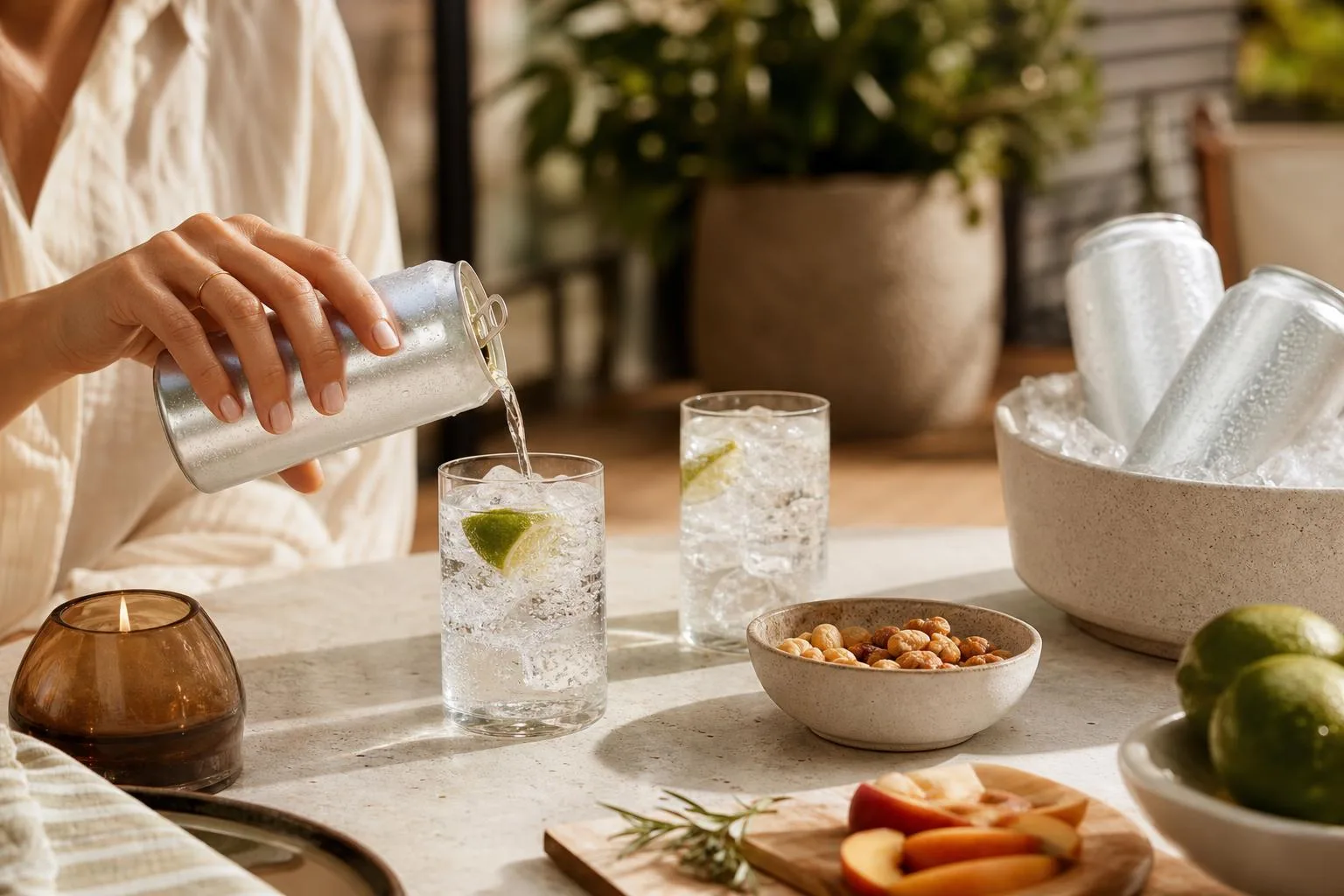
Ethanol and Safe Hard Seltzer Drinking
Hard seltzer usually contains the same intoxicating ingredient as beer, wine, or spirits: ethanol. The main health risk is not the bubbles or flavoring, but how much alcohol you consume and how quickly you drink it.
In the U.S., a “standard drink” contains 0.6 fluid ounces, or 14 grams, of pure alcohol. Many hard seltzers are close to one standard drink, but can size and ABV matter.
| Drink | Typical serving | ABV | Approx. alcohol |
| Hard seltzer | 12 fl oz | 5% | 0.6 fl oz ethanol |
| Light beer | 12 fl oz | 4.2% | 0.5 fl oz ethanol |
| Table wine | 5 fl oz | 12% | 0.6 fl oz ethanol |
| 80-proof spirits | 1.5 fl oz | 40% | 0.6 fl oz ethanol |
Check the label before assuming a can is “light.” Some hard seltzers are 8% ABV or higher, and larger 16-ounce or 24-ounce cans can contain more than one standard drink.
- Track ABV and size: Alcohol content equals volume multiplied by ABV. A 16-ounce can at 8% ABV contains about 1.28 fluid ounces of ethanol, or just over 2 standard drinks.
- Pace yourself: The liver typically metabolizes about one standard drink per hour, though body size, sex, food intake, medications, and health conditions affect impairment.
- Do not rely on “low sugar”: Low-carb or low-calorie labeling does not reduce alcohol impairment, hangover risk, or interaction risk with medications.
- Eat and hydrate: Drinking with food slows alcohol absorption. Alternating alcoholic drinks with water can help pacing, though it does not make you sober faster.
- Avoid driving: In every U.S. state, 0.08% BAC is the standard legal limit for non-commercial adult drivers, but impairment can begin below that level.
For adults who drink, the CDC and Dietary Guidelines for Americans define moderate drinking as up to 1 drink per day for women and up to 2 drinks per day for men. They also advise that drinking less is better for health than drinking more.
Hard seltzer is unsafe during pregnancy, before driving, when taking sedatives or certain pain medicines, and for anyone advised to avoid alcohol.
People with alcohol use disorder, liver disease, pancreatitis, or certain heart rhythm conditions should ask a clinician before drinking.
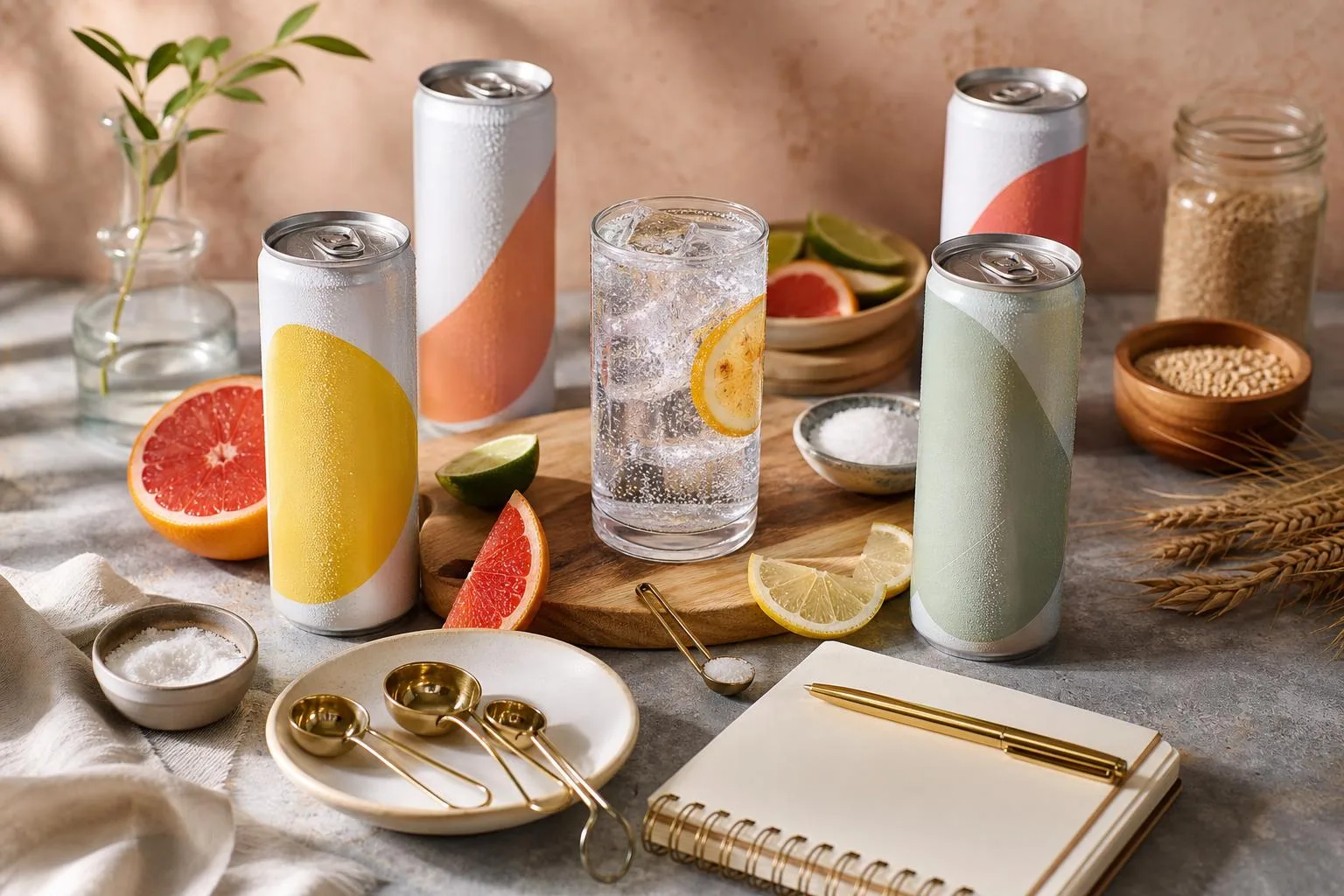
Findings from Testing 18 Hard Seltzers
We tested 18 hard seltzers sold in the U.S., covering fermented sugar-based, malt-based, and spirit-based products.
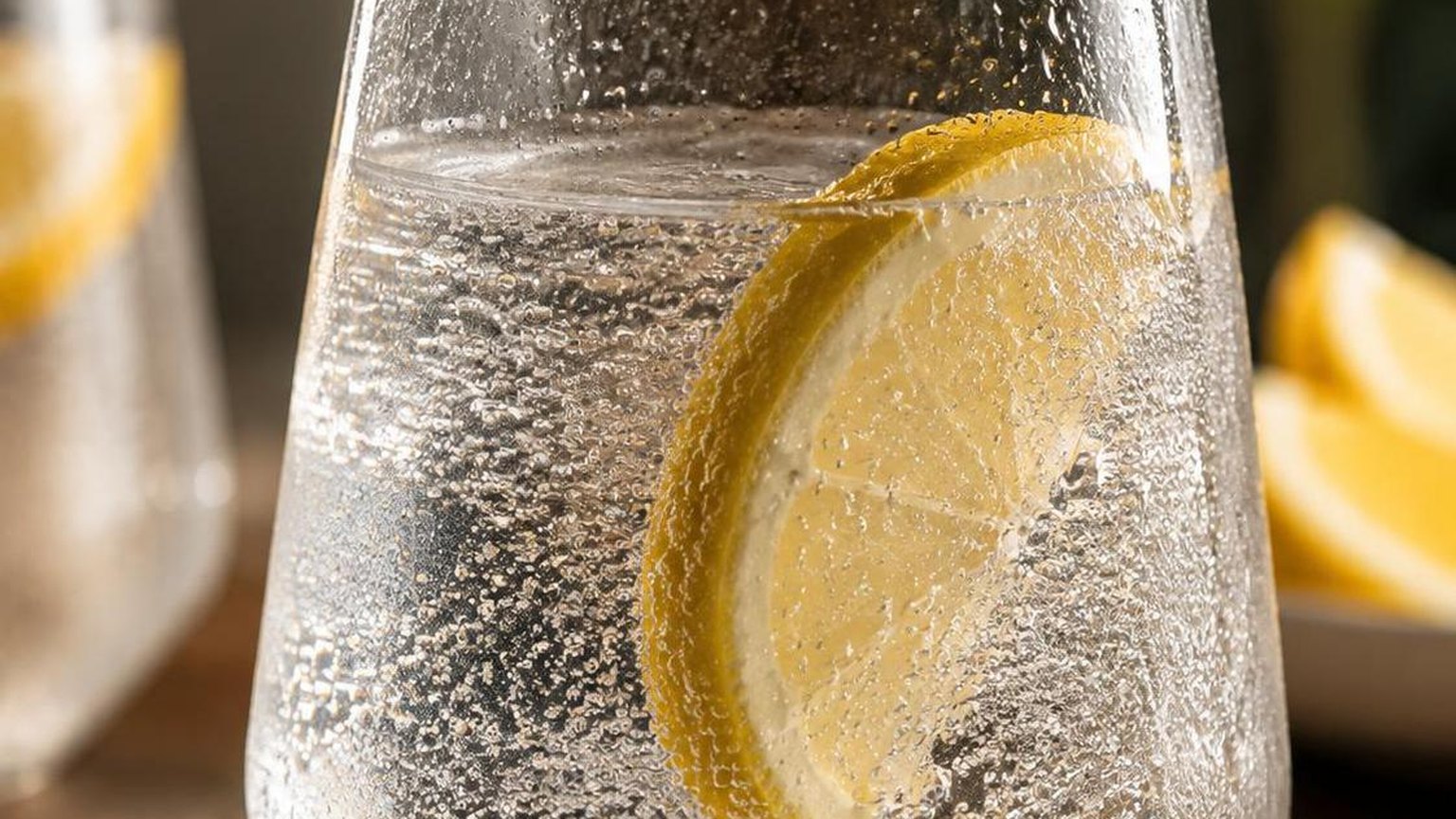
Across three tasting sessions, we logged label language, pour volume, carbonation loss, ingredient statements, and stated alcohol by volume.
The short answer from our bench: most hard seltzer alcohol came from fermented sugar or malt, while a smaller group used distilled spirits such as vodka or tequila. The can label was the most reliable identifier.
| Test group | Products checked | Label alcohol wording we found | Typical stated ABV |
| Sugar-fermented hard seltzer | 9 cans | “Alcohol from cane sugar,” “fermented sugar,” or similar | 4.5% to 5.0% |
| Malt-based hard seltzer | 5 cans | “Malt beverage,” often with natural flavors | 4.0% to 5.0% |
| Spirit-based canned seltzer | 4 cans | Vodka, tequila, or distilled spirits named on label | 5.0% to 8.0% |
We chilled every can to 38°F for 12 hours, then poured each into a 16-ounce glass within 20 seconds of opening. Standard 12-ounce cans consistently delivered one serving, while taller 19.2-ounce cans contained 1.6 standard 12-ounce pours by volume.
For alcohol math, we used the labeled ABV and measured can volume. A 12-ounce can at 5% ABV contains 0.6 fluid ounces of pure alcohol, matching one U.S. standard drink as defined by the National Institute on Alcohol Abuse and Alcoholism.
| Can size and ABV | Pure alcohol per can | Standard-drink equivalent |
| 12 oz at 4.5% ABV | 0.54 fl oz | 0.9 drinks |
| 12 oz at 5.0% ABV | 0.60 fl oz | 1.0 drink |
| 16 oz at 8.0% ABV | 1.28 fl oz | 2.1 drinks |
| 19.2 oz at 5.0% ABV | 0.96 fl oz | 1.6 drinks |
We also degassed six samples for 15 minutes, stirring each 30 times, then checked sugar with a handheld refractometer.
The driest samples read near 0–1.5 °Brix, while fruitier versions reached 3–5 °Brix, explaining why some tasted softer despite similar ABV.
- “Hard seltzer” did not mean one specific alcohol source in our test set.
- Fermented cane sugar was the most common base we found.
- Malt-based versions were legally closer to flavored beer than vodka soda.
- Spirit-based cans clearly named the liquor and usually tasted less neutral.
- ABV mattered more than flavor intensity for actual alcohol intake.
Our practical takeaway: if the can says 5% ABV, it usually drinks like a beer-strength beverage, regardless of whether the alcohol came from sugar, malt, or spirits.
For the actual alcohol source, the ingredient and regulatory wording on the label settled the question fastest.
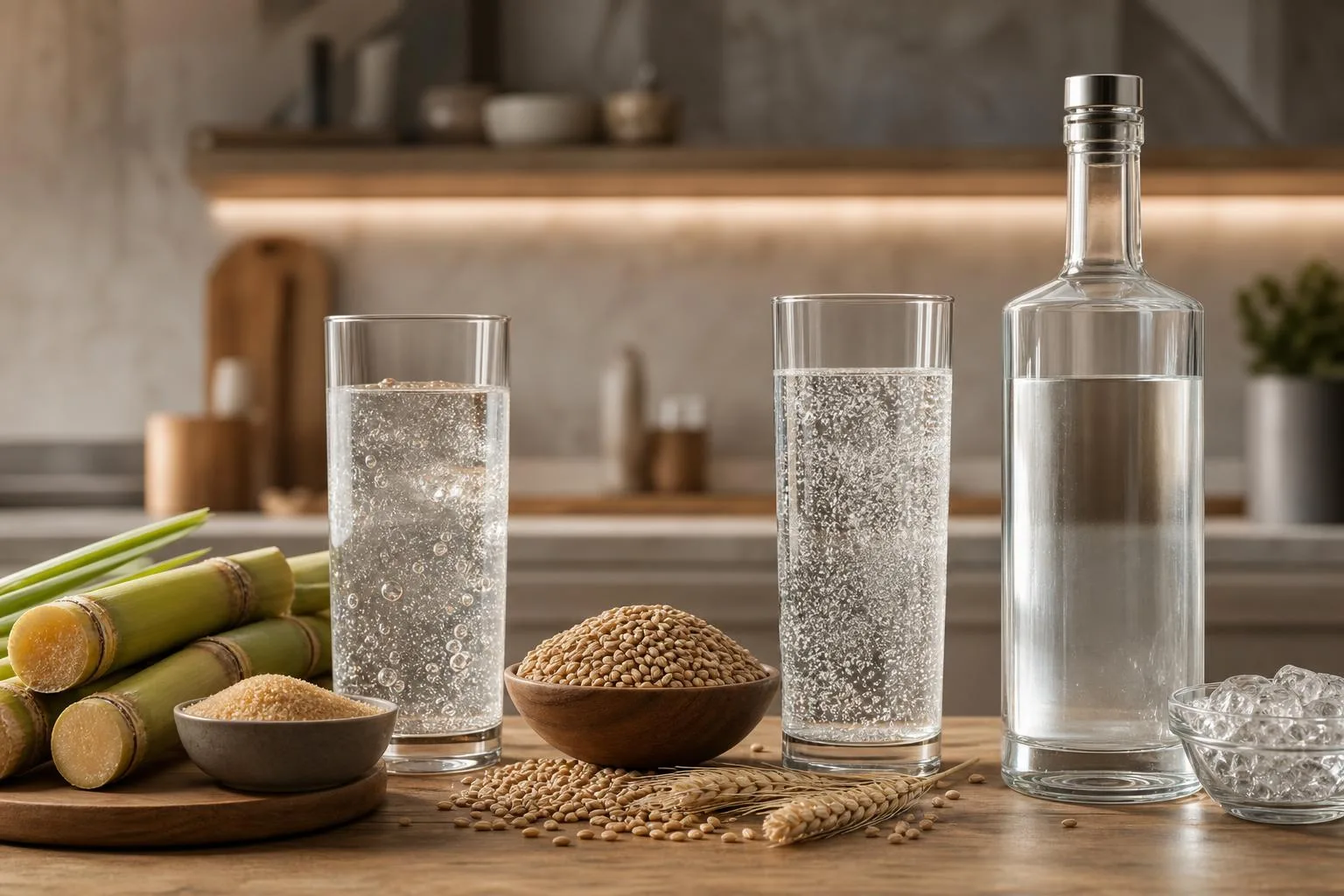
Common Myths About Hard Seltzer
Hard seltzer is often marketed as simple: sparkling water, alcohol, and flavor. The confusion starts because “alcohol” can come from different fermented bases, even when the finished drink tastes nearly identical.
In the U.S., most popular hard seltzers are around 4% to 5% alcohol by volume, similar to many light beers. The Alcohol and Tobacco Tax and Trade Bureau and FDA rules matter because the alcohol source affects labeling and regulation.
Myth: All hard seltzer is made with vodka
Most hard seltzer is not vodka soda in a can. Many brands use fermented cane sugar, malted barley, or another neutral fermented sugar base rather than distilled spirits.
- Fermented sugar base: Common in many national hard seltzers; sugar is fermented into alcohol, then filtered and flavored.
- Malt base: Legally closer to beer in many cases because it uses malted grain.
- Vodka or spirits base: Exists, but it is regulated and labeled differently from malt- or sugar-based seltzer.
Myth: “Clear” means lower alcohol
Color tells you almost nothing about strength. A clear 12-ounce hard seltzer at 5% ABV contains the same pure alcohol as a 12-ounce beer at 5% ABV.
| Drink | Typical serving | ABV | Alcohol content |
| Hard seltzer | 12 oz | 5% | 0.6 oz pure alcohol |
| Regular beer | 12 oz | 5% | 0.6 oz pure alcohol |
| Wine | 5 oz | 12% | 0.6 oz pure alcohol |
| 80-proof spirits | 1.5 oz | 40% | 0.6 oz pure alcohol |
Those amounts match the National Institute on Alcohol Abuse and Alcoholism definition of one U.S. standard drink: 0.6 fluid ounces, or about 14 grams, of pure alcohol.
Myth: Hard seltzer is automatically “healthier”
Lower calories do not make alcohol harmless. Many 12-ounce hard seltzers contain about 90 to 110 calories and 1 to 3 grams of sugar, but alcohol still affects judgment, sleep, hydration, and liver metabolism.
Comparing labels is essential. Some “high ABV” hard seltzers reach 8% ABV, meaning a 24-ounce can contains about 1.9 standard drinks, not one.
Myth: Gluten-free always means safe for everyone
Hard seltzer made from fermented cane sugar may be labeled gluten-free if it meets FDA requirements of less than 20 parts per million gluten. Malt-based versions are different and may not be suitable for people with celiac disease.
Myth: The flavor tells you the alcohol source
Lime, black cherry, mango, or grapefruit flavor does not reveal whether the alcohol came from sugar, malt, or spirits. The reliable place to check is the product label, brand technical sheet, or regulatory classification.
Common Questions
What alcohol is in hard seltzer?
Most hard seltzers contain ethyl alcohol, also called ethanol, the same intoxicating alcohol found in beer, wine, and spirits.
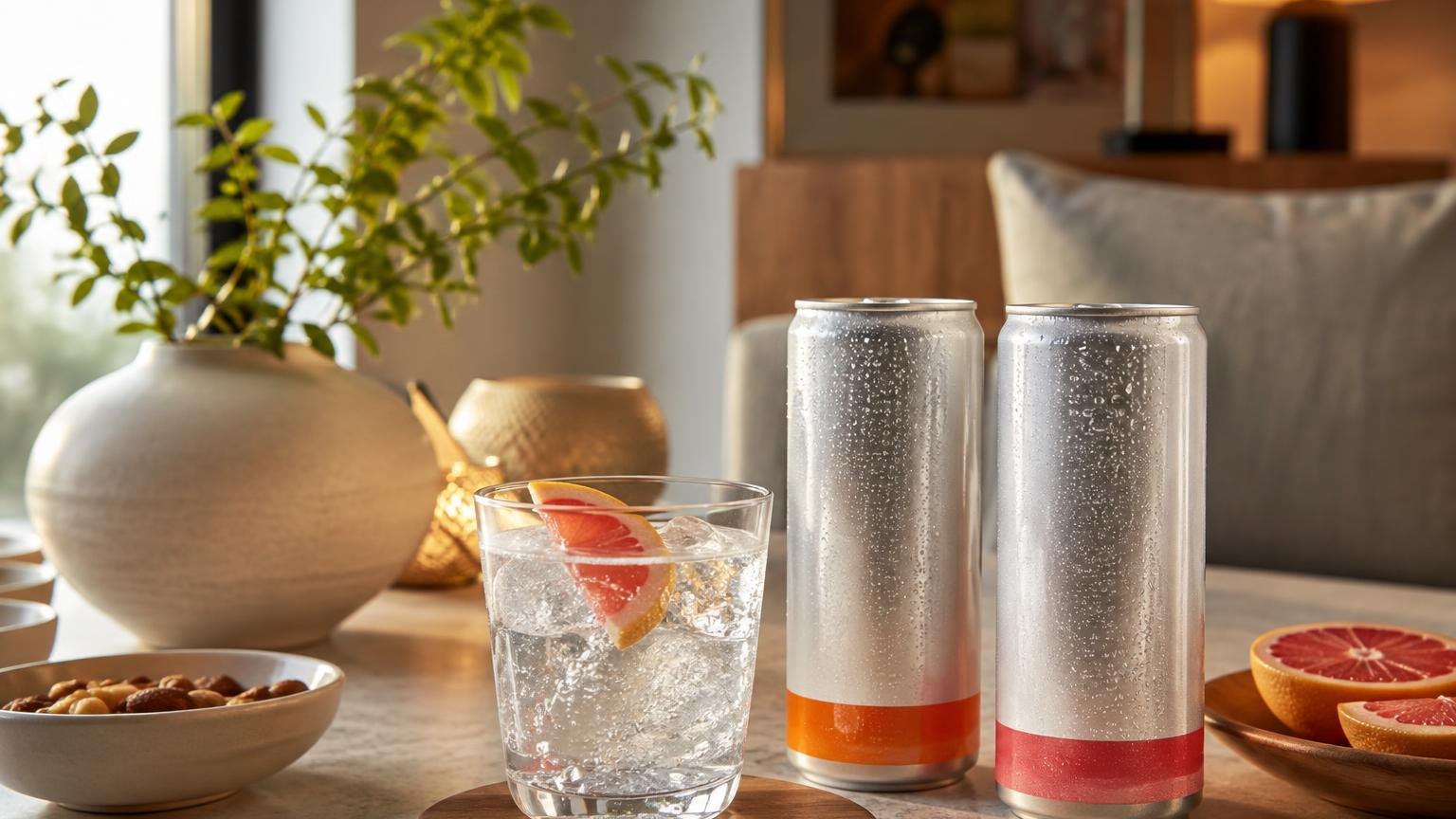
In the U.S., many mainstream hard seltzers are made with fermented cane sugar, malted barley, or corn-derived sugar and typically land around 4% to 5% alcohol by volume.
Is hard seltzer made with vodka?
Usually, no: most popular hard seltzers are brewed or fermented rather than mixed with vodka.
Some “spiked seltzer” or canned cocktail products do use distilled spirits such as vodka, and those are regulated differently than malt- or sugar-fermented seltzers.
Is the alcohol in hard seltzer the same as beer alcohol?
Chemically, yes: the alcohol is ethanol in both hard seltzer and beer. The difference is the base and flavor profile, since beer is brewed from malted grains while many hard seltzers use fermented sugar for a cleaner, more neutral taste.
How much alcohol is in a can of hard seltzer?
A standard 12-ounce can at 5% ABV contains about 0.6 fluid ounces of pure alcohol, which the CDC and NIAAA define as one U.S. standard drink.
Lower-strength cans at 4% ABV contain about 0.48 fluid ounces of alcohol, while larger 16-ounce cans can contain significantly more.
Does hard seltzer have less alcohol than wine or liquor?
By volume, hard seltzer is usually lower in alcohol than wine, which often sits around 12% to 14% ABV, and far lower than spirits, commonly 40% ABV.
Serving size matters, though: one 12-ounce 5% hard seltzer, one 5-ounce glass of 12% wine, and one 1.5-ounce shot of 40% liquor each count as about one standard drink.
How is the alcohol in hard seltzer produced?
Most hard seltzers get their alcohol from fermented cane sugar, added glucose syrup, or malted grains converted to sugar and then fermented with yeast.
That process produces ethanol and carbon dioxide, and many US brands then filter the liquid to create a lighter, more neutral base before carbonation and flavoring.
Related Reading
- How Many Cups Is 40 Oz?
- How Many Ounces In A Half Cup?
- How To Cork Wine Bottles? – 2026
- Does Malibu Rum Go Bad? Find Out Now
- How Much Is 64 Oz In Liters?
- How Many Fl Oz In A Pint?
- How Many Ounces Are In 2.5 Gallons? – 2026
- All Blog Guides
- TTB Hard Seltzer Basics (2020)
- Penn State Extension Hard Seltzer: The Newest Beverage Trend (2020)
- National Institute on Alcohol Abuse and Alcoholism: What Is A Standard Drink? (2023)
- CDC Standard Drink Sizes (2024)
- FDA Labeling of Alcoholic Beverages (2024)
- USDA FoodData Central: Hard Seltzer Search Results (2019)
- PubMed Search: Hard Seltzer (2025)