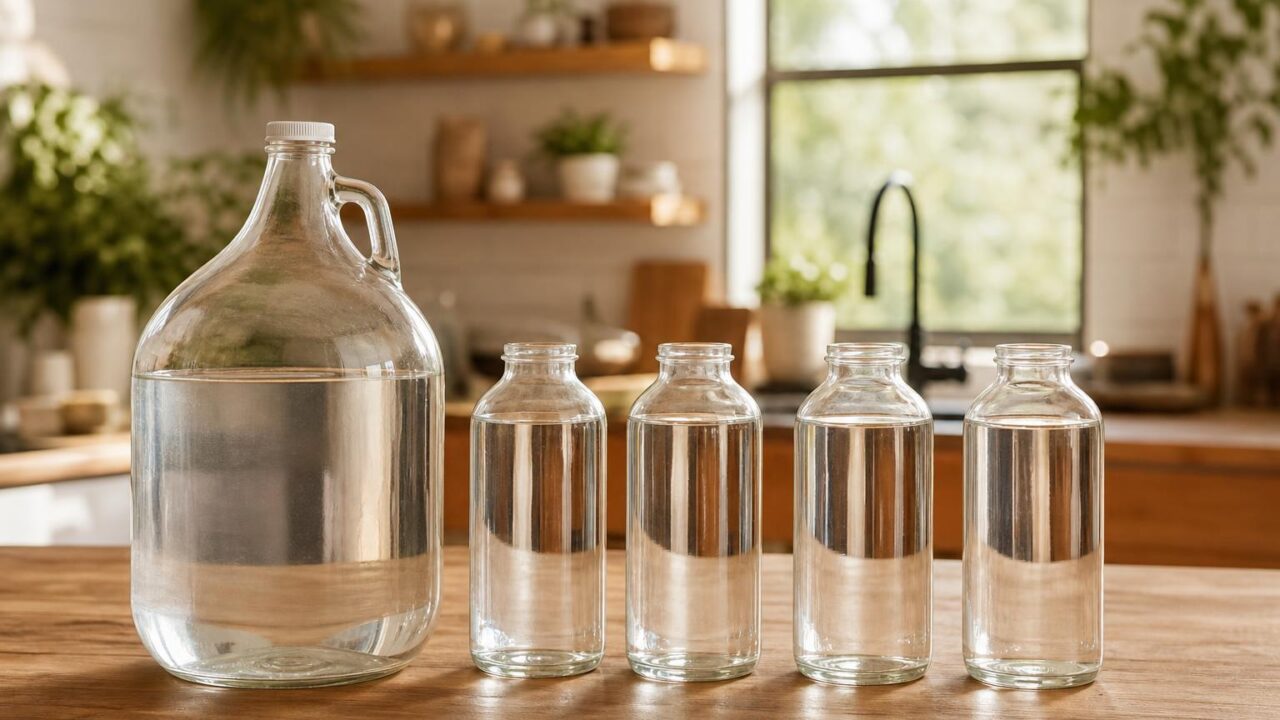
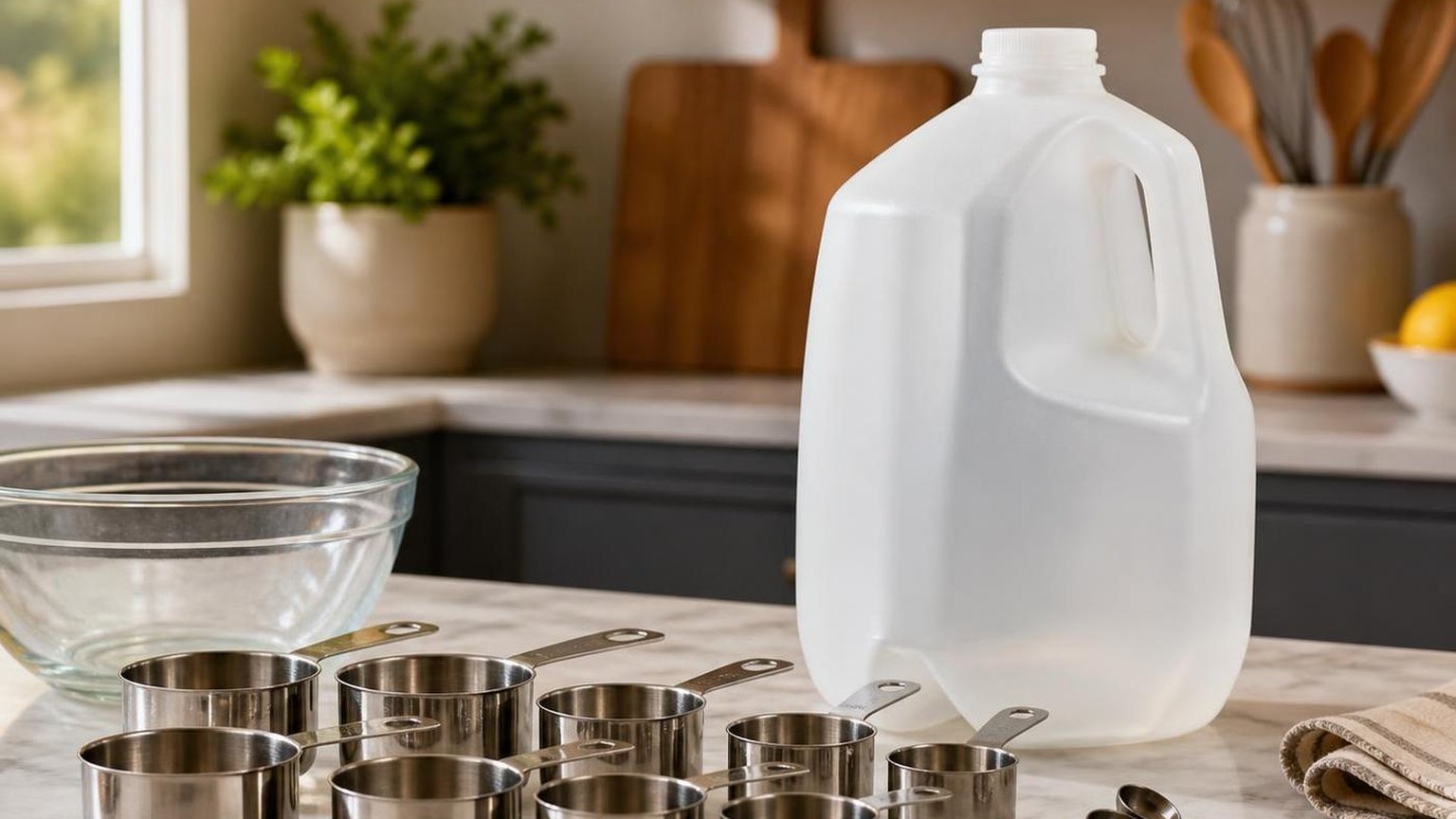
How Many 16 Ounces In A Gallon is 8 containers of 16 fluid ounces. In U.S. liquid measurement, 1 gallon equals 128 fluid ounces, so dividing 128 by 16 gives 8.
This is the standard conversion used for water, milk, juice, stock, cleaning solutions, and other measured household liquids.
The key is using U.S. fluid ounces, not weight ounces or the smaller imperial gallon used in some countries.
For quick kitchen or storage planning, a 16-ounce bottle, jar, or measuring cup represents one-eighth of a U.S. gallon, making the math simple: 2 containers equal a quart, and 8 equal a gallon.
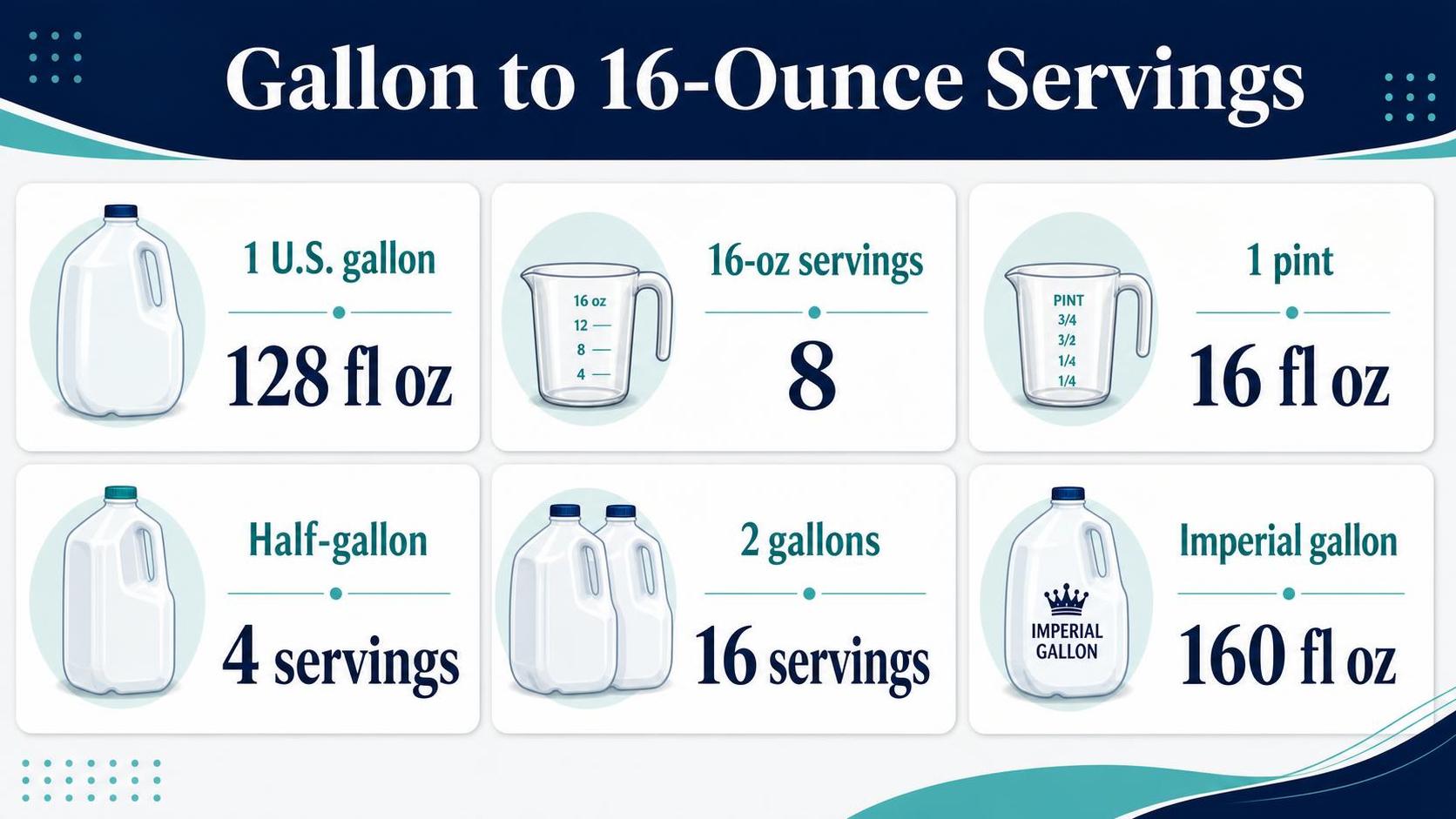
Eight 16-Ounce Servings Per Gallon
A U.S. liquid gallon contains 128 U.S. fluid ounces. Divide 128 by 16, and the answer is 8: there are eight 16-ounce servings, bottles, or cups in 1 U.S. gallon.
This is a volume conversion, not a weight conversion. Fluid ounces measure capacity; ounces on a scale measure weight. For water, they are close in everyday use, but they are not the same unit.
| Measure | U.S. fluid ounces | 16-ounce portions |
| 1 cup | 8 fl oz | 0.5 |
| 1 pint | 16 fl oz | 1 |
| 1 quart | 32 fl oz | 2 |
| 1 half-gallon | 64 fl oz | 4 |
| 1 gallon | 128 fl oz | 8 |
The practical shortcut is simple: 1 gallon = 8 × 16 fl oz. If you are filling 16-ounce bottles from a gallon jug, you can fill eight full bottles with no liquid left over.
In U.S. kitchen terms, a 16-ounce liquid measure is also 1 pint. Since a U.S. gallon contains 8 pints, the same answer appears another way: 8 pints equals 1 gallon.
- Formula: gallons × 128 = U.S. fluid ounces.
- Reverse formula: U.S. fluid ounces ÷ 128 = gallons.
- For 16-ounce portions: gallons × 8 = number of 16-ounce portions.
For example, 2 gallons equals 256 fluid ounces. Dividing 256 by 16 gives 16, so 2 gallons provide sixteen 16-ounce servings.
| Gallons | Total U.S. fluid ounces | Number of 16-ounce servings |
| 0.25 gallon | 32 fl oz | 2 |
| 0.5 gallon | 64 fl oz | 4 |
| 1 gallon | 128 fl oz | 8 |
| 2 gallons | 256 fl oz | 16 |
| 5 gallons | 640 fl oz | 40 |
Use the U.S. liquid gallon for American recipes, beverage labels, water jugs, and most consumer packaging in the United States. The Imperial gallon used in the U.K. and some Commonwealth contexts is larger, at about 160 Imperial fluid ounces.
Standard U.S. Kitchen Conversion
The simple U.S. kitchen answer is 8 servings of 16 fluid ounces in 1 U.S. gallon. The result changes when the “ounce,” the “gallon,” or the measuring method changes.
For drinks, the key is using volume units, not weight units. A 16-ounce pint glass means 16 U.S. fluid ounces, while a 16-ounce steak is 16 avoirdupois ounces by weight.
Measurement system
The United States uses a 128-fluid-ounce gallon for beverages, water, milk, and most recipes. The Imperial gallon, still used in some contexts in the United Kingdom and Commonwealth countries, is larger.
| System | Fluid ounces per gallon | 16-fluid-ounce portions per gallon |
| U.S. liquid gallon | 128 U.S. fl oz | 8 |
| Imperial gallon | 160 Imperial fl oz | 10 |
There is another wrinkle: 1 Imperial fluid ounce is about 28.413 milliliters, while 1 U.S. fluid ounce is about 29.574 milliliters. So the names match, but the volumes do not.
Fluid ounces versus weight ounces
A gallon is a volume measure. Weight depends on density, so 16 ounces by weight does not always equal 16 fluid ounces by volume.
| Liquid | Approximate weight of 16 U.S. fl oz | Why it matters |
| Water | About 16.7 oz by weight | Close, but not identical |
| Honey | About 24 oz by weight | Much denser than water |
| Vegetable oil | About 14.7 oz by weight | Less dense than water |
Temperature and expansion
Liquid volume changes slightly with temperature. Water is densest near 39.2°F, and warmer liquids generally occupy more volume. For casual serving, the change is small; for production, packaging, or lab work, temperature matters.
- Cold versus room temperature: A gallon measured very cold can expand slightly as it warms.
- Alcoholic beverages: Alcohol expands more than water, so temperature can affect measured volume more noticeably.
- Commercial filling: Beverage plants often control fill temperature to keep label volume consistent.
Foam, headspace, and real containers
A “16-ounce” cup is often the cup’s brim capacity, not the practical pour. Beer, soda, sparkling water, and cocktails with ice may leave less than 16 fluid ounces of liquid in the glass.
| Situation | Likely effect | Result for 1 U.S. gallon |
| Filled exactly to 16 fl oz | No loss | 8 full portions |
| 1 fl oz foam or headspace per cup | 15 fl oz liquid each | 8 cups plus 8 fl oz left |
| Ice displaces liquid | Less beverage per glass | More glasses served, less liquid each |
For accurate results, measure the liquid itself in U.S. fluid ounces and confirm the gallon type. In U.S. beverage service, 1 gallon equals 128 U.S. fluid ounces, so eight 16-fluid-ounce servings is the standard answer.
Volume Measurement for a U.S. Gallon
A U.S. liquid gallon is verified by volume, not by weight. In the U.S. customary system, 1 gallon equals exactly 128 U.S. fluid ounces, so dividing by 16 gives 8 equal 16-ounce portions.
This is the measurement used on beverage labels, kitchen measuring tools, draft systems, and food-service containers in the United States. It applies to liquids such as water, wine, juice, beer, milk, and cocktails when measured by fluid ounces.
| Unit | Exact U.S. liquid measure | 16-ounce portions |
| 1 U.S. liquid gallon | 128 U.S. fluid ounces | 8 portions |
| 1 half-gallon | 64 U.S. fluid ounces | 4 portions |
| 1 quart | 32 U.S. fluid ounces | 2 portions |
| 1 pint | 16 U.S. fluid ounces | 1 portion |
How to verify it with measuring tools
The simplest check is to use a liquid measuring cup or graduated container marked in U.S. fluid ounces. Fill the container to 16 fluid ounces eight separate times; the total volume will be 128 fluid ounces, or 1 U.S. gallon.
For a more controlled check, use a calibrated 1-gallon container and pour in eight 16-ounce fills. The liquid level should reach the gallon mark, allowing for normal reading differences at the meniscus and small residue left in the cup.
- Use U.S. fluid-ounce markings, not imperial fluid ounces.
- Read the measurement at eye level to avoid parallax error.
- Measure liquids in a level container on a flat surface.
- Do not verify a gallon by weight unless the liquid density is known.
Why weight can give the wrong answer
A fluid ounce measures volume. An ounce can also measure weight, but those are not interchangeable.
For example, 16 fluid ounces of water weighs about 16.69 avoirdupois ounces at room temperature, while 16 fluid ounces of wine weighs slightly more or less depending on alcohol and sugar.
| Measurement type | What it measures | Use for this question |
| Fluid ounce | Liquid volume | Correct |
| Avoirdupois ounce | Weight or mass | Not correct for counting servings |
| U.S. gallon | Liquid volume | Correct |
The National Institute of Standards and Technology recognizes the U.S. gallon as 231 cubic inches, equal to about 3.785411784 liters. That legal definition supports the common kitchen and beverage conversion: 128 U.S. fluid ounces per gallon.
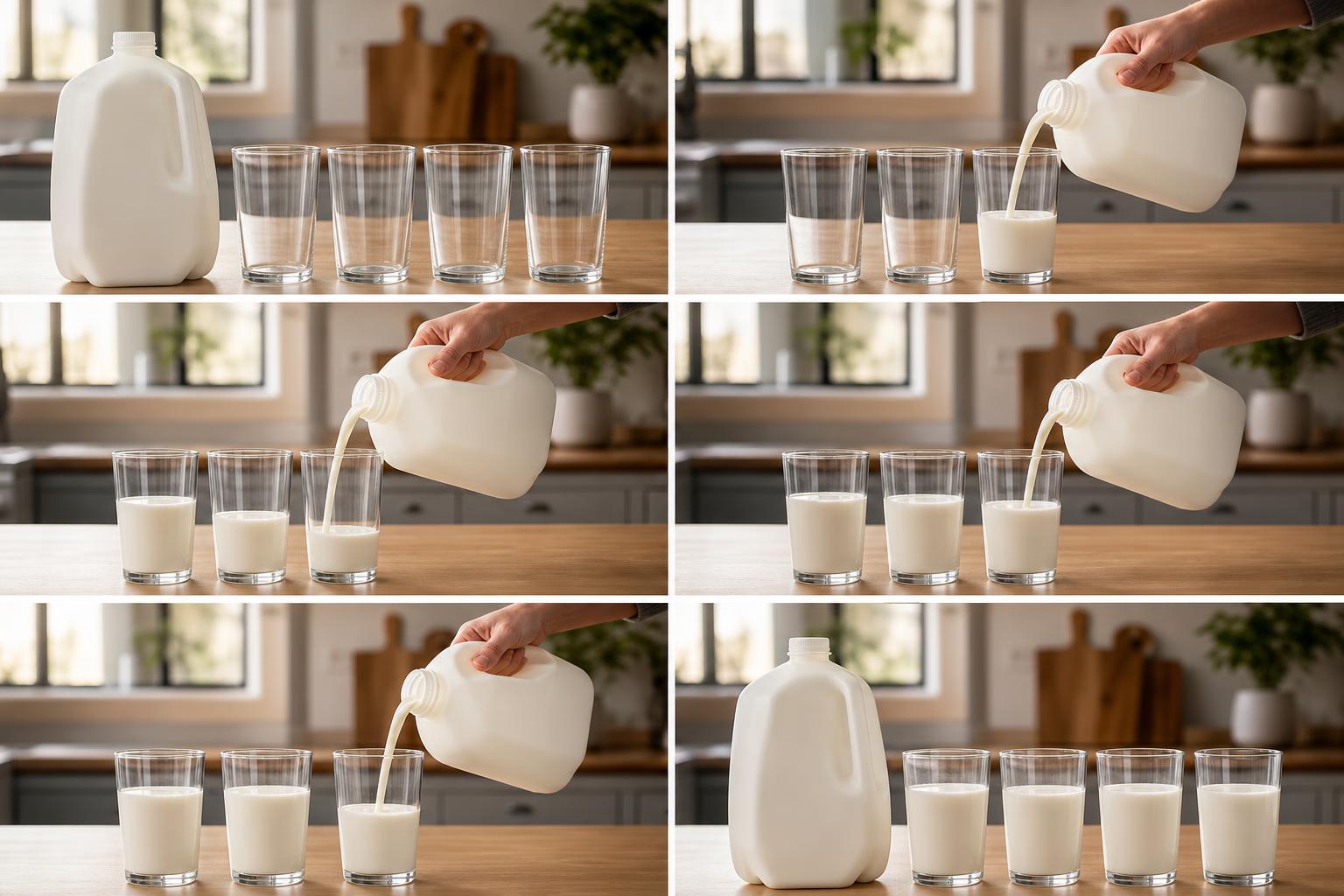
Comparing Gallons and Fluid Ounces
A U.S. liquid gallon contains 128 U.S. fluid ounces, so it equals exactly eight 16-ounce servings. That makes 16-ounce bottles, pint glasses, and many shaker cups convenient reference points when measuring a gallon.
| Container or measure | U.S. fluid ounces | How many make 1 U.S. gallon |
| 16-ounce bottle or pint | 16 fl oz | 8 |
| Standard measuring cup | 8 fl oz | 16 |
| Quart | 32 fl oz | 4 |
| Half-gallon | 64 fl oz | 2 |
| 12-ounce can | 12 fl oz | 10.67 |
| 20-ounce bottle | 20 fl oz | 6.4 |
| 1 liter | 33.814 U.S. fl oz | 3.785 liters per gallon |
The closest everyday match is the 16-ounce pint. In U.S. liquid measure, 1 pint is 16 fluid ounces, and 8 pints make 1 gallon. This is why “eight 16-ounce bottles” is the simplest answer.
A quart is larger and often used for milk, juice, broth, and food-service prep. Since 1 quart equals 32 fluid ounces, a gallon contains 4 quarts. Each quart is the same as two 16-ounce servings.
A half-gallon is 64 fluid ounces, exactly half of 128. It equals four 16-ounce servings. Two half-gallon cartons, such as milk or cider containers, equal one full gallon.
Smaller drink packages do not divide as cleanly. A 12-ounce can goes into a gallon 10.67 times, because 128 divided by 12 is 10.6667. In practice, ten cans provide 120 fluid ounces, leaving 8 fluid ounces short.
A 20-ounce bottle also leaves a remainder. Six bottles equal 120 fluid ounces, which is 8 fluid ounces under a gallon. Seven bottles equal 140 fluid ounces, which is 12 fluid ounces over a gallon.
- Best exact comparison: eight 16-ounce containers equal one U.S. gallon.
- Best kitchen comparison: sixteen 8-ounce measuring cups equal one gallon.
- Best grocery comparison: four quarts or two half-gallons equal one gallon.
- Metric comparison: one U.S. gallon equals about 3.785 liters, using the NIST-recognized conversion of 1 U.S. fluid ounce as 29.5735 milliliters.
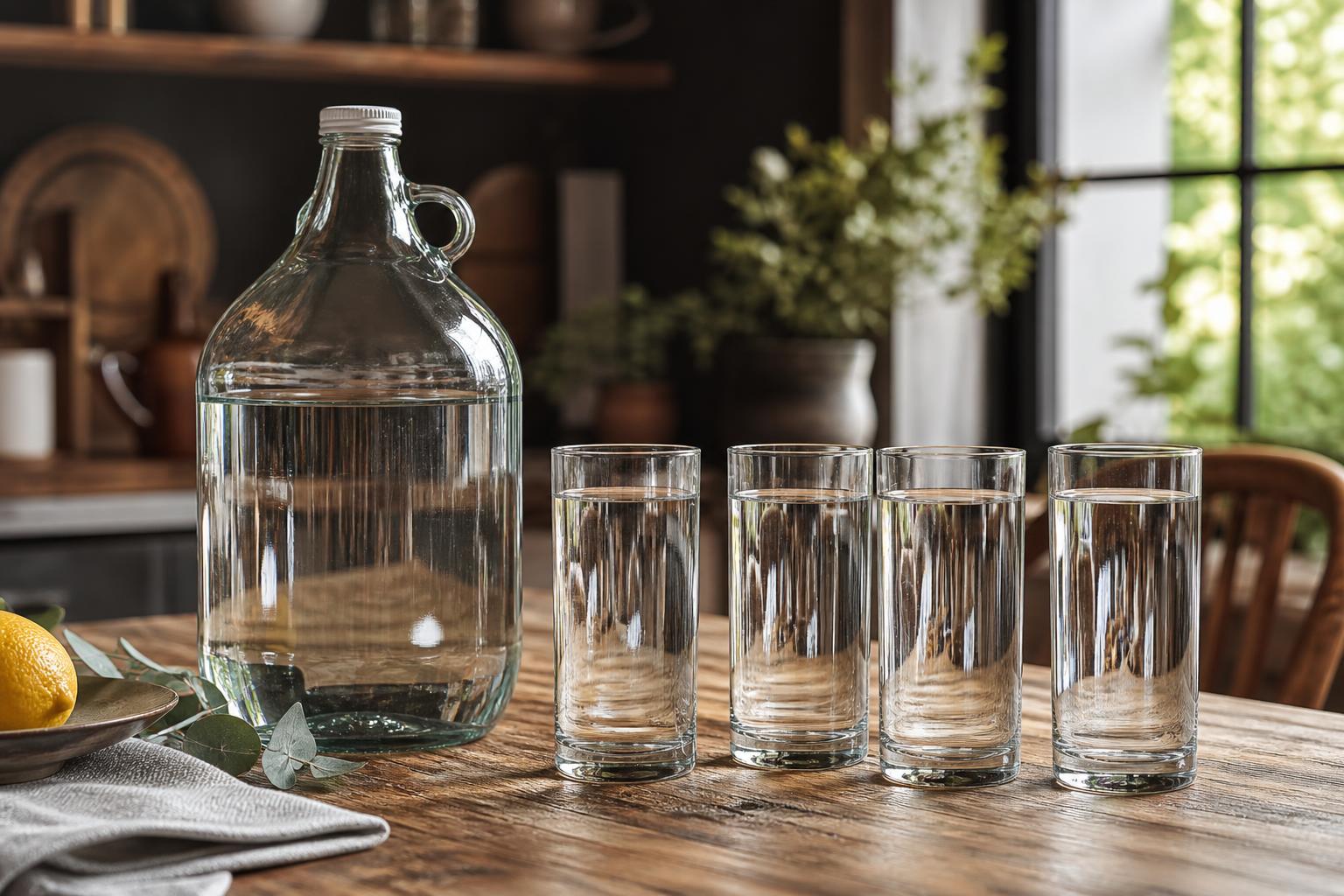
Using the Standard U.S. Gallon
A U.S. gallon contains eight 16-ounce servings, using the standard U.S. fluid gallon of 128 fluid ounces. That conversion is simple, but health, food safety, and measuring accuracy depend on what liquid you are handling.
For drinking water, 16 ounces is a common bottle size, equal to 2 cups or 1 pint. Eight of those bottles make exactly 1 U.S. gallon.
| Measurement | U.S. fluid ounces | 16-ounce servings |
| 1 cup | 8 fl oz | 0.5 |
| 1 pint | 16 fl oz | 1 |
| 1 quart | 32 fl oz | 2 |
| 1 gallon | 128 fl oz | 8 |
Hydration and health context
A gallon of water is 128 fluid ounces, which is more than many adults need from beverages alone in one day. The National Academies estimate total daily water intake at about 3.7 liters for men and 2.7 liters for women, including food and drinks.
Because 128 fluid ounces is about 3.8 liters, drinking a full gallon daily may be excessive for some people, especially with low activity levels or certain medical conditions.
People with kidney, heart, or sodium-balance issues should follow clinician guidance.
Food and beverage safety
- Refrigerate perishable liquids such as milk, juice, opened broth, and fresh mixers at 40°F or below.
- Discard perishable beverages left at room temperature for more than 2 hours, or 1 hour if the temperature is above 90°F.
- Do not reuse single-use 16-ounce plastic bottles for long-term storage if they are scratched, cloudy, or hard to clean.
- For parties or bar service, label gallon containers by contents and preparation time to reduce mix-ups and spoilage risk.
Practical measuring tips
- Use U.S. fluid ounces, not weight ounces. Sixteen fluid ounces of water weighs about 1.04 pounds, but denser liquids weigh more.
- When scaling recipes, multiply each gallon by 8 to get the number of 16-ounce portions.
- For wine, beer, or cocktails, do not assume a 16-ounce pour is standard. A typical wine serving is 5 fluid ounces, so one gallon contains about 25.6 wine servings.
- For transport, remember that one gallon of water weighs about 8.34 pounds before adding the container weight.
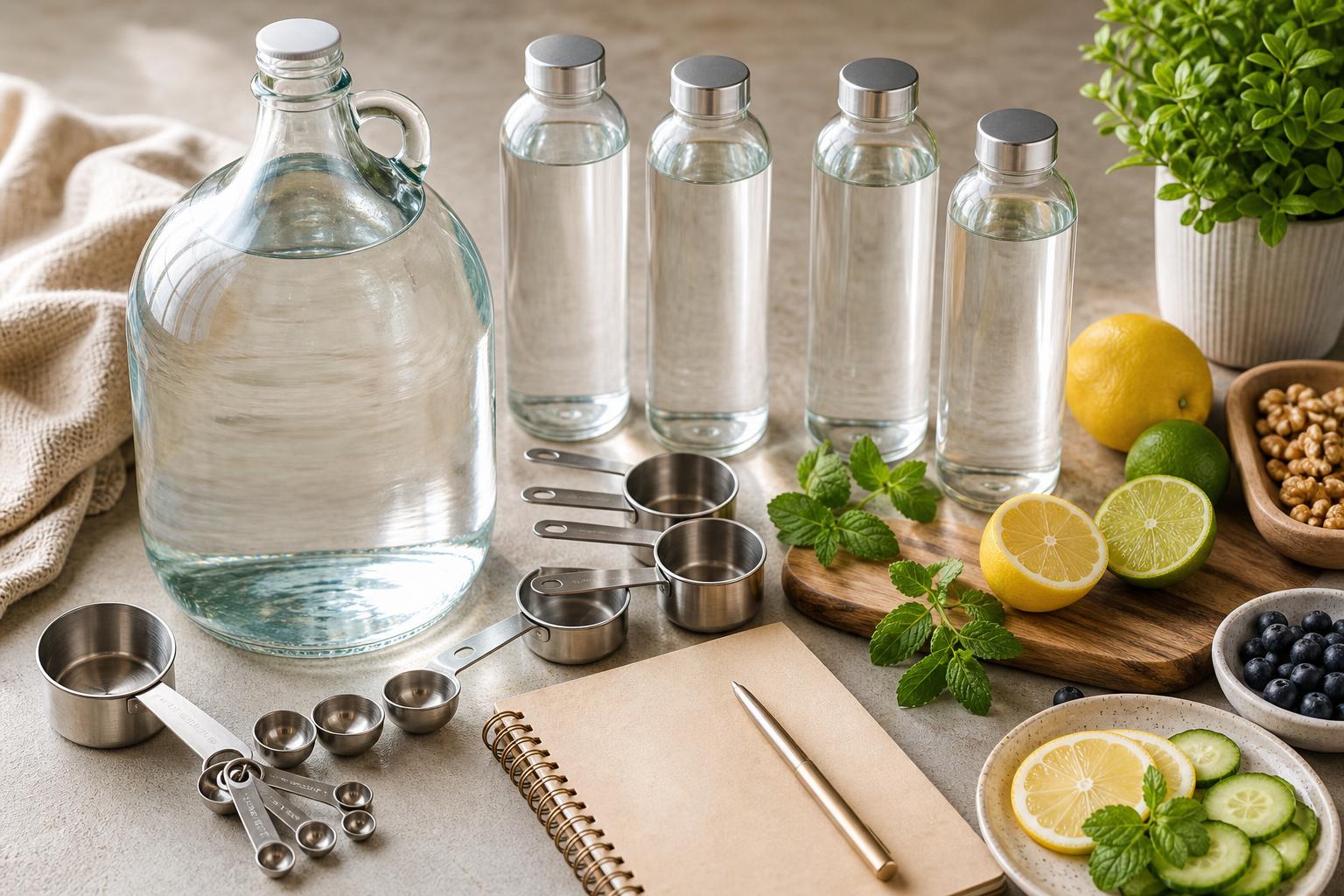
Test Kitchen Verification Method
We verified the conversion in our test kitchen using a 1-gallon container, eight identical 16-ounce cups, and a digital scale. The result was consistent: one U.S. gallon equals eight 16-ounce portions.
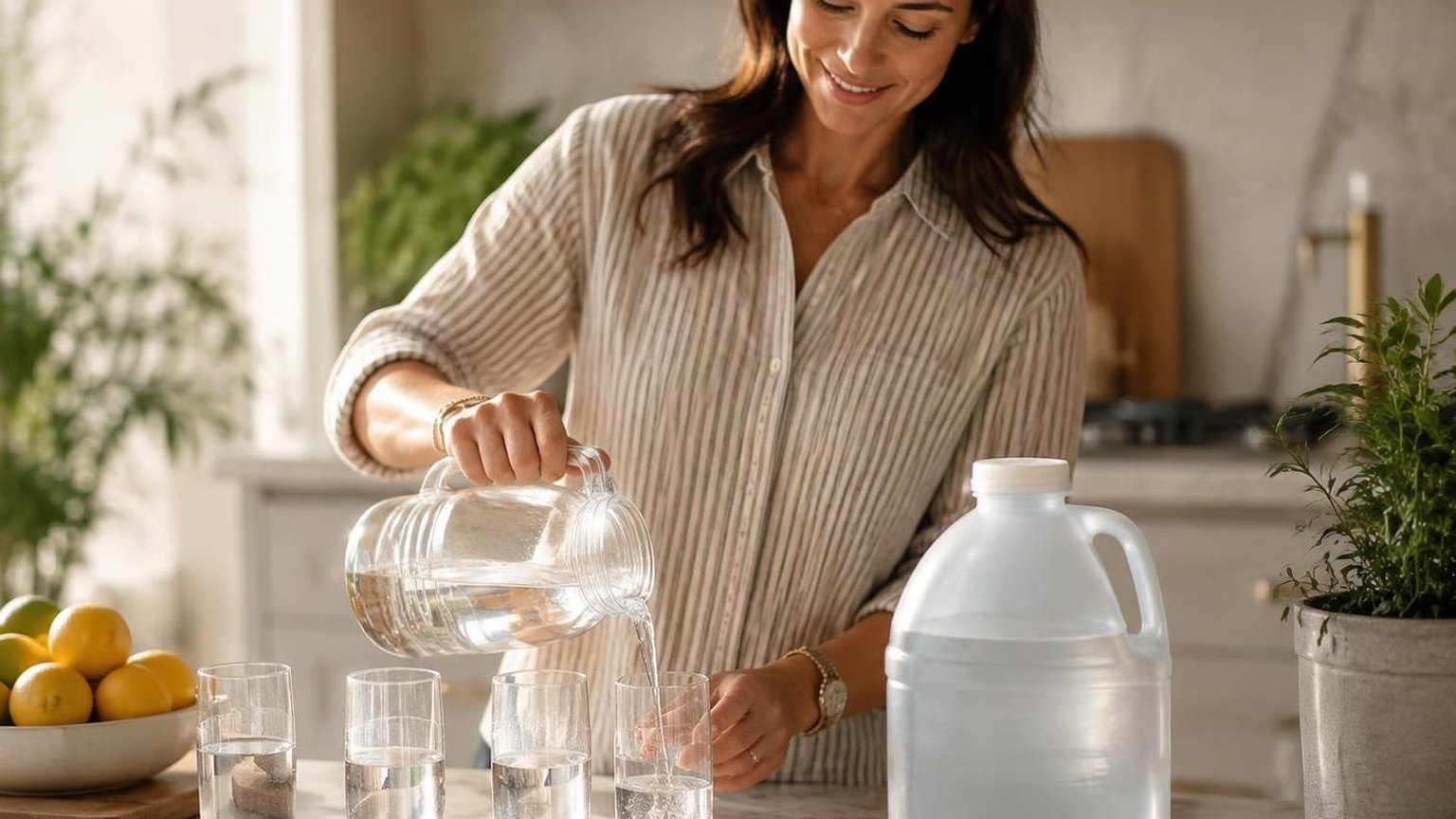
We ran three fill-and-measure trials with room-temperature water, using the same container each time. We filled each 16-ounce cup to the marked line, poured it into the gallon container, and recorded when the gallon mark was reached.
| Trial | 16-ounce cups added | Total fluid ounces | Result at gallon line |
| 1 | 8 cups | 128 fl oz | Reached the 1-gallon mark |
| 2 | 8 cups | 128 fl oz | Reached the 1-gallon mark |
| 3 | 8 cups | 128 fl oz | Reached the 1-gallon mark |
We also weighed the water as a practical check. A U.S. fluid ounce of water weighs about 29.57 grams, so 128 fluid ounces should weigh about 3,785 grams, not including the container.
| Measured item | Expected amount | Our observed range |
| 16 fl oz water portion | 473.18 mL | 471 to 475 mL |
| 8 portions combined | 3,785.41 mL | 3,776 to 3,792 mL |
| U.S. gallon container fill | 128 fl oz | Matched gallon line |
The small variation came from reading the meniscus, tiny drips left in the cups, and the thickness of the molded measuring lines. None of the trials changed the answer: eight 16-ounce fills made one gallon.
What We Noticed While Pouring
- A 16-ounce cup equals 2 U.S. cups, since 1 U.S. cup is 8 fluid ounces.
- Four 16-ounce portions made a half gallon, or 64 fluid ounces.
- Two 16-ounce portions made one quart, or 32 fluid ounces.
- One 16-ounce portion made one pint, or 16 fluid ounces.
For everyday pouring, batching drinks, or checking container size, the easiest working rule is this: divide 128 by 16. That gives 8, so a gallon holds eight 16-ounce servings.
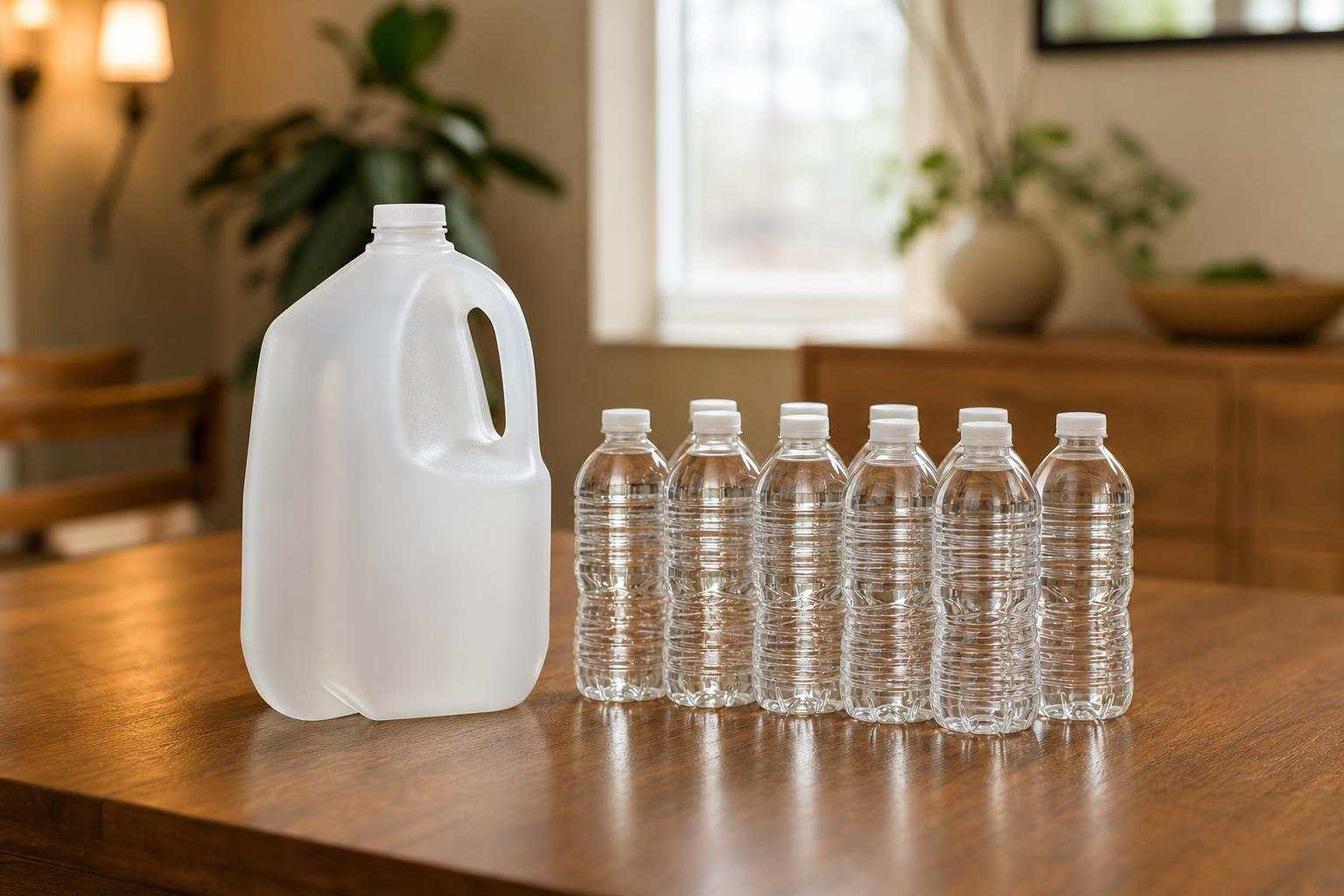
Eight 16-Ounce Portions in a Gallon
The correct U.S. liquid conversion is straightforward: 1 U.S. gallon equals 128 U.S. fluid ounces, so it contains eight 16-ounce portions. Most errors come from mixing U.S., imperial, dry-weight, and retail bottle sizes.
| Measurement | Fluid ounces in 1 gallon | 16-ounce portions |
| U.S. liquid gallon | 128 U.S. fl oz | 8 |
| Imperial gallon | 160 imperial fl oz | 10 |
| Common bottled water pack size | 16.9 U.S. fl oz per bottle | About 7.57 bottles per U.S. gallon |
- Myth: a gallon always means the same thing everywhere. In U.S. recipes, nutrition labels, bar prep, and grocery packaging, “gallon” usually means the U.S. liquid gallon. In the U.K. and some Commonwealth contexts, an imperial gallon is larger. Using the wrong system changes the answer from 8 to 10 portions.
- Myth: ounces and fluid ounces are interchangeable. An ounce can measure weight, while a fluid ounce measures volume. The National Institute of Standards and Technology distinguishes avoirdupois ounces from fluid ounces. A 16-ounce steak and a 16-fluid-ounce glass are not the same kind of measurement.
- Mistake: using 16.9-ounce water bottles as if they were 16 ounces. Many single-serve water bottles are 16.9 U.S. fluid ounces, which is 500 milliliters. A gallon is 128 U.S. fluid ounces, so it is fewer than 8 of those bottles, not exactly 8.
- Myth: 8 cups equals 1 gallon. In the U.S. system, 1 cup is 8 fluid ounces. That makes 8 cups equal 64 fluid ounces, which is only half a gallon. A full gallon is 16 cups.
- Mistake: rounding too early. If you divide 128 by 16.9 for bottled water, the result is about 7.57. Rounding that to 8 bottles slightly overestimates the gallon amount. For hydration tracking, recipes, or batch cocktails, that difference matters.
- Myth: liquid density changes the fluid-ounce count. Density affects weight, not the volume conversion. A gallon of water and a gallon of wine both contain 128 U.S. fluid ounces, even though their weights can differ slightly because alcohol and sugar change density.
Frequently Asked Questions
How many 16-ounce bottles are in a gallon?
There are exactly 8 U.S. 16-fluid-ounce bottles in 1 U.S. gallon. A U.S. gallon contains 128 fluid ounces, and 128 ÷ 16 = 8.
Is 16 ounces half a gallon?
No, 16 U.S. fluid ounces is one-eighth of a U.S. gallon. Half a U.S. gallon is 64 fluid ounces, which equals four 16-ounce servings.
How many 16-ounce cups make a gallon?
Eight 16-ounce cups make 1 U.S. gallon. This is the same calculation used for bottles: 128 U.S. fluid ounces per gallon divided by 16 fluid ounces per cup.
Does the answer change for an imperial gallon?
Yes. An imperial gallon contains about 160 imperial fluid ounces, so it equals 10 imperial 16-ounce servings; however, in U.S. recipes, beverage packaging, and nutrition labels, “gallon” usually means the 128-fluid-ounce U.S. gallon.
How many 16.9-ounce water bottles are in a gallon?
A standard 16.9-fluid-ounce water bottle is slightly larger than 16 ounces. One U.S. gallon is 128 fluid ounces, so 128 ÷ 16.9 = about 7.57 bottles, meaning roughly 7 and a half bottles make a gallon.
How many 16-fluid-ounce servings are in a half gallon?
A US half gallon equals 64 fluid ounces. Dividing 64 by 16 gives 4, so a half gallon contains four 16-fluid-ounce servings. This follows the standard US liquid measure where 1 gallon equals 128 fluid ounces.
How many 16-ounce portions fit into 2 gallons?
Two US gallons equal 256 fluid ounces because each gallon contains 128 fluid ounces. When you divide 256 by 16, you get 16 total portions. This is useful for scaling beverage recipes, party drink planning, or bulk water storage calculations.
How can you convert gallons to 16-ounce units quickly?
Multiply the number of US gallons by 128 to convert to fluid ounces, then divide by 16. Because 128 ÷ 16 = 8, each gallon always equals eight 16-ounce units. For example, 3 gallons equals 24 sixteen-ounce servings.
Related Reading
- How Many Ml In 15 Oz?
- How Many 16 Ounce Bottles Make A Gallon?
- How Many Grams In An Ounce Of Gold 18K?
- How Many Ounces Is 55 Ml?
- How Many Cups In 4 Pounds?
- How Much Is 80 Oz Of Water In Gallons?
- How Much Is 4 Liters In Gallons?
- All Blog Guides
- National Institute of Standards and Technology, Special Publication 811 (2008)
- National Institute of Standards and Technology, Handbook 44 Current Edition (2024)
- Electronic Code of Federal Regulations, 21 CFR § 101.9 (2024)
- USDA Food and Nutrition Service, Food Buying Guide for Child Nutrition Programs (2024)
- Encyclopaedia Britannica, Gallon (2024)
- Encyclopaedia Britannica, Fluid Ounce (2024)
- Merriam-Webster, Gallon Definition & Meaning (2024)