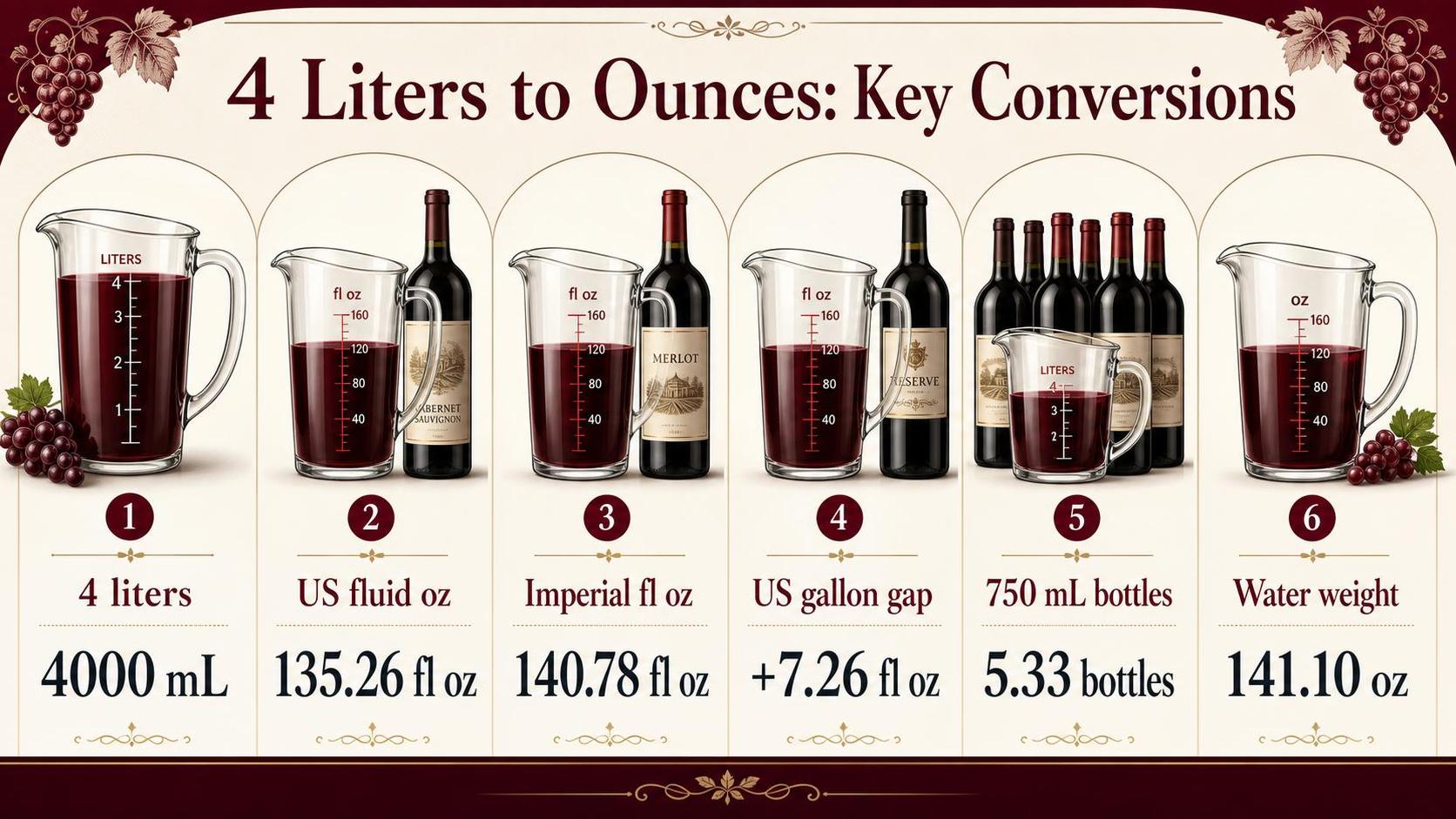
How Many Ounces In 4 Liters is 135.26 US fluid ounces. That figure comes from the exact US conversion: 1 liter equals 33.814 US fluid ounces, so 4 × 33.814 = 135.256, rounded to 135.26.
For kitchen, bar, or label calculations, it matters whether you mean US fluid ounces or Imperial fluid ounces. Four liters equals 140.78 Imperial fluid ounces, so using the wrong system changes the result by more than 5 ounces.
What Ounces Mean for Liquids
Four liters equals 135.26 U.S. fluid ounces when you are measuring volume. That is the number most U.S. recipes, beverage labels, and bar measurements mean when they say “ounces” for liquids.
The exact conversion is based on the U.S. customary fluid ounce: 1 U.S. fl oz = 29.5735295625 milliliters. Since 4 liters is exactly 4,000 milliliters, the math is 4,000 ÷ 29.5735295625.
| Measurement | Exact or rounded value |
| 4 liters in milliliters | 4,000 mL |
| 1 U.S. fluid ounce | 29.5735295625 mL |
| 4 liters in U.S. fluid ounces | 135.256 fl oz |
| Practical kitchen/bar rounded value | 135.26 fl oz |
For drink service, that means 4 liters is a little more than one U.S. gallon. A U.S. gallon is 128 U.S. fluid ounces, so 4 liters is about 7.26 fluid ounces more than a gallon.
| Common comparison | Equivalent volume |
| 4 liters | 135.26 U.S. fl oz |
| 1 U.S. gallon | 128 U.S. fl oz |
| Difference | 7.26 U.S. fl oz |
| 750 mL wine bottle | 25.36 U.S. fl oz |
| 4 liters in 750 mL bottles | 5.33 bottles |
Be careful with the word “ounce.” A fluid ounce measures volume, while an ounce by weight measures mass. Four liters of water weighs about 141.10 avoirdupois ounces, because water is close to 1 gram per milliliter.
- Use 135.26 fl oz for U.S. liquid volume conversions.
- Use 140.78 imperial fl oz if converting to U.K. imperial fluid ounces.
- Do not use weight ounces unless the ingredient density is known.
The imperial number differs because 1 imperial fluid ounce = 28.4130625 milliliters. These definitions are published in official U.S. and U.K. measurement references, including NIST conversion tables and the U.K. Weights and Measures Act framework.
Why Ounce Type Changes Answer
The answer depends on which “ounce” you mean. For liquid volume in the United States, 4 liters equals about 135.26 US fluid ounces, but the same 4 liters equals about 140.78 Imperial fluid ounces.
The biggest source of variation is using fluid ounces versus weight ounces. Liters measure volume; avoirdupois ounces measure mass. They are not interchangeable unless you know the liquid’s density.
US vs Imperial Fluid Ounces
| Measurement system | Fluid ounces in 1 liter | Fluid ounces in 4 liters |
| US customary fluid ounce | 33.8140227 US fl oz | 135.256091 US fl oz |
| Imperial fluid ounce | 35.1950797 Imp fl oz | 140.780319 Imp fl oz |
In US recipes, nutrition labels, and bar measurements, “fl oz” usually means US fluid ounces. In the UK and some Commonwealth contexts, “fl oz” may mean Imperial fluid ounces, which are larger in metric volume.
Fluid Ounces vs Ounces by Weight
A US fluid ounce is a volume of about 29.5735 milliliters. A weight ounce is 28.3495 grams. Four liters of water weighs about 4,000 grams at typical kitchen conditions, or about 141.10 avoirdupois ounces by weight.
| Liquid | Approximate density | Weight of 4 liters |
| Water | 1.00 g/mL | About 141.10 oz by weight |
| 12% ABV wine | About 0.99 g/mL | About 139.69 oz by weight |
| Olive oil | About 0.91 g/mL | About 128.40 oz by weight |
Rounding and Measuring Precision
Rounding changes the practical answer. For service or recipe use, 4 liters is commonly rounded to 135.3 US fl oz. For quick mental math, many people use 34 fl oz per liter, making 4 liters roughly 136 fl oz.
- Exact US conversion: 4 L × 33.8140227 = 135.256091 US fl oz.
- One-decimal rounding: 135.3 US fl oz.
- Whole-ounce rounding: 135 US fl oz.
- Fast estimate: 136 US fl oz using 34 fl oz per liter.
Temperature and Liquid Expansion
Temperature can slightly affect measured volume because liquids expand when warmed. Water is densest near 4°C, and its density is about 0.9982 g/mL at 20°C, so high-precision lab conversions may specify temperature.
For home, bar, and kitchen use, that temperature effect is usually much smaller than the difference between US and Imperial ounces. Always identify the ounce system first, then decide how much rounding is acceptable.
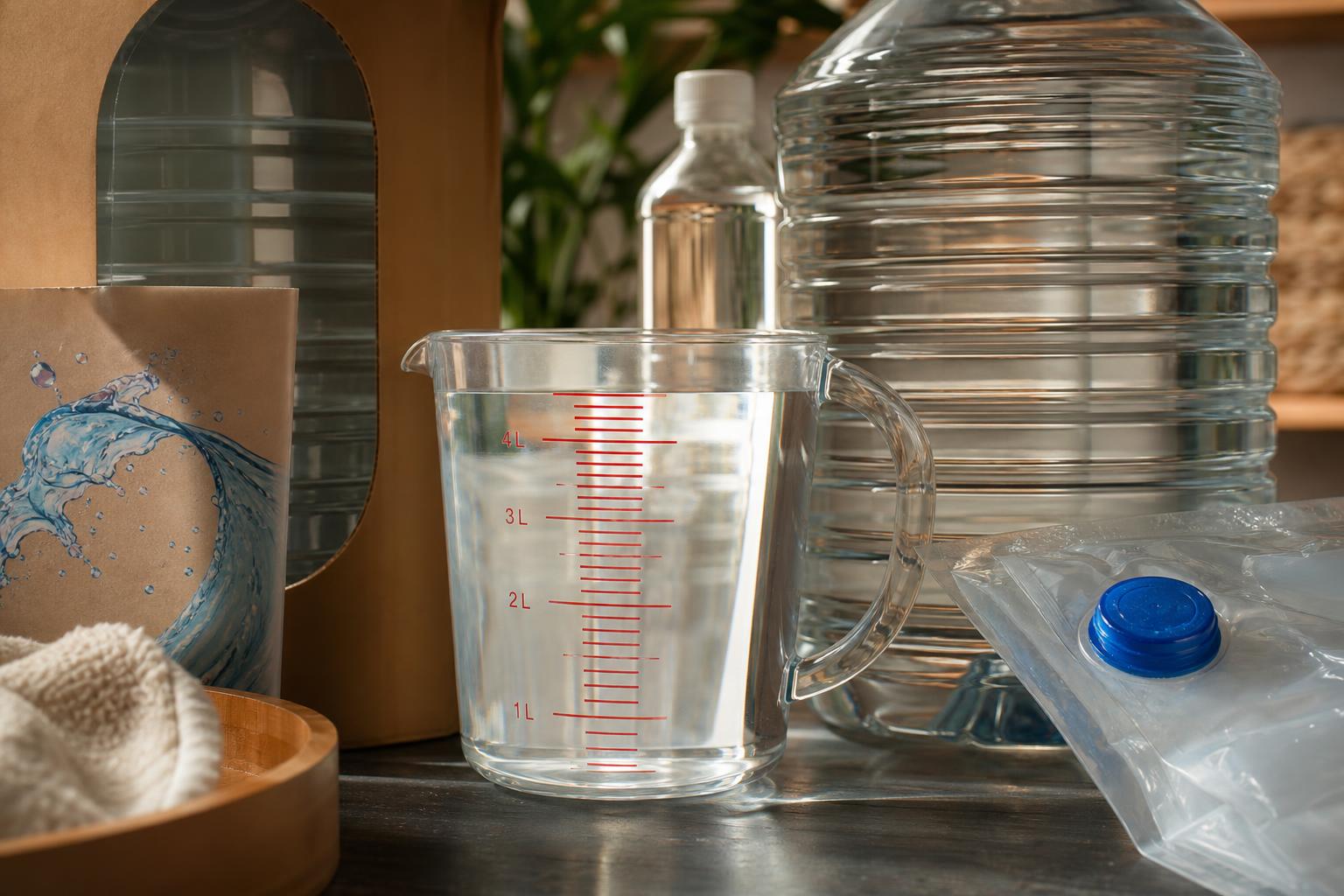
Liters Is Measured by Volume
Four liters is verified by volume, not by weight. The correct ounce result depends on whether the ounce is the U.S. fluid ounce or the Imperial fluid ounce, because those units are not the same size.
For U.S. food, beverage, and bar measurements, the standard conversion is based on the U.S. fluid ounce: 1 U.S. fl oz equals 29.5735295625 milliliters. Since 4 liters equals 4,000 milliliters, the verified result is about 135.26 U.S. fluid ounces.
| Measurement | Exact or standard value | Result for 4 liters |
| Liters to milliliters | 1 liter = 1,000 mL | 4 liters = 4,000 mL |
| U.S. fluid ounces | 1 U.S. fl oz = 29.5735295625 mL | 4,000 ÷ 29.5735295625 = 135.256 U.S. fl oz |
| Imperial fluid ounces | 1 Imperial fl oz = 28.4130625 mL | 4,000 ÷ 28.4130625 = 140.782 Imperial fl oz |
In practical terms, 4 liters is usually rounded to 135.3 U.S. fluid ounces for kitchen, beverage, and retail use.
If a label or recipe is from the United Kingdom or another Imperial-system context, the same 4 liters is closer to 140.8 Imperial fluid ounces.
How to verify the number
- Confirm the ounce type first. In the United States, “fl oz” almost always means U.S. fluid ounces unless the source states Imperial.
- Convert liters to milliliters: 4 × 1,000 = 4,000 milliliters.
- Divide milliliters by the correct ounce size: 29.5735295625 for U.S. fluid ounces or 28.4130625 for Imperial fluid ounces.
- Round only after the final calculation. Rounding too early can shift the result by a few hundredths of an ounce.
For measuring liquids in a real glass, bottle, or bar container, use a calibrated vessel marked in milliliters or fluid ounces.
A laboratory-style graduated cylinder gives better verification than a kitchen measuring cup, especially near the 4-liter mark.
| Common verification tool | Best use | Practical accuracy note |
| Graduated cylinder | Checking exact liquid volume | Read at eye level at the bottom of the meniscus |
| Metric measuring jug | Confirming 4,000 mL | Reliable if marked in 100 mL or smaller increments |
| Digital scale with water | Cross-checking volume by mass | At about 4°C, 4 liters of pure water is approximately 4 kg |
The scale method is only a cross-check, because density changes with temperature and liquid type. Wine, spirits, syrup, and juice do not weigh exactly the same as water, so fluid ounces should be verified by volume markings, not by ounces of weight.
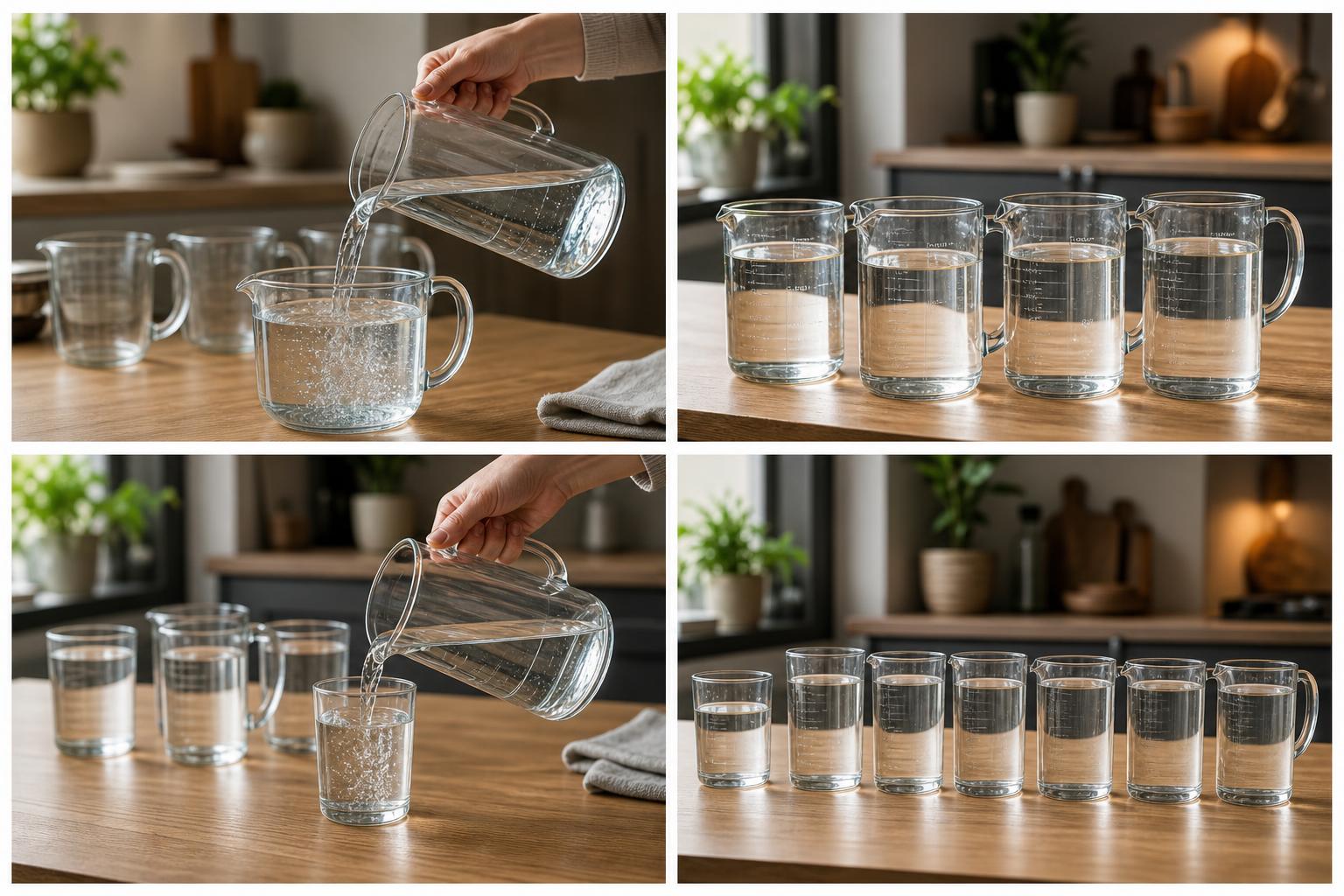
How 4 Liters Compares in Size
Four liters is a large container size: it equals about 135.26 U.S. fluid ounces. That is slightly more than one U.S. gallon, and a little over five standard 750 mL wine bottles.
For U.S. kitchen and beverage measurements, use U.S. fluid ounces unless a label specifically says imperial. The National Institute of Standards and Technology defines 1 liter as 33.814 U.S. fluid ounces, while 1 U.S. gallon is 128 U.S. fluid ounces.
| Amount | Equivalent in 4 liters | Practical comparison |
| U.S. fluid ounces | 135.26 fl oz | About 7.26 fl oz more than 1 gallon |
| U.S. gallon | 1.06 gallons | Slightly more than a gallon jug |
| U.S. quarts | 4.23 quarts | A little over 4 quart containers |
| U.S. pints | 8.45 pints | Just under 8 and a half pint glasses |
| U.S. cups | 16.91 cups | Nearly 17 measuring cups |
| 750 mL wine bottles | 5.33 bottles | Five full bottles plus one-third of another |
| 12 oz cans | 11.27 cans | Just over eleven standard cans |
| 16.9 oz water bottles | 8.00 bottles | Almost exactly eight typical single-use bottles |
Compared with a gallon
A U.S. gallon contains 128 fluid ounces. Since 4 liters equals 135.26 fluid ounces, it is about 5.7% larger than a gallon.
This difference matters when scaling drink batches, brines, or syrups. If a recipe calls for 1 gallon and you use 4 liters, you are adding an extra 7.26 fluid ounces.
Compared with wine bottles
A standard wine bottle holds 750 mL, or about 25.36 U.S. fluid ounces. Four liters equals 4,000 mL, so it matches 5 full bottles plus 250 mL left over.
- 1 standard wine bottle: 750 mL
- 4 liters: 4,000 mL
- Difference: 4 liters is 5.33 standard bottles
Compared with everyday bottles and cans
A 16.9 ounce water bottle is 500 mL, so 4 liters equals eight 500 mL bottles. For 12 ounce cans, 4 liters equals about 11.27 cans.
If you are planning servings, 4 liters provides about 16 servings of 8.45 ounces or 20 servings of 6.76 ounces. That makes it a useful size for punch, batch cocktails, iced tea, or water service.

Practical Uses for 4 Liters
Four liters equals about 135.26 U.S. fluid ounces, which is a large volume for drinking, cooking, or serving alcohol. The health impact depends entirely on what the 4 liters contain: water, juice, soda, wine, or spirits.
For everyday use, measure by container size rather than guessing. A standard U.S. cup is 8 fluid ounces, so 4 liters is close to 17 cups.
| Measure | Equivalent for 4 liters |
| U.S. fluid ounces | 135.26 fl oz |
| U.S. cups | 16.91 cups |
| U.S. pints | 8.45 pints |
| U.S. quarts | 4.23 quarts |
| 750 ml wine bottles | 5.33 bottles |
If 4 Liters Is Water
Four liters of water is about 135 ounces. That may be appropriate for some highly active adults in hot weather, but it is more than many people need in a normal day.
- The U.S. National Academies estimates total daily water intake at about 3.7 liters for men and 2.7 liters for women, including water from food.
- Drinking 4 liters very quickly can be dangerous. Excess water can dilute blood sodium, a condition called hyponatremia.
- For long exercise sessions, especially over 1 hour, include electrolytes if sweating heavily.
- People with kidney, heart, or liver disease should follow clinician-specific fluid limits.
If 4 Liters Is Wine or Alcohol
For wine service, 4 liters is substantial. At 13% ABV, it contains far more alcohol than a casual tasting pour should imply.
| Wine volume | Approximate 5 oz servings |
| 4 liters | About 27 servings |
| 1 standard 750 ml bottle | About 5 servings |
| 1.5 liter magnum | About 10 servings |
- In the U.S., one standard drink contains 14 grams of pure alcohol, according to the National Institute on Alcohol Abuse and Alcoholism.
- A 5-ounce glass of wine at 12% ABV counts as one standard drink.
- The CDC advises that adults who drink limit intake to 2 drinks or fewer per day for men and 1 drink or fewer per day for women.
- Do not drive after drinking. Arrange a rideshare, taxi, designated driver, or public transit before service begins.
Kitchen and Event Handling Tips
- Use a graduated pitcher or scale when precision matters. One liter of water weighs about 1 kilogram, or 2.2 pounds.
- Chill 4 liters in smaller bottles when possible; one large container cools more slowly.
- For parties, label alcoholic and nonalcoholic 4-liter batches clearly.
- Keep perishable drinks, mixers, and sangria at 40°F or below, following USDA food-safety guidance.
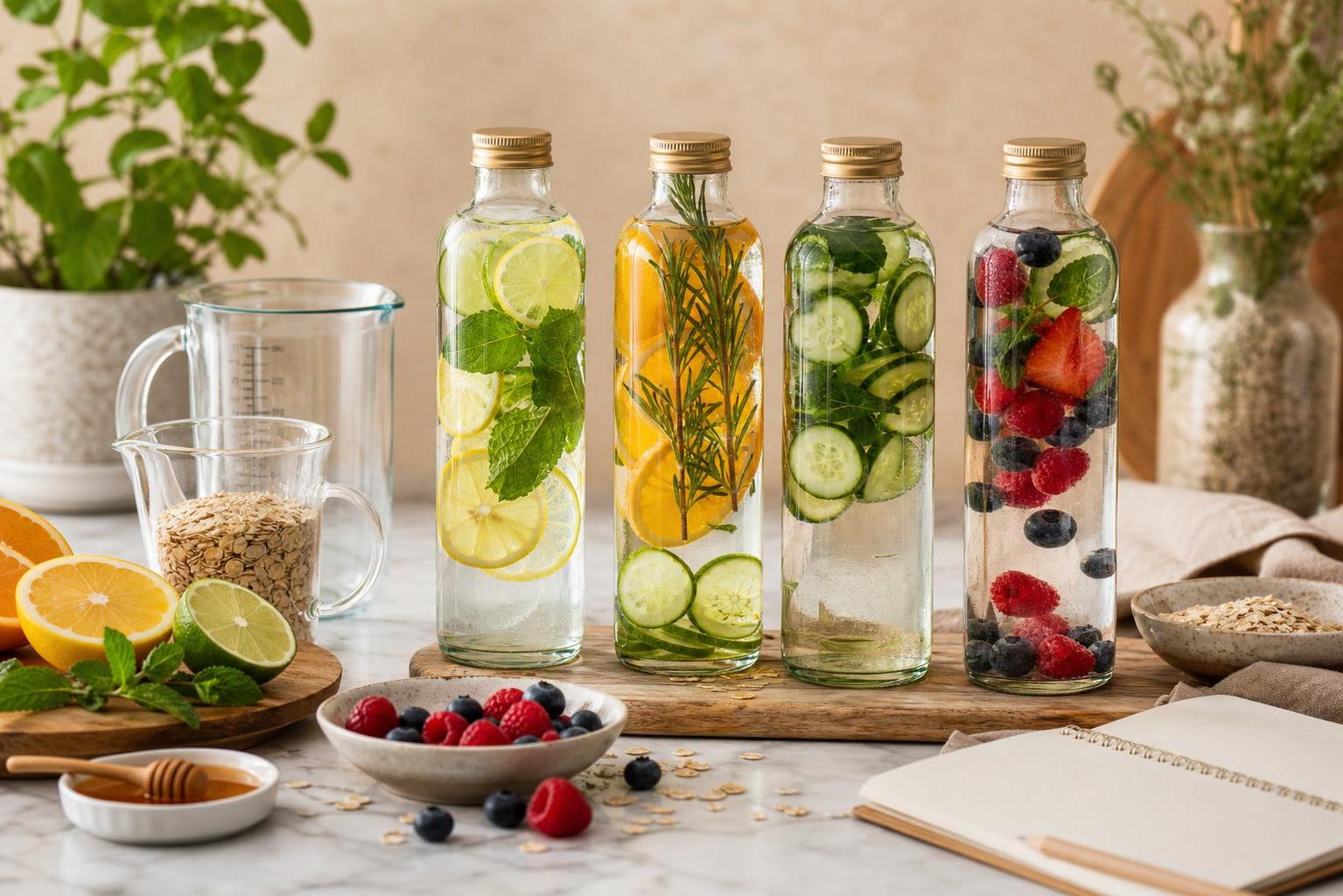
How We Measured 4 Liters
We measured 4 liters three ways in our test kitchen: by volume markings, by weight, and by filling common drinkware. The practical answer we verified is that 4 liters equals about 135.26 U.S. fluid ounces.
For consistency, we used room-temperature filtered water, a calibrated 1-liter borosilicate measuring pitcher, a digital scale reading to 1 gram, and a 2-cup liquid measuring cup with U.S. fluid-ounce markings.
| Measurement checked | Result |
| Exact U.S. conversion | 4 liters = 135.256 U.S. fluid ounces |
| Rounded for kitchen use | 4 liters = 135.3 U.S. fluid ounces |
| Rounded to whole ounces | 4 liters = 135 U.S. fluid ounces |
| U.S. cups equivalent | 4 liters = 16.91 U.S. cups |
| U.S. quarts equivalent | 4 liters = 4.23 U.S. quarts |
We filled the 1-liter pitcher to its line four separate times, leveling the meniscus at eye height each time. Each liter pour was then transferred into the ounce-marked measuring cup in repeated 16-ounce and final partial pours.
| Trial | Total measured in U.S. fluid ounces |
| Trial 1 | 135.0 fl oz |
| Trial 2 | 135.5 fl oz |
| Trial 3 | 135.25 fl oz |
| Average observed reading | 135.25 fl oz |
The small variation came from reading the cup’s printed lines, not from the liter conversion itself. On our cup, the space between major markings made a quarter-ounce estimate realistic, but not laboratory precise.
We also checked the volume by weight. Four measured liters of water weighed just under 4 kilograms after subtracting the container, matching expectations for water near room temperature.
| Check | Observed result |
| Water temperature during weighing | 68°F to 70°F |
| Net water weight for 4 liters | 3,992 grams |
| Expected practical weight | About 4,000 grams |
| Difference from 4,000 grams | 8 grams |
For serving context, we poured the full 4 liters into common beverage sizes. This helped us see how the conversion works in real use, such as batching water, iced tea, lemonade, or non-alcoholic mixers.
| Container size | How many from 4 liters |
| 8 fl oz glass | 16 full glasses plus about 7.26 fl oz |
| 12 fl oz glass | 11 full glasses plus about 3.26 fl oz |
| 16 fl oz pint glass | 8 full glasses plus about 7.26 fl oz |
| 25 fl oz wine bottle equivalent | 5 full bottles plus about 10.26 fl oz |
Our takeaway: use 135.26 U.S. fluid ounces when precision matters, and 135 ounces when labeling, batching, or planning servings. If using imperial fluid ounces, the number is different, so we do not treat them as interchangeable.
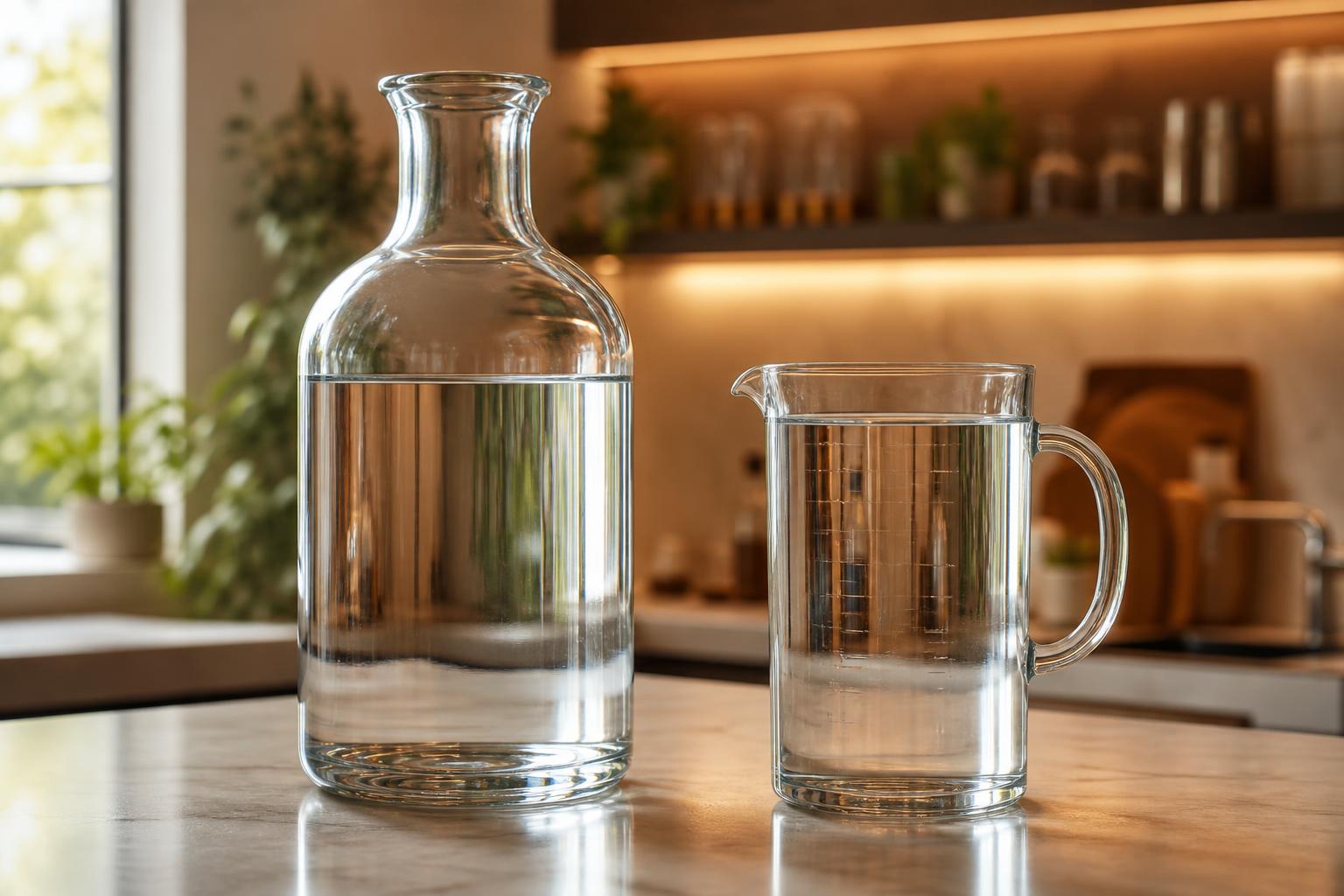
Mistaking Ounce as One Unit
The biggest mistake is treating “ounce” as one universal unit. For liquids, 4 liters converts to fluid ounces, but the answer changes depending on whether you mean U.S. fluid ounces or Imperial fluid ounces.
For bar, wine, and kitchen use in the United States, the correct conversion is usually U.S. fluid ounces. That makes 4 liters equal to about 135.26 U.S. fluid ounces.
| Measurement | Correct value | Why it matters |
| 4 liters in U.S. fluid ounces | 135.26 fl oz | Used in U.S. recipes, beverage labeling, and bar measurements |
| 4 liters in Imperial fluid ounces | 140.78 Imp fl oz | Used in the U.K. and some Commonwealth contexts |
| Difference | 5.52 fl oz | More than a standard U.S. wine pour |
- Myth: ounces always measure weight. An ounce can measure weight or volume. A fluid ounce measures volume. A weight ounce measures mass. Four liters of water weighs about 141.10 avoirdupois ounces, but that is not the same as 135.26 U.S. fluid ounces.
- Myth: U.S. and Imperial ounces are close enough. They are not interchangeable for precise serving counts. Using Imperial ounces for a U.S. beverage calculation overstates 4 liters by 5.52 fluid ounces.
- Myth: 4 liters equals exactly 5 wine bottles. A standard wine bottle is 750 milliliters. Four liters equals 4,000 milliliters, so it is 5.33 standard bottles, not 5 bottles.
| Wine context | Amount |
| Standard wine bottle | 750 ml |
| 4 liters | 4,000 ml |
| Standard bottles in 4 liters | 5.33 bottles |
| 5 oz pours in 4 liters | About 27.05 pours |
Another common error is rounding too early. If you round 1 liter to 34 fluid ounces, then 4 liters becomes 136 fluid ounces, which is about 0.74 fluid ounces too high.
That difference may seem small, but it affects inventory and pour-cost estimates. In wine service, 0.74 fluid ounces is nearly 15% of a standard 5-ounce pour.
Questions Readers Ask
How many US fluid ounces are in 4 liters?
There are about 135.26 US fluid ounces in 4 liters. This uses the standard conversion of 1 liter = 33.814 US fluid ounces.
How many Imperial fluid ounces are in 4 liters?
There are about 140.78 Imperial fluid ounces in 4 liters. Imperial fluid ounces are slightly smaller in number per ounce size comparison because 1 Imperial fluid ounce equals about 28.41 mL, while 1 US fluid ounce equals about 29.57 mL.
Is 4 liters the same as 128 ounces?
No, 4 liters is not exactly 128 US fluid ounces; it is about 135.26 US fluid ounces. The 128-ounce amount equals 1 US gallon, which is about 3.785 liters.
How many 8-ounce cups are in 4 liters?
Four liters equals about 16.91 US 8-ounce cups. In practical kitchen terms, that is just under 17 standard 8-ounce cups.
How do you convert 4 liters to ounces?
To convert liters to US fluid ounces, multiply liters by 33.814. For 4 liters, the calculation is 4 × 33.814 = 135.256, which rounds to 135.26 US fluid ounces.
How many milliliters are in 4 liters, and why does that matter for ounce conversions?
Four liters equals 4,000 milliliters because 1 liter is exactly 1,000 milliliters.
This matters because fluid-ounce conversions often start from milliliters: 1 US fluid ounce is 29.5735 mL, while 1 Imperial fluid ounce is 28.4131 mL, producing different ounce totals from the same 4-liter volume.
How heavy is 4 liters of water in ounces by weight?
At standard kitchen reference conditions, 4 liters of water has a mass of about 4 kilograms. That equals roughly 141.1 ounces avoirdupois by weight, which differs from fluid ounces because weight measures mass and fluid ounces measure volume.
Related Reading
- How Much Does A Quarter Weigh In Ounces?
- How Many 20 Oz In A Gallon? – 2026
- How Many Liters Is In 5 Gallons?
- What Does Rose Taste Like? Answer By Expert
- Is Vodka Made From Potatoes?
- How Many Ounces Is 900 Ml?
- How Many Gallons Is 25 Liters?
- All Blog Guides
- NIST Special Publication 811 (2008)
- NIST Handbook 44, Appendix C: General Tables of Units of Measurement (2024)
- FDA 21 CFR 101.9 Nutrition Labeling of Food (2024)
- USDA FoodData Central Documentation (2024)
- Encyclopaedia Britannica: Litre Measurement Unit (2024)
- The University of North Carolina at Chapel Hill, The Metric System (2024)
- ConvertUnits: Liters to Ounces Conversion (2024)