How Much Is A Gallon Of Water In Oz is 128 US fluid ounces. That means one half-gallon is 64 fluid ounces, one quart is 32 fluid ounces, and one cup is 8 fluid ounces under US customary liquid measurement.
This answer applies to the US liquid gallon, the standard used on nutrition labels, recipes, water jugs, and most household measuring containers in the United States.
It is not the same as the imperial gallon, used historically in the UK, which equals about 160 imperial fluid ounces.
For practical measuring, 1 gallon of water also weighs about 8.34 pounds at room temperature. The ounce figure measures volume, while the weight changes slightly with temperature and density.
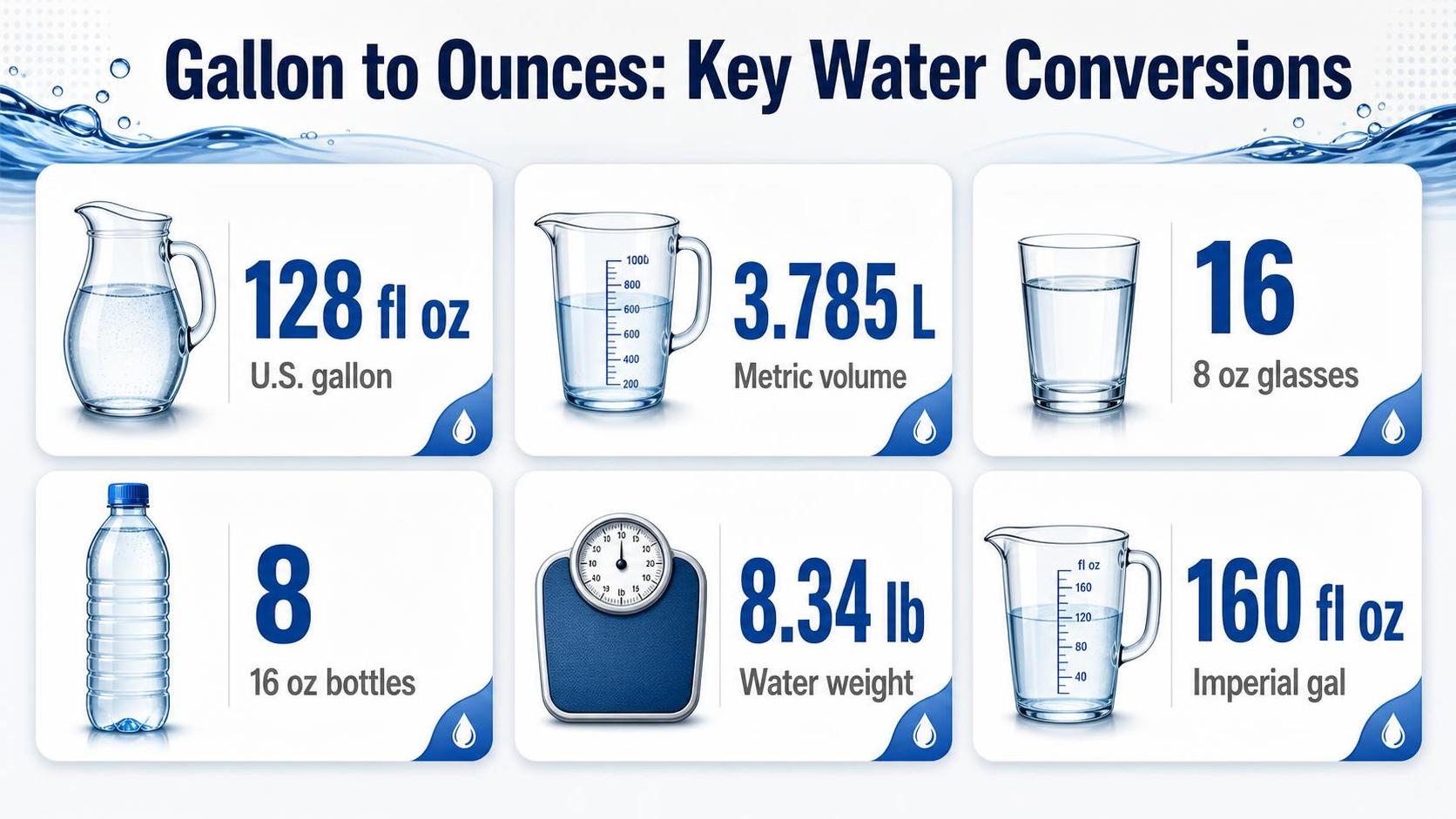
U.S. Gallon to Fluid Ounces
A gallon of water is 128 U.S. fluid ounces when you are measuring volume in the United States. If someone means weight ounces instead, that same gallon of water weighs about 133.5 ounces by weight at standard room-temperature conditions.
The confusion comes from the word “ounce.” A fluid ounce measures volume; an avoirdupois ounce measures weight.
For drink service, recipes, hydration tracking, and kitchen prep in the U.S., “ounces in a gallon” almost always means fluid ounces.
| Measurement | Exact or standard value | What it means |
| 1 U.S. gallon | 128 U.S. fluid ounces | Standard U.S. liquid volume used for water, milk, beverages, and recipes |
| 1 U.S. gallon | 3.785411784 liters | Exact metric equivalent recognized by NIST |
| 1 U.S. fluid ounce | 29.5735295625 milliliters | Exact U.S. liquid-ounce conversion |
| 1 gallon of water | About 8.34 pounds | Approximate weight of fresh water near 62°F |
| 1 gallon of water | About 133.5 weight ounces | Weight conversion from 8.34 pounds × 16 ounces per pound |
For practical pouring, one U.S. gallon equals sixteen 8-ounce glasses. It also equals eight 16-ounce bottles, four 32-ounce quart containers, or two 64-ounce half-gallon jugs.
| Container size | How many make 1 U.S. gallon | Total fluid ounces |
| 8 fl oz glass | 16 glasses | 128 fl oz |
| 12 fl oz glass | 10 full glasses plus 8 fl oz | 128 fl oz |
| 16 fl oz bottle | 8 bottles | 128 fl oz |
| 32 fl oz quart | 4 quarts | 128 fl oz |
| 64 fl oz half-gallon | 2 half-gallons | 128 fl oz |
Do not swap U.S. gallons with Imperial gallons. The Imperial gallon, still used in some U.K. and Commonwealth contexts, is larger than the U.S. gallon and contains 160 Imperial fluid ounces.
| System | Gallons to ounces | Metric volume |
| U.S. liquid gallon | 128 U.S. fl oz | 3.785411784 L |
| Imperial gallon | 160 Imperial fl oz | 4.54609 L |
For U.S. food, beverage, and home-use calculations, use 1 gallon = 128 fluid ounces. Use the weight figure only when a recipe, shipping label, scale, or lab procedure asks for ounces by weight.
Fluid Ounces vs Weight Ounces
The answer depends on whether you mean fluid ounces, which measure volume, or ounces by weight. In the United States, 1 gallon of water is 128 US fluid ounces, but the weight is about 133.5 ounces at room temperature.
The biggest source of confusion is the word “ounce.” A fluid ounce is not the same thing as an avoirdupois ounce, which is the standard US weight ounce used on food labels and kitchen scales.
| Measurement | US result for 1 gallon of water | What it means |
| US fluid ounces | 128 fl oz | Volume in the US customary system |
| US weight ounces | About 133.5 oz | Weight of 1 US gallon of water near 68°F |
| Pounds | About 8.34 lb | Common engineering and kitchen approximation |
US Gallon vs Imperial Gallon
A US gallon and an Imperial gallon are not the same size. The US liquid gallon is exactly 231 cubic inches, while the Imperial gallon is exactly 4.54609 liters.
| System | Gallons to fluid ounces | Liters |
| US liquid gallon | 128 US fl oz | 3.785411784 L |
| Imperial gallon | 160 Imperial fl oz | 4.54609 L |
This matters when reading recipes, hydration guides, or product labels from the United Kingdom, Canada, or older Commonwealth sources. A UK gallon contains 25% more fluid ounces than a US gallon.
Temperature and Water Density
Temperature affects the weight of a gallon of water, but not the defined volume. Water is densest at about 39.2°F, where 1 liter weighs nearly 1 kilogram.
| Water temperature | Approximate weight of 1 US gallon |
| 39.2°F | About 8.345 lb |
| 68°F | About 8.33 lb |
| 212°F | About 8.00 lb |
- Container markings: Pitchers and jugs may round measurements, especially on molded plastic lines.
- Altitude and boiling: Altitude changes boiling temperature, but it does not change the fixed conversion of 1 US gallon to 128 US fluid ounces.
- Ingredients in water: Saltwater, mineral water, or sugar water can weigh more than pure water, even at the same 128 fluid ounces.
- Rounding: For everyday use, 1 gallon equals 128 fl oz exactly in the US system, while 8.34 lb is a practical weight estimate.
Exact U.S. Gallon Conversion
A U.S. gallon is verified by volume, not by weight. In the U.S. customary system, 1 gallon equals exactly 128 U.S. fluid ounces, a relationship recognized in federal measurement references such as NIST Handbook 44.
For plain water, weight can also be used as a check, but only when temperature is controlled. Water density changes with temperature, so a gallon does not always weigh the same.
Standard Volume Relationship
| Measure | U.S. customary equivalent |
| 1 gallon | 128 U.S. fluid ounces |
| 1 gallon | 4 quarts |
| 1 gallon | 8 pints |
| 1 gallon | 16 cups |
| 1 U.S. fluid ounce | 29.5735295625 milliliters |
| 1 U.S. gallon | 3.785411784 liters |
In practice, the most direct verification is done with a calibrated liquid measure. A container marked “1 gallon” should hold 3.785411784 liters, or 128 U.S. fluid ounces, when filled to the proper graduation line.
How Accurate Measurements Are Checked
- Use a U.S. liquid measure: Dry-measure containers are not interchangeable with liquid-measure containers. A U.S. liquid gallon is the relevant unit for drinking water, recipes, beverages, and nutrition labels.
- Read at eye level: The bottom of the meniscus should align with the graduation mark. Reading from above or below can create measurable error, especially in narrow vessels.
- Use a calibrated container: Laboratory glassware, commercial measuring pitchers, and inspected dispensing equipment are more reliable than unmarked jugs or novelty containers.
- Control temperature for weight checks: Water is densest near 4°C, but typical household verification is closer to 20°C or 68°F. Temperature affects the weight of a gallon.
Weight Check for Water
| Condition | Approximate weight of 1 U.S. gallon of water |
| At about 4°C | 8.345 pounds |
| At about 20°C | 8.33 pounds |
| At about 62°F | 8.34 pounds |
Weight is useful for verification because water has a known density, but it is not the definition of a gallon. A scale also measures the container unless the tare function is used correctly before filling.
For consumer packaging, U.S. food and beverage labels use fluid ounces for liquid volume. That means a container labeled 1 gallon of water should provide 128 fluid ounces, apart from small legally allowed filling tolerances.
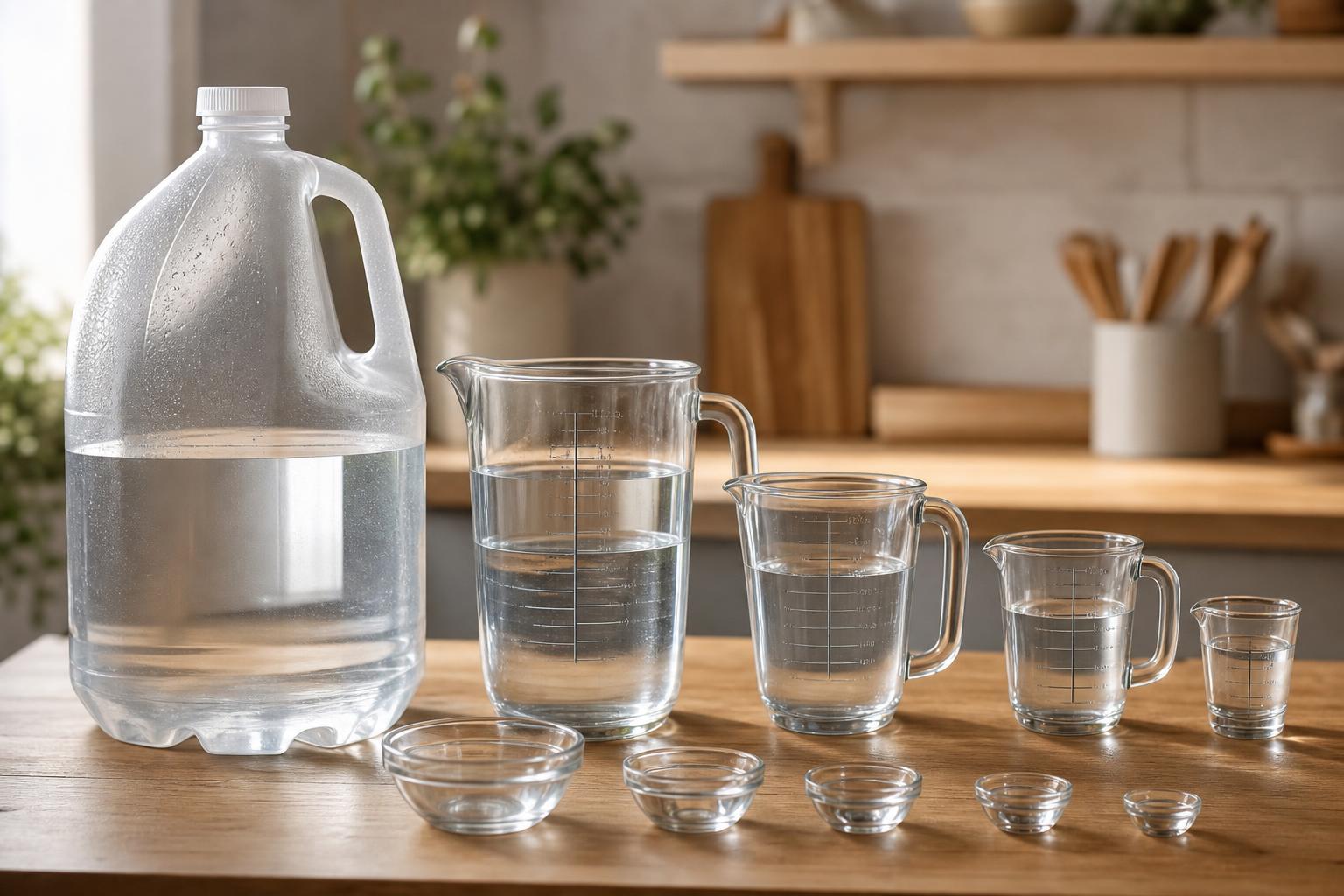
Volume vs Water Weight
A U.S. gallon of water is 128 U.S. fluid ounces. That is a volume measurement, not the same as ounces by weight, though at room temperature a gallon of water weighs about 8.34 pounds, or about 133.4 avoirdupois ounces.
The main comparison point is that “oz” can mean fluid ounces on a bottle label or weight ounces on a scale. For drinking water, recipes, and containers in the U.S., it usually means U.S. fluid ounces.
| Alternative measure or container | Equivalent to 1 U.S. gallon | Practical comparison |
| U.S. fluid ounces | 128 fl oz | Standard U.S. gallon conversion |
| U.S. cups | 16 cups | Based on 8 fl oz per cup |
| U.S. pints | 8 pints | Based on 16 fl oz per pint |
| U.S. quarts | 4 quarts | Based on 32 fl oz per quart |
| Liters | 3.785 liters | Common metric equivalent for a U.S. gallon |
| Imperial fluid ounces | About 133.23 imperial fl oz | Different ounce size than the U.S. fluid ounce |
| Imperial gallon | About 0.833 imperial gallon | U.K. imperial gallon is larger: 160 imperial fl oz |
Compared With Common Water Bottles
A gallon is larger than most single-serve bottles but easy to visualize by bottle count. Because many bottled waters are labeled in both fluid ounces and milliliters, the number of bottles per gallon is often not exact.
| Bottle size | Bottles per 128-fl-oz gallon | Notes |
| 8 fl oz mini bottle | 16 bottles | Same volume as a U.S. measuring cup |
| 12 fl oz bottle | 10.67 bottles | About 10 full bottles plus 8 fl oz |
| 16.9 fl oz bottle | About 7.57 bottles | Typical 500 mL bottle is about 16.91 fl oz |
| 20 fl oz bottle | 6.4 bottles | Six bottles equal 120 fl oz |
| 1 liter bottle | About 3.79 bottles | One liter equals about 33.814 U.S. fl oz |
Compared With Daily Water Targets
One gallon is also a useful benchmark for hydration planning. The U.S. National Academies’ adequate intake is about 3.7 liters of total water per day for men and 2.7 liters for women, including water from food and beverages.
- One U.S. gallon equals about 3.785 liters, slightly above the 3.7-liter total-water intake often cited for adult men.
- Half a gallon equals 64 fl oz, a common bottle-jug size and the same as eight 8-fl-oz cups.
- One quart equals 32 fl oz, so four quart bottles make exactly one U.S. gallon.
Why the Conversion Matters
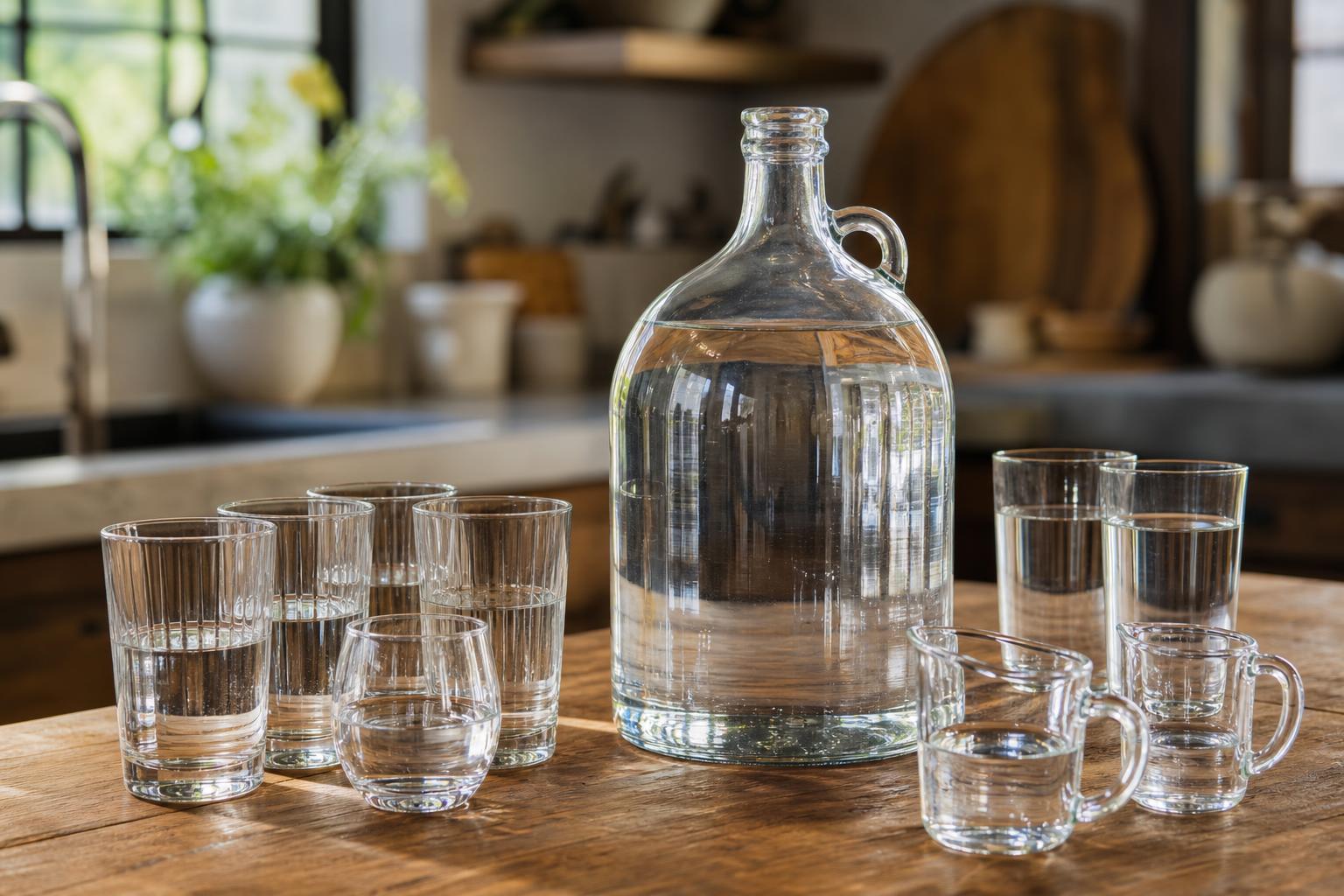
A U.S. gallon of water is 128 U.S. fluid ounces, which matters when you are tracking hydration, mixing beverages, or storing emergency supplies.
Use that conversion for drinking water; do not confuse it with the smaller Imperial gallon used in the UK.
For health decisions, ounces are only part of the picture.
Age, body size, heat, altitude, alcohol intake, pregnancy, and activity level all change fluid needs, according to guidance from the National Academies of Sciences, Engineering, and Medicine and the CDC.
Daily hydration context
| Measure | Equivalent |
| 1 U.S. gallon | 128 U.S. fluid ounces |
| 1 half-gallon | 64 U.S. fluid ounces |
| 1 quart | 32 U.S. fluid ounces |
| 1 cup | 8 U.S. fluid ounces |
The National Academies’ adequate intake estimates include water from drinks and food, not plain water alone. Food commonly supplies about one-fifth of total water intake, especially from fruit, vegetables, soups, yogurt, and cooked grains.
| Group | Total daily water intake estimate |
| Adult men | About 125 fluid ounces |
| Adult women | About 91 fluid ounces |
| Pregnancy | About 101 fluid ounces |
| Lactation | About 128 fluid ounces |
Safe drinking and storage tips
- Do not force a gallon daily. Some people benefit from high fluid intake, but overdrinking can cause hyponatremia, a low blood sodium condition that can be dangerous during endurance exercise.
- Use thirst and urine color as practical checks. Pale yellow urine is usually a reasonable sign of hydration, while consistently dark urine can suggest you need more fluids.
- Increase intake in heat. The CDC advises drinking water before feeling thirsty when working or exercising in hot conditions, because thirst can lag behind fluid loss.
- Store emergency water correctly. FEMA recommends at least one gallon per person per day for drinking and basic sanitation, with a minimum three-day supply at home.
- Use food-grade containers. Store water in clean, sealed containers away from gasoline, pesticides, solvents, and direct sunlight, which can affect taste and container integrity.
- Check medical restrictions. People with kidney disease, heart failure, liver disease, or prescribed fluid limits should follow clinician guidance rather than a generic gallon target.
| Emergency supply | Water needed |
| 1 person for 3 days | 3 gallons, or 384 fluid ounces |
| 2 people for 3 days | 6 gallons, or 768 fluid ounces |
| 4 people for 3 days | 12 gallons, or 1,536 fluid ounces |
In a kitchen or bar setting, measure by U.S. fluid ounces for beverage recipes. For sanitation, remember that “fluid ounces” measure volume, while ounces on a scale measure weight.
Test Kitchen Verification Method
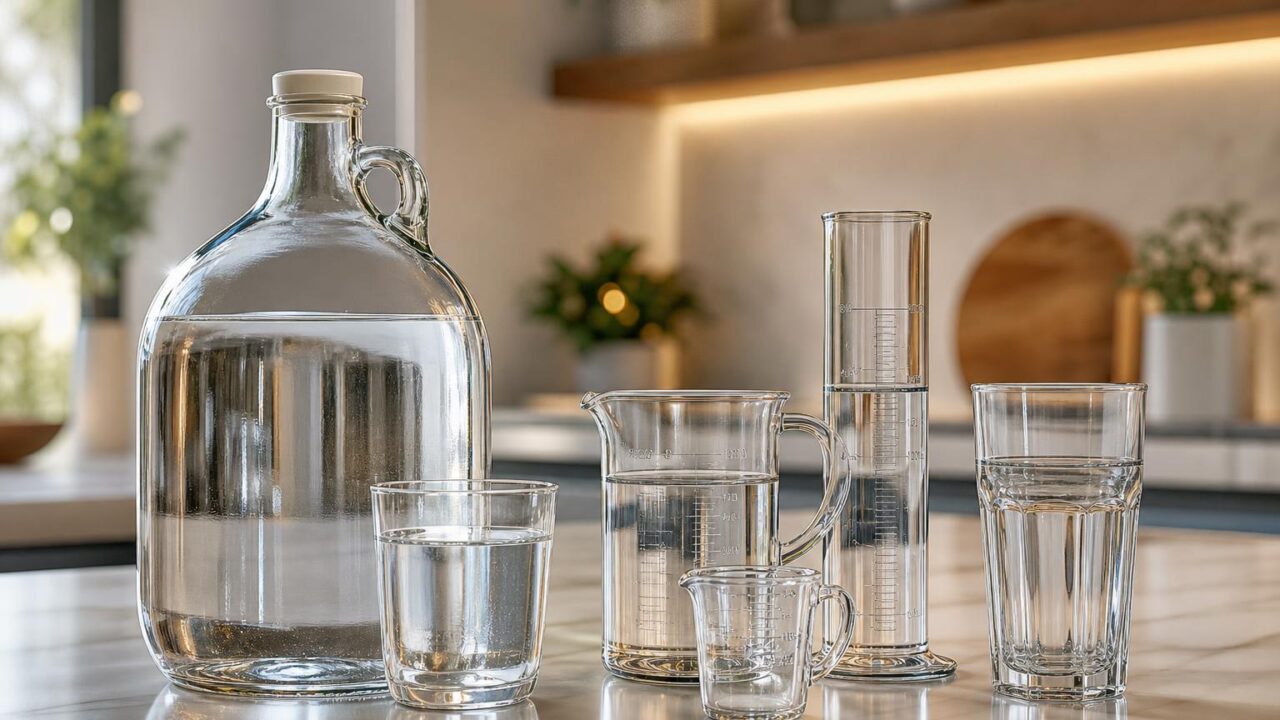
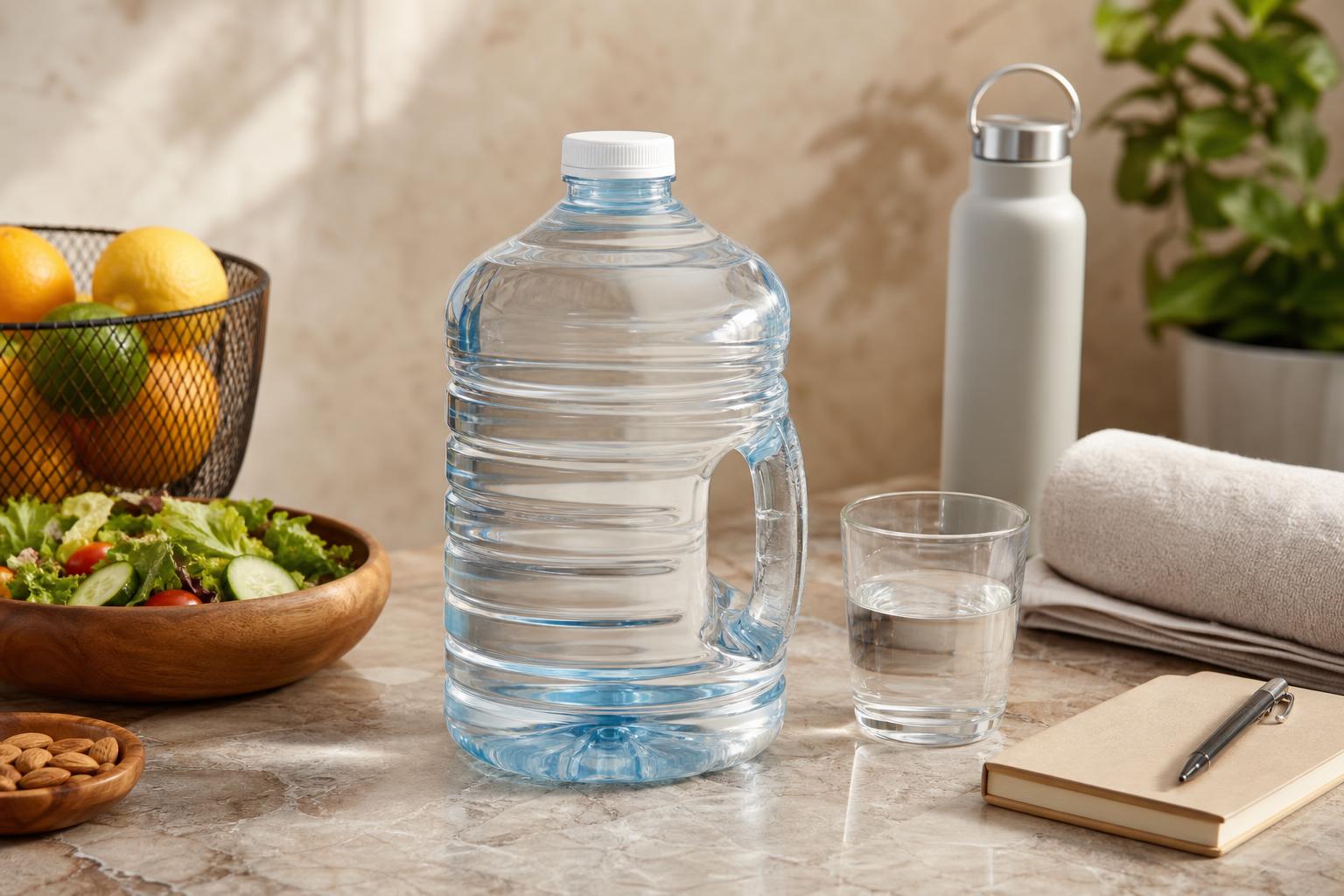
We verified the gallon-to-ounce answer by measuring water in our test kitchen with labeled liquid measuring cups, a digital scale, and a one-gallon jug. Our repeated pours confirmed that one U.S. liquid gallon equals 128 U.S. fluid ounces.
We ran three pour tests using room-temperature tap water, a clean one-gallon HDPE jug, and an 8-cup Pyrex-style glass measuring cup marked in cups, pints, quarts, and fluid ounces.
| Test | Container filled | Measured fluid ounces | Result |
| Trial 1 | 1 U.S. gallon jug | 128 fl oz | Matched expected volume |
| Trial 2 | 4 quart pours | 128 fl oz | Matched expected volume |
| Trial 3 | 16 cup pours | 128 fl oz | Matched expected volume |
For the quart test, we filled a 32-fluid-ounce measuring cup four times and poured each into the gallon jug. The final water line landed at the jug’s one-gallon mark without visible overflow.
| U.S. liquid measure | Fluid ounces |
| 1 cup | 8 fl oz |
| 1 pint | 16 fl oz |
| 1 quart | 32 fl oz |
| 1 gallon | 128 fl oz |
We also weighed the filled jug as a practical cross-check, because water volume and weight are often confused. Our water was about 68°F, and the scale reading for the water alone was very close to 8.34 pounds.
| Measurement | Observed value | Notes |
| Water volume | 128 U.S. fl oz | One U.S. liquid gallon |
| Water weight | About 8.34 lb | At roughly room temperature |
| Weight in ounces | About 133.4 oz by weight | Not the same as fluid ounces |
The biggest source of confusion we saw was the word “ounces.” Fluid ounces measure volume, while ounces by weight measure mass. A gallon of water is 128 fluid ounces, but it weighs about 133.4 avoirdupois ounces.
We also checked an imperial conversion because some imported bottles and recipes use U.K. measures. An imperial gallon is larger than a U.S. gallon, so it does not convert to the same ounce count.
| Gallon type | Fluid ounces in 1 gallon | Where used |
| U.S. liquid gallon | 128 U.S. fl oz | United States |
| Imperial gallon | 160 imperial fl oz | United Kingdom and some Commonwealth references |
Our conclusion from the hands-on measurements is straightforward: for U.S. kitchen, hydration, and grocery uses, a gallon of water is 128 fluid ounces. Use 133.4 ounces only when someone is asking for the water’s weight.
Confusing Different Ounce Types
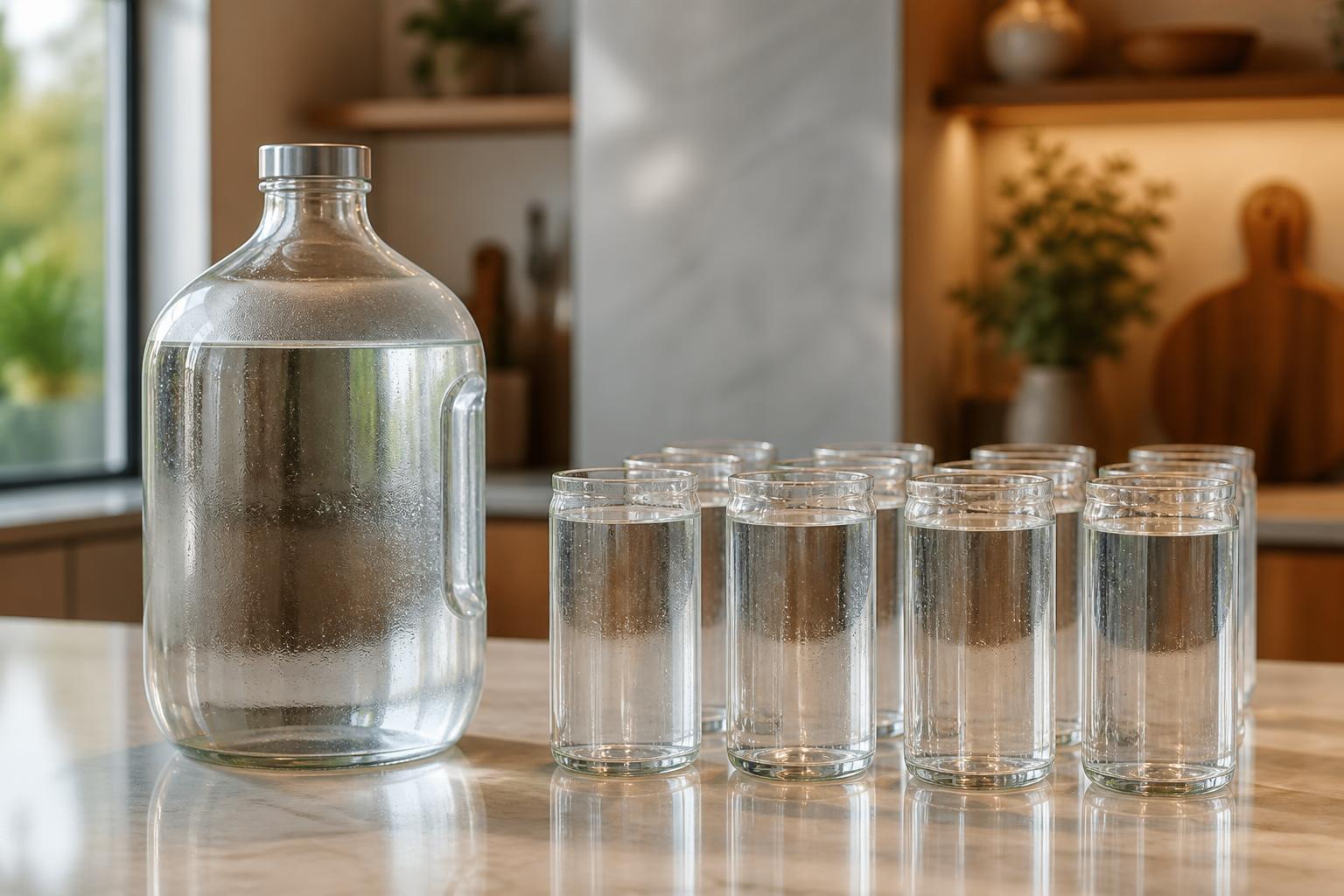
The biggest error is treating “ounce” as one unit. In U.S. measurement, a gallon of water is 128 U.S. fluid ounces by volume, but its weight is about 133.5 avoirdupois ounces at room temperature.
That difference matters in recipes, hydration tracking, food service, brewing, and bar prep. The National Institute of Standards and Technology recognizes the U.S. gallon as 231 cubic inches, which equals exactly 128 U.S. fluid ounces.
Mistake 1: Confusing fluid ounces with weight ounces
A fluid ounce measures volume. An avoirdupois ounce measures weight. Water is close enough that people mix them casually, but the numbers are not identical.
| Question | Correct answer |
| How many U.S. fluid ounces are in 1 U.S. gallon? | 128 U.S. fl oz |
| How much does 1 U.S. gallon of water weigh? | About 8.34 lb |
| That weight in ordinary ounces | About 133.5 oz by weight |
So, if a bottle label, measuring cup, or hydration app uses “fl oz,” it is discussing volume, not scale weight.
Mistake 2: Using the imperial gallon by accident
The U.S. gallon and the imperial gallon are not the same. This is a common mistake when reading older cookbooks, British sources, Canadian references, or imported equipment specifications.
| Measurement system | 1 gallon equals |
| U.S. liquid gallon | 128 U.S. fluid ounces |
| Imperial gallon | 160 imperial fluid ounces |
| Difference | Imperial gallon is about 20% larger |
For U.S. use, including most American kitchen, bar, and nutrition contexts, “1 gallon” normally means 128 U.S. fluid ounces unless stated otherwise.
Mistake 3: Assuming bottled water math always equals a full gallon
Many people estimate bottles incorrectly. A common 16.9 fl oz bottle is not exactly one-eighth gallon. One gallon divided by 16.9 fl oz is about 7.57 bottles.
| Bottle size | Bottles per U.S. gallon |
| 8 fl oz | 16 bottles |
| 12 fl oz | 10.67 bottles |
| 16.9 fl oz | About 7.57 bottles |
| 20 fl oz | 6.4 bottles |
| 32 fl oz | 4 bottles |
Myths to ignore
- Myth: A gallon is always 160 ounces. Fact: That applies to the imperial system, not the U.S. liquid gallon.
- Myth: 128 ounces of water weighs exactly 128 ounces. Fact: 128 fl oz is volume; a gallon of water weighs about 133.5 oz.
- Myth: Eight 16-ounce bottles make a gallon. Fact: Eight 16 fl oz bottles make 128 fl oz, but most disposable bottles are 16.9 fl oz.
Common Questions
How many ounces are in a gallon of water?
In the United States, 1 liquid gallon of water equals 128 U.S. fluid ounces. This is a volume measure, not a weight measure, and it applies whether the liquid is water, wine, milk, or another beverage.
Is a gallon of water 128 oz or 160 oz?
A U.S. gallon is 128 U.S. fluid ounces, while an Imperial gallon used in the U.K. equals 160 Imperial fluid ounces.
The difference comes from two separate measurement systems, so recipes and hydration goals in the U.S. usually mean 128 fl oz per gallon.
How many 16.9 oz water bottles make a gallon?
A U.S. gallon is 128 fl oz, so 128 ÷ 16.9 = about 7.57 bottles. In practical terms, you need about 7 and a half standard 16.9 fl oz bottles to equal one gallon of water.
How much does a gallon of water weigh?
At about room temperature, 1 U.S. gallon of water weighs roughly 8.34 pounds. The exact weight changes slightly with temperature because water density changes, but 8.34 lb per gallon is the standard everyday figure.
How many cups are in a gallon of water?
There are 16 U.S. cups in 1 U.S. gallon of water. Since 1 cup equals 8 U.S. fluid ounces, 16 cups × 8 fl oz equals 128 fl oz per gallon.
Does a U.S. gallon have the same number of ounces as a U.K. gallon?
No. A U.S. liquid gallon equals 128 U.S. fluid ounces, while an Imperial gallon used in the U.K. equals about 160 Imperial fluid ounces. The gallon sizes themselves differ too: 3.785 liters for U.S. liquid gallons versus 4.546 liters for Imperial gallons.
How many 32 oz bottles do you need to equal a gallon?
You need four 32-ounce bottles to make one U.S. gallon because 4 × 32 = 128 fluid ounces. This works only for standard U.S. fluid-ounce labeling. If a container is marked in liters or uses Imperial units, the total will not match exactly.
Related Reading
- Who Makes Kirkland Wine At Costco?
- Is Sprite Good For Upset Stomach? Find Out Now
- How To Smoke From A Pipe? Everything You Need for Smoking
- How Long Does It Take For Alcohol To Kick In?
- How Many Litres Is 30 Gallons?
- How Many Oz Is 330 Ml?
- How Many 8 Ounces In A Gallon?
- All Blog Guides
- NIST Handbook 44, Appendix C: General Tables of Units of Measurement (2024)
- NIST Special Publication 811: Guide for the Use of the International System of Units (SI) (2008)
- U.S. Department of Justice, Criminal Resource Manual 647: Weights and Measures (2020)
- University of Georgia Extension, Food Yield Equivalents Chart (2023)
- Encyclopaedia Britannica, Gallon (2025)
- Merriam-Webster Dictionary, Gallon (2025)
- The Editors of Encyclopaedia Britannica, Fluid Ounce (2025)