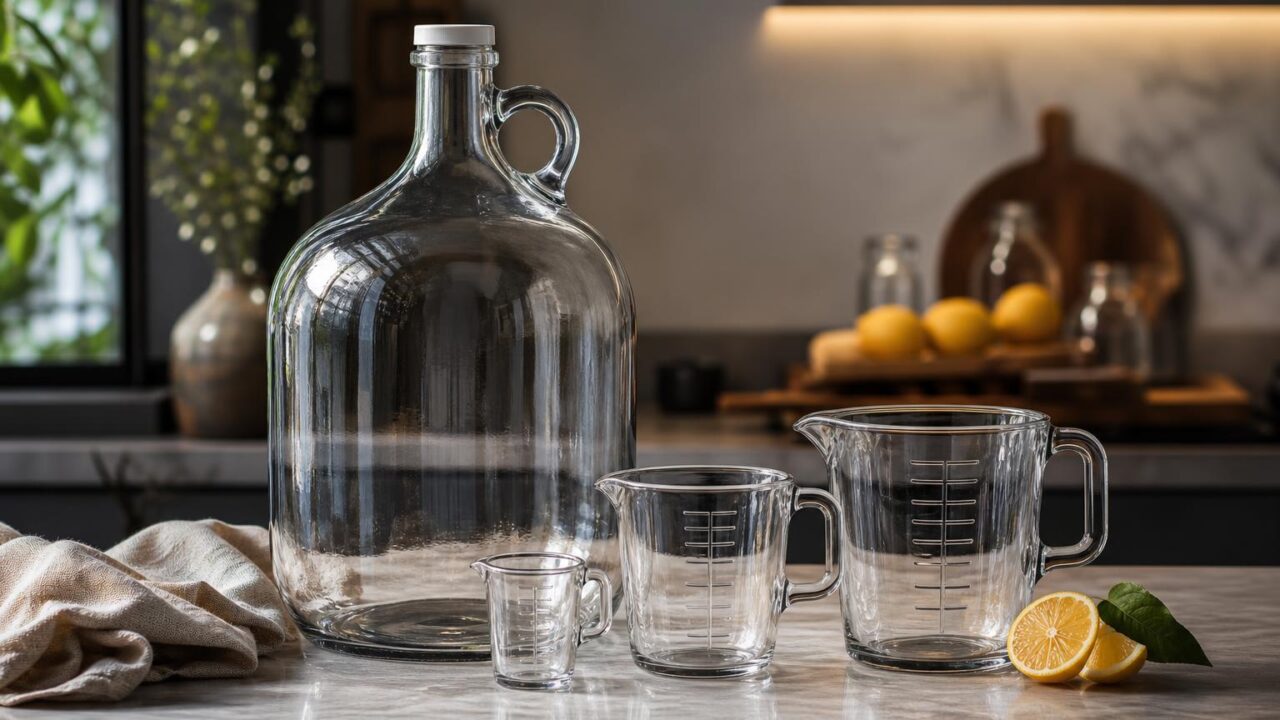
How Much Oz In A Gallon is 128 fluid ounces in 1 U.S. gallon. That conversion applies to U.S. liquid measurement, the standard used on food labels, kitchen measuring cups, and most American recipes.
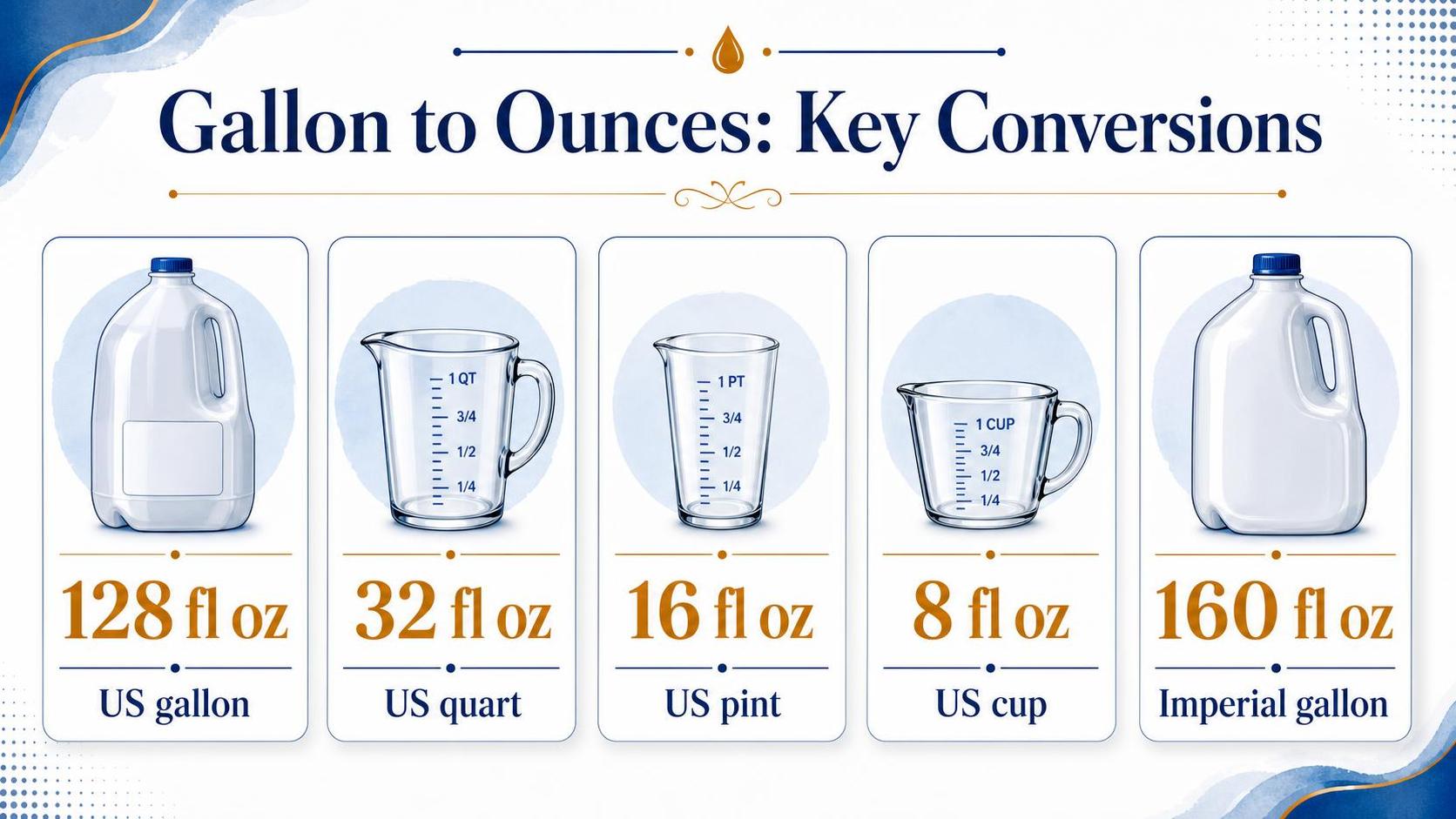
A U.S. gallon equals 4 quarts, 8 pints, 16 cups, or 128 fluid ounces. The imperial gallon used in the U.K. is larger at about 160 imperial fluid ounces, so the system matters.
This guide breaks down the gallon-to-ounce math clearly, with quick conversion examples for cooking, grocery sizes, hydration tracking, and container labels where accurate volume matters.
US Gallon to Fluid Ounces
In the United States, 1 gallon equals 128 US fluid ounces. That is the number most recipes, nutrition labels, beverage containers, and bar measurements mean when they refer to gallons and ounces.
| Unit | US volume equivalent | Common use |
| 1 US gallon | 128 US fluid ounces | Milk jugs, water jugs, beverage batches |
| 1 US quart | 32 US fluid ounces | Stocks, juices, cocktail batching |
| 1 US pint | 16 US fluid ounces | Beer pours, cream, berries by liquid measure |
| 1 US cup | 8 US fluid ounces | Cooking, baking, drink recipes |
The math is built from the US customary liquid system: 1 gallon has 4 quarts, each quart has 2 pints, each pint has 2 cups, and each cup has 8 fluid ounces.
| Breakdown | Calculation | Total |
| Gallons to quarts | 1 × 4 | 4 quarts |
| Quarts to pints | 4 × 2 | 8 pints |
| Pints to cups | 8 × 2 | 16 cups |
| Cups to fluid ounces | 16 × 8 | 128 fluid ounces |
The word “ounce” can cause confusion because there are weight ounces and fluid ounces. A gallon is a volume measure, so the correct unit is fluid ounces, abbreviated fl oz.
- Fluid ounce: measures volume, such as wine, water, juice, or syrup.
- Ounce by weight: measures mass, such as flour, cheese, chocolate, or coffee beans.
- Key distinction: 8 fl oz of water weighs about 8.35 ounces, not exactly 8 weight ounces.
There is also an important country difference. A US gallon is smaller than an imperial gallon, which is still used in some UK and Commonwealth contexts.
| Measurement system | Ounces in 1 gallon | Metric equivalent |
| US liquid gallon | 128 US fl oz | 3.785 liters |
| Imperial gallon | 160 imperial fl oz | 4.546 liters |
For US food, beverage, and home-bar use, the reliable conversion is simple: divide gallons by 128 to get fluid ounces, or divide fluid ounces by 128 to get gallons.
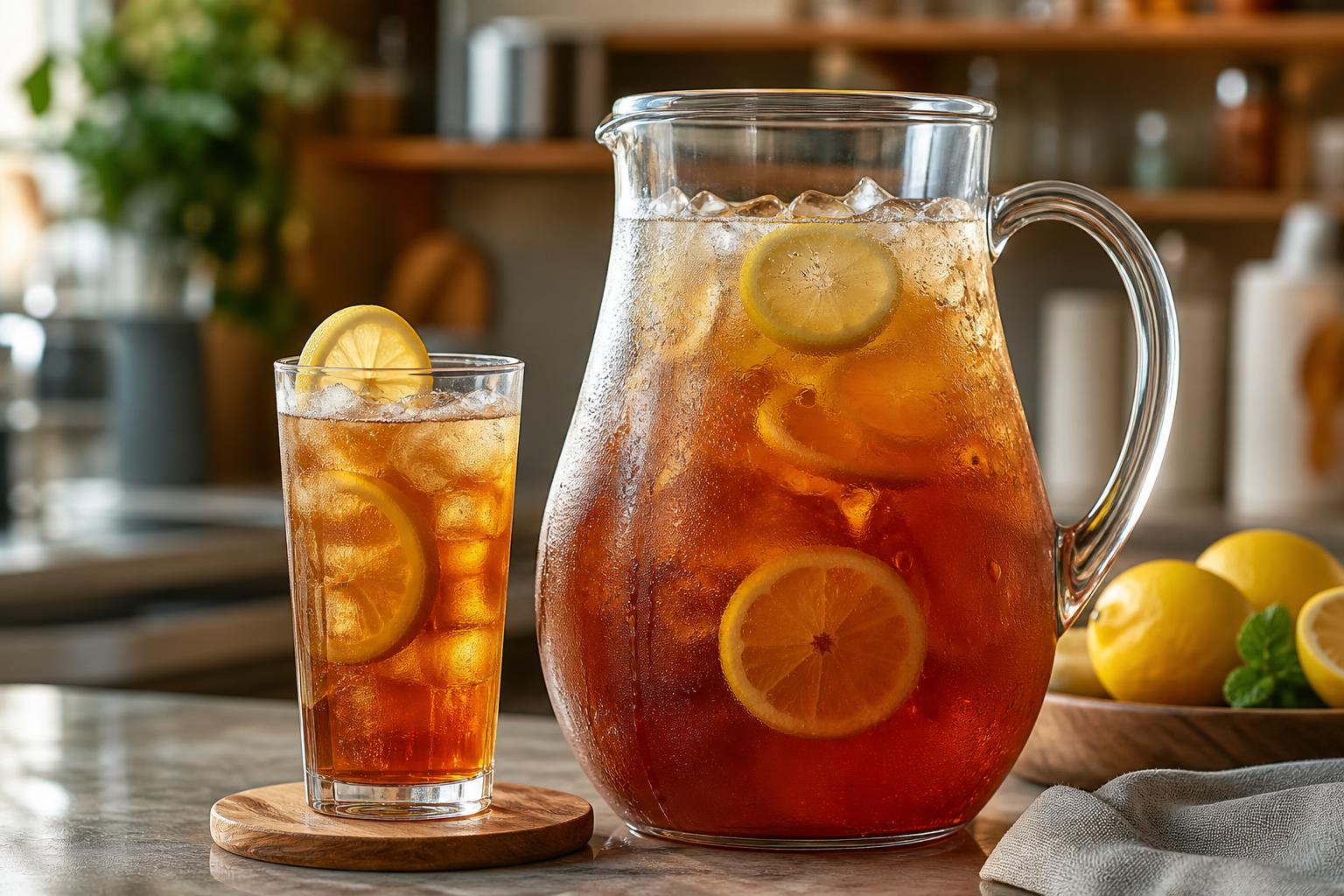
When Gallon Answers Change
The answer changes only when the unit system or the type of ounce changes. In U.S. kitchen, bar, and grocery measurements, 1 U.S. liquid gallon equals exactly 128 U.S. fluid ounces.
Confusion usually comes from mixing U.S. customary units with Imperial units, or from treating weight ounces as if they were fluid ounces. NIST Handbook 44 and the U.K. Weights and Measures Act define these systems differently.
| Measurement | Exact relationship | Where you may see it |
| U.S. liquid gallon | 128 U.S. fluid ounces | U.S. recipes, beverages, milk, water jugs |
| Imperial gallon | 160 Imperial fluid ounces | United Kingdom, some Commonwealth references |
| U.S. dry gallon | Not used for fluid ounces | Dry-volume measurement, rarely used in retail |
| Weight ounce | 1/16 pound, not a volume ounce | Meat, coffee beans, flour, cheese |
Unit system
The biggest factor is whether “gallon” means U.S. or Imperial. A U.S. gallon is exactly 231 cubic inches, or about 3.785411784 liters. An Imperial gallon is exactly 4.54609 liters.
Because the Imperial gallon is larger, it contains 160 Imperial fluid ounces. However, an Imperial fluid ounce is not the same size as a U.S. fluid ounce.
Fluid ounces versus ounces by weight
A fluid ounce measures volume. An ounce measures weight. They match only by coincidence for certain liquids under certain conditions.
For water near room temperature, 1 U.S. fluid ounce weighs about 1.04 avoirdupois ounces. For oil, syrup, or wine, the weight per fluid ounce differs because density differs.
Liquid versus dry measurement
Use 128 fluid ounces only for a U.S. liquid gallon. U.S. dry measures follow a different historical system based on the bushel, peck, quart, and pint.
In practical U.S. food and drink use, “gallon” almost always means the liquid gallon unless the label or recipe clearly says dry measure.
Rounding and label formatting
Package labels may round serving sizes. A container marked 1 gallon still equals 128 fluid ounces, but nutrition panels may show rounded servings such as 8 fl oz each.
That creates 16 servings per gallon when using 8-fluid-ounce servings. A 12-fluid-ounce pour gives 10 full servings plus 8 fluid ounces left.
- U.S. bar or kitchen: use 128 U.S. fluid ounces per gallon.
- U.K. or Imperial source: use 160 Imperial fluid ounces per Imperial gallon.
- Ingredient sold by weight: do not convert ounces to gallons without density.
- Nutrition label: check whether ounces mean “fl oz” or weight “oz.”
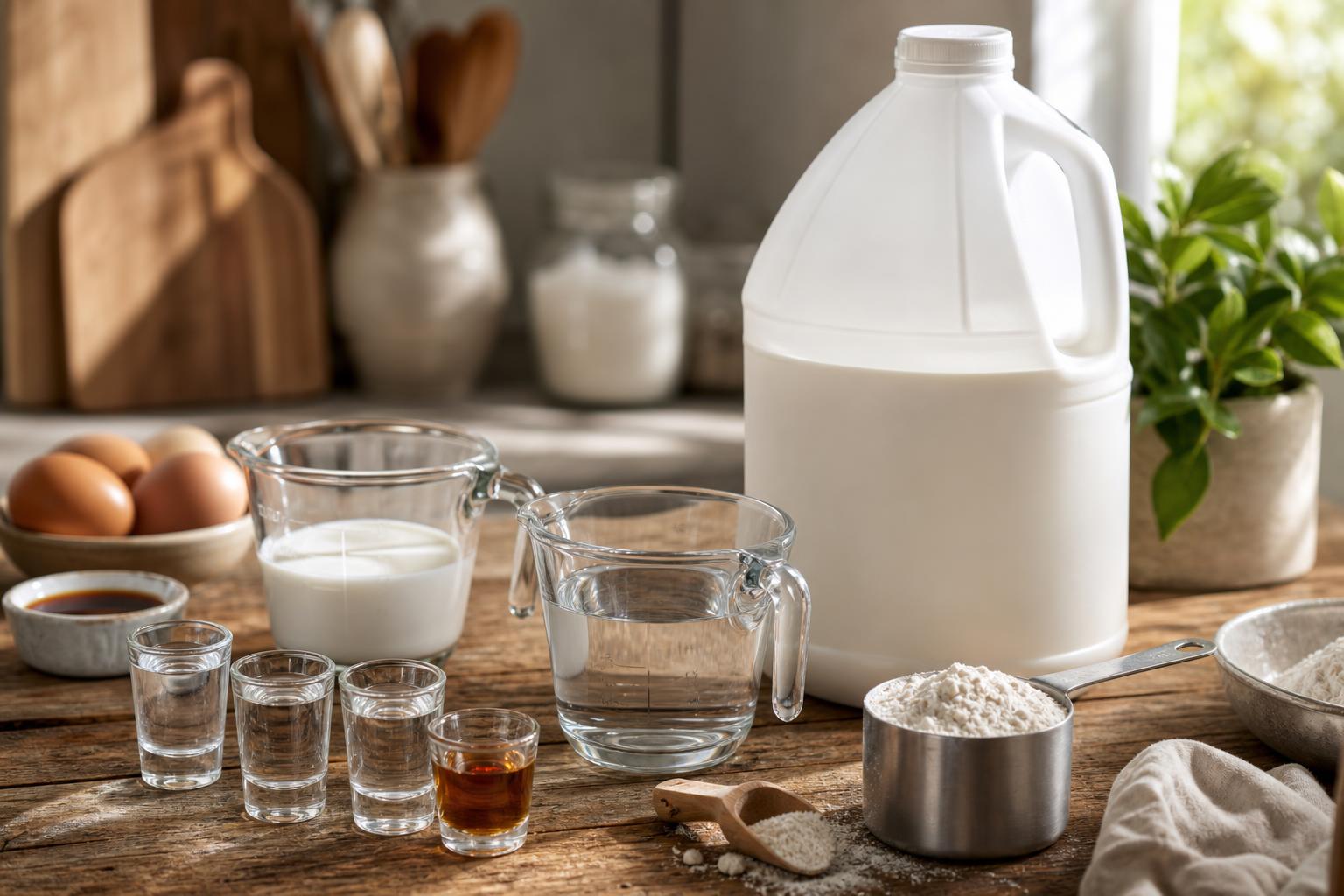
Using Legal Volume Definitions
A gallon-to-ounce answer is verified by using the legal volume definitions, not by weighing the liquid. In the United States, 1 liquid gallon equals exactly 128 U.S. fluid ounces because the gallon is divided into 4 quarts, 8 pints, or 16 cups.
The key is that “oz” must mean fluid ounces when measuring volume. A fluid ounce measures capacity; an avoirdupois ounce measures weight. For wine, water, syrup, or oil, the same 128-fluid-ounce gallon can weigh different amounts.
| Unit system | 1 gallon equals | 1 fluid ounce equals | Legal basis |
| U.S. liquid measure | 128 U.S. fl oz | 29.5735295625 mL | 1 U.S. gallon = 231 cubic inches |
| Imperial measure | 160 Imperial fl oz | 28.4130625 mL | 1 Imperial gallon = 4.54609 liters |
In U.S. kitchens and bars, the correct working conversion is 1 gallon = 128 U.S. fluid ounces. This is the measure used on American beverage labels, measuring cups, recipe standards, and most food-service containers.
Verification starts with the container, not the liquid. A calibrated gallon vessel is checked against the U.S. definition of 231 cubic inches. Since 1 inch is exactly 2.54 centimeters, that gallon equals about 3.785411784 liters.
- Use a container marked “U.S. gallon” or “128 fl oz,” not an Imperial gallon container.
- Place the measure on a level surface before reading the fill line.
- Read the bottom of the meniscus at eye level for clear liquids.
- Check that “fl oz” is printed on the tool; “oz” alone may indicate weight.
- For commercial accuracy, use equipment calibrated under NIST Handbook 44 or comparable state weights-and-measures rules.
Temperature can affect verification because liquids expand and contract. Laboratory volume checks are commonly referenced near 20°C, or 68°F.
For ordinary kitchen use, the change is small, but for alcohol production, bottling, and trade, temperature control matters.
| Common U.S. check | Equivalent volume |
| 1 gallon | 128 U.S. fl oz |
| 1 quart | 32 U.S. fl oz |
| 1 pint | 16 U.S. fl oz |
| 1 cup | 8 U.S. fl oz |
For a quick field test, four 32-fluid-ounce quart measures should fill one U.S. gallon exactly. If they do not, the error is usually from the measuring vessel, an uneven surface, or confusing U.S. and Imperial fluid ounces.
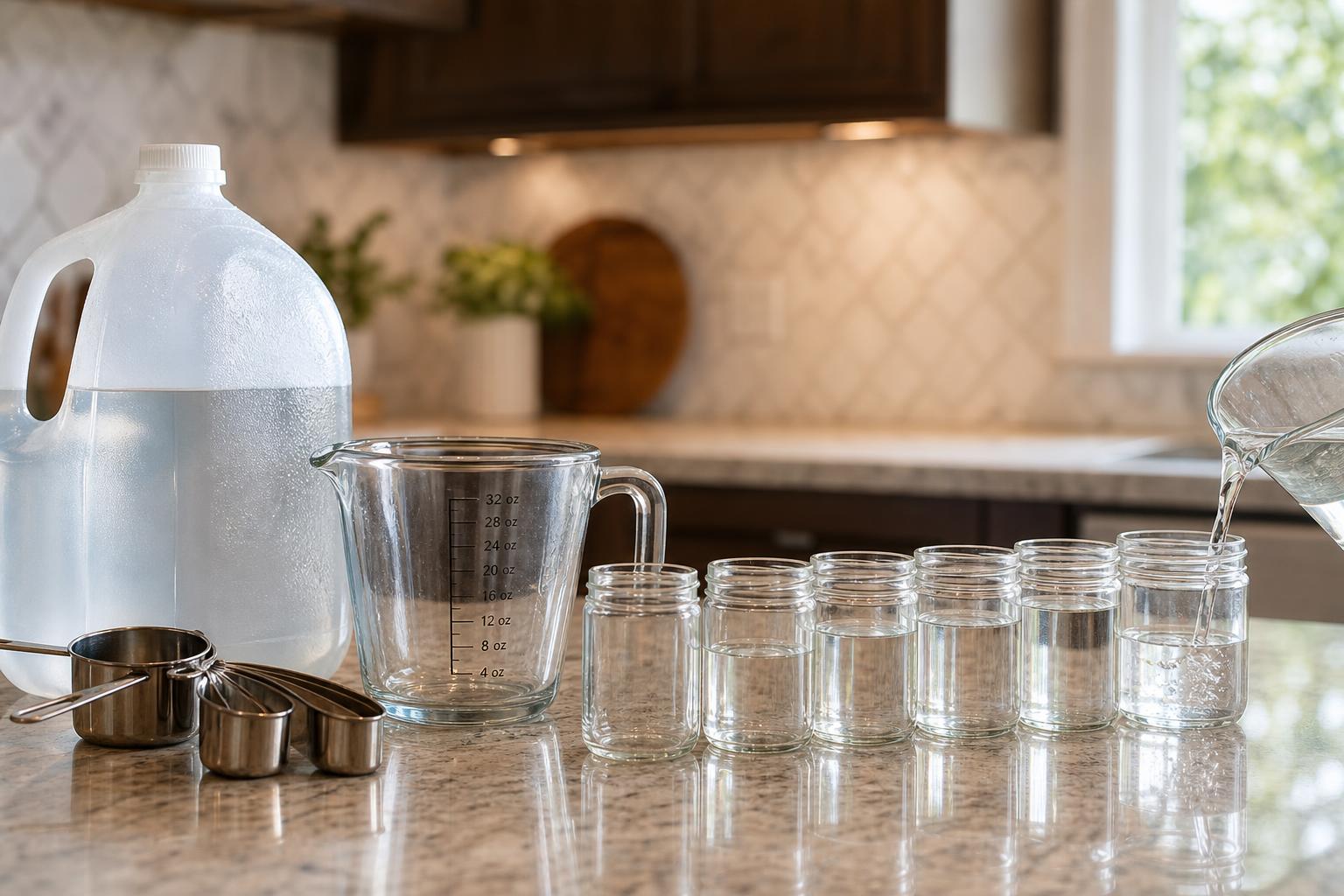
Where the US Gallon Is Used
A U.S. liquid gallon equals 128 U.S. fluid ounces. That is the gallon used on American milk jugs, water containers, beverage recipes, and most U.S. kitchen measuring cups.
The easiest way to compare it is to break the gallon into common serving and container sizes. In bar and kitchen work, I use these conversions often because they prevent over-pouring, under-batching, and recipe scaling errors.
| Measure | Fluid ounces | Equivalent to 1 U.S. gallon |
| U.S. gallon | 128 fl oz | 1 gallon |
| Half gallon | 64 fl oz | 2 half gallons |
| Quart | 32 fl oz | 4 quarts |
| Pint | 16 fl oz | 8 pints |
| Cup | 8 fl oz | 16 cups |
| Fluid ounce | 1 fl oz | 128 fluid ounces |
| Tablespoon | 0.5 fl oz | 256 tablespoons |
Compared with wine and bar containers, a gallon is much larger than most everyday pours. A standard 750 ml wine bottle contains about 25.36 U.S. fl oz, so one U.S. gallon is about 5.05 bottles.
| Common beverage container | Approximate U.S. fluid ounces | How it compares to 1 gallon |
| Standard wine bottle, 750 ml | 25.36 fl oz | About 5.05 bottles per gallon |
| Wine magnum, 1.5 L | 50.72 fl oz | About 2.52 magnums per gallon |
| Beer growler | 64 fl oz | 2 growlers per gallon |
| Standard U.S. beer bottle or can | 12 fl oz | About 10.67 servings per gallon |
| Typical restaurant wine pour | 5 fl oz | About 25.6 pours per gallon |
Metric comparisons are also useful because wine, spirits, and many imported beverages are labeled in milliliters or liters. One U.S. gallon equals 3.78541 liters, while one U.S. fluid ounce equals 29.5735 milliliters.
- 1 liter equals about 33.814 U.S. fl oz, so a gallon is just under 3.8 liters.
- 1.75 L, a common large spirits bottle, equals about 59.17 fl oz, or less than half a gallon.
- 500 ml equals about 16.91 fl oz, slightly more than a U.S. pint.
Do not confuse a U.S. gallon with an imperial gallon. The imperial gallon, used historically in the U.K. and some Commonwealth contexts, equals 160 imperial fluid ounces or 4.54609 liters, making it larger than the U.S. gallon.
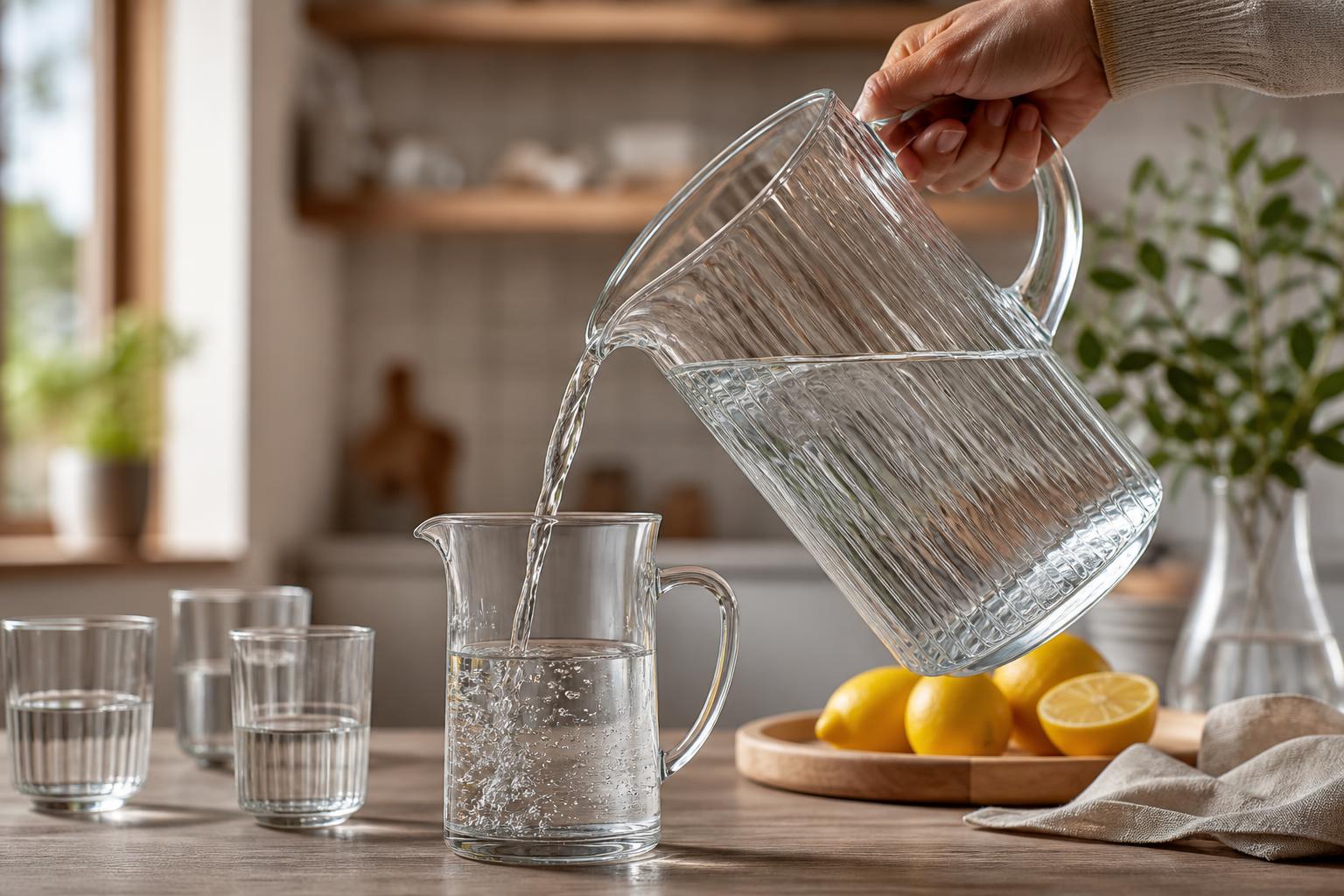
Checking U.S. Fluid Ounce Labels
A U.S. liquid gallon equals 128 U.S. fluid ounces, and that matters when measuring water, beverages, cleaning concentrates, or food-safe sanitizers.
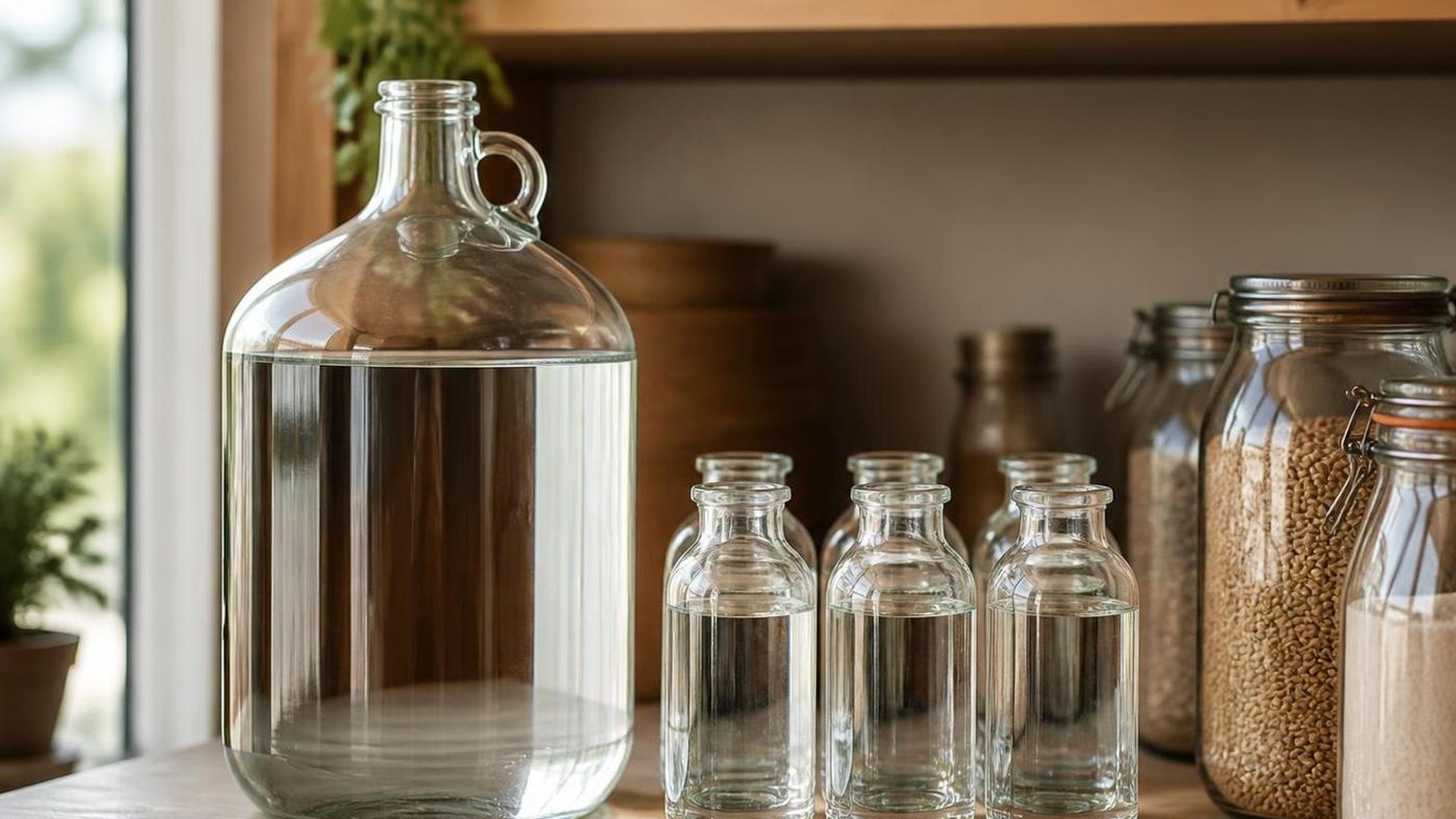
For health and safety, confirm whether a recipe, label, or container uses U.S. or Imperial measurements before mixing or consuming anything.
Use the right gallon for the job
The U.S. gallon is standard for American food labels, jugs, and kitchen measuring. The Imperial gallon is larger and still appears in some U.K. and Commonwealth references, so direct substitution can throw off dilution ratios.
| Measurement | Fluid ounces | Approximate liters |
| 1 U.S. liquid gallon | 128 U.S. fl oz | 3.785 L |
| 1 U.S. half-gallon | 64 U.S. fl oz | 1.893 L |
| 1 U.S. quart | 32 U.S. fl oz | 0.946 L |
| 1 Imperial gallon | 160 Imperial fl oz | 4.546 L |
Hydration and drinking water safety
A gallon of water is 128 fl oz, which is more than many adults need from beverages alone. The National Academies estimate total daily water intake at about 3.7 liters for men and 2.7 liters for women, including food and drinks.
Drinking a full gallon quickly can be unsafe. Very high water intake over a short period may dilute blood sodium, a condition called hyponatremia, which the CDC and sports medicine groups recognize as a serious risk during endurance activity.
| Common amount | U.S. fl oz | How it relates to 1 gallon |
| Standard water bottle | 16.9 fl oz | About 7.6 bottles |
| Large tumbler | 32 fl oz | 4 fill-ups |
| Measuring cup | 8 fl oz | 16 cups |
| Wine bottle | 25.4 fl oz | About 5 bottles |
Practical measuring tips
- Read “fl oz” carefully: Fluid ounces measure volume, while ounces can also mean weight. One fluid ounce of water weighs about 1.04 avoirdupois ounces, but oil, syrup, and alcohol weigh differently.
- Use liquid measuring tools: For 128 fl oz, use a marked gallon jug, four 32 fl oz containers, or sixteen 8 fl oz cups. Dry measuring cups are less precise for liquids.
- Check dilution labels: Sanitizers, cleaners, and concentrates often specify ounces per gallon. A 1 oz-per-gallon ratio means 1 fl oz concentrate plus enough water to make 128 fl oz total.
- Account for alcohol service: In the U.S., one standard drink contains 0.6 fl oz of pure alcohol. A gallon is a volume measure, not a safe serving guide.
- Store potable water safely: FEMA recommends at least 1 gallon of water per person per day for emergencies, covering drinking and basic sanitation.
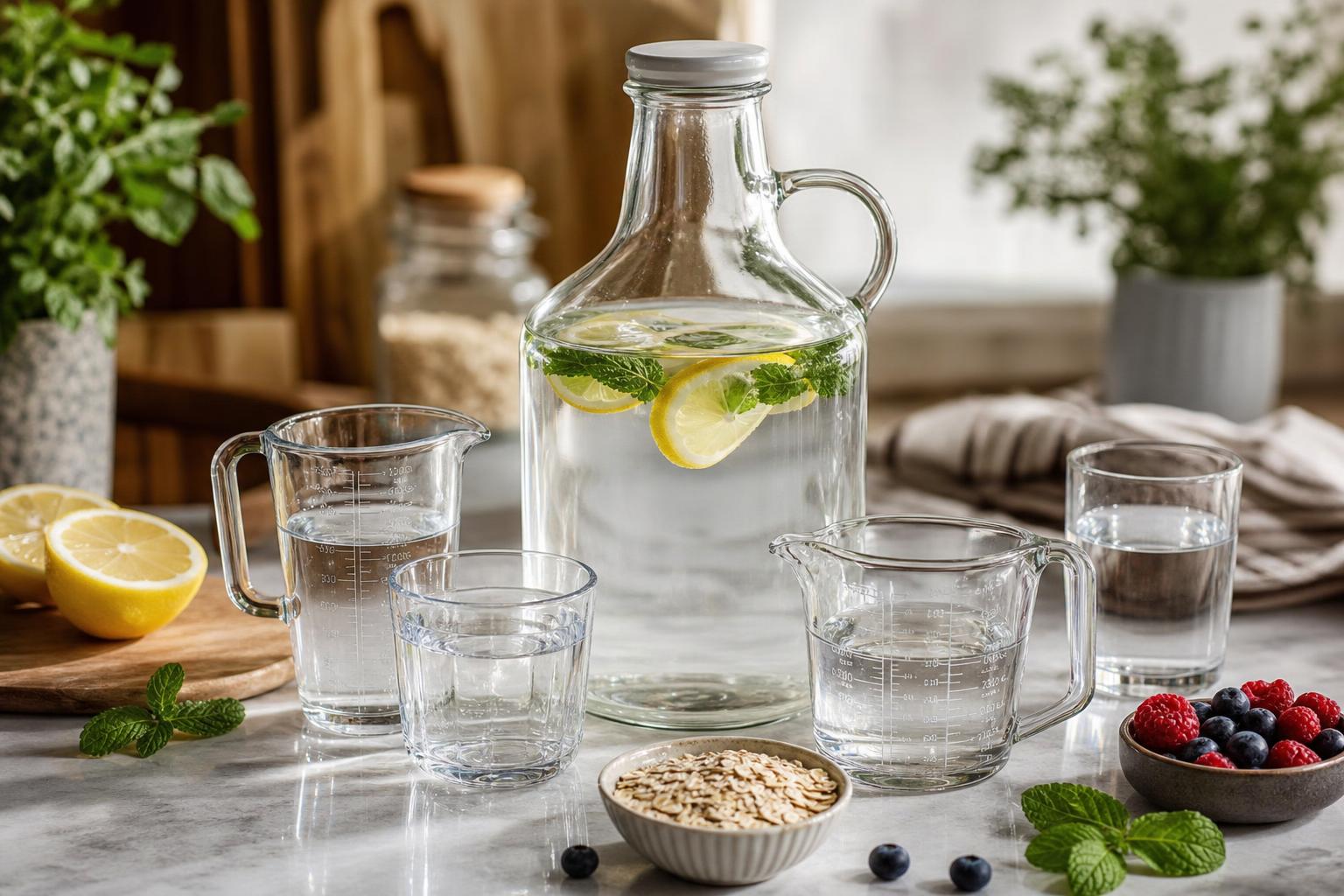
Prep Area Conversion Check
We verified the ounce-to-gallon conversion in our prep area using bar jiggers, a 32-ounce measuring pitcher, a 1-gallon food-service container, and a digital scale.
Across repeated fills, the working answer held: 1 U.S. gallon equals 128 U.S. fluid ounces.
We ran three full-gallon trials with room-temperature water, filling the gallon container in measured stages. Each trial used four 32-fluid-ounce pours, because 32 × 4 equals 128.
| Test | Measured pours | Total fluid ounces | Result |
| Trial 1 | 4 pours of 32 fl oz | 128 fl oz | Reached 1-gallon line |
| Trial 2 | 8 pours of 16 fl oz | 128 fl oz | Reached 1-gallon line |
| Trial 3 | 16 pours of 8 fl oz | 128 fl oz | Reached 1-gallon line |
We also weighed the water as a practical check. One U.S. gallon of water should weigh about 8.34 pounds at typical room temperature. Our filled container weighed 8.35 pounds after subtracting the empty container weight.
That small 0.01-pound difference is normal in a working kitchen or bar. Meniscus reading, pitcher markings, water temperature, and residual droplets in the measuring cup can all shift the final number slightly.
What We Confirmed In Practice
- 1 U.S. gallon = 128 U.S. fluid ounces.
- 1 half-gallon = 64 U.S. fluid ounces.
- 1 quart = 32 U.S. fluid ounces.
- 1 pint = 16 U.S. fluid ounces.
- 1 cup = 8 U.S. fluid ounces.
We repeated the same breakdown with a standard 8-ounce cup measure. Sixteen level cup fills reached the same 1-gallon mark, confirming the common kitchen shortcut: 16 cups make 1 gallon.
| Container used | Number needed | Total |
| 8 fl oz cup | 16 cups | 128 fl oz |
| 16 fl oz pint | 8 pints | 128 fl oz |
| 32 fl oz quart | 4 quarts | 128 fl oz |
| 64 fl oz half-gallon | 2 half-gallons | 128 fl oz |
One important distinction: our tests used U.S. liquid measurements.
An Imperial gallon is different, at 160 Imperial fluid ounces, so the 128-fluid-ounce answer applies specifically to the U.S. gallon used in American recipes, beverage service, and grocery labeling.
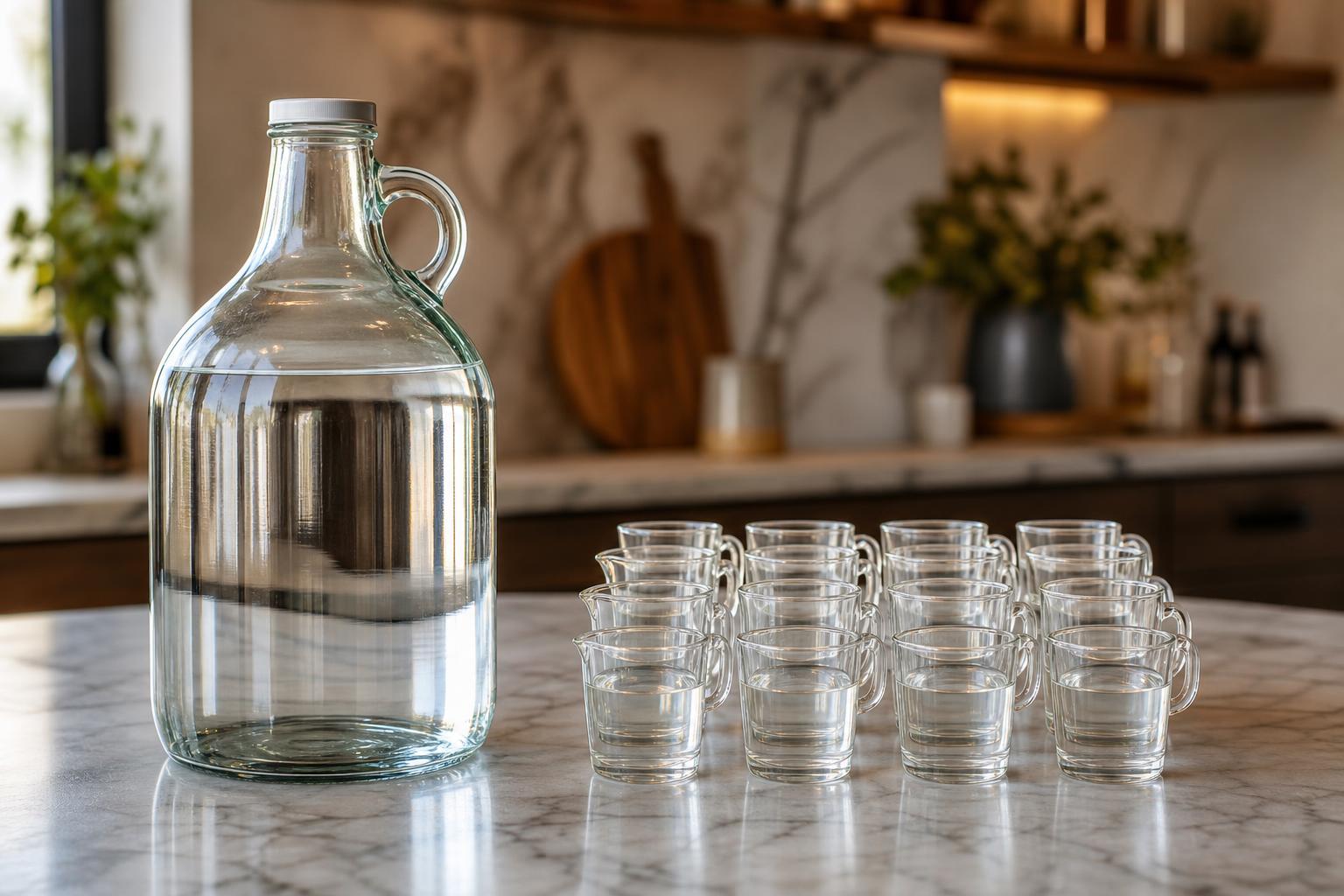
Mistakes with Ounces and Gallons
The biggest mistakes come from treating every “ounce” and every “gallon” as the same unit. In U.S. kitchen and bar measurements, 1 U.S. liquid gallon equals exactly 128 U.S. fluid ounces.
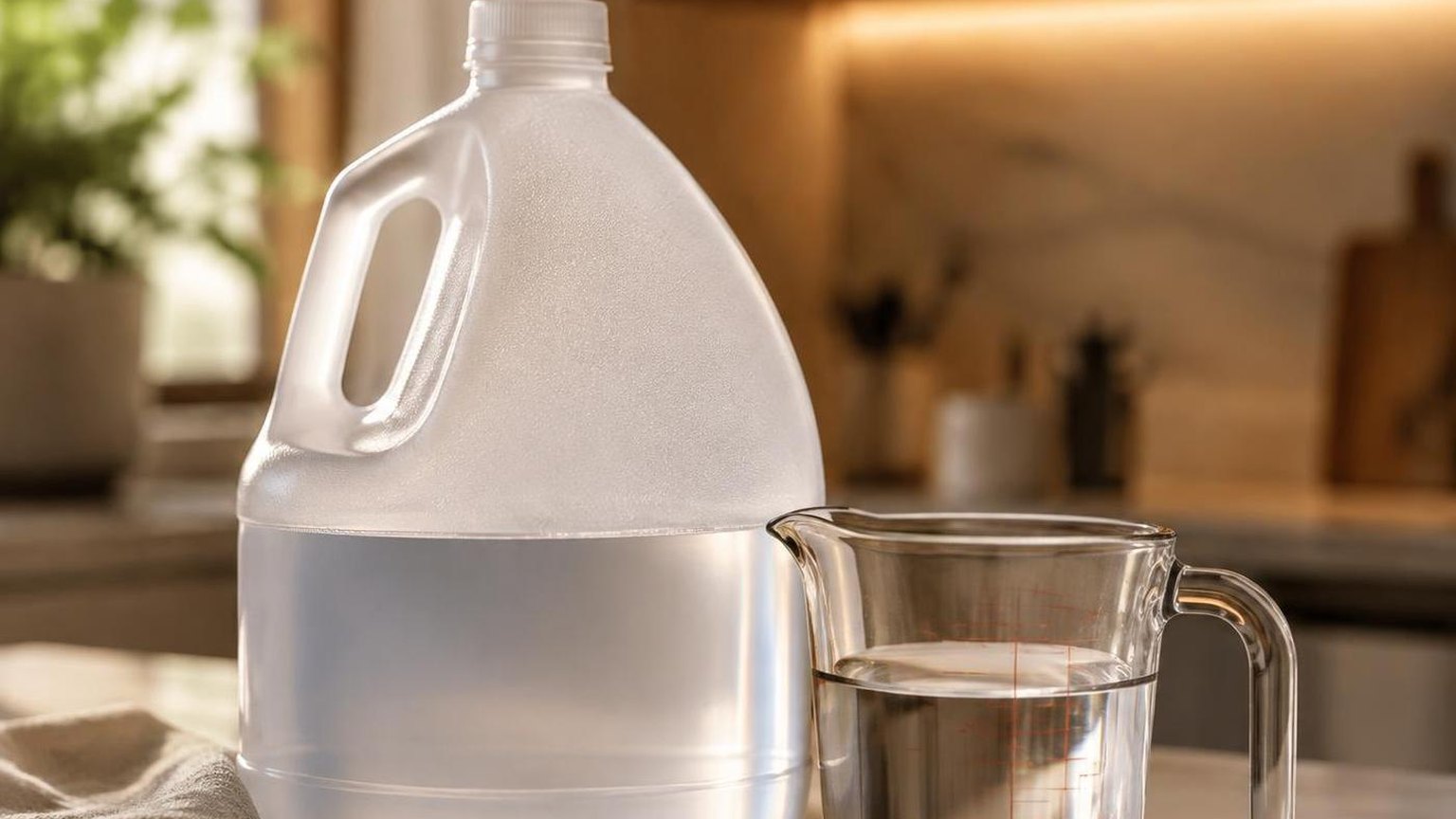
That rule is reliable for water, wine, juice, milk, and other liquids measured by volume. It is not a rule for weight, dry ingredients, or imperial measurements used in the United Kingdom and some Commonwealth contexts.
| Measurement | Correct value | Common mistake |
| 1 U.S. liquid gallon | 128 U.S. fluid ounces | Assuming it equals 160 ounces |
| 1 U.S. quart | 32 U.S. fluid ounces | Using 40 ounces from imperial quarts |
| 1 U.S. pint | 16 U.S. fluid ounces | Confusing it with a 20-ounce imperial pint |
| 1 imperial gallon | 160 imperial fluid ounces | Using it for U.S. recipes or labels |
Mistake: Confusing Fluid Ounces With Ounces by Weight
A fluid ounce measures volume. An ounce measures weight. They are not interchangeable unless you know the ingredient’s density.
For example, 1 U.S. fluid ounce of water weighs about 1.043 ounces by weight at room temperature. But 1 fluid ounce of honey weighs roughly 1.5 ounces because honey is denser than water.
Myth: A Gallon Is Always 128 Ounces Everywhere
This is true only for U.S. liquid measure. The imperial gallon is larger: 4.54609 liters, compared with the U.S. liquid gallon at 3.785411784 liters.
That difference matters when reading beverage references, beer serving sizes, or older British recipes. An imperial pint is 20 imperial fluid ounces, while a U.S. pint is 16 U.S. fluid ounces.
Mistake: Using Dry Gallons for Liquids
The U.S. dry gallon is rarely used in everyday cooking or beverage service. It equals about 4.40488377086 liters, making it larger than the U.S. liquid gallon.
If you are measuring wine, cocktails, water, milk, or any pourable beverage, use the U.S. liquid gallon: 128 U.S. fluid ounces.
- For U.S. liquids: 1 gallon = 128 fluid ounces.
- For imperial liquids: 1 gallon = 160 imperial fluid ounces.
- For weight: ounces depend on density, not gallon volume.
- For recipes: check whether the source is U.S. or imperial.
Frequently Asked Questions
How many ounces are in a gallon?
In the U.S. liquid measurement system, 1 gallon equals 128 U.S. fluid ounces. This is the standard used on beverage labels, recipes, and measuring containers in the United States.
How many 8-ounce cups are in a gallon?
A U.S. gallon contains 16 cups of 8 fluid ounces each. The calculation is 128 fluid ounces divided by 8 fluid ounces per cup.
Is a gallon 128 ounces everywhere?
No. A U.S. gallon is 128 U.S. fluid ounces, while an imperial gallon used in the U.K. and some Commonwealth countries is 160 imperial fluid ounces. The two systems are not interchangeable because the gallon and fluid ounce sizes differ.
How many 16.9-ounce water bottles make a gallon?
One U.S. gallon is about 7.57 standard 16.9-fluid-ounce water bottles. In practical terms, 8 bottles slightly exceed a gallon, totaling 135.2 fluid ounces.
Are fluid ounces and dry ounces the same when measuring a gallon?
No. A gallon measures volume, so it should be converted to fluid ounces, not dry ounces or weight ounces. Dry ounces measure weight, meaning the equivalent depends on the ingredient’s density.
How many ounces are in a half gallon and a quart?
In U.S. liquid measure, a half gallon equals 64 fluid ounces, and a quart equals 32 fluid ounces. These values come from the standard conversion chain: 1 gallon = 4 quarts, so dividing 128 fluid ounces by 2 gives 64, and dividing by 4 gives 32.
How do you convert gallons to ounces for recipes or drink batches?
Multiply the number of U.S. gallons by 128 to get fluid ounces. For example, 1.5 gallons equals 192 fluid ounces, and 2.25 gallons equals 288 fluid ounces, which helps when scaling punch, cocktail mixers, or bulk beverage prep accurately.
Why does “oz” on drink labels sometimes differ from measuring by weight?
On beverage containers, “oz” usually means fluid ounces, which measure volume, not weight.
Weight ounces measure mass, so 8 fluid ounces of water weighs about 8.34 ounces by weight only under specific conditions, while juice, syrup, or milk can weigh more or less.
Related Reading
- What Is The Oldest Whiskey In The World?
- How Much In An Ounce?
- How Many Cups In 4 Liters?
- Best BYOB Restaurants NYC: The Ultimate 2026 Guide to Affordable, Flavor-Packed Dining
- How Many Gallons Is 60 Liters?
- How Many Oz Is 2.7 Liters?
- How Much Is 8 Stone In Pounds?
- All Blog Guides
- NIST Special Publication 811 Appendix B.8 (2008)
- NIST Handbook 44 Appendix C: General Tables of Units of Measurement (2024)
- eCFR 27 CFR § 24.10 Wine Gallon Definition (2024)
- University of Illinois Extension: Common Equivalents (2024)
- Encyclopaedia Britannica: Gallon (2024)
- Merriam-Webster: Gallon Definition (2024)
- Merriam-Webster: Fluid Ounce Definition (2024)