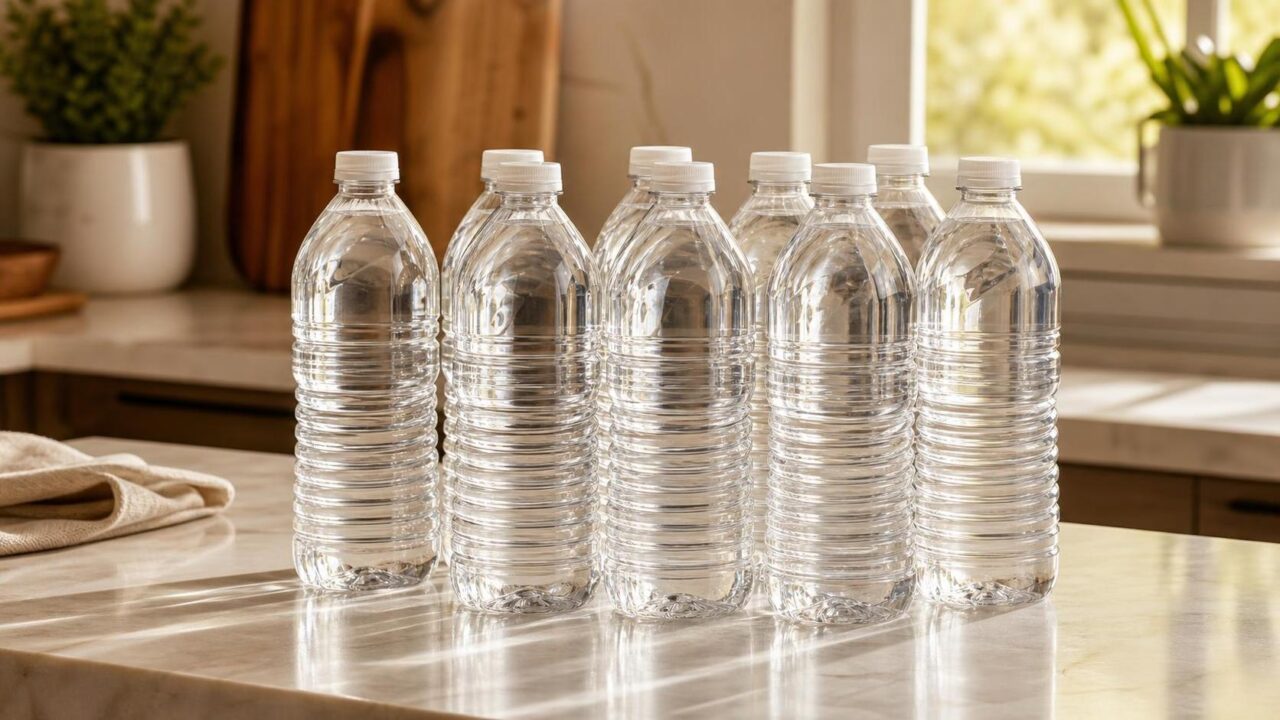
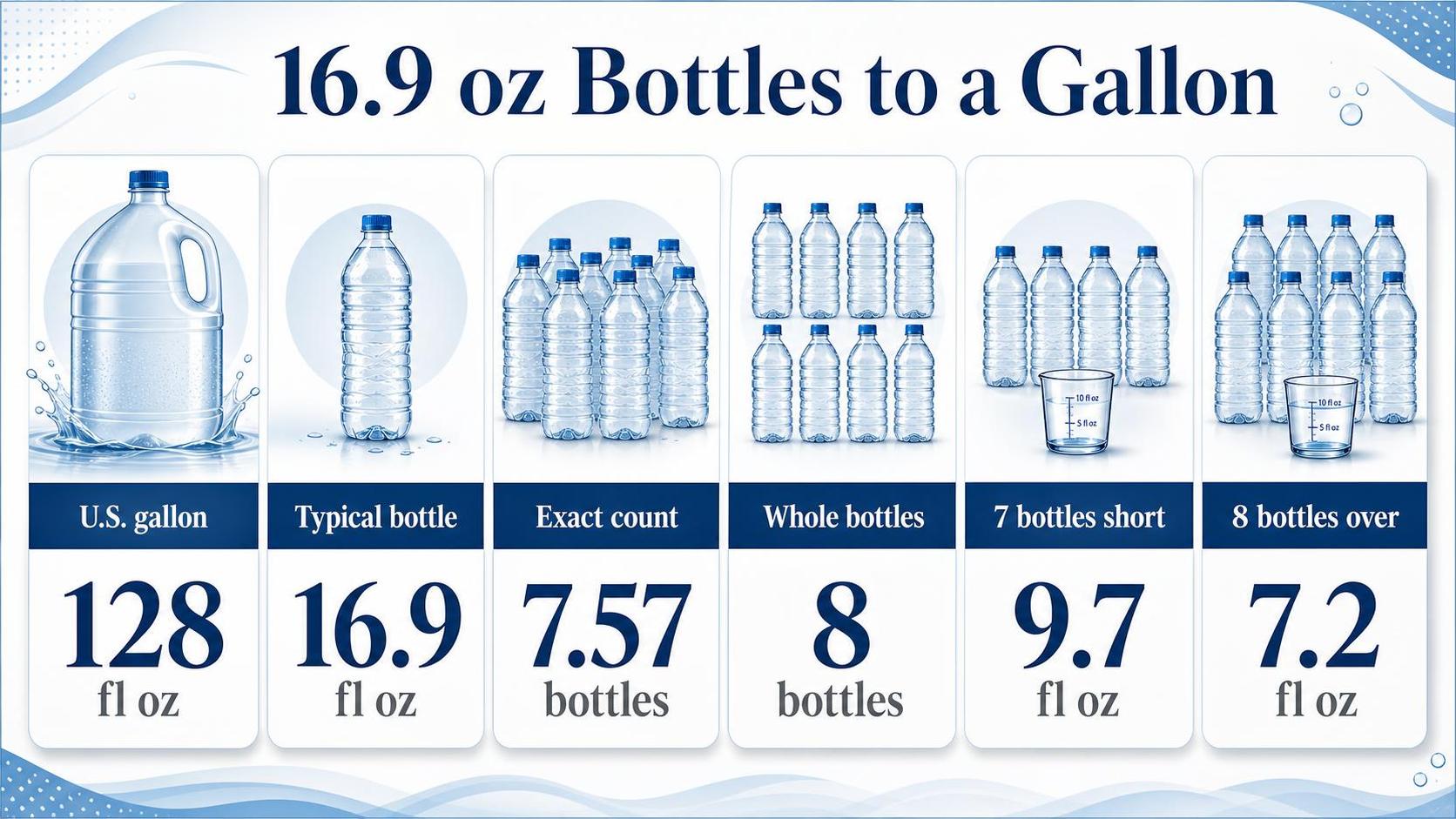
How Many 16.9 Ounces Bottles In A Gallon is 7.57 bottles. A U.S. liquid gallon contains 128 fluid ounces, so 128 ÷ 16.9 = 7.5739. In practical terms, you need 8 standard 16.9-ounce bottles to meet or slightly exceed one gallon.
The difference matters for shopping, hydration tracking, event planning, and recipe scaling. Seven bottles provide 118.3 fluid ounces, which is 9.7 ounces short of a gallon; eight bottles provide 135.2 fluid ounces, or 7.2 ounces over.
Why 16.9 Oz Bottles Are Common
A U.S. liquid gallon contains exactly 128 U.S. fluid ounces. A “16.9 oz” water bottle is usually a 500 mL bottle, with the ounce value rounded for U.S. labeling.
That means a gallon is a little more than 7 and a half of these bottles. In practical terms, you need 8 full 16.9-ounce bottles to exceed one U.S. gallon.
| Measure | Amount | What it means |
| 1 U.S. liquid gallon | 128 fl oz | Standard U.S. gallon used for beverages |
| 1 typical water bottle | 16.9 fl oz | Common label size for a 500 mL bottle |
| 128 ÷ 16.9 | 7.57 bottles | Exact bottle count using the rounded 16.9 fl oz label |
| Whole bottles needed | 8 bottles | 7 bottles is short; 8 bottles is more than a gallon |
The most accurate short answer is: one gallon equals about 7.57 bottles of 16.9-ounce water. Since you cannot pour 0.57 of a sealed bottle without measuring, everyday counting rounds this up to 8 bottles.
| Number of 16.9 oz bottles | Total fluid ounces | Compared with 1 gallon |
| 7 bottles | 118.3 fl oz | 9.7 fl oz short of a gallon |
| 7.57 bottles | About 128 fl oz | Approximately 1 U.S. gallon |
| 8 bottles | 135.2 fl oz | 7.2 fl oz more than a gallon |
The metric conversion explains why the number is slightly awkward. The National Institute of Standards and Technology defines 1 U.S. liquid gallon as 3.785411784 liters. A standard bottled-water size is 500 mL, or 0.5 liters.
| Metric calculation | Result |
| 1 U.S. gallon | 3.785411784 liters |
| 1 common bottle | 0.5 liters |
| 3.785411784 ÷ 0.5 | 7.570823568 bottles |
This is why some sources say 7.57 bottles, while others say 7.5 or 8. The scientifically grounded answer is 7.57 bottles; the shopping, meal-prep, or hydration-planning answer is 8 bottles.
- For exact math: use 7.57 bottles per U.S. gallon.
- For buying bottled water: count 8 bottles per gallon.
- For tracking intake: 4 bottles is 67.6 fl oz, a little over half a gallon.
Assumptions Behind the 7.57 Figure
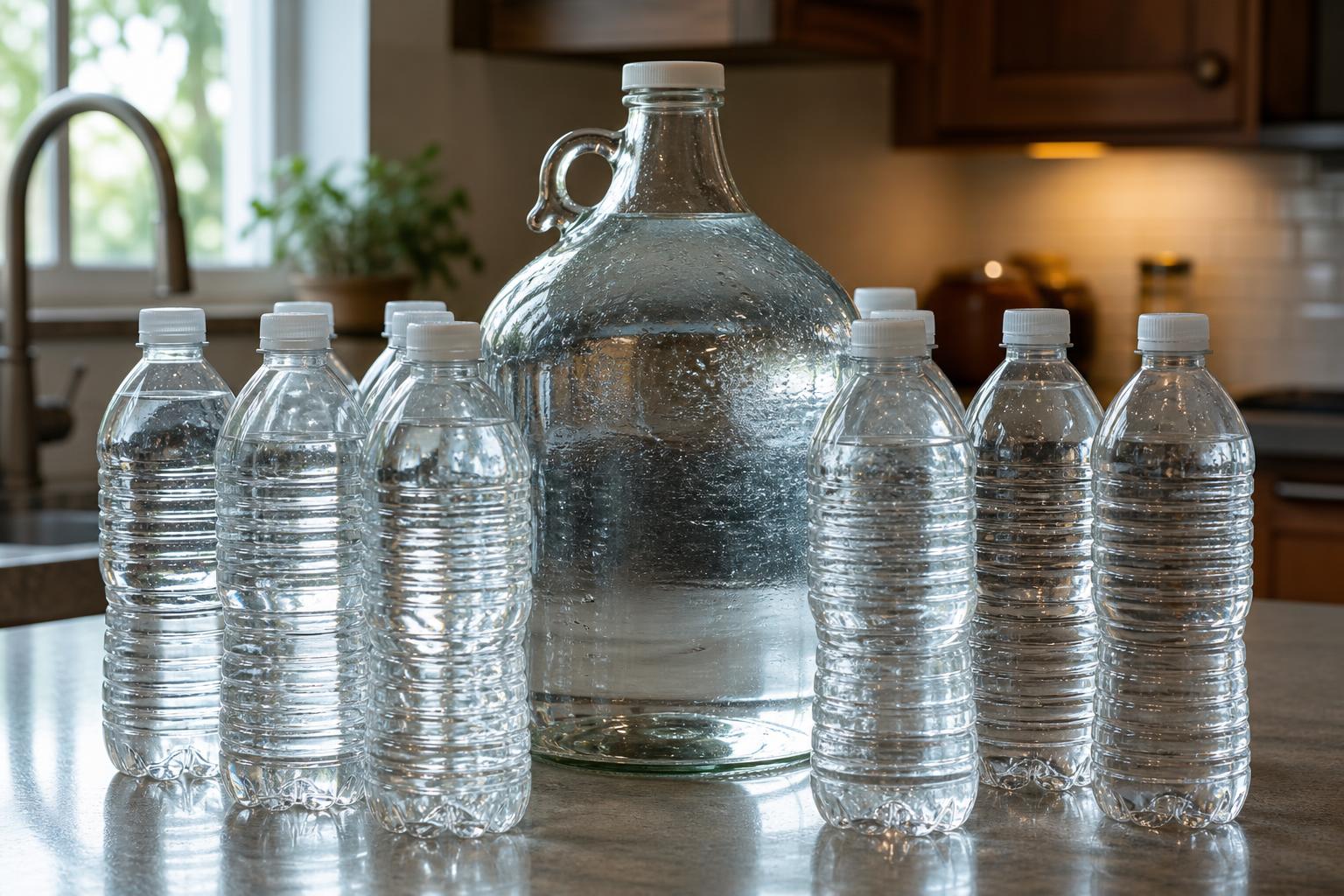
The quick answer—about 7.57 bottles—assumes a U.S. liquid gallon and a bottle labeled 16.9 U.S. fluid ounces.
The result changes slightly depending on whether you use the rounded label, the metric bottle size, or a different gallon standard.
Most “16.9 oz” water bottles are actually 500 milliliters. Under U.S. labeling rules, that metric volume converts to about 16.907 U.S. fluid ounces, so the printed 16.9 is rounded.
| Calculation basis | Numbers used | Result |
| U.S. gallon ÷ labeled bottle size | 128 U.S. fl oz ÷ 16.9 fl oz | 7.574 bottles |
| U.S. gallon ÷ exact 500 mL bottle | 3,785.411784 mL ÷ 500 mL | 7.571 bottles |
| Full 16.9 oz bottles only | 7 bottles × 16.9 fl oz | 118.3 fl oz, leaving 9.7 fl oz |
| 8 full bottles | 8 bottles × 16.9 fl oz | 135.2 fl oz, or 7.2 fl oz over 1 U.S. gallon |
U.S. gallon versus Imperial gallon
In the United States, a liquid gallon is exactly 128 U.S. fluid ounces, or 3,785.411784 milliliters, per NIST conversion standards. An Imperial gallon, used historically in the U.K. and some Commonwealth contexts, is larger: 4,546.09 milliliters.
| Gallon type | Volume | 500 mL bottles per gallon |
| U.S. liquid gallon | 3,785.411784 mL | 7.571 bottles |
| Imperial gallon | 4,546.09 mL | 9.092 bottles |
Label rounding and filling variation
A “16.9 fl oz” label usually represents a 500 mL bottle, not a bottle precisely filled to 16.900 fluid ounces.
That tiny difference changes the gallon calculation by only about 0.003 bottle, so it matters for precision but not everyday use.
- For measuring a gallon: use 7.57 bottles, or 7 bottles plus about 9.7 more fluid ounces.
- For buying bottled water: buy 8 bottles if you need at least 1 U.S. gallon.
- For recipes or hydration tracking: use 128 U.S. fluid ounces as the gallon benchmark.
- Do not use weight ounces: fluid ounces measure volume; avoirdupois ounces measure weight.
How a U.S. Gallon Is Measured
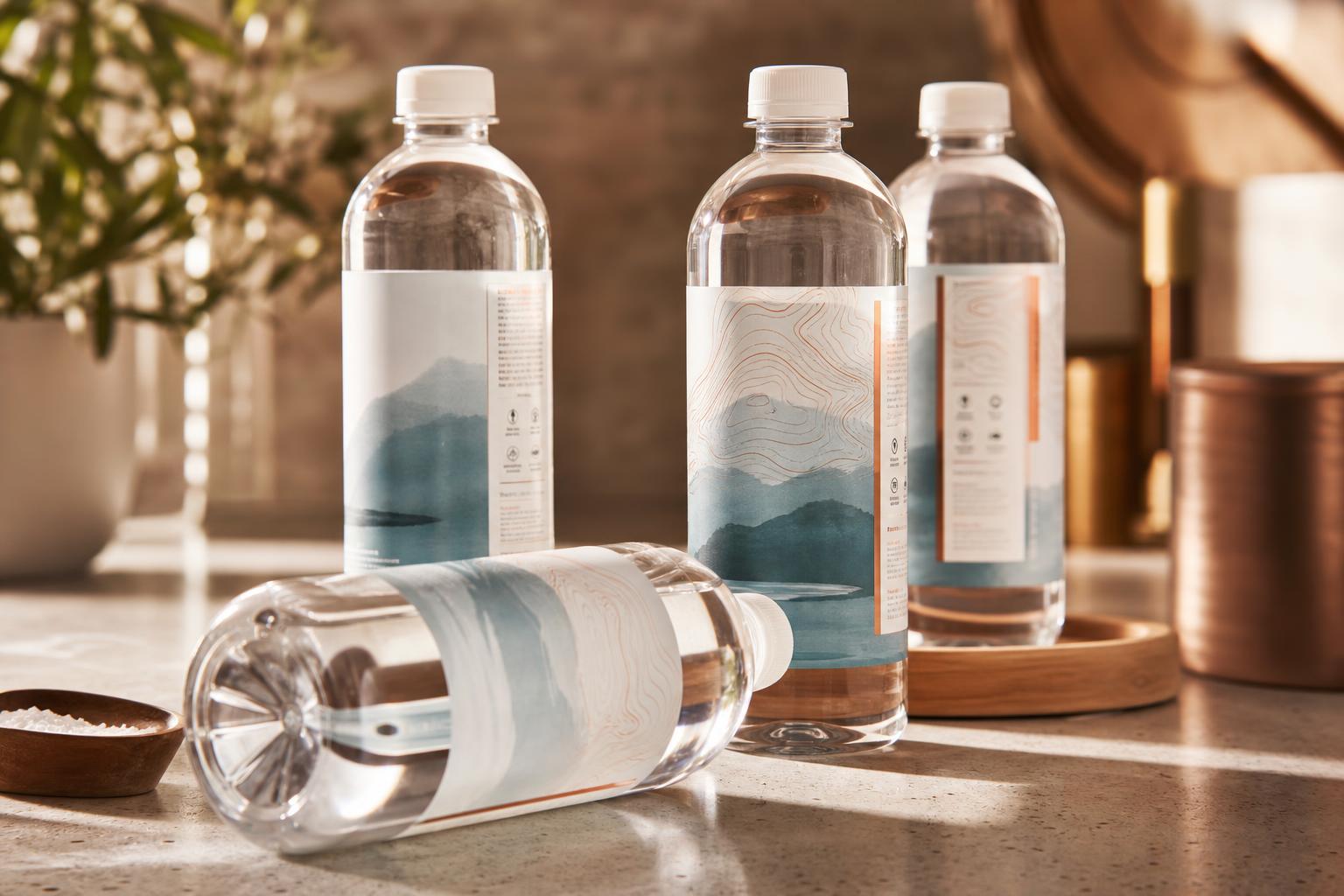
A U.S. gallon is measured as a liquid volume of 128 U.S. fluid ounces. A typical disposable water bottle labeled 16.9 fl oz is essentially the U.S. market version of a 500 mL bottle.
To verify the count, divide the gallon volume by the bottle volume using the same measurement system. Do not mix U.S. fluid ounces with imperial fluid ounces, because they are different units.
| Measurement item | Official or labeled volume | Metric equivalent |
| U.S. liquid gallon | 128 U.S. fl oz | 3.785411784 liters |
| Common bottled water size | 16.9 U.S. fl oz | 499.79 mL |
| Metric bottle size behind the label | About 16.907 U.S. fl oz | 500 mL |
The arithmetic is straightforward: 128 divided by 16.9 equals 7.573964497. That means one U.S. gallon contains about 7.57 bottles when the bottle label is treated as exactly 16.9 fl oz.
| Calculation | Result |
| 128 fl oz ÷ 16.9 fl oz | 7.573964497 bottles |
| 7 full bottles | 118.3 fl oz |
| Amount still needed to reach 1 gallon | 9.7 fl oz |
| Remaining amount in metric volume | About 287 mL |
In practical terms, 7 full 16.9-ounce bottles do not make a gallon. You need 7 full bottles plus about 9.7 fluid ounces from an eighth bottle.
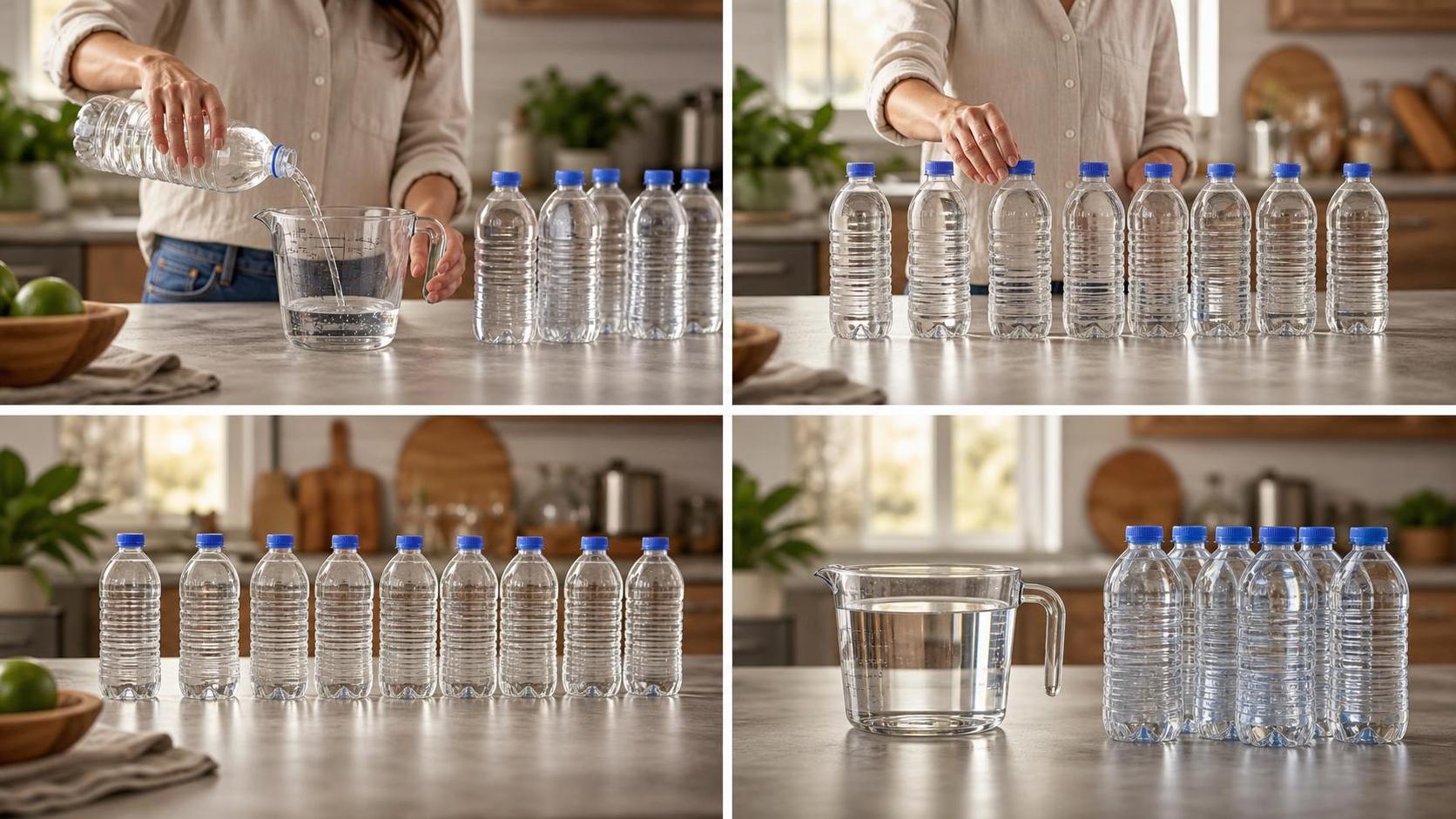
This can be verified at home with a clean one-gallon container marked at 1 gallon. Pour in seven unopened 16.9 fl oz bottles, then measure and add 9.7 fl oz more using a liquid measuring cup.
- Use a U.S. liquid measuring cup, not a dry measuring cup.
- Check the bottle label for “16.9 fl oz” or “500 mL.”
- Read the gallon line at eye level to reduce parallax error.
- Measure water at room temperature for ordinary kitchen accuracy.
For formal verification, U.S. volume standards trace back to the National Institute of Standards and Technology. NIST defines the U.S. gallon as exactly 231 cubic inches, which equals 3.785411784 liters and 128 U.S. fluid ounces.
Packaged bottled water labeling is regulated as a consumer package.
The net quantity statement on a 16.9 fl oz bottle is the manufacturer’s declared fill volume, subject to weights-and-measures inspection practices used by state and local agencies.
Bottles Needed to Make One Gallon
A U.S. gallon contains 128 U.S. fluid ounces, so it takes about 7.57 bottles of 16.9 ounces to equal one gallon. In practical terms, that means 7 bottles is short, while 8 bottles is slightly more than a gallon.
| Container size | Amount in one container | Containers per U.S. gallon | Practical takeaway |
| Standard small water bottle | 16.9 fl oz, or about 500 ml | 7.57 | 8 bottles equals about 135.2 fl oz, which is 7.2 fl oz over a gallon |
| 8-ounce cup | 8 fl oz | 16 | Common serving size for water, juice, or tasting-room water stations |
| 12-ounce can | 12 fl oz | 10.67 | 11 cans slightly exceed a gallon at 132 fl oz |
| 20-ounce bottle | 20 fl oz | 6.4 | 6 bottles is short by 8 fl oz; 7 bottles is 140 fl oz |
| 1-liter bottle | 33.814 fl oz | 3.79 | 4 liters is about 135.26 fl oz, just over a gallon |
| Quart | 32 fl oz | 4 | Exact U.S. kitchen conversion: 4 quarts equal 1 gallon |
| Half-gallon jug | 64 fl oz | 2 | Two half-gallons make exactly 1 U.S. gallon |
The 16.9-ounce bottle is popular because it is the U.S. label equivalent of a 500 ml bottle. Since one U.S. gallon is 3,785.41 ml, dividing by 500 ml gives 7.57 bottles per gallon.
For everyday planning, round based on the job. If you need at least one gallon available, buy or set out 8 bottles. If you need exactly one gallon for a recipe or dilution, measure 128 fl oz instead of relying on full bottles.
- 7 bottles: 118.3 fl oz, which is 9.7 fl oz short of a gallon.
- 8 bottles: 135.2 fl oz, which is 7.2 fl oz more than a gallon.
- 1 gallon: equal to 128 U.S. fl oz, 4 quarts, 8 pints, or 16 cups.
Do not confuse the U.S. gallon with the imperial gallon used in some countries. An imperial gallon is about 160 imperial fluid ounces, or 4.546 liters, so the bottle count would be higher than for a U.S. gallon.
Calculating 16.9 Oz Bottles Per Gallon
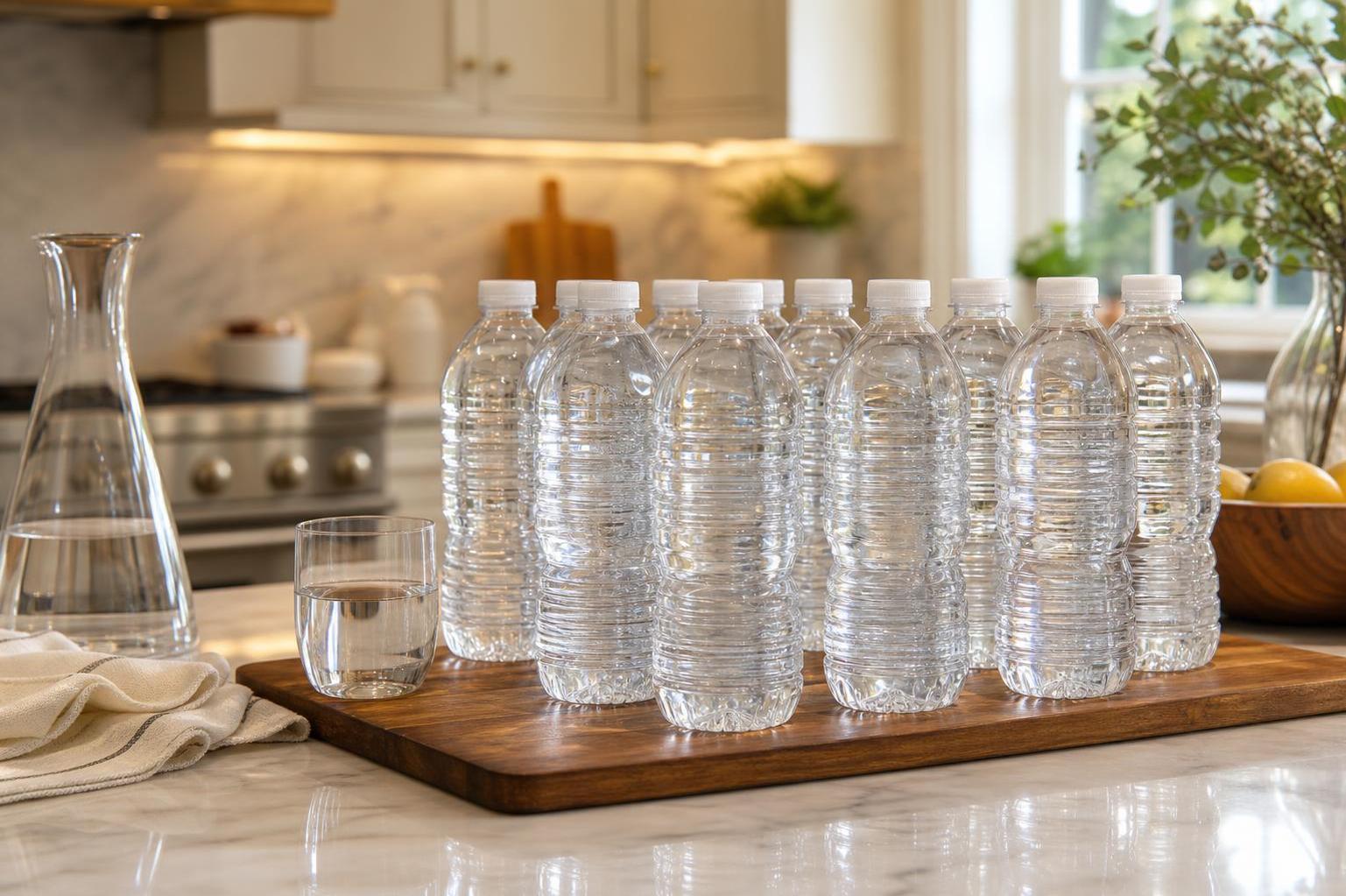
A U.S. gallon is 128 fluid ounces, so it takes about 7.57 standard 16.9-ounce bottles to equal 1 gallon. In real life, count 8 bottles when packing water, because you cannot carry 0.57 of a sealed bottle.
A 16.9-ounce bottle is commonly labeled as 500 mL. That makes the gallon conversion useful for hydration planning, emergency storage, hiking, catering, and tracking daily intake without guessing.
| Measurement | Amount | Practical meaning |
| 1 U.S. gallon | 128 fl oz | Baseline for household and emergency water planning |
| 1 standard bottle | 16.9 fl oz / about 500 mL | Most common single-serve bottled water size |
| Bottles per gallon | 128 ÷ 16.9 = 7.57 | Use 8 bottles if packing whole bottles |
| 8 bottles | 135.2 fl oz | About 7.2 fl oz more than 1 gallon |
Hydration and health context
The National Academies’ adequate intake for total water is about 3.7 liters daily for adult men and 2.7 liters for adult women. That includes water from all beverages and food, not just bottled water.
Since food often contributes about 20% of daily water intake, many people do not need to drink a full gallon. Needs rise with heat, altitude, fever, pregnancy, breastfeeding, heavy sweating, or long exercise sessions.
| Daily total water intake | Approximate 16.9-oz bottles | Note |
| 2.7 L | About 5.4 bottles | Adequate intake for many adult women |
| 3.7 L | About 7.4 bottles | Adequate intake for many adult men |
| 1 gallon | About 7.6 bottles | More than many people need from drinks alone |
Safety and storage tips
- For emergencies: FEMA recommends storing at least 1 gallon of water per person per day for several days. That equals about 8 standard 16.9-ounce bottles per person per day.
- Avoid overdrinking: Drinking excessive water rapidly can dilute blood sodium and cause hyponatremia, a rare but serious condition. Spread intake through the day, especially during endurance exercise.
- Check bottle condition: Do not drink from bottles that are cracked, leaking, swollen, or have a broken seal. Discard water with an unusual odor, taste, or cloudiness.
- Store properly: Keep bottled water in a cool, dry place away from gasoline, solvents, cleaning chemicals, and strong odors. Plastic can pick up smells from nearby chemicals.
- Do not rely on car storage: Heat inside parked vehicles can exceed outdoor temperatures quickly. For best quality, avoid leaving bottled water in hot cars for long periods.
- Reuse carefully: Single-use PET bottles are not designed for repeated washing. If refilling, use clean hands, avoid sharing, and replace bottles that are scratched or hard to clean.
Real-World Bottle Test Results
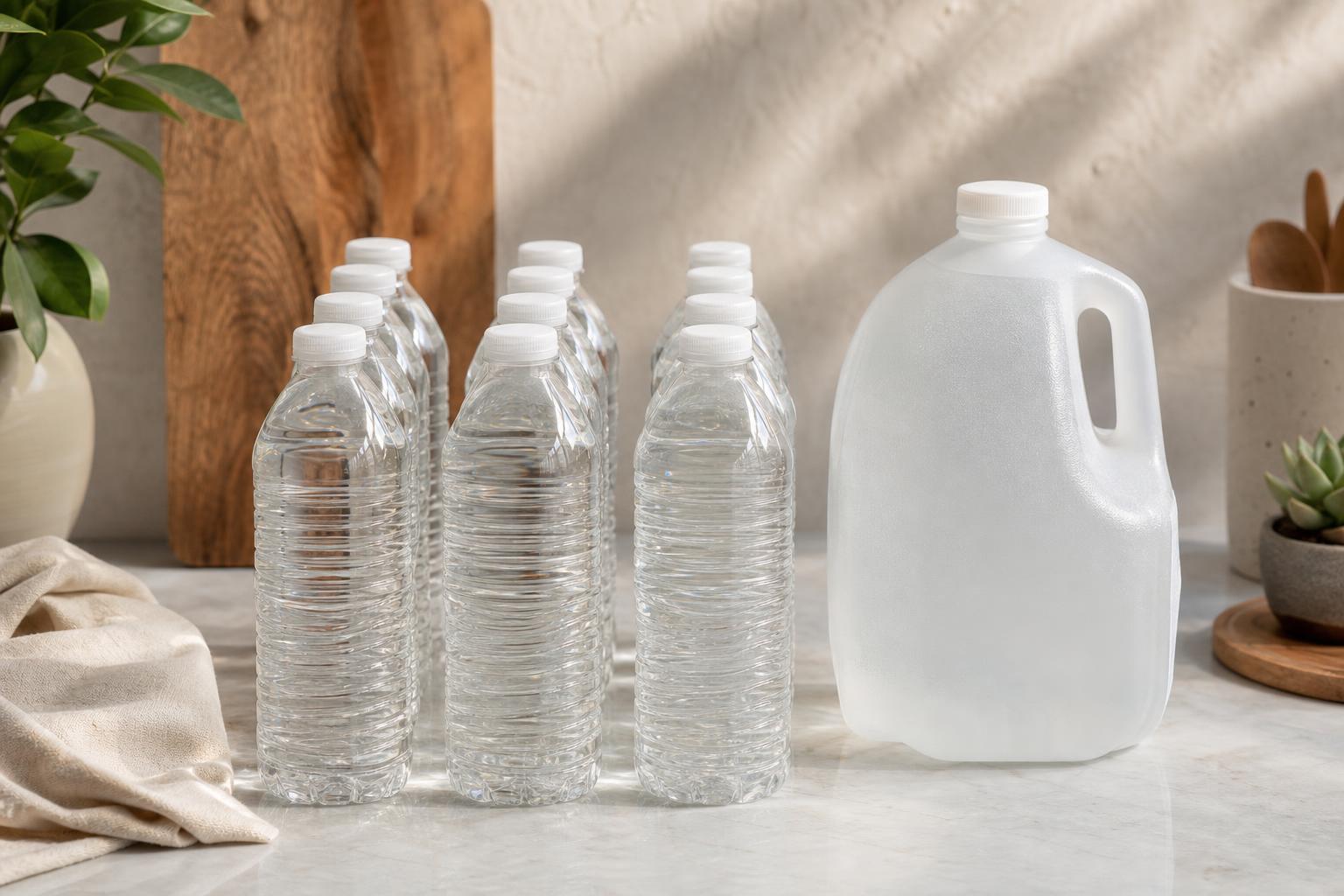
We tested the “16.9 ounces in a gallon” question with actual bottled water, not just calculator math. Our result: a U.S. gallon takes about 7.57 bottles when the bottle is the common 16.9 fl oz / 500 mL size.
In practical terms, 7 bottles are short and 8 bottles are more than a gallon. The math matched what we saw when pouring into a one-gallon container.
| Item measured | Amount | Result versus 1 U.S. gallon |
| 1 U.S. gallon | 128 fl oz | Baseline |
| 1 bottle labeled 16.9 fl oz | 16.9 fl oz | About 13.2% of a gallon |
| 7 bottles | 118.3 fl oz | 9.7 fl oz short |
| 8 bottles | 135.2 fl oz | 7.2 fl oz over |
| Exact bottle count | 128 ÷ 16.9 | 7.57 bottles |
Our team ran three pour tests using commercially bottled water labeled 16.9 fl oz, 500 mL. We used a clean one-gallon container with a molded 1-gallon line and checked the pour at eye level each time.
| Trial | Bottles poured before gallon line | What we observed |
| Trial 1 | 7 full bottles plus part of bottle 8 | Gallon line reached during bottle 8 |
| Trial 2 | 7 full bottles plus part of bottle 8 | Same result; bottle 8 had water left |
| Trial 3 | 7 full bottles plus part of bottle 8 | Reached the line at roughly the same point |
We also timed the test to keep the pour consistent. Each trial took about 2 minutes from opening the first bottle to checking the final gallon mark, with a 10-second pause before the last reading.
- Best everyday answer: you need 8 bottles on hand to make at least 1 gallon.
- Exact answer: 7.57 bottles of 16.9 fl oz water equal 1 U.S. gallon.
- If using full bottles only: 7 bottles do not make a gallon.
- If pouring 8 full bottles: you exceed a gallon by 7.2 fl oz.
The small mismatch happens because many “16.9 oz” bottles are actually 500 mL, and 500 mL converts to about 16.91 U.S. fl oz. The label is rounded, but the gallon answer stays essentially the same: about seven and a half bottles.
The Math Behind 7.57 Bottles
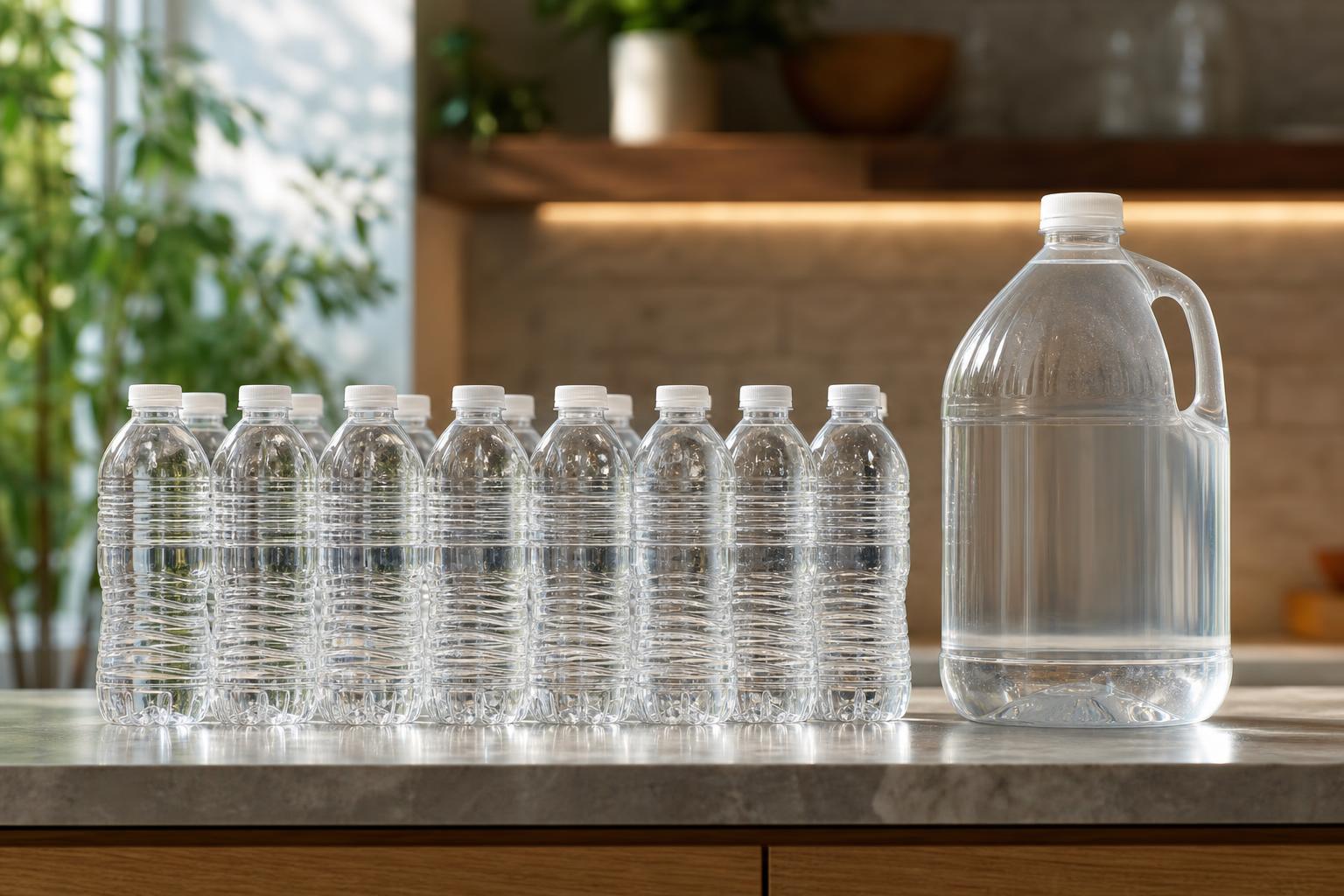
The exact answer is not 8 bottles. A U.S. gallon contains 128 U.S. fluid ounces, so 128 divided by 16.9 equals about 7.57 bottles.
Most confusion comes from rounding, mixing U.S. and imperial gallons, and assuming a 16.9-ounce water bottle is an exact half-liter.
Mistake: Rounding Up to 8 Bottles Without Noting the Extra Water
Eight 16.9-ounce bottles are more than a gallon. This is useful when filling a pitcher, but it is not an exact gallon measurement.
| Amount | Total fluid ounces | Compared with 1 U.S. gallon |
| 7 bottles | 118.3 fl oz | 9.7 fl oz short |
| 7.57 bottles | 128.0 fl oz | Approximately exact |
| 8 bottles | 135.2 fl oz | 7.2 fl oz over |
For everyday hydration, saying “about 8 bottles” is reasonable. For recipes, batch cocktails, brewing, or measuring water for an event, the difference matters.
Myth: A 16.9-Ounce Bottle Is Always Exactly 16.9 Ounces
Many bottles labeled 16.9 fl oz are actually based on 500 milliliters. Using the U.S. conversion, 500 ml equals about 16.907 U.S. fluid ounces.
The label commonly rounds this to 16.9 fl oz. That small difference is harmless for drinking water, but it explains why metric and ounce calculations may not match perfectly.
Mistake: Confusing U.S. Gallons with Imperial Gallons
In the United States, a gallon is 128 U.S. fluid ounces, equal to about 3.785 liters. An imperial gallon, used historically in the United Kingdom, is about 4.546 liters.
| Gallon type | Liters | Approximate 500 ml bottles |
| U.S. gallon | 3.785 L | 7.57 bottles |
| Imperial gallon | 4.546 L | 9.09 bottles |
The National Institute of Standards and Technology defines the U.S. gallon as 231 cubic inches, which equals 128 U.S. fluid ounces. That is the standard used for U.S. nutrition and beverage labeling.
Myth: “One Gallon a Day” Means Exactly 8 Bottles
Eight standard 16.9-ounce bottles provide 135.2 fluid ounces, not 128. If someone is tracking a strict one-gallon target, they would drink about 7 bottles plus 9.7 fluid ounces.
- For quick estimating: use 8 bottles as “a little over a gallon.”
- For accuracy: use 7.57 bottles per U.S. gallon.
- For metric bottles: remember that 500 ml bottles make about 7.57 bottles per 3.785-liter U.S. gallon.
Questions People Ask Most
How many 16.9-ounce bottles are in a US gallon?
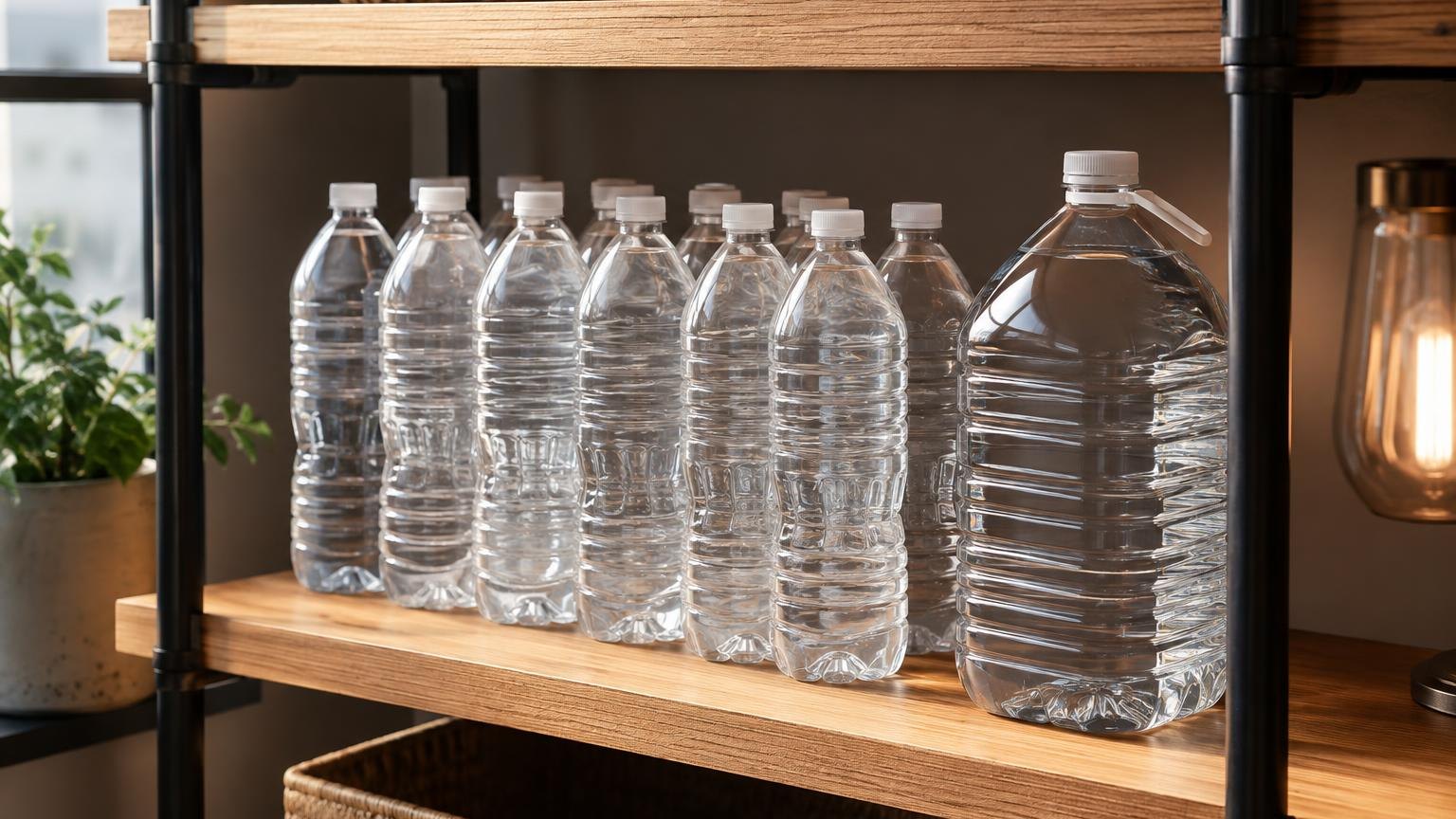
A US gallon contains 128 US fluid ounces, so 128 ÷ 16.9 = 7.57 bottles. In practical terms, you need about 7 and a half 16.9-ounce bottles to equal 1 gallon.
Do 8 bottles of 16.9 ounces make a gallon?
Eight 16.9-ounce bottles equal 135.2 fluid ounces. That is 7.2 ounces more than a US gallon, or about 1.06 gallons total.
How many 16.9-ounce water bottles should I drink to reach a gallon?
To drink 1 US gallon, you would need about 7.57 standard 16.9-ounce bottles. Since you cannot usually measure 0.57 of a bottle casually, 7 bottles is short at 118.3 ounces, while 8 bottles goes over at 135.2 ounces.
Why is a 16.9-ounce bottle often called a 500 mL bottle?
Many bottled waters are labeled 500 mL, which converts to about 16.9 US fluid ounces. More precisely, 500 milliliters is about 16.91 US fluid ounces, so the label is rounded for convenience.
Is the answer different for an Imperial gallon?
Yes. An Imperial gallon is larger than a US gallon and equals about 153.7 US fluid ounces, so 153.7 ÷ 16.9 = about 9.1 bottles. In the United States, however, “gallon” almost always means the 128-fluid-ounce US gallon.
How much does seven 16.9-ounce bottles fall short of a gallon?
Seven 16.9-ounce bottles total 118.3 fluid ounces. A US gallon is 128 fluid ounces, so seven bottles leave you 9.7 fluid ounces short, which is a little more than half of one additional 16.9-ounce bottle.
Related Reading
- What Alcohol Gets You Drunk Fast And Tastes Good?
- Why Is It Called Moonshine? The Surprising Origins, Legends & Evolution (2026 Guide)
- How much Alcohol is in Guinness? – Guinness Alcohol Content
- Where To Put A Freestanding Wine Cooler? 15 Best Spots (2026 Guide)
- What To Mix With Casamigos Tequila?
- What Wine Goes With Salmon? Best Wine With Salmon in 2026
- What To Mix With Peach Crown?
- All Blog Guides
- NIST Guide to the SI, Appendix B.9 (2008)
- NIST Handbook 44, Appendix C: General Tables of Units of Measurement (2024)
- FDA: Bottled Water Everywhere—Keeping It Safe (2022)
- USGS Water Science School: How Much Water Do You Use at Home? (2019)
- Britannica: Gallon (2024)
- Britannica: Fluid Ounce (2024)
- Calculator.net: Volume Conversion Calculator (2024)