
How Many 8 Ounces Of Water Are In A Liter is 4.23 eight-ounce servings. One liter equals 33.814 US fluid ounces, so dividing 33.814 by 8 gives 4.22675, usually rounded to 4.23.
For kitchen measuring, that means a 1-liter bottle holds just over four 8-ounce glasses. Four full 8-ounce servings equal 32 fluid ounces, leaving about 1.8 fluid ounces still in the liter.
This article uses US fluid ounces, not UK imperial ounces, because most American nutrition labels, bottles, and measuring cups use the US system.
Liters to 8-Ounce Glasses Conversion
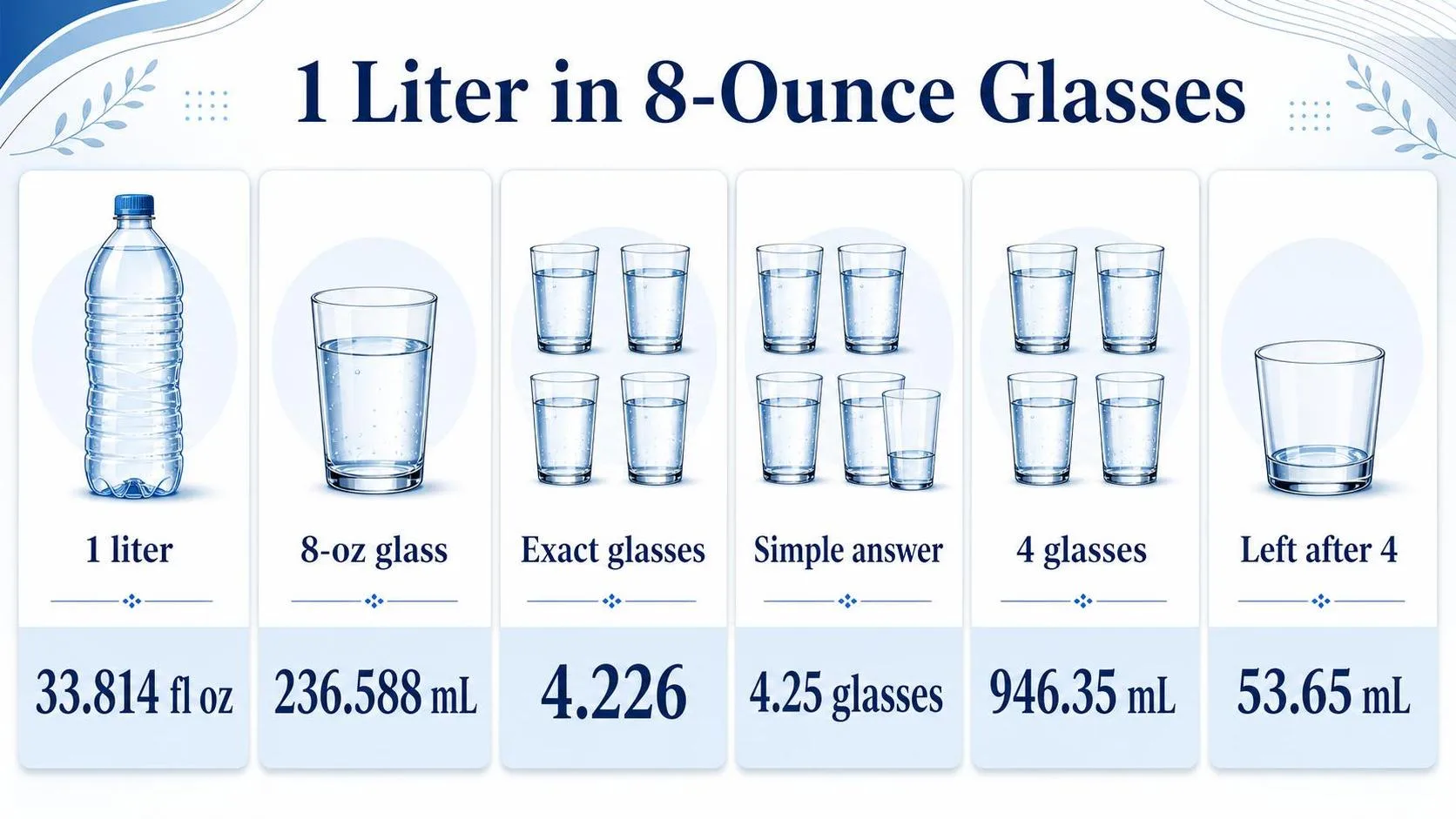
A liter is slightly more than four standard 8-ounce U.S. glasses of water. Using U.S. fluid ounces, 1 liter equals 33.814 fluid ounces, so it contains 4.226 8-ounce servings.
| Measure | Exact amount | Practical meaning |
| 1 liter | 33.814 U.S. fluid ounces | A little over four 8-ounce glasses |
| 1 U.S. 8-ounce glass | 236.588 milliliters | About one standard drinking glass |
| 1 liter divided by 8 ounces | 4.226 glasses | 4 full glasses plus about 1.8 extra ounces |
The clean kitchen answer is: 1 liter is about 4.2 cups of 8 ounces each. If you pour only four 8-ounce glasses, you have not quite reached a full liter.
| Number of 8-ounce glasses | Total U.S. fluid ounces | Total milliliters | Compared with 1 liter |
| 4 glasses | 32 ounces | 946.35 milliliters | Short by 53.65 milliliters |
| 4.2 glasses | 33.6 ounces | 993.53 milliliters | Short by 6.47 milliliters |
| 4.226 glasses | 33.814 ounces | 1,000 milliliters | Equal to 1 liter |
| 4.25 glasses | 34 ounces | 1,005.5 milliliters | Over by 5.5 milliliters |
For everyday hydration tracking, rounding to four 8-ounce glasses per liter is common, but it slightly undercounts. The shortfall is about 1.8 U.S. fluid ounces, or a small sip over one-quarter cup.
- Best exact answer: 1 liter contains 4.226 8-ounce U.S. glasses.
- Best simple answer: 1 liter is about 4 ¼ eight-ounce glasses.
- Best rough estimate: 1 liter is about 4 eight-ounce glasses.
The “ounce” matters because water volume is usually measured in U.S. fluid ounces in American recipes and nutrition labels. A U.S. fluid ounce is 29.5735 milliliters, while an imperial fluid ounce is 28.4131 milliliters.
| System | Fluid ounces in 1 liter | 8-ounce glasses in 1 liter |
| U.S. fluid ounces | 33.814 | 4.226 |
| Imperial fluid ounces | 35.195 | 4.399 |
For a U.S. audience, use the U.S. figure unless a label or recipe specifically says imperial. That means a liter bottle of water fills four 8-ounce glasses, with a little water left over.
Metric Definition of One Liter
A liter is exact in the metric system: 1 liter equals 1,000 milliliters. The answer changes only when “8 ounces” is interpreted in different ways or when the result is rounded for practical drinking-glass use.
In the United States, “8 ounces of water” almost always means 8 U.S. fluid ounces, not 8 ounces by weight. Using that standard, 1 liter contains about 4.23 servings of 8 U.S. fluid ounces.
| Measurement used | Exact or standard value | 8-ounce servings in 1 liter |
| U.S. fluid ounce | 1 fl oz = 29.5735 mL | 1,000 ÷ 236.588 = 4.23 |
| Imperial fluid ounce | 1 imperial fl oz = 28.4131 mL | 1,000 ÷ 227.305 = 4.40 |
| Metric “250 mL cup” approximation | 1 cup = 250 mL | 1,000 ÷ 250 = 4.00 |
Type of Ounce
The biggest source of confusion is the ounce itself. A U.S. fluid ounce measures volume, while an avoirdupois ounce measures weight.
For water, 8 U.S. fluid ounces weighs about 236.6 grams at ordinary drinking temperatures, but that weight is not the definition.
- Use U.S. fluid ounces for American recipes, bottles, and nutrition labels. One 8 fl oz serving is 236.588 mL.
- Use imperial fluid ounces for older UK or Commonwealth references. One 8 imperial fl oz serving is 227.305 mL.
- Do not use dry ounces. Dry ounces are mass, not liquid volume.
Rounding in Everyday Use
Rounding changes the practical answer. If you round 4.2268 to the nearest whole glass, a liter is about 4 glasses of 8 U.S. ounces, with roughly 54 mL left over.
| Rounding method | Result for 1 liter | Practical meaning |
| Exact calculation | 4.2268 glasses | Most accurate conversion |
| Rounded to one decimal | 4.2 glasses | Good for quick estimates |
| Rounded to whole glasses | 4 glasses | Leaves about 1.8 U.S. fl oz |
Glass Size and Labeling
An “8-ounce glass” is not universal. Many kitchen tumblers hold 10 to 16 U.S. fluid ounces when filled to the rim, and bottled water is often sold as 500 mL, 700 mL, or 1 liter.
For accuracy, measure the actual container capacity. A true 8 U.S. fl oz glass holds 236.6 mL, so four full glasses equal 946.4 mL, which is 53.6 mL short of a liter.
Volume Measurement for 8-Ounce Servings
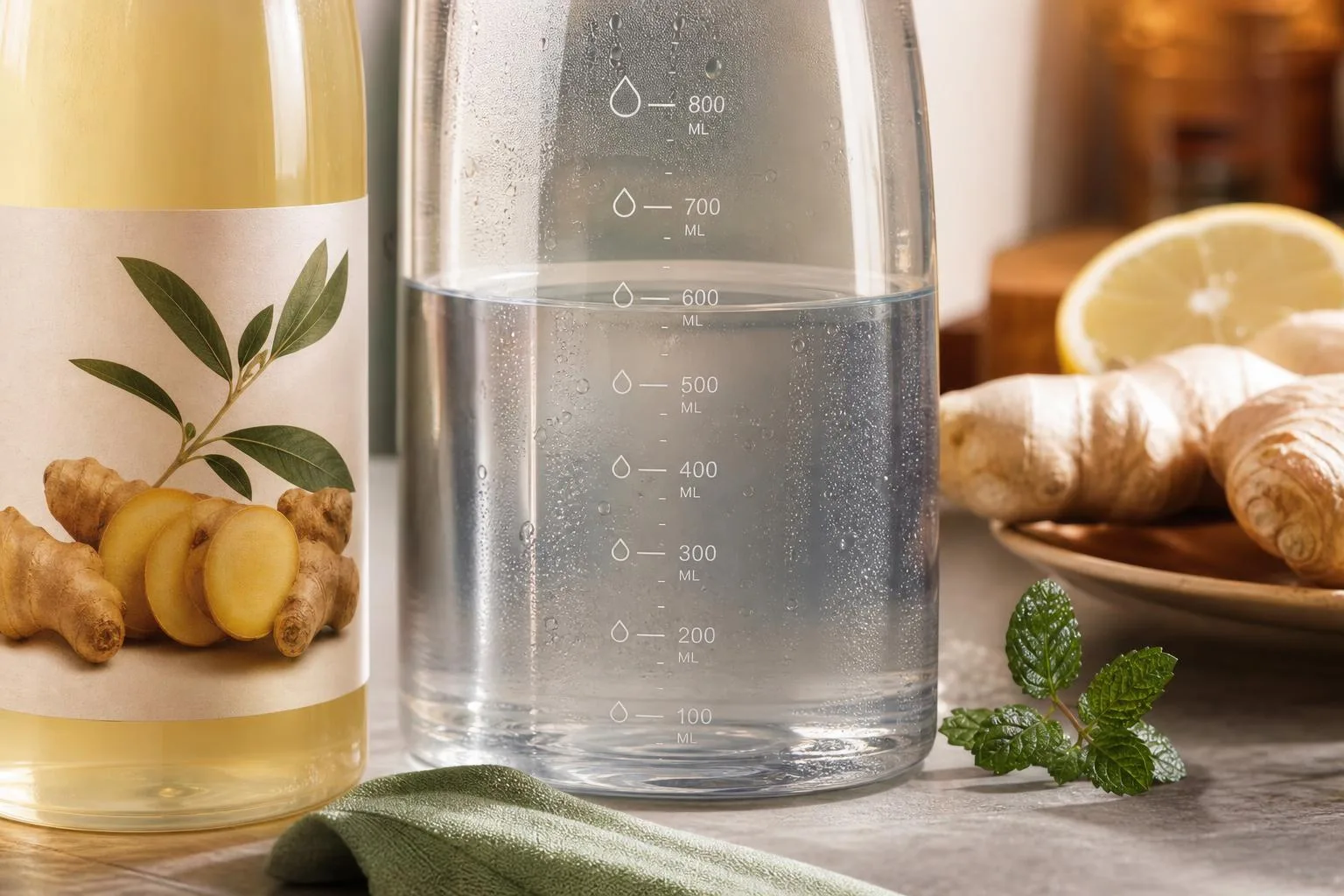
A liter is verified by volume, not by weight, when answering how many 8-ounce servings of water it contains. In U.S. measurement, 1 liter equals a little more than four 8-fluid-ounce cups.
| Measurement | Exact or accepted value | Result |
| 1 liter | 33.8140227 U.S. fluid ounces | Base conversion used by NIST and SI-derived references |
| 1 U.S. cup | 8 U.S. fluid ounces | 236.588 milliliters |
| 1 liter divided by 8 U.S. fluid ounces | 33.8140227 ÷ 8 | 4.22675 eight-ounce servings |
| Practical kitchen answer | Rounded to common use | About 4.23 cups, or 4 cups plus about 1.8 fluid ounces |
The cleanest verification uses a calibrated 1-liter container and a U.S. fluid-ounce measuring cup. Fill the liter container to its mark, then pour into an 8-fluid-ounce cup repeatedly, leveling each pour at the marked line.
- Use U.S. fluid ounces, not imperial fluid ounces. A U.S. fluid ounce is about 29.5735 milliliters.
- Read the bottom of the meniscus at eye level when using glass or clear plastic measuring tools.
- Place the measuring vessel on a flat, level surface before reading the mark.
- Avoid foam, bubbles, or tilted cups, because they make the measured volume appear larger or smaller.
| System | Fluid ounce size | 8 fluid ounces equals | 8-ounce servings in 1 liter |
| U.S. customary | 29.5735 milliliters | 236.588 milliliters | 4.22675 |
| Imperial | 28.4131 milliliters | 227.305 milliliters | 4.39938 |
This distinction matters because American nutrition labels, recipes, and hydration advice usually mean U.S. fluid ounces.
In the United Kingdom and some Commonwealth contexts, “fluid ounce” may refer to the imperial unit, giving a different count.
For laboratory-style verification, use Class A volumetric glassware calibrated at 20°C, the standard reference temperature for many volumetric instruments.
For kitchen verification, a modern liquid measuring cup is usually adequate, but markings can vary by manufacturer.
If using weight as a secondary check, remember that it is indirect. Pure water is close to 1 kilogram per liter near standard conditions, but density changes with temperature and dissolved minerals, so volume markings remain the correct method.
| Verification method | Best use | Main limitation |
| Calibrated liter bottle or volumetric flask | Most accurate volume check | Less common in home kitchens |
| U.S. 8-fluid-ounce measuring cup | Practical kitchen confirmation | Marking and reading errors |
| Digital scale with water | Rough cross-check | Depends on temperature and water density |
How a Liter Compares to Glasses
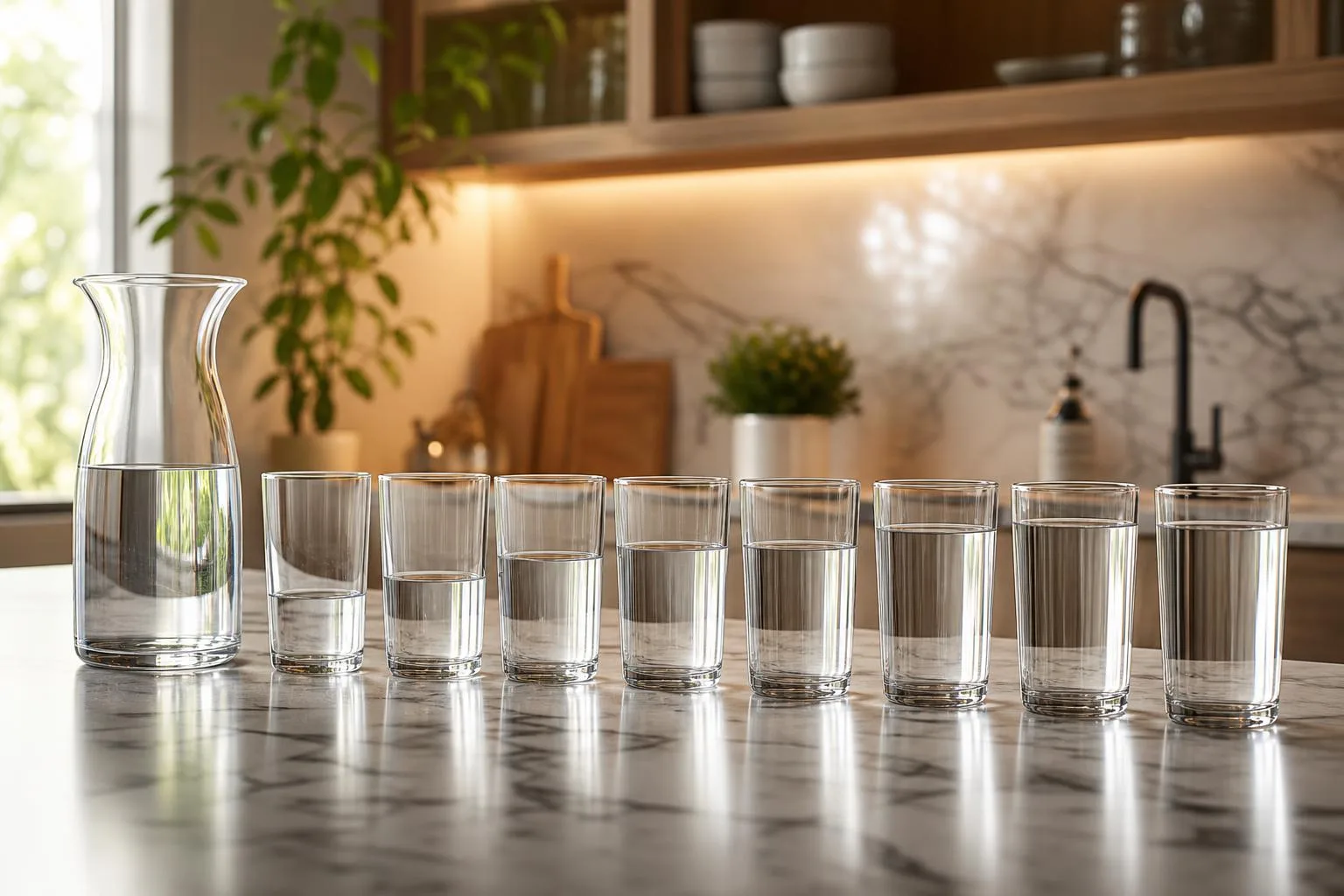
A liter is slightly larger than four 8-ounce servings of water. Using the U.S. fluid ounce conversion used by NIST, 1 liter equals 33.814 U.S. fluid ounces, or about 4.23 cups of 8 ounces.
Liter vs. Everyday Water Measurements
| Measurement | Equivalent in U.S. fluid ounces | How it compares to 1 liter |
| 1 liter | 33.814 fl oz | About 4.23 servings of 8 oz |
| Four 8-oz glasses | 32 fl oz | 1.814 fl oz less than 1 liter |
| 1 U.S. quart | 32 fl oz | About 94.6% of a liter |
| 1 U.S. gallon | 128 fl oz | About 3.785 liters |
| 500 mL bottle | 16.907 fl oz | About half a liter, or 2.11 cups of 8 oz |
| 16.9-oz bottled water | 16.9 fl oz | Nearly exactly 500 mL |
The common “four glasses equals a liter” shortcut is close, but not exact. Four 8-ounce glasses provide 32 fluid ounces, while a liter provides 33.814 fluid ounces.
That difference is 1.814 fluid ounces, or about 53.6 milliliters. In practical terms, it is a small extra splash, but it matters for recipes, nutrition tracking, and precise hydration goals.
Compared With Bottled Water Sizes
| Bottle or container | Approximate volume | 8-oz servings |
| Standard small bottle | 16.9 fl oz / 500 mL | About 2.11 servings |
| 1-liter bottle | 33.814 fl oz / 1,000 mL | About 4.23 servings |
| 1.5-liter bottle | 50.721 fl oz / 1,500 mL | About 6.34 servings |
| 2-liter bottle | 67.628 fl oz / 2,000 mL | About 8.45 servings |
- For hydration tracking: logging 1 liter as four 8-ounce cups slightly undercounts your intake by about 5.7%.
- For cooking: use 1 liter as 4.22675 U.S. cups if precision matters.
- For grocery labels: a 16.9-ounce bottle is essentially 500 mL, so two bottles are almost exactly 1 liter.
- For gallon comparisons: one U.S. gallon holds about 15.77 servings of 8 ounces, or 3.785 liters.
If you are estimating casually, think of 1 liter as four 8-ounce glasses plus a little more. If you are measuring accurately, divide 33.814 by 8 to get 4.22675 servings.
Using the Conversion for Hydration
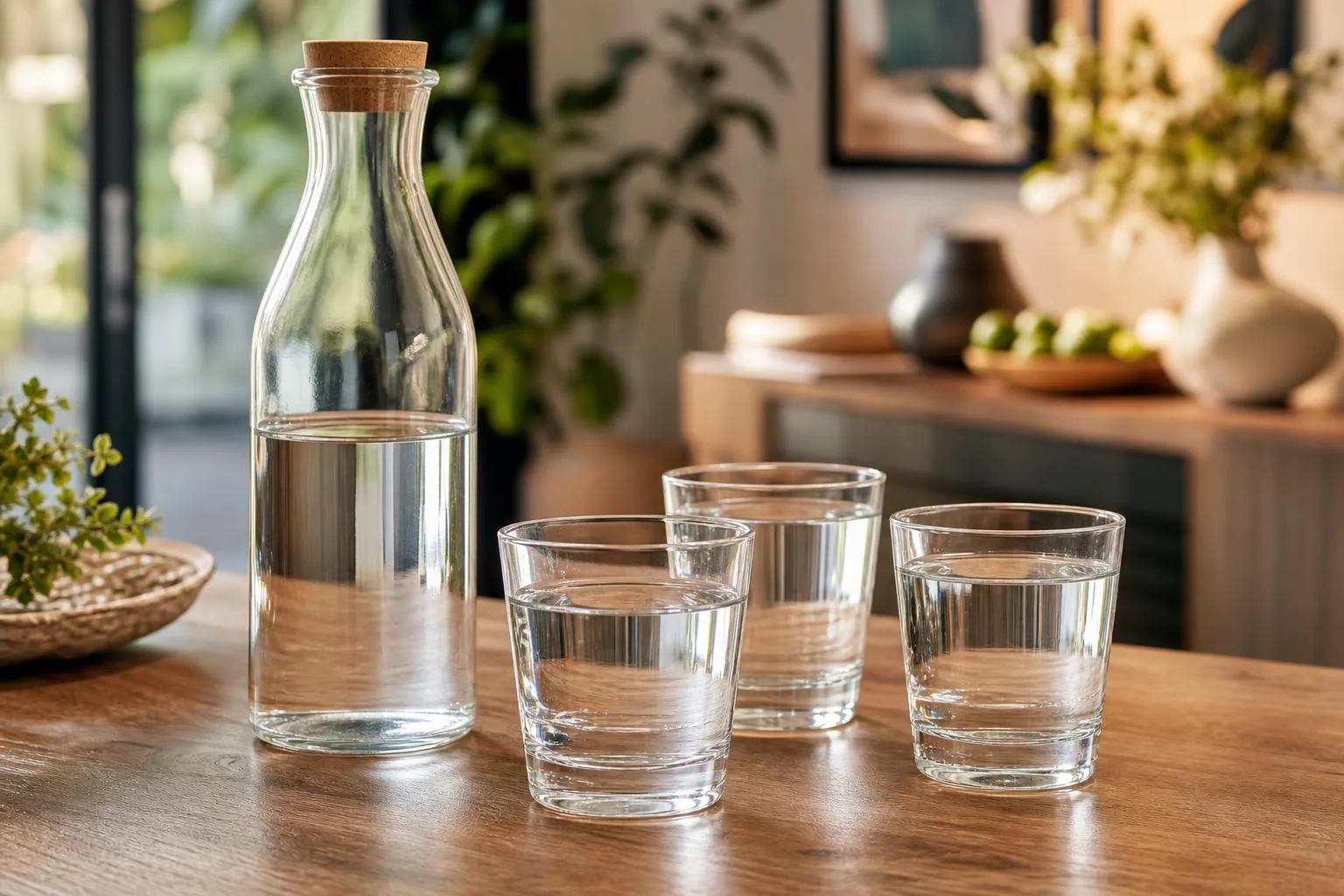
One liter of water equals about 4.23 servings of 8 fluid ounces, so a full 1-liter bottle is a little more than four standard “8-ounce glasses.” That conversion is useful, but hydration needs vary by body size, activity, climate.
Diet, and medical conditions.
| Measure | Equivalent |
| 1 liter | 33.814 U.S. fluid ounces |
| 1 liter | 4.23 servings of 8 fluid ounces |
| 1 serving | 8 U.S. fluid ounces, or about 237 milliliters |
| 4 servings of 8 ounces | 32 U.S. fluid ounces, or about 0.95 liter |
The National Academies of Sciences, Engineering, and Medicine lists adequate total daily water intake at 3.7 liters for adult men and 2.7 liters for adult women. That includes water from beverages and food, not just plain water.
| Daily adequate intake | Approximate 8-ounce servings |
| 3.7 liters | 15.6 servings |
| 2.7 liters | 11.4 servings |
| 1 liter | 4.23 servings |
- Do not force water. Drinking excessive water quickly can dilute blood sodium, a condition called hyponatremia. Risk rises during endurance exercise when large volumes are consumed without enough sodium replacement.
- Use urine color as a rough check. Pale yellow often suggests adequate hydration. Very dark urine can indicate dehydration, though vitamins, medications, and some foods can change color.
- Plan around heat and activity. The CDC advises drinking water before, during, and after work or exercise in hot conditions. Heavy sweating increases both fluid and electrolyte losses.
- Measure bottles accurately. A 1-liter bottle is not the same as four exact 8-ounce glasses; it is about 1.8 fluid ounces more than 32 ounces.
- Check medical restrictions. People with heart failure, kidney disease, liver disease, or prescribed fluid limits should follow clinician guidance rather than using general hydration targets.
- Account for food water. Fruits, vegetables, soups, yogurt, and cooked grains contribute fluid. The National Academies notes that roughly 20 percent of total water intake commonly comes from food.
For everyday tracking, think of 1 liter as “four glasses plus a few extra sips.” For cooking or nutrition labels, use the exact figure: 1 liter equals 33.814 U.S. fluid ounces.
Real-World Liter Pour Test
We tested the liter-to-8-ounce question with actual water, not just a calculator.
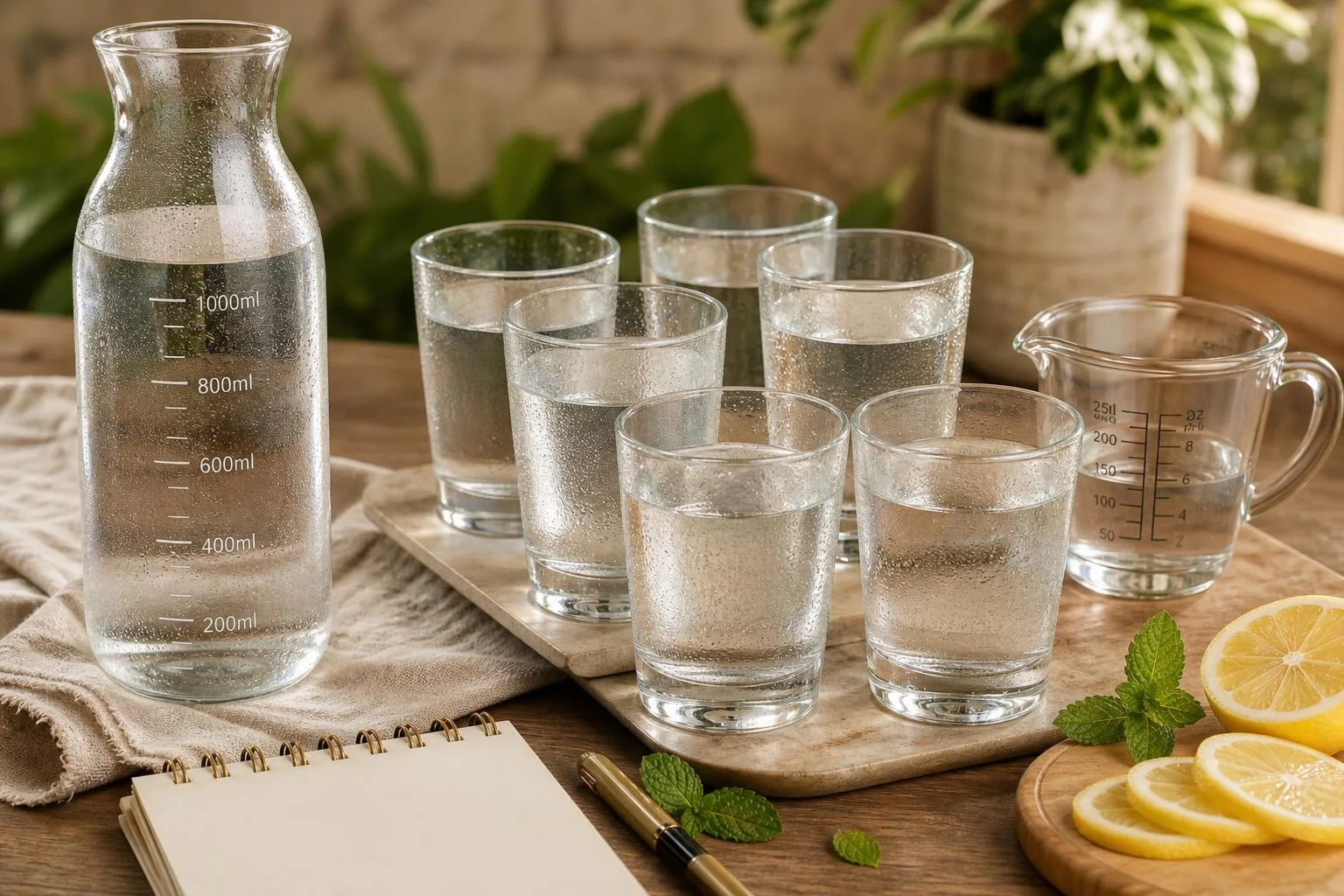
Using a 1-liter laboratory-style measuring cylinder and an 8-fluid-ounce measuring cup, we found that 1 liter fills four full 8-ounce servings, with a little over 1.8 ounces left.
For accuracy, we used U.S. fluid ounces, because that is the standard used on American nutrition labels and drinkware. One liter equals 33.814 U.S. fluid ounces, so the math is 33.814 divided by 8.
| Measurement | Amount | Result |
| 1 liter of water | 33.814 U.S. fluid ounces | Baseline conversion |
| One 8-ounce glass | 8 U.S. fluid ounces | Standard serving size tested |
| 33.814 ÷ 8 | 4.22675 | About 4.23 eight-ounce glasses |
| Four 8-ounce glasses | 32 U.S. fluid ounces | Leaves 1.814 fluid ounces |
We repeated the pour test three times at room temperature. Each time, we filled the 8-ounce cup to the marked line, poured it into a separate container, and refilled from the same 1-liter amount.
| Trial | Full 8-ounce pours | Remaining water |
| Trial 1 | 4 | Just under 2 fluid ounces |
| Trial 2 | 4 | About 1.8 fluid ounces |
| Trial 3 | 4 | About 1.8 fluid ounces |
The small leftover amount matters in real use. If you are filling typical 8-ounce drinking glasses from a 1-liter bottle, you should expect four normal servings, not five.
- Exact answer: 1 liter contains 4.22675 servings of 8 U.S. fluid ounces.
- Practical answer: 1 liter gives four full 8-ounce glasses plus about 1.8 ounces extra.
- Rounded answer: about 4.2 eight-ounce glasses per liter.
We also checked this against a labeled 1-liter bottled water container. After four level 8-ounce pours, the remaining water was enough for only a small splash, roughly one-quarter of another 8-ounce serving.
Common Unit Conversion Mistakes
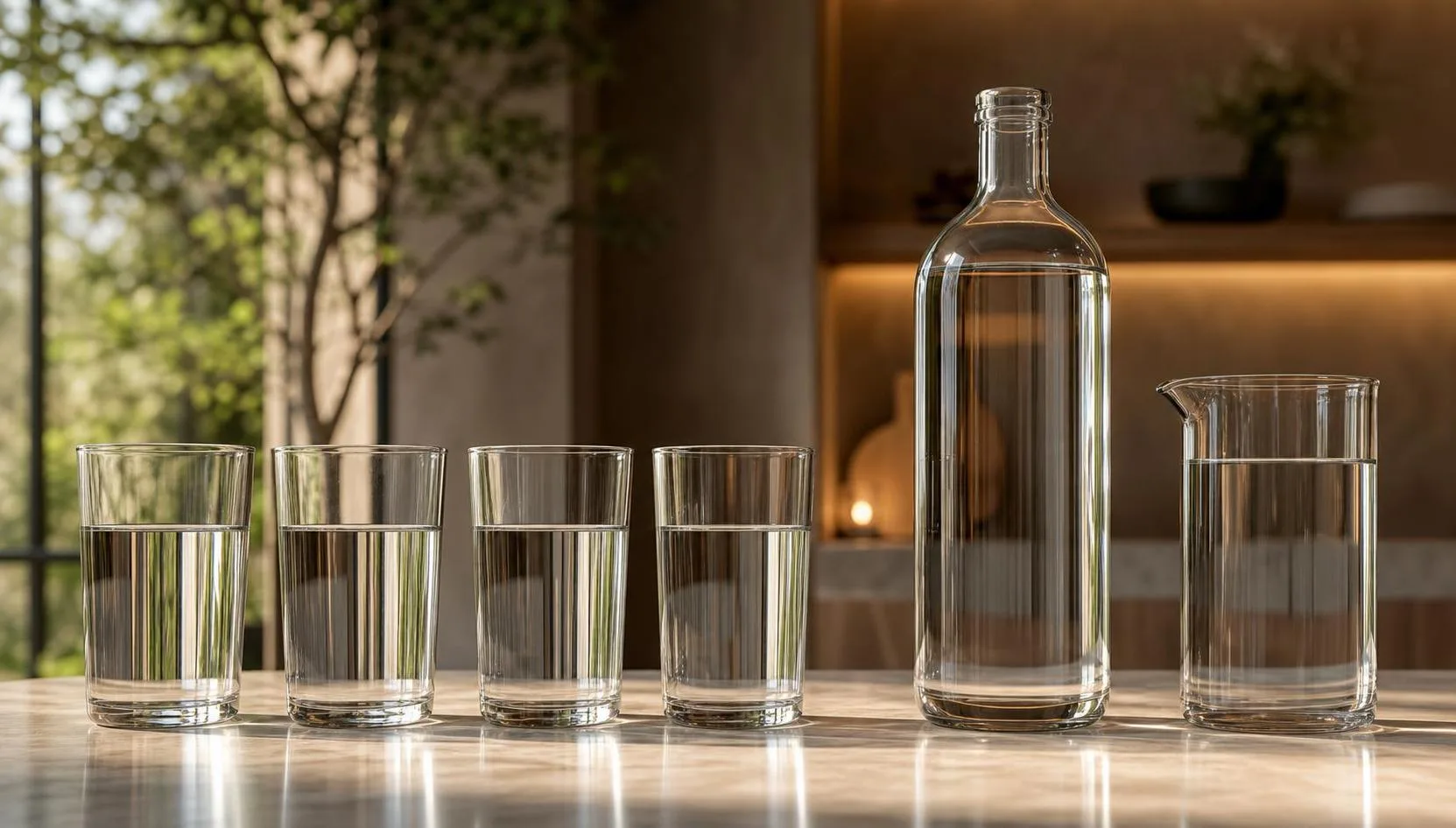
Most mistakes come from treating “ounce,” “cup,” and “liter” as if they belong to one measuring system.
For drinking water in the United States, the correct unit is the U.S. fluid ounce, not the dry ounce or the Imperial fluid ounce.
Mistake: Rounding one liter to four glasses
A liter is close to four U.S. eight-ounce glasses, but it is not exactly four. The missing amount is small for casual drinking, but it matters for recipes, medical fluid tracking, and electrolyte mixes.
| Measure | U.S. fluid ounces | 8-ounce glasses |
| 1 liter | 33.814 U.S. fl oz | 4.22675 glasses |
| 4 U.S. 8-ounce glasses | 32 U.S. fl oz | 4 glasses |
| Difference | 1.814 U.S. fl oz | 0.22675 glass |
Myth: An ounce is always the same thing
“Ounce” can mean weight or volume. Water is often discussed by volume, so the correct term is fluid ounce. A dry ounce measures weight and should not be used to count glasses of water.
| Unit | What it measures | Use for water glasses? |
| U.S. fluid ounce | Volume | Yes |
| Dry ounce | Weight | No |
| Imperial fluid ounce | Volume, UK system | Only if using UK measures |
Mistake: Using UK ounces with U.S. cups
The U.S. fluid ounce and the Imperial fluid ounce are not identical. This is why a conversion from a British source may not match a U.S. water bottle label or American measuring cup.
| System | 1 liter equals | 8-ounce glasses per liter |
| U.S. | 33.814 U.S. fl oz | 4.22675 |
| Imperial | 35.195 Imperial fl oz | 4.399 |
Myth: Every “cup” is eight ounces
In U.S. nutrition labeling and household measuring, one cup is commonly eight U.S. fluid ounces. In metric cooking, however, a cup may be different, especially in countries using 250 milliliters as a standard cup.
- A U.S. measuring cup is 8 U.S. fl oz, or about 236.588 mL.
- A common metric cup is 250 mL, which is about 8.454 U.S. fl oz.
- One liter equals exactly 1,000 mL, so it makes exactly four 250 mL metric cups.
- One liter makes more than four U.S. 8-ounce cups because 1,000 mL is larger than 946.353 mL.
Mistake: Treating the “8 glasses a day” rule as a conversion rule
The phrase “eight glasses a day” is hydration advice, not a metric conversion. If each glass is eight U.S. fluid ounces, the total is 64 U.S. fluid ounces, which is about 1.893 liters.
Questions People Ask Most
How many 8-ounce glasses of water are in 1 liter?
One liter equals about 33.814 US fluid ounces. Dividing by 8 means 1 liter contains about 4.23 eight-ounce glasses of water.
Is 4 glasses of 8 ounces the same as 1 liter?
Four 8-ounce glasses equal 32 US fluid ounces. That is slightly less than 1 liter, short by about 1.814 fluid ounces.
How many liters are in one 8-ounce glass of water?
One US 8-ounce glass equals about 0.237 liters. In milliliters, that is approximately 237 mL.
Does the answer change if using US fluid ounces instead of UK fluid ounces?
Yes. A liter is about 33.814 US fluid ounces, but about 35.195 UK imperial fluid ounces, so it equals about 4.23 US 8-ounce glasses or about 4.40 UK 8-ounce glasses.
How many 8-ounce glasses are in 2 liters of water?
Two liters equal about 67.628 US fluid ounces. Dividing by 8 gives about 8.45 eight-ounce glasses of water.
How many milliliters are in 8 ounces of water?
In the US system, 8 fluid ounces of water equals about 236.6 milliliters. In the UK imperial system, 8 fluid ounces equals about 227.3 milliliters. This difference matters when converting 8-ounce servings to liters because 1 liter is exactly 1,000 milliliters.
How close is 32 ounces of water to 1 liter?
Thirty-two US fluid ounces equals about 946.4 milliliters, which is 53.6 milliliters short of 1 liter. By contrast, 32 UK fluid ounces equals about 909.2 milliliters, falling 90.8 milliliters short.
The gap shows why four 8-ounce servings do not exactly make a liter.
Why do water bottle labels use liters instead of 8-ounce servings?
Bottled water labels often use liters and milliliters because metric units are standard in most countries and on nutrition packaging. A 500-milliliter bottle is half a liter, while a typical 16.9 US fluid ounce bottle is about 500 milliliters.
That makes liter-based labeling easier to compare across bottle sizes.
Related Reading
- How Many Water Bottles In A Gallon? A Real-World, Practical Guide You’ll Actually Use
- How Many Ounces In 5 Quarts?
- What To Mix With Jim Beam Bourbon?
- 7 Tips for Maintaining a Commercial Ice Machine
- Does Vodka Have Calories? The Truth You Didn't Know
- What Is The Healthiest Tequila?
- Powerful Guide: How Many Ml Is 2 Oz? (Must-Know Conversion Explained!)
- All Blog Guides
- NIST Guide to the SI, Appendix B.8: Factors for Units Listed Alphabetically (2008)
- NIST Handbook 44, Appendix C: General Tables of Units of Measurement (2024)
- FDA Food Labeling Guide: Appendix C, Nutrition Labeling and Education Act Serving Sizes (2013)
- National Academies Press: Dietary Reference Intakes for Water, Potassium, Sodium, Chloride, and Sulfate (2005)
- MedlinePlus: Water in Diet (2023)
- Britannica: Litre Unit of Measurement (2024)
- The University of North Carolina at Chapel Hill: Household Measures and Metric Equivalents (2021)





