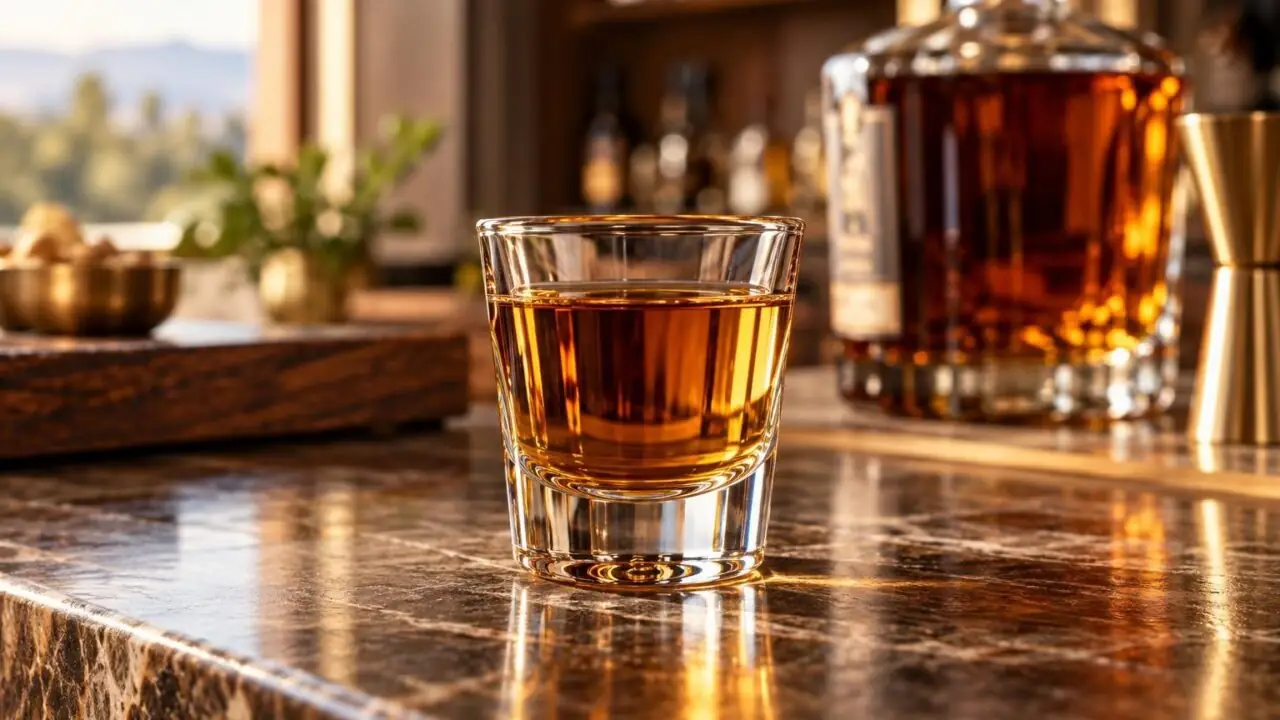
How Much Is 1 Oz In Ml is 29.5735 milliliters for a U.S. fluid ounce. In everyday measuring, that is usually rounded to 29.57 ml or 30 ml, depending on the precision needed for the recipe, pour, or lab-style conversion.
The key detail is that “oz” can mean fluid ounces for volume or ounces by weight. Milliliters measure volume, so the correct conversion is 1 U.S. fluid ounce = 29.5735 ml, while 1 Imperial fluid ounce = 28.4131 ml.
Use the U.S. figure for American recipes, bar measurements, nutrition labels, and most household measuring tools sold in the United States.
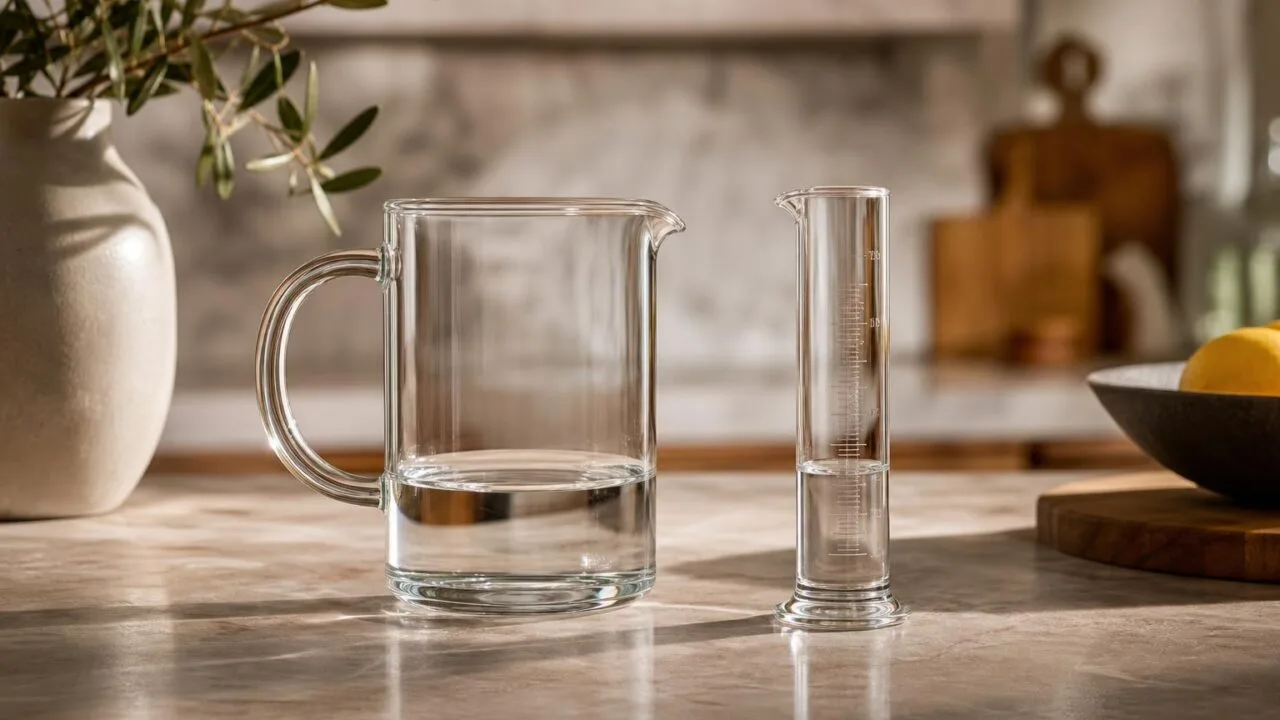
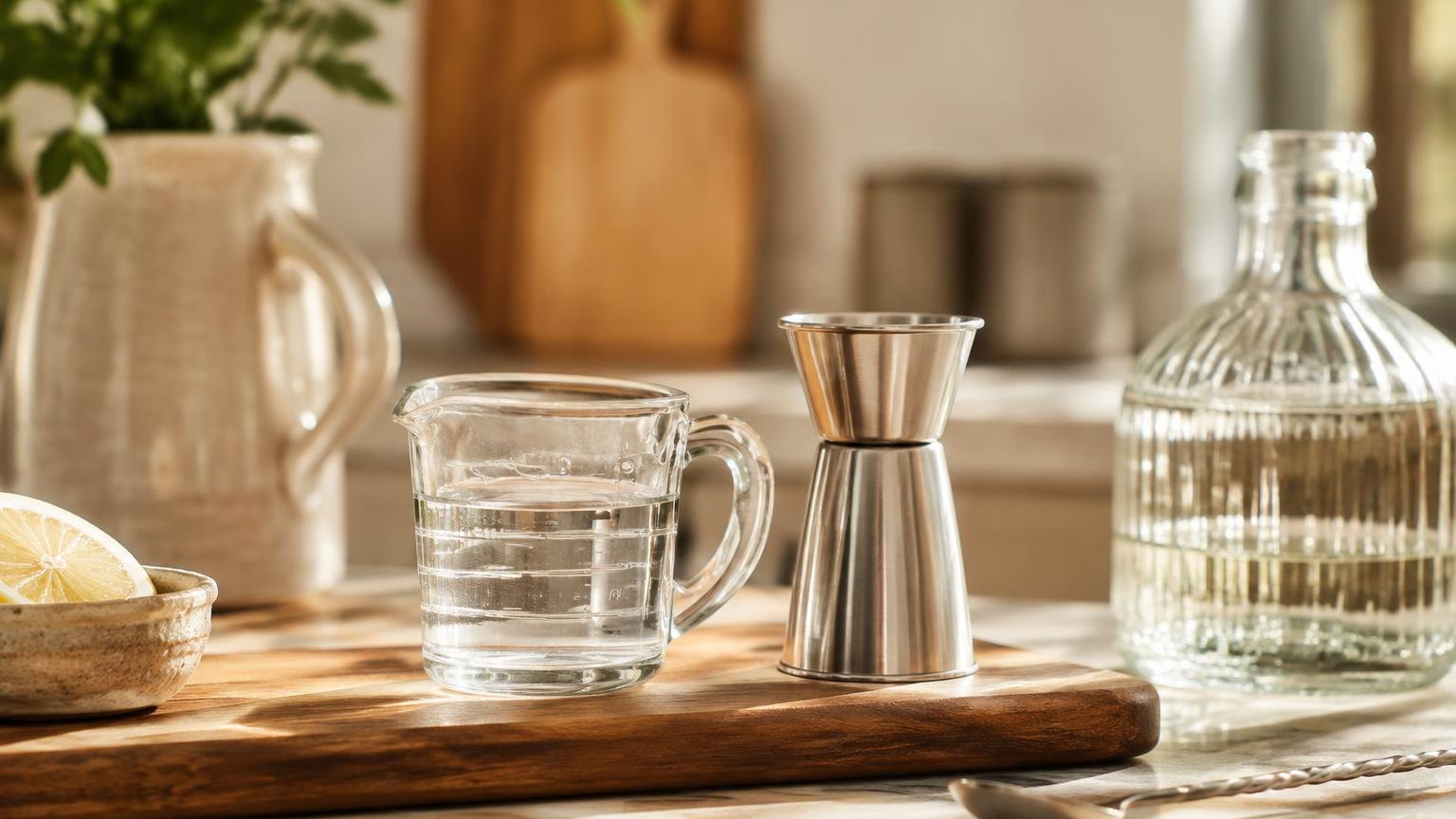
For best accuracy, measure liquids at eye level in a marked jigger, syringe, graduated cup, or digital scale with volume conversion.
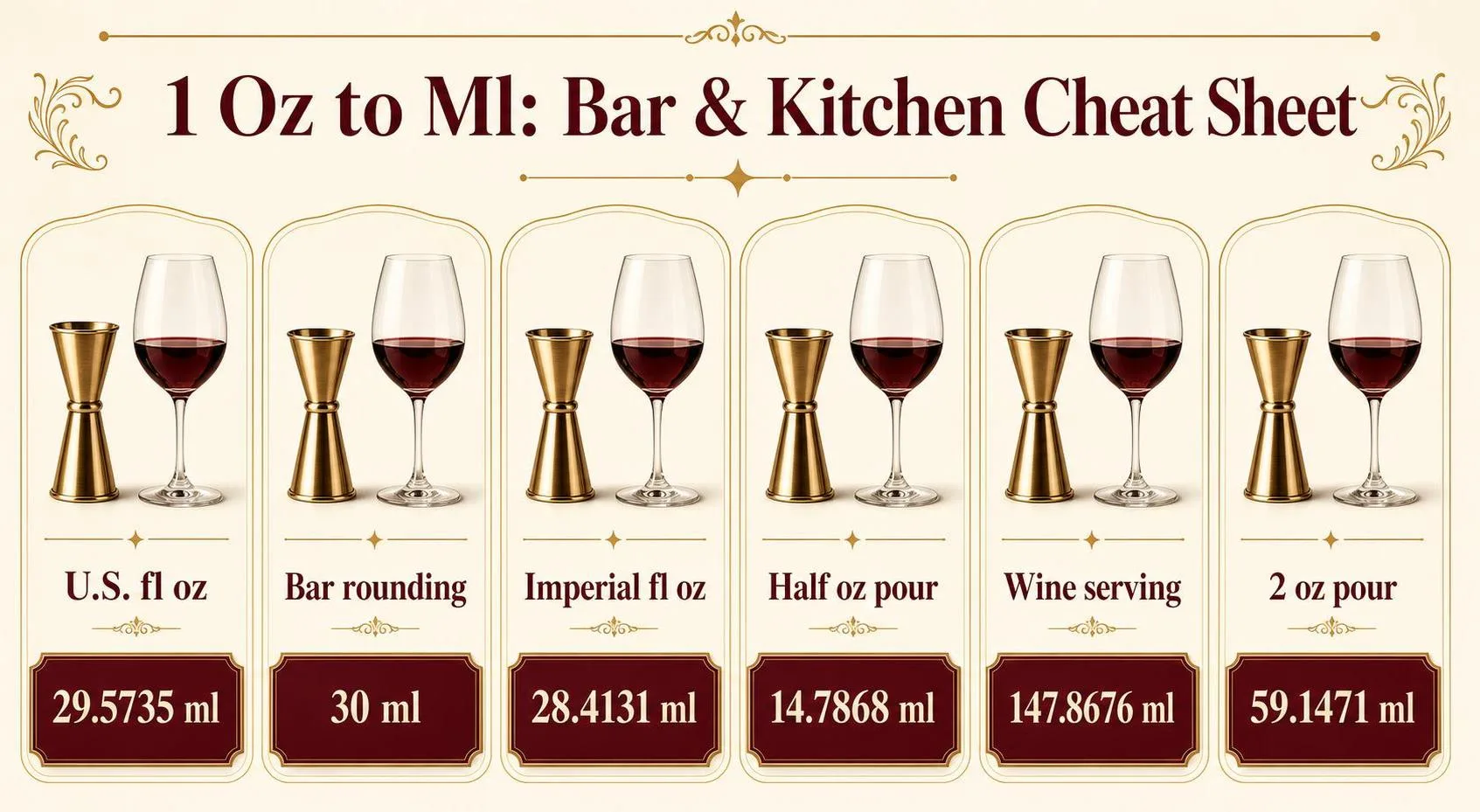
Fluid Ounce in Milliliters
In U.S. drink measurements, 1 fluid ounce equals exactly 29.5735295625 milliliters. For everyday bar, kitchen, and recipe work, that is usually rounded to 29.57 ml or, more practically, 30 ml.
The critical detail is that “oz” can mean different things. A fluid ounce measures volume, while an ounce by weight measures mass; they are not interchangeable unless you also know the liquid’s density.
| Measurement | Exact or standard value | Best everyday use |
| 1 U.S. fluid ounce | 29.5735295625 ml | Precise beverage, cocktail, and recipe conversion |
| 1 U.S. fluid ounce, rounded | 29.57 ml | Most calculators and technical recipes |
| 1 U.S. fluid ounce, practical bar rounding | 30 ml | Jiggers, batching, and quick mental math |
| 1 Imperial fluid ounce | 28.4130625 ml | Older U.K. and Commonwealth references |
The U.S. value comes from the legal U.S. gallon definition: 1 U.S. gallon is 231 cubic inches, and 1 U.S. gallon contains 128 U.S. fluid ounces. Using the international inch definition, that gives 29.5735295625 ml per U.S. fluid ounce.
In real beverage service, the difference between 29.57 ml and 30 ml is tiny. For a single 1 oz pour, rounding to 30 ml adds about 0.43 ml, which is less than one-tenth of a teaspoon.
| Common pour | Exact U.S. ml equivalent | Rounded bar equivalent |
| 0.5 oz | 14.7868 ml | 15 ml |
| 1 oz | 29.5735 ml | 30 ml |
| 1.5 oz | 44.3603 ml | 45 ml |
| 2 oz | 59.1471 ml | 60 ml |
| 5 oz wine pour | 147.8676 ml | 150 ml |
For wine, this matters because a standard U.S. serving is commonly described as 5 fluid ounces. Converted precisely, that is about 147.87 ml; in service, menus and training materials often round it to 150 ml.
For packaged foods and nutrition labeling, U.S. regulations commonly allow familiar household measures with metric equivalents. That is why you may see 1 fl oz shown as 30 ml on labels, even though the exact conversion is 29.5735295625 ml.
- Use 29.5735 ml when precision matters, such as lab-style formulations or exact recipe scaling.
- Use 30 ml for cocktails, wine service estimates, and fast conversions.
- Check the country if reading older British recipes, because an Imperial fluid ounce is smaller than a U.S. fluid ounce.
- Do not convert dry ounces directly to milliliters without knowing the ingredient and its density.
Different Meanings of Ounce
The answer depends on which “ounce” you mean. In U.S. recipes and bar measurements, 1 fluid ounce equals 29.5735 milliliters, but an imperial fluid ounce is smaller at 28.4131 milliliters.
The biggest mistake is mixing up fluid ounces, which measure volume, with avoirdupois ounces, which measure weight. A 1-ounce pour of liquid and a 1-ounce weight of an ingredient are not automatically the same in milliliters.
U.S. vs Imperial Fluid Ounces
Most American cocktail specs, nutrition labels, and measuring jiggers use the U.S. customary fluid ounce. Older British, Canadian, or Commonwealth references may use the imperial fluid ounce, defined from the imperial gallon.
| Unit | Milliliters | Common use |
| 1 U.S. fluid ounce | 29.5735 ml | U.S. recipes, bars, nutrition labeling |
| 1 imperial fluid ounce | 28.4131 ml | U.K. legacy and Commonwealth measures |
| Difference | 1.1604 ml | About 3.9% smaller than U.S. |
That 1.1604 ml difference is small for one pour, but it adds up in batch cocktails. Across 25 one-ounce pours, using imperial instead of U.S. ounces changes the total by about 29 ml, nearly another U.S. fluid ounce.
Volume Ounce vs Weight Ounce
A fluid ounce measures space occupied. A weight ounce measures mass. NIST Handbook 44 and FDA labeling rules treat these as separate measurement systems, which is why “fl oz” and “oz” should not be used interchangeably.
| Item | 1 weight oz in ml, approximate | Why it changes |
| Water | 28.35 ml | Density near 1 g/ml |
| Olive oil | About 31 ml | Less dense than water |
| Honey | About 20 ml | Much denser than water |
This is why weighing 1 ounce of honey does not fill the same volume as 1 fluid ounce of honey. For drinks, use fluid ounces or milliliters; for baking by mass, use grams or weight ounces.
Rounding and Measuring Tools
- Recipe rounding: Many recipes round 1 U.S. fl oz to 30 ml, which is 0.4265 ml higher than the exact value.
- Jigger markings: A “1 oz” jigger may be etched at 30 ml, especially on metric-friendly bar tools.
- Labeling rules: U.S. nutrition panels often round serving volumes, so a labeled ounce may not show 29.5735 ml exactly.
- Temperature: Liquids expand slightly when warm, but for normal bar and kitchen use, this effect is usually smaller than tool or rounding error.
Fluid Ounces Measure Volume
A fluid ounce is a volume measure, not a weight measure. In the United States, the legally defined fluid ounce is verified against the gallon, while food labels often use a rounded household value.
For bar, kitchen, and recipe work, the key is knowing which ounce standard is being used. Most U.S. drink recipes mean the U.S. customary fluid ounce unless they say “Imperial.”.
Official volume definitions
| Measure | Milliliters | Where used |
| U.S. fluid ounce | 29.5735295625 ml | U.S. customary measurement |
| Imperial fluid ounce | 28.4130625 ml | United Kingdom and some Commonwealth references |
| U.S. food-label fluid ounce | 30 ml | Rounded value allowed on Nutrition Facts labels |
The U.S. value comes from the defined U.S. gallon: one U.S. gallon equals 231 cubic inches. Since one gallon contains 128 U.S. fluid ounces, one fluid ounce equals 1.8046875 cubic inches, or 29.5735295625 milliliters.
The Imperial value is different because the Imperial gallon is different. One Imperial gallon equals 4.54609 liters and contains 160 Imperial fluid ounces, giving 28.4130625 milliliters per Imperial fluid ounce.
How to verify 1 oz in practice
- Use a calibrated jigger or graduated cylinder: A marked 1 oz line should correspond closely to 29.57 ml for U.S. measurements.
- Check with a digital scale and water: At about 20°C, 29.57 ml of water weighs about 29.55 grams, because water density is slightly below 1 g/ml at that temperature.
- Avoid dry ounces: An ounce of weight is 28.3495 grams, which is not the same as a fluid ounce. This matters for syrup, cream, wine, or spirits.
- Confirm the standard on imported tools: Some UK barware may use Imperial ounces, so a “1 oz” mark may be about 1.16 ml smaller than a U.S. ounce.
Common verification tolerances
| Item | What to check | Practical result |
| U.S. cocktail jigger | 1 oz mark | Should pour about 29.57 ml |
| Nutrition label serving | Fluid ounces to milliliters | Often rounded to 30 ml |
| Imperial measuring cup | Fluid ounce markings | Uses about 28.41 ml per ounce |
For accurate conversions, use 29.5735 ml for one U.S. fluid ounce. For quick service work, 30 ml is a convenient approximation, but it adds about 1.4% more volume than the exact U.S. measure.
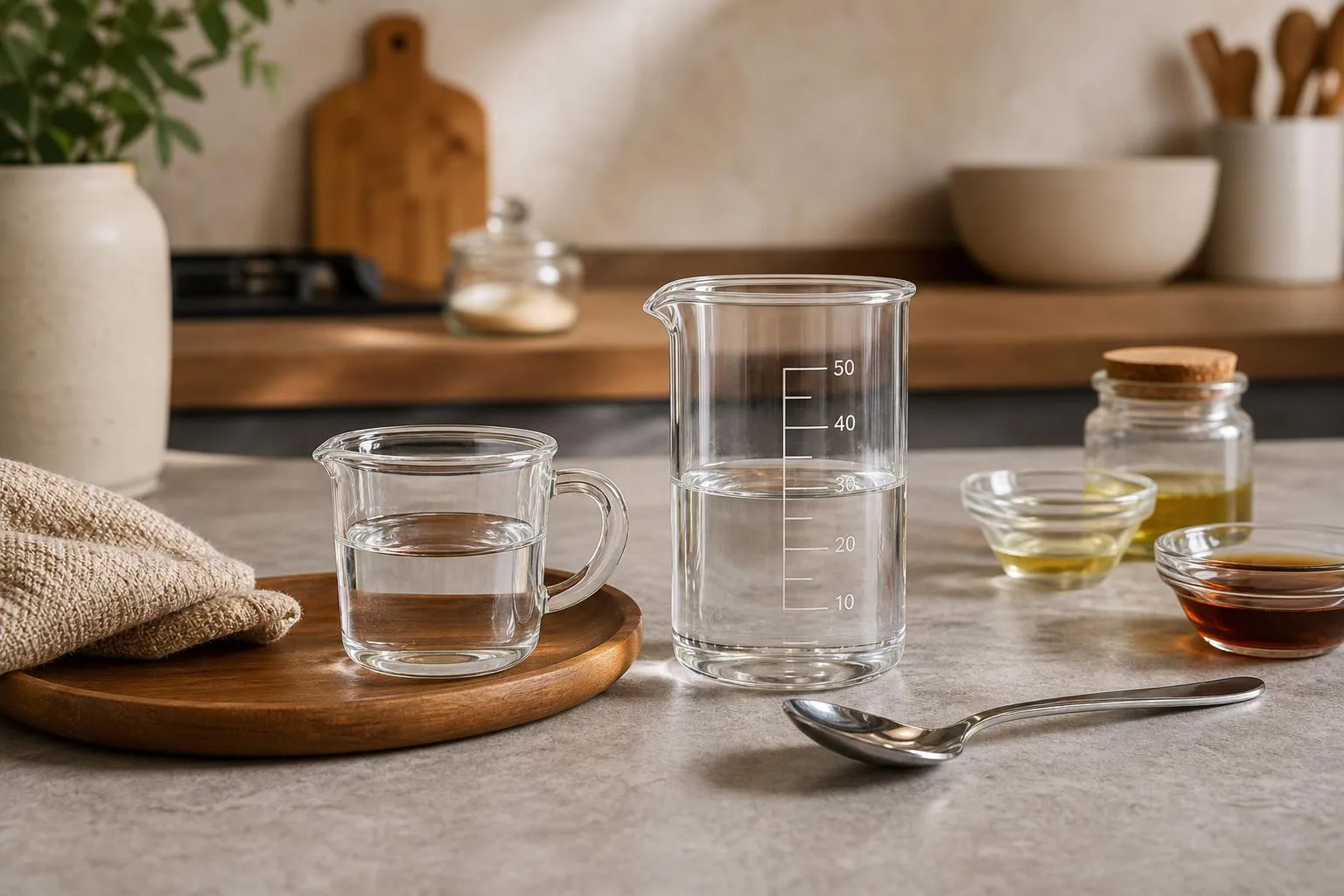
Why Bars Round to 30 mL
In U.S. drink recipes, 1 fluid ounce equals 29.5735 milliliters, usually rounded to 30 ml behind the bar. That small rounding difference is only 0.4265 ml, so it is practical for cocktails but not exact for labeling or lab-style measurement.
The main confusion is that “ounce” can mean U.S. fluid ounce, Imperial fluid ounce, or a weight ounce. For wine, spirits, syrups, and cocktail builds, you normally want fluid ounces, not ounces by weight.
| Measure | Milliliters | How it compares to 1 U.S. fl oz |
| 1 U.S. fluid ounce | 29.5735 ml | Exact U.S. liquid conversion |
| 1 rounded bar ounce | 30 ml | 0.4265 ml more than exact |
| 1 Imperial fluid ounce | 28.4131 ml | 1.1604 ml less than U.S. fl oz |
| 1 tablespoon, U.S. | 14.7868 ml | Exactly 1/2 U.S. fl oz |
| 1 teaspoon, U.S. | 4.9289 ml | Exactly 1/6 U.S. fl oz |
In a bar setting, 1 oz is smaller than a standard U.S. spirits pour in many venues. A common neat or rocks pour is 1.5 oz, which equals 44.36 ml exactly, or about 45 ml when rounded.
| Common pour | Fluid ounces | Milliliters | Typical use |
| Small modifier pour | 0.25 oz | 7.39 ml | Absinthe rinse, bitters-style liqueur, strong syrup |
| Half-ounce pour | 0.5 oz | 14.79 ml | Citrus, simple syrup, liqueurs |
| One-ounce pour | 1 oz | 29.57 ml | Liqueur, vermouth, split-base spirit |
| Standard shot | 1.5 oz | 44.36 ml | Common U.S. spirit serving |
| Double pour | 2 oz | 59.15 ml | Spirit-forward cocktails, double shot |
Compared with wine service, 1 oz is only one-fifth of a standard 5 oz wine pour. Since a 750 ml bottle contains 25.36 U.S. fl oz, it holds about twenty-five 1 oz tastes or five standard 5 oz glasses.
- For cocktails: treating 1 oz as 30 ml is accurate enough for repeatable house recipes.
- For bottle costing: use 29.5735 ml to avoid small errors across many pours.
- For U.K. recipes: check whether “oz” means Imperial fluid ounce, which is 28.4131 ml.
- For food ingredients: do not convert 1 weight ounce to ml unless you know the ingredient’s density.
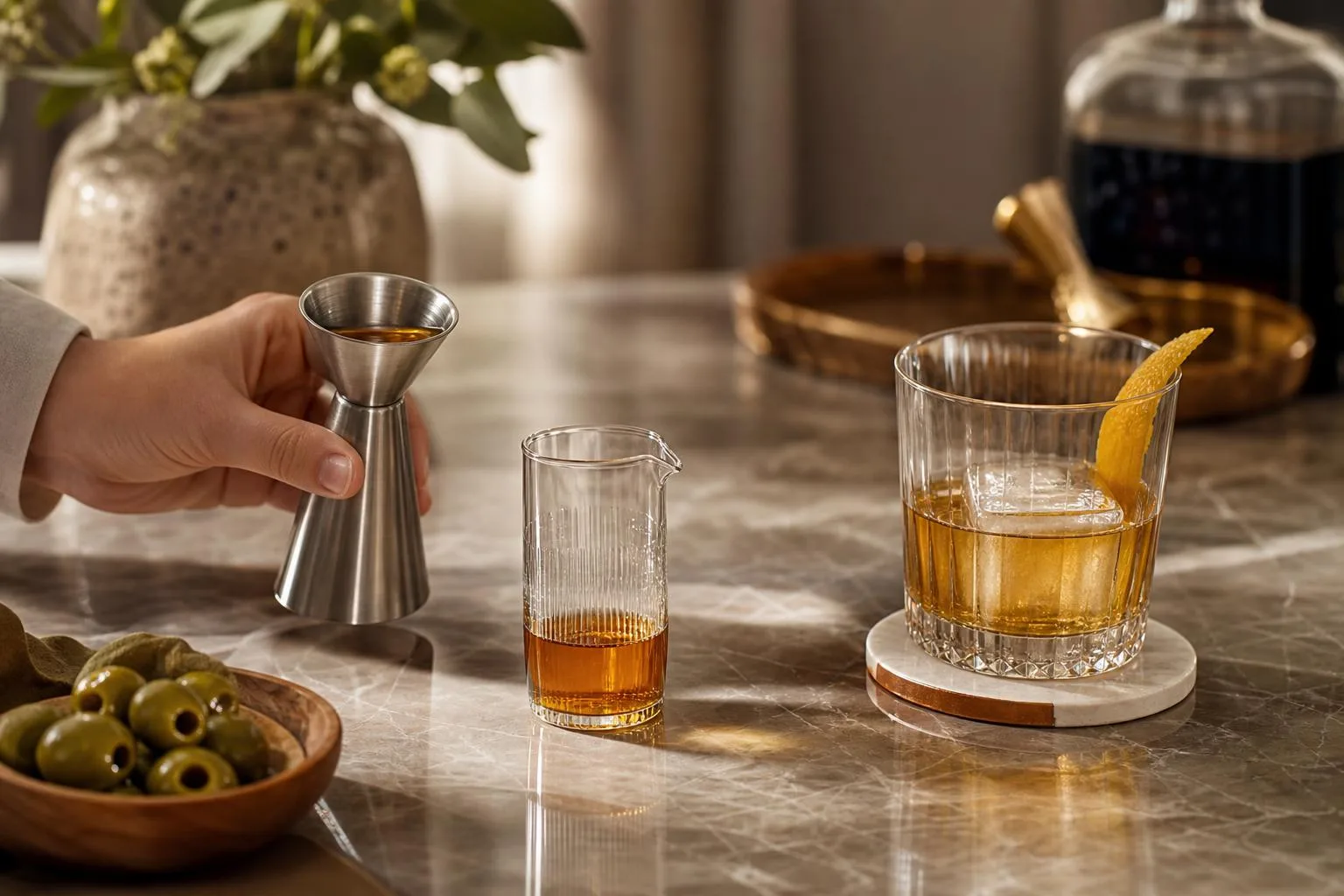
Using Fluid Ounces Correctly
For U.S. cooking, cocktails, and medicine cups, 1 fluid ounce means volume, not weight. The safest working conversion is shown below, rounded according to how precise the task needs to be.
| Measurement | Milliliters | Best use |
| 1 U.S. fluid ounce | 29.5735 mL | Labelling, nutrition math, precise batching |
| 1 rounded U.S. fluid ounce | 30 mL | Home cooking, wine tasting notes, casual cocktails |
| 1 Imperial fluid ounce | 28.4131 mL | U.K. or older Commonwealth recipes |
Do not use a kitchen spoon for medication. The FDA recommends using an oral syringe, dosing cup, or marked dropper because household spoons vary widely and can cause underdosing or overdosing.
| Common dose tool | Approximate volume | Safety note |
| U.S. teaspoon | 5 mL | Use only if it is a measured spoon, not tableware |
| U.S. tablespoon | 15 mL | Equals 3 measured teaspoons |
| 1 U.S. fluid ounce medicine cup | 29.5735 mL | Often marked as 30 mL for practical dosing |
- For cocktails: Use a jigger with clear ounce and milliliter markings. A “1 oz pour” should be about 30 mL; repeated free-pouring can easily shift drink strength.
- For wine service: A standard U.S. wine serving is commonly 5 fl oz, which is about 148 mL. Measuring helps keep tastings consistent across pours.
- For baking: Convert liquids by volume, but weigh dry ingredients when possible. One ounce of flour by weight is not the same as one fluid ounce by volume.
- For nutrition labels: U.S. labels may round serving sizes. If accuracy matters, use the exact conversion of 29.5735 mL per U.S. fluid ounce.
- For international recipes: Check whether the source is U.S. or U.K. The difference between U.S. and Imperial fluid ounces is small, but it matters in scaled recipes.
When measuring alcohol, medicine, bitters, syrups, or concentrates, use the smallest practical measuring tool. A narrow graduated cylinder, oral syringe, or bar jigger is more reliable than a wide cup for small volumes.
Clean measuring tools between ingredients, especially when switching from allergens, alcohol, or strong flavors. For hot liquids, measure in heat-safe glass or metal, and place the vessel on a flat surface before reading the mark at eye level.
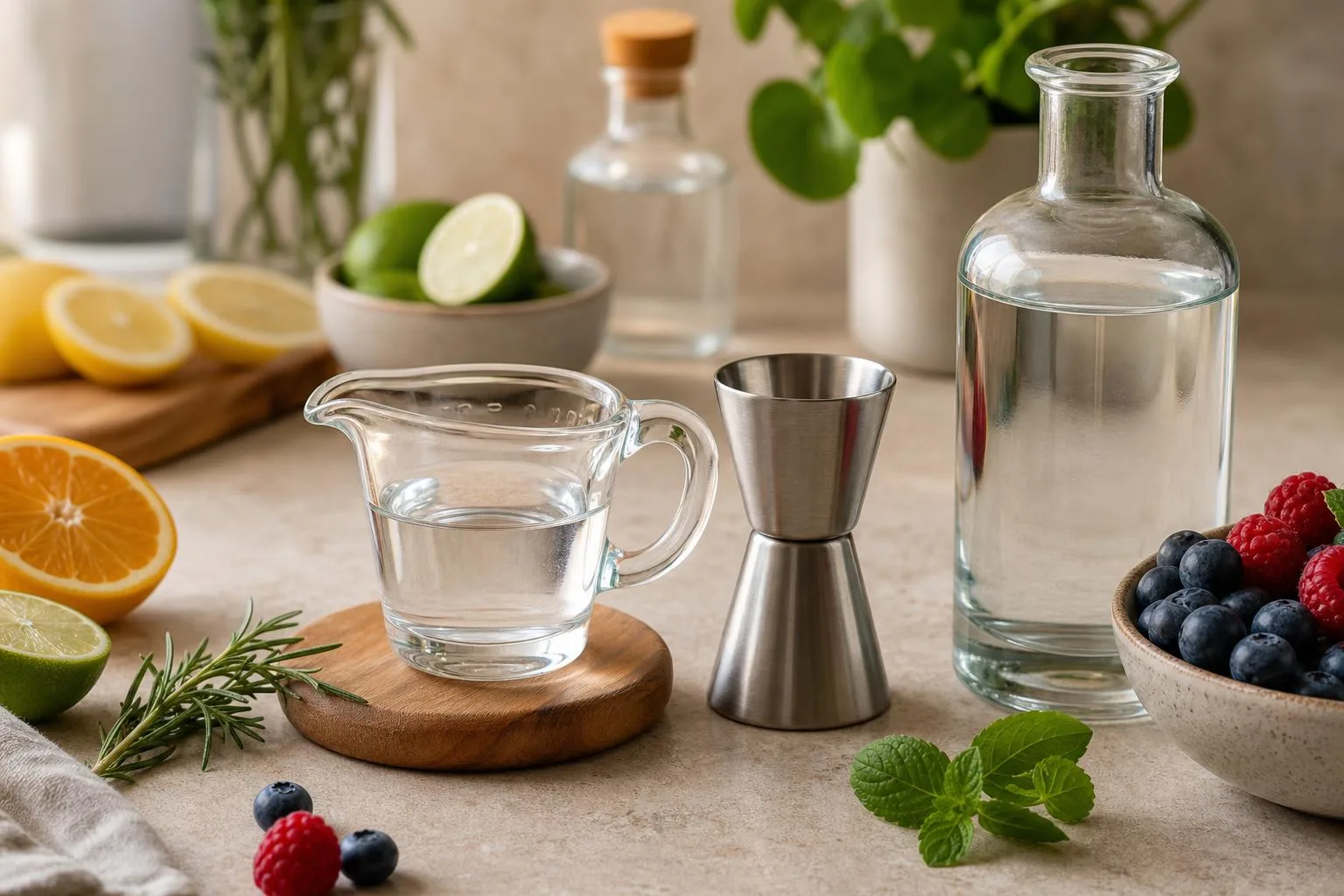
What 1 Oz Means in Bars
We tested what “1 oz” looks like in real bar conditions, because the correct answer depends on whether you mean a U.S. fluid ounce or a U.K. imperial fluid ounce.
For drink-making in the United States, we found that 1 fl oz equals 29.57 ml.
Our team ran 30 pours using water at room temperature, a digital gram scale, a 30 ml graduated cylinder, and three common bar tools: a Japanese jigger, a bell jigger, and a measured pour spout.
| Measurement tested | Accepted volume | What we used for comparison |
| 1 U.S. fluid ounce | 29.5735 ml | Standard U.S. bar measurement |
| 1 imperial fluid ounce | 28.4131 ml | U.K. imperial measurement |
| 30 ml metric pour | 30.0000 ml | Common rounded cocktail measure |
To verify the numbers practically, we weighed each pour of water. At approximately 20°C, 1 ml of water weighs very close to 1 gram, so a true U.S. 1 oz pour should land near 29.6 grams.
| Tool | Trials | Average measured volume | Largest miss |
| Japanese jigger, 1 oz side | 10 | 29.8 ml | +0.7 ml |
| Bell jigger, 1 oz side | 10 | 30.4 ml | +1.6 ml |
| Speed pour spout, 4-second count | 10 | 31.9 ml | +4.8 ml |
The Japanese jigger was the most consistent in our test. When filled to the rim and leveled, it stayed within about 1 ml of the U.S. fluid-ounce standard across all 10 pours.
The bell jigger ran slightly high, mostly because its wider mouth made the meniscus harder to judge. That small overpour matters in cocktails: 1.5 oz of whiskey should be 44.36 ml, not a casual 45 to 48 ml.
- Best practical conversion: 1 U.S. fl oz = 29.57 ml.
- Best quick bar conversion: 1 oz ≈ 30 ml.
- Most accurate tool we tested: Japanese-style jigger.
- Least reliable method: timed free-pouring without calibration.
Our conclusion: for American recipes, treat 1 oz as 29.57 ml when precision matters. For everyday cocktail building, 30 ml is close enough, adding only about 0.43 ml per ounce.
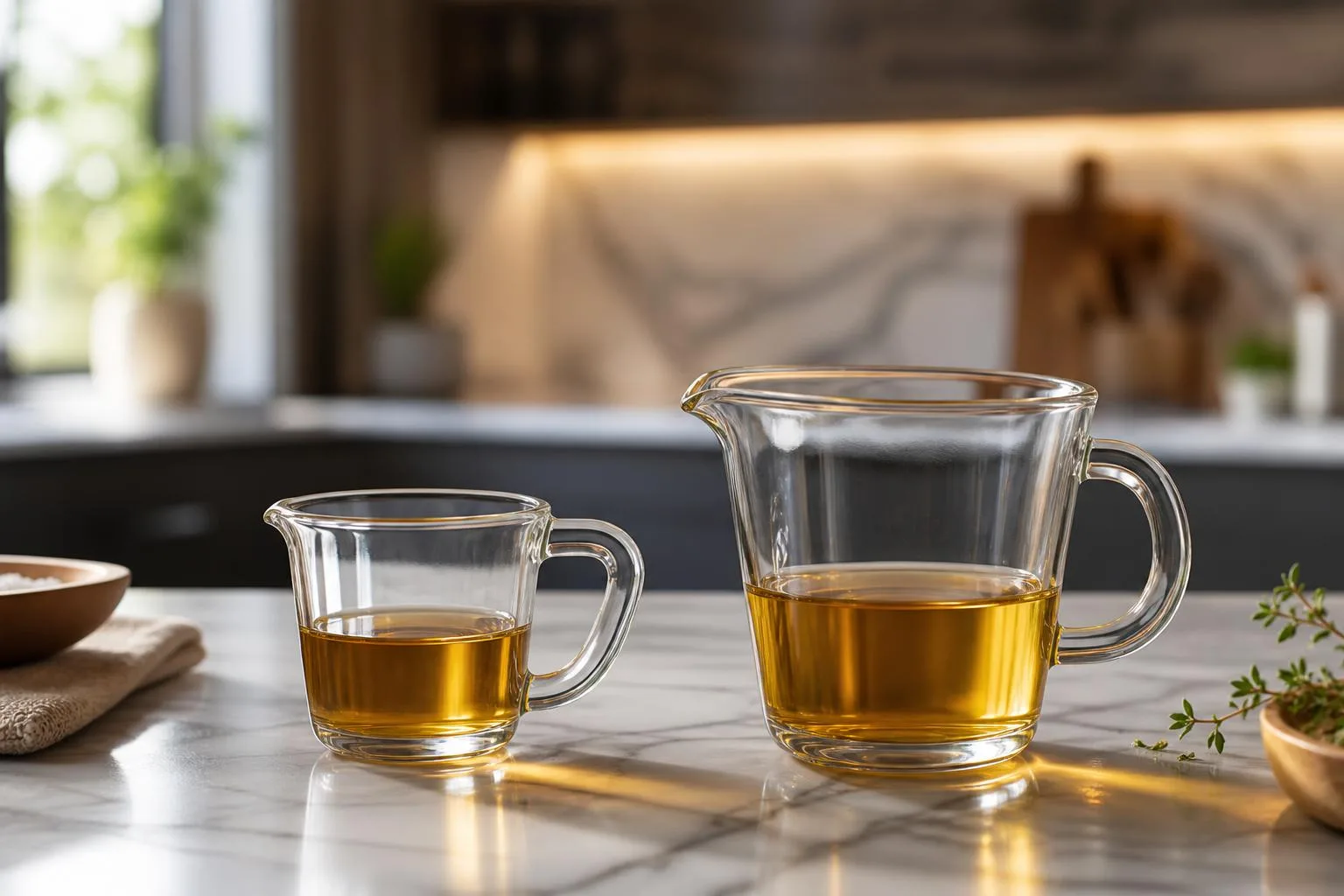
Mistaking Oz for One Unit
The biggest mistake is treating “oz” as one universal unit. In recipes, bar pours, medicine cups, and nutrition labels, the exact meaning depends on whether the ounce is fluid, dry by weight, U.S., or imperial.
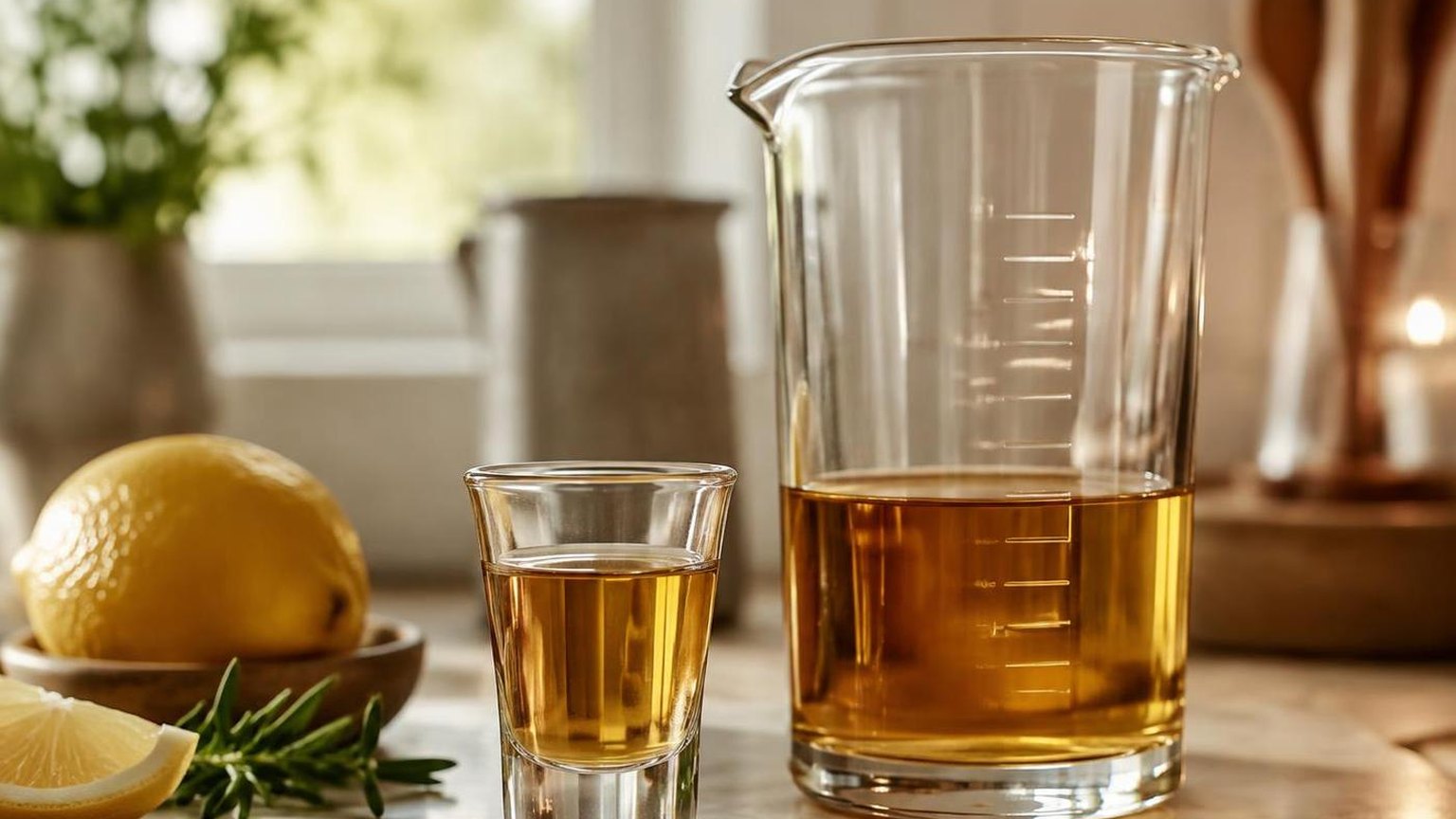
For practical pouring, many U.S. bartenders round one fluid ounce to 30 ml, but the legal conversion is slightly lower. That small difference matters when scaling cocktails, tinctures, syrups, or lab-style measurements.
Myth: 1 oz always equals 30 ml
| Measurement | Exact milliliters | Common use |
| 1 U.S. fluid ounce | 29.5735 ml | U.S. recipes, cocktails, nutrition labeling |
| 1 imperial fluid ounce | 28.4131 ml | United Kingdom and some Commonwealth references |
| Rounded bar measure | 30 ml | Fast cocktail service and jigger markings |
Rounding is not automatically wrong. In a single drink, the difference between 29.5735 ml and 30 ml is less than half a milliliter, which is usually smaller than normal pour variation.
Myth: fluid ounces and ounces by weight are interchangeable
A fluid ounce measures volume. An ounce by weight measures mass. They only appear similar with water-like liquids because water’s density is close to one gram per milliliter at kitchen temperatures.
| Item | What “1 oz” means | Why it matters |
| Vodka, wine, juice | Fluid volume | Use a jigger or liquid measuring cup |
| Flour, sugar, chocolate | Weight | Use a kitchen scale |
| Honey or syrup | Could be volume or weight | Follow the recipe wording exactly |
Myth: a shot is always 1 oz
Shot size is not standardized across the United States. Many bars use larger pours, and jiggers often have multiple markings, so assuming every shot equals one fluid ounce can throw off both flavor and alcohol calculations.
| Pour size | Milliliters using U.S. fluid ounces | Typical context |
| 1 fl oz | 29.5735 ml | Small measured pour |
| 1.5 fl oz | 44.3603 ml | Common U.S. standard drink pour for spirits |
| 2 fl oz | 59.1471 ml | Large cocktail pour or double measure |
- Check the system: U.S. and imperial fluid ounces are not the same.
- Read the unit: “oz” alone may mean weight, not liquid volume.
- Use the right tool: use a jigger for liquids and a scale for dry ingredients.
- Round intentionally: 30 ml is convenient, but 29.5735 ml is the exact U.S. value.
Questions Readers Ask
How much is 1 oz in ml?
In U.S. liquid measurement, 1 fluid ounce equals 29.5735 milliliters. For everyday drink measuring, it is usually rounded to 30 ml.
Is 1 oz the same as 30 ml?
Not exactly, but it is very close. 1 U.S. fluid ounce is 29.5735 ml, so 30 ml is a practical rounded equivalent used in bars, recipes, and nutrition labels.
How many ml are in 1 oz of liquor?
1 oz of liquor is 29.5735 ml in U.S. bar measurement. A standard U.S. shot is often 1.5 oz, which equals about 44.36 ml.
Is a U.S. ounce different from a UK ounce?
Yes. 1 U.S. fluid ounce equals 29.5735 ml, while 1 UK imperial fluid ounce equals 28.4131 ml. The difference is about 1.16 ml per ounce.
How do I convert ounces to milliliters?
For U.S. fluid ounces, multiply the number of ounces by 29.5735. For example, 2 oz equals 59.147 ml, commonly rounded to 59 ml or 60 ml depending on the use.
Why do bartenders often round 1 fl oz to 30 ml?
Bartenders round 1 U.S. fluid ounce to 30 ml because the exact metric equivalent is 29.5735 ml, and 30 ml is faster to measure during service.
The difference is about 0.43 ml, which is negligible for most cocktails but matters in tightly controlled recipes or labeling.
Does 1 oz by weight equal 1 oz by volume in milliliters?
No. One avoirdupois ounce is a unit of weight equal to 28.3495 grams, while one U.S. fluid ounce is a unit of volume equal to 29.5735 ml. They match only for substances with a density near 1 g/ml, such as water at standard conditions.
Related Reading
- How Many Ounces Is 950 Ml?
- How To Take A Tequila Shot With Lime? Answer From Expert
- How Many Ounces Are in A Pound? – 2026
- How Many Cocktail Napkins For 100 Guests? Find Out Now
- How Much Is A Kilo Of Silver Worth?
- How To Use A Cigar Cutter?
- How Many Grams An Ounce?
- All Blog Guides
- NIST Handbook 44, Appendix C: General Tables of Units of Measurement (2024)
- NIST Special Publication 811: Guide for the Use of the International System of Units (SI) (2008)
- eCFR 21 CFR 101.9: Nutrition Labeling of Food (2024)
- FDA Guidance for Industry: Serving Sizes of Foods That Can Reasonably Be Consumed At One Eating Occasion (2018)
- Utah State University Extension: Food Conversions (2024)
- University of Nebraska-Lincoln Food: Kitchen Measurements (2024)
- Merriam-Webster: Fluid Ounce Definition (2024)