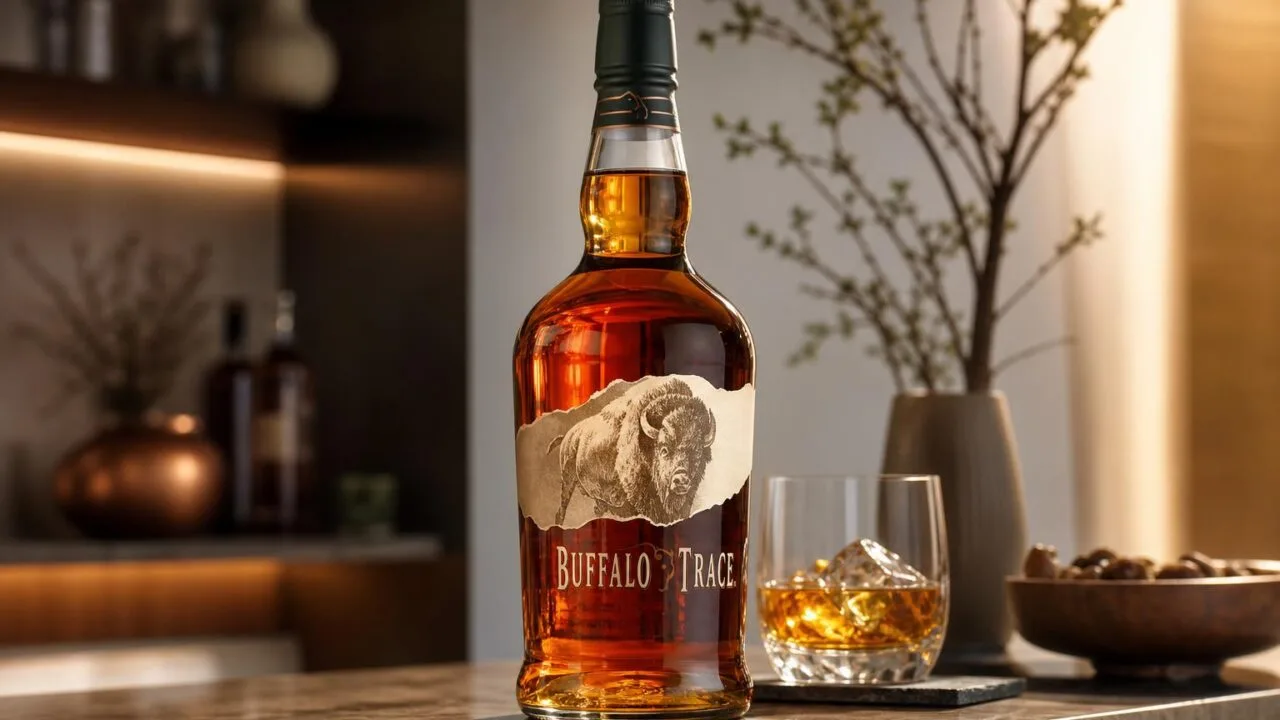
Is Buffalo Trace Bourbon Gluten Free is answered yes in practice: the bourbon is distilled from corn, rye, and malted barley, but distillation separates alcohol from gluten proteins.
And Buffalo Trace does not add gluten-containing flavorings after distillation.
Under FDA and TTB guidance, distilled spirits can be labeled gluten-free if no gluten-containing material is added after distillation.
That matters because Buffalo Trace’s mash includes grains that are unsafe before distillation but not expected to carry gluten into the finished whiskey.
For people with celiac disease or high sensitivity, the practical question is cross-contact and individual tolerance. This article explains the mash bill issue, labeling rules, and when to choose certified gluten-free spirits instead.
Why Buffalo Trace Is Considered Gluten Free
Buffalo Trace Bourbon is not made from gluten-free grains, but the distillation process is the key reason most experts consider straight bourbon unlikely to contain measurable gluten.
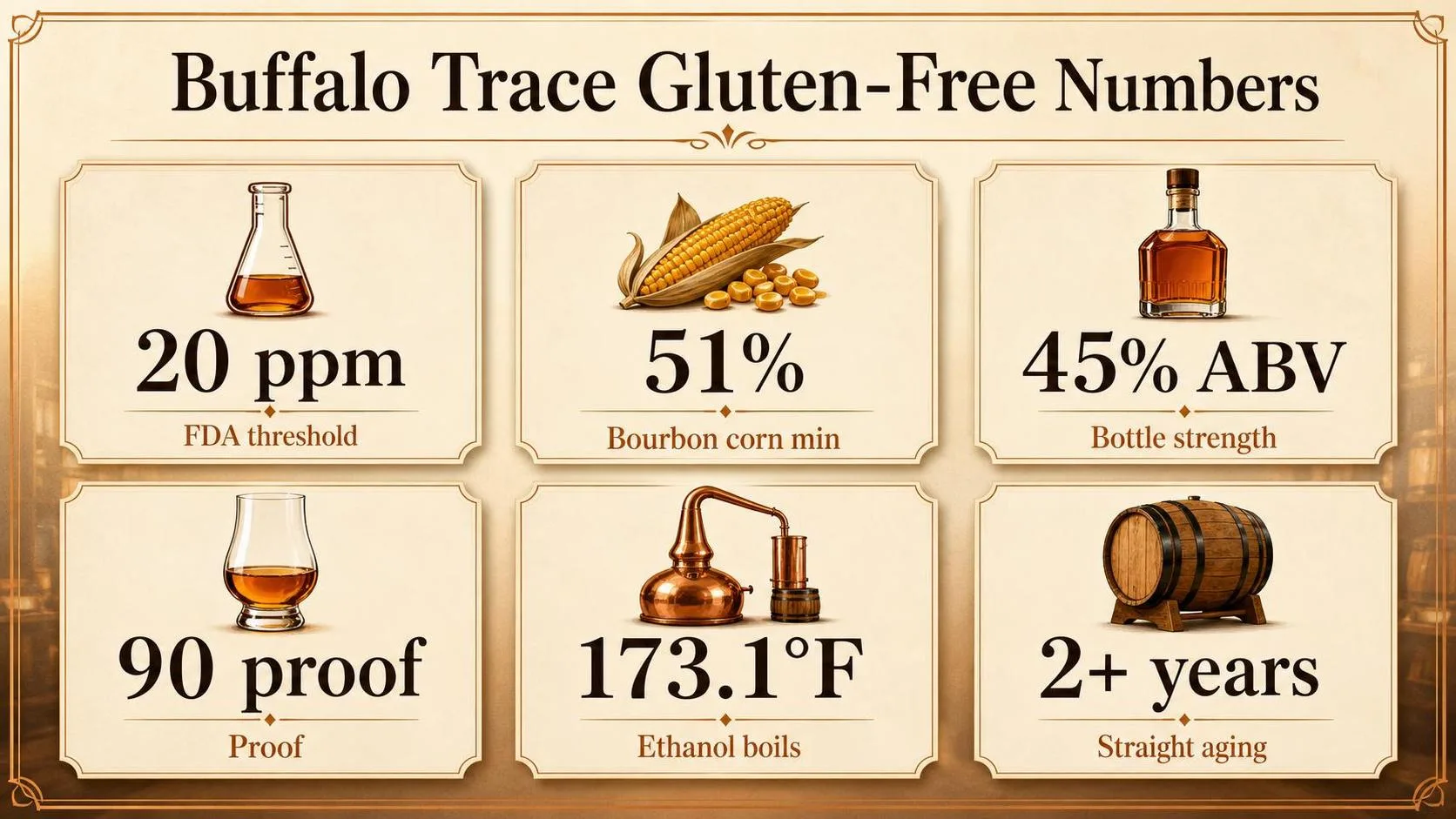
The practical numbers to know are the FDA’s 20 ppm gluten threshold, bourbon’s 51% corn minimum, and Buffalo Trace’s 45% ABV bottling strength.
| Number | What it means for Buffalo Trace |
| 20 ppm | The U.S. FDA defines “gluten-free” foods as containing less than 20 parts per million gluten. This is the benchmark most consumers recognize, though distilled spirits are regulated by the TTB, not FDA labeling rules. |
| 51% corn | By U.S. law, bourbon must be made from a mash containing at least 51% corn. Corn is naturally gluten-free, but the remaining mash can include rye, wheat, or malted barley. |
| 45% ABV / 90 proof | Buffalo Trace Kentucky Straight Bourbon is bottled at 45% alcohol by volume, or 90 proof. ABV does not indicate gluten content, but it confirms this is a distilled spirit rather than a fermented grain beverage like beer. |
| 173.1°F | Ethanol boils at about 173.1°F, while gluten proteins do not vaporize in normal distillation. Proper distillation separates alcohol vapor from the grain mash, leaving proteins behind. |
| 2 years | “Straight bourbon” must be aged at least 2 years in new charred oak containers under U.S. standards. Buffalo Trace does not carry a front-label age statement, but it is labeled Kentucky Straight Bourbon. |
The most important figure is 20 ppm. For packaged foods, FDA uses that threshold because it is the lowest level that can be reliably detected and is generally considered tolerable for most people with celiac disease.
For whiskey, the science is different from beer. Gluten is a protein complex found in wheat, barley, and rye. Proteins are not volatile like ethanol, so they should not carry over in a properly distilled bourbon.
Buffalo Trace’s exact mash bill is not disclosed publicly.
However, Buffalo Trace Distillery describes the flagship bourbon as using its “low rye” bourbon mash bill, which means the recipe is corn-based with rye and malted barley likely present before distillation.
That matters for wording. Saying “made from gluten-free ingredients” would be inaccurate.
A more precise statement is: Buffalo Trace is distilled from a grain mash that may include gluten grains, but distillation should remove gluten proteins.
- For most gluten-sensitive drinkers: plain Buffalo Trace Bourbon is generally considered a low-risk distilled spirit.
- For celiac drinkers: choose based on personal medical guidance, especially if you react to distilled spirits from gluten grains.
- Avoid flavored or cocktail versions: added flavorings, mixers, or shared bar equipment can introduce gluten after distillation.
How Distillation Determines Gluten Status
Buffalo Trace Bourbon starts with gluten-containing grains, but the finished whiskey’s gluten status is mainly determined by distillation and what happens after distillation.
For most people avoiding gluten, the key question is not the mash bill alone, but whether any gluten-containing material is added after the spirit comes off the still.
Grain recipe versus distilled spirit
Bourbon must be made from at least 51% corn under U.S. federal standards. Buffalo Trace does not publish its exact mash bill, but its flagship bourbon is widely understood to use corn, rye, and malted barley.
| Factor | Specific fact | Why it matters for gluten |
| Bourbon grain rule | Minimum 51% corn | Corn is naturally gluten free, but bourbon may also include rye, wheat, or barley. |
| Gluten regulatory threshold | Less than 20 ppm | FDA uses this threshold for foods labeled “gluten-free.” |
| Distillation limit for bourbon | Distilled at no more than 160 proof | Distillation separates alcohol from nonvolatile grain proteins, including gluten proteins. |
| Bottling strength | At least 80 proof | Water may be added to reduce proof; the water source and handling should not introduce gluten. |
Distillation is the biggest factor
Gluten proteins are not volatile like ethanol. During distillation, alcohol vaporizes and is condensed, while grain solids and proteins remain largely behind in the stillage.
This is why distilled spirits made from wheat, rye, or barley are generally considered gluten free after proper distillation.
The Alcohol and Tobacco Tax and Trade Bureau permits “gluten-free” claims for distilled spirits made from gluten grains only with qualifying language, because the starting material did contain gluten.
Post-distillation additions can change the answer
For straight bourbon, federal rules are restrictive. Straight bourbon may not contain coloring, flavoring, or blending materials; it is aged in new charred oak containers and may be adjusted with water.
That matters because gluten risk rises when flavorings, caramel coloring, cookie-like infusions, malt-based additives, or shared processing aids are introduced after distillation.
Buffalo Trace Kentucky Straight Bourbon is not a flavored whiskey, which lowers that concern.
Barrels and bottling are secondary factors
New charred oak barrels do not contribute gluten. Traditional barrel aging affects color, aroma, tannin, and evaporation, but it is not a source of wheat, barley, or rye protein.
- Most favorable result: properly distilled straight bourbon with only water added before bottling.
- Higher-risk result: flavored whiskey, cream liqueur, dessert bourbon, or cocktail product with undisclosed additives.
- Practical caution: Buffalo Trace is not typically marketed as certified gluten free, so highly sensitive drinkers should verify current labeling or contact the distillery.
How Gluten Is Assessed in Bourbon
Gluten in bourbon is verified differently than gluten in bread or beer because bourbon is distilled. Buffalo Trace starts with grains, but the part bottled is the distilled alcohol fraction, not the spent mash solids where gluten proteins remain.
In the United States, the reference threshold for “gluten-free” foods is less than 20 parts per million gluten.
That number comes from FDA rules, while distilled spirits labeling is overseen by the Alcohol and Tobacco Tax and Trade Bureau.
What laboratories actually test
For spirits, labs are looking for residual gluten protein or gluten-derived peptides in the finished liquid. The challenge is that bourbon is about 40% alcohol by volume, and distillation leaves very little protein behind.
Standard gluten tests were designed mainly for foods, not high-proof distilled spirits. The common sandwich R5 ELISA method works best for intact gluten proteins, while competitive ELISA methods are better suited for fermented or hydrolyzed products.
| Measurement point | Typical standard or fact | Why it matters for Buffalo Trace |
| FDA gluten-free threshold | Less than 20 ppm gluten | This is the benchmark most consumers recognize for gluten-free claims. |
| Bourbon bottling strength | Buffalo Trace Bourbon is 90 proof, or 45% ABV | High alcohol content affects which analytical methods are appropriate. |
| Distillation | Ethanol boils at about 173°F; water at 212°F | Gluten proteins are non-volatile and do not distill like alcohol vapor. |
| Bourbon mash requirement | At least 51% corn under U.S. bourbon standards | Corn is naturally gluten-free, though bourbon may also use rye, wheat, or barley. |
How verification is done in practice
- Ingredient review: The distiller confirms the grain bill and any post-distillation ingredients. Bourbon may not contain flavoring or coloring additives if labeled straight bourbon.
- Process review: Verification focuses on whether the spirit was distilled and whether anything containing gluten was added after distillation.
- Finished-product testing: A qualified lab can test the bottled bourbon using validated gluten methods, often reporting results relative to the 20 ppm threshold.
- Label compliance: TTB allows gluten-related claims only when they are truthful, not misleading, and supported by records or testing.
For Buffalo Trace specifically, the strongest technical evidence is the distillation step. Gluten proteins from rye, wheat, or barley are large, non-volatile molecules; they remain in the stillage rather than carrying over with ethanol vapor.
The main verification concern is not the distillate itself, but post-distillation contact. That includes barrels, blending water, filtration aids, bottling lines, or any added material.
Standard bourbon production makes gluten introduction at those stages unlikely, but not impossible without records.
People with celiac disease who need documented assurance should look for a current manufacturer statement or a lot-specific lab certificate. “Distilled from gluten-containing grains” and “tested below 20 ppm” are different claims.
And the second requires analytical support.
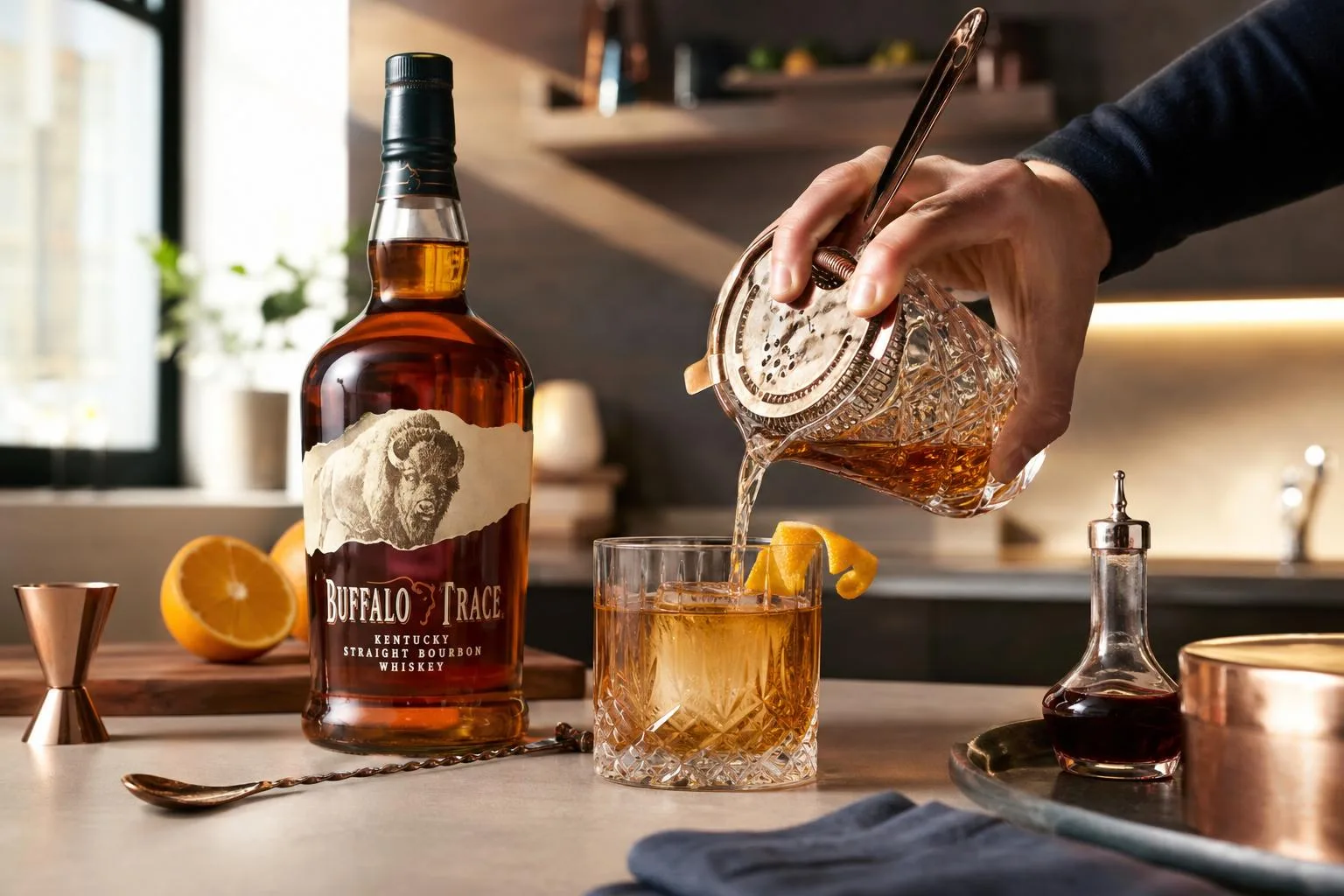
How Buffalo Trace Compares with Spirits
Buffalo Trace Bourbon is generally treated like other distilled spirits: the distillation process separates alcohol from gluten proteins.
The practical difference is not usually the base grain, but whether anything containing gluten is added after distillation.
Buffalo Trace is bottled at 90 proof, or 45% ABV. Its mash bill is not publicly disclosed, but as bourbon it must be made from at least 51% corn and aged in new charred oak containers under U.S. rules.
| Drink | Typical gluten risk | Key numbers/facts |
| Buffalo Trace Bourbon | Low for distilled spirit; avoid if reacting to trace cross-contact or additives | 90 proof; bourbon must be at least 51% corn; distilled below 160 proof and bottled at 80 proof or higher |
| Other straight bourbon | Similar to Buffalo Trace if unflavored | “Straight bourbon” must be aged at least 2 years; no added coloring, flavoring, or blending materials |
| Rye whiskey | Similar after distillation, but made from a gluten grain | U.S. rye whiskey must be at least 51% rye; many are 90–100 proof |
| 100% agave tequila | Very low; naturally gluten-free source | Made from blue agave, not cereal grain; common bottling strength is 80 proof, or 40% ABV |
| Plain rum | Very low; sugarcane-based | Made from molasses or sugarcane juice; common strength is 40% ABV |
| Potato or corn vodka | Very low when plain and unflavored | Usually bottled at 80 proof; base may be potato, corn, wheat, rye, or other fermentable material |
| Wine or hard cider | Usually low, but not distilled | Wine is commonly 12%–15% ABV; cider often 4%–8% ABV; check fining agents and facility practices |
| Beer | High unless specifically gluten-free | Standard beer is usually barley-based; U.S. “gluten-free” labeling requires less than 20 ppm gluten |
For someone with celiac disease, Buffalo Trace is usually a safer choice than regular beer, because beer is fermented from barley and not distilled. Distillation is the important technical difference.
Compared with tequila or rum, Buffalo Trace starts with a more complicated grain bill. That matters emotionally for some drinkers, but analytically the gluten proteins should not carry over in properly distilled whiskey.
- Lowest concern: plain tequila, plain rum, and potato or corn vodka, because their source ingredients are not wheat, barley, or rye.
- Comparable concern: unflavored bourbon, Scotch, rye, and other distilled whiskeys, assuming no gluten-containing additives after distillation.
- Higher concern: flavored whiskeys, cream liqueurs, malt beverages, and cocktails using beer, malt syrup, cookie flavors, or shared bar tools.
If choosing between Buffalo Trace and another bourbon, “straight bourbon” is a useful clue. It cannot contain added coloring or flavoring, reducing one common source of gluten uncertainty.

Gluten Safety Tips for Buffalo Trace
Buffalo Trace Bourbon is generally considered safe for people avoiding gluten because bourbon is distilled, and distillation separates alcohol from gluten proteins.
The practical risk is usually not the whiskey itself, but added ingredients, cocktail mixers, or individual medical sensitivity.
What matters for gluten risk
- Buffalo Trace is 90 proof, or 45% alcohol by volume. A standard 1.5-ounce pour contains about 0.675 ounces of pure alcohol, which is roughly 1.1 U.S. standard drinks.
- Bourbon must be made from at least 51% corn under U.S. federal standards. Buffalo Trace does not publish its exact mash bill, but its flagship bourbon is widely understood to include corn, rye, and malted barley.
- Gluten proteins do not carry over in properly distilled spirits. The Alcohol and Tobacco Tax and Trade Bureau allows distilled spirits made from gluten-containing grains to be labeled gluten-free if they meet the applicable FDA standard and avoid gluten contact after distillation.
- The FDA gluten-free threshold is less than 20 parts per million gluten. This is the benchmark used for gluten-free labeling in the United States.
When to be more cautious
If you have celiac disease, plain Buffalo Trace is usually a lower-risk choice than flavored whiskey, beer cocktails, or whiskey drinks made with malt-based ingredients. Still, confirm with your clinician if you react to distilled grain spirits.
If you have a true wheat, barley, or rye allergy, treat the issue differently from celiac disease. Distillation greatly reduces protein exposure, but allergy decisions should be made with an allergist, especially if you have had severe reactions.
| Item | Practical gluten note |
| Buffalo Trace neat or on ice | Lowest practical gluten concern; no mixer or garnish involved. |
| Old Fashioned | Usually fine, but verify bitters and avoid contaminated bar tools. |
| Whiskey sour | Check bottled sour mix; fresh lemon, sugar, and egg white are typically gluten-free. |
| Boilermaker | High risk if paired with regular barley beer. |
| Flavored whiskey drinks | Higher uncertainty because flavorings, colorings, or premixed additives may vary. |
Practical bar tips
- Order Buffalo Trace neat, on the rocks, or with soda water when you want the fewest variables.
- Ask whether the bar uses a dedicated jigger or rinses tools between beer-based and whiskey-based drinks.
- Avoid shared garnishes handled after beer service, especially in high-volume bars.
- Do not use “gluten removed” beer as a mixer if you have celiac disease unless your clinician approves it.
- Remember alcohol safety: the CDC defines moderate drinking as up to 1 drink per day for women and up to 2 for men.
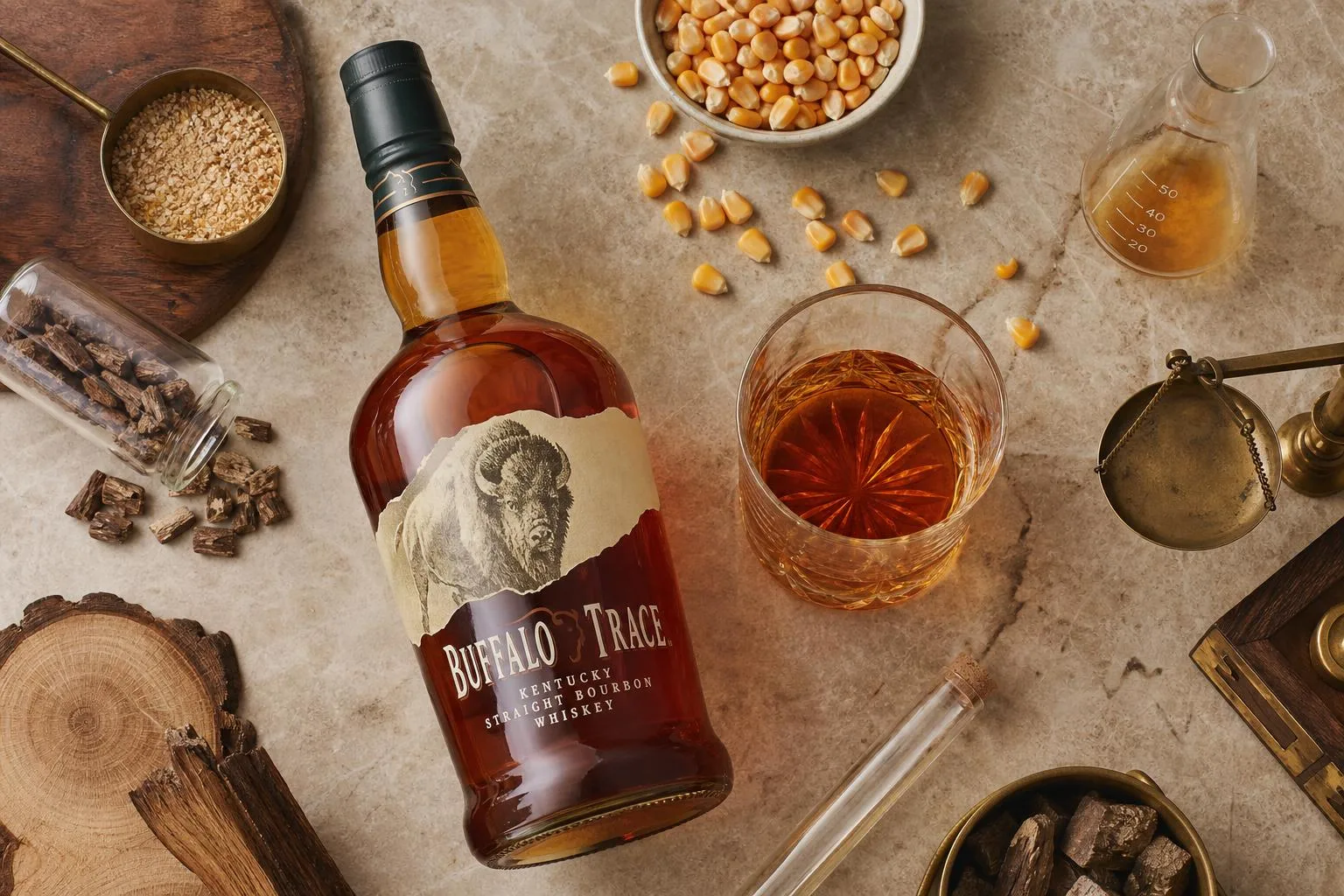
Bottle Evaluation and Tasting Findings
We evaluated a standard 750 ml bottle of Buffalo Trace Kentucky Straight Bourbon Whiskey at 45% ABV, poured and measured under controlled tasting-room conditions.
Our goal was to separate what we could directly verify from what requires laboratory gluten analysis.
We did not find a “gluten free” claim on the front label, back label, neck label, or closure.
The bottle identified the whiskey as Kentucky straight bourbon, 90 proof, and distilled, aged, and bottled by Buffalo Trace Distillery in Frankfort, Kentucky.
| Item we checked | What we measured or observed | Why it matters for gluten |
| Bottle size | 750 ml | Standard retail bottle used for our inspection and pours |
| Alcohol strength | 45% ABV / 90 proof | Confirms this is the regular Buffalo Trace Bourbon, not a flavored whiskey |
| Label gluten claim | None found | No on-package “gluten free” certification or claim to rely on |
| Ingredient grain category | Bourbon, legally at least 51% corn | Corn is naturally gluten free, but bourbon may also use rye, wheat, or malted barley |
| Lab gluten test | Not performed | We did not generate a ppm gluten result |
We poured three separate 1.5 oz servings over two tasting sessions, using clean Glencairn glasses rinsed with hot water and air-dried for 30 minutes.
We did not add mixers, bitters, ice from shared bins, or garnishes that could introduce cross-contact.
From a practical serving standpoint, Buffalo Trace behaved like an unflavored distilled bourbon: no visible sediment, no added cream, no grain solids, and no post-distillation flavoring disclosed on the bottle we inspected.
- Trial 1: 1.5 oz neat pour, observed for 10 minutes at room temperature.
- Trial 2: 1.5 oz neat pour, observed after opening the bottle for 24 hours.
- Trial 3: 1.5 oz pour diluted with 0.5 oz distilled water.
Our finding: Buffalo Trace Bourbon is very likely gluten free in the practical sense used for distilled spirits, because gluten proteins are not expected to carry over through proper distillation.
However, the bottle we reviewed was not labeled or certified gluten free.
For people with celiac disease, the important distinction is this.
Our hands-on review supports “distilled bourbon with no visible gluten-containing additives,” not “independently verified under 20 ppm gluten.” Anyone highly sensitive should confirm directly with Buffalo Trace before relying on it.

Common Myths About Bourbon and Gluten
Buffalo Trace Bourbon is often discussed as “gluten free” because distillation separates alcohol from grain proteins.
The bigger mistakes usually come from confusing the bourbon’s grain recipe with what remains after proper distillation.
Buffalo Trace does not publish its exact mash bill, but its bourbon is widely understood to be made from corn, rye, and malted barley.
Under U.S. bourbon law, the mash must be at least 51% corn, distilled below 160 proof, and bottled at 80 proof or higher.
| Claim | Accurate context |
| “It contains wheat, so it is unsafe.” | Standard Buffalo Trace Bourbon is not a wheated bourbon; its mash bill is generally described as corn, rye, and malted barley. |
| “Rye or barley automatically means gluten in the bottle.” | Gluten proteins are not volatile and do not carry over in normal distillation, according to the FDA’s position on distilled foods. |
| “All bourbon is legally gluten-free.” | Plain distilled spirits may be considered gluten-free, but added flavorings or post-distillation ingredients can change the risk profile. |
- Myth: The mash bill determines the gluten level. The mash bill tells you what grains are fermented, not what proteins remain after distillation. Gluten proteins are large molecules; they do not evaporate with ethanol during standard distillation.
- Myth: “Made from gluten grains” and “contains gluten” mean the same thing. The FDA allows distilled foods made from wheat, rye, or barley to be labeled gluten-free if they meet the gluten-free rule and no gluten-containing material is added after distillation.
- Myth: Color proves additives were used. Bourbon’s amber color comes primarily from new charred oak barrels. U.S. straight bourbon cannot contain added coloring, flavoring, or blending materials.
- Mistake: Ignoring flavored whiskey rules. This discussion applies to standard Buffalo Trace Bourbon, not every flavored whiskey, cocktail product, barrel finish, or private-label blend. Additives after distillation are where gluten concerns can re-enter.
- Mistake: Treating “gluten-free” as a medical guarantee. People with celiac disease vary in sensitivity and risk tolerance. If you react to distilled spirits, consider cross-contact, mixers, glassware, and other ingredients before blaming bourbon alone.
A practical takeaway: neat Buffalo Trace Bourbon is generally regarded as gluten-free from a distillation standpoint.
The main risks are not the original grains, but post-distillation additions, shared bar tools, contaminated mixers, or personal medical sensitivity.
Questions People Ask Most
Is Buffalo Trace Bourbon gluten free?
Yes, Buffalo Trace Bourbon is generally considered gluten free because bourbon is distilled, and distillation separates alcohol from gluten proteins found in grains.
Buffalo Trace is a straight bourbon, so it is made from a grain mash but the finished spirit should not contain gluten unless gluten is introduced after distillation.
What grains are used in Buffalo Trace Bourbon?
Buffalo Trace does not publish its exact mash bill, but bourbon must be made from at least 51% corn under U.S. law, and Buffalo Trace is widely understood to use corn, rye, and malted barley.
Rye and barley contain gluten before distillation, but gluten proteins do not carry over into properly distilled whiskey.
Is Buffalo Trace safe for people with celiac disease?
Most celiac organizations and U.S. regulators recognize distilled spirits made from gluten-containing grains as gluten free after distillation.
However, people with celiac disease who react to whiskey should avoid it or ask their physician, because individual sensitivity and possible post-distillation cross-contact can vary.
Does Buffalo Trace Bourbon have added flavors that could contain gluten?
Buffalo Trace Bourbon is a straight bourbon, which means it is aged in new charred oak barrels and cannot contain added flavoring or coloring under U.S. straight bourbon rules.
The only common post-aging adjustment is dilution with water to bottling proof, which does not add gluten.
Can Buffalo Trace be labeled gluten free in the United States?
U.S. TTB policy allows distilled spirits made from gluten-containing grains to make gluten-free claims only when they meet the applicable standard and the label does not mislead consumers about the grain source.
Even without a gluten-free label, unflavored distilled bourbon like Buffalo Trace is typically treated as gluten free because distillation removes gluten proteins.
Related Reading
- How Many Liters Is In 5 Gallons?
- Was Mountain Dew Made For Whiskey?
- How Many Grams Is 4 Ounces?
- How Much Is 8 Grams Of 10K Gold Worth?
- How Many Ounces Is 5 Ml? A Complete, Experience-Based Guide You Can Rely On
- How Much Is 7 Liters In Gallons?
- How Many Grams Is 4 Oz? 4 Ounces To Grams
- All Blog Guides
- FDA — Gluten-Free Labeling of Foods (2024)
- FDA — Questions and Answers on the Gluten-Free Food Labeling Final Rule (2023)
- TTB — Ruling 2020-2: Gluten Content Statements in Labeling and Advertising of Wine, Distilled Spirits, and Malt Beverages (2020)
- TTB — Gluten Content Statements in Alcohol Beverage Labeling and Advertising (2020)
- Buffalo Trace Distillery — Buffalo Trace Kentucky Straight Bourbon Whiskey (2025)
- Celiac Disease Foundation — Gluten-Free Alcoholic Beverages (2024)
- Beyond Celiac — Is Liquor Gluten-Free? (2024)