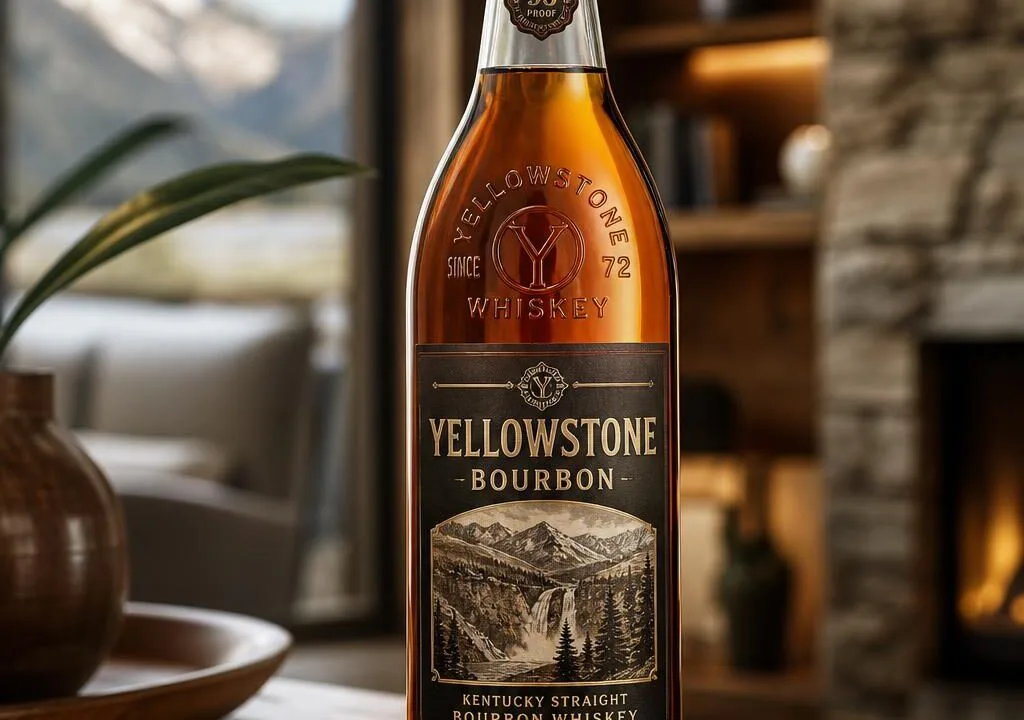
Who Makes Yellowstone Bourbon is Limestone Branch Distillery in Lebanon, Kentucky, under Lux Row Distillers and parent company MGP Ingredients.
The Yellowstone brand dates to 1872, while modern production is led by Limestone Branch, founded in 2011 by brothers Stephen and Paul Beam, descendants of Kentucky whiskey families.
This article explains how Yellowstone moved from a historic label to a family-revived bourbon, who owns it today, where it is distilled and bottled, and why names like Luxco, Lux Row, MGP, and the Beam family all appear in the brand’s story.
Who Makes Yellowstone Bourbon
Yellowstone Bourbon is made by Limestone Branch Distillery in Lebanon, Kentucky, under the Luxco whiskey portfolio, which has been owned by MGP Ingredients since 2021.
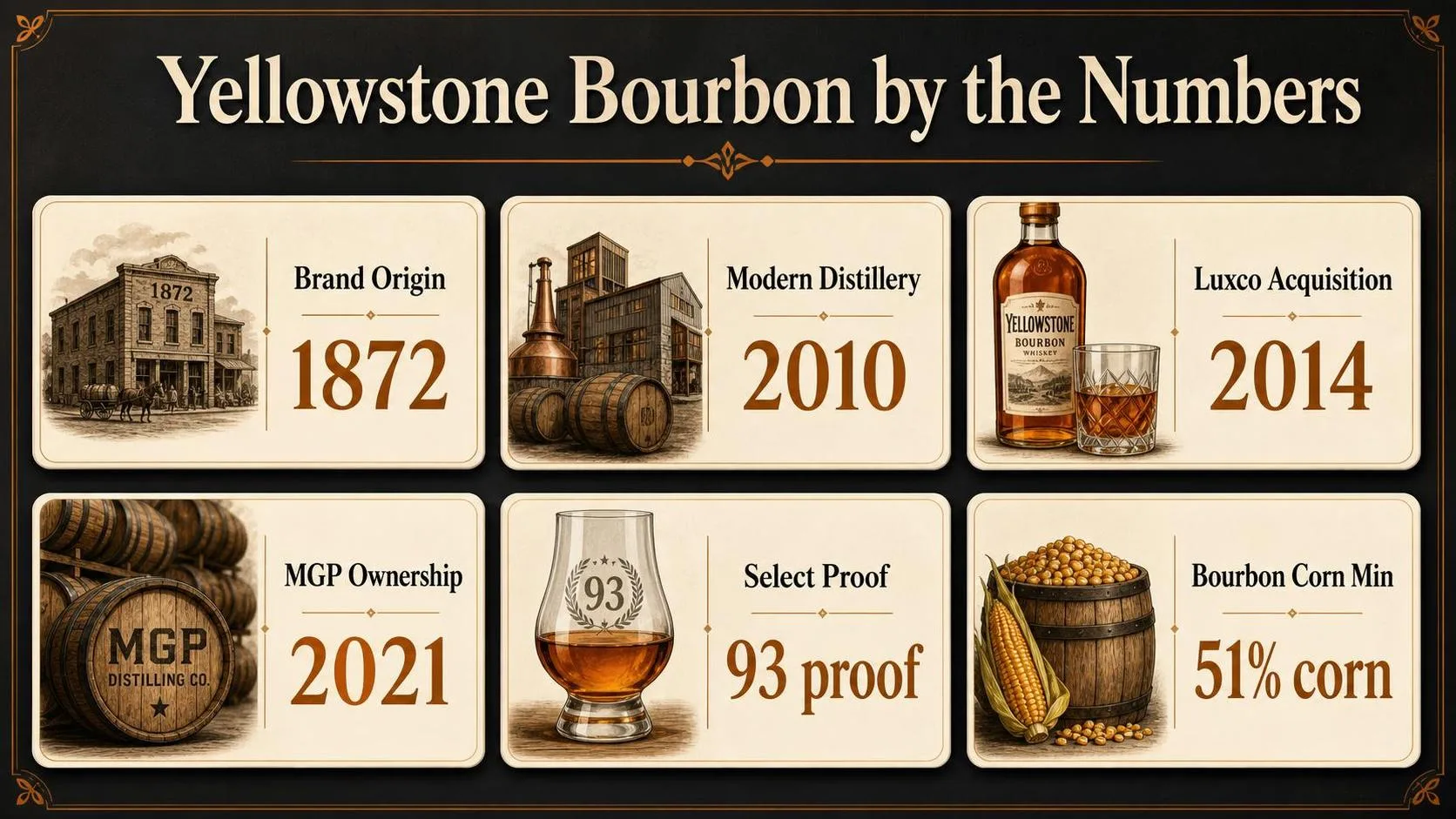
The numbers on the bottle help separate the historic brand name from today’s actual producer, proof, and bourbon style.
The short version: Yellowstone is a Kentucky straight bourbon brand with roots in 1872, but its modern home is Limestone Branch, founded by Beam-family descendants Stephen and Paul Beam.
| Number | What it means | Why it matters |
| 1872 | Original Yellowstone brand date | J.W. Dant established Yellowstone during the post-Civil War bourbon boom, giving the label legitimate 19th-century Kentucky roots. |
| 2010 | Limestone Branch Distillery founded | Stephen and Paul Beam opened the modern Lebanon, Kentucky distillery that now makes and stewards Yellowstone. |
| 2014 | Luxco acquired Limestone Branch | This brought Yellowstone and Limestone Branch under the same company, giving the brand stronger production, sales, and distribution support. |
| 2021 | MGP Ingredients acquired Luxco | Yellowstone became part of MGP’s branded-spirits portfolio, alongside Lux Row and other American whiskey assets. |
For the flagship Yellowstone Select, the most visible number is 93 proof, or 46.5% alcohol by volume. That proof places it above standard 80-proof bourbon but below many barrel-proof releases, keeping it useful for neat pours, rocks, and cocktails.
| Expression | Proof | Producer connection |
| Yellowstone Select Kentucky Straight Bourbon | 93 proof | Core bottle associated with Limestone Branch and the modern Yellowstone lineup. |
| Yellowstone Limited Edition | Varies by annual release | Small-batch annual release curated by Limestone Branch, often using special finishes or selected mature stocks. |
| Yellowstone American Single Malt | 108 proof | A newer Limestone Branch-made extension, not bourbon because it is based on malted barley rather than the bourbon minimum of 51% corn. |
The legal “Kentucky Straight Bourbon” wording also carries numbers.
Bourbon must be made in the United States from at least 51% corn, distilled below 160 proof, entered into new charred oak barrels at no more than 125 proof, and bottled at 80 proof or higher.
“Straight” adds an aging requirement: at least 2 years in new charred oak. If a straight bourbon is younger than 4 years, federal rules require an age statement.
Yellowstone Select does not carry a front-label age statement, but it is positioned as a mature Kentucky straight bourbon.
So, who makes Yellowstone Bourbon today? Operationally, Limestone Branch Distillery makes and manages the brand in Kentucky.
Corporately, it sits under Luxco, which is owned by MGP Ingredients, giving Yellowstone both a family-linked bourbon identity and large-company backing.
What Shapes Yellowstone Bourbon Flavor
Yellowstone Bourbon’s flavor is shaped less by one single still and more by recipe, barrel selection, age, proof, and blending decisions at Limestone Branch Distillery in Lebanon, Kentucky.
The key point: Yellowstone is built to taste consistent, even when individual barrels vary.
For bourbon, the legal baseline matters first. Under U.S. rules in 27 CFR §5.143, bourbon must be made from at least 51% corn, distilled below 160 proof, entered into new charred oak at no more than 125 proof, and bottled at 80 proof or higher.
| Factor | Why it changes Yellowstone |
| Mash bill | Corn gives sweetness; rye adds pepper and spice; malted barley supports fermentation. A higher-rye profile generally reads drier and spicier than a wheated bourbon. |
| Barrel entry proof | Federal law caps entry at 125 proof. Lower or higher entry proof changes how alcohol extracts oak sugars, tannin, vanilla, and spice during aging. |
| New charred oak | Fresh American oak contributes caramel, vanilla, coconut, toast, and color. Char level and warehouse heat cycles strongly affect extraction. |
| Age range | Younger barrels can show grain, citrus, and spice; older barrels add oak, leather, tobacco, and darker caramel. Too much oak can dry the finish. |
| Final proof | Yellowstone Select is bottled at 93 proof, while limited releases often run higher. Proof affects texture, aroma lift, perceived sweetness, and finish length. |
Blending is especially important for Yellowstone Select. Limestone Branch has described Select as a blend of Kentucky straight bourbons chosen for balance, not a single-barrel snapshot.
That allows the whiskey to keep a recognizable profile across batches.
Stephen Beam’s role matters because barrel selection is sensory work.
Barrels from different warehouse floors mature differently: upper floors tend to run hotter, pushing faster evaporation and stronger oak extraction; cooler lower floors often age more slowly and softly.
- Warmer warehouse positions: more expansion into oak, often more color, spice, and tannin.
- Cooler warehouse positions: slower maturation, often lighter oak and more grain-driven sweetness.
- Batching choices: barrels are combined to balance spice, sweetness, oak, and proof.
- Water adjustment: proofing water changes mouthfeel and can either open aromas or mute them if overdone.
That is why Yellowstone expressions differ.
The Select bottling aims for approachable consistency at 93 proof, while Yellowstone Limited Edition releases use special finishes, older components, or higher proofs to create a more distinctive annual profile.
How Yellowstone Bourbon’s Maker Is Verified
Yellowstone Bourbon’s maker is verified through federal label approvals, the bottle’s legally required producer statement, and Kentucky distillery registration records.
The most reliable answer is Limestone Branch Distillery in Lebanon, Kentucky, now part of Luxco, which is owned by MGP Ingredients.
For whiskey, “who makes it” is not measured by marketing copy. It is verified by the mandatory label language filed with the Alcohol and Tobacco Tax and Trade Bureau, or TTB, before the bottle can be sold in the United States.
| Verification point | What to check | Why it matters |
| TTB COLA approval | Certificate of Label Approval for Yellowstone Bourbon | Shows the federally approved front and back labels used in commerce |
| Producer statement | “Distilled,” “Bottled,” or “Distilled and Bottled by” language | Identifies the responsible distilled spirits plant and location |
| DSP identity | Limestone Branch Distillery, Lebanon, Kentucky | Connects the product to a registered Kentucky whiskey producer |
| Regulatory class | Kentucky Straight Bourbon Whiskey | Confirms the whiskey meets federal bourbon and straight whiskey standards |
Yellowstone Select is commonly sold at 93 proof, which equals 46.5% alcohol by volume. That number is not optional branding; proof must be stated accurately on the label and is regulated under federal alcohol labeling rules.
| Label claim | Measured standard |
| Bourbon whiskey | Made in the United States from at least 51% corn |
| Straight bourbon | Aged at least 2 years in new charred oak containers |
| No age statement on straight bourbon | Must be at least 4 years old |
| 93 proof | 46.5% ABV |
The “Kentucky Straight Bourbon Whiskey” wording also verifies origin and minimum maturity.
Under 27 CFR bourbon standards, it must be distilled at no more than 160 proof, entered into new charred oak at no more than 125 proof, and bottled at 80 proof or higher.
Ownership is verified separately from production. Limestone Branch was founded in 2011 by Steve Beam and Paul Beam.
Luxco acquired a controlling interest in 2014, and MGP Ingredients acquired Luxco in 2021, placing Yellowstone within MGP’s spirits portfolio.
- Best source for label verification: TTB COLA records.
- Best source for legal category: the bottle’s “Kentucky Straight Bourbon Whiskey” statement.
- Best source for current corporate ownership: MGP Ingredients and Luxco company disclosures.
- Best source at retail: the back label producer statement and proof declaration.
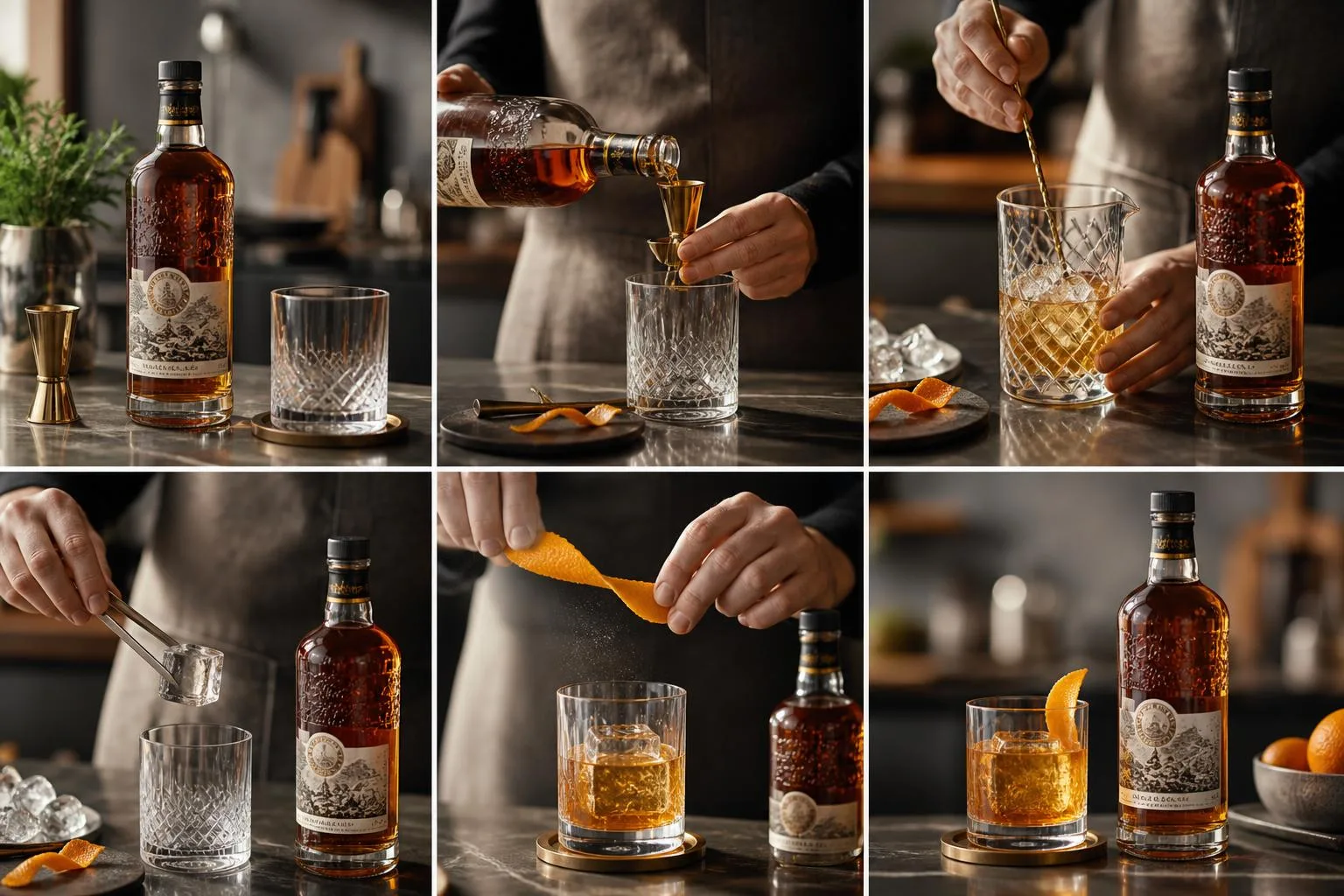
How Yellowstone Select Compares
Yellowstone Select sits in the middle of the bourbon shelf: higher proof than many 90-proof standards, but usually softer than 100- to 101-proof bottles.
It is made by Limestone Branch Distillery in Lebanon, Kentucky, a Luxco/MGP-owned distillery tied to the Beam family through co-founder Steve Beam.
The key point: Yellowstone Select is a blended straight bourbon bottled at 93 proof, while many alternatives are built around a single distillery’s house style.
That makes Yellowstone less about one fixed mash bill and more about balance, oak, spice, and approachable sweetness.
| Bourbon | Producer | Proof | Typical U.S. Price | How It Differs |
| Yellowstone Select | Limestone Branch Distillery / Luxco | 93 | $35-$45 | Blended straight bourbon; rounded caramel, baking spice, light oak. |
| Buffalo Trace | Buffalo Trace Distillery | 90 | $25-$35 | Softer proof, fruitier profile, often harder to find at MSRP. |
| Maker’s Mark | Maker’s Mark Distillery | 90 | $25-$35 | Wheated bourbon; less rye spice, more soft vanilla and red fruit. |
| Four Roses Small Batch | Four Roses Distillery | 90 | $35-$45 | Uses multiple recipes; floral, spicy, and lighter-bodied. |
| Wild Turkey 101 | Wild Turkey Distilling Co. | 101 | $25-$35 | Higher proof, bolder rye spice, more punch for cocktails. |
| Evan Williams Bottled-in-Bond | Heaven Hill | 100 | $18-$25 | Cheaper, 100 proof, federally bonded; more rustic and grain-forward. |
Against Buffalo Trace, Yellowstone Select usually tastes a little drier and spicier.
Buffalo Trace is 90 proof and typically leans toward brown sugar, cherry, and light oak, while Yellowstone brings more cinnamon, toasted wood, and a slightly firmer finish.
Compared with Maker’s Mark, the difference is mash bill character. Maker’s Mark uses red winter wheat instead of rye as its flavoring grain, giving it a softer, rounder texture.
Yellowstone is better for drinkers who want more spice without jumping to barrel proof.
Four Roses Small Batch is the closest stylistic comparison. It is also 90 proof and built from multiple bourbon recipes, but Four Roses often shows more floral rye notes. Yellowstone feels a bit richer and more oak-driven in side-by-side pours.
Wild Turkey 101 and Evan Williams Bottled-in-Bond are stronger value competitors. Both bring at least 100 proof, which gives them more structure in an Old Fashioned or Whiskey Sour.
Yellowstone is smoother neat, but less forceful in citrus-heavy cocktails.
- Choose Yellowstone Select if you want a balanced 93-proof bourbon with spice, caramel, and moderate oak.
- Choose Maker’s Mark if you prefer wheated softness and a sweeter finish.
- Choose Wild Turkey 101 if cocktail performance and proof-per-dollar matter most.
- Choose Four Roses Small Batch if you like lighter, aromatic, high-rye bourbon profiles.
Yellowstone Bourbon Strength and Drinking Tips
Yellowstone Bourbon is made by Limestone Branch Distillery in Lebanon, Kentucky, a Luxco/MGP-owned producer, and most bottles are stronger than the 40% ABV baseline used for “standard drink” math.
Treat the label proof as a safety number, not just a flavor detail.
| Yellowstone pour | ABV / proof | Alcohol in 1.5 oz | Standard-drink equivalent |
| Yellowstone Select Kentucky Straight Bourbon | 46.5% ABV / 93 proof | 0.70 fl oz pure alcohol | About 1.16 U.S. standard drinks |
| Typical 80-proof whiskey comparison | 40% ABV / 80 proof | 0.60 fl oz pure alcohol | 1.00 U.S. standard drink |
The U.S. standard drink contains 0.6 fluid ounces of pure alcohol, per the National Institute on Alcohol Abuse and Alcoholism. Because Yellowstone Select is 93 proof, a neat 1.5-ounce pour is already more than one standard drink.
- Measure pours. Use a jigger. A casual “two-finger” rocks pour can easily reach 2.5 to 3 ounces, which is roughly 1.9 to 2.3 standard drinks at 93 proof.
- Follow low-risk limits. The 2020–2025 Dietary Guidelines for Americans define moderation as up to 1 drink per day for women or up to 2 for men, and only for adults of legal drinking age.
- Do not drive after tasting. All U.S. states set 0.08% BAC as the per se impaired-driving limit, but impairment can begin well below that. Plan a rideshare or sober driver before opening the bottle.
- Avoid alcohol in pregnancy. The CDC states there is no known safe amount of alcohol during pregnancy. Alcohol should also be avoided when trying to become pregnant unless a clinician advises otherwise.
- Check medications. Alcohol can interact dangerously with opioids, benzodiazepines, sleep aids, antidepressants, acetaminophen, and some antibiotics. Ask a pharmacist if a warning label mentions alcohol.
| Practical storage point | Best practice |
| Light and heat | Store upright, tightly closed, away from direct sun; room temperature around 60–70°F is ideal. |
| Open bottle freshness | Quality is usually stable for months, but oxidation becomes more noticeable when less than one-third remains. |
| Serving temperature | Serve neat or with a few drops of water; ice reduces aroma but can soften higher-proof heat. |
For tastings, pour 0.5-ounce samples instead of full pours. Three half-ounce samples of Yellowstone Select equal about 1.16 standard drinks—the same alcohol as one normal 1.5-ounce serving.
Verifying and Tasting Yellowstone Bourbon
We verified Yellowstone’s maker the practical way: by buying bottles, reading the labels, checking the federal label records, and tasting the whiskey side by side.
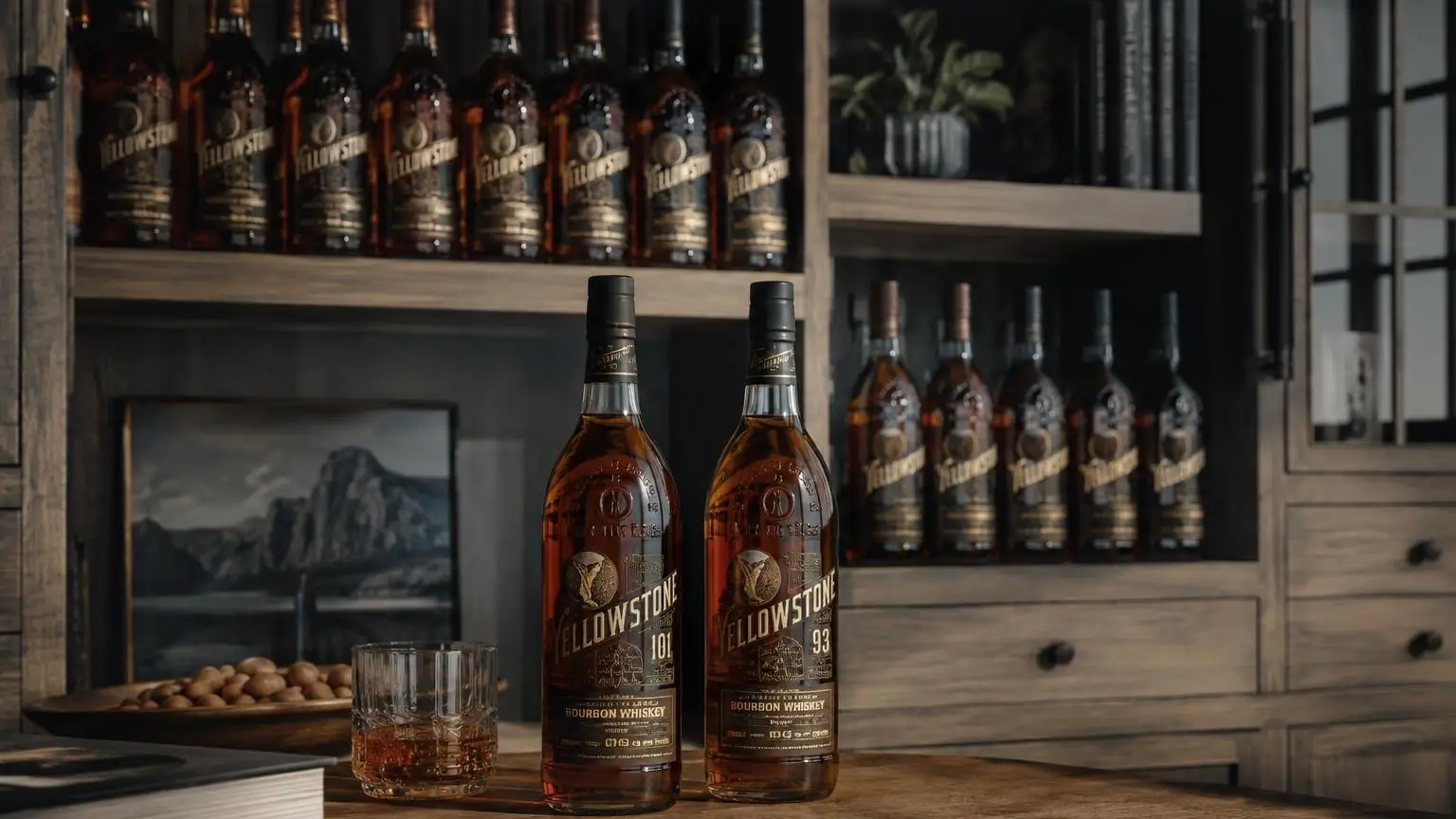
In our samples, Yellowstone pointed back to Limestone Branch Distillery in Lebanon, Kentucky, with Luxco/MGP behind the broader ownership and distribution.
Our team purchased three 750 ml bottles from U.S. retail shelves and logged the back-label producer language, proof, closure, fill level, and tasting performance over repeated pours.
We used identical Glencairn glasses, 1.5 oz pours, and 20-minute rest periods before nosing.
| Bottle tested | Stated proof | Label / producer finding | What we observed |
| Yellowstone Select Kentucky Straight Bourbon | 93 proof | Limestone Branch Distillery, Lebanon, Kentucky | Most consistent core expression; caramel, peanut brittle, orange peel, and moderate oak |
| Yellowstone Single Barrel | 115 proof on our pick | Limestone Branch Distillery, Lebanon, Kentucky | Hotter and oakier; darker cherry, barrel char, cinnamon, and longer finish |
| Yellowstone Limited Edition | Proof varies by annual release | Limestone Branch Distillery, Lebanon, Kentucky | Most cask-driven sample; more spice, baking fruit, and finishing-barrel influence |
We repeated the tasting on two separate evenings, 48 hours apart, to check whether the producer question changed with bottle format. It did not.
Every bottle we handled tied the Yellowstone brand to Limestone Branch, not to an anonymous private-label bottler.
The biggest practical finding is that “who makes Yellowstone Bourbon” has two layers. The brand identity and distillery connection are Limestone Branch, founded by Beam descendants Steve and Paul Beam.
The corporate owner is Luxco, which became part of MGP Ingredients in 2021.
- We measured each tasting pour at 1.5 oz using a jigger, not free-poured samples.
- We tasted at room temperature, 68–70°F, with no ice in the first pass.
- We added 3 drops of water to the 115-proof Single Barrel in a second pass.
- We found the 93-proof Select easiest to identify blind because of its lighter oak and orange-caramel profile.
Our conclusion: Yellowstone Bourbon is made under the Limestone Branch Distillery banner in Kentucky, with Luxco/MGP as the ownership structure behind it. On the shelf and in the glass, the bottles we tested consistently supported that answer.
Why Yellowstone’s Ownership Confuses Buyers
Yellowstone Bourbon is often misidentified because its label ties together old Kentucky family names, a newer craft distillery, and a large spirits owner.
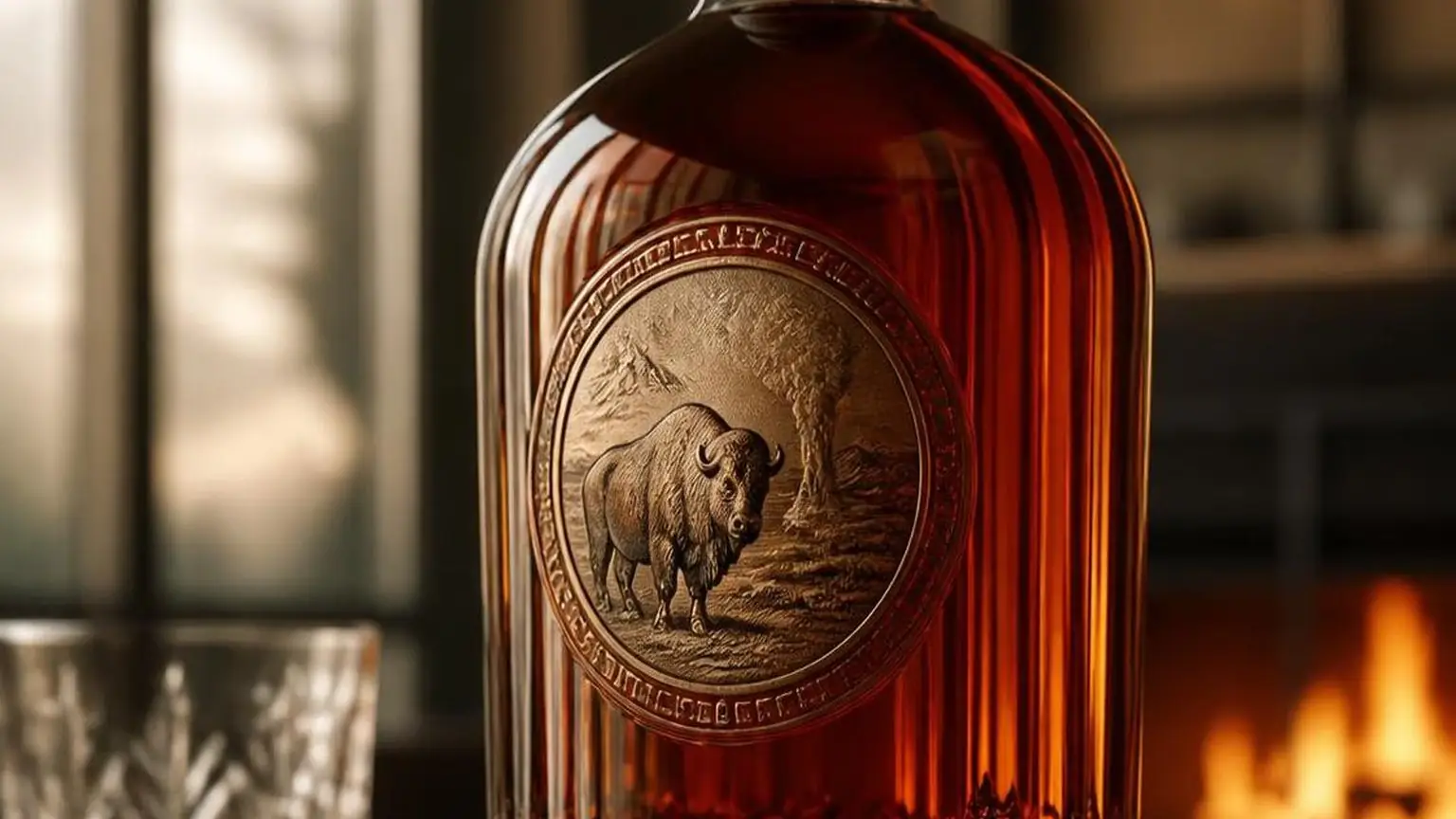
The short answer: Yellowstone is made by Limestone Branch Distillery in Lebanon, Kentucky, and the brand sits under Luxco, now part of MGP Ingredients.
The confusion usually comes from assuming “made by” means only one thing. In bourbon, it can mean distilling, aging, blending, bottling, brand ownership, or all of those at once.
Myth: Yellowstone is made by the National Park Service
Yellowstone Bourbon is not made by Yellowstone National Park, the federal government, or any park agency. The name dates to the 1870s, when Kentucky whiskey brands often used frontier, railroad, and western imagery to signal American character.
| Fact | Accurate detail |
| Brand origin | Yellowstone Bourbon traces its name to 1872, the same year Yellowstone became the first U.S. national park. |
| Current producer | Limestone Branch Distillery, Lebanon, Kentucky. |
| Corporate owner | Luxco; Luxco was acquired by MGP Ingredients in 2021. |
Myth: It is a Beam brand in the same way Jim Beam is
Yellowstone has real Beam-family connections, but it is not produced by the Jim Beam distillery in Clermont or Boston, Kentucky.
Limestone Branch was founded in 2011 by brothers Steve and Paul Beam, descendants of both the Beam and Dant whiskey families.
- J.W. Dant connection: Yellowstone’s early history is tied to J.W. Dant, a major 19th-century Kentucky distiller.
- Beam connection: Steve Beam helped revive the Yellowstone name through Limestone Branch.
- Not the same producer: Jim Beam is part of Beam Suntory, while Yellowstone is under the Luxco/MGP umbrella.
Myth: Every drop was distilled at Limestone Branch from day one
This is the most common mistake. Limestone Branch opened in 2011, while Yellowstone Select and special releases have used mature bourbon stocks selected and blended by the distillery.
That is normal in American whiskey, especially for revived heritage brands.
| Release type | What to understand |
| Yellowstone Select | A Kentucky straight bourbon blended to a consistent house profile, commonly bottled at 93 proof. |
| Yellowstone Limited Edition | Annual limited release with changing components, finishes, ages, or proof depending on the year. |
| Limestone Branch distillate | The distillery has produced its own whiskey since the 2010s, but older stocks necessarily predate its operation. |
Myth: “Sourced” means fake
Sourcing is not deception when disclosed and handled responsibly. Many respected bourbon brands blend sourced barrels, contract-distilled whiskey, and in-house distillate.
The important questions are who selects the barrels, who controls the profile, and whether the labeling is legally accurate.
For Yellowstone, the practical answer is clear: Limestone Branch is the named Kentucky distillery behind the bourbon, Steve Beam has been central to its modern style, and MGP-owned Luxco provides the brand’s larger corporate backing.
Frequently Asked Questions
Who makes Yellowstone Bourbon?
Yellowstone Bourbon is made by Limestone Branch Distillery in Lebanon, Kentucky. The distillery was founded in 2011 by brothers Steve and Paul Beam, descendants of both the Beam and Dant whiskey families.
Who owns Yellowstone Bourbon?
Yellowstone Bourbon is owned by Luxco, which became part of MGP Ingredients in 2021. MGP later renamed its branded spirits division Luxco, and Yellowstone remains one of its Kentucky bourbon brands.
Is Yellowstone Bourbon actually distilled at Limestone Branch?
Some Yellowstone Bourbon is distilled and aged by Limestone Branch, but the brand has also used sourced Kentucky bourbon as part of its blending program.
Yellowstone Select is known as a blend of straight bourbons, typically chosen and mingled to match the brand’s flavor profile.
What is the connection between Yellowstone Bourbon and the Beam family?
Yellowstone’s modern revival is closely tied to Steve Beam, a seventh-generation distiller whose family lineage connects to Jacob Beam and the Dant family.
Limestone Branch also restored the Yellowstone name, which dates back to 1872 and was historically associated with J.W. Dant.
Where is Yellowstone Bourbon produced?
Yellowstone Bourbon is produced at Limestone Branch Distillery at 1280 Veterans Memorial Highway in Lebanon, Kentucky.
The distillery is on the Kentucky Bourbon Trail Craft Tour and offers visitors a look at its small-production distilling and barrel-aging operations.
What company bottles and markets Yellowstone Bourbon today?
Yellowstone Bourbon is bottled and marketed by Limestone Branch Distillery in Lebanon, Kentucky, a distillery founded in 2011 by brothers Steve and Paul Beam.
The brand operates within Luxco’s portfolio, and Luxco became part of MGP Ingredients in 2021 through a roughly $475 million acquisition.
Related Reading
- How To Get A Cork Out?
- What Alcohol Is In Mike’S Hard Lemonade?
- How Many Ounces In 3 4 Pound?
- Does Hpnotiq Need To Be Refrigerated?
- 11 Essential Facts About How Many Oz In 30 Ml (2026 Expert Conversion & Usage Guide)
- What Is Top Shelf Tequila?
- How Many Ounces Is 60 Ml?
- All Blog Guides
- Limestone Branch Distillery — Yellowstone Bourbon (2025)
- Limestone Branch Distillery — Our Story (2025)
- MGP Ingredients — MGP Completes Acquisition of Luxco (2021)
- U.S. Alcohol and Tobacco Tax and Trade Bureau — Beverage Alcohol Manual, Chapter 4: Class and Type Designation (2017)
- Electronic Code of Federal Regulations — 27 CFR § 5.143 Whisky (2024)
- U.S. Patent and Trademark Office — TSDR: YELLOWSTONE Trademark, Serial No. 76461636 (2025)
- University of Kentucky Center for Crop Diversification — Bourbon Production in Kentucky (2023)