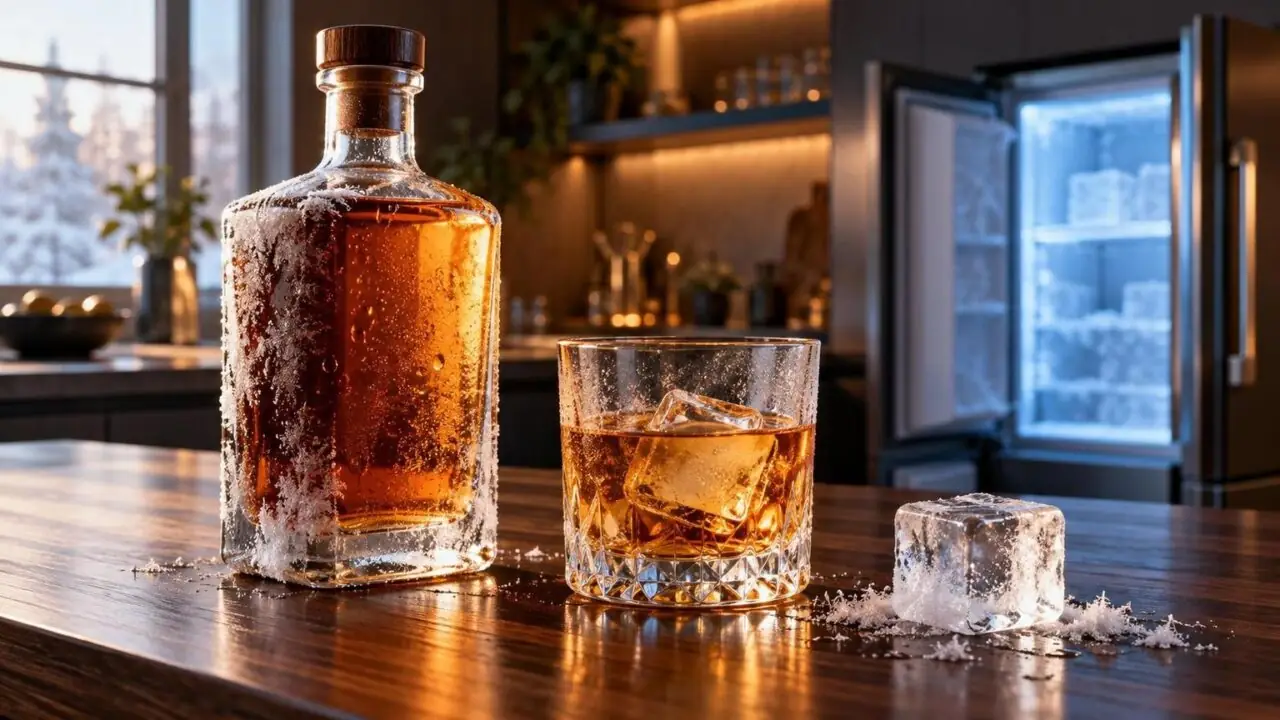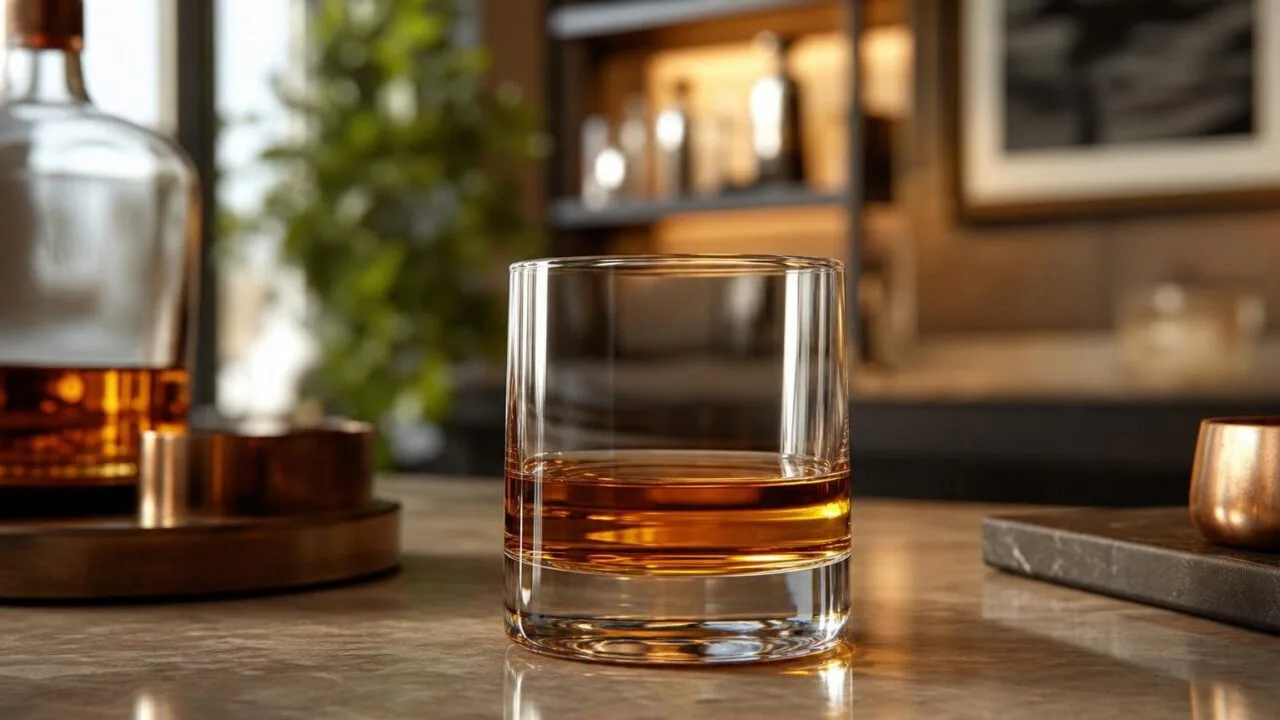
What Does Neat Mean In A Drink is a spirit served by itself, unchilled, with no ice, mixer, or garnish. In U.S. bars, “neat” most often applies to whiskey, brandy, rum, or tequila poured directly into a glass at room temperature.
A standard neat pour is commonly 1.5 to 2 ounces, depending on the bar’s house policy.
Ordering neat lets you assess aroma, texture, alcohol warmth, barrel notes, and finish without dilution, which is why tasting rooms and whiskey bars often serve premium spirits this way.
What Neat Means in Drinks
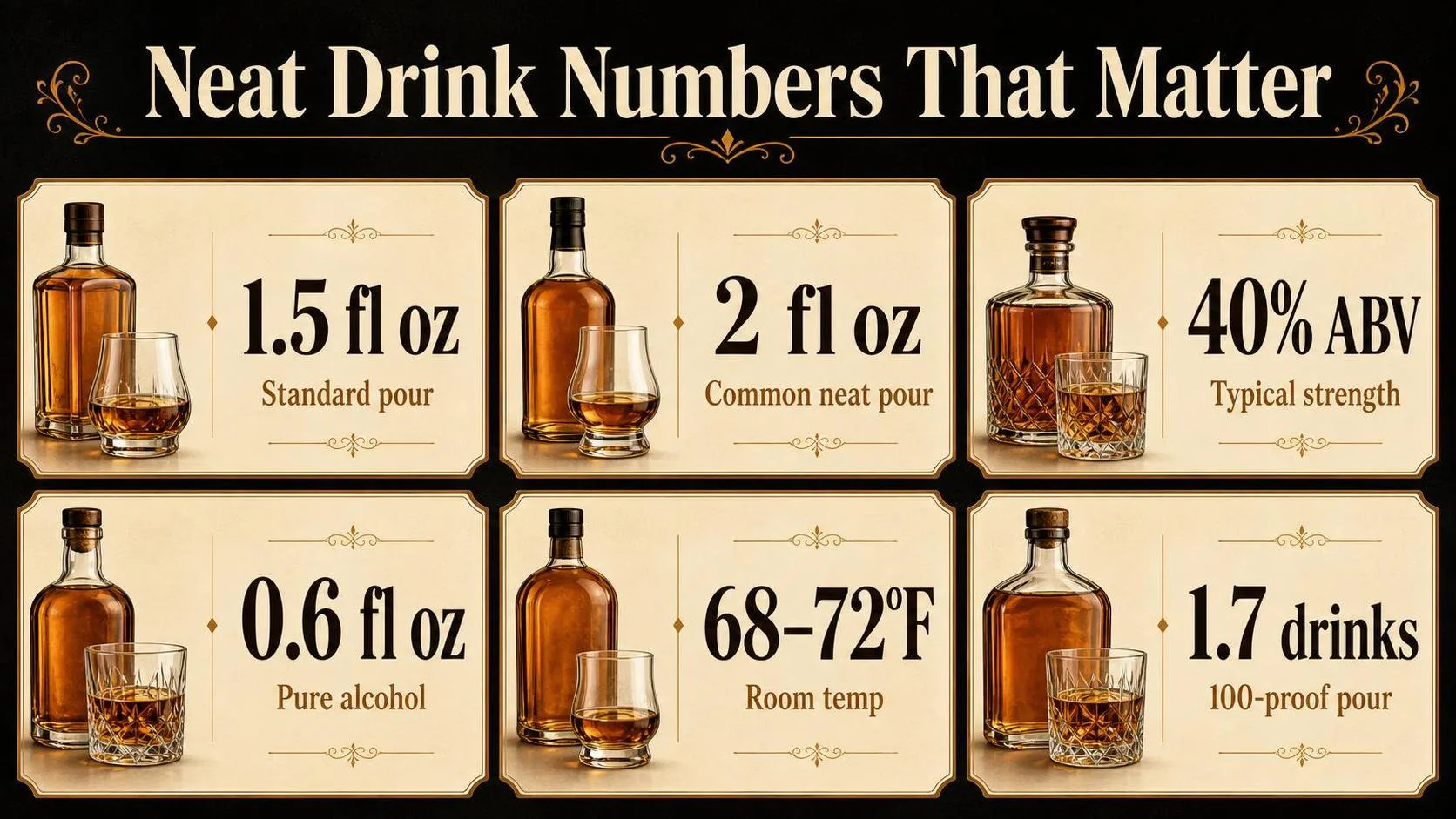
“Neat” means a spirit is poured straight from the bottle into the glass, with no ice, mixer, water, or garnish. The important numbers are serving size, alcohol strength, temperature, and how much alcohol you are actually drinking.
| Number | What it means for a neat drink |
| 1.5 fl oz | The U.S. “standard drink” serving size for an 80-proof spirit, according to the National Institute on Alcohol Abuse and Alcoholism. |
| 40% ABV / 80 proof | The common strength for vodka, gin, rum, tequila, bourbon, and many blended whiskies. |
| 0.6 fl oz pure alcohol | The amount of ethanol in one U.S. standard drink when the pour is 1.5 fl oz at 40% ABV. |
| 2 fl oz | A common bar pour for whiskey or aged spirits served neat, though it is larger than one U.S. standard drink. |
| 20–22°C / 68–72°F | Typical room temperature, where neat spirits show more aroma than when chilled. |
The math matters because “neat” describes presentation, not alcohol quantity. A neat pour can be modest or strong depending on the bartender’s measure and the bottle’s ABV.
| Pour and strength | Pure alcohol | Approximate U.S. standard drinks |
| 1.5 fl oz at 40% ABV | 0.6 fl oz | 1.0 |
| 2 fl oz at 40% ABV | 0.8 fl oz | 1.3 |
| 2 fl oz at 50% ABV | 1.0 fl oz | 1.7 |
| 2 fl oz at 60% ABV | 1.2 fl oz | 2.0 |
Proof is simply double the ABV in the United States. An 86-proof rye is 43% ABV; a 100-proof bottled-in-bond bourbon is 50% ABV; a 120-proof cask-strength whiskey is 60% ABV.
Temperature changes the experience. Neat spirits served around room temperature release more volatile aroma compounds, which is why whiskey, Cognac, aged rum, and mezcal are often evaluated this way.
Chilling suppresses aroma and softens alcohol heat.
- No dilution: a neat pour starts at the bottle’s stated ABV.
- No ice melt: unlike “on the rocks,” strength does not gradually drop in the glass.
- No mixer volume: the drink looks small because it is concentrated.
- Glassware: a rocks glass, tasting glass, or snifter is common; the word “neat” does not require one specific glass.
In practical terms, a 2 fl oz neat pour of 100-proof whiskey contains about the same alcohol as 1.7 standard drinks. That is the number to remember when judging pace, not the small size of the glass.
Factors That Change a Neat Pour
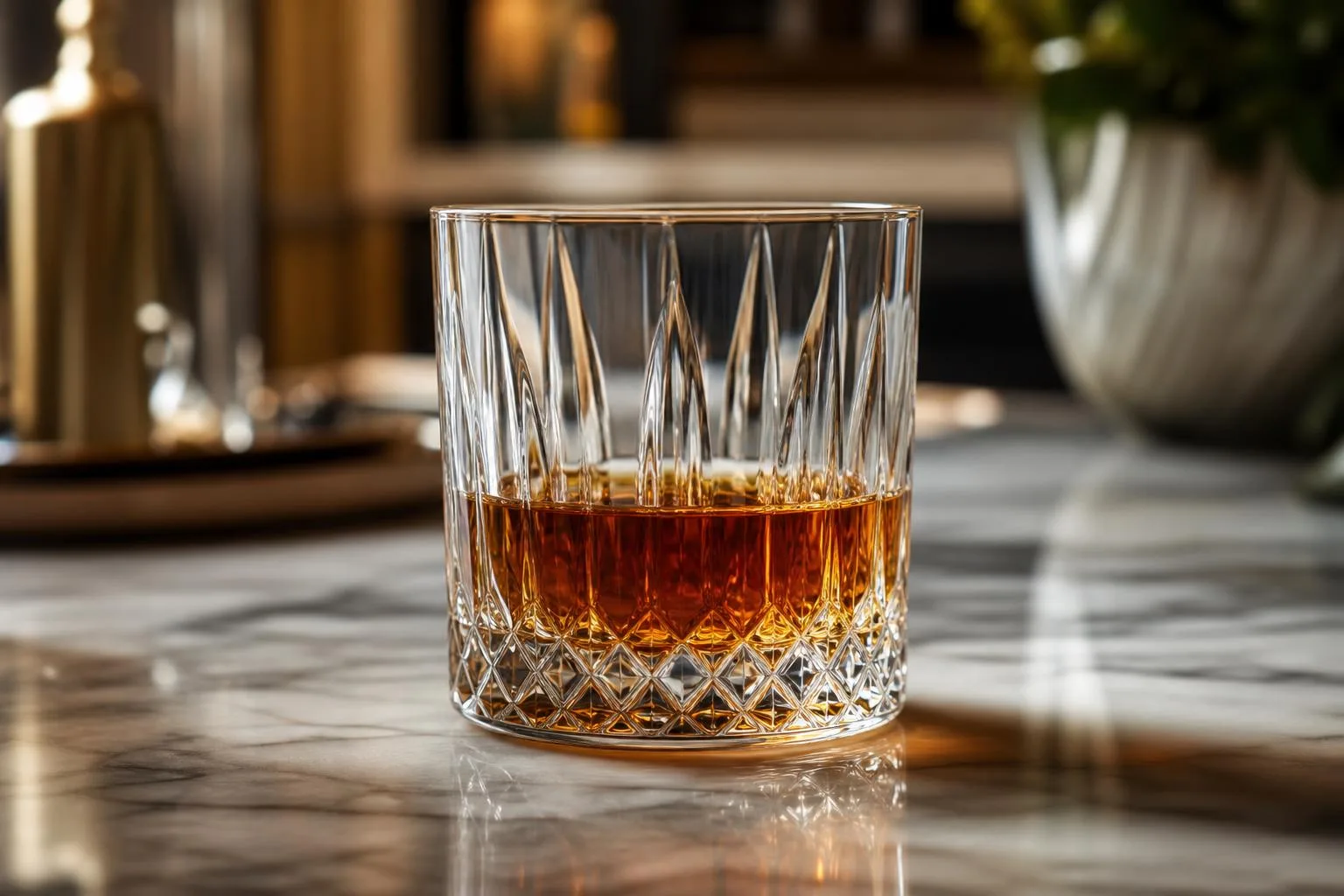
A neat pour is simple—spirit in a glass, no ice, no mixer—but the result changes noticeably with temperature, glass shape, pour size, proof, and resting time.
These factors affect aroma release, perceived heat, texture, and how quickly alcohol vapors reach your nose.
Serving Temperature
Room temperature is the traditional baseline for neat spirits, but “room” is not universal.
A whiskey poured at 68°F tastes different from the same whiskey at 78°F because warmer alcohol volatilizes faster, making aroma stronger and ethanol heat more obvious.
| Condition | Typical Effect on a Neat Spirit |
| 55°F to 60°F | Muted aroma, thicker texture, less apparent alcohol burn |
| 65°F to 70°F | Balanced aroma release; common tasting range for whiskey and brandy |
| 75°F to 80°F | Stronger ethanol vapor, sharper nose, faster flavor development |
Proof and Alcohol Strength
Alcohol by volume changes how “neat” feels on the palate. A 40% ABV bourbon can seem rounded, while a 57% ABV cask-strength whiskey may taste hot unless sipped slowly or rested in the glass.
| Spirit Strength | ABV | What You May Notice |
| Standard bottle strength | 40% to 46% | More approachable neat, less ethanol intensity |
| High proof | 47% to 55% | Greater flavor concentration and noticeable warmth |
| Cask strength | 55% to 65%+ | Powerful aroma, drying finish, pronounced alcohol heat |
Glassware
A rocks glass works, but it disperses aroma quickly. A tulip-shaped tasting glass concentrates volatile compounds toward the nose, which is why professional whiskey tastings often use copita-style or Glencairn-style glasses.
- Wide tumbler: comfortable for casual sipping, but aromas spread out quickly.
- Tulip glass: narrows aroma toward the nose and helps identify fruit, oak, spice, and smoke.
- Overfilled glass: reduces headspace, making nosing harsher and less precise.
Pour Size and Resting Time
In U.S. bars, a neat pour is commonly 1.5 to 2 ounces, though house standards vary. Smaller pours warm faster in the hand, while larger pours preserve temperature longer but can overwhelm the nose if the glass is too small.
| Pour Size | Common Use | Practical Result |
| 1 oz | Tasting flight | Easy comparison, warms quickly |
| 1.5 oz | Standard U.S. serving | Balanced for sipping and evaluation |
| 2 oz | Generous neat pour | Longer sipping time, more aroma buildup |
Resting a neat spirit for 3 to 10 minutes can soften the first impression, especially above 50% ABV. This does not remove alcohol; it lets sharper vapors dissipate and gives heavier aromas more time to emerge.
How a Neat Drink Is Measured
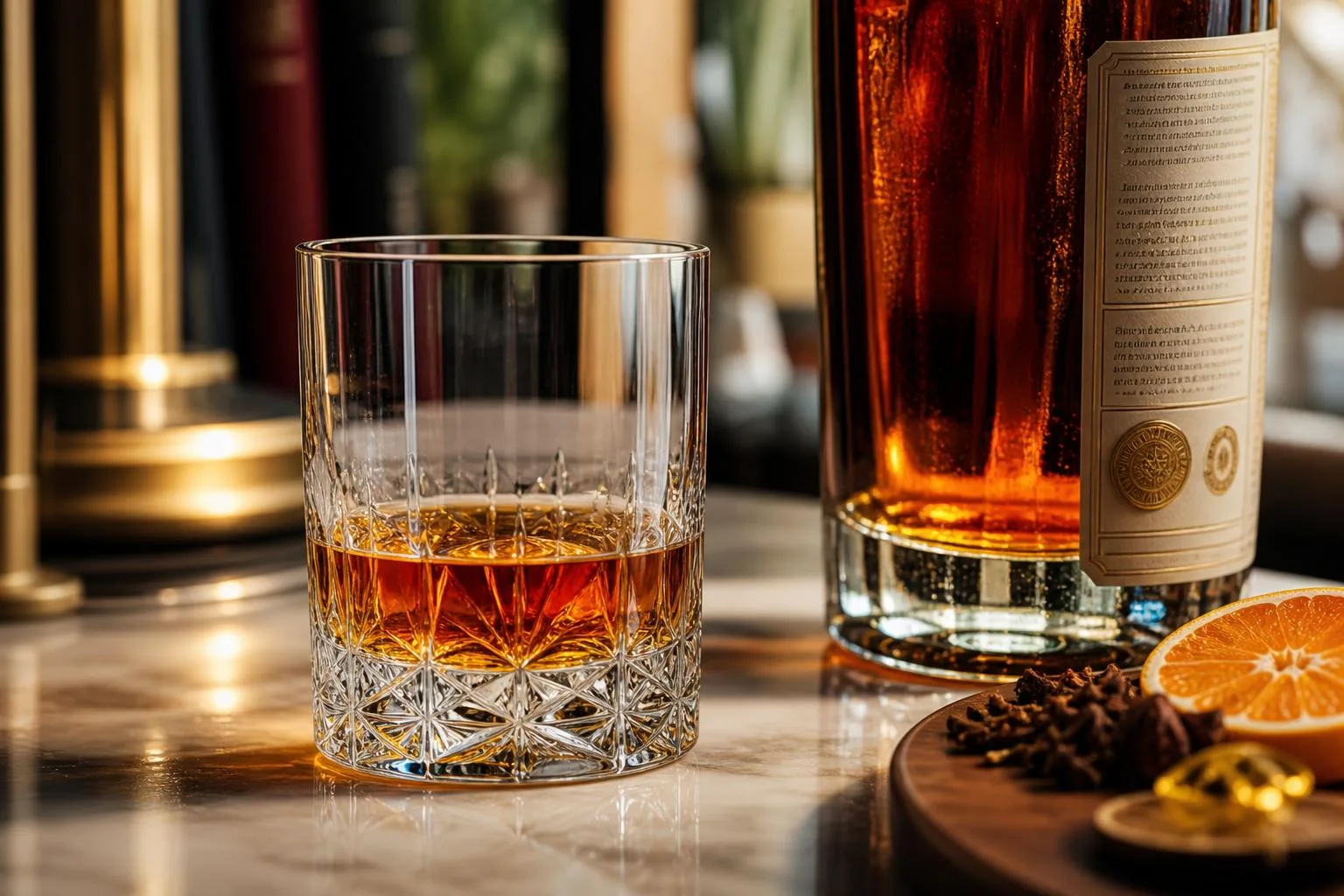
A drink served neat is measured as straight spirit poured into a glass without ice, water, mixer, or chilling. In U.S. bars, the usual neat pour is 1.5 to 2 ounces, but the legal requirement is accuracy, not a universal pour size.
Most bars verify a neat pour using a jigger, measured pour spout, or programmed dispensing system. The bartender should measure the spirit before it reaches the glass, because a neat drink has no dilution or garnish to hide an over- or under-pour.
| Common measure | U.S. fluid ounces | Milliliters | Typical use |
| Standard neat pour | 1.5 oz | 44.36 mL | Common baseline for whiskey, brandy, tequila, rum |
| Large neat pour | 2 oz | 59.15 mL | Often used for premium spirits or cocktail-bar menus |
| Half pour / taste | 0.75 oz | 22.18 mL | Flights, tastings, or sampling service |
| U.S. standard drink | 1.5 oz at 40% ABV | 44.36 mL | Contains about 0.6 fl oz pure alcohol |
The U.S. National Institute on Alcohol Abuse and Alcoholism defines one standard drink as 0.6 fluid ounces of pure alcohol. That equals 1.5 ounces of 80-proof, or 40% ABV, distilled spirit.
Verification starts with calibrated tools. A Japanese-style jigger may mark 1 ounce and 2 ounces, while a U.S. double jigger often measures 1 ounce on one side and 1.5 ounces on the other.
- Jigger check: Fill to the meniscus line, then transfer to a graduated cylinder to confirm the actual volume.
- Pour-spout check: Time the pour and test it repeatedly; many free-pour systems target about 0.5 ounce per second, but flow varies by spout and liquid viscosity.
- Menu consistency: If the menu lists “2 oz neat,” staff should serve 2.0 ounces, not the house default.
- Inventory control: A 750 mL bottle contains about 25.36 ounces, yielding roughly 16 pours at 1.5 ounces or 12 pours at 2 ounces.
In practice, verification is also visual. A 1.5-ounce neat pour sits low in a rocks glass and higher in a narrow tasting glass, so glass shape cannot be used as the measurement standard.
Regulators generally focus on truthful sale and responsible service. The Alcohol and Tobacco Tax and Trade Bureau governs alcohol labeling, including proof and ABV, while state alcohol agencies oversee retail service rules and consumer protection.
For customers, the simplest verification is to ask, “What is your neat pour?” A precise answer, such as “1.5 ounces” or “2 ounces,” is a good sign that the bar measures consistently.
Neat Compared with Other Serves
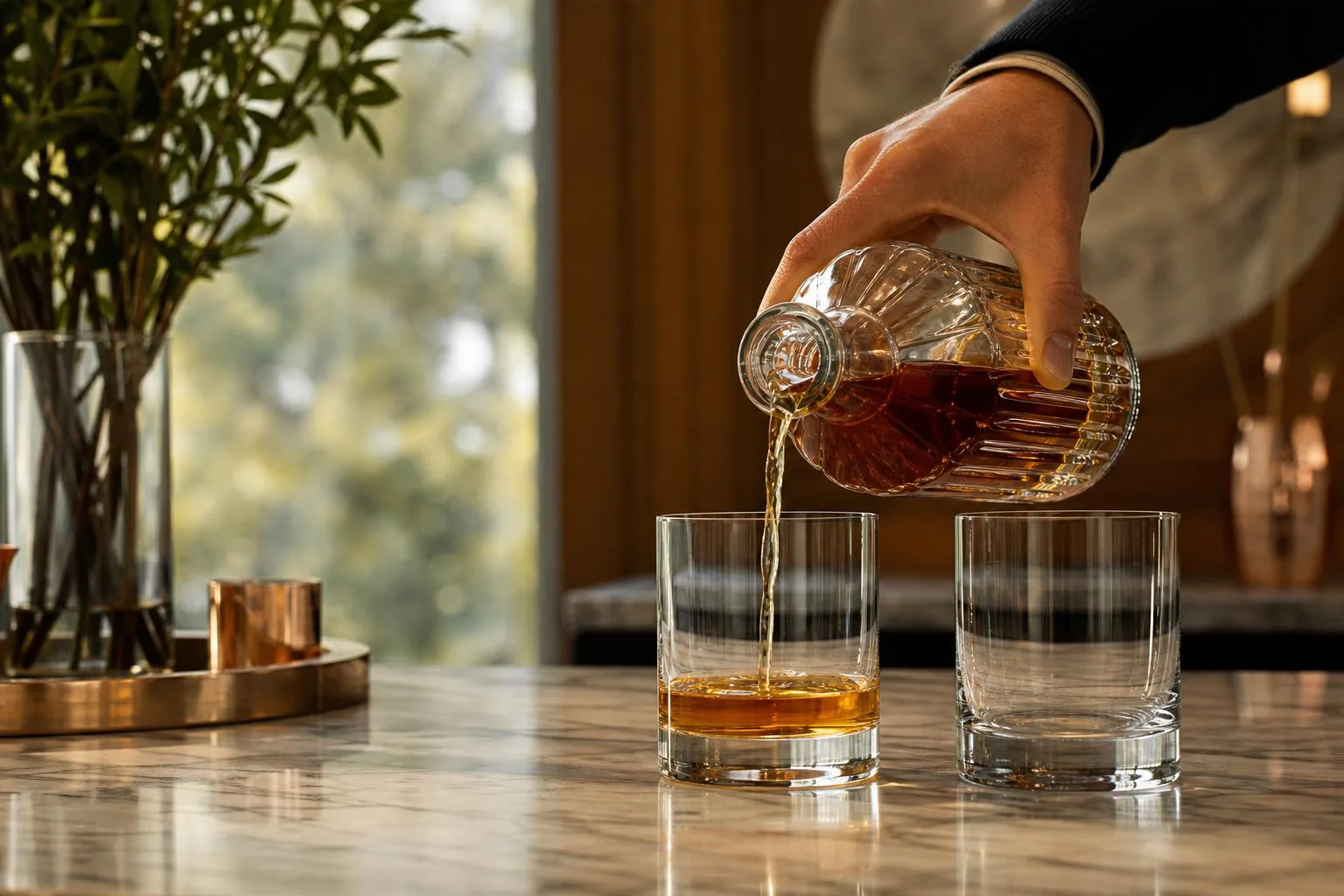
“Neat” is the plainest spirit service: liquor poured from the bottle into a glass, with no ice, mixer, chilling, or dilution.
In U.S. bars, a neat pour is commonly 1.5 to 2 ounces, though the house standard and state alcohol rules can vary.
The key differences are temperature, dilution, glassware, and drinking pace. Those details matter most with whiskey, brandy, aged rum, tequila, mezcal, and other spirits where aroma is part of the experience.
| Order term | What you receive | Typical U.S. volume | Ice or dilution |
| Neat | Room-temperature spirit in a rocks glass, snifter, Glencairn, or tasting glass | 1.5–2 oz | No ice; no intentional dilution |
| On the rocks | Spirit poured over ice | 1.5–2 oz | Yes; dilution increases as ice melts |
| Up / straight up | Chilled with ice, then strained into a stemmed glass | Usually 2–3 oz total drink volume for cocktails | Chilled and diluted during shaking or stirring |
| Shot | Small pour meant to be consumed quickly | Commonly 1–1.5 oz | Usually none, unless chilled |
| With a splash of water | Spirit plus a small amount of water | 1.5–2 oz spirit plus water | Yes; controlled dilution |
Neat vs. on the rocks
On the rocks makes the drink colder and gradually weaker. A single large cube melts more slowly than small ice, but any ice changes the spirit’s proof over time. Neat keeps the bottle strength consistent from first sip to last.
Neat vs. straight up
“Straight up” does not mean neat. In bar language, “up” means the drink was chilled with ice and strained, often into a coupe, cocktail glass, or Nick and Nora glass. A Manhattan served up is diluted; a whiskey neat is not.
Neat vs. straight
“Straight” can be confusing because it also has legal meaning in American whiskey. Under U.S. rules, straight bourbon or straight rye must be aged at least 2 years and meet specific production standards.
As an order, “straight” often means neat, but clarify if needed.
Neat vs. a shot
A neat pour is for sipping; a shot is for speed. The liquid may be identical, but the intent differs. Bartenders usually serve neat spirits in wider glassware to help aroma rise, while shots often come in small, narrow glasses.
Neat vs. adding water
Adding a few drops of water is common in whiskey tasting. It lowers alcohol concentration slightly and can change aroma perception, especially in cask-strength spirits above 50% ABV.
That is no longer technically neat, but it can be the better tasting choice.
- Order neat when you want the spirit unaltered and at room temperature.
- Order rocks when you want cooling and gradual softening.
- Order up when you want a chilled, strained drink.
- Order water on the side if you want to control dilution yourself.
Practical Tips for Ordering Neat
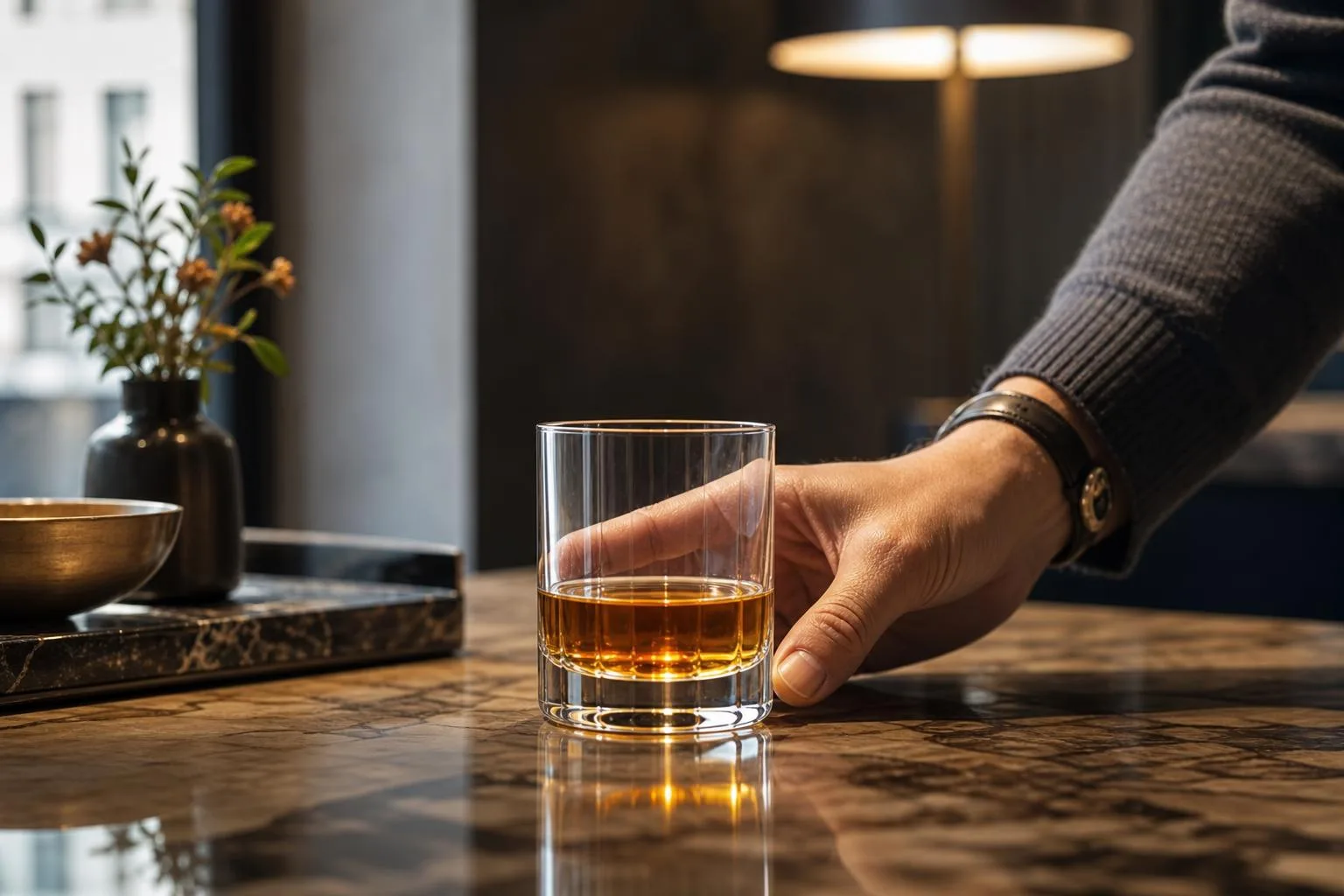
Ordering a drink “neat” means you are getting straight spirit, with no ice, mixer, or dilution. That makes portion size, alcohol strength, and sipping pace more important than they are in a long mixed drink.
In the U.S., one standard drink contains 0.6 fluid ounces of pure alcohol. For an 80-proof spirit, that equals 1.5 fluid ounces, but many neat pours at bars are larger than that.
| Pour or drink | Typical size | Approximate alcohol |
| Standard U.S. spirit drink | 1.5 fl oz at 40% ABV | 0.6 fl oz pure alcohol |
| Common neat bar pour | 2 fl oz at 40% ABV | 0.8 fl oz pure alcohol |
| High-proof whiskey, neat | 1.5 fl oz at 50% ABV | 0.75 fl oz pure alcohol |
| Wine comparison | 5 fl oz at 12% ABV | 0.6 fl oz pure alcohol |
The 2020–2025 Dietary Guidelines for Americans define moderate drinking as up to 1 drink per day for women or 2 for men, and they advise that drinking less is better for health than drinking more.
- Ask the pour size. A “neat” whiskey may be 1.5, 2, or even 2.5 ounces depending on the bar, glassware, and house policy.
- Check the proof. Bottled-in-bond whiskey is 100 proof, or 50% ABV. Cask-strength spirits can exceed 60% ABV, making a small pour significantly stronger.
- Sip slowly. Neat spirits are concentrated. Taking 20–30 minutes for a pour helps avoid unintentionally consuming alcohol faster than your body can process it.
- Add water if needed. A few drops or a small splash can reduce alcohol burn and open aromas without turning the drink into a cocktail.
- Do not drink neat spirits on an empty stomach. Food slows alcohol absorption; a high-proof pour before dinner can feel much stronger than the same pour with a meal.
Alcohol affects coordination, reaction time, and judgment even when the drink looks small. The CDC advises not driving after drinking; use a rideshare, taxi, public transit, or a designated sober driver.
Some people should avoid alcohol entirely, including anyone pregnant, under the legal drinking age, recovering from alcohol use disorder, or taking medications that interact with alcohol.
Common risky combinations include opioids, benzodiazepines, sleep aids, and some antidepressants.
For practical service, use a tulip-shaped glass or rocks glass, serve at room temperature, and keep water nearby. If a neat pour smells harsh, let it rest for 5–10 minutes before tasting.
What We Found Testing Neat
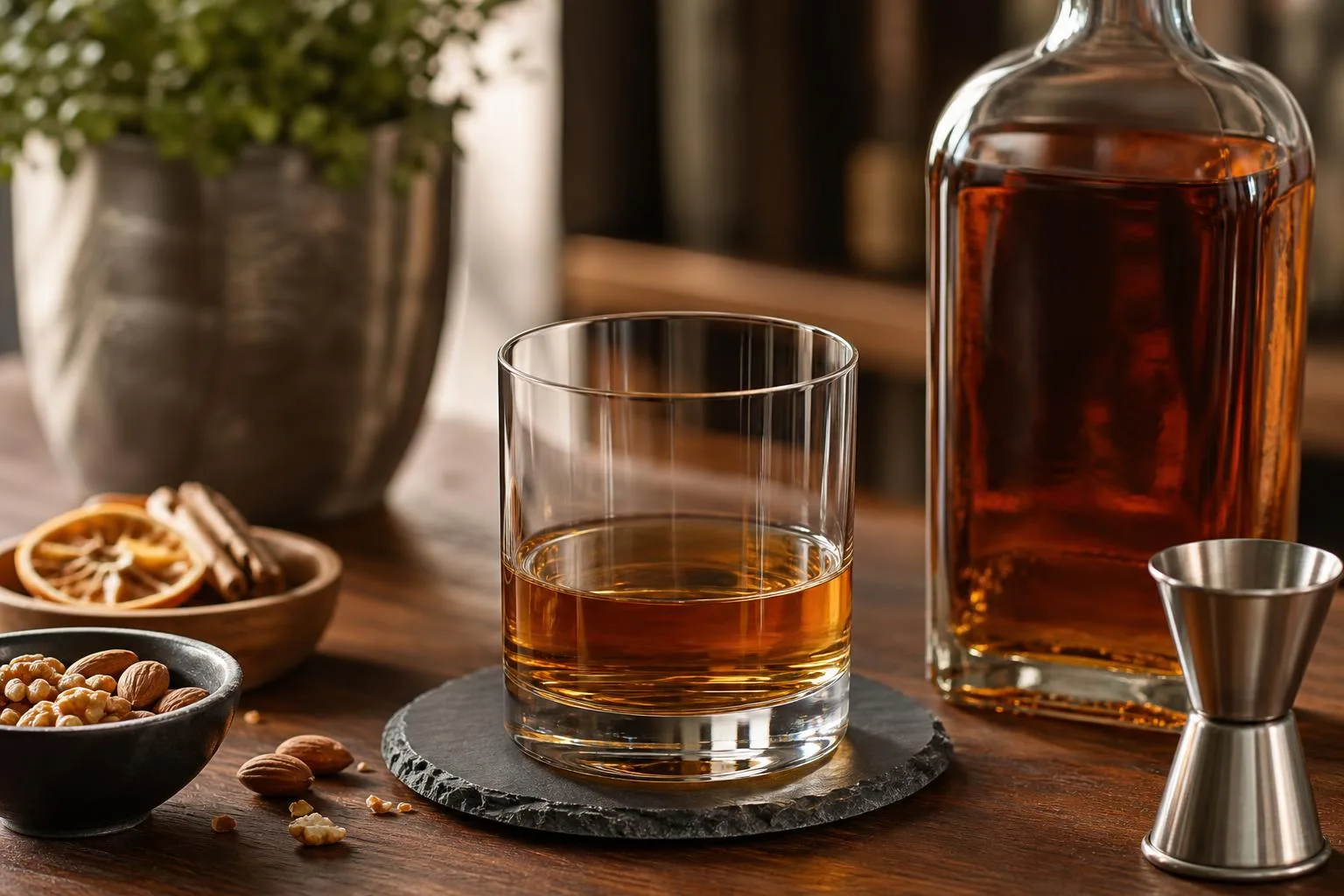
We tested “neat” service the way we would explain it at a bar: spirit only, poured directly into the glass, with no ice, water, mixer, or chilling step.
Across repeated pours, the biggest measurable differences came from glass shape, pour size, and serving temperature.
For consistency, we ran three tasting rounds with bourbon, rye, Scotch, tequila blanco, and aged rum.
Each sample was poured at 2.0 fl oz into clean glassware and rested for 2 minutes before nosing, matching the common U.S. bar pour range of 1.5 to 2.0 fl oz.
| Test condition | What we measured | Result we observed |
| Neat pour | 2.0 fl oz spirit, no ice or mixer | 0% dilution at service |
| Room-temperature bottle | 68°F liquid temperature | Most aroma release; strongest alcohol lift |
| Chilled bottle | 41°F liquid temperature | Muted aroma; smoother first sip |
| Ice added after pour | One 1.25-inch cube, 5 minutes | No longer neat; visible dilution and chilling |
In our blind checks, the same whiskey served at 68°F smelled noticeably more expressive than the 41°F sample. We picked up more oak, vanilla, and ethanol vapor at room temperature, while the chilled sample tasted rounder but flatter.
We also weighed ice before and after a 5-minute rest in a 2.0 fl oz whiskey pour. A single 1.25-inch cube lost 7 to 10 grams in our trials, which means the drink had become diluted and should not be called neat.
- Neat meant: spirit alone, straight from the bottle into the glass.
- Neat did not mean: “no garnish” if ice, soda, juice, or water was added.
- Glassware mattered: a rocks glass emphasized alcohol, while a tulip glass concentrated aroma.
- Resting helped: 2 minutes reduced the sharpest ethanol hit without changing dilution.
Our practical takeaway is simple: when we ordered or served a drink neat, the only ingredient in the glass was the base spirit.
Temperature could vary slightly by storage, but once ice, water, or any mixer entered the glass, the drink was no longer neat.
Common Mistakes About Neat
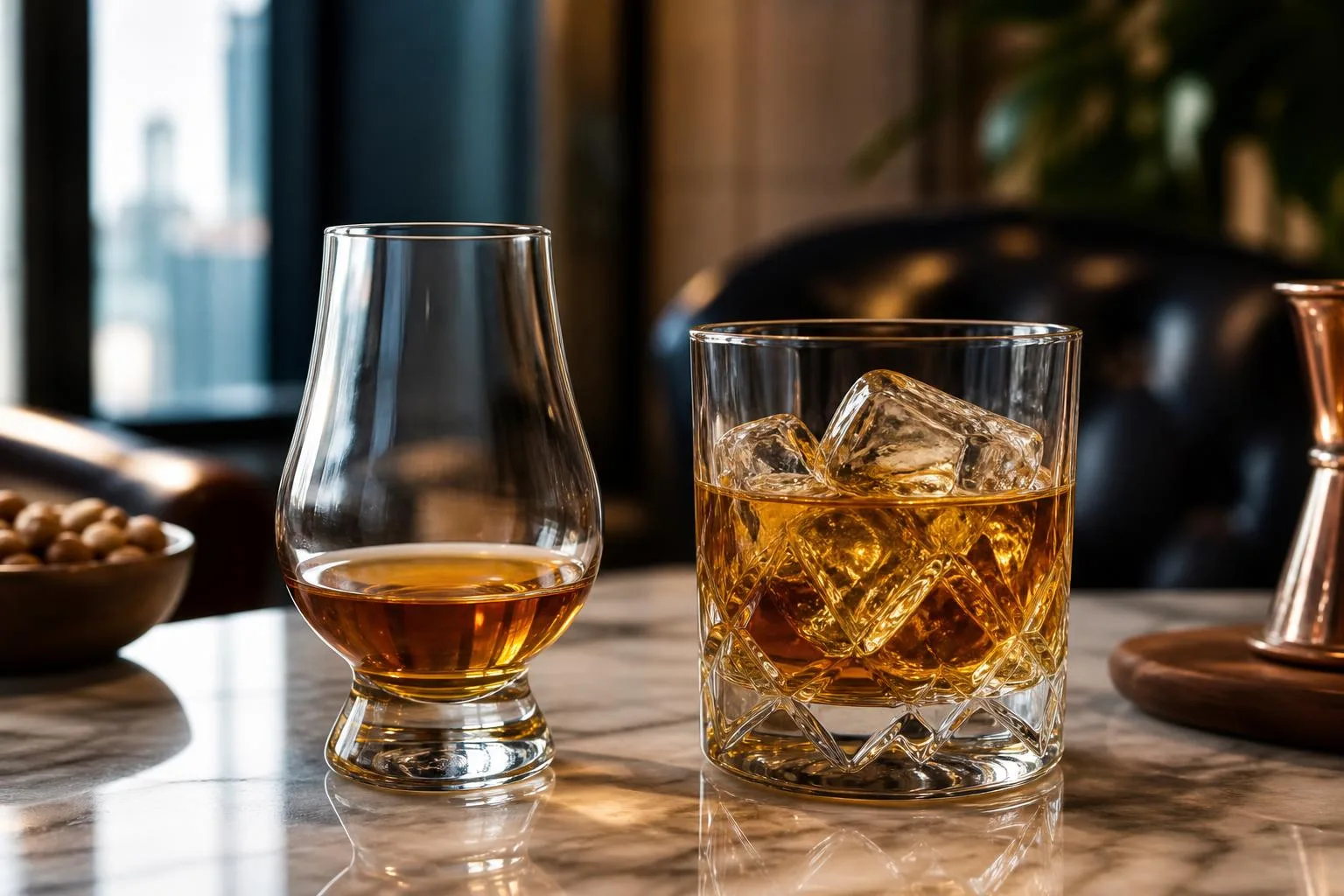
“Neat” is often misused as a catchall for any straight pour, but it has a narrower meaning: spirit served alone, at room temperature, with no ice, mixer, or garnish.
In U.S. bars, the most common neat pour is usually 1.5 to 2 ounces, depending on house policy.
One practical mistake is confusing “neat” with “up.” A drink served up is chilled with ice, then strained into a stemmed or coupe-style glass.
A neat whiskey, tequila, rum, or brandy is poured directly from the bottle into the glass.
| Order | Ice Used? | Served With Ice? | Typical Example |
| Neat | No | No | 2 oz bourbon in a rocks glass |
| Up | Yes, for chilling | No | Martini strained into a coupe |
| On the rocks | Yes | Yes | Scotch over ice |
Myth: Neat Means Warm
Neat does not mean heated. It means unchilled and undiluted. In practice, that usually means room temperature, which the U.S. Food and Drug Administration commonly defines in storage contexts as about 68°F to 77°F.
Myth: Neat Is Always a Shot
A neat pour is usually meant for sipping, not shooting. A standard U.S. drink contains 0.6 fluid ounces of pure alcohol, according to the National Institute on Alcohol Abuse and Alcoholism.
| Spirit ABV | Pour Size | Pure Alcohol | Standard Drinks |
| 40% | 1.5 oz | 0.6 oz | 1.0 |
| 40% | 2 oz | 0.8 oz | 1.3 |
| 50% | 2 oz | 1.0 oz | 1.7 |
Myth: Better Spirits Must Be Served Neat
Neat is not automatically the “correct” way. A few drops of water can open aromas in higher-proof whiskey by changing how volatile compounds release from the glass.
Ice can also be appropriate if the guest prefers slower sipping and dilution.
- Do not say “neat with ice.” That is contradictory; order it “on the rocks.”
- Do not expect a chilled glass. Chilling changes the temperature and moves the drink away from a strict neat serve.
- Do not assume the pour size. Ask whether the bar’s neat pour is 1.5 oz, 2 oz, or another measured house standard.
- Do not use neat for cocktails. Old Fashioneds, Manhattans, and Martinis are mixed drinks, even when served without visible ice.
Common Questions
What does “neat” mean in a drink?
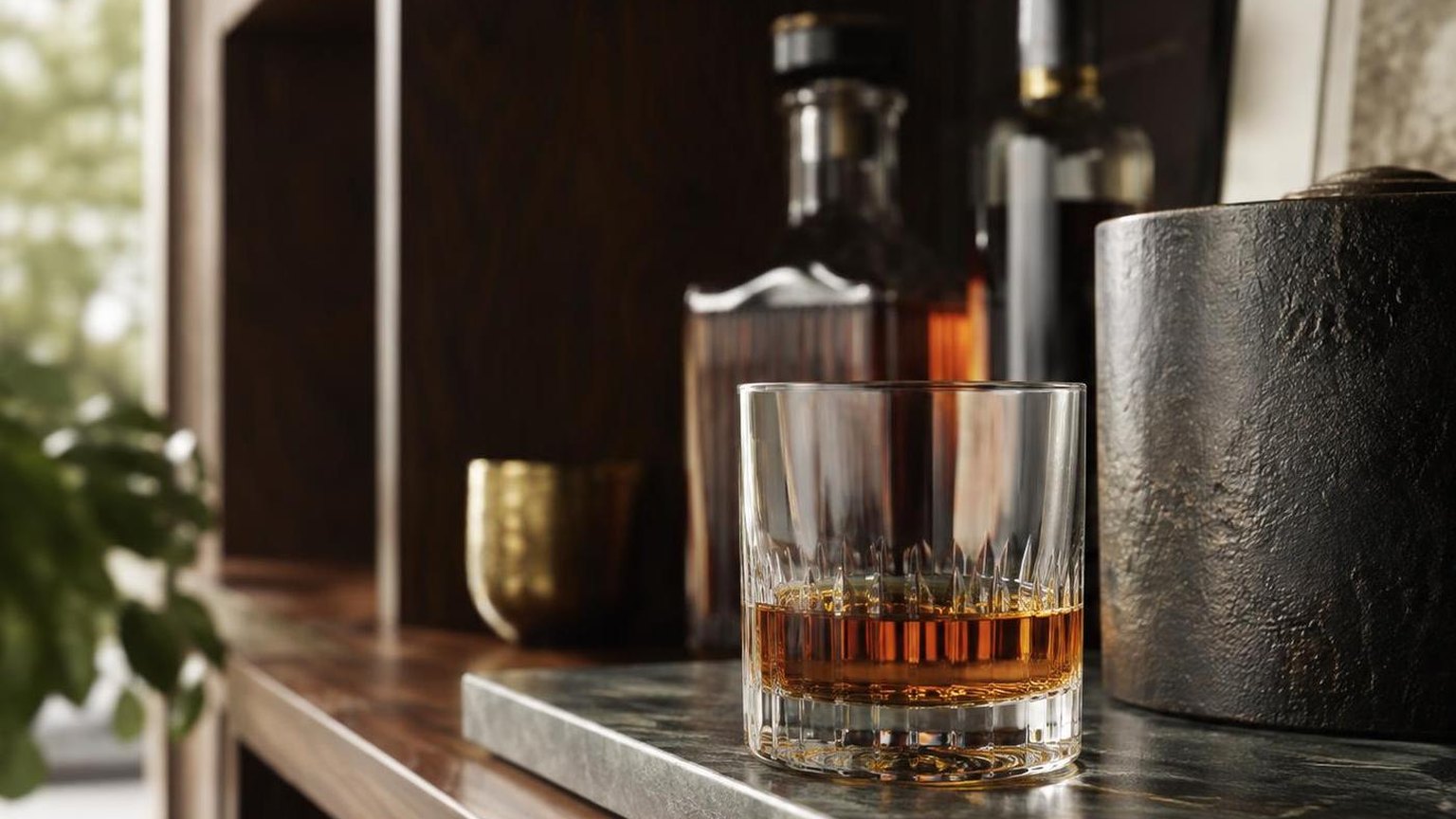
“Neat” means a spirit is served by itself, with no ice, water, mixer, or garnish. In U.S. bars, a neat pour is commonly served at room temperature in a rocks glass, snifter, or tasting glass.
How many ounces is a neat pour?
A standard neat pour in many U.S. bars is 1.5 to 2 ounces, depending on the house policy and the spirit. Higher-end whiskey, tequila, Cognac, and rum may be poured in smaller measured amounts for cost control and tasting consistency.
Is neat the same as straight up?
No. Neat means the liquor is poured directly into the glass without chilling or dilution. “Straight up” or “up” usually means the drink was chilled with ice, then strained into a stemmed glass without ice.
Which drinks are commonly ordered neat?
Whiskey, bourbon, Scotch, rye, tequila, mezcal, aged rum, brandy, and Cognac are commonly ordered neat because their aromas and texture are easier to evaluate without mixers.
Neat service is especially common for aged spirits where oak, spice, fruit, and heat are part of the tasting experience.
Should you add water to a neat drink?
You can, but it is no longer technically neat once water is added. A few drops of water can reduce alcohol intensity and release aroma compounds in high-proof spirits, especially cask-strength whiskey above about 50% ABV.
Is a neat drink served cold?
No. A neat drink is typically poured at room temperature, directly from the bottle into a glass, without ice, chilling, or dilution.
If a spirit was stored refrigerated or in a cold bar environment, it may feel cool, but “neat” itself does not require a cold serve.
Related Reading
- How Many Gallons Is 80 Liters? A Practical, Real-World Conversion Guide You’ll Actually Use
- What Does An Old-Fashioned Taste Like?
- How Many Ounces In 1.32 Gallons?
- How Many Cups Is 7 Oz?
- Why Is Pappy Van Winkle So Expensive?
- How Much Is Firstleaf Wine Club?
- What To Mix With Spiced Rum?
- All Blog Guides
- Merriam-Webster Dictionary (2025)
- Cambridge Dictionary (2025)
- Collins Dictionary (2025)
- National Institute on Alcohol Abuse and Alcoholism (2025)
- Centers for Disease Control and Prevention (2024)
- U.S. Department of Agriculture and U.S. Department of Health and Human Services (2020)
- Alcohol and Tobacco Tax and Trade Bureau (2022)